Social Security Error Jeopardizes Medicare Coverage For 250,000 Seniors

The Social Security Administration didn't deduct premiums from some seniors' Social Security checks that were supposed to pay for Medicare Advantage and private drug coverage.

Thinkstock/Getty Images

A quarter of a million Medicare beneficiaries may be receiving bills for as many as five months of premiums they thought they had already paid.

But they shouldn’t toss the letter in the garbage. It’s not a scam or a mistake.

Because of what the Social Security Administration calls “a processing error” in January, it did not deduct premiums from some seniors’ Social Security checks and it didn’t pay the insurance plans, according to the agency’s “frequently asked questions” page on its website.

The problem applies to private drug policies and Medicare Advantage plans that provide both medical and drug coverage and that substitute for traditional government-run Medicare.

Some people will discover they must find the money to pay the plans. Others may find their plans canceled. Medicare officials say approximately 250,000 people are affected.

Medicare and Social Security say they expect that proper deductions and payments to insurers will resume this month or next. Insurers are required to send bills directly to their members for the unpaid premiums, according to Medicare.

But neither agency would explain how the error occurred or provide a more exact number or the names of the plans that were shortchanged. The amount the plans are owed also wasn’t disclosed. A notice to beneficiaries on Medicare’s website lacks key details.

Rep. Richard Neal, D-Mass., who chairs the Ways and Means Committee, and two colleagues wrote to both agencies about the problem on May 22 but have not received a response from Medicare. Social Security’s response referred most questions to Medicare officials.

Organizations that help seniors say they are getting some questions from Medicare beneficiaries.

Two seniors in Louisiana lost drug coverage after their policies were canceled due to the SSA error, says Vicki Dufrene, director of the state’s Senior Health Insurance Information Program. One woman had the same drug plan since 2013, which dropped her at the end of April. She was without coverage for the entire month of May until earlier this week, when Dufrene was able to get her retroactively re-enrolled.

Dufrene says some people might not notice that their checks did not include a deduction for their Medicare Advantage or drug plan premiums. If their check was a little more than expected, they could have assumed that extra amount was the expected cost-of-living increase, among other things.

In Ohio, a Medicare Advantage plan reinstated a member due to unpaid premiums less than 48 hours after the state’s health insurance information program for seniors got involved, says director Christina Reeg.

Medicare beneficiaries have had the option of paying their premiums through a deduction from their Social Security checks for more than a decade, she says. However, they can also charge payments directly to a credit card or checking account instead of relying on Social Security.

Humana spokesman Mark Mathis says about 33,000 members were affected — or fewer than 1% of its total Medicare membership. None of those members lost coverage. The company blamed Medicare’s nearly 15-year-old IT systems for the failure and urged the agency to invest in new equipment.

A UnitedHealthcare representative says none of its 32,000 Medicare Advantage or Part D members affected by the SSA problem lost coverage. The company has the highest Medicare enrollment in the U.S.

Aetna has not received payments for Medicare Advantage and drug plans for the months of February through May for 43,000 affected members, says spokesman Ethan Slavin. Customers will receive bills for the unpaid premiums and can set up payment plans if they can’t pay the entire amount.

These and other affected insurers must allow their members at least two months from the billing date to pay. And they must offer a payment plan for those who can’t pay several months of premiums at once, Medicare says. With both steps, “plans can avoid invoking their policy of disenrollment for failure to pay premiums while the member is adhering to the payment plan,” Jennifer Shapiro, the acting director for the Medicare Plan Payment Group, warned the companies in a May 22 memo.

Lindsey Copeland, federal policy director for the Medicare Rights Center, an advocacy group, says she is concerned that older adults will view the bill with suspicion.

“If you think your premiums are being paid automatically and then your plan tells you six months later that wasn’t the case, you may be confused,” she says.

Kaiser Health News is a nonprofit news service covering health issues. It is an editorially independent program of the Kaiser Family Foundation that is not affiliated with Kaiser Permanente.

Contact Susan Jaffe at Jaffe.KHN@gmail.com or @susanjaffe

Let’s block ads! (Why?)

Former German Nurse Guilty Of Killing 85 Patients In Serial Murder Case

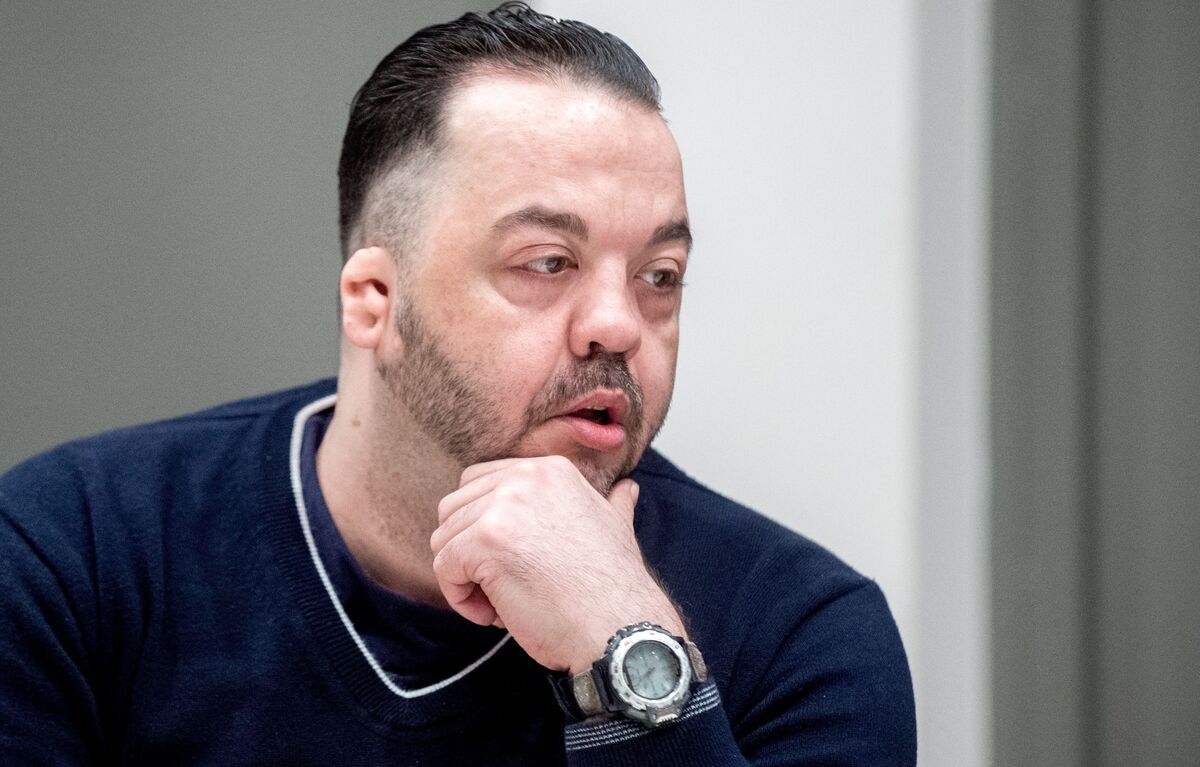
Former nurse Niels Högel was found guilty of killing patients in his care by injecting them with drugs and then trying to resuscitate them. He’s seen here in court, awaiting his verdict in Oldenburg, Germany.

Hauke-Christian Dittrich/AFP/Getty Images


hide caption

toggle caption

Hauke-Christian Dittrich/AFP/Getty Images

Updated at 1:32 p.m. ET

Former nurse Niels Högel — who has admitted to giving potentially lethal drugs to patients so he could try to resuscitate them — has been sentenced by a German court to life in prison for murdering 85 people.

“Your guilt is unimaginable,” Oldenburg district court Judge Sebastian Bührmann said as he sentenced Högel, according to Deutsche Welle. “The human mind struggles to take in the sheer scale of these crimes.”

It’s the latest judgment in what the local police chief in Oldenburg has called a “horrifying” serial killer case. Högel is already serving a life sentence for killing two patients.

The disgraced nurse’s victims ranged in age from 34 to 96, according to the district court in Oldenburg. Högel was found to have injected them with a variety of drugs that included the heart medicines ajmaline, amiodarone and sotalol, along with potassium and the anesthetic lidocaine.

As the scope of Högel’s crimes became clear, authorities exhumed dozens of bodies to test them for the cocktail of drugs he had administered to his victims. The true extent of his killings may never be known — in some cases, the bodies of people who died under Högel’s care already had been cremated.

He was initially accused in a handful of deaths but was discovered to have been involved in dozens more. In the current case, Högel had been charged with committing 100 murders between early 2000 and the middle of 2005, but prosecutors were unable to prove he was responsible for 15 of those deaths.

The former nurse carried out the killings to gain attention at two different jobs: in an Oldenburg medical clinic and a hospital in Delmenhorst. While he admitted to inducing cardiac arrest in scores of patients, there were so many victims that in some instances, he said he simply couldn’t recall details about the people who died. In others, he denied playing a role.

“I feel like an accountant of death,” Judge Bührmann said Thursday, noting the scope of the crimes.

The judge’s ruling includes a notation on the “special severity” of the crimes, which will likely complicate any attempts to parole Högel after 15 years, as is common for people serving life sentences in Germany.

German courts cannot impose multiple life sentences. But in a message to NPR, a representative of the court said that because of the judge’s notation, “in the end it is possible that Mr. Högel will not be released ever.”

This week, Högel offered an apology to families and others who lost loved ones. Some of those surviving relatives spoke outside of the district court today — including families of former patients whose cases remain painfully unresolved.

“That is very, very bitter,” said Frank Brinkers, according to The Associated Press. The cause of his father’s death is still unconfirmed, although Högel is suspected of playing a role. Brinkers added, “I have gone through hell, and that is hard to bear.”

As they explored the case, investigators criticized some of Högel’s colleagues, saying they could have done more to stop the nurse after noticing his irregular behavior. Some hospital employees in Delmenhorst, near Bremen, were charged with negligent manslaughter for not taking quick and decisive action to stop Högel — even after a colleague saw him inject a patient with ajmaline.

And police have complained that Högel was given a clean reference when he moved to the Delmenhorst hospital from the clinic in Oldenburg, where police said people were aware of his “abnormalities.”

Let’s block ads! (Why?)

The Thistle & Shamrock: The Scottish Traditional Music Hall Of Fame

Christine Kydd.

Courtesy of the artist


hide caption

toggle caption

Courtesy of the artist

Host Fiona Ritchie is joined by the well-loved singer of Scottish traditional and contemporary songs, Christine Kydd. Featuring songs from Christine’s new album Shift and Change, the conversation explores the appeal of traditional songs, the power of some legendary songwriters, and the evolution of Christine’s own work as a performer, educator and composer.

Hear the debut of this new collection of songs and join the company of Fiona and Christine.

Let’s block ads! (Why?)

Early Abortion Bans: Which States Have Passed Them?

This year has brought an unprecedented wave of new state laws that only allow abortions to be performed early in pregnancy — if at all.

Most of the new laws — known as early abortion bans — explicitly outlaw abortion when performed after a certain point early in the pregnancy. The laws vary, with some forbidding abortion after six weeks of pregnancy, and some after eight weeks. Alabama’s law is the most extreme: It aims to outlaw abortion at any point, except if the woman’s health is at serious risk. So far in 2019, nine U.S. states have passed laws of this type, and more states are considering similar legislation.

Loading…

Don’t see the graphic above? Click here.

None of the laws passed this year are actually in effect, either because they have a future enactment date or because judges have put them on hold in response to lawsuits, or both.

These new bans are a direct challenge to the precedent set by the 1973 Supreme Court ruling Roe v. Wade, which affirmed that a woman has a right to seek an abortion up until the point that the fetus could be “viable” outside of the uterus. Viability must be determined on an individual basis but is generally between 24 and 28 weeks of pregnancy.

“We want to stop abortion of unborn children. And the only way we can do that is to go back and revisit the Roe decision,” Eric Johnston, the president of the Alabama Pro-Life Coalition, told NPR’s Ari Shapiro. Johnston helped write the Alabama law that outlaws almost all abortions.

“This law is, in effect, a vehicle to do that,” he added.

A few states already have existing laws that outlaw abortion earlier in pregnancy than the standard sent by Roe, banning the procedure as early as 18 or 20 weeks. When challenged, bans on abortion at this stage of pregnancy have consistently been struck down in court, according to the Guttmacher Institute. But not all of those laws have been challenged in court, so they remain on the books. There is no state law currently in effect that bans abortion before 20 weeks.

Two states, New York and Vermont, have moved in the other direction. Both states passed laws this year that affirm the legal right to an abortion in each state, even if the Supreme Court overturns Roe v. Wade.

These early abortion bans differ from another common type of state regulation known as a TRAP law — for Targeted Regulation of Abortion Providers. TRAP laws place particular restrictions on the doctors or health clinics that provide abortions, and the Supreme Court has allowed some of these laws to go into effect, while striking down others.

Loading…

Don’t see the graphic above? Click here.

Here’s some details on the newest bans, by state.

*Important note: Supporters of reproductive rights have filed multiple lawsuits against this type of law. None of these early abortion bans are currently in effect or are being enforced.

Alabama – No abortion after 0 weeks. Allows exceptions if the woman’s life is threatened. No exceptions for rape or incest.

Arkansas — No abortion after 18 weeks. Allows exceptions for rape, incest or medical emergencies.

Georgia – No abortion after 6 weeks. Allows exceptions if the woman’s life is endangered, if the pregnancy is deemed “medically futile” and in cases of rape or incest if the woman files a police report.

Kentucky – No abortion after 6 weeks. No exceptions for rape or incest. Allows exceptions if the woman’s life is endangered.

Louisiana – No abortion after 6 weeks. No exceptions for rape or incest. Allows exceptions if the woman’s life is endangered or if the pregnancy is deemed “medically futile.”

Mississippi – No abortion after 6 weeks. No exceptions for rape or incest. Allows exceptions if the woman’s life is endangered.

Missouri – No abortion after 8 weeks. No exceptions for rape or incest. Allows exceptions if the woman’s life is endangered.

Ohio – No abortion after 6 weeks. No exceptions for rape or incest. Allows exceptions if the woman’s life is endangered.

Utah – No abortion after 18 weeks. No exceptions for rape or incest. Allows exceptions if the woman’s life is endangered.

NPR’s Carrie Feibel, Sarah McCammon and Carmel Wroth contributed to this report.

Let’s block ads! (Why?)

Boxing’s ‘Little Fat Boy’ Continues To Wow The World

Andy Ruiz Jr. (right) and Anthony Joshua exchange punches during the heavyweight championship match Saturday. Ruiz won in the seventh round.

Frank Franklin II/AP


hide caption

toggle caption

Frank Franklin II/AP

Every now and then, boxing fights its way back into the crowded sports headlines and Saturday was one of those moments.

Little-known Andy Ruiz Jr. gave sports fans a new Rocky moment. The 29-year-old fighter beat the favored and previously undefeated Anthony Joshua at Madison Square Garden in New York, and became the heavyweight champion of the world.

Or, to be specific, Ruiz became the champion of the confusing, alphabet soup world of boxing – he’s now the top heavyweight in the WBA, IBF, WBO and IBO fight-sanctioning bodies.

Ruiz also is the first heavyweight champion of Mexican descent.

And when we say heavyweight – we mean it.

Ruiz stands 6 feet, 2 inches tall and weighs a shade under 270 pounds. His flab is evident – he can’t hide the fact, wearing boxing trunks, nor does he try. Pre-fight, he had a warning for Joshua – “don’t underestimate this little fat boy.”

Whether or not Joshua did, it became evident in the fight’s third round that he indeed had a fight on his hands. He knocked down Ruiz, and looked well on his way to another win. But stunningly, Ruiz came back in that same round and knocked down Joshua. Not once but twice. As Joshua got up after the second knockdown, the bell rang. Many believe that saved Joshua from an earlier defeat.

As it was, Ruiz scored two more knockdowns in the seventh, and the referee called the fight. Ruiz was the champion by technical knockout.

“It doesn’t matter what you look like or what kind of physique you have,” veteran boxing writer Nigel Collins told NPR. “The most important thing is knowing how to fight.”

Collins, a staff writer for ESPN, said Ruiz cut off the ring perfectly against Joshua — meaning Ruiz didn’t chase after Joshua, but instead moved to where Joshua wanted to go.

“That’s a skill,” Collins said, “that involves a lot of lateral movement. You don’t want to follow the guy because he’ll always be one step ahead of you. You move laterally so you’re still right in front of him without following him.

“Some fighters do a lot of stuff that uses up energy that’s not really accomplishing anything. [Ruiz], no. Every move he made, he knew what he was doing.”

Regarding Ruiz’s sizeable girth, Collins said he saw a video of Ruiz doing agility drills.

“And he was doing it great, like a ballet dancer,” Collins said.

A 2015 inductee into the International Boxing Hall of Fame, Collins has witnessed other boxers who, shall we say, were less than sculpted.

“We want to talk about fat fighters,” Collins said, “how about George Foreman when he came back? You know, he was making cheeseburger jokes at press conferences and he had this big gut on him and he ended up winning the heavyweight championship 10 years after he retired.”

Foreman had cheeseburgers; Ruiz has Snickers bars. They have been his candy of choice since he was a kid. His dad, who introduced him to boxing, also introduced him to Snickers.

“My dad would always give me a Snickers before a fight,” Ruiz said. “It gives me energy. It give me everything I need to get the win.”

With Saturday’s win, Ruiz turned the boxing world upside down. Reactions on Twitter included disparaging words for Joshua, a champion from England. He’s been criticized for not fighting other top heavyweights, such as Deontay Wilder.

Wilder tweeted: “He wasn’t a true champion.”

He wasn’t a true champion. His whole career was consisted of lies, contradictions and gifts.
Facts and now we know who was running from who!!!!#TilThisDay

— Deontay Wilder (@BronzeBomber) June 2, 2019

And this from Shannon Sharpe, former NFL star turned co-host of Fox’s sports talk show Skip and Shannon: Undisputed: “Joshua got knocked out by a dude shaped like Butterbean.”

Now we know Anthony Joshua kept dodging D. Wilder. Joshua got knocked out by a dude shaped like Butterbean.?????

— shannon sharpe (@ShannonSharpe) June 2, 2019

But mostly there was praise for Ruiz, who only qualified for the fight after Joshua’s original opponent failed several drug tests.

Pura pinchi RAZZZZAAA!!!! Congratulations @Andy_destroyer1

— Oscar De La Hoya (@OscarDeLaHoya) June 2, 2019

…But i do want to say congrats to Andy Ruiz for becoming the first EVER Mexican Heavyweight champ! #Respect To AJ… Pick urself up and learn from this. Don’t worry, you will bounce back! #JoshuaRuiz@FightScorecard

— Lennox Lewis (@LennoxLewis) June 2, 2019

WOW! Andy Ruiz just shocked the world! That was one of the biggest upsets in boxing history.

— Manny Pacquiao (@MannyPacquiao) June 2, 2019

Boxing is incredibly popular in Hispanic culture. Boxing experts say the growth of that demographic in the United States has saved the sport here. And Ruiz’s triumph only adds to that.

“There are a lot of good Mexican boxers,” said 15-year-old Mexican-American Trinidad Vargas. “I’m proud of that, to be able to relate to them. [Ruiz] is pretty inspiring.”

Vargas was speaking to NPR from the U.S. Olympic training center in Colorado Springs, where he’s taking part in a boxing training camp. He’s one of this country’s up-and-coming fighters. He watched Ruiz win on Saturday and says beyond their similar heritage, they have similarities in size. Not weight, certainly. Vargas weighs only about 110 pounds. But at 5 feet, 5 inches, he’s small, just as Ruiz is relatively short for the heavyweight division. Vargas said he appreciates how Ruiz worked against the taller Joshua, and actually mimicked the tactics in his own fighting.

“I kind of did that today,” Vargas said, “because I had to spar a tall fighter and it worked pretty well with the double jabs, coming in [with] over the top [punches].”

Vargas said one of his best skills is copying styles of great fighters like Floyd Mayweather Jr., Canelo Alvarez and Gervonta Davis.

He said he’ll keep copying Andy Ruiz, although only with boxing technique.

“I plan to stay light and cut,” Vargas laughed.

Let’s block ads! (Why?)