A Look At The Economics Of Ending A Pregnancy

More states have adopted new restrictions on abortion in hopes the Supreme Court will revisit Roe vs. Wade. That could have profound effects on the economic prospects for women seeking abortions.
More states have adopted new restrictions on abortion in hopes the Supreme Court will revisit Roe vs. Wade. That could have profound effects on the economic prospects for women seeking abortions.

The family of the woman who was raped and then gave birth last December has filed new documents alleging she may have been impregnated before. They are seeking $45 million in damages.
Matt York/AP
hide caption
toggle caption
Matt York/AP
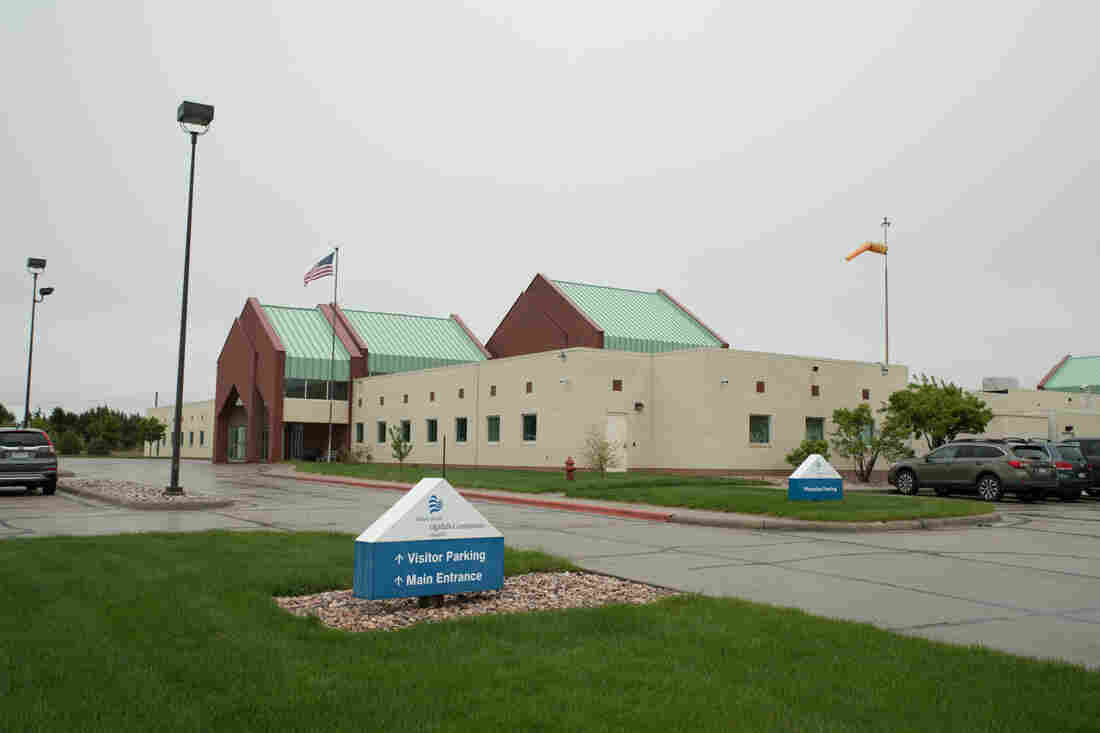
An incapacitated woman who gave birth after being a patient at an Arizona health care facility for more than two decades had been raped repeatedly and may have been impregnated before, her lawyers say.
In documents filed Wednesday, the 29-year-old woman’s attorneys cite a medical exam in alleging that she suffered multiple sexual assaults. The exam found that the birth of a baby boy last December was “a non-nulliparous event,” the documents say, meaning she may have been pregnant before.
The notice of claim, filed against the state’s Attorney General’s Office, seeks a $25 million settlement for the victim and $10 million each for her parents. If they do not come to an agreement within 60 days, the lawyers will take the case to court.
Separate cases are underway against Nathan Sutherland, a former Hacienda HealthCare nurse who has been charged with one count of sexual assault and one count of vulnerable adult abuse after DNA testing matched him to the baby.
A spokesperson for Hacienda HealthCare said notices of claim are not filed with private companies. He added that the company does not expect to see a copy of the claim.
The woman has been in long-term care since suffering a near drowning at age 3.
Employees at the facility said they were shocked when the woman who cannot speak or move without assistance went into labor. The delivery prompted investigations by local and state agencies into the care of vulnerable adults at the facility.
The Arizona Attorney General’s Office declined to comment but told NPR it is being represented by outside counsel.
The claim argues that “[t]he unspeakable atrocities perpetrated on [the victim] occurred as a result of systemic and individual misconduct and mismanagement at the Hacienda ICF-ID, and virtually non-existent oversight on the part of the State.”
Documents supporting the allegations in the claim include a handful of medical records from the facility describing the patient’s condition in November 2017 — a year before she delivered the baby. “She cannot maintain sitting without assistance. She is unable to stand/walk. … [She] does not make eye contact nor did she smile,” according to the report. It also noted that she did not respond well to light touch and that she is “tactilely defensive.”
An additional form appears to indicate that her family specified that it wanted only female staff to be responsible for the woman’s personal care, which includes dressing, bathing, use of toilet and menses care. It also indicates she was required to have 24-hour supervision due to physical and medical limitations.
According to the documents, the facility treated the woman’s “distended stomach with constipation medications and her significant weight gain by reducing her caloric intake.”
In all, her lawyers say, Hacienda HealthCare missed 83 opportunities to determine that the woman was pregnant.

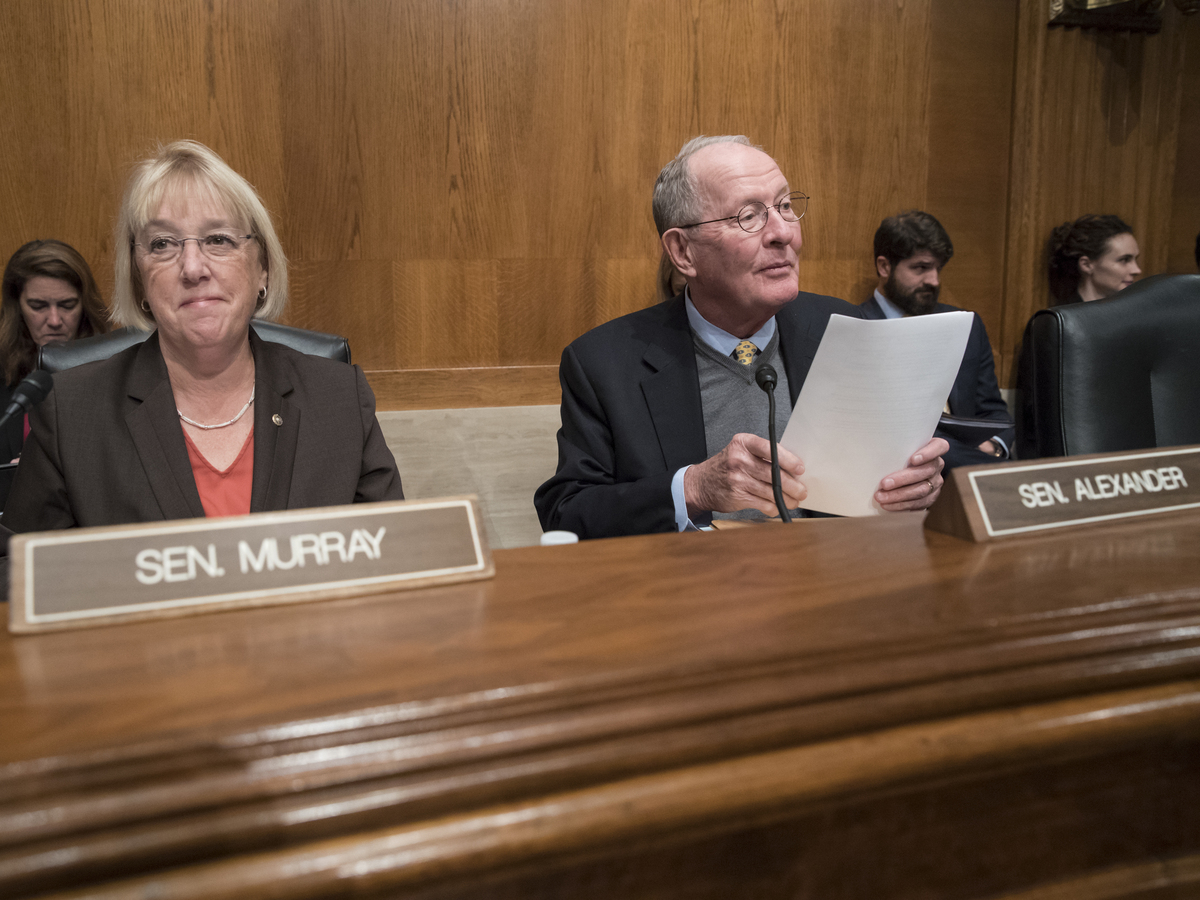
Sen. Patty Murray, D-Wash., the ranking member, and Sen. Lamar Alexander, R-Tenn., chairman of the Senate health committee, introduced legislation to address health care issues such as surprise medical bills and high drug costs.
J. Scott Applewhite/AP
hide caption
toggle caption
J. Scott Applewhite/AP
In a year already marked by a wide variety of congressional health care legislation, Sens. Lamar Alexander, R-Tenn., and Patty Murray, D-Wash., on Thursday released the details of a plan they hope will help bring down health costs and eliminate surprise medical bills for patients. Alexander and Murray are the chair and ranking member, respectively, of the Health, Education, Labor and Pensions Committee.
“These are common-sense steps we can take, and every single one of them has the objective of reducing the health care costs that you pay for out of your own pocket,” Alexander said in a statement. “We hope to move it through the health committee in June, put it on the Senate floor in July and make it law.”
It would be a mammoth piece of legislation, targeting nearly every area of the health care industry for reform, including surprise medical bills, prescription drugs, price transparency, public health and health information. Alexander said at a White House event earlier this month that he hopes to get the package to the Senate floor by the end of July.
“When you have a chairman and a ranking member that have worked together on a bipartisan package in the committee of jurisdiction, it always gives more weight to the product,” says Dean Rosen a former Republican senior health adviser and a partner at Mehlman Castagnetti Rosen & Thomas.
“Folks should take this package seriously,” he adds.
The draft bill released by the senators offers three options to curb surprise bills, those unexpected and often pricey bills patients face when they get care from a doctor or hospital that isn’t in their insurance network. It would use an independent arbitrator to settle disputes between insurance plans and providers and set a standard benchmark for physician pay, ideas that have popped up in other draft legislation circulating in the House and Senate.
The novel part from Alexander and Murray is the idea of an “in-network guarantee.” It would require that any hospital considered in-network for a health plan must promise that everyone working there is also in-network.
This would avoid situations in which patients choose a hospital because they know their insurance company will cover the bill, only to find out that one of the doctors they saw was out of network, leaving the patient with a hefty bill.
It also requires that labs and diagnostic tests be in-network, cutting off another avenue of surprise bills.
“From a policy perspective, there’s a rationale that this is the ideal approach,” says Loren Adler, the associate director of USC-Brookings Schaeffer Initiative for Health Policy.
Often called “network matching,” it’s an approach championed by the health insurance industry. James Gelfand, senior vice president for health policy for the ERISA Industry Committee, a trade group representing large employer benefits plans, named it specifically as a solution during testimony at a surprise bill hearing in the House Ways and Means Committee on Tuesday. Rep. Lloyd Doggett, D-Texas, has suggested something similar in bills introduced in this sessions and under the past two Congresses.
It’s possible that this option will upset physicians groups, as doctors risk receiving lower payments and having less leverage with insurance companies. Adler says these fears are mostly unfounded because hospitals have a vested interest in being fully staffed; they’ll step in if insurance companies try to lowball doctors.
Stakeholders such as industry trade groups, lobbyists and consultants will get a chance to air those concerns at a closed briefing on the draft on Capitol Hill on Thursday.
The Alexander-Murray proposal joins an array of efforts on surprise billing. The White House held an event featuring patients, several House committees have held hearings, and bipartisan groups in the House and Senate have proposed legislation, including a bill from Sens. Bill Cassidy, R-La., and Maggie Hassan, D-N.H. In addition to Alexander and Murray’s proposal, the details of another bipartisan bill were released Thursday from Reps. Raul Ruiz, D-Calif., and Phil Roe, R-Tenn., both also physicians.
But Alexander and Murray’s proposal also covers a wide array of issues, and it’s not clear how that will play in Congress just a few months from the start of a presidential election season.
“The steps we are taking on important issues like surprise medical billing, drug prices, maternal mortality, and vaccine hesitancy show we can make progress when both sides are at the table ready to put patients and families first,” said Murray.
“I think it is an ambitious package,” Rosen says. “I think it’s probably going to be a challenge to get all of this done.”
The Alexander-Murray proposal also tackles prescription drug pricing reform, another issue that has raised bipartisan concerns and spurred hearings across the Capitol this spring.
Instead of regulating drug prices, the package would address patent protections, making it easier for generics to get to market and harder for brand-name drugs to maintain exclusive patents for lengthy periods.
It also addresses pharmacy benefit managers, which have lately come under scrutiny in the drug pricing debate. PBMs act as middlemen between drugmakers and insurance plans to negotiate prices and have been blamed by some in the pharmaceutical industry for keeping medication costs high.
The proposal suggests requiring PBMs to give quarterly reports on costs, fees and information about rebates — which are the discounts drugmakers offer to PBMs in exchange for making sure their medication is covered under a health plan. The bill also requires that 100% of these discounts be passed on to consumers.
Other provisions include requiring health plans and providers to give patients estimates of out-of-pocket-costs for a service within 48 hours of a request and mandating that medical bills be sent within 30 days of a procedure.
The bill addresses a host of other health-related issues, including some making headlines recently:
Kaiser Health News is a nonprofit news service covering health issues. It is an editorially independent program of the Kaiser Family Foundation that is not affiliated with Kaiser Permanente.

Maire Brennan
Mella Travers/Courtesy of the artist
hide caption
toggle caption
Mella Travers/Courtesy of the artist
Settle into an hour of soothing voices and soaring instrumentals that all go to prove this roots music business needn’t always be high-energy. Featured in this episode are Davy Spillane, William Jackson, Maire Brennan and Dougie MacLean.

Sen. Bill Cassidy, R-La., is co-sponsoring legislation with Sen. Maggie Hassan, D-N.H., to curtail surprise medical bills.
Susan Walsh/AP
hide caption
toggle caption
Susan Walsh/AP
Surprise medical bills — those unexpected and often pricey bills patients face when they get care from a doctor or hospital that isn’t in their insurance network — are the health care problem du jour in Washington, with President Trump and congressional lawmakers from both sides of the aisle calling for action.
These policymakers agree on the need to take patients out of the middle of the fight over charges, but crafting a legislative solution will not be easy.
A hearing of the House Ways and Means health subcommittee Tuesday, for example, quickly devolved into finger-pointing as providers’ and insurers’ testimony showed how much they don’t see eye to eye.
“I’m disappointed that all participants that are going to be here from critical sectors of our economy could not come to find a way to work together to protect patients from these huge surprise bills,” Rep. Devin Nunes, R-Calif., the ranking Republican on the subcommittee, in his opening statement.
As Congress weighs addressing the problem, here’s a guide to the bills and what to watch for.
Senate: Cassidy and Hassan
Last week, Sen. Bill Cassidy, R-La., and Sen. Maggie Hassan, D-N.H., introduced their version of surprise-billing legislation. It would set out specific protections for patients who are at risk of surprise bills in the following scenarios: receiving emergency care from an out-of-network facility or provider; getting elective care from an out-of-network doctor at a facility that is in the patient’s insurance network; or receiving additional, post-emergency health care at an out-of-network facility because the patient cannot travel without medical transport.
The protections would mean that people in these situations could not be billed by their health providers for amounts outside of what their insurance covered. Similar protections would also be put in place for laboratory and imaging services as well as providers who aren’t physicians, such as nurse anesthetists.
Patients would still have to pay their insurance plan’s usual deductibles and copayments, which would count toward their health plan’s out-of-pocket maximum.
Doctors would be automatically paid a predetermined amount based on what other health plans in the area are paying for a similar service. It’s called the “median in-network rate.”
House: “No Surprises Act”
On the House side, the “No Surprises Act” has emerged as the primary bill. Though it has not been formally introduced, drafts include many of the same protections as in the Cassidy-Hassan measure, including curbs on out-of-network bills for emergency care.
Co-authored by Reps. Frank Pallone, D-N.J., and Greg Walden, R-Ore., respectively the chairman and ranking member of the Energy and Commerce Committee, the measure would require health care facilities to provide 24-hour notice to patients seeking elective treatment that they are about to see an out-of-network provider. It would prohibit the facility or provider from billing patients for whatever amount their insurance companies did not cover for that service. And it would set provider payment rates based on the market in that specific area.
One key difference between the House and Senate proposals: The Cassidy-Hassan measure includes a mechanism by which health providers can challenge that basic median pay rate They would have 30 days to initiate an independent dispute resolution between only the health plan and the provider; patients would be exempted.
“The patient needs to be the reason for care, not the excuse for a bill,” Cassidy said at a press conference when the bill was unveiled.
The approach is often referred to as “baseball-style” arbitration because it’s the model used by Major League Baseball for some salary negotiations. Here’s how it works: The plan and the provider each present a final offer to an independent arbitrator for what the procedure should cost. The arbitrator then picks one of those two options.
Senate, coming soon: Alexander and Murray health care bill
The Senate Health, Education, Labor and Pensions Committee has primary jurisdiction over the way the federal government regulates employer-sponsored plans, and Chairman Lamar Alexander, R-Tenn., and Sen. Patty Murray, D-Wash., the top Democratic member, are preparing legislation.
That legislative package is being billed as a broader measure designed to address health care costs, which would likely include provisions aimed at surprise medical bills.
If Alexander does proceed on the broader path, his legislation could also incorporate elements such as curbs on drug pricing and price transparency, according to some industry lobbyists.
But this triggers concerns that expanding the measure’s focus — which could perhaps draw more opposition — could slow the momentum behind surprise-billing legislation.
“There’s a lot of other things going on that aren’t directly related to surprise bills,” says Molly Smith, the vice president for coverage and state issues at the American Hospital Association. “We’re paying attention to what else is getting glommed on.”
Alexander and Murray are expected to unveil details of their proposal Thursday. And, at a White House event earlier this month, Alexander said he would like to pass it through the committee by July.
That won’t be the end of players joining in the debate.
In addition to the House Education and Labor Committee hearing and possible legislation, Ways and Means health subcommittee Chairman Lloyd Doggett, D-Texas, is focused on this issue, having introduced surprise-billing legislation in the last three congressional sessions.
Issues to watch
Some Capitol Hill insiders, say arbitration provisions such as those proposed in the Cassidy-Hassan measure could become a hurdle to getting surprise-bill legislation over the finish line.
At the Ways and Means hearing, for instance, a representative from the trade group that represents employer plans called the idea a “snipe hunt” used by providers and hospitals to distract Congress from fixing the problem.
But the idea of the government setting payment rates for doctors is also sensitive. Groups such as the American Medical Association have pushed back on this idea.
“Proposals that use in-network rates as a guideline should be avoided,” said Dr. Bobby Mukkamala, an American Medical Association board member, in testimony to the Ways and Means panel. “Setting payments at these discounted rates would further disrupt the increasing market imbalance favoring health insurers.”
Cassidy, though, was optimistic at the press conference announcing his bill’s introduction.
“Greg Walden on the House side … said that he would be OK with arbitration, so obviously this is a process, we’re in negotiations,” he said at a press conference.
In fact, negotiations between the House and Senate versions of the proposed bills could lead to promising outcomes, says Claire McAndrew, the director of campaigns and partnerships at Families USA, a nonprofit group that advocates for accessible and affordable health care: “There could be an interesting potential to merge these two bills and do a really forward-thinking, consumer-friendly piece of legislation.”
What’s missing
Expensive air and ground ambulance bills have caused controversy in the past, but neither the Senate nor the House proposals appear to address them.
Helicopters are sometimes deployed to get patients in dire need to a hospital quickly, or to service patients in remote areas, often at exorbitant costs.
In addition, Smith, from the hospital association, says none of the bills address insurance network adequacy.
“At the end of the day, surprise billing happens because they don’t have access to an in-network provider,” Smith says.
At some point, legislators will also have to hammer out how the federal law will interact with the more than 20 state laws that address surprise billing, says Adam Beck, the vice president of employer health policy and initiatives at America’s Health Insurance Plans, or AHIP, the trade group representing health insurance plans.
Some states have stricter protections for patients, some use a different method to determine how doctors will be paid, and states want to preserve those extra protections when necessary.
“They’re not necessarily sticking points, but there are real questions they’ll have to figure out,” Beck says.
Kaiser Health News is a nonprofit news service covering health issues. It is an editorially independent program of the Kaiser Family Foundation that is not affiliated with Kaiser Permanente.

Joe Namath speaks at halftime of a New York Jets game in 2018. As quarterback, he led the Jets to a Super Bowl win and Vince Lombardi Trophy in 1969.
Mike Stobe/Getty Images
hide caption
toggle caption
Mike Stobe/Getty Images
Super Bowl III, 1969: The New York Jets were playing the mighty Baltimore Colts. Nobody predicted the Jets would win. Well, except for Jets quarterback Joe Namath, who did more than predict a victory. “I guarantee it,” he said before the game.
Fifty years later, his legacy is still tied up in those three words.
“I think that particular game, even though we’re talking 50 years ago, man, anyone that was around then or checks out the history says, ‘Hey wait, we can do it. You know, we can overcome these odds. I can do this,'” Namath says. “I’m respectful of that because I know, like life, it’s not a one-man show. Life is a team effort. Having failure or having success — if you didn’t have someone to share either one with, or those different emotions we have, where would we be? I like private time, but I don’t want to feel alone.”
Naismith, who turns 76 at the end of the month, writes about the ups and downs of his life in a new book called All the Way: My Life in Four Quarters. In an interview, he talks about the Suzy Kolber incident, football’s health risks and entering his personal fourth quarter in life.
On the inebriated 2003 sideline interview where he told ESPN’s Suzy Kolber: “I want to kiss you”
I went through the process many times of reflecting on not just that moment, but how I got there. We drank, I drank, and at that time I was addicted to it. I have to admit that it’s an addiction. I wouldn’t be alive today had that incident not occurred, possibly. But Suzy was a beautiful girl in my eyes, and sometimes when you’re under the influence of alcohol — maybe some other things I’m not sure about — then your inhibitions kind of wan and you say what’s on your mind. …
I can remember driving under the influence of alcohol, and by the grace of God, man, damn good luck, I didn’t hurt somebody. I can remember times I was behind the wheel and I was trying to get between Commercial and Oakland Park Boulevard in Fort Lauderdale — and I was in Miami. They call it a blackout. And here I was driving a car. …
Whenever I found out about [the sideline incident], which wasn’t until the next day, Suzy was the first person that I called and talked with. Boy. And then I went and got help.
On if he would play football knowing what he knows now about concussions and traumatic brain injury
I don’t know. It’s a question that I can’t answer but I’ve been asked … if I had children, and I do have grandchildren, but: “if I had a child that wants to play football, would you let him?” Yeah, I’d let him to some extent. But football definitely is a sport that the body’s not designed for, whether it be your knees, your ankles, your shoulders, your neck, your spine. Not everybody can play football. …
I don’t believe putting limitations on anybody is the right route to take. You could be a ballerina and your feet could be hurting you so many days of the year for the rest of your 30, 40, 50 years, man. You do that much dancing on those feet, and your back, you’re going to come up with something down the road. Do you tell her not to be a ballerina? Do you tell her not to dance because her back is going to be bothering her 20 years from now? If they have a passion, and they’re willing to pay the price to excel and make their dreams come true, it’s — I’d have to be there, man, before I could say, “No, you can’t do that.” I wouldn’t dare say that, and I couldn’t see myself doing that.
On structuring his memoirs in four quarters, like a football game
I remember when I was getting ready to turn 50, a buddy had came up, or was busting my chops. He said, “Man, you going to be 50! You’re old!” And I started thinking, “Damn, old?” I didn’t feel old. And I started to think about my people, and how long my mother was living, and how long my dad lasted, and I decided to make a plan at 50. I plan to live to 100. Now, it might not work. …
Fifty was halftime, man. And you’ve seen — I’ve seen a lot of games won and lost in the third and fourth quarter. I don’t want to go out on a bad note. I want to keep growing, being productive, keep learning and keep loving, man. I want to be a positive dude the rest of the way.
Danny Hajek and Jessica Smith produced and edited this interview for broadcast. Patrick Jarenwattananon adapted it for the Web.
A Nepalese mountain climber has broken the record for ascents of Mount Everest. Kami Rita Sherpa, 49, has made it to the top 24 times.

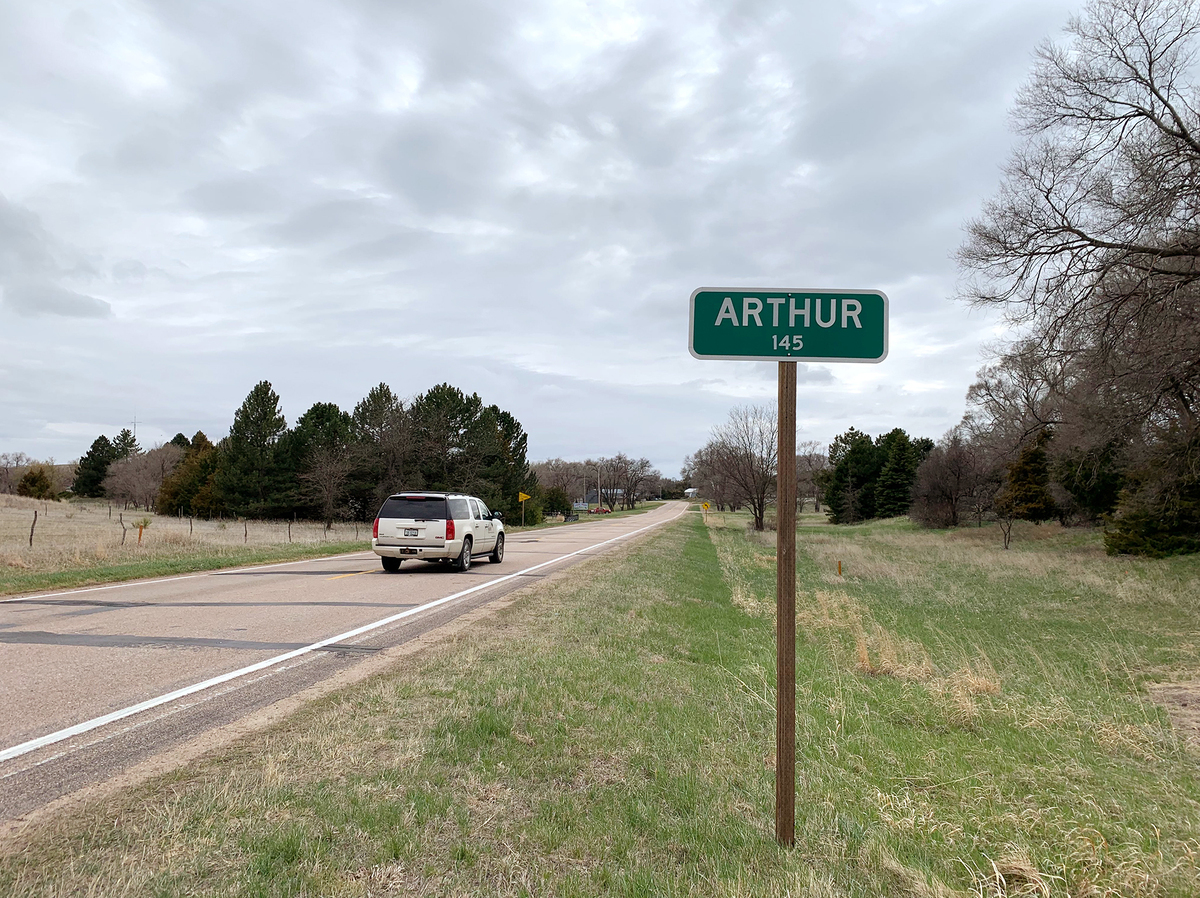
For people living in the small town of Arthur, Neb., getting to a doctor can be a challenge. The nearest hospital is located about 40 miles away in Ogallala.
Krik Siegler/NPR
hide caption
toggle caption
Krik Siegler/NPR
Taylor Walker is wiping down tables after the lunch rush at the Bunkhouse Bar and Grill in remote Arthur, Nebraska, a tiny dot of a town ringed by cattle ranches.
The 25-year-old has her young son in tow, and she is expecting another baby in August.
“I was just having some terrible pain with this pregnancy and I couldn’t get in with my doctor,” she says.
Visiting her obstetrician in North Platte is a four-hour, round-trip endeavor that usually means missing a day of work. She arrived to a recent visit only to learn that another doctor was on call and hers wasn’t available.
“So then we had to make three trips down there just to get into my regular doctor,” Walker says.
This inconvenience is part of life in Arthur County, a 700-square-mile slice of western Nebraska prairie that’s home to only 465 people. According to census figures, it’s the fifth least-populated county in the nation.
It’s always been a chore to get to a doctor out here, and the situation is getting worse by some measures — here, and in many rural places. A new poll by NPR, the Robert Wood Johnson Foundation and the Harvard T.H. Chan School of Public Health found that one out of every four people living in rural areas said they couldn’t get the health care they needed recently. And about a quarter of those said the reason was that their health care location was too far or difficult to get to.
Rural hospitals are in decline. Over 100 have closed since 2010 and hundreds more are vulnerable. As of December 2018, there were more than 7,000 areas in the U.S. with health professional shortages, nearly 60 percent of which were in rural areas.
Loading…
Don’t see the graphic above? Click here.
In Arthur County, it’s a common refrain to hear residents talk about riding out illnesses or going without care unless the situation is dire or life-threatening. Folks will also give you an earful about what happens when they do visit a clinic or hospital. Because of high turnover, doctors don’t know them or their family histories and every visit is like starting all over again, they say.
“It’d be nice to have some doctors stay and get to know their patients,” says Theresa Bowlin, the lone staffer working at the Arthur County courthouse.
Arthur’s population has been in a slow decline for decades. No one knows for sure, but it’s likely the town hasn’t had a full time doctor since the 1930s, though there was a mobile health clinic that used to park on the highway once a week up until the 1990s. But it got too expensive.
Loading…
Don’t see the graphic above? Click here.
Bowlin says it’s a perennial challenge to find a doctor who knows the community and understands the cowboy mentality about health care common here.
“The younger doctors coming in, they really don’t know how a cowboy can go that long with pain and not come to the doctor until he absolutely has to,” she says.
A generational shift
There’s a changing of the guard going on in the health care industry, and its effects may be most apparent in rural America. As baby boomer doctors retire, independent family practices are closing, especially in small towns. Only 1% of doctors in their final year of medical school say they want to live in communities under 10,000; only 2% were wanted to live in towns of 25,000 or fewer.
Taking over a small-town practice is too expensive, or in some cases, too time-consuming for younger, millennial physicians. And a lot of the newly minted doctors out of medical training are opting to work at hospitals, rather than opening their own practices.
The CEO at the Ogallala Community Hospital in Ogallala, Neb., began offering $100,000 signing bonuses to attract doctors to the town.
Theo Stroomer for NPR
hide caption
toggle caption
Theo Stroomer for NPR
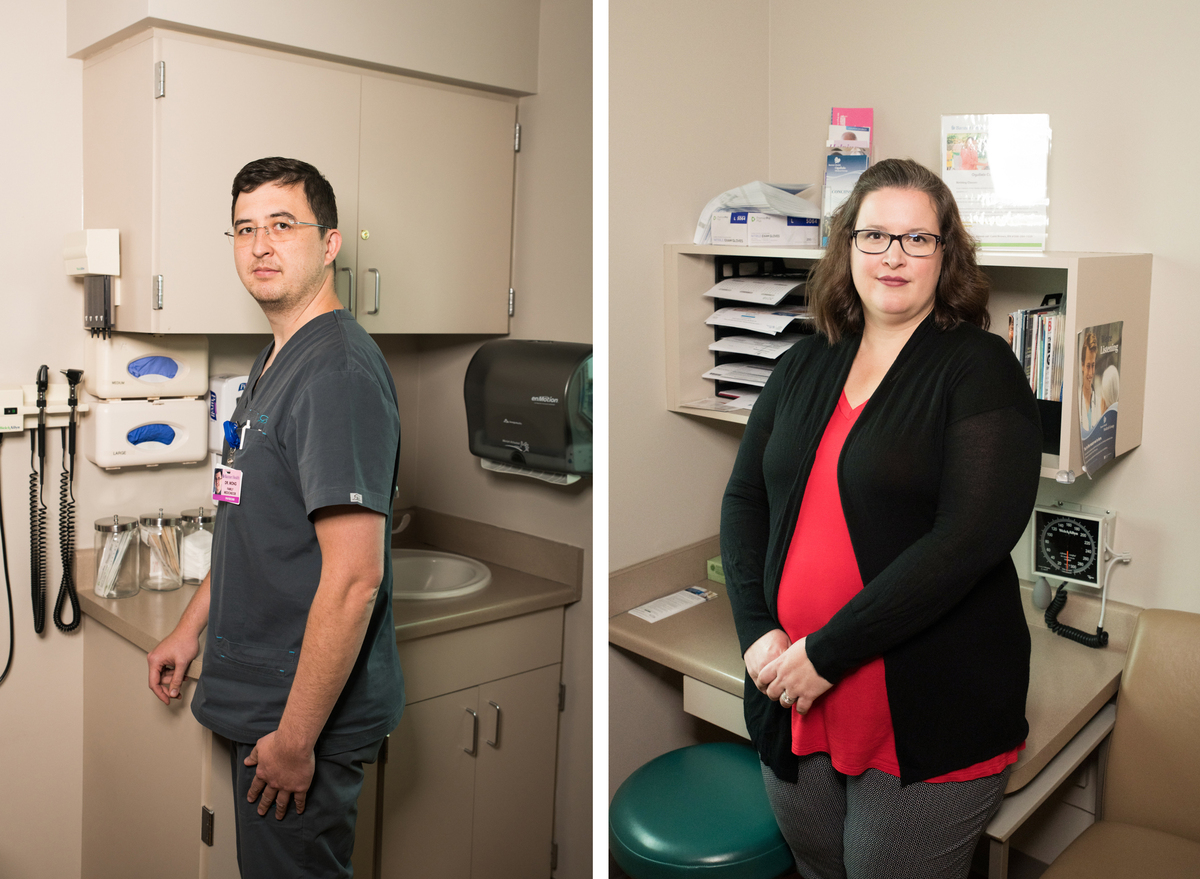
The nearest hospital to Arthur is 40 miles south in the town of Ogallala. Christopher Wong, 36, is one of just two family practice obstetricians at Ogallala Community Hospital, which serves a vast area of some 15,000 people spread across several counties.
Wong grew up in suburban Denver, about a three-hour drive away, but world’s apart from western Nebraska
“Most of the people I take care of out here are ranchers and farmers,” Wong says.
Wong first got interested in rural health care during med school, doing volunteer work in rural Louisiana after Hurricane Katrina. Still, working full time in a small town in rural Nebraska has been an adjustment.
One day, he did rounds at the hospital, saw dozens of patients at the clinic and signed a birth certificate for a baby he’d just delivered. He and the mother had to get a little creative, Wong recalled. She had a history of going into labor fast, but lives more than an hour’s drive from the hospital. Plus it’s calving season on her ranch. And she wasn’t sure her husband would be nearby — or available — to drive her to the hospital.
“So we brought her into the hospital when she was 39 weeks so we could induce her,” Wong says.
Christopher Wong (left) and Jessica Leibhart, are family practice physicians at Ogallala Community Hospital in Ogallala, Neb. Wong, who has worked at the hospital for almost three years, says he has no plans to leave. Leibhart grew up about fifty miles away from Ogallala and said she wanted to live in the small town.
Theo Stroomer for NPR
hide caption
toggle caption
Theo Stroomer for NPR
Being a doctor in a small town, you’re always on, even when you’re not. It’s not like you can just clock out and leave work. Wong will bump into a patient at the grocery store who politely asks about this ailment or that problem. Everyone knows him and there’s no anonymity. He’s also on call every other weekend.
“It’s very hard to get away,” Wong says. “It’s hard to separate it all.”
He has a girlfriend in Denver and tries to get down there when he can. But it’s a tough sell to convince a partner to move to rural Nebraska where there are few other young professionals or opportunities.
“I think that’s why it’s also hard to get physicians into rural practice because it’s hard to maintain a personal life.”
Burnout is high. Wong is approaching three years on the job in Ogallala and has no plans to leave. But it’s a constant worry for hospital administrators.
“Work-life balance is a big piece, they want to go home at some time,” says Drew Dostal, CEO of Ogallala Community.
Doctors like Wong, who do both family practice and obstetrics are already in high demand. Dostal even offers $100,000 signing bonuses to help ease their debt burden. It may get them out here for a few years, he says, but they’re usually lured away by other offers and rarely become fully part of the community.
“Physicians who have to move on to help get their debt paid off …[that] challenges patients as well,” Dostal says. “They want to know [their doctor], they want them to stay forever, but it just isn’t a reality in today’s health care.”
Social matchmakers
Dostal is currently looking for a third family practice doctor and could probably hire a fourth. Retaining doctors is key to keeping critical access hospitals like this one open. In the NPR poll, close to one out of every ten respondents said their small town hospital had recently closed.
Recruiting and retaining doctors is so pressing that hospital officials even try to become social matchmakers. If a doctor likes sports, for example, administrators may suggest they volunteer as team physician at the high school; or if they are an arts lover, they could volunteer on the planning committee for the local arts festival.
“If we don’t do a better job of doing that, there is a risk for rural places to lose their hospital, or lose their providers that are in that hospital,” says Dr. Jeffrey Bacon, the chief medical officer for three Banner Health hospitals in northeast Colorado and western Nebraska, including in Ogallala.
One out of every four Americans living in rural America said they had problems accessing needed health care recently, according to a new poll by NPR, the Robert Wood Johnson Foundation and the Harvard T.H. Chan School of Public Health. In small towns like Ogallala, the challenge for health care providers is attracting doctors who want to live there.
Theo Stroomer for NPR
hide caption
toggle caption
Theo Stroomer for NPR
Bacon and other hospital officials say a more effective solution than social matchmaking or signing bonuses might be if medical schools did more active recruiting in small towns.
In January, Ogallala Community was thrilled to hire Jessica Leibhart to join Wong as a second family practice OB-GYN. Leibhart, 36, grew up in Imperial, Neb., about fifty miles south of Ogallala.
“I was looking to get back to my roots,” Leibhart says. “This was really close and looked like the right fit for us.”
Leibhart relocated from the Omaha area and her family already had contacts in Ogallala, so the transition has been smooth. She knows that in a small town it’s virtually impossible to escape your job.
“If we’re at Walmart or my husband and I will be out for dinner and then pretty soon someone stops by, but that’s part of it,” Leibhart says. “And that truly is becoming part of the community and part of the family that the small town is.”
Finding doctors who want to be part of the small town family, may be one solution to addressing the worsening doctor shortage in rural America, and the growing urban-rural divide.
Coordinated protests in response to a raft of new state laws restricting abortion took place across the U.S. on Tuesday.
Researchers wanted to know if CBD can help people who are former opioid users resist relapse. Their double-blinded, placebo-controlled trial suggests CBD can help reduce stress and cravings.