Nepalese Sherpa Sets Mount Everest Record (Again), Climbing Mountain Twice In A Week

Nepali mountaineer Kami Rita Sherpa hopes to break his own record for climbing Everest, aiming for 25 summits. He’s seen here in 2018, spinning prayer wheels in Kathmandu.
Prakash Mathema/AFP/Getty Images
hide caption
toggle caption
Prakash Mathema/AFP/Getty Images
A Nepalese mountain climber has now climbed Mount Everest a record 24 times — and he’s hoping to do it one more time before he retires. Kami Rita Sherpa, 49, has been climbing Everest since 1994.
“It’s also the second time in a week that he’s made the arduous trek,” NPR’s Sushmita Pathak reports from Mumbai. “The 49-year-old Sherpa guide had already broken his own record on May 15, when he scaled the summit for the 23rd time.”
Rita started his most recent climb just three days after his 23rd summit of Everest. Early Tuesday morning, he stepped on the tallest peak in an area known as the roof of the world, leading a team of Indian police officers on the climb, according to The Kathmandu Post.
The highest mountain on Earth, Mount Everest’s summit is more than 29,000 feet above sea level. The first time it was successfully scaled was in 1953 — and the southeast route that was taken by Sir Edmund Hillary and Sherpa Tenzing Norgay is the same one Rita and many other climbers still use today.
In addition to Everest, Rita has climbed a number of other imposing mountains, including K2 and Cho-Oyu.
Mountaineers who hope to climb Everest have a brief window each May in which weather conditions are most favorable. In the current season, 381 people have received permits to carry out expeditions on the mountain, as part of 44 teams, according to Nepal’s Department of Tourism. Of those climbers, 14 are natives of Nepal.
As of Monday, at least 75 climbers had reached the top of Everest in the current season, according to The Rising Nepal.
Poll: Many Rural Americans Struggle With Financial Insecurity, Access To Health Care
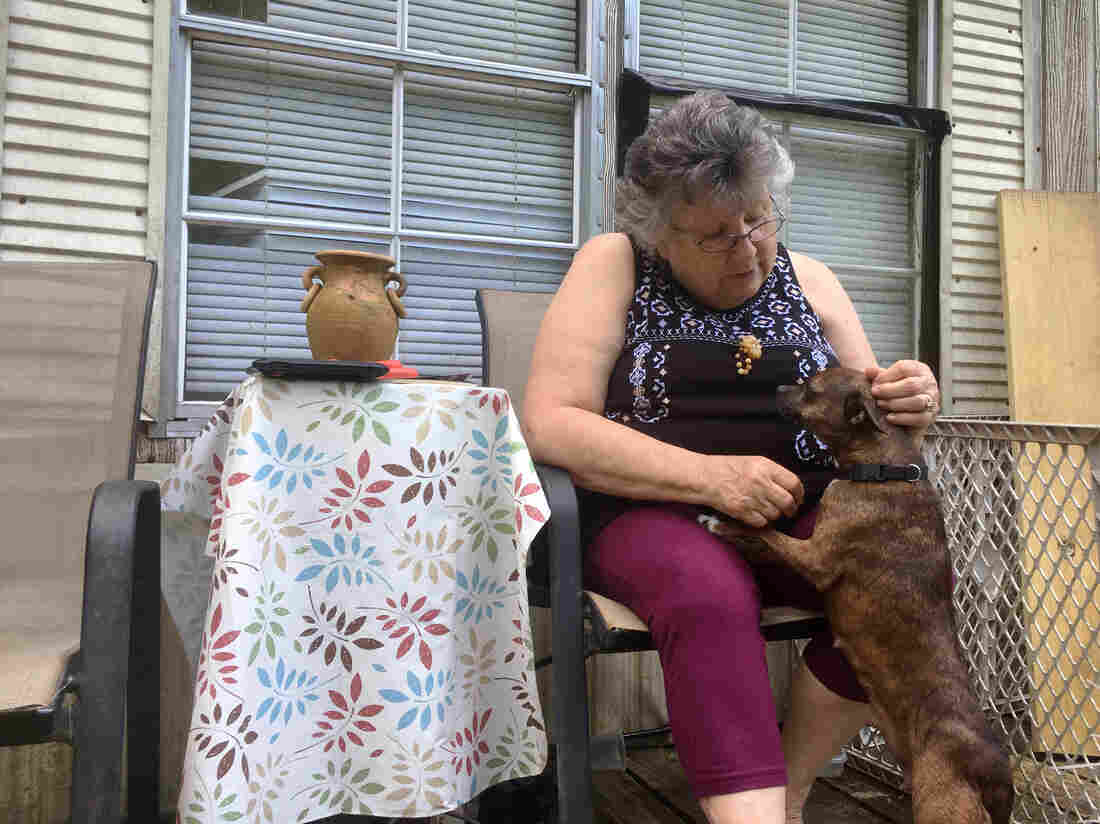
Leitha Dollarhyde, a retired caregiver who lives in a rural town near Whitesburg, Ky., says she could not afford an unexpected $1,000 expense.
Sydney Boles for NPR
hide caption
toggle caption
Sydney Boles for NPR
Polling by NPR finds that while rural Americans are mostly satisfied with life, there is a strong undercurrent of financial insecurity that can create very serious problems for many people living in rural communities.
The findings come from two surveys NPR has done with the Robert Wood Johnson Foundation and the Harvard T.H. Chan School of Public Health on day-to-day life and health in rural America.
After a major poll we did last fall found that a majority (55%) of rural Americans rate their local economy as only fair or poor, we undertook a second survey early this year to find out more about economic insecurity and health. The poll looked beyond the known factors of job loss and the decades-long flight of young people to more urban areas.
Several findings stand out: A substantial number (40%) of rural Americans struggle with routine medical bills, food and housing. And about half (49%) say they could not afford to pay an unexpected $1,000 expense of any type.
Access to health care
One-quarter of respondents (26%) said they have not been able to get health care when they needed it at some point in recent years. That’s despite the fact that nearly 9 in 10 (87%) have health insurance of some sort — a level of coverage that is higher now than a decade ago, in large part owing to the Affordable Care Act and the expansion of Medicaid in many states.
Loading…
Don’t see the graphic above? Click here
“At a time when we thought we had made major progress in reducing barriers to needed health care, the fact that 1 in 4 still face these barriers is an issue of national concern,” says Robert J. Blendon, co-director of the survey and professor of health policy and political analysis at the Harvard T.H. Chan School of Public Health. “Either it is still not affordable for them or the insurance they have doesn’t work — or they can’t get care from the health providers that are in their community.”
Of those not able to get health care when they needed it, the poll found that 45% could not afford it, 23% said the health care location was too far or difficult to get to, and 22% could not get an appointment during the hours needed.
Dee Davis, president and founder of the Center for Rural Strategies in Whitesburg, Ky., says poverty and ill health are endemic where he lives. “People in this congressional district have the shortest life span in the United States; we also are the poorest,” Davis says. “We’re poor and we’re sicker.”
But, he adds, the Affordable Care Act — which in Kentucky brought an expansion of Medicaid to many previously uninsured residents — went a long way in helping many rural communities take care of recurring problems. “We’re not out of the woods yet but the ACA certainly changed the landscape,” Davis says.
Lots of rural people benefited from the ACA, he adds, and if that progress were to be lost, he says: “We’re in trouble.”
Loading…
Don’t see the graphic above? Click here
For purposes of this poll, “rural” was defined as areas that are not part of a Metropolitan Statistical Area, as used in the 2016 National Exit Poll. The NPR poll was conducted in English and Spanish using random-digit dialing Jan. 31-March 2 among a nationally representative, probability-based sample of 1,405 adults ages 18 or older living in the rural U.S. The margin of error for the total respondents is plus or minus 3.5 percentage points at the 95% confidence level.
Financial insecurity
One measure of financial security is the ability to meet unexpected expenses like a car repair or a medical problem or fixing something that has gone wrong in the house. It’s not unusual for these expenses to run $1,000 or more, so we asked whether that would be a problem.
Overall, nearly half (49%) said they wouldn’t be able to afford that. And more than 6 in 10 rural black and Latinx Americans said they would have a problem paying that off (blacks, 68%; Latinx, 62%), compared with 45% of rural whites.
“When you’re living close to the edge, sometimes you fall off,” says Davis. “If half the people in rural America can’t deal with a $1,000 bill, that’s rough.”
Loading…
Don’t see the graphic above? Click here
It would be an issue for 72-year-old Leitha Dollarhyde, a retired caregiver who lives near Whitesburg, Ky., a rural town of under 2,000 people. She was born about 4 miles from where she lives today.
Her answer, when asked if she could afford an unexpected $1,000 expense? “No. There’s no way. My savings account is zero.”
Dollarhyde worked all her life, but the jobs just didn’t pay enough for her to put anything aside. She raised four children. Today her income — Social Security and Supplemental Security Income — adds up to $790 a month.
“With that income, you watch every penny,” she says.
Strong social networks
Yet even with the high levels of financial insecurity that we found, there is abundant optimism and satisfaction with the quality of life in rural America. Almost three-quarters (73%) of rural Americans rate the overall quality of life in their local community as excellent or good. And a majority (62%) are optimistic that people like them can make an impact on their local community.
Davis says that is what he observes in rural Kentucky. “People may be living a more hardscrabble existence than folks in the suburbs or a lot of the folks in cities, but it doesn’t mean they’re not living a decent life,” he says. “Most people are pretty happy with it; they’ve got friends and neighbors they rely on and they’re where they want to be.”
Still, social isolation and loneliness are a concern in rural America. We found nearly 4 in 10 (38%) said “many people” in their community feel lonely or isolated, with almost 1 in 5 (18%) saying they “always” or “often” feel either isolated or lonely. People with disabilities (31%) more frequently said they feel lonely or isolated from others compared with those without disabilities (12%).
Loading…
Don’t see the graphic above? Click here
A majority of rural Americans say they participate in civic and social activities, including volunteering and service, political activities, community meetings and membership in a variety of groups. The most frequently cited activity was volunteering their time to an organization working to make their local community a healthier place to live (49%).
Whitesburg community activist Nell Fields says that when her husband was recently hospitalized, her neighbors were extraordinary.
“My neighbors come and mow my grass, feed cattle, get eggs every day for the last few weeks,” she says. “That says so much to me. [It] makes me feel the emotion now of what it feels like to have such warm, wonderful support and I know that’s the blessing of living in rural America.”
Declining hospitals
Since 2010, 106 rural hospitals have closed in rural America. As many as 673 more are at risk of closure, according to a 2016 report from iVantage Health Analytics. Currently, there are approximately 1,860 rural hospitals in the U.S.
Eight percent of rural adults polled say hospitals in their local communities have closed down in the past few years. About two-thirds (67%) say the closures were a problem, including 38% who say they were a major problem.
“It means people have to travel greater distances to receive care, and distance can be a barrier to timely and appropriate access to services,” says Brock Slabach of the National Rural Health Assembly in Leawood, Kan. “Delayed care can often lead to tragic consequences. This can be a huge barrier for many living in rural areas.”
Loading…
Don’t see the graphic above? Click here
As an example, he points to the small town of Tonopah, Nev., population 2,478, that is more than three hours away from the nearest hospital by road. The community’s hospital closed in 2015 and the ambulance service in town was left to deal with all kinds of medical problems that it is not situated to handle, Slabach says.
In areas where higher-speed Internet access is available, people are turning to telehealth instead of going to a doctor or clinic. But broadband access is a perennial issue in many parts of rural America, with 1 in 5 (21%) saying that accessing high-speed Internet is a problem for their family. Among those who do use the Internet, a majority say they do so to obtain health information (68%).
The medical purposes for using telehealth vary, as a majority of rural telehealth patients (53%) say they have received at least one prescription from their doctor or other health professional using telehealth, while 25% have received a diagnosis or treatment for a chronic condition, 16% have received a diagnosis or treatment for an emergency, and 9% have received a diagnosis or treatment for an infectious disease.
3-Time Formula One Champ Niki Lauda Is Dead At 70
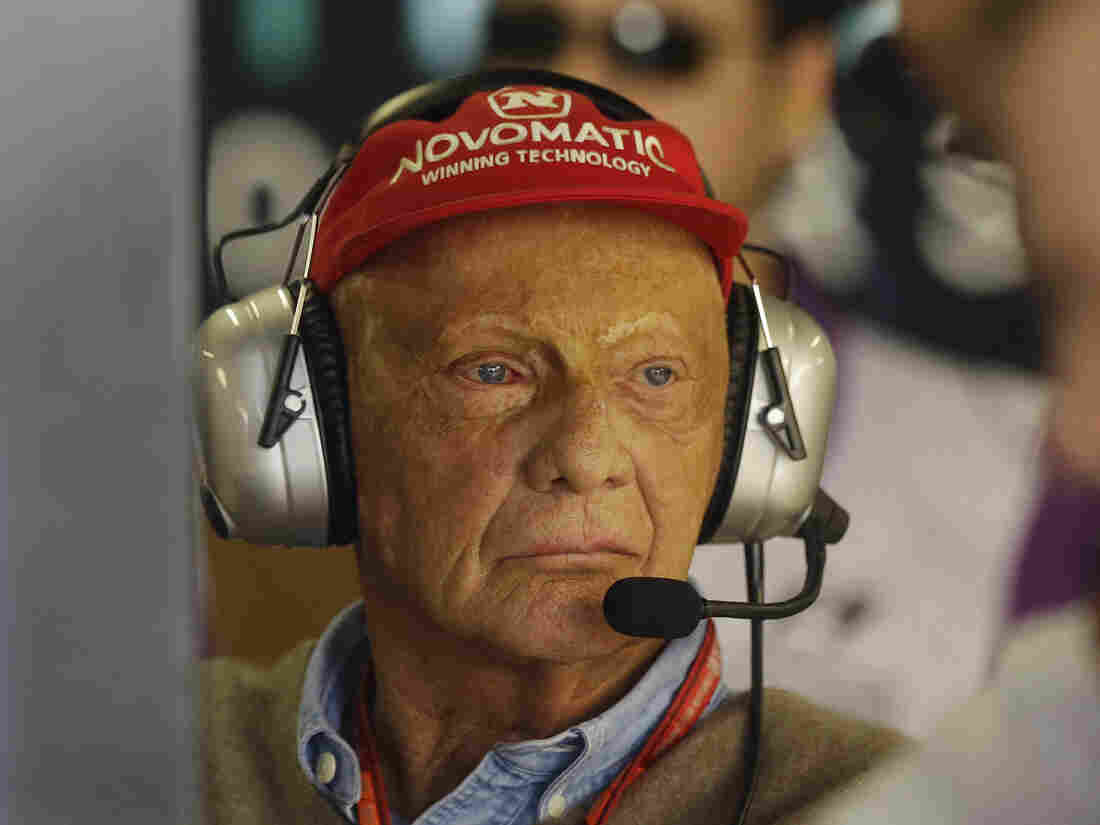
Former Formula One driver Niki Lauda stands in the Mercedes pit at the Interlagos race track in Sao Paulo, Brazil, in 2017. The three-time Formula One world champion has died at the age of 70.
Nelson Antoine/AP
hide caption
toggle caption
Nelson Antoine/AP
Formula One world champion Niki Lauda of Austria, who survived a fiery crash in 1976 and went on to win the championship twice more, has died. He was 70.
Born Andreas Nikolaus “Niki” Lauda, he was a prominent race car driver in the 1970s and 1980s, who first won the F1 championship driving for Ferrari in 1975. He’s known by many for the serious crash he suffered the next year, in the 1976 German Grand Prix at the Nurburgring race track, where he suffered third-degree burns to his head and face. At the hospital, Lauda fell into a coma, and also received last rites.
“For three or four days it was touch and go,” Lauda recalled later, according to ESPN.
Still, he managed to race again just six weeks after the accident, taking fourth place in the Italian Grand Prix. As the BBC reports: “By the end of the race, his unhealed wounds had soaked his fireproof balaclava in blood. When he tried to remove the balaclava, he found it was stuck to his bandages, and had to resort to ripping it off in one go.” The BBC calls his quick return to racing “one of the bravest acts in the history of sport.”
All at McLaren are deeply saddened to learn that our friend, colleague and 1984 Formula 1 World Champion, Niki Lauda, has passed away. Niki will forever be in our hearts and enshrined in our history. #RIPNiki pic.twitter.com/Ndd9ZEfm6B
— McLaren (@McLarenF1) May 21, 2019
Lauda went on to win the F1 championship again in 1977. In 1979 he retired and turned to aviation, creating Lauda air, declaring that he “didn’t want to drive around in circles anymore,” the AP reports. But he was lured back to racing a few years later by a big offer from McLaren. He won the F1 championship for a third time in 1984, before retiring from the sport for good the next year.
“His unique successes as a sportsman and entrepreneur are and remain unforgettable,” his family said in a statement, the AP reports. “His tireless drive, his straightforwardness and his courage remain an example and standard for us all. Away from the public gaze he was a loving and caring husband, father and grandfather. We will miss him very much.”
What Abortion Was Like In The U.S. Before Roe V. Wade

NPR’s Mary Louise Kelly talks with Karissa Haugeberg, assistant professor of history at Tulane University, about what it was like to get an abortion before Roe v. Wade.
GoldLink Turns Up As A Hologram For ‘Zulu Screams’ Video

YouTube
GoldLink is riding a well-deserved tide of goodwill ever since his 2017 studio debut At What Cost, a record that birthed “Crew” and resulted in his first Grammy nomination.
“Zulu Screams” is the latest glimpse of new material from the rapper since January’s “Got Muscle.” It’s a low-key, welcome return for the rapper’s nimble flow, setting his sights outside of his hometown’s go-go music. His voice snakes around P2J’s delightful production infused with sped-up highlife guitar, assisted by the similarly agile DMV singer-songwriter Bibi Bourelly and Brit-Nigerian singer Maleek Berry.
Directed by Meji Alabi, the visual for “Zulu Screams” finds GoldLink as a maestro of a particularly rowdy warehouse function — neon strobelights, a game of craps, and a lot of athletic dance moves on display. The only catch? GoldLink, in these modern times, is a hologram.
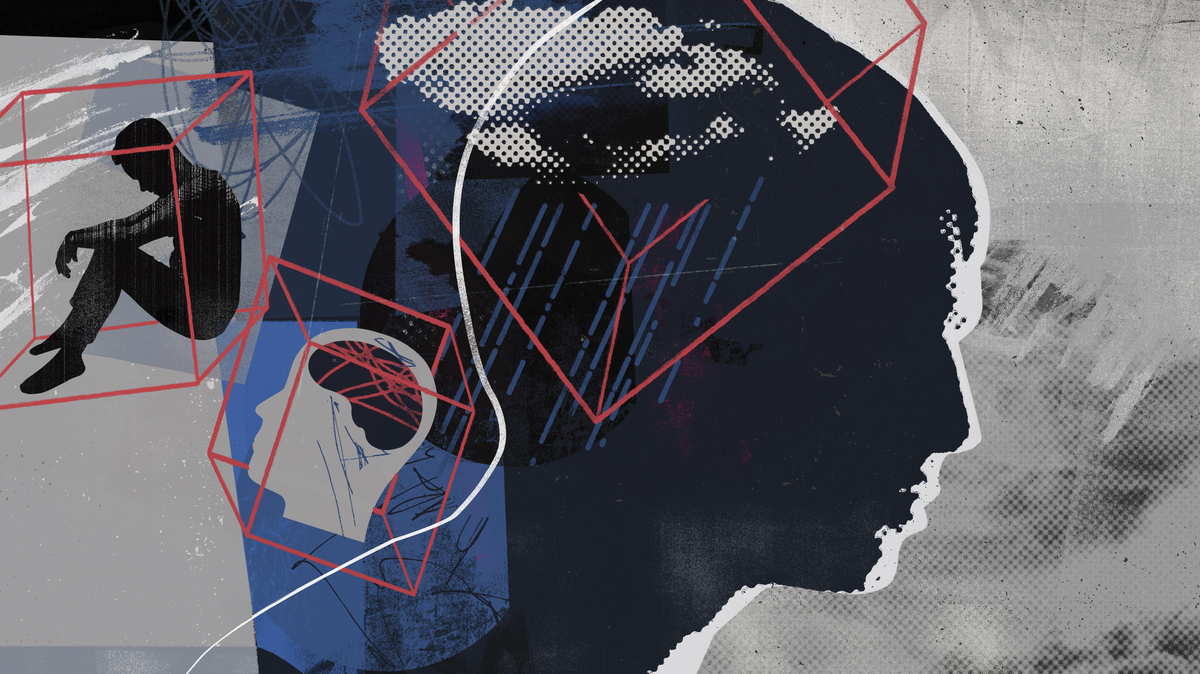
Not Just For Soldiers: Civilians With PTSD Struggle To Find Effective Therapy

Stuart Kinlough/Getty Images/Ikon Images
Lauren Walls had lived with panic attacks, nightmares and flashbacks for years. The 26-year-old San Antonio teacher sought help from a variety of mental health professionals — including spending five years and at least $20,000 with one therapist who used a Christian-faith-based approach, viewing her condition as part of a spiritual weakness that could be conquered — but her symptoms worsened. She hit a breaking point two years ago, when she contemplated suicide.
In her search for help, Walls encountered a psychiatrist who diagnosed her with post-traumatic stress disorder. As a result, she sought out a therapist who specialized in trauma treatment, and that’s when she finally experienced relief.
“It was just like a world of difference,” Walls says.
Seeing herself as someone with PTSD was odd at first, Walls recalls. She isn’t a military veteran and thought PTSD was a diagnosis reserved for service members. But her psychologist, Lindsay Bira, explained that Walls most likely developed the mental disorder from years of childhood abuse, neglect and poverty.
PTSD has long been associated with members of the military who have gone through combat and with first responders who may face trauma in their work. It’s also associated with survivors of sexual assault, car accidents and natural disasters. But researchers have also learned it can develop in adults who have experienced chronic childhood trauma — from physical, emotional or sexual abuse by caregivers or from neglect or other violations of safety.
Walls was fortunate to find a therapist trained to treat PTSD. Outside of military and veterans’ health facilities, finding knowledgeable help is often difficult.
A limited number of the more than 423,000 mental health counselors, therapists, psychologists and psychiatrists in the U.S. are trained in two key therapies, called cognitive processing therapy and prolonged exposure therapy. These are treatments recommended as part of a patient’s care by the American Psychiatric Association and the Department of Veterans Affairs, which has studied treatments for PTSD since it affects many service members.
There is no definitive tally of people trained in these therapies, and neither the American Psychiatric Association nor the American Psychological Association tracks those data. A 2014 study by the Rand Corp. found that only about a third of psychotherapists had the training. The VA says over 6,000 of its therapists have, though rosters for the CPT and PE organizations list just a few hundred total practitioners.
Nonetheless, the VA’s National Center for PTSD wants to expand access to these treatments, and regional groups, including those in Texas, are following its lead. Texas has a need for more PTSD providers: It ranks No. 2 nationwide in the number of human-trafficking victims; it’s the leading state for refugee resettlement; it has the most unaccompanied child migrants of any state; and it’s second only to California in the number of military service members — all factors that raise the risk of PTSD.
UT Health San Antonio, a University of Texas medical school and hospital, teaches community mental health providers how to provide the two PTSD therapies through its Strong Star Training Initiative. Funded by the Texas Veterans + Family Alliance grant program and the Bob Woodruff Foundation, the initiative has trained 500 providers since it started in 2017. Most training takes place in San Antonio, and many of the mental health professionals who participate are Texas-based, though they also come from Florida, Illinois and other states.
In February, about 20 therapists gathered in a conference room at the medical school for instruction. Calleen Friedel, a San Antonio-based marriage and family therapist, was one of them. She said she is seeing more people with PTSD and often felt inept at helping them.
“I would just do what I know and do my own reading,” Friedel said. “And what I was taught in graduate school, which was, like, over 20 years ago.”
The group learned about one of the mainstream therapies, prolonged exposure therapy, which gradually exposes patients to trauma memories to help reduce PTSD symptoms. Strong Star also teaches cognitive processing therapy, which involves helping the patients learn to reframe their thoughts about the trauma. But both therapies — often called “evidence based” because of the research backing their effectiveness — have been slow to gain traction among psychotherapists because they require the therapist to follow a script and they differ from the common therapeutic approach to mental health issues.
Edna Foa, who created prolonged exposure, said in a 2013 journal article that many psychotherapists believe delving into a patient’s inner life and history is central to their work. By contrast, the highly structured, evidence-based treatments — with their pre- and post-session evaluations and their focus on symptom relief — can seem “narrow and boring,” she wrote.
In addition, some people living with PTSD have complained that the treatments don’t work for everyone. But Foa and others say the focused approach targets the brain mechanisms that cause PTSD symptoms, and symptom relief is what many living with PTSD want.
Edwina Martin, a psychologist in Bonham, Texas, says treatments such as the ones she is learning at Strong Star weren’t mainstream when she finished graduate school more than 10 years ago. She is now employed at a VA health center after working for a decade in prisons, and she says she wants these PTSD therapies in her “tool bag.”
The push to expand the trained workforce coincides with a growing understanding of trauma’s effects. The National Council for Behavioral Health, a nonprofit organization of mental health care providers, calls trauma a “near universal experience” for people with mental and behavioral health issues.
Because so many patients think PTSD is mostly a military problem, psychologist Bira says, they encounter a roadblock to recovery.
“I get that all the time,” Bira says. “The beginning stages in treatment that I find with civilians are really about educating [them] about what PTSD is and who can develop it.”
Kaiser Health News is a nonprofit news service covering health issues. It is an editorially independent program of the Kaiser Family Foundation that is not affiliated with Kaiser Permanente.
President Trump’s Golf Scores Hacked On U.S. Golf Association Account

President Trump plays a round of golf at Trump Turnberry Luxury Collection Resort during his first official visit to the United Kingdom on July 15, 2018 in Turnberry, Scotland.
Leon Neal/Getty Images
hide caption
toggle caption
Leon Neal/Getty Images
President Trump’s account on the U.S. Golf Association system has been hacked in an apparent attempt to make him look like a bad golfer with four fake scores.
The awful scores of 101, 100, 108 and 102 were posted to Trump’s USGA-administered Golf Handicap and Information Network [GHIN] handicap system on Friday, according to Golfweek. A handicap is a measure of a golfer’s ability – a lower handicap indicates a better golf game.
“We have become aware of reports in the media questioning recent scores posted on President Trump’s GHIN account,” Craig Annis, the managing director of communications for the USGA, told Golfweek. “As we dug into the data it appears someone has erroneously posted a number of scores on behalf of the GHIN user.”
USGA is removing the scores and says it is investigating to determine how they appeared, Annis said.
Trump flew from New York to Washington, D.C., on Friday morning and delivered a speech to the National Association of REALTORs convention in the afternoon. He did play golf on Saturday afternoon at the Trump National Golf Club in Sterling, Va. According to a site that tracks Trump’s golf habits, the president has played more than 170 rounds since taking office.
The fabricated scores were from games at Trump National in New York, Trump International in West Palm Beach, Fla., and the Cochise Course at Desert Mountain in Scottsdale, Ariz., Golfweek reported. Another suspicious score of 68 was recorded on April 19.
Par in a round of golf is typically around 72 strokes. According to Trump’s account, his scores usually fall in the 70s and 80s, but many are skeptical that the president has always truthfully recorded his scores. Trump has vehemently denied accusations that he has bent the rules.
“I’ve played a lot, and I’ve played well,” Trump said, according to a Washington Post investigation in 2015. “There’s very few people that can beat me in golf.”
Golf insiders don’t dispute that Trump is a fine golfer – he might just not play as well as he says he does.
In 2012, Forbes reported that Trump is a 4 handicap, despite the fact that he has yet “to produce a real signed scorecard.”
Rick Reilly, the sportswriter who penned the 2004 book “Who’s Your Caddy?” told the Post that one afternoon Trump recorded scores that he didn’t actually earn. The Post investigation also revealed that caddies would allegedly help Trump cheat.
“When it comes to cheating, he’s an 11 on a scale of one to 10,” Reilly said.
Duncan Laurence From The Netherlands Wins Eurovision 2019

Duncan Laurence of the Netherlands, the winner of Eurovision 2019, captured during the competition on Saturday in Tel Aviv, Israel.
Guy Prives/Getty Images
hide caption
toggle caption
Guy Prives/Getty Images
Singer Duncan Laurence from the Netherlands has emerged victorious at the 2019 Eurovision Song Contest. The finals were held Saturday night in Tel Aviv, Israel.
The 25-year-old Laurence won the international competition with a song called “Arcade,” which he co-wrote. The song is a sweet, emotional ballad that stands in contrast to Israeli singer Netta’s wacky “Toy,” which won in 2018.
Laurence, whose real name is Duncan de Moor, participated in the Dutch version of “The Voice” in 2014. He’s also been writing for other performers, including the K-pop band TVXQ.
Eurovision Song Contest
YouTube
In all, 41 countries started out in this year’s competition. The 26 finalists’ songs included a number of power ballads alongside Duncan’s, as well as perky, anodyne pop from artists like the Czech Republic’s Lake Malawi and Denmark’s Leonora; and aspiring club bangers from the artist Tamta, the singer representing Cyprus, and Belarus’ Zena, among many others.
But because this is Eurovision, where camp appeal often outweighs other factors, there was also Serhat — a dentist turned-television impresario-turned singer, who channels Leonard Cohen at the disco and represented tiny San Marino — and Iceland’s Hatari, which describes itself as an “anti-capitalist performance art group inspired by BDSM and anti-authoritarian dystopic aesthetics.”
Eurovision Song Contest
YouTube
Eurovision Song Contest
YouTube
Hatari reportedly “tested the patience” of the European Broadcasting Union, which mounts Eurovision, in the week leading up to the finals by repeatedly speaking out against the Israeli government.
More widely, this year’s event has been partly overshadowed by politics and the Israeli-Palestinian conflict. On Tuesday, hackers interrupted the Israeli live webcast of the first semi-final to warn, falsely, that the city of Tel Aviv was under attack. Israel’s national broadcaster, Kan, blamed Hamas for the hacking. Palestinian activists unsuccessfully urged performers to boycott Eurovision 2019.
Organizers said the Eurovision finals were being watched by 200 million people across the globe. However, the show was not broadcast in the United States this year after the Logo TV network, which carried the 2016 to 2018 editions, chose not to pick up this year’s contest.
Along with this year’s competitors, other performers at Eurovision 2019 included previous winners Netta from Israel, who won in 2018, and 2014’s winner, Conchita Wurst from Austria — as well Madonna, who performed “Like a Prayer,” as well as her new, reggae-flavored song “Future” with Migos’ Quavo.
From The Gridiron To Multigrid Algorithms In ‘Mind And Matter’

Here’s a puzzle: Do the qualities that allow a man to block 300lb bodies every day have anything to do with the qualities that allow the same person to solve three-body problems late into the night? Stumped? John Urschel can solve that puzzle for you.
Urschel is a former offensive lineman for the Baltimore Ravens who holds a bachelor’s and a master’s degree in mathematics from Penn State, and is currently pursuing a doctorate at MIT. And now he has written a memoir, Mind and Matter, about how his love of football and his love of math fit together. “When I was very little, I loved puzzles,” he says. “I loved solving problems. And that’s math, and I was fascinated with that sort of thing. And in high school, I started playing football and I fell in love with it. And then when I got to college and I started taking college math courses, then I really fell in love with math again, and that’s when I really discovered what mathematics is, and that I would be a mathematician.”
Interview Highlights
On why he decided to play pro football despite the risks
First of all, this wasn’t really a plan of mine. I have to say, when I was a kid, I loved watching college football, you know, football in the Big 10. [University of Michigan offensive tackle] Jake Long was my hero, and I wanted to be a Big 10 offensive lineman. And here I am, I’m a senior at Penn State, I am a Big 10 offensive lineman, and I’m living my dream. And I thought, okay, pro football seems available to me, people are talking about it, they have me on projection draft lists, and I said, you know what? Math can wait a little bit, and I’m going to go play football at the highest level, because I can come back to math later, but I can’t come back to try professional football.
On the possibility of brain injury
It was something that I had thought about at some point, and I recognized that there are those risks, and I was aware of them, but I was already aware of them, and I had already made my decision.
On getting a concussion in practice and being briefly unable to do complex math
When I had the concussion, as crazy as it seems, I was really frustrated, more than anything, that’s the right adjective, in that I love football, I love math, and I couldn’t do either of those things at that moment. And it really bothered me. But once I got better, and I was back to doing football and doing math, I thought, okay, if this happens again, I really need to think and reevaluate, but I like where I am right now, and I want to keep playing football and keep doing math, and I’m going to just keep doing both of those things and, I’m forget about this … and I did.
On what factored into his decision to retire
Things about mathematics, you know, looking at my career going forward, sort of thinking about — at that time, I was going to become a father, and so this is something I started thinking about, spending time with my daughter, being able to walk my daughter down the aisle. Being able to, when I’m 60 and 70, being able to run around, have my knees be okay, my shoulders okay, my back okay. Of course, you think about your head as well, but it’s a very holistic thing. The NFL can really do a number on your body, and a lot of people are focusing on people’s heads, but it’s sort of all over. And I’m blessed to have played three years in the NFL, and by NFL player standards, retired completely healthy. Not by normal people standards, but by NFL standards, I am as close to completely healthy as you can get.
On being an African American in math
I recognize that because I’m a mathematician at MIT and I play professional football, I’m in the spotlight. And I have a responsibility to use this platform to show people the beauty of mathematics. To show people playing in the NFL, this isn’t your way out. You can do something mathematics. You can do something in STEM, even if you don’t necessarily look like what the majority of people in that field look like.
And I have to say, okay, if you look at the field of mathematics, if you look at elite American mathematicians, there’s almost no African Americans. There aren’t many of us in PhD programs, there’s not many of us as undergrads, and what you’re sort of left with is the sad realization that there are brilliant young minds being born into this country that are somehow being lost — either because of the household they’re born into, or their socioeconomic situations, or sort of the social culture in their community. And this isn’t just a disservice to them, this is a disservice to us as a country.
This story was edited for radio by Elizabeth Baker and adapted for the Web by Petra Mayer.
Where’s Masculinity Headed? Men’s Groups And Therapists Are Talking

Leonardo Santamaria for NPR
Sean Jin is 31 and says he’d not washed a dish until he was in his sophomore year of college.
“Literally my mom and my grandma would … tell me to stop doing dishes because I’m a man and I shouldn’t be doing dishes.” It was a long time, he says, before he realized their advice and that sensibility were “not OK.”
Now, as part of the Masculinity Action Project, a group of men in Philadelphia who regularly meet to discuss and promote what they see as a healthier masculinity, Jin has been thinking a lot about what men are “supposed to” do and not do.
He joined the peer-led group, he says, because men face real issues like higher rates of suicide than women and much higher rates of incarceration.
“It’s important to have an understanding of these problems as rooted in an economic crisis and a cultural crisis in which there can be a progressive solution,” Jin says.
In supporting each other emotionally, Jin says, men need alternative solutions to those offered by the misogynist incel — “involuntary celibate” — community or other men’s rights activists who believe men are oppressed.
“Incels or the right wing provide a solution that’s really based on more control of women and more violence toward minorities,” Jin says.
Instead, he says, he and his friends seek the sort of answers “in which liberation for minorities and more freedom for women is actually empowering for men.”
Once a month, the Philadelphia men’s group meets to learn about the history of the feminist movement and share experiences — how they learned what “being a man” means and how some of those ideas can harm other people and even themselves. They talk about how best to support each other.


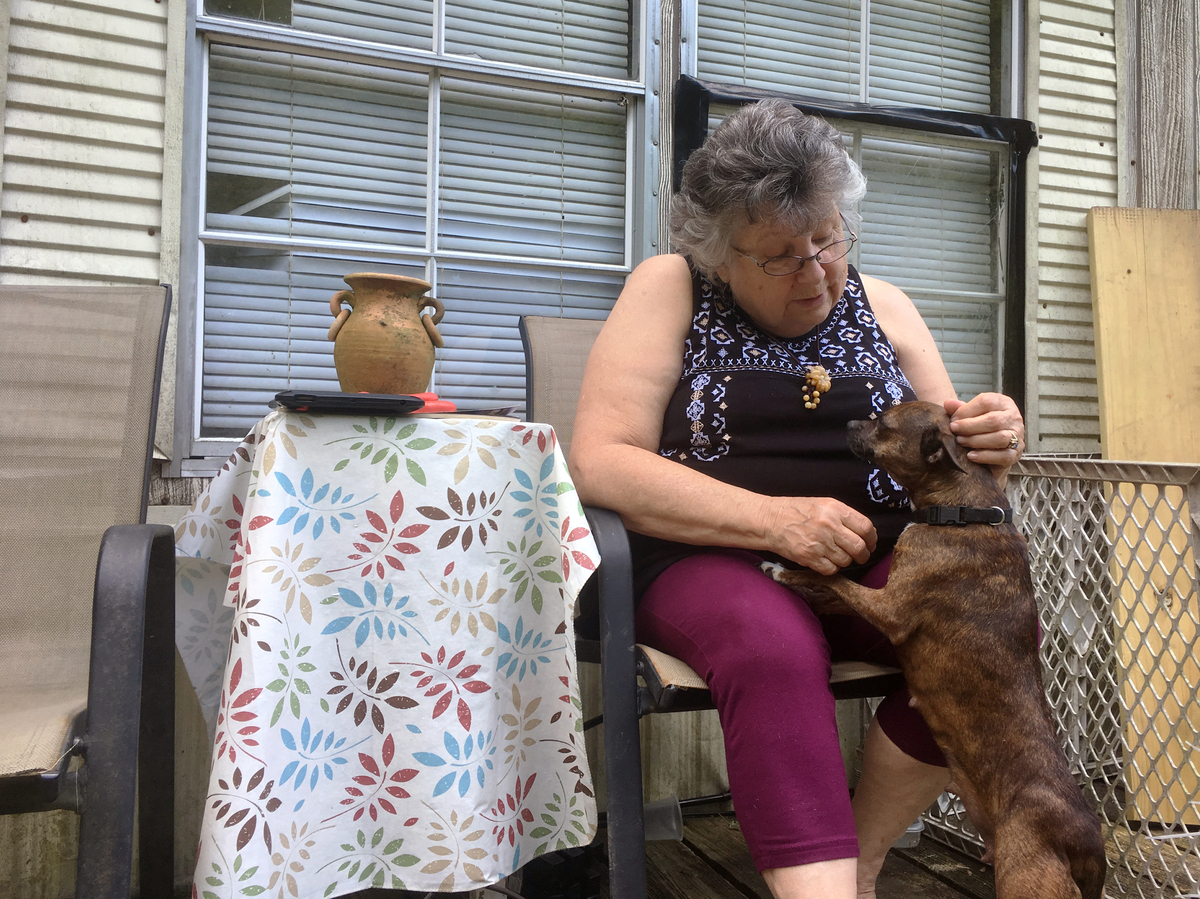
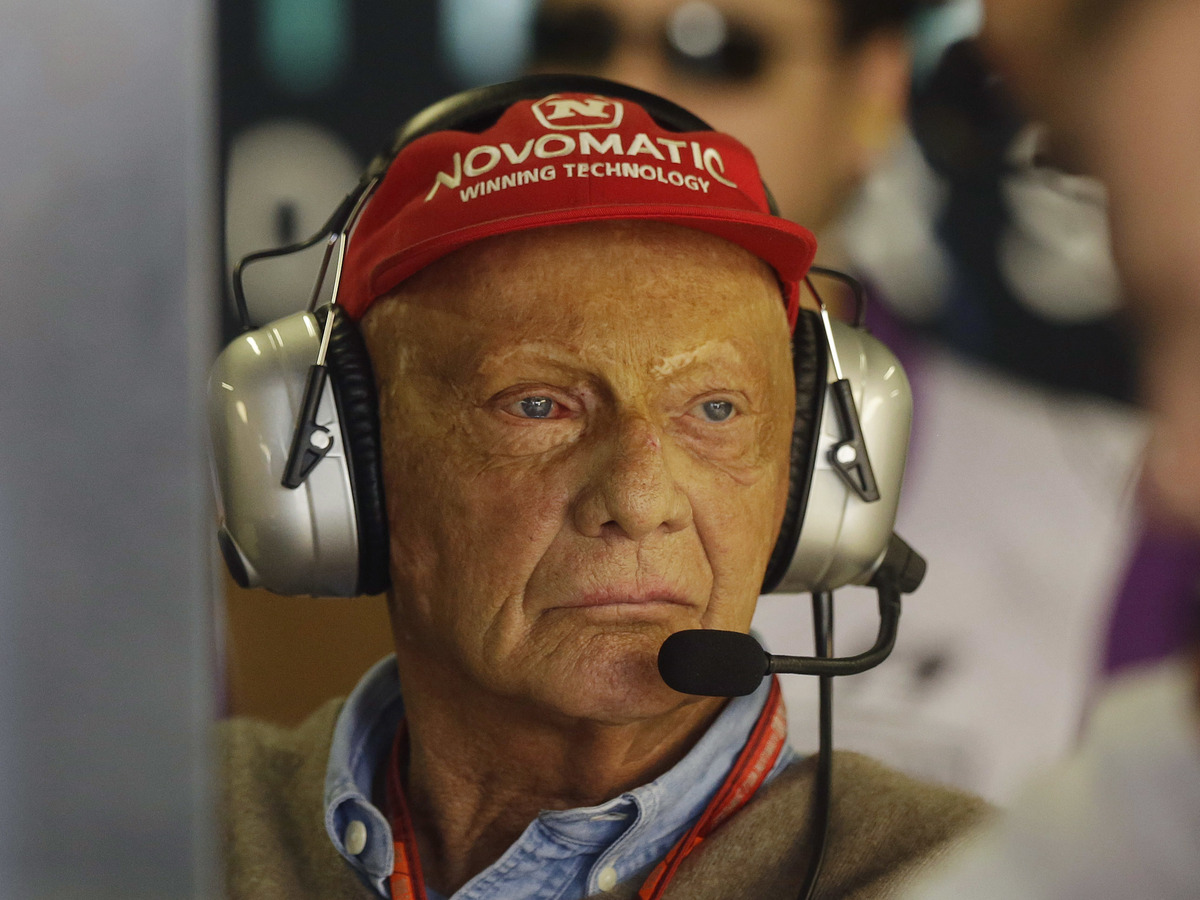



Once a month, a men’s group in Philadelphia meets to exchange ideas and share their experiences. With the support of the group, Jeremy Gillam (third from right), who coaches an after-school hockey league, teaches his team nonviolent responses to aggression on the ice.
Alan Yu for NPR
hide caption
toggle caption
Alan Yu for NPR
This spring, part of one of the group’s meetings involved standing in a public park and giving a one-minute speech about any topic they chose. One man spoke of being mocked and spit upon for liking ballet as a 9-year-old boy; another spoke of his feelings about getting a divorce; a third man shared with the others what it was like to tell his father “I love you” for the first time at the age of 38.
The idea of such mentoring and support groups isn’t new, though today’s movement is trying to broaden its base. Paul Kivel, an activist and co-founder of a similar group that was active from the 1970s to the 1990s in Oakland, Calif., says men’s groups in those days were mostly white and middle-class.
Today, the global nonprofit ManKind Project says it has close to 10,000 members in 21 nations, is ethnically and socioeconomically diverse and aims to draw men of all ages.
“We strive to be increasingly inclusive and affirming of cultural differences, especially with respect to color, class, sexual orientation, faith, age, ability, ethnicity, and nationality,” the group’s website says.
Toby Fraser, a co-leader of the Philadelphia group that Jin attends, says its members range in age from 20 to 40; it’s a mix of heterosexual, queer and gay men.
Simply having a broad group of people who identify as masculine — whatever their age, race or sexual orientation — can serve as a helpful sounding board, Fraser says.
“Rather than just saying, ‘Hey, we’re a group of dudes bonding over how great it is to be dudes,’ ” Fraser says, “it’s like, ‘Hey, we’re a group of people who have been taught similar things that don’t work for us and we see not working or we hear not working for the people around us. How can we support each other to make it different?’ “
Participants are also expected to take those ideas outside the group and make a difference in their communities.
For example, Jeremy Gillam coaches ice hockey and life skills at an after-school hockey program for children in Philadelphia. He says he and his fellow coaches teach the kids in their program that even though the National Hockey League still allows fighting, they should not respond to violence with violence. He says he tells them, “The referee always sees the last violent act, and that’s what’s going to be penalized.”
That advice surprises some boys, Gillam says.
“One of the first things that we heard,” he says, “is, ‘Dad told me to stick up for myself. Dad’s not going to be happy with me if I just let this happen, so I’m going to push back.’ “
Vashti Bledsoe is the program director at Lutheran Settlement House, the Philadelphia nonprofit that organizes the monthly men’s group. She says men in the group have already started talking about how the #MeToo movement pertains to them — and that’s huge.
“These conversations are happening [in the community], whether they’re happening in a healthy or unhealthy way … but people don’t know how to frame it and name it,” Bledsoe says. “What these guys have done is to be very intentional about teaching people how to name [the way ideas about masculinity affect their own actions] and say, ‘It’s OK. It doesn’t make you less of a man to recognize that.’ “
Meanwhile, the American Psychological Association published guidelines this year suggesting that therapists consider masculine social norms when working with male clients. Some traditional ideas of masculinity, the group says, “can have negative consequences for the health of boys and men.”
The guidelines quickly became controversial. New York magazine writer Andrew Sullivan wrote that they “pathologize half of humanity,” and National Review writer David French wrote that the American Psychological Association “declares war on ‘traditional masculinity.’ “
Christopher Liang, an associate professor of counseling psychology at Lehigh University and a co-author of the APA guidelines, says they actually grew out of decades of research and clinical experience.
For example, he says, many of the male clients he treats were taught to suppress their feelings, growing up — to engage in violence or to drink, rather than talk. And when they do open up, he says, their range of emotions can be limited.
“Instead of saying, ‘I’m really upset’, they may say, ‘I’m feeling really angry,’ because anger is one of those emotions that men have been allowed to express,” Liang says.
He says he and his colleagues were surprised by the controversy around the guidelines, which were intended for use by psychologists. The APA advisory group is now working on a shorter version for the general public that they hope could be useful to teachers and parents.
Criticism of the APA guidelines focused on the potentially harmful aspects of masculinity, but the APA points to other masculine norms — such as valuing courage and leadership — as positive.
Aylin Kaya, a doctoral candidate in counseling psychology at the University of Maryland, recently published research that gets at that wider range of masculine norms and stereotypes in a study of male college students.
Some norms, such as the need to be dominant in a relationship or the inability to express emotion, were associated with lower “psychological well-being,” she found. That’s a measure of whether students accepted themselves, had positive relationships with other people and felt “a sense of agency” in their lives, Kaya explains. But the traditional norm of “a drive to win and to succeed” contributed to higher well-being.
Kaya adds that even those findings should be teased apart. A drive to win or succeed could be good for society and for male or female identity if it emphasizes agency and mastery, but bad if people associate their self-worth with beating other people.
Kaya says one potential application of her research would be for psychologists — and men, in general — to separate helpful ideas of masculinity from harmful ones.
“As clinicians,” she says, “our job is to make the invisible visible … asking clients, ‘Where do you get these ideas of how you’re supposed to act? Where did you learn that?’ To help them kind of unpack — ‘I wasn’t born with this; it wasn’t my natural way of being. I was socialized into this; I learned it. And maybe I can start to unlearn it.’ “
For example, Kaya says, some male clients come to her looking for insight because they’ve been struggling with romantic relationships. It turns out, she says, the issue beneath the struggle is that they feel they cannot show emotion without being ridiculed or demeaned, which makes it hard for them to be intimate with their partners.
Given the findings from her study on perceptions of masculinity, Kaya says, she now might ask them to first think about why they feel like they can’t show emotion — whether that’s useful for them — and then work on ways to help them emotionally connect with people.