Melinda Gates On Marriage, Parenting, And Why She Made Bill Drive The Kids To School

Melinda Gates at a panel discussion in New York City in February. She is the author of a new book, “The Moment of Lift: How Empowering Women Changes the World.”
John Lamparski/Getty Images
hide caption
toggle caption
John Lamparski/Getty Images
Melinda Gates, the co-founder of the Bill & Melinda Gates Foundation, has written a new book, The Moment of Lift: How Empowering Women Changes The World.
Published this week, the book calls on readers to support women everywhere as a means to lift up society. She pulls from her lessons learned through the inspiring women she’s met on her travels with the Gates Foundation, which funds projects to reduce poverty and improve global health in the developing world (and is a funder of NPR and this blog).
But Gates also addresses gender equality in the United States — using her own personal story as an example. Opening up about her marriage to Bill, she talks about some of the challenges they faced in sharing the burden of parenting. And she reveals her struggle to balance her role as a mom of three, her career as a tech pioneer and philanthropist, and the public life of being married to one of the world’s richest men.
This interview has been edited for length and clarity.
In the opening pages, you talk about how you learned to renegotiate the terms of your marriage — once you stopped working at Microsoft — to focus on raising the kids. Why did you think it was important to share this?
In society there are so many issues that women face and we don’t even realize what we’re up against. So I chose to write my story so that hopefully people and women and men could relate to me and understand that yes, these issues exist in every single marriage.
I wanted to have both a family and I knew I wanted to go back to work. And so [Bill and I] had some negotiation to do. We said, “OK who’s going to do what in our home? And how were we going to split up those roles?”
There’s a cute story in your book that speaks to that. You talk about how you asked your husband to start sharing the responsibility of dropping the kids off at school. After a couple of weeks, you said you noticed that a lot more men were doing the drop offs. And you asked one of your friends about and she said that when we saw Bill driving, we went home and said to our husbands: Bill Gates is driving his child to school. You can too. Why did you choose to highlight this story?
The reason I wrote that specific story [is that it’s] an example of this unpaid labor that women do all over the world. In the U.S., women do 90 minutes more of unpaid labor at home than their husbands do. That’s things like doing the dishes, carpooling, doing the laundry.
Unless we look at that and redistribute it, we’re not going to let women do some of the more productive things they want to do.
The Gates Foundation is primarily focused on solving challenges in the developing world. But what are you doing to address issues a big topic you discuss in your book, women’s equality in the United States?
When I would be flying home from various countries in Africa or Bangladesh, I’d be saying to myself: Why aren’t women more empowered in those countries? And it wasn’t until I turned the question back on myself and I said, “How far are we here in the United States?”
That is why I set up a separate office from the foundation, Pivotal Ventures, to start tackling these inequities for women and the barriers in the United States.
We are the only industrialized nation in the world that does not have paid family medical leave. So I would say to young women and men in this country who are in their 20s and 30s: Gender roles change when you start to have children. You need to question them, and you also need to say what should we do, public policy-wise, to support women.
A lot of the book is focused on your story, but you also talk about women around the world who are facing extreme poverty and violence in their homes. The subtitle of your book is “How Empowering Women Changes The World.” What’s the short answer?
I believe that in empowering women, you do empower everybody else because you lift up a woman. She lifts up the rest of her family and her community and her society and her economy. And so this is absolutely about lifting up women and lifting up people of color.
You quote a friend several times in this book who was very skeptical of the ability of American billionaires to make a meaningful difference in the lives of those facing extreme poverty. Is this something you think as a society we should be talking about?
Bill and I are on record saying we believe high-income people should pay more than a middle-income family [who would] then pay more than a low-income family. It’s time to revisit some of the tax policies in our society.
But make no mistake. Living in a capitalistic structure is a fabulous place to live. I meet so many families around the world who want to live in the United States and have the system we have. Warren Buffett, our co-trustees, my husband Bill — they could not have started the companies they have in Malawi or in Senegal or in Niger. We benefit from the structure we have in the United States. But we don’t have it all right. And it’s time to revisit the pieces that create some of these inequities.
How do you feel now that you’ve put your life all out there in the book?
At the moment, I feel really great. I am really comfortable at age 54 with who I am. And so I’m kind of like, take it or leave it.
NBA’s Lack Of Latino Players

Now that the NBA playoffs are in full swing, there’s an element missing: Latino players. Just 2% of NBA players are Latino and that has the league looking for ways to increase the number of Latinos.
NFL Returns To Site Of First Game
The big-city NFL returns to its roots by taking later rounds of the draft on the road, including to Rock Island, Ill., which in 1920 was host to the league’s first game.
SCOTT SIMON, HOST:
The NFL draft wraps up today. BJ Leiderman who writes our theme music hasn’t been selected yet. On this last day, the draft league is returning to its first field in the Mississippi River town of Rock Island, Ill. Benjamin Payne of member station WVIK reports.
BENJAMIN PAYNE, BYLINE: The first Super Bowl was in 1967 – the Green Bay Packers played the Kansas City Chiefs.
(SOUNDBITE OF ARCHIVED RECORDING)
UNIDENTIFIED PERSON: (As character) The Super Bowl is underway, and it is a short kick from Smith. Adderley at the six. Across the 10, running to his right…
PAYNE: But by then, the NFL was already nearly half a century old. It began in 1920 in this small town three hours west of Chicago, specifically here at Douglas Park – a 10-acre space with two baseball diamonds, one soccer pitch and no football fields. John Gripp is Rock Island’s Parks director and is walking the perimeter of Douglas Park. He stops at what looks like a couple of castle turrets made of white brick.
JOHN GRIPP: This is where you would have purchased your ticket and entered into Douglas Park to the NFL football game that took place in 1920.
PAYNE: The first NFL game that is. On September 26, 1920, the Rock Island Independents blew out the St. Paul Ideals 48-0. It’s hard to believe the hallowed ground is here in Rock Island – a town whose entire population of about 40,000 could fit into the Packers Lambeau Field and still leave 40,000 seats empty.
JASON AIKENS: Of all the NFL teams that played that year in 1920, Rock Island was the first.
PAYNE: That’s Jason Aikens the head curator at the Pro Football Hall of Fame in Canton, Ohio. He says the NFL launched in small town America because of pent up demand.
AIKENS: You know, I kind of trace it to these towns didn’t really have a college allegiance. They had athletic clubs. These small towns had kind of a local flavor of competition to them, and that’s kind of where professional football kind of grew up.
PAYNE: Even in these markets, revenue was scarce and payroll tight. Take the example of Rock Island Independents manager Walter Flanigan.
AIKENS: It’s kind of funny. He left the team to sell insurance, you know? And what (laughter) what often happen is these guys didn’t stay in pro football very long because it was too hard to make a living. People considered it as a hobby.
PAYNE: Chris Zimmerman (ph) likes to pretend to be one of those guys.
CHRIS ZIMMERMAN: So what you see is some of the jerseys that we have in here. The pants are really kind of shorter, but we wear the long socks. You have some leather helmets.
PAYNE: Zimmerman’s a financial planner by day and a vintage football enthusiast by night.
ZIMMERMAN: When you’re 53 years old, you can’t run very fast. (Laughter) You can’t throw. You’re not very good at catching a ball. Yeah, they let me hike the ball, and I try not to get run over. But that’s my specialty at this point.
PAYNE: Today, they’re going to recreate that very first game at a special NFL draft event in Rock Island. Zimmerman will be playing center for the Ideals. Do you plan on losing 48-0?
ZIMMERMAN: (Laughter) Forty-eight to 0. No, I hope we have a little bit better team.
PAYNE: Back then, football was largely a running game, passing was rare. At the Hall of Fame, curator Jason Aikens says coaches played it safe back then.
AIKENS: Oftentimes if, you know – if you were backed up in your own end zone, you would punt on third down. It was very much more conservative.
PAYNE: That conservative style extended to defense. You didn’t see the high-flying collisions of today’s game that have led to traumatic head injuries and other problems. As for the fan base, a turnout of 5,000 fans was considered a big crowd. These days average stadium attendance is just under 70,000 as millions watch on TV. The staggering growth is something Chris Zimmerman is thinking about as he gets ready to take the field.
ZIMMERMAN: If you go back to 1920 and those players that were playing in Douglas Park at that time, if they had any idea what this was going to grow to 100 years later, the stadiums, the amount of money and marketing and television and – I don’t think they could possibly imagine that their love of the game of, what they just like to do was every going to grow into anything this huge.
PAYNE: The Rock Island Independents folded in 1927, but Douglas Park’s legacy as the league’s old stomping ground remains.
For NPR News, I’m Benjamin Payne in Rock Island, Ill.
Copyright © 2019 NPR. All rights reserved. Visit our website terms of use and permissions pages at www.npr.org for further information.
NPR transcripts are created on a rush deadline by Verb8tm, Inc., an NPR contractor, and produced using a proprietary transcription process developed with NPR. This text may not be in its final form and may be updated or revised in the future. Accuracy and availability may vary. The authoritative record of NPR’s programming is the audio record.
Saturday Sports: Basketball, Basketball, Basketball
The NBA Western conference is narrowing down, and a legendary NBA great died this week. NPR’s Scott Simon talks with ESPN’s Howard Bryant.
SCOTT SIMON, HOST:
And, New Hampshire, America, it’s time for sports.
(SOUNDBITE OF MUSIC)
SIMON: The Western Conference is narrowing down. Warriors and Clippers last night, Celtics and Bucks tomorrow. I have to say, fear the deer. And more trouble in the NFL. Howard Bryant of ESPN joins us. Good morning, Howard.
HOWARD BRYANT, BYLINE: Good morning, Scott. We’re not going to talk “Endgame”?
SIMON: “Endgame,” you say, yes?
BRYANT: All right. We’ll talk “Endgame” next time.
SIMON: Oh, OK. The Warriors beat the Clippers last night, but they’re limping into the next round. And Houston and a scoring machine named James Harden await them.
BRYANT: Yeah. This is great, actually. One of the questions that we’ve been asking for however many years now is, can anybody beat the Warriors four times? And there is one team that came pretty close last year, and it was the Houston Rockets. And the Houston Rockets are – they want revenge. I think they know that if Chris Paul hadn’t gotten hurt last year, maybe they’d win that game. Of course, they also missed 27 consecutive 3-pointers at home in Game 7. So this is going to be a great series.
On the other hand, you’ve got Kevin Durant. And the Warriors got challenged in this postseason.
SIMON: Yeah.
BRYANT: They got challenged by a team that they probably should’ve steamrolled. They lost two games at home, so they look vulnerable. On the other hand, you’ve got the Celtics in the East, and the Bucks.
SIMON: Yep.
BRYANT: And the Bucks are the best team in basketball this year, but the Celtics beat them in seven games last year. So we’ve got a revenge series this year, and Milwaukee’s got home court.
You’ve got a Game 7 going on tomorrow as well with the Spurs and the Nuggets. And I think that’s going to be a phenomenal game because, once again, we talked about the Nuggets being great all season. And, in fact, at one point, they were the top seed in the West. But now they kind of look like a young team trying to find their way, going up against a legendary veteran Spurs team, or at least with the coach, Gregg Popovich.
SIMON: A sickening, sickening story in the NFL. Tyreek Hill of the Chiefs – and audio has been reported by a local station there, speaking with his fiancee about – oh, my God – abusing his young 3-year-old, breaking his arm. It is painful to listen to this conversation. The NFL – football’s a violent game. Do they have a violence problem in the game?
BRYANT: Well, they’ve had one, and this is one of the issues. It’s more – it’s not as much – not only a violence problem. Let’s not forget you had the Adrian Peterson child abuse issue.
SIMON: Yup.
BRYANT: You’ve had a bunch of domestic violence issues in the game. Let’s not forget that the Chiefs themselves – they had not just Tyreek Hill. They also had Kareem Hunt earlier – a few months ago, and on top of that, seven years ago, Jovan Belcher. And let’s not forget, in a murder-suicide, he killed his girlfriend and then drove to the Chiefs facility and killed himself on the grounds of the facility.
And so this is the problem. You’ve got a talent trap issue in the NFL where, I think, the organizations sort of know that these players – some of these players are troubled and they come with baggage, but they’re really, really talented. And I think that the teams take the position sometimes that, we’ll take a risk. We’ll position ourselves as the team that’s given these guys a second chance or taking an – giving them an opportunity, and then we’ll cut them loose.
SIMON: Yeah.
BRYANT: They don’t hold a whole lot of accountability unless something goes sideways. And then, when things go sideways, they seem to act like they’re the responsible ones, when everybody’s really responsible for this.
SIMON: We just got half a minute left. John Havlicek left us – one of the greats of the Boston Celtics.
BRYANT: Yeah.
(SOUNDBITE OF ARCHIVED RECORDING)
JOHNNY MOST: Greer’s putting the ball in play. He gets it out deep, and Havlicek steals it. Over to Sam Jones. Havlicek stole the ball.
SIMON: That’s his historic play.
BRYANT: Absolutely. And as a lifelong native Bostonian, this one hurts really, really hard. Part of the Celtic dynasty, part of the bridge between Larry Bird and Bill Russell. And if you remember those teams – and let’s not forget what a great player John Havlicek was. We forget what happens last Tuesday. When John Havlicek retired, there were only two players who had scored more points than him, and that was Wilt Chamberlain and Oscar Robertson. And he never led the league in scoring. Total player, great person, and a huge loss.
SIMON: Howard Bryant of ESPN, thanks so much.
BRYANT: Thank you.
Copyright © 2019 NPR. All rights reserved. Visit our website terms of use and permissions pages at www.npr.org for further information.
NPR transcripts are created on a rush deadline by Verb8tm, Inc., an NPR contractor, and produced using a proprietary transcription process developed with NPR. This text may not be in its final form and may be updated or revised in the future. Accuracy and availability may vary. The authoritative record of NPR’s programming is the audio record.
Baloji Finds His Freedom In Between Genres

Baloji’s Kaniama: The Yellow Version is due out May 3.
Kyle Weeks/Courtesy of the artist
hide caption
toggle caption
Kyle Weeks/Courtesy of the artist
Baloji is an artist who finds strength in his roots but freedom in between genres. He was born in the Democratic Republic of the Congo, but has lived in Belgium most of his life. The rapper is a well-known name in Belgium and France. He’s received music honors for his work, but his life has been a journey of struggle and perseverance.
At 3 years old, Baloji’s father took him to Belgium without telling his mother. After dropping out of school and leaving home at 14, Baloji discovered hip-hop. Performing under the name MC Balo, the young upstart joined the hip-hop group Starflam. As the group began to gain popularity, Baloji received a letter from his mother that changed the course of his life and career.
“I was 26 years old when I received that letter for my mom. I thought at first it was fraud,” Baloji says. But his mother knew his birth date and sent him photos of when he was a baby. The letter impacted him greatly.
Baloji’s mother had seen him on TV performing with Starflam. “Your dad told me that he brought you to Belgium … to the land of Marvin Gaye,” she wrote. The American artist used to reside in Ostend, Belgium, the same city Baloji first moved to. Gaye’s music became the inspiration for his first solo project, especially the song “I Am Going Home.” “That really stuck in my head and inspired me to do my first album, which is dedicated to my mom,” Baloji says.
Baloji’s debut album, 2008’s Hotel Impala, was a collection of all his life experiences leading up to seeing his mother again. Ten years later, the artist’s 2018 album, 137 Avenue Kaniama and his upcoming follow-up, Kaniama: The Yellow Version, relate back to the message of Hotel Impala. For example, on “La Derniere Pluie,” the centerpiece of the album, Baloji remembers meeting his mother for the first time as an adult in the DRC and realizing their cultural differences.
“This song is talking about how we met physically, how it happened, how I was feeling, how she was feeling and how we were both nervous,” Baloji explains. Baloji had invited his mother to an upscale restaurant, but the expensive menu made his mother uncomfortable. “Every meal costs at least 20 dollars, we can buy a pack of rice for that price that will last a month,” she told him. “I was expecting us to hug and be in a loving relationship, and for her — I had to take care of her and his siblings,” Baloji adds.
Baloji music tackles issues large and small. From his family history, to the experience of refugees in Europe, to our dependence on smartphones. His goal, he says, is to create art that lasts and he can be proud of.
Listen to the conversation at the audio link.
Tyreek Hill Barred From Kansas City Chiefs After Audio Alleging Child Abuse Surfaces
The Kansas City Chiefs have barred Tyreek Hill from the team. This follows a recording of the wide receiver’s fiancée accusing him of abusing their young child.
Does Taking Time For Compassion Make Doctors Better At Their Jobs?

Studies show that when doctors practice compassion, patients fare better, and doctors experience less burnout.
Cavan Images/Getty Images/Cavan Images RF
hide caption
toggle caption
Cavan Images/Getty Images/Cavan Images RF
For most of his career, Dr. Stephen Trzeciak was not a big believer in the “touchy-feely” side of medicine. As a specialist in intensive care and chief of medicine at Cooper University Health Care in Camden, N.J., Trzeciak felt most at home in the hard sciences.
Then his new boss, Dr. Anthony Mazzarelli, came to him with a problem: Recent studies had shown an epidemic of burnout among health care providers. As co-president of Cooper, Mazzarelli was in charge of a major medical system and needed to find ways to improve patient care.
He had a mission for Trzeciak — he wanted him to find answers to this question: Can treating patients with medicine and compassion make a measurable difference on the wellbeing of both patients and doctors?
Trzeciak wasn’t convinced. Sure, compassion is good, Trzeciak thought, but he expected to review the existing science and report back the bad news that caring has no quantitative rationale. But Mazzarelli was his colleague and chief, so he dove in.
To find more stories about how to live well, sign up for the Life Kit newsletter. Life Kit is NPR’s family of podcasts for helping you get your life together. Every two weeks, we drop new episodes and publish a newsletter with helpful stories like this one.
After considering more than 1,000 scientific abstracts and 250 research papers, Trzeciak and Mazzarelli were surprised to find that the answer was, resoundingly, yes. When health care providers take the time to make human connections that help end suffering, patient outcomes improve and medical costs decrease. Among other benefits, compassion reduces pain, improves healing, lowers blood pressure and helps alleviate depression and anxiety.
In their new book, Compassionomics: The Revolutionary Scientific Evidence that Caring Makes a Difference, Trzeciak and Mazzarelli lay out research showing the benefits of compassion, and how it can be learned. One study they cite shows that when patients received a message of empathy, kindness and support that lasted just 40 seconds their anxiety was measurably reduced.
But compassion doesn’t just benefit its recipients, Trzeciak and Mazzarelli learned. Researchers at the Wharton School of the University of Pennsylvania found that when people spent time doing good for others (by writing an encouraging note to a gravely ill child), it actually changed their perception of time to make them feel they had more of it.
For doctors, this point is crucial. Fifty-six percent say they don’t have time to be empathetic.
“The evidence shows that when you invest time in other people, you actually feel that you have more time, or that you’re not so much in a hurry,” Trzeciak says. “So when 56 percent say they don’t have time in that survey, it’s probably all in their heads.”
The good news is, the same study that found doctors didn’t have time for empathy, also showed that a short training in the neuroscience of empathy made doctors interact with patients in ways patients rated as more empathetic.
Compassion also seems to prevent doctor burnout — a condition that affects almost half of U.S. physicians. Medical schools often warn students not to get too close to patients, because too much exposure to human suffering is likely to lead to exhaustion, Trzeciak says. But the opposite appears to be true: Evidence shows that connecting with patients makes physicians happier and more fulfilled.
“We’ve always heard that burnout crushes compassion. It’s probably more likely that those people with low compassion, those are the ones that are predisposed to burnout,” Trzeciak said. “That human connection — and specifically a compassionate connection — can actually build resilience and resistance to burnout.”
Trzeciak and Mazzarelli hope their evidenced-based arguments will spur medical schools to make compassion part of the curriculum.
For those outside the health care system, acting with compassion can be a kind of therapy as well, the authors say. They cite the phenomenon of the “helper’s high,” the good feeling that comes from helping others, and explain how giving to others benefits the givers’ brains and nervous systems.
“I can say this with confidence,” Trzeciak says. “Other-focused behavior is beneficial to your own mental health.”
For Trzeciak, the research had a personal effect. When he started into the project, he’d been
going through his own existential crisis, triggered by his son’s middle school homework assignment that asked, “What is the most pressing problem of our time?” While he believed his work to that point was meaningful, it was definitely not the most pressing problem of our time.
Along the way, he says, he realized he was feeling burned out after 20 years of practicing medicine. So, armed with data from his book research, he decided to test his own hypothesis.
“The recommended prescription is what I call ‘escapism’ — get away, detach, pull back, go on some nature hikes or whatever but I was not believing it,” Trzeciak explains in a TEDxPenn talk.
Instead, he says, he applied the techniques he’d been studying, including spending at least 40 seconds expressing compassion to patients. “I connected more, not less; cared more, not less; leaned in rather than pulled back. And that was when the fog of burnout began to lift.”
He prescribes the same for anyone, not just health care providers, suffering from mental or emotional exhaustion.
“Look around you and see those in need of compassion and give your 40 seconds of compassion,” he says. “See how it transforms your experience.”
Boston Celtics Great And Hall Of Famer John Havlicek Dies At 79
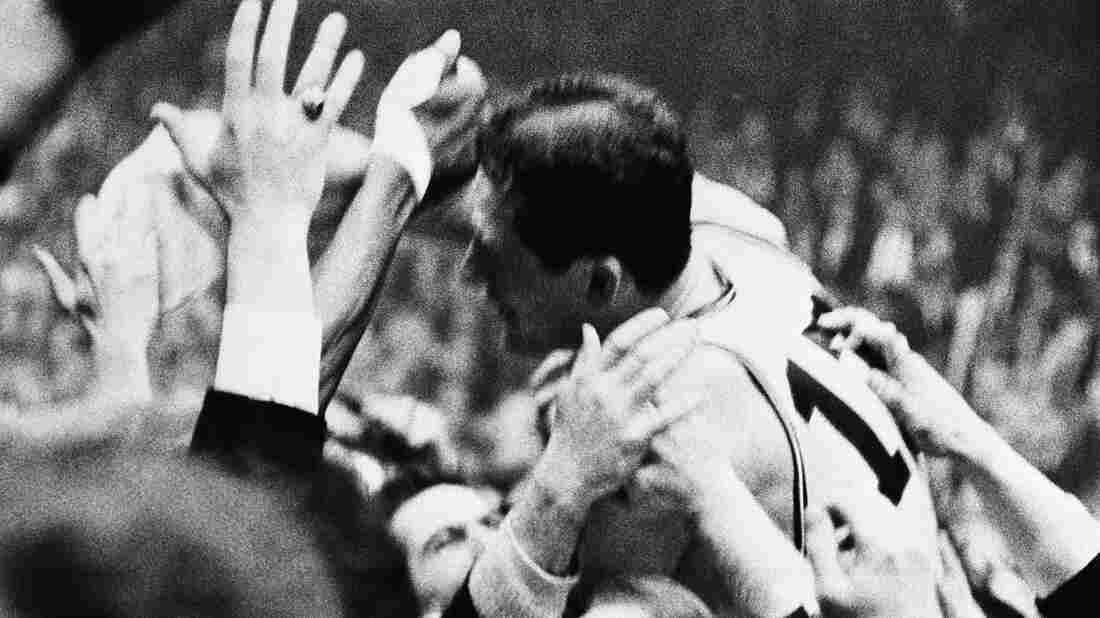
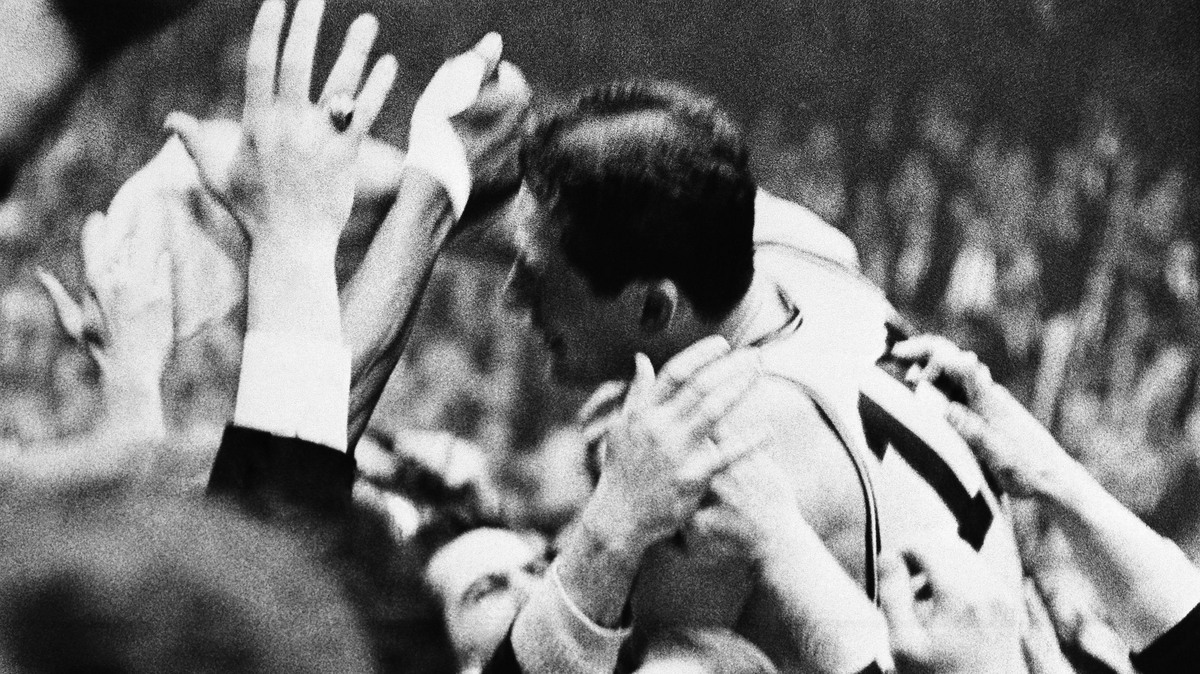
John Havlicek is mobbed by fans after the Celtics defeated the Philadelphia 76ers to win Game 7 of the 1965 Eastern Conference final. Havlicek intercepted a Philadelphia inbounds pass in the last seconds of the game.
AP
hide caption
toggle caption
AP
The Boston Celtics drafted John Havlicek in 1962, and he played for the team for 16 seasons — eight of them as NBA champions. He was voted one of the 50 greatest players in NBA history.
Havlicek died Thursday in Jupiter, Fla., at age 79. The cause of death wasn’t immediately available, but Boston media report he had Parkison’s disease.
It is with great sadness we have learned that Celtics Legend and Hall of Famer John Havlicek has passed away peacefully today at the age of 79. He will be dearly missed by his Celtics family.
A statement from the Celtics: https://t.co/yqOkZPkbej pic.twitter.com/xlUCKjbKvg
— Boston Celtics (@celtics) April 26, 2019
The Celtics released a statement honoring Havlicek:
“John Havlicek is one of the most accomplished players in Boston Celtics history, and the face of many of the franchise’s signature moments,” the statement read. “He was a champion in every sense, and as we join his family, friends, and fans in mourning his loss, we are thankful for all the joy and inspiration he brought to us.”
During his NBA career, Havlicek scored 26,395 points in 1,270 games. He set Celtics career records for points and games. He was the first player to score 1,000 in 16 consecutive seasons.
Havlicek played in 13 NBA All-Star Games, and was enshrined in the Naismith Memorial Basketball Hall of Fame in 1984. And during his college career at Ohio State, he helped the Buckeyes win the 1960 national championship.
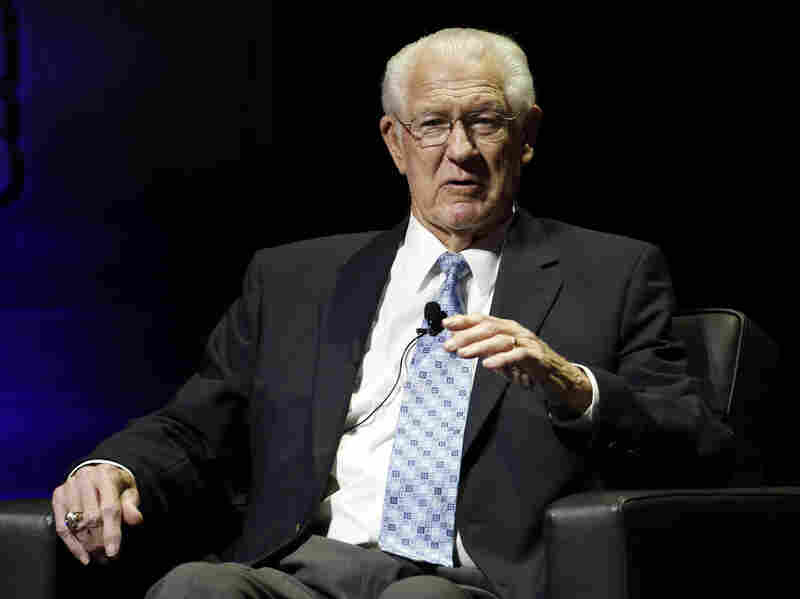



Former Ohio State basketball player John Havlicek talks about his career during a National Collegiate Basketball Hall of Fame induction event Friday, Nov. 20, 2015, in Kansas City, Mo.
Colin E. Braley/AP
hide caption
toggle caption
Colin E. Braley/AP
For all his outstanding efforts on the court, the 6-foot-5 Havlicek may be best known for his steal during the closing seconds of Game 7 of the 1965 Eastern Conference championship against the Philadelphia 76ers.
He stole Hal Green’s inbounds pass to Sam Jones. As the game ended in a win for Boston, Celtics radio announcer Johnny Most screamed, “Havlicek stole the ball!”
The immortalized play sent the Celtics to a ninth consecutive NBA finals, and Most’s call lives on in highlight reels.
In 1978, when Havlicek retired from the Celtics, his jersey, No. 17, was retired too.
He occasionally returned to Ohio State for reunions of the championship team and Celtics events. His Ohio State number was retired during ceremonies in the 2004-2005 season.
Havlicek remained in Boston after his retirement and later split his time between New England and Florida.
Former teammates and friends Tom Heinsohn and Bob Cousy told the Boston Herald that “Havlicek had suffered from an aggressive strain of Parkinson’s disease for about the last three years, and that he recently took a turn for the worse.”
The paper reports that according to Cousy, “Havlicek caught pneumonia after a bad fall three weeks ago, when doctors decided to put him in an induced coma. The family Thursday put Havlicek into hospice, and he died shortly thereafter.”
“Havlicek was part of a Thursday night dinner group that always convened at Cousy’s country club in Florida,” the Herald reports. “When Havlicek and his wife Beth failed to show up three weeks ago, Cousy knew something was wrong.”
2019 NFL Draft Could Be Big For Tight Ends
Thursday is draft day for the National Football League. Two tight end players from Iowa are predicted to be drafted in the first round, breaking a long tradition in a changing game.
Damian Lillard Leads Portland Trail Blazers To Victory In First Round Of NBA Playoffs
One player has excelled in the NBA playoffs: Damian Lillard. The all-star point guard has carried the Portland Trail Blazers all season thanks to his play and, more importantly, his leadership.