Tamino Channels Voices From His Arabic Heritage Into His Own Eccentric Sound

Tamino’s latest album, Amir, is out now.

Ramy Fouad/Courtesy of the artist


hide caption

toggle caption

Ramy Fouad/Courtesy of the artist

At 22 years old, Tamino possesses a voice that carries the hypnotic, immediate power of something much more ancient. Born Tamino Moharam Fouad and named after a prince in Mozart’s The Magic Flute, the Belgian-Egyptian artist explores his heritage by combining his own sound with Arabic influences of his Lebanese and Egyptian ancestors. Tamino’s debut album, Amir, out now, melds together the artist’s eccentric vocal style with Arab musical theory.

When Tamino was a kid, he found an old guitar gathering dust in a cupboard while visiting family in Cairo, and brought it back home with him to Belgium. The guitar was once played by Muharram Fouad, Tamino’s grandfather and a famous Egyptian singer who starred in Hassan and Nayima, which is, as Tamino tells it, “the Romeo and Juliet of Egyptian cinema.”

“The songs played in that movie became hits, not only in Egypt but the whole Arabic world, actually,” Tamino says. “He had a very long career until the ’80s, but he died unfortunately when I was 5, so I don’t really have memories of him. I only have his music.”

Left behind for Tamino were cassettes of his grandfather’s music. Tamino was able to incorporate the music on the cassettes into his own music for the album with the help of a friend.

YouTube

“She takes the cassettes…she makes new sounds with them,” Tamino says. “You cannot recognize them anymore, but for me, it was symbolically very important that these sounds came from these cassettes that I had all my life.”

Amir also features Nagham Zikrayat, an orchestra of Middle Eastern instrumentalists, many of whom are refugees from Iraq and Syria. “They capture the essence of Arabic music from like the ’50s and the ’60s — we call it the golden age of Arabic music,” Tamino says about working with Nagham Zikraya. “They add this individuality and charisma in what they are playing.”

Tamino says there’s a lot he still has to discover about the country and culture of Egypt. Though he’s visited many times, he has yet to play there.

“The language is gonna be hard. I know it’s gonna be hard, but the one thing that’s not hard is the music,” he says. “It’s the one thing I’ve always had a connection to. It’s the one thing that just feels like it’s in me — like a homecoming.”

Let’s block ads! (Why?)

Researchers Are Surprised By The Magnitude Of Venezuela’s Health Crisis

Things in Venezuela are so bad that patients who are hospitalized must bring not only their own food but also medical supplies like syringes and scalpels as well as their own soap and water, a new report says.

Barcroft Media/Getty Images


hide caption

toggle caption

Barcroft Media/Getty Images

Venezuela is in the midst of “a major, major emergency” when it comes to health.

That’s the view of Dr. Paul Spiegel, who edited and reviewed a new report from the Johns Hopkins Bloomberg School of Public Health and the international group Human Rights Watch. Released this week, the study outlines the enormity of the health crisis in Venezuela and calls for international action.

The health crisis began in 2012, two years after the economic crisis began in 2010. But it took a drastic turn for the worse in 2017, and the situation now is even more dismal than researchers expected.

“It is surprising, the magnitude,” says Spiegel, who is director of the Johns Hopkins Center for Humanitarian Health and a professor in the Department of International Health at the Bloomberg School. “The situation in Venezuela is dire.”

Things are so bad that, according to the report and other sources, patients who go to the hospital need to bring not only their own food but also medical supplies like syringes and scalpels as well as their own soap and water.

“The international community must respond,” Spiegel says. “Because millions of people are suffering.”

The government of Venezuela stopped publishing health statistics in 2017, so it can be difficult to track exactly how bad the crisis is. But by interviewing doctors and organizations within Venezuela, as well as migrants who recently fled the country and health officials in neighboring Colombia and Brazil, the researchers pieced together a detailed picture of the failing health system. Some of the data also come from the last official government health report, issued in 2017. (The health minister who released the report was promptly fired.)

Diseases that are preventable with vaccines are making a major comeback throughout the country. Cases of measles and diphtheria, which were rare or nonexistent before the economic crisis, have surged to 9,300 and 2,500 respectively.

Since 2009, confirmed cases of malaria increased from 36,000 to 414,000 in 2017.

The Ministry of Health report from 2017 showed that maternal mortality had shot up by 65 percent in one year — from 456 women who died in 2015 to 756 women in 2016. At the same time, infant mortality rose by 30 percent — from 8,812 children under age 1 dying in 2015 to 11,466 children the following year.

The rate of tuberculosis is the highest it has been in the country in the past four decades, with approximately 13,000 cases in 2017.

New HIV infections and AIDS-related deaths have increased sharply, the researchers write, in large part because the vast majority of HIV-positive Venezuelans no longer have access to antiretroviral medications.

A recent report from the Pan American Health Organization estimated that new HIV infections increased by 24 percent from 2010 to 2016, the last year the government published data. And nearly 9 out of 10 Venezuelans known to be living with HIV (69,308 of 79,467 people) were not receiving antiretroviral treatments.

In addition, the lack of HIV test kits may mean there are Venezuelans who are living with HIV but don’t know it.

Cáritas Venezuela, a Catholic humanitarian organization, found that the percentage of children under 5 experiencing malnutrition had increased from 10 to 17 percent from 2017 to 2018 — “a level indicative of a crisis, based on WHO standards,” the authors of the report write.

An estimated 3.4 million people — about a tenth of Venezuela’s entire population — have left the country in recent years to survive. Venezuela’s neighbors, particularly Colombia and Brazil, have seen a huge uptick in Venezuelans seeking medical care.

Health officials in those countries say that thousands of pregnant women who have arrived received no prenatal care in Venezuela. The flow of migrants includes hundreds of children suffering from malnutrition.

Despite all the headlines about Venezuela’s collapse, researchers were still surprised by the scope of the crisis.

Venezuela is a middle-income country with a previously strong infrastructure, Spiegel says. “So just to see this incredible decline in the health infrastructure in such a short period of time is quite astonishing.”

Despite the severity of the health crisis, the government continues to paint a rosy picture of its health care system — and to retaliate against anyone who reports otherwise, according to the report.

Dr. Alberto Paniz Mondolfi, who was not affiliated with the report, spoke with NPR about the situation in his home country. Paniz practices in Barquisimeto, Venezuela, and is a member of the Venezuelan National Academy of Medicine.

Paniz says he has seen children in hospitals who appear to be malnourished — and there aren’t even catheters available to hook them up to IVs. He has seen people on the streets searching the trash for food to eat. And he adds that a blackout that began on March 7 and lasted for a week has had lingering impact: Some areas still lack electricity or access to running water even now, he says.

Paniz says the report from Johns Hopkins and Human Rights Watch paints an accurate picture of the situation on the ground. “It’s a very, very timely and complete paper,” he says. He praised the thorough research and said he was “relieved” that the health crisis might finally get international attention.

So far, aid from the U.S. and other countries has been insufficient to address the crisis, the authors of this report say.

But Spiegel sees some signs of hope: Last week, President Nicolás Maduro decided to allow the International Federation of the Red Cross and Red Crescent to enter the country with medical supplies for about 650,000 people.

“It’s still a drop in the bucket compared to the 7 million or so people who are in desperate need,” Spiegel says. But he believes it is a sign that Venezuela’s leader may begin acknowledging the crisis and opening the country up to assistance.

And the good news, Spiegel says, is that once aid arrives in Venezuela, it can be distributed very quickly. “Venezuela has an infrastructure; it has very well trained people,” he says.

Paniz agrees that international assistance will be crucial to ending the crisis. “It’s a desperate call to not leave us alone,” he says. “There is no way in which Venezuela could come out of this by its own.”


Melody Schreiber (@m_scribe on Twitter) is a freelance journalist in Washington, D.C.

Let’s block ads! (Why?)

Makeshift Volunteer Clinics Struggle To Meet Medical Needs At The Border

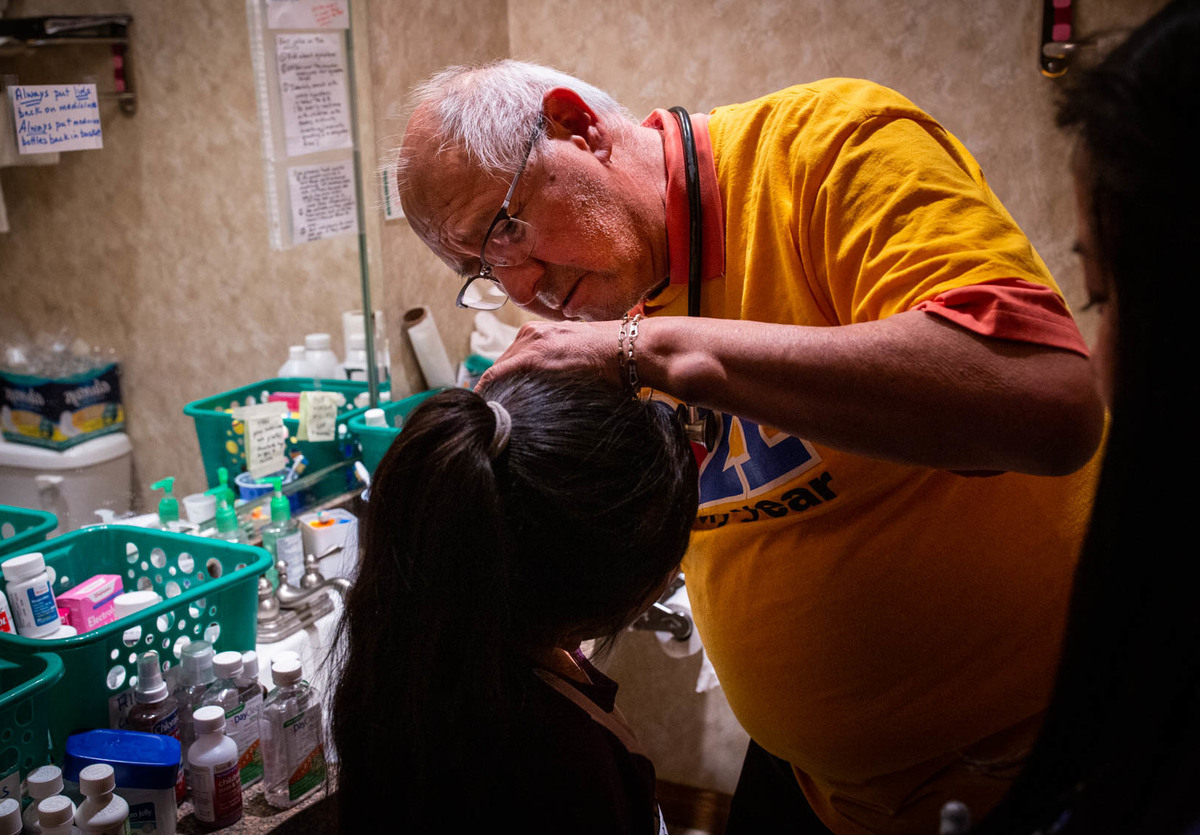
Dr. Carlos Gutierrez examines a young girl at a shelter in El Paso that was set up for recent migrants. The girl’s mother said her daughter’s deep cough arose while the family was in immigration custody.

Anna Maria Barry-Jester/Kaiser Health News


hide caption

toggle caption

Anna Maria Barry-Jester/Kaiser Health News

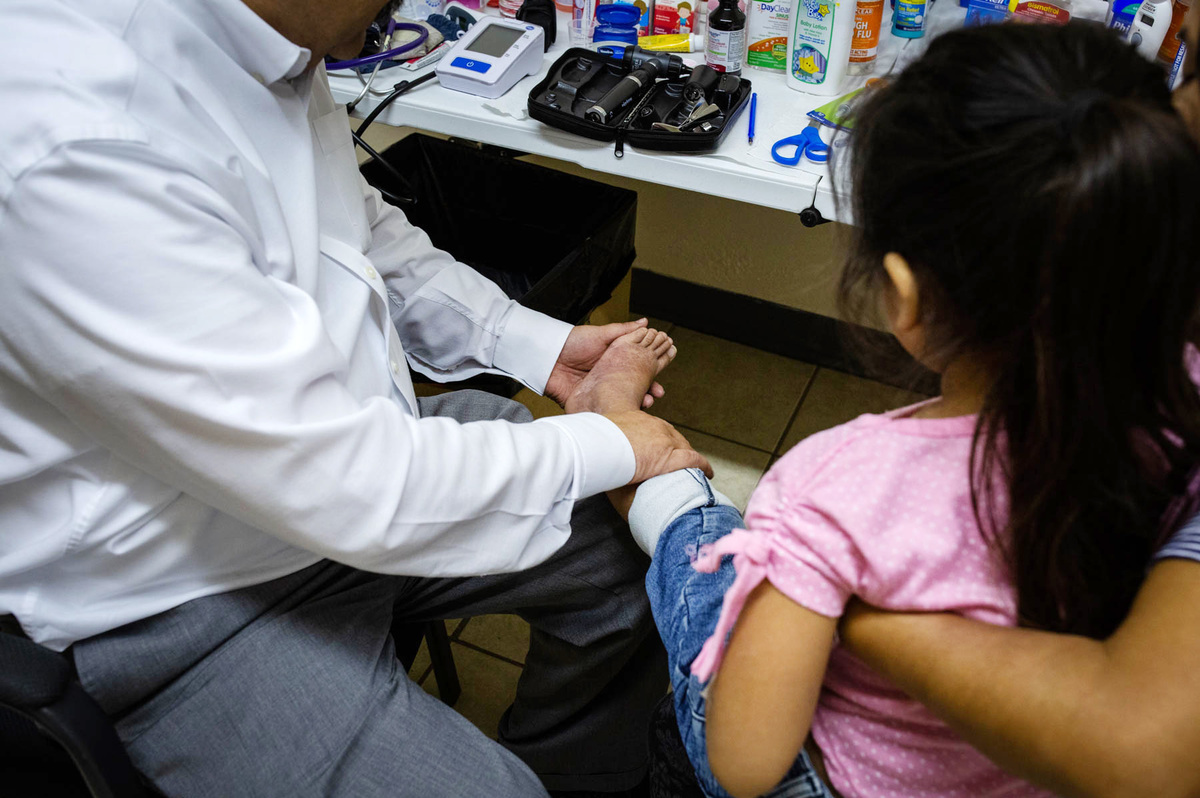
It wasn’t the rash covering Meliza’s feet and legs that worried Dr. José Manuel de la Rosa. What concerned him were the deep bruises beneath. They were a sign she could be experiencing something far more serious than an allergic reaction.

Meliza’s mom, Magdalena, told the doctor it started with one little bump. Then two. In no time, the 5-year-old’s legs were swollen and red from the knees down.

U.S. immigration officials are releasing up to 700 people a day into El Paso, Texas. Ciudad Juárez, in Mexico, can be seen in the distance.

Anna Maria Barry-Jester/Kaiser Health News


hide caption

toggle caption

Anna Maria Barry-Jester/Kaiser Health News

De la Rosa noticed a bandage-covered cotton ball in the crook of Meliza’s elbow, a remnant of having blood drawn. During their time at the Immigration and Customs Enforcement detention facility in El Paso, Meliza had been sent to a hospital, Magdalena explained, cradling the child. They had run tests, but Magdalena had no way to get the results. Through tears, she begged for help. “My daughter is my life,” she told him in Spanish.

The doctor would see nearly a dozen patients that March evening at his makeshift clinic inside a warehouse near the El Paso airport. That week, similar ad hoc community clinics would treat hundreds of people, some with routine colds and viruses, others with upper-respiratory infections or gaping wounds. Like Meliza, all were migrants, mostly from Central America, a river of families arriving each day, many frightened and exhausted after days spent in government detention.

De la Rosa, an El Paso pediatrician, is one of dozens of doctors volunteering on the U.S.-Mexico border as the flow of migrants crossing without papers and asking for asylum climbs to a six-year high. Unlike previous waves of immigration, these are not single men from Mexico looking to blend in and find work.

Most are families, fleeing gang violence, political instability or dire poverty. (Meliza and other patients are referred to by their first or middle names in this story because of their concerns that speaking to the news media could affect their asylum cases.)

President Trump has declared a national emergency on the southwestern border to free up billions of dollars in funding to construct a wall as a means of stemming the tide of asylum seekers. He is expected to make an appearance in Calexico, Calif., Friday to tour a 30-foot section of fence that was rebuilt last year.

But the federal government isn’t covering the cost of the humanitarian crisis unfolding in border communities like El Paso.

In the absence of a coordinated federal response, nonprofit organizations across the 1,900-mile stretch have stepped in to provide food, shelter and medical care.

Border cities like El Paso, McAllen, Texas, and San Diego are used to relying on local charities for some level of migrant care. But not in the massive numbers and sustained duration they’re seeing now. As the months drag on, the work is taking a financial and emotional toll. Nonprofit operators are drawing on donations, financial reserves and the generosity of medical volunteers to meet demand. Some worry this “new normal” is simply not sustainable.

“The care we are providing we could never have foreseen — or imagined spending what we are spending,” said Ana Melgoza, vice president of external affairs for San Ysidro Health, a community health system providing care for migrants crossing into San Diego. She said her clinic has spent nearly $250,000 on such care since November.

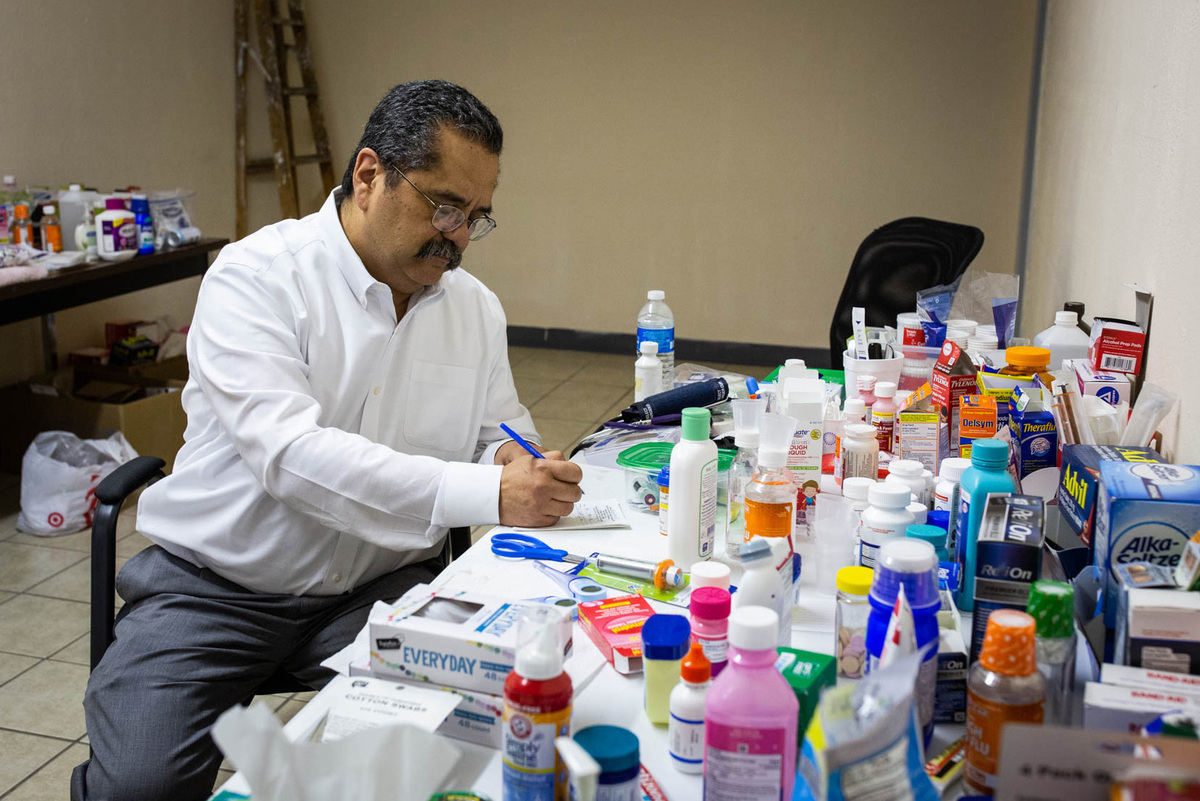
At an ad hoc clinic in an old warehouse in El Paso, Dr. José Manuel de la Rosa discusses an insulin prescription with a woman who has diabetes.

Anna Maria Barry-Jester/Kaiser Health News


hide caption

toggle caption

Anna Maria Barry-Jester/Kaiser Health News

An emotional and financial toll

In October, the U.S. Immigration and Customs Enforcement agency drastically changed how it handles migrant releases from its detention facilities. Families seeking asylum no longer would get help coordinating travel to live with relatives or sponsors while claims were processed. Since the policy shift, thousands of migrants have found themselves in border cities without money, food or a way to communicate with family. From Dec. 21 to March 21, 107,000 people were released from ICE detention to await immigration hearings.

In El Paso, which has seen a 1,689 percent increase in border apprehensions of migrants traveling with family members compared with last year, volunteer doctors are staffing a network of clinics. Kids with coughs and colds, diarrhea and vomiting are common. Some migrants have severe blisters on their feet that need cleaning, or diabetes that’s out of control because, they say, their insulin was thrown away by border patrol agents.

For de la Rosa, this is just the latest work in a career tied to border health. Born and raised in El Paso, he has served on the U.S.-Mexico Border Health Commission since President George Bush appointed him in 2003. He was founding dean of the city’s Paul L. Foster School of Medicine when it opened a decade ago as one of the few programs in the country that requires all students to take courses in “medical Spanish,” designed to bolster communication with Spanish-speaking patients.

As he entered the warehouse-turned-shelter that evening in late March, he pulled off his signature bow tie and draped a stethoscope around his neck. He thinks it’s a gift to be able to help people who would otherwise have no way to get care. “Sometimes I don’t know if I’m doing it for me or for them,” he said. “It is so fulfilling.”

But cases like Meliza’s are frustrating for the doctors, because they can’t see them through.

After passing an initial screening to claim asylum, Meliza and her mother had been taken to the warehouse, where volunteers gave them food and a bed, and helped arrange travel to South Carolina, where they could live with a family member as their asylum claim proceeds.

Meliza’s rash began while they were in detention, Magdalena told de la Rosa. And four days in, she was sent to a hospital. But they were released from custody before getting the test results. De la Rosa called the hospital, hoping the labs would offer clues as to whether the girl might have leukemia; Henoch-Schonlein purpura (a disorder that can cause kidney damage); or just an allergic reaction. The hospital asked de la Rosa for a privacy waiver from the mother, but by the time he could return to the shelter for her signature, she had boarded a bus for South Carolina. That would be the last he saw of her.

‘The best we can do’

Born and raised in El Paso, De la Rosa has served on the U.S.-Mexico Border Health Commission since President George Bush appointed him in 2003. Helping migrants get the health care they need is fulfilling he says. But many days he’s frustrated and overwhelmed by the lack of government support.

Anna Maria Barry-Jester/Kaiser Health News


hide caption

toggle caption

Anna Maria Barry-Jester/Kaiser Health News

Dr. Carlos Gutierrez, another El Paso pediatrician, is also desperate for communication with the doctors who work inside the detention facilities. When people are released with complicated health issues — like a man who recently showed up with a flesh-eating bacterial infection and a wound so big they could see his bone — the volunteer doctors often have to start from scratch, trying to determine what a patient has and what treatment they’ve been given.

For much of the past five months, Gutierrez has used the lunch break from his private pediatric clinic to see migrants. He works in one of several hotels being rented out by Annunciation House, a nonprofit that runs the area’s main shelter network.

The organization, which is funded through donations from religious organizations and individuals, has dug deep, spending more than $1 million on hotels in the past four or five months, its executive director said at a city council meeting. It struggles to accommodate everyone — Annunciation House recently scrambled to open a temporary shelter so that 150 people wouldn’t have to sleep in a city park.

On his way to the hotel, Gutierrez reviewed the day’s text message from the organization’s director outlining how many refugees would be arriving that day: 510.

The first patients treated that day in his improvised clinic — set up in a hotel room bathroom — were 9-year-old twins from Guatemala. They were traveling with their mother, Mirian, who said she fled her hometown after local men threatened to kidnap one daughter if she didn’t pay protection money to operate her tortilla stand.

Mirian and her daughters had crossed a small river to reach what she believed was New Mexico, she said, imagining that the authorities they surrendered to would be like the U.S. tourists she’d met in her hometown. “There, when the tourists arrive, they are so nice. Even doctors come to help us,” she said in Spanish.

But the welcome in the U.S. was not warm. During the six days the family spent in federal custody, one of her daughters contracted bronchitis, Mirian told Gutierrez. They were healthy when they entered, she said, but sleeping on cold concrete floors and eating skimpy ham and cheese sandwiches broke them down. “They treat you as if you’re trash,” she said.

Mirian showed Gutierrez an inhaler she was given in the detention facility and asked what it was for. Her other daughter had developed a deep cough and needed attention, she said. After examining both girls, Gutierrez explained about the inhaler, and showed Mirian how to help her daughter use it. The girls would be fine, he told her, but with their lungs as congested as they were, it might be weeks before they recovered.

“I mean, this is the best we can do,” Gutierrez said, after prescribing an antibiotic to a little girl with an ear infection. “We could be doing it better. But when they are in our care nobody is dying.”

De la Rosa examines a rash on the foot of a 5-year-old girl named Meliza. Though he believed it was likely a sign of an allergic reaction, the underlying bruising could also signal serious infection or leukemia, he worried. Before he could get the test results he needed, the family was gone.

Anna Maria Barry-Jester/Kaiser Health News


hide caption

toggle caption

Anna Maria Barry-Jester/Kaiser Health News

Necessary work

More than two dozen people have died while in immigration custody under the Trump administration, according to a calculation based on a recent NBC News analysis. The government says it added nurses and doctors to its facilities after two children died in December. Immigration authorities are now taking 60 children a day to the hospital and doing medical screens for every child under 18, U.S. Customs and Border Patrol Commissioner Kevin McAleenan said during a March news conference.

But many people still have serious needs upon release. When Gutierrez and his colleagues started these clinics, they were meant to temporarily fill a gap caused by the change in government policy. Asked if he thinks the volunteer work is sustainable, he shook his head and sighed. “I’m so tired.”

The financial model — relying on donations and volunteers — also has its limits. Asylum seekers generally don’t qualify for social services, including Medicaid, before they have been granted asylum. In California, negotiations are underway to make some of the $5 million in emergency funds the state is spending at the border available to reimburse clinics for care, according to the office of state Sen. Toni Atkins. Physicians in Texas and Arizona were not aware of similar conversations in their states.

Dr. Blanca Garcia, another El Paso pediatrician, has been volunteering a few days a week since October. Like many of the doctors, she cites a moral and financial argument for providing care to the migrants, who are in the country legally once they apply for asylum. These are vulnerable people who might not otherwise seek care, and for every diagnosis of strep throat, she is likely preventing an expensive emergency room visit, she said.

Still, there are limitations to what they can provide.

Cristian, 21, and his 5-month-old baby, Gretel, arrived at an El Paso shelter in a former assisted living facility early one afternoon. He’d never been alone this long with his daughter, he said. His wife — a minor — had been separated from them at the border, put in the custody of the Department of Health and Human Services. Cristian didn’t know when she might be released.

While in detention, he had spent several nights with Gretel on a concrete floor in a room with more than a hundred other men, he said. He asked a guard for a better sleeping situation. Instead of receiving help, he said, he was punished by being forced to sit and stare at a wall for over an hour as Gretel cried in his arms.

Still breastfeeding before she was separated from her mother, she would suck on his nose and at his shirt. He was worried that she wasn’t getting enough to eat, and that the formula he was giving her wasn’t as good for her as breastmilk. Dr. Garcia told him the baby looked healthy.

Still, Cristian was anxious, and grew increasingly distressed as he recounted their history.

“Will the baby be OK?” he asked in Spanish.

She assured the young father he was doing everything he could.

This story was produced by Kaiser Health News, which publishes California Healthline, an editorially independent service of the California Health Care Foundation. KHN is not affiliated with Kaiser Permanente.

Let’s block ads! (Why?)

Opinion: Direct-To-Consumer Medicine Can Be Quick And Discreet, But What’s Lost?

If a doctor’s office is like Blockbuster, Hims feels more like Netflix. It’s a way to skip the long waits and crowds and get generic Viagra, hair growth treatment and other medicine and vitamins with minimal interaction with a health care provider — for better and worse.

PeopleImages/Getty Images


hide caption

toggle caption

PeopleImages/Getty Images

If you’re on Instagram or if you’ve taken the New York City subway lately, chances are you’ve heard of Hims, the men’s health and wellness company with a penchant for advertisements featuring suggestive cacti and eggplants against pastel backgrounds. The Web-based startup targets the young male demographic with skin care products, multivitamins and erectile dysfunction medications.

In January, just a few months after its first birthday, the company joined Silicon Valley’s vaunted “unicorn” club: It received a venture-capital investment that put its valuation at $1 billion.

The ambitious valuation is certainly a remarkable achievement for the young company. But it’s also yet another signal that a new e-commerce market that one might call “direct-to-consumer medicine” is on the rise.

Although the companies in this sector have different styles and specialties, they all aim to connect patients, pharmacies and doctors through apps and the cloud. Their core business models are remarkably similar. First, a self-diagnosing consumer selects a product they think they need. Then, the customer completes an online questionnaire, which is reviewed by a physician if a prescription is needed. A secure messaging platform is available if the customer has questions for the physician before the order is filled and mailed to their door.

These direct-to-consumer companies have historically occupied the periphery of American health care, offering services that often aren’t covered by traditional medical insurance. For instance, there’s Hubble for vision testing and contact lens prescriptions, SmileDirectClub for mail-order orthodontics, and Keeps for hair loss.

But as younger consumers express a growing preference to shop for products and services online, the industry has started to encroach into the territory of traditional primary care. Consumers can turn to Hims and Roman for erectile dysfunction, to Nurx for oral contraception, to Cove for migraines, and to Zero to quit smoking. As more drugs have gone generic, the trend has accelerated and investors have grown more eager to get in the game.

As a medical student who just finished a rotation in a primary care office, I can see the appeal. Hims in particular has potential to bring stigmatized men’s health topics out of the shadows and connect men to affordable treatments for conditions that they otherwise might not address.

Direct-to-consumer medicine is certainly more convenient and discreet than a trip to a doctor’s office, where patients commonly endure long waits only to be rushed through a conversation with a physician who’s weighed down by too many obligations. If a doctor’s office is like Blockbuster, Hims feels more like Netflix.

But I also question whether direct-to-consumer medicine is truly safe for patients. Take erectile dysfunction, or ED. On paper, it seems like a simple diagnosis. In reality, however, it’s a textbook example of the complexity of human health. Sometimes ED occurs on its own, with no identifiable cause. But more often than not, it is a symptom or precursor of other conditions: anxiety, depression, clogged blood vessels, high blood pressure, diabetes or hormone imbalances.

That’s why the American Urological Association advises physicians treating patients with ED to also screen for the condition’s potential physical, social and behavioral causes, including relationship issues and drinking and smoking habits. The association recommends, at the very least, checking vitals, performing a genital exam and for patients presenting with ED issues for the first time, screening for high cholesterol, diabetes and other diagnoses commonly associated with ED.

For some direct-to-consumer health products, like oral contraception (now offered by companies such as Hers, a subsidiary of Hims), an online evaluation may be sufficient. But Hims’ evaluation for ED appears to fall far short of the basic AUA guidelines.

The direct-to-consumer companies also present ethical dilemmas. The physicians who work for them may be hamstrung in terms of the scope of the advice they can offer and their ability to follow up with patients to track progress. And they surely must feel some pressure to push their employer’s products. The companies essentially operate on islands of care, where doctors can’t address secondary issues that surface during a consultation and can’t add information to a patient’s home medical record.

There’s also the risk of muddying the critical distinction between health and wellness: Hims’ marketing and website design places FDA-approved drugs like propranolol — commonly used off-label to treat performance anxiety — alongside supplements like biotin gummies, conflating the two categories for unwitting consumers.

One could argue that direct-to-consumer medical startups and their venture capital investors are attempting to disrupt primary care by “unbundling” it. This goal contrasts with the vision of primary care enshrined in legislation like the Affordable Care Act, which championed a “patient-centered medical home” where a strong physician-patient relationship is supported by ancillary professionals. Instead, the e-commerce model takes the view that physicians are middlemen clinging to an industry ripe for change — much like taxicabs, bookstores and hotels in the days before Uber, Amazon and Airbnb.

In this technocratic, patient-empowered dream, however, I can’t help but wonder what is lost. During my primary care rotation, I would always begin conversations with patients by asking what prompted their visit. Yet the conversation hardly ever ended there. Our agenda was dynamic, hinged to the information gathered in real time in the exam room.

Frequently, we would shift gears to discuss a patient’s previous diagnoses, to address new concerns such as high blood pressure readings, or to talk about plans for end-of-life care. We often discussed evidence-based preventive measures — like options for eating healthier, methods to quit smoking or guidelines for colon cancer screening. In other words, we would not only act on the concerns of the present, but also anticipate the needs of the future.

In many ways, Hims and other startups are capitalizing on a cultural moment. Their products address a genuine frustration with the current state of American health care, and they are emblematic of what’s likely to be a lasting trend toward commodification in medicine. The companies’ early successes are arguably a smoke signal for traditional primary care — a warning that doctors’ offices must adapt to become less clunky and bureaucratic.

The question of whether companies like Hims and Roman are heroes or villains of the health care ecosystem continues to be hotly debated. Christina Farr, a reporter for CNBC, recently tweeted that the rise of personal wellness startups was “the most divisive trend” she has seen in her years covering health and technology.

I would like to think there is room for both health care models to coexist. Considering how big the direct-to-consumer market has become, today’s primary care physicians have a pragmatic obligation to ask patients if they use online wellness companies, to understand which products they offer and to counsel patients on the potential risks and benefits of those products. If these companies are leveraged correctly, they very well could declutter primary care and break down barriers to access. But we should push for greater regulation to address potential ethical concerns, draw clear distinctions between health and wellness, and establish guidelines that protect our patients.

As more startups like Hims take root, the window of opportunity to set the rules of direct-to-consumer medicine will close. The time to act is now.


Vishal Khetpal is a freelance writer and third-year medical student at the Warren Alpert Medical School of Brown University. A version of this essay originally appeared in Undark, the online science magazine.

Let’s block ads! (Why?)
Express Scripts Takes Steps To Cut Insulin’s Price To Patients

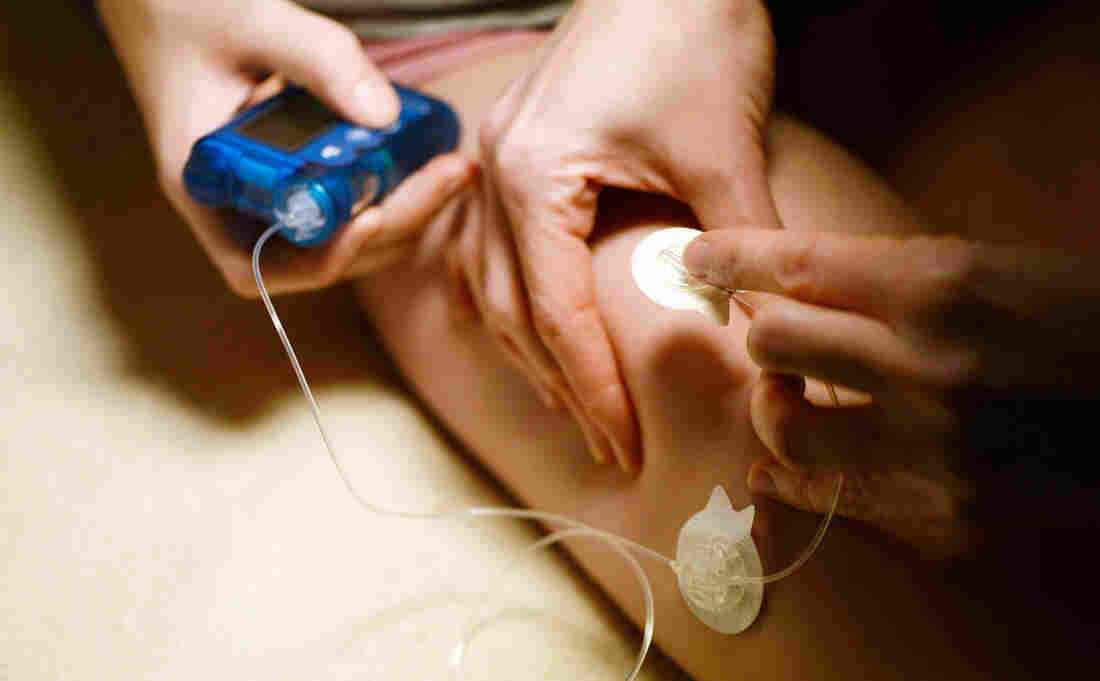
A medical assistant administers insulin to an adolescent patient who has Type 1 diabetes. Cigna’s pharmacy benefit manager, Express Scripts, says it covers 1.4 million people who take insulin.

Picture Alliance/Getty Images


hide caption

toggle caption

Picture Alliance/Getty Images

As the heat turns up on drug manufacturers who determine the price of insulin and the health insurers and middlemen who determine what patients pay, one company — Cigna’s Express Scripts — announced Wednesday it will take steps by the end of the year to help limit the drug’s cost to consumers.

Express Scripts, which manages prescription drug insurance for more than 80 million people, is launching a “patient assurance program” that Steve Miller, Cigna’s chief clinical officer, says “caps the copay for a patient at $25 a month for their insulin — no matter what.”

The move by Express Scripts comes as lawmakers are focused on high drug prices and listening to stories about patients who can’t afford their medication.

Insulin has become a major focus. A Minnesota man died last year, according to his mother, when he tried to ration his insulin because he couldn’t afford the $1,300 monthly cost.

Though the drug has been in use for more than a century, its price in the U.S. is 10 times higher than it was 20 years ago, according to a report by the House of Representatives released last week.

“What we’re hoping is that we’re going to see more diabetics taking more insulin, [fewer] complications for those patients, and hopefully lower health care costs,” Miller tells Shots.

Express Scripts covers 1.4 million people who take insulin, Miller says.

Under the discount program, patients who haven’t met their deductible and normally would have to pay the full retail price for their insulin would pay $25. The same goes for those whose normal copayment is a percentage of that retail price. Miller says on average patients pay about $40 a month for insulin copayments — but the price can vary widely month to month, depending on the design of a patient’s prescription drug plan.

The announcement by Express Scripts, one of the biggest pharmacy benefit managers, comes a day after a subcommittee hearing in the House of Representatives that focused on the high costs of insulin.

Patient advocate Gail DeVore testified at the hearing.

“Every day I get emails from people asking, ‘How do I afford insulin?’ ” DeVore told the members of the Energy and Commerce Subcommittee on Oversight and Investigations. “Every day. And every day I have to help them find a way to find insulin.”

DeVore, who has been dependent on insulin to control her diabetes for 47 years, says the full retail price for her insulin is $1,400 per month. She has good insurance, she says, so her cost for that drug is manageable. But her insurance doesn’t cover a second, fast-acting insulin she sometimes needs, so she says she dilutes it to make it last longer.

A recent study by researchers at Yale found that about a quarter of people with diabetes skip doses to save money or use less of the medication than prescribed.

“Patients who rationed insulin were more likely to have poor control of their blood sugars,” Dr. Kasia Lipska, an endocrinologist and assistant professor at Yale, testified at the hearing. She said patients who don’t maintain good control of their blood sugar run the risk of amputations, blindness and other diabetes complications.

Lipska told the lawmakers that drug companies are raising prices for no apparent reason. She urged the committee members to focus on the list prices of the drugs that pharmaceutical companies set rather than worrying about discounts and rebates.

“The bottom line is that drug prices are set by drugmakers,” she told lawmakers. “The list price for insulin has gone up dramatically — and that’s the price that many patients pay. This is what needs to come down. It’s as simple as that.”

Express Scripts’ program doesn’t do that, Miller acknowledges.

“This is not lowering the price of the drug,” Miller says. “We think there is a whole different issue, and that is, ‘What’s the price of pharmaceuticals in the United States?’ This does not address that. This truly is addressing the pain that patients are experiencing at the counter.”

Last month, Eli Lilly & Co. said it would begin selling an “authorized generic” version of one of its insulin products at half the retail price.

According to Express Scripts, its $25 copay deal will be available near the end of this year to patients who are not covered by a government insurance program (such as Medicare or Medicaid).

Let’s block ads! (Why?)