Why The Promise Of Electronic Health Records Has Gone Unfulfilled

The reality of electronic medical records has yet to live up to the promise.
suedhang/Getty Images/Cultura RF
hide caption
toggle caption
suedhang/Getty Images/Cultura RF
A decade ago, the U.S. government claimed that ditching paper medical charts for electronic records would make health care better, safer and cheaper.
Ten years and $36 billion later, the digital revolution has gone awry, an investigation by Kaiser Health News and Fortune magazine has found.
Veteran reporters Fred Schulte of KHN and Erika Fry of Fortune spent months digging into what has happened as a result. (You can read the cover story here.)
Here are five takeaways from the investigation.
Patient harm: Electronic health records have created a host of risks to patient safety. Alarming reports of deaths, serious injuries and near misses — thousands of them — tied to software glitches, user errors or other system flaws have piled up for years in government and private repositories. Yet no central database exists to compile and study these incidents to improve safety.
Signs of fraud: Federal officials say the software can be misused to overcharge, a practice known as “upcoding.” And some doctors and health systems are alleged to have overstated their use of the new technology, a potentially enormous fraud against Medicare and Medicaid likely to take years to unravel. Two software-makers have paid a total of more than $200 million to settle fraud allegations.
Gaps in interoperability: Proponents of electronic health records expected a seamless system so patients could share computerized medical histories in a flash with doctors and hospitals anywhere in the United States. That has yet to materialize, largely because officials allowed hundreds of competing firms to sell medical-records software unable to exchange information among one another.
Doctor burnout: Many doctors say they spend half their day or more clicking pull-down menus and typing rather than interacting with patients. An emergency room doctor can be saddled with making up to 4,000 mouse clicks per shift. This has fueled concerns about doctor burnout, which a January report by the Harvard T.H. Chan School of Public Health, the Massachusetts Medical Society and two other organizations called a “public health crisis.”
Web of secrets: Entrenched policies continue to keep software failures out of public view. Vendors of electronic health records have imposed contractual “gag clauses” that discourage buyers from speaking out about safety issues and disastrous software installations — and some hospitals fight to withhold records from injured patients or their families.
Kaiser Health News is an editorially independent news service supported by the nonpartisan Kaiser Family Foundation. KHN is not affiliated with Kaiser Permanente.
Former Physician At Rikers Island Exposes Health Risks Of Incarceration

Dr. Homer Venters, the former head of New York City’s correctional health services, says that inmates held in solitary confinement cells, such as the Rikers Island cell shown above, have a higher risk of committing self-harm.
Bebeto Matthews/AP
hide caption
toggle caption
Bebeto Matthews/AP
As head of New York City’s correctional health services, Dr. Homer Venters spent nine years overseeing the care of thousands of inmates in the jails on Rikers Island. Though he left Rikers in 2017, what he witnessed on the job has stayed with him.
“What’s important to consider about jail settings is that they are incredibly dehumanizing, and they dehumanize the individuals who pass through them,” Venters says. “There is not really a true respect for the rights of the detained.”
Venters is now a senior health and justice fellow at Community Oriented Correctional Health Services. In his new book, Life and Death in Rikers Island, he describes a number of traumatic outcomes related to what he says was subpar medical care at the jail complex, including the death of Carlos Mercado, a man with diabetes who was denied insulin during the intake process.
“This type of death really shows, in a very stark way, how jails confer health risk to people,” Venters says. “For a person to know that they are insulin-dependent — to report that and then for any state institution to fail to act on that, really puts the onus and responsibility for this man’s death directly on the jail system.”
During his tenure at Rikers, Venters pushed to improve the electronic medical records system, allowing health data from the jail to be shared with outside agencies, including the Department of Justice. He sees it as a first step in a larger effort to address abusive conditions and improve inmate care.
Working at Rikers, Venters says, “left me with a zeal to continue this work all over the country. … The problems of Rikers are in many cases the problems of jails and prisons everywhere in the United States.”
Interview highlights
On his first time at Rikers Island
I happened to go there for the first time on a day where there was a very strong snowstorm. As someone was showing me around some of the facilities, the snow was coming down so quickly it really did seem like a scene from a sci-fi movie. I couldn’t believe that the structures looming up one after the other were real. [And] the yelling coming out — the two biggest and most well-constructed facilities at the time on the island were these big buildings that look like hotels. But they were built for solitary confinement, so people [were] screaming and yelling out of those big structures, through this very thick snowfall. It left an indelible impression on me.
On not being able to find patients who need medical care because of delays in paperwork and an antiquated paper logging system
Patients would be moved from one housing area to another, and sometimes their move would be updated a couple of days later. Somebody would have to type it into a computer system. But it would mostly be updated on a paper-based log. Since I left they’ve started implementing some wristbands that could be scanned, but it’s the same problem — an officer has to do something, [and] you have to affirmatively track it.
So for us with a big health service — thousands of patients on medications every single day — we had pharmacy technicians, psychologists [and] nurses who were working hard just to find the patients who had missed medicines — who could be facing a life-threatening event if they miss that medicine. It was so routine that we couldn’t find our patients that there was no thought that we could find everybody who didn’t get their medicine today. But we would make short lists of the people who missed medicines that were what we would call “life-sustaining medicines,” or who could face a very dire health outcome, and that expenditure of energy for that purpose would become revealed when patients had very bad outcomes.
On tracking data about inmates sustaining injuries from correctional officers
One data point that’s really incredible to consider is that there was a time when, if an adolescent was in a violent conflict with someone in Rikers Island, if the conflict was with a correctional officer they were more likely to sustain a blow to the head than if the conflict was with another inmate. It’s stunning, because obviously correctional officers have enormous amounts of training about avoiding blows to the head. … And also you would think that most inmate fights start with a shot to the head. But that data point alone … we could only do because we had developed this injury surveillance system. But it was one of many that we pushed to the D.O.J.
On what data revealed about solitary confinement
The other big data set that we found very, very helpful is we did a large-scale analysis — I think the first-ever large scale analysis — of exposure to solitary confinement. We looked at 225,000 jail admissions and we found that the people … exposed to solitary confinement had about seven times higher risk of being a self-harm cohort. That is to say, to physically harm themselves. That data set … helped us really push the Department of Corrections to move from wanting more solitary confinement for mentally ill people, to actually eliminate the practice of solitary confinement for persons with serious mental illness.
On the conditions of solitary confinement units, where raw sewage often overflows because of clogged toilets
It is horrific but also dehumanizing. It really reflects quite well the end result of the practice of solitary confinement. That is to say, you have officers trying to act as if they are conducting normal business. You have patients with mental health problems who are decompensating [– functionally deteriorating under the stress –] or simply doing extreme things to try and get out of there. You have health staff coming on and off those units as quickly as they can, because while they want to protect their patients, they also are seeing this day after day after day. …
I’ve been inside these cells to talk to patients multiple times when they’ve smeared feces all over the inside of the cell. Or they’re working to light a fire inside their cell. It’s just very, very extreme behaviors and any one of these observations should be enough to reaffirm that this is a horrible practice– that we should have never built this unit and we need to back away from its use everywhere.
On if he believes Rikers Island should close
The closing of Rikers is absolutely necessary. It’s not sufficient to transform the criminal justice system in New York City to become more humane, but it’s necessary. The jails that are in operation are crumbling. If you’re a correctional officer, almost anywhere you work, any housing area, any hallway, any intake pen is so dilapidated and falling apart that inmates easily can arm themselves — and do for their own protection — with bits of hardened material that are broken off from walls; from pipes; from ceilings.
I think the other important element to this is that we have much more work to do to lower the jail population. We’ve made great strides in New York City, more than most big cities have. There were probably [22,000 to] 23,000 people in the jails when [Rudolph] Giuliani was mayor. It’s now under 8,000, so really incredible progress. But there is much more work that can be done to create alternatives that involve treatment for people with serious mental illness, and also to really develop supportive housing, which is an important element to why people cycle in and out of jail. [There’s] a lack of stable housing. [Housing] can also involve treatment for addiction and for mental health problems.
Roberta Shorrock and Seth Kelley produced and edited the audio of this interview. Bridget Bentz and Molly Seavy-Nesper adapted it for Shots.
Popping In For a Pint And Tune At The Cobblestone In Dublin

Dublin’s Cobblestone Bar
Kimberly Junod/WXPN
hide caption
toggle caption
Kimberly Junod/WXPN
Ask anyone in Dublin to recommend a pub with traditional Irish music, and you’re likely to hear about The Cobblestone. For our last World Cafe dispatch from Ireland, we pop into the cozy spot in Smithfield and can immediately see why this place is beloved by locals, tourists and musicians from far and wide. It’s warm and welcoming with a big, long bar filled with people leaning over each other and laughing and clinking glasses. And at the front of the room there are about a dozen musicians packed into this little nook — it’s a jigsaw puzzle of fiddles and guitars and pints resting precariously between elbows on tables.
Tom Mulligan, who has owned the pub for 30 years, says,”Conversation is the greatest thing that was ever invented.” Mulligan hopes people talk to each other as much as they listen to the music at The Cobblestone. He also tells the story of that time Steve Martin popped by to play some banjo and left on his private jet. Come along for a pint, in the player.
Minnesota High School Basketball Game Has A Fantastic Finish

After a last-second basket, Albany fans stormed the court. The referees conferred and it was determined the basket didn’t count, and Albany had lost. That’s when Melrose fans stormed the court.
Peter Kaiser Takes First In Iditarod — Marking A Win For Alaskan Natives

Peter Kaiser and his team of dogs take off at the start of the Iditarod race.
Courtesy of John Wallace
hide caption
toggle caption
Courtesy of John Wallace
Snow whipped past Peter Kaiser and his eight-dog team as they passed under the famous Burled Arch at the end of the grueling, 1,000-mile Iditarod sled dog race, cinching a first place win.
After racing for miles in inky darkness across the Alaska wildnerness, Kaiser was greeted in Nome, Alaska by bright lights, cameras, and cheering fans chanting “Way to go Pete!”
It was the 31-year-old’s tenth time competing in the Iditarod, but his first time winning the championship — making him the first musher of Yup’ik descent to ever win the race.
Just after his finish at 3:39 a.m. on Wednesday morning, Kaiser raised both arms in a double-fist pump celebration.

Peter Kaiser celebrates his first-place victory at the finish line of the Iditarod race.
Courtesy of John Wallace
hide caption
toggle caption
Courtesy of John Wallace
“Honestly, I’ve heard this from many different people that have won, but it hasn’t sunk in,” he told NPR’s Melissa Block. “Like, you actually have to think about it pretty hard and you’re like, ‘oh man, I actually won this.'”
Kaiser managed to edge out the defending champion, Joar Leifseth Ulsom, by 12 minutes. His winning time was nine days, 12 hours, 39 minutes and six seconds.
“We just got some trail that the team really likes and we didn’t see much of that this race,” Kaiser told Alaska Public Media. “My team really likes hard, fast trails where they can go fast, and that was probably the best type of trail for that kind of race, so when they got on that they really wanted to roar.”
His win is a point of pride for his hometown of Bethel, Alaska which is situated in the Yukon Delta. The delta is where the Yukon and Kuskokwim rivers empty into the Bering Sea on the western end of the state — and is the traditional land of Yup’ik people.
“It’s about time somebody wins from Kuskokwim,” Bethel resident Nelson Alexie told KYUK’s Anna Rose MacArthur.
Over the course of the race, Kaiser’s supporters — many of whom were from the same area as him — cheered him on and followed his race through his website and Facebook page. One native, Evon Waska, spoke in the Yup’ik language about the significance of the win for Alaskan natives.
“We Yup’ik people, are very proud,” he told KYUK.
Unlike other competitors, who hail from prominent mushing families, Kaiser doesn’t come from a dynasty of champion mushers.
“We kind of have our own little mushing story but it’s not quite as mainstream as some of the others,” Kaiser said.
Though Kaiser is Alaskan on his mother’s side, it was his father, Ron Kaiser, originally from Kansas, who introduced him to mushing. His father had a dog team and started mushing in the late 70s — but never competed at a high level.
At first, Kaiser mushed for fun, but after graduating high school and trying out college, he decided he wanted to make a career out of racing. In the winters, he trains and races, and in the summer he works seasonal jobs. He owns a total of 40 dogs at his kennel, which require attention, care and training all year round.
tundratech
YouTube
Of Kaiser’s eight-dog team — Morrow, Lucy, Frieda, Sky, Zuma, Pronto, Charlie and Arbor — Morrow and Lucy were his two lead dogs that pushed the team across the finish. Kaiser said he thinks the dogs know they accomplished something special.
“They have an idea of when teams are in front of them on the trail or not,” he said. “They’re real spunky right now and probably ready to go for another run, but they’re going to get some good time off.”
In the past, his best finishes had been a fifth place spot in the 2018, 2016 and 2012 races. His prize for winning this year’s race includes $50,000 and a new truck. He is also planning to take some time to enjoy himself.

Some dogs on Peter Kaiser’s sled team howl before the start of the Iditarod race.
Courtesy of John Wallace
hide caption
toggle caption
Courtesy of John Wallace
His secret for success this year? He’s not quite sure — he said there are a variety of factors that may have helped him triumph.
“I can’t put my finger on one thing in particular, but I guess we have a whole year to kind of figure out what we did right.”
Kaiser regularly pays attention to the small details that contribute to a win. He jots down extremely precise details about his dogs and various races in many notebooks that he regularly studies to enhance his performance.
One big factor is the snow itself. The record for the fastest winning time in the Iditarod is a time of eight days, three hours, 40 minutes and 13 seconds by Mitch Seavey in 2o17. By comparison, this year’s race was a little slow — partially due to how the warmer weather over the past two years has impacted the snow.
“Anytime you get fresh snow and drifting snow and warmer temperatures, you’re going to have a slower race,” Kaiser explained. “So the pace of the race is really more dictated by trail conditions and weather than dog teams.”

Peter Kaiser and his team of dogs crossed the finish line just past 3 a.m. on Wednesday morning.
Courtesy of John Wallace
hide caption
toggle caption
Courtesy of John Wallace
It’s too soon to tell whether Kaiser is kicking off an Iditarod dynasty for his six-year old son and 1-year-old daughter.
But, his son Ari took to the dogs from an early age — making puppy-like howling sounds — and likes to mush with the family’s retired racing dogs. Since his son only weighs about 45 pounds, his sled team is a lot smaller than Kaiser’s — it’s comprised of one dog, instead of eight.
About a week before Kaiser left to race the Iditarod, his son went on a dog sledding exursion of his own — bringing his baby sister, Aylee, along for the ride.
Pete Kaiser On His First Iditarod Win
NPR’s Melissa Block gets the reaction of this year’s Iditarod winner, Pete Kaiser. Kaiser is the first musher of Yup’ik descent to win.
Ending HIV In Mississippi Means Cutting Through Racism, Poverty And Homophobia

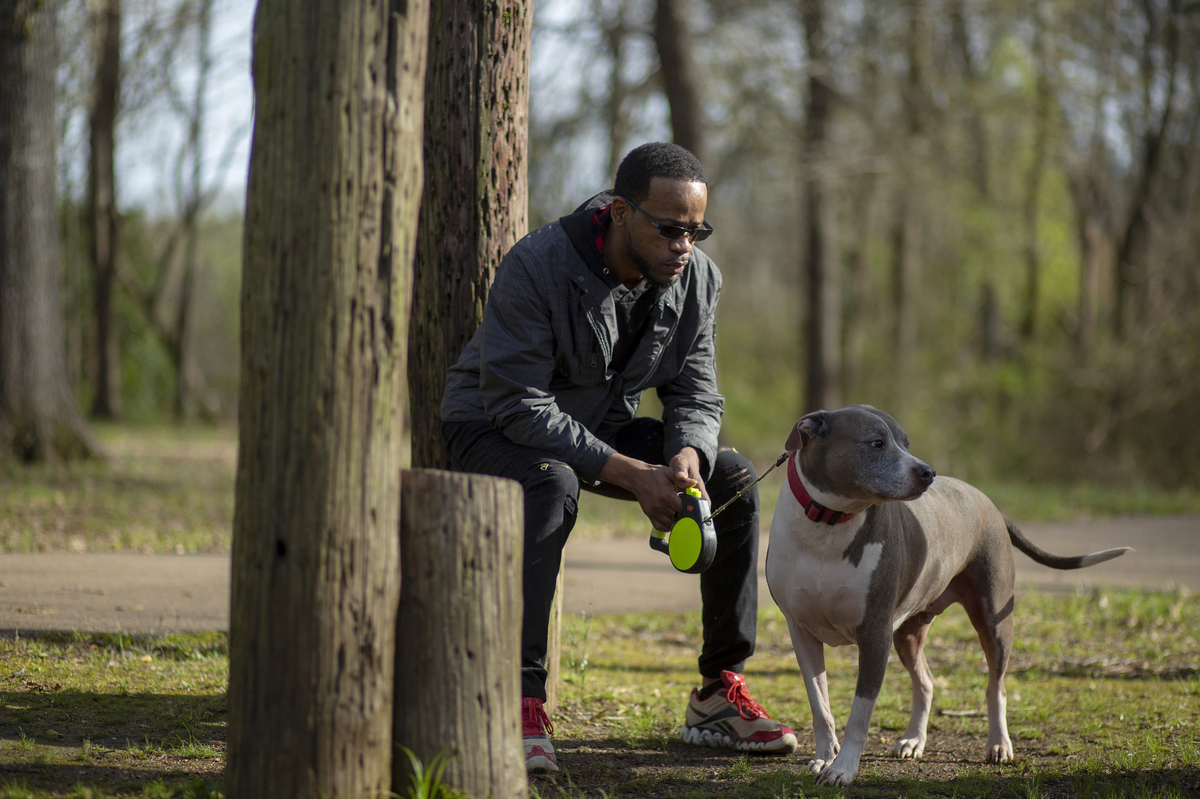
Shawn Esco brings his dog Nibbler to a park in Jackson, Miss. He’s was diagnosed with HIV 11 years ago and has stayed healthy, but the same can’t be said of many of the other HIV-positive people in his life.
L. Kasimu Harris for NPR
hide caption
toggle caption
L. Kasimu Harris for NPR
Ending HIV transmission in America within the next decade — a stated goal of the Trump Administration — isn’t a question of coming up with new medication. The medicines to prevent and treat HIV infections already exist.
But the road to eliminating HIV and AIDS runs through the deep South, where racism, poverty, and homophobia can be formidable obstacles to testing and treatment, particularly for black gay men. According to a Centers for Disease Control and Prevention report in 2017, more than half the new HIV diagnoses in the U.S. were in Southern states, where gay and bisexual black men make up a disproportionate share of people with HIV.
Shawn Esco lives and works in Jackson, Miss. — a city with one of the highest HIV rates in the country.
Esco remembers the moment he realized he was HIV positive. Eleven years ago, he went to a clinic to get a routine HIV test. Workers there invited him into a private room for the results, and he says he knew — before they even said a word.
“When they opened the door,” Esco says, “there was all this new literature that said ‘HIV this,’ ‘AIDS that.’ And you could tell it was there for me.”

The Supreme Court of Mississippi in Jackson, Miss. The city has one of the highest HIV rates in the United States.
L. Kasimu Harris for NPR
hide caption
toggle caption
L. Kasimu Harris for NPR
Esco is now 37, and lives in an apartment with an affectionate pit bull named Nibbler. He’s stayed healthy in the time since his diagnosis, but the same can’t be said of many of the other HIV-positive people in his life.
In 2011, after good HIV treatments were available, Esco’s best friend from high school died of AIDS-related causes.
“I was extremely pissed off at him,” Esco says,” Because it could have been avoided. All he had to do was want to live.”
Esco says the death of that friend was the hardest to endure, but not his only loss. One of Esco’s exes also died of an AIDS-related condition. And another friend took his own life after he got his diagnosis — out of fear his family would find out.
A few years ago CDC researchers estimated that, at current infection rates, about half of all black men who have sex with men (and 25 percent of Latino gay and bisexual men) in the U.S. will be diagnosed with HIV in their lifetime.

In 2011, Esco’s best friend from high school died of AIDS-related causes. One of Esco’s exes also died of an AIDS-related condition. And another friend took his own life after he got his diagnosis — out of fear his family would find out.
L. Kasimu Harris for NPR
hide caption
toggle caption
L. Kasimu Harris for NPR
When Esco considers the possibility of ending the epidemic in the next 10 years, he takes into account issues like homophobia, racism, lack of education and stigma, and is blunt: “Given the way things are now, that’s not going to happen.”
In the South, many gay and bisexual black men don’t know the extent of the HIV problem, he says. And, if they do, they may not have access to the tools to prevent and treat the disease.
These are problems that Dr. Leandro Mena tries to solve. He’s an HIV researcher and clinician, and a professor of population health science at the University of Mississippi. Mena also works with My Brother’s Keeper, a community-based nonprofit working to eliminate health disparities in underserved populations.
“Science has given us the tools to end the HIV epidemic,” Mena points out. “The challenge that we have is that we need to make sure those tools can reach those who actually need it most.”
HIV seems easy to keep in check, he says: There’s a daily pill that can keep someone who is infected with the virus healthy.
But things can get complicated fast if you’re poor.

The memorial grove behind Grace House, in Jackson, Miss., where the ashes of more than 45 former residents now rest. Grace House was once a hospice for people dying of AIDS. Today the organization offers hundreds of people in Jackson financial assistance for housing.
L. Kasimu Harris for NPR
hide caption
toggle caption
L. Kasimu Harris for NPR
“What are the chances that you may remember to take a medicine that you have to take every day,” he says, “if, this morning, you wake up and you don’t have electricity or you don’t have any money to feed your family?”
Getting access to good health care of any kind — let alone lifesaving medicine — can be especially difficult for people living in rural parts of the south, Mena says. And Mississippi is the poorest state in the country.
Some people in Mississippi who are living with HIV wind up on the doorstep of Grace House, which was once a hospice for people dying of AIDS. Today the organization offers hundreds of people in Jackson financial assistance for housing, and also provides rooms for a few dozen people facing particularly severe challenges, such as addiction or mental health issues.
The Grace House compound in Jackson consists of a cluster of several homes, with a shared backyard and a garden.
It also includes a memorial grove, where statues of angels stand around the base of a tree, memorializing people whose deaths were AIDS-related.

Catherine Sullivan is executive director of Grace House, a Jackson nonprofit that offers transitional and semi-permanent housing and support services for homeless men and women living with HIV/AIDS and women recovering from substance abuse.
L. Kasimu Harris for NPR
hide caption
toggle caption
L. Kasimu Harris for NPR
Catherine Sullivan, executive director of the organization, says the ashes of more than 45 people have been spread in the grove — “some of whom were with us at Grace House when they died; some of whose families wouldn’t pick them up from the morgue. And so we buried them.”
Just four months ago, a Grace House resident named Donna died of an AIDS-related illness. She had spent her life struggling to live openly as a transgender woman.
Sullivan keeps photos from Donna’s funeral on her phone: Donna lying peacefully in a coffin, impeccably made up, in a long white gown.
“It makes me really sad,” Sullivan says, looking at the photos. “Because, in death, who she was is honored in a way that got lost in life most of the time.”

Jeremy Williams got HIV before there was a daily pill to prevent infection in people who are at high risk. That pill is known as PrEP — pre-exposure prophylaxis. A lot of gay and bisexual men in the South are not on PrEP, doctors say, either because they don’t know it exists, or because they can’t afford it.
L. Kasimu Harris for NPR
hide caption
toggle caption
L. Kasimu Harris for NPR
Those sorts of stories are familiar to many at Grace House, where residents now are able to live openly and get access to care.
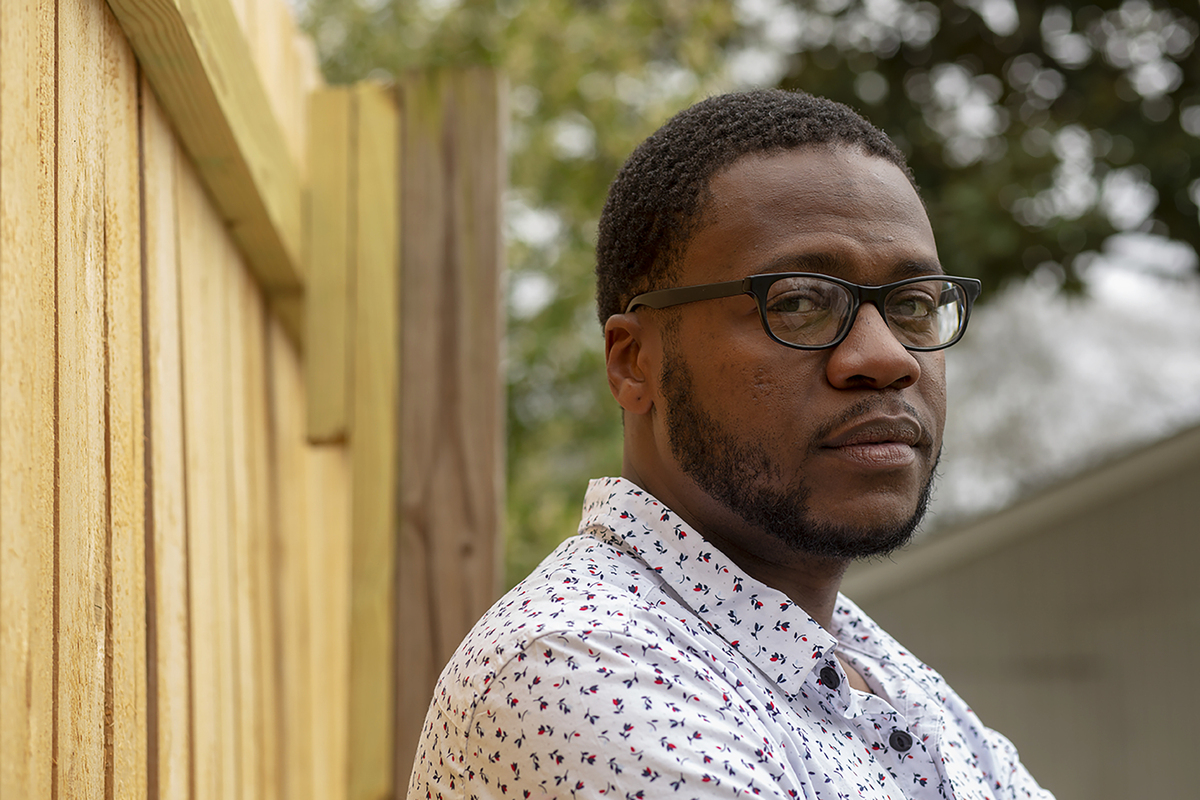
Jeremy Williams, 32, got HIV from his college boyfriend. Williams grew up in rural Mississippi, where HIV treatment was hard to come by.
“You have to drive like an hour or two or three for quality care,” he says.
Williams got HIV before there was a daily pill to prevent infection in people who are at high risk. That pill is known as PrEP — pre-exposure prophylaxis. A lot of gay and bisexual men in the South are not on PrEP — either because they don’t know it exists, or because they can’t afford it. It can cost up to $1,600 a month without insurance. Mississippi has fought against expanding Medicaid, which could have given more people access to HIV prevention and treatment.
Williams says the cost of treatment was kept in check when he was first diagnosed, because he was on his father’s insurance. “But once I got over a certain age, I couldn’t be on his insurance no more, and I couldn’t afford the treatment,” he says.
Today, a daily HIV treatment pill, paid for by the state-administered AIDS Drug Assistance Program, has made his viral load undetectable. So it’s extremely unlikely that he could infect anyone else.

Dating back to the early 1900s, Farish Street was once an epicenter of black life and commerce in Jackson, Miss.
L. Kasimu Harris for NPR
hide caption
toggle caption
L. Kasimu Harris for NPR
Williams says there’s another issue that makes it hard for him and many other young gay or bisexual black men to protect their sexual health: He was raised in a church that tried to convert gay people to heterosexuality. Shame was part of his daily life.
“The words that people say, they linger,” Williams says. “They linger on for years. And you just — it was like a repeated broken record over and over again. You know: ‘You’re not good enough.’ ‘You’re never going to have anybody.’ ‘No one is going to love you because you have this disease.’ I was just carrying it, you know, like it’s a garment — like all of my shame and stuff.”
There’s also a lack of specialized HIV/AIDS knowledge among too many doctors in the South, says Sandra Melvin, the chief operating officer at Jackson’s Open Arms Health Clinic, where HIV-positive patients can receive care. She says many physicians in the region don’t know about PrEP. And that goes to a broader issue.
“In some cases, I think the training has something to do with it,” Melvin says. “Medical schools don’t focus on certain things — cultural competence, how to deliver health care in rural areas. Those are all things that I think in medical school need to be a focus for young and upcoming physicians or health care providers.”

Tiffany West, a medical assistant with the Open Arms Mobile Health Clinic, prepares to administer HIV tests to students at Tougaloo College, north of Jackson.
L. Kasimu Harris
hide caption
toggle caption
L. Kasimu Harris
Attitudes among Mississippi’s elected leaders are also part of the problem, Melvin believes.
“I think that part of what has to happen in this state is that we have to start electing people who reflect the demographics of our society,” she says.
People working to fight the HIV epidemic in Mississippi point to one recent example of a law that they believe promoted homophobic values that could increase the stigma around HIV. In 2016, the state passed a bill into law that allows doctors to refuse to serve certain patients, based on the doctor’s religious beliefs — even if those beliefs seem to be anti-gay.
While there’s no public evidence yet of a doctor refusing to treat a gay patient, critics of the law fear it could deter many people from seeking health care.
One of the Republican sponsors of the bill, Rep. Dan Eubanks, says those fears are misguided.

Hip-hop plays inside the Open Arms Mobile Health Clinic, as a way to help the students at Tougaloo College feel more comfortable while they await testing for HIV or other STDs.
L. Kasimu Harris for NPR
hide caption
toggle caption
L. Kasimu Harris for NPR
“I think it’s reaching to try and say that this bill is going to make it worse for people with AIDS, because that was never the intention of the bill,” Eubanks says. “The intention of the bill was to protect people’s First Amendment right to adhere to the tenets of the faith — which is guaranteed in our Constitution.”
Eubanks believes that ending HIV requires education, including education about abstinence and about personal responsibility.
“If you know that participating in unprotected sex is dangerous, but yet you do nothing to try and alleviate that, you greatly increased your odds and chances of contracting a disease,” Eubanks says. “So there’s a certain amount of personal responsibility — and that has nothing to do with sexual preference.”
The Open Arms Health Care clinic operates a mobile clinic that visits college campuses so students can get tested for HIV and other sexually transmitted diseases.
DeAndré Steward, 20, showed up for the clinic when it came to Tougaloo University, outside of Jackson. Steward is black and gay, and he’s aware of the soaring infection rates in his demographic.
“It is honestly very scary,” Steward says. “We’re all sexual creatures, so we’re going to have sex.”








Gerald Gibson (left), manager of the Open Arms Mobile Health Clinic talks with Javier Heniquez, a student at Tougaloo College, as he leaves the clinic.
L. Kasimu Harris for NPR
hide caption
toggle caption
L. Kasimu Harris for NPR
Condoms are cheaper than PrEP, and also effective at preventing HIV transmission. Steward knows this but he also knows another reality.
“You need to always use protection,” he says. “But people don’t, which is why they’re scared half to death when they’re going to get tested.”
Steward faces many of the same challenges that Esco and Williams do, but he’s from a younger generation. When asked whether he thinks the HIV epidemic can become a thing of the past, he’s optimistic.
“Absolutely,” he says. “The older generations, they still weren’t as educated on AIDS as they should have been. You know, their minds aren’t that open — our generation’s minds are.”
Steward tested negative for HIV at the clinic, and he plans to stay that way. But one of the best ways to do so would be to get on PrEP. He’d like to do so, he says, but it costs too much.
Editor’s note: In the audio version of this story, which first aired Feb. 14, Jeremy Williams’ last name was not used at his request. He has since decided he is comfortable having NPR using his full name and photograph for this digital version.
The Chieftains Shares Sounds Of Ireland With The World

VuHaus
- “Medley”
- “Here’s A Health To The Company”
- “Cotton-Eyed Joe”
- “Full Of Joy”
- “Medley: “Mo Ghile Mear (“Our Hero)”, “Rocky Road To Dublin”, “The Kerry Reel”
When Paddy Moloney formed The Chieftains in 1962, he wanted to take the sounds he loved from his Irish upbringing and share them with the rest of the world. Little did he know things would go so well that eventually, The Chieftains would help take the sounds of Ireland to outer space. In 2010, the band sent instruments with NASA astronaut Cady Coleman to the international space station.
In this session, Moloney tells the story of how The Chieftains ended up being the first Western band to play on the Great Wall of China and explains what Irish traditional music has in common with traditional American music. He continues to share tales about working with The Rolling Stones at Dublin’s Windmill Lane Recording Studios — the very same spot where we recorded this session — and reflects on touring at 80 years old.
While Paddy played whistle and pipes, he assembled a seven-person team for this session: Seán Keane on fiddle, Redmond O’Toole on guitar, Triona Marshall on harp, Kevin Conneff on bodhrán, Matt Molloy on flute, Nathan Pilatzke dancing and Alyth McCormack as lead singer.
Hear it all in the player.
Brown's Trade For Odell Beckham Jr. Excites Cleveland Fan
After the Browns signed receiver Odell Beckham Jr., one fan ran around his neighborhood screaming “We got Odell” so loudly and uncontrollably, a neighbor called 911 and kept her kids in the car.
DAVID GREENE, HOST:
Good morning. I’m David Greene. NFL fans know when your team signs a star player, it’s exciting – right? – especially if it’s the Cleveland Browns, who have not won anything in forever. After the Browns signed receiver Odell Beckham Jr., one fan ran around his neighborhood screaming, we got Odell – so loudly and uncontrollably a neighbor called 911 and kept her kids in the car. Police didn’t arrest the guy. They simply explained to the woman who called that the Browns got Odell.
Copyright © 2019 NPR. All rights reserved. Visit our website terms of use and permissions pages at www.npr.org for further information.
NPR transcripts are created on a rush deadline by Verb8tm, Inc., an NPR contractor, and produced using a proprietary transcription process developed with NPR. This text may not be in its final form and may be updated or revised in the future. Accuracy and availability may vary. The authoritative record of NPR’s programming is the audio record.