In Texas, Abstinence-Only Programs May Contribute To Teen Pregnancies

Jessica Chester was a top student in high school when she became pregnant at age 17. She went on to graduate from college while caring for sons Skylar and Ivory.

Courtesy of Jessica Chester

hide caption

toggle caption

Courtesy of Jessica Chester

To understand why teen pregnancy rates are so high in Texas, meet Jessica Chester. When Chester was at in high school in Garland, she decided to attend the University of Texas at Dallas. She wanted to become a doctor.

“I was top of the class,” she says. “I had a GPA of 4.5, a full-tuition scholarship to UTD. I was not the stereotypical girl someone would look at and say, ‘Oh, she’s going to get pregnant and drop out of school.’ “

But right before her senior year of high school, Chester, then 17, missed her period. She bought a pregnancy test and told her mom to wait outside the bathroom door.

“I saw both lines came up,” Chester says. “I had tears and I remember just opening the door and she was standing there with her arms out and she just wrapped me up and hugged me. I just cried and she told me it’s going to be OK.”

Chester’s mother had also been a teen mom, and so had her grandmother.

In Texas, about 35,000 teens and young women get pregnant before they turn 20 every year. And while rates of teen pregnancy are on the decline nationwide, in Texas the rate of decline is slower.

Traditionally, the two variables most commonly associated with high teen birth rates are education and poverty, but a new study co-authored by Dr. Julie DeCesare, an OB-GYN at the University of Florida in Pensacola, shows that there’s more at play.

“We controlled for poverty as a variable, and we found these 10 centers where their teen birth rates were much higher than would be predicted,” she says.

DeCesare, whose research appears in the June issue of the journal Obstetrics & Gynecology, says several of those clusters were in Texas. The Dallas and San Antonio areas, for example, had teen pregnancy rates 50 percent and 40 percent above the national average.

Research shows teens everywhere are having sex, with about half of high school students saying they’ve had sexual intercourse. Gwen Daverth, CEO of the Texas Campaign to Prevent Teen Pregnancy, says the high numbers in Texas reflect policy, not promiscuity.

“What we see is there are not supports in place,” Daverth says. “We’re not connecting high-risk youth with contraception services. And we’re not supporting youth in making decisions to be abstinent.” The state needs to emulate more progressive policies in other states, she says.

Chester with her then-boyfriend Marcus Chester and sons Ivory and Skylar. They have since married.

Courtesy of Jessica Chester

hide caption

toggle caption

Courtesy of Jessica Chester

For years, California has invested in comprehensive sex education and access to contraception, Daverth says. There, the teenage birth rate dropped by 74 percent from 1991 to 2012. The teen birth rate in Texas also fell, but only by 56 percent.

In South Carolina, young women on Medicaid who have babies are offered the opportunity to get a long-acting form of birth control right after they give birth. They’re also trying that approach in parts of North Carolina. And Colorado subsidizes the cost of long-acting birth control. There, both abortions and teen birth rates are dropping faster than the national average.

Texas makes it hard for teenagers to get reproductive health care, Daverth says.

In Texas, if a 17-year-old mom wants prescription birth control, in most cases she needs her parents’ permission. “Only us and Utah have a law that if you’re already a parent, you are the legal medical guardian of your baby but you cannot make your own medical decisions without the now-grandma involved,” Daverth says.

That’s part of the reason, she notes, that Texas has the highest rate of repeat teen pregnancies in the country.

After Skylar was born, Chester wasn’t given contraception counseling and still wasn’t sure where to go for help. Three months later she was pregnant again. She and her then-boyfriend, now-husband hadn’t realized she could get pregnant so soon after having a baby. She was a full-time student at UT-Dallas at that point, double-majoring in molecular biology and business administration. But the education Chester never got, she says, was sex ed.

“In hindsight,” she says, “It’s like, ‘Dude, what were you all thinking? I came in 17, pregnant, why weren’t you all lining up the chart and showing me [my] options?’ “

Chester’s high school taught abstinence-only sex ed, and the majority of schools in Texas, either do that or don’t offer any sex education at al. But more districts do seem to be adopting “abstinence plus” — which still encourages abstinence but also includes information on other pregnancy prevention methods and sexually transmitted diseases. Still, abstinence-only education is king, and of course, some parents aren’t comfortable discussing sex with teens, much like Chester’s mother wasn’t.

Nicole Hudgens, a policy analyst with the socially conservative Texas Values public policy group, supports abstinence-only education and says there are plenty of options for young moms who become pregnant.

“There are so many places like crisis pregnancy centers that are able to help these girls that are in need,” Hudgens says.

Crisis pregnancy centers provide counseling and support for pregnant teens but don’t offer abortions or contraception.

Studies show access to contraception is key to reducing the teen pregnancy rate. And according to the National Campaign to Prevent Teen Pregnancy, teen pregnancies in Texas cost the state $1.1 billion each year. Gwen Daverth says the costs are due to lost wages and an increased reliance on social services.

“One of the things we know is that 60 percent of teen parents will not graduate from high school and only 2 percent will go on to graduate from college,” Daverth says.

Jessica Chester did graduate from college. Her mom helped her through it, and she did end up taking out loans for day care, but she got a degree and at age 30 now has a job doing community outreach and family planning.

“I have a lot of support with my mother alone,” Chester says. “I had the example in front of me of [that getting pregnant young] doesn’t have to derail your plans, it doesn’t have to stop you from getting an education and a career.”

Chester with Ivory (left) 11, Skylar (right) 12, and Kameron (center), 21 months.

Lauren Silverman/KERA

hide caption

toggle caption

Lauren Silverman/KERA

Chester and Marcus got married in 2010 and in 2014 planned to have another baby — Kameron, now 21 months.

Sitting in the couch at her home in Garland, Chester admits it can be tough watching friends graduate with medical degrees or who are farther along in their careers. Sometimes, she admits it can feel like she failed.

“Like I gave up on my goals and dreams or messed them up. But when I look at my children I don’t regret a thing. I’m not sad,” she says through tears. “It’s just the reality of knowing my life is completely altered because of decisions I made as a teenager.”

Then Chester hears her older boys laughing upstairs, wipes her tears and goes to cheer them on.

That story was part of our reporting partnership with NPR, KERA andKaiser Health News.

Let’s block ads! (Why?)

Our Last Year Together: What My Camera Captured As My Parents Died Of Cancer

Dad called these “his and hers chairs.” He would sit beside Mom, his partner and wife of 34 years, as they got their weekly chemotherapy treatments. Howie Borowick had just been diagnosed with pancreatic cancer, and wife Laurel was in treatment for breast cancer for the third time. For him, it was new and unknown. For her, it was business as usual, another appointment on her calendar.

Nancy Borowick

hide caption

toggle caption

Nancy Borowick

There is a whole range of feelings that happen with the delivery of bad news. In my case, like many others, knees lock, the heart speeds up and the hairs on my arms get a funny little tingle. My circumstances, however, were a little less expected.

When my dad told my husband and me that he and my mom wanted to come into Manhattan for dinner, I was excited to see them and quickly made a plan for an 8 p.m. dinner at Café Orlin — my favorite for Middle Eastern food. As soon as we sat down, I knew something was very wrong.

No matter how many times her cancer returned, Mom found a way to live her life and not take it too seriously.

Nancy Borowick

hide caption

toggle caption

Nancy Borowick

My mom had been in and out of breast cancer treatment for 15 years and had been managing and treating the disease like it was no big deal, even though she was just in her 50s. Were they about to tell us that the other shoe had dropped and she was dying? No, this time it was about my dad. He had stage 4 pancreatic cancer. My 28-year-old world shook. We all knew what this meant.

In the kitchen, Dad breaks into a bouncing dance to try to get a smile out of Mom. They often turned to humor to lighten the heavy mood in the home.

Nancy Borowick

hide caption

toggle caption

Nancy Borowick

As a photojournalist, I did the only thing I knew: I picked up my camera and documented my parents’ dual cancer treatments for the next 24 months and our lives as they unfolded. From the seven-hour chemotherapy infusions to running errands with Mom according to her to-do lists, I was there with my camera slung across my shoulder.

Late one evening, Dad cut Mom’s hair, knowing that it would start falling out on its own in the coming weeks as a side effect from the chemotherapy. Mom turned the shorn locks into eyebrows.

Nancy Borowick

hide caption

toggle caption

Nancy Borowick

When I look back on the time I spent documenting these complicated months, I don’t immediately remember feeling scared. I remember the pee-your-pants laughter, high-calorie dinners (as per the doctor’s request, of course), the late-night dance parties in my parents’ kitchen and the never-ending conversations over a cup of Chappaqua roast from Susan Lawrence Gourmet Foods and Bea’s Bakery blueberry pie.

Dad and Mom embrace in the bedroom of their home. They never could have imagined both being in treatment for cancer at the same time. Together, they faced the daily struggles of illness in their own lives while also caring for each other.

Nancy Borowick

hide caption

toggle caption

Nancy Borowick

Everyone deals with their fears, especially death, in their own way. My family leaned on humor to carry us through this difficult time. I remember one night sitting on my parents’ bathroom floor as my father began to cut off my mother’s hair, which had become flat dreadlocks tightly knotted against her scalp. The chemo had stopped its growth, but she hadn’t been ready to part with her hair for the third time — once with each cancer diagnosis. I remember cursing the universe, asking it to give my mom a break just this once. The next thing I knew, my mother jumped in front of me and my lens, discarded hair held to her face like eyebrows. A fashion show followed suit, as we all wore her hair as costume, including the dog! That she found the lightness and ability to find joy in this moment speaks to the tremendous woman she was.

By confronting what I feared most, using my camera as my shield, I was able to move past the trauma that I anticipated and truly enjoy the time we had left together. Had I hidden away from the reality, I wouldn’t have the beautiful photo of my parents holding hands across the chemo chairs as they received their respective treatments. They were the definition of strength and courage, and seeing these images reinforces to me the importance of not letting fear hold me back. It also reminds me to appreciate each day and not lose perspective. As Mom once told me, “There’s also life going on here. I am having marshmallows, you know!”

Although illness struck the Borowicks’ home twice, they managed to find strength and courage through humor.

Nancy Borowick

hide caption

toggle caption

Nancy Borowick

Dad always dealt with hiring and talking with the gardeners each spring. After he passed away, that responsibility fell to Mom. Upon hearing of his death, the owner of the company sent over flowers, genuinely heartbroken at the news. Mom found a perfect place to hang them on the back patio.

Nancy Borowick

hide caption

toggle caption

Nancy Borowick

Mom’s to-do lists represented the simultaneity of life: Order Howie’s headstone, decide whether to begin radiation, join the gym and actually start going, and most importantly: “What happened to our Girl Scout Cookies?”

Nancy Borowick

hide caption

toggle caption

Nancy Borowick

Mom eats dinner with us kids, featuring her famous eggplant parmigiana recipe prepared by her son Matthew. This would be the last meal she would eat.

Nancy Borowick

hide caption

toggle caption

Nancy Borowick

Managing her pain, Laurel Borowick often did not have energy; her fatigue and exhaustion were caused by medication.

Nancy Borowick

hide caption

toggle caption

Nancy Borowick

Was it scary? Of course. When he died in 2013, my dad, Howie, was 58. My mom, Laurel, was 59 when she died one day shy of the anniversary of my dad’s death. But what was most notable was how those final months were filled with love and life.

Howie and Laurel Borowick attend photographer Nancy Borowick’s wedding in 2013. Howie called it the family’s last hurrah.

Courtesy of Matthew Borowick

hide caption

toggle caption

Courtesy of Matthew Borowick

Although my parents are gone, my siblings and I continue to feel their love and guidance, as we sift through decades of found letters and notes, including one small stack of Post-it notes from our mother, exemplifying the importance of leaning into fear and taking chances: Courage isn’t the absence of fear — it’s knowing that you are afraid and doing it anyway. Don’t spend your days avoiding risk, being fearful. Act. Live your life on your own terms. Life is precious; spend it without regrets in your own precious voice. For my three angels: If you want to talk or feel my love, look up at the night sky — I am always watching over you.


Nancy Borowick is a photojournalist based on the island of Guam. She has covered humanitarian stories for many organizations including The New York Times, The Washington Post and CNN. Her book documenting her parents’ life with cancer, The Family Imprint: A Daughter’s Portrait of Love and Loss, is now available, and the work will be on exhibit beginning Friday in Brooklyn, N.Y.

Let’s block ads! (Why?)

Many COPD Patients Struggle To Pay For Each Breath

Juanita Milton, who suffers from COPD, uses her nebulizer with albuterol sulfate at her home in Live Oak, Texas.

Carolyn Van Houten for Kaiser Health News

hide caption

toggle caption

Carolyn Van Houten for Kaiser Health News

After a lifetime of smoking, Juanita Milton needs help breathing.

She’s tethered to an oxygen tank 24/7 and uses two drug inhalers a day, including Spiriva, which she calls “the really expensive one.”

“If I can’t afford it, I won’t take it,” Milton says.

The 67-year-old’s chest was heaving one recent morning from the effort of walking down the hallway into the kitchen. Her voice was constricted as she loaded medication into a device about the size of her palm.

“Capsule in. You close it and you push this blue button,” Milton says, demonstrating how the device punctures the pill. She then takes two labored breaths to inhale the powder inside the capsule. “And that’s it.”

Milton, like many Medicare enrollees, is on a fixed income. She has $2,000 a month to pay for a mortgage, car payment, Medicare premiums and other expenses.

“I got to stretch out that, plus I have the less costly medicines that I have to pay for and also my oxygen,” Milton says. “You can only stretch it so far.”

An estimated 1 in 9 Medicare beneficiaries are diagnosed with chronic obstructive pulmonary disease, or COPD. And, in 2014, COPD was the third-leading cause of death in the country, according to the U.S. Centers for Disease Control and Prevention. Inhalers like Spiriva and Advair account for billions in Medicare spending each year.

Yet, even if they are only responsible for monthly copays, many enrollees like Milton can’t afford their inhalers. Milton depends on free samples provided by her doctor for her prescription of one inhaler, Breo Ellipta, but the supply is limited, so she regularly skips one of the two daily doses. And, in order to afford her Spiriva, she applied for drugmaker Boehringer Ingelheim’s financial assistance program and received one year’s worth of free samples.

But, on a recent morning, Milton was down to two doses of Spiriva. Holding up a silver sleeve of medication, Milton says “This is all I have left. So, if [the drugmaker doesn’t] approve me for this year, I’m going to have to ask Dr. Stigall if there’s something else I can take.”

Dr. Brian Stigall of Hill Country Medical Associates in New Braunfels, Texas, keeps a closet full of free drug samples for patients like Milton.

Dr. Brian Stigall of Hill Country Medical Associates saves inhaler samples for his Medicare patients.

Sarah Jane Tribble/Kaiser Health News

hide caption

toggle caption

Sarah Jane Tribble/Kaiser Health News

“Thank goodness, the drug reps are good. They bring us lots of samples,” Stigall says. “I save those samples back for those Medicare patients.”

Without the inhalers, patients suffer, he says. “They are going to end up back in the hospital and they’re going to end up seeing me much more often.”

Patients who suffer a full-blown attack, due to low oxygen intake, could need three to seven days of emergency treatment, Stigall says.

Retiree Ken Wagar, who lives in Winter Haven, Fla., buys his inhalers overseas. Instead of paying Medicare copays of more than $500 for three-month supplies of Advair and Spiriva, Wagar pays $248 for the same amount of Advair and $73 for Spiriva.

“It’s common and easy,” says Wagar, 68. “You have to order in advance because it takes a while to ship. … You do what you have to do.”

Across the country, doctors who treat COPD say costs are a common problem for patients. Dr. David Mannino at the University of Kentucky College of Public Health says some patients cut pills in half or take a prescription once a day instead of twice, just to save money.

Dr. Momen Wahidi, a pulmonologist at Duke University School of Medicine, says many patients “weren’t able to use [an inhaler because they] couldn’t get it, couldn’t afford it.” And, when Dr. Peter Castaldi of Brigham and Women’s Hospital in Boston surveyed thousands of Medicare patients in 2006, up to a third said they couldn’t take their medication because of cost.

“Even at a relatively, seemingly, low amount of $20 per month out-of-pocket costs, you could see the effects of cost on people being able to take their medications,” Castaldi says.

And prices have only increased since 2006. Spiriva’s list price has jumped 31 percent the past five years to $368 for a 30-day supply, according to drugmaker Boehringer Ingelheim. And Breo Ellipta’s price has risen 20 percent since 2013 to $321.74 a month, according to drugmaker GlaxoSmithKline.

Spokespeople for both drug companies say insured patients would not pay those prices because of discounts, rebates and other price concessions negotiated with insurers and pharmacy benefit managers. For example, GlaxoSmithKline estimated that the average out-of-pocket cost for patients with Medicare’s drug coverage, Medicare Part D, was $33 in 2015 when the drug’s list price was $281 for a month’s supply.

Inhaler samples provided by pharmaceutical representatives who visit the Hill Country Medical Associates in New Braunfels, Texas.

Sarah Jane Tribble/Kaiser Health News

hide caption

toggle caption

Sarah Jane Tribble/Kaiser Health News

But it’s “not unusual [for patients] to be on more than one inhaler” and those costs add up, says Dr. Chien-Wen Tseng, with the University of Hawaii John A. Burns School of Medicine and the Pacific Health Research and Education Institute.

In a recent letter published in JAMA, Tseng analyzed Medicare’s prescription drug formularies in 2015 and the projected cost of deductibles and copays. She found that Medicare Part D beneficiaries with multiple inhalers could spend more than $2,800 in out-of-pocket costs annually.

The high price of inhalers is expensive for the Medicare program and “drives people into the doughnut hole,” she says. The dreaded doughnut hole is a coverage gap for Medicare Part D patients. Enrollees pay more for drugs out-of-pocket once the coverage gap is reached.

“Medicare Part D was really designed in 2006 with 2006 prices,” Tseng says. In 2017, with much higher drug prices, “does Medicare Part D really still work?”

For Milton, the answer seems obvious: It doesn’t.Most mornings after taking her Spiriva, Milton sits on her back patio. There, she talks with God.

“I don’t pray,” she says. “I talk. I carry on a conversation.”

And that conversation often turns to her struggles with COPD.

“I understand and I have to accept it. I know that it was my doing,” Milton says, adding, “everything is in his hands.”

Sarah Jane Tribbleis a senior correspondent atKaiser Health News, an editorially independent newsroom that is part of the nonpartisan Henry J. Kaiser Family Foundation.

Let’s block ads! (Why?)

Ohio Sues 5 Major Drug Companies For 'Fueling Opioid Epidemic'

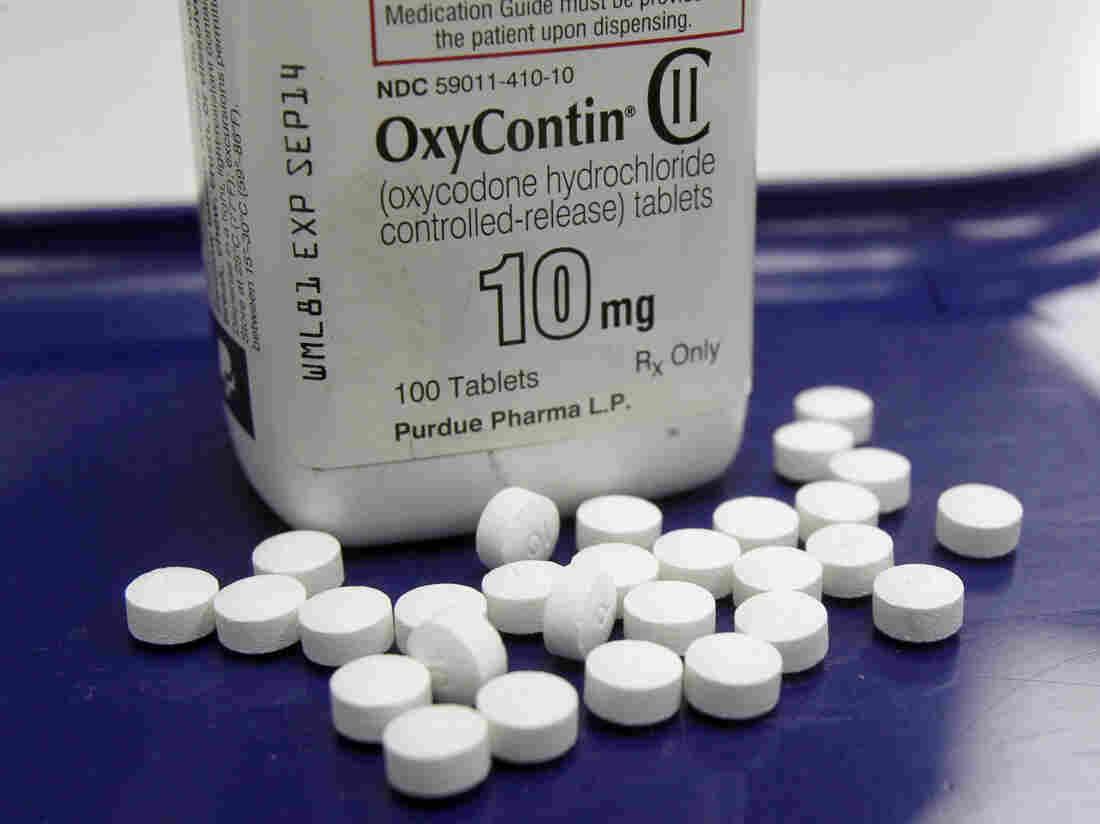
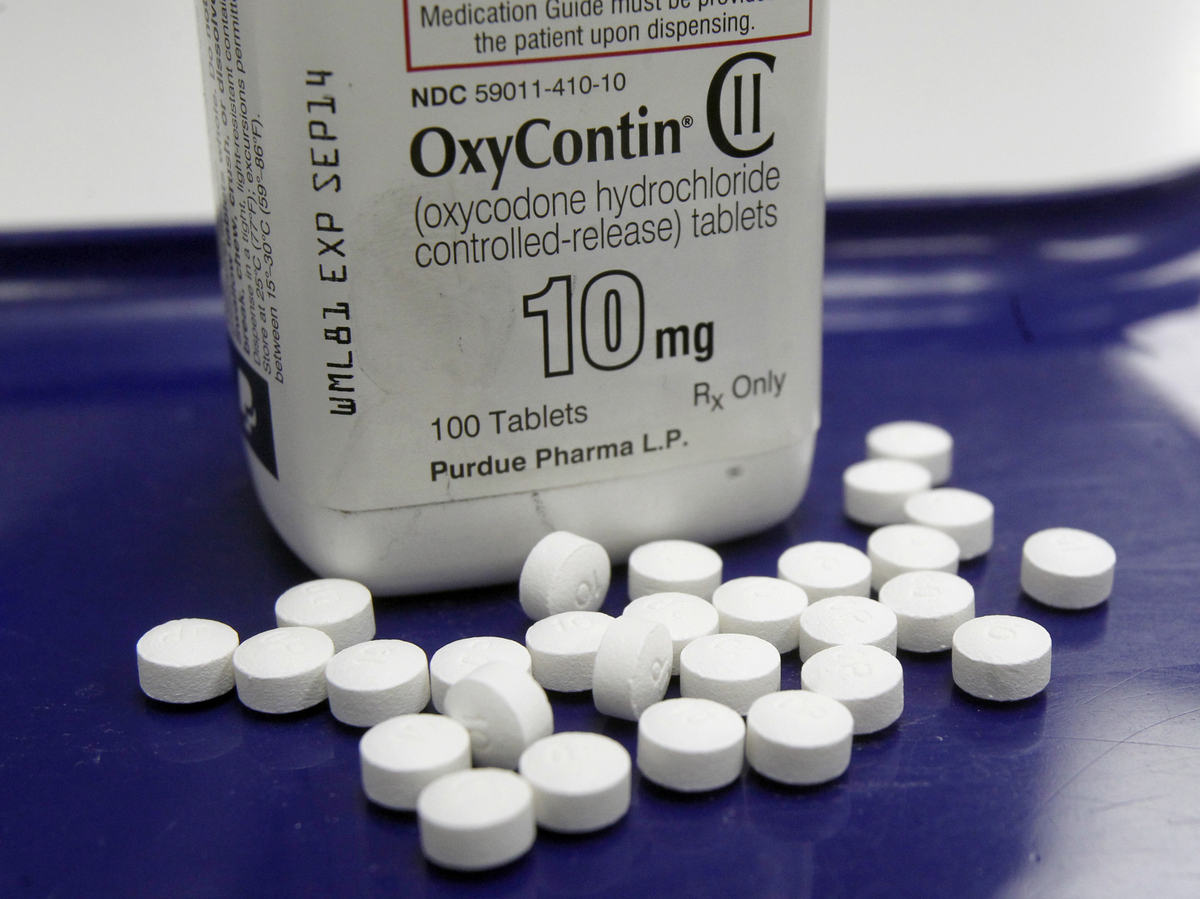
A bottle of OxyContin produced by Purdue Pharma, one of the defendants in the lawsuit filed by Ohio attorney general on Wednesday.

Toby Talbot/AP

hide caption

toggle caption

Toby Talbot/AP

The state of Ohio has sued five major drug manufacturers for its role in the opioid epidemic. In the lawsuit filed Wednesday, state Attorney General Mike DeWine alleges these five companies “unleash a health care crisis that has had far-reaching financial, social, and deadly consequences in the State of Ohio.”

Named in the suit are:

  • Purdue Pharma
  • Endo Health Solutions
  • Teva Pharmaceutical Industries and subsidiary Cephalon
  • Johnson & Johnson and its subsidiary Janssen Pharmaceuticals
  • Allergan

The lawsuit — only the second such suit filed by a state, after Mississippi earlier this year — accuses the companies of engaging in a sustained marketing campaign to downplay the addiction risks of the prescription opioid drugs they sell, and to exaggerate the benefits of their use for health problems such as chronic pain.

“We believe that the evidence will show that these pharmaceutical companies purposely misled doctors about the dangers connected with pain meds that they produced, and that they did so for the purpose of increasing sales,” DeWine tells NPR’s All Things Considered. “And boy, did they increase sales.”

By the late 1990s, DeWine’s suit says, each of the five companies had embarked on a persuasion scheme targeting doctors, whom the state positions as victims of systematic misinformation:

“Defendants persuaded doctors and patients that what they had long known — that opioids are addictive drugs, unsafe in most circumstances for long-term use — was untrue, and quite the opposite, that the compassionate treatment of pain required opioids.”

Asked by NPR’s Robert Siegel whether doctors had a role of their own in overprescribing potentially dangerous medication, DeWine says more fault rests with a culture created by these companies.

“This was not something that the pharmaceutical companies just woke up some day and just started to do a little bit of it,” he says.

“I mean, there was a concerted effort for an extended number of years to really pound this into the heads of doctors. And when you’re told something time and time and time again and there’s a lot of advertising that is being spent, yeah, it takes a while to turn that around.”

In a statement provided to the Cleveland Plain Dealer, a spokeswoman for Jansen, one of the defendants, called the lawsuit “legally and factually unfounded”:

“Janssen has acted appropriately, responsibly and in the best interests of patients regarding our opioid pain medications, which are FDA-approved and carry FDA-mandated warnings about the known risks of the medications on every product label.”

Purdue Pharma, another defendant, told the Plain Dealer it has been involved in seeking to combat widespread opioid addiction:

“OxyContin accounts for less than 2 percent of the opioid analgesic prescription market nationally, but we are an industry leader in the development of abuse-deterrent technology, advocating for the use of prescription drug monitoring programs and supporting access to Naloxone — all important components for combating the opioid crisis.”

And that crisis shows few signs of ebbing soon.

As All Things Considered notes, the state of Ohio estimates some 200,000 people within its borders are addicted to opioids — a number roughly the same as Akron’s entire population. And Ohio Public Radio’s Jo Ingles reports for our Newscast unit that Ohio led the nation in opioid overdose deaths in 2014 and 2015.

In his release Wednesday, DeWine says he filed the suit in Ross County for a reason: “Southern Ohio was likely the hardest hit area in the nation by the opioid epidemic.”

Let’s block ads! (Why?)

We Asked, You Answered: Does U.S. Foreign Aid Raise Living Standards?

Illustration of hands giving money to the world.

Marcus Butt/Getty Images/Ikon Images

“Should America Keep Giving Billions Of Dollars To Countries In Need?”

That was the headline of a story NPR published in early May, looking into a former Trump campaign adviser’s claim made during an interview on Morning Edition. Stephen Miller said there’s “zero evidence” that U.S. foreign aid has had an effect on economic development.

The economists we interviewed said that Miller has a point: Attempts to connect the dots between aid and growth have had mixed results. But, the specialists said, there may be other ways to measure the impact of foreign aid.

We wanted to know what our audience had to say, so we invited them to submit their views as part of our #CuriousGoat series. We received over 100 responses over the past two weeks. Here’s a sampling, edited for length and clarity.


Health is wealth

“I work on projects that aim to eliminate several diseases, like blindness-causing trachoma, as a public health threat. Generally, people in the developing world who have blindness can’t work. Despite the complexity of measuring results, I have a hard time seeing that saving someone’s sight and ability to work didn’t affect their standard of living.” -Gail Liebowitz

No evidence necessary

“For Selthare in Botswana [a beneficiary of an HIV/AIDS program], it raised his standard of living because without aid he would not be alive. We have so much in this country, do we really want to be responsible for just letting people die because there is no proof our aid is raising the standard of living country-wide? I can live without the $4 or $5 a year from my income that goes to foreign aid to developing countries.” -Kathy Hamel

Firsthand proof

“As a returned Peace Corps volunteer, I have seen firsthand how important foreign aid is. To say that foreign aid is only valuable if it leads to demonstrable economic growth is ridiculous. Foreign aid has brought HIV medications to people who would otherwise have no access to them, built schools for children who otherwise couldn’t go, helped expecting mothers and their babies survive difficult pregnancies, led to farmers adopting smarter agricultural practices so more people are fed and so much more. Cutting foreign aid is cowardly because those politicians don’t have to answer to foreigners who have thrived because of U.S. aid in their communities. Shame on them.” –William Sullivan

The big picture

“Aid is about more than just dollars and cents. The United States has a moral responsibility as the richest country in the world to help. Our blessings are many and we are morally responsible to share those blessings to lift others up.” -Lyn

Not really

“As a military person I was part of the U.S. foreign aid support to countries like Honduras in the 1980s. After all this time and money I don’t think they are any better. I would like to believe our foreign aid is welcomed, but I do not believe programs without specific goals and realistic expectations should be funded.” – Bobbie Carleton

Don’t forget corruption

“I am surprised that the article does not mention corruption. I have spent my life in Africa and don’t believe that much aid money ever does anything but buy property in London and villas in Switzerland. I do not think that Western countries should enrich corrupt despots and officials while their citizens live in poverty.” -Dan Flehmen

Wrong question

“While the evidence base on the impact of foreign aid is mixed, I’m not sure the right answer is less foreign aid. Why aren’t we asking how foreign aid can be more evidence-based and cost-effective? Alleviating poverty is the single greatest challenge facing humankind.” -Erin Crossett

Thank you to everyone who participated in this month’s #CuriousGoat.

Let’s block ads! (Why?)

Medicare Advantage Insurers Settle Whistleblower Suit For $32 Million

A whistleblower lawsuit alleged that two Florida insurance companies inflated fees by making patients appear sicker than they were.

Getty Images

hide caption

toggle caption

Getty Images

Two Florida Medicare Advantage insurers have agreed to pay nearly $32 million to settle a whistleblower lawsuit that alleged they exaggerated how sick patients were and took other steps to overbill the government health plan for the elderly.

The suit, settled on Tuesday, was filed in 2009 by Dr. Darren Sewell, a physician and former medical director at the two health plans, Freedom Health and Optimum HealthCare, both based in Tampa. Sewell worked at the plans from 2007 to 2012. He died in 2014, but his family took over the case.

Sewell alleged that Medicare overpaid the health plans after the companies made patients appear sicker than they were or claimed patients had been treated for medical conditions they either did not have or for which they had not been treated.

The Florida settlement comes amid growing government scrutiny of Medicare Advantage plans, which receive higher payments for sicker patients than for those in good health. The payment formula, known as a risk score, has been in use since 2004.

“Medicare Advantage plans play an increasingly important role in our nation’s health care market,” acting U.S. Attorney Stephen Muldrow said in a statement. “This settlement underscores our Office’s commitment to civil health care fraud enforcement.”

Overspending tied to inflated risk scores has repeatedly been cited by government auditors, including the Government Accountability Office. At least a half-dozen whistleblowers have sued health plans alleging they tampered with the billing formula to improperly boost profits. The Sewell case is among the first to settle.

“This is the largest whistleblower settlement involving health insurers’ manipulation of their members’ risk scores,” said Mary Inman, a San Francisco attorney who represented Sewell. She said the settlement “sends an important signal to health insurers that the government is serious about risk adjustment fraud.”

In a statement, Freedom and Optimum corporate counsel Bijal Patel denied any wrongdoing.

“Although Medicare managed care is a complex and constantly changing industry in which it is common to have differing interpretations of regulations, with this settlement, we have agreed to resolve disputed claims without any admission of liability in order to avoid delay and the expense of litigation, so that we can focus on providing quality care, member service and maintaining the highest Medicare Star Ratings,” Patel said.

Earlier this month, the Justice Department accused giant insurer UnitedHealth Group of overcharging the federal government by more than $1 billion by improperly jacking up risk scores over the course of a decade.

Medicare Advantage plans are privately run alternatives to standard Medicare. The plans have been growing rapidly and now serve about 1 in 3 people on Medicare, or about 20 million people.

The Sewell case also alleged that the Florida health plans falsely represented that they had enough doctors, hospitals and other medical services in order to justify an expansion of their membership, a violation of government regulations.

Under the settlement, Freedom Health and Optimum HealthCare will pay the government $16.7 million to resolve the allegations of risk adjustment fraud and $15 million for the allegedly improper expansion of their territories.

A group of Tampa-area doctors founded the Optimum plan in 2004, which initially had only about 3,000 members but later expanded. Freedom also began as a small plan of about 5,000 members in 2005, growing to more than 12,000 just two years later.

In order to boost revenues, officials at the health plan allegedly directed auditors to scour patient medical records in search of new billing codes that could be added and submitted to Medicare. Yet Freedom and Optimum knew that as many as 80 percent of the added codes they submitted in some years were unsubstantiated, according to the suit.

The suit also alleged that the health plans directed their doctors to call patients in for unnecessary office visits in order to find ways to raise their risk scores.

These actions resulted in more than $40 million in Medicare overpayments during 2009 and 2010, according to the suit.

Kaiser Health News is an editorially independent news service that is part of the nonpartisan Henry J. Kaiser Family Foundation.

Let’s block ads! (Why?)

New Rules May Make Online Health Insurance Sales Simpler

Some people using brokers to buy insurance through healthcare.gov will no longer have to go through a multi-step process to enroll.

Bloomberg/Bloomberg via Getty Images

hide caption

toggle caption

Bloomberg/Bloomberg via Getty Images

Signing up for coverage on the health insurance marketplace should be easier for some people this fall because new federal rules will allow brokers and insurers to handle the entire enrollment process online, from soup to nuts.

Some consumer advocates are concerned, though, that customers going this route won’t get the comprehensive, impartial plan information they need to make the best decision due to the financial self-interest of insurers and brokers.

“Facilitating the participation of brokers and getting web brokers involved is a good thing for the market,” says Timothy Jost, an emeritus professor of health care law at Washington and Lee University School of Law in Virginia. But he says there are risks for consumers. “If you’re enrolling with a web broker, you could see ‘best deals’ that often aren’t the best deal for you but are the best deal for the people who are marketing them.”

The guidance was released May 17 by the Centers for Medicare & Medicaid Services, which oversees the online marketplaces. It will streamline the enrollment process for people who work directly with an insurer or broker to shop for coverage for 2018 on healthcare.gov, the federal marketplace in more than 30 states. States that run their own marketplaces aren’t affected by this change.

The presumption is that people will continue to buy insurance through the marketplace this fall.

In the past, people could start the online enrollment process with a broker or insurer, but then they had to bounce off the broker’s or insurer’s website to go to the federal marketplace website to see if they were eligible for premium tax credits, among other things. In theory, they then could return to the insurer or web broker to complete the enrollment process. In practice, many didn’t — though they may have enrolled elsewhere, either completing the process on healthcare.gov or with another vendor.

This fall, healthcare.gov consumers with straightforward enrollment needs will be able to complete the entire process on one website. Complex cases and those involving a special enrollment period, for example, will still have to go through the original multi-step process.

The staff at online health insurance broker eHealth is thrilled with the change.

“It’s a big deal,” says Nate Purpura, vice president of consumer affairs at eHealth. “Many people, including our CEO, have been to Washington, D.C., multiple times to explain the benefits of being able to help in this way.”

The eHealth website, which works with 180 insurance carriers nationwide, offers about 75 percent of the plans that are available on healthcare.gov, Purpura says.

That’s a problem, say some policy analysts. Federal rules require web brokers to display basic information about all the plans that are available on the federal marketplace, whether or not they actually sell them. It includes the name of the plan and insurer that offers it, the type of plan — HMO, PPO, EPO — and metal level (bronze, silver, gold or platinum.) Web brokers must also publish a disclaimer that says the website information about all the available marketplace plans might not be complete and provide a link to healthcare.gov.

But the information web brokers present about plans they sell and get a commission for may be much more comprehensive than the information provided about plans they don’t handle.

On a broker’s website, “consumers won’t necessarily have the full range of options,” says Elizabeth Hagan, associate director of coverage initiatives at Families USA, a consumer advocacy group. “On healthcare.gov, the plan display is the same for all the options, and consumers have the ability to sort plans based on what they want.”

CMS suggests that brokers not sort their plans in such a way that consumers could be steered to policies from which brokers receive a commission. It also suggests that brokers not run ads or information about other insurance products in the marketplace plan selection area. But these are suggestions, not requirements.

In addition, some analysts are concerned that people who don’t sign up through healthcare.gov won’t receive important notifications about their coverage from insurers and web brokers. In the past, for example, some people have lost their coverage after enrolling outside healthcare.gov because they weren’t directed to make their initial “binder” payment, or first month’s premium, says Sarah Lueck, a senior policy analyst at the Center on Budget and Policy Priorities, which has filed comments on proposed enrollment rules.

Enrollment this fall will run for just six weeks, from Nov. 1 to Dec. 15, a significantly shorter time period than in previous years. Encouraging brokers and insurers to sign people up may help more people get signed up in that time frame.

“This is another important step to help create stability in the health insurance market,” CMS Administrator Seema Verma said in the press release announcing the new process.

But some analysts remain concerned that details about how consumers’ privacy and security will be protected under the new system are still too vague.

“This is really sensitive information, people’s tax information, which needs to be highly protected,” says Jost. “There are a lot of concerns with confidentiality and privacy. I have some concerns about fraud.”

Kaiser Health News is an editorially independent news service that is part of the nonpartisan Henry J. Kaiser Family Foundation. Follow Michelle Andrews on Twitter: @mandrews110.

Let’s block ads! (Why?)

Are State Rules For Treating Sepsis Really Saving Lives?

A 4-year-old regulation in New York state requires doctors and hospitals to treat sepsis using a protocol that some researchers now question.

Getty Images/iStockphoto

hide caption

toggle caption

Getty Images/iStockphoto

Doctors can save thousands of lives a year if they act promptly to identify sepsis, an often lethal reaction to infection. Sometimes called blood poisoning, sepsis is the leading cause of death in hospitals.

A 4-year-old regulation in New York state compels doctors and hospitals to follow a certain protocol, involving a big dose of antibiotics and intravenous fluids. It’s far from perfect — about a quarter of patients still die from sepsis. But early intervention is helping.

“Intervention has to be quick,” says Dr. Howard Zucker, commissioner of the New York State Health Department.

He knows what happens when it isn’t. In fact, he says, he has a cousin in the hospital right now who has been struggling to recover from a severe bout of sepsis — hospitalized in another state, he adds.

Doctors didn’t immediately realize that he was developing sepsis, and by the time they did, Zucker says it was much more difficult to treat. “That’s what we’re trying to do. We want people to intervene quickly. That’s the regulation, to intervene fast in a situation of this nature.”

Indeed, sepsis death rates in hospitals have declined where these rules are in place.

But Dr. Jeremy Kahn at the University of Pittsburgh has mixed feelings about these regulations.

“If we [doctors] were great at doing the right thing — the thing that most people agree on — then we wouldn’t need regulation,” he says. But in reality, doctors don’t all keep up with the latest best practices and follow them, Kahn says, so regulations save lives.

“The downside is that a regulatory approach lacks flexibility,” he adds. “It essentially is saying we can take a one-size-fits-all approach to treating a complex disease like sepsis.”

That’s problematic, because doctors haven’t found the best way to treat this condition. The scientific evidence is evolving rapidly, Kahn says. “Almost every day another study is released that shows what we thought to be best practice might not be best practice.”

Kahn wrote a commentary about the rapid changes earlier this month for the New England Journal of Medicine.

For a while, medical practice guidelines distributed to doctors called on them to use one particular drug to treat sepsis. It turned out that drug did more harm than good. Another heavily promoted strategy, called goal-directed therapy, also turned out to be ineffective.

And a study presented last week at the American Thoracic Society and published electronically in the New England Journal of Medicine finds that one of the steps required in New York may not be beneficial, either.

The regulations call for a rapid and substantial infusion of intravenous fluids, but that didn’t improve survival in New York state hospitals.

Many doctors consider fluids helpful, but “what we haven’t learned is the specific type of fluid to give patients, how much and how fast of a rate,” says Dr. Christopher Seymour, a critical care researcher at the University of Pittsburgh who co-authored the analysis. “It’s been quite controversial.”

“There are consequences and adverse effects that can come from too much fluid,” Seymour says.

In fact, some doctors believe that most patients are better off without this aggressive fluid treatment. There’s a study getting underway to answer that question. Dr. Nathan Shapiro at Harvard’s Beth Israel Deaconess Medical Center hopes to enlist more than 2,000 patients at about 50 hospitals to answer this life-or-death question.

But that study will take years, and in the meantime doctors have to make a judgment call.

“It is possible that at present they are requiring hospitals to adopt protocols for fluid resuscitation that might not be entirely appropriate,” Kahn says.

There could also be other big changes on the horizon for treating sepsis.

Doctors scattered coast to coast are trying a new protocol that, in addition to limiting fluids, uses high doses of intravenous vitamin C, steroids and vitamin B1. That has generated a great deal of enthusiasm and some startling claims of success, though it remains to be seen whether it is indeed an exciting advance or will become another disappointment in treating sepsis.

Dr. Zucker at the New York Health Department says the current regulations would not stand in the way of advances to treatment.

“If there is a disruptive technology that comes out, or a therapy that comes out, we would adjust accordingly.”

You can reach Richard Harris at rharris@npr.org.

Let’s block ads! (Why?)