Surgeon On Health Care Bill: The Stakes Are 'Extremely High' For Patients

Surgeon and writer Atul Gawande has spoken out against the Republican plan to repeal parts of the Affordable Care Act.

Lisa Lake/Getty Images for Geisinger Healt/Getty Images

hide caption

toggle caption

Lisa Lake/Getty Images for Geisinger Healt/Getty Images

On Monday, as GOP leaders tried to rally Republican lawmakers to support their health care proposal, the non-partisan Congressional Budget Office released a report showing that the plan would lead to an estimated 14 million fewer people with health insurance by next year.

The CBO also found the proposed plan would reduce the federal deficit by $337 billion.

Atul Gawande is a cancer surgeon at Brigham and Women’s Hospital in Boston, Mass., and a staff writer at The New Yorker magazine. He has spoken out against the GOP bill, expressing concern that it would cause poor and sick people to lose health coverage.

The stakes for patients, he argues, are “extremely high,” and he says the bill is at the “center of the debate [about] what our responsibilities are for covering people over the course of their lives.”

Gawande discusses the Republican plan with NPR’s Robert Siegel, including how his experience as a surgeon changed after the first universal health care bill was passed in his state, the ways in which the Affordable Care Act could be improved and the problem of high medical costs. The interview has been edited for length and clarity.


Interview Highlights

On the potential effects for his patients of repealing parts of the Affordable Care Act

“Well, I’m a cancer surgeon, and in many ways it will affect the patients widely. [President] Trump has said his aim is better coverage than the [Affordable Care Act] at lower cost, and if that were where it was going, it would likely protect the people that unexpectedly come in to see me. But that is in conflict with this other goal that Republicans have, which is actually to dismantle the ACA and its funding, and it’s that pull that lies in the middle of this.”

On how people who use the Medicaid program could be affected by the bill

“Before Romneycare, [which is] a version of the ACA passed here in Massachusetts where I practice, about 10 to 15 percent of my cancer patients were people who didn’t have coverage. They gained coverage in two ways. One way was that they gained coverage by Medicaid. Second, they gained coverage, if they didn’t have an employer who covered them, on the online exchanges.

“I haven’t taken care of an uninsured patient in years.”

On how the Affordable Care Act could improve

“There are some obvious things to do. We have the group of people who don’t have coverage under Medicare, don’t have coverage under Medicaid, and their employer is not providing coverage or they don’t have an employer. They are in the online exchanges, going to Healthcare.gov, and with some tweaks we would get more young and healthy [people] in to go along with the sicker, older population and that would help flatten the premiums and keep that system [grow].

“One thing that has people really angry is … where you have multi-thousand-dollar deductibles and copayments, so you still have some major barriers in your care. We’ve made huge progress [on that] and should be making more.”

On the goals of the Republican health bill

“What is the human goal of this bill? What’s it aiming to solve? If the aim is to solve the problems they criticize, they’ve not put forward solutions that actually do that. There are directions to get there. And there’s a moment when [President] Trump talked about [the fact] that he could get a bipartisan group around this goal of insurance for everybody.

“But what we have right now is a bill that doesn’t … [address those] problems that have been singled out. Now we just are waiting to see how much worse the costs will be for individual people.”

Let’s block ads! (Why?)

GOP Health Care Bill Could Leave 24M More Without Coverage By 2026, CBO Says

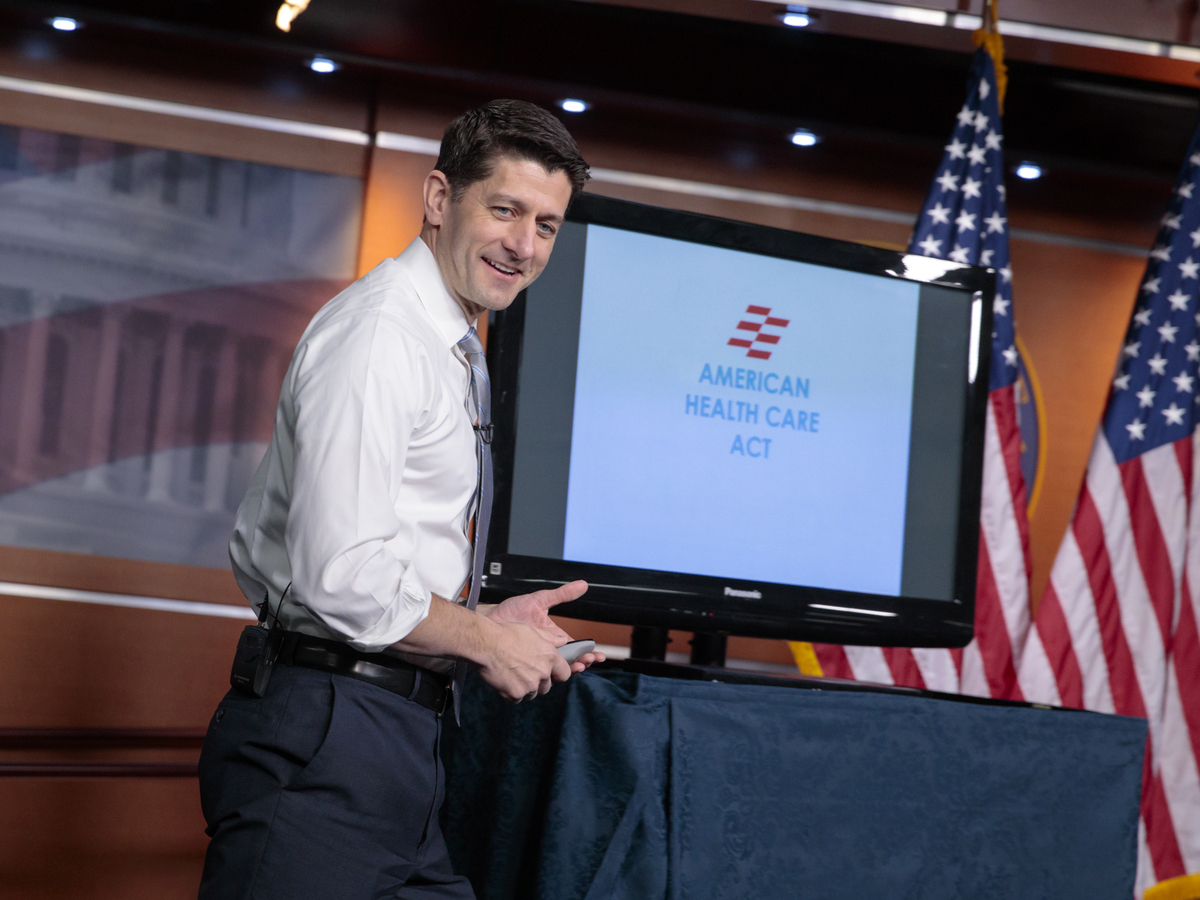
House Speaker Paul Ryan uses charts and graphs to make his case for the GOP’s plan to repeal and replace the Affordable Care Act on March 9, 2017.

J. Scott Applewhite/AP

hide caption

toggle caption

J. Scott Applewhite/AP

A new report finds that the Republican bill to repeal and replace the Affordable Care Act reduce the federal deficit by $337 billion over a decade, but would also leave 24 million more Americans uninsured during that same period.

The report comes from the nonpartisan Congressional Budget Office, and its uninsured estimates could create even greater political hurdles for the GOP bill. That legislation has already drawn opposition from major interest groups, health policy experts, and even some GOP lawmakers. The bill’s defenders in are touting the lower premiums and deficits that the CBO estimated, but they are also facing questions about what to do about tens of millions of uninsured Americans.

[embedded content]

More uninsured, due to Medicaid and mandate repeal

Just over 28 million Americans were uninsured in the first half of 2016, according to the latest data from the Census Bureau. The CBO estimates that in 2026, that number would remain barely-changed under current law — there would likewise be 28 million uninsured Americans if the Affordable Care Act, also known as Obamacare, remained in place.

However, 52 million would be uninsured under the American Health Care Act, which is the first step in the Republican repeal-and-replace plan.

Much of the initial spike in uninsured Americans would come from repealing the individual mandate.

“Some of those people would choose not to have insurance because they chose to be covered by insurance under current law only to avoid paying the penalties, and some people would forgo insurance in response to higher premiums,” the CBO wrote.

But overall, a big chunk of that increase in the uninsured comes from Medicaid, as the Republican bill rolls back the Affordable Care Act’s Medicaid expansion. In 2026, 14 million fewer people would be enrolled in Medicaid under the GOP health care bill, accounting for half the total increase in uninsured.

In addition, CBO estimates that the Republican bill would reduce the number of employers offering health insurance, in part because it repeals the employer mandate to provide insurance. The CBO also notes that the GOP plan’s tax credits (only available to people who aren’t offered insurance at their jobs) would be available to more people than under Obamacare.

That all covers the number of people who would be insured under the legislation, but the type of people covered would also shift: namely, the people in the individual market would skew younger than they would otherwise. That’s because younger people would have comparatively more financial help, the CBO explained:

“Under the legislation, premiums for older people could be five times larger than those for younger people in many states, but the size of the tax credits for older people would only be twice the size of the credits for younger people,” they wrote.

Obamacare has had difficulties in getting enough young and healthy Americans to sign up and help bring premiums down. It appears the GOP plan would shift the balance in the individual insurance market more toward those young, healthy people. But it may not be able to do so while keeping older, less-healthy people on board as well.

If Obamacare is so great, why’d they spend tens of millions of taxpayer dollars to ‘hype’ it? BAD! #RepealAndReplacehttps://t.co/5mur5pIFQz

— President Trump (@POTUS) March 13, 2017

Premiums would rise, then fall (but not necessarily for everyone)

While the number of uninsured Americans would immediately climb, the trajectory for premiums is more complicated. In the near future, average premiums for single people buying insurance in the individual market would be up to 20 percent higher than they would be under Obamacare.

However, those premiums would eventually settle below where they would be under Obamacare. By 2026, those same premiums would be 10 percent below where they would be under the Affordable Care Act.

Importantly, that doesn’t mean that everyone’s premiums would fall. The GOP’s bill expands how much more insurers can charge older people than younger people. Under the AHCA, older Americans could be charged five times more than younger people, up from three times under current law.

That means premiums would be “substantially” smaller for younger insurance-buyers and “substantially” bigger for older Americans, the CBO wrote.

The Republicans’ new plan would reduce the deficit by just under $34 billion a year, on average, over the next 10 years. For fiscal year 2016, the total federal budget deficit was $587 billion.

The bill is just the first part of the Republicans’ plan to repeal and replace the Affordable Care Act. Written as part of the budget reconciliation process, it can only make fiscal-related changes. Part 2 of the GOP’s process, as described by House Speaker Paul Ryan, will include deregulation. Part 3 will include changes to the law that could not be made in the reconciliation bill.

President Trump has not yet responded directly on Twitter to the CBO’s report. However, he did tweet shortly after the report’s release, drawing attention to a report that the Obama administration spent $77 million on promoting Obamacare in 2016.

Let’s block ads! (Why?)

Can White House Bowling Heal GOP Divisions And Spare The Health Care Bill?

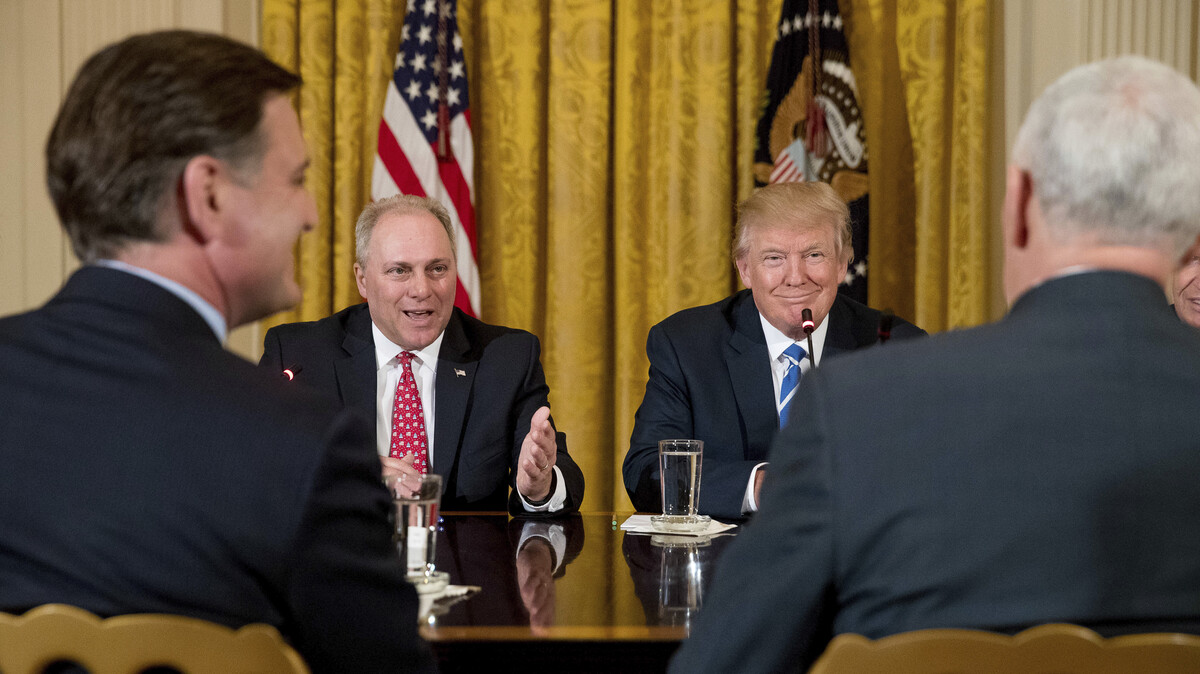
President Donald Trump listens as House Majority Whip Steve Scalise of La. speaks during a meeting with the Republican House whip team about the proposed health bill.

Andrew Harnik/AP

hide caption

toggle caption

Andrew Harnik/AP

The two-lane Truman Bowling Alley isn’t glamorous or grand, but as bowling alleys go the location is mighty exclusive. It’s in the basement of the Eisenhower Executive Office Building, inside the White House complex.

And on Tuesday night it will be the latest backdrop for a high stakes sales pitch to a group of conservative House Republicans known as the Freedom Caucus. They are skeptical of what the president is selling: the American Health Care Act, or as Breitbart called it derisively, “Obamacare 2.0.”

Loaner bowling shoes at the Truman Bowling Alley.

Tamara Keith/NPR

hide caption

toggle caption

Tamara Keith/NPR

If the roughly 40 members of the House Freedom Caucus stick together and vote against it, the bill will fail. Hence, the charm offensive.

“You know I’m not a bowler,” said Rep. Mark Meadows, R-N.C., when asked if he’d be bowling at the White House. I’m going over next Tuesday for pizza and policy is what I’m calling it, at the bowling alley. How about that?”

Meadows is chairman of the Freedom Caucus, and with a slight southern drawl, he chooses his words carefully. He went to the White House last Thursday for a meeting with the president and several other congressional conservatives.

“Anytime that you’re with the president of the United States, you feel like you’re with a guy that you’ve known for years,” said Meadows a few hours later.

Count him as charmed, but not sold. He gives the president an A-plus for listening. The question, though, is whether he’ll see any changes to the legislation that reflect his concerns and those of others in his caucus.

Meadows said he just wants President Trump to uphold his campaign promise. For Meadows, that means Americans need to see lower insurance premiums.

Independent analyses of the bill find that for many Americans, especially those who are older and have lower incomes, their out-of-pocket expenses are likely to rise.

Trump and those in his administration insist this bill is just the first stage in a three-stage plan to repeal and replace Obamacare. But the other stages will require the support of Senate Democrats, something that is far from guaranteed. Meadows said he’s learned the hard way that people in Washington make lots of promises, but Washington fails to keep them.

“I think [Trump] understands if it was personality driven, most of the Freedom Caucus would already be with him,” said Meadows. “Hopefully he knows that it has nothing to do with the respect or admiration that we have for the president as much as it is just real policy concerns.”

And those House members considering a “no” vote on the health care bill are getting some encouragement from across the Capitol.

“I’m afraid that if they vote for this bill, they’re going to put the House majority at risk next year,” Sen. Tom Cotton said on ABC’s This Week. “Do not walk the plank and vote for a bill that cannot pass the Senate and then have to face the consequences of that vote,” Cotton urged House Republicans.

We are making great progress with healthcare. ObamaCare is imploding and will only get worse. Republicans coming together to get job done!

— Donald J. Trump (@realDonaldTrump) March 11, 2017

Even though President Trump is leading the way on the charm offensive, it’s not entirely clear who is leading the horse trading behind the scenes that could lead to changes in the bill. Trump appears to be both hands-on and hands-off at the same time, leaving it to Congress to, as Meadows put it, “work its will.” It’s not even clear the White House and congressional leaders like House Speaker Paul Ryan are open to making modifications.

It’s been presented to Republicans in the House as a binary choice — either you support repealing and replacing Obamacare and you vote for this bill, or you don’t.

But this wooing of Congress doesn’t stop with the Freedom Caucus. President Trump is inviting so many members of Congress over to the White House, they might want to consider setting up a shuttle from one end of Pennsylvania Avenue to the other. Take last Tuesday when Trump met with two Republican senators. And had lunch with one more, South Carolina Sen. Lindsey Graham.

During the contentious Republican primary, Trump read Graham’s cell phone number out loud at a rally that was carried live on TV. Graham got swamped with calls and had to change it.

How good was the meeting with @POTUS?

I gave him my NEW cell phone number.

— Lindsey Graham (@LindseyGrahamSC) March 7, 2017

After his White House lunch, Graham said it went so well he gave the president his new number.

Two days later, Graham was chipper, “So far so good,” he said before adding that Trump had already called him on the new number. “I think he’s doing a good job of trying to get to know people personally.”

After the lunch that day with Graham, Trump met with nearly two dozen members of the House GOP whip team — the members of congress tasked with getting their colleagues to vote for the health care bill.

“You know he’s very good at,” Rep. Tom Cole, R-Okla., who was at that meeting, said of the President’s wooing members of Congress. “I think actually it’s the part of the job he may like the most.”

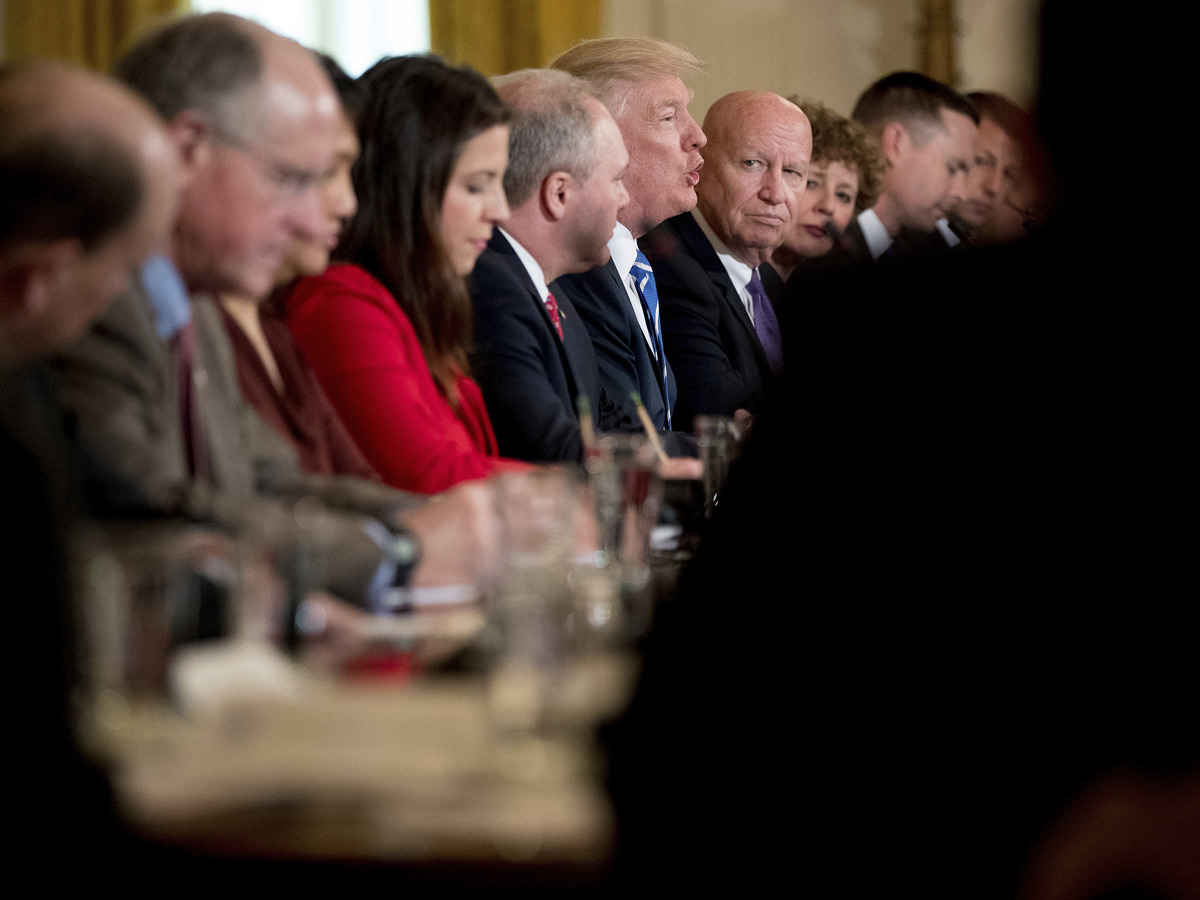
As the representatives introduced themselves, Cole said Trump keyed in on New York Rep. Elise Stefanik.

“It got to her and he said, ‘Youngest woman ever elected to Congress.’ And then he goes, ‘None of the rest of us can saying anything like that’,” said Cole. “And the whole place burst out into laughter. He was like really engaging.”

President Trump speaks to the Republican House whip team about the proposed health bill. Trump highlighted Rep Elise Stefanik R-NY (in the foreground) as the youngest woman ever elected to congress.

Andrew Harnik/AP

hide caption

toggle caption

Andrew Harnik/AP

Trump told others at the table he had seen them on TV and complimented them.

Cole said this is the kind of thing that can make lawmakers giddy and put them in the mood to help the president. Another thing that can put them in the mood to support the president is his popularity in their districts. For Republicans from deep red districts, there could be a lot of pressure (spoken or unspoken) to fall in line with a president who comes from the same party.

For the majority of House members, this is a new dynamic, one they didn’t experience in eight years of the Obama presidency and two years in the minority before that. They aren’t in the opposition anymore.

Trump’s week of wooing lawmakers — including past adversaries — didn’t stop on Tuesday. On Wednesday, he and First Lady Melania Trump hosted Texas Sen. Ted Cruz and his wife Heidi Cruz for dinner at the White House.

Cruz described the meal as “delightful,” which might be an exercise in diplomatic word choice. When asked whether they discussed the comments Trump had made about Cruz’s wife and father during the campaign, Cruz didn’t respond. He also refused to say what he ate, only saying it was “delicious.”

Our family had dinner w the President & First Lady, who were warm & gracious. Catherine brought Joe–her kindergarten class stuffed giraffe! pic.twitter.com/fJ5GvuZ98B

— Ted Cruz (@tedcruz) March 9, 2017

Earlier that day Trump met with Rep. Elijah Cummings, D-Md., who has often been quite critical of the president from his perch on the House Oversight Committee. They discussed a shared goal of bringing down prescription drug prices. Cummings said Trump followed up with him in a phone call on Friday night.

During the Obama presidency there was a regular complaint that the former president didn’t spend enough time personally courting members of Congress. Trump is clearly going in the opposite direction.

“It’s not just the fact that you meet,” said Graham. “It’s the fact that you’re listening. I think he’s a darn good listener. The thing about him is when you’re in the room he puts full attention on you. That’s a really good quality.”

But passing bills is about ultimately getting votes. And the charm offensive for this health care bill will be the first big test of the persuasive powers of President Trump.

Let’s block ads! (Why?)

How Will People Who Are Already Sick Be Treated Under A New Health Law?

People will still be able to buy health insurance if they have pre-existing conditions, but its not clear how healthy the health insurance market would be under the GOP bill.

andresr/Getty Images

hide caption

toggle caption

andresr/Getty Images

Many people are worried about how potential changes to the federal health law might affect them. But few are as concerned as those with pre-existing health conditions.

The Affordable Care Act (ACA) made it illegal for insurers to deny or charge people more money because of a history of illness. That’s a pretty big deal because an estimated 52 million American adults have such conditions – ranging from serious ailments like diabetes and HIV to more minor maladies like acne or seasonal allergies. Before the ACA, people with these conditions were often denied insurance. If they were offered insurance, it could cost more or didn’t include coverage of their condition.

Republicans insist they want to continue to allow people with pre-existing conditions to maintain their coverage in any replacement for the health law.

“We are protecting those patients living with pre-existing conditions,” said House Energy and Commerce Committee Chairman Greg Walden, R-Ore., at the start of his committee’s consideration of the GOP health bill last Wednesday.

But it is not yet clear how Republicans will be able to do that without also making everyone buy insurance, which leads to our listener question this week.

Rich Renner of Collingswood, N.J., asks, if the law is repealed “and whatever replaces it does not include a pre-existing conditions provision, are there any programs in place at the state level that would step in to help?”

In a word, no. But it’s complicated.

First, a little background. People who get their insurance on the jobs have been protected against discrimination for pre-existing conditions since 1996, when Congress passed the Health Insurance Portability and Accountability Act (HIPAA). People can go from one job-based policy to another job-based policy, or, in some cases, to an individual policy, as long as they remain covered without a break of more than 63 days.

But insurance companies who offer policies to individuals who don’t get it through their jobs were afraid that if sick people could buy insurance, it would drive costs up, and healthy people wouldn’t bother to buy coverage or would be priced out. That could lead to an insurance “death spiral” — a loaded term both sides of the aisle have thrown at each other’s health reform plans frequently over the years but one that has truly bad consequences. It’s where there are no healthy people left to help spread out the costs of the sick.

The compromise in the ACA to ensure that sick people would have insurance was to require healthy people to buy insurance, too, or else pay a fine. That wasn’t popular, and it’s the number one item Republicans say they want to repeal.

In the bill introduced by Republican leaders, however, the requirement for insurers to sell to those with pre-existing conditions remains intact. That’s not because they don’t want to repeal it, but because they can’t do it under the budget rules that govern the current bill.

But that doesn’t guarantee people with pre-existing conditions will still be able to get insurance.

That’s because the bill would eliminate the penalty for people who fail to have health coverage. That’s what was supposed to get healthy people to sign up to help offset the cost of those with pre-existing conditions.

Instead, under the GOP proposal, people those who don’t remain covered without a break of more than 63 days would have to pay 30 percent higher premiums for a year. Analysts say that could actually deter healthy people from signing up until they need care.

And if that happens and there are still too many sick people signing up, more insurers will stop selling coverage until there’s nothing left to buy.

So in the end you could have a guarantee of health insurance, but no way to buy coverage. Obviously there’s much more to be worked out here.

Got more questions about what’s happening to the ACA? I’ll be back next week with even more answers. Just tweet @MorningEdition using the hashtag #ACAchat.

Kaiser Health News (KHN) is a national health policy news service. It is an editorially independent program of the Henry J. Kaiser Family Foundation.

Let’s block ads! (Why?)

Medical Bills Once Made Him Refinance The Farm. Could It Happen Again?

Darvin Bentlage is a fourth-generation farmer from Golden City, Mo. He was uninsured before the ACA and featured in a video from the Department of Health and Human Services supporting the law.

Screenshot/Department of Health and Human Services

hide caption

toggle caption

Screenshot/Department of Health and Human Services

Darvin Bentlage says his health insurance plan used to be the same as all the other cattle farmers in Barton County, Mo.: Stay healthy until he turned 65, then get on Medicare. But when he turned 50, things did not go according to plan.

“Well, I had a couple of issues,” he says.

He’s putting it mildly.

Over two years, he had Hepatitis C and diverticulitis. That was on top of his persistent kidney stones, diabetes and other health problems.

“I had to go back and refinance the farm,” he says. “By the time the two years was up, I had run up between $70,000 and $100,000 in hospital bills.”

He does not want to end up in that situation again, so he is paying close attention to what the the Republican health care bill working its way through Congress may mean for him.

He racked up those medical bills in 2007. Bentlage says with all those preexisting conditions, health insurance became impossibly expensive, which was a problem, because he needed more health care. So when the Affordable Care Act exchanges opened in 2013, he says, “I was probably one of the first ones to get online with it and walk through it.”

About a quarter of the people on the exchanges are between 55 and 64, and they have more health problems than younger people do. So they have a lot on the line if the Affordable Care Act gets replaced. Under the GOP plan, older people’s insurance cost could rise dramatically, but the subsidies would be capped at $4,000. That’s less than half of what Bentlage is getting now under the ACA.

“And my estimated income is less than $20,000. So I’d have to go back to Plan A and hope I make it to 65, you know?” he chuckles.

Insurance premiums tend to be higher in rural areas where the population also tends to be older, poorer and sicker than most. And Maggie Elehwany of the National Rural Health Association says there’s another issue: 80 rural hospitals have closed across the country since 2010.

“We’ve got an access crisis going on,” she says. “What this House bill does is nothing — nothing to address the rural hospital closure crisis. You’ve got to understand that so much of that is linked to not only the health, but to the economic vitality of the community. If a hospital closes in a rural area, it closes for good.”

One reason for these hospital closures is that 19 states, including Missouri, chose not to expand Medicaid, which left poor rural patients uninsured. The GOP proposal would cut Medicaid more over time.

Bentlage says his county recently increased property taxes to keep its hospital open.

“It falls on the farmers,” he says. “My property tax on the hospital went from about $80 to about $400. And it’s still in trouble.”

[embedded content]
YouTube

Missouri’s Republican congressional delegation has said Obamacare has failed. And Bentlage, whose positive experience with the health law was once featured in a Healthcare.gov video, says the ACA does need work.

“There’s problems with it,” he says, “but I don’t think it’s worth scrapping.” All you need to do, he says, is look how it’s helped him.

This story is part of a reporting partnership between NPR, Side Effects Public Media and Kaiser Health News.

Let’s block ads! (Why?)

American Medical Association Calls Republican Health Care Plan 'Critically Flawed'

Dr. Andrew Gurman, president of the American Medical Association, explains the group’s opposition to the Republican Health Care Plan and the bill moving through the House of Representatives.

LAKSHMI SINGH, HOST:

Turning now to Congress. The Republican plan to replace the Affordable Care Act, widely known as Obamacare, has cleared two committees in the House of Representatives. But there’s plenty of opposition. The American Medical Association calls the health care proposal critically flawed. So we called Dr. Andrew Gurman. He is the president of the AMA. And I asked him why his group is opposed to the Republican plan.

ANDREW GURMAN: The problems that we have with the bill are that it doesn’t comport with some of our basic principles. And those are that people who have insurance shouldn’t lose it and people who don’t have it should get it. When we look at the numbers, particularly with the subsidies going forward for people to purchase insurance, those who have limited means, we just don’t think that those numbers are going to be adequate for people to meaningfully purchase insurance. We know that people who don’t have health insurance live sicker and die younger. And as physicians, we think that we’re obligated to point that out.

SINGH: But supporters of this current proposal would argue that this goes far in cutting costs across the board when businesses get greater relief under this proposal, young people are not mandated to pay for health care coverage. And therefore, the relief that these particular groups get would actually be felt across the board. Health care costs in general would come down for the overall population. How could this be a bad thing?

GURMAN: Well, having health care costs across the board go down is not a bad thing. But if you’re 60 years old and make $20,000 a year, you’re not going to have health insurance. You’re going to live sicker and die younger. That’s a problem.

SINGH: I recall during the debate over the Affordable Care Act, which is widely known as Obamacare, a lot of physicians voiced concerns, protests that life would be a lot tougher for them. And I’m hearing similar arguments for this proposal by congressional Republicans. Can you give me an idea of how this will have a particular impact on physicians compared with how doctors or physicians were affected when Obamacare was passed?

GURMAN: Well, I think change is hard. I think that any piece of legislation that retools a sixth of the U.S. economy is going to require adaptations. And I don’t know that doctors are significantly different from the rest of the world in that we don’t always like change. But look, Medicare, which was passed 53 years ago, was a transformative piece of legislation. And yet 53 years later, we are still passing laws to tweak it, to make it better.

So to think that something like the Affordable Care Act would be born fully mature and ready to go to medical school is naive. We obviously have some things in it that need to be tweaked, that need to be repaired or changed. And it could be done through a repeal and replace as long as we know what the replace is going to be.

SINGH: You’re an orthopedic hand surgeon based in Pennsylvania. What are you most commonly hearing from your patients about the biggest problems they encounter getting or keeping their coverage?

GURMAN: The biggest concern that my patients have right now is large deductible. You know, I see somebody who has an income of $20,000 to $30,000 a year, needs surgery to correct something and has a $6,000 or $7,000 deductible. He essentially doesn’t have health insurance. The operation’s going to cost less than that. But those are the kinds of things that my patients are concerned about. They’re concerned that they are still one significant illness away from bankruptcy.

SINGH: Dr. Andrew Gurman is the president of the American Medical Association. He spoke to us from Altoona, Pa. Dr. Gurman, thanks so much.

GURMAN: Oh, it’s my pleasure. Thank you.

Copyright © 2017 NPR. All rights reserved. Visit our website terms of use and permissions pages at www.npr.org for further information.

NPR transcripts are created on a rush deadline by Verb8tm, Inc., an NPR contractor, and produced using a proprietary transcription process developed with NPR. This text may not be in its final form and may be updated or revised in the future. Accuracy and availability may vary. The authoritative record of NPR’s programming is the audio record.

Let’s block ads! (Why?)

Illinois Congressman On Why He Supports The Republican Health Care Plan

Congressman Rodney Davis of Illinois supports the Republican Health Care Plan that’s making its way through the House. But he says that there will likely be hurdles before the bill becomes a law.

LAKSHMI SINGH, HOST:

We want to turn now to Congressman Rodney Davis. He is a Republican speaking to us from Decatur, Ill., and he is in favor of the bill being advanced by House Republicans. Congressman Davis, thanks so much for joining us.

RODNEY DAVIS: Thanks for having me on.

SINGH: So please tell us briefly why you are in favor of this bill.

DAVIS: Because the status quo is collapsing. The health insurance marketplace as we know it is not sustainable under the current law. And if we do nothing and watch states like Illinois have to come up with hundreds of millions of dollars under the current law just to keep the Medicaid expansion in place that we have, then I’m abdicating my responsibility as a policymaker. The bill that I’m supporting I’m sure will be changed by the time it goes to the Senate and comes back to us. But I’m looking forward to the debate to make our health care system better than it is today.

SINGH: We just heard from the president of the American Medical Association, who says that this bill will put health insurance out of reach for millions of Americans, especially older, lower-income patients. What do you make of that?

DAVIS: Well, I disagree with the statements. And I’ve talked to many doctors over my time in Washington over the last four years who were very frustrated with the current status quo, with the Affordable Care Act as implemented. Doctors that I talked to are seeing less patients because of the compliance issues that they have to follow under Obamacare. We want to make the system better, and I look forward to having their input. But I would argue looking in Illinois, where we’ve had 45 to 55 – and friends of mine have had 87 percent increases in their premiums – Obamacare’s already costly. And frankly, the promise for families of saving $2,500 on average did not come true.

SINGH: Well, as you’re well aware, there has been pushback from the right as well, a lot of Republicans, especially in the Senate, who say that this bill does not go far enough in repealing the current health care law, the Affordable Care Act, also widely known as Obamacare. Rand Paul has called the Republican plan Obamacare lite. What do you make of his resistance to this current bill?

DAVIS: Well, I know Rand. Rand’s a friend of mine. I think this is a publicity stunt, though, that is not based on facts. His own plan has refundable tax credits just like our plan does. You know, I want to make sure that we don’t just pull the rug out from those who are dependent on coverage, those who may need the assistance through our Medicaid programs.

I think our program as designed is a great off-ramp to be able to get to a system that’s going to be affordable for every single American, that’s going to stop the collapsing status quo we know as Obamacare, and also actually be able to provide opportunities for families to get off of Medicaid and then be able to afford the coverage that they need or be offered more affordable coverage through their employers or future employers.

SINGH: Well, Congressman Davis, we know, though, that this is probably not going to be smooth sailing for this bill to be approved. There is enough resistance that there are going to be obstacles to getting to where you want to get. What is it going to take, you think, to get enough Republicans to bend behind this bill finally?

DAVIS: Well, we’ll see when we go back next week. I’m part of the deputy whip team, so we’ll be asking members what their concerns are. But I would – I would let you know that no major piece of legislation that I’ve seen go across the House floor in my four years has ever been easy. And this one will be no different. But we also have to remember as Republicans we are now the majority and we have the White House. We have to move from an opposition party to a proposition party. Now’s our time to put our ideas forward. And this is going to be a test for the Republicans, no doubt.

SINGH: Congressman Rodney Davis, representing Illinois’ 13th District, speaking to us from Decatur. Thank you so much for joining us.

DAVIS: Thanks for having me on.

Copyright © 2017 NPR. All rights reserved. Visit our website terms of use and permissions pages at www.npr.org for further information.

NPR transcripts are created on a rush deadline by Verb8tm, Inc., an NPR contractor, and produced using a proprietary transcription process developed with NPR. This text may not be in its final form and may be updated or revised in the future. Accuracy and availability may vary. The authoritative record of NPR’s programming is the audio record.

Let’s block ads! (Why?)