Drug Distributors Penalized For Turning Blind Eye In Opioid Epidemic

McKesson Corp. agreed to pay a $150 million fine to settle claims that it failed to report suspicious orders for controlled substances. Paul Sakuma/AP hide caption

toggle caption

Paul Sakuma/AP

As the toll of the opioid epidemic grows, scores of doctors have lost their licenses and some have gone to prison. Pharmacies are being sued and shuttered. Pharmaceutical manufacturers are under investigation and face new rules from regulators.

But penalties against companies that serve as middlemen between drug companies and pharmacies have been relatively scarce — until recently.

In the past month, two major drug distributors, also known as wholesalers, have formally agreed to pay millions of dollars to settle claims that they failed to report suspicious orders for controlled substances to the Drug Enforcement Administration, as required by law.

McKesson Corp., the largest such company in the U.S., agreed Jan. 17 to pay a $150 million fine. And in late December, Cardinal Health reached a $44 million settlement with the federal government. That’s on top of another $20 million that Cardinal Health agreed this month to pay the state of West Virginia, which has been among the hardest hit by opioid overdoses. Other distributors have also agreed to pay smaller amounts to West Virginia within the past few months. AmerisourceBergen, for instance, will pay $16 million.

Article continues after sponsorship

“Have the distributors gotten the message? I would hope so,” said Frank Younker, who worked at the DEA for 30 years and retired as a supervisor in its Cincinnati field office in 2014. “The distributors are important. They’re like the quarterback. They distribute the ball. …There’s plenty of blame to go around.”

The death toll from drug overdoses topped 52,000 in 2015, including 33,000 involving an opioid, according to the Centers for Disease Control and Prevention. Although the epidemic began with prescription pills, it is now being driven largely by heroin and various synthetic opioids.

The fines, some of which had been in the works for years, come as news organizations have raised questions about the significant role distributors have played by failing to stop or report pharmacies that appeared to be dispensing more pills than seemed reasonable.

The Charleston Gazette-Mail reported in December how drug companies shipped nearly 9 million hydrocodone pills over two years to one pharmacy in the town of Kermit, W. Va., population 392. All told, the newspaper reported, drug wholesalers distributed 780 million pills of oxycodone and hydrocodone in the state over six years. “The unfettered shipments amount to 433 pain pills for every man, woman and child in West Virginia,” the story said.

The Washington Post reported in October how DEA leadership delayed and blocked enforcement actions as the overdose epidemic grew. Civil case filings against distributors, manufacturers, pharmacies and doctors dropped from 131 in fiscal 2011 to 40 in fiscal 2014, the Post reported. Immediate suspension orders (the toughest sanction the DEA has) fell from 65 to 9.

Later, the Post reported why that may have been: The drug industry had hired dozens of officials from the DEA, leading some current and former officials to ask whether the industry sought to hire away those who presented “the biggest headaches for them.”

In response to written questions for this story, the DEA said it has always held distributors “accountable for preventing the diversion of controlled and abused prescription drugs, including the opioid painkillers.”

Asked if its recent fines were too little, too late, the agency replied, “We don’t think so. We hope large fines such as this one [against McKesson] will get the attention of the companies’ leaders and stockholders and prompt them to be responsible corporate citizens, because people are dying as a result of the diversion of the opioid drugs they sell, and that can’t continue.”

In statements released when the distributors finalized their settlements, the companies said they have improved their performance in recent years. McKesson noted that the settlement covers reporting practices dating back to 2009. “Since 2013, McKesson has implemented significant changes to its monitoring and reporting processes,” the company said in a statement.

As part of the settlement, the DEA will suspend the registrations of four of McKesson’s distribution centers, on a staggered basis, blunting the effect of the punishment.

“Pharmaceutical distributors play an important role in identifying and combating prescription drug diversion and abuse,” John H. Hammergren, chairman and chief executive officer, said in the statement. “McKesson, as one of the nation’s largest distributors, takes our role seriously.”

The DEA had previously taken action against McKesson in 2008 for failing to report suspicious orders, a factor cited in the latest fine.

Cardinal Health’s fine was the last aspect of a 2012 settlement with the DEA, which included a two-year suspension of its Lakeland, Fla., distribution center. “These agreements allow us to move forward and continue to focus on working with all participants in addressing the epidemic of prescription drug abuse,” Craig Morford, its chief legal and compliance officer, said in a statement last month.

Federal prosecutors who worked on the McKesson case said that distributors play an important role in the overall system in which controlled substances get distributed. “What Congress envisioned is that there would be gatekeepers along the way in this closed system,” said Kurt Didier, an assistant U.S. attorney in Sacramento, in an interview. “It starts with the physician writing the prescription and the pharmacist filling the prescription. In between, you have entities like the distributors.

“In this overall scheme, a distributor is obligated to report to DEA prescriptions or orders that it views are suspicious,” Didier said.

The agencies regulating the industry have had their own problems. The Gazette-Mail reported that the West Virginia pharmacy board didn’t pay much attention to its own rules requiring that wholesalers report such orders. The board also had not examined reports from distributors regarding suspicious orders by pharmacies, nor had it shared those with law enforcement.

For its part, the DEA also has been faulted several times by the Government Accountability Office for, among other things, how it sets annual quotas for the amount of controlled substances that can be produced, the information and guidance it provides to the entities it regulates, and how it uses confidential informants.

Jim Geldhof, who retired in January 2016 after more than 40 years with the DEA, most recently as a manager in the Detroit field office, said the recent fines are important, but he wonders if they will make any difference. “It’s going to be pretty hard to undo the damage that’s been done,” said Geldhof. “Do they get it? I don’t know. I don’t have a real lot of faith in industry frankly.”

ProPublica is a nonprofit newsroom based in New York. You can follow Charles Ornstein on Twitter: @charlesornstein.
Let’s block ads! (Why?)

Republicans Have Plans To Replace Obamacare — Now They Need To Agree On One

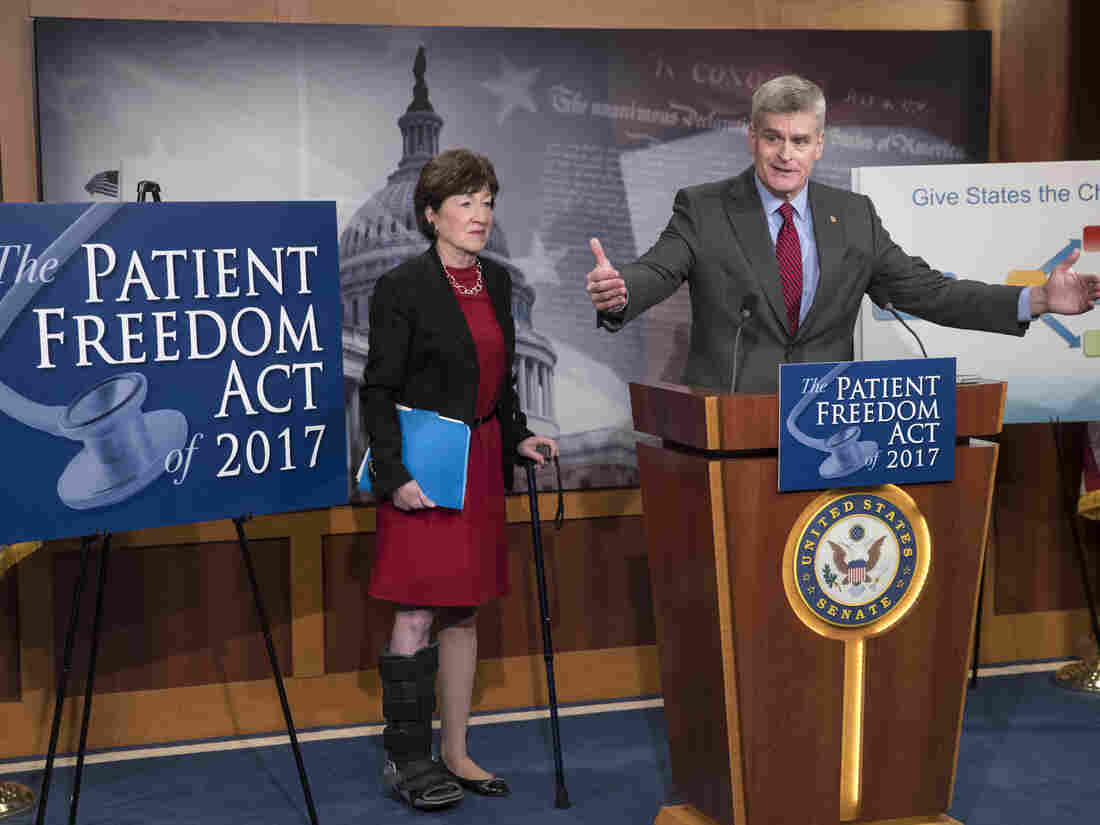
Sen. Bill Cassidy, R-La., accompanied by Sen. Susan Collins, R-Maine, announces the Patient Freedom Act of 2017, one of several GOP plans to replace the Affordable Care Act. J. Scott Applewhite/AP hide caption

toggle caption

J. Scott Applewhite/AP

Republicans have a plan to replace Obamacare. In fact, they have several.

What they don’t have is consensus on which one will guide the party’s effort to reshape an insurance system that provides coverage for some 20 million Americans.

House and Senate Republicans are gathered in Philadelphia at their annual retreat in an attempt to find agreement across members of the House and Senate on the path forward. President Trump and Vice President Pence will huddle with Republicans on Thursday to discuss an ambitious 2017 agenda that also includes overhauling the tax code and building a wall along the U.S.-Mexico border.

The latest GOP Obamacare replacement proposal came earlier this week courtesy Republican Sens. Susan Collins of Maine, a moderate, and Bill Cassidy of Louisiana, a conservative.

They say it meets the requirements for replacement outlined by President Trump to expand coverage, continue to cover pre-existing conditions, repeal any mandates, and lower the cost. “There’s not many ways to get there, and as far as we know, none better than this,” Cassidy said.

The Cassidy-Collins plan would give states three options: Keep Obamacare as is, enact their own insurance expansion or opt out of federal assistance entirely.

It’s unique in that it’s the only plan so far that could keep Obamacare partially intact. Collins admits it’s a work in progress, but she says Republicans need to nail down their plan to calm down a wary public.

“If we do not start putting specific legislation on the table that can be debated, refined, amended and enacted, then we will fail the American people,” she cautioned.

However, their plan is a non-starter for many conservatives, particularly in the House, who believe anything less than full repeal would be breaking a fundamental campaign pledge.

The Republican Study Committee, a bloc of conservative House Republicans, released their own plan earlier this month. A key component is that it would repeal the individual mandate and replace it with a system that gives people tax credits if they choose to buy insurance.

Article continues after sponsorship

“It’s something that’s a good base. I’ve said this the other day, it’s round one of a 15-round engagement,” said RSC Chairman Mark Walker, R-N.C.

House Republicans also outlined a blueprint for a health care overhaul in “A Better Way” the 2016 campaign document led by House Speaker Paul Ryan.

Other key players, like Senate Health Labor and Pensions Committee chairman Lamar Alexander of Tennessee, are taking ideas off the table. For instance, Alexander opposes trying to tackle Medicare reforms in the Obamacare replacement effort.

He secured a commitment from Health and Human Services Secretary-designate Tom Price that the the Trump administration wouldn’t try to either.

“Let me ask you this. Is this the bill — any effort to replace and repeal Obamacare — is this the bill to reform Medicare?” Lamar asked Price, a current congressman from Georgia, at a recent hearing.

“Absolutely not,” Price responded.

Medicare may be off the table, but Medicaid is on it. The health care program for the poor was expanded under Obamacare.

Trump administration officials have said their upcoming plan will include a long-standing conservative proposal to overhaul Medicaid from a guaranteed benefit to a block grant system. That would give states authority on how to spend that money.

But that plan would likely run into a Democratic blockade in the Senate, where Democrats stand ready to oppose practically everything Republicans are trying to do to repeal President Obama’s signature domestic legislative achievement.

As a result, Republicans are also planning in Philadelphia on how to go it alone, much like Democrats ultimately did seven years ago to enact the law. “We anticipate no cooperation from the other side, and so it be incumbent upon us, us being Republicans, to come up with a replacement,” said Senate Majority Leader Mitch McConnell.

Lawmakers’ concerns will be aired out at the retreat by key stakeholders, said Speaker Ryan, who promised a “full, exhausting conversation” in Philadelphia.

Walker said Republicans are acutely aware of the policy and political challenges presented by their repeal and replace plans.

“This is something I believe, if we don’t get right, Democrats will do their best to make it the key focal point in the 2018 elections. So there is some motivation,” he said. “We want to do the right thing, this is something very sensitive when it comes to people’s health care, but from a political side there’s a benefit to getting it right as well.

And huge political risks if they don’t. Just ask Democrats.

Let’s block ads! (Why?)

Legalizing Aid In Dying Doesn't Mean Patients Have Access To It

Dr. Lonny Shavelson heads Bay Area End of Life Options, a Berkeley, Calif., medical practice that offers advice and services to patients seeking aid in dying under the state law enacted last June. Courtesy photowords.com hide caption

toggle caption

Courtesy photowords.com

In the seven months since California’s aid-in-dying law took effect, Dr. Lonny Shavelson has helped nearly two dozen terminally ill people end their lives with lethal drugs — but only, he says, because too few others would.

Shavelson, director of a Berkeley, Calif., consulting clinic, said he has heard from more than 200 patients, including dozens who were stunned to learn that local health care providers have refused to participate in the state’s End of Life Options Act.

“Those are the ones who could find me,” says Shavelson, who heads Bay Area End of Life Options and is a longtime advocate of assisted suicide. “Lack of access is much more profound than anyone is talking about.”

Across California, and in the five other states where medical aid-in-dying is now allowed, access is not guaranteed, advocates say. Hospitals, health systems and individual doctors are not obligated to prescribe or dispense drugs to induce death, and many choose not to.

Most of the resistance comes from faith-based systems. The Catholic Church has long opposed aid-in-dying laws as a violation of church directives for ethical care. But some secular hospitals and other providers also have declined.

Article continues after sponsorship

In Colorado, where the nation’s latest aid-in-dying law took effect in December, health systems covering nearly third of hospitals in the state, plus scores of clinics, are refusing to participate, according to a recent STAT report.

Even in Oregon, which enacted the first Death with Dignity law in 1997, parts of the state have no providers within 100 miles willing or able to dispense the lethal drugs, say officials with Compassion & Choices, a nonprofit group that backs aid-in-dying laws.

“That’s why we still have active access campaigns in Oregon, even after 20 years,” says Matt Whitaker, the group’s state director for California and Oregon. “It becomes a challenge that causes us to have to remain extremely vigilant.”

In Washington state, where the practice was legalized in 2009, a Seattle hospice patient with advanced brain cancer was denied access to willing providers, so he shot himself in the bathtub, according to a 2014 complaint filed with the state health department.

“Refusing to provide information or appropriate referrals directly led to the unnecessarily violent death of this patient,” said the complaint filed by an anonymous hospice nurse. “I strongly believe this constitutes patient abandonment.”

Lack of access was also an issue for Annette Schiller, 94, of Palm Desert, Calif., who was diagnosed with terminal thyroid and breast cancer and wanted lethal drugs.

“Almost all of her days were bad days,” recalled Linda Fitzgerald, Schiller’s daughter. “She said, ‘I want to do it.’ She was determined.”

Schiller’s hospice turned down her request, and she couldn’t find a local referral, forcing Linda Fitzgerald to scramble to fulfill her mother’s last wish.

“I thought it was going to be very simple and they would help us,” says Linda Fitzgerald. “Everything came up empty down here.”

Annette Schiller of Palm Desert, Calif., who was 94 and diagnosed with terminal thyroid and breast cancer, had trouble finding doctors to help her end her life under California’s new aid-in-dying law. Tana Yurivilca/Courtesy of Linda Fitzgerald hide caption

toggle caption

Tana Yurivilca/Courtesy of Linda Fitzgerald

Opponents of aid in dying cite providers’ reluctance as evidence that the laws are flawed and the practice is repugnant to a profession trained to heal.

“People consider it a breaking of professional integrity,” says Dr. David Stevens, chief executive of Christian Medical & Dental Associations, which has worked to stop or overturn aid-in-dying laws in several states.

But those decisions can effectively isolate people in entire regions from a legal procedure approved by voters, advocates said.

In California’s Coachella Valley, where Annette Schiller lived, the three largest hospitals — Eisenhower Medical Center, Desert Regional Medical Center and John F. Kennedy Memorial Hospital — all opted out of the new state law. Affiliated doctors can’t use hospital premises, resources or systems in connection with aid in dying, hospital officials said.

“Eisenhower’s mission recognizes that death is a natural stage of the life journey and Eisenhower will not intentionally hasten it,” Dr. Alan Williamson, vice president of medical affairs of the non-profit hospital, said in a statement.

Doctors may provide information, refer patients to other sources or prescribe lethal drugs privately, Williamson said.

“All we have done is say it can’t be done in our facility,” he added.

In practice, however, that decision has had a chilling effect, says Dr. Howard Cohen, a Palm Springs hospice doctor whose firm also prohibits him from writing aid-in-dying prescriptions or serving as an attending physician.

“They may be free to write for it, but most of them work a full day. When and how are they going to write for it?” he said. “I don’t know of anyone here who is participating.”

Patients eligible for aid-in-dying laws include terminally ill adults with six months or less to live, who are mentally competent and can administer and ingest lethal medications themselves. Two doctors must verify that they meet the qualifications.

Many doctors in California remain reluctant to participate because of misunderstandings about what the law requires, says Dr. Jay W. Lee, past president of the California Academy of Family Physicians.

“I believe that there is still a strong taboo against talking about death openly in the medical community. It feels like a threat to what we are trained to do: preserve and extend life,” Lee says, adding that doctors have a moral obligation to address end-of-life concerns.

There’s no single list of doctors willing to prescribe life-ending drugs, though Compassion & Choices does offer a search tool to find participating health systems.

“They don’t want to be known as the ‘death docs,’ ” says Shavelson, who has supervised 22 deaths and accepted 18 other people who were eligible to use the law but died before they could, most within a required 15-day waiting period.

Officials with Compassion & Choices said past experience indicates that more providers will sign on as they become more familiar with the laws and their requirements.

At least one California provider, Huntington Hospital in Pasadena, originally said it wouldn’t participate in the law, but later changed its position.

Other health systems have opted to not only participate, but also to help patients navigate the rules. Kaiser Permanente, which operates in California and Colorado, has assisted several patients, including Annette Schiller, who switched her supplemental insurance to Kaiser to receive the care.

Within weeks, Schiller was examined by two doctors who confirmed that she was terminally ill and mentally competent. She received a prescription for the lethal drugs. On Aug. 17, she slowly ate a half-cup of applesauce mixed with Seconal, a powerful sedative.

“Within 20 seconds, she fell asleep,” her daughter recalled. “Within a really short time, she stopped breathing. It was amazingly peaceful.”

Kaiser Health News is an editorially independent part of the Henry J. Kaiser Family Foundation and is not affiliated with Kaiser Permanente. KHN’s coverage of end-of-life and serious illness issues is supported by The Gordon and Betty Moore Foundation.

Let’s block ads! (Why?)

Victims Of Contaminated Steroids Still Hurting: 'My Life's Upside-Down'

A vial of injectable steroids from the New England Compounding Center seen at the Tennessee Department of Health in Nashville in 2012. Kristin M. Hall/AP hide caption

toggle caption

Kristin M. Hall/AP

Hundreds of people around the country are still suffering from complications linked to injections of tainted medicine produced at a Massachusetts pharmacy in 2012.

A nationwide outbreak of fungal infections was tied to the shipment of nearly 18,000 contaminated vials of preservative-free methylprednisolone, a steroid, made by the New England Compounding Center in Framingham, Mass.

Barry Cadden, an owner of the pharmacy, is now on trial in U.S. District Court in Boston. He faces federal charges that include racketeering and second-degree murder. He pleaded not guilty.

The trial, which began Jan. 9, is expected to last two or three months.

Federal prosecutors say the steroids were mixed in unsanitary conditions with expired ingredients.

Bruce Singal, Cadden’s attorney, declined to comment. In court, he has said that Cadden oversaw the company’s operations, but didn’t work in the facility’s “clean rooms” or mix the drugs that harmed people. “He is not a murderer and he is not responsible for their deaths,” Singal said, according to the Associated Press.

The outbreak of fungal infections tied to injections with contaminated medicines killed at least 64 people and sickened about 700 more. A report about the public health investigation and response published in The New England Journal of Medicine in 2013, said the outlook for “patients remains uncertain. Although many case patients have completed antifungal therapy and their conditions are currently stable or improved, relapses of infection are possible.”

Many people who got sick after the injections are still waiting for compensation checks from a legal settlement with the compounding pharmacy.

Article continues after sponsorship

Several people who became sick after injections talked about their lives since then. None has testified in the case but some have plans to attend the trial. Here are excerpts from conversations with them.

Bill Thomas Courtesy of Bill Thomas/WBUR hide caption

toggle caption

Courtesy of Bill Thomas/WBUR

Bill Thomas, 62, of Lowell, Mich.

The last injection — the steroid injection that I got in my spine — was for pain in my legs, pain and numbness, due to spinal cord injuries. During the course of the next few days, I felt like I was coming down with the flu … I had trouble remembering things. I came down with an incredible headache that didn’t go away. I had terrible neck pain, and my eyes were very sensitive to light.

I’ve gone from being a person who walked two or three miles a few times a day. … I used to go out a lot in wilderness areas and did backpacking. And now I only leave the house a couple times a week. I’m always tired and always in pain, I can’t think. I get confused easily. … I can’t read like I used to.

Justice needs to be done here. Tremendous harm was done to a great many people, and that should not be forgotten.

Angela Farthing, 46, of Maryland

Angela Farthing Courtesy of Angela Farthing/WBUR hide caption

toggle caption

Courtesy of Angela Farthing/WBUR

I had fungal meningitis and was admitted to the hospital. When I was released, I ended up having a stroke and developed a brain aneurysm. I was readmitted, and I was there for almost another two months. … I got very sick. I was vomiting all the time, had horrible headaches every day. I lost a good 30 pounds; I went down to 100 pounds. … I missed about a year of work. And it was discovered later that I’d developed an abscess in my spinal cord. I had to have that surgically removed. But they could not get all of the abscess out, because they said if they would have sliced any deeper, they could have paralyzed me or I could have lost bowel or bladder function.

[My husband] really suffered quite a bit when I was diagnosed. He had to take care of me, he had to bathe me, he had to change me, he had to do my IV. … He had to take over cleaning the house and cooking and taking care of our dogs. … He was a recovering alcoholic, and unfortunately, he stopped going to AA meetings and he succumbed to his addiction.

Kathy Pugh, daughter and caregiver for her mother, Evelyn March, 85, of Pinckney, Mich.

[My mother had] an abscess in her back on her spine at the site of the injection of the tainted medicine. Now she’s not doing well at all. It’s pretty much 24/7 pain. She went from being a very vital woman with just sporadic problems with her back, to where she’s bedridden in a hospital bed on oxygen, looking up at the ceiling. That’s her life — occasionally trying to watch TV, but she finds it hard to concentrate for a very long length of time. That’s one of the side effects of the antifungal medication, which it was ‘take or die.’ “

Kathy Pugh (right) and her mother, Evelyn March Courtesy of Kathy Pugh/WBUR hide caption

toggle caption

Courtesy of Kathy Pugh/WBUR

Evelyn March

My life’s upside-down compared to what it was. I don’t understand why things can be allowed to happen like that. Getting old is bad enough, but then to put something else on to it. … I hope [Barry Cadden] gets his butt burned. I mean he, he, … well, I’d better shut up, because I’d probably say more than I should say.

Let’s block ads! (Why?)

Arizona Children Could Lose Health Coverage Under Obamacare Repeal

Vanessa Ramirez was diagnosed with ovarian cancer when she was in college. Today she and her kids get their health care through the Affordable Care Act. But child advocates say a repeal of that law could jeopardize the program that covers her children. Will Stone/KJZZ hide caption

toggle caption

Will Stone/KJZZ

Like any college student, Vanessa Ramirez never expected chemotherapy would be part of her busy school schedule.

“I don’t have any history of cancer in my family, so it wasn’t something I was on the lookout for,” Ramirez says, sitting outside the library of her alma mater, Arizona State University, in Tempe.

Ramirez was diagnosed with ovarian cancer when she was 23. Now, more than a decade later, she’s healthy and so are her children.

“But there are also emergencies that happen,” Ramirez says, explaining the priority she places on health insurance. “I have two young kids who are running around. They are rambunctious. I have a daughter that loves to climb trees.”

After dealing with her own serious illness at such a young age, Ramirez doesn’t take health care for granted. And the Affordable Care Act made her feel secure that she and her kids would be covered. She bought insurance through HealthCare.gov, even with her pre-existing condition, and her children got covered, too.

“I want them to be able to have health insurance and doctors to monitor them, in case something unfortunate comes up,” Ramirez says.

Ramirez has coverage via the exchange, and her kids are covered through the federal Children’s Health Insurance Program, which is for working families who don’t quite qualify for Medicaid. Arizona’s version is called KidsCare.

State lawmakers froze KidsCare enrollment back in 2010; Arizona was the only state without an active program. But last year Obamacare helped revive the program by covering the entire cost in Arizona and a handful of other states, at least through 2017.

Article continues after sponsorship

“A lot of people don’t realize that a repeal of the Affordable Care Act could wipe out KidsCare, that we just got back,” says Dana Wolfe Naimark with advocacy group Children’s Action Alliance.

In the months since Gov. Doug Ducey and the legislature reopened KidsCare last year, enrollment has already surpassed 13,000. But now Naimark worries about the fallout if the ACA is repealed.

“It would be up to the state legislature whether they could invest state dollars to keep it going, or whether the coverage would go away,” Naimark says.

In recent years, Arizona has had one of the highest rates of uninsured children in the country. But Obamacare has begun to change that, bringing coverage to thousands of kids. Arizona was also one of the Republican-led states that expanded Medicaid under the ACA — but only after fierce infighting among Republicans in the Arizona legislature about growing federal influence.

Conservative critics of KidsCare also retained some control over the budget of the program when they reinstated it; state law will halt or shut down Medicaid expansion and KidsCare anytime federal funding dips too low.

“Whenever you take a look at some of these top-down Washington approaches, you really do lard up these insurance policies with a lot of benefits that individuals and families really would not go out and buy on their own,” says Naomi Lopez Bauman director of health care policy for the conservative Goldwater Institute. Her organization sued to stop the state’s Medicaid expansion.

One of the proposals favored by Republican leadership is giving states a fixed amount of money, called a block grant, and letting them have more say in who and what they cover, in terms of health care. Bauman says the state, if given enough flexibility, could save money with such a system.

The question, she says, would be, “How do you make it easier and better for individuals and families to get the coverage and care that best meet their own needs and preferences?”

But other conservatives say changing how these programs are funded could backfire. Heather Carter, a Republican state representative who lives in north Phoenix, voted for Medicaid expansion and for restarting KidsCare.

“What I hope does not happen is that decisions are made nationally that actually penalize us for being efficient and effective, long before the Affordable Care Act was in place,” Carter says.

Arizona already has one of the lowest-cost Medicaid programs in the country, she says. And Medicaid officials in Arizona caution that block grants could actually shortchange the state, because it has a fast growing population and a large share of people living on incomes that are around the poverty line. Less federal funding would likely force lawmakers to cut back services.

“We will have to make very difficult decisions in Arizona on who will — and who will not — receive coverage,” Carter says.

If states lose the extra federal funding they received to expand Medicad and KidsCare, it would cost Arizona hundreds of millions of dollars to keep everyone on Medicaid covered to the same degree they are now. And even Democrats who support broad health coverage — including Senate Minority Leader Katie Hobbs — concede that’s not realistic.

“I don’t see anyone in the state coming forward and saying, ‘Oh, we’ll cover this,’ ” Hobbs says. “Because we don’t have the money to do it.”

Arizona has more children enrolled in the federal marketplace than almost any other state. If you add in Medicaid and KidsCare, roughly 130,000 kids or more could be at risk of losing their health care coverage if Congress doesn’t come up with a replacement that is similar in scope.

This story is part of NPR’s reporting partnership with KJZZ and Kaiser Health News.

Let’s block ads! (Why?)

Medical Debt Is Top Reason Consumers Hear From Collection Agencies

Medical debt is the most common reason for collection calls, a federal study found. Geber86/Getty Images hide caption

toggle caption

Geber86/Getty Images

More people have health insurance than ever before, but many still struggle to pay for care.

A recently released report says medical debt is the No. 1 reason consumers reported being contacted by a collection agency. If efforts to overhaul the Affordable Care Act result in more people losing their coverage, those numbers could rise.

The study by the federal Consumer Financial Protection Bureau found that 59 percent of people who reported they had been contacted by a debt collector said it was for medical services. Telecommunications bills were the second most common type of overdue bill for which debt collectors pursued payment, at 37 percent, and utilities were third, reported by 28 percent.

Unlike other types of debt, people with medical debt were prevalent across a range of income levels, credit scores and ages. A poll conducted in 2015 by NPR, The Robert Wood Johnson Foundation and Harvard’s T.H. Chan School of Public Health found that many people with health insurance still struggle to pay medical bills. Some 26 percent said health care expenses have taken a serious toll on family finances.

Article continues after sponsorship

The CFPB’s survey sample was drawn from the agency’s consumer credit panel, a random sample of credit records from one of the three major credit reporting agencies. Conducted between December 2014 and March 2015, the survey asked respondents about their experiences over the past year with debt collectors.

Having medical debt turned over to collections can be a double whammy. “It’s not just that people may be reluctant to go for care because of the debt they might incur,” said Mark Rukavina, a Boston-based health care consultant whose work has focused on affordability and medical debt. “It might also ruin their credit.” Having a medical bill in collection can substantially reduce consumers’ credit scores, Rukavina said.

The health law required nonprofit hospitals to take several steps to retain their federal nonprofit status, including establishing written policies for charity care.

Hospitals must determine whether patients are eligible under their policies and provide charity care for those who are. Hospitals also must limit how much uninsured patients are charged and restrict aggressive billing and collections activities. Under those rules, nonprofit hospitals are barred from initiating “extraordinary collection actions,” such as reporting to credit bureaus, garnishing wages or placing a lien on property or taking legal action, until 120 days after the first billing statement is sent.

Although the rule doesn’t apply to for-profit hospitals, the regulation introduced a federal standard for reporting medical debt, Rukavina said.

The proportion of families that said they were having trouble paying their medical bills declined between September 2013, before the health law’s insurance marketplaces opened in 2014, and March 2015, according to an analysis by the Urban Institute. The study found that the percentage of families that had problems paying medical bills declined from 22 percent in 2013 to 17.3 percent in 2015. Being uninsured, having a low income and enrolling in a high-deductible plan each increased the odds of having trouble paying medical bills, the study found.

Republicans have vowed to press ahead with plans to repeal the Affordable Care Act, but since they don’t have enough votes in the Senate to get a full repeal through, they are initially focusing on specific provisions that can be undone by a simple majority vote during the budget process. The nonpartisan Congressional Budget Office reported Jan. 17 that under a Republican plan last year to partially repeal the law 18 million people would become uninsured in the first year, rising to 32 million in 2026.

“Because more people would be uninsured, they’d be exposed to the full cost of their care and you’d very likely see the number of people who are carrying medical debt increase,” said Sara Collins, vice president of health care coverage and access at the Commonwealth Fund, whose biennial insurance surveys examine issues of medical debt and underinsurance.

If that happens, consumer protections could be even more important. Before the health law passed in 2010, some states passed hospital fair pricing laws that generally restricted how much hospitals could charge uninsured patients for care to no more than what is paid by public and private insurers. The law typically also required hospitals to provide free care to low-income uninsured patients.

The laws were often initiated in response to aggressive billing and collection practices by hospitals, which would charge uninsured patients far higher rates than those paid by insured patients, who benefited from discounts negotiated by their health plans.

The health law drew on elements of state fair pricing laws, and Sen. Chuck Grassley, R-Iowa, was instrumental in adding those provisions, according to Rukavina. As such, they may be more likely to be retained in a Republican replacement to the law.

State fair pricing laws typically reduce the amount that uninsured patients pay by about 25 to 30 percent, a recent study found. Since the Affordable Care Act passed there hasn’t been much new activity at the state level on these laws, but that could change.

“In an ideal world, these laws would be redundant or unnecessary,” said Benedic Ippolito, a research fellow at the American Enterprise Institute who co-authored the study. “This type of legislation appears to be a little more relevant now than we would have thought it would be.”

Kaiser Health News is an editorially independent news service that is part of the nonpartisan Henry J. Kaiser Family Foundation. Follow Michelle Andrews on Twitter: @mandrews110.

Let’s block ads! (Why?)

Obamacare Repeal Threatens A Health Benefit Popular In Coal Country

James Bounds is a West Virginia miner with black lung disease; it took him four-and-a-half years to get compensation benefits. A provision in Obamacare later made qualifying for those benefits much easier. Kara Lofton/West Virginia Public Broadcasting hide caption

toggle caption

Kara Lofton/West Virginia Public Broadcasting

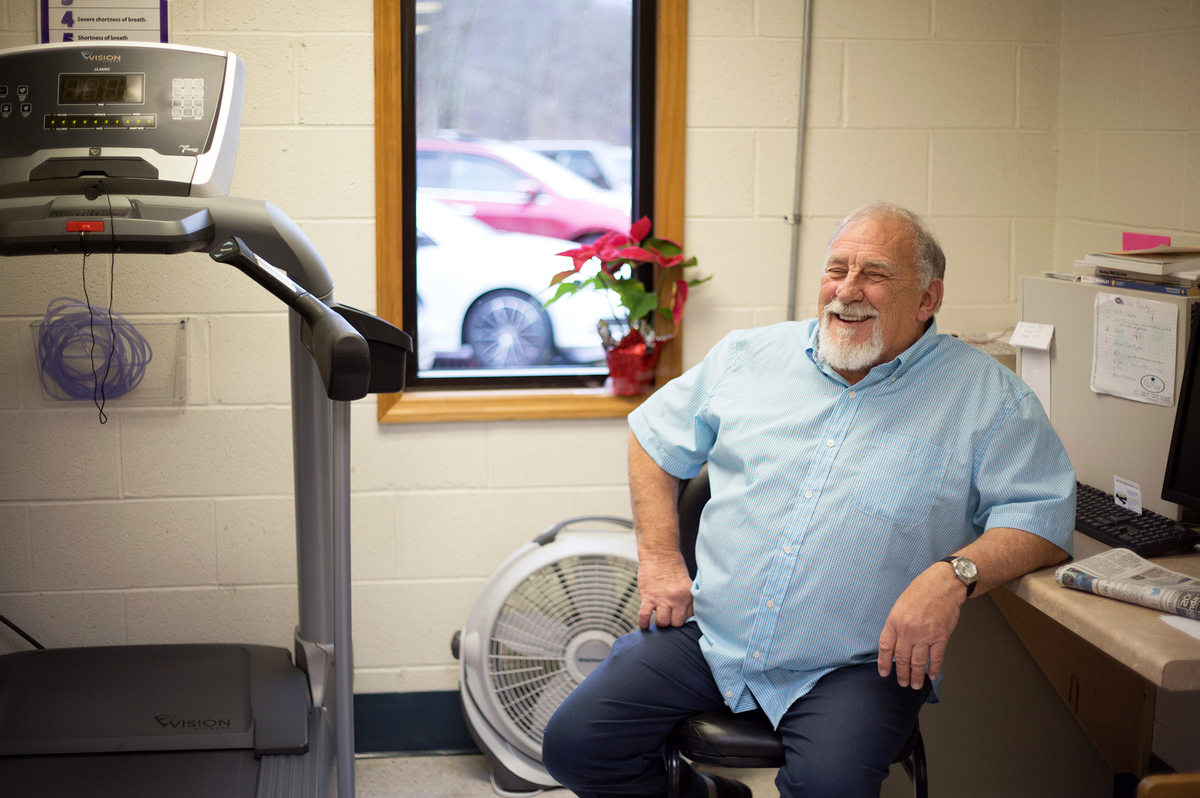
At the Pulmonary Rehabilitation Clinic in Scarbro, W.Va., oxygen tubes dangle from the noses of three miners slowly pedaling on stationary bikes. All of these men have black lung — a disease caused by breathing in coal dust. Over time, the dust coats the lungs and causes them to harden. Hard lungs don’t easily expand and contract, and that makes it difficult to breathe.

“You try to get air in them, and they don’t want to cooperate with you as they did before,” says retired miner James Bounds, speaking with great effort. Not every coal miner gets black lung, just as some smokers don’t get cancer. But for those who do, Bounds says, the disease is devastating.

“There’s no cure at all,” he says. “It keeps getting harder and harder until one day, I guess, you take your last breath and they won’t expand for you no more.”

Bounds is one of about 38,000 miners or eligible survivors — usually a spouse — currently receiving black lung benefits. The benefits are compensation for the physical damage Bounds sustained while doing his job. It took him four and a half years to get approved, despite the fact that his lungs are so bad he has to stop moving to talk.

But now the qualification process is supposed to move faster. The Affordable Care Act includes special provisions that make the process of getting black lung benefits easier for coal miners. If the ACA is repealed, gaining these benefits could become much more difficult, effectively harming a group of people that President Donald Trump has promised to protect.

Article continues after sponsorship

Debbie Wills coordinates the black lung program for Valley Health primary care system. She says that prior to the ACA, it was almost impossible to qualify for the compensation benefits. Coal companies pay the benefits, and also pay into a federal trust fund that pays when coal companies can’t. Wills says the process of getting benefits was arduous for miners.

“Coal company lawyers would doctor shop around the country and find two, three, four, five, seven doctors to say, ‘Yes this miner is disabled, but it’s not because of black lung,'” she says.

The Affordable Care Act includes something called the Byrd Amendments. One shifts the burden of proof — instead of miners having to prove that mining caused their black lung, the coal companies have to prove that mining didn’t.

“You still have to prove the 100 percent disability, which is hard,” says Wills. “But if you can prove that, and if you’ve worked 15 or more years or longer in the mines, then you’re entitled to a presumption that your disease arose from your coal mine employment.”

Another part provides lifetime benefits to certain dependents who survive the death of a miner, if the miner had been receiving the benefits before death.

If the ACA is repealed without a replacement, cases that were approved after the ACA went into effect could be reopened, leaving the miner or survivor vulnerable to losing the benefits. And, the burden of proof may shift again, making it difficult for applicants to qualify.

Earlier this month, both the House and the Senate introduced resolutions to preserve the Byrd Amendments from a broader ACA repeal. Rep. Evan Jenkins (R-W.Va.), an ACA opponent, introduced the measure in the House.

“I am a firm believer that Obamacare is already in a death spiral and desperately needs to be fixed,” Jenkins says. “While we are going to work to improve our health care system, I feel strongly about my resolution to make sure that the presumption relating to black lung is contained in whatever is the end product of this work this year.”

This story is part of NPR’s reporting partnership with West Virginia Public Broadcasting and Kaiser Health News.

Let’s block ads! (Why?)

Rural Colorado's Opioid Connections Might Hold Clues To Better Treatment

Melissa Morris outside her home in Sterling, Colo. She quit using heroin in 2012, and now relies on the drug Suboxone to stay clean. She’s also been helping to find treatment for some of the neighbors she used to sell drugs to. Luke Runyon/Harvest Public Media hide caption

toggle caption

Luke Runyon/Harvest Public Media

A doctor handed Melissa Morris her first opioid prescription when she was 20 years old. She’d had a cesarean section to deliver her daughter and was sent home with Percocet to relieve post-surgical pain. On an empty stomach, she took one pill and lay down on her bed.

“I remember thinking to myself, ‘Oh, my God. Is this legal? How can this feel so good?’ ” Morris recalls.

Soon, she started taking the pills recreationally. She shopped around for doctors who would write new prescriptions, frequenting urgent care clinics where doctors didn’t ask a lot of questions and were loose with their prescription pad.

Morris’s path started with Percocet and Vicodin, commonly prescribed pain medications for acute injuries and illnesses. When those drugs no longer got her high, she switched to Oxycontin pills. Then she started injecting Oxycontin. After that, she got her hands on Fentanyl patches, a highly addictive and potent opioid. She’d chew on them instead of applying them to skin as the package directed.

Article continues after sponsorship

When doctors got wise to Morris’ shopping tactics, her supplies of the pills diminished, and she turned to heroin, instead.

She started stealing to fund her addiction. Morris then got into the drug trade herself, dealing methamphetamine and other illicit substances, to raise money to buy more heroin.

“You can buy a gram of heroin for 50 bucks,” she says. It’s relatively cheap. “That’s why so many people here have turned to heroin.”

Morris lives in Sterling, Colo., a city of 14,000 that’s a two-hour drive northeast of Denver. The biggest employer is a state prison. Since 2002, the death rate from opioid overdoses in Logan County, which includes Sterling, has nearly doubled, according to data analyzed by the Colorado Health Institute. Morris says she has known at least 10 people in her community who have overdosed on a mix of drugs in the last few years.

Sterling is far from unique. Rural areas and small cities across the country have seen an influx not only in the prevalence of prescription opioids, but in illicit ones like heroin. According to the U.S. Centers for Disease Control and Prevention, opioids were involved in more than 33,000 deaths in 2015 — four times as many opioid-involved deaths as in 2000. A recent University of Michigan study found the rates of babies born with symptoms of withdrawal from opioids rising much faster in rural areas than urban ones.

Like Morris, many new heroin users find themselves using the drug after getting addicted to prescription drugs first. The CDC reports three out of four new heroin users report abusing prescription opioids prior to trying heroin. In the U.S., heroin-related deaths more than tripled between 2010 and 2015, with 12,989 heroin deaths in 2015.

As the drug use reaches into more communities across the country, researchers are scrambling to both diagnose what causes some people and some regions to be more susceptible to opioid abuse, and to devise solutions. Dr. Jack Westfall, a family physician and researcher at the University of Colorado and with the High Plains Research Network, works with a network of rural clinics and hospitals in the state. He says many doctors on the Plains are feeling frantic.

“We don’t know what to do with this wave of people who are using opioids,” he says. “They’re in the clinic, they’re in the ER, they’re in the hospital. They’re in the morgue, because they overdosed.”

For more than a decade, opioids have been a key part of a rural doctor’s pain management for patients, Westfall says. Treatment options are often fewer in a rural area; alternatives like physical therapy may not be available or convenient, so drugs are a prime option.

Some researchers think larger economic, environmental and social factors leave rural Americans at particular risk, says University of California, Davis, epidemiologist Magdalena Cerdá. After the 2008 recession, rural areas consistently lagged behind urban areas in the recovery, losing jobs and population.

“You have a situation where people might be particularly vulnerable to perhaps using prescription opioids to self-medicate a lot of symptoms of distress related to sources of chronic stress — chronic economic stress,” Cerdá says.

Plus, the specific types of jobs more prevalent in rural areas — like manufacturing, farming and mining — tend to have higher injury rates. That can lead to more pain, and possibly, to more painkillers.

In some ways, the social structures of rural regions contribute to the spread of illicit drugs, says Kirk Dombrowski, a sociologist at the University of Nebraska-Lincoln.

“One of the things that is counterintuitive to most of what we think of as [being part of life in] a small town is that rural people have much larger social networks than urban people,” Dombrowski says.

In some cases, his research suggests, rural residents know and interact with roughly double the number of people an average urban resident does — giving rural people more opportunities to know where to access drugs.

“So some of those social factors of being in a small town can definitely contribute,” he says.

“It’s not a fundamentally rural problem,” says, Tom Vilsack, Barack Obama’s secretary for the U.S. Department of Agriculture, who led the Obama administration’s interagency push to curb opioid abuse. “But it’s a unique problem in rural America because of the lack of treatment capacity and facilities.”

That lack of treatment is definitely a problem in Sterling, where patients often have to drive a long way to get care.

Melissa Morris relies on Suboxone, a prescription combination of buprenorphine and naloxone that’s used to help wean people off heroin or other opioids. Morris says she doesn’t get high when taking it, but does avoid the vomiting, diarrhea and sweating that comes with opioid withdrawal. She puts it under her tongue to let it dissolve and take effect.

Morris, who has been off heroin since 2012, makes a two-hour drive to a clinic to pick up her supply of Suboxone. It’s in short supply in many rural communities, in part because few rural doctors have gone through the required training to prescribe it.

There’s there’s a six-week waiting list to get an appointment with the only doctor in Sterling who is certified to prescribe the drug, Morris says. Other areas of Colorado’s eastern Plains have no doctors at all who are legally able to dispense Suboxone.

A new effort from University of Colorado researchers could help there, with plans to train 40 primary care doctors, their clinical care teams, and nurses in Colorado’s Plains and southern San Luis Valley.

Morris acknowledges that close social ties in her town may have contributed to the spread of opioids there; opioid users, she says, tend to “stick up for each other.” Those bonds can spread drug use quickly, but they also cut other ways, she says. Just recently she recruited two opioid-dependent friends to the clinic she goes to weekly for treatment.

“I used to sell them pill and heroin,” says Morris, who is now helping these friends get clean. “And so I do have hope. I’ve seen those success stories.”

This story comes to us from Harvest Public Media, a collaborative public media project reporting on important stories in rural America.

Let’s block ads! (Why?)