As Indiana Governor, Mike Pence's Health Policy Has Been Contentious

Indiana Gov. Mike Pence took questions from the press as he and his wife Karen left their New York hotel to meet with Republican presidential candidate Donald Trump on July 15. Pence has drawn criticism from the left and the right for various health care stances.

Indiana Gov. Mike Pence took questions from the press as he and his wife Karen left their New York hotel to meet with Republican presidential candidate Donald Trump on July 15. Pence has drawn criticism from the left and the right for various health care stances. Andres Kudacki/AP hide caption

toggle caption Andres Kudacki/AP

Indiana Gov. Mike Pence is in the spotlight this week as the man Donald Trump has picked to be his running mate. Pence’s decisions about health and health care in Indiana have drawn attention from within and outside the state. His record could be important in November, because Trump doesn’t have a legislative record at all.

Here’s a quick look at the governor’s history in terms of health policy in Indiana.

Medicaid Expansion

Pence has always been a vocal opponent of the Affordable Care Act, even after the federal law passed in 2010 and was upheld by the Supreme Court.

But when faced with the choice of whether to expand Medicaid to cover Indiana residents who earn incomes that are 138 percent or below the federal poverty level — a key part of the ACA — Pence made a compromise. He debuted a conservative-friendly version of the expansion, one that requires Medicaid recipients to pay a monthly contribution, based on income, into a health savings account. Recipients that miss a payment can be bumped to a lower level of coverage, or lose it entirely, for six months.

Now, after a year and a half, the Healthy Indiana Plan, or HIP 2.0, has enrolled about 190,000 more people into health coverage.

Caitlin Priest, director of public policy at Covering Kids & Families of Indiana, says the plan has helped many people get health insurance for the first time in their lives.

“It’s really been a wonderful way to move the needle both on healthcare access and ultimately on long-term health outcomes,” Priest says.

Pence took criticism from the right for accepting a component of Obamacare, but his conservative tweaks to Medicaid have other Republican-led states looking at that model.

HIV Outbreak

Pence drew criticism from local and national infectious disease experts for his response to an urgent health crisis in Indiana. In February of 2015, the state reported an outbreak of HIV in Scott County, blamed on opioid addiction and needle sharing.

It got so bad — growing to more than 80 cases in the month after the announcement, and more than 190 to date — that the CDC came to Indiana to investigate, and public health experts began calling for a needle exchange. At the time, syringe exchanges were illegal in the state and Pence was opposed to changing that, at first.

He later signed an emergency declaration allowing Scott County to start a needle exchange program. Rather than legalize such exchanges statewide, Pence signed a bill that forces counties to ask permission to start a needle exchange.

Only a few counties have done it, so far, because the process takes a lot of planning, local support and money, which the state doesn’t provide, says Carrie Lawrence, a researcher with the Rural Center for AIDS/STD Prevention.

“If you’re the health department with only two part-time staff, and a full-time health director, who’s going to do this, and when is it going to happen?” Lawrence says.

Public Health Budgets

The HIV crisis also brought some attention to Indiana’s lack of public health funding in general, Lawrence says.

“I think we are dealing with the consequences of the fact that that we don’t have a strong infrastructure for public health in the state,” she says.

As governor, Pence signed legislation that slashed Indiana’s budget for public health programs, despite the state’s many pressing public health problems. Indiana has a high smoking rate, high obesity rate, and high infant mortality rate. The state is ranked nearly last for both federal and state public health funding. According to Trust for America’s Health, Indiana spends just $12.40 per resident on public health. West Virginia, in contrast, spends more than $220.

As a member of Congress from 2001 to 2013, Pence voted against funding for health programs such as the State Children’s Health Insurance Program and the Prevention and Public Health Fund.

Abortion Access

As a congressman, Pence was an early advocate for defunding Planned Parenthood, and this year, women’s health advocates have clashed with him again.

In March, the governor signed a bill that’s been cited as one of the most restrictive in the U.S., barring abortion on the basis of disability, gender or race of the fetus. It also requires women to get an ultrasound at least 18 hours before the procedure, and requires that the fetal remains be buried or cremated.

Some Indiana women responded by updating the governor’s office with (sometimes graphic) news on their menstrual cycles by phone and on social media with hashtag #periodsforpence. The social media backlash mirrors #periodsarenotaninsult, which took aim at Donald Trump last year.

The Indiana ACLU brought a lawsuit against the state’s abortion restrictions — and a judge has since blocked portions of that law. “What the state of Indiana has attempted to do here … grossly flies in the face of existing law,” says ACLU attorney Ken Falk.

This story is part of NPR’s reporting partnership with Side Effects Public Media and Kaiser Health News.

Let’s block ads! (Why?)

Rehab Hospitals May Harm A Third Of Patients, Report Finds

The physical therapy workouts a rehabilitation facility offers can be a crucial part of healing, doctors say. But a government study finds preventable harm — including bedsores and medication errors — occurring in some of those facilities, too.

The physical therapy workouts a rehabilitation facility offers can be a crucial part of healing, doctors say. But a government study finds preventable harm — including bedsores and medication errors — occurring in some of those facilities, too. Andersen Ross/Blend Images/Getty Images hide caption

toggle caption Andersen Ross/Blend Images/Getty Images

Patients may go to rehabilitation hospitals to recover from a stroke, injury or recent surgery. But sometimes the care makes things worse.

In a government report published Thursday, 29 percent of patients in rehab facilities suffered a medication error, bedsore, infection or some other type of harm as a result of the care they received.

Doctors who reviewed cases from a broad sampling of rehab facilities say that almost half of the 158 incidents they spotted among 417 patients were clearly or likely preventable.

“This is the latest study over a long time period now that says we still have high rates of harm,” says Dr. David Classen, an infectious disease specialist at the University of Utah School of Medicine who developed the analytic tool used in the report to identify the harm to patients.

“We’re fooling ourselves if we say we have made improvement,” Classen says. “If the first rule of health care is ‘Do no harm,’ then we’re failing.”

The oversight study, from the office of the inspector general of the U.S. Department of Health and Human Services, focused on rehabilitation facilities that were not associated with hospitals. Rehab facilities generally require that patients be able to undergo at least three hours of physical and occupational therapy per day, five days a week. Patients at these facilities are presumed to be healthier than patients in a more typical hospital or a nursing home.

Still, the findings echoed those of previous studies that found that more than a quarter of patients in hospitals and a third in skilled nursing facilities suffered harm related to their care.

“It’s important to acknowledge that harm can occur in any type of inpatient setting,” says Amy Ashcraft, a team leader for the rehabilitation hospital study. “This is one of the settings that’s most likely to be underestimated in terms of what type of harm can occur.”

For the purposes of the study, doctors and nurses identified harm by reviewing the medical records of 417 randomly selected Medicare patients who stayed in U.S. rehabilitation facilities in March 2012. The events they identified varied in severity, ranging from a temporary injury to something that required a longer stay at the facility or that led to permanent disability or death.

Almost a quarter of the harmed patients had to be admitted to an acute care hospital, at a cost of about $7.7 million for the month analyzed, the study shows.

The physicians who reviewed the cases for the OIG say substandard treatment, inadequate monitoring, and failure to provide needed care caused most of the harm. Almost half the cases, 46 percent, were related to medication errors and included bleeding from gastric ulcers due to blood thinners and a loss of consciousness linked to narcotic painkillers.

That high number indicates there’s lots of room for improvement, says Dr. Eric Thomas, director of the UT Houston-Memorial Hermann Center for Healthcare Quality and Safety.

“We know a lot about preventing medication errors,” Thomas says.

An additional 40 percent of the cases in which patients were harmed were traced to lapses in routine monitoring that led to bedsores, constipation or falls. These problems almost never contributed to a patient’s death but could mean extra days or weeks of recovery, a loss of independence or permanent disability, says Lisa McGiffert, director of the Consumers Union Safe Patient Project.

“It is a domino effect for any person who has had an adverse event,” says McGiffert, who was not involved in the study.

The inspector general is recommending that Medicare and the Agency for Healthcare Research and Quality work together to reduce harm to patients by creating a list of adverse events that occur in rehab hospitals. In their responses to the report, the agencies have pledged to follow that suggestion.

Officials from the American Medical Rehabilitation Providers Association, the trade group that represents rehab facilities, say they have not yet seen the report and decline to comment for now.

ProPublica is interested in hearing from patients who have been harmed while undergoing medical care, through its Patient Harm Questionnaire and Patient Safety Facebook Group.

Let’s block ads! (Why?)

Montana's 'Pain Refugees' Leave State To Get Prescribed Opioids

Kathy Snook, Terri Anderson and Gary Snook traveled from Montana to Dr. Forest Tennant's office in West Covina, Calif.

Kathy Snook, Terri Anderson and Gary Snook traveled from Montana to Dr. Forest Tennant’s office in West Covina, Calif. Corin Cates-Carney/Montana Public Radio hide caption

toggle caption Corin Cates-Carney/Montana Public Radio

Federal authorities say about 78 Americans die every day from opioid overdose. In Montana, health care officials report that abuse there is worse than the national average. But the casualties of the opioid epidemic are not all drug abusers.

On a recent night, three Montana residents, who call themselves pain refugees, are boarding an airplane from Missoula to Los Angeles. They say that finding doctors willing to treat chronic pain in Montana is almost impossible, and the only way they can get relief is to fly out of state.

Before Gary Snook drops into his seat, he pauses in the aisle, pressing his fingertips into his upper thigh. He bends his knees slightly and moves his hips side to side. He’s getting in one final stretch before takeoff.

“My pain, it’s all from my waist down,” he says. “It’s like being boiled in oil 24 hours a day.” Snook has been taking opioids since he had spine surgery for a ruptured disk 14 years ago. After the operation, he says he was in so much pain he couldn’t work. He’s tried all kinds of things to get better.

“I got a surgery, epidural steroid injections, acupuncture, anti-inflammatories, physical therapy, pool exercises,” he says. “I’ve tried anything that anyone has ever suggested me to try. Unfortunately what I do right now is the only thing that works.”

Snook says though he might seem desperate like someone who is addicted to pain killers, he’s not. He’s not craving a quick fix. He leaves his home for treatment because he has no confidence in the doctors in Montana and he wants to be healed.

“I believe pain control is a fundamental human right, or at least an attempt at pain control,” he says. “To deny someone with a horrible disease like me access to pain medications is the worst form of cruelty.”

It’s dark outside when Snook, his wife and the two other pain patients get off the plane in Los Angeles. They wheel their suitcases to a rented SUV. When they get to the hotel, they smile and greet the lobby clerk by name.

The trip has become routine. Every 90 days, they come here to see a doctor who gives them the care and prescriptions they say they can’t get at home.

Fear Among Montana Doctors

Montana is a tough state to find many options for any medical care. Because much of the state is rural, residents often travel long distances, including out of state, for specialty care.

In the past several years, the Montana Board of Medical Examiners has taken on several high-profile cases of doctors it suspects of overprescribing opioids. At least two Montana doctors have had their licenses suspended since 2014.

Executive Director Ian Marquand says his organization doesn’t play favorites. “The board does not encourage particular kinds of doctors, it does not discourage particular kinds of doctors. The door is open in Montana for any qualified, competent physician to come in and practice.”

But Marc Mentel acknowledges that there’s fear around prescription painkillers in Montana’s medical community. He chairs the Montana Medical Association’s committee on prescription drug abuse, and he says he does hear of doctors being more wary.

Mentel, who started practicing medicine in the 1990s, says that when he was training, medical education didn’t include treating long-term pain.

“The perfect tool, the perfect medicine that would take away a person’s pain and allow them to function normally does not yet exist,” he says. “So we are trying to use any tool, any means we can to help lessen the severity of their pain.”

Mentel says opioids do help some patients, but he hopes his generation of doctors will learn more about pain and understand ways to treat it beyond opioids.

In March, the Centers for Disease Control and Prevention published long-awaited guidelines that said opioids should be the treatment of last resort for pain, and if used should be combined with other treatments such as exercise therapy.

“Patients are in pain,” Mentel says. “We don’t have great tools for them and we need to recognize that this is going to be a chronic-disease state. They may be in pain for the rest of their lives. So … how do we treat them without actually harming them?” he says.

The California Solution

For Snook, relief is found at a small strip-mall clinic in suburban Los Angeles.

Tennant says that doctors need to specialize in pain management to reduce the risk of improperly prescribing opioids.

Tennant says that doctors need to specialize in pain management to reduce the risk of improperly prescribing opioids. Corin Cates-Carney/Montana Public Radio hide caption

toggle caption Corin Cates-Carney/Montana Public Radio

Dr. Forest Tennant is a former Army physician who says he has consulted for the National Institute on Drug Abuse, the National Football League and NASCAR.

He has about 150 patients, half of them from out-of-state.

Tennant says there are legitimate reasons to be concerned about opioids, and that’s why doctors need to specialize in pain management.

To an untrained physician, Tennant says, addicts and pain patients can look similar. “Doctors can get conned,” he says. “I think that it is true that we’ve had a lot of opioids that get out on the street, and people get them … whether it is heroin or a prescription opioid.”

But opioids can also help people, Tennant says. Because of that, he says, the drugs shouldn’t be stigmatized, but used responsibly.

“They are the last resort, when there is no other option. You don’t use them until everything else has failed,” he says.

Tennant is lobbying for a Montana bill to guarantee more access to opioids for pain patients, so people like Snook don’t need to travel so far for a prescription.

“Had I stayed in Montana, I would have killed myself,” says Snook. “I just want humanitarian care, and I get that in California.”

This story is part of a reporting partnership with NPR, Montana Public Radio and Kaiser Health News.

Let’s block ads! (Why?)

Maryland Switches Opioid Treatments, And Some Patients Cry Foul

A demonstration dose of Suboxone film, which is placed under the tongue. It is used to treat opioid addiction.

A demonstration dose of Suboxone film, which is placed under the tongue. It is used to treat opioid addiction. M. Spencer Green/AP hide caption

toggle caption M. Spencer Green/AP

Maryland Medicaid officials have made what appears to be a small change to the list of preferred medications to treat opioid addictions. The agency used to pay for the drug in a dissolvable film form. Now it’s steering patients to tablets, which some doctors say are not as effective for their patients.

Those doctors say the change is having a profound effect on some people struggling to stay clean.

Starting on July 1, Maryland’s Medicaid program removed Suboxone film — a drug that can be used by people addicted to opioids to keep their cravings at bay — from the state’s list of preferred drugs and replaced it with a tablet form of the medication called Zubsolv.

State officials say the change was made to stop the illicit flow of the drug into jails and prisons.

“Those Suboxone strips were diverted and smuggled into jails and later were sold or traded in criminal activity that was happening in jails,” says Shannon McMahon, deputy secretary of Maryland’s Department of Health and Mental Hygiene. “The numbers were frankly staggering, the amount of diversion that was happening in the jails.”

So far this year more than 2,300 hits of Suboxone have been seized in Maryland jails and prisons, according to Gerald Shields of the state’s Department of Public Safety and Correctional Services. That’s about 40 percent more than at this time last year, Shields says.

The drug helps people control their opioid habit. But it is also an opioid itself. It doesn’t produce a high as strong as many opioid painkillers that have turned into popular street drugs, but it does stave off cravings and can create a mild sense of euphoria.

It comes as a tiny, dissolvable film — about the size of a Listerine breath mint strip — that’s transparent and easy to hide.

“They have been cut up into multiple different pieces,” McMahon tells Shots. A single strip can be worth as much as $50 on the street and they are often divided into several “hits” that are sold individually, she says.

“They were coming into prisons through letters — backs of stamps, corners of folks’ eyeglasses,” she says. McMahon says the strips were causing problems in prisons because of illegal sales and trade.

So at the recommendation of the Department of Corrections, along with a panel that advises the state’s Medicaid program on medications, officials decided to replace the Suboxone strip with Zubsolv, made by a Swedish company called Orexo AB.

The choice is raising eyebrows because Maryland’s health secretary Van Mitchell used to work for Manis Canning & Associates, the lobbying firm that represents Orexo. Mitchell’s spokeswoman says he left the firm before Orexo became a client.

Mitchell and Steven T. Moyer, Maryland’s secretary of Public Safety and Correctional Services, argued in an article in the Baltimore Sun that the change would save lives. They said Maryland’s correctional system, since 2010, “has seen 13 fatal overdoses.” However, a spokeswoman for the state’s health department acknowledged that those were overdoses on opioids in general, and not specifically overdoses on Suboxone film.

Doctors say Suboxone film, as well as the Zubsolv pill that replaces it, actually protect against overdoses because they contain both the opioid Buprenorphine and a drug called naloxone that reverses the effects of an overdose. Naloxone is used by emergency responders to revive people who overdose.

The change has drawn broad opposition from doctors who treat people with substance abuse problems and from advocates for people who are recovering from addictions. Those include the Behavioral Health System of Baltimore, a nonprofit that oversees the city’s behavioral health system, and the Maryland Association for the Treatment of Opioid Dependence.

The change has wreaked havoc on some people with substance abuse problems who, until a few days ago used Suboxone film, says Adrienne Breidenstine, vice president for policy and communications at the Behavioral Health System of Baltimore.

One of them is Nicole, a mother of two who has been in recovery for about eight years. Nicole became addicted to painkillers after she was injured in a car accident. She was stable on Suboxone strips but switched to Zubsolv 10 days ago. She asked NPR not to use her full name because her history of addiction is not common knowledge.

“When I got on Suboxone I didn’t even have custody of my son,” she says. “After I got clean, I got put on Suboxone. I’ve got both my kids now, we have our own house, I’m working, they’re doing good in school, I finished school, and that’s why it’s so scary to me that they completely switched me over.”

Since the change, she says, she’s been feeling sick, having trouble sleeping, having cravings and symptoms of withdrawal.

“It hasn’t been working for me,” she says. “I don’t know what I’m going to do if they don’t cover it again. I just don’t want to go back to that life and I don’t want my kids to go there.”

Nicole’s doctor, Michael Fingerhood, has a primary care practice at Johns Hopkins Bayview Medical Center in Baltimore. His practice, which overlooks downtown Baltimore from across the water, welcomes people with substance abuse problems. The group treats about 450 patients who, until this month, were using Suboxone strips.

He says just two weeks into the change many of his patients, like Nicole, are struggling.

“This is taking patients who are stable, who are doing really well, and saying we’re going to do something to disturb how well you’re doing,” he tells Shots.

Fingerhood says Zubsolv is supposed to be the equivalent of Suboxone. But not all patients react the same to different medications. Many, like Nicole, have been clean for years and for the first time, they’re feeling sick again and some, he says, are in real danger.

Feeling even the slightest bit of withdrawal symptoms can be awful for someone in recovery, he says.

“In the midst of addiction people are searching for a high, they’re having withdrawal, they’re running the streets. Their lives were horrible,” Fingerhood says. “Having withdrawal brings back all those memories of how terrible life had been and it’s a terrible feeling to be in withdrawal.”

Shaking up all the Suboxone patients across the state to keep a relatively safe drug away from a handful of inmates doesn’t make sense, Fingerhood says. And the numbers are indeed pretty small.

If those 2,300 Suboxone hits seized in prison were whole strips — and prison officials say they weren’t — that’s still only the equivalent of about 10 prescriptions from January through last week.

Instead, Fingerhood says, “We should be providing treatment in the prison system.”

He says if someone who was on Suboxone gets arrested, it makes sense that family members or friends would try to get them the drugs in prison.

The only place in Maryland that inmates can legally get any medication to help get or keep them off opioids is in the Baltimore City Jail, according to Shields, the Department of Corrections spokesman. He says the system provides methadone to some inmates to help wean them off opioids before moving them to another prison.

State officials say Medicaid patients can still get Suboxone if they really need it. Doctors just fill out a form requesting a waiver, known as a prior authorization, and get an answer the next day.

Fingerhood made that request for Nicole. Five days later, he still had no response.

Let’s block ads! (Why?)

Covered California's Health Plan Rates To Jump Sharply In 2017

Peter Lee, executive director of Covered California, the state's health insurance exchange, said the projected rate increases for 2017 are linked to increases in the cost of health care in the state.

Peter Lee, executive director of Covered California, the state’s health insurance exchange, said the projected rate increases for 2017 are linked to increases in the cost of health care in the state. Rich Pedroncelli/AP hide caption

toggle caption Rich Pedroncelli/AP

California’s Obamacare premiums will jump 13.2 percent on average next year, a sharp increase that is likely to reverberate nationwide in an election year.

The increase, announced by the Covered California exchange Tuesday, ends the state’s two-year respite from double-digit rate hikes.

The announcement comes as the presidential candidates clash over the future of President Obama’s landmark health law and as major insurers around the country seek to announce even bigger rate increases during the open enrollment period this fall.

California won plaudits by negotiating rate increases for its 1.4 million enrollees that averaged 4 percent in the past two years. But that feat couldn’t be repeated for 2017, as overall medical costs continue to climb and two federal programs that help insurers with expensive claims are set to expire.

Health policy experts said California is rejoining the pack after keeping rate increases lower than much of the country during the first years of Obamacare.

Critics of the health law, including Republican presidential candidate Donald Trump, have been quick to seize on these rising costs as further proof that the Affordable Care Act warrants repeal for failing the average consumer.

The Obama administration counters that federal subsidies spare most consumers from the full impact of the premium increases and says the health law enables people to shop around for a better deal.

Last week, consulting firm Avalere Health found that the average rate increase being sought for widely sold silver plans on the state and federal health insurance exchanges was 11 percent across 14 states. But consumers could limit the increase by choosing one of the lower-cost silver plans, which are set to go up only 8 percent.

These rate increases apply to people who purchase their own coverage in the individual market, not to the majority of Americans, who get their health insurance through work or government programs such as Medicare and Medicaid.

Peter Lee, executive director of Covered California, said prices for 2017 reflect the rising cost of care, not efforts by insurers to increase their profits.

“Under the new rules of the Affordable Care Act, insurers face strict limits on the amount of profit they can make selling health insurance,” Lee said. “We can be confident their rate increases are directly linked to health care costs, not administration or profit, which averaged 1.5 percent across our contracted plans.”

Two federal programs that have helped health insurers offset costly medical claims, and cover sick patients in general, are set to end this year. They were intended as a temporary cushion for insurers, who are now required to accept all applicants regardless of their medical histories.

Health insurers and Covered California said rate increases also reflect the ever-increasing cost of care, particularly for expensive specialty drugs.

“The rising trend of health-care costs remains a constant driving factor in health-care premiums,” Lee said.

Insurers also have complained about lax rules for special enrollment outside the designated sign-up period. The loose rules have allowed some people to game the system by waiting until they need care to enroll, insurers say, and those people tend to generate more claims and higher costs. Federal and state officials say they have tightened the rules to address these complaints.

To press their case for higher rates, health insurers said they had the benefit of detailed data on exchange customers and their medical claims for the first time since these marketplaces opened in 2014.

Many consumer advocates in California had hoped that UnitedHealth Group Inc. would become another formidable competitor on the state-run insurance exchange. But the nation’s largest health insurer is leaving Covered California after just one year of minimal participation — part of a broader pullback nationwide after the company posted heavy losses on individual plans.

The top four insurers in Covered California, led by Blue Shield of California and Anthem Inc., control more than 90 percent of enrollment.

The premium increases in California will vary widely by region and by insurance company and could pinch the pocketbooks of cost-conscious consumers like David Arnson.

Arnson, 57, of Los Angeles, qualifies for a federal subsidy and pays just $32 each month for a Molina Healthcare policy he purchased through Covered California. He said he relies on the coverage to help pay for treatment for ankle and knee problems.

Arnson, who works at a record store and plays in a band, said he worries about his monthly premium increasing next year.

“I make a marginal living,” he said. “Like anything, you want to pay as little as possible. I need health care — it is at the top of my pyramid of necessities.”

The higher rates in California may spur more consumers to switch health plans. Only 14 percent of Covered California enrollees who returned this year chose a different insurer. On the federal exchange, 43 percent of people switched plans for 2016.

However, the proliferation of narrow networks can make shopping complicated since certain doctors and hospitals may only be available through one or two insurers, and provider directories are often inaccurate.

Since 2014, California has benefited from having a healthier mix of enrollees compared with other states. One reason for that is that state officials defied the Obama administration by requiring insurers participating in Covered California to cancel existing individual policies at the end of 2013.

That unpopular decision quickly moved people into coverage that fully complied with the health law and created one giant risk pool for rating purposes. Those previously insured customers were generally thought to be healthier because, before the switch, insurers could deny coverage to people with pre-existing conditions.

But that positive effect may be wearing off as people get sick over time or leave the individual market for coverage elsewhere, health care analysts say.

The expansion of coverage under the Affordable Care Act has driven the percentage of uninsured Californians to a record low.

The share of Californians lacking health insurance was 8.1 percent at the end of 2015, down from 17 percent in 2013, federal data show.

The expansion of Medi-Cal, the state’s Medicaid program for lower-income residents, accounts for a significant part of that reduction. Since January 2014, nearly 5 million people have joined the Medi-Cal rolls, bringing total enrollment to 13.4 million — about a third of the state’s population.

Kaiser Health News is an editorially independent news service that is part of the nonpartisan Henry J. Kaiser Family Foundation. This story was produced by KHN, which publishes California Healthline, a service of the California Health Care Foundation. Anna Gorman of KHN contributed to this report.

Let’s block ads! (Why?)

Microhospitals May Help Deliver Care In Underserved Areas

The SCL Health Community Hospital — Southwest opened in Denver in May. The microhospital offers emergency medical care, two operating rooms, radiology services and a laboratory.

The SCL Health Community Hospital — Southwest opened in Denver in May. The microhospital offers emergency medical care, two operating rooms, radiology services and a laboratory. Courtesy of Emerus and SCL Health hide caption

toggle caption Courtesy of Emerus and SCL Health

Eyeing fast-growing urban and suburban markets where demand for health care services is outstripping supply, some health care systems are opening tiny, full-service hospitals with comprehensive emergency services but often fewer than a dozen inpatient beds.

These “microhospitals” provide residents quicker access to emergency care, and they may also offer outpatient surgery, primary care and other services. They are generally affiliated with larger health care systems, which can use the smaller facility to expand in an area without incurring the cost of a full-scale hospital. So far, they are being developed primarily in a few states — Texas, Colorado, Nevada and Arizona.

“The big opportunity for these is for health systems that want to establish a strong foothold in a really attractive market,” says Fred Bentley, a vice president at the Center for Payment & Delivery Innovation at Avalere Health, a consulting firm. “If you’re an affluent consumer and you need services, they can fill a need.”

The Denver microhospital has just eight inpatient beds.

The Denver microhospital has just eight inpatient beds. Courtesy of Emerus and SCL Health hide caption

toggle caption Courtesy of Emerus and SCL Health

SCL Health, a hospital system with headquarters in Broomfield, Colo., has opened two microhospitals in the Denver metropolitan area and has another two in the works.

Microhospitals “are helping us deliver hospital services closer to home, and in a way that is more appropriately sized for the population compared to larger, more complex facilities,” says spokesman Brian Newsome.

The concept is appealing, and some people suggest they should be developed in rural or medically underserved areas where the need for services is great.

Small hospitals, even tiny ones, with robust outpatient services could be a real boon for people who live far from major metro areas.

“Right now they seem to be popping up in large urban and suburban metro areas,” says Priya Bathija, senior associate director for policy development at the American Hospital Association. However, “We really think they have the potential to help in vulnerable communities that have a lack of access.”

Analysts liken microhospitals to standalone emergency departments, which have been cropping up in recent years in fast-growing metropolitan areas where people are often well-insured and waits at regular hospital emergency departments may be long. Both can handle many emergencies and are equipped with lab, imaging and some diagnostic capabilities.

However, patients facing serious emergencies, such as severe chest pain or major medical trauma, should call 911 and let trained medical personnel decide where best to seek treatment, says Bret Nicks, an associate professor of emergency medicine at Wake Forest Baptist Health.

Unlike standalone EDs, microhospitals are fully licensed hospitals with inpatient beds to accommodate people admitted from the emergency room. They may have other capabilities as well, including surgical suites, a labor and delivery room, and primary care or specialist services on site or nearby.

Dignity Health, a health care system with facilities in Nevada, Arizona and California, opened its first microhospital in the Phoenix area more than a year ago and will open another one there this year, says Peggy Sanborn, vice president of strategic growth, mergers and acquisitions. It also plans to open four microhospitals in the Las Vegas area and is exploring the model for California.

One of the advantages of a microhospital is that it can help connect patients with specialty and primary care physician networks, says Sanborn. In Las Vegas, for example, the microhospital design includes a second floor with separate specialty and primary care physician offices to which patients could be referred.

The growing interest in microhospitals can be linked to the shift toward providing more care in outpatient settings, says Bathija. In addition to the emergency department, the facilities can include medical home services and other outpatient services.

Between 2010 and 2014, the annual number of inpatient hospital admissions declined by more than 2 million to 33.1 million, according to figures from the American Hospital Association. Meanwhile, the total number of outpatient hospital visits increased to 693.1 million in 2014 from 651.4 million four years earlier.

Microhospitals offer an opportunity to “really ramp up outpatient services,” Bathija says.

Kaiser Health News is an editorially independent news service that is part of the nonpartisan Henry J. Kaiser Family Foundation. Michelle Andrews is on Twitter: @mandrews110.

Let’s block ads! (Why?)

Got Dense Breasts? That Can Depend On Who Is Reading The Mammogram

Breasts deemed "dense" in a mammogram tend to have less fatty tissue and more connective tissue, breast ducts and glands, doctors say. About 40 percent of women between the ages of 40 and 74 have dense breasts.

Breasts deemed “dense” in a mammogram tend to have less fatty tissue and more connective tissue, breast ducts and glands, doctors say. About 40 percent of women between the ages of 40 and 74 have dense breasts. Lester Lefkowitz/Getty Images hide caption

toggle caption Lester Lefkowitz/Getty Images

If you’re a woman who gets screening mammograms, you may have received a letter telling you that your scan was clear, but that you have dense breasts, a risk factor for breast cancer. About half of U.S. states require providers to notify women if they fall into that category.

But what you may not know is that gauging breast density isn’t a clear-cut process. Researchers reporting in Annals of Internal Medicine Monday found that density assessments varied widely from one radiologist to another. That means you shouldn’t let one finding freak you out too much, nor should you assume something’s wrong if your reported density changes from year to year.

“Women and providers should keep in mind that density is a subjective measure,” says Brian Sprague, a cancer epidemiologist at the University of Vermont and an author of the study. And, he says, breast density is only one factor contributing to a woman’s individual risk of getting breast cancer.

About 40 percent of women between 40 and 74 years old have dense breasts — meaning they have more breast tissue (that is, ducts and glands) and connective tissue and less fatty tissue than women whose breasts aren’t dense. You can’t know your status by how the breasts feel; it only shows up on a mammogram.

Dense breasts make it harder for radiologists to detect possible abnormalities on a mammogram, and the presence of the tissue itself is an independent risk factor for breast cancer.

The researchers looked at 216,783 mammograms from more than 145,000 women, interpreted by 83 radiologists in Pennsylvania, Vermont, New Hampshire and Massachusetts. The average proportion of mammograms that fell into the “extremely dense” or “heterogeneously dense” categories was 38.7 percent. But the proportion of mammograms assigned to those two categories by individual radiologists ranged from 6.3 percent to 84.5 percent.

Even when adjusting for each patient’s age, race and body mass index — since, after all, the patient population in Philadelphia isn’t same as in rural Vermont — the variation continued, the authors say.

And among women who had consecutive mammograms read by different radiologists, 17.2 percent got different assessments of whether they fell into the dense or nondense category.

The findings aren’t too surprising, says Dr. Priscilla Slanetz, a radiologist at Beth Israel Deaconess Medical Center. “There’s agreement usually in the extremes, but a lot of variation in the middle,” she says.

The guidelines for assessing density have also changed since the study was conducted, Slanetz points out, though it’s not yet clear how that will affect the percentage of women assessed as having dense breasts.

At a policy level, the researchers say, the results mean that authors of state legislation requiring that women be notified of breast density — and in some cases, offered extra screening using other methods — need to be aware that this variation exists. If all women classified as having dense breasts are referred for an ultrasound based on that factor alone (as they are in some states), that could make for a lot of unnecessary tests and false positive results without an offsetting benefit.

Slanetz’s advice for women is to use the density report as a jumping-off point for a broader discussion about their individual breast cancer risk. Authors of a large study published last year said that density alone shouldn’t be the only criterion for getting extra screening. Nor should women whose breasts aren’t dense assume that they have a low risk of breast cancer.

That personal discussion with a doctor or other health care provider should cover risk factors such as personal history of breast abnormalities and family history of breast cancer, as well as density, Slanetz says.

She also recommends that women with dense breasts seek out digital mammography, which improves detection of cancers.

Ultrasound, digital breast tomosynthesis and MRI have all been suggested as additional screening options for women with dense breasts. But the U.S. Preventive Services Task Force says there’s not yet enough evidence to know whether they should be used for screening.

Katherine Hobson is a freelance health and science writer based in Brooklyn, N.Y. She’s on Twitter: @katherinehobson

Let’s block ads! (Why?)

Rise And Fall Of Theranos In A Biotech Cartoon

Sources

  • Everything You Need to Know About the Theranos Story So Far (Wired)
  • This Woman Invented a Way to Run 30 Lab Tests on Only One Drop of Blood (Wired)
  • Youngest Self-Made Female Billionaire Elizabeth Holmes in Harsh Spotlight Amid Theranos’ Criminal Probe (ABC News)
  • Under Fire, Theranos CEO Stifled Bad News (The Wall Street Journal)
  • Craving Growth, Walgreens Dismissed Its Doubts About Theranos (The Wall Street Journal)
  • Now no doctor’s note needed for blood test in Arizona (USA Today)
  • Elizabeth Holmes presentation: Lab testing reinvented (TEDMED 2014)
  • This CEO is out for blood (Forbes)
  • From $4.5 Billion To Nothing: Forbes Revises Estimated Net Worth Of Theranos Founder Elizabeth Holmes (Forbes)
  • Theranos phenomenon: promises and fallacies (Clinical Chemistry and Laboratory Medicine)
  • OK, Theranos: Here’s the Data The World Needs to See (Wired)
  • Statement on CMS findings (Theranos)
  • Theranos’ board: Plenty of political connections, little relevant experience (Fortune)
  • Hot Startup Theranos Has Struggled With Its Blood-Test Technology (The Wall Street Journal)
  • Theranos CEO fires back at WSJ: I was shocked (CNBC)
  • Elizabeth Holmes Discusses Theranos at WSJDLive 2015 (WSJ Video)
  • Theranos Facts (Theranos)
  • The Secret Culprit in the Theranos Mess (Vanity Fair)
  • Proposed imposition of sanctions against Theranos (Centers for Medicare & Medicaid Services (CMS)
  • Statement of deficiencies at Newark, California lab (Centers for Medicare & Medicaid Services)
  • Statement regarding Newark, California lab survey (Theranos)
  • Theranos Announces Leading Medical and Laboratory Experts Join Scientific and Medical Advisory Board (Theranos)
  • Theranos Voids Two Years of Edison Blood-Test Results (The Wall Street Journal)
  • Imposition of sanctions (Centers for Medicare & Medicaid Services)
  • Theranos Statement on CMS Findings (Theranos)
  • Inside the Hollywood Frenzy Around Jennifer Lawrence’s Theranos Movie (Vanity Fair)
  • The Theranos Scandal is Just the Beginning (Fast Company)
  • Theranos is Wrong: We Don’t Need More Blood Tests (FiveThirtyEight)
  • Lessons for Theranos: Patients Matter More Than Disruption (San Francisco Business Times)

This story was produced by KQED’s Future of You blog.

Let’s block ads! (Why?)

Cardiac Rehab Saves Lives. So Why Don't More Heart Patients Sign Up?

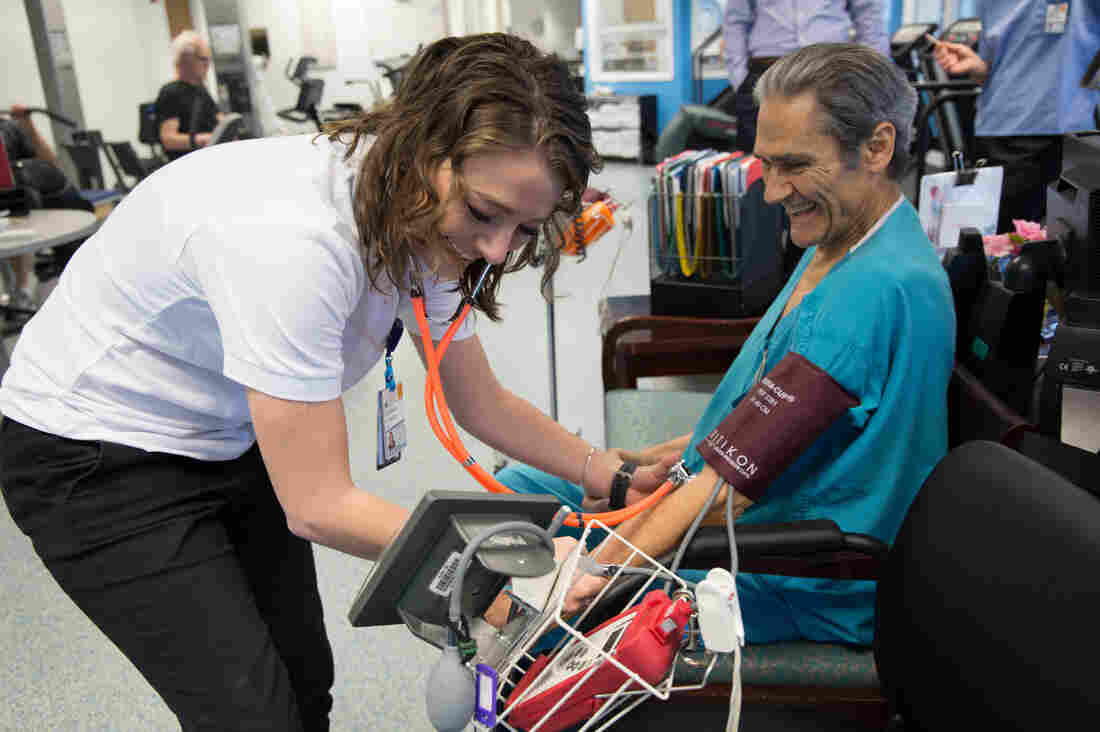
Exercise physiologist Courtney Conners checks Mario Oikonomides' vital signs before his cardiac rehab workout at the University of Virginia Health System clinic.

Exercise physiologist Courtney Conners checks Mario Oikonomides’ vital signs before his cardiac rehab workout at the University of Virginia Health System clinic. Francis Ying/Kaiser Health News hide caption

toggle caption Francis Ying/Kaiser Health News

When Mario Oikonomides was 38 years old he had a massive heart attack. About a month later, after he’d recuperated from the emergency, his doctors sent him to a cardiac rehabilitation program where he learned about the role physical activity can play in reducing cardiac risk.

“I never exercised before,” Oikonomides says. “I became addicted to exercising.” The program, overseen by a medical team, also checked up on his medications, provided nutrition counseling and offered other help and coaching in the fraught weeks and months after his hospitalization.

Oikonomides is 69 now and lives in Charlottesville, Va. When he recently needed bypass surgery, long decades after that heart attack, he again signed up for a rehabilitation program as soon as he could.

“I bought myself 30 years of healthy life as a result of cardiac rehab,” he says.

But, despite many years of research showing that joining a cardiac rehabilitation program can help heart patients heal faster and even live longer, Oikonomides is among a minority of patients who take advantage of such programs; fewer than a third do.

Why is rehab such a hard sell? Blame it on a number of factors, doctors say.

Some patients have to travel a long way to the nearest program; work schedules keep others from joining. Uninsured patients often can’t afford it. And even those with insurance can be stopped short by copayments that can be $20, $40 — or even $50 a class.

“The number one barrier is the cost of the copay, which is frustrating,” says Dr. Ellen Keeley, a cardiologist at the University of Virginia Health System.

These days, Medicare and most private insurers cover cardiac rehab for patients who have had heart attacks, coronary bypass surgery, or who have had stents implanted or received a diagnosis of heart failure or any of several other conditions. Most plans cover two or three hour-long visits per week — up to 36 sessions. With most programs encouraging patients to participate two or three days a week, the cost of copayments can add up fast.

Courtney Conners is an exercise physiologist at U.Va. who meets with patients after a heart attack. The U.Va. clinic, started by Keeley about a year ago, contacts patients before they are discharged and brings them back to the clinic a week or 10 days later to meet one-on-one with a nutritionist, pharmacist, cardiologist and exercise physiologist to develop a tailored rehab program.

“There’s a little hesitance, where they’re like, ‘I don’t really want to come. I don’t know if I want to go three days a week,'” Conners says of the exercise program. “And then their wife, or one of their family members will push them, and then they’ll agree to sign up.”

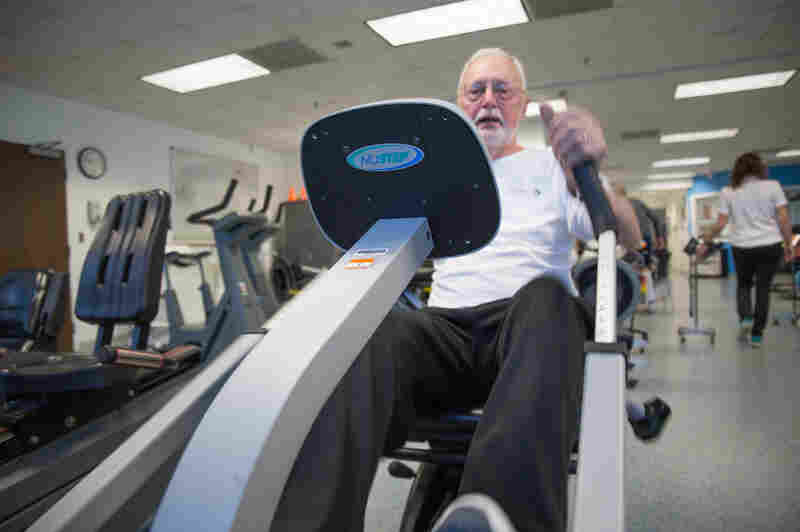
Charles Greiner gets his heart rate up — with supervision — at the U.Va. cardiac rehabilitation gym in Charlottesville, Va.

Charles Greiner gets his heart rate up — with supervision — at the U.Va. cardiac rehabilitation gym in Charlottesville, Va. Francis Ying/Kaiser Health News hide caption

toggle caption Francis Ying/Kaiser Health News

Right now, there actually aren’t enough rehab programs in the U.S. to accommodate all the patients who are eligible, advocates say. A recent study in the Journal of Cardiopulmonary Rehabilitation and Prevention surveyed 812 existing cardiac rehab programs across the nation and found that even if they were expanded modestly and operated at capacity, the existing programs could only serve 47 percent of qualifying patients.

Still, advocates are hopeful that cardiac rehab may start to gain more traction, now that hospitals have an extra incentive to encourage patients to sign up. Because of provisions in the Affordable Care Act, hospitals now face financial penalties if too many of their cardiac patients need to be readmitted soon after discharge — and enrolling patients in rehab helps keep those numbers down, the evidence shows.

For example, getting patients into cardiac rehab programs cut hospital re-admissions by 31 percent in one Canadian study, according to a review of the literature by the American Hospital Association, saving $8.5 million a year; a study in Vermont pegged the savings at about $900 per patient.

Kathryn Shiflett, a hospital phlebotomist and one of Keeley’s patients, is just 33 and has two young kids. A week after her heart attack she was at the U.Va. clinic looking for information about a rehab program. She’s eager to get well. But she’s not used to exercise and she’s a bit nervous about cardiac rehab.

After being reassured that her vital signs would be monitored closely as she exercised, Shiflett hinted at the real barrier: She lives an hour away and is about to start a new job. Cardiac rehab classes happen Monday, Wednesdays and Fridays, with sessions at 8 a.m., 10 a.m. and 3 p.m.

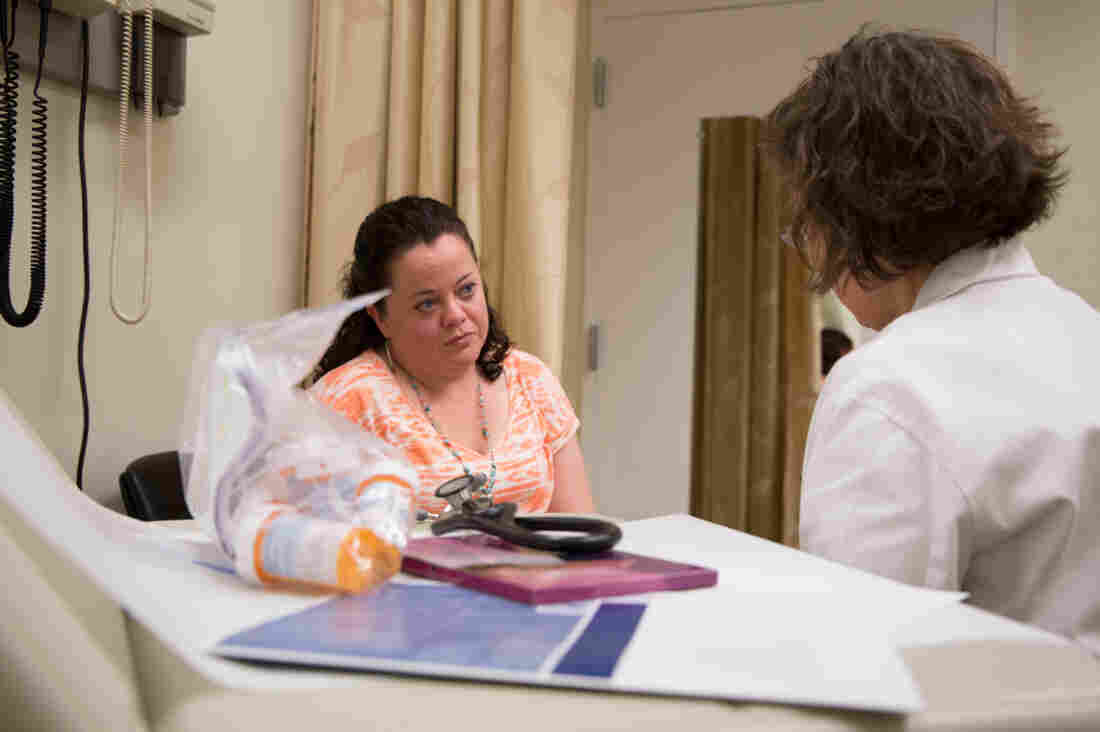
Just a week after her heart attack, Kathyrn Shiflett meets with Dr. Ellen Keeley, a U.Va. cardiologist, to learn more about the next steps in healing.

Just a week after her heart attack, Kathyrn Shiflett meets with Dr. Ellen Keeley, a U.Va. cardiologist, to learn more about the next steps in healing. Francis Ying/Kaiser Health News hide caption

toggle caption Francis Ying/Kaiser Health News

“I don’t know if I can get there by then,” Shiflett says. “My job goes from 4:30 in the morning until 3.”

Oikonomides says there was no question that he would do whatever it took to participate in rehab after his bypass surgery this winter. Cardiac rehab sparked his love of exercise, he says — and that has helped keep him out of the hospital for decades.

Let’s block ads! (Why?)

World AIDS Conference Returns To Durban, South Africa. How Has The Conversation Changed?

The port city is hosting the International AIDS conference for a second time. NPR’s Jason Beaubien tells NPR’s Lynn Neary that much progress has been made in combating AIDS, but more needs to be done.

Transcript

LYNN NEARY, HOST:

The International AIDS Conference opens tomorrow in South Africa. The conference, which takes place every two years, is the biggest global gathering of HIV/AIDS researchers. It’s returning this year to the South African port city of Durban where it was hosted 16 years ago. A lot has changed around HIV and AIDS since then. NPR’s Jason Beaubien spent the last two weeks in southern Africa looking at issues around HIV in the region, and he joins us now. Good morning, Jason.

JASON BEAUBIEN, BYLINE: Good morning.

NEARY: So this conference is back in Durban, first time since 2000. How have things changed since then?

BEAUBIEN: Things have changed dramatically around HIV over the last 16 years. I mean, if you think back to the year 2000, HIV and AIDS was viewed as a death sentence back then. And now this is a manageable health condition. And also back in 2000, during that conference, South Africa was gripped with a terrible HIV epidemic. And at the same time, the president, Thabo Mbeki, was questioning whether or not HIV actually causes AIDS.

His health minister was talking about these herbal cocktails that were supposedly going to cure people of AIDS. All of that has changed. And now South Africa’s actually a leader in terms of getting people onto treatment, tackling this epidemic. Yeah, it’s amazing the difference that 16 years has made.

NEARY: And people themselves are approaching it – thinking differently about HIV. Is that right?

BEAUBIEN: People are, and also they aren’t. There is still a lot of stigma, a lot of denial around it. I was working on a story out of Mozambique about sex workers. And I was talking with these women who work in the sex trade in Mozambique. And they’re saying that, still, most of their clients don’t want to use condoms. They believe that they’re never going to get this. They believe that herbal remedies or traditional medicine are going to be able to cure them.

There was this one woman that I was speaking to – she is HIV-positive, and she’s gotten onto treatment. But I was asking her about, you know, her clients. And, you know, who are they? Are they mostly people from the region – from central Africa – where are they from? And she’s like, no. Most of these people are from Great Britain and China and India and America. And she said – and even they don’t necessarily want to use condoms. So there are still a lot of issues that are keeping this epidemic from completely getting under control.

NEARY: Jason, as you’ve already said, advances in treatment mean that AIDS and HIV – no longer necessarily a death sentence. How does that change the conversation at these international conferences?

BEAUBIEN: You know, in a way, it’s been good. In a way, it’s been bad. By having this no longer be a disease that is causing people to waste away and have these horrible deaths, it has taken some of the urgency out of this epidemic. And so researchers now are trying to compete with malaria and tuberculosis and these other diseases because AIDS is no longer as scary as it once was. So that is a bit of an issue.

But the same time, you know, there’s still a lot of work that’s going on around trying to come up with a vaccine against HIV. There’s work to try to come up with a cure. Both of those, however, are still a really long way off. And at the same time, you’ve still got 35 million people around the globe, you know, infected with this virus.

NEARY: NPR’s Jason Beaubien. Jason, thanks so much for joining us.

BEAUBIEN: You’re welcome.

Copyright © 2016 NPR. All rights reserved. Visit our website terms of use and permissions pages at www.npr.org for further information.

NPR transcripts are created on a rush deadline by Verb8tm, Inc., an NPR contractor, and produced using a proprietary transcription process developed with NPR. This text may not be in its final form and may be updated or revised in the future. Accuracy and availability may vary. The authoritative record of NPR’s programming is the audio record.

Let’s block ads! (Why?)