Few Young Doctors Are Training To Care For U.S. Elderly

Mary Mullens, age 93, in her room at Edgewood Summit Retirement Community in Charleston, W.Va. Mullens is a patient of Dr. Todd Goldberg, one of only 36 geriatricians in the state.

Mary Mullens, age 93, in her room at Edgewood Summit Retirement Community in Charleston, W.Va. Mullens is a patient of Dr. Todd Goldberg, one of only 36 geriatricians in the state. Kara Lofton/West Virginia Public Broadcasting hide caption

toggle caption Kara Lofton/West Virginia Public Broadcasting

At Edgewood Summit retirement community in Charleston, W.Va., 93-year-old Mary Mullens is waxing eloquent about her geriatrician, Dr. Todd Goldberg.

“He’s sure got a lot to do,” she says, “and does it so well.”

West Virginia has the third oldest population in the nation, right behind Maine and Florida. But Goldberg is one of only 36 geriatricians in the state.

“With the growing elderly population across America and West Virginia, obviously we need healthcare providers,” says Goldberg.

That includes geriatricians — physicians who specialize in the treatment of adults age 65 and older — as well as nurses, physical therapists, and psychologists who know how to care for this population.

“The current workforce is inadequately trained and inadequately prepared to deal with what’s been called the silver tsunami — a tidal wave of elderly people — increasing in the population in West Virginia, across America, and across the world really,” Goldberg says.

The deficit of properly trained physicians is expected to get worse. By 2030, one in five Americans will be eligible for Medicare, the government health insurance for those 65 and older.

Goldberg also teaches at the Charleston division of West Virginia University, and runs one of the state’s four geriatric fellowship programs for medical residents. Geriatric fellowships are required for any physician wanting to enter the field.

For the past three years, no physicians have entered the fellowship program at WVU-Charleston. In fact, no students have enrolled in any of the four geriatric fellowship programs in West Virginia in the past three years.

“This is not just our local program, or in West Virginia,” says Goldberg. “This is a national problem.”

The United States has 130 geriatric fellowship programs, with 383 positions. In 2016, only 192 of them were filled. With that kind of competition, Goldberg laments, why would a resident apply to a West Virginia School, when they could get into a program like Yale or Harvard?

Adding to the problem, the average medical student graduates with $183,000 in debt, and every year of added education pushes that debt higher.

Dr. Shirley Neitch, head of the geriatrics department at Marshall University Medical School in Huntington, W.Va., says students express interest in geriatrics almost every year. But, “they fear their debt,” she says, “and they think that they need to get into something without the fellowship year where they can start getting paid for their work.”

This trend troubles many people, including Todd Plumley, whose mother Gladys has dementia, and lives in West Virginia.

“It’s kind of scary that [older patients] don’t have the care that they really need to help them through these times, and help them prolong their life and give them a better life,” Plumley says.

There are no geriatricians in the family’s hometown of Hamlin, so Plumley drives his mother almost 45 minutes to another town, Huntington, to see one. He says seeing this specialist has helped stabilize his mother’s symptoms.

“Right now, if we didn’t have the knowledge and resource,” he says, “I believe my mother would have progressed a lot further along, quicker.”

Plumley is in his 50s. He worries that if he needs the care of a geriatrician as he gets older, driving even 45 minutes may not be an option.

This story is part of NPR’s reporting partnership with West Virginia Public Broadcasting and Kaiser Health News.

Let’s block ads! (Why?)

Community-Based Care Can Reduce The Stigma Of Mental Illness

The Blackwell's Island asylum was built by New York City in 1839 to house growing numbers of people with mental illness. It was plagued by crowding and lack of funding. In 1887, crusading journalist Nellie Bly feigned madness and lived there for 10 days. This engraving is dated 1866.

The Blackwell’s Island asylum was built by New York City in 1839 to house growing numbers of people with mental illness. It was plagued by crowding and lack of funding. In 1887, crusading journalist Nellie Bly feigned madness and lived there for 10 days. This engraving is dated 1866. New York Public Library Digital Collections hide caption

toggle caption New York Public Library Digital Collections

Mental illness has been part of human society throughout recorded history, but how we care for people with mental disorders has changed radically, and not always for the better.

In Colonial days, settlers lived in sparsely populated rural communities where sanctuary and community support enabled the tradition of family care brought from England. “Distracted persons” were acknowledged, but erratic behavior wasn’t associated with disease.

Records indicate unusual tolerance of bizarre behavior. When 18th century Pastor Joseph Moody of York, Maine, unable to face crowds, delivered sermons with a handkerchief covering his face, his behavior was tolerated for three years before he was relieved of his duties.

As urban areas grew in size and number, a transient poor population with no access to family support led to almshouses, the first form of institutionalization, inspired by 18th century reforms in Europe.

A Philadelphia Quaker who had visited an English retreat brought the idea to this country and in 1817 founded the Friends Asylum, a self-sufficient farm that offered a stress-free environment known as “moral treatment.” Other private asylums followed, but they soon became overcrowded. By the late 19th century, this was addressed with larger state hospitals, which soon became overcrowded as well.

People with mental disorders are more likely to be stigmatized owing to fear and misunderstanding when they aren’t part of the community. And stigmatization can discourage those with a mental disorder from seeking or complying with treatment. It also can lead to people being institutionalized against their will, more to protect the public than to provide compassionate care for those with mental illness.

President John F. Kennedy signs the bill intended to shift mental health care from state institutions to the community on Oct. 31, 1963.

President John F. Kennedy signs the bill intended to shift mental health care from state institutions to the community on Oct. 31, 1963. Bill Allen/AP hide caption

toggle caption Bill Allen/AP

In the mid-1950s, new antipsychotic medications offered relief from some of the most disabling symptoms of schizophrenia and other major disorders, such as psychosis and hallucinations. And in 1963, President John F. Kennedy’s Community Mental Health Act shifted funding from large state hospitals, which had been plagued by scandal, to small-scale community-based mental health centers. With deinstitutionalization, the inpatient population dropped from over half a million in 1955 to about 60,000 by the end of the century.

By 1977, federally funded centers were serving close to 2 million people a year in 60 community mental health facilities. But the law was never adequately funded, and a national standardized system of community care did not emerge. As a result, people began to associate mental illness with homelessness or acts of violence, though the vast majority of people with mental illness pose no threat.

That raises the question of whether it’s possible to reduce stigma so that those with a mental disorder are not feared and shunned. Patrick Corrigan, director of the National Consortium on Stigma and Empowerment, has investigated three approaches to reducing stigma: protest, education and contact.

Americans love solutions — to political conflicts, social ills, clogged drains. But are there ever problems we shouldn’t try to solve? Explore this question in the latest episode of the NPR podcast and show Invisibilia.

In one study, subjects received information regarding mental illness in the context of the three approaches. Statements meant to induce a sense of moral outrage protest produced no stigma reduction. Both education and contact with someone known to have a mental illness did produce significant changes in attitude — less blame toward persons with mental illness and greater confidence in their chance of recovery — and encouraged future contact with those known to have mental illness. Previous contact mitigated lingering stereotypes more than education.

The author (second from right) with boarders from Geel during a fishing outing in 2007.

The author (second from right) with boarders from Geel during a fishing outing in 2007. Courtesy of Jackie Goldstein hide caption

toggle caption Courtesy of Jackie Goldstein

To get a sense of how it is possible for community members to have contact with those with mental illness without inciting stigma and fear, it helps to take a look at present-day communities where that happens. For centuries, in Geel, Belgium, community contact has been an everyday event for those with mental illness, with the state paying families to care for “boarders” in their homes. Modern-day Geel combines community care with medical care and psychotherapy, as well as hospitalization if needed. (For more modern-day Geel, see Invisibilia‘s story here.)

In the United States, variations in state funding affect the quality of public mental health care. But dozens of programs offer evidence that it is possible to build sustainable fostering communities.

Community members enjoy a picnic on Gould Farm in Monterey, Mass., in the 1920s. Work on the farm remains a key part of the therapeutic process.

Community members enjoy a picnic on Gould Farm in Monterey, Mass., in the 1920s. Work on the farm remains a key part of the therapeutic process. Courtesy of Gould Farm hide caption

toggle caption Courtesy of Gould Farm

Gould Farm, a working farm established in Monterey, Mass., in 1913, was the first modern-day residential therapeutic community in the U.S. Here patients are referred to as guests, and all staff — and their families — live on the farm. Daily work, on the farm or at its bakery or cafe, is a key aspect of the therapy.

Today Gould Farm is one of more than 30 members, in 15 states, of the American Residential Treatment Association. These programs are not covered by Medicare or Medicaid, but some ARTA members help families secure financing; health insurance may cover part of the cost. For example, more than 50 percent of Gould Farm “guests” receive financial assistance. But, for the most part, people must assume the expense of a six- to 12-month stay, ranging from $400 to $900 per day.

In Chicago, the Thresholds organization offers services to people with mental illness in more than 100 locations in the city and surrounding counties. It was founded in 1959, by women from Chicago’s National Council of Jewish Women who attended a mental health educational conference and learned that people who had spent years in mental hospitals were often left to fend for themselves upon release. It started as a small volunteer organization that offered social activities, then grew to include residential programs, supported employment, housing-first, and treatment for people with both mental diagnoses and substance disorders. Last year, 75 percent of its services were delivered in the community.

Thresholds is one of 15 programs I’ve visited across the United States in decades of researching models of community care in mental health. Those 15 are a small sample of programs of varying sizes that offer affordable housing or help in finding such housing; occupational training and placement; recreational opportunities and more.

Those with a mental disorder can live a meaningful life, if their community facilitates community contact. It’s been happening in Geel for centuries. It is happening in the U.S. today. The voice of stigma originates in the community, but so does the voice of hope.

Jackie Goldstein is a professor emeritus of psychology at Samford University and author of the 2016 book Voices of Hope for Mental Illness: Not Against, With.

This story is part of Invisibilia‘s episode on solutions, including a report on how residents of the town of Geel, Belgium, have been taking in strangers with mental illness as boarders for centuries. We also talked with Mr. Kitt, who found sobriety and his calling as an artist after he moved off the streets into a Broadway Housing Communities apartment in New York. And NPR reporters Pam Fessler and Nate Rott visit community housing sites on the East and West coasts that aim to provide sanctuary, not just shelter.


Let’s block ads! (Why?)

Louisiana Medicaid Expansion Brings Insurance To Many New Orleans Musicians

Her income as a New Orleans singer fluctuates with the tourist season, says Lisa Lynn Kotnik, and that's made health insurance too expensive in the past. Now that she has a Medicaid card, getting the health care and medicine she needs should be easier.

Her income as a New Orleans singer fluctuates with the tourist season, says Lisa Lynn Kotnik, and that’s made health insurance too expensive in the past. Now that she has a Medicaid card, getting the health care and medicine she needs should be easier. Courtesy of Skip Bolen hide caption

toggle caption Courtesy of Skip Bolen

Lisa Lynn Kotnik has been a singer on the New Orleans club circuit for more than 15 years.

“I sang at Fritzel’s for eight years,” she says. “I sang at the Bombay Club for 15 years, I sang at Margaritaville — the list could go on and on and on.”

While Kotnik sings to revelers at night under the stage name Lisa Lynn, in the daytime she’s battled health problems — fibroids, ovarian cysts, a hysterectomy and even a brain aneurysm.

“So, I’ve had a lot of surgeries,” she says. She counts at least five.

And like many of her fellow musicians, Kotnik has never really had health insurance. Her income as a singer is tenuous and fluctuates with the seasons, so insurance has always just been too expensive, she says.

But not anymore.

Kotnik was at the New Orleans Musicians Clinic recently signing up for Medicaid.

Hundreds of thousands of Louisiana’s working poor have health insurance as of July 1 because the state has expanded its Medicaid program, as allowed under the Affordable Care Act. The new insurance benefits Kotnik and many of the other performers and workers who serve the millions of tourists visiting New Orleans every year.

That’s also good news for the New Orleans Musicians Clinic, which has provided health care to the city’s musicians and artists for decades, mostly for free.

The clinic, decorated with vintage Jazz Fest posters and signed photos of musicians like Harry Connick Junior and James Booker, is located on historic St. Charles Street in a building that also hosts doctors and clinics affiliated with Louisiana State University.

But it’s funded mostly by philanthropists, and its services, until now, have been limited.

In the past, Kotnik could see doctors at the clinic; but if she needed a blood test or ultrasound scan, she had to go across town to University Hospital, and potentially wait hours for what in Louisiana is called charity care.

“We have all that in this facility, but it wasn’t covered,” explains Megan McStravick, a social worker at the musicians clinic who helps people like Kotnik get the care they need.

Prescriptions also weren’t covered, so McStravick would spend hours working with drug companies to get her low-income patients the medications they need for free.

Medicaid changes the terms of coverage — and that’s a big deal for the state’s health secretary, Dr. Rebekah Gee.

“These are our heroes,” Gee tells Shots. “These are our local New Orleans heroes — our musicians are the fabric of our community.”

Musicians, restaurant workers and hotel workers are the backbone of much of Louisiana’s tourist economy, she says.

“People love to come to Louisiana, they love to eat our food, hear our music and stay in our hotels,” she says. “Because those jobs are not high income, we have a huge workforce that was uninsured.”

Moving all those people into the Medicaid program has been a huge task.

The poorest and least healthy state in the U.S., Louisiana is now the 31st state to join the Medicaid expansion, and the first in the Deep South to embrace this sliver of Obamacare.

It’s a big turnaround for this Republican state. Bobby Jindal, the former governor, loudly opposed expanding the government program and the state’s Republican-dominated legislature went along with him.

But last fall, a new Democratic governor, John Bel Edwards, was elected after campaigning specifically on expanding Medicaid.

His election, combined with a huge budget crisis, convinced many state officials to embrace the program because Edwards made the case that it would save money by handing over health care costs to the federal government.

“The Medicaid expansion was something that I believed in and I knew it would save money,” Edwards says. “It no longer was optional, because we had to implement every cost saving measure that we could.”

Still, Gee faced a big challenge because the state legislature refused to allocate any money to hire people to sign people up for Medicaid.

“The idea of having more state employees at a time when we were cutting the budget by $3 billion — there just was not an appetite for it,” she says.

It fell to Gee to figure out, without any new help, how to sign up the estimated 375,000 people who were eligible.

“I said to my husband, ‘Gosh, we can maybe get a couple of cards into people’s hands by July, but I have no idea how we’re going to get this done,” she recalls.

So Gee turned to other programs that work with the poor. Anyone who gets food stamps was automatically qualified for Medicaid. And anyone who had been in earlier state health plans for the poor was automatically signed up.

She says she hopes other states in the region will follow Louisiana’s lead.

“We are an island amongst a sea of states that haven’t expanded,” she says. “We are hoping to lead the charge here.”

But insurance is only the start, Gee says.

“Our major challenge is to transform this state from the most unhealthy state in the nation to a state that has a healthy future,” she says.

For people like Lisa Lynn Kotnik, the Medicaid card is at least a start.

Let’s block ads! (Why?)

5 Things To Consider About The Supreme Court's Decision On Texas Abortion Law

Abortion-rights activists chant outside the U.S. Supreme Court ahead of a historic ruling Monday striking down a Texas law that imposed strict requirements on clinics that perform abortions.

Abortion-rights activists chant outside the U.S. Supreme Court ahead of a historic ruling Monday striking down a Texas law that imposed strict requirements on clinics that perform abortions. Mandel Ngan/AFP/Getty Images hide caption

toggle caption Mandel Ngan/AFP/Getty Images

The Supreme Court this week delivered its strongest affirmation of a women’s right to abortion in years. By a margin of 5-3, it struck down two key provisions of a Texas law restricting the procedure.

But where does the decision in Whole Woman’s Health v. Hellerstedt fit in the court’s long history of actions on abortion rights and restrictions? And what effect might the case have on similar laws in other states and this fall’s elections? Here are five insights about the case that provide some context:

1. It’s the first big win for supporters of abortion rights in a long time

The last time abortion-rights supporters were on the winning side of a big case at the Supreme Court was 16 years ago, when a 5-4 ruling in Stenberg v. Carhart struck down a Nebraska law banning a specific procedure abortion opponents called “partial-birth abortion.” That win was effectively reversed in 2007, however, when the court upheld a similar federal law banning the same procedure, also on a 5-4 ruling, in Gonzales v. Carhart. The substance hadn’t changed much, but the replacement of Justice Sandra Day O’Connor with Justice Samuel Alito in 2006 gave abortion opponents an extra vote, which was enough to change the outcome.

After Monday’s decision, many foes of abortion rights complained that there were few restrictions on abortion that would pass muster with the high court. But, in fact, in the years since the court first legalized abortion nationwide in Roe v. Wade in 1973, about half the major cases have been clear wins for abortion opponents, including upholding state laws requiring parental involvement for minors, waiting periods and bans on the use of public funds to pay for abortions.

2. It could put pro-abortion-rights forces on the offensive

Since Republicans took over Congress and most state legislatures after the 2010 elections, states have enacted nearly 300 separate abortion restrictions; the most in any five-year period since Roe was decided. Many of those were the same types of laws claiming protections for women’s health that were struck down by the Supreme Court this week. Those laws include requiring doctors who perform abortions to have admitting privileges at a nearby hospital and requiring abortion clinics to meet the standards of facilities performing more-involved surgical procedures.

The justices have already responded to petitions from some states with similar laws. Just a day after handing down the Texas ruling, they rejected appeals from Mississippi and Wisconsin, where physician admitting privilege laws had been blocked by lower court judges. Those laws are now permanently blocked. Officials in Alabama also dropped their defense of a similar law.

But the decision doesn’t automatically invalidate similar laws in other states because the effect of such statutes is different in every community. For example, what may amount to an “undue burden” in Texas because of the sheer size of the state might not be as burdensome in states with clinics closer together.

In states where lower court judges have already blocked laws, those blocks are almost certain to remain in place. But in other states opponents of the restrictions would have to work to overturn each law individually.

They say that is what they plan to do. “We will now will take this fight state by state to challenge and repeal laws all across the country,” Planned Parenthood President Cecile Richards told reporters in a conference call immediately after the ruling.

Planned Parenthood announced on Thursday that it would pursue efforts to block or repeal similar laws in eight states: Arizona, Florida, Michigan, Missouri, Pennsylvania, Tennessee, Texas and Virginia.

Abortion-rights supporters are also taking aim at some long-standing abortion restrictions in federal law. The draft Democratic platform that will be finalized at the party’s nominating convention in late July includes a plan calling for the repeal of the Hyde Amendment, which has banned most federal abortion funding since 1977. That provision was highlighted and praised by presumptive nominee Hillary Clinton’s campaign, noting that it represents the first time such an explicit vow has been included.

3. Opponents of abortion rights aren’t likely to retreat

While the latest Supreme Court ruling was definitely a setback for abortion foes, they are not giving up. For one thing, opponents remain in control of a majority of state legislatures and governorships, and that’s unlikely to change following this year’s national elections.

“Americans United for Life will continue to fight — in legislatures and in the courts — to protect women from a dangerous and greedy abortion industry,” said AUL Acting President and Senior Counsel Clarke Forsythe. Americans United for Life has been at the forefront of developing model laws restricting access to abortion.

The movement against abortion rights has a much larger menu to choose from than the two issues the high court addressed. For example, many states (including Texas) have passed or are considering bans on abortion after roughly 20 weeks of pregnancy. Many of those bans are being challenged in the courts but none has yet reached the Supreme Court. Other restrictions include requiring pregnant women to have ultrasounds before an abortion, to make multiple visits to an abortion provider and banning the use of telemedicine for medical (as opposed to surgical) abortions using the abortion pill mifepristone.

Abortion opponents say they aren’t giving up on pursuing health and safety standards like the ones struck down in Texas, either. “This issue of safety standards is not over,” said Marilyn Musgrave, vice president of government affairs at Susan B. Anthony List.

Even some similar laws could pass muster if they are crafted carefully enough, said Kristi Hamrick, a spokeswoman for Americans United for Life. “We don’t have a one-size-fits-all bill to send to the 50 states,” she said. “The law is specific and so the tools must be too.”

4. The decision could shake up national politics

Both sides in the long-polarized abortion debate are already pointing to the case in an effort to mobilize their supporters.

“This certainly makes the November presidential election even more critical,” said Musgrave of the Susan B. Anthony List. “It is so obvious that we need to elect a pro-life president.”

On the opposite side, Ilyse Hogue, president of NARAL Pro-Choice America, says the decision “underscores what the election means for Supreme Court jurisprudence.” With one vacancy already on the court and others likely in the next four years, she said, “reproductive freedom is very much on the ballot this November.”

The Clinton campaign hailed the decision. “We need a president who will defend women’s health and rights and appoint Supreme Court justices who recognize Roe v. Wade as settled law,” said a statement from the candidate.

And while presumptive GOP nominee Donald Trump’s campaign was silent on the issue in the immediate aftermath of the decision, Musgrave said abortion opponents are confident he is on their side. “Say what you will about Donald Trump, his commitment to nominate pro-life justices — I’ve never seen another candidate do that,” she said.

5. Younger generation will have a lot to say about the future of abortion rights

Among the many things the two sides in the abortion debate disagree about is how the younger generation feels about abortion. Polls tend to differ dramatically depending on how the question is asked.

Musgrave says, “Our polling shows more and more millennials are pro-life, particularly when you look at things like 20-week [abortion] bans.”

But Dawn Laguens, executive vice president of Planned Parenthood, says they are seeing the exact opposite — that younger women are more supportive of abortion rights. “They’re so social-justice oriented,” she said.

And Laguens says that coming demographic changes, including a more diverse electorate that could tilt Democratic, are a main reason for the recent spike in anti-abortion legislating.

“They feel it slipping away,” she said. “They can see the demographics, too, and they want to lock this stuff in.”

Kaiser Health News is an editorially independent news service that is part of the nonpartisan Henry J. Kaiser Family Foundation. You can follow Julie Rovner on Twitter: @jrovner

Let’s block ads! (Why?)

Invisibilia: For An Artist, A Room Of His Own Is A Lifesaver

William Kitt has lived in a studio apartment in New York owned by the nonprofit Broadway Housing Communities for 13 years, after decades of living on the streets.

William Kitt has lived in a studio apartment in New York owned by the nonprofit Broadway Housing Communities for 13 years, after decades of living on the streets. Bryan Thomas for NPR hide caption

toggle caption Bryan Thomas for NPR

Editors’ note: It’s Invisibilia bonus time! Sometimes we’ve got more wonderful stories than we can fit into the Invisibilia show and podcast. But we can’t let them go. This story is being heard exclusively on NPR’s Morning Edition.

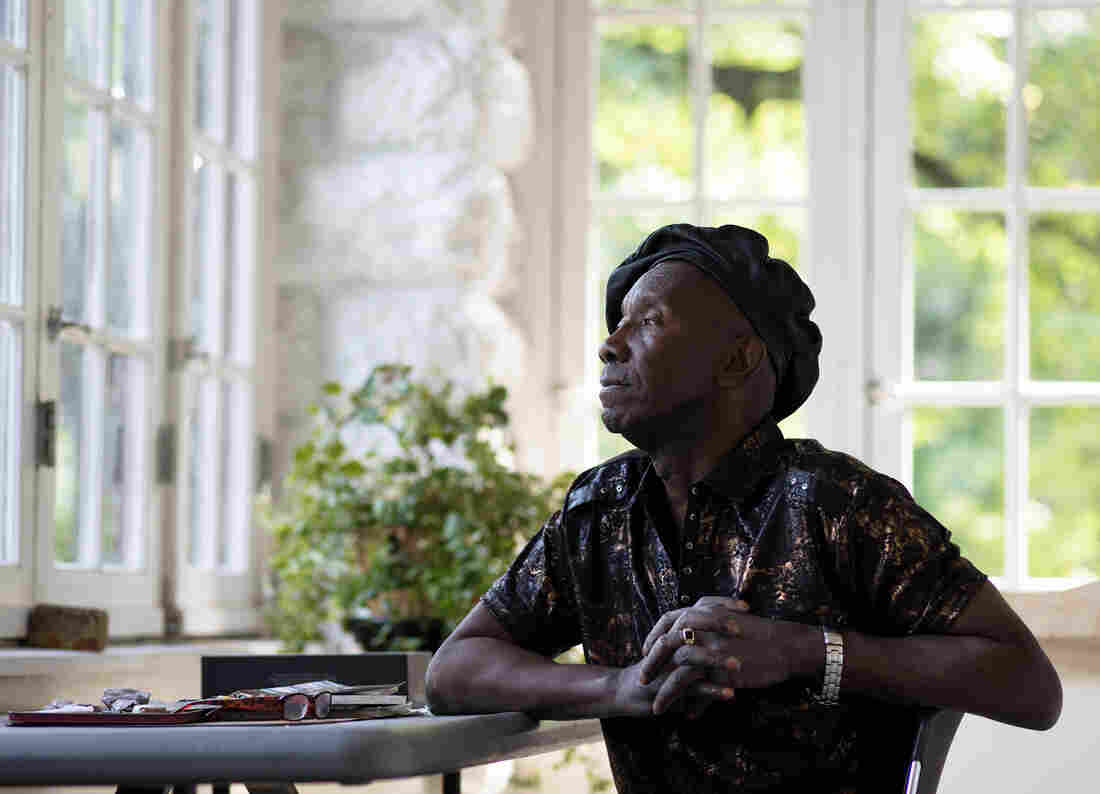
These days you can find William Kitt in a small, bright solarium on the corner of 150th Street and Edgecombe Avenue in Manhattan, where he lives. Most hours on any day he sits here, sketching over a desk cluttered with colored pencils and pastels. What you could not know from looking at Kitt, a slender, laughing man who wears a beret and surrounds himself with drawings, is that he spent decades living on the streets.

Broadway Housing Communities building on Edgecombe Avenue in Manhattan provides housing for 21 formerly homeless adults.

Broadway Housing Communities building on Edgecombe Avenue in Manhattan provides housing for 21 formerly homeless adults. Bryan Thomas for NPR hide caption

toggle caption Bryan Thomas for NPR

Kitt says he spent 34 years of his life being homeless and maddened by drug-induced hallucinations. Now he lives in an apartment owned by a housing nonprofit called Broadway Housing Communities, which was founded in 1983 and owns seven buildings housing over 600 tenants.

Like most supportive housing projects, Broadway Housing Communities provides apartments and medical, psychiatric or other services to people who, like William Kitt, have physical or mental health problems or are low income. Kitt, now 65, has leased a room from this Broadway Housing property on Edgecombe Avenue for the past 13 years.

He’s alive today in part because of this Harlem building. “He was so not well when he first arrived that had he not been in Broadway Housing, he would not have had long to live,” says Russell Baptist, a social work manager who has worked with Kitt. “Maybe just of his own neglect.”

Kitt says he became homeless right after he turned 18. He was living in New York City with his mother. “Yeah, I came home one day and the house was dark and everything was gone. The rent was paid for the end of that month. I didn’t know how to pay no bills or nothing like that,” he says. His mother had just left without a word. “She ain’t sit down and talk to me. She didn’t want to give me the option of saying, hey I’ll go with y’all.”

Kitt, 65, spends mornings and afternoons drawing.

Kitt, 65, spends mornings and afternoons drawing. Bryan Thomas for NPR hide caption

toggle caption Bryan Thomas for NPR

He moved into a New York City homeless shelter and made money from scheming. He stole cans out of recycling bins and forged identities to make cash. He says he made a lot of money this way. “But I was a drug addict. Heroin. Cocaine. Crack,” he says. “All the money went into the habit.”

That’s when Kitt says he started having strange thoughts, sometimes even hallucinations. “You could walk by the park and spirits would come out and the devils start playing with your mind,” he says.

Americans love solutions — to political conflicts, social ills, clogged drains. But are there ever problems we shouldn’t try to solve? Explore this question in the latest episode of the NPR podcast and show Invisibilia.

It was like this until he was in his 50s, when he met a social worker who told him that she could help him find a place to live. She told him it would be subsidized and permanent, so he agreed to work with her. From others, he had heard that the city was giving preference to people with a mental illness. So he says he decided to do what had kept him alive for the last three decades — come up with a scheme that would ensure a place in one of the city’s new supportive housing projects. “I had to act crazy,” he says.

An unnecessary move, according to Ellen Baxter, the executive director and founder of Broadway Housing Communities. She says people don’t have to have a mental disorder to live in the units, and many of the tenants have no mental health diagnoses.

Baptist says that Kitt really was very mentally unstable at the time, and Kitt himself admits that he wasn’t the same person he is today. “Coming in off the street for 34 years, you a wild — a wild dude, you know what I mean? It took me about five years before I started letting [other people] in,” he says.

Kitt uses pastels and pencils to draw vibrant renderings of life in New York.

Kitt uses pastels and pencils to draw vibrant renderings of life in New York. Bryan Thomas for NPR hide caption

toggle caption Bryan Thomas for NPR

  • William Kitt's portraits are based on his observations of the vibrant street life of Manhattan.
    Hide caption

    William Kitt’s portraits are based on his observations of the vibrant street life of Manhattan.
    Artwork by William Kitt/Bryan Thomas for NPR
  • He often walks to Times Square and asks people to strike quick poses while he photographs them.
    Hide caption

    He often walks to Times Square and asks people to strike quick poses while he photographs them.
    Artwork by William Kitt/Bryan Thomas for NPR
  • Working from the photographs, Kitt uses pastels to create each portrait.
    Hide caption

    Working from the photographs, Kitt uses pastels to create each portrait.
    Artwork by William Kitt/Bryan Thomas for NPR
  • Kitt lived on the streets for decades; now they're a source of creative inspiration.
    Hide caption

    Kitt lived on the streets for decades; now they’re a source of creative inspiration.
    Artwork by William Kitt/Bryan Thomas for NPR

After three decades of homelessness, Kitt was extremely socially withdrawn. “He would just stay in his apartment and not come out,” Baptist says. “He was just so disorganized. That’s how I’ll put it. He was so disorganized he couldn’t come upstairs to the social services. He needed a worker to take him, to transport him everywhere.”

But Baptist says that after five years of effort by him and other social workers, Kitt started to change. “Just little by little, he started coming out,” Baptist says. “And then he asked for paper. He said I want to draw. And we brought him some papers and charcoal and pencils, and he threw himself into that artwork. He became alive. He began to talk, to trust. It was amazing.”

Services for most residents at Broadway Housing are paid for by the state and city of New York and private foundations. Housing is subsidized from the same sources, and many residents, like Kitt, pay their rent from some combination of welfare, Social Security or work income.

Supportive housing projects like Broadway that provide permanent housing and social support to people who were homeless, many of whom have neglected physical or mental health needs, are often more cost-effective than emergency shelter or medical services. Broadway Housing officials say that supportive housing for one person costs taxpayers $12,500 a year, compared with $25,000 for an emergency shelter cot; $60,000 for a prison cell; or $125,000 for a psychiatric hospital bed.

Kitt says the social services were incidental to his transformation. He says he had decided to extradite himself from his own wildness and “domesticate” himself, as he puts it. Now he says he’s found his calling in art. He’s working on creating four collections of street portraits. And Baptist says Kitt is an ambassador for the building, a model tenant.

Baptist says in a way it’s true that Kitt pulled himself up by his own bootstraps. “He didn’t have to comply. Nobody can tell you to stop using drugs. He did do it on his own.” But there’s another part of it. “Being stable at Broadway Housing and knowing he had a place to live,” he says, “helped him become the man you see today.”

Invisibilia co-host Lulu Miller contributed to this report.

Let’s block ads! (Why?)

For Centuries, A Small Town Has Embraced Strangers With Mental Illness

Luc Ennekans, 51, is deeply attached to his host, Toni Smit. That's caused some friction in Smit's marriage.

Luc Ennekans, 51, is deeply attached to his host, Toni Smit. That’s caused some friction in Smit’s marriage. Meghan Eckman for NPR hide caption

toggle caption Meghan Eckman for NPR

[embedded content]

At the center of Geel, a charming Belgian town less than an hour’s drive from of Antwerp, is a church dedicated to Dymphna, a saint believed to have the power to cure mental disorders. It’s a medieval church with stone arches, spires and a half-built bell tower, and it has inspired an unusual centuries-old practice: For over 700 years, residents of Geel have been accepting people with mental disorders, often very severe mental disorders, into their homes and caring for them.

It isn’t meant to be a treatment or therapy. The people are not called patients, but guests or boarders. They go to Geel and join households to share a life with people who can watch over them. Today, there are about 250 boarders in Geel. One of them is a Flemish man named Luc Ennekans. He’s slim and has green eyes, and he’s 51 years old. NPR’s Lulu Miller went to Geel and met him and his host family there and reported this story for Invisibilia.

Like all of the guests in the town today, Ennekans first went to a public psychiatric hospital in Geel that manages the boarder program. Ennekans saw medical professionals and received treatment and an evaluation. Then he was paired with a household. His hosts, Toni Smit and Arthur Shouten, say that living with Ennekans was rough at the start.

Ennekans became deeply attached to Smit. “If it were up to Luc, he would be hugging and kissing me all day,” Smit says. He showered her with such affection, bringing her flowers, little kisses, linking arms with her on walks, that it began to interfere with Smit and Shouten’s marriage. “You couldn’t even give each other a hug or Luc is standing behind us,” Shouten says. Wrinkles like this are common, according to the couple. They’ve had six boarders over the years, each with a unique set of challenges.

One boarder used to lock Smit and Shouten out of the bathroom to furiously wash his hands, and another used to struggle to sleep because he saw lions coming out of the walls. “He was really dementing,” Smit says. But that doesn’t affect the way they see their boarders. Like many hosts in Geel, they accept that this is simply who their boarders are. It’s not abnormal or something they need to change. “It’s just normal life,” Shouten says.

That acceptance of mental differences has become something of a tradition in Geel. It’s at the heart of the boarder program, and some observers think it’s also responsible for the system’s success. Around the world, many different experiments have been attempted over the centuries to provide humane care for people with mental illness and mental disabilities. Geel is one that has endured.

Residents of Geel have not only accepted the eccentric or disruptive behaviors of the boarders but have come up with creative ways to help boarders and residents manage them, says Ellen Baxter, the founder of Broadway Housing Communities, a nonprofit in New York City. It is partially inspired by Geel, which Baxter visited as a young woman.

For example, when Ennekans became too jealous or attached to Smit, Shouten and Smit encouraged him to find a girlfriend or other companionship. When their former boarder hallucinated lions coming through the walls, Smit would pretend to chase the lions away. “And that would work every time,” Smit says.

Shouten and Smit receive a stipend from the Belgian government for taking care of Ennekans, as well as training and support from psychiatric professionals. Hospitalization is available if needed. Several studies have found that the incidence of violence by boarders is low; people who have previously exhibited violent behavior are usually not admitted to the program.

The integration of people with mental disorders into Geel society has fascinated scholars for centuries. In 1862, Dr. Louiseau, a visiting French doctor, described it as “the extraordinary phenomenon presented at Geel of 400 insane persons moving freely about in the midst of a population which tolerates them without fear and without emotion.” Nearly 100 years after that, an American psychiatrist named Charles D. Aring wrote in the journal JAMA, “The remarkable aspect of the Gheel experience, for the uninitiated[,] is the attitude of the citizenry.”

Early psychiatrists who observed Geel noticed that the treatment prescribed for mental patients was, in fact, no treatment at all. “To them, treating the insane, meant to simply live with them, share their work, their distractions,” Jacques-Joseph Moreau wrote in 1845. He and others advocated for that communion. “In a colony, like in Geel, the crazy people … have not completely lost their dignity as reasonable human beings.” In the next half-century, many would uphold Geel’s model as the best standard of practice for mental disorders.

St. Dymphna Church in Geel, Belgium, has for centuries drawn people seeking help for relatives with mental disorders.

St. Dymphna Church in Geel, Belgium, has for centuries drawn people seeking help for relatives with mental disorders. Wikipedia hide caption

toggle caption Wikipedia

How Geel came to be this way begins with the town’s devotion to St. Dymphna, whose church stands in the center of town. According to legend, Dymphna was a 7th-century Irish princess who fled to Geel from a maddened father and devoted her life to serving the mentally disabled. But she became a martyr when her father discovered her location and traveled to Geel to behead her.

The town built St. Dymphna’s church in the 14th century to honor the saint and enshrine her supposed remains. It became a popular pilgrimage site for people across Europe, who would bring loved ones to the shrine in the hopes of finding relief from their mental distress.

St. Dymphna is said to have fled to Geel from Ireland, where she helped care for people with mental illness.

St. Dymphna is said to have fled to Geel from Ireland, where she helped care for people with mental illness. Courtesy of Eric de Smet hide caption

toggle caption Courtesy of Eric de Smet

By 1480, the town had built a small hospice on the side of the church to accommodate pilgrims, but the shrine became so popular that the pilgrims overwhelmed the annex’s capacity. “Sometimes the families would return home and leave their uncured relatives in the hospice,” says Mike Jay, a historian of psychiatry and curator for the Wellcome Collection in London, who has studied Geel. “So local people began taking them in as guests or boarders, as they call them.”

The early practice was often mutually beneficial for both the hosts and the boarders, Jay says. Many Geel residents were farmers, and boarders offered a source of labor. In exchange, the boarders got stable housing and a family life. But the integration was not always a happy one. There are stories of abuse, Jay says. “One of the laws was that if a boarder committed a crime, it was the fault of the family. If you had a boarder who was difficult, then some of the families would resort to keeping them chained or restrained.”

As medical treatment for the mentally ill evolved, so did Geel. In the 19th century, a central medical establishment was set up that provided standard medical and psychiatric care to boarders and other residents. But this was at the same time that large insane asylums were considered the most advanced, scientific form of care. Geel became the source of a great debate in psychiatry. “It was a polarizing example,” Jay says. “Some people regarded Geel as a sad remnant of old medieval culture where people were left to toil in the field and never given therapy and no chance of recovery.”

Other early observers noted the same things that Baxter and other more recent visitors have: By and large, people in Geel were happy. “One of the agreeable features is the general contentment manifested by the insane,” wrote John Sibbald, a Scottish psychiatrist, in 1861.

By the turn of the 20th century, the International Congress of Psychiatry had declared Geel an example of best practice to be copied elsewhere. The program continued to be a source of local pride, and it grew. At the program’s peak in 1930, about 4,000 boarders resided in Geel — a quarter of the town’s population.

Over time, Jay says, boarders had become such a part of life and society that distinctions between them and nonboarders blurred. And with that, “a lot of the problems we associate [with mental illness] kind of fade away,” Jay says. “Like trying to navigate a world full of kind of normal people who don’t understand what’s going on and aren’t tolerant towards it.”

There are a few important criteria for acceptance into the Geel program. The program typically selects patients with severe mental illness or cognitive disabilities who have difficulty living independently. In 2003, almost half of the town’s 516 boarders had a cognitive disability, and over 20 percent carry a diagnosis of schizophrenia or other psychotic disorder, according to research by Jackie Goldstein, a professor emeritus of psychology at Samford University. Some boarders have traditionally had other conditions such as learning disabilities or autism.

While scholarship of Geel is rich with observation, there remain few long-term, empirical studies on how these patients do in the system. “The successes and shortcomings of Geel’s system of foster family care had never been thoroughly or systematically examined,” Goldstein noted in a speech presented at the American Psychological Association Annual Convention in 1998. In the 1960s, researchers embarked on a 10-year project studying Geel that Goldstein took part in, but it never reached completion.

Goldstein continued studying Geel throughout her life, and some of her work shows that boarder life is stable. Boarders tend to stay in family care for years. In some cases, when boarders’ caretakers grow too old or die, they continue to live with their caretakers’ children. In 2005, nearly a third of boarders lived in a foster home for more than 50 years.

But the centuries-old custom has been shrinking. The number of boarders has fallen to roughly 250 today, less than 7 percent of its prewar peak. Eugeen Roosens, a Belgian psychiatrist, and Lieve Van De Walle, a former director for rehabilitation in Geel, write, “the time of extended farmer families, who could do with a helping hand, is gone,” in their book, Geel Revisited: After Centuries of Mental Rehabilitation.

There are possible reasons for the program’s decline besides the time and professional pressures of modern life. There may be fewer patients who need supported living thanks to improved psychiatric medication, which might contribute to fewer referrals to the program. Roosens and Van De Walle also note the program lacks enough funding to cover the cost of a boarder. The Belgian government pays 40 euros (less than $45) per boarder per day to support the practice, less than half of which goes to the foster family to cover living expenses.

Still, the tradition persists, in large part because Geelians are proud of it. In a 1962 survey of Geel foster families, American psychiatrist Matthew Dumont found that their main reason for accepting boarders was custom. Roosens and Van De Walle describe the program as part of Geel’s heritage. It’s part of the town’s identity. But, they write, that may not be enough to sustain the program.

With reporting by Lulu Miller.

Let’s block ads! (Why?)

Heat On White House To Scrap Redo Of Human Research Rules

HeLa cells, commonly used in research, were derived from cervical cancer cells taken in 1951 from Henrietta Lacks without her permission.

HeLa cells, commonly used in research, were derived from cervical cancer cells taken in 1951 from Henrietta Lacks without her permission. Science Source hide caption

toggle caption Science Source

An influential federal panel has taken the unusual step of telling the Obama administration to withdraw a controversial proposal to revise regulations that protect people who volunteer for medical research.

The proposal is “marred by omissions, the absence of essential elements, and a lack of clarity,” according to the National Academies of Sciences, Engineering and Medicine. The conclusions are part of a 283-page report released Wednesday.

The regulations are known collectively as the Common Rule. They were put in place decades ago to make sure medical experiments are conducted ethically.

But the rules haven’t been updated in nearly a quarter century. So last year the Department of Health and Human Services proposed a major revision.

But the proposal prompted a wide range of criticism. Some argued the revisions were too vague, complex and confusing. Others attacked specific changes.

One especially contentious requirement would oblige scientists to obtain explicit consent from patients before using their blood or tissue for research.

The requirement aims to prevent a repeat of what happened to Henrietta Lacks. She was an African-American woman who died of cervical cancer in 1951. Tumor cells taken from her were used without her consent to produce a research cell line that has been kept alive in labs around the world ever since.

But many researchers feared the new requirement would create unnecessary red tape and significantly hinder important research.

The academies report appears to agree. It concludes that “much of this research does not involve physical risk to participants; rather, risks are limited to the more remote possibility of informational harm resulting from the inadvertent release of confidential information.”

The report recommends that the proposal be withdrawn. Instead, it says the president should appoint an independent national commission modeled on the President’s Commission for the Study of Ethical Problems in Medicine and Biomedical And Behavioral Research to essentially start from scratch in revising the regulations.

HHS says it is reviewing the report, along with more than 2,100 public comments on the proposed revision.

Let’s block ads! (Why?)

A Hospital Offers Frequent ER Patients An Out — Free Housing

Glenn Baker, 44, stands in his South Side apartment that is paid for by a program of the University of Illinois Hospital in Chicago.

Glenn Baker, 44, stands in his South Side apartment that is paid for by a program of the University of Illinois Hospital in Chicago. Miles Bryan/WBEZ hide caption

toggle caption Miles Bryan/WBEZ

For a lot of us, the hospital’s emergency room is a stressful place.

Not so for Glenn Baker.

When Baker, 44, steps into the emergency room at the University of Illinois Hospital in Chicago, he’s completely comfortable.

He has a favorite double-wide chair in the corner, knows where to find the Cheetos in the vending machine, and the staff is like family.

Patty Zion, a nurse at the hospital on the West Side, says she knows Baker well: “He’s one of our very famous patients who comes around and sees us quite often when he’s not feeling well.”

Baker has severe asthma and other chronic medical issues. But he’s quick to admit he often ends up in this hospital not because he was sick, but because he was homeless.

“I would just try and fake an illness or something so that the hospital would admit me,” Baker says, “so I wouldn’t have to be on the streets when it was cold.”

Baker says that last winter he spent about 20 nights every month checked into different Chicago hospitals.

In the medical world, patients like Baker are often called “superutilizers” or “frequent fliers” — people with a mix of chronic medical problems, mental health issues and homelessness that drive them to visit the hospital far more than the average patient.

There are thousands of these patients across the country. More than 55 million people are on Medicaid in the U.S. But according to a recent government report, about half of the program’s annual resources go to just 5 percent of its beneficiaries.

This year the University of Illinois Hospital is trying something different to care for Glenn Baker and its other “superutilizers.”

The hospital is paying to get them out of the emergency room and into housing.

“I think this is a program that is a win, win, win for everybody involved,” says hospital CEO Avijit Ghosh. “Glenn wins, other patients who are in that same situation win, the hospital wins … and I think society and the state win by the cost savings.”

The hospital’s pilot project is using $250,000 of its own money to get 25 patients like Baker into “housing first” style housing.

Along with an apartment, patients get a case manager who helps them do things like schedule doctor’s appointments instead of going to the ER. The program is run in partnership with Chicago’s Center for Housing and Health.

Ghosh is quick to note the program is focused on getting patients healthy — it’s not simply a financial calculus. But he does point out that hospital care costs about $3,000 per day.

By contrast, the hospital pays about $1,000 a month for the patients’ apartments.

“So you can see the difference between $3,000 a day, and $1,000 a month,” Ghosh says.

And the program is already showing results: Currently, the health care costs of the 15 people the hospital has helped house so far, including Baker, are down 75 percent.

That’s good for them, Ghosh says, and good for the hospital’s other patients as well. “Quite often we are at capacity. So if we are using a bed for somebody who really doesn’t need to be there, somebody else is forgoing the care.”

Treating housing as part of a patient’s health is an idea that has caught on in recent years, says Dr. Kelly Doran. She’s an assistant professor of emergency medicine at the New York University School of Medicine who studies how homeless people use emergency services.

“The new thing here, really, is that the hospital is putting forth money for this effort,” Doran says.

But for a program like this to work, there needs to be a long-term investment, Doran says. The Chicago hospital’s pilot project is set to run out of funding by next summer.

“Housing is an intervention that goes on for many years,” Doran says. “So, for how many years will they be paying for the housing? And after they stop paying, who’s going to pay for the housing?”

Hospital officials say they are looking into ways to continue the project, but they pledge that nobody who has been housed already will lose housing if that does not happen.

The hospital’s investment so far has got Glenn Baker into a light, airy one-bedroom apartment with a living room and kitchen.

He says he is thrilled to have a home of his own. Even if there are some things he misses about the hospital.

“This bed here is like, it’s kind of firm,” he says, laughing. “So, I mean, I would take a soft, comfortable hospital bed any day.”

Let’s block ads! (Why?)

Industry Finds Receptive Doctors At For-Profit, Southern Hospitals

Massachusetts General Hospital in Boston was among the institutions with lower rates of doctors accepting payments from industry.

Massachusetts General Hospital in Boston was among the institutions with lower rates of doctors accepting payments from industry. Elise Amendola/AP hide caption

toggle caption Elise Amendola/AP

Where a hospital is located and who owns it make a big difference in how many of its doctors take meals, consulting and promotional payments from pharmaceutical and medical device companies, a ProPublica analysis shows.

A higher percentage of doctors affiliated with hospitals in the South have received such payments than doctors in other regions of the country, our analysis found. And a greater share of doctors at for-profit hospitals have taken them than at nonprofit and government facilities.

Doctors in New Jersey, home to many of the largest drug companies, led the country in industry interactions: Nearly 8 in 10 doctors working at New Jersey hospitals took payments in 2014, the most recent year for which data is available. Nationally, the rate was 66 percent. (Look up your hospital using ProPublica’s new tool.)

For the past six years, ProPublica has tracked industry payments to doctors, finding that some earn hundreds of thousands of dollars or more each year working with drug and device companies. We’ve reported how the drugs most aggressively promoted to doctors typically aren’t cures or even big medical breakthroughs.

And we recently found an association between payments and higher rates of brand-name prescribing, on average. Accepting even one inexpensive meal from a company was associated with a higher rate of prescribing the product to which the meal was linked, another study showed.

This analysis shows profound differences among hospitals, but it’s uncertain why that is. It could be that hospitals play a role in shaping affiliated doctors’ acceptance of payments or that like-minded physicians congregate at particular hospitals.

Those who support limits on such payments say patients may want to know how prevalent industry money is at a hospital before choosing it for care. “Maybe they’re prescribing or treating you as a patient not based on evidence but rather based on markets or industry gain or personal gain,” said Dr. Kelly Thibert, president of the American Medical Student Association, which grades medical schools and teaching hospitals on their conflict-of-interest policies. Patients, she said, “need to be aware that this could potentially be an issue and they need to speak up for themselves and their loved ones who may be in those hospitals.”

ProPublica matched data on company payments to physicians in 2014 with data kept by Medicare on the hospitals with which physicians were affiliated at the time. We only looked at each doctor’s primary hospital affiliation and only at doctors eligible to receive payments in the 100 most common medical specialties. The payments included speaking, consulting, meals, travel, gifts and royalties, but not research.

To be sure, the data aren’t perfect. Companies must report their payments to the federal government, and some doctors have found errors in what’s been attributed to them. Companies can face fines for errors, and doctors have a chance each year to contest information reported about them. Also, Medicare’s physician data may not capture doctors who don’t participate in the program and it may not accurately reflect the status of doctors who have moved. (Read more about how we conducted our analysis.)

As might be expected, hospitals with tougher rules, such as banning industry reps from walking their halls and bringing lunch, tended to have lower payments rates. For example, at Kaiser Permanente, a giant California-based health insurer that runs 38 hospitals, fewer than 3 in 10 doctors took a payment in 2014. Since 2004, the system has banned staff from taking anything of value from a vendor.

“Our intent was to disrupt the strategy of using what industry calls ‘food, friendship and flattery’ to develop relationships with prescribers and influence the choice of drugs, the choice of devices, implants, things like that,” said Dr. Sharon Levine, an executive vice president of the Permanente Federation, which represents the doctor arm of Kaiser Permanente. “Passing a policy alone doesn’t make anything happen. There’s a fair amount of surround-sound in the organization around reminding people about this and reminding them why we took this step.”

Levine said she believes many of the payments attributed to Kaiser doctors were for meals and snacks at professional meetings, even if they didn’t eat them.

ProPublica’s analysis found distinct regional differences in comparing where industry payments were most concentrated.

After New Jersey, the states with the highest rates of hospital-affiliated doctors taking payments were all in the South: Louisiana, Mississippi, Florida, South Carolina and Alabama had rates above 76 percent. At the other end of the spectrum, Vermont had the lowest rate of industry interactions (19 percent), followed by Minnesota (30 percent). Maine, Wisconsin and Massachusetts had rates below 46 percent. Some of these states had laws requiring public disclosure of payments to doctors that predated the federal government’s.

There were also major differences between hospitals based upon who owned them. For-profit hospitals had the highest rate of payments to doctors, 75 percent, followed by nonprofit hospitals at 66 percent. Federally owned hospitals had the lowest rates at 29 percent, followed by other government hospitals at 61 percent. Hospitals operated by the U.S. Department of Veterans Affairs weren’t included in our analysis.

Among hospitals with at least 50 affiliated doctors, the one with the highest proportion of doctors taking payments was St. Francis Bartlett Medical Center, a relatively small hospital outside Memphis that is owned by Tenet Healthcare Corp. Fifty-nine of the 62 doctors for which Medicare listed St. Francis as their primary affiliation took payments in 2014, a rate of 95 percent.

In a statement, the hospital said it supported disclosure and transparency: “Patients should have the ability to access information about any relationship that might exist between their doctor and the companies that make the products that might be recommended for their care, so that they can discuss that information directly with their physician.” Spokesman Derek Venckus declined to answer other questions about the hospital’s rate or its policies.

Overall, our analysis showed, the percentage of doctors taking payments at a given hospital wasn’t correlated with the share of its doctors receiving larger payments, those totaling $5,000 or more. (In part that may be because so few doctors received more than $5,000.)

Some hospitals had a relatively low proportion of doctors taking payments but a relatively high share of doctors taking substantial amounts of money. In these cases, experts say, the hospitals are probably banning meals and gifts while permitting or encouraging deeper relationships, often with oversight.

At Karmanos Cancer Center in Detroit, more than a quarter of doctors took more than $5,000 from industry in 2014, the highest rate in the nation. Spokeswoman Patricia Ellis said in an email that the hospital has conflict-of-interest policies in place and is comfortable with its level of physician interactions.

“Our cancer experts are committed to providing exceptional care and work tirelessly to find/discover/advance innovative treatments that can help patients survive their cancer,” she wrote. “I lost both my parents and several other loved ones to cancer. … I know our experts at Karmanos Cancer Institute are doing everything they can to help other cancer patients have more time with their loved ones. And they’re doing that with the highest integrity and commitment.”

Many cancer hospitals and specialty hospitals, including heart and orthopedic facilities, had among the highest rates of doctors receiving high-dollar payments.

Researchers as well as officials at the Association of American Medical Colleges, a trade group for medical schools and teaching hospitals, said they hadn’t analyzed the data the way ProPublica has. But officials said members do track payments made to doctors at their own institutions.

Across the country, hospital and medical school leaders are divided about what constitutes an appropriate payment. “There is a range of opinions between those people who believe that industry payments should be cut out vs. those who believe that there’s a way to carefully monitor them,” said Dr. Janis Orlowski, the association’s chief health care officer.

ProPublica found differences in the payment rates at teaching hospitals based on the grades assigned to them by the American Medical Student Association, which reviewed their conflict-of-interest policies in 2014.

At the A hospitals we analyzed, 46 percent of doctors took a payment, compared to 48 percent at B hospitals, 58 percent at C hospitals and 63 percent at hospitals rated as incomplete because their policies were “insufficient for evaluation.” By comparison, 69 percent of doctors at unrated hospitals took payments. Of the 204 hospitals graded, about 150 were in ProPublica’s data (hospitals run by the U.S. Department of Veterans Affairs were not).

“I think that’s significant,” said Thibert, the group’s president. “That’s still a lot of docs receiving money unfortunately. That’s something we’re continuing to work on.”

The University of Iowa Hospitals and Clinics earned a high grade on ProPublica's payment scorecard.

The University of Iowa Hospitals and Clinics earned a high grade on ProPublica’s payment scorecard. Susan McClellen/Courtesy of University of Iowa Hospitals and Clinics hide caption

toggle caption Susan McClellen/Courtesy of University of Iowa Hospitals and Clinics

The University of Iowa Hospital and Clinics received an A on the scorecard. Its rate of doctors taking payments, less than 27 percent, is among the lowest in the country. Less than 3 percent of its doctors took payments worth at least $5,000, also below average. Its policy, in place since 2009, bans drug companies from providing gifts and meals in almost all circumstances, bans doctors from giving promotional talks and requires consulting arrangements be signed off on by officials.

“We really have had great success in getting [physicians] to comply with it,” said Denise Krutzfeldt, manager of the health system’s conflict of interest office.

Other hospitals with below-average rates, including Massachusetts General Hospital and Stanford Hospital, limit interactions between doctors and pharmaceutical representatives and monitor doctor interactions with industry closely, officials said. Some post details of their doctors’ commercial relationships on their websites.

In interviews, some said they double-checked their physicians’ disclosures against the data reported by the companies.

“It’s like stop signs. Everybody knows they’re supposed to stop at stop signs but as you and I both know, people seem to cruise through them from time to time,” said Dr. Harry Greenberg, senior associate dean for research at Stanford University School of Medicine. “That’s just human nature. We have a system we try to pick it up and do corrective action.”

Deputy data editor Olga Pierce contributed to this report.

Let’s block ads! (Why?)