Grand Jury Indicts Anti-Abortion Activists Behind Planned Parenthood Videos

2:56

Download

A grand jury indicted two activists and cleared a Houston, Texas, Planned Parenthood clinic in a possible misconduct case. The two activists covertly recorded conversations regarding fetal tissue.

This entry passed through the Full-Text RSS service – if this is your content and you’re reading it on someone else’s site, please read the FAQ at fivefilters.org/content-only/faq.php#publishers.

Grand Jury Indicts Anti-Abortion Activists Who Made Undercover Videos

A Texas grand jury investigating Planned Parenthood took no action against the abortion provider, but it indicted two anti-abortion activists involved in making covert videos of the organization.

According to a statement from Harris County District Attorney Devon Anderson, the 232nd Grand Jury extensively reviewed the joint investigation into allegations of misconduct by Planned Parenthood Gulf Coast for more than two months and cleared the organization of breaking the law. However, the grand jury did hand down indictments for two individuals who were involved in making the allegations against Planned Parenthood using covert recordings.

The investigation stemmed from an undercover video released last summer, in which the activists, posing as potential buyers for a human biologics company, talk with a Planned Parenthood executive about how the organization provides human tissue for research. The video sparked outrage among Republican leaders and anti-abortion groups nationwide. The video, which alleged Planned Parenthood was illegally profiting from the donated tissue, prompted Gov. Greg Abbott to call for an investigation into Planned Parenthood Gulf Coast in Houston.

But instead of finding evidence of wrongdoing by the organization, the grand jury returned indictments against anti-abortion activists David Daleiden and Sandra Merritt. They were both indicted for tampering with a governmental record, which is a felony, and Daleiden was also indicted on a misdemeanor charge of illegally offering to purchase human organs in the video recording, Houston Public Media reports.

“It affirms 100 percent what we have said from the very beginning, and that is that Planned Parenthood follows local, state and federal laws and extremely high medical standards, and our first priority is patient care,” said Rochelle Tafolla, with Planned Parenthood Gulf Coast, according to Houston Public Media. “These individuals broke the law and committed fraud in order to spread lies about Planned Parenthood and today they’re going to be held accountable for breaking those laws.”

Texas Attorney General Ken Paxton issued a brief statement following the indictments:

“The fact remains that the videos exposed the horrific nature of abortion and the shameful disregard for human life of the abortion industry. The state’s investigation of Planned Parenthood is ongoing.”

Earlier this month, NPR’s Jennifer Ludden reported that Planned Parenthood filed a civil lawsuit against the anti-abortion group with which the activists were affiliated — called the Center for Medical Progress — accusing it of conspiracy and fraud.

This entry passed through the Full-Text RSS service – if this is your content and you’re reading it on someone else’s site, please read the FAQ at fivefilters.org/content-only/faq.php#publishers.
Insurers Hire Social Workers To Tackle The Opioid Epidemic

A pharmacist counts pain pills. In an effort to curb the abuse of Oxycontin, Vicodin and other opioid painkillers, some health plans in Massachusetts now limit a patient's initial prescription to a 15-day supply, and plan to halve that number in February.

A pharmacist counts pain pills. In an effort to curb the abuse of Oxycontin, Vicodin and other opioid painkillers, some health plans in Massachusetts now limit a patient’s initial prescription to a 15-day supply, and plan to halve that number in February. Gabe Souza/Getty Images hide caption

toggle caption Gabe Souza/Getty Images

For many people struggling with opioid use, a key to success in recovery is having support. Some are getting that support from an unlikely place: their health insurer.

Amanda Jean Andrade, who lives west of Boston in a halfway house for addiction recovery, has been drug- and alcohol-free since October. It’s the longest she’s been off such substances in a decade. She gives a lot of the credit for that to her case manager, Will — who works for her insurance company.

“Having Will is the best thing in the world for me,” Andrade says. “Because if I have the slightest issue with anything to do with my insurance that includes, like, prescriptions — even when I had a court issue — I know that I can call him.”

Andrade’s insurer is CeltiCare Health Plan, one of several health insurance companies in Massachusetts taking aggressive new steps to deal with the growing opioid epidemic. CeltiCare has about 50,000 members in the state, and mostly manages care for patients on Medicaid.

Insurers typically cover some inpatient substance use treatment and detox, says CeltiCare’s president and CEO Jay Gonzalez, but those are only short-term solutions. After a patient is discharged, relapse — and readmission — are likely without follow-up support.

That’s why CeltiCare assigns social workers to some of the people it insures.

“This is the biggest potential solution to this problem, I think, because at the end of the day we have to find the members who are or could be in trouble, and we need them to be invested in addressing their issues,” Gonzalez says.

For CeltiCare, the costs related to the opioid epidemic are huge: Nearly a quarter of its hospital admissions are related to substance use, Gonzalez says. The insurer spent more than 10 percent of its budget last year on Suboxone, a medication to treat addiction to narcotics. That’s more than it spent on any other drug.

Gonzalez believes that investing in the extra attention to patients like Andrade will eventually pay off, by helping them stay sober for good.

“At the end of the day, we think it’s going to cost a lot less, Gonzalez says. “They’re going to be healthier; they’re not going to be showing up in the emergency room. We have people who show up in the emergency room 50 to 100 times a year. That’s very expensive, and it’s not good for the member.”

CeltiCare is also training some of these members and their families in how to use Narcan, the drug that reverses an opioid overdose. And the firm is putting tighter limits on the initial prescription of opioid painkillers it permits for each patient.

Right now patients initially can be prescribed no more than a 15-day supply of the pain pills; CeltiCare plans to reduce that to a seven-day supply as of February. (Prescribing doctors will be permitted, of course, to renew the prescription as they see fit, when pain warrants it.)

CeltiCare isn’t the only health insurer looking for new ways to deal with the opioid problem in Massachusetts. For the past three years, the state’s largest insurance company, Blue Cross Blue Shield of Massachusetts, also has been limiting the supply of opioids it allows patients in an initial prescription.

Dr. Tony Dodek, associate chief medical officer for the company, says about 11,000 of the insurer’s more than 2 million members were treated for a substance use problem in the past year. Federal numbers show that most misused controlled substances originate as legal prescriptions, so he sees limiting prescriptions as one simple and straightforward way to deal with the problem.

“We decreased the number of doses in circulation — when you compare the three-year period after implementation to the prior period — by over 21 million doses,” Dodek says.

What’s not so easy is finding ways to keep patients out of the hospital. Between 1993 and 2012, the rate of inpatient hospital stays related to opioid use went up 150 percent across the country, according to data from the Association of Community Affiliated Plans, a group of 60 not-for-profit health plans in two-dozen states.

In response, several of the association’s members across the country are now taking steps that include screening those they insure for substance abuse, using social workers to help keep them in treatment, and improving the use of medications like Suboxone.

Neighborhood Health Plan in Boston is one of those plans. Its chief medical officer, Dr. Paul Mendis, says the insurer has developed algorithms to identify who is at risk for relapsing after drug abuse treatment, and has hired social workers to reach out to those members.

Mendis says they look for members who have a traditional medical diagnosis as well as a substance use issue.

“You actually have to, in many cases, reach out using their other medical diagnosis as the reason for the outreach,” Mendis says. “If you just call somebody cold and say, ‘We found you,’ I don’t think those calls would be well-received.” The health insurer is also piloting a program in which a recovery coach is assigned to members who land in the hospital after an overdose.

For any such program to work, the person with the drug problem has to trust the insurer’s recovery coach, social worker or case manager.

Andrade says she quickly came to trust her case manager, even though many other people in her life have let her down along the way. She started using drugs as a teenager, she says, after both her parents left home and she was essentially homeless. She temporarily stayed in foster care and with various family members or boyfriends — some of them abusive. Her son was born six years ago, but she lost custody and her drug use spiraled.

The case manager from CeltiCare is now working on helping her find a job and more permanent housing, she says. And he and others are holding her accountable in ways she believes will help keep her on track in her recovery.

“I have, in one of my poems,” Andrade says, ” ‘Don’t let anyone diminish your self-confidence, your pride. If you feel something, it means that you tried.’ I at least want to try for all the people that tried for me.”

A version of this story ran on WBUR’s blog CommonHealth, where you can find more coverage of the opioid addiction crisis in Massachusetts.

This entry passed through the Full-Text RSS service – if this is your content and you’re reading it on someone else’s site, please read the FAQ at fivefilters.org/content-only/faq.php#publishers.

What's Your Type? With Diabetes, It Can Be Unclear

Just because you use insulin doesn't mean you have Type 1 diabetes.

Just because you use insulin doesn’t mean you have Type 1 diabetes. Purestock/Getty Images hide caption

toggle caption Purestock/Getty Images

A drop in the number of newly-diagnosed diabetes cases is good public health news. But for the Type 1 diabetes community it’s a source of frustration, because the numbers hide their story.

Last month, the Centers for Disease Control and Prevention announced that new cases of diagnosed diabetes among adults in the U.S. had finally dropped after decades of growth, from 1.7 million in 2008 to 1.4 million in 2014.

The decline in new cases gives “confidence that our diabetes prevention efforts are working and we are moving in the right direction,” CDC officials said via email to Shots. “We know that long-term lifestyle changes in those at high risk are critical to prevent Type 2 diabetes and maintain this progress.”

While it’s certainly the right direction for the more common Type 2 diabetes, the findings don’t apply to Type 1, a different condition that appears to be on the rise and that is not caused by obesity or lifestyle factors. Rather, Type 1 diabetes results from an autoimmune destruction of the insulin-producing cells of the pancreas.

And while Type 2 diabetes is linked to obesity and can typically be managed with diet, physical activity, and various medications including insulin for some, Type 1 always requires insulin treatment, either with multiple daily injections or an infusion pump, and is far more labor-intensive to manage.

Type 1 is believed to make up roughly 5 percent of the total 29 million adults and children in the U.S. who currently live with diabetes, or about 1.5 million people. But, the actual number isn’t really known, and some surveys have suggested there may be twice that many.

The new CDC numbers came from the National Health Interview Survey (NHIS), which asked adult respondents whether a health professional had ever told them they have diabetes. The survey doesn’t ask what type.

This is a problem, according to officials with the T1D Exchange, a nonprofit organization that includes a clinic network, registry, biorepository, and online patient community. In an open letter to the CDC, the Exchange’s executive director Dana Ball and chief medical officer Dr. Henry Anhalt called for clarification of the announced decrease in new diabetes cases.

“Comingling of the data, particularly from the leading national public health institute of the United States, perpetuates the myth that diabetes is one disease sharing a name, while the reality is that Type 1 and Type 2 diabetes are actually two different diseases in the diabetes family,” Ball and Anhalt wrote.

One concern, Anhalt told Shots, is that scientists seeking funding for research into Type 1 diabetes might be turned down if the condition is perceived to be on the decline, when in fact the opposite appears to be the case.

Most of the available data on Type 1 diabetes are in children, even though a large proportion of people with the condition are adults who developed it either as children or in adulthood.

In a large multisite study called SEARCH for Diabetes in Youth that is jointly funded by the CDC and the National Institute of Diabetes and Digestive and Kidney Diseases, there was a 21 percent increase in the number of new cases of Type 1 diabetes in children between 2001 and 2009. Increases were seen in kids of all ages, as well as in ethnic or racial minority groups that are more commonly associated with Type 2.

And according to the International Diabetes Federation’s Seventh Atlas , released in 2015, the number of kids with Type 1 diabetes worldwide had risen 9 percent since the Sixth Atlas, from 2013.

Researchers don’t know why Type 1 diabetes is rising, and it’s important to find out, Anhalt said. “The call to action was not necessarily to say CDC is bad. But if you don’t have a way to do it, find one, because obtaining those data is vital.”

But that’s not so easy, says Edward Gregg, chief of the Epidemiology and Statistics Branch in the CDC’s Division of Diabetes Translation. “Our national survey data unfortunately don’t have the detail necessary to accurately distinguish diabetes types,” he told Shots.

For one thing, while the majority of adults with diabetes in the U.S. have clear-cut Type 2, many aren’t familiar with the terminology or are confused about it. Because T1 used to be called “insulin-dependent” diabetes, some people still mistakenly believe that anyone treated with insulin has Type 1. In fact, between a quarter and a third of people with Type 2 are treated with insulin, typically after they’ve had the condition for several years.

And the former terms “juvenile” and “adult-onset” diabetes persist despite having been officially changed to Types 1 & 2 nearly 20 years ago, after it became clear that adults could develop the “juvenile” type. And Type 2 is now appearing in some overweight and obese children, particularly among African-American, Hispanic or Native American teenagers.

“When you survey people in the population you could ask them their type, but it would not be a super-accurate way of determining the prevalence,” Gregg noted.

Health care providers are confused too. Some will simply diagnose all new-onset diabetes in adults as Type 2, since it wasn’t appreciated until recently that Type 1 can and often does first appear in adults in their 20s, 30s, 40s, and even older. (Because Type 1 onset tends to be slower in adults, it’s often called “latent autoimmune diabetes of adulthood,” or “LADA.”)

And for pediatricians, it may be difficult to tell which diabetes type an overweight or obese child or teenager has.

Indeed, the overall rise in obesity has furthered the diagnostic confusion. People with Type 1 were generally thin in the past, but today that’s no longer the case (in the developed world, anyway).

Although obesity isn’t the driver of Type 1 diabetes as it is in Type 2, people with Type 1 diabetes today are at least as likely to be overweight or obese as the general population. And with that, they may also display similar heart disease risk profiles as do people with Type 2 diabetes – in fact, heart disease is believed to be the number one killer of people with Type 1 diabetes, as it is for Type 2.

Adding to the confusion, there are other genetic types of diabetes that are also commonly misdiagnosed as either Type 1 or Type 2. Some of those people are put on insulin unnecessarily, making them vulnerable to weight gain and potentially dangerous low blood sugar episodes.

While some laboratory tests can help determine diabetes type, none are perfect and the most accurate one – checking for antibodies associated with Type 1 diabetes – is not routine and can be costly. (The genetic tests are even more expensive.)

Endocrinologist M. Sue Kirkman, a professor of medicine at the University of North Carolina, Chapel Hill, doesn’t ask diabetes patients about their type. Instead, she asks about factors such as their age and symptoms at diagnosis, medication history and family history of diabetes.

“There’s a lot of confusion, Kirkman says. “It’s not infrequent to see medical records that say Type 2 diabetes, but when we ask the patient some of those questions it’s clearly Type 1.” And if the type still isn’t clear, she’ll order an antibody test.

While some argue that knowing the type may not matter as long as the person’s blood sugars are well-controlled, mix-ups can have serious consequences. For example, in adult hospital settings, where Type 2 diabetes is extremely common, the fact that insulin can’t be withheld for long periods of time – such as for a surgical procedure – in Type 1 patients may be overlooked, Kirkman notes.

Besides, she says, “I actually think it’s important for people to understand what kind of diabetes they have, even if [their current treatment] is working. I think it’s important to be educated about what’s wrong with your body.”

Kirkman agrees with the T1D Exchange that CDC should work to improve its data gathering. “I hope the CDC can in the future distinguish better, because I think it’s really important to know what’s going on with one and the other.”

In fact, Gregg says, CDC is addressing the issue in several ways. His team has developed new questions for the NHIS aimed at better distinguishing between the diabetes types, including the age at diagnosis, the interval between diagnosis and starting insulin (a short time would suggest Type 1), and whether insulin use was ever stopped (a long period without insulin would suggest Type 2).

Those questions are being field tested, he said, noting that “we’d be getting a better estimation of proportion of Type 1 versus Type 2, although it won’t be perfect.”

And, in addition to co-funding the SEARCH study, which looks at both Type 1 and Type 2 diabetes in youth, CDC has also recently issued a request for applications for research specifically to investigate rates of Type 1 diabetes in young adults, with a due date of February 23rd. “That would also hopefully fill this data gap,” Gregg said.

Meanwhile, some diabetes experts say that it’s time for a complete overhaul of the way diabetes is classified by basing it on underlying causes rather than potentially misleading descriptive characteristics.

In a perspective published last week in ADA’s journal Diabetes Care, the authors wrote, “The current classification system presents challenges to the diagnosis and treatment of patients with diabetes… in part due to its conflicting and confounding definitions of Type 1, Type 2, and [LADA]…We urge that the time is right to convene a committee of diabetes community leaders and researchers to reevaluate the current outmoded [diabetes] classification system.”

Miriam E. Tucker is a freelance journalist specializing in medicine and health. You can follow her on Twitter @MiriamETucker.

This entry passed through the Full-Text RSS service – if this is your content and you’re reading it on someone else’s site, please read the FAQ at fivefilters.org/content-only/faq.php#publishers.

Fight To Lower Drug Prices Forces Some To Switch Medication

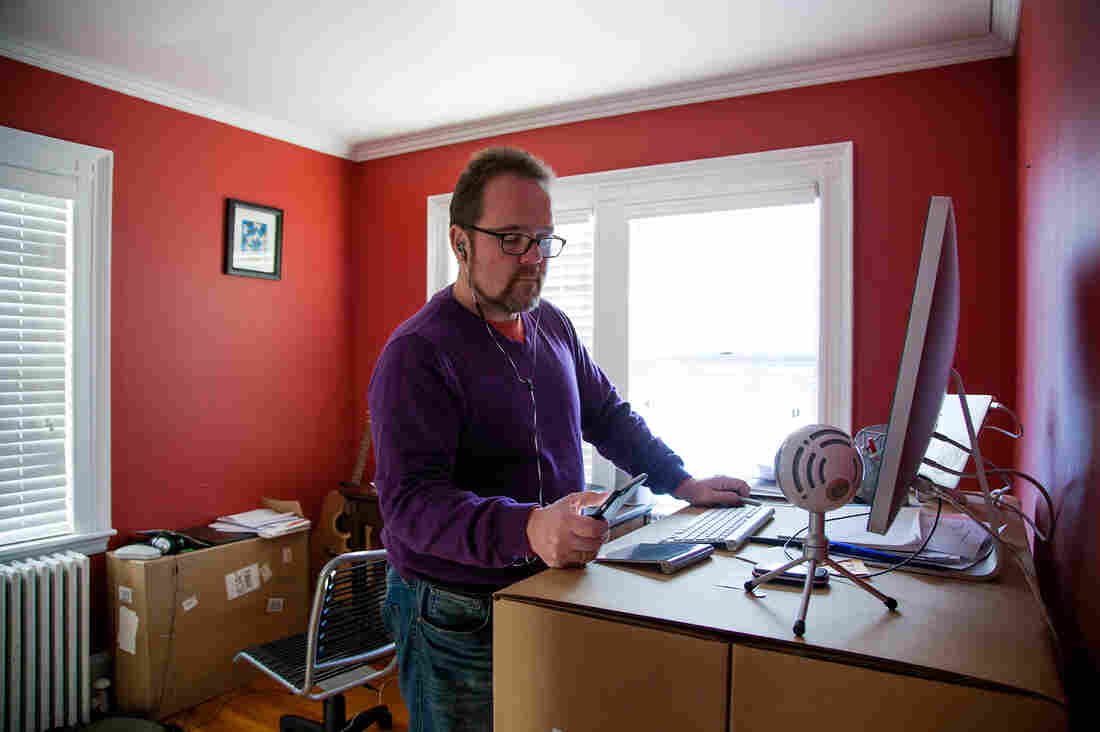
Tim Kilroy runs a business from his home in Arlington, Mass. His insurance company quit covering the long-acting Ritalin that helps him manage his ADHD.

Tim Kilroy runs a business from his home in Arlington, Mass. His insurance company quit covering the long-acting Ritalin that helps him manage his ADHD. Ellen Webber for NPR hide caption

toggle caption Ellen Webber for NPR

Steve Miller has some customers on offer. Millions of them in fact.

The chief medical officer at Express Scripts, the largest pharmacy benefit manager in the U.S., has been essentially auctioning off his 80 million customers to the drug companies that will give him the best deal.

“Who wants my market share?” Miller says. “Whoever will give me the best price, I will reward you with an enormous amount of market share.”

Miller is the most vocal leader in what has become a war on drug prices.

Express Scripts and its rivals including CVS/Caremark and OptumRX manage prescription drug coverage for insurers and employers. They’re trying to spark price wars among drug makers by refusing to pay for some brand-name medications unless they get a big discount.

The result is that average costs for many drugs are falling. At the same time, consumers are being forced to change medications, sometimes to brands that don’t work as well for them.

Tim Kilroy is a father of five who runs a business out of his home in Arlington, Mass. Kilroy has attention deficit hyperactivity disorder — ADHD, and he’s dependent on his medications to keep his mind, and therefore his business and family life, in order.

“I had tried several drugs,” he recalls. “I had tried Concerta; I had tried Adderal. Finding the right dosage can be really challenging.”

He spent six years trying medications, adjusting doses, switching and starting over before he and his doctor settled on a long-acting form of Ritalin. He’d finally landed on the drug that worked for him. But about a year ago he switched insurance and the new pharmacy benefit company — United Health Care’s Optum subsidiary — refused to pay.

“I thought, How dare you,” Kilroy says. “How dare this company that I pay money to tell me how to manage my health care. I was really, really angry.”

He paid for the Ritalin once. But it cost more than $120 a month on top of his insurance premiums. So he asked his doctor to move him to another medication that was covered. Kilroy says it does a good job controlling his ADHD, but the side effects include a swollen prostate that makes it difficult to urinate. So now he’s switching insurers again so he can get back on Ritalin.

Kilroy is just one of millions of people affected by this battle between drug companies trying to make as much money as possible and insurers trying to drive down those prices. This year, more than half of all people with insurance will have some medications excluded from coverage, says Ronny Gal, a drug industry analyst at investment firm Alliance Bernstein in New York.

“Drug companies have been pricing their drugs largely along the lines of, you know, whatever you can get away with and still have the patient get the drug,” he says. “This year exclusion will become a standard feature of the industry, which is actually quite a shocker for a lot of patients.”

Express Scripts pioneered the strategy two years ago, when it announced it would no longer pay for 48 brand-name drugs. Right out of the gate they took on some big-name products, such as Advair — the blockbuster asthma drug made by GlaxoSmithKline, now known as GSK.

Advair’s price had risen more than 20 percent in 2013, according to data from SSR Health, a New Jersey-based investment research firm. Then on January 1, 2014, Express Scripts tossed Advair off its drug list and moved its customers to rival asthma drug Symbicort.

The results were immediate. Sales of Advair dropped $1.8 billion that year. And the prices of both Advair and Symbicort fell 20 percent in 2014 and are still falling. GSK spokeswoman Jenni Ligday said in a statement that Advair was restored to Express Scripts’ formulary last year.

Express Scripts isn’t alone. Caremark, Optum and Prime Therapeutics also refuse to pay for some name-brand medications. Dr. David Lassen, the chief medical officer at Prime, which is the pharmacy benefit manager for several Blue Cross and Blue Shield plans, says the company offers an exclusion option to its health plan customers.

He says insurers are knocking drugs off their coverage lists because drug companies have undermined their other efforts to contain costs. In the past, insurers would charge a high copay for expensive drugs to steer customers to cheaper alternatives.

“The pharmaceutical companies have developed member coupons, and many times those coupons wipe out the members’ copay for them,” Lassen says. “It really kind of circumvents the intended benefit design.”

The strategy of refusing to pay for some medications has forced drug companies to offer deep discounts on medications that have competition, according to analyst Richard Evans of SSR Health. While list prices for drugs have continued to rise, Evans wrote in a September report that after discounts drug prices rose only 0.7 percent in second quarter of 2015 compared to a 4.4 percent increase in the same quarter a year earlier.

For many customers, the changes are a small inconvenience. They have to call their doctors and ask for a prescription for a new brand of pain killer, acne medicine or asthma inhaler. The alternatives often work fine.

But that’s not always the case, as Kilroy’s situation illustrates.

Oncologist Barbara McAneny, immediate past chairman of the American Medical Association, says very few chemotherapy drugs are excluded from approved drug lists. But the medications used to help patients get through chemo, like painkillers and hormone treatments, are. This complicates her ability to care for her patients.

“Some patients will tolerate one pain medicine, for example, but not another,” she says. “One can cause nausea and the other pain medicine doesn’t.”

If a medication is working, McAneny, says it’s totally inappropriate for anyone to change that medication and cause the patient to have symptoms.

This entry passed through the Full-Text RSS service – if this is your content and you’re reading it on someone else’s site, please read the FAQ at fivefilters.org/content-only/faq.php#publishers.

Young People Surprised By Risky Synthetic Drugs They Considered Safe

A man prepares to smoke synthetic marijuana on a street in East Harlem in New York City.

A man prepares to smoke synthetic marijuana on a street in East Harlem in New York City. Spencer Platt/Getty Images hide caption

toggle caption Spencer Platt/Getty Images

My 14-year-old patient grabbed my hand and told me that he was going to die.

Just seconds before, the nurse had wheeled him into the resuscitation room. His blood pressure and heart rate were more than twice the normal levels. He was pale, clammy and gasping for breath.

The nurses and doctors with me in the ER worked to stabilize him. We put an oxygen mask on his face. We inserted two IVs and began pumping fluids into his body. When his oxygen level dropped, we inserted a breathing tube.

In the meantime, we observed that there was no sign of trauma or active infection. The electrocardiogram showed that this wasn’t a heart attack. His blood tests were unrevealing.

What was causing his symptoms? It was his friends who told us what happened. They were experimenting with what they said they thought were “totally safe” and “natural” drugs — substances called Spice or K2 that are often referred to as synthetic marijuana.

In the past, the drugs had given the teenagers a quick high. This time, they experienced hallucinations. Some threw up. My patient was the one who got the sickest.

This would be a frightening scenario for any friend or family member, but what makes it worse is that this isn’t an isolated incident. In the last two years, cities across the U.S. have seen surges in ER visits and hospitalizations tied to an evolving category of chemical substances known as synthetic drugs.

In Baltimore, where I serve as the health commissioner, we have seen a marked increase in the use of these drugs, along with a spike in adolescents seeking urgent medical care.

Patients present with a range of symptoms, from agitation, hallucinations and psychosis to dangerously high blood pressure and seizures. Most recover with supportive therapy. Some, however, experience irreversible heart, brain and kidney damage. A few die.

How is it that these dangerous drugs can be so widely accessible?

One reason is that they encompass a large of number of compounds. Some are similar to amphetamines; others have ingredients similar to cannabinoids (the active ingredients in marijuana) and are referred to as synthetic marijuana. Since the Drug Enforcement Administration first ban on some synthetic drugs in 2011, more than 250 similar compounds have surfaced in their place.

Another reason is misleading advertising. Sold in gas stations, corner stores, and online, these drugs are marketed as room fresheners, herbal incense, bath salts or potpourri. In fact, they consist of chemicals sprayed onto dried plants and are intended solely for human consumption.

Many young people falsely believe that these synthetic drugs provide a safe and legal alternative with the same high as illicit drugs. However, some synthetic cannabinoids can be up to 100 times more potent than marijuana. Moreover, users don’t know which of thousands of chemical combinations they may be taking. Scientists have equated taking synthetic drugs with a game of Russian roulette.

If federal regulation of these substances is so challenging, what can be done to reduce the harmful effects on our youth?

First, local legislative efforts can be effective. New York City and Washington, D.C., are among major cities that passed legislation in 2015 to ban the sale of synthetic drugs. In Baltimore, we introduced a bill to impose civil as well as criminal penalties to sellers. It also allows inspectors to remove these drugs from stores at time of discovery, and provides a mechanism for citizens to anonymously report stores selling these substances.

Second, businesses themselves can take action. After we sent 1,300 letters to local stores, many have posted “Not a Drug Dealer” signs in their windows. Some havde voluntarily reported distributors that are illegally selling synthetic drugs.

Third, parents, teachers, pediatricians and others who work with teens should be aware of the dangers of synthetic drugs and speak with children and adolescents. In Baltimore, we launched a public education campaign called “Don’t Roll the Dice With Spice.” Similar efforts exist in Minnesota, New York City and Washington, D.C.

My 14-year-old patient regained consciousness and recovered without long-term damage. He said that he had no idea that what he took would make him so sick. I hope that other young people will not require a near-death experience to prompt them to avoid these dangerous synthetic drugs.

Dr. Leana Wen is the Baltimore City Health Commissioner. Follow her on Twitter: @DrLeanaWen and also @BMore_Healthy.

This entry passed through the Full-Text RSS service – if this is your content and you’re reading it on someone else’s site, please read the FAQ at fivefilters.org/content-only/faq.php#publishers.

Bernie Sanders Revives Debate Over Single-Payer Health Care

Democratic presidential hopeful Bernie Sanders has revived the debate over a single-payer health care system. NPR explores the arguments for and against it.

This entry passed through the Full-Text RSS service – if this is your content and you’re reading it on someone else’s site, please read the FAQ at fivefilters.org/content-only/faq.php#publishers.

Evenly Divided Kansas Appeals Court Blocks 2015 Abortion Law

A first-of-its-kind Kansas law that bans a common method of performing second-trimester abortions has been blocked, as judges on the state’s Court of Appeals conclude that the procedure is protected by rights of due process and equal protection.

The law was blocked after the court’s full roster of judges split evenly, 7-7 — an outcome that by law affirms a lower court’s injunction. The case is expected to be reviewed by the Kansas Supreme Court.

The widely watched case was initiated by three doctors, who filed a lawsuit weeks before the law was to take effect last summer. One key legal issue: whether the Kansas Constitution provides a right to abortion.

Distilling several pages of citations from the Kansas Constitution and the state’s Supreme Court, the appellate court’s opinion states, “we discern a simple proposition: The rights of Kansas women in 2016 are not limited to those specifically intended by the men who drafted our state’s constitution in 1859.”

On the other side of the issue, six of the opposing judges wrote, “there is nothing within the text or history of… the Kansas Constitution Bill of Rights to lead this court to conclude that these provisions were intended to guarantee a right to abortion.”

The law in question is titled the “Kansas Unborn Child Protection from Dismemberment Abortion Act.” As NPR reported last summer, the law, with few exceptions, would ban what physicians call a “dilation and evacuation” or “D&E” abortion, the primary method for second-trimester abortions in the U.S.

The court’s ruling was released on the 43rd anniversary of the U.S. Supreme Court decision in Roe v. Wade.

This entry passed through the Full-Text RSS service – if this is your content and you’re reading it on someone else’s site, please read the FAQ at fivefilters.org/content-only/faq.php#publishers.

Debate Sharpens Over Single-Payer Health Care, But What Is It Exactly?

Sen. Bernie Sanders, the independent from Vermont, has made a particular form of health care finance part of his campaign pitch.

Sen. Bernie Sanders, the independent from Vermont, has made a particular form of health care finance part of his campaign pitch. Andrew Harrer/Bloomberg via Getty Images hide caption

toggle caption Andrew Harrer/Bloomberg via Getty Images

Health care has emerged as one of the flash points in the Democratic presidential race.

Vermont Sen. Bernie Sanders has been a longtime supporter of a concept he calls “Medicare for All,” a health system that falls under the heading of single- payer health care.

Sanders released more details about his proposal shortly before the Democratic debate in South Carolina on Sunday. “What a Medicare for All program does is finally provide in this country health care for every man, woman and child as a right,” he said in Charleston.

Sanders’ main rival for the nomination, former Secretary of State Hillary Clinton, has criticized the plan for raising taxes on the middle class and says it is politically unattainable. “I don’t want to see us start over again with a contentious debate” about health care, she said Sunday.

Some of the details of Sanders’ plan are still to be released. But his proposal has renewed questions about what a single-payer health care system is and how it works. Here are some quick answers.

What Is A Single Payer?

A single payer refers to a system in which one entity (usually the government) pays all the medical bills for a specific population. And usually (though, again, not always) that entity sets the prices for medical procedures.

A single-payer system is not the same thing as socialized medicine. In a truly socialized medicine system, the government not only pays the bills but also owns the health care facilities and employs the professionals who work there.

The Veterans Health Administration is an example of a socialized health system run by the government. The VA owns the hospitals and clinics and pays the doctors, nurses and other health providers.

Medicare, on the other hand, is a single-payer system in which the federal government pays the bills for those who qualify, but hospitals and other providers remain private.

Which Countries Have Single-Payer Health Systems?

There are fewer than many people might think. Most European countries either never had or no longer have single-payer systems. “Most are basically what we call social insurance systems,” says Gerard Anderson, a professor at Johns Hopkins Bloomberg School of Public Health who has studied international health systems. Social insurance programs ensure that almost everyone is covered. They are taxpayer-funded but aren’t necessarily run by the government.

Germany, for example, has 135 “sickness funds,” which are essentially private, nonprofit insurance plans that negotiate prices with health care providers. “So you have 135 funds to choose from,” said Anderson.

Nearby, Switzerland and the Netherlands require their residents to have private insurance (just like the Affordable Care Act does), with subsidies to help those who cannot otherwise afford coverage.

And while conservatives in the United States often use Great Britain’s National Health Service as the poster child for a socialized system, there are many private insurance options available to residents there, too.

As far as countries that have true single-payer systems, Anderson lists only two: Canada and Taiwan.

Are Single-Payer Plans Less Expensive Than Other Health Coverage Systems?

Not necessarily. True, eliminating the profits and duplicative administrative costs associated with hundreds of different private insurance plans would reduce spending, perhaps as much as 10 percent of the nation’s $3 trillion annual health care bill, says Anderson. But, he notes, once those savings are achieved, there wouldn’t be further reductions afterward.

More important, as many analysts have noted, is how much health services cost and how those prices are determined. In most other developed countries, even those with private insurance, writes Princeton health economist Uwe Reinhardt, prices “either are set by government or negotiated between associations of insurers and providers of care on a regional, state or national basis.” By contrast, in the U.S., “the payment side of the health care market in the private sector is fragmented, weakening the bargaining power of individual insurers.”

Would Medicare For All Be Just Like The Existing Medicare Program?

No, at least not as Sanders envisions it. Medicare is not nearly as generous as many people think. Between premiums (for doctor and drug coverage), cost-sharing (deductibles and coinsurance), and items Medicare does not cover at all (most dental, hearing and eye care), the average Medicare beneficiary still devotes an estimated 14 percent of all household spending to health care.

Sanders’ plan would be far more generous, including dental, vision, hearing, mental health and long-term care, all without copays or deductibles (which has given rise to a lively debate about how to pay for it and whether middle-class families will save money or pay more).

Would Private Insurance Companies Really Disappear Under Sanders’ Plan?

Probably not. Private insurers are fully integrated into Medicare, handling most of the claims processing and providing supplemental coverage through “Medigap” plans. In addition, nearly a third of Medicare beneficiaries are enrolled in private managed care plans as part of the Medicare Advantage program.

Creating an entirely new federal claims processing structure would in all likelihood be more expensive than continuing to contract with private insurance companies. However, Sanders makes it clear that insurers in the future would no longer be the risk-bearing entities they are today, but more like regulated utilities.

Kaiser Health News is an editorially independent news service that is part of the nonpartisan Henry J. Kaiser Family Foundation. Julie Rovner is on Twitter: @jrovner.

This entry passed through the Full-Text RSS service – if this is your content and you’re reading it on someone else’s site, please read the FAQ at fivefilters.org/content-only/faq.php#publishers.

Childhood Vaccination Rates Climb In California

Julie Brand holds her 1-month-old daughter as she receives a hepatitis B vaccine at Berkeley Pediatrics in Berkeley, Calif.

Julie Brand holds her 1-month-old daughter as she receives a hepatitis B vaccine at Berkeley Pediatrics in Berkeley, Calif. Jeremy Raff/KQED hide caption

toggle caption Jeremy Raff/KQED

Maybe it was last January’s big measles outbreak at Disneyland that scared more California parents into getting their kids vaccinated. Or maybe health campaigns have become more persuasive. Or maybe schools getting stricter about requiring shots for entry made a difference.

Whatever the reasons, childhood vaccination rates last fall went up in 49 of 58 counties in California, according to data released Tuesday by state health officials.

The California Department of Public Health annually reports vaccination data for kindergartners from nearly all public and private schools statewide. For the 2015-2016 school year, 92.9 percent of kindergartners were up-to-date on their shots — an increase of 2.5 percentage points from the previous term.

In California, as in the rest of the nation, 2015 was a year of heated debate around vaccines. It started last January with the first reports of a measles outbreak tied to Disneyland. Then, in early February, state lawmakers introduced a bill to eliminate the personal belief exemption, which has allowed California parents to easily refuse vaccines on behalf of their children.

The repeal of that exemption became law, to take effect in July 2016. But the percentage of parents citing personal belief exemptions is already declining in California, the newly released data show — from 2.54 percent of incoming kindergartners in 2014-15 to 2.38 percent this year. In addition, the percent of children receiving both doses of the vaccine against measles, mumps and rubella — or MMR — has increased from 92.55 percent to 94.59 percent statewide.

“I can only assume that this is in part a response to … the measles outbreak and the publicity that that received,” says Dr. Art Reingold, head of epidemiology at the University of California, Berkeley School of Public Health. “It’s unfortunate that fear or outbreaks of disease are necessary to get people to do what we’d like them to do, but I think that’s human nature.”

Even Marin County, a hotbed for the anti-vaccine movement, saw its personal exemption claims drop — from 6.45 percent last year to 5.97 percent this year. The county’s public health officer, Dr. Matt Willis, calls the decline in Marin’s rate “great news,” and notes that this is the third year in a row of increasing vaccination rates. “We haven’t seen this many children vaccinated in Marin County since 2007,” he says.

Still, a decline in the number of parents formally refusing to vaccinate their kids isn’t the only reason for the statewide improvement in vaccination rates, according to James Watt, chief of the division of communicable diseases in the state’s department of public health. Another big factor, Watts says, is a decline in what are known as “conditional admissions” to schools.

These are kids who show up on their first day of school having received some — but not all — of the required immunizations. Often, schools go ahead and allow these children to start class, with the understanding that their parents will make sure the students get the remaining shots as soon as possible. But that’s not what the law demands.

“If those children could get a dose ‘today,’ they’re not supposed to be admitted to school,” Watt says. The problem, he explains, is that lots of kids have been enrolling with “conditional entry” who don’t go on to get the rest of their shots.

By working with parents and school districts to explain and enforce the rules — and vaccinate more kids — the state was able to reduce the overall number of conditional admissions from 6.9 percent of all enrolled kindergartners in 2014-2015 to 4.4 percent this year.

“The outbreak of measles was a real wake-up call for all of us around this issue,” Willis says. “It gave us a chance to speak openly as a community about what vaccination does for us. It gave us a chance to understand vaccination as a matter of community responsibility.”

Dr. Olivia Lang, a Berkeley pediatrician, said she’s seen a change in her practice, too. “There were a lot of families who had been waffling on vaccines, but perhaps were not strong believers in anti-vaccination ideals,” she says. “But now they’re saying, ‘Well, I guess we’re going to have to do it,’ ” and so they are getting their children vaccinated.

Starting with the 2016-2017 school year, all kindergartners and seventh-graders in California will need to be up-to-date on their immunizations to enter school. Only those children who cannot be vaccinated for medical reasons will be exempt.

A version of this story first appeared on KQED’s State of Health blog.

This entry passed through the Full-Text RSS service – if this is your content and you’re reading it on someone else’s site, please read the FAQ at fivefilters.org/content-only/faq.php#publishers.