Emergency Doctor: Paris Hospital Saw Unanticipated Number Of Gunshot Victims

4:48

Download

NPR’s Robert Siegel talks to an emergency doctor who was on the front line of dealing with casualties from the Paris attacks. He says on a normal weekend his ER will usually handle injuries from a car crash, and maybe once a year they will handle a gunshot victim. Friday night, he had 27 patients with gunshot wounds. All of his patients survived that evening.

This entry passed through the Full-Text RSS service – if this is your content and you’re reading it on someone else’s site, please read the FAQ at fivefilters.org/content-only/faq.php#publishers.

In Caring For Sickest Babies, Doctors Now Tap Parents For Tough Calls

Kate Teague, a registered nurse at Lucile Packard Children's Hospital, in Palo Alto, Calif., holds a premature baby's hand.

Kate Teague, a registered nurse at Lucile Packard Children’s Hospital, in Palo Alto, Calif., holds a premature baby’s hand. Heidi de Marco/Kaiser Health News hide caption

itoggle caption Heidi de Marco/Kaiser Health News

Dr. William Benitz walks past the rows of clear plastic isolettes in the neonatal intensive care unit at Lucile Packard Children’s Hospital at Stanford University.

There’s little room to navigate — the space is jampacked with beeping machines and ventilators. The health team in the unit can care for as many as 70 fragile infants. One tiny, pink baby girl here today was born weighing 13 ounces.

“A can of Coke is 12 ounces. So imagine a baby who could almost curl up in a fetal position and fit inside a Coke can,” says Benitz, the hospital’s chief of neonatology.

He first came to Stanford 42 years ago as a medical student, and says the ability of doctors today to save babies this small feels like something of a miracle.

When Dr. William Benitz first came to Packard Children's neonatal intensive care unit in 1973, doctors relied on their own judgement in deciding how aggressively to treat a newborn's severe illness, he says. Often they didn't even notify parents until they had taken action.

When Dr. William Benitz first came to Packard Children’s neonatal intensive care unit in 1973, doctors relied on their own judgement in deciding how aggressively to treat a newborn’s severe illness, he says. Often they didn’t even notify parents until they had taken action. Heidi de Marco/Kaiser Health News hide caption

itoggle caption Heidi de Marco/Kaiser Health News

But as far as medical technology has come, some of the sickest and most premature babies who pass through his NICU won’t make it, Benitz says. Others will go on to have severe, lifelong disabilities. Only 30 percent of the babies born at 24 weeks gestation, for example, survive without impairments.

One of the most difficult parts of Benitz’s job is determining how much treatment to give babies like these, and figuring out when it’s time to let them go. More and more, doctors like Benitz are looking to parents to help make these decisions, based on the parents’ values and preferences.

The American Academy of Pediatrics recently advised that parents should be given wide latitude in deciding how aggressive doctors should be with treatment in cases where their child is at high risk of death or serious disability. In practice, this means parents willing to raise a child with severe disabilities might elect to pursue more aggressive care than parents who do not want to take on that risk.

That’s a big change. When Benitz first started at Stanford in 1973, doctors were considered the absolute authorities in life-and-death decisions, he says. They consulted with colleagues and decided how much intensive care to give, based on what they thought was the likeliest outcome. Often these doctors didn’t even tell the parents of the decision before taking action.

“It never occurred to anyone that that might be a reasonable conversation to have,” Benitz says. “We were in unexplored territory.”

As technology improved and doctors tried to save sicker babies, and some born even earlier in gestation, there were new decisions to make: Should the health team put the tiny child on a ventilator? Attempt heart surgery? Those interventions helped many infants survive. Others did not fare as well.

“A lot of them ended up with significant impairments,” Benitz recalls. And doctors started to get pushback. “In the mid-80s we began to hear from families that maybe that wasn’t consistent with their goals for their children.”

Packard Children’s social worker Jane Zimmerman, who works with Benitz, says many doctors back then were trying to protect parents.

“The rationale for it,” she says, “was they didn’t want parents to have to take on that lifelong responsibility at having felt they made a decision that resulted in their child’s death.”

But some parents were angry that doctors had stopped intensive care without consulting them. Others were furious that they had not been given the option to end treatment of babies who ended up with severe cognitive and physical disabilities. Some filed lawsuits accusing doctors of causing their children “wrongful death” or “wrongful life.”

Such cases coincided with a larger movement in which adults fought for more say in their own medical care. By the mid-90s, parents in the NICU had become much more involved in decision-making for their babies.

The choices parents face are often heartbreaking. In May 2015, Chris and Karin Belluomini had a daughter they named Joy. She was born with Down Syndrome, multiple heart defects and fluid around her lungs. From the very start, doctors at Packard gave them the option of just providing comfort care, treatments that would sooth their daughter and relieve any suffering, but weren’t aimed at fixing her heart problems.

On one hand, the Belluominis, whose child was a patient of Benitz and Zimmerman, have a strong faith in God and were more than willing to raise a child with disabilities, even severe ones.

On the other hand, they didn’t want their daughter to suffer unnecessarily.

Their final decision was to have doctors do everything they could — up to a point.

“We let them know, if her heart stopped, we did not want her to be resuscitated,” recalls Karin Belluomini. “We just wanted her to be comfortable.”

Joy remained in the NICU for three difficult weeks. By the end, her blood oxygen levels were so low that the doctors said she could die at any time — possibly when her parents weren’t there. That’s when the Belluominis decided to remove life support, so that Joy could die peacefully in their arms, disconnected from the tubes and needles.

Both parents say it was difficult to even imagine not being a part of such decisions.

“As a parent, you just want to do everything and anything to protect your child,” says Karin. “So to be able to really understand her condition and how it’s affecting her, and to know that we did have a say in that, was extremely important.”

“You kind of don’t want that responsibility,” adds Chris, “and would rather have someone say or do it for you. But in the end, I wouldn’t want it to have been any other way.”

Jenny Gold, a reporter with Kaiser Health News, wrote this story while participating in the California Health Journalism Fellowship, a program of USC’s Annenberg School of Journalism.

This entry passed through the Full-Text RSS service – if this is your content and you’re reading it on someone else’s site, please read the FAQ at fivefilters.org/content-only/faq.php#publishers.

Say Yes To Down Dog: More Yoga Poses Are Safe During Pregnancy

Four pregnant women sitting in lotus position.

Four pregnant women sitting in lotus position. Thomas Northcut/Getty Images hide caption

itoggle caption Thomas Northcut/Getty Images

Lots of studies have looked at the health benefits of prenatal yoga for the mother to be. There’s even some evidence that yoga can be potentially helpful in reducing complications in high-risk pregnancies.

But does yoga have any impact on the fetus?

“I wasn’t able to find any evidence-based studies” to answer this question, says Dr. Rachel Polis, who practices gynecology at Koasir Children’s Hospital in Louisville, Ky. So she and a group of collaborators decided to conduct their own study. Their findings have just been published in the journal Obstetrics & Gynecology.

They recruited 25 healthy pregnant women in their third trimesters. All the women in the study had uncomplicated pregnancies; no high blood pressure or gestational diabetes.

During one-on-one yoga classes, the women were guided through 26 poses — everything from standing poses, to twisting poses to stretching.

Child's pose

Child’s pose Chris Gahler/Jersey Shore University Medical Center/American College of Obstetricians and Gynecologists hide caption

itoggle caption Chris Gahler/Jersey Shore University Medical Center/American College of Obstetricians and Gynecologists

“We found these postures were really well tolerated by women in our study,” says Polis, who conducted the research while she was a resident at Jersey Shore University Medical Center. “Women’s vital signs, heart rates, blood pressure — these all remained normal.”

In addition, there were no falls or injuries. And none of the women reported “decreased fetal movement, contractions, leakage or fluid, or vaginal bleeding in the 24-hour follow-up,” according to the study manuscript.

And very important, the fetal heart rate during all 26 poses remained normal.

“Because we had them [the pregnant women] on continuous fetal monitoring, we could see that the fetal heart rate remained normal,” says Polis.

During the study, the women avoided inversion poses such as handstand or headstand to reduce the risk of falls. And for obvious reasons they also avoided lying flat on their bellies.

But they did try poses that some yoga teachers have advised pregnant women to avoid. These include the downward-facing dog; the happy baby pose — that’s a pose where you lie on your back and hold your toes like a baby; and the corpse pose, where you lie on your back. Pregnant women are often told to lie on their sides, not their backs, during the final stages of pregnancy.

Downward facing dog pose

Downward facing dog pose Chris Gahler/Jersey Shore University Medical Center/American College of Obstetricians and Gynecologists hide caption

itoggle caption Chris Gahler/Jersey Shore University Medical Center/American College of Obstetricians and Gynecologists

Polis says her study finds all of these four poses were well tolerated.

So, the message here seems to be: Go for it!

“This is preliminary information, but I think it’s exciting and reassuring to know there were no adverse changes for both mom or baby,” Polis says.

There is one caveat. Polis says it’s important that every woman check with her ob/gyn to make sure that there are no complications before hitting the yoga mat.

This entry passed through the Full-Text RSS service – if this is your content and you’re reading it on someone else’s site, please read the FAQ at fivefilters.org/content-only/faq.php#publishers.

Supreme Court Agrees To Hear Texas Abortion Law Case

The Supreme Court has agreed to hear a challenge to a Texas law that requires abortion providers to have admitting privileges at a nearby hospital and requires abortion clinics to have the facilities of an outpatient surgical center.

This entry passed through the Full-Text RSS service – if this is your content and you’re reading it on someone else’s site, please read the FAQ at fivefilters.org/content-only/faq.php#publishers.

A Push In California To Train More Latino And Black Nurses

Diana Venegas, a nursing student at Samuel Merritt University, in Oakland, Calif., takes a patient's blood pressure at a recent health fair at Allen Temple Baptist Church.

Diana Venegas, a nursing student at Samuel Merritt University, in Oakland, Calif., takes a patient’s blood pressure at a recent health fair at Allen Temple Baptist Church. Adizah Eghan/KQED hide caption

itoggle caption Adizah Eghan/KQED

Allen Temple Baptist Church is buzzing with chatter and upbeat music. On this warm Saturday morning in East Oakland, Calf., the church is hosting its annual holistic health fair.

Students from the nursing program at Oakland’s Samuel Merritt University, are dressed in blue scrubs, hustling to give eye exams and check blood pressure.

A couple tables down, Samuel Merritt’s chief diversity officer, Shirley Strong, hopes to talk with prospective students. The private university has one of the three biggest nursing programs in California, and is committed to reducing health disparities by recruiting more students of color.

“The work of diversity at Samuel Merritt involves recruiting faculty, staff and students of color particularly,” Strong says, “especially “African-American/black and Latino/Hispanic students, because they’re the ones underrepresented in our community.”

Last May, Samuel Merritt University’s nursing program graduated its second-largest class of African-American and Latino students — 10 African-Americans and 28 Latinos.

“What we’d like to do is train more [registered nurses] and more case managers and more nurse practitioners,” Strong says. “People who are really in decision-making roles in hospitals.”

Black And Latino Registered Nurses Needed

The majority of the state’s registered nurses are white or Asian-American. While 39 percent of California’s population is Latino, just 8 percent of the state’s nurses are. Six percent of the state’s population is black, but just 4 percent of nurses are.

“Clearly we are lacking African-American and Latina nurses,” says David Hayes-Bautista, director of the Center for the Study of Latino Health and Culture at UCLA’s medical school. Having nurses who more closely represent the state’s diversity will “make for better patient care [and] better language communication,” he says. Studies show that many Latinos in California lack access to preventive care, and African-Americans experience higher rates of heart disease and shorter life expectancy than whites.

Shanda Williams grew up in Oakland, where there's great need for health providers who understand the community, she says. Williams was inspired to become a nurse after noticing her grandmother's lack of candor at visits to the doctor.

Shanda Williams grew up in Oakland, where there’s great need for health providers who understand the community, she says. Williams was inspired to become a nurse after noticing her grandmother’s lack of candor at visits to the doctor. Adizah Eghan/KQED hide caption

itoggle caption Adizah Eghan/KQED

These disparities are what motivated Samuel Merritt grad Shanda Williams to become a registered nurse.

Williams grew up in Oakland, where there’s a great need, she says, for providers who understand the community. She’s seen this firsthand.

“I would go to the doctor’s office with my grandmother,” Williams says, “and she would basically lie to all of her doctors about everything that she was doing.”

Williams says her grandmother told the doctor she was eating fruits and vegetables and cutting out fried foods. Williams knew that wasn’t true.

“It sparked a conversation,” she says. But her grandmother dismissed Williams’ suggestion that she be more candid with her medical team. ” ‘They don’t understand the way we eat,” the older woman told her granddaughter. “This is part of my identity.’ “

Williams says this moment stuck with her. The doctor had neglected some key questions.

“There was never really a time when her doctor would ask her … ‘Well, why do you eat that way?’ or ‘Can we find a compromise?’ or anything like that,” Williams says. “Those questions never came up.”

Helping Others Achieve

Now Williams wants to extend what she’s learned to others. She’s a tutor in Samuel Merritt’s academic success program, which is specifically geared toward Latino and African-American nursing students. Today she’s working with junior Leslie Hernandez. The two sit in one of Samuel Merritt’s basement classrooms, going over neuropharmacology.

Hernandez says she sees a lot of Latino classmates in nursing school, but it’s not the same when she accompanies family members to the hospital, or when she’s out working in the clinic as part of her schooling.

She well remembers the moment she realized the need for more Latino and Spanish-speaking health professionals. She was working in the psychiatric unit of a hospital. Doctors and nurses deemed a particular patient “noncompliant” because she didn’t talk.

But Hernandez was able to communicate just fine with the patient — in Spanish.

“She was speaking in Spanish, and she felt like nobody could understand her,” Hernandez recounts.

The patient told Hernandez that she had suicidal thoughts, and Hernandez was able to alert the doctor.

Addressing Barriers Faced by Low-Income Students

Competition for slots in California’s public school nursing programs is especially fierce. It can be very hard to get all the classes you need to graduate in four years, and students of color, who may be more likely to have financial pressures to complete school quickly, are underrepresented.

Inadequate financial support is a barrier in other ways, too, Strong says. While lower-income students can take advantage of financial aid to cover tuition at either a public or private school, they are often derailed by other, unexpected expenses.

A sudden need for hundreds of dollars for a car repair or an emergency dental problem, for example, can force students to drop out, Strong says. Many come from families that lack the ready cash to help in an emergency.

To aid these students, Strong says Samuel Merritt is working to create a special fund, “so that when a student has a problem, we just write the check from the emergency fund.” That way, he says, students can “stay attentive, and on course to graduate.”

Strong says the best preparation for a career in health care starts in high school — or even sooner. “The key really is that they have to take science courses and the math courses early on, so when they get to college they are prepared to step into these various programs,” she says.

Students who haven’t taken those early preparatory classes spend a lot of time playing catch-up in college, and many find it just too overwhelming to tackle.

Samuel Merritt is partnering with pathway programs such as the Health Academy at Oakland Technical High School, and Berkeley Technology Academy. The goal is to give more students who are interested in the health care field the preparation they need.

California’s Board of Registered Nursing forecasts that Latino population growth in the state will continue to outpace the number of Latino registered nurses unless more effort is made to encourage enrollment and graduation of Latinos from RN programs.

While the number of African-American nurses is climbing faster, it’s can’t happen fast enough for Shanda Williams. She wants to open a clinic with some of her classmates.

“Working in my community is what also helped keep me motivated in school,” she says; she thinks other students of color feel the same way, wanting to make positive changes in the towns and neighborhoods they grew up in.

Williams wants patients like her grandmother to seek care from people they trust, doctors and nurses who can say, “I’m from the same neighborhood you come from.”

This story ran first on KQED’s blog State of Health.

This entry passed through the Full-Text RSS service – if this is your content and you’re reading it on someone else’s site, please read the FAQ at fivefilters.org/content-only/faq.php#publishers.

Surge In Use Of 'Synthetic Marijuana' Still One Step Ahead Of The Law

The drug sold as K2, spike, spice or “synthetic marijuana” may look like dried marijuana leaves. But it’s really any of a combination of chemicals created in a lab that are then sprayed on dried plant material. Spencer Platt/Getty Images hide caption

itoggle caption Spencer Platt/Getty Images

A street drug made of various chemicals sprayed on tea leaves, grass clippings and other plant material continues to send thousands of people suffering from psychotic episodes and seizures to emergency rooms around the country.

In 2015, calls to poison control regarding the drug already have almost doubled, compared to last year’s total, and health professionals and lawmakers are struggling to keep up with the problem.

Some call the drug K2, or spice. It’s also widely known as “synthetic marijuana,” because the key chemicals in the spray are often man-made versions of cannabinoids, a family of psychoactive substances found in marijuana.

But the ingredients and concentrations used in this street drug vary widely, and it can be very different from marijuana in its effects.

Edwin Santana, 52, entered a detox program at Syracuse Behavioral Healthcare to help break his heroin addiction and daily habit of smoking the synthetic drug known as spike.

Edwin Santana, 52, entered a detox program at Syracuse Behavioral Healthcare to help break his heroin addiction and daily habit of smoking the synthetic drug known as spike. Hansi Lo Wang/NPR hide caption

itoggle caption Hansi Lo Wang/NPR

At a drug rehabilitation center a short drive north of Syracuse University, where 52-year-old Edwin Santana has come for treatment, they call the drug “spike.”

Santana, who was born in the Bronx, is a few weeks into his detox program at Syracuse Behavioral Healthcare. A longtime heroin user, he became homeless after multiple run-ins with the law. Then, he says, a couple years ago he developed a problem with spike.

“It was getting out of hand,” Santana says. “I was starting to smoke every day. And you know, spike is a drug I respect, because you don’t know what you’re getting.”

The drug also inspires fear in him.

“Not a little bit of fear. A lot of fear,” he adds.

It’s hard to guess what will happen after you smoke or ingest spike, users and drug enforcement officials say, because the chemists who make it are constantly changing the main ingredients — tweaking a cannabinoid’s chemical structure, or mixing it with other substances entirely, which can change its effects.

“You get stuck when you’re on spike,” Santana says. “And it makes you do all kinds of crazy things, man. I’ve seen people roll around on the floor and stuff like that.” Smoking the drug landed him in the hospital.

Angel Stanley, a psychiatric nurse at the rehab center, ticks off the symptoms she’s seen in patients who have smoked spike: “Auditory hallucinations, visual hallucinations, disorganized thinking, delusional thinking. Paranoia is a big one.”

Many of these patients, she says, expected that smoking spike would be just like smoking regular pot, because the drug was sold as “synthetic marijuana.” The drug first became popular with teens, who were looking for a new way to get high for just a few dollars.

But now, Stanley says, she’s seeing older users, too.

“They’ve gone from using some marijuana in the past, a little bit of alcohol use over the years, and now all of a sudden, they’re in their 50s and they’re addicted to spike,” she says.

Often users are also homeless.

“A lot of people who use it, their reality is pretty bleak, so they use spike to escape that reality,” explains Matthew, who asked that we not use his last name. He just finished an inpatient program at Syracuse Behavioral Healthcare to help him stop using spike and cocaine, and doesn’t want future employers to find out about his past.

“The main thing with spike,” Matthew explains, “is this: It is the cheapest, most effective high in Syracuse right now. Is it the most enjoyable high? Probably not. But it’s the cheapest, hands down.”

The question facing workers at rehab centers and emergency rooms is how to effectively treat users of a drug that’s essentially an unknown mixture.

“We know how to treat an alcoholic,” says Jeremy Klemanski, who heads Syracuse Behavioral Healthcare. “We know how to treat an opiate patient. We know how to treat somebody’s who’s using cocaine. But, when we say we know how to treat somebody who is using synthetics — to a certain extent we do.”

Health professionals faced with such a patient are usually flying blind, Klemanski says. Some types of spike can be detected in drug tests, but not all.

“Until we get to a point where the treatment system has as sophisticated testing as the labs that are inventing and creating these things, we’ll struggle,” he says.

Lawmakers are paying attention. The federal government has permanently banned more than a dozen types of synthetic cannabinoids.

But packets of “spike” and “K2” and “spice” are still sold in many mom-and-pop convenience stores, because they contain versions of cannabinoids not covered by the ban, says Matt Strait of the Drug Enforcement Administration.

“They are in a legal grey area,” Strait explains, “because they’re not specifically named in the statute.”

That keeps makers and dealers of spike one step ahead of state and federal laws. Congress is weighing how to streamline the process of regulating new versions. Meanwhile, the Drug Enforcement Administration has been investigating and temporarily banning some new forms of the drug.

But back in Syracuse, some health professionals and spike users say the government can’t move fast enough to keep up with new varieties hitting the streets.

This entry passed through the Full-Text RSS service – if this is your content and you’re reading it on someone else’s site, please read the FAQ at fivefilters.org/content-only/faq.php#publishers.

10 Percent Of Older People Have Been Victims of Abuse

Nursing home residents can be at risk, but so are people living at home with a spouse or adult children.

Nursing home residents can be at risk, but so are people living at home with a spouse or adult children. iStockphoto hide caption

itoggle caption iStockphoto

Abuse of older people, which can take the form of sexual or emotional abuse, physical violence and financial manipulation, affects at least 10 percent of older Americans, according to a review article published Thursday in the New England Journal of Medicine.

That figure, researchers note, is likely an underestimate, since it’s based on self-reported cases and its victims often suffer from dementia or are otherwise isolated from people who might notice something is wrong. But the estimate drives home how pervasive the problem is and how familiar its victims might be.

Elder abuse can happen to residents in nursing homes or those living with family members. The “young old” more vulnerable because they’re apt to be living with a spouse or adult children, the two groups most likely to be abusers.

If unchecked, elder abuse increases risk of death and can result in long-term harm — putting its victims in the hospital and emergency room and increasing their odds of physical and mental illness.

And because the abuse can take various forms and the issues involved are complex, there is rarely a single, easy solution. Instead, with this review of research from the past decade, the authors conclude that multidisciplinary strategies offer the most effective responses.

For example, if someone is being physically harmed, he or she could need help from a primary care doctor. But once this initial problem is recognized, it might become clear that the victim also needs a new place to live, which would make the assistance of housing authorities key. Or if someone is scamming the older person or withholding his or her money, getting help at the bank also makes sense.

“These cases do not resolve magically — often these play out over months or years,” said Mark Lachs, the paper’s lead author and director for the Center of Aging Research and Clinical Care at Cornell University. When trying to bring a variety of services to a victim or family, he says, it helps to have them all connected to each other.

Lachs is also the medical director for the New York City Elder Abuse Center, which uses an integrated approach when treating victims of elder abuse. They’ve also been trying to help doctors in other cities develop similar programs.

There isn’t any data tracking how common these kinds of formal alliances are, said Robert Blancato, the national coordinator for the Elder Justice Coalition, an advocacy group focused on preventing abuse of older people. Anecdotally, though, he’s seen many doctors and other service providers across the country using this multidisciplinary strategy. “When they stick to it and do it,” he said, “they can show results.”

Doctors can’t fix elder abuse by themselves. But they are often an important first line of defense. So if they do notice something is wrong, knowing about other community resources is key to resolving the issue.

“The odds are better that somewhere in that group of people in the [multidisciplinary] team, someone may have the ability to work closer with the elderly person and find out what the situation is,” Blancato said.

But recognizing signs of elder abuse and coordinating a response isn’t easy, Lachs said.

“Fragmentation of care is a huge problem,” he said. “I’ve seen situations where patients have been victims of abuse at home, they go to a hospital [and] there’s understandably a pressure to get people out of the hospital. They might go to an environment for rehab where the receiving providers don’t have an understanding that the family member is physically, emotionally or fiscally abusive because of that fragmentation.”

Though it may seem unrelated, Lachs said, financial abuse — scamming the older person or mishandling his or her funds — can often accompany medically significant harm. Victims then may not be able to buy medication or get enough to eat, which can exacerbate other health problems.

And if abuse goes untreated long enough, he added, patients can end up using expensive medical care they otherwise wouldn’t have needed.

This entry passed through the Full-Text RSS service – if this is your content and you’re reading it on someone else’s site, please read the FAQ at fivefilters.org/content-only/faq.php#publishers.

Budget Switch For Maryland Hospitals Is Starting To Pay Off

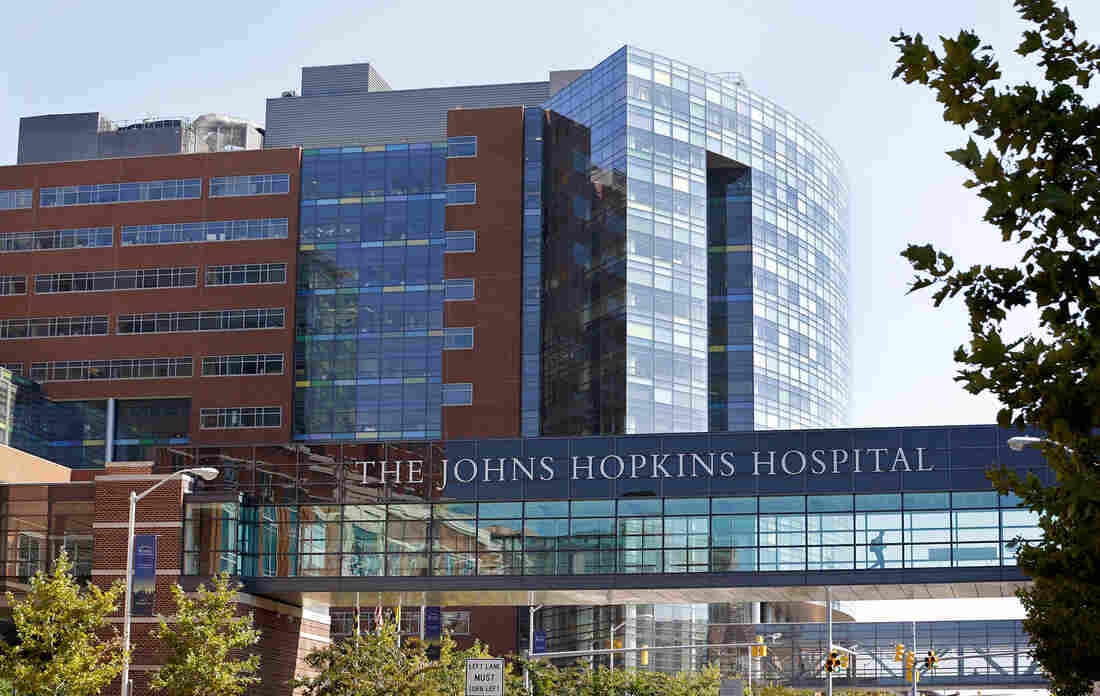
Maryland hospitals, including Johns Hopkins Hospital in Baltimore, are part of a payment experiment that provides new incentives to keep people in good health.

Maryland hospitals, including Johns Hopkins Hospital in Baltimore, are part of a payment experiment that provides new incentives to keep people in good health. Patrick Semansky/AP hide caption

itoggle caption Patrick Semansky/AP

Results are in from the first year of a bold change to the way hospitals get paid in Maryland, and so far the experiment seems to be working.

We recently reported on the unique system the state is trying to rein in health care costs. Maryland phased out fee-for-service payments to hospitals in favor of a fixed pot of money each year.

A report in the latest New England Journal of Medicine says the experiment saved an estimated $116 million in 2014, the first year it was in operation.

The state of Maryland and the Centers for Medicare and Medicaid Services struck an agreement that ended payments to hospitals for each procedure, each emergency room visit and each overnight stay. Instead, Maryland hospitals receive a set amount of money — called a global budget – for the whole year, regardless of how many patients they treat.

In essence, Maryland flipped financial incentives for hospitals. In the past, more patients meant more revenue. Now, with revenue fixed for the year, hospitals benefit when patients are healthy and stay out of the hospital.

Many Maryland hospitals have hired care coordinators to follow up with patients once they’ve gone home, to make sure they’re taking their medications, following up with their primary care doctors and so on.

As part of the deal, Maryland promised to cut costs and improve care. There are targets to hit, including saving Medicare $330 million over five years and reducing preventable health problems, such as bed sores and transfusions with the wrong type of blood, by 30 percent.

Maryland also agreed to bring its hospital readmission rates for Medicare patients, which were among the highest in the country, down to the national average.

Preliminary data for 2014 show that while Medicare per capita hospital costs rose nationally by just over 1 percent, they dropped in Maryland by a little more than 1 percent. The savings in the state amounted to $116 million.

Meanwhile, hospitals also reduced the potentially preventable conditions by 26 percent. The state’s readmission rate came down, but remains higher than the national average.

John Colmers, who as chair of Maryland’s Health Services Cost Review Commission worked to negotiate this deal on behalf of the state, calls these results a good start. He’s one of authors of the report, along with other key figures behind the deal.

“We’re not going to rest on our laurels, but we’re pleased with the work that hospitals, physicians and others have done,” he says. “Ultimately the goal here is to provide the best care to patients in the most appropriate settings.”

Even with the early successes, there are still significant challenges to overcome. The article points out that Maryland’s most recent patient-experience scores are among the worst in the country.

This entry passed through the Full-Text RSS service – if this is your content and you’re reading it on someone else’s site, please read the FAQ at fivefilters.org/content-only/faq.php#publishers.

Pitching Health Care In Baltimore's Red Light District

Nathan Fields talks to passersby about how to use a naloxone auto-injector to treat an opioid overdose.

Nathan Fields talks to passersby about how to use a naloxone auto-injector to treat an opioid overdose. Meredith Rizzo/NPR hide caption

itoggle caption Meredith Rizzo/NPR

Every Thursday night you can find Nathan Fields making the rounds of Baltimore’s red light district, known to locals as The Block.

An outreach worker with the Baltimore City Health Department, Fields, 55, is a welcome sight outside strip clubs like Circus, Club Harem and Jewel Box.

In the early evening before the clubs get busy, he talks with dancers, bouncers and anyone else passing by about preventing drug overdoses and how to stop the spread of HIV and other sexually transmitted diseases.

Later on, he’ll drop into the clubs to check on the dancers who aren’t able to come outside, finding out what they might need.

Fields has credibility on The Block that people higher up in the health department don’t. “I watch him walk down any street in Baltimore city, and people come up to him, and they know that he is there to serve them,” says his boss, Health Commissioner Dr. Leana Wen.

The needle exchange van parks on the corner of a block that is home to numerous strip clubs.

The needle exchange van parks on the corner of a block that is home to numerous strip clubs. Meredith Rizzo/NPR hide caption

itoggle caption Meredith Rizzo/NPR

It wasn’t always so easy.

Seven years ago, Fields was working with the city’s needle exchange program. After a spate of drug overdoses at the strip clubs, the health department brought its needle exchange van to The Block one night a week.

There were hardly any takers at first. People were skeptical.

“They were under the impression that we were giving their information to the police,” Fields says. “So that’s when I came on board. You know, I’m a great negotiator. Donald Trump can’t beat me out.”

Fields started with the bouncers. Though a Baltimore native, Fields is a huge fan of the New England Patriots and would often show up in head-to-toe Pats gear. The Baltimore Ravens-loving bouncers hated his get-up, and the football rivalry broke the ice.

Seven years ago, Fields began outreach work with Baltimore's needle exchange program on The Block.

Seven years ago, Fields began outreach work with Baltimore’s needle exchange program on The Block. Meredith Rizzo/NPR hide caption

itoggle caption Meredith Rizzo/NPR

Eventually, the sports talk turned more personal. Fields learned that some of the men had girlfriends dancing in the clubs who needed help – everything from condoms to drug treatment. Some women needed copies of birth certificates and other forms of ID in order to get into treatment.

Fields leaned on colleagues in the health department to get the problems solved.

Soon, the clubs doors opened for him. Once inside, Fields saw people needed even more.

“We went into one club, and there were three girls in different stages of pregnancy that were still dancing,” he recalls. “We started running it up the chain: ‘Hey, we need health care down here — reproductive health care.’ “

So in addition to the needle exchange van, the city brought a second van to The Block, one with an exam table and a nurse. Now, every Thursday night, health workers offer needles for exchange, training in the anti-overdose drug naloxone, HIV tests, reproductive health exams, pregnancy tests, flu shots and more other basic health care services.

(Left) A Baltimore City health worker demonstrates how to use a naloxone auto-injector. (Right) Inside the needle exchange van, bundles of used needles are held in a container for disposal.

(Left) A Baltimore City health worker demonstrates how to use a naloxone auto-injector. (Right) Inside the needle exchange van, bundles of used needles are held in a container for disposal. Meredith Rizzo/NPR hide caption

itoggle caption Meredith Rizzo/NPR

Fields treats each person coming into the vans like family. He remembers babies and boyfriends and other small details of people’s lives.

“The Block is like living,” he says. “These relationships, you’ve got to keep them flourishing.”

Quietly, Fields also hands out pamphlets with information about drug treatment. Every so often, he’ll mention a new option and encourage someone to check it out. But, it’s a soft sell. He doesn’t want to drive people away.

“I don’t beat a person over the head,” he says. “I never badger anybody for fear of them looking at me like, ‘Oh, he’s an elitist. He forgot where he came from.’ I could never forget where I come from.”

Nathan Fields (center) with his sons Hassan Fields (left) and Malik Fields on Friday, May 22. Hassan was shot and killed that weekend.

Nathan Fields (center) with his sons Hassan Fields (left) and Malik Fields on Friday, May 22. Hassan was shot and killed that weekend. Courtesy of Nathan Fields hide caption

itoggle caption Courtesy of Nathan Fields

For nearly 20 years, Fields was a heroin addict. He sold drugs to support his habit and did time in the Baltimore City jail. “I was a predator to my community,” he says.

After getting clean in the mid-1990s, he got a job as a recovery counselor. In 2004, he went to work with the Baltimore City Health Department. “The job just gives me a sense that I’m helping to build back what I tore down,” he says. “You know, every time I can get somebody to even thinking different or even consider going into treatment, I feel as though I had a successful day.”

In spite of those small victories, it’s been a particularly difficult year for Baltimore and for Nathan Fields.

Over Memorial Day weekend, the outbreak of violence following the death of Freddie Gray claimed the life of his youngest child, 20-year-old Hassan Fields. He was shot and killed on the west side of Baltimore. His death remains an open case.

Nathan Fields struggles to understand how this could happen to him, given all he’s done for the community. He had thoughts of reverting to the person he once was. Then, he came to a quieter place.

“The Block is like living,” outreach worker Nathan Fields says. “These relationships, you’ve got to keep them flourishing.” Meredith Rizzo/NPR hide caption

itoggle caption Meredith Rizzo/NPR

“I’m sorry. I can’t let this destroy me,” he says. “I can’t let this turn what my thoughts are about human nature — some good people with some bad people. I believe the bad people have a little bit of good in them too. It’s just got to come out.”

Thinking about Hassan’s death has led him to reflect on his own past.

“I just have to look back on myself and say, I’ve caused pain. No, I’ve never done anything as violent as that, but I’ve got to keep working. I can cherish his memory, I sit down, I look at his picture and think about it, and it just makes me work harder.”

NPR and All Things Considered will continue reporting from Baltimore in the coming months, checking in with Leana Wen and her team. Stay tuned for future stories.

This entry passed through the Full-Text RSS service – if this is your content and you’re reading it on someone else’s site, please read the FAQ at fivefilters.org/content-only/faq.php#publishers.

Some Hospital Systems Want To Care For You And Sell You Insurance

Geisinger Health System, based in Danville, Pa., offers both insurance and patient care.

Geisinger Health System, based in Danville, Pa., offers both insurance and patient care. Bradley C. Bower/Reuters/Landov hide caption

itoggle caption Bradley C. Bower/Reuters/Landov

In addition to treating what ails you, a number of health care systems aim to sell you health insurance to pay for it.

Some of the most competitively priced policies on health insurance marketplaces are offered by the providers of health care, but it remains to be seen how many health systems will succeed over the long haul as insurers.

It’s not surprising that health systems might get into the insurance business. Doing so funnels more patients to a health system’s hospitals and doctors. And it makes sense that combining clinical and claims data under one roof could lead to better coordinated, more cost-efficient patient care.

A number of well-regarded health systems have long sponsored insurance plans, including Kaiser Permanente, headquartered in Oakland, Calif., Geisinger Health System in central Pennsylvania and Intermountain Healthcare in Utah. (Kaiser Health News, an independent service of the nonprofit Kaiser Family Foundation, is not affiliated with the health insurance company Kaiser Permanente.)

Yet even though health care systems can gain insurance know-how by partnering with or acquiring an insurer or third-party administrator to handle claims, compliance and customer service, putting it all together can be challenging.

“They’re inexperienced,” says Gunjan Khanna, a partner in the health care practice at McKinsey & Co. who co-authored a paper on this type of plan, when talking about newer entrants in this market. “The viability of that business and the ability to manage that is a question.” For example, it may take years to develop the necessary skills in managing financial risk and coordinating patient care beyond the hospital or clinic, among other things.

Health plans sponsored by providers are still rare. In 2014, 13 percent of health care systems in the United States offered plans that covered 18 million members, or about 8 percent of all people with insurance, according to McKinsey. Most of the people covered by provider-led plans are in Medicaid managed care or Medicare Advantage plans.

A growing number of provider-led plans are available on the health insurance marketplaces. When the marketplaces opened in 2014, there were 64 provider-led plans; next year there will be 72, according to McKinsey. In 2016, 19 percent of the new carriers on the exchanges will be provider-led plans.

The provider-led marketplace plans are priced very competitively, says John Holahan, a fellow at the Urban Institute’s Health Policy Center. In a number of rating areas, the plans will be the lowest priced at the silver level in 2016, according to a forthcoming analysis of 63 rating regions in 21 states, Holahan says. The lowest priced silver plans include those sponsored by New York’s North Shore-LIJ Health System, Oregon’s Providence Health and Services and Inova Health System in Virginia.

Network coverage in these plans varies. Some cover only services within the health system, while others offer broader access.

Consumers have generally been willing to accept narrower networks of hospitals and doctors in exchange for lower premiums.

“The exchanges have pushed the concept of narrow networks front and center,” says Khanna. Consumers confronting that might want to “consider a provider health plan, because it’s based around a network of providers and at heart a network is built around a health care system.”

Kaiser Health News is an editorially independent news service supported by the nonpartisan Kaiser Family Foundation. Email questions: KHNHelp@KFF.org. Michelle Andrews is on Twitter: @mandrews110

This entry passed through the Full-Text RSS service – if this is your content and you’re reading it on someone else’s site, please read the FAQ at fivefilters.org/content-only/faq.php#publishers.