'It Looked Impossible': New Film Follows Free Climbers Up The 'Dawn Wall'



How Do Wishes Granted To Very Sick Kids Affect Their Health?

While recovering from treatment for aplastic anemia, Tiffany Rowe had her wish granted. She danced on stage with Michael Jackson during his Bad concert tour.
Courtesy of Tiffany Rowe
hide caption
toggle caption
Courtesy of Tiffany Rowe
Tiffany Rowe, a 46-year-old life coach in the San Francisco Bay area, still remembers how it felt as a teenager to be hoisted onstage to dance with Michael Jackson during his Bad concert tour.
She was 15 and recovering from an excruciating round of treatment for severe idiopathic aplastic anemia — basically total bone marrow failure.
She had met Jackson in his greenroom before the concert, but she had been told that dancing with him — her real wish — wouldn’t be possible.
Until it was.
“I was in front of all of those people, and I could hear the roar, and I was calm,” she recalls. “I was doing what I wished to do. I felt exactly the way I needed to feel, at home and confident in my body. There had been part of me that felt pretty betrayed by my body, and I felt very at peace in my own skin again.”
Please Tell Us What You Think About Shots
Help us make Shots more relevant for you by completing an NPR research survey. Click here to start the questionnaire.
The moment was transformative for Rowe, who credits the experience with aiding her recovery. A study published in the journal Pediatric Research suggests her experience may not be unique.
Researchers looked back at the cases of nearly 1,000 children with serious illnesses who were treated at Nationwide Children’s Hospital in Columbus, Ohio. Half the children had received wishes and the other half hadn’t.
The children granted wishes were substantially less likely to visit the emergency department or to have an unplanned hospital admission within two years as compared with children who hadn’t received wishes. (Researchers matched the children’s personal and disease characteristics in the study.)
“My hypothesis is that these kids, when they come back, are more engaged with their families and medical providers, and perhaps they’re more adherent to their treatment plan,” says the study’s lead author Dr. Anup D. Patel, section chief of neurology at Nationwide Children’s Hospital and an associate professor of pediatrics at Ohio State University College of Medicine in Columbus.
“What’s harder to quantify is this feeling of hope and having a break from your illness,” Patel says. “It gives them an ability to fight harder, and that’s harder to measure.”
That ineffable feeling is what mattered for Rowe. Her illness had been caught late. She likely wouldn’t have lived another month without treatment, she says. Even with treatment, her prognosis was three to six months.
She lacked a perfect match for a bone marrow transplant, and she was so sick that her doctors didn’t want to risk a potentially fatal transplant rejection. So she received a then-experimental therapy called antithymocyte globulin, today a common treatment for aplastic anemia.
“I remember my mom saying, ‘We don’t know how this ends, but we have to try,’ ” Rowe says. She received her first treatment in the fall of 1984 and entered remission, but she relapsed in the fall of 1987.
“For me, relapse had a deeper emotional toll. I understood what I was headed back into, the pain and uncertainty and fear,” Rowe says. “I felt a bit demoralized, like I had failed. I didn’t want to be sick anymore. I didn’t want to have to survive anything.”
It was around then that a volunteer who had read about Rowe in the local paper visited her and offered a wish. Rowe didn’t hesitate.
“When everyone else wanted to be an astronaut, I wanted to be a dancer and dance with Michael Jackson,” Rowe says. “When he moved, it just stopped time for me. As somebody who felt so passionately about dance myself and so elementally at home in my body while dancing, I just saw that in him and felt a kinship.”
Joining him onstage gave Rowe back ownership over her body — and her future.
“There was a sense that I was fighting for something, not just against something, and that was incredibly motivating,” she says. “I was surviving to go back and live a full and extraordinary life — not that I knew that would happen, but I could give myself permission to believe it was possible.”
To qualify for a wish, a child must have a life-threatening, but not necessarily terminal, condition, says Jamie Sandys, a spokesperson at Make-A-Wish Foundation. The foundation has more than 60 U.S.-based chapters and has granted more than 300,000 wishes since 1980.
The organization granted approximately 15,400 wishes last year, Sandys says. Still, an estimated 27,000 children are diagnosed annually with an illness that qualifies them, which concerns Sandys. “There’s a huge gap that we’re trying to fill,” Sandys says.
Many past wish recipients have said the wish was an important part of their healing process. “These wishes can really be a springboard to help these children in overcoming their illnesses and producing better health outcomes for them,” Sandys says.
But verifying and quantifying those outcomes is difficult.
“It’s wonderful to have randomized controlled trials and measurable outcomes, but when you’re looking at mind-body-spirit connection in medicine, we’re not going to have the luxury of those outcomes,” says Dr. James Fahner, a division chief for pediatric oncology at the Helen DeVos Children’s Hospital in Grand Rapids, Mich. Though not involved in the study, Fahner is the immediate past chair of the Make-A-Wish America Medical Advisory Council.
“I’m fundamentally a scientist, and I expect reasonable, reproducible metrics when I’m deciding on the validity of a particular cancer therapy, yet when I walk down the hall in that same clinic and see a child who has just returned from a wish, I see positive impacts like stronger adherence to therapy, family resiliency and hopefulness in the child,” Fahner says. “The connection of mind-body-spirit can be hugely important, especially in a child going through such a rigorous and long therapy.”
A previous study tried to measure the effects of wish-granting and found less distress, fewer episodes of depression and reduced anxiety symptoms among children expecting a wish in the near future compared with those placed on a waiting list.
This new study found more concrete differences, including cost savings. The average cost of a wish is $10,682, but multiple unplanned hospitalizations cost more. The study found that twice as many wish recipients had reduced health costs compared with people who didn’t receive them.
Patel was inspired to conduct this study after seeing changes in his own patients and before he joined the organization’s medical advisory council. He had one 15-year-old boy with intractable seizures return from meeting the Los Angeles Clippers and never have a seizure again — a dramatic if rare and unlikely outcome.
But Patel is also a scientist who believes in evidence. He knew his study would be scrutinized by others who doubted “that something as wishy-washy as a wish could make a difference.” He chose to measure use of health care services because it is quantifiable in a way that “wellness” isn’t.
All the children were treated at the same hospital by the same medical teams, though it’s unclear why some received a wish and some didn’t.
The researchers used medical records to identify 496 children who received a wish and compared them with 496 others with the same approximate age, gender, disease category and disease complexity. The distribution of private insurance, no insurance or Medicaid was also similar in both groups.
Cancer was the most common illness — at 45 percent — among the children studied. After that, the most frequent conditions were blood-related/kidney (16.5 percent), neurological (14.5 percent) or genetic (14 percent). The breakdown is consistent with national figures: 45 percent of Make-A-Wish recipients have cancer and 13.5 percent have a nervous system disorder, Sandys says.
The researchers found that wish recipients were 1.9 times more likely to have fewer emergency department visits and 2.5 times more likely to have fewer unplanned hospitalizations in the two years after their wish was granted, compared with matched children.
The study is observational, so it can’t show that receiving a wish caused better outcomes since other factors may have affected the results. But many health care providers see change in their patients after wishes are granted.
“More positivity can sometimes be correlated with treatment adherence,” says Ashley Andrews, a social worker at Children’s Mercy Hospital in Kansas City, Mo. Andrews wasn’t involved in the study but has connected children diagnosed with cystic fibrosis to Make-A-Wish.
The excitement of a wish can change a family’s and child’s outlook enough that they may work harder with their medical providers, she says. “If their adherence has improved, obviously that would decrease the emergency department visits and hospitalizations.”
But it’s also possible other factors affected emergency visits and hospitalizations in nonrecipients, such as the reasons some children didn’t receive wishes. Perhaps they weren’t well enough to travel and weren’t interested in nontravel wishes. Perhaps parents turned down a wish if they felt another family deserved it more.
Andrews also cautioned against too much optimism about the findings. “These kids still have a chronic illness and have to go through a lot of obstacles that you and I don’t have to go through,” Andrews says. “That’s their reality, so I don’t want people to think that just because these kids have Make-A-Wish that everything’s fine.”
Dr. Arthur Lavin, chair of the American Academy of Pediatrics Committee on Psychosocial Aspects of Child and Family Health, says the findings make sense to him, too. But he also cautions that a child’s worse health outcomes aren’t a “failure” of the wish or of positive thinking.
“We like to think you can only have improved health if you have an expensive medication, and those things can be critical to help, but being kind and caring to someone has an amazing impact on [their] health and well-being,” Lavin says.
But the measurement of the effect of kindness isn’t entirely clear or predictable, he notes. Even if such effects aren’t as quantifiable as other therapies, Patel sees their value in less quantifiable terms.
“I recognize on a daily basis that I’m not going to help get seizures gone in a majority of cases with traditional interventions, so I’m always looking for ways to help families beyond treatment,” Patel says. “Even if it’s just making a kid happy for a couple of weeks, that’s sometimes better than any medicine I can give them.”
Tara Haelle is a freelance health and science writer.
Rhode Island Prisons Push To Get Inmates The Best Treatment For Opioid Addiction

A view inside Rhode Island’s John J. Moran Medium Security Prison, in Cranston. Rhode Island is the only state to screen every individual who comes into the correctional system for opioid use disorder, and to offer, in conjunction with with counseling, all three medically effective treatments.
Andrew Burton/Getty Images
hide caption
toggle caption
Andrew Burton/Getty Images
In a windowless classroom at the John J. Moran medium-security prison in Cranston, R.I., three men sit around a table to share how and when they began using opioids.
For Josh, now 39, it was when he was just 13 years old. “I got grounded for a week in my house, so I grabbed a bundle of heroin and just sat inside and sniffed it all week.”
“I started using heroin at 19,” says Ray, now 23. “I was shooting it. It was with a group of friends that I was working with, doing roof work.”
“At 26 years old, I experimented with heroin,” says Kevin, 50. “I wasn’t the person that I wanted to be. Once I put that in my system, I felt like this is what I’m supposed to do and this is what I’m supposed to feel like.”
This group therapy session is part of a $2 million program the Rhode Island Department of Corrections launched in 2016. These men are all serving prison sentences for crimes driven by their drug addiction — including robbery, shoplifting and possession of controlled substances. NPR agreed to only use their first names so they could speak frankly about illegal behavior.
They are among the approximately 275 inmates and pretrial detainees getting medication-assisted treatment behind bars.
Please Tell Us What You Think About Shots
Help us make Shots more relevant for you by completing an NPR research survey. Click here to start the questionnaire.
The program is central to Rhode Island Gov. Gina Raimondo’s strategy to reduce opioid overdose deaths in the state. Today, Rhode Island remains the only state to screen every individual who comes into the correctional system for opioid use disorder, and to offer, along with drug counseling, all three types of drugs approved by the Food and Drug Administration to treat addiction — methadone, buprenorphine and naltrexone.
While prisons have long offered medication-assisted treatment to small subsets of inmates, such as pregnant women, many prisons in the U.S. do not offer it at all, despite the fact that it’s considered by physicians to be the most effective treatment for opioid addiction.
The criminal justice reform bill currently before Congress would require the Federal Bureau of Prisons to assess its capacity to provide medication-assisted treatment to inmates who are dependent on opioids, and to draw up plans to expand access to medically aided treatment “where appropriate.” But the bill leaves open who would determine when and where the medication is appropriate.
“It’s just ludicrous that we have a whole population of people who are by and large incarcerated because of their disease, and we have an effective medication treatment for the disease and we don’t give it to them,” says Dr. Josiah Rich, director of the Center for Prisoner Health and Human Rights at the Miriam Hospital in Providence.
Rich was one of the experts tapped by Raimondo to identify where best to direct resources to bring down the state’s overdose deaths. He made the case for a prison program, given the high death rate among people recently incarcerated.
“This is a population of the most severely impacted, the most advanced stages of opioid use disorder — the people who have taken the greatest risks and gotten caught up in the system,” Rich says. While in prison, the inmates’ opioid use usually ends, and so does their ability to tolerate high doses of the drugs without overdosing.
“Then you get released into a very stressful situation with a lot of triggers, and you typically relapse,” Rich says. “And if you relapse back to the same level you were using, you’re set up for overdose and death.”
This is what drove the Rhode Island Department of Corrections to offer medication-assisted treatment not just to people coming into prison, but also to those who began serving their sentences before the program existed. Eight to 12 weeks before their release, inmates with histories of addiction are offered methadone, buprenorphine or naltrexone to ease their transition back to society, beginning with very low doses.
“Even if somebody has not used in many years, they may still have changes in their brain,” says Dr. Jennifer Clarke, the Department of Corrections medical programs director. “The cravings are always going to be there. So, if somebody’s going back to the same old neighborhood, chances are they’re going to be exposed to the same people as when they were using drugs.
“So, providing the medication before someone gets out really helps to prevent a relapse,” Clarke says.
The possibility of relapse is top of mind for the men in group therapy. They have friends who have overdosed and died after serving time.
Kevin has just a few weeks left in his sentence, one of many that he’s served in his adult life. “It feels good, but I’m nervous. I always get nervous,” he says. “As soon as I walk out the gates — my feet, when they hit the pavement outside of here, I have to get busy immediately.”
“You worry about the drug aspect once you hit the street,” says Josh who has also served multiple sentences for drug-related crimes. “Many times, I’ve gone out of here and overdosed repeatedly. Not on purpose, just accidentally, trying to hide from the pain, hide from myself.”
This time, Josh says, the treatment program has given him a way to focus on a different way out.
“I still have to fight the other drugs,” he says. “But at least I have something to help with one of the ones that’s brought me closer to death than anything else.”
The program inside the prison is run by CODAC, a behavioral healthcare organization that also runs substance abuse treatment programs outside the prison, with locations across Rhode Island. Prisoners who enter the program remain clients when they exit prison, with treatment outside typically paid for by Medicaid. Discharge planners from CODAC help the inmates get organized for that transition.
“I already have counseling appointments lined up, doctors appointments lined up,” says Ray, who is scheduled to be released in December. In prison, he’s been taking buprenorphine, which he’ll continue the day he gets out. “I really don’t want to use heroin again.”
Early reports from the program are promising. In a study published in JAMA Psychiatry last spring, researchers found that overdose deaths among people who had recently been imprisoned dropped sharply in the first six months of 2017 as compared to the same period the year before — nine deaths, compared to 26.
Researchers continue to track outcomes and are interviewing inmates and correctional staff to learn more about how well the program is functioning.
There have been hurdles to overcome, says Lauranne Howard, substance abuse coordinator for the Department of Corrections, starting with resistance from security staff about the use of buprenorphine in the program. Buprenorphine itself is an opioid, though less potent than street drugs in many of its effects, and sometimes ends up sold or given to people outside its intended use.
“The reaction was, why are you going to bring in a medication that we’re working real hard to keep out? And that’s a legitimate concern,” Howard says.
In response, the program has made some changes. CODAC’s Leslie Barber, who directs the prison program and runs the group therapy sessions, says they launched the program using buprenorphine pills, which take awhile to dissolve.
“We compromised by switching to the films which, although more expensive, dissolve quicker,” she says. CODAC says the buprenorphine pills cost approximately $4 each, while the films cost approximately $8 each.
A number of other states have taken notice and sent corrections officials to Rhode Island to learn from their experiences. Clarke points out that Rhode Island has the advantage of being a small state with a combined jail and prison system, so that everyone who is incarcerated comes to the same campus.
“Places like Rikers Island [in New York City] have all three types of medication for opiate use disorder, but they can’t start people who might have a prison sentence, because they’re going to be sent to a different facility, and they don’t have the same opportunities to continue treatment that we have,” Clarke says.
Patricia Coyne-Fague, acting director of corrections for Rhode Island, recognizes that even with this program, people will stumble and make mistakes — even end up reincarcerated. Still, she defends the $2 million annual expenditure with the argument that the program saves lives.
“Sometimes there can be a negative attitude about whose lives we are saving,” she says. “But everybody belongs to somebody. And so, while they may have committed a crime and deserve to be incarcerated, they’re still human beings. And if we can keep people from dying, that’s a good thing.”
Not My Job: We Quiz Orlando Magic Star Aaron Gordon On Actual Magic

Manuela Davies/Getty Images
We recorded the show in Orlando, Fla., this week so we’ve invited NBA star Aaron Gordon of the Orlando Magic to play a game called “Abracadabra!” Three questions about great magicians.
Click the audio link above to see how he does.
PETER SAGAL, HOST:
And now the game where famous people are asked about obscure things. We call it Not My Job. People who visit Orlando are excited about the theme parks like Dinosaur World and Gatorland.
(CHEERING)
SAGAL: But the people who live here are most excited about their basketball team, their Orlando Magic, and its star small forward…
(APPLAUSE)
SAGAL: …Aaron Gordon. Aaron joins us now.
Aaron Gordon, welcome to WAIT WAIT… DON’T TELL ME.
AARON GORDON: Oh, thank you. I appreciate you having me on.
SAGAL: It’s great to have you.
GORDON: All right. All right. All right.
SAGAL: You’ve got fans. I’ve got to ask you – I should admit I’m not, you know, conversant with, like, the basketball stuff – how is it that someone the size of the Statue of Liberty…
(LAUGHTER)
SAGAL: …Is a small forward?
(LAUGHTER)
GORDON: I would like to think of myself as a powerful small forward…
SAGAL: Right.
GORDON: …You know? It’s just, like, kind of a mix of a couple of different things.
SAGAL: Is it, like, a power forward, and then there’s a small forward?
GORDON: Yeah, exactly.
SAGAL: Yeah.
GORDON: So it’s kind of like a lot of – maybe a hyphen in it.
SAGAL: Hyphen? Yeah, OK. Yeah.
(LAUGHTER)
MO ROCCA: Is the power forward more of a ball hog? Because it sounds like the small forward is nicer and shares the ball more.
(LAUGHTER)
SAGAL: Yeah.
GORDON: When it comes to rebounding, yes. A power forward can just be as ball hog-ish (ph) as he’d like to be.
(LAUGHTER)
SAGAL: Now, we found out something interesting. You did a lot of sports growing up, as we might expect from a guy of your talents, but you also played hockey.
GORDON: Yes.
(CHEERING)
GORDON: Yes – ice hockey.
SAGAL: So what ultimately made you choose basketball over hockey?
GORDON: I just kind of had a natural affinity for basketball.
SAGAL: Your whole family…
GORDON: Yeah.
SAGAL: …Is a family of basketball players. Your parents play? Your father play?
GORDON: Yeah. Dad played at San Diego State.
SAGAL: Yeah.
GORDON: And…
SAGAL: And your brother plays pro ball.
GORDON: He played pro ball overseas. He’s been to a bunch of places. So he plays, and then my sister played at Harvard…
SAGAL: Right.
GORDON: So she was a Harvard basketball player. And I was.
(APPLAUSE)
SAGAL: Right. So I imagine your friendly games at home are absolutely vicious.
GORDON: Oh, my gosh. Oh, they were…
(LAUGHTER)
GORDON: …Gruesome at times.
SAGAL: Really? You guys – because I know that one of the things the NBA is known for is trash talk. Do you trash-talk your siblings?
GORDON: Oh, definitely.
SAGAL: All right. Tell me something.
(LAUGHTER)
SAGAL: All right. Let’s go with what you say to your sister.
(LAUGHTER)
GORDON: It’s kind of like the saying – I’m the youngest…
SAGAL: Right.
GORDON: So, just by nature, I’m the most annoying.
SAGAL: Right. Of course.
(LAUGHTER)
SAGAL: That’s your role. I have a younger brother. Yeah.
GORDON: More like, nah-nah-nah-nah-nah, I’m better. You’re not. You know what…
SAGAL: Yeah.
GORDON: …I mean? Along the lines of…
SAGAL: Yeah.
GORDON: Yeah.
SAGAL: Yeah. I mean…
GORDON: That’s about it.
SAGAL: I mean, just do you, like, leave your NBA contract out on a table?
(LAUGHTER)
SAGAL: Oh, I’m sorry. I left this here. Let me pick it up.
(LAUGHTER)
SAGAL: Oh, some money fell out of my pocket. Let me grab that, as well.
(LAUGHTER)
SAGAL: So here you are in Orlando. You’re playing ball. What kind of town is it for playing basketball?
GORDON: It’s a great city. It’s…
(CHEERING)
GORDON: …You guys are awesome.
SAGAL: I’ve always wondered about this because everybody knows that sports fans get very passionate. Do you guys care as much as, like, we do about whether you win or lose?
GORDON: Oh, man. That’s a great question. You know…
(LAUGHTER)
GORDON: It’s – they’re really fanatics, you know what I mean…
SAGAL: Yeah, I know.
GORDON: …In every sense of the word, you know?
SAGAL: Yeah.
GORDON: They’re – I think they care about it equally if not more than we do.
SAGAL: Really?
GORDON: Yeah. Yeah.
SAGAL: Do you ever feel like looking over at the fans and going, guys, it’s a game. Nobody died.
(LAUGHTER)
SAGAL: We’re all actually friends.
GORDON: Yeah. They, like, look me in my eyes and say, I hate you.
(LAUGHTER)
SAGAL: Really?
GORDON: Whoa. I don’t think I did anything to deserve that, but, you know…
(LAUGHTER)
GORDON: I’m just going to cordially beat your team, but…
SAGAL: OK. All right.
(LAUGHTER)
SAGAL: I actually – one of the – this – I guess hockey, the fans are closer because they’re on the other side of the glass, but there’s glass. You guys are, like, closest to the fans of any professional sport. You actually sometimes fall on top of them.
GORDON: Yes.
SAGAL: And is that weird? I mean, because if you’re – like, has one guy in – like, sitting down front like a Jack Nicholson type ever, like, said something to you, like, right in your face?
GORDON: Oh, no. See, I think they understand that there’s no barrier.
SAGAL: Right.
GORDON: You know what I mean? So in hockey, there’s that glass barrier.
SAGAL: Yeah.
GORDON: You know, it’s kind of like having two dogs on opposite sides of the gate.
SAGAL: Yeah.
GORDON: You know? Like, they’re, like, barking at each other.
SAGAL: Yeah. Yeah.
GORDON: But then, when you leave the gate, they’re, like, oh, OK. Just, you know, sniff each other.
(LAUGHTER)
GORDON: So there’s no barrier, so the fans kind of keep it to themselves because, you know, we have access to them.
(LAUGHTER)
ROCCA: Have you ever had to console a fan that was upset with your performance?
(LAUGHTER)
GORDON: Oh, definitely.
ROCCA: And how do you do that? How do you approach that?
GORDON: Hey, it’s OK. I understand. You’re very into this game right now.
(LAUGHTER)
GORDON: But I’m going to continue to do what I do.
SAGAL: Right.
(LAUGHTER)
GORDON: So, like – and they’re like…
(APPLAUSE)
GORDON: OK. You know, OK. They don’t really talk after that.
SAGAL: Yeah. You are known for your enthusiasm for the slam dunk contest.
GORDON: Yes.
SAGAL: Yes.
GORDON: Yes.
SAGAL: And…
(APPLAUSE)
SAGAL: You did a slam dunk in which you vaulted on top of and then over the mascot. And you just – did you just go up to the mascot and say, you’re just going to stand there, and I’m going to jump up, put my hands on your head and go over you, and you’re going to hold up the ball. And the mascot was, like, OK.
(LAUGHTER)
GORDON: Pretty much.
SAGAL: The mascot – is he, like – the mascot does not say no to Aaron Gordon.
GORDON: It’s actually – it’s really funny because Stuff the Magic Dragon – he’s a great mascot. You know what I mean?
(CHEERING)
GORDON: He’s a great mascot. He is. He’s this, like, green dragon. He has these stars on the top of his head. And, when I was practicing, I couldn’t get the grip of the ball right. So I was, like, Stuff, buddy…
(LAUGHTER)
GORDON: You might need to take the stars off your head. And he was really going to take one for the team. He was a team player. And we did it, and I got the dunk. But I could just see the sadness in this mascot…
(LAUGHTER)
GORDON: …In his body language – like he had lost a part of himself with the stars. You know, so…
SAGAL: Stuff…
GORDON: Yeah. So we were, like, OK. We put the stars back on his head. Just – I had to make it work for the sake of him.
(LAUGHTER)
SAGAL: That’s a heartwarming story.
GORDON: Yeah.
(APPLAUSE)
GORDON: That’s my good friend these days.
SAGAL: Well, Aaron Gordon, we’ve invited you here to play a game we’re calling…
BILL KURTIS: Abracadabra.
SAGAL: You play for the Orlando Magic, but what do you know about the real magic – by which we mean magic shows?
(CHEERING)
SAGAL: We’re going to ask you three questions about great magicians. Answer two of them correctly, and you will win our prize for one of our listeners – the voice of their choice on their voicemail. Bill, who is Aaron playing for?
SAGAL: Hal Ray of Tampa, Fla.
(CHEERING)
GORDON: OK – Florida boy. All right. Here we go.
SAGAL: All right. Here’s your first question. One of the great magicians of the late 19th century was Harry Kellar. How did Kellar learn to do his greatest trick, the levitating woman? Was it, A, he was a practicing Buddhist who attained enlightenment and was given control over gravity…
(LAUGHTER)
SAGAL: …B, he tied the woman to a thousand trained fleas, who flew her upward…
(LAUGHTER)
SAGAL: …Or C, he walked up on stage while another magician was doing the trick, ran around back to see what was done and then ran away.
GORDON: I’m going to go with the latter one.
SAGAL: You’re correct.
(SOUNDBITE OF BELL)
GORDON: All right. I like that. I like that.
(APPLAUSE)
SAGAL: It was pretty daring, but that’s how you get to be a legend of magic. All right. Second question – let’s see if you do as well. Another great magician of that golden era of magic was Carter the Great, and one of his famous tricks was which of these? A, the magical divorce, a trick in which he made his own wife disappear…
(LAUGHTER)
SAGAL: …B, the disappearing theater in which the entire audience found itself in a suddenly vacant lot sitting on their butts; or C, the vaguely disquieting meal in which Carter ate an ear of corn raw.
(LAUGHTER)
GORDON: I think I’m going to go with B.
SAGAL: You’re going with B – the disappearing theater. All of a sudden, everybody was out there sitting on their butts in a field.
GORDON: That’s the one.
SAGAL: That’s the one. He picked it. Sadly, he missed this shot. No, I’m afraid.
GORDON: Oh, dang.
SAGAL: It was actually the magical divorce. He made his wife disappear. His wife eventually decided that wasn’t funny.
(LAUGHTER)
GORDON: So she’s still around.
SAGAL: She’s still around. She stayed married to him…
GORDON: OK.
SAGAL: But he changed the name of the trick to the phantom bride. So this is your last question. If you get this right, you win.
GORDON: OK.
SAGAL: Some magicians have been able to use their skills in real life such as in which of these? A, Doug Henning, who used to skip out on dinner checks by making himself disappear during dessert…
(LAUGHTER)
SAGAL: …B, Penn Jillette, who for three years has made himself look like he’s lost a hundred pounds by constantly surrounding himself with trick mirrors…
(LAUGHTER)
SAGAL: …Or C, David Copperfield, who once made his wallet disappear while he was being mugged.
GORDON: I’m going to go with Copperfield. It’s C.
SAGAL: You’re going to go David Copperfield. That’s right, Aaron.
(SOUNDBITE OF BELL)
GORDON: Yay.
(APPLAUSE)
GORDON: Thanks.
SAGAL: He says he was being mugged outside walking to his car after a performance. Some guy came up, tried to mug him, and he made his watch, wallet and passport disappear.
(LAUGHTER)
GORDON: Oh, man.
SAGAL: Bill, how did Aaron do on our quiz?
KURTIS: Two out of three is a win.
SAGAL: Congratulations.
(APPLAUSE)
GORDON: Thanks.
SAGAL: Aaron Gordon is the small forward for the Orlando Magic. Aaron Gordon, thank you for joining us on WAIT WAIT… DON’T TELL ME. Aaron Gordon, everybody.
GORDON: All right.
(SOUNDBITE OF SONG, “MAGIC”)
B.O.B.: (Singing) I’ve got the magic in me. Every time I touch that track, it turns into gold. Everybody knows I’ve got the magic in me.
SAGAL: In just a minute, Bill sits on his phone in the Listener Limerick Challenge. Call 1-888-WAIT-WAIT to join us on the air. We’ll be back in a minute with more of WAIT WAIT… DON’T TELL ME from NPR.
Copyright © 2018 NPR. All rights reserved. Visit our website terms of use and permissions pages at www.npr.org for further information.
NPR transcripts are created on a rush deadline by Verb8tm, Inc., an NPR contractor, and produced using a proprietary transcription process developed with NPR. This text may not be in its final form and may be updated or revised in the future. Accuracy and availability may vary. The authoritative record of NPR’s programming is the audio record.
Migrant Kids Survive Hardship To Reunite With Parents. Then What?

Sara Wong for NPR
For nearly a month, the two sisters — then ages 17 and 12 — traveled by road from their home in El Salvador to the southern border of the United States. They had no parent or relatives with them on that difficult journey in the fall of 2016 — just a group of strangers and their smugglers.
Ericka and her younger sister Angeles started out in multiple cars, Ericka remembers. “In Mexico, it was buses. And we changed buses very often.” (NPR is using only the sisters’ middle names to protect their identity as they await a decision on their application for asylum in the U.S.)
Please Tell Us What You Think About Shots
Help us make Shots more relevant for you by completing an NPR research survey. Click here to start the questionnaire.
Their mother, Fatima, had already been in the United States for more than a decade, working to provide money to fund a better life for her children. The girls had mostly been raised by a loving grandmother in El Salvador. But in 2016, when the grandmother died after a prolonged illness, some relatives started petitioning to have Ericka and Angeles put into a government-run institution as “abandoned” children.
By September of that year, the girls, an older brother and their mom decided that the time had come for Ericka and Angeles to take whatever chances necessary to get to America to reunite with their mother, who lives in a Virginia suburb of Washington, D.C.
Theirs is a common experience, say psychologists who work with migrant families in the U.S. Like these two sisters, most Central American children coming to the United States in recent years have arrived unaccompanied, fleeing from violence or poverty or because there was no longer anyone to take care of them in their home country.
U.S. Customs and Border Protection reports that, between 2010 and 2017, officers with the agency intercepted roughly 300,000 unaccompanied children. Many had at least one parent or a relative already living in the United States — these young people came to be reunited with family.
But, that reunification is rarely as easy or joyful as the children or their parents expect, at least initially, say researchers and therapists who work with these families. Years of separation, a history of grief and trauma, and the stresses of suddenly having to adapt to a new culture often get in the way.
And the cost of unhappiness at home can be high for such youth. They may be be at a higher risk of depression, anxiety and substance-abuse, says Rachel Osborn, a licensed social worker at Mary’s Center, a health clinic in Washington, D.C. And an unhappy family life can make it even less likely that those who are struggling in school will complete their education.
“What these families need is access to bilingual mental health help,” says Benjamin Roth, an assistant professor at the University of South Carolina’s school of social work, who has interviewed unaccompanied migrant children. With that sort of help these children can integrate well into their new homes, say Roth and others, although many families are not getting the help they need.
Before Ericka and Angeles could even see their mother, they had to spend a few weeks at the southern U.S. border, shuttled between a detention center and a shelter. Finally, they boarded a plane to the D.C. area. As they waited for Fatima at the airport, along with a chaperone from the shelter, Ericka wondered if she’d even recognize her mother.
“I practically didn’t remember her anymore,” says Ericka, “because I was very little when she left.”
Ericka was around 5 years old and Angeles still a baby when Fatima moved to the U.S., though Fatima had always stayed in close touch with her family through the years.
Their meeting at the airport was emotional. “I just wanted to hug them and touch them,” Fatima says. “As a mother you want your children to be with you.”
They were beyond happy to be together. But the first months were difficult for them all.
There were a lot of conflicts, says Fatima. Angeles, now a budding adolescent, acted out at home, especially when Fatima asked her to follow certain rules, like going to church with her on the weekend, and avoiding certain kinds of popular music that her mother found too racy.
There was trouble in Angeles’ school, too.
“She would be rebellious in school,” says Fatima. “Sometimes her schoolmates would tease her because she didn’t speak English.” But the teenager would respond defiantly, insisting on speaking only Spanish.
Angeles was also hungry all the time, says Fatima, and she’d take frequent bathroom breaks at school — common symptoms of the stress she was feeling at the time.
Ericka struggled, too. The more introverted of the two sisters, she withdrew and frequently complained of chest pain and had nightmares.
“In the beginning, I would have dreams and I would wake up,” the 19-year-old says now. Ericka’s nightmares were about the girls’ weeks on the road to the United States, never knowing at the start of each day where they would sleep that night, or if they were safe.
Ericka didn’t speak English, which made everything at school difficult, she says. “It was a little hard, because you have to adapt to something new. How do you start over?”

Ericka and Angeles with their mom, at home in a Washington, D.C., suburb. It’s been two years since the family was reunited, and the girls say they’re starting to feel more settled. As time goes on, Ericka says, “the hard times get left behind.”
Rhitu Chatterjee/NPR
hide caption
toggle caption
Rhitu Chatterjee/NPR
Both sisters desperately missed their now 22-year-old brother, who had always tried to look after the girls, especially after their grandmother’s death. “We were always together since we were very little,” says Ericka. “And we had never thought that at some point in our lives, we’d have to be separated.”
This longing for family left behind, the nightmares, the stress-eating and acting out are common symptoms of stress and trauma among unaccompanied children who come to the U.S., say teachers and health workers who treat these families.
“The kids often are behaving badly at school and at home,” says Rosario Carrasco, a parent-liaison at Angeles’s school in Fairfax, Va. “They can’t really develop relationships with others in school. It’s really difficult for them.”
Layers of trauma and stress
“To try to understand what it’s like to be an unaccompanied minor or any migrant youth, you really have to suspend your belief about what’s normal,” says Osborn. “It’s a totally different existence for these kids. They’re navigating so many different changes at the same time.”
The journey to the U.S. without the protection of a parent is traumatic, Osborn says, and that’s just the start.
Ericka and Angeles, for example, had to spend two days at a detention center in the U.S. and nearly a month at a shelter, where they were even separated from each other for a few days.
“The entire journey, we tried to stay together and we didn’t have to separate until we got there,” Ericka recalls, starting to cry. “And so, it was really hard.”
The girls’ had already experienced repeated separations from primary caregivers over the years — first from their mom when they were very young, then from their brother in El Salvador. And they barely had time to grieve the loss of their grandmother before setting out for the United States. Those types of traumas can leave a lasting mark on kids’ psyches, Osborn says.
Research studies done soon after World War II, for example, found that the separation from parents could make children more vulnerable to personality disorders and mental illnesses, like depression and anxiety. According to the Society for Research in Child Development, various other studies have shown that separation from parents puts kids at a higher risk for poor social functioning and problems in forming healthy relationships.
These problems some work suggests, can persist even after reunification with family, and on into adulthood.
“We found the longer the separation, the worse the [problems] — anxiety in particular,” says psychologist Carola Suárez-Orozco of the University of California, Los Angeles and the author of one such study in 2011.
Unfortunately, Osborn says, she sees all these issues among the children she works with.
“Kids might feel resentful,” she says. “They might feel abandoned.”
And they often don’t know how to express their feelings, says Roth, the researcher in South Carolina. “Kids process stress in different ways and sometimes they manifest in psychosomatic symptoms.”
It’s difficult for the parents, too.
“Parents feel like they’ve abandoned their son or their daughter, and they feel like it’s something they can’t forgive themselves for,” says Carrasco. “They feel incredibly guilty.”
These adults often are struggling to cope with traumas in their own lives.
“They’ve made these enormous sacrifices and they’ve probably been in survival mode in the United States,” says Osborn. Like Fatima, some parents of these children are in the U.S. illegally.
“There’s a lot of disillusionment from parents and kids, because they have a lot of lofty expectations about how beautiful things will be as soon as their family is reunited,” Osborn says. “And in a lot of cases, we see that it’s rarely that easy.”
But getting the right sort of mental health support can make a huge difference for kids and their families, Roth says.








When translated into English, this gift to Fatima from her eldest daughter says: “Happy Mother’s Day! May God always bless you and help you with everything. Thank you for always giving us the best, and always taking care of us and supporting us in what we do. Even though I don’t tell you this every day, I always love you.”
Rhitu Chatterjee/NPR
hide caption
toggle caption
Rhitu Chatterjee/NPR
Luckily for Fatima and her daughters, they got that sort of help through a program in Virginia’s Fairfax County Public Schools system called Families Reunite. It’s a three-day workshop that aims to accomplish some of what talk therapy might accomplish over a longer period of time.
“I truly believe that a family that is given the proper tools, can overcome all this,” says Carrasco.
The most important of tools, she says, is improving communication. Initially, she says, most families she has worked with tend to not talk about things that have hurt them. Carrasco helps change that.
“The kids, for example — we have them tell their parents what their life was like in the country they came from, [and] what they like to do,” says Carrasco. “And oftentimes they also express how much they miss the people they left behind.”
The parents, too, are invited to talk about their history and the sacrifices they’ve made to establish themselves in the United States.
Carrasco says she encourages the parents and children to sit down and speak openly with each other, so that as they go forward they can resolve any issues that may arise as they reforge family bonds.
She helps the parents let go of the guilt they still feel for having left their children behind. And she reinforces positive parenting skills.
“It’s showing parents that they need to recognize the positive things the children do,” Carrasco says, “not just the negative things.”
Fatima and her younger daughter Angeles participated in the school district’s workshop last year, and they say it helped them.
“I listen to my mom now, and I understand her,” says Angeles. “Before, I didn’t really understand where she was coming from.”
When I visit the family on a Saturday morning, Angeles is busy writing in a large notebook. She shows off her doodles and an essay she has written in Spanish.
“Many people travel to the United States,” she reads aloud in Spanish, as Ligia Diaz, another parent-liaison from the local public school system, translates it into English. “Many make it across the border. Others don’t cross.”
Angeles’ writing touches on the stories of the children she’s heard about in the news — kids separated at the border from their families in recent months. Then, she recounts her own story, with a hint of the gratitude she now feels for her mother.
“I arrived here one year ago. And I have my purpose,” Angeles reads. “My purpose is to help my mom, because of all the different things she has done for me.”
These days, the teen says she tries to do what her mom says, like putting more time into her homework and into learning English. She also helps her mother at home when she’s cooking meals for the family.
Angeles and her sister still struggle — with speaking English and fitting in at school. And they miss their brother. But, Ericka says, they have already come a long way.
“As time goes on, you get used to things,” she says. “And the hard times get left behind.”
What helps along the way, she says, is having their mom with them now.
“It’s the only thing that makes me happy,” says Ericka. “It’s the only thing that gives me comfort.”
Saturday Sports: Tensions Among Golden State Warriors Players

NPR’s Scott Simon speaks with ESPN’s Howard Bryant about the tensions between Draymond Green and Kevin Durant of the Golden State Warriors.
SCOTT SIMON, HOST:
Some weeks, I just kind of wade through the news to be able to say time for sports.
(SOUNDBITE OF MUSIC)
SIMON: The gold standard, Golden State Warriors, play the Dallas Mavericks tonight. But is their greatest foe a quarrel between two of their stars? And, hey, anybody here want to host the 2026 Winter Olympics? Hey there, Duluth, you hear us? Are you just going to stand there with your hands in your pockets? We’re going to turn now to Howard Bryant of espn.com and ESPN The Magazine. Howard, thanks very much for being with us.
HOWARD BRYANT, BYLINE: Good morning, Scott. And how are you doing?
SIMON: I’m fine. Thank you. There is real bad feeling between Draymond Green of the Warriors, who has used what I’ll refer to as intemperate sexist language, to question the commitment that Kevin Durant has to their team. But is this just part of what comes with winning – that pressure?
BRYANT: Well, that was very artful – very artful description there, Scott. Yeah, I think that…
SIMON: Thank you. I worked at that one, if I say so myself.
BRYANT: What you’ve got is that the Golden State Warriors are human, after all, and I think that the challenge of winning these championships and to be a great team is starting to show. And I think that the other part of it, too, is that everyone knows that Kevin Durant can be a free agent at the end of the season, and they had a blowup. And there’s no question at all that this is not just run of the mill we’re part of the family disagreement here. These two guys had a real blow up, and it’s about a real issue, which is about Kevin Durant’s commitment to the team, even though he is the best player on the team. He’s the one of the greatest players who ever played the game. And this is the – this is sometimes what you see at the end of a dynasty. It’ll be very interesting to see how they play going forward because it is early in the season. But this is a major fracture. Steph Curry’s injured, so when he comes back, maybe they’ll get some unity there. But for a Draymond Green to question – essentially to say that Kevin Durant had one foot out the door for a team that is easily one of the greatest teams that we’ve ever seen in the history of this game is no small thing.
SIMON: He’s got to be looking at the Lakers and LeBron, right?
BRYANT: (Laughter) Or the Lakers or the Knicks or wherever he wants to go or to stay in Golden State. Once again, any team that’s got Kevin Durant on it is going to be a championship contender. He’s that good.
SIMON: Yeah. Quickly, the Boston Celtics and Toronto Raptors played last night – a real thriller in overtime. The Celtics won 123-116. Are we looking at the finalists for the East?
BRYANT: You sure are. At least, you should be, and Milwaukee is in there as well. But you saw a playoff game last night – playoff-level intensity. Toronto had beaten the Celtics earlier this season. The Celtics knew they had to get this game. They’re trying to find their way in the East. And I’ve always said that the NBA is the best player wins game, and right now, Kawhi Leonard of Toronto is the best player to me in the Eastern Conference. And Kyrie Irving reminded everybody not so fast. This was playoff-level intensity. Anyone who saw that game saw something really, really special. I’m looking forward to seeing what these two teams do as they go forward for the rest of the season.
SIMON: Howard, they can’t seem to give the 2026 Winter Games away at the moment. There are lots of cities saying no. I had some fun mentioning Duluth, which actually would be a brilliant choice if they’re interested. I don’t know if they have the space or hotel rooms. But what are the reservations that a lot of cities have?
BRYANT: Well, the reservations are that this is a scam. It’s done. This is – the allure of hosting the Olympics is not what it used to be. The money is as severe as it’s been before – as it’s ever been – in terms of the cost. If you look at what happened in Brazil, the infrastructure – it sits there. For the Summer Olympics, it’s been sitting there, and it’s overgrown, and it’s unused. And the bang that you’re supposed to get for having the Olympics – it just doesn’t come back in terms of getting your money. So it’s not something that’s as prestigious as it sounds. And I’m really happy, actually, in this this time of private companies and sports teams really shaking down cities to get team – or to get teams or to get the Olympics that there’s pushback. This is not what it should be.
SIMON: I mean, are resort towns and dictatorships all that want to host the games at this point?
BRYANT: Well because those are the – those are the last places where you actually do, where the dictator wants to show that his city or state or country has some sort of prestige on the world stage, that’s where the – that’s where the allure is. But for established places, the money – it’s just not worth it.
SIMON: Howard Bryant, thanks so much.
BRYANT: Thank you.
Copyright © 2018 NPR. All rights reserved. Visit our website terms of use and permissions pages at www.npr.org for further information.
NPR transcripts are created on a rush deadline by Verb8tm, Inc., an NPR contractor, and produced using a proprietary transcription process developed with NPR. This text may not be in its final form and may be updated or revised in the future. Accuracy and availability may vary. The authoritative record of NPR’s programming is the audio record.
Viva Las Vegas: Elvis, Adelson To Be Honored With Presidential Medal Of Freedom

-
Philanthropist Miriam Adelson is the wife of prominent Republican donor, Sheldon Adelson. The Adelson’s donated more than $113 million dollars to the GOP in the last election cycle.
Shahar Azran/Getty Images
-
 Utah Sen. Orrin Hatch, 84, is retiring after more than 40 years in Congress. He is one of the longest serving Senators in American history.
Win McNamee/Getty Images
-
 Sen. Orrin Hatch, a staunch supporter of President Trump, is one of the most well-known Republicans in American politics. After signing a Presidential Proclamation on national monuments last year, Trump handed the senator a pen to commemorate the event.
SAUL LOEB/AFP/Getty Images
-
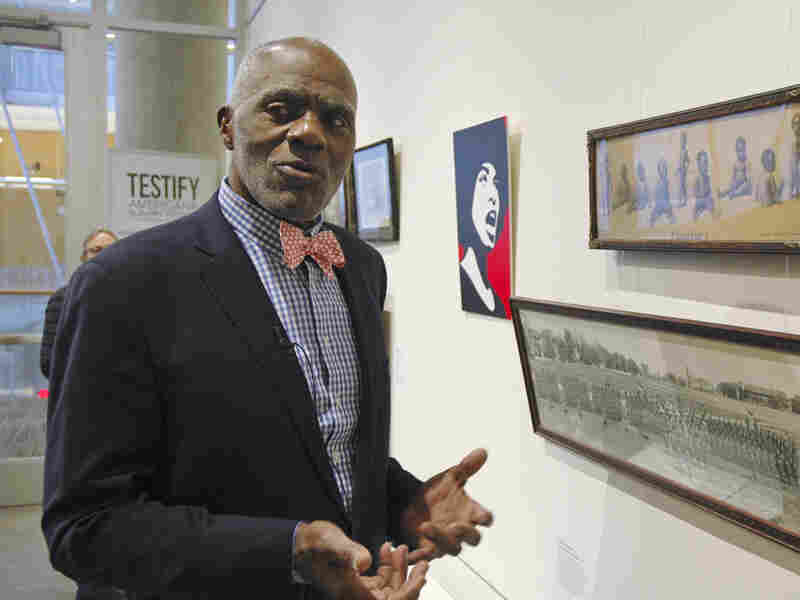 Justice Alan Page, 73, is a former NFL player who served more than 20 years on the Minnesota Supreme Court. Over 15 years, he played for the Minnesota Vikings and Chicago Bears and went to the Super Bowls four times.
Steve Karnowski/AP
-
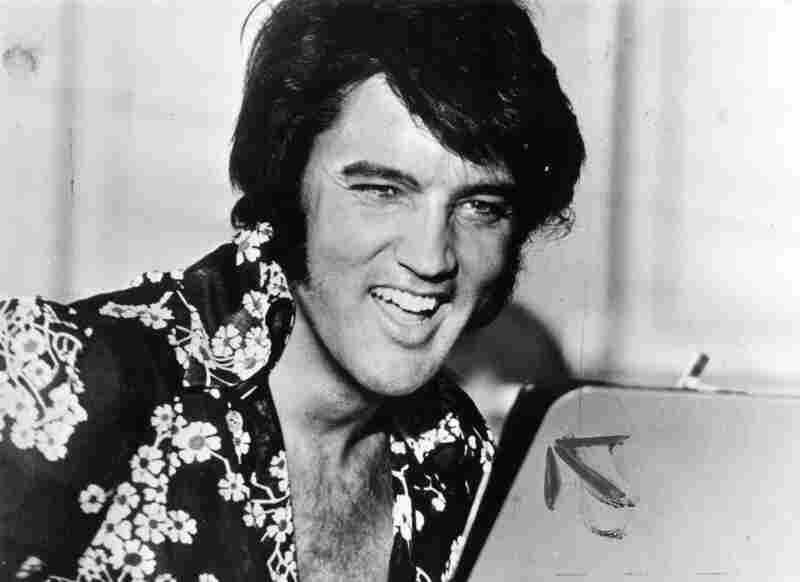 Elvis Presley (1935-1977) is one of the most iconic figures of the 20th Century, known the world-over for his music and rockabilly sound. Over the course of his career, Presley earned three GRAMMY Awards, starred in 31 films and sold more than a billion records.
Keystone/Getty Images
-
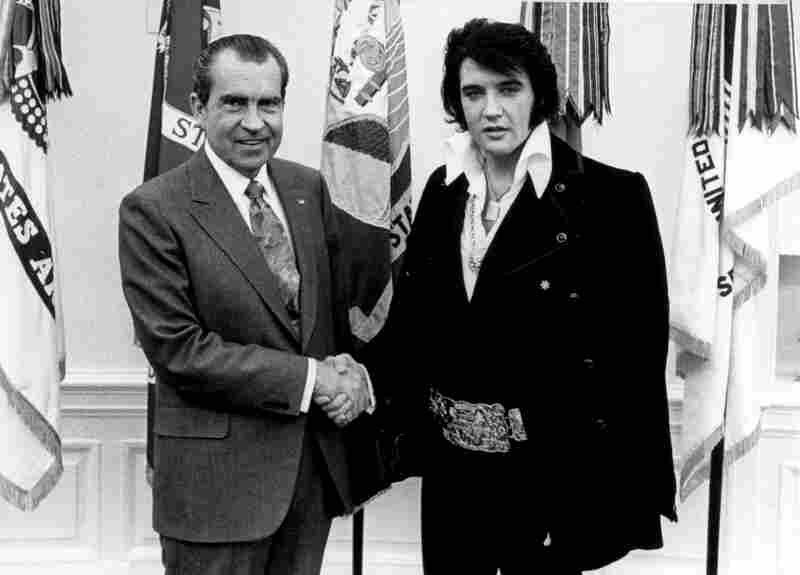 President Trump isn’t the first Oval Office occupant to show his appreciation for Elvis. President Nixon met with Elvis Presley during a highly publicized visit to the White House in 1970.
National Archives/Getty Images
-
 George Herman “Babe” Ruth, Jr. is one of the most famous baseball players in American history. From 1914 to 1935, the legendary slugger hit 714 home runs and helped establish baseball as “America’s Favorite Pastime.”
General Photographic Agency/Getty Images
-
 After shaking hands with then-President Warren Harding, Babe Ruth hit a home run to help the New York Yankees win the third game of the series. In his 15 seasons as a Yankee, Babe Ruth led the team to seven American League championships and four World Series.
Keystone/Getty Images
-
 Justice Antonin Scalia (1936-2016) was a towering figure during his 30 years on the Supreme Court. Known for his strict interpretation of the Constitution, Scalia was both a conservative icon and polarizing figure on the bench.
Chip Somodevilla/Getty Images
-
 Roger Staubach, 76, is a Hall-of-Fame quarterback who played in the NFL for 11 seasons, winning two Super Bowls with the Dallas Cowboys and making the Pro Bowl six times. He is also a noted philanthropist and businessman.
Cindy Ord/Getty Images
1 of 10
A king, a senator and the “Sultan of Swat” will be honored at the White House Friday.
President Trump is presenting the nation’s highest civilian honor to seven people including Elvis Presley and Babe Ruth.
“This is a fascinating way to find out what is important to a president,” said Fletcher McClellan, a political scientist at Elizabethtown College in Pennsylvania.
McClellan and several colleagues have cataloged all 500-plus Medals of Freedom that have been issued since the award was established by John F. Kennedy. They see the medals as a source of insight because, while honorees are suggested by a variety of people, the president has total discretion to pick the recipients.
“In President Trump’s case, we get to learn more about what ‘Make America Great’ means to him,” McClellan said.
Honoring Presley and Ruth might signal Trump’s nostalgic yearning for America as it was in the last century. They’re also safe picks for a president whose invitations have at times been spurned by more contemporary artists and athletes.
“Those who are deceased can’t really object,” McClellan said.
While less than 10 percent of previous Medals of Freedom were presented posthumously, more than 40 percent of Trump’s fall into that category.
Some of Trump’s picks are unsurprising. He’ll recognize the late Supreme Court Justice Antonin Scalia as well as Sen. Orrin Hatch, R-Utah, who’s retiring after 41 years.
Trump is the first president to extend the honor to a couple of professional football stars, Roger Staubach and Alan Page.
McClellan said Staubach is an easy choice, since he attended the Naval Academy, won the Heisman Trophy and played for the Dallas Cowboys.
“The big surprise to me is Alan Page,” McClellan said.
Page, who had a Hall-of-Fame career with the Minnesota Vikings and Chicago Bears, went on to serve more than 20 years as a justice on the Minnesota Supreme Court.
During his playing days, Page was active with the players’ union. And more recently, he has defended NFL players who protest police brutality by taking a knee during the national anthem.
“What Paul Robeson said was, ‘The answer to injustice is not to silence the critic. It is to end the injustice,’ ” Page told WCCO-TV in January.
Trump has criticized players who kneel during the anthem. The White House didn’t respond to questions about Page or the president’s other selections.
Researchers have found some predictable patterns in past Medal of Freedom honorees. Republican presidents tend to recognize more military figures, while Democrats are more likely to honor labor and civil rights leaders. One surprise, McClellan said, is that Republican presidents have awarded more medals to journalists.
“That was a puzzler, and we still haven’t figured that out,” he said.
No journalists made Trump’s list of honorees. The president’s final pick for the Medal of Freedom this year is Miriam Adelson, who is described by the White House as a “committed doctor, philanthropist, and humanitarian.” She’s also a GOP megadonor, along with her husband, the billionaire casino magnate Sheldon Adelson.
“This is a power couple that really cuts a path in U.S. politics and has been a major benefactor to the Republican Party for many years,” said Sheila Krumholz, executive director of the Center for Responsive Politics, which tracks campaign contributions.
The Adelsons contributed $113 million to Republican and conservative campaigns during the 2018 election cycle alone.
Financial supporters have been honored with medals in the past, though usually not so close to an election. Sheldon Adelson was at the White House last week for a midterm election watch party. The Medal of Freedom honorees were announced just four days later.
FDA Seeks Ban On Menthol Cigarettes To Fight Teen Smoking


FDA Commissioner Scott Gottlieb said he wants to ban menthol cigarettes because teenagers often become addicted to nicotine by smoking them.
Joe Raedle/Getty Images
hide caption
toggle caption
Joe Raedle/Getty Images
The Food and Drug Administration announced Thursday that it will seek a ban on the sale of menthol-flavored cigarettes.
The announcement came as the agency officially released a detailed plan to also restrict the sale of flavored electronic cigarettes. It also wants to ban flavored cigars.
In a statement, FDA Commissioner Scott Gottlieb says the moves are aimed at fighting smoking among young people. Flavored e-cigarettes, menthol-flavored tobacco cigarettes and flavored cigars are all popular among teenagers.
“Today, I’m pursuing actions aimed at addressing the disturbing trend of youth nicotine use and continuing to advance the historic declines we’ve achieved in recent years in the rates of combustible cigarette use among kids,” Gottlieb says.
While cigarette smoking has hit a record low in the United States, vaping has been skyrocketing. That trend has raised concerns that a new generation of young people will become addicted to nicotine.
Gottlieb says the moves were prompted by new data showing a 78 percent increase in e-cigarette use among high school students and a 48 percent increase among middle school students, from 2017 to 2018.
“These data shock my conscience,” Gottlieb says.
The ban on menthol, in particular, has been long sought by public health authorities and antismoking advocates. The concern is that the flavoring masks the harshness of tobacco smoke, making it easier for people to start smoking.
“I believe these menthol-flavored products represent one of the most common and pernicious routes by which kids initiate on combustible cigarettes,” Gottlieb says.
Menthol cigarettes are especially popular among African-Americans, leading some to charge that tobacco companies have been using the flavoring to target minorities.
Several groups, including the NAACP, endorsed the FDA’s plan even before it was officially announced. “For decades, data have shown that the tobacco industry has successfully and intentionally marketed mentholated cigarettes to African Americans and particularly African American women as ‘replacement smokers,’ ” the NAACP said in a statement.
Several cigarette companies that market menthol cigarettes didn’t immediately respond to requests for comment. In the past, they have vigorously opposed any effort to ban menthol cigarettes.
“We continue to believe that a total ban on menthol cigarettes or flavored cigars would be an extreme measure not supported by the science and evidence,” said a statement from Altria Group Inc., maker of Marlboro Menthol.
The proposed ban will require a lengthy rule-making process by the FDA before it can go into effect.
Antismoking groups hailed the announcement.
“FDA’s decision to move forward with a ban on menthol cigarettes is one of the most significant public health actions that the FDA has taken in years and will have a greater impact on the death and disease caused by tobacco in the United States than almost any other single action,” says Matthew Myers, president of the Campaign for Tobacco-Free Kids.
“Menthol cigarettes are the single most important pathway to get kids to start smoking in the United States. It makes sense because what it does is coat your throat. It makes it much easier to get used to the harshness of tobacco smoke,” Myers says.
Some opponents of a menthol ban have argued that it could create an underground market for menthol cigarettes. But Myers and others dismiss that concern.
While Myers praised the FDA’s new restrictions on e-cigarette flavorings, he called for the agency to go further and completely ban the flavorings. According to the plan released Thursday, the FDA would continue to allow adults to buy flavored e-cigarettes.
Suzy Whaley, PGA Of America's First Female President, Outlines Her Vision For Golf
NPR’s Ailsa Chang talks with new PGA of America President Suzy Whaley about being the first woman elected to the job and what her vision is for the future of golf.
A Search For New Ways To Pay For Drugs That Cost A Mint


Katherine Streeter for NPR
Researchers expect that three dozen new drugs will come on the market over the next few years with astronomical prices — some likely topping a million dollars per patient.
The drugmaker Novartis has told investors it might be able to charge $4 million to $5 million for one of its potential products, a treatment for a rare disease called spinal muscular atrophy.
Hundreds more ultra-expensive therapies are under development. They could drive up the cost of medicine and health insurance for everyone. So researchers have started to develop strategies to address that coming price shock.
These new treatments include gene therapies, which target certain cancers and rare diseases. Take for example hemophilia, an inherited disorder that prevents a person’s blood from clotting properly.
“When I was born, treatment did not exist for hemophilia,” says Mark Skinner, one of about 20,000 Americans with the condition. “Within my lifetime — I’m 58 years old — there have been remarkable advances.”
Skinner, an attorney in Washington, D.C., who is past-president of the World Federation of Hemophilia, now gives himself injections of expensive medication most days to prevent the painful and potentially dangerous bleeding episodes.
He says eight or nine companies are now working on gene therapies, which could potentially cure his underlying condition. “I think we could see a gene therapy within the clinics, and available to patients, within a couple of years,” he says.
One infusion of this therapy might be enough to correct the genetic flaw, and give him many years, maybe even a lifetime, free from bleeding episodes and daily medication.
Current hemophilia drugs cost many hundreds of thousands of dollars a year. Skinner’s treatment, in particular, can cost $800,000 a year, “so a gene therapy that costs $1 million, or even $2 million — you could see it becoming economically viable over a couple of years,” he says. It could actually save money for his health insurer.
But the new kind of treatment could also be a big shock to the health care system. Gene therapy for every American with hemophilia could cost tens of billions of dollars. One response might be to ration the treatment. That’s essentially what happened when expensive new drugs that could cure hepatitis C came on the market in 2013. Would that happen for hemophilia?
“If a gene therapy came through and was reasonably expensive, it would be terrible if we could only treat a thousand patients a year, and it took us 10 or 15 years to treat all those people,” says Mark Trusheim at MIT’s NEWDIGS program.
That program is trying to dream up better ways to pay for gene therapies for hemophilia as well as dozens of other diseases where long-term treatments are in the works. (NEWDIGS stands for the “New drug Development ParadIGmS Initiative”)
Under the current paradigm, we typically pay as we go for drugs, with monthly bills for monthly pills. Trusheim says it’s like paying rent on an apartment.
“But now with these new gene therapies, we get to take the treatment once and it can last for years,” he says. They may even last a lifetime. He says it makes more sense, then, to think of these drugs in terms of paying a mortgage over time – think of a condo, rather than a rental apartment.
That approach could spread out the payments, reducing the potential shock of a new treatment. “Plus we have the option here not just to turn it into a mortgage payment,” he says, “but make that mortgage payment contingent on whether the apartment is really a good apartment or not. If the roof begins to leak, maybe we won’t pay so much on the future payments.”
This strategy has already been put to use to pay for one gene therapy – Luxturna — which treats an inherited form of blindness at the cost of $850,000 per patient. The company that produces the therapy, Spark Therapeutics, has agreed to give payers a refund if a patients’ vision hasn’t improved sufficiently after two and a half years.
New therapies may not work at all, or their effects may wear off over time. There should be some way to reflect the actual long-term value to a patient in the price of treatment, says Trusheim.
He is eager to get funding schemes like this instituted now, because he expects to see another three dozen new expensive therapies coming to the market in just the next four years. Those include immune-system treatments called CAR-T for cancer, which may extend a person’s life but may not be curative. It also includes gene therapies for diseases that up till now have had no treatment at all.
“It could be really exciting,” he says, “but it could also be really expensive as we’re treating conditions never used to be able to treat.”
Many of these treatments are for rare diseases. There are about 7,000 rare diseases, so there could eventually be many products on the market. And because there are aren’t many patients who would benefit from any given therapy, the costs of developing each novel treatment has to be recouped from a small number of patients. That drives up the price.
One biopharmaceutical company, Alnylam, prices its drugs for rare diseases in the range of $250,000 to $650,000, says Yvonne Greenstreet, the company’s chief operating officer. Speaking at a recent meeting organized by the Milken Institute, she said the company has raised about $4 billion to develop the technology behind these medications.
Her company focuses on a method, called RNA interference, that can block genetic messages. Unlike other forms of gene therapy, RNAi treatments typically need to be given periodically. Among other projects, the company has a novel hemophilia treatment in development.
“I think it’s important to remember that when you are focused on coming up with true innovation, it’s a very capital-intensive, high-risk endeavor,” she says.
Yet in the United States, where drug companies set their prices based on whatever they believe the market can bear, this can potentially be overwhelming.
“If we get a cure for Alzheimer’s priced at $100,000 or $1 million a pop, we’re toast!” said Joe Grogan from the White House Office of Management and Budget, speaking at the Milken meeting. The costs for this one condition could run into the trillions of dollars.
Even if governments and insurers can rein in the price of drugs, therapies are still likely to cost a lot at the outset, and the health care system will need creative ways to manage that.
“At the pace at which gene therapy is coming, I think we have no choice,” says advocate Skinner. “I don’t think the public would tolerate cures sitting on the shelf that people don’t have access to.”
A solution will require not only new ways of thinking, but new rules and regulations that govern how insurance companies and government programs pay for medical care. MIT’s Trusheim says, for example, refunds for poorly performing drugs can fall afoul of current laws designed to prevent kickbacks.
Skinner says these conversations should also involve patients early on, to make sure that new treatments actually address the health concerns of the patients themselves. Value shouldn’t be measured simply in terms of drug-company profits, he says.
“Achieving an early alignment between patients, the drug developers and the payers in how value is going to be measured,” he says, “is going to be an important approach as we go forward.”
You can reach Richard Harris at rharris@npr.org.