In Soccer’s Equal Pay Suit, A May 2020 Trial Is ‘Good Overall,’ Says Alex Morgan

U.S. forward Alex Morgan celebrates her hat trick with defender Tobin Heath (17) and other teammates during the second half of a Tournament of Nations soccer match against Japan in July 2018.
Colin E. Braley/AP
hide caption
toggle caption
Colin E. Braley/AP
The U.S. women’s soccer team is still savoring its victory after capturing the World Cup championship this summer. But off the field, the players continue to battle a gender discrimination case against their employer, the U.S. Soccer Federation.
The women are demanding pay equal to that of their counterparts on the men’s national soccer team. U.S. Soccer says it pays women more than men in salaries and game bonuses.
Last week, mediation efforts between the two sides broke down, so on Monday a federal judge set a trial date: May 2020, just weeks before the women’s team will begin play at the Tokyo Olympics.
Women’s team co-captain Alex Morgan says she doesn’t see the trial as a distraction.
“I don’t think we know soccer without distraction. We feel like we have always been fighting for a seat at the table and we have always fought for everything that we’ve earned, so having the case be pushed up to May I think is good overall,” Morgan tells NPR’s David Greene.
Interview Highlights
On whether the rift between her team and U.S. Soccer can be healed
Obviously, as it gets closer to trial, it’s probably going to get uglier, so I think that will take more time to heal. However, knowing that U.S. Soccer is our employer and we want to represent our country on the highest level and we want to move forward together … I’m hopeful in the next nine months that we can find a resolution that suits us both in that the women and the men are paid equal in compensation. If not, then I can see it continuing on this path until trial.
On whether the rift could get in the way of attracting more kids to the sport
We’re not going to reap the benefits from equal pay. Who’s going to reap the benefits is that next generation. So I think those young girls and that next generation should feel confident that they’re in good hands and that we are setting up this structure and this compensation and this true equality for them.
On her plans to participate in a fourth World Cup
I’m really confident that I can continue to play at the top of my game for another four years, so I’m really excited to continue on this journey with the national team, and with my club team, Orlando Pride, in 2023, whether that’s in Australia or wherever else because there’s currently 10 countries bidding for the 2023 [Women’s] World Cup. I hope to be there.
Milton Guevara and Jessica Smith produced and edited this story for broadcast. Heidi Glenn adapted it for the Web.
Weekend Games Will Decide Little League World Champions

The world’s top 11 and 12-year-old baseball players are battling it out in South Williamsport, Pa., in the Little League World Series. The winners will be decided this weekend.
Native American Tribes Say Indian Horse Relays Are America’s First Extreme Sport
One of the ways Native tribes in the West celebrate their history and culture is through annual summer horse races. They’re known as Indian Relays, and tribes call them America’s first extreme sport.
Poll: Nearly 1 in 5 Americans Says Pain Often Interferes With Daily Life

According to the latest NPR-IBM Watson Health Poll exercise, including stretching and yoga, is popular among younger people as a way to relieve pain.
Daniel Grill/Getty Images/Tetra images RF
hide caption
toggle caption
Daniel Grill/Getty Images/Tetra images RF
At some point nearly everyone has to deal with pain.
How do Americans experience and cope with pain that makes everyday life harder? We asked in the latest NPR-IBM Watson Health Poll.
First, we wanted to know how often pain interferes with people’s ability to work, go to school or engage in other activities. Overall, 18% of Americans say that’s often a problem for them. Almost a quarter – 24% — say it’s sometimes the case.
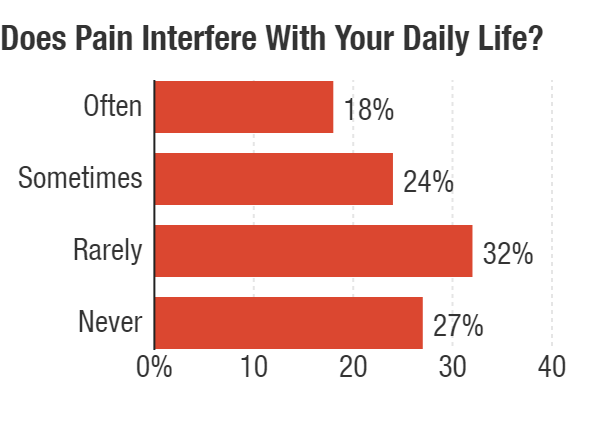
(Note: Because of rounding, total exceeds 100%)
NPR-IBM Watson Health Poll
hide caption
toggle caption
NPR-IBM Watson Health Poll
The degree to which pain is a problem varies by age, with 22% of people 65 and older saying pain interferes often with their daily lives compared with only about 9% of people 35 and younger.
Once pain strikes, how do people deal with it?
The poll found that 63% of people had sought care for their pain and 37% hadn’t. Younger people were less likely to have pursued care.
The most common approach is an over-the-counter pain reliever. Sixty percent of people said that is something they do. Another popular choice, particularly among younger people, is exercise, including stretching and yoga. Forty percent of those under 35 say exercise is a way they seek relief. Only 11% of people 65 and older say exercise is something they try for pain. Overall, 26% of people see exercise as helpful for their pain.
That level of exercise is “really exciting to see,” says Brett Snodgrass, a nurse practitioner and clinical coordinator of palliative medicine at Baptist Hospitals in Memphis, Tenn. In her experience, not nearly as many people were doing that, even a few years ago.
She says a decline in opioid prescribing could be part of the reason for the change. “Often prescribers were settling for prescriptions,” she says of health care providers’ longstanding approach. “Now that there’s less prescribing, patients are having to take more responsibility” for managing their pain, she says.
But options such as exercise and physical therapy are easier to access for people with higher incomes. Snodgrass points to the poll’s finding that only 15% of people whose income was less than $25,000 a year cite exercise as a way they relieve pain. By comparison, about a third of people making $50,000 or more annually say it’s one way they deal with it.

(Note: Up to two choices were allowed.)
NPR-IBM Watson Health Poll
hide caption
toggle caption
NPR-IBM Watson Health Poll
About 15% of Americans do turn to a prescription medicine to help get relief. People 35 and under were least likely to get a prescription drug for pain – only 3%. Older people, those 65 and older, were most likely to make use of a prescription medicine, with 23% opting for that approach.
In terms of treatment, pain needs to be viewed holistically, so that reliance on medicines alone doesn’t drive decisions. “If we don’t pay attention to pain as a public health issue, I think we’re going to be addressing half of the problem and causing another problem,” says Dr. Anil Jain, vice president and chief health information officer at IBM Watson Health.
In light of the efforts to reduce opioid use, we asked if people who are taking opioids for pain are concerned about becoming addicted: 16% said yes; 84% said no.
A little more than a third of people taking opioids said they were worried about losing access to opioids compared with about two-thirds who aren’t.
The nationwide poll surveyed 3,004 people during the first half of March. The margin of error is +/- 1.8 percentage points.
You can find the full results here.
Indian Relay Celebrates History And Culture Through Horse Racing




Former Arkansas VA Doctor Charged With Involuntary Manslaughter In 3 Deaths
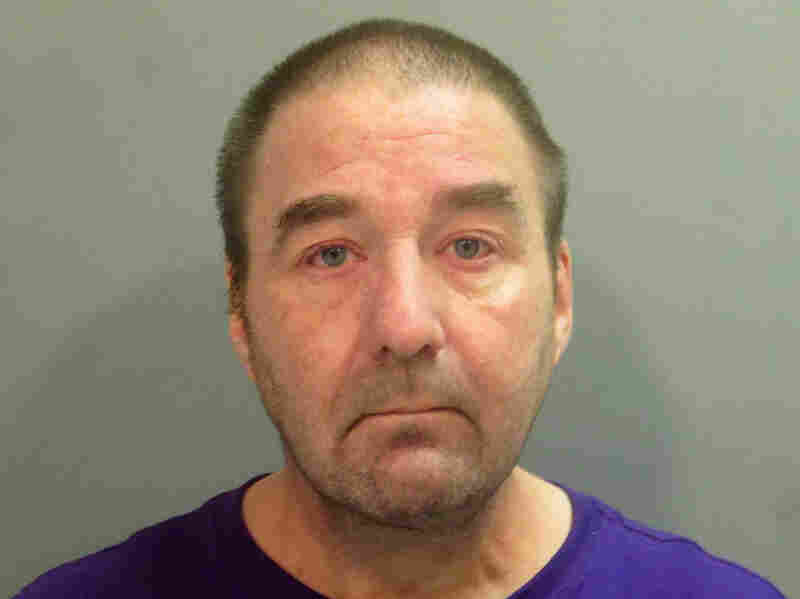
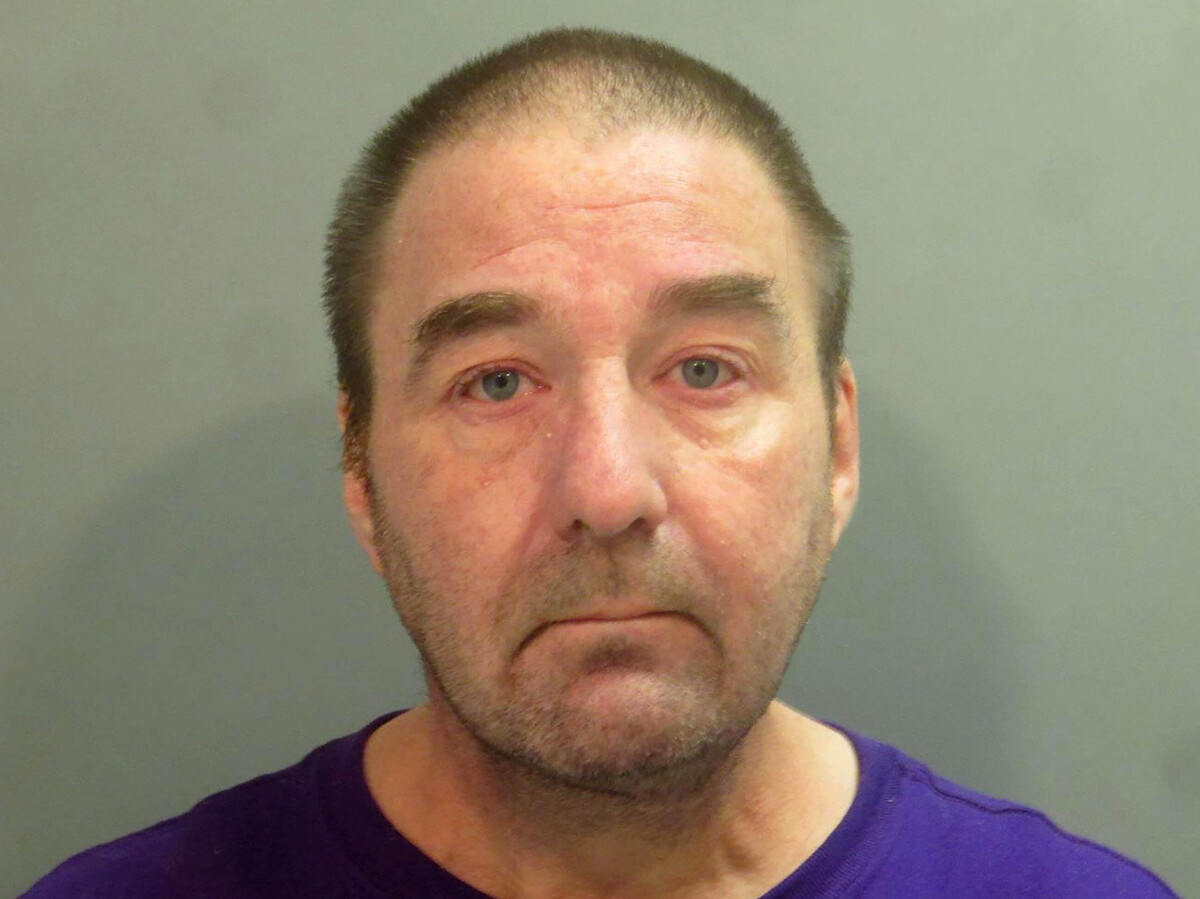
Dr. Robert Levy, a pathologist fired from an Arkansas veterans hospital after officials said he had been impaired while on duty.
AP
hide caption
toggle caption
AP
A former pathologist at an Arkansas veteran’s hospital was charged with three counts of involuntary manslaughter in the deaths of three patients whose records he allegedly falsified to conceal his misdiagnoses.
According to federal prosecutors, Dr. Robert Morris Levy, 53, is also charged with four counts of making false statements, 12 counts of wire fraud and 12 counts of mail fraud, stemming from his efforts to conceal his substance abuse while working at the Veterans Health Care System of the Ozarks.
Levy was suspended from work twice — in March 2016 and again in October 2017 — for working while impaired, before he was fired in April 2018.
A June 2018 review of his work examined 33,902 cases and found more than 3,000 mistakes or misdiagnoses of patients at the veteran’s hospital dating back to 2005. Thirty misdiagnoses were found to have resulted in serious health risks to patients.
The three deaths came as a result of an incorrect or misleading diagnosis. In one case, according to prosecutors, a patient died of prostate cancer after Levy concluded that a biopsy indicated that he didn’t have cancer.
“This indictment should remind us all that this country has a responsibility to care for those who have served us honorably,” Duane Kees, the United States Attorney for the Western District of Arkansas said in a statement. “When that trust is violated through criminal conduct, those responsible must be held accountable. Our veterans deserve nothing less.”
Kees said Levy went to great lengths to conceal his substance abuse even during a period when he had pledged to maintain his sobriety.
Levy used 2-methyl-2-butanol, a chemical substance that intoxicates a person, “but is not detectable in routine drug and alcohol testing methodology,” the statement said.
Ex-MLB Players Luis Castillo, Octavio Dotel Linked To Alleged Dominican Drug Lord


Octavio Dotel, then a pitcher for the Kansas City Royals, seen during a 2007 game. Dominican Republic authorities arrested the former MLB player, saying both he and ex-infielder Luis Castillo were linked with an alleged drug trafficker.
Charlie Riedel/AP
hide caption
toggle caption
Charlie Riedel/AP
Two former Major League Baseball stars, pitcher Octavio Dotel and infielder Luis Castillo, have been implicated in a massive drug trafficking bust in the Dominican Republic. The country’s attorney general, Jean Alain Rodríguez, announced Tuesday that the operation targeted alleged drug kingpin César Emilio Peralta, also known as “César the abuser,” and the extensive criminal operation he led.
Castillo is not the current Cincinnati Reds player of the same name. The Luis Castillo accused by authorities played with the then-Florida Marlins and the New York Mets.
Hundreds of narcotics agents, prosecutors and other government officials took part in the attempt to dismantle Peralta’s network, which Rodríguez called “the most important drug trafficking structure in the region” and that also included alleged money laundering. Dotel is among the suspects arrested, and Rodríguez named Castillo as one of the 18 figures linked to Peralta — though both Castillo and Peralta remained at large at the time of the attorney general’s announcement.
Rodríguez did not immediately specify the role authorities believe the two former baseball players performed in Peralta’s operation. He said his team had collaborated with the U.S. during the investigation, exchanging information with the FBI and the Drug Enforcement Administration.
The U.S. Department of the Treasury got involved Tuesday as well, sanctioning Peralta and his organization as “significant narcotics traffickers.”
“César Emilio Peralta and his criminal organization have used violence and corruption in the Dominican Republic to traffic tons of cocaine and opioids into the United States and Europe,” Sigal Mandelker, the undersecretary for terrorism and financial intelligence, said in a statement released by the department. “Treasury is targeting these Dominican drug kingpins, their front persons, and the nightclubs they have used to launder money and traffic women.”
“Only God knows the truth,” Castillo said on Instagram after Rodríguez’s news conference.
During his playing career Castillo was a three-time All-Star, three-time Golden Glove winner and World Series winner as part of the 2003 Florida Marlins. Dotel, for his part, is one of the all-time MLB leaders in the number of franchises for which he played: 13 teams during his 14-year career.
The Downside Of Planned Parenthood Leaving The Federal Title X Program
NPR’s Noel King speaks with Dr. Sarah Traxler, chief medical officer of Planned Parenthood’s North Central States, about the impact of losing Title X funding.
News Brief: Afghan Bombing, Deadly Force, Title X Changes
A suicide bomber killed 63 people at an Afghan wedding. California’s governor is expected to sign a bill regarding when police can use deadly force. Title X changes take effect Monday.
Planned Parenthood May Reject Federal Funds Over Changes To Title X
It appears some health care providers that offer birth control, such as Planned Parenthood, are going to withdraw from the federal Title X program. Changes to Title X take effect Monday.