Country House, A 65-1 Long Shot, Wins Kentucky Derby After Historic Disqualification

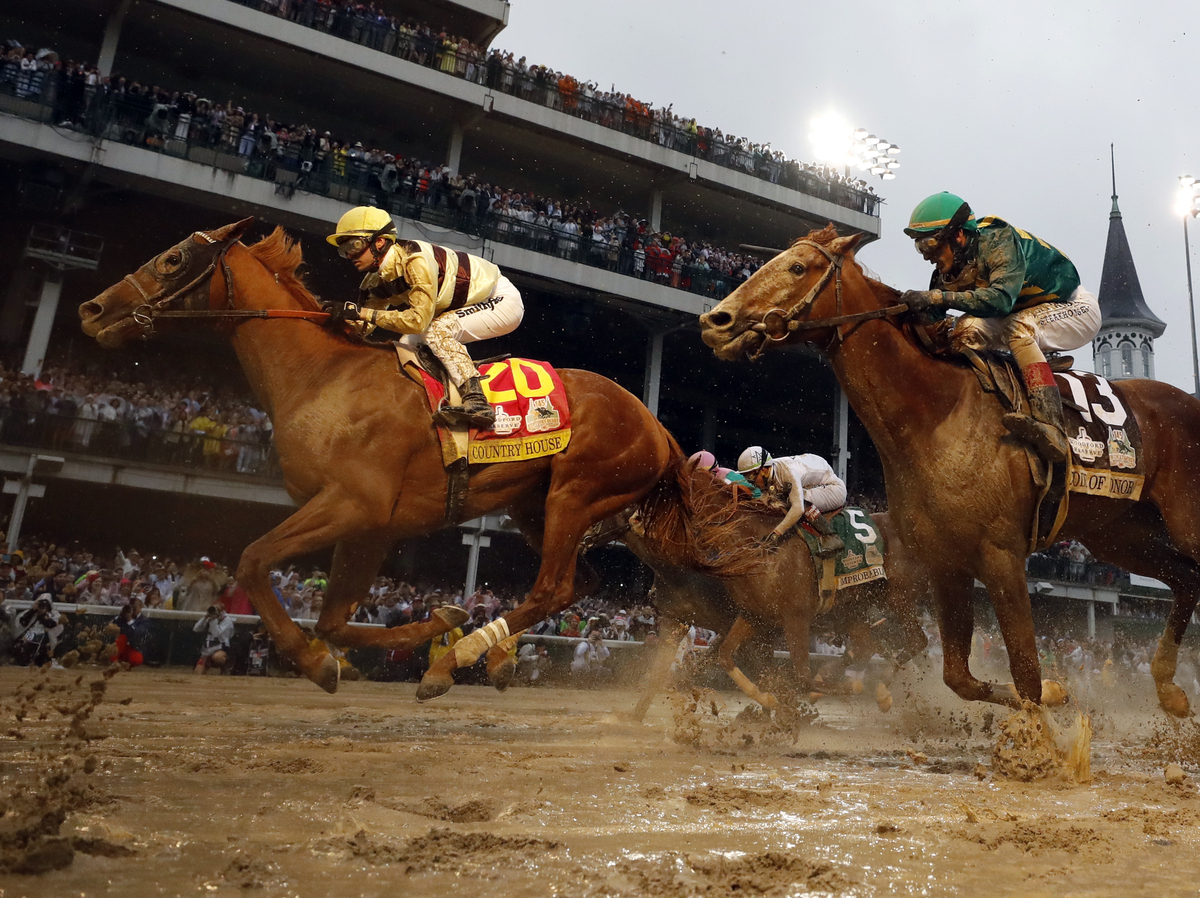
Flavien Prat rides Country House to victory during the 145th running of the Kentucky Derby.
Matt Slocum/AP
hide caption
toggle caption
Matt Slocum/AP
Updated at 9:05 p.m. ET
In a stunning and historic Kentucky Derby upset, the horse that crossed the finish line first was not the one that was declared the winner.
Maximum Security, the favorite entering the race and the only undefeated horse in the field, outpaced the competition on the muddy track at Churchill Downs and appeared to have won the 145th Kentucky Derby with a time of 2:03.93.
Then an objection was lodged. For several tense minutes in Louisville, some 150,000 people in rain-soaked ponchos and fancy hats waited for a verdict.
About 20 minutes after the race ended, the race’s stewards announced that Maximum Security had been disqualified for impeding the path of at least one other horse in the race. The decision handed the victory to Country House, which started the race at 65-1 odds, and a first-time win to Hall of Fame trainer Bill Mott.
It’s the first time a horse has been disqualified for interference in the history of the race. The result also ended a six-year streak of favorites winning the derby.
Code of Honor finished second (13-1) and Tacitus (5-1), also trained by Mott, took third.
An explanation of Maximum Security’s #KyDerby disqualification. pic.twitter.com/vf8AN4qvD2
— Kentucky Derby (@KentuckyDerby) May 4, 2019
“It’s amazing,” Country House’s jockey Flavien Prat, told NBC Sports after the result was announced. “I really kind of lost my momentum around the turn, so I thought that I was going to win, but it cost me, actually.”
At a press conference after the event, Mott said he was happy with the way his horse and jockey performed.
“As far as the win goes, it’s actually bittersweet,” he said. “I’d be lying if I said it was any different.”
He acknowledged that the stewards had to make a challenging decision but said the disqualification was warranted because of Maximum Security’s impact on other horses.
Maximum Security’s trainer, Jason Servis, and the horse’s jockey, Luis Saez, had already begun to celebrate what they believed were their first Derby victories before the stewards began reviewing the objection.
Mott said he expected that the controversy surrounding the incident would reverberate for a long time. “I wouldn’t be surprised if this race shows up on TV over and over and over a year from now,” he said.
It was also a bittersweet victory for co-owner Maury Shields, whose husband, Joseph “Jerry” Shields, died last year. The prominent thoroughbred owner-breeder had served on several racing boards and was a founding member of the National Thoroughbred Association, according to the horse racing website the Paulick Report.
Only one other horse has been disqualified after finishing first in the race. Dancer’s Image, who ran in the 1968 Derby, was disqualified years later for a failed drug test.
Maximum Security was the race favorite heading into the Run for the Roses, with odds at 4-1 by the evening.
A light drizzle, which followed hours of overcast but dry skies, turned into heavier rain just in time for the race and drenched the main track. Shortly before the race began, the track was downgraded from fast to sloppy.
Last year, several inches of rain also made for a sloppy track. Justify, the favorite, took home that victory.
How High Medical Bills Can Take A Toll On Both Patients And The Nurses Who Care For Them

NPR’s Scott Simon speaks with Hilary Valdez, a nurse who wrote in after our last Bill of the Month story. She tells us about how high medical bills can affect nurses’ relationships with patients.
SCOTT SIMON, HOST:
NPR’s recently run stories about high medical bills and people who struggle to pay them in our Bill of the Month series in collaboration with Kaiser Health News. After our most recent story, we heard from a nurse who says high bills affect her relationship with patients, and perhaps their care.
Hilary Valdez is a cardiac nurse at a hospital in Colorado Springs, Colo. She joins us now. Ms. Valdez, thanks so much for being with us.
HILARY VALDEZ: Thank you for having me.
SIMON: As you see it, what are the effect of high bills on some of your patients as you deal with them?
VALDEZ: Well, initially, I wrote in because I was frustrated. These stories aren’t sensationalized. And because of these crushing bills, the public has become, I think, less trusting of health care providers. And so I wanted to speak from the perspective of nurses and other clinicians who work directly with the patients because we hear their frustrations the loudest.
I had a patient who had a heart attack. And he called me from the hall. He was sweating and short of breath, and his chest pain had returned. And protocol dictated that I get the 12-lead EKG machine. And as I was placing the leads on his chest, he looked at me almost suspiciously and asked me what that was going to cost.
And that was a teaching moment for me because I think of that machine the same way I think of a blood pressure cuff or a stethoscope. It’s a way for us to assess our patients. And it shocked me that in this situation that could have been life-threatening, he was mostly concerned about his bill.
SIMON: Has it happened that your – I don’t know – you’re about to take care of someone, doing one of the amazing things that nurses do, and a patient looks up and says, wait; I don’t know if I can pay for that?
VALDEZ: It has. And patients have the right to autonomy and transparency. And it’s important that we help them navigate the system so they can be more comfortable making their health care decisions. And nurses – you know, patients need to utilize us. And we advocate so much for them. They need to think of nurses as multitools. We have the doctors’ ears and the social workers, case managers, pharmacists. And patients, I think, need to be aware that we can help get them resources that they might not know exist.
SIMON: From your perspective, what worries you the most about health care in this country?
VALDEZ: Oh, I don’t quite have the answer to that. My concern, though, is that patients become fearful of seeking health care. And not all situations require hospitalization, but when someone puts off a nagging pain for years and years because they think they might lose their home, they end up in a lot worse of a situation than if they had sought help earlier.
SIMON: Yeah. I have been told that you have to struggle with some of these questions in your own personal life, too.
VALDEZ: Yes, I have a chronic illness, actually – epilepsy. And since I was a child, I have dealt with hospitalizations and diagnostic tests and, more recently, even surgery. And the medications that I have to keep me seizure-free so I can work – they’re expensive and have become more so. If I wasn’t in a dual-income household, I don’t think I would be able to make those payments.
SIMON: So you’re a nurse with a chronic condition, and you’re not certain you can afford the medication you need to keep you going.
VALDEZ: No. And I have great health benefits, too. But, in fact, benefits change, sometimes from year to year, and a medication that I would get at a certain price from a certain pharmacy might change with next year’s benefits. So it’s hard for me to navigate, even as someone who, I think, does have health care literacy.
SIMON: Hilary Valdez is a cardiac nurse at a hospital in Colorado Springs. Thank you so much for being with us.
VALDEZ: Well, thank you for having me.
Copyright © 2019 NPR. All rights reserved. Visit our website terms of use and permissions pages at www.npr.org for further information.
NPR transcripts are created on a rush deadline by Verb8tm, Inc., an NPR contractor, and produced using a proprietary transcription process developed with NPR. This text may not be in its final form and may be updated or revised in the future. Accuracy and availability may vary. The authoritative record of NPR’s programming is the audio record.
Saturday Sports: Portland Trail Blazers Defeat Denver Nuggets In 4 Overtime Periods
The Portland Trail Blazers defeated the Denver Nuggets 140-137 after playing four overtime periods. That hasn’t happened since Dwight D. Eisenhower was president.
SCOTT SIMON, HOST:
The art of fiction is dead. Proust, Tolstoy, Atwood, move over. While half of America slept, the Portland Trail Blazers defeated the Denver Nuggets 140-137 in a game with four – count them, you almost run out of fingers – four overtime periods. That hasn’t happened since Dwight D. Eisenhower was president. Yes, a man named Eisenhower was president. NPR’s Tom Goldman is in what’s beginning to look like title town USA with organic ramps and fiddlehead ferns – Portland. Tom, thanks for being with us. And I’m breathless.
TOM GOLDMAN, BYLINE: I wouldn’t miss it.
SIMON: What a game – what a game.
GOLDMAN: Three and a half hours of sport as diversion, entertainment, unmitigated pleasure unless you’re from Denver.
SIMON: (Laughter) Pleasurable until the last second – last 5.6 seconds, really – yeah.
GOLDMAN: The best summing up came from Portland head coach Terry Stotts after the game. He said, I have no idea what happened in the first half or the second half or the first three overtimes. Rodney Hood came in and played great. It was a hell of a game. I’ve never been involved in a game like that. It was an amazing effort by both teams. Rodney Hood, who he did mention, came into the game…
SIMON: Yeah.
GOLDMAN: …Two minutes left in the fourth overtime after sitting on the bench forever. He was the freshest player on the court. And he scored seven points, including a monster three-point shot at the end, which pretty much sealed it. Sadly, Scott, that leaves out so many other players…
SIMON: Yeah.
GOLDMAN: …From both teams who competed magnificently. But if I’ve piqued your interest, set aside 3 1/2 hours today and watch a replay.
SIMON: On the other hand, it’s just two-game-to-one lead. Do the Blazers have enough in the tank?
GOLDMAN: I think both teams will summon the physical energy. This is what they train for. But I think Portland has a psychological advantage right now. Losing a game like that after that effort is pretty demoralizing. And Denver has to deal with that. And it probably puts them in a more vulnerable position. If the Blazers get by Denver, probably Golden State lurks in the next round.
SIMON: Yeah.
GOLDMAN: Blazer fans are just thinking…
SIMON: Lurks – Golden State looms.
GOLDMAN: Looms – but Blazer fans are just thinking about tomorrow’s Game 4 against the Nuggets at this point.
SIMON: Kentucky Derby, of course, today – but this year’s race comes in the face of a lot of controversy surrounding the deaths of the greatest athletes in that sport. And, of course, I mean the horses.
GOLDMAN: Yeah. Today starts the Triple Crown period – three big races, the Derby, the Preakness, the Belmont Stakes, over the next month. This time always captures even the casual racing fan. But as you say, horse racing already is in the spotlight with the deaths of 23 horses in recent months at Santa Anita in Southern California. Those deaths prompted calls for reform – some of it starting to happen.
SIMON: Some changes have been made, right?
GOLDMAN: Yeah. Well, Santa Anita has responded, putting into place several changes related to medicating race horses. And just this week, it was announced the track is going to start using scan technology to study horses and diagnose injuries before they become catastrophic. That’s considered a very big deal. And on a larger level, an organization called the Coalition For Horse Racing Integrity – it’s starting a nationwide campaign to support a current bill in Congress that would regulate racing and unify an incredibly balkanized industry.
SIMON: Yeah.
GOLDMAN: Thirty-eight states have racing. And there are 38 sets of rules. And it makes it really hard to get any kind of measure passed, particularly safety measures that would protect the horses.
SIMON: Something I’ve wondered about in recent weeks – Tom, does horse racing have a problem the way football has a problem with concussions, that there is just damage in the sport itself?
GOLDMAN: That’s a really good question. There are those who say that’s definitely the case and that horse racing should be abolished because it’s inherently cruel to the animals. But there are certainly others, many in the industry, who say racing can go on safely without horses being mistreated. But if the industry wants to both benefit a lot of humans and be humane toward the animals at the same time, it has to be a lot better. There has to be reform because, if the public loses interest, reform efforts stall. As one animal rights activist told me, complacency is the enemy of the horses. And that could doom a whole industry.
SIMON: Yeah. NPR’s Tom Goldman, thanks so much.
GOLDMAN: You’re welcome.
Copyright © 2019 NPR. All rights reserved. Visit our website terms of use and permissions pages at www.npr.org for further information.
NPR transcripts are created on a rush deadline by Verb8tm, Inc., an NPR contractor, and produced using a proprietary transcription process developed with NPR. This text may not be in its final form and may be updated or revised in the future. Accuracy and availability may vary. The authoritative record of NPR’s programming is the audio record.
The Little-Known History Behind The Kentucky Derby
Saturday marks the 145th running of the Kentucky Derby in Louisville. NPR’s Scott Simon talks to Los Angeles Times reporter Kurtis Lee about some of the unknown history behind the legendary race.
SCOTT SIMON, HOST:
Today, 20 horses will step into the gates at Churchill Downs for the 145th running of the Kentucky Derby. There is a long history of horses and jockeys hoping for Triple Crown immortality. Some of that history lies in a neglected cemetery in Lexington, Ky., called African Cemetery No. 2, spread over eight acres. The site was created during the Reconstruction and Jim Crow eras when blacks and whites were buried in separate cemeteries. Thousands of African Americans are laid to rest there. And among those thousands are some of the early black jockeys and horsemen who were an important part of creating the legacy of the Kentucky Derby.
Kurtis Lee is a national correspondent for the Los Angeles Times. He visited that cemetery earlier this year and joins us now. Thanks so much for being with us.
KURTIS LEE: Hey. Thanks so much for having me.
SIMON: You described the cemetery in your article as neglected, cracked, chipped, crumbled. How did you find it?
LEE: I was on assignment in January doing a story on tobacco farmers who are growing industrial hemp now. And, you know, just driving through rural Kentucky, staring out at one of these horse farms, I just thought to myself, how many of these are black-owned? And, you know, the history of Kentucky in the South with slavery and Jim Crow – deep down, I knew that the answer was zero. And when I got back to my hotel room, I did a simple Google search. And I found that to be true. But I stumbled upon this cemetery, which was, you know, not far from my hotel – African Cemetery No. 2 where these black race – horseracing legends are laid to rest in this cemetery. And, you know, it’s really this forgotten history that not a lot of people know about.
SIMON: Well, tell us about some of the names that you discovered and learned about who are laid to rest there.
LEE: Absolutely. So there’s Oliver Lewis. He was the first jockey to win a Kentucky Derby in 1875. And also, you know, James “Soup” Perkins – he was one of the youngest jockeys to win. He won the Derby in 1895 at the age of 15. And, you know, also buried there was the late great Isaac Burns Murphy who rode in 11 Kentucky Derbies. And, you know, he won three. And of the first 28 winning jockeys of the derby, 15 were black men. And there just isn’t that much emphasis on it every time the Kentucky Derby comes around, you know, the first Saturday in May.
SIMON: I didn’t know it until I read your article. How do we explain that?
LEE: You know, you saw a lot of black jockeys winning the Derby in the late 1800s and early 1900s. And then Jim Crow laws come along. And by 1922, there were no blacks in the Kentucky Derby, no jockeys. And that continued on all the way until 2000 when Marlon St. Julien rode in the Kentucky Derby. And there was another break even until 2013 when Kevin Krigger was the last black man to ride in the Kentucky Derby.
SIMON: You a derby fan?
LEE: I am. Growing up, the Kentucky Derby was always on in May at my house. And, you know, growing up, my father would always talk to us about black firsts. You know, Doug Williams was the first black man to win the Super Bowl, Tiger Woods the first to win the Masters and Thurgood Marshall the first to sit on the Supreme Court. And, you know, I never knew that the first jockey to win the Kentucky Derby was a black man. And, you know, I think that just – it just is a testament of just how much – there isn’t that much knowledge around this.
SIMON: Kurtis Lee, national correspondent for the Los Angeles Times, thanks so much for being with us.
LEE: Thanks so much.
Copyright © 2019 NPR. All rights reserved. Visit our website terms of use and permissions pages at www.npr.org for further information.
NPR transcripts are created on a rush deadline by Verb8tm, Inc., an NPR contractor, and produced using a proprietary transcription process developed with NPR. This text may not be in its final form and may be updated or revised in the future. Accuracy and availability may vary. The authoritative record of NPR’s programming is the audio record.
Kentucky Derby Jockeys Look For New Ways To Shave Off Time
The Kentucky Derby is fast. Really fast. The famed horse race is often won by fractions of a second. This has owners, trainers and jockeys looking for any way they can cut time.
AILSA CHANG, HOST:
Tomorrow marks the 145th Run for the Roses, better known as the Kentucky Derby and often referred to as the fastest two minutes in sports. In past years, the race has been won by less than a second. While there’s plenty of debate over the impact of performance-enhancing drugs, Ashlie Stevens of member station WFPL in Louisville wondered – what are some other ways jockeys, owners and trainers shave seconds off race time?
ASHLIE STEVENS, BYLINE: In the days leading up to the Kentucky Derby, horses and their trainers parade through the paddock on their way to and from the track for practice runs.
(SOUNDBITE OF HORSE TROTTING)
A. STEVENS: For now, the horses are moving at a pretty slow pace.
(SOUNDBITE OF HORSE WHINNYING)
A. STEVENS: But on Saturday, that won’t be the case. These horses are 1,000-pound elite athletes. And this race is just as competitive as any marathon or Olympic swim. Since its start in 1875, there are numerous examples of the derby being won by a fraction of a second. Which made me wonder – has anyone ever shaved their racehorse to get a better time, like how some human endurance athletes shave excess body hair to eliminate drag?
CHRIS GOODLETT: To my knowledge, there’s never been hair shaved off a horse to save seconds.
A. STEVENS: That’s Chris Goodlett, the chief curator at the Kentucky Derby Museum.
GOODLETT: I don’t know if it’s written rule – maybe because of the absurdity – but my guess would be it would be frowned upon.
A. STEVENS: Goodlett says, ultimately, the Jockey Club, the governing body of professional horse racing, probably wouldn’t approve of a bald horse. They can get sunburns, and owners are prevented from making any major alterations to a horse’s appearance – though there are plenty of other modifications trainers and jockeys have made for faster runs, such as using lighter horseshoes. Gary Stevens is a retired three-time Kentucky Derby-winning jockey.
GARY STEVENS: They’re not steel shoes. They are aluminum. And they are very, very lightweight. And they have toe grips on the front and grips on the rear end as well.
A. STEVENS: Stevens also says jockeys’ colorful shirts have undergone some aerodynamic updates since the 1980s. The silks now fit much tighter, like what bicyclists wear.
TERESA ESTES: The aero fits tighter to the body, so you don’t have it flapping in the wind when the horse is running.
A. STEVENS: That’s Teresa Estes. She and her business partner run Triple Crown Silks in Winchester, Ky. They are designing silks for three Derby hopefuls this year. Estes says many racehorse owners now want something more tailored to the jockeys’ bodies to reduce drag.
ESTES: In the satins, you can’t do that because there’s no stretch to it.
A. STEVENS: More of their clients are shifting away from those traditional race day materials to more aerodynamic fabrics.
Even with all the improvements, jockey Gary Stevens says a large part of the Kentucky Derby is still the luck of the draw, specifically the draw for post positions, or which gate the horses get to start out of. The worst one is closest to the inside rail.
G. STEVENS: And the one hole is dreaded in the Kentucky Derby because if you don’t break well – if you don’t get a good start, it’s like a giant wave of 19 other horses trying to get over close to the rail to safe ground going into that first turn.
A. STEVENS: And even with a good post position, sleeker clothing and lighter gear, Chris Goodlett of the Kentucky Derby Museum says there’s one more thing to try.
GOODLETT: Trainers will all joke with us that if you want more seconds – you want to do a little bit better in the race, you need to buy a faster horse.
A. STEVENS: While having the fastest horse is really the only sure bet for winning the Derby, that won’t keep trainers and jockeys from trotting out new tricks to increase speed.
For NPR News, I’m Ashlie Stevens in Louisville.
(SOUNDBITE OF PARQUET COURTS’ “WIDE AWAKE”)
Copyright © 2019 NPR. All rights reserved. Visit our website terms of use and permissions pages at www.npr.org for further information.
NPR transcripts are created on a rush deadline by Verb8tm, Inc., an NPR contractor, and produced using a proprietary transcription process developed with NPR. This text may not be in its final form and may be updated or revised in the future. Accuracy and availability may vary. The authoritative record of NPR’s programming is the audio record.
Over 200 Professional Women’s Hockey Players Won’t Play In North America This Year
NPR’s Ailsa Chang talks with Katie Strang, writer for The Athletic, about the players’ demands for a sustainable league that pays its players living wages.
Employees Start To Feel The Squeeze Of High-Deductible Health Plans
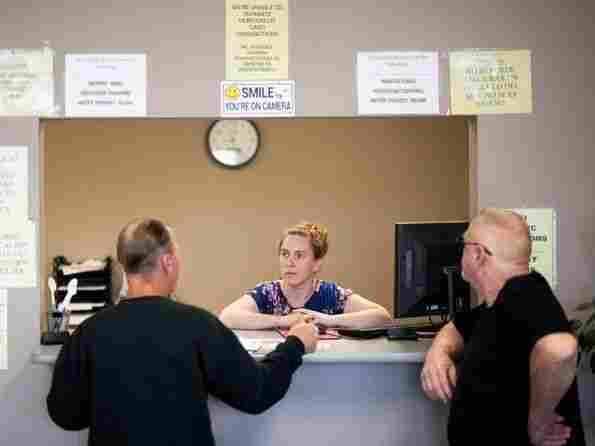

Clarisa Corber at work at a Topeka, Kan., insurance agency. Corber and her husband — who have three kids, a health plan and $15,000 in medical debt — were profiled in a recent Los Angeles Times investigation into the effects of high-deductible health plans.
Nick Krug/Los Angeles Times
hide caption
toggle caption
Nick Krug/Los Angeles Times
Workers with a steady paycheck already know that wages have been stubbornly slow to rise. Meanwhile, those who get health insurance through a job have seen their deductibles shoot up. In fact, says Noam Levey, a health care reporter for the Los Angeles Times, deductibles have, on average, quadrupled over the last dozen years. As a result, even some people who have health insurance are having trouble affording medical care. We talked with Levey about his latest reporting into how the issue is affecting workers and their families.
Interview Highlights
On why he decided to embark on this project:
We’ve spent so much time fighting about Obamacare over the last 10 years and talking about the uninsured that I think we lost sight of this quiet revolution that’s happened with health coverage for the tens of millions of Americans who have coverage through an employer. These are the people who’ve seen deductibles rise astronomically — rising four times in the last dozen years from about $350 on average to $1,350 on average. In some cases, people are seeing $4,000, $5,000, even $6,000 deductibles that they have to pay out of their own pocket before their health insurance kicks in. Needless to say, many, many Americans can’t afford those kinds of bills.
On what he heard in talking to people:
We heard some really heartbreaking stories. So we did a nationwide poll with the Kaiser Family Foundation as part of this project. One of the things that we found was that half of Americans who get job-based coverage say they or an immediate family member in the last year have put off going to the doctor, not filled the prescription or delayed some other kind of medical care because of concern about cost. We found one in five had depleted their savings to pay a medical bill in the last year and one in six reported that they have had to make some kind of difficult sacrifice in order to pay a medical bill.
Some of them were really gut wrenching. We talked to a 27-year-old chef in western Virginia trying to start a family with his young wife. His wife had a miscarriage. They got such huge medical bills he had to take two extra jobs and was working from 5 a.m. until 11 p.m. some days.
These are people with health insurance. This used to be something we heard about all the time for people who didn’t have health insurance, but in many cases these are middle-class people making $75,000 or $100,000 a year. But if they get a $5,000 or $6,000 medical bill — a family of four, kids in school — it’s hard for a lot of people to come up with that kind of money.
On what’s coming next in his reporting
We’re going to be looking particularly at how these high deductibles are problematic for people who have serious medical conditions — diabetes, heart disease, even cancer. One of the things we found particularly troubling is that these people who should be going to the doctor, even they are cutting back on their treatment.
We’re going to be looking at how these high-deductible plans are exacerbating inequality at a time when this is a major issue for Americans about who’s getting the gains in our economy. If you’re living paycheck to paycheck and you get sick, it’s really tough for that group of people.
One of the other things that’s amazing, and I know NPR has looked a little bit at this, is that the growth of online charities and crowdfunding sources like GoFundMe is being driven in large part by people seeking to pay medical bills. And one of the amazing things about those people is that many of them have health insurance.
Noam Levey reports for the Los Angeles Times and can be found on Twitter: @NoamLevey.
New Rule Allows Religious Workers To Refuse Abortion Services
NPR’s Audie Cornish talks with Mary Ziegler, law professor at Florida State University, about a new federal rule that protects religious health care workers from performing abortion-related services.
200 Female Pro Hockey Players Lay Down Their Sticks Demanding Better Conditions


More than 200 of the top female hockey players have decided they will not play professionally in North America next season. They are calling for a sustainable league with better resources. Pictured are Hilary Knight (left) with Kelly Pannek, playing with the U.S. national team last month in Finland. Both signed on to the boycott.
Jussi Nukari/AP
hide caption
toggle caption
Jussi Nukari/AP
Decrying the sorry state of salary and support for women’s hockey, around 200 female players announced Thursday they won’t play the game at the professional level across North America, until they get a league with “the resources that professional hockey demands and deserves.”
“We cannot make a sustainable living playing in the current state of the professional game,” said the statement several players posted to their social media accounts. “Having no health insurance and making as low as two thousand dollars a season means players can’t adequately train and prepare to play at the highest level.”
We may represent different teams, leagues and countries but collectively we stand as one. #ForTheGame pic.twitter.com/O9MOOL8YOt
— Hilary Knight (@HilaryKnight) May 2, 2019
By contrast on the men’s side, Forbes says the top ten players of the 2018-2019 season each brought home multi-million dollar paychecks from the NHL, with lucrative endorsement deals topping them off.
On Wednesday, the Canadian Women’s Hockey League officially discontinued operations, citing an economically unstable business model, leaving the National Women’s Hockey League the sole remaining professional league in North America.
The NWHL had been hoping to fold in players from the Canadian league and said Thursday, despite the boycott, it still plans to proceed with season five in October with its five teams.
As a concession to players, the league announced it is “offering increased salaries and a 50-50 revenue [split] from league-level sponsorships and media rights deals,” adding it remains open to communicating with players about their concerns.
Among those participating in the boycott are Hilary Knight and Kendall Coyne Schofield, who helped propel the U.S. Women’s National Team to win gold at the 2018 Olympic Winter Games in South Korea, as well as Canadian national team goalie Shannon Szabados.
“Obviously we want to be on the ice, but I think that kind of speaks volumes to how critical it is,” Szabados, who played for the NWHL’s Buffalo Beauts, told The Associated Press. “It’s over 200 of us that kind of want to stop being pulled in 10 different directions and kind of get all our resources under one roof.”
After they announced the boycott, words of support for the players came pouring in.
Female athletes deserve to live the life they envisioned as kids: playing the sport they love, and making a living doing it. I stand with all female athletes in their pursuit of equal pay and a sustainable future. #ForTheGame #OneVoice https://t.co/hLY9HgcIJa
— Billie Jean King (@BillieJeanKing) May 2, 2019
“Female athletes deserve to live the life they envisioned as kids: playing the sport they love, and making a living doing it,” tweeted Billie Jean King, the onetime world’s top-ranked women’s tennis player.
Mary-Kay Messier, vice president of global marketing for ice hockey equipment manufacturer Bauer, called on the NHL to step in. “In order to develop a long-term viable women’s professional hockey league, the NHL must be in an ownership position,” she said in a statement.
The NHL has provided limited funding to the women’s teams, but has so far resisted calls to do more. The players designed Thursday’s announcement, in part, to compel the NHL to act, reports ESPN.
But in a statement emailed to NPR, the NHL says, while it supports the objectives of both the NWHL and the female players, it is not in a rush to make any move. “We will need some time to better understand what the full picture and implications look like,” Deputy Commissioner Bill Daly said.
Commissioner Gary Bettman told the AP that the NHL still wants the NWHL to “make a go of it,” and does not want to interfere at this time, although that could change if “there turns out to be a void.”
But the players say the void is already there and they will not pick up their sticks again until it is addressed.
U.S. Soccer Unveils Roster For Women’s World Cup, As Team Looks To Defend Title

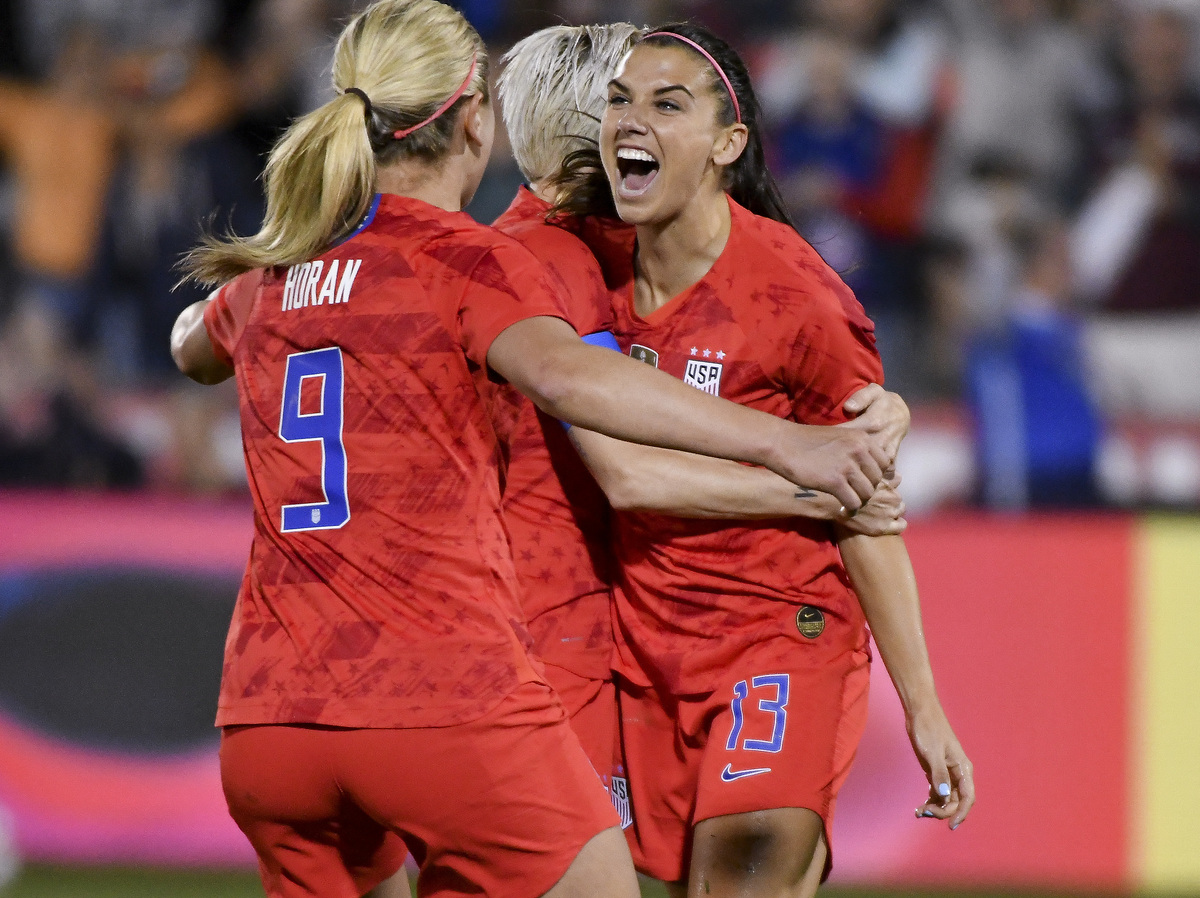
Alex Morgan, right, celebrates with Lindsey Horan and Megan Rapinoe after scoring her 100th international goal on April 4 in Colorado. The three will represent the U.S. at the Women’s World Cup next month in France.
Michael Ciaglo/Getty Images
hide caption
toggle caption
Michael Ciaglo/Getty Images
U.S. soccer coach Jill Ellis has named the 23 players who will play for the women’s national team in the 2019 Women’s World Cup in France next month. The U.S. team will look to defend its championship from the last tournament in 2015, when it defeated Japan in the final.
The roster includes many of the stars who have previously played in high-profile international competition. Leading the way is Carli Lloyd, who scored six goals at the 2015 tournament and will now return for her fourth Women’s World Cup. Alex Morgan, Megan Rapinoe, Tobin Heath, and Becky Sauerbrunn will head to their third World Cup tournaments.
? BACK FOR FOUR
23 players on the squad. A nation at our back. Our World Cup roster is here.#OneNationOneTeam #FIFAWWC
— U.S. Soccer WNT (@USWNT) May 2, 2019
The biggest surprises on the roster are the inclusion of veteran defender Ali Krieger and midfielder Morgan Brian, who have only rarely been named to the national team in recent years. Ellis was clearly looking to add more experience to the squad with Krieger, who will play in her third Women’s World Cup. Brian was the youngest member of the 2015 squad, but she has struggled with injuries over the last two years.
In a call with reporters on Thursday, Ellis said both players are on an upward trajectory in terms of fitness, and that Krieger’s mental composure was part of the equation. “No moment is ever going to be too big for her,” Ellis explained.
This will be the first World Cup for nine of the athletes. All 23 of the players compete in the National Women’s Soccer League, the U.S. professional league.
One of the team’s fastest-rising stars is forward Mallory Pugh, who just turned 21. The team’s youngest member is Tierna Davidson, 20.
Former national team member Heather O’Reilly tweeted her approval of the lineup as the team pursues its obvious goal: “This is a squad that can certainly win the World Cup.”
The U.S. has won the tournament three times, the most of any country.
Hope Solo, the goalkeeper who made many headlines in years past, is no longer on the national team. Instead, the 2019 squad includes goalkeepers Ashlyn Harris, Alyssa Naeher and Adrianna Franch.
The tournament kicks off June 7 in Paris, as France and South Korea face off. The U.S. begins the group stage against Thailand on June 11 in Le Havre, followed by matches against Chile and Sweden, the team that eliminated the U.S. at the 2016 Olympics.
USA Roster for the 2019 FIFA Women’s World Cup
Goalkeepers: Adrianna Franch, Ashlyn Harris, Alyssa Naeher
Defenders: Abby Dahlkemper, Tierna Davidson, Crystal Dunn, Ali Krieger, Kelley O’Hara, Becky Sauerbrunn, Emily Sonnett
Midfielders: Morgan Brian, Julie Ertz, Lindsey Horan, Rose Lavelle, Allie Long, Samantha Mewis
Forwards: Tobin Heath, Carli Lloyd, Jessica McDonald, Alex Morgan, Christen Press, Mallory Pugh, Megan Rapinoe