Baseball Hall Of Famer And Pioneer Frank Robinson Dies At 83
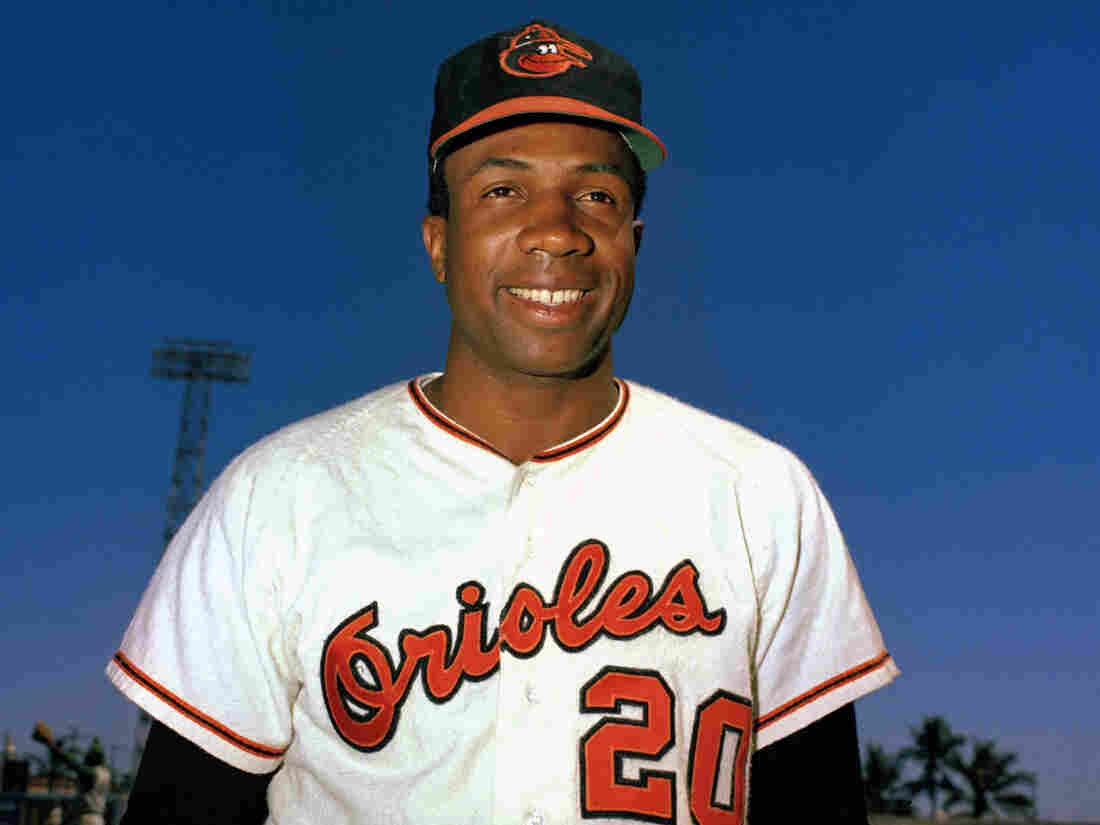
Hall of Famer Frank Robinson was the only player to win the MVP award in both major leagues. He was also baseball’s first black manager.
AP
hide caption
toggle caption
AP
Baseball Hall of Famer Frank Robinson, who made history as a player, manager and league executive, has died at 83 at his home in California.
Robinson, one of the game’s most feared sluggers and a fierce competitor, starred in both of baseball’s major leagues. He later became baseball’s first African-American manager.
“Frank Robinson’s resume in our game is without parallel, a trailblazer in every sense, whose impact spanned generations,” Commissioner Rob Manfred said in a statement. “He was one of the greatest players in the history of our game, but that was just the beginning of a multifaceted baseball career.”
Robinson broke into the majors in 1956 as a hot hitter and graceful fielder with the National League’s Cincinnati Reds. He was the NL Most Valuable Player in 1961, the same year the Reds won the league pennant. But by 1965, despite hitting 33 home runs and driving in 113 runs, the team’s management considered him old and expendable. Robinson responded to that judgment with a vengeance: In 1966, the year after he was traded to the American League’s Baltimore Orioles, he led the team to a World Series victory while winning the Triple Crown and the Most Valuable Player awards.
“Frank took us from being a good team in 1965 to being a great team in 1966,” Hall of Fame pitcher Jim Palmer told the Baltimore Sun. “I’m glad Cincinnati thought he was ‘an old 30’ when they traded him.”
In the six years Robinson spent as an Oriole, the team went to the World Series four times and won twice, in 1966 and 1970.
ESPN’s Tim Kurkjian writes that “Robinson is one of the most underrated superstar players ever to play the game.”
“With that 1966 season, Robinson became the first — and remains the only — player to win the MVP in both leagues. He also finished third in the MVP voting twice, fourth twice and in the top 10 a total of 10 times. He made 13 All-Star teams. He won National League Rookie of the Year in 1956, hitting .290 with 38 home runs at age 20 for the Reds. And while he never led his league in a Triple Crown category other than in 1966 when he managed it in all three, he led his league in slugging percentage, OPS and OPS+ four times, including three years in a row (1960-62). And he led his league in runs scored three times, in being hit by pitches seven times and in intentional walks four times.”
Robinson is currently 10th on the all-time home run list with 586.
There are statues of Robinson at the ballparks in Baltimore and Cincinnati.
Robinson became a player-manager of the Cleveland Indians in 1975, hitting a home run on opening day that year at the age of 39.
He went on to manage the San Francisco Giants (1981-1984), and then returned to Baltimore as skipper (1988-1991) before ending his field career managing the Montreal Expos/Washington Nationals franchise (2002-2006).
Robinson also worked for the game off the field as a consultant, and then executive, with the commissioner’s office.
Born in Beaumont, Texas, Robinson was raised in West Oakland, Calif., where he attended McClymonds High School along with future NBA Hall of Famer Bill Russell.
In 2005, he was awarded the Presidential Medal of Freedom by President George W. Bush.
But it was as a slugger that Robinson may be best remembered. On June 26, 1970, he hit grand slam home runs in consecutive innings.
Consider this quote from his Hall of Fame page at Cooperstown:
“When asked by a fan how he would pitch to Frank Robinson, All-Star pitcher Jim Bouton replied, ‘Reluctantly.’ “
Baseball Trailblazer Frank Robinson Dies At 83

Baseball trailblazer Frank Robinson died Thursday at 83. He was the MLB’s first African-American manager. Richard Justice of MLB.com remembers Robinson’s remarkable career.
Avoiding The Ouch. Scientists Are Working On Ways To Swap The Needle For A Pill
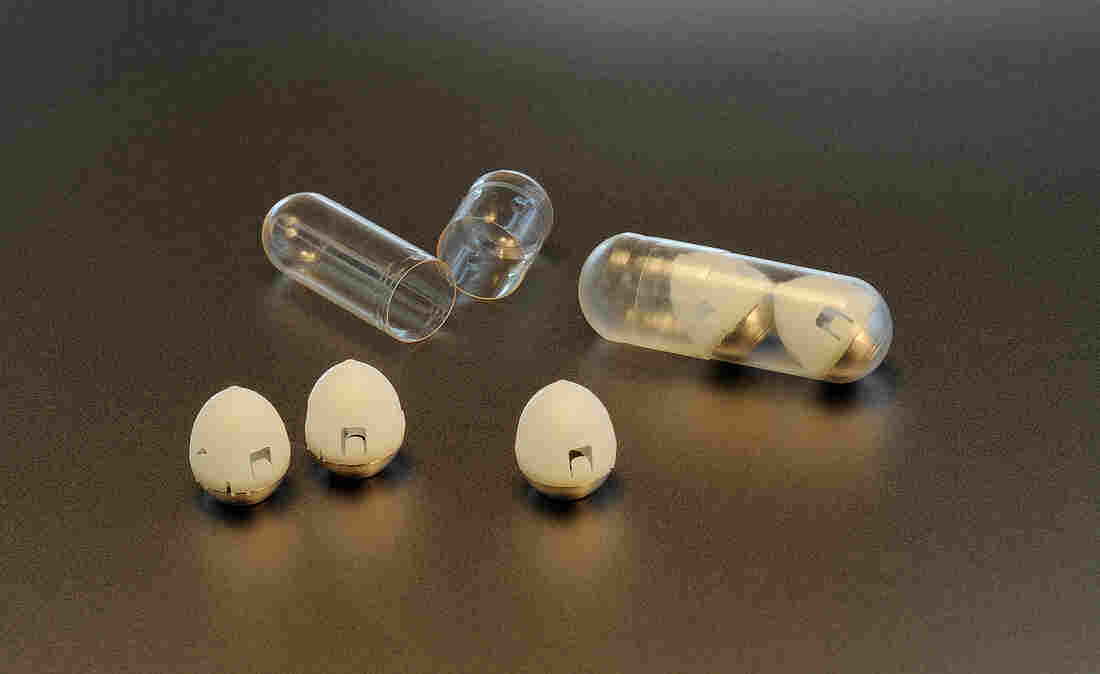
A team of researchers in Boston has developed an insulin-delivery system that injects the medicine directly into the stomach wall, which is painless.
Felice Frankel/MIT
hide caption
toggle caption
Felice Frankel/MIT
Many vaccines and some medicines, such as insulin, have to be delivered by injection. That’s a pain, both for patients and for health care providers. But two groups of researchers are trying to put some of these medications in pill form to avoid the needle.
One team of scientists, from MIT’s Koch Institute for Integrative Cancer Research and Harvard’s Brigham and Women’s Hospital, developed a system to deliver insulin that actually still uses a needle — but is so small you can swallow it and the injection doesn’t hurt.
They built a pea-size device containing a spring that ejects a tiny dart of solid insulin into the wall of the stomach, says gastroenterologist Carlo Giovanni Traverso, an associate physician at Brigham and Women’s Hospital.
“We chose the stomach as the site of delivery because we recognized that the stomach is a thick and robust part of the GI tract,” Traverso says.
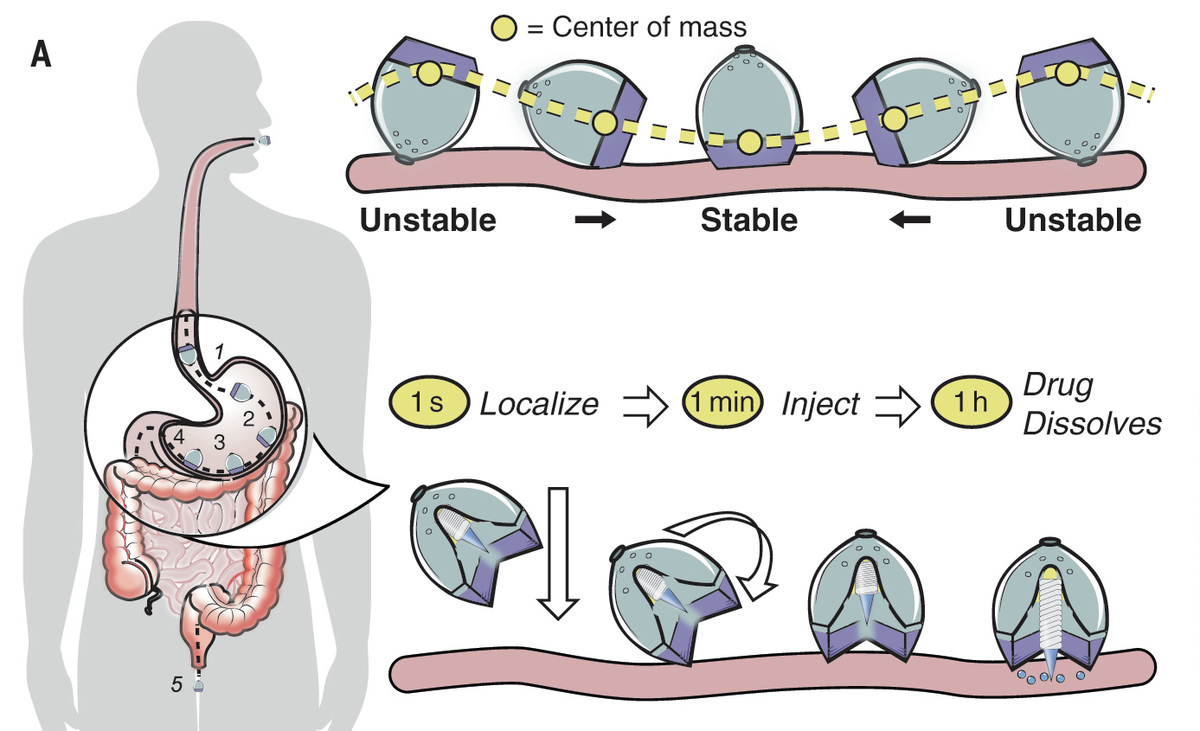
Once the device gets into the stomach, the humidity there allows the spring to launch the insulin dart.
So far so good, but Traverso says there was a problem the team had to overcome: “How do we get these devices to self-orient such that the end that is doing the injecting part is in direct contact with a tissue?”
To get it to roll into the right position all on its own, they turned to nature.
“Leopard tortoises happened to have evolved a way of doing this,” Traverso says. The shape of the tortoise shell helps the turtle flip over if it happens to wind up on its back.
And there was another source of inspiration: Weebles, those egg-shape toys that wobble but don’t fall down.

The self-righting capsule orients itself inside the stomach and ejects a tiny dart of solid insulin that’s about a quarter of an inch long.
Ania Hupalowska, Alex Abramson, Muhammad Mahdi Karim/Science
hide caption
toggle caption
Ania Hupalowska, Alex Abramson, Muhammad Mahdi Karim/Science
As the researchers report in the journal Science, they’ve tested the device on pigs, and it can deliver a therapeutic dose of insulin provided the pig has an empty stomach.
Traverso and his colleagues have been working with the global health care company Novo Nordisk to ready the device for human testing. He has received consulting fees from the company and is a co-inventor on patent applications describing oral biologic delivery. Traverso hopes their device will be ready for human tests in a few years.
On the other side of the U.S., nanoengineer Ronnie Fang of the University of California, San Diego and his colleagues have a different delivery system. Theirs is a kind of ingestible microrocket, about the size of a grain of sand, that is designed to zip past the stomach and into the small intestine.
“It actually propels [itself] using bubbles in a reaction of magnesium with biological fluids,” Fang says.
The rocket has a coating that protects its payload from the acidic and enzyme-filled environment of the stomach. Once the rocket enters the small intestine, the change in acidity causes the coating to dissolve and lets the rocket stick to the intestinal wall to release its payload, in this case a vaccine protein.
Much like Traverso’s design was inspired by the shape of a tortoise shell, the bubble-propelled microrocket travels like a bacterium.
“If you had bacteria invade your gut, they’re not just going to be sitting around statically, they’re going to be swimming around, and they’re going to make it to the intestinal wall,” Fang says.
As Fang and his colleagues report in Nano Letters, their delivery system works in mice, but human testing is probably many years off.
GOP Rep. Ann Wagner Discusses Prospect Of National Paid Leave
NPR’s Mary Louise Kelly speaks with Rep. Ann Wagner, R-Mo., who enthusiastically shouted “Yes!” when President Trump raised the prospect of national paid leave in his State of the Union address.
U.S. Prosecutors Sue To Stop Nation's First Supervised Injection Site For Opioids

U.S. Attorney William McSwain and colleagues announced a civil lawsuit Wednesday in Philadelphia against the nonprofit Safehouse. “We have a responsibility to step in,” McSwain says, though he adds, “We’re not bringing a criminal case right now.”
Emma Lee/WHYY
hide caption
toggle caption
Emma Lee/WHYY
After months of threats, federal prosecutors in Philadelphia launched a legal challenge on Wednesday against the nonprofit Safehouse, which is hoping to open what could be the nation’s first site where people with opioid addiction can use drugs under medical supervision.
The civil lawsuit, which is jointly being pursued by Pennsylvania-based prosecutors and the Department of Justice in Washington, is the first time the federal government has intervened in the hotly debated issue of supervised injection sites. The lawsuit could become an important legal test case as about a dozen cities across the country consider similar proposals.
The suit comes just as Safehouse officials ramp up fundraising efforts and continue to scout a location for what they say is a medical facility that can save lives.
If federal officials succeed in court, the momentum behind Safehouse may be lost.
“This is in-your-face illegal activity using some of the most deadly, dangerous drugs that are on the streets. We have a responsibility to step in,” says William McSwain, the U.S. attorney for the Eastern District of Pennsylvania. “It’s saying, ‘Safehouse, we think this is illegal. Stop what you’re doing.’ “
According to the suit, a supervised injection site would violate a section added to the Controlled Substances Act in the 1980s during the height of the crack epidemic. That section of law was written to close crack houses, but legal experts say it has been used more expansively in the past.
McSwain’s comments affirm remarks made last year by Rod Rosenstein, deputy U.S. attorney general, who said in an interview with WHYY that swift and aggressive action would follow the opening of a supervised injection site. Such facilities operate in Canada and Europe, but none exist in the United States. That has not stopped other cities like New York, Denver and Seattle from publicly debating similar proposals.
In Philadelphia, the one-count civil lawsuit is far from the most assertive posture federal prosecutors could have taken, McSwain says.
The suit is asking U.S. District Court Judge Gerald McHugh to rule on the legality of Safehouse’s plans, rather than waiting for Safehouse to open and then cracking down with arrests and a prosecution.
“We’re not bringing a criminal case right now. We’re not arresting anybody. We’re not asking to forfeit property. We’re not looking to be heavy-handed,” McSwain says. “This can serve everyone’s interest, in order to find out what the court thinks of this. But this, in our view, is illegal.”

A man uses heroin under a bridge where he lives with others addicted to opioids in the Kensington section of Philadelphia. Public health officials hope opening up a medically supervised drug injection site could curb opioid overdoses and facilitate treatment.
Spencer Platt/Getty Images
hide caption
toggle caption
Spencer Platt/Getty Images
Ronda Goldfein, vice president and attorney for Safehouse, says federal drug laws were not written to obstruct a medical facility focused on saving lives and moving people who are addicted to opioids into treatment.
She is confident the court will rule in Safehouse’s favor.
“We have a disagreement on the analysis and intention of the law,” Goldfein says. “We don’t think it was intended to prevent activities such as this, and perhaps it will take a court’s ruling to move the issue forward.”
The provision of the law in question is widely known as the crack house statute. It makes it illegal to maintain a space for the purpose of making, storing, distributing or using an illegal drug. Safehouse would not make or provide opioids to users. But it would allow people to bring in their own drugs, to use while being monitored by medical staff.
A study by Alex Kreit, a drug policy specialist and law professor at Thomas Jefferson School of Law in San Diego, found that the law has been successfully used by prosecutors in situations that include a drug seller operating out of a car dealership; rave parties where ecstasy was prevalent; and a concert promoter who threw “jam band” music festivals where illegal drugs flowed freely.
Kreit says that while the language of the Controlled Substances Act is broad enough to encompass an injection site, he can also imagine a defense based on local conviction about the need for such a medical service gaining traction in the face of the opioid crisis. But he says winning with that pitch would be an “uphill battle” in federal court.
“It is completely untested in terms of how federal law will apply to safe injection sites,” Kreit says. “People will be watching this very closely — particularly in other cities that have expressed their intention of starting a safe injection site.”
Safehouse is a privately run nonprofit that has the support of top city officials but will not be receiving any taxpayer funding. Planners say they aspire to open a facility in 2019, though, at least publicly, they have not committed to a more specific timeline.
Philadelphia health officials estimate that opioid-related drug overdoses kill about three people a day in the city. The more than 1,100 people who died from an overdose last year is triple the murder rate.
The overdose mortality rate hit a five-year low last year, and city officials attribute the decline to the distribution of naloxone, known by the brand name Narcan. Transit workers, police and paramedics now all are equipped with the overdose-reversing drug.
Studies have shown that in Canada and Europe, supervised injection sites have curbed the transmission of HIV and other infectious diseases. And the programs have been credited with averting lethal overdoses and extending a link to treatment services.
McSwain, though, remains a skeptic.
“That doesn’t mean that you’re not going to overdose when you’re not at the site. And it doesn’t mean that there couldn’t be other negative effects of having a site, where more people are, for example, getting hooked on drugs or trying drugs, because they think it’s safe, or they think it’s legitimate or they think it’s legal,” McSwain says. “We don’t attract people to go down this path of drug dependency that destroys their lives.”
McSwain says there is no evidence that such a model would definitively work in Philadelphia. He worries an injection site would normalize or even entice people to use unpredictable synthetic opioids like fentanyl — a drug that can be 50 times as powerful as heroin.
In November, McSwain wrote Safehouse officials a letter imploring the nonprofit to comply with federal law, writing that the federal statute “makes no exception for entities, such as Safehouse, who claim a benevolent purpose.”
In response, Safehouse officials told McSwain they “respectfully disagree” that the injection site would violate federal law, since the statutes were never intended to be used to attack a medical injection site.
“We hope that the U.S. Attorney’s office will exercise prosecutorial discretion in assessing our proposed overdose prevention services,” Goldfein wrote.
Three months later, federal officials took Safehouse to court.
“These folks have good intentions and they’re trying their best to combat the opioid epidemic,” McSwain says, “but this step of opening an injection site crosses the line. If Safehouse or others want to open this type of site, they need to steer their efforts to get the law changed.”
This story comes from Keystone Crossroads, a statewide public media initiative reporting on cities across Pennsylvania.
Antidepressants Can Interfere With Pain Relief Of Common Opioids

Combining some common antidepressants and opioids can undercut the relief of the painkillers.
Daniela Jovanovska-Hristovska/Getty Images
hide caption
toggle caption
Daniela Jovanovska-Hristovska/Getty Images
Antidepressants may dampen the effects of some common opioids, resulting in less effective pain management according to research findings published Wednesday. The researchers suggest physicians should consider alternative pain management strategies for patients on antidepressants.
Opioids come in two broad varieties: those that act directly and others that have to be chemically processed by the body before they can begin to relieve pain. Direct-acting opioids, like morphine or oxycodone, can get right to work.
The other kind are called “prodrugs” and include hydrocodone, the opioid ingredient in Vicodin. Prodrugs need to be metabolized in the liver before they’re able to bind with pain receptors in the brain.
The problem, according to Tina Hernandez-Boussard, the Stanford computational biologist who co-led the study published Wednesday in the journal PLOS ONE, is that selective serotonin reuptake inhibitors, or SSRIs, like Prozac or Zoloft, inhibit the activity of an enzyme in the liver, called CYP-2D6, that metabolizes prodrug opioids.
If the enzyme can’t do its job, then the opioid can’t either — or at least not as well.
Prodrug opioids and SSRIs are two of the most commonly prescribed medications in the US, meaning this interaction could potentially affect millions, according to Hernandez-Boussard.
“There was theoretical evidence that suggested SSRIs might block prodrug opioids, but we didn’t know if it actually affected patient outcomes,” says Hernandez-Boussard.
To find out, Hernandez-Boussard and her team mined the electronic medical records of 4,300 surgical patients who had previously been diagnosed with depression. About half of those patients were taking an SSRI antidepressant. The researchers used a machine learning approach to tease apart the effects of SSRI use, opioid type, and pre- and postoperative pain, as measured on a 0-10 scale.
The researchers found that patients on an SSRI who were prescribed a prodrug opioid, such as Vicodin, had significantly more pain after surgery than all other groups when they left the hospital. This effect persisted up to two months after surgery. “On average, SSRI and prodrug opioid patients had 1 point worse pain on the 0 to 10 scale,” says Hernandez Boussard.
One specific result of their analysis underlined the dampening effect of SSRIs for Hernandez-Boussard. As a rule, patients with higher pre-operative pain tend to have higher post-operative pain.
The researchers found that patients on SSRI medication with higher pre-operative pain tended to get prescribed non-prodrug opioids, which are often considered stronger. Despite having more pain before surgery, these SSRI/non-prodrug patients fared better than the lower preoperative pain SSRI/prodrug patients.
“This is an important study,” says Jenny Wilkerson, a professor of pharmacodynamics at the University of Florida who wasn’t involved in the study. She says that genetic variations in the CYP-2D6 enzyme can interfere with opioid metabolism in other ways, and that this study advances our understanding of how SSRIs alter the effectiveness of opioids. She adds that she’d like to more studies in different populations to better understand the impact of this interaction on patients.
Hernandez-Boussard says these results could lead to better pain management and reduce opioid prescriptions. “If the opioids aren’t being activated and you’re not getting appropriate pain management, you’re going to take more opioids and you’re going to take them for a longer period of time,” she says. Apart from patients simply being in more pain than they need to be, this interaction “could lead to misuse or abuse down the road.”
“This combination of SSRIs and prodrug opioids is likely pretty common,” says Hernandez-Boussard. Consequently, she says the potential interaction should be recognized and discussed at the point of care.
“Every opioid has a side effect, not one opioid that is better than another,” says Hernandez-Boussard. “Possibly for patients taking SSRI, morphine or oxycodone, direct-acting drugs which don’t need to be broken down by the liver might be a better choice.”
Wilkerson echoes the importance of a discussion between physicians and patients about SSRI use and pain management options, a conversation that can be complicated by mental illness. “Patients shouldn’t feel stigmatized for being depressed or in pain,” she says, “patients have to advocate for their best personal care.”
Patients who are depressed and taking SSRIs are already a vulnerable population, known to experience more pain, and to have more trouble managing it. Hernandez-Boussard hopes that this study will help doctors tailor pain treatment towards the millions of Americans taking antidepressants.
“We need to think about how we can tailor treatment towards more vulnerable groups,” she says. “More work needs to be done, but this is a good first step.”
Opinion: Now Is The Winter Of The NBA Players' Discontent
Sports commentator Mike Pesca opines on the high levels of discontent among the NBA’s top players.
Texans Can Appeal Surprise Medical Bills, But The Process Can Be Draining

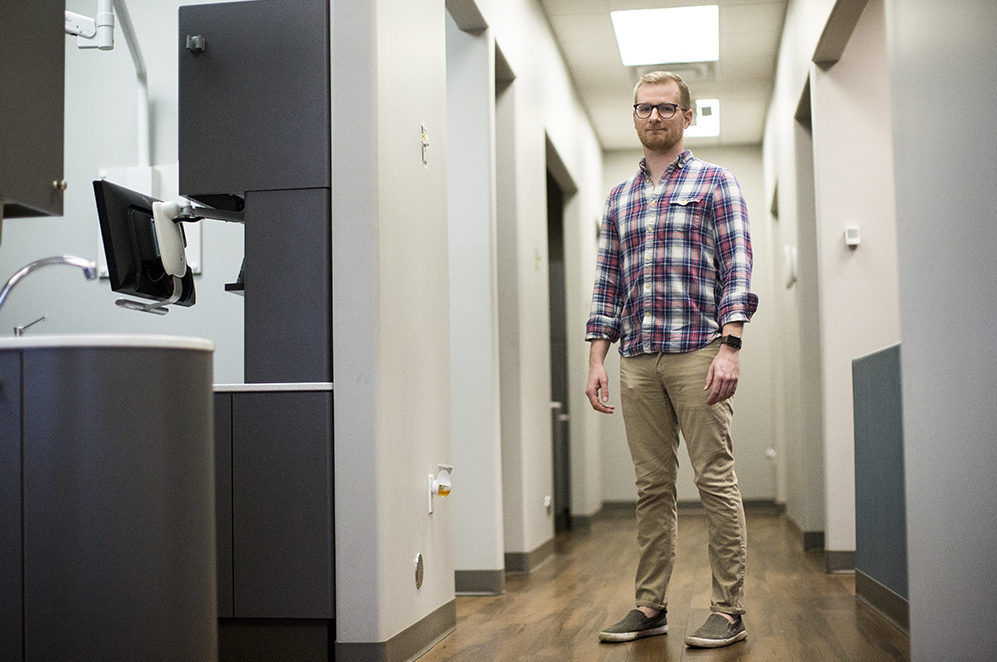
Austin, Texas, dentist Brad Buckingham received a bill for more than $70,000 after a bike accident landed him in the hospital and he needed emergency hip surgery.
Gabriel C. Pérez/KUT
hide caption
toggle caption
Gabriel C. Pérez/KUT
In Texas, a growing number of patients are turning to a little-known state mediation program to deal with unexpected hospital bills.
The bills in question often arrive in patients’ mailboxes with shocking balances that run into the tens or even hundreds of thousands of dollars.
When patients, through no fault of their own, are treated outside their insurers’ network of hospitals, the result can be a surprise bill. Other times, insurers won’t agree to pay what the hospital charges, and the patient is on the hook for the balance.
The Texas Department of Insurance’s mediation program can intervene when Texans complain about an unexpected bill — often after an emergency in which a patient rushed for treatment at an out-of-network hospital.
Historically, the state program had many restrictions that left few consumers eligible for help. But the Texas Legislature expanded it in 2017.
Since then, more patients have been filing complaints. In 2014, the department was asked to mediate 686 medical bills. During the 2018 fiscal year, however, it received 4,445 bills, more than double the 2,063 bills received in 2017.
Even after the changes, the mediation program could be a lot more robust and is likely addressing only a fraction of these problematic bills, consumer advocates say.
The road to a surprise medical bill
Brad Buckingham says he had to deal with a surprise medical bill after a bicycle accident in 2016.
Buckingham sent his bill to Kaiser Health News and NPR’s Bill of the Month portal last year.
The Austin, Texas, dentist says he was on a ride with friends in December 2016 when he crossed some train tracks at an angle to avoid a pileup. His wheel slipped out from under him, and he landed hard on his left hip.
“All I could do was scream,” he says. “I couldn’t even make words.”
His friends called an ambulance, and Buckingham was taken to the nearest hospital: St. David’s South Austin Medical Center.
“I specifically remember I gave them my health insurance information in the ambulance,” he says. “And they put me in the ER, and from the ER they took my insurance information again.”
Buckingham had insurance through Baylor Scott & White Health, which he bought through the Affordable Care Act marketplace. St. David’s was out of his plan’s network, but no one told him that — at first.
Buckingham had broken his hip, and doctors took him into surgery the same day.
“They held me in the hospital for three days just for recovery and never told me I was out of network until the time of my discharge,” he says.
A few weeks later, Buckingham got a bill that said he owed $71,543.
The total bill eventually came to $75,346. Baylor Scott & White, which left the ACA marketplace the following year, paid only $3,812.
Buckingham says he thought it was a mistake. He called the hospital and the insurer to sort it out. But after weeks of inquiring about it, there was no resolution.
Both the hospital and insurer insisted payment was his responsibility.
“I’m sitting there thinking to myself that there is no way – there is no way — this is right,” he says.
Baylor Scott & White says it couldn’t discuss Buckingham’s bill “due to confidentiality requirements.”
After Buckingham gave St. David’s permission to discuss his case with the media, the hospital released a statement saying his bill was actually the amount he owed from his deductible and coinsurance — not a balance bill.
The hospital also said the bill was so large because of his “high deductible plan.”
Those plans “may be attractive to some people because they cost less, though they place more financial responsibility on the patient,” the statement from St. David’s said.
NPR-Kaiser Health News Bill of the Month
Read the stories from the project here.
Buckingham says his policy had a deductible of $5,000 for in-network care and $10,000 for out-of-network care. He says he still doesn’t know how his bill got to be so high.
Buckingham didn’t know about the state’s mediation program. But even if he had known, he wasn’t eligible for the program at the time. His bike accident and the billing dispute with the hospital happened months before the Texas Legislature decided to expand the pool of eligible patients. So he hired his own lawyer to help him negotiate with the hospital.
Buckingham says he now owes a couple of thousand dollars to St. David’s, but he remains frustrated by the experience.
“You know, whenever I tell my story to anybody, they kind of agree — like, ‘Oh my gosh, this is ridiculous,’ ” he says. “But then when you talk to the people that have any control over it, it’s the exact opposite. It’s: ‘You owe it; we don’t.’ “
‘A total roll of the dice’
A surprise bill can happen to anyone who makes an urgent trip to the nearest emergency room.
“It’s a total roll of the dice,” says Stacey Pogue, a senior policy analyst with the Center for Public Policy Priorities in Austin. She has been looking into balance billing for years. “The medical emergency that’s going to send you to the hospital where you could get a surprise bill — is that emergency room going to be in or out of network?”
Pogue says the Texas Department of Insurance’s mediation process forces an insurance company and the hospital or medical provider to negotiate a fair price for services. She says 90 percent of the time those negotiations happen over the phone.
There are two big reasons the number of bills sent for mediation more than doubled from 2017 to 2018, Pogue says.
“One is just increased awareness,” she says. “There is constant media attention now to surprise medical bills because the stories are so shocking, right? We see them covered more, so people are more aware that when they get one, they could do something about it.”
The second reason is that in 2017, the Texas Legislature opened the mediation program up to more people, including teachers.





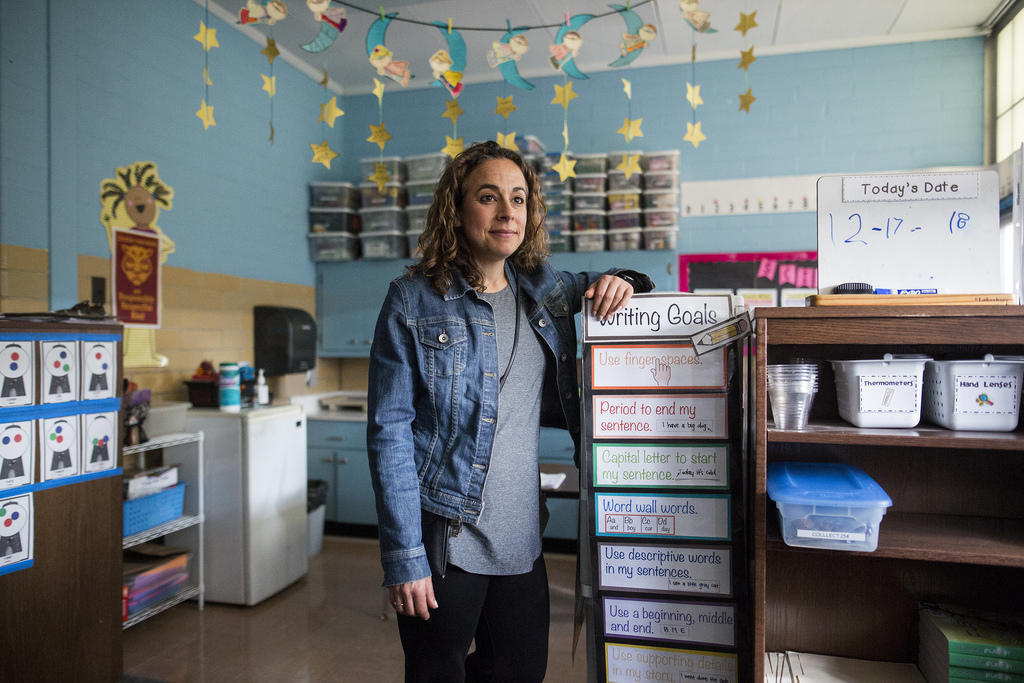
Stacey Shapiro got a $6,720 bill after being treated in the hospital for a hypoglycemic attack.
Gabriel C. Pérez/KUT
hide caption
toggle caption
Gabriel C. Pérez/KUT
Can’t wish it away
Stacey Shapiro, a first-grade teacher in Austin, also received a surprise bill from St. David’s South Austin Medical Center after she landed in the emergency room last March.
The marathon runner said she woke up one Saturday for an early run and wasn’t feeling well.
“All of a sudden the whole room started spinning. … I started sweating, sweating like buckets,” she says. “It was terrible, and then all I remember is that my ears started popping, my vision got blurred and then the next thing I knew, I had passed out.”
Shapiro’s boyfriend heard her hit the bathroom floor. He found her passed out, with her eyes open and hardly breathing. He took her to St. David’s because it was the closest hospital.
Shapiro says she was taken care of in a few hours. Hospital staff gave her fluids and anti-nausea medication. Doctors found she had a dramatic change in her blood pressure that was likely due to a spell of hypoglycemia, or low blood sugar.
Two months later, a bill for $6,720 came in the mail.
Like many teachers in Austin, Shapiro gets her health insurance from Aetna.
In a statement, the insurer said Austin school district employees are supposed to use the Seton Accountable Care network, comprising several Catholic hospitals in the area. St. David’s parent company, the for-profit hospital chain HCA, doesn’t participate in that network.
“Unfortunately, HCA is not currently accepting payments through Aetna’s [contracted payment] program, which provides set payment fees for non-participating providers. This has resulted in Ms. Shapiro being balance billed for her emergency room visit,” Aetna wrote in a statement.
Shapiro says she had heard of other Austin Independent School District employees dealing with high hospital bills. In fact, Shapiro reached out to KUT after hearing the story of Drew Calver, an Austin high school teacher who was balance billed for nearly $109,000 by St. David’s after a heart attack. Calver’s story was part of Kaiser Health News and NPR’s Bill of the Month series last year.
Shapiro says that in her case, Aetna told her not to pay what the hospital was charging her. She says she was told to pay only her deductible ($1,275), which she did right away. But St. David’s kept sending her bills for the remaining balance, which was more than $5,000.
“I guess I just thought that it was going to go away,” Shapiro says.
But it didn’t. For a public school teacher, $5,000 would have been a huge blow to her budget, she says.
Shapiro applied for financial assistance, but St. David’s told her she didn’t qualify. She says she felt like she was out of options — until a friend told her about the state’s mediation program.
After she contacted the program, a state mediator set up a scheduled call with Aetna and St. David’s. But before it took place, a KUT reporter asked St. David’s for a comment on the situation. Shortly afterward, Shapiro says, St. David’s told her she no longer owed anything.
St. David’s later told KUT that Shapiro had “already satisfied her financial obligation.” It also denied that she was balance billed to begin with.
Shapiro says the whole experience has been exhausting. “It’s just very frustrating because this has been very time-consuming,” she says.
More work to do
The Center for Public Policy Priorities’ Pogue has been arguing that the state needs to find more ways to get involved.
She says the current mediation process is pretty good, but not enough people know it’s an option.
“Because first, the instructions for how to do it are on your medical bill and your explanation of benefits — the most indecipherable documents you are going to get,” she says.
And even if people understand they have a right to mediation, they might get scared off by the concept and think they need a lawyer, Pogue adds.
But when people use the program, it tends to work by saving patients money.
In fiscal year 2018, the initial complaints amounted to $9.7 million worth of medical bills, according to the state insurance agency. After mediation, the final charges had been negotiated down to $1.3 million.
Pogue says mediation is helpful, but it still puts a big burden on the patient, who may be confused. “Why didn’t this happen in the first place?” Pogue says. “How come I had to, while recovering from an emergency, decipher medical bills, fill out paperwork with the state department of insurance, jump through all these hoops, when all that needed to happen was a phone call?”
The ideal solution to surprise medical bills would remove consumers from this confusing web altogether, she says.
Pogue points out that states like New York, California and Florida have systems that make things easier for consumers. She thinks Texas should do that too.
In 2015, New York became the first state to pass a law aimed at protecting patients from surprise medical bills from out-of-network hospitals. The Emergency Medical Services and Surprise Bills Law holds consumers harmless if they are treated by an out-of-network doctor at a participating hospital, among other things.
In 2016, Florida lawmakers passed legislation protecting consumers from receiving surprise medical bills “from doctors and hospitals that don’t have a contract with the patient’s insurance plan,” the Miami Herald reported.
And in 2017, California passed a law shielding patients from balance billing. The law kicks in if someone visits an in-network provider, including a hospital, imaging center or lab, according to the San Francisco Chronicle. Under the law, patients “will be responsible only for [their] in-network share of the cost, even if [they are] seen by an out-of-network provider,” the Chronicle reported.
In the meantime, Pogue says, more Texans should take advantage of what’s already in place in the state.
The number of people who seek mediation is “tiny compared to the number of people who get surprise bills,” she says, “so there is a ton of work to be done.”
This story is part of NPR’s reporting partnership with KUT and Kaiser Health News. You can follow Ashley Lopez on Twitter: @AshLopezRadio.
Football Fans Call Sunday's Super Bowl Dull, TV Ratings Were Down Too
The two teams combined for 16 points, and the Patriots won. That’s unlike last year when the teams combined for 74 points, and the Patriots lost. TV ratings were down to about 100 million viewers.
STEVE INSKEEP, HOST:
Good morning. I’m Steve Inskeep. Many viewers called Sunday’s Super Bowl dull. The two teams combined for only 16 points, and the Patriots won, as usual. That’s unlike last year when the teams combined for 74 points, and the Patriots lost. And now we know this year’s TV ratings are down to about 100 million viewers. But if you do the math and count it as TV viewers per point scored, this year’s game was a big success. It’s MORNING EDITION.
Copyright © 2019 NPR. All rights reserved. Visit our website terms of use and permissions pages at www.npr.org for further information.
NPR transcripts are created on a rush deadline by Verb8tm, Inc., an NPR contractor, and produced using a proprietary transcription process developed with NPR. This text may not be in its final form and may be updated or revised in the future. Accuracy and availability may vary. The authoritative record of NPR’s programming is the audio record.
Bipartisan Support Builds For Limits On Surprise Medical Bills

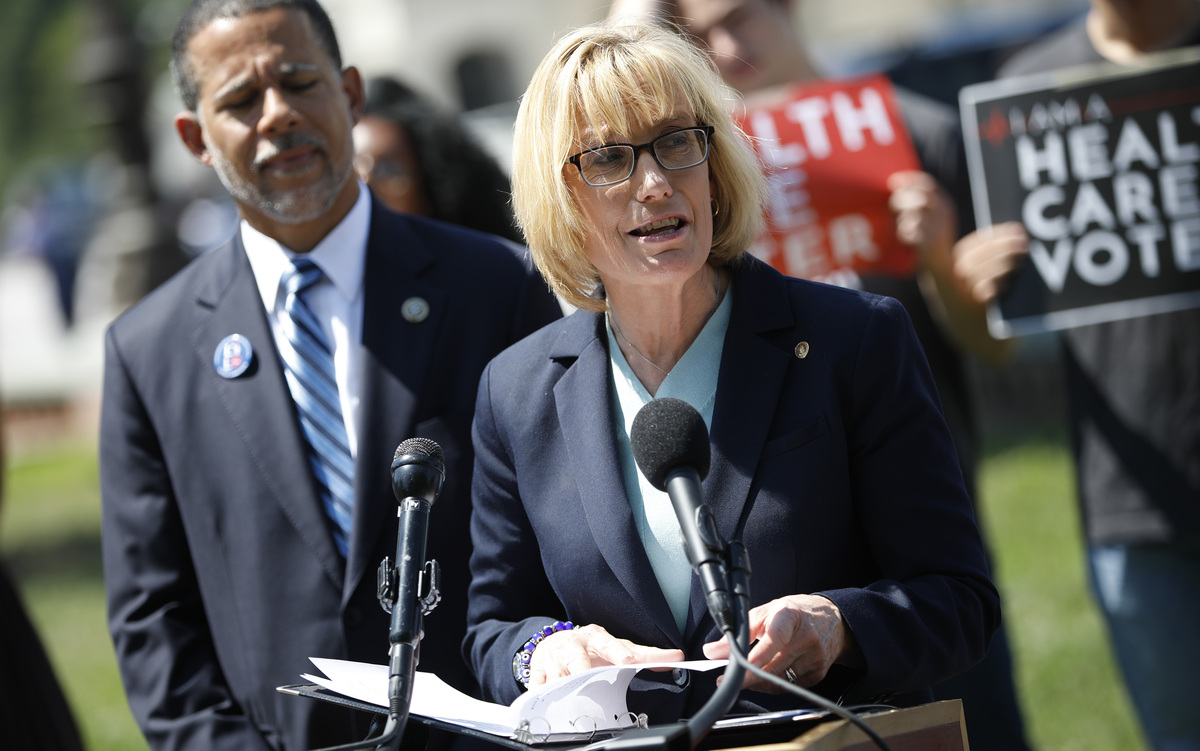
“There does seem to be across-the-board understanding that what’s happening to patients right now isn’t right or fair,” Sen. Maggie Hassan, D-N.H., said about surprise medical bills.
Aaron P. Bernstein/Getty Images
hide caption
toggle caption
Aaron P. Bernstein/Getty Images
Surrounded by patients who told horror stories of being stuck with hefty bills, President Trump recently waded into a widespread health care problem for which almost all people — even those with insurance — are at risk: surprise medical billing.
Trump’s declaration that taming unexpected bills would be a top priority for his administration echoed through the halls of Congress, where a handful of Republican and Democratic lawmakers had already been studying the problem.
The sudden presidential interest has lawmakers on both sides of the aisle expressing optimism about attacking a problem that has affected 57 percent of American adults, according to a University of Chicago survey conducted in August 2018.
Sen. Lamar Alexander, the Tennessee Republican who chairs the influential Health, Education, Labor and Pensions Committee, recently told reporters that he expects to see surprise-billing legislation “in the next several months.”
Alexander is encouraged by the movement, said a committee spokesman — giving a particular nod to the efforts of Sen. Bill Cassidy, R-La. “The chairman looks forward to reviewing their work and hopes it leads to a bipartisan consensus on how to address the issue,” the spokesman added.
“Indications in Congress have always been that this would be something they could do on a bipartisan basis,” said Paul Ginsburg, a health economist at the Brookings Institution.
Attention to surprise billing, which involves charging patients for care that is more expensive than expected or not covered by their insurance, has grown following an ongoing Kaiser Health News-NPR Bill of the Month project.
Still, the details of a possible solution remain up in the air.
The Trump administration hasn’t laid out precisely how it would take on surprise bills. But key lawmakers, including Alexander and Cassidy, have met with administration officials to discuss the problem of how to reduce health care costs. Trump administration officials have made it clear that they are looking at surprise billing within this context.
With an eye toward drafting legislation, these two senators and several others have been consulting with billing experts, as well as state and local officials, about the biggest challenges and most promising approaches being used around the country.
And though Senate Majority Leader Mitch McConnell, R-Ky., has yet to address the issue, House Speaker Nancy Pelosi, D-Calif., said it would be a priority.
“Ending surprise billing is an important part of Democrats’ ongoing effort to lower out-of-pocket health costs, and we’ll be working on it in the coming Congress,” said Henry Connelly, a Pelosi spokesman.
Previously introduced bills would impose new notification requirements, as well as limitations on what doctors and hospitals might charge patients. They would regulate bills for either emergency care at an out-of-network facility or nonemergency care when the facility is in network but the doctor isn’t.
- A draft bill pushed by Cassidy, a gastroenterologist and the leader of a small, bipartisan group of senators studying the issue, would cap what patients pay and prohibit balance billing — when a patient is expected to make up the difference between what the provider charged and what the insurer paid. Instead of arbitration, the state would set the amount a health plan must pay. In the absence of a local policy, health plans would default to a federal formula outlined in the bill. (This is similar to laws passed in California and Connecticut.)
- A bill from Sen. Maggie Hassan, D-N.H., would tackle the issue by preventing a hospital, physician group or other medical provider from charging patients more for an emergency procedure than they would have expected to pay for in-network care. It would then establish an arbitration process to determine what the patient’s health plan should pay. (This is similar to laws passed in New York and New Jersey.)
- A bill from Texas Democrat Lloyd Doggett, chairman of the House Ways and Means Committee’s Health Subcommittee, introduced during the last Congress with Sen. Sherrod Brown, D-Ohio, would require hospitals to notify patients whether the hospitals — and the doctors and other providers that patients would see there — are in network. Hospitals would also have to tell patients how much they could expect to pay out of pocket. Without at least 24 hours’ notice and the patient’s consent — or if the patient was receiving same-day, emergency treatment — the hospital would be able to charge the patient no more than an in-network provider would.
To draw attention to the issue, Hassan intends to bring to this week’s State of the Union address a guest who was billed more than $1,600 for a trip to an in-network emergency room. The patient learned after the fact that the doctor she briefly saw there was out of network.
“There does seem to be across-the-board understanding that what’s happening to patients right now isn’t right or fair,” Hassan said.
Other members of Congress, including Sen. Amy Klobuchar, D-Minn., and Sen. Tammy Baldwin, D-Wis., are expected to bring guests with painful, personal stories regarding the high cost of prescription drugs.
For its part, the administration says its commitment to addressing surprise medical bills is firm.
“President Trump has identified surprise medical bills as a serious concern of the administration. Protecting patients from these outrageous and unexpected bills and charges is a top priority for Secretary [Alex] Azar,” said Caitlin Oakley, a Department of Health and Human Services spokeswoman.
Hassan said she hasn’t heard from the White House. But as Congress shifts its focus away from the partial government shutdown, she predicted, surprise billing could emerge as a legislative priority. She said that she and Cassidy have coordinated on the issue.
Both Hassan’s and Cassidy’s bills “would go a long way toward protecting patients,” suggested Zack Cooper, a Yale University health economist who researches surprise billing. Hassan’s legislation, he said, has the additional benefit of likely bringing down health care costs.
“There are a lot of issues that can’t be fixed or at least can’t be fixed easily. This is an issue that causes immense pain and is quite visceral and can be fixed,” Cooper said.
And federal legislation is likely necessary, experts say. Some states have passed laws meant to curb surprise billing and protect patients from the costs — but those laws don’t apply to self-insured large employers, which fall under federal jurisdiction and affect more than 60 percent of people who get insurance through work.
The presidential bully pulpit could be hugely influential — in particular, Ginsburg suggested, by “leaning on Congress” to bring legislation to Trump’s desk.
And new legislation probably is the most effective vehicle. It’s unclear what kind of executive action HHS could take without Congress.
“Some creative lawyers could come up with creative interpretations [of existing laws] and lead to smart policy,” said Barak Richman, a Duke University law school professor who focuses on health policy.
But reinterpreting federal law would almost certainly invite legal challenges, he added.
Already, competing industry groups are lobbying to put their stamp on any federal policy. The emergency physicians trade group has backed an approach like Hassan’s, while the insurance lobby is calling for a Cassidy-style bill.
When asked about the industry’s response, Hassan said she has gotten “a variety of feedback — as you would expect.”
Kaiser Health News is a nonprofit news service covering health issues. It is an editorially independent program of the Kaiser Family Foundation that isn’t affiliated with Kaiser Permanente.