Nepalese Sherpa Sets New Record For Climbing Mount Everest With 24th Ascent

A Nepalese mountain climber has broken the record for ascents of Mount Everest. Kami Rita Sherpa, 49, has made it to the top 24 times.
A Nepalese mountain climber has broken the record for ascents of Mount Everest. Kami Rita Sherpa, 49, has made it to the top 24 times.

Nepali mountaineer Kami Rita Sherpa hopes to break his own record for climbing Everest, aiming for 25 summits. He’s seen here in 2018, spinning prayer wheels in Kathmandu.
Prakash Mathema/AFP/Getty Images
hide caption
toggle caption
Prakash Mathema/AFP/Getty Images
A Nepalese mountain climber has now climbed Mount Everest a record 24 times — and he’s hoping to do it one more time before he retires. Kami Rita Sherpa, 49, has been climbing Everest since 1994.
“It’s also the second time in a week that he’s made the arduous trek,” NPR’s Sushmita Pathak reports from Mumbai. “The 49-year-old Sherpa guide had already broken his own record on May 15, when he scaled the summit for the 23rd time.”
Rita started his most recent climb just three days after his 23rd summit of Everest. Early Tuesday morning, he stepped on the tallest peak in an area known as the roof of the world, leading a team of Indian police officers on the climb, according to The Kathmandu Post.
The highest mountain on Earth, Mount Everest’s summit is more than 29,000 feet above sea level. The first time it was successfully scaled was in 1953 — and the southeast route that was taken by Sir Edmund Hillary and Sherpa Tenzing Norgay is the same one Rita and many other climbers still use today.
In addition to Everest, Rita has climbed a number of other imposing mountains, including K2 and Cho-Oyu.
Mountaineers who hope to climb Everest have a brief window each May in which weather conditions are most favorable. In the current season, 381 people have received permits to carry out expeditions on the mountain, as part of 44 teams, according to Nepal’s Department of Tourism. Of those climbers, 14 are natives of Nepal.
As of Monday, at least 75 climbers had reached the top of Everest in the current season, according to The Rising Nepal.

Former Formula One driver Niki Lauda stands in the Mercedes pit at the Interlagos race track in Sao Paulo, Brazil, in 2017. The three-time Formula One world champion has died at the age of 70.
Nelson Antoine/AP
hide caption
toggle caption
Nelson Antoine/AP
Formula One world champion Niki Lauda of Austria, who survived a fiery crash in 1976 and went on to win the championship twice more, has died. He was 70.
Born Andreas Nikolaus “Niki” Lauda, he was a prominent race car driver in the 1970s and 1980s, who first won the F1 championship driving for Ferrari in 1975. He’s known by many for the serious crash he suffered the next year, in the 1976 German Grand Prix at the Nurburgring race track, where he suffered third-degree burns to his head and face. At the hospital, Lauda fell into a coma, and also received last rites.
“For three or four days it was touch and go,” Lauda recalled later, according to ESPN.
Still, he managed to race again just six weeks after the accident, taking fourth place in the Italian Grand Prix. As the BBC reports: “By the end of the race, his unhealed wounds had soaked his fireproof balaclava in blood. When he tried to remove the balaclava, he found it was stuck to his bandages, and had to resort to ripping it off in one go.” The BBC calls his quick return to racing “one of the bravest acts in the history of sport.”
All at McLaren are deeply saddened to learn that our friend, colleague and 1984 Formula 1 World Champion, Niki Lauda, has passed away. Niki will forever be in our hearts and enshrined in our history. #RIPNiki pic.twitter.com/Ndd9ZEfm6B
— McLaren (@McLarenF1) May 21, 2019
Lauda went on to win the F1 championship again in 1977. In 1979 he retired and turned to aviation, creating Lauda air, declaring that he “didn’t want to drive around in circles anymore,” the AP reports. But he was lured back to racing a few years later by a big offer from McLaren. He won the F1 championship for a third time in 1984, before retiring from the sport for good the next year.
“His unique successes as a sportsman and entrepreneur are and remain unforgettable,” his family said in a statement, the AP reports. “His tireless drive, his straightforwardness and his courage remain an example and standard for us all. Away from the public gaze he was a loving and caring husband, father and grandfather. We will miss him very much.”

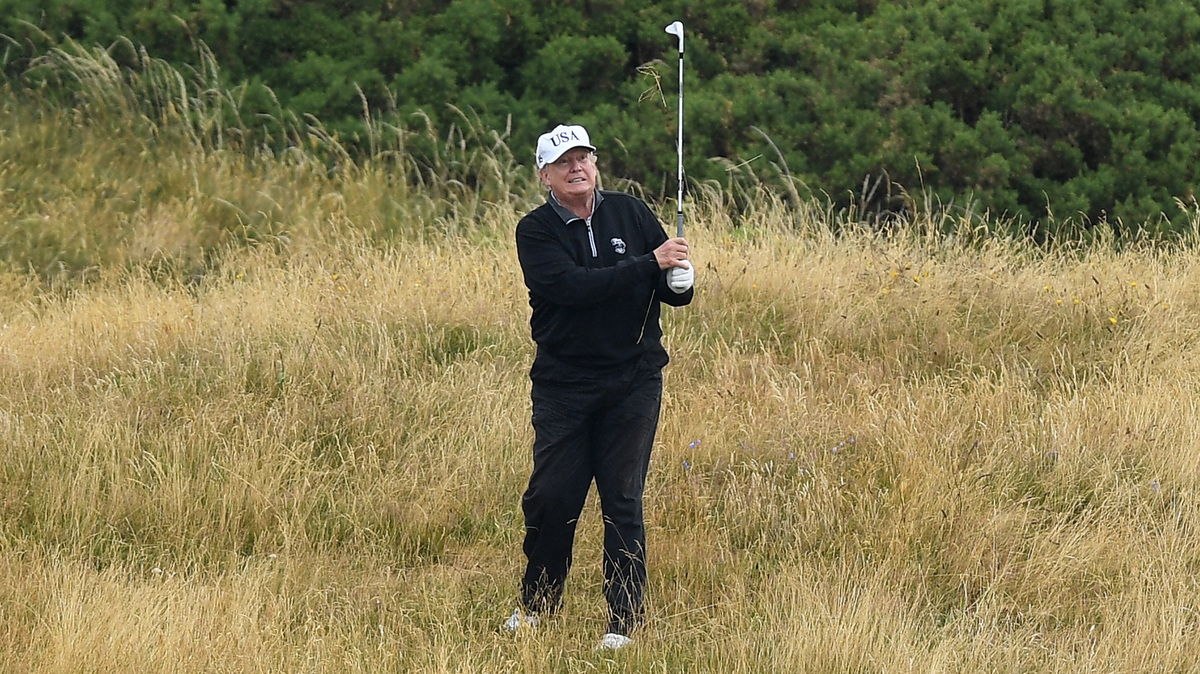
President Trump plays a round of golf at Trump Turnberry Luxury Collection Resort during his first official visit to the United Kingdom on July 15, 2018 in Turnberry, Scotland.
Leon Neal/Getty Images
hide caption
toggle caption
Leon Neal/Getty Images
President Trump’s account on the U.S. Golf Association system has been hacked in an apparent attempt to make him look like a bad golfer with four fake scores.
The awful scores of 101, 100, 108 and 102 were posted to Trump’s USGA-administered Golf Handicap and Information Network [GHIN] handicap system on Friday, according to Golfweek. A handicap is a measure of a golfer’s ability – a lower handicap indicates a better golf game.
“We have become aware of reports in the media questioning recent scores posted on President Trump’s GHIN account,” Craig Annis, the managing director of communications for the USGA, told Golfweek. “As we dug into the data it appears someone has erroneously posted a number of scores on behalf of the GHIN user.”
USGA is removing the scores and says it is investigating to determine how they appeared, Annis said.
Trump flew from New York to Washington, D.C., on Friday morning and delivered a speech to the National Association of REALTORs convention in the afternoon. He did play golf on Saturday afternoon at the Trump National Golf Club in Sterling, Va. According to a site that tracks Trump’s golf habits, the president has played more than 170 rounds since taking office.
The fabricated scores were from games at Trump National in New York, Trump International in West Palm Beach, Fla., and the Cochise Course at Desert Mountain in Scottsdale, Ariz., Golfweek reported. Another suspicious score of 68 was recorded on April 19.
Par in a round of golf is typically around 72 strokes. According to Trump’s account, his scores usually fall in the 70s and 80s, but many are skeptical that the president has always truthfully recorded his scores. Trump has vehemently denied accusations that he has bent the rules.
“I’ve played a lot, and I’ve played well,” Trump said, according to a Washington Post investigation in 2015. “There’s very few people that can beat me in golf.”
Golf insiders don’t dispute that Trump is a fine golfer – he might just not play as well as he says he does.
In 2012, Forbes reported that Trump is a 4 handicap, despite the fact that he has yet “to produce a real signed scorecard.”
Rick Reilly, the sportswriter who penned the 2004 book “Who’s Your Caddy?” told the Post that one afternoon Trump recorded scores that he didn’t actually earn. The Post investigation also revealed that caddies would allegedly help Trump cheat.
“When it comes to cheating, he’s an 11 on a scale of one to 10,” Reilly said.

Here’s a puzzle: Do the qualities that allow a man to block 300lb bodies every day have anything to do with the qualities that allow the same person to solve three-body problems late into the night? Stumped? John Urschel can solve that puzzle for you.
Urschel is a former offensive lineman for the Baltimore Ravens who holds a bachelor’s and a master’s degree in mathematics from Penn State, and is currently pursuing a doctorate at MIT. And now he has written a memoir, Mind and Matter, about how his love of football and his love of math fit together. “When I was very little, I loved puzzles,” he says. “I loved solving problems. And that’s math, and I was fascinated with that sort of thing. And in high school, I started playing football and I fell in love with it. And then when I got to college and I started taking college math courses, then I really fell in love with math again, and that’s when I really discovered what mathematics is, and that I would be a mathematician.”
On why he decided to play pro football despite the risks
First of all, this wasn’t really a plan of mine. I have to say, when I was a kid, I loved watching college football, you know, football in the Big 10. [University of Michigan offensive tackle] Jake Long was my hero, and I wanted to be a Big 10 offensive lineman. And here I am, I’m a senior at Penn State, I am a Big 10 offensive lineman, and I’m living my dream. And I thought, okay, pro football seems available to me, people are talking about it, they have me on projection draft lists, and I said, you know what? Math can wait a little bit, and I’m going to go play football at the highest level, because I can come back to math later, but I can’t come back to try professional football.
On the possibility of brain injury
It was something that I had thought about at some point, and I recognized that there are those risks, and I was aware of them, but I was already aware of them, and I had already made my decision.
On getting a concussion in practice and being briefly unable to do complex math
When I had the concussion, as crazy as it seems, I was really frustrated, more than anything, that’s the right adjective, in that I love football, I love math, and I couldn’t do either of those things at that moment. And it really bothered me. But once I got better, and I was back to doing football and doing math, I thought, okay, if this happens again, I really need to think and reevaluate, but I like where I am right now, and I want to keep playing football and keep doing math, and I’m going to just keep doing both of those things and, I’m forget about this … and I did.
On what factored into his decision to retire
Things about mathematics, you know, looking at my career going forward, sort of thinking about — at that time, I was going to become a father, and so this is something I started thinking about, spending time with my daughter, being able to walk my daughter down the aisle. Being able to, when I’m 60 and 70, being able to run around, have my knees be okay, my shoulders okay, my back okay. Of course, you think about your head as well, but it’s a very holistic thing. The NFL can really do a number on your body, and a lot of people are focusing on people’s heads, but it’s sort of all over. And I’m blessed to have played three years in the NFL, and by NFL player standards, retired completely healthy. Not by normal people standards, but by NFL standards, I am as close to completely healthy as you can get.
On being an African American in math
I recognize that because I’m a mathematician at MIT and I play professional football, I’m in the spotlight. And I have a responsibility to use this platform to show people the beauty of mathematics. To show people playing in the NFL, this isn’t your way out. You can do something mathematics. You can do something in STEM, even if you don’t necessarily look like what the majority of people in that field look like.
And I have to say, okay, if you look at the field of mathematics, if you look at elite American mathematicians, there’s almost no African Americans. There aren’t many of us in PhD programs, there’s not many of us as undergrads, and what you’re sort of left with is the sad realization that there are brilliant young minds being born into this country that are somehow being lost — either because of the household they’re born into, or their socioeconomic situations, or sort of the social culture in their community. And this isn’t just a disservice to them, this is a disservice to us as a country.
This story was edited for radio by Elizabeth Baker and adapted for the Web by Petra Mayer.

Zakary Pashak started Detroit Bikes when he moved to Detroit in 2011, at a time when the city was reeling.
Courtesy of Melany Hallgren
hide caption
toggle caption
Courtesy of Melany Hallgren
Zakary Pashak is a rare breed. His company, Detroit Bikes, is one of the very few American bicycle makers. Most bikes come from China.
At times, Pashak endured ridicule at trade shows. “I’d get kind of surly bike mechanics coming up and telling me that my products stunk. There’s definitely a fair bit of attitude in my industry,” he says.
But last September, the industry’s tune abruptly changed. The first round of U.S. tariffs, or import taxes, upped the cost of Chinese-made bikes by 10%, and companies saw Detroit Bikes as a potential partner.
“All of a sudden I felt like the belle of the ball or something,” Pashak says.
Now a new round of tariffs set at 25% is hitting imports from China. Like many other American companies, Detroit Bikes is poring over the 194-page list of imported Chinese goods subject to the levies. Companies like Detroit Bikes rely on those goods, and now they face choices that will ultimately determine the prices consumers will pay.
Pashak started the company when he moved to Detroit in 2011, at a time when the city was reeling.
“What drew me to Detroit was the history, the music, the manufacturing,” he says. “But it was also the state that the city was in at the time.”
The financial crisis slammed automakers, laid off thousands of workers, many of whom abandoned their homes. Pashak envisioned an urban revival. Using those idle factories and workers, he wanted to build an American-made bicycle, which is how Detroit Bikes was born.
This month, the Trump administration upped the taxes it charges on Chinese imports by an additional 15%. Now, several companies seeking to avoid those added costs are considering hiring Detroit Bikes to manufacture bikes for their brands.
“If these tariffs are still in place next year at this time, I would anticipate that would probably be quite good for my business,” he says.
But the tariffs aren’t all good for Detroit Bikes. In fact, Pashak says the effects are so convoluted, he’s not sure yet whether they will ultimately help or hurt.
For one thing, his company relies on imported parts — rims, spokes, tires, cranks — most of which come from China. Tariffs on those also increased 25% since last fall, driving up Detroit Bikes’ expenses. To counteract that, Pashak is painstakingly evaluating each part, to see whether cheaper alternatives are available elsewhere.
He’s looking at parts made in Taiwan, which aren’t subject to tariffs. Or Cambodia, which he says is “the new hot country … that everyone’s trying to rush into.”
Businesses like Detroit Bikes react to tariffs in many ways, and one of the most significant is in finding alternate sources of goods. If Pashak succeeds in finding cheaper substitute parts, he keeps costs down on his bikes, which range from about $400 to $1,250. That then blunts the overall price increase for his customers.
Economists call this “substitution,” and say it affects how much consumers pay for tariffs.
“The impacts of these wars depend heavily on the substitution effect,” says Amit Khandelwal, a professor of international business at Columbia University.
Some substitutes are relatively easy to find. When China slapped retaliatory tariffs on American soybeans and corn, for example, buyers quickly turned to suppliers in South America.
But finding replacements for things like bike chains or software chips is considerably harder; factories can’t just be ginned up on demand. “Generally, the more specialized products often take longer to substitute,” Khandelwal says.
And timing is a key factor. It’s unclear whether the tariffs will remain for a week, a month, or years. Businesses, from farmers to retailers, are reluctant to make big changes when they can’t plan for the long haul.
That limits options for companies like Brooklyn Bicycle Co., which is based in its namesake city. It sources all its parts from 40 Asian countries, which are then assembled in China, before being shipped to the U.S. Ryan Zagata, the company’s president, says it would take about a year to rethink his supply chain and find options outside of China. And “it would be incredibly costly,” he says.
Detroit Bikes’ Pashak says he’s already mapped out some ingenious — if complicated — workarounds, if the tariffs stay put.
“I can bring in Chinese parts to Canada at no tariff code, bring in a Cambodian frame to Canada. Or ship my American frames up to Canada, put the parts on them, and then import them into the country,” he says. Doing so would relieve his tariff burden, but would take months. In the meantime, he says, tariffs might go away next week.
So the easiest solution for many companies, in the short run, is to raise prices. Many of Detroit Bikes’ rivals that rely on imported Chinese bikes, say they’ll have no choice. But Pashak says he’s not sure if his company will follow suit.
“It might be better for me strategically just to let all my competitors raise their prices because they have to,” he says. In the meantime, he’ll continue exploring options to try to make the tariffs work to his advantage.
We have the latest on the NBA, the new commissioner leading the WNBA, and the investigation of an Ohio State University doctor’s sexual abuse of students.
SCOTT SIMON, HOST:
And now it’s time for sports.
(SOUNDBITE OF MUSIC)
SIMON: Fear the deer. The NBA finals almost set a new leader for the WNBA and sad news ahead of the Preakness. NPR’s Tom Goldman joins us. Good morning, Tom. How are you?
TOM GOLDMAN, BYLINE: Good morning (laughter). I feel like if you’re going to keep this fear the deer stuff up, I think I have to – into June, probably…
SIMON: Oh, sure.
GOLDMAN: I think I – I’ve got to have some response, maybe deer sound, like bleating or grunting or something. I’ll work on it.
SIMON: Yeah, yeah. I think you’d be good at deer grunting, if I’m not mistaken (laughter). I bet you would be. I’ll send you some of my old scripts. They’re all a bunch of deer grunts. In any event, the Bucks defeated the Toronto Raptors by 22 points last night. They take a 2-0 lead in the series, like the Warriors have over the Blazers, and they play tonight. Is it too early to ask if the deer can dethrone the team that is fleeing loyal Oakland?
GOLDMAN: Oh, yeah. No, it’s not. Milwaukee looks unbeatable with the normal caveats. As you mentioned, the Bucks only up 2-0. They’ve won two on their home court; same with Golden State. The playoff series, as you know, Scott, can flip in a game. Of course, I’m saying that as a Portland resident where Blazer fans are sure the script will start flipping tonight. But with those caveats out of the way, the Bucks – wow – playing so well on offense, defense, all other facets of the game, and they’re physically huge. Their starting lineup includes a guy 6’10”, 6’11”, 7 feet. The Warriors, during their run, have made small ball cool and very effective. But I don’t know how Golden State would deal with Milwaukee’s size if the two meet in the finals – if.
SIMON: The WNBA has a new commissioner, Cathy Engelbert. She is a business executive and a former college player. I’m very impressed by her.
GOLDMAN: Yeah. And the consensus is she’s a great choice. She has been the chief executive at Deloitte accounting firm – first woman to head the company. She’s also a good college basketball player, as you mentioned, at Lehigh under Muffet McGraw, now the legendary head coach at Notre Dame. Engelbert has had success in business, in sports. She understands both. She’s considered the perfect leader for the WNBA right now, which starts its 23rd season next week.
SIMON: And she’ll be commissioner, not president, right? That’s an important change.
GOLDMAN: You know, it’s significant they’re using that term. Up to now, it’s been president. The title has been president. But commissioner, you know, is a title with more heft, befitting a league that certainly wants to achieve more heft.
SIMON: Preakness this afternoon – terrible news from the track. Two great athletes died yesterday on racetracks – Congrats Gal at Pimlico, Commander Coil at Santa Anita, which courses had 24 deaths since December 26. I am a horse fan, if not always of horse racing. It’s just hard to root right now. What are these deaths doing to the sport?
GOLDMAN: Making it hard to root, as you say. I mean, you know, there’s still lots of people who show up at parks with money on their minds who explain away the deaths as, well, you know, that’s just part of horse racing, which, sadly, it is. But these deaths yesterday, on top of the cluster of 23 at Santa Anita before them and then the one at Pimlico, as you mentioned – the site of today’s Preakness, second leg of the Triple Crown – is just raising the criticism of the sport, increasing calls for reform. On top of that, Scott, you know, you’ve got the weird ending at the Kentucky Derby a couple of weeks ago where the winner was disqualified. Horse racing is a mess right now, I would say, which is what activists want it to be in order to trigger significant change.
SIMON: And let’s turn to what’s been happening at Ohio State. An investigation found former athletic department doctor Richard Strauss had sexually abused 177 male students. The university knew but took no real action for 15 years. Dr. Strauss took his own life in 2005. And the university says it is trying to revoke his emeritus professor status, even though, of course, he died a number of years ago. What’s that going to achieve?
GOLDMAN: Not clear beyond symbolism. This report confirms a very sordid and sad couple of decades at Ohio State. It should strengthen a number of pending lawsuits because as one plaintiff’s lawyer told The Columbus Dispatch, Ohio State cannot deny the abuse, and it’s not. The university president called the findings shocking and painful to comprehend. So, you know, along with what’s happened at Michigan State with the Larry Nassar case, just another sad, sad case of this.
SIMON: Yeah. NPR’s Tom Goldman, thanks very much for being with us. Talk to you soon.
GOLDMAN: OK. Thanks, Scott.
Copyright © 2019 NPR. All rights reserved. Visit our website terms of use and permissions pages at www.npr.org for further information.
NPR transcripts are created on a rush deadline by Verb8tm, Inc., an NPR contractor, and produced using a proprietary transcription process developed with NPR. This text may not be in its final form and may be updated or revised in the future. Accuracy and availability may vary. The authoritative record of NPR’s programming is the audio record.
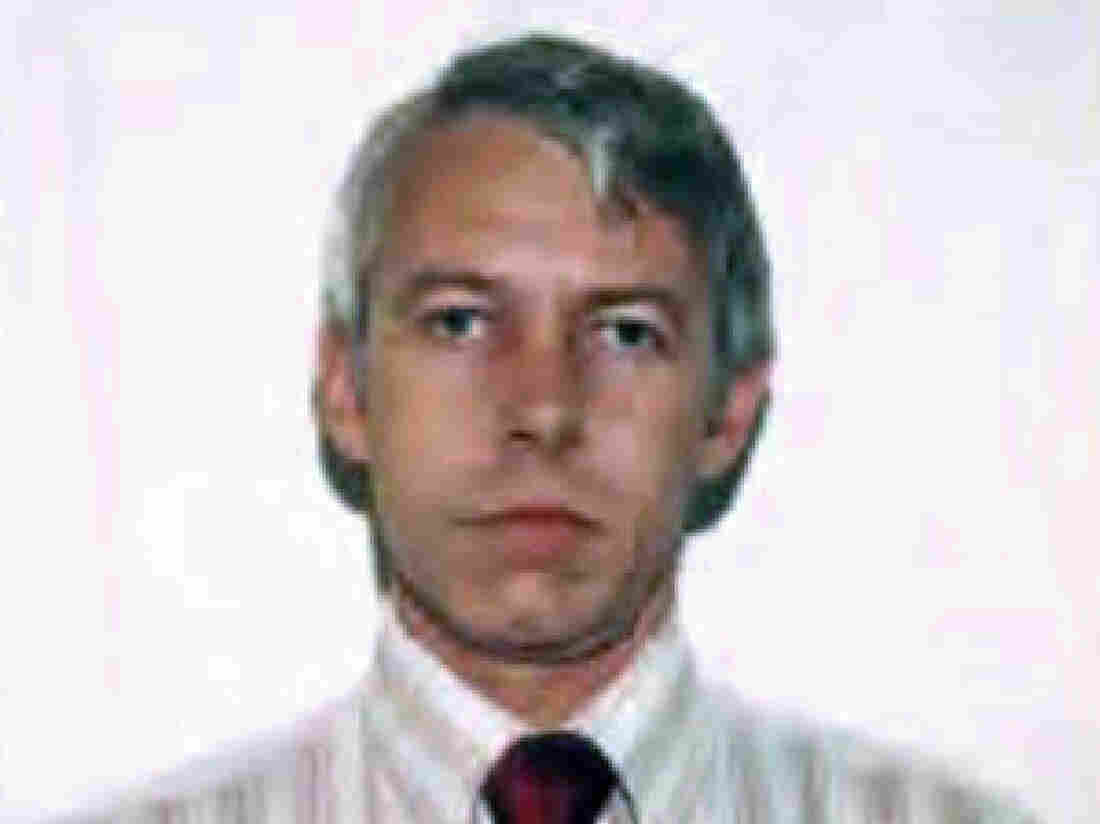
Richard Strauss was employed as a doctor at Ohio State University from 1978 until he retired in 1998.
AP
hide caption
toggle caption
AP
For nearly two decades, a doctor at The Ohio State University sexually abused at least 177 male students, according to an exhaustive independent investigation commissioned by the university. Most of the doctor’s abuse happened under the auspices of providing the students with medical treatment.
Richard Strauss worked at OSU from September 1978 through March 1998, primarily as a doctor with the Athletic Department and the Student Health Center. The investigation found that university personnel became aware of Strauss’ abuse as early as 1979.
However, “despite the persistence, seriousness, and regularity of such complaints, no meaningful action was taken by the University to investigate such concerns until January 1996,” when they were first elevated to officials beyond Student Health or the Athletics Department, the report reads.
As a result, Strauss was suspended from working as a treating physician at OSU. The school eventually removed him from his departments, but it kept him on as a tenured faculty member. He voluntarily retired in 1998 with “emeritus” status from the university. Strauss took his own life in 2005.
“The findings are shocking and painful to comprehend,” current OSU President Michael Drake said in a message emailed to the OSU community.
“On behalf of the university, we offer our profound regret and sincere apologies to each person who endured Strauss’ abuse,” said Drake, who became the school’s president in 2014. “Our institution’s fundamental failure at the time to prevent this abuse was unacceptable — as were the inadequate efforts to thoroughly investigate complaints raised by students and staff members.”
Drake added that the university has started the process of revoking Strauss’ emeritus status and “will take additional action as appropriate.”
“Dreams were broken, relationships with loved ones were damaged, and the harm now carries over to our children as many of us have become so overprotective that it strains the relationship with our kids,” Kent Kilgore, a survivor of Strauss’ abuse, said in a statement to The Associated Press.
OSU said it launched the independent investigation last April, after a former student came forward with allegations of abuse and “indicated … that there may have been others who experienced sexual misconduct by Strauss.”
The investigation carried out by the law firm Perkins Coie was led by a former federal prosecutor and a former federal government ethics attorney. Both had experience in investigations involving male sexual abuse survivors.
They interviewed 520 people, among them the 177 men who said they had been abused by Strauss.
The report, which runs more than 230 pages, contains a litany of painful stories of abuse from former students who went to Strauss for medical care.
The instances of abuse often involved inappropriate touching of a students’ genitals during exams in ways that weren’t medically useful. A number of students said Strauss “would routinely touch their genitals at every visit, regardless of the medical ailment presented, including for a sore throat,” the report states.
The report also states that members of 15 university athletic teams were abused. Strauss most frequently targeted wrestlers — 48 of them, according to the report. And the abuse often became more explicit over multiple visits.
“We observed that, in many cases, a student’s most egregious experience of abuse did not occur during the student’s first encounter with Strauss; rather, the abuse escalated over time, in a series of examinations with the student,” the report states.
Other students reported that Strauss would frequently shower with teams, appearing to loiter and gawp at students as they were naked in locker rooms and making them uncomfortable.
A former soccer player told investigators that Strauss would sometimes run a single lap just as the team was finishing up practice. “The student noted that it was a commonly-held perception among the players that Strauss was exercising as a pretext to shower with the team, and the student-athletes would try to shower as quickly as possible,” the report reads.
Dozens of people who worked as coaches or athletic trainers told investigators that they had been aware of rumors and complaints against Strauss. The abuse was so widely known that it left some students with the idea that it was simply accepted by other university personnel.
“Many of the students felt that Strauss’ behavior was an ‘open secret,’ as it appeared to them that their coaches, trainers, and other team physicians were fully aware of Strauss’ activities, and yet few seemed inclined to do anything to stop it,” the report states. Students, it adds, said they had the impression the abuse was a form of hazing or a rite of passage.
The university took disciplinary action against Strauss only after a series of student complaints in the mid-1990s. Even after that, he opened an off-campus private men’s health clinic near the university — where he continued to abuse patients — and kept his title as a tenured faculty professor.
As Gabe Rosenberg and Adora Namigadde of member station WOSU reported:
“At least 50 students have filed lawsuits against Ohio State, arguing the university knew about and declined to act in response to complaints about Strauss. Their case is headed to mediation.
” ‘It’s what we’ve been saying—they’ve failed to act—investigate or act, and now we have validation,’ said Brian Garrett, one of the lead plaintiffs, in an interview Friday.
“The university has referred the report to Columbus Police, the Franklin County Prosecutor’s Office, and the Ohio Attorney General’s Office.”
The investigators and the university’s president thanked the survivors for coming forward to share their stories.
“This independent investigation was completed because of the strength and courage of survivors,” Drake said.
Read the investigative report here:

“They all needed Larry. Gymnastics is punishing. Spend enough hours hoisting your body up and over those wooden gymnastics bars, eventually the skin on your palms rips right open.”
That’s a quote from host Lindsey Smith in the first episode of the podcast Believed, from NPR and Michigan Radio.
In 2018, Nassar was convicted of criminal sexual conduct and federal child pornography charges.
He serially abused hundreds of young women. His victims included household names like Simone Biles and Aly Raisman, but they weren’t all famous. Vox reports that the majority “were students and young female athletes — gymnasts, dancers, and volleyball players.”
At the very minimum, isn’t it unsettling to think that because of Nassar’s expertise treating athletes, he was kept on despite suspicions he was abusing his patients? And that when girls and young women came forward with their stories, no one believed them?
But it happened. For decades.
The purpose of Believed is to discover “how Larry Nassar abused so many for so long.”
In one instance, the police just believed Nassar instead of what his victim reported. And local detectives never referred the case to a local prosecutor for review, to see if this report of Nassar’s behavior reflected an isolated incident, or something worse.
We reached out to USA Gymnastics, and they sent us this statement.
We will never forget the appalling acts of abuse that have forever impacted our athletes and the gymnastics community. We admire the survivors’ courage and strength in sharing their stories, and our goal is to do everything we can to prevent the opportunity for it to happen again. USA Gymnastics is further strengthening its athlete safety policies — including provisions on mandatory reporting and setting boundaries for athlete-adult interaction — to establish greater accountability and make reporting easier. Athletes are the heart and soul of our sport, their safety is of paramount importance to us, and we are focused on making our organization more athlete-centric.
We bring you the latest on what’s happened since Nassar’s conviction and speak with Lindsey Smith about her work.
Produced by Kathryn Fink.
This show will discuss sexual abuse and assault. If you or someone you know needs to speak to someone, the National Sexual Assault Hotline is 1-800-656-4673. You can also use the RAINN online hotline, which you can find here.

St. Louis Cardinals shortstop Ozzie Smith waves to fans on Sept. 13, 1996.
Michael Caulfield/AP
hide caption
toggle caption
Michael Caulfield/AP
We recorded the show in St. Louis this week and invited former Cardinals shortstop Ozzie Smith to play our quiz. We’ll ask the Baseball Hall of Famer, known as “The Wizard” for his magical plays, to answer three questions about the 1939 movie The Wizard of Oz.
(SOUNDBITE OF MUSIC)
BILL KURTIS: From NPR and WBEZ Chicago, this is WAIT WAIT… DON’T TELL ME, the NPR news quiz.
(APPLAUSE)
KURTIS: I’m Bill Kurtis. We’re playing this week with Tom Bodett, Amy Dickinson and Brian Babylon. And here again is your host at the Fox Theatre in St. Louis, Mo…
(CHEERING)
KURTIS: …Peter Sagal.
PETER SAGAL, HOST:
Thank you, Bill. Hey, thanks, everybody. And listen, if you are just tuning in, and you’re like, oh, no, I missed it, or maybe you just want to hear it all again so you can pretend you haven’t and impress your friends by knowing all the answers, all you need to do is download the WAIT WAIT podcast. It’s the same show you love on the radio but with ads for mattress companies and stamps.
(LAUGHTER)
SAGAL: Right now, it is time to play the WAIT WAIT… DON’T TELL ME Bluff the Listener game. Call 1-888-WAIT-WAIT to play our games on the air. Hi, you are on WAIT WAIT… DON’T TELL ME.
EBEN ATWATER: Hi. I’m Eben Atwater. I’m from Lummi Bay, Wash.
SAGAL: Eben from Lummi Bay, Wash.
ATWATER: Well, the – I think they had a girl’s name figured out but not a guy’s name figured out, and I got stuck with the family name.
SAGAL: Do you know what the girl’s name was?
AMY DICKINSON: (Laughter).
ATWATER: Yeah, it was Emily.
SAGAL: Let me ask you a question – given what you’ve been through, would you have preferred to be named Emily?
(LAUGHTER)
ATWATER: I’d roll with it.
SAGAL: All right. You could go with it. Well, welcome to the show, Eben. You are here to play our game in which you must try to tell truth from fiction. Bill, what’s Eben’s topic?
KURTIS: I’m your biggest fan.
SAGAL: Celebrities have long found fans the traditional ways, like press tours and purchasing Twitter followers from a Chinese bot farm. But this week, we heard about a new way that a fan found the person or people they’re fans of. Our panelists are going to tell you about it. Pick the one who’s telling the truth – you’ll win the WAIT WAITer of your choice on your voicemail. You ready to play?
ATWATER: Let’s do it.
SAGAL: All right. First, let’s hear from Tom Bodett.
TOM BODETT: The lyrics to “A Horse With No Name” blew my mind, said Blollapalooza organizer Mason Ford (ph). Ford, who is 16 years old, discovered early ’70s soft rock bands like America and Bread when his dad erased his Spotify playlist of hip-hop favorites and replaced it with what he thought would be the genre from hell. I couldn’t stand the F words and (unintelligible) emanating from his room and earbuds another day, said the elder Ford. I wanted to punish him with some “Diamond Girl” and “Muskrat Love.”
(LAUGHTER)
BODETT: I thought he needed to understand what obnoxious feels like. Instead, he loves it. What I realized, explained Ford the younger, is that hip-hop is not chill music. All me and my friends want to do is chill and hang out. This weird sound is so chill, it almost doesn’t make sense. I mean, baby, Imma (ph) want you?
DICKINSON: (Laughter).
BODETT: Who says that?
(LAUGHTER)
BODETT: And with that googly sounding guitar thing in the background, it’s sick. I love it. After two or three songs, you can’t move.
(LAUGHTER)
BODETT: The Blollapalooza will be no Fyre Fest, promises Ford, referring to the famous concert fail of last summer. It’s more of a warming drawer fest. Surviving members of America, along with Dan Fogelberg, will headline the event to be held this August in a closed Walmart parking lot in Springfield, Iowa. Father Ford will not be attending. I lived through the ’70s once, he said. A day of this might kill me.
(LAUGHTER)
SAGAL: A young man…
(APPLAUSE)
SAGAL: …Becomes a fan of ’70s soft rock through a cruel prank from his father. Your next story of a celeb making new fans comes from Brian Babylon.
BRIAN BABYLON: UPenn volleyball player Elizabeth Watty (ph) was running late for practice in Philly. The pressure was on because she had to park her 1964 Pontiac GTO – a hand-me-down from her grandpa – into a parking space barely big enough for an enormous land yacht. I hate this car, said Watty. As soon as I land my pro beach volleyball contract, I’m buying myself a Honda Fit. She tried eight times, each time scraping or bumping the car in front of her and going up on the curb. With drivers behind her honking their horns and complaining, finally, she was ready to give up and keep driving. But then, a gentleman appeared in her window and said, may I assist? She was very angry about this implied sexism but got out and let him in.
(LAUGHTER)
BABYLON: And the most amazing display of driving happened. He hopped in. And in the most amazing display of driving she had ever seen, he whipped that 20 feet of Detroit steel into a parking space with just a few turns of the wheel. She wrote his name down to send him a nice thank-you note. And then when she showed the name to her teammate, the teammate said, Jimmie Johnson, the NASCAR driver.
(LAUGHTER)
BABYLON: No, said Elizabeth. I think he had a Toyota car of some kind. But it was No. 48 himself, seven-time NASCAR champion, who was in town for a personal appearance. Elizabeth, of course, had to watch him race and instantly became a fan. He’s just so confident, so tactical on the track, she says.
(LAUGHTER)
BABYLON: And if you think he’s good at racing, you should see him park.
(APPLAUSE)
SAGAL: A NASCAR fan is made when Jimmie Johnson, himself, steps in to park her car. Your last story of a famous person convincing someone to like them comes from Amy Dickinson.
DICKINSON: When they heard that Lyle Lovett, their favorite singer, was coming to Austin, 17 women from three generations of one big Texas family decided to call it a Girls Gone Wild Weekend. The Lovett love is mighty strong in the Walker clan. So Belinda from El Paso rallied her gal pals from all over the country – sisters, cousins, her mother and even her 85-year-old grandmother – and told them (imitating Southern accent) pack up your spangly cowboy boots and send Bota Boxes of chardonnay, ladies, because we’re going to see Lyle Lovett. Whoo (ph).
(CHEERING)
DICKINSON: The concert tickets got bought. The event was coming up when Walker sister figured out that the Lovett coming to Austin was not the Texas native and rectangle-faced, Grammy Award-winning singer Lyle Lovett. No, this Lovett was Jon Ira Lovett of Connecticut, a former Obama speechwriter, bringing his…
(LAUGHTER)
DICKINSON: …Popular progressive politics podcast “Lovett Or Leave It” to Austin for a live taping.
(LAUGHTER)
DICKINSON: The Lyle Lovett-loving ladies decided to go ahead with their Girls Gone Wild Weekend.
(LAUGHTER)
DICKINSON: It turns out having to watch a politics lecture from a guy who can’t sing and was never even briefly married to Julia Roberts…
(LAUGHTER)
DICKINSON: …Was just about right for these girls gone mild.
(LAUGHTER)
SAGAL: All right, so here are your choices. Somebody made a fan in an unusual way. Was it from Tom Bodett – ’70s soft rockers get a fan when a kid is punked by his own father who switched his playlist? Was it from Brian Babylon – Jimmie Johnson created one new NASCAR fan when he graciously parked her car for her? Or from Amy Dickinson – the political pundit and podcaster Jon Lovett got a whole bunch of Texas women to come see him because they thought he was Lyle Lovett. Which of these is the real story of an unexpected meeting of fan and idol in the news?
ATWATER: (Imitating Southern accent) Well, I’ll tell you what…
(LAUGHTER)
ATWATER: …I lived for 12 years in Texas, and there ain’t no way on God’s green Earth I’m picking any other story but that one.
DICKINSON: Oh.
SAGAL: You’re going to pick, then, Amy’s story…
(LAUGHTER)
SAGAL: …Of the 17 women who went to see Lyle Lovett and ended up hearing some interesting political comedy from Jon Lovett.
ATWATER: Got to be it.
SAGAL: All right. Well, we actually spoke to one of the fans in question.
BELINDA WALKER: One of my cousin’s looked, and it said Jon Lovett. And my sister’s like, no, no, no, I got Lyle Lovett tickets. And we’re like, oh, my God, it is the wrong one. What are we going to do? What are we going to do?
(APPLAUSE)
SAGAL: That was Belinda Walker. Practically an entire female side of the family went to see Lyle Lovett and got Jon instead. It’s OK. They like him. Congratulations. You got it right, Eben. You have won our prize by picking Amy’s story.
(CHEERING)
SAGAL: And you’ve won a prize for her. Well done, sir.
ATWATER: Hey, thanks a lot. That was great.
SAGAL: Bye-bye.
(SOUNDBITE OF MUSIC)
Copyright © 2019 NPR. All rights reserved. Visit our website terms of use and permissions pages at www.npr.org for further information.
NPR transcripts are created on a rush deadline by Verb8tm, Inc., an NPR contractor, and produced using a proprietary transcription process developed with NPR. This text may not be in its final form and may be updated or revised in the future. Accuracy and availability may vary. The authoritative record of NPR’s programming is the audio record.