
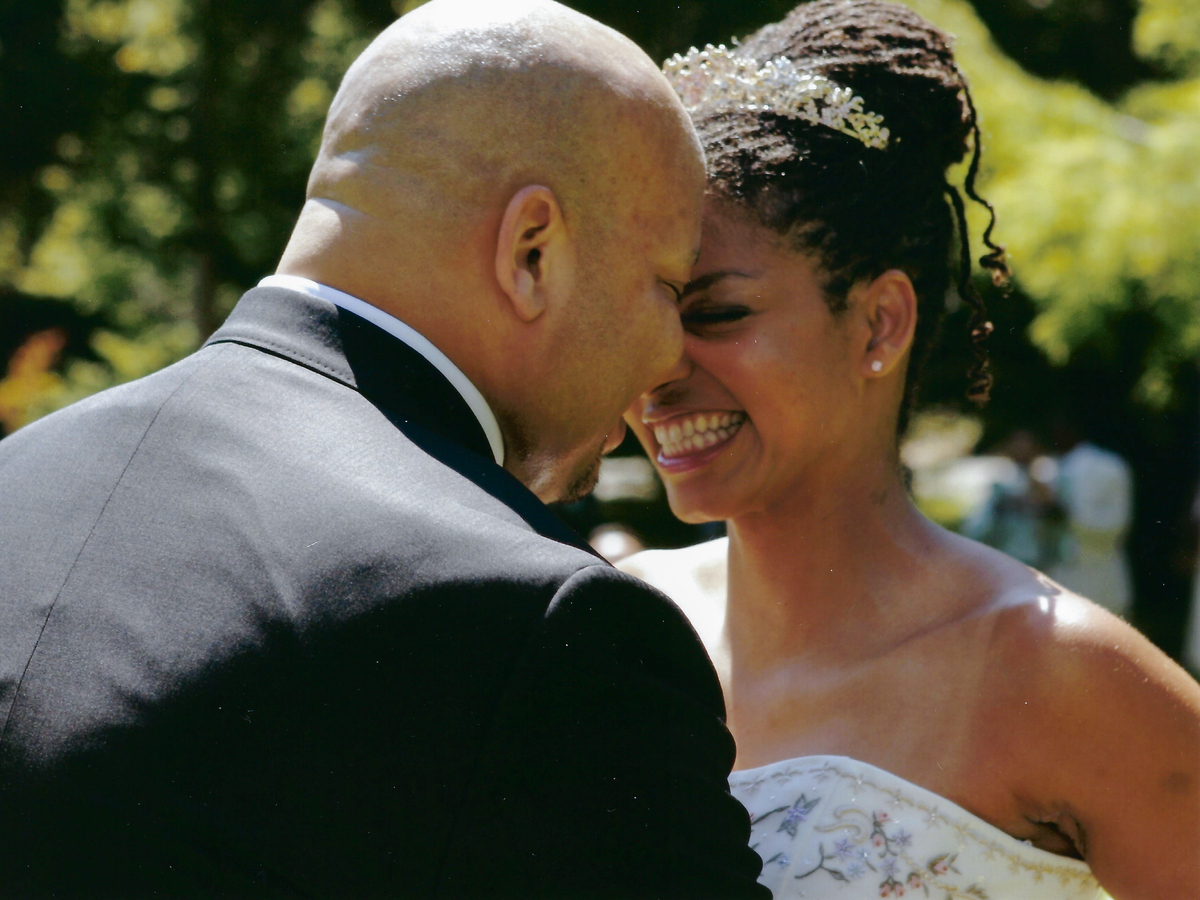
Dr. Vanessa Grubbs and Robert Phillips at their wedding in August 2005. Just a few months earlier, when his kidneys were failing, she gave him one of hers.
Courtesy of Vanessa Grubb
hide caption
toggle caption
Courtesy of Vanessa Grubb
While she was a primary care doctor in Oakland,Calif., Dr. Vanessa Grubbs fell in love with a man who had been living with kidney disease since he was a teenager.
Their relationship brought Grubbs face to face with the dilemmas of kidney transplantation — and the racial biases she found to be embedded in the way donated kidneys are allocated. Robert Phillips, who eventually became her husband, had waited years for a transplant; Grubbs ended up donating one of her own kidneys to him. And along the way she found a new calling as a nephrologist — a kidney doctor.
Her candid new memoir, Hundreds of Interlaced Fingers: A Kidney Doctor’s Search for the Perfect Match, explores her personal story and some troubling statistics. Roughly 1 in 3 of the candidates awaiting kidney transplants are African American, Grubbs learned, but they receive only about 1 in 5 of all donated kidneys. White people account for about a third of the candidates awaiting kidney transplants, but they receive every other donated kidney.
Grubbs writes of accompanying Phillips in 2004 to meet with members of the transplantation team — including a doctor, a nurse and a financial counselor — for a routine evaluation and update. After being on the waiting list for a kidney for five years, he had neared the top of the list.

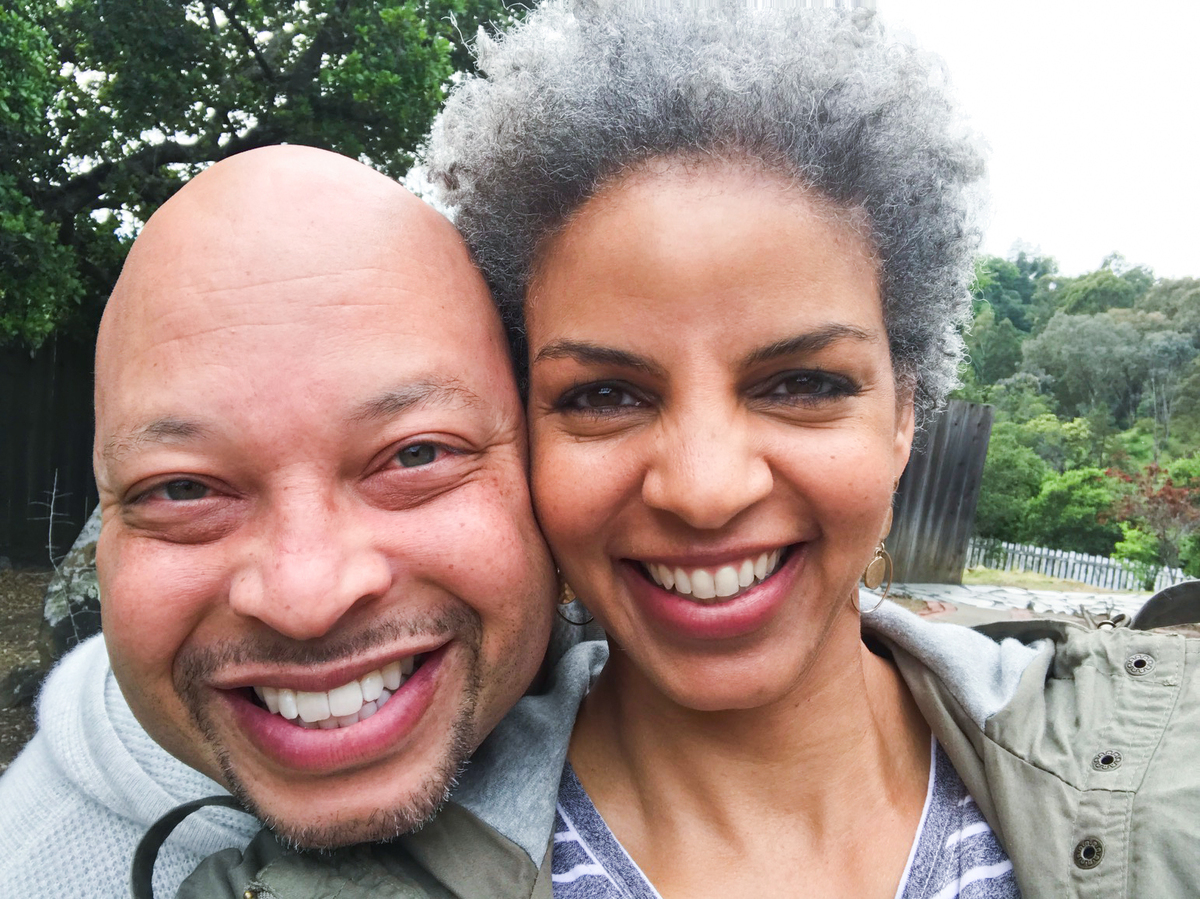
Dr. Vanessa Grubbs was a primary care doctor when she met Robert Phillips. She says seeing how difficult life can be for people with chronic kidney disease was part of what led her to further specialize in nephrology.
Courtesy of Vanessa Grubb
hide caption
toggle caption
Courtesy of Vanessa Grubb
“We sat in a clinic exam room listening to a series of people whose job it seemed was to talk Robert out of even wanting a transplant,” Grubbs writes. Such meetings may be meant to make sure patients understand the difficult realities of organ transplantation, she says, but, “… the message we took away was, ‘The kidney transplant system doesn’t like black people.’ “
Grubbs, now a nephrologist at the Zuckerberg San Francisco General Hospital, and assistant professor at the University of California, San Francisco, recently sat down to talk about her experience with NPR.
Interview Highlights
One of the things you write about in the book is that your colleagues did not appreciate that you published a piece in a health policy magazine — Health Affairs — [detailing the inequities in transplantation]. It was called “