Searching For A Fairer Way To Distribute Donor Livers

Himanshu Patel lives in Waycross, Ga. He worries that the new system will make it harder for him to get a transplant.

Courtesy of Himanshu Patel

hide caption

toggle caption

Courtesy of Himanshu Patel

Himanshu Patel ran a convenience store in Georgia until about a year ago, when his liver failure got so bad he had to quit.

“I just couldn’t stand up on my feet at all,” says Patel, 39, of Waycross, Ga. “I just had to stop working.”

Now, he’s waiting anxiously to find out if his doctors have found a liver for him so he can undergo a transplant.

“They told me ‘You will need a liver transplant — without a liver transplant you might not survive,’ ” Patel says.

Piper Su is waiting, too. She’s also 39 but lives about 700 miles north in Alexandria, Va. She’s still working as a lawyer, but says it’s getting harder and harder.

“I tend to get very tired,” Su says. “Often times, I’ll have sharp pains in my abdomen from my liver voicing its displeasure. And then I’ve developed a condition in my legs which can be very painful.”

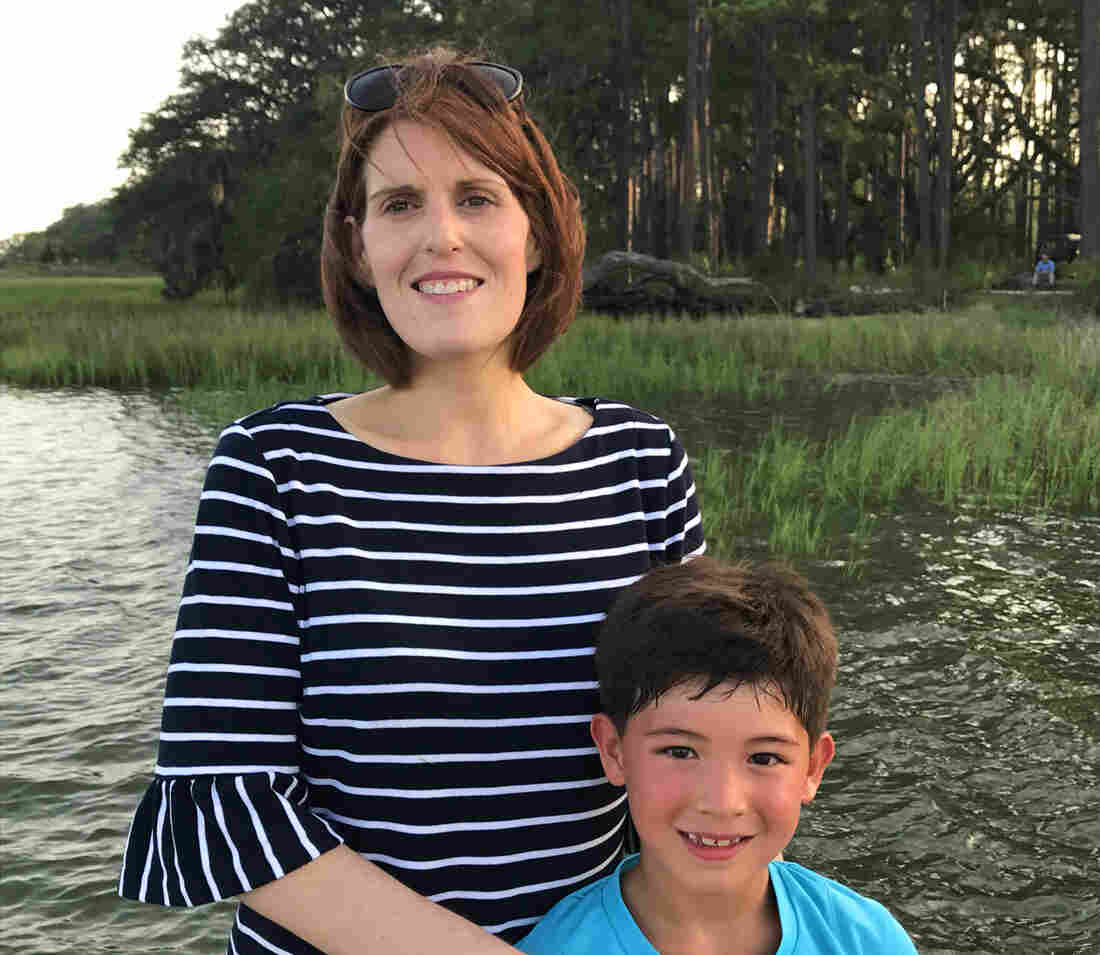
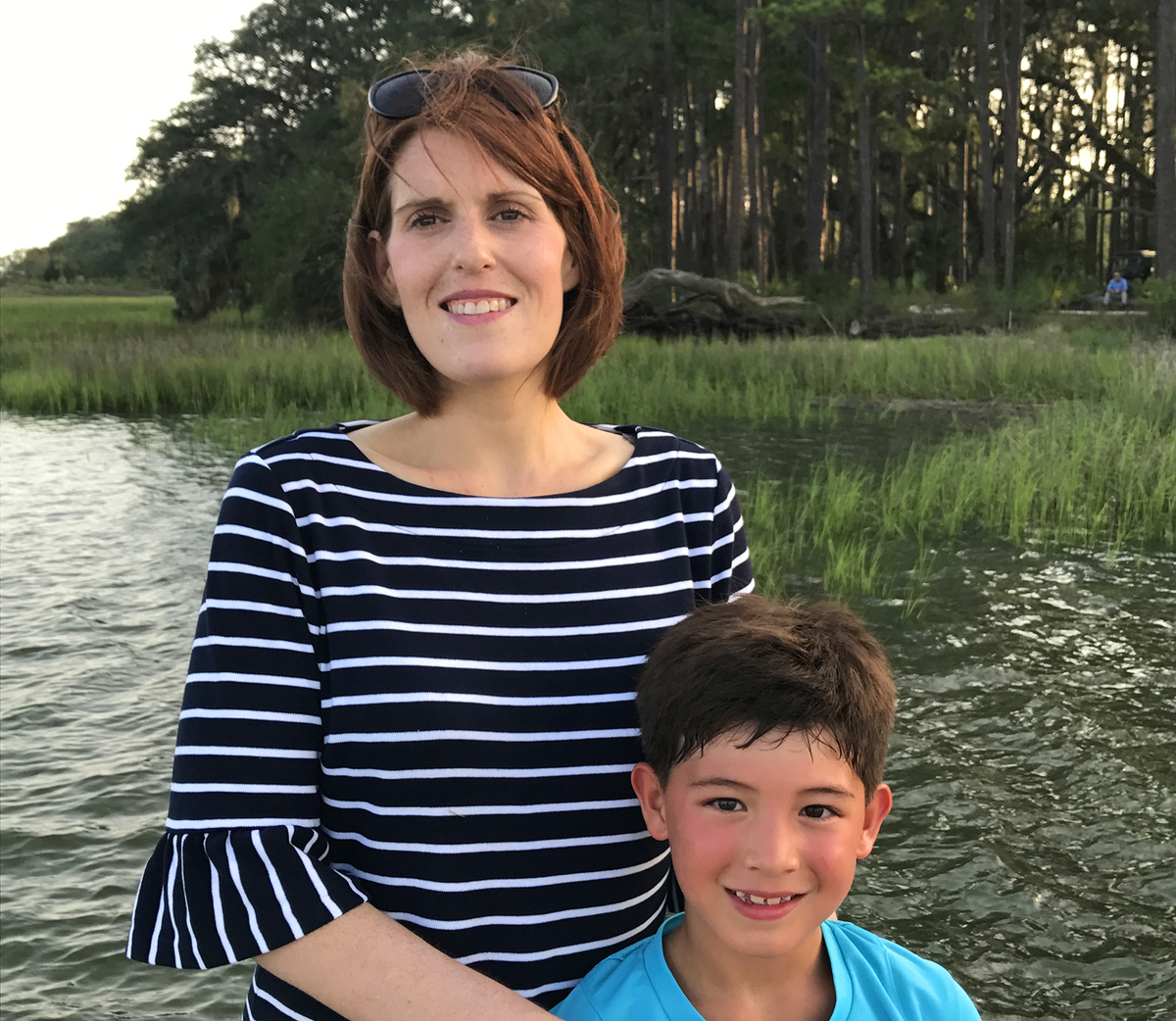
Piper Su, seen here with her son, Elliot, lives in Alexandria, Va. She has registered with several transplant centers in hopes of increasing the odds of getting an organ.

Courtesy of Piper Su

hide caption

toggle caption

Courtesy of Piper Su

Patel and Su are among more than 16,000 Americans waiting for a liver transplant because of conditions such as hepatitis, cancer or cirrhosis. But only about 7,000 livers are donated each year. So they know their odds aren’t great.

And their chances also vary based on where they live.

“In some areas of the country, patients have to wait a lot longer than in other areas,” says Julie Heimbach, a transplant surgeon at the Mayo Clinic. “They have to get much sicker before they can access a liver transplant depending on where they live.”

Heimbach chairs a committee for the United Network for Organ Sharing, the nation’s organ transplant network, which has proposed a new system for distributing livers.

“We’re just trying to make it just a little bit more equal so that there’s not such a disparity depending on where you live,” Heimbach says.

Loading…

Under the current system, the nation is divided into 11 regions, and the sickest patient on the waiting list in each region gets the next compatible liver that becomes available in that region.

In some regions, patients have to wait until they’re facing a 93 percent risk of dying within the next three months. In other regions, patients get transplants when their risk is only 13 percent, according to UNOS.

One big reason for that is that more organs become available in some places than others. And that’s partly because of the way people die — there are more deaths in ways that leave the victims eligible to be organ donors, such as car accidents and strokes.

“The heroin epidemic has actually led to a lot of organ donors because when people become overdosed they stop breathing and they become brain dead,” Heimbach says. “And certain areas of the country have more or less of that particular problem.”

Loading…

Generally, more livers tend to become available in rural places than in more urban places, such as California, New York City and the Washington, D.C., area.

To try to alleviate the geographic disparities, the new system would expand access to livers to patients listed at a transplant center within a 150 nautical-mile radius of the hospital where the liver is donated, even if it’s in a different region.

“Whether they’re in or out of the region, as long as they’re in that 150-mile circle they would be able to access that donor,” Heimbach says. “So it basically kind of expands the regions.”

The new plan is the latest attempt by UNOS to address inequities in allocation. It was developed after concerns arose over a previous proposal. But the new plan is still stirring concerns.

“This is life and death stuff for real people,” says Raymond Lynch, a transplant surgeon at Emory University in Atlanta.

“When you export a liver, you import a death,” Lynch says. “So if you move an organ from one place to another, you’ve left a hole in that original place and that hole is going to turn into a death because now somebody in that original place doesn’t have an organ transplant.”

Lynch and others argue that under the new plan, livers would tend to get shifted from less affluent, rural areas to more affluent, urban places.

“We would be hurting those people who are most vulnerable in the U.S. — minorities, people with reduced income, people with reduced access to primary care physicians, people who live in rural locations,” Lynch says. “All those people already do worse.”

Critics argue that more should be done to increase donations in areas where patients have to wait longer.

“We know that organ donation rates vary greatly across the country,” says David Goldberg, an assistant professor of medicine and epidemiology at the University of Pennsylvania who studies access to organ donation.

“New York, which is 90 miles from where I live in Philadelphia, has donation rates that are half of that in Philadelphia and Pennsylvania,” Goldberg says. “So if the donation rates in New York were the same as in Philadelphia, it would be a nonissue.”

Heimbach agrees that more should be done to increase organ donation rates around the country. But she disputes the argument that the new system would cost lives or make the process less fair.

“It would not be less fair — it would be more fair,” Heimbach says. “It’s not one-way sharing — where the lives are being taken from one particular part of the country. It’s a broader sharing so that the sickest patient, no matter where they are, would access the livers.”

Su hopes the new plan will help save her life. Because livers are so scarce where she lives, Su has been traveling to other parts of the country to try to get on waiting lists in as many places as she can.

“It’s been a bit of an odyssey,” Su says. “I think the best move for everyone involved is to try to move toward, you know, the most fair system possible that gets organs to those who need them most quickly.”

But Patel, who lives in a place where more livers are available, worries the change would mean he would have to wait longer for his transplant.

“If I go tomorrow and they tell me I have to wait another six months or something like that, that might put me in a worry,” he says. “I don’t know if I’m going not make it for six months.”

The public has until Oct. 2 to comment on the proposal.

Let’s block ads! (Why?)

GOP Health Care Bill Appears Dead After Sen. Collins Declares Opposition

The latest effort to repeal the Affordable Care Act appears to be blocked after Maine Sen. Susan Collins opposed the bill. Her opposition means the bill cannot pass the Senate with only GOP support.

AILSA CHANG, HOST:

The latest Republican effort to repeal the Affordable Care Act appears all but dead tonight now that Republican Senator Susan Collins of Maine says she does not support the proposal. She joins Republican senators John McCain and Rand Paul in opposing the bill, and that is one too many noes for the bill to pass the Senate with only Republican support. Collins’ announcement comes minutes after the Congressional Budget Office said the plan known as Graham-Cassidy would leave millions more people without health insurance coverage. And all this caps a dramatic day of hearings and protests on Capitol Hill.

Joining us now to talk about the day is NPR health policy correspondent Alison Kodjak. Hi, Alison.

ALISON KODJAK, BYLINE: Hi, Ailsa.

CHANG: So why does Senator Collins say she’s opposed to this plan?

KODJAK: Well, Senator Collins says, you know, she’s worried about the cuts to the Medicaid program. This plan would roll back the expansion of Medicaid that happened under the Affordable Care Act, and it would grow the program more slowly over time. Now, Medicaid covers the poor, low-income people and people with disabilities. And, you know, it’s very hard to see how they can grow it more slowly than inflation and still cover those people.

She also says she’s worried about people with pre-existing conditions. This bill doesn’t actually have the same level of protection as the current law. And, you know, if it were to go into effect, insurers potentially in some states could charge people more if they have a pre-existing condition. And it could eliminate some types of coverage like mental health care or maternity care, which then wouldn’t give people who need those coverages the care they need.

CHANG: Senator Collins’ decision came on the heels of this Congressional Budget Office analysis. What did the CBO say about this proposal?

KODJAK: Yeah. You know, it was interesting. The CBO was only supposed to talk about the deficit impact of this bill. And it did say that it would reduce the deficit by $133 billion. But the CBO decided to go further. It said that while it didn’t have time to do its thorough analysis, it concluded that millions fewer people would have insurance under this plan. It said that a lot of people would lose coverage because of that Medicaid rollback and that who lost insurance would really depend on what state they lived in. And that’s because this bill would have taken all this money from the Affordable Care Act and instead redistribute it to states to design their whole – their own health plans.

CHANG: Right.

KODJAK: And it was unclear what each state would do.

CHANG: So that report comes on this day where there was a lot of drama on Capitol Hill, right? What happened?

KODJAK: Yeah, there were protests. And they were pretty dramatic on Capitol Hill.

CHANG: Yeah.

KODJAK: There was a hearing in the Senate, the Senate Finance Committee, which is going to be the only hearing on this bill. And early in the day, a lot of advocates for people with disabilities showed up. And they were determined to fill that hearing room. And a lot of them were in wheelchairs. And as soon as the hearing opened, they started chanting. And they were chanting, no cuts to Medicaid, save our liberty. The senators couldn’t speak over them. They couldn’t proceed. And it delayed the hearing. And eventually, the Capitol police were called in. And they had to drag people out of the room. They took some out of their wheelchairs. They wheeled them out in their wheelchairs.

CHANG: Wow.

KODJAK: It really made for some unsettling images.

CHANG: So now that at least three senators, Republican senators, are opposing this bill, I suppose now Senate Majority Leader Mitch McConnell has a decision to make, right?

KODJAK: Yeah. He has to decide whether or not to pull this bill or to take it to a vote. And, you know, it’s unclear what he’ll do. If at some point he does pull it or the bill fails, there is a bipartisan effort standing in the wings, waiting to go forward. And so we’ll see what happens, whether that can get done after this bill finally disappears.

CHANG: All right. Alison Kodjak is NPR’s health policy correspondent. Thank you, Alison.

KODJAK: Thank you, Ailsa.

Copyright © 2017 NPR. All rights reserved. Visit our website terms of use and permissions pages at www.npr.org for further information.

NPR transcripts are created on a rush deadline by Verb8tm, Inc., an NPR contractor, and produced using a proprietary transcription process developed with NPR. This text may not be in its final form and may be updated or revised in the future. Accuracy and availability may vary. The authoritative record of NPR’s programming is the audio record.

Let’s block ads! (Why?)

'Millions' Fewer Would Have Coverage Under GOP Health Bill, Says CBO Analysis

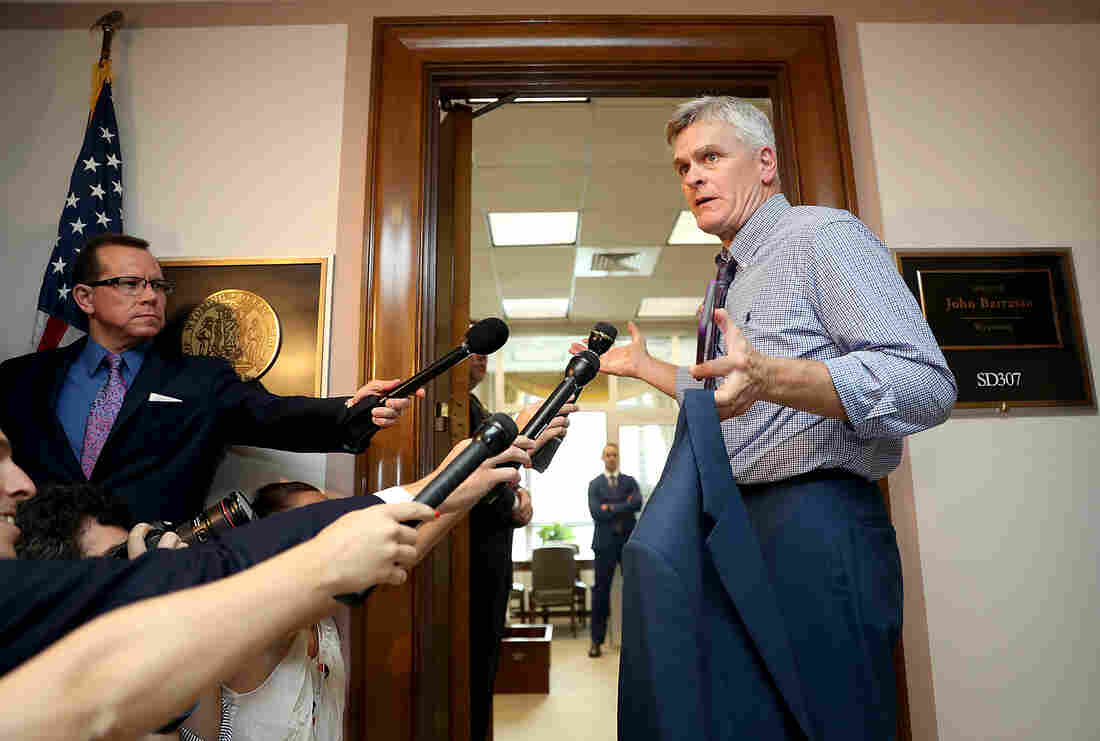
Sen. Bill Cassidy, R-La., continues to tweak the health care bill he cosponsors in an effort to persuade reluctant senators to back it.

Joe Raedle/Getty Images

hide caption

toggle caption

Joe Raedle/Getty Images

The proposal the Senate is considering that would repeal and replace the Affordable Care Act will result in millions losing health insurance and a $133 billion reduction in the deficit by 2026, according to the Congressional Budget Office’s report on the Graham-Cassidy legislation.

The CBO did not have enough time to estimate specifically how many people’s insurance would be affected as they have done when they have scored previous repeal bills. But, the analysis it released Monday evening says, “the number of people with comprehensive health insurance that covers high-cost medical events would be reduced by millions” compared to current law.

The bill, known as Graham-Cassidy, would dismantle the major components of the Affordable Care Act, or Obamacare. Gone would be the subsidies that help people buy insurance, the mandate that requires people to be covered and the expansion of Medicaid.

All the money from those programs would be rolled up and redistributed to states in the form of block grants. Each state would then decide how to spend those funds. Because of that, says the CBO, the number of people who lose health insurance, “could vary widely depending on how states implemented the legislation.”

The bill also changes Medicaid by capping the federal contribution by giving states a fixed amount per person and increasing it at a rate that is slower than health care inflation.

CBO says it can’t do a complete analysis of the plan in the short window requested by lawmakers. Senate Republicans are looking to vote on the bill this week, before a deadline at the end of September would require they get support from Democrats to be able to pass the legislation.

Earlier proposals to overhaul the health care system failed in part because the CBO analyses showed tens of millions of people were likely to lose insurance coverage because of the proposed changes. The major drivers of those losses, according to the CBO, were the loss of the individual mandate that requires people to buy insurance and the rollback of the expansion of Medicaid that was allowed under Obamacare.

The latest proposal includes both provisions, so some analysts say the results will be the same.

“With less money, fewer people will be covered. That’s just math,” says Nicholas Bagley, a law professor at the University of Michigan who specializes in health law. “And since Graham-Cassidy is a lot less money, a lot fewer people will get covered.”

An analysis by the Brookings Institution estimates that about 21 million people would lose coverage under Graham-Cassidy compared to the current law through 2026, and eventually 32 million people would lose it due to the block grant funding changes.

And a separate report by the health care consulting firm Avalere Health estimates that states would lose about $700 billion in federal health care funding over 10 years, and $3.5 trillion over 20 years.

The bill’s sponsors, senators Lindsey Graham, R-S.C., and Bill Cassidy, R-La, introduced a revised bill on Monday. “Whatever the CBO score is will be superseded by another score later this week,” Cassidy said on ABC’s This Week on Sunday.

Let’s block ads! (Why?)

3 GOP Senators Oppose Graham-Cassidy, Effectively Blocking Health Care Bill

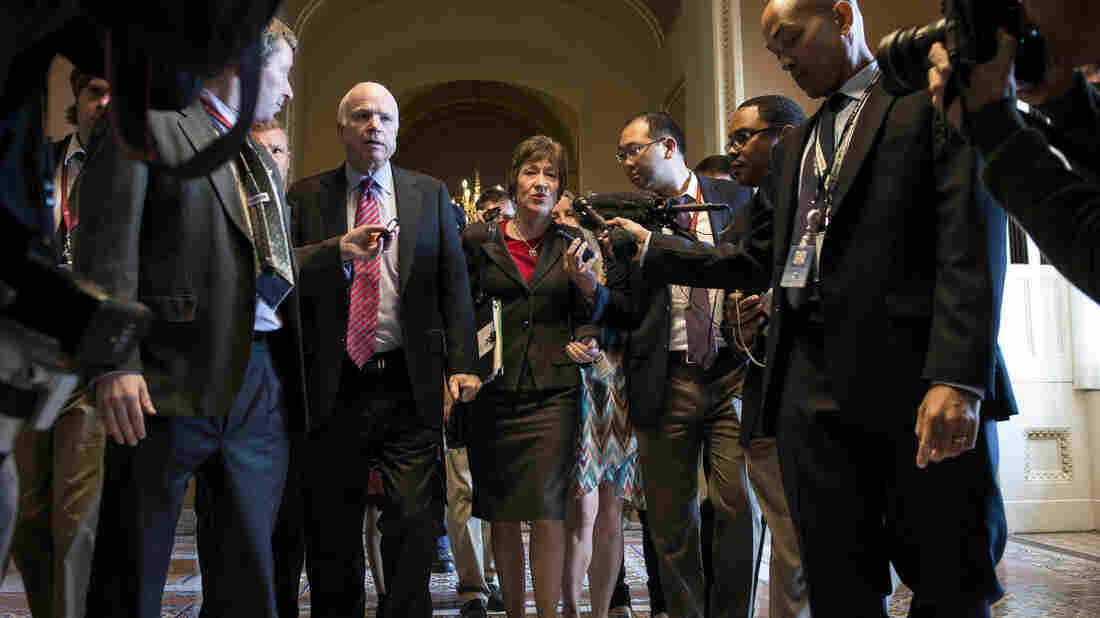
Sens. John McCain, R-Ariz., Susan Collins, R-Maine, in a 2013 file photo. They along with Sen. Rand Paul, R-Ky., have announced firm opposition to the latest GOP health care bill.

Brendan Smialowski/AFP/Getty Images

hide caption

toggle caption

Brendan Smialowski/AFP/Getty Images

The latest Republican push to repeal key parts of the Affordable Care Act appears to have met the fate of all previous Senate repeal efforts this year – it doesn’t have the votes needed to pass the chamber.

Maine Sen. Susan Collins announced Monday that she’ll oppose the bill, authored by South Carolina Sen. Lindsey Graham and Louisiana Sen. Bill Cassidy. Collins’s decision means three Republicans have now publicly said they are against the bill – and that’s one more than the GOP could afford to lose.

In a statement, Collins said, “Sweeping reforms to our health care system and to Medicaid can’t be done well in a compressed time frame, especially when the actual bill is a moving target.”

Senator Collins opposes Graham-Cassidy health care bills https://t.co/nW6MFUvYVgpic.twitter.com/0DSxDJNMPp

— Sen. Susan Collins (@SenatorCollins) September 25, 2017

Cassidy was asked earlier Monday on CNN whether Collins’s opposition would mean it’s over for the bill and said, “Yes, it is.” It’s not clear yet whether Senate Majority Leader Mitch McConnell would still bring the bill to the floor for a vote now that its fate is clear.

Collins has been a steady skeptic of the Republican repeal push all year, regularly raising concerns about how the various repeal incarnations would affect the millions of people who rely on Medicaid, especially in states that chose to expand their Medicaid programs under the Affordable Care Act. She had previously indicated she’d likely vote no, but said she’d withhold a final judgement until after the Congressional Budget Office released its analysis.

That analysis came out Monday evening, and found the bill would reduce the federal deficit by $133 billion by 2026, but was only a partial analysis due to the limited time CBO has had to examine it. The analysis does not have specific projections on how the bill would affect coverage, but says “millions” fewer people would be covered as funding decreases for Medicaid and subsidies for exchanges, as well as the elimination of the individual mandate to have coverage.

“It found, as I expected would be the case, that it would have a negative impact on millions of Americans who are now insured, so it was that final piece of the puzzle that I had been waiting to confirm,” Collins told reporters on Capitol Hill.

The Graham-Cassidy bill would transform Medicaid, giving states, not the federal government, control over how the bulk of billions of dollars in funding is spent. It would also allow states to waive key Obamacare regulations and protections, including the bill’s trademark ban on insurance companies charging higher rates to people with preexisting conditions.

Collins joins Arizona Sen. John McCain and Kentucky Sen. Rand Paul as firm “no” votes on Graham-Cassidy. While Republicans have until Saturday to pass the bill with a simple majority, and Cassidy has already announced changes to the measure’s text, it’s hard to see how any of the three lawmakers change their mind.

President Trump called into the Rick & Bubba Show, a syndicated talk radio program in Alabama, to discuss the GOP senate primary happening there on Tuesday and took the opportunity to criticize Republicans as the bill looked imperiled.

“What McCain has done is a tremendous slap in the face of the Republican Party,” Trump said after again criticizing the GOP for campaigning on a promise to repeal Obamacare for seven years. The president also seemed resigned to the bill’s defeat on Monday morning when he said, “So we’re gonna lose two or three votes and that’s the end of that.”

Collins, McCain, and Paul have each voiced separate, fundamental problems with either the bill’s content, or the repeal process as a whole. None of their concerns could be easily fixed by changing funding formulas. What’s more – a move to assuage Paul’s concerns would likely make Collins more opposed, since Paul’s chief complaint is the measure keeps too much of Obamacare in place, and Collins is worried it would erode key protections promised by the law.

Indeed, Paul’s office has already said that, having seen the new amendments, Paul remains opposed to the bill. “My main concern is that the main thing this bill does is reshuffle the money from Democrat states to Republican states but doesn’t fix the problem,” Paul told reporters, calling for more “freedom in the marketplace,” including the ability to buy insurance over state lines and allow people to buy cheaper plans that provide less coverage for care.

Other Republicans are wavering, too. Texas Sen. Ted Cruz said over the weekend that he’s not yet ready to publicly support the bill. Alaska Sen. Lisa Murkowski – who along with Collins has been a prominent skeptic of the entire repeal process – hasn’t announced where she stands, either.

Still, given the immense pressure Republicans are facing from their base constituents and conservative donors to repeal Obamacare – not to mention constant criticism from President Trump – the Senate could still proceed to a vote later this week.

Iowa Sen. Chuck Grassley summed up the GOP political calculation in a call with reporters last week. “I could have – maybe give you 10 reasons why this bill shouldn’t be considered,” Grassley said. “But Republicans campaigned on this so often that we have –you have a responsibility to carry out what you said in a campaign.”

Let’s block ads! (Why?)

Biggest Flash Points In The Graham-Cassidy Health Care Bill

Two-year-old Robbie Klein of West Roxbury, Mass., has hemophilia, a medical condition that interferes with his blood’s ability to clot normally. His parents, both teachers, worry that his condition could make it hard for them to get insurance to cover his expensive medications if the law changes.

Jesse Costa/Jesse Costa/WBUR

hide caption

toggle caption

Jesse Costa/Jesse Costa/WBUR

If Senate Republicans vote to repeal and replace the Affordable Care Act this week, it would affect the health care of pretty much every American.

Here’s a recap of four key flash points in the health overhaul debate with links to NPR coverage over the past six months, and our chart laying out how the Graham-Cassidy bill under consideration in the Senate addresses those issues compared with the Affordable Care Act.

Pre-existing conditions. One of the biggest issues in the repeal/replace debate has been coverage for pre-existing conditions, genetic risks and chronic illness. Before the Affordable Care Act, insurers could deny coverage to people with diseases like diabetes or charge them much higher premiums. The ACA requires insurers to cover pre-existing conditions without charging more. The GOP bills passed or proposed would give states the power to waive that requirement. People with disabilities or chronic diseases, people who have had cancer, and parents of children born with health problems like late-night host Jimmy Kimmel say that could make insurance unaffordable.

Medicaid. The federal/state insurance program provides health care for 20 percent of all Americans, including 40 percent of children, half of all births, 60 percent of nursing home expenses and 25 percent of mental health care. The Graham-Cassidy bill would transform the structure of Medicaid, giving states control over how they spend federal funds. The bill cuts Medicaid funding over time. States that expanded their Medicaid programs, including California and New York, would face the biggest cuts, while Texas and some states in the Deep South and West would fare better.

Essential Health Benefits. The Affordable Care Act requires that insurers cover 10 “essential health benefits,” including maternity care, mental health, hospitalization, prescription drugs, emergency care, and children’s health. The GOP proposals would let states opt out of those requirements, affecting insurance sold on the exchanges and employer-based coverage. But economists say that won’t lower health costs as much as the bills’ backers may hope, since the three biggest drivers of health costs are hospital care, doctor visits and prescription drugs — three things states may be most reluctant to cut.

Uncertainty And Market Instability. As far back as April, insurers were worried that they wouldn’t have enough time to set rates for 2018. That fear has only increased. Earlier this month, entrepreneurs said the lack of clarity is interfering with hiring. Enrollment on the federal exchanges opens Nov. 1, though the Trump administration has cut advertising for open enrollment by 90 percent. Some private insurers are stepping up to fill the gap.

Loading…

Let’s block ads! (Why?)