Cancer Patient Says Condition Will Dictate Life Choices With ACA Repeal

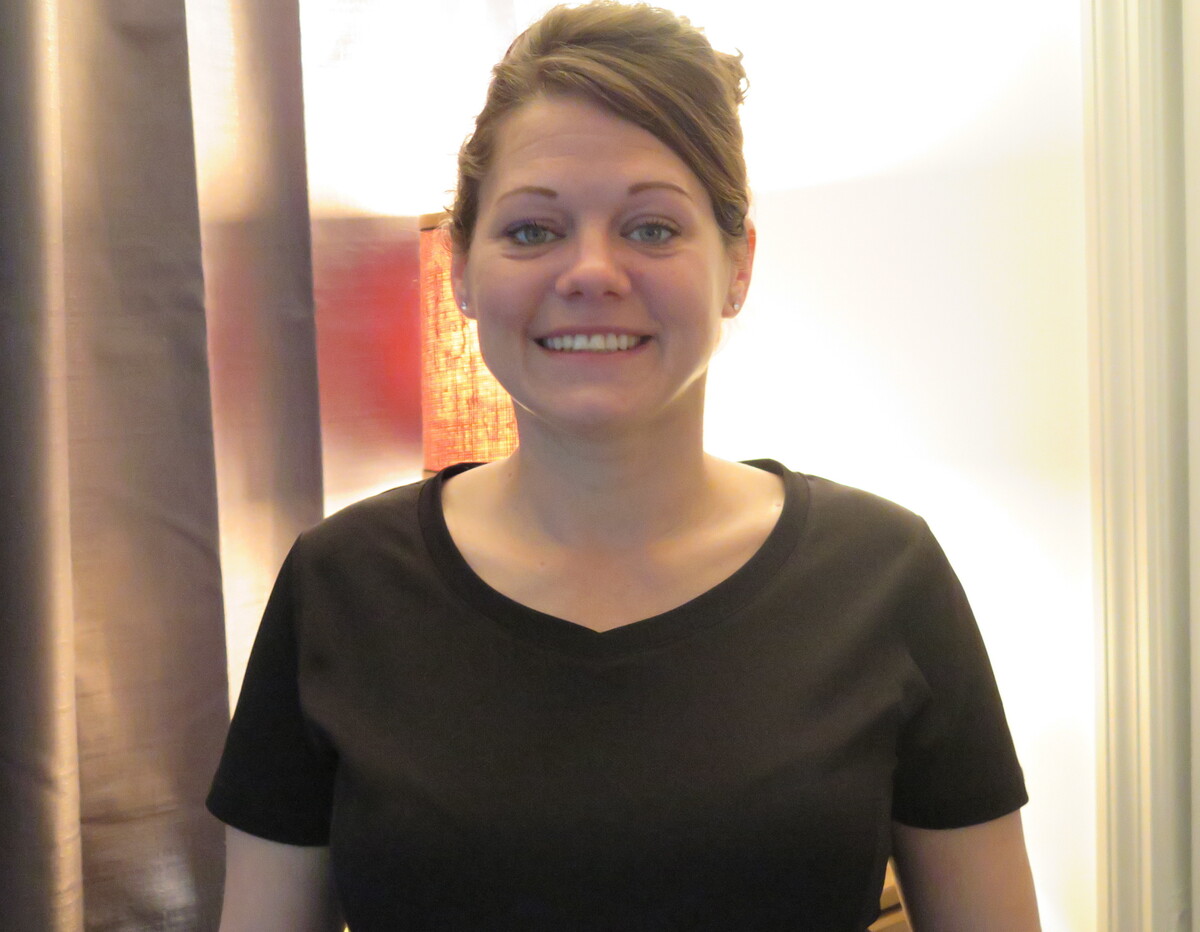
At the age of 29, Molly Young was diagnosed with breast cancer. The Affordable Care Act has been paying for her treatments. NPR’s Michel Martin talks with Young about how she would fare under the new GOP plan.

MICHEL MARTIN, HOST:

We want to talk a bit more about this key question of how the proposed Republican health care bill could affect people who need health care, particularly people with chronic or life-threatening health problems.

Molly Grace Young is a self-employed singer and music teacher living in Baltimore. Last year, at the age of 29, Young was able to get insurance through the Affordable Care Act. Just a month later, she felt a lump in her breast and she was diagnosed with breast cancer.

Luckily, her cancer treatment was covered. But under the proposed Republican health care plan, the extent of her future coverage is uncertain. Molly Young came in a few days ago. And I started our conversation by asking her where she is in her cancer treatment.

MOLLY YOUNG: I’ve had two surgeries. And I am two doses away from being done with chemotherapy. But I will have immunotherapy for a year and six weeks of radiation and five years of hormone therapy. And, yeah, it’s a road. It’s process. But I’m getting there.

MARTIN: Do you have any sense of how much all this would have cost without insurance? Or like, I mean…

YOUNG: Yeah.

MARTIN: …I know, like, looking at those bills has to be traumatic…

YOUNG: (Laughter) yeah.

MARTIN: …But have you ever kind of figured out, like, what the costs of all this treatment would have been?

YOUNG: Yeah. We’re about six months into a treatment process. And so far, out-of-pocket would have been over $120,000. I have a friend who’s going through chemo who every single dose was $25,000. So that was $150 for her right off the bat without anything else. As hard as I might work, I’m not going to be making that much.

MARTIN: You don’t have $120,000 sitting around?

YOUNG: No, I really don’t (laughter).

MARTIN: And just to reiterate for people who are wondering, like, OK, well, what about an employer? What about, like, that – you’re self-employed. You didn’t have an employer who offered insurance.

YOUNG: Right. It’s not that I’m unemployed or that I don’t work. I work very hard. But no one single job is a full-time job for me. It’s kind of a patchwork of a lot of different employments.

MARTIN: You were telling us that one of the reasons that you decided to speak up and, you know, talk about this publicly was that you have been following the efforts to repeal and replace, you know, Obamacare. Like, how have you been following that and what has struck you about that?

YOUNG: I distinctly remember driving home from one of my scans – one of my MRIs, which they’re terrifying, especially if you already have cancer and you know they’re just excavating for more. And you’re wondering, not even will I die, but how fast.

And I was driving home from that and I was listening to live coverage of debate, and it was just horrifying. It sounded so inhumane to me that people were arguing about whether or not people in my position should be allowed to be cared for and be saved because without coverage, without this treatment, I would just die and that’s it.

And it’s terrifying to hear how little people like me can matter in these issues. We’re not really focusing on actual human lives. We’re just looking at dollars and cents, which is a very morbid way to go about it.

MARTIN: When you get through this stage, you will be considered a person with a pre-existing condition. Is that a concern? Because part of this new iteration of the GOP health care plan would not require insurance plans to cover pre-existing conditions. So is that a concern?

YOUNG: Oh, absolutely. Cancer is a lifelong sentence. No matter what – no matter if I get through the next year or the next five years and everything’s fine and I’m eventually, hopefully, pronounced with no evidence of disease, NED, I have many, many years to worry about, not only a recurrence of breast cancer, but any other type of cancer in my body is now an elevated risk because I have been a cancer patient. So I’m absolutely a walking pre-existing condition for the rest of my life.

And as my life changes, if I have to sign up for a new plan somewhere and it’s in a state that decides that they don’t need to protect me, I will be in a position where I need more care than most people, but I have less access to it, which is a little unfair (laughter) in my opinion, but yeah.

MARTIN: So you really see it as something that can dictate the future course of your life, like where you can move and what job opportunities you can take.

YOUNG: Oh, absolutely. To look at it being a state-by-state issue, for someone like me or people with diabetes – the list goes on of all sorts of health concerns. And access to essential health benefits – we know that mammograms are one of the biggest reasons we do catch breast cancer early on in many patients. So if we suddenly have groups of states in our country that won’t provide that, that’s really a death sentence for plenty of Americans.

MARTIN: So before we let you go, I did – I do feel I need to ask you, though, if the people who are the proponents of this new approach or this – the Republican approach, argue that it would create more choice and lower costs. And I just have to ask you whether you think that’s possibly true.

YOUNG: As I said before – trying to educate myself about it – to me, as a patient, from the outside looking in, that looks like a great way to drive up costs and create a profit-based market to make money off of people like me who are dying for no reason.

I didn’t do anything to earn breast cancer. It’s not in my family. They tested my genes. It’s just bad luck. And the same way we as a country can look to any kind of natural disaster that just sort of happens and we all want to reach out and help one another, I think that’s no different than wanting to create more of a community in terms of health insurance and not have it be based on who can afford it.

And it’s very frustrating to me to hear lawmakers discuss this knowing that they’re in a tax bracket that they could probably take these costs on themselves, if they had to, out of pocket and also knowing that they’re not subjecting themselves to the same plan that we have to take on.

MARTIN: That’s Molly Grace Young. She spoke with us from our Washington, D.C., studios. Tomorrow, we will have several more conversations with people with different perspectives and opinions about the American health care system, including a deep dive on how a single-payer health system would work.

Copyright © 2017 NPR. All rights reserved. Visit our website terms of use and permissions pages at www.npr.org for further information.

NPR transcripts are created on a rush deadline by Verb8tm, Inc., an NPR contractor, and produced using a proprietary transcription process developed with NPR. This text may not be in its final form and may be updated or revised in the future. Accuracy and availability may vary. The authoritative record of NPR’s programming is the audio record.

Let’s block ads! (Why?)

Late Night Show Sharpens Tone As Jimmy Kimmel Revives Health Care Debate

This week, late night host Jimmy Kimmel took aim at politicians trying to repeal the Affordable Care Act. And he did it repeatedly, over three nights, crossing into new, politicized territory for his show.

MICHEL MARTIN, HOST:

We’re going back to politics now, at least we think it’s politics. We want to talk about the late night host Jimmy Kimmel, who’s made headlines in both political and entertainment news this past week when he spent a good chunk of time on three different episodes of his show criticizing the latest efforts by GOP senators to replace the Obama administration health insurance initiative the Affordable Care Act. Jimmy Kimmel accused one of the GOP bill’s co-sponsors, Louisiana Senator Bill Cassidy, of lying when Cassidy said the bill met a standard Cassidy had called the Jimmy Kimmel test.

(SOUNDBITE OF TV SHOW, “JIMMY KIMMEL LIVE!”)

JIMMY KIMMEL: There’s a new Jimmy Kimmel test for you. It’s called the lie detector test. You’re welcome to stop by the studio and take it anytime.

MARTIN: Kimmel also pushed back against President Trump when the president defended Cassidy on Twitter.

(SOUNDBITE OF SONG, “JIMMY KIMMEL LIVE!”)

KIMMEL: He doesn’t know the difference between Medicare and Medicaid. He barely knows the difference between Melania and Ivanka, so.

MARTIN: The New York Times says Kimmel has become, quote, “the unlikely face of opposition to the bill,” unquote. The comic has been vocal about health care insurance issues on his show since his infant son needed open-heart surgery and Kimmel realized people who aren’t wealthy might not have access to the level of care his child received. We wanted to talk about all this, so we called NPR TV critic Eric Deggans. Hi, Eric.

ERIC DEGGANS, BYLINE: Hey.

MARTIN: So, you know, a number of late-night hosts have made a name for themselves talking politics night after night. You know, I’m thinking about Seth Myers or Samantha Bee or Stephen Colbert certainly. Jimmy Kimmel really hasn’t been one of them, so I’m wondering what you make of what he’s done this week. And I’m wondering why you think it’s having the impact that it is having.

DEGGANS: Well, you know, I think he’s viewed as an every man. And, you know, he’s smarter, I think, than a lot of people give him credit for. And I think he’s also concerned about the way that politicians like Cassidy used his name when he first started speaking out about health care issues to make it seem as if he might endorse something they would do later. He’s spoken out in a very detailed and thoughtful way.

You know, he’s pointing out concerns about lifetime caps on spending for pre-existing conditions and the overall funding for Medicaid and other issues. And because he’s this every-man comic who doesn’t often talk about politics in a detailed way, I think it resonates a little bit more in the public. And there’s been all of this coverage, including folks like us talking about it.

MARTIN: You know, when he was asked about Jimmy Kimmel’s criticism, Senator Cassidy said that the comic didn’t understand the bill. And that’s something that a number of other pundits have said. But at NPR, we pointed out on Twitter that Kimmel was right that the proposed legislation would remove guarantees of coverage for people with pre-existing conditions. And I wondered, is it odd to see a legislator on the losing end of a policy debate like that with a late-night comic?

DEGGANS: (Laughter) Well, it seems we’re in this odd political and media moment where celebrity and fame counts for a lot in these policy debates. You know, we’ve got a reality TV star as a president. He’s speaking to his people on Twitter a lot. There’s a sense that if you’re able to galvanize public opinion through fame, that accounts for a lot.

And Cassidy himself sort of attached Jimmy Kimmel to his work on health care by coining the phrase the Jimmy Kimmel test. And now he’s reaping the results of that, given that Kimmel feels the senator hasn’t been truthful about what his bill does. And what’s interesting is that Kimmel is coming across as the honest broker because he doesn’t really stand to directly benefit from this. He’s picking a fight with legislators. He’s not necessarily going to get anything out of it.

It’s an example of how a media figure with a certain constituency can make arguments with the persuasiveness that maybe like pundits who are, you know, perceived to be too, you know, liberally biased or whatever, they might not have the same impact. So it’s been really fascinating to see how Kimmel has affected this debate.

MARTIN: I want to take that stay-in-your lane argument from a different side. I mean, the fact is that people are criticizing Jimmy Kimmel, saying, well, you don’t know that much about it so whatever. But a number of people are defending him, saying that, look, he’s like a lot of people. He educated himself about this because he had to.

DEGGANS: Yeah. I mean, that’s a double-edged sword in a way because you want people to speak out on issues even when they don’t necessarily directly affect them. And I’m hoping that maybe Kimmel might learn from this and pay a little more attention to issues that don’t directly come into his world because there’s a lot of debates out there about stuff like transgender people in the military and Muslims and undocumented immigrants. And we’re all trying to figure out where to go on these things, and it might help to have somebody as smart and capable as Kimmel join the discussion.

MARTIN: That’s NPR TV critic Eric Deggans. Eric, thank you.

DEGGANS: Thank you.

Copyright © 2017 NPR. All rights reserved. Visit our website terms of use and permissions pages at www.npr.org for further information.

NPR transcripts are created on a rush deadline by Verb8tm, Inc., an NPR contractor, and produced using a proprietary transcription process developed with NPR. This text may not be in its final form and may be updated or revised in the future. Accuracy and availability may vary. The authoritative record of NPR’s programming is the audio record.

Let’s block ads! (Why?)

5 Americans Talk About How A Health Law Overhaul Would Affect Them

Charlene Yurgaitis gets health insurance through Medicaid in Pennsylvania. It covers the counseling and medication she and her doctors say she needs to recover from her opioid addiction.

Ben Allen/WITF

hide caption

toggle caption

Ben Allen/WITF

As the nation has debated the GOP proposals to repeal and replace the Affordable Care Act, NPR member station reporters have been talking to people around the country about how the proposed changes in the health law would affect them.

Here are five of those stories:

A young man with Parkinson’s Disease. Ford Inbody is already thinking about a time when he won’t be able to work. He is 33 and was diagnosed with early-onset Parkinson’s disease. While many of his Millennial friends are starting families, he and his wife have decided not to have children, and they’re carefully planning for the future where he will have to give up his job. Changes that make it harder to afford coverage for pre-existing conditions could affect him drastically. He’s hoping he would be able to buy insurance on the exchange once he’s no longer covered through work, and that eventually Medicaid would be there for him if and when the disease leaves him disabled. —- Reporting by Alex Smith, KCUR, Kansas City, Mo.

A farmer hopes stay insured until he’s old enough for Medicare. Darvin Bentlage says his health insurance plan used to be the same as all the other cattle farmers in Barton County, Mo.: Stay healthy until he turned 65, then get on Medicare. But when he turned 50, things did not go according to plan. He had some health problems, had to refinance his farm to pay those medical bills, and then went without insurance for a while. He says he signed up for insurance on the exchanges established under the Affordable Care Act as soon as he could. If he loses subsidies or gets charged more for his pre-existing conditions, “I just have to go back to plan A and hope I make it to 65,” he chuckles. — Reporting by Bram Sable-Smith, KBIA, Columbia, Mo.

A Man With Down’s Syndrome Gets By With A Little Help From Medicaid. Evan Nodvinhas a job at a fitness center, lives in an apartment and feels so passionately about keeping his independence, he went to Washington to lobby when he heard about potential cuts to Medicaid under GOP health care plans. “My life is very full,” he said. “I work, live and play in the community. My dream is to continue this healthy and useful life.” A few decades ago, states closed many institutions that took care of people with disabilities in hopes of that they would be integrated into the community. Many can, but with some support. Medicaid is often that support, with the majority of money going to help people with disabilities. — Reporting by Elly Yu, WABE, Atlanta.

A young woman breaking her addiction to opioids.Charlene Yurgaitis, 35, decided after a decade of using opioids, she was ready to tackle her addiction. And she is doing it full-on, with medication-assisted treatment combined with counseling. Medicaid is her insurance, for which she became eligible when Pennsylvania expanded the insurance program under the Affordable Care Act. “I would never be able to afford counseling,” she says. “I would never be able to afford psych meds. I would never be able to afford the Vivitrol shot.” She says she’d say to lawmakers who want to curtail federal spending on Medicaid, “Why are you trying to change something that’s working?” — Reporting by Ben Allen, WITF, Harrisburg, Pa.

A self-employed veteran in California. Air Force veteran Billy Ramos is a contractor in the heating and air conditioning business who is grateful to have Medicaid. He signed up when California expanded the health insurance program for low-income people under the ACA. About 1 in 10 veterans gets help from Medicaid; only about half of the 22 million veterans in the U.S. get care from the VA system. Ramos gets treatment for his hepatitis and feels relieved knowing he has emergency care if something goes awry on the job. —Reporting by Stephane O’Neill, freelance.

These stories are part of a reporting partnership with NPR, local member stations and Kaiser Health News.

Let’s block ads! (Why?)

Meet Your Friends Who Get Medicaid

Protesters rally against Medicaid cuts in front of the U.S. Capitol in June. Medicaid is the nation’s largest health insurance program, covering 74 million people — more than 1 in 5 Americans.

Bill Clark/CQ Roll Call/Getty Images

hide caption

toggle caption

Bill Clark/CQ Roll Call/Getty Images

When high levels of lead were discovered in the public water system in Flint, Mich., in 2015, Medicaid stepped in to help thousands of children get tested for poisoning and receive care.

When disabled children need to get to doctor’s appointments — either across town or hundreds of miles away — Medicaid pays for their transportation.

When older middle-class Americans deplete their savings to pay for costly nursing home care, Medicaid offers coverage.

The United States has become a Medicaid nation.

Although it started as a plan to cover only the poor, Medicaid now touches tens of millions of Americans who live above the poverty line. The program serves as a backstop for America’s scattershot health care system, and as Republicans learned this year in their relentless battle to replace the Affordable Care Act, also known as Obamacare, efforts to drastically change that can spur a backlash.

The latest Republican proposal — spearheaded by Republican Sens. Lindsey Graham of South Carolina and Bill Cassidy of Louisiana — is being pummeled by doctors, insurers, hospitals and patient advocates because it would scrap the Affordable Care Act’s Medicaid expansion and reduce federal funding for Medicaid.

Senate leaders are trying to get to a vote before Sept. 30, when special budget rules that would allow them to need only 50 votes expire.

Today Medicaid is the nation’s largest health insurance program, covering 74 million people — more than 1 in 5 Americans. Twenty-five percent of Americans will be on Medicaid at some point in their lives — many are just a pink slip away from being eligible.

Medicaid funding protects families from having to sell a home or declare bankruptcy to pay for the care of a disabled child or elderly parent. It covers some aspects of disaster relief, public health emergencies and some programs in schools that lack other sources of funding.

Millions of women who don’t qualify for full Medicaid benefits each year obtain family planning services paid for by Medicaid. These women have incomes as high as triple the federal poverty rate — above $36,000 for an individual. And thousands of women who otherwise don’t qualify for the program get treated each year for breast and cervical cancers through Medicaid.

Loading…

A proposal that would have deeply cut Medicaid passed in a House bill in May, but the ACA overhaul legislation fell short in the Senate in July. “Instead of cutting Medicaid, [lawmakers] increased public awareness of its value and made it even harder to cut in the future,” says Jonathan Oberlander, professor of health policy and management at the University of North Carolina, Chapel Hill and a supporter of the federal health law.

Medicaid is the workhorse of the health system, covering:

  • 40 percent of all children,
  • Half of all births in the U.S.,
  • 60 percent of nursing home and other long-term care expenses, and
  • More than one-quarter of all spending on mental health services and over a fifth of all spending on substance abuse treatment.

Unlike Medicare beneficiaries, who keep that insurance for life, most Medicaid enrollees churn in and out of the program every few years depending on their circumstances, government statistics show.

Such numbers underline the importance of Medicaid, but also provoke alarm among conservatives and some economists who say the U.S. cannot afford the costs over the long run.

Bill Hammond, director of health policy of the fiscally conservative Empire Center for Public Policy in Albany, N.Y., says Medicaid has been a big help for those whom it was designed to cover — children and the disabled. But it has grown so big that the cost hurts state efforts to pay for other necessary public services, such as education and roads. “I can’t think of any other anti-poverty program that reaches so many people,” he says. “It’s too expensive a benefit.”

“We need to transition people to get coverage in the private sector,” Hammond says, noting that millions on the program have incomes above the federal poverty level.

It may be the person down the block

Joana Weaver, 49, of Salisbury, Md., has cerebral palsy and has been on and off Medicaid since birth. For the past few years, it has paid for home nursing services for six hours a day to help her get dressed, bathed and fed. That has kept her out of a nursing home and enabled her to teach English part time at a local community college.

“For me, Medicaid has meant having my independence,” Weaver says.

Medicaid recipients include many grandmothers — one-quarter of Medicaid enrollees are elderly people or disabled adults.

And lots of kids qualify for Medicaid, too. About half of Medicaid enrollees are children, many with physical or mental disabilities

Many of the rest — about 24 million enrollees — are adults under 65 without disabilities who earn too little to afford health insurance otherwise. About 60 percent of nondisabled adult enrollees have a job. Many of those who don’t work are caregivers.

“It’s the mechanic down the street, the woman waiting tables where you go for breakfast and people working at the grocery store,” says Sara Rosenbaum, a health policy professor at George Washington University in Washington, D.C.

While all states rely on Medicaid, it’s used more in some places than others because of varying state eligibility rules and poverty rates. About 44 percent of all New Mexico residents are insured by Medicaid. In West Virginia and California, it’s nearly 1 in 3.

Jane and Fred Fergus, of Lawrence, Kan., say Medicaid has been a cornerstone in their lives since their son, Franklin, was born eight years ago with a severe genetic disability that left him unable to speak or walk. He is blind and deaf on one side of his body.

Although the family has insurance through Fred’s job as a high school history teacher, Franklin was eligible for Medicaid through an optional program that states use to help families let their children be cared for at home, rather than moving to a hospital or nursing home.

Medicaid pays all of the child’s medical bills, Jane Fergus says, including monthly transportation costs to Cincinnati Children’s Hospital, where for the past 18 months, he has been receiving an experimental chemotherapy drug to help shrink tumors that block his airway. The program also covers his wheelchair, walker and daily nursing care at home.

“We have such great health care for him because of Medicaid,” his mother says.

Jane Fergus was never politically active until this year, when she feared that the GOP plans to cut Medicaid funding would reduce services for her son.

“If there is a silver lining in all this debate, it’s that we have been given a voice, and people in power are being educated on the role of Medicaid,” she says.

Moving beyond its roots

Medicaid was born in a 1965 political deal to help bring more support for President Lyndon Johnson’s dream of Medicare, the national health insurance program for the elderly.

Over the past 40 years and particularly since the 1980s, Medicaid expanded beyond its roots as a welfare program. In 1987, Congress added coverage for pregnant women and children living in families with incomes nearly twice the federal poverty level (about $49,200 today for a family of four).

In 1997, Congress added the Children’s Health Insurance Program to help cover kids from families whose incomes are too high for Medicaid.

And since September 2013, Obamacare has allowed states to expand the program to anyone earning under 138 percent of poverty (or $16,394 for an individual in 2016), adding 17 million people to Medicaid’s rolls.

In addition, more than 11 million Medicare beneficiaries also receive Medicaid coverage, which helps them get long-term care and pay for Medicare premiums.

“Medicaid is plugging the holes in our health system,” says Joan Alker, executive director of the Georgetown University Center for Children and Families, “and our health system has a lot of holes.”

But that approach comes at a steep price.

A blessing and a curse

With increasing enrollments and health costs steadily rising, the cost of Medicaid has soared, too. Federal and state governments spent about $575 billion combined on Medicaid last year — nearly triple the level in 2000.

Those dollars have become both a blessing and a curse for states.

The federal government matches state Medicaid spending with funds from Washington, paying from half to 74 percent of a state’s costs in 2016. Poorer states get the higher shares.

The funding is provided on an open-ended basis, so the more states spend, the more they receive from Washington. That guarantee protects states when they have sudden enrollment spikes because of downturns in the economy, health emergencies such as the opioid crisis or natural disasters such as Hurricane Katrina.

The program is the largest source of federal funding to states. And Medicaid is often the biggest program in state budgets, after public education.

“Medicaid is the elephant in the room for health care,” says Jameson Taylor, vice president for policy for the Mississippi Center for Public Policy, a free-market think tank. He says states have become dependent on the federal funding to help fill their state budget coffers. While the poorest states, such as Mississippi, get a higher percentage of federal Medicaid dollars, that still often isn’t enough to keep up with health care costs, he says.

Extensive benefits

Medicaid provides significant financing for hospitals, community health centers, physicians, nursing homes and jobs in the health care sector.

But the revenue stream flows further. Billions in annual Medicaid spending goes to U.S. schools to pay for nurses; physical, occupational and speech therapists; and school-based screenings and treatment for children from low-income families, as well as for wheelchairs and buses to transport kids with special needs.

Medicaid also covers services that private health insurers and Medicare do not — such as nonemergency transportation to medical appointments, vision care and dental care. To help people with disabilities stay out of expensive nursing homes, Medicaid pays for renovations to their homes, such as wheelchair ramps, and for personal care aides.

Rena Schrager, 42, of Jupiter, Fla., who has severe vision problems, has relied on Medicaid for more than 20 years. Although she often has difficulty finding doctors who will accept Medicaid’s reimbursements — which are often lower than those from private insurance or Medicare — she is grateful for the coverage. “When you do not have anything else, you are glad to have anything,” Schrager says.

As it has grown, Medicaid has become more popular — another reason why politicians are cautious to curtail benefits or spending.

A recent survey by the Kaiser Family Foundation indicated that about 75 percent of the public, including majorities of Democrats (84 percent) and Republicans (61 percent), hold a favorable view of Medicaid. That is nearly as high as favorable views on Medicare. (Kaiser Health News is an editorially independent program of the foundation.)

Nonetheless, Medicaid may still have a bull’s-eye on its back.

“The fact that the House passed a bill to cut $800 billion from Medicaid and it came one vote short to passing the Senate shows Medicaid is stronger than maybe many Republican leaders anticipated,” says Oberlander. “But politically, it is still in a precarious position.”


Kaiser Health News is an editorially independent program of the Kaiser Family Foundation. This story launches “Medicaid Nation” — KHN’s series on how Medicaid affects the lives of millions of Americans.

Let’s block ads! (Why?)

Democratic Sen. Carper On Health Care

NPR’s Scott Simon talks with Delaware Sen. Tom Carper, a Democrat, about his opposition to the latest proposal to repeal the Affordable Care Act.

SCOTT SIMON, HOST:

Republican senators spent the week trying to rally support for their latest proposal to repeal and replace the Affordable Care Act. Senator John McCain announced his opposition to the bill yesterday, and that might signal the end of repeal and replace. President Trump tweeted this morning, John McCain never had any intention of voting for this bill, which his governor loves. He campaigned on repeal and replace. Let Arizona down. Senator McCain said yesterday, I believe we could do better working together, Republicans and Democrats, and have not yet really tried. Senator Tom Carper of Delaware is a Democrat. And before this latest proposal, he had indicated that he was willing to work with Republicans on a health care plan. Senator Carper joins us. Thanks for being with us.

TOM CARPER: Good morning. I’m also a retired Navy captain and served in a war over in Southeast Asia where John McCain was a hero. You know, I came to the House together in ’82. We serve together in Homeland Security Committee. I’ve always been a big fan of – an admirer of John McCain and certainly am today.

SIMON: Senator, if the Republican plan is dead, are Democrats still going to want to work with Republicans or – in what if – what they really want is the Affordable Care Act left in place?

CARPER: Well, actually I think what the American people want – I travel around the country a fair amount – here in Delaware I hear every day, why can’t you guys just work together? Why don’t you work together and get things done? John McCain and I and a bunch of Democrats and Republicans are in favor of something we call regular order – we haven’t done it a lot on real tough issues lately – where Democrats and Republicans actually work together. Somebody has a good idea. We introduce it as a bill with bipartisan support. We have hearings – bipartisan hearings – and then actually vote on a legislation offer – bipartisan amendments. And that’s – something as big as health care – is the kind of thing we need to do together rather than try to do it by ourselves.

SIMON: Yeah. So you believe bipartisan support is necessary to put health care into place for millions of Americans and not have it undone from administration to administration?

CARPER: I do. And we actually had a good demonstration of that after John cast another courageous vote about a month or so ago to stop, 51-49, the repeal-and-replace legislation. What happened in the wake of that as you know is that Lamar Alexander and Patty Murray – senior Republican, senior Democrat on the Health, Education, Labor, and Pension Committee – held a series of eight bipartisan hearings and roundtables over the last three weeks where we had insurance commissioners from all over the country – governors – Democrat, Republican governors – health care providers, insurance companies, health economists – from all over coming in and saying these are the things you need to do to stabilize the exchanges in all 50 states. And once you’ve done that, this is what you ought to consider doing to – in order to realize what I call the holy grail. And that is providing coverage for everybody – good, quality coverage for a reasonable price.

SIMON: Senator, in the minute we have left, group of your colleagues in the Senate rallied behind Bernie Sanders’ “Medicaid for all” appeal. Do you guys, on your side of the aisle, have your own arguments ahead about standing by Obamacare or campaigning for some kind of single-payer system?

CARPER: I think an idea as big as single-payer deserves a lot of attention in hearings. My hope is that we’ll do that in regular order. I was – as governor of Delaware for eight years – I was very much involved in the National Governors Association. They even let me be the chairman of the outfit. And I was also chairman of NGA’s Center for Best Practice. We have 50 states. We need to use them as laboratories for democracy. And maybe before we try on a big idea for the country, might make some sense to try it in some different kinds of states and see what works, what doesn’t work and learn from that.

But the Cassidy-Graham proposal – let’s have hearings on that – and real hearings, not sham hearings. Let’s have real hearings on single-payer. And – but also we had – we’ve had, like, eight-day hearings in roundtables in the last three weeks to figure out how we could stabilize the exchanges. And almost all the witnesses, governors, insurance commissioners – just about everybody agreed – these are three or four things you need to do – if you do these things, you’ll bring down premiums by as much as 30, 35 percent.

SIMON: Senator Tom Carper of Delaware, thanks so much for being with us, sir.

CARPER: Thank you so much, Scott. You take care. Bye-bye.

Copyright © 2017 NPR. All rights reserved. Visit our website terms of use and permissions pages at www.npr.org for further information.

NPR transcripts are created on a rush deadline by Verb8tm, Inc., an NPR contractor, and produced using a proprietary transcription process developed with NPR. This text may not be in its final form and may be updated or revised in the future. Accuracy and availability may vary. The authoritative record of NPR’s programming is the audio record.
Let’s block ads! (Why?)

If Republicans Revive Health Care Again, This Is What It Could Mean For Your State

All eyes are on Sen. Lindsey Graham, R-S.C. (third from left), and his Republican colleagues as they pitch yet another Obamacare repeal-and-replace plan.

Alex Wong/Getty Images

hide caption

toggle caption

Alex Wong/Getty Images

John McCain on Friday imperiled Republicans’ latest Affordable Care Act repeal and replace effort when he said he “cannot in good conscience” support the so-called Graham-Cassidy bill. But McCain did also say he could at some point support the substance of his fellow Republicans’ proposal.

“I would consider supporting legislation similar to that offered by my friends Sens. [Lindsey] Graham and [Bill] Cassidy were it the product of extensive hearings, debate and amendment,” McCain said. “But that has not been the case.”

That’s notable because for the first time since Trump became president, there actually seemed to be some real ideological unity around a repeal-and-replace effort from Republicans.

If it is revived — and this effort isn’t quite dead yet, because other GOP holdouts haven’t stated their unequivocal opposition publicly — the Graham-Cassidy bill very well may be the foundation of how the health care system is reshaped.

What would it mean for where you live? We take a look

A big selling point of Graham-Cassidy, according to its proponents, is flexibility for states. In place of the federal dollars that fund Obamacare’s subsidies and Medicaid expansion, Graham-Cassidy, which under the latest GOP proposal would be law in 2020, would give states block grants.

Those are big chunks of money given directly to states, which would have broad discretion in how to spend them.

But what’s important is that those block grants would be less money than the total money that states are getting for Obamacare right now.

Graham-Cassidy would eliminate the premiums that help people pay for their health insurance and the payments helping insurance companies keep prices down, and it would also take away the Medicaid expansion created under Obamacare. States that took this expansion were able to provide Medicaid to people earning up to 138 percent of the federal poverty level.

That would disappear, with the block grants taking that money’s place.

One section of the Graham-Cassidy bill spells out how the states can use the money — to help high-risk people buy insurance, for example, or to replace the premium subsidies to some degree.

One other thing the bill’s architects envisioned is a decline in spending. Altogether, the block grants would reduce federal government spending by $107 billion from 2020 through 2026, according to an analysis from the Kaiser Family Foundation. The left-leaning Center for Budget and Policy Priorities puts that figure even higher, at $243 billion.

And in general, states that took the Medicaid expansion would lose out, while states that didn’t take it would temporarily end up with more money. (However, Graham-Cassidy doesn’t allocate block grant money past 2026.)

The idea is that while the block grants are smaller, states can do whatever they like with them — and, ideally, what they do will be more efficient than what they’re doing now.

NPR reached out to the offices of both Graham and Cassidy to ask what they think would be optimal ways to spend the money, but has yet to receive a response. So we asked experts.

What might really happen

Given those basics — less money but more flexibility with that money — states would have big choices to make. And analyses have shown that Graham-Cassidy would leave millions — even tens of millions — more Americans uninsured than under the status quo.

“You can inject the money wherever you want into the problem of the uninsured, but if there’s less money you’re going to cover fewer people. There’s no two ways about it,” said Nicholas Bagley, a professor and health law expert at the University of Michigan Law School. “Or you’re going to cover as many people but less generously.”

So here are a few routes states could take, according to what a variety of health care experts told NPR. Given all the flexibility states might have, this is just a sampling of what states could do, but it’s a start at conceptualizing how health care in any given state might look if the bill passes.

Focus on demographics. “What is the patient mix? What does the consumer mix look like in your state?” said Lanhee Chen, research fellow at Stanford’s right-leaning Hoover Institution and policy director for Mitt Romney’s 2012 presidential bid. “Those are going to be important factors: demographic factors; patient mix and acuity; is there one dominant employer in the state?”

For example, a state with a large population of Medicaid recipients may want to direct more funding to helping lower-income people. Some states may also allow insurers to charge more for people with pre-existing conditions, meaning those patients may need more help.

Chen used Massachusetts as another example of how a state might decide to reconfigure its health programs.

“The average income is higher; you have people with more educational attainment who are used to making choices on a broad variety of things, where maybe more health care choices would not be problematic,” he said.

Boost Medicaid as much as possible. Some analyses have shown that Medicaid covers people for far less than it might cost under private insurance. With that in mind, says one expert, states might do well to just expand Medicaid as much as they can.

“If you wanted to do right for the health of the people in your state what would you do?” asks Amitabh Chandra, professor of social policy at Harvard University. To him, the answer is obvious: “The single most cost-effective thing to do is spend on the Medicaid program. It’s unbelievably lean, but it’s unbelievably efficient in terms of the value it delivers.”

… Or not. On the flip side, a state where lawmakers want less government involvement in health care could take a different route.

“A state could say, ‘We don’t really like putting the Medicaid expansion population back into Medicaid so what we’re going to do instead is help them get private coverage,’ ” said Bagley.

States could also make Medicaid less generous.

“In our Medicaid program in Ohio, we probably spend as much money now on optional benefits as we do on mandatory benefits,” said John Corlett, that state’s former Medicaid director. “People forget that a lot of benefits that states provide in the Medicaid program are optional.”

That could save a lot of money, he said, but he added a caveat: “That’s not making the program more efficient.”

Help clinics that serve low-income people. As low-income Americans would be the most affected by reduced premium subsidies and shrinking the Medicaid program, one expert says it would be smart to simply direct the money to places that serve the most low-income patients.

“Your choices are just awful,” cautions Sara Rosenbaum, professor of health law and policy at George Washington University — she believes that reducing money available to states both in the block grant and in Medicaid will force lawmakers to leave many of their constituents worse off.

“But the most sensible thing to do would probably be — at least where they’re available — to go to your public hospital or your community hospital or community health centers, and if you have other clinics in the region that see low-income people, to give them some grants and let them care for as many people as they can.”

Shift money toward (or away from) particular groups. A state may decide to move money currently used for insurance premiums down the income spectrum, Chen said.

“The ACA subsidy structure allocates subsidies for people making up to 400 percent of federal poverty,” he said, noting that that comes out to nearly $100,000 for a family of four. “A state like Kansas, for example — they might have a relatively smaller distribution of people that are at that income level, and by the way, most of those people might already be getting offers of health insurance” from their employers, he said (though it’s important to note Graham-Cassidy would also eliminate the employer mandate).

States could “beef up support for people making less than 250 percent of poverty,” he said. “That is something you could pursue under Graham-Cassidy that you couldn’t pursue under the ACA.”

This is contingent upon there being enough money, though, because once again, Graham-Cassidy would reduce federal funds to many states.

Move toward single-payer? Yes, it’s a Republican bill, but it grants a lot of leeway … meaning states could use their block grants to move closer to a single-payer system.

“Some states are going to experiment with how they bring more centralization into their marketplace,” said Chen. He hesitated to say single-payer — “I don’t know if there’s enough here resource-wise to make that work” — but he noted that a state might decide to create “some kind of a Medicaid buy-in system.”

Bagley explained how this sort of system might work.

“One alternative would be to take the money and create a state-based Medicaid-type program that paid Medicaid rates and have a Medicaid-type plan cover all the uninsured in the state,” said Bagley. “So it wouldn’t be single-payer, but it would be a single-payer approach for the uninsured.”

For this reason, some Republicans remain displeased with Graham-Cassidy. Louisiana Sen. John Kennedy this week said he was undecided on the bill for this reason.

“If you give California and New York a big chunk of money they’re gonna set up a single-payer system. And I wanna prevent that,” he said, as reported by Bloomberg’s Sahil Kapur.

However, GOP senators remain divided; Wyoming’s John Barrasso responded, “Either you believe in states’ rights or you don’t believe in states’ rights.”

Spend on something else. Or states may use the money in a way the bill totally does not intend: that is, for things that are totally unrelated to health care.

Though it’s true Graham-Cassidy specifies ways in which states must use the money, the bill does not stop states from simply using the federal money to take the place of other state spending.

“It’s just so much money, and block grants have a way of being pretty fungible, and states and others will figure out ways to divert these moneys to other purposes if they want to,” said Corlett.

Chandra elaborated on the kinds of choices states could find themselves making.

“I can maybe say I really like the exchanges in Obamacare, and I’m going to subsidize the exchange premiums,” Chandra elaborated. “Or I could decide to build a brand-new football stadium. That’s the degree of latitude we’re giving states.”

Let’s block ads! (Why?)

Advocates Say Seniors With Obamacare Need More Time To Switch To Medicare

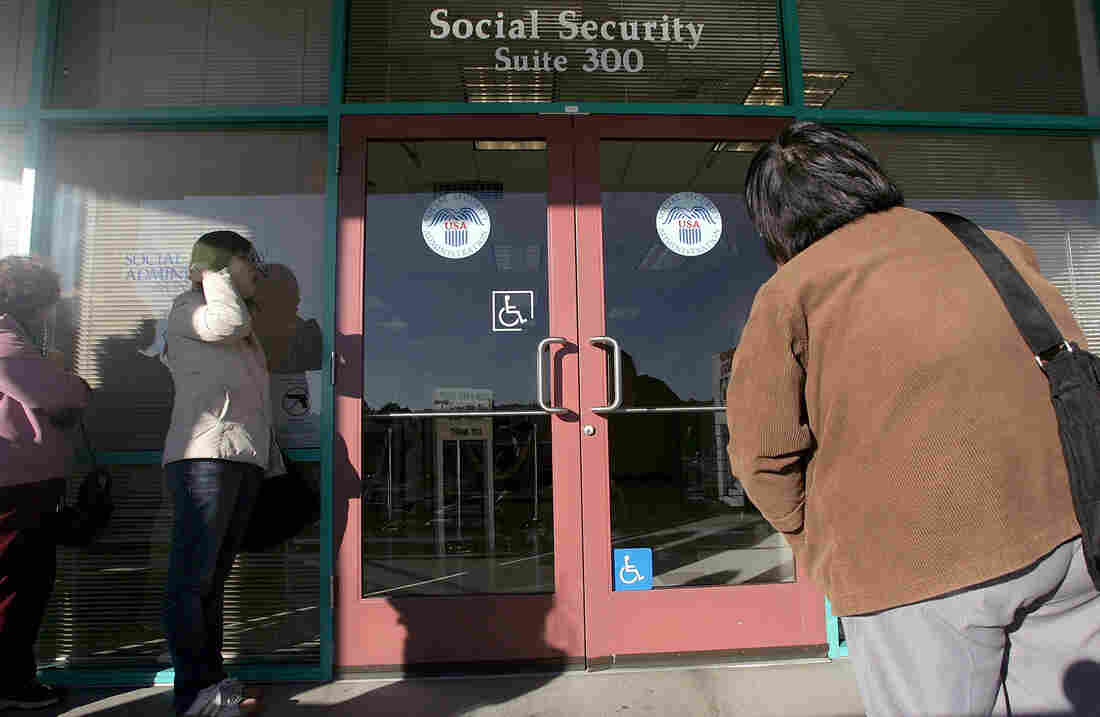
Some people seeking Medicare penalty waivers have experienced delays at Social Security Administration offices like this one in San Francisco, Calif.

Justin Sullivan/Getty Images

hide caption

toggle caption

Justin Sullivan/Getty Images

Many older Americans who have Affordable Care Act insurance policies are going to miss a Sept. 30 deadline to enroll in Medicare, and they need more time to make the change, advocates say.

A lifetime of late enrollment penalties typically await people who don’t sign up for Medicare Part B, which covers doctor visits and other outpatient services, when they first become eligible at age 65. That includes people who mistakenly thought that because they had insurance through the ACA marketplaces, they didn’t need to enroll in Medicare.

Earlier this year, Medicare officials offered to waivepenalties for the ACA insurance buyers under a temporary rule change that ends Sept. 30.

On Wednesday, more than 40 groups, including insurers and consumer health advocacy organizations, asked Medicare chief Seema Verma to extend the waiver deadline through at least Dec. 31 because they are worried that many people are still unaware of the problem.

They also say more time is needed because some beneficiaries are experiencing delays at local Social Security Administration offices where they go to request the waivers.

“We know there are people who can still benefit from it [the waiver],” says Stacy Sanders, the federal policy director at the Medicare Rights Center, a Washington-based advocacy group that coordinated the request to Medicare. “We know there have been delays, and those are good reasons to extend it.”

Counselors at the Medicare Rights Center have helped seniors apply for the waiver in Arizona, California, Florida, Minnesota, Missouri, New Jersey, and New York, she says.

Since the marketplaces opened in 2014, the focus has been on getting people enrolled, Sanders says. “There’s no reason to expect that people would understand how to move out of the marketplace into Medicare.”

The waiver offer applies not only to people over 65 who have kept their marketplace plans, but also to younger people who qualify for Medicare through a disability and chose to use marketplace plans.

The waiver also allows Medicare beneficiaries who had earlier realized their mistake in keeping a marketplace plan to ask for a reduction or elimination of the penalty.

In addition, the waiver is only available to people eligible for Medicare after April 1, 2013.

Officials at the Centers for Medicare and Medicaid Services would not provide details about the number of waivers granted or pending applications.

Barbara Davis, 68, says that when she initially applied, a Social Security representative didn’t know about the waiver. She eventually contacted the Medicare Rights Center, where a counselor interceded on her behalf in June. A day later, a Social Security representative told her she would not face a penalty.

“My advice would be, find out your rights before you apply,” says Davis, who lives with her husband in rural western New York. “Because they don’t seem to want to give you information to help you, you have to know this on your own.”

A Social Security spokeswoman says the agency is processing waiver applications from “across the country” but does not keep track of the number. She declined to comment on whether SSA employees know about the waiver.

Sanders suggests that people applying for the waiver ask Social Security officials for it by using its official name: “time-limited equitable relief.”

It’s easy to see how people can make mistakes. Since Medicare’s Part A hospitalization benefit is usually free, some seniors who liked their marketplace coverage thought incorrectly that they had nothing to lose by signing up for Part A and keeping their marketplace plan.

Other people receiving Social Security retirement or disability benefits opted to keep their marketplace plan and drop Part B after the Social Security Administration enrolled them automatically in Medicare when they became eligible.

If beneficiaries miss the Sept. 30 deadline, the only other way for them to get out of penalties is by proving they declined Part B because a government employee misinformed them.

The groups writing Verma argue that keeping the penalty waiverin place longer could also help many beneficiarieswho may be surprised by a little-known rule that will affect 2018 marketplace policies.

For the first time, insurers will be prohibited from issuing a marketplace plan if they know the member is eligible for Medicare and the 2018 policy is significantly different.

Those who find themselves without a marketplace plan could be in for another surprise: They won’t have insurance for outpatient care until July 1 because Medicare imposes a waiting period before Part B coverage kicks in for latecomers.

Extending the deadline “would lessen a significant hardship for many people … because they are unaware of the repercussions that could result from keeping their marketplace coverage,” says Cathryn Donaldson, a spokeswoman for America’s Health Insurance Plans, an industry group.

For information on how to apply for the time-limited equitable relief waiver, go to the Medicare Rights Center’s Medicare Interactive webpage or call the center’s helpline at 1-800-333-4114.

Kaiser Health News, a nonprofit health newsroom whose stories appear in news outlets nationwide, is an editorially independent part of the Kaiser Family Foundation.Find KHN’s Susan Jaffe on Twitter @SusanJaffe

Let’s block ads! (Why?)