Will My High Premiums Go Down? More Q&A About The GOP Health Plan

We answer your questions about the proposed GOP health plan.

Gary Waters/Ikon Images/Getty Images

We’ve received hundreds of responses to our callout for questions about the Senate Republicans’ proposed overhaul of the Affordable Care Act. Earlier this week, we answered questions about continued coverage for serious health conditions and insurance premiums for older adults. Today, we begin with a question from a young adult who says he’s excited about the potential repeal of Obamacare.


Q: I’m a 29-year-old who lives in Minneapolis. I purchased my insurance through the exchange for 2 1/2 years. What started to concern me were the increasing premiums that started to feel out of proportion with my actual true costs of health care.

I don’t qualify for a subsidy, and I went from paying maybe $120 a month to paying somewhere in the neighborhood of $300 to $400 a month for health coverage. And I was seeing the doctor once a year for a checkup, and other than that, would not step inside a doctor’s office.

— Jordan Myers, Minneapolis, Minn.

A: Jordan is right to be optimistic. Under the Senate’s draft bill, Jordan’s costs may go down.

The Affordable Care Act says an insurer can only charge older people three times what they charge young people for comparable coverage. The Senate plan loosens those restrictions, allowing insurance companies to charge people over the age of 50 five times what they charge people in their 20s.

The hope is that prices for those so-called “young invincibles” will go down enough that more of them will decide it’s worth the money to buy insurance. And the extended hope is that will cut prices for everybody, because more young people like Jordan, who don’t use much health care, will be paying into the system.

It’s important to note that the vast majority of people who buy insurance on the Affordable Care Act exchanges do get subsidies, so they aren’t paying premiums as high as Jordan is.

Q: I’m the mother of two teenage boys, ages 13 and 14. My children may have a disease called left hypertrophic cardiomyopothy.

It’s a disease that killed my maternal grandfather at the age of 52. It killed my mother at 52, and my brother had a heart transplant at the age of 51 and 9 months.

I’ve been asked by our cardiologist to have them genetically tested to see if we can indicate the disease. I’m refusing for the only reason that if they are positive for this disease, they will then have a pre-existing condition that may exclude them from health care later on.

It seems like a ludicrous decision that I’m having to make, but it’s one I have to take seriously.

— Amy Meyer, Corona, Calif.

This is such a difficult situation because of the frightening medical issues and the uncertainty over how the health care system may change.

One of the major aims of the Affordable Care Act — really, a core reason that it exists at all — is that insurance companies used to routinely refuse coverage to people who had been diagnosed with a medical condition.

And often, if they did offer coverage, it would include exceptions for pre-existing medical conditions.

The Senate health bill keeps those protections in the federal law, requiring insurance companies to offer policies to those with pre-existing medical conditions.

However, it then provides a giant loophole for states that want to loosen regulations on insurers. States can seek waivers for many of the Affordable Care Act consumer protections, including the so-called essential health benefits, or the list of things an insurance company has to pay for to be considered legal under Obamacare. The list includes prescription drug coverage, mental health care and maternity care.

So with such a waiver, an insurance company would have to write a policy for someone with a pre-existing condition, but those policies would not necessarily pay the costs of treatment for some conditions. For example, a policy could cover doctor and hospital visits, but if it doesn’t pay for prescription drugs, it may not help a cancer patient who needs expensive medicine.

Q: There’s an important part of the health care bill that usually gets left out of the reporting on this issue: the tax cuts. How much does one have to make to benefit from the tax cut aspect of this bill?

— Pam Tellew, Albany, Calif.

A: There are about a dozen taxes that are part of the Affordable Care Act, and the Senate bill proposes repealing all of them. Most are taxes on corporations such as insurance companies, medical device companies, and tanning salons. Republicans argue that those taxes raise costs for all health care consumers, and therefore everyone will benefit if they are repealed.

There are two specific taxes on individuals. The first is a surtax of 0.9 percent on the income of single people who earn more than $200,000, or married couples who earn more than $250,000.

In addition, there’s an additional 3.8 percent tax on investment income for people in those same income ranges.
Let’s block ads! (Why?)

How Democrats Are Fighting The GOP Health Care Bill

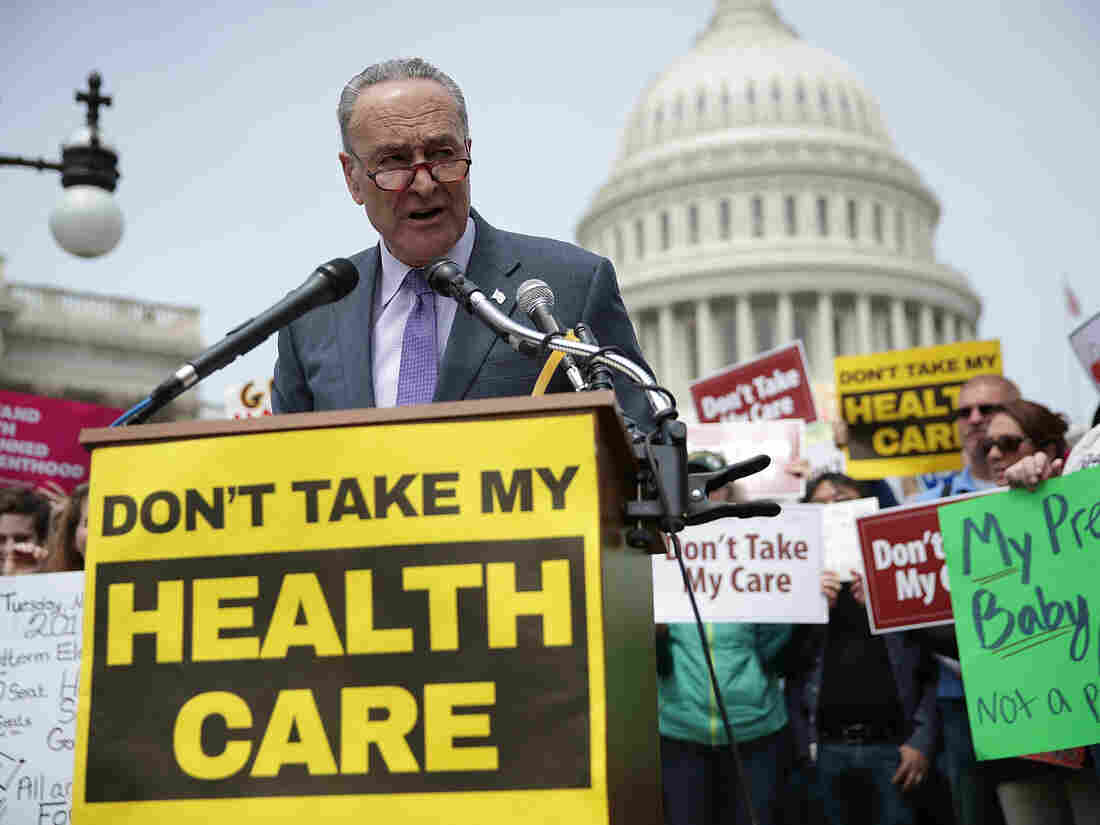
Senate Minority Leader Chuck Schumer, D-N.Y., speaks during a Stop ‘Trumpcare’ rally in front of the Capitol in Washington, D.C. in May.

Alex Wong/Getty Images

hide caption

toggle caption

Alex Wong/Getty Images

When Senate Republican leaders delayed the vote on their bill to repeal and replace the Affordable Care Act, also known as Obamacare, Minority Leader Chuck Schumer, D-N.Y., was quick to not declare victory.

“We’re not resting on any laurels, nor do we feel any sense yet of accomplishment,” Schumer said at his weekly press conference, shortly after the surprise GOP decision to punt on a vote. “Other than we are making progress, because the American people are listening to our arguments.”

The push to repeal key parts of the Affordable Care Act will succeed or fail based entirely on Republican votes. So arguing is the most that Democrats can do.

Perhaps it’s enough. The bill’s popularity has cratered as the debate has dragged on. An NPR-PBS Newshour-Marist poll out this week put its approval at 17 percent. As Republicans have scrambled to pull together the bare minimum of votes they need to pass their bill, Democrats have done something the GOP mastered over recent electoral cycles: Oppose a complicated legislative effort by focusing on how it could potentially disrupt voters’ lives.

“Health care, in general, is a complicated policy, but for people to understand what this bill would do to them has been pretty simple,” said Meghan Smith, a strategist at the public relations firm SKD Knickerbocker.

Smith is helping coordinate messaging for a number of progressive groups trying to block the repeal-and-replace effort. She said the groups are focusing on big-picture ideas, like projections the legislation would lead to higher health care costs for many Americans. The Congressional Budget Office’s projection that an additional 22 million people would be uninsured if the Senate bill becomes law has been easy to communicate, as well.

As outside groups have organized ad campaigns and activism efforts, Schumer and the rest of the Senate Democratic Caucus has been holding event after event in and around the Capitol. There’s been a clear effort by lawmakers to bring their arguments down to a personal scale.

On Tuesday, most of the Democratic caucus stood on the Senate steps holding large posters of constituents who rely on the Affordable Care Act or Medicaid. As it wound down, Schumer spelled out the messaging strategy. “We ask you — those of you from local papers and outlets, to talk to your senator about the person that they are holding up,” he urged reporters covering the event.

As the debate has gone on, Democratic lawmakers keep returning to one main attack point. The Senate Republican-drafted bill, Sen. Cory Booker, D-N.J., said Thursday, provides “massive tax cuts for the wealthiest Americans. And to pay for that, we’re taking away health care from millions and millions of Americans. It’s as plain as that.”

Democrat after Democrat has made similar arguments on the Senate floor and at various rallies and press conferences in recent days.

Booker orchestrated one of the Democrats’ more viral moments on Monday — a three-and-a-half-hour live video stream on the Capitol steps, focused on blasting the bill. The video initially began with Booker and Rep. John Lewis, D-Ga. Other lawmakers joined in, and, by the end, a large crowd of supporters was there, too.

“It was truly a special moment,” Booker said. “It shows the spontaneous outpouring that people have, who feel very passionate about this issue.”

Planned Parenthood and other organizations also organized a larger Capitol rally Thursday.

But the question is whether any of this matters. The bill’s fate comes down to a dozen or so Republican senators — lawmakers who likely don’t have much support from the types of people who are showing up at Capitol rallies anyway.

That’s why efforts by people like Stephanie Powell may be more important. Powell lives in Anchorage, Alaska, and every morning at around 8 o’clock, she calls the office of Sen. Lisa Murkowski, a Republican who represents the state. “I call her Anchorage office, her Juneau office, her Fairbanks office, her Washington office,” Powell said.

Powell is progressive, but said she voted for Murkowski. “She’s always been Alaska first,” she said. But Powell and her family all rely on Medicaid, which she is quick to tell Murkowski’s staffers when they pick up the phone. “They know more about my health history than maybe my own mother at this point, because I’ve been very up front about what this means to us.”

The Senate is in recess for the next week. Which means Murkowski and other Republicans who are on the fence about the legislation — including Maine’s Susan Collins, Nevada’s Dean Heller and Ohio’s Rob Portman — will likely be hearing from a lot of people like Powell.

Let’s block ads! (Why?)

How The Senate GOP Health Care Bill Could Affect The Midterms And Beyond

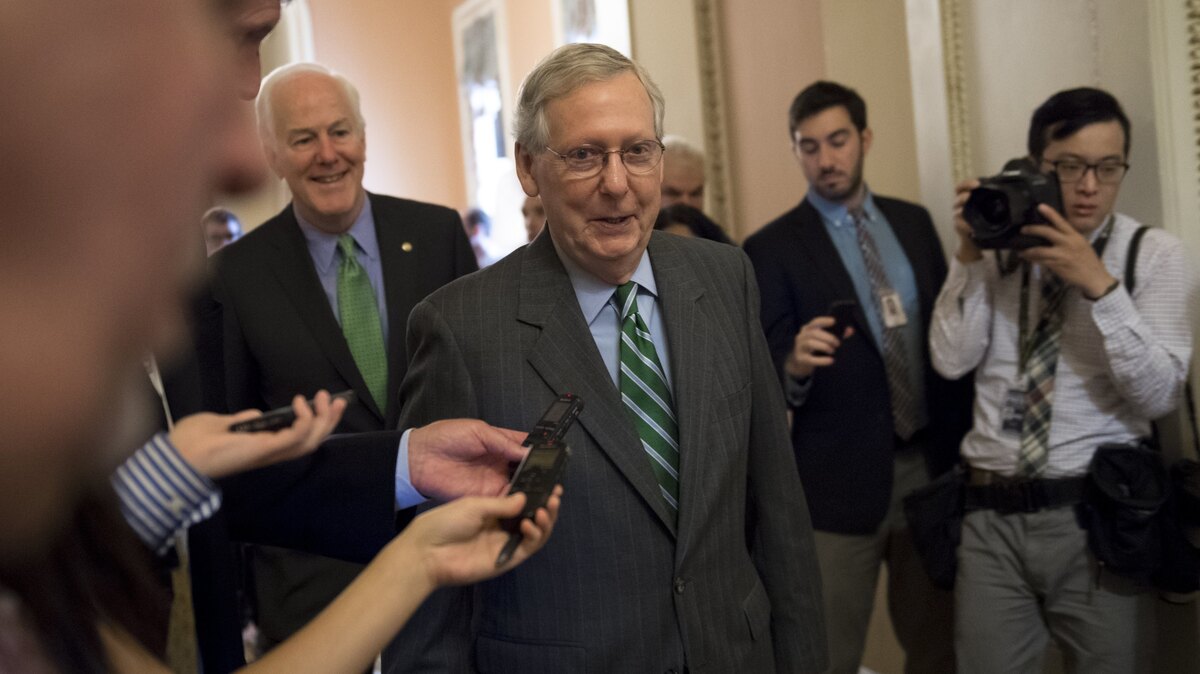
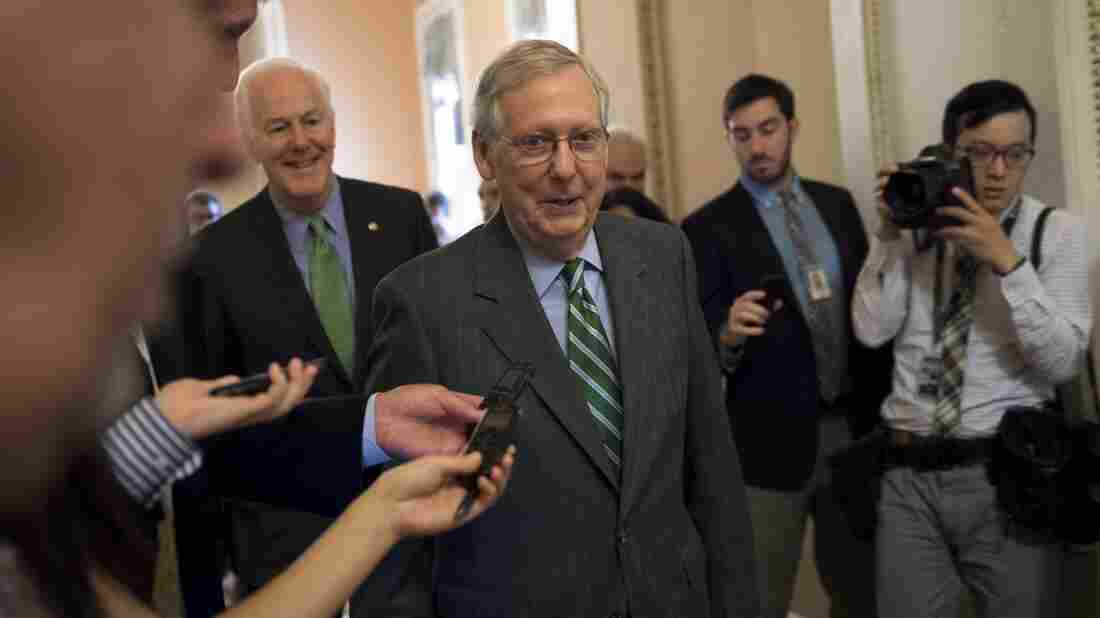
Senate Majority Leader Mitch McConnell has been answering questions about the Senate health care bill ever since it was released.

SAUL LOEB/AFP/Getty Images

hide caption

toggle caption

SAUL LOEB/AFP/Getty Images

One provision of the Senate’s health care bill stands to be quite popular: the Better Care Reconciliation Act would eliminate the Affordable Care Act’s individual mandate. That would be repealed immediately.

Another would likely please the Republican base: defunding Planned Parenthood for a year. Those funds would disappear right away, too.

Another would threaten health care coverage for millions of Americans: a rollback to the Medicaid expansion. That change wouldn’t start until 2021.

Repealing Obamacare may be Senate Republicans’ main goal, but it’s also easy to see how the BCRA could benefit the GOP in coming elections. The provisions that stand to be more popular (and less harmful to many Americans) are front-loaded, occurring before the 2018 midterms. Cuts to premium subsidies and Medicaid come after that, and many of them are delayed until after the 2020 presidential election.

To better see how this bill could affect future politics, we’ve put together a timeline of when major BCRA changes would go into effect in relation to the dates of coming elections.

We’ve also explained the potential effects of the bill, as reported by the Congressional Budget Office and other health care experts, to try to game out how those effects could affect voters’ choices.

(And to be clear, any number of factors influence people’s voting choices, so this is by no means a prediction of election winners and losers.)

So here’s what goes into effect when:

Immediately

  • Individual and employer mandates repealed (retroactive to Dec. 31, 2015)
  • Planned Parenthood funding ends for one year
  • States can much more easily waive aspects of ACA, including “essential health benefits”
  • States get funding “for purposes of submitting an application for a waiver”
  • Taxes on health savings accounts, prescription drug manufacturers and importers, health insurance providers, and investment income repealed

Oct. 2017

  • States can impose work requirements on Medicaid recipients
  • Tanning tax repealed

Jan. 2018

  • Restrictions on using tax credits to buy plans that cover abortion go into effect
  • Limits on flexible spending account contributions repealed
  • Tax on medical devices repealed

Nov. 2018 — Midterm election

Prior to this point, the individual mandate — one of the most unpopular parts (maybe the most unpopular part) of Obamacare — will have been repealed. That could make midterm voters happy — and inclined to vote for Republicans — despite the fact that Obamacare has, in general, gained in popularity since Trump took office. According to the Congressional Budget Office, the elimination of the individual mandate would lead to 15 million more uninsured people in 2018 alone.

In addition, several Obamacare taxes will have been repealed by now, overwhelmingly benefiting the highest-income Americans. Those changes could please a crucial group of GOP supporters.

Not only that, but the bill will not have yet removed cost-sharing subsidies — payments to insurers that help lower-income customers afford coverage — and it will not have yet kicked in the (generally) less-generous premium support subsidies.

The Medicaid expansion likewise will not have yet been rolled back. That rollback will eventually affect millions — by 2026, it would mean 15 million more people would be off the Medicaid rolls than there would be under current law, according to the CBO.

In short, many of the potentially less-popular provisions of this law — provisions that would lead to higher premiums or deductibles (which could in turn lead to more people choosing not to buy coverage), as well as lower Medicaid enrollment — wouldn’t go into effect for a while and could save the GOP some pain at the ballot box.

However, it could cause some hardship for some Americans — specifically, those who rely on Planned Parenthood for services. Government funds currently account for 40 percent of Planned Parenthood’s revenue, with much of that coming from Medicaid (but none of that going toward abortions, except in cases of rape, incest and when the mother’s life is in danger).

Cutting those funds could mean clinic closures or fewer services, as FiveThirtyEight explained in March. Around 15 percent of people in areas where there aren’t other options for low-income people to get care would be affected, and the reduction in family planning services would mean the number of Medicaid births would go up by “several thousand.”

Midterm turnout tends to be low, however — much lower than in presidential election years. So the bill could make a difference to the extent that it affects the views of many people who would vote anyway. But then, if people’s experiences with it are particularly negative or positive, it could inspire them to turn out as well.

Of course, how this affects the election at all depends not only on what else is going on but also which party people blame or praise for any changes in the health care system.

Jan. 2019

  • Continuous-coverage provision (six-month waiting period before obtaining insurance) kicks in
  • Funds appropriated for “Long-Term State Stability and Innovation Program,” a pot of money states can spend to support high-risk people in the individual markets, helping push premiums down and keeping markets stable
  • Age-rating limits change, allowing insurers to charge older people up to five times higher premiums than younger people. (Under Obamacare, older people can only be charged three times more.)
  • Sunsets ACA’s minimum medical loss ratio, which makes sure insurance companies spend a certain percent of revenue from premiums on health care claims and improving quality, rather than in other areas, like profits and marketing

Loading…

Jan. 2020

  • Actuarial value for benchmark plans drops, meaning plans would cover a smaller share of costs
  • Cost-sharing reduction payments to insurers stop
  • Tax credits for premiums change, no longer available to people between 350 and 400 percent of the federal poverty level
  • Medicaid per-capita growth for non-disabled capped at the rate of inflation for medical care
  • Tax on employee health insurance premiums and benefits repealed

Nov. 2020 — Presidential election

By now, some pain may have kicked in for some Americans. Some who were formerly eligible for tax credits for individual market insurance premiums — that is, those between 350 and 400 percent of the federal poverty level — will no longer be eligible.

The cost-sharing reduction payments that benefit lower-income people on the exchanges will also end. That could lead to lower-income people paying premiums near where they are now, but also having much higher deductibles, the CBO reported this week. In other words, health care would be more expensive for many lower-income people in the individual markets, so many may simply choose not to purchase insurance.

And the amount the federal government spends to reimburse states for Medicaid will be dropping by then. If states want to maintain current levels of coverage, they will have to spend more and more of their own money. Otherwise, as the CBO wrote, states would cut spending in a number of ways:

“…cutting payments to health care providers and health plans, eliminating optional services, restricting eligibility for enrollment through work requirements and other changes, or (to the extent feasible) arriving at more efficient methods for delivering services.”

Furthermore, some older Americans would by now paying more for their health insurance, though some younger Americans could be seeing smaller premiums.

But then, the number of people on the exchanges in the first place is small — around 6.4 million right now. If people on the exchanges are getting less care for more money, and if it affects their votes (that is, if those people vote), it may not be a huge bloc of voters. And the effects of these changes may be slow in coming.

“Those changes do start in 2020 and could be a problem for the election [for Republicans], but I think those market effects would be more gradual,” said Caroline Pearson, senior vice president for policy and strategy at Avalere Health.

(But then, once again, all of this is contingent upon people pinning negatives and/or positive to Republicans.)

January 2021

  • Medicaid expansion starts to roll back: matching rate for the expansion population starts to decline
  • “Trigger laws” start going into effect, ending Medicaid expansion altogether in some states

Nov. 2022 — Midterm election

Still more factors could affect these elections, particularly Medicaid cuts. These could be getting sharper in many states, with “churn” in the system having taken people off the rolls who now won’t be able to get back on, with the expansion dialing back.

Jan. 2024

Federal Medicaid expansion funds fully rolled back

Nov. 2024 — presidential election

The federal spending on the Medicaid expansion would be gone entirely by now — states could maintain the expansion if they had enough money, but for many states, that’s unlikely. As the left-leaning Center on Budget and Policy Priorities reports, some states would have to up their spending by 400 percent in 2024 to maintain the expansion.

Jan. 2025

Medicaid per capita growth now pegged to a lower inflation rate (meaning lower spending in the future)

Nov. 2026 — Midterm election

By now, Medicaid will be drastically changed from what it was before the bill, with work requirements in some states, caps on spending (meaning it won’t adjust for recessions, for example), and much lower enrollment in general.

In addition, by now, premiums in the marketplaces will have shifted sharply. Older adults in particular could face some massive increases in premiums, as the CBO report showed.

With reporting from NPR’s Gisele Grayson.

Let’s block ads! (Why?)

With The Senate's Health Care Vote Delayed, What's Next For Democrats?

Do Democrats want to work with Republicans to make the health bill better? Rachel Martin talks to Tom Perez, chairman of the Democratic National Committee.

RACHEL MARTIN, HOST:

To health care now – both Democrats and Republicans in the Senate are complaining that they aren’t working together. Here’s Senate Majority Leader Mitch McConnell speaking on the Senate floor yesterday.

(SOUNDBITE OF ARCHIVED RECORDING)

MITCH MCCONNELL: It’s unfortunate that our Democratic colleagues refuse to work with us in a serious way to comprehensively address Obamacare’s failures in the seven years since they passed it.

MARTIN: Minority Leader Chuck Schumer had this response.

(SOUNDBITE OF ARCHIVED RECORDING)

CHUCK SCHUMER: We Democrats are genuinely interested in finding a place where our two parties can come together on health care.

MARTIN: So what is the next move for the Democrats? Tom Perez is the chairman of the Democratic National Committee. He’s with us in the studio. Thanks for coming in this morning.

TOM PEREZ: Always a pleasure.

MARTIN: Do congressional Democrats really want to work with Republicans to try to make this health care bill, the Republican Senate health bill, better? And we’re not talking about the Affordable Care Act but this specific bill.

PEREZ: We always want to work together because we want to find a solution that works for people. But here’s what they have to do. Number one, abandon repeal. Number two, abandon cuts to Medicaid. Abandon…

MARTIN: When you say abandon repeal, that means keep Obamacare, which is a non-starter.

PEREZ: No, I think what we have to do is understand and come to agreement on what our North Star is. For me, our North Star is very simple – are we helping the typical American family get access to quality, affordable health care? The problem with the Senate bill is their North Star is, are we giving enough of a tax cut to wealthy people? That’s not what the North Star should be for a health care bill.

President Obama convened a meeting at Blair House with all the Senate members back during the debate on the Affordable Care Act. The U.S. Senate in 2009, 2010 – they held 100 hearings on the Affordable Care Act. There were 143 amendments offered by Republicans that were accepted into the final bill. You can’t do this bill in secret. That’s what they’ve done. We want to come to the table because we want to improve access to quality, affordable health care for Americans. I – we have ideas on what we can do.

MARTIN: Let’s talk about those. But I want to play a clip first, from your counterpart at the Republican National Committee. This is Ronna Romney McDaniel.

(SOUNDBITE OF ARCHIVED RECORDING)

RONNA ROMNEY MCDANIEL: Let’s look at the evolution of this. They passed it – 30,000 pages of legislation – without reading it. They said you could keep your doctor. They said you could keep your health care plan. They said it was going to be affordable. None of that has been true. And now premiums have doubled across the country. You have insurers pulling out of marketplaces. People are suffering. And Democrats are sitting on their hands, when they created this problem.

MARTIN: So I hear you saying, Democrats acknowledge that there are problems with the Affordable Care Act, with Obamacare. No doubt, premiums have gone up in some states – in Arizona, in particular, which is often cited – up as much as 116 percent. So what is the solution? How do Democrats fix that?

PEREZ: Oh, I think there are a number of things we can do. Let’s address the skyrocketing costs of prescription drugs. There’s nothing in the Senate bill that does that because they’re unwilling to take on the drug industry. We should take on the drug industry. Let’s – we can take steps to stabilize the markets. What this administration has done is to destabilize the market by saying Obamacare is on a death spiral. We can stabilize the market…

MARTIN: How?

PEREZ: And – well, first of all, by – there’s an HHS inspector general investigation right now as to whether the Department of Health and Human Services deliberately tanked the marketplace. And when you have the administration constantly telling drug companies or insurance companies, we’re not sure we’re going to get you the subsidy, that creates uncertainty. That’s why Anthem left Ohio, because they cited the uncertainty. You should…

MARTIN: But there were problems in all – with all due respect, there were problems with the Affordable Care Act even before the Trump administration came in to office.

PEREZ: And President Obama and everyone on the Democratic side has said absolutely, we have to improve it; can we improve it? But our North Star should be, are we enhancing access to quality, affordable health care for people? The CBO report clearly notes that the answer to that question is no because the North Star of this Senate bill is, let’s reduce taxes for the wealthy.

Let’s stabilize prescription drug costs. Let’s make sure that our marketplaces are stable so that…

MARTIN: So do you think these North Stars are too divergent? I mean, when you say Republicans want to cut taxes as part of this, because they believe that that will enhance the free-market reforms that are necessary to drive down the cost of health care – Democrats just don’t believe that. So is there any common ground?

PEREZ: Well, I hope there’s common ground on prescription drug costs. I think – and for me, you know, health care should be a right for all and not a privilege for a few. I don’t believe our Republican colleagues accept that premise. And you see that embodied in the Senate bill, which would put 22 million Americans, including 15 million next year, out of coverage.

MARTIN: Tom Perez – he’s the chair of the Democratic National Committee and served as labor secretary under President Obama. Thank you so much.

PEREZ: Always a pleasure.

Copyright © 2017 NPR. All rights reserved. Visit our website terms of use and permissions pages at www.npr.org for further information.

NPR transcripts are created on a rush deadline by Verb8tm, Inc., an NPR contractor, and produced using a proprietary transcription process developed with NPR. This text may not be in its final form and may be updated or revised in the future. Accuracy and availability may vary. The authoritative record of NPR’s programming is the audio record.

Let’s block ads! (Why?)

GOP Senators From Opioid-Ravaged States Uneasy About Health Care Bill

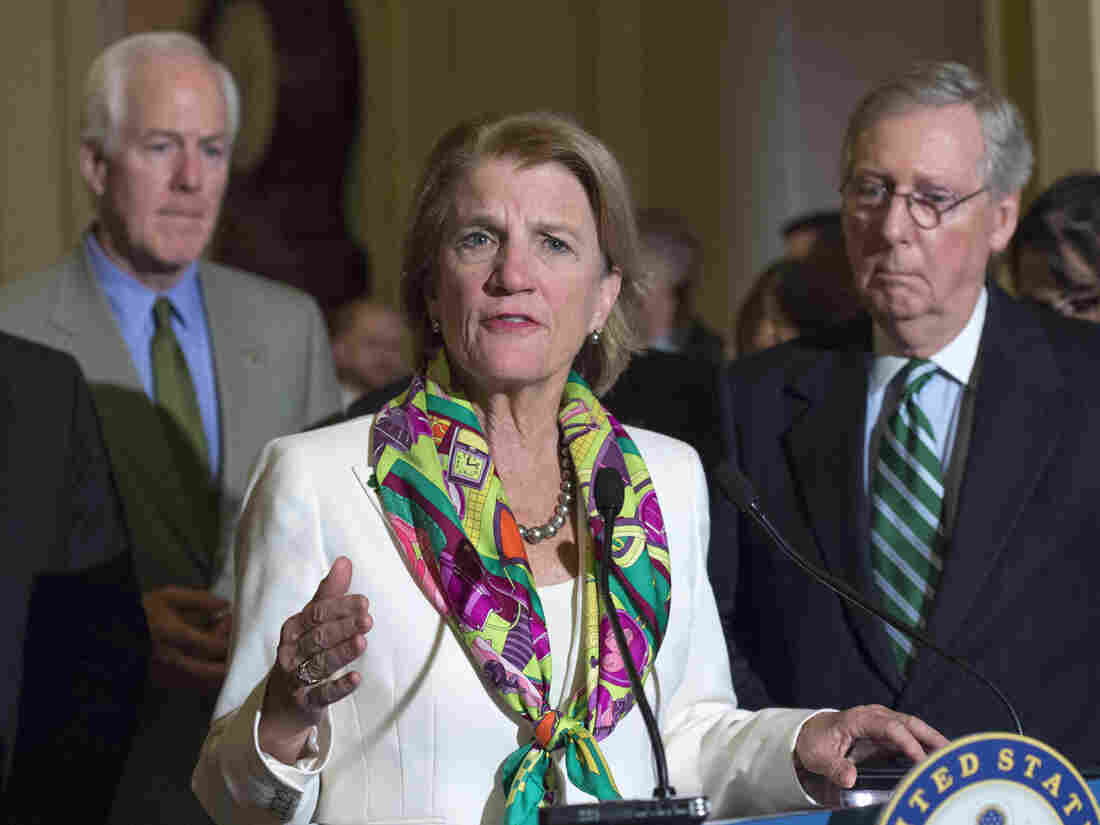
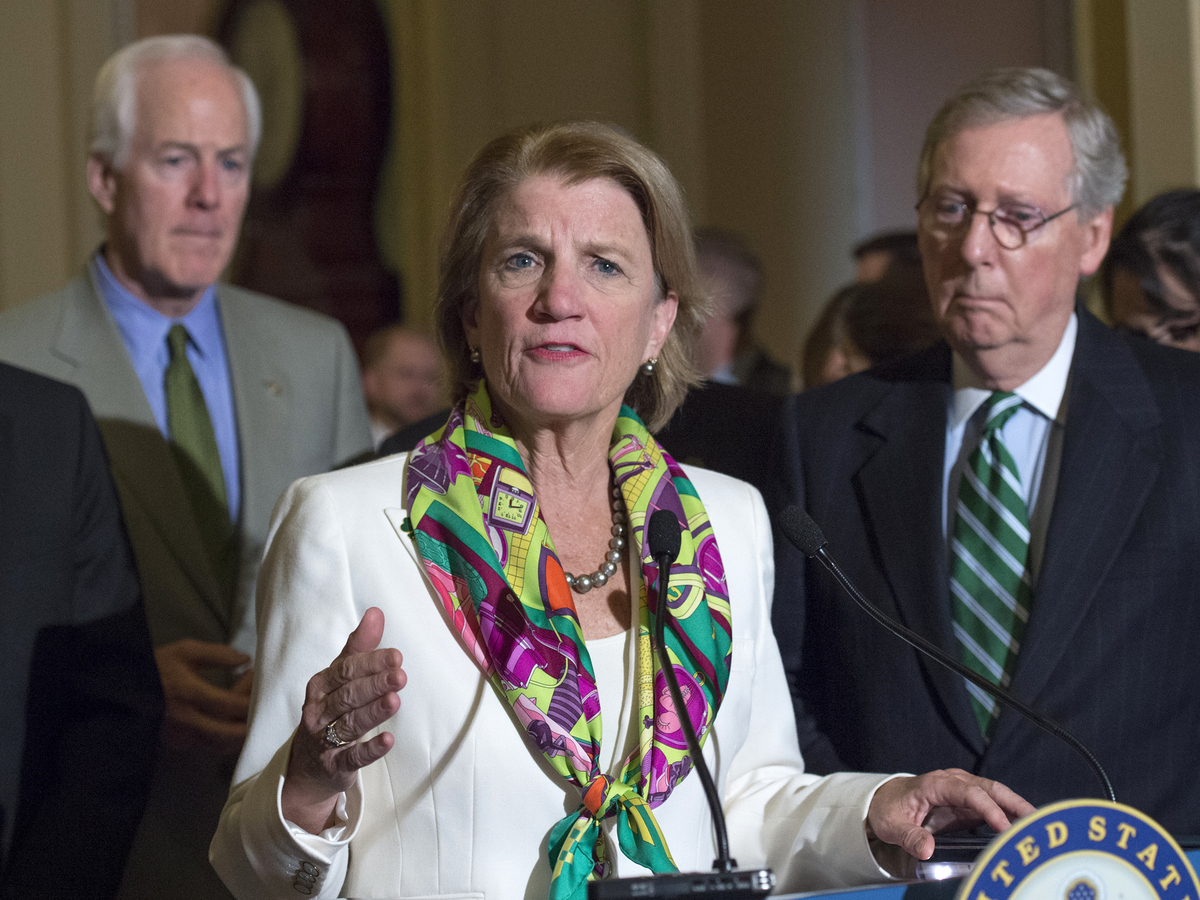
Sen. Shelly Moore Capito, R-W.Va., accompanied by Senate Majority Leader Mitch McConnell of Ky., right, and Senate Majority Whip John Cornyn of Texas, speaks to reporters on Capitol Hill in March 2015.

Molly Riley/AP

hide caption

toggle caption

Molly Riley/AP

In late May, several senators went to the floor of the Senate to talk about people in their states affected by the opioid crisis. Sen. Shelley Moore Capito, R-W.Va., talked about Chelsea Carter.

“She told me her drug habit began when she was 12 years old,” said Capito.

West Virginia has the unfortunate distinction of having the highest per-capita death rate from opioids — 36 out of every 100,000 people died from overdoses on heroin, fentanyl and other opioids in 2015. But Chelsea Carter is one of the lucky ones.

“Her story — Chelsea’s story — is an example of the progress that can be made by fully committing to fighting the drug epidemic and that there are victories,” Capito said. “That there are programs that work.”

[embedded content]
Ohio Valley Physicians viaYouTube

Carter has been in long-term recovery since September 2008.

“I’ve come a long way from where I was nine years ago sitting in a jail cell,” Carter said in a phone interview with NPR.

She went from facing jail time to drug court, treatment, college, grad school and is now the program director at Appalachian Health Services. All the while the crisis in the state where she grew up only got worse.

Carter estimates about 90 percent of the people that come into her clinic for treatment for substance use disorders are on Medicaid, the federal program for the poor that West Virginia chose to expand under the Affordable Care Act.

The Senate health care bill would phase out that expansion and, over time, make cuts to traditional Medicaid as well (as compared to the anticipated spending under current law). And so, Carter’s watching the debate closely.

“We are losing people daily to this,” said Carter. “I am treating generations of drug abuse, and with the people dying of opiate drug overdoses every day, I just don’t see how we could cut funding from something that’s saving lives.”

Tuesday, Sen. Capito announced she opposes the health care bill in its current form. She cited cuts to Medicaid and concern about what the bill would mean for people dealing with opioid addiction.

“West Virginia has the largest Medicaid population in the country. I recognize that many West Virginians rely on health coverage and access to substance abuse treatment because of my state’s decision to expand coverage through Medicaid,” Capito said in a written statement released shortly after it was announced the health care vote wouldn’t happen this week.

“I have studied the draft legislation and CBO analysis to understand its impact on West Virginians. As drafted, this bill will not ensure access to affordable health care in West Virginia, does not do enough to combat the opioid epidemic that is devastating my state, cuts traditional Medicaid too deeply, and harms rural health care providers,” the statement continued.

There’s a pretty direct correlation between states with high overdose death rates and Republican senators expressing reservations with the bill.

“It doesn’t protect Nevadans on Medicaid and the most vulnerable Nevadans,” Sen. Dean Heller, R-Nev., said at a press conference announcing his opposition to the bill. “On Medicaid expansion, probably half — half — the dollars that were spent on that were on mental health and opioid abuse.”

Republican governors have also come out against it, including Charlie Baker from Massachusetts, Chris Sununu from New Hampshire, Brian Sandoval from Nevada and John Kasich from Ohio. All states have expanded Medicaid and have high overdose death rates.

Heller and others could still change their minds, or be persuaded by changes to the bill. And one lever Senate Majority Leader Mitch McConnell, R-Ky., could employ is increasing funding in the bill for grants to help states respond to the opioid crisis.

Currently, the bill would give states $2 billion to deal with opioids in 2018. Sen. Rob Portman from Ohio, another Republican who opposes the bill in its current form, is pushing for that fund to go up to $45 billion over the next decade.

But even $45 billion wouldn’t be enough says Richard Frank, a professor of health economics at Harvard Medical School who previously served in the Obama administration.

“It is one part of trying to compensate from taking people’s insurance away, but it doesn’t cover nearly what the needs are from these populations,” said Frank.

Their additional needs often include treatment for hepatitis C or HIV and car accidents, coverage for emergency room visits and the provision of life-saving rescue drugs, he said.

“My estimate is that we’re talking $180 billion over 10 years not $45 billion,” said Frank.

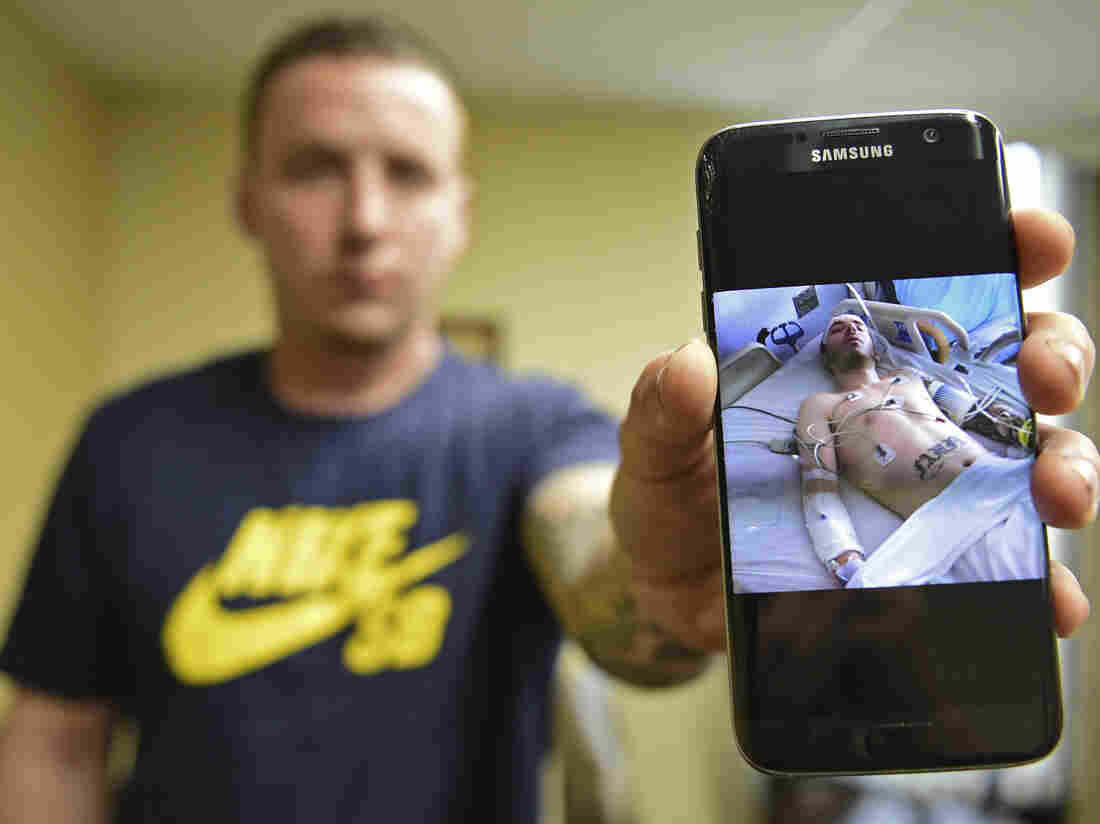
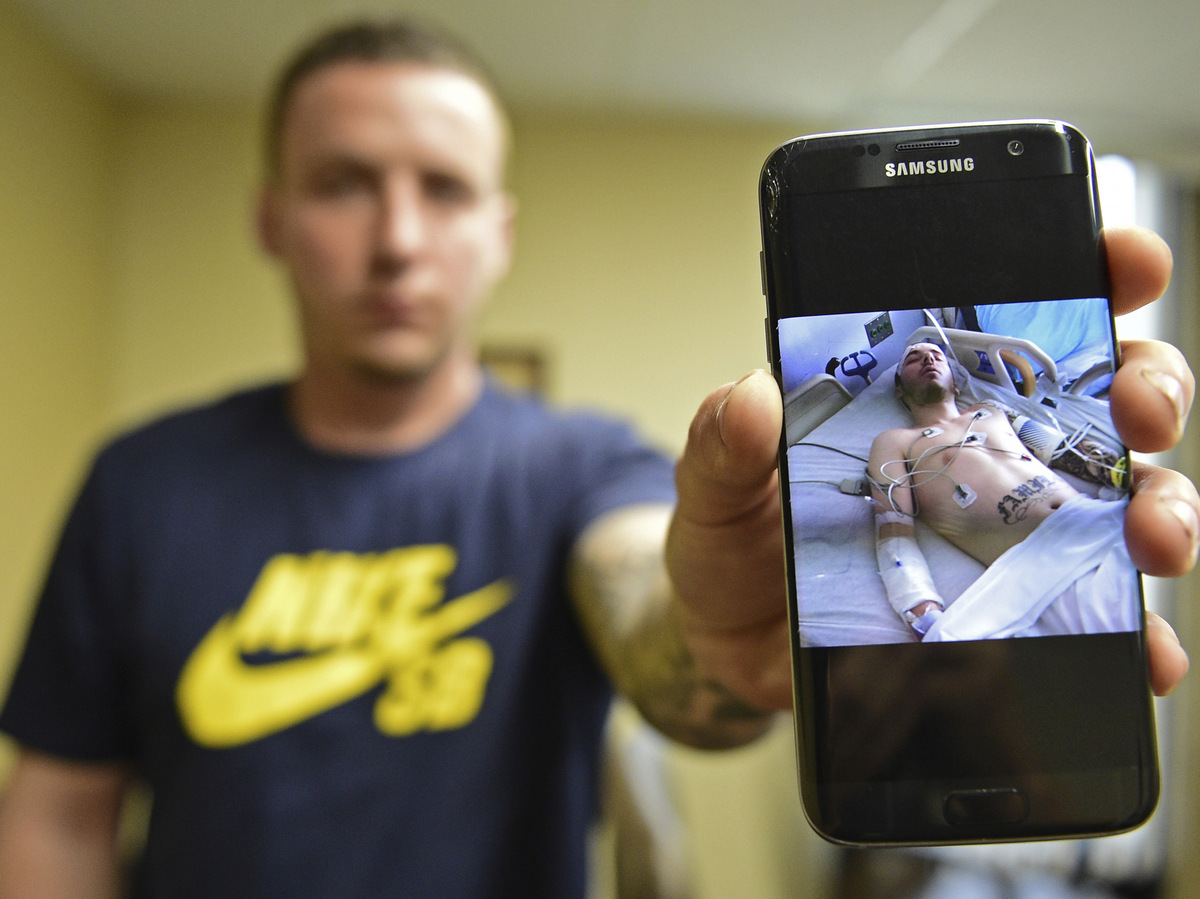
Paul Wright shows a picture of himself in the hospital after a near fatal overdose in 2015, on Thursday, June 15, 2017, at the Neil Kennedy Recovery Clinic in Youngstown, Ohio.

David Dermer/AP

hide caption

toggle caption

David Dermer/AP

Indeed, a study by the new Urban Institute released Wednesday, found that “between 2011 and 2016, spending on Medicaid-covered prescriptions to treat opioid use disorder and overdoses increased 136 percent from $394 million to $930 million.”

“States with the highest overdose mortality rates in 2015 — including Kentucky, Massachusetts, Ohio, Rhode Island, and West Virginia — have seen particularly fast growth in spending for OUD treatment over this period,” the study’s abstract also says.

The Congressional Budget Office estimates that in 2026 there would be 15 million fewer people covered by Medicaid than under current law. The White House and some congressional Republicans cast doubt on the estimates of the CBO. And supporters of the bill argue states would have more flexibility to tailor Medicaid coverage to the needs of their populations.

Michael Botticelli, The last drug czar under President Obama, says love it or hate it, Obamacare did allow a lot more people to get treatment.

“It’s really hard to understate the dramatic increases we’re going to see in overdose deaths,” said Botticelli, who now heads the Grayken Center for Addiction Medicine at Boston Medical Center.

In 2015 (the last year for which data has been released) 34 percent of people receiving treatment for opioid addiction were covered by Medicaid, according to an analysis by Frank.

“You know, we’re in the greatest health crisis that we’ve had since the height of the AIDS epidemic and we’ve seen the dramatic gains that we’ve been able to make and that people are able to make with Medicaid coverage,” said Botticelli.

Botticelli finds it hard to believe senators he worked with to combat the opioid epidemic would consider voting for the current version of the health care bill. And, at the moment, it’s still an open question as to whether they will.

Let’s block ads! (Why?)