Without Medical Support, DIY Detox Often Fails

Because treatment for opioid addiction can be expensive and difficult to coordinate, some people may try detoxing on their own. It rarely works.

Maria Fabrizio for NPR

By the time Elvis Rosado was 25, he was addicted to opioids and serving time in jail for selling drugs to support his habit.

“I was like, ‘I have to kick this, I have to break this,’ ” he says.

For Rosado, who lives in Philadelphia, drugs had become a way to disassociate from “the reality that was life.” He’d wake up physically needing the drugs to function.

His decision to finally stop using propelled him into another challenging chapter of his addiction and one of the most intense physical and mental experiences he could have imagined: detoxing.

“The symptoms are horrific,” Rosado says.

There are recovery and treatment centers that can help people quit using drugs — in fact, it’s a multi-billion-dollar industry. But this help can be expensive, and waiting lists for state and city-funded programs are often extremely long.

So can detoxing on your own be the solution? In most cases, the answer is no.

In fact, a growing movement within the field of addiction medicine is challenging the entire notion of detox and the assumption that when people cleanse themselves of chemicals, they’re on the road to recovery.

“That’s a really pernicious myth, and it has erroneous implications,” says Dr. Frederic Baurer, president of the Pennsylvania Society of Addiction Medicine.

But at the time, Rosado says, he needed to end his “longtime love affair” with codeine. Like Oxycontin and morphine, it’s an opioid. In jail, these drugs were easily available, Rosado recalls, through friends and cell mates.

When he decided to stop, he didn’t ask for help from the jail’s clinic staff, who could have given him medicine for the withdrawal symptoms. Rosado says that, if he took anything, “in my head I was like, ‘I’m still using.’ That’s how I was seeing it.”

The first few hours were gradual, like the onset of the flu, he recalls. But then he started sweating and shaking, his heart raced and he started throwing up. About 12 hours in, Rosado says he was reminiscing about how pleasant food poisoning was compared to this. He says his stomach cramps felt like, “having Freddy Krueger inside you trying to rip his way out.”

Rosado couldn’t sleep; he lay on the cold floor, shivering. “I had days where I felt like I wished I was dead,” he says.

“My cellmate kept saying ‘Look at you! Use a bag or go to the nurse.’ “

Over the next week the intense symptoms slowly subsided. He was exhausted, depressed, irritable and sore.

Elvis Rosado detoxed on his own and was successful. Researchers say stories like his are rare.

Elana Gordon/WHYY

hide caption

toggle caption

Elana Gordon/WHYY

Then came the next phase: the temptation to slide back.

“It’s a battle,” Rosado says.

He remembers a voice in his head telling him it would be so much easier to give in. “Take something, take a little bit,” he remembers the voice saying.

Most people can’t tolerate detoxing from opioids without support or medications to ease the withdrawal symptoms, says Dr. Kyle Kampman, a psychiatrist who specializes in addiction at the University of Pennsylvania.

Diarrhea and vomiting from withdrawal can make a person dehydrated, and that can lead to severe complications, even death in some cases. And Kampman worries about the big risks of patients trying to self-medicate to avoid these side effects or drug cravings.

“If you’re going to use the medications that a doctor would use to do detoxification, which might be methadone or buprenorphine, or even a blood pressure medicine like clonidine or sedatives, all those medications are dangerous,” says Kampman.

They can have adverse interactions with other drugs, and in the case of methadone, he says there is a possibility that a person could overdose without physician oversight.

But Kampman’s biggest concern when it comes to detoxing is the extremely low success rate.

“What bothers me most in thinking detox is adequate treatment is that we know that it just doesn’t work,” he says. “We have a long history of putting people into detox, followed by drug-free treatment that results in relapse in an overwhelming number of cases.”

And if the patient goes back to using, there’s a higher risk of overdose because their tolerance has gone down.

Addiction, Kampman says, isn’t something you can just flush out of your body. It’s a disease.

Three years ago, Dr. Nora Volkow, the director of the National Institute of Drug Abuse told a Senate committee the same thing:

When people addicted to opioids first quit, they undergo withdrawal symptoms, which may be severe (pain, diarrhea, nausea, vomiting, hypertension, tachycardia, seizures.) Medications can be helpful in this detoxification stage, easing craving and other physical symptoms that can often trigger a relapse episode. However, this is just the first step in treatment. Medications have also become an essential component of an ongoing treatment plan, enabling opioid-addicted persons to regain control of their health and their lives.

Dr. Frederic Baurer goes further, and suggests it’s best to abandon the whole notion of detox, period.

“I think the term detox has negative connotations,” said Baurer, who has been treating people with addiction for nearly three decades. He’s also been involved in a city-wide task force assessing the opioid epidemic in the region. He says the focus should be on a stabilizing treatment plan not on detox.

Baurer is medical director at Kirkbride Center in Philadelphia, a recovery center that has an in-house detox unit of 21 beds. But, according to Baurer, the unit does a lot more than getting drugs out of a person’s system.

“It’s structured,” he says. Patients have reflection time. Their symptoms are monitored. They meet with counselors, come up with a long-term treatment plan, and, perhaps most importantly, they get medications like methadone to manage cravings. Some of the medications target the same receptors in the brain as other opioids, but they do it for a longer period of time which reduces symptoms. Another option, Vivitrol, blocks opioid receptors, which inhibits the person’s ability to get high.

Baurer says there’s no one formula.

“We have to consider all the tools that are out there to support someone in getting well,” he says.

Elvis Rosado said he first developed his coping tools in jail. The bars protected him from the temptations of his old neighborhood and he found support groups and counseling.

Still, he may be one of the few who tried detoxing on his own and succeeded.

Since his release from jail, Rosado has gotten degrees in mental health and social services, and worked in treatment centers. He now leads overdose prevention efforts for Prevention Point Philadelphia, a nonprofit organization that provides prevention services across the region.

Rosado doesn’t think his detox approach is for everyone.

“If we don’t give individuals the time to start to have clear thoughts and put a plan together, getting the chemical out of their system —- you’re not doing them any favors,” he says.

Rosado also credits his own long-term success to a very specific conversation he had while he was still locked up. It came during a phone call with his girlfriend.

“She goes, ‘I’m pregnant, what are we going to do about it?’ And I said, ‘We keep it. We keep the baby.’ “

He recalls making a promise to himself in that moment to be a good father. And for him, at least, that’s worked. But, he says, his cellmate back in jail tried kicking the habit on his own, too, and within months of being released, he relapsed and died of an overdose.

This story is part of a reporting partnership with NPR, WHYY’s health show The Pulse and Kaiser Health News.


Let’s block ads! (Why?)

Health Care Questions Enter Virginia Governor's Race

Virginia Republican gubernatorial nominee Ed Gillespie is getting questions about health care on the campaign trail. His Democratic rival, Ralph Northam, is also making it a campaign issue.

LULU GARCIA-NAVARRO, HOST:

Republicans in Congress are worried about the political consequences of their proposed health care legislation, but they aren’t the only ones. The Republican running for governor of Virginia is now facing lots of questions about health care, too. Here’s NPR’s Sarah McCammon.

SARAH MCCAMMON, BYLINE: A barbershop in downtown Richmond was the setting for a forum on opioid addiction hosted by a local radio station Friday night. Republican candidate Ed Gillespie, who’s white, addressed a mostly black audience sitting on sofas in salon chairs in a small upstairs loft as men sat for haircuts and beard trims below. Gillespie promised to look for bipartisan solutions to the addiction crisis facing the country.

ED GILLESPIE: I am constantly listening, always looking for new ideas and always looking for them everywhere.

MCCAMMON: Gillespie is running in one of the few high-profile races of 2017. In the governor’s race, he’s up against Virginia’s lieutenant governor, Democrat Ralph Northam. Gillespie won last month’s Republican primary by just a few thousand votes, beating back a surprisingly strong challenger who’d styled himself after President Trump.

He’s now trying to appeal to moderates as well as conservatives in a state that’s become increasingly friendly to Democrats over the past couple of decades. As he was wrapping up his remarks, a woman stepped forward to ask Gillespie about the health care bills before Congress. Lawmakers are still negotiating how to fund treatment for opioid addiction.

GILLESPIE: I look forward to following up. Thank you for letting me join you here this evening.

UNIDENTIFIED WOMAN: Sorry, do you support Donald Trump’s health care repeal, then? Because it guts funding for opioid and addiction problems.

GILLESPIE: A lot of my friends are working to get that fixed.

MCCAMMON: The woman followed up before being cut off by the moderators. The Republicans nationally campaigned on repealing the Affordable Care Act in 2016. Gillespie has been met with pushback on the idea from Virginia voters at campaign events across the state. He’s repeatedly responded by outlining goals like reducing premiums and making sure Virginia doesn’t lose out on federal funding because of its refusal to expand Medicaid under Obamacare.

On Thursday night, Susan Mariner of Virginia Beach was among several protesters who stood outside a Gillespie fundraiser in Norfolk. She says she’s concerned about government estimates that millions of people will lose insurance under the Republican proposals.

SUSAN MARINER: I think that’s unconscionable. And I absolutely want Gillespie to come out and let me know how he stands on this issue. I think that voters need to understand where he stands.

MCCAMMON: At a press conference last week, Democrat Ralph Northam, himself a physician, called on Gillespie to denounce the repeal effort.

(SOUNDBITE OF PRESS CONFERENCE)

RALPH NORTHAM: It is devastating for the Commonwealth of Virginia. And if he’s not willing to denounce the plan, I would ask, why does he support the current plan?

MCCAMMON: Northam says the Republican plans would cost Virginia more than a billion dollars in lost Medicaid funds over the next decade. Outside the barbershop in Richmond, Gillespie criticized Northam, who said the Affordable Care Act needs improvement, for supporting a system that Gillespie says isn’t working. Asked by reporters about the proposals before Congress, he declined to take a position.

GILLESPIE: And we don’t know what’s in the bill before the Senate right now. Senators don’t know what’s in the bill before the Senate right now. They’re in recess, trying to rework it. So we’ll see what comes out.

MCCAMMON: Stephen Farnsworth, a political scientist at the University of Mary Washington, says the sooner the health care debate is over, the better for Ed Gillespie.

STEPHEN FARNSWORTH: It’s very difficult for any politician to support a plan that takes something away from people.

MCCAMMON: With Republicans in control of Washington, he says, how they handle issues like health care will inevitably reflect on Republicans running for office back home. Sarah McCammon, NPR News, Richmond.

(SOUNDBITE OF TYCHO’S “SPECTRE”)

Copyright © 2017 NPR. All rights reserved. Visit our website terms of use and permissions pages at www.npr.org for further information.

NPR transcripts are created on a rush deadline by Verb8tm, Inc., an NPR contractor, and produced using a proprietary transcription process developed with NPR. This text may not be in its final form and may be updated or revised in the future. Accuracy and availability may vary. The authoritative record of NPR’s programming is the audio record.

Let’s block ads! (Why?)

The Call-In: Your Questions About The Senate Health Care Bill

In this week’s Call-In, NPR’s Lulu Garcia-Navarro talks with health reporters about the impact the current Senate health care bill will have — and answer callers’ specific questions.

LULU GARCIA-NAVARRO, HOST:

And this is The Call-In. This week, we asked you for your questions on the Senate Republican health care plan.

CHARLES MATULA: Hello, my name is Charles Matula (ph).

TERESA TINKLENBERG: My name is Teresa Tinklenberg (ph).

TED JUDD: My name is Ted Judd (ph).

UNIDENTIFIED WOMAN #1: So my question is, what happens to my insurance on the marketplace?

JUDD: I am worried about what the effect of reducing Medicaid is going to do to the way I live.

MATULA: I’d like to understand what it means as far as increases in our insurance premiums.

UNIDENTIFIED MAN #1: Thank you.

UNIDENTIFIED MAN #2: Thank you.

UNIDENTIFIED WOMAN #2: Thank you so much for your time.

GARCIA-NAVARRO: The future of the bill is uncertain. The Senate has left town for their Fourth of July break without cementing a deal on new legislation amid divisions inside the party and protests from voters. In the studio with me to talk about the bill as it stands now is NPR health editor Gisele Grayson. Hi.

GISELE GRAYSON, BYLINE: Hey there.

GARCIA-NAVARRO: All right, Gisele. Let’s start with a question about the impact the Senate Republican plan could have on adults with disabilities.

KATHERINE PENTEL: My name is Katherine Pentel (ph), and I’m from Kalamazoo, Mich. I have an adult son who is 25 years old and has severe autism and seizure disorder. Will the plan cap Medicaid in such a way that the states will be required to cut back on the services that they provide to adults with disabilities who live in the community? My son is moving into his own apartment and starting an adult life. But I can’t imagine what it will be like if Medicaid is capped, and we no longer receive funds to provide the support staff, since my son cannot live alone. Thank you.

GARCIA-NAVARRO: Gisele, does she have a reason to be concerned?

GRAYSON: I think she does have reason to be concerned, though not right away and with some caveats. The federal contribution for Medicaid, which both the state and the federal government pay for – federal contributions under this bill go way down over the next 10 years and then some. So states are going to have to make a lot of tough decisions on whether they make up that funding, whether they limit who is eligible for that funding, whether they limit what they pay providers and insurance companies to provide that funding or other ways that they might reduce services.

GARCIA-NAVARRO: So it’s unclear, I guess, at this point what would happen to her in her particular case. But potentially not very good.

GRAYSON: Potentially not very good. The consulting firm Avalere Health gamed out what would happen to funding with disabilities across all 50 states to 2036 – over the next 20 years. And funding for disability across the board is going to go down 24 percent.

GARCIA-NAVARRO: We got several questions about something that hasn’t gotten a lot of coverage but could affect a lot of people. People with employer coverage are asking how they’d be affected.

DUSTIN RILEY: Hello. My name is Dustin Riley. I am from Cincinnati, Ohio. I have insurance currently through my full-time employer. And I’m wondering what may change with the Senate health care bill, as I do have Type 1 diabetes, which is considered a pre-existing condition. There are lots of monthly recurring costs not just for the insulin but for the supplies for the insulin pump. And without insurance, I certainly would not be able to afford it at all right now. And I’m wondering how that may change if the Senate health care bill does pass and ends up becoming law. Thank you.

GRAYSON: About half the people in the country get coverage through their employers. The Affordable Care Act went into effect to help people who bought insurance on their own and to help lower-income people. That’s a much smaller fraction of where people get insurance.

That being said, this bill does loosen some consumer protections against insurance companies, imposing lifetime caps and such – or could loosen such protections. But the fact is most large employers offer insurance to keep good workers. So that philosophy is unlikely to change dramatically. A lot will depend on your own company.

I want to say about drug prices, though, there is a glimmer of hope. You know, big businesses feel these high drug prices, too. And there are a lot of initiatives that private companies are taking to try to rein in some of the costs.

GARCIA-NAVARRO: All right. I’d like to bring in Elisabeth Rosenthal to talk about costs. She’s editor-in-chief of Kaiser Health News. And her new book, “An American Sickness,” is about the high cost of health care in the United States. And let me tell you – since I’ve come back to the United States in the last six months, it is shocking if you’ve lived in other countries to see how much health care costs here. Whether we get our insurance from large companies or from the exchanges, premiums are going up across the board. Why?

ELISABETH ROSENTHAL: Well, as some health economists said years ago in an editorial, it’s the prices, stupid. I mean, you know, we pay two to three times more or more than that for some things than people in other developed countries. So what happens? Of course, our premiums and deductibles go up. The insurers aren’t going to eat those costs. We have an inflationary system. And, you know, insurers in our country are for-profit companies. Their primary responsibility is to their shareholders.

GARCIA-NAVARRO: You mention that premiums go up because prices go up. What is driving the high cost of hospital care, for example?

ROSENTHAL: (Laughter).

GARCIA-NAVARRO: I mean, why do people get hundreds of thousands of dollars in bills for staying in a hospital?

ROSENTHAL: Well, the first thing I tell people when they ask me this question is to go into your local hospital and look around. And the marble lobbies, the art, the concierges at the front desk – our hospitals look like not five-star hotels – seven-star hotels. I mean, I think the most stark thing when people go overseas is hospitals in Europe, which deliver really high-quality care. They look like junior high schools. You know, they’re not fancy, but the care is good.

GARCIA-NAVARRO: I assume, as Gisele said, drug prices are a factor, too. What makes them so expensive?

ROSENTHAL: Well, it’s kind of what makes everything so expensive in our country – that we trust the market to solve these things. And it’s a really dysfunctional market. So every other country in the world has a way to negotiate drug prices nationally. We don’t, right? We don’t allow Medicare to negotiate drug prices. We don’t allow foreign competition because we can’t import prescription drugs.

And so what happens? Of course, pharmaceutical manufacturers are for-profit companies. And what have they done in recent years? You know, 20 years ago, when I was a physician, they were mostly run by doctors who had a real commitment to the science and the health and the medicine. Now they’re run by business people.

And what is the business person going to do? They’re going to say, hey, there’s no reason why this old antibiotic should cost 5 cents a pill. Let’s see what happens if we make it $10 a pill. Let’s see if anyone will pay – and because we have no effective way to negotiate that to a reasonable amount. We see these skyrocketing drug prices.

GARCIA-NAVARRO: What some people say, though, is that health care is better than it used to be. We have the technology and the capacity now to know more things about our body, what treatments that we can have to help us live longer. Is that why we are seeing prices rise?

ROSENTHAL: Well, I mean, that’s a reason why the prices of medicine are rising all over the world, right? We’re not the only ones with cool technology. So, sure, you know, when the caller spoke about insulin pumps and monitors, those are all really helpful things for patients. But why do they cost so much more in this country than elsewhere?

You know, echocardiograms, a 30-year-old technology – in our country, we looked at them. You could spend between – if you’re lucky – $1,000 to maybe $7,000 for an echocardiogram. In Japan – I was shocked. I called a Japanese regulator and said, well, how much do you pay for them? It was under $100 ’cause their logic is if you have a great, new technology, sure, you can charge a lot. That’s fine.

But every few years, the price of that has to go down because – just like flat screen TVs. You know, they were really expensive when they first came in. But the price comes down as technology ages. And here we find it stays high or goes up.

GARCIA-NAVARRO: So if I’m a person who wants to keep their medical costs in check, what should I do? The conservative argument is patients should be better shoppers.

ROSENTHAL: Well, I think we all can and should be better shoppers where and when we can be. And I think part of what I recommend is that people start saying to your doctor, OK, why are you referring me to that X-ray center? I want to know which is the cheapest that does a quality X-ray because now that all of us or most of us have high-deductible plans and bigger co-pays, it behooves us to shop where and when we can to save money.

But I think, much of the time, it’s not a kind of consumer-y (ph) thing. You can’t choose when your appendix is going to burst. You can’t choose whether you need surgery. Finally, the big problem is there’s no price transparency in our system – none at all. So I had one example where a vitamin D test cost $7 at one lab and $700 at another in the same state.

GARCIA-NAVARRO: Wow.

ROSENTHAL: So how do I know where I’m being referred to? You don’t until after the fact. And your doctor probably doesn’t know, either.

GARCIA-NAVARRO: We talked about drug prices, doctors and hospitals. Where else is our system faltering?

ROSENTHAL: Well, everyone wants a bad guy. Everyone wants to be able to say, oh, you know, the reason we have such high health costs is because of Pharma. They’re bad. And, you know, the underlying problem is that our health care system has become so commercialized that it’s now driven primarily by business values rather than by health values.

And that’s the essential problem to me because the values of business – those are not the values of health care or medicine. You know, if you’re a doctor or a patient, it’s about infection rates. It’s about talking to your patient. It’s about understanding their illness. It’s an inherently inefficient process at times.

And so if you’re a poor doctor who’s being told by your employer you’ve got to see eight patients an hour, and you’ve got to generate revenue – and the best way to generate revenue isn’t to see patients. It’s to order a lot of tests because that’s more efficient, and it generates revenue. Well, that’s not good health care. That’s bad health care.

GARCIA-NAVARRO: Elisabeth Rosenthal, editor-in-chief of Kaiser Health News, thank you very much.

ROSENTHAL: Thank you.

GARCIA-NAVARRO: And thanks to NPR health editor Gisele Grayson. Thank you very much.

GRAYSON: You’re welcome.

GARCIA-NAVARRO: And next week on The Call-In, physician-assisted suicide is now allowed in six states and the District of Columbia. Do you live in a place where assisted dying is legal? And do you have experience with it? Are you a doctor, a hospice worker a family member or patient struggling with the implications of giving or receiving aid in dying? Call in at 202-216-9217. Be sure to include your full name, contact info and where you’re from. That number again – 202-216-9217. And we may use it on the air.

Copyright © 2017 NPR. All rights reserved. Visit our website terms of use and permissions pages at www.npr.org for further information.

NPR transcripts are created on a rush deadline by Verb8tm, Inc., an NPR contractor, and produced using a proprietary transcription process developed with NPR. This text may not be in its final form and may be updated or revised in the future. Accuracy and availability may vary. The authoritative record of NPR’s programming is the audio record.

Let’s block ads! (Why?)

'One Of A Kind' Collection Of Animal Eyeballs Aids Research On Vision Problems

Eyes come in all sizes. These belong to a domestic cat (from left), an owl and an octopus. The Comparative Ocular Pathology Laboratory of Wisconsin has 56,000 specimens in its collection — including 6,000 from more exotic species.

Andyworks (from left), Ralf Hettler, vicmicallef/iStockPhoto

hide caption

toggle caption

Andyworks (from left), Ralf Hettler, vicmicallef/iStockPhoto

There is a little room at the University of Wisconsin-Madison that is filled with the eyeballs of animals — everything from the duck-billed platypus to the two-toed sloth to the boa constrictor.

“We think we’re the largest collection of animal eyeballs,” says Dick Dubielzig, who founded the Comparative Ocular Pathology Laboratory of Wisconsin in 1983, but he admits that this is hard to prove. “Maybe we should go to the Guinness people and see if they have an answer to that.”

If there’s a bigger collection out there, though, he has never heard of it. And every day, the mail brings about 20 more specimens to the lab. “About two-thirds of what we get are globes,” Dubielzig says. “That means the whole eyeball.”

The collection now has more than 56,000 eye specimens. Most are from dogs, cats and horses — sent in by vets who wanted help diagnosing eye disease. But the lab also has about 6,000 specimens from more exotic species.

A few days ago, for example, a couple of okapi eyes showed up, courtesy of the Bronx Zoo in New York. Dubielzig says it was the first time the lab had gotten eyes from this strange-looking relative of the giraffe.

“We pretty much have any kind of an animal you can think of — any kind of a mammal you could think of,” he says.

Pathologist Gillian Shaw retrieves glass slides that hold carefully cataloged sections of eye tissue from the Wisconsin lab archive.

Courtesy of University of Wisconsin-Madison

hide caption

toggle caption

Courtesy of University of Wisconsin-Madison

Pathologist Gillian Shaw put on gloves and picked up one of the okapi eyeballs, which looked like a wet, gray hunk of ragged flesh about the size of a golf ball.

“I think this animal had sudden blindness or something, yeah?” she asked a colleague, who consulted the submission form that came with the eyes. Shaw then used a razor blade to slice the top off the eyeball, so she could peer down at the vitreous, a gel-like substance that helps the eye maintain a round shape, and the lens.

“I don’t see anything grossly wrong, or obviously wrong,” Shaw mused, “though I admit this is the first okapi eye I have seen myself.”

When eyeballs like these arrive, she and her colleagues take photos and embed the eye in paraffin wax to preserve it.

Preserved samples fill blue boxes that are stacked up against the walls of this lab, and thin sections of eyeballs are put on the microscope slides that fill cabinet drawers. It’s all carefully organized. So if you’re a scientist who wants to study the architecture of the eye — or eye disease or anything eye-related — this is the place for you.

“This is a resource that’s unlike anything else in the world. It’s a one of a kind,” says Ivan Schwab, an ophthalmologist at the University of California, Davis, and the author of a book called Evolution’s Witness: How Eyes Evolved.

Shaw inspects one half of a dog’s diseased eye that was submitted to the lab for analysis. She found evidence of extensive bleeding inside the eyeball and a detached retina — likely caused by chronic high blood pressure.

Courtesy of University of Wisconsin-Madison

hide caption

toggle caption

Courtesy of University of Wisconsin-Madison

“It’s the Taj Mahal of ocular specimens,” Schwab says.

And the collection even has a very special human eye. One of the reasons Dubielzig got so interested in eyes is that one of his own gave him very poor vision, starting in childhood. It turned out he had an exceedingly rare eye disease, and his eye was later surgically removed — he added it to Wisconsin collection.

“What I say is that you’re not really an eye pathologist unless you have your own eye in your eye collection,” Dubielzig jokes.

Sometimes researchers ask the lab to help them figure out whether a species even has an eye and, if so, where it is.

“We tried to find the blue glaucus eye,” recalls Shaw, with a laugh. “We were not successful finding the blue glaucus eye. It’s a strange little rubbery thing, from the ocean.”

Leandro Teixeira, the lab’s current director, says he has been collaborating with colleagues who have been studying the effect of the Zika virus on the developing eyes of laboratory animals.

He opens up a small black case to show off teeny tiny eyes from dragonflies, spiders and a squid. Then he pulls out some plastic bags filled with fluid and the big gray eyes of elephant seals. “So these are very large eyes,” he notes.

But he would like to get specimens that are even bigger. Teixeira says that a colleague recently told him that he had somehow gotten ahold of a well-preserved eye from a blue whale. “I’m excited about that eye,” says Teixeira.

The one Dubielzig really wants is an eye from a giant squid, which has the biggest eye of any living animal — it’s the size of a dinner plate.

“But there are no intact specimens of giant squid eyes, only rotten specimens that have been beached,” he says.

He also needs eyes from the echidna, or spiny anteater, and some of the bigger whales. So if you’ve got any, you know where to send them.

Let’s block ads! (Why?)

A Hospital In Rural Colorado Is The Cornerstone Of Small Town Life

Hugo, Colo., is home to no more than 850 residents, but has a beloved hospital where staff members know most of their patients by name. To survive financially, the hospital depends on payments from Medicaid, a program that faces deep cuts in the GOP health bill.

Hart Van Denburg/CPR

hide caption

toggle caption

Hart Van Denburg/CPR

When you pull into Hugo, a town 100 miles east of Denver on Highway 287, you’re greeted by one grocery store, one restaurant, one liquor store, one historic railroad roundhouse, two bars and a single antique store by the name of Main Street Mama’s.

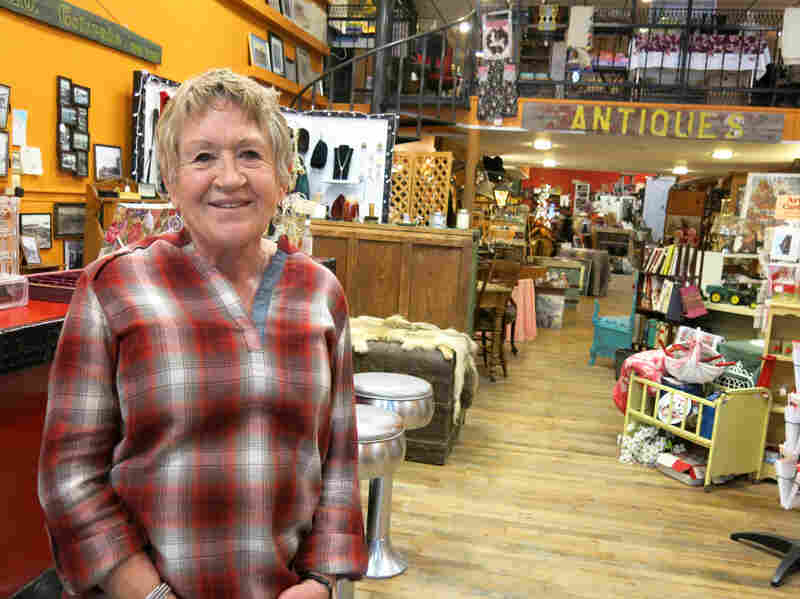
Linda Orrell runs the antique store, Main Street Mama’s, on 4th Street in Hugo.

John Daley/CPR

hide caption

toggle caption

John Daley/CPR

“I am the Main Mama, I am indeed,” says Linda Orrell, who runs the shop.

Sitting on a bar stool in what used to be an old pool hall, Orrell says Hugo is pretty small — “about 825, or so, maybe 850 [people] on a good year.”

The population has held steady for a long time, she says, because it’s a good place to live.

“It’s a town that people tend to come back to, to retire” Orrell says. “And it is home.”

There’s something else you’ll find in Hugo: one regional hospital. Town residents are very proud of their hospital, but changes to the Affordable Care Act could reduce its funding and force it to cut back services.

The Lincoln Community Hospital and Care Center in Hugo is the only hospital within a 75- or 100-mile radius, or so, on Colorado’s Eastern Plains.

John Daley/CPR

hide caption

toggle caption

John Daley/CPR

From the outside, Lincoln Community Hospital looks more like a small 1960s-era apartment building. But it has all the essential high-tech health care equipment: modern imaging machines, tele-medicine links — even an AirLife helicopter. Rachel Smith, the assistant director of nursing, says the thing that really sets the hospital apart is the quality of its care.

“It’s definitely not treat ’em and street ’em,” Smith says. “It’s definitely somebody you’re going to see — maybe even later that day, later that week.”

Smith grew up in Hugo. Her mom, Linda Messer, is the lab director and says what defines the hospital is the sense of community that comes with being in a small town. “The thing that I like best about rural health is that I get to take care of all my friends and family,” Messer says. “So it’s rare that I don’t know everyone that I take care of.”

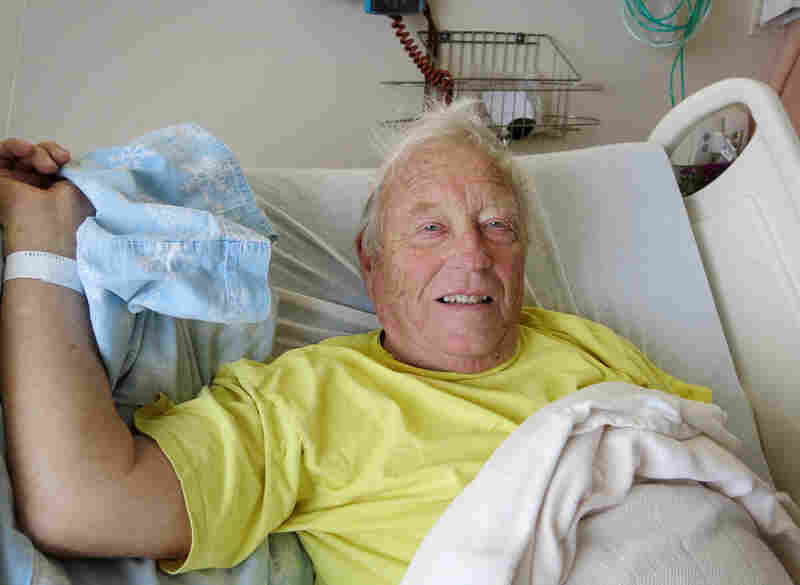
The close connections are apparent throughout the hospital. In one room, recovering from back surgery, is 86-year-old retiree Ken Sterling. He was in the Navy, then did appliance repair and even served as mayor of Hugo. Sterling’s dad edited the local paper, the Eastern Colorado Plainsman and helped build the hospital back in the ’50s. There’s a reason Lincoln Community is in Hugo — it’s roughly 100 miles to Denver and roughly 100 miles to the nearest hospital near the Kansas-Colorado border.

Ken Sterling, a former mayor of Hugo, was recently a patient at Lincoln Community Hospital. “There are an awful lot of people who depend on this place,” he says — including people who live all over the county, and truckers and other drivers who pass by on the nearby interstate.

John Daley/CPR

hide caption

toggle caption

John Daley/CPR

“I don’t know how much you’ve driven out in this part of the country,” Sterling says, “but there’s a whole lot of nothing. People have a tendency to get a lead foot — there are a lot of car accidents.”

Officially there are a little over 5,500 residents in all of Lincoln County – that’s a population density of about two people per square mile. But Interstate 70 is only about 15 miles north of town, so a lot of people in cars and trucks pass through the area.

“There are an awful lot of people that depend on this place,” Sterling says of the hospital. “And I’m not talking of people that work here. I’m talking about people that get care here.”

People like Ted Lyons, who had to be hospitalized because of an infection. Lyons is 69 and was a cattle rancher and a Republican county commissioner for more than a decade. He’s been watching a lot of C-SPAN on TV recently, including the push to replace the Affordable Care Act. Lyons says he’d like President Trump to visit Hugo’s hospital.

“I thought I’d write a letter to Trump and see if he was flying over in his helicopter,” Lyons says. “He could land down on the helipad and come [see] what a real hospital is about.”

Lyons agrees with Trump that Obamacare needs to change; that it “leaves too many loopholes.” As the co-owner of one of the two bars in town, Lyons hears lots of stories from locals, including one couple who saw their insurance premiums skyrocket.

“They said their insurance went from $400 a month to $1,200 a month — and then that outfit quit,” says Lyons. “So they were totally without insurance.”

Like half of Lincoln Community Hospital’s patients, Lyons is covered by Medicare. One chronic problem for the hospital is that its reimbursement from Medicare doesn’t cover the full cost of the services it provides.

The hospital also receives — and depends on — Medicaid payments, and that program is facing deep cuts under the Senate health bill now under consideration.

Lyons was on the hospital’s board when it nearly had to shut down a couple of decades ago. He says he wants lawmakers to work together to keep the parts of Obamacare that work and fix funding for hospitals.

“You don’t drown the duck to get a feather out of him,” Lyons says.

Sterling says he also supports whatever helps save his hometown hospital.

“Don’t even talk about losing this place!” Sterling says. “That would be a tragedy. Really.”

Both men know that making the finances work for rural hospitals is tricky. As Congress works to change the health system once more, many small town facilities like Lincoln Community Hospital are on thin ice.

This story is part of NPR’s reporting partnership with Colorado Public Radio and Kaiser Health News.

Let’s block ads! (Why?)

Health Care Debate Opens A Wound Between House And Senate GOP

It has become clear that Republicans can’t agree with one another on what to do about the Senate health care bill. Scott Simon talks to Mark Hemingway of The Weekly Standard about the GOP divide.

SCOTT SIMON, HOST:

The U.S. Congress has gone home. And Republicans, who control both houses and the White House for that matter, campaigned on the pledge to replace the Affordable Care Act, have left the Capitol without doing so. A gap has opened among Republicans in the Senate and the House and perhaps even the White House. Mark Hemingway, a senior writer for The Weekly Standard, is in our studios. Mark, thanks so much for being with us.

MARK HEMINGWAY: Very glad to be here.

SIMON: Help us understand where these divisions are.

HEMINGWAY: Well, there’s really two different ways of thinking about the same division. One is the simple sort of conservatives versus moderates divide in the Senate, which defines a lot of issues. But the other thing is what maps neatly onto that ideological divide is who represents states where they did the Medicaid expansion in Obamacare and who represents more conservative states where the Republican governors didn’t go along with that.

SIMON: I wonder about the public opinion polls because they show this week, once again, that the Republican alternative being proposed is popular with less than 20 percent of the American people. Shouldn’t that concern Republicans in the House and Senate?

HEMINGWAY: I think it absolutely does concern them. I think the question is how much they actually do not like the specifics of the bill or how much they’re responding to the fact that this has been a bit of a goat rodeo trying to, you know, organize a piece of legislation to replace it. And there’s no confidence in the decision-making process and the obvious acrimony that’s gone on as a result of the tensions over putting the bill together.

SIMON: Yeah. Mitch McConnell suggests that if he can’t get an agreement among his own Republicans, he’s going to have to turn to the Democrats. Isn’t that democracy? I mean, isn’t that good for the system?

HEMINGWAY: Yes. I think that would be. But on the other hand, when you look at what happened with Obamacare, it kind of set a big norm. It was, like, the first time we ever saw a major piece of legislation quite that, you know, impactful on, like, one-sixth of the economy where only one party authored it. So now that’s kind of the way things are going forward.

So I think that would be great if everybody could come to the table and do that. But on the other hand, I have a hard time seeing the Democrats in the opposition necessarily coming to the table in a way that Republicans, even the more moderate ones, would be amenable to.

SIMON: Yeah. But I mean, can’t we turn that around for the Republicans, though, too? I mean, shouldn’t they also address the anxieties of tens of millions of Americans about the Congressional Budget Office estimation that 22 million Americans might be not covered by health care?

HEMINGWAY: Well, that’s exactly what the tension in the – over the split in the party between conservatives and moderates is about. It’s about the Medicaid expansion and about, you know, dramatically affecting the number of, you know, Americans who are going to lose health insurance or going to have their Medicaid benefits possibly scaled back.

You know, obviously, the people that represent more moderate, purple states don’t want to, you know, suffer the political consequences there, whereas, you know, if you’re a senator from say, you know, Texas or Utah, where the senators there are leading this sort of opposition against that, you don’t have nearly as much concern from your constituents over that that because you didn’t do the Medicaid expansion.

SIMON: Yeah. You mentioned they don’t want to suffer the political cost. But, I mean, we could also be talking about a lot of Americans who aren’t covered by health care. It’s not just a political matter.

HEMINGWAY: Yes, (laughter) it is. But, you know, any major piece of, you know, redistributive legislation is going to have, you know, dramatic effects one way or the other. And a huge bulk of the people that are going to lose health insurance – it’s simply a function of the fact that there is no longer a mandate requiring them to buy it. So they’re choosing to do that. So, politically, it’s not quite as consequential.

SIMON: Mark Hemingway, senior writer for The Weekly Standard, thanks so much for joining us.

HEMINGWAY: Thank you.

Copyright © 2017 NPR. All rights reserved. Visit our website terms of use and permissions pages at www.npr.org for further information.

NPR transcripts are created on a rush deadline by Verb8tm, Inc., an NPR contractor, and produced using a proprietary transcription process developed with NPR. This text may not be in its final form and may be updated or revised in the future. Accuracy and availability may vary. The authoritative record of NPR’s programming is the audio record.

Let’s block ads! (Why?)

'Healing Children': A Surgeon's Take On What Kids Need

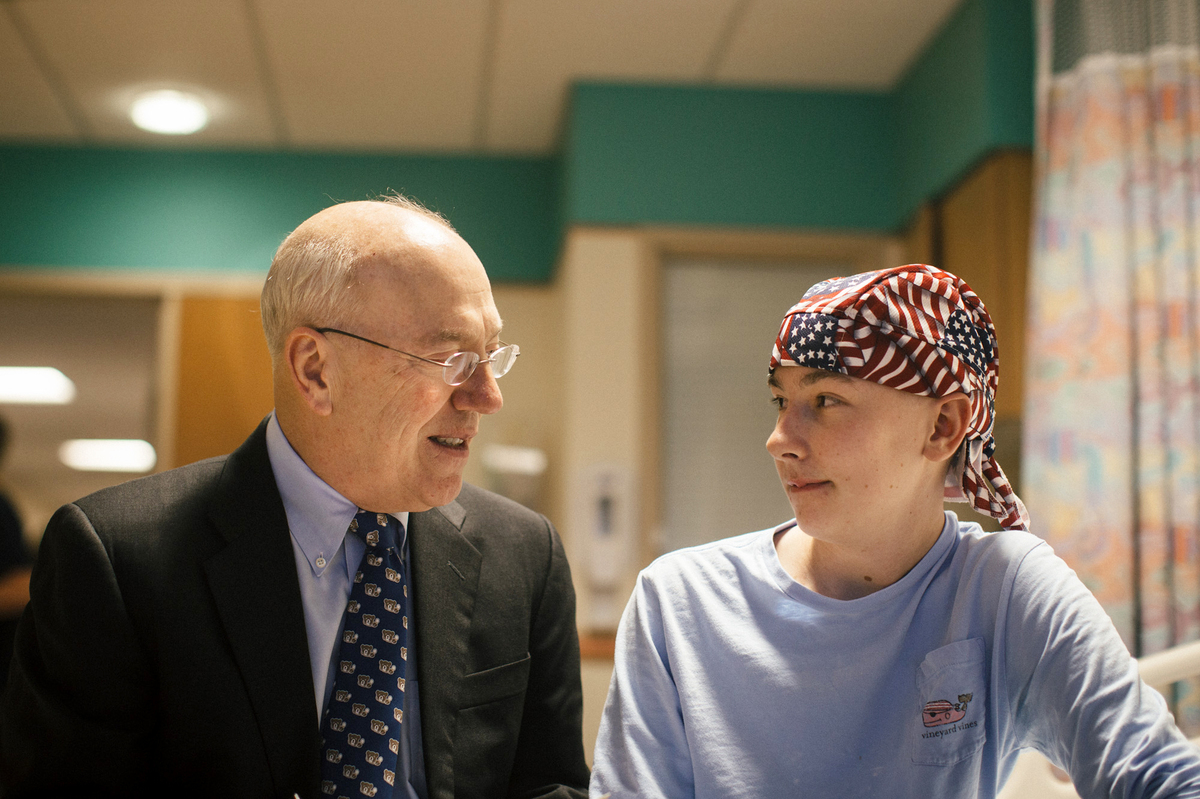
Dr. Kurt Newman visits with 14-year-old Jack Pessaud, who’s undergoing treatment for a cancerous tumor in his knee at Children’s National Health System in Washington, D.C.

Meredith Rizzo/NPR

hide caption

toggle caption

Meredith Rizzo/NPR

For parents, the thought of a child being sick or hurt can be a heart-stopper. Fortunately, for those who do confront such realities, there are doctors like Kurt Newman.

Newman is president and CEO of Children’s National Health System, known as Children’s National, in Washington, D.C. He started there as a surgeon more than 30 years ago.

In his memoir, Healing Children: A Surgeon’s Stories From The Frontiers Of Pediatric Medicine, he argues that children are not just smaller, softer adults, and that the differences matter for their treatment.

This interview has been edited for length and clarity.


Interview Highlights

Medically speaking, how are children distinct from adults?

It starts with size. In some cases, you need special equipment, or you might need special medications that work differently on children. Their biology is different. They’re more resilient. They bounce back. They heal better.

And then there’s a whole idea about development — for example, the developing brain. You have to think about how that brain is now, and how it’s going to develop, and what should we do now so that we maximize the potential for that child.

When you think about a child, they need protection. They’re not fully formed or fully mature. Their organs are not what they’re going to be. But at the same time, that immaturity allows so much bounce back and so much healing and so much ability. So you have to take both those things into mind as you take care of a child.

What changes do you want to see in health care for children?

Over half of the children we take care of are on Medicaid. And as I look at the debates in Congress and in Washington, I worry because I’m not sure that children are enough of a national priority for us.

Before becoming president and CEO of Children’s National, Newman was a surgeon at the hospital.

Meredith Rizzo/NPR

hide caption

toggle caption

Meredith Rizzo/NPR

I would really prioritize how we care for children. I’d make sure that we’re training more doctors [and] more nurses that are specialized in pediatric care. I’d do more research into the causes of some of the diseases that we take care of, to try to prevent them or diagnose them early. I’d put a lot more into mental and behavioral health. Over 20 percent of the kids have some sort of mental health or behavioral health issues. And I’d probably build a few more children’s hospitals.

At a children’s hospital, you know you’re going to get care that’s focused exclusively on children, and there’s a priceless value to that. If your child is undergoing anesthesia, you want to make sure that the person putting your child to sleep is trained in pediatrics. Or if you go to an emergency department — our emergency department sees 150 kids a day. So why go to an emergency department where they may only see five or 10 kids a day? They may not even have the equipment that’s needed.

I want to empower parents with this book to understand what I know — the special value of children’s hospitals and pediatric specialists.

Over the years, there must be patients you haven’t been able to help.

That’s part of the inspiration of the job, to think about the children we couldn’t do enough for. In surgery, I would try and create a professional distance, but there’s one I think about all the time.

His name was Casey. We called him “the Mayor.” He had this infectious gregariousness. He was always more interested in how the other patients were doing, or how I was doing. I had to operate on him a number of times. He had a bone tumor that was discovered [when] he was playing soccer.

He kept wanting to get the next surgery or get the next chemotherapy, because he had this sense that there was something more out there. I think in a way, he wanted that for other kids.

We want to do more for kids, and there are so many exciting discoveries. The frontier of pediatric medicine is so alive with new ideas and innovation. That’s what drives us — kids like Casey — so we can do more.

Weekend Editioneditor Jordana Hochman contributed to this story.

Let’s block ads! (Why?)

GOP Health Bill Could Let Insurers Cap Spending On Expensive Patients

Clara Hardy (middle) with her parents, Robert and Chrissy. Clara, who lives in North Carolina, needed expensive surgery and other procedures right after birth to save her life. The family’s insurance policy paid most of the cost.

Alex Olgin/WFAE

hide caption

toggle caption

Alex Olgin/WFAE

The health care legislation under discussion in the Senate could allow states to remove some of the Affordable Care Act’s consumer protections — including the prohibition that keeps insurers from limiting how much they’ll pay for medically needy, expensive patients. Clara Hardy’s parents worry about the Senate bill for just this reason.

These days, 6-year-old Clara’s biggest struggle is holding her breath long enough to touch the bottom of the neighborhood pool. But immediately after she was born in 2011, she couldn’t even breathe. She had a serious birth defect called a congenital diaphragmatic hernia.

Sitting next to her mom, Chrissy Hardy, Clara reads from a book, made of construction paper, that she wrote and illustrated in crayon. “On day eight, the surgeons cut me open,” Clara reads. “Everything that was in my chest got moved back to my belly. They put a patch to fix the hole in my diaphragm.”

“We were told more than once she would not survive,” her mother adds.

But after many procedures that Chrissy estimates cost more than $1 million, she finally got to cradle her baby.

“She was born two months before I turned 30,” Chrissy says, “and I held her the day before my 30th birthday.”

At the time, the whole family had health insurance through Chrissy’s job as a public school teacher. So their out-of-pocket medical costs were just $10,000.

But under the GOP proposal, the Hardys could be on the hook for a lot more. The bill gives states wiggle room on whether insurance policies sold on the states’ exchanges will be required to include health benefits that the Affordable Care Act defined as “essential.”

Those benefits, under the Affordable Care Act, must be covered by insurers, with no lifetime or annual caps on what insurers chip in to cover a particular patient’s bills. The ACA also sets an annual maximum on the amount of money a patient must contribute to help cover the bills.

Under the proposed Senate bill, if one of the ACA’s “essential benefits” — such as pregnancy and childbirth, prescription drug coverage and mental health services — is no longer deemed essential by a state, that leaves the door open to insurers to charge more for plans that include those benefits. This could even bring back lifetime caps on how much an insurer would pay for such services for a particular patient.

Hospitalization, emergency services and prescription drugs are just some of the 10 benefits that Clara needed — and might need again.

The details of how any change in the federal health law rules would play out in various states and in each health policy are still murky; the GOP Senate bill is still in draft form, and a lot will be left up to the state. But Clara’s dad, Robert Hardy, is worried.

“I don’t really know what the limit would be, but there is probably a good chance that she’s hit it,” he says.

Matt Fiedler, a health care economist with the Brookings Institution, warns that if the GOP bill passes, the problem of lifetime limits on what insurers could be counted on to pay for an insured patient’s care could spread quickly from state to state, because large companies that offer health insurance could choose the list of “essential health benefits” they include in their policies from any state.

“If you are an employer with 150 employees — so you are buying large group market coverage, and you are entirely in Pennsylvania — you can choose Mississippi’s definition of essential health benefits for the purposes of the lifetime limit provision,” Fiedler explains.

While many businesses offer insurance to keep good employees, some may cut costs by offering policies with fewer benefits. And people who buy insurance plans from the exchanges would likely be limited to what their state of residence is willing to cover, says Fiedler.

“If a benefit were no longer [an] essential health benefit, you would probably not have plans that would offer that type of coverage without an annual or lifetime limit,” he says. “People would just have no place to go.”

That means the GOP bill, if passed, could effectively gut protection for pre-existing conditions. If a state can let an insurer opt out of offering prescription drug coverage, for example, people who require medications would probably be paying more to have them covered.

The Hardys now get their health insurance through the North Carolina exchange — they were able to get it despite Clara’s past health problems. Worries about how the cost could climb, if the GOP bill becomes law, keeps her dad up at night.

“I would like to be able to be in a situation where I knew I didn’t have to worry if I was going to have to face a decision to bet my financial security against my child’s health,” Robert Hardy says.

As Clara reads her book, she lifts her pink shirt a little, to reveal a scar that cuts diagonally across her entire stomach.

“My scar on my tummy makes me proud,” she reads. “It is a reminder that I am tough and I can do hard things.”

This story is part of NPR’s reporting partnership with WFAE and Kaiser Health News.

Let’s block ads! (Why?)