Why Are More Young Americans Getting Colon Cancer?

This computer-enhanced barium contrast X-ray shows colon cancer in red. Researchers have been trying to figure out what looks to be a decade-long rise in colon cancer among people younger than 50.


Scott Camazine/Science Source
hide caption

toggle caption


Scott Camazine/Science Source

One of the great treats of following an Agatha Christie mystery (my favorite being Hercule Poirot) is that you know there will be an “Aha!” moment at the end. The fastidious, mustachioed detective will pull together all the disparate facts and present a compelling answer.

I’m frequently reminded that science doesn’t work that way. The latest case in point is an article published Tuesday in the Journal of the National Cancer Institute that sets out to explore a trend in colorectal cancer among younger Americans.

More than a decade ago, scientists noticed an odd quirk in the data: While overall rates of colorectal cancer have been falling dramatically since the mid-1980s, there’s been a steady uptick of this disease among people younger than 50.

The numbers are small. Cancer incidence is creeping up by 1 or 2 cases per 100,000 people under 50. By way of comparison, the disease rate among older Americans has plummeted by more than 100 cases per 100,000 people.

And the vast majority of colorectal cancer cases are among people over 50: These older Americans are 16 times more likely to get colon cancer, compared with adults who are younger. That’s why a small trend in younger adults is far outweighed by the dramatic decrease of disease among people over 50.

Still, the under-50s will eventually grow older. What will happen to their risk then?

Will the trends that started in their 20s and 30s continue? If that’s the case, overall colorectal cancer rates might ultimately end their steady decline, and could start to rise.

Another possibility is that, once people turn 50, they will follow the current medical guidance and get colonoscopies or other recommended screening tests, which can actually prevent colorectal cancer by finding and removing precancerous polyps. And their risk profile could end up looking much like it does today.

Here’s where even Poirot would be stumped. There simply isn’t enough information to know what will happen.

Epidemiologist Rebecca Siegel and her colleagues at the American Cancer Society have published their take in the JNCI. In their study, they break down the population into generational cohorts, focusing on millennials and members of Generation X.

By breaking down the cases by age group, Siegel says, it’s easier to disentangle generational changes such as differences in diet from trends in medical diagnosis and treatment, which vary less by age. Still, she and her colleagues can only say so much.

“[T]he results do not provide any direct evidence about the role of specific exposures or interventions,” they note in the study. Even so, the researchers say, because trends in the young “could be a bellwether of the future disease burden, our results are sobering.”

Siegel tells Shots, “It appears that under the surface, the underlying risk for this disease is actually increasing in the population.”

What’s driving that is hard to say. Obesity is more common among younger than it used to be, so perhaps it’s partly to blame.

Or it may not be obesity itself; it could be that poor diet and lack of exercise, which contribute to obesity, are also influencing colon cancer rates.

One study found that people from Africa who were suddenly switched to an American diet had signs of inflammation in their colons within just two weeks, Siegel notes, “so this change can happen fairly rapidly.”

But that’s far from a complete explanation. A large British study published a few years ago suggested that only 11 percent of colon cancer cases could be tied to trends in obesity.

There’s also a scenario in which this seemingly glum cancer trend is in fact good news.

Dr. H. Gilbert Welch, a professor of medicine at the Dartmouth Institute for Health Policy & Clinical Practice, says what look like additional cancers in people under 50 may simply be cases that are being diagnosed earlier than they would have been. Some people are getting colonoscopies for reasons other than cancer screening these days, and doctors are surely coming upon early cases of colon cancer they might not have turned up so soon.

There’s some evidence to back that claim: While the rate ofnew cases of colorectal cancer has been climbing in under-50 Americans since the mid-1990s, the death rate among that group has remained remarkably flat. And death rates may be the more telling statistic.

Something similar happened with breast cancer in the 1980s — there was a temporary spike in the number of breast cancers diagnosed, as large numbers of women went in for mammography screening for the first time. But death rates didn’t rise, and incidence rates of breast cancers fell again after that uptick.

Welch notes that we’re seeing that again with the rates of thyroid cancer, which are skyrocketing due to intensive screening and diagnosis; but, again, there’s been no increase in mortality from thyroid tumors.

Welch offers yet another possibility: Maybe the apparent rise in colon cancer among young people is real, but it won’t affect them as they age. “The biology of the disease may be different between the young and the old,” he says.

Welch himself has explored the much larger trend of declining colorectal cancer rates. Some of it is no doubt caused by vastly increased screening for colorectal cancer, though he notes that the decline was well under way before colonoscopies became routine.

There’s no question that diet and other factors can also have a profound effect on cancer rates. “One of the most dramatic cases of that is stomach cancer, which used to be a very common cause of cancer and has now virtually disappeared, at least in the United States,” Welch tells Shots.

On one point there is broad agreement among doctors and researchers treating and studying this disease: The increased screening for colorectal cancer, which can involve removing polyps before they become cancer, has been a significant factor in reducing the burden of this illness.

Another point of agreement: If the Trump administration eliminates the current insurance benefit for colon cancer screening as it does away with the Affordable Care Act, fewer people are likely to get screened for this deadly malignancy. And the likely impact of that is not a mystery.

You can contact Richard Harris atrharris@npr.org.

Let’s block ads! (Why?)

GOP Looks To Trump's Address To Rally Lawmakers Around An Obamacare Strategy

House Speaker Paul Ryan and Senate Majority Leader Mitch McConnell talk with reporters outside the White House on Monday, Feb. 27, 2017.

Pablo Martinez Monsivais/AP

hide caption

toggle caption

Pablo Martinez Monsivais/AP

Republicans are looking to President Trump to use his address to Congress Tuesday evening to define the party’s path forward on how to deliver on the long-promised pledge to repeal and replace Obamacare.

The White House has, so far, ceded the decision-making to congressional leaders who are trying to unify competing moderate and conservative lawmaker demands behind a plan that can pass with narrow majorities in both chambers.

The only legislative proposal on the table at the moment is being crafted by House Republicans and guided by House Speaker Paul Ryan. Senate Republicans have not authored a plan, nor has the White House publicly outlined much in the way of policy specifics.

White House aides who briefed reporters on Monday evening would not say how specific the president would be about health care in his address. They said the speech is being crafted with input from listening sessions the president has held, including on that issue. On Monday, Trump met with health insurance executives, and the president held his latest of several meetings with top congressional leaders.

A GOP proposal that’s still coming together on Capitol Hill would end the Medicaid expansion enacted in 31 states and eliminate the individual mandate, as well as other taxes created by the Affordable Care Act. It would replace the mandate with a tax credit to encourage individuals to buy insurance instead. It would also allow higher contributions to health savings accounts, but it would eliminate minimum coverage standards established by the Obama administration and let states decide what services must be covered by insurance.

“There are serious problems with what appears to be our current path to repeal and replace Obamacare,” Rep. Mark Walker, R-N.C., said in a statement in regards to the draft proposal. Walker chairs a bloc of influential conservatives in the House, and he said he could not “in good conscience” recommend any conservative vote for it in its current form. One of Walker’s complaints is the proposal does not do enough to contain costs.

However, Health and Human Services Secretary Tom Price has privately told congressional Republicans that the White House is fully on board with the emerging proposal.

White House spokesman Sean Spicer told reporters Monday that Trump will speak to health care and his “patient-centered alternative” in his Tuesday address. Spicer said the White House wants to see a legislative proposal “within a matter of weeks.”

Ryan and Senate Majority Leader Mitch McConnell, R-Ky., also huddled with Trump at the White House on Monday. The speaker has maintained that the House will act on Obamacare repeal-and-replace legislation in March. “We’re going to be rolling out our plan very soon,” Ryan pledged.

A focal point of Tuesday’s address will be just how far the president goes in embracing the emerging House GOP plan. Trump and his senior aides have at times made promises about the overhaul that Congress is unlikely to keep—such as a pledge to cover more people, with better coverage and at a cheaper cost.

Trump spoke candidly about the complexities of U.S. health care policy on Monday in remarks at a meeting with the nation’s governors. “It’s an unbelievably complex subject. Nobody knew that health care could be so complicated,” Trump said.

One governor who does understand the complexity is Ohio GOP Gov. John Kasich, who is lobbying Trump to keep the Medicaid expansion in place. Kasich’s efforts underscore the many divides within the GOP over the best policy solution that comes with the least amount of political risk.

Dozens of Republicans lawmakers have in recent weeks faced large, angry crowds at town hall meetings largely driven by concerns about how the repeal-and-replace effort would affect coverage. It’s unclear still how this public pushback could affect GOP strategy.

Democrats are unanimous in opposition to GOP repeal-and-replace efforts. In a Monday “prebuttal” to Trump’s address, Senate Minority Leader Chuck Schumer noted the GOP’s failure to coalesce around a single plan or pick up any Democratic support.

“I predict the discord in their party will grow as Republicans return to Washington after a week of angry town halls,” said Schumer, who added another prediction: “I believe the odds are very high that we’ll keep the ACA. It will not be repealed.”

Obamacare has provided coverage to about 20 million Americans. About 6% of Americans receive insurance on the individual market. The vast majority of Americans are covered by insurance provided by their employer.

Let’s block ads! (Why?)

This CEO's Small Insurance Firm Mostly Turned A Profit Under Obamacare. Here's How

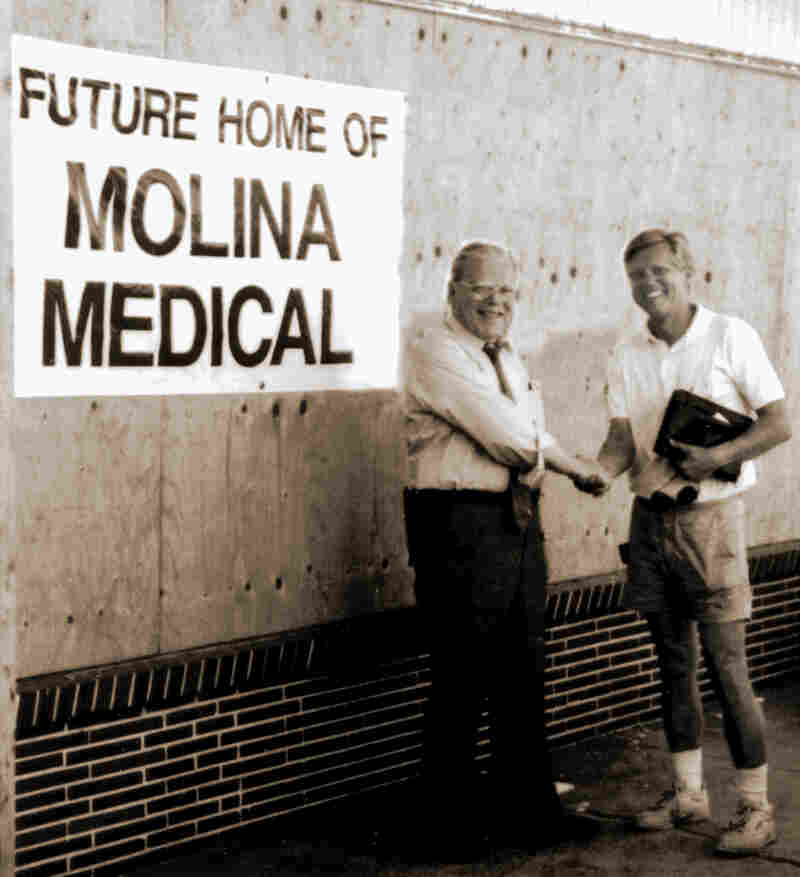
Dr. Mario Molina now runs Molina Healthcare, the small insurance company his father founded in 1994 in Southern California. Part of the firm’s success, he says, stems from understanding the priorities of patients.

Courtesy of Molina Healthcare

hide caption

toggle caption

Courtesy of Molina Healthcare

Some large health insurance companies have suffered losses under the Affordable Care Act, leading to a few high-profileexits from the health exchanges. Humana is just the latest, announcing in January that it will stop offering health insurance on the Affordable Care Act exchanges at the end of 2017.

But the administrators of a smaller, California-based insurer — Molina Healthcare — managed to turn a modest profit in the early years of the health law. How did they do it?

“We understood the demographics of the people that we’re serving a little better,” says Dr. J. Mario Molina, CEO of Molina Healthcare, “because we’ve been doing it for so long.”

Molina’s father, David, also a doctor, first founded a network of medical clinics in southern California in 1980 that served mostly low-income patients. Sometimes when his dad’s patients couldn’t pay, they would trade services, or give him items from their homes instead of cash, the younger Molina recalls: a glass decanter, a pipe organ, even a dog.

Dr. C. David Molina reviewing medical records in the 1980s. He was a doctor first, then a health insurer.

Courtesy of Molina Healthcare

hide caption

toggle caption

Courtesy of Molina Healthcare

“My father was old-fashioned,” says the CEO. “He believed doctors had an obligation to take care of patients, and that the primary issue was not how they were going to get paid.”

Article continues after sponsorship

In 1994, David Molina started his health insurance company,focusing on getting care to patients on Medicaid — government health insurance for the poor and disabled.

That is what positioned Molina Healthcare to move into the Obamacare marketplaces so smoothly, Mario Molina says — most people who signed up for Obamacare plans are low-income.

“It’s a different population most insurance companies haven’t been interested in,” he says.

For example, transportation is an issue for his company’s customers. They often take the bus to medical appointments, he says, so would rather see a doctor close to home, than at an academic hospital 30 miles away.

“We don’t contract with every hospital and every doctor,” he admits. “It’s not everyone, but it’s enough so that you can find a doctor and the hospital and the services you need.” His company now operates in 12 states and Puerto Rico.

The system of medical clinics Dr. David Molina (left) founded in Long Beach, Calif., in 1980 grew to become an insurance network that now stretches across 12 states and Puerto Rico.

Courtesy of Molina Healthcare

hide caption

toggle caption

Courtesy of Molina Healthcare

While some have criticized narrow insurance networks for not offering consumers enough choice, especially of medical specialists, having fewer doctors in the Molina Healthcare network has meant lower costs for the company and its customers. That means the health insurance company has been able to earn a modest profit — roughly 1 percent in the first couple years of Obamacare.

Some larger insurers are accustomed to creating health plans for big companies, who often want more doctors and more benefits included, in hopes of attracting and retaining top employees. But plans like that cost more.

“They’re looking at things sort of from the top down, and we’re looking at things from the bottom up,” Molina says.

He’s used to running a low-cost, low-margin business, while big guys like Humana, Aetna and UnitedHealth aren’t. Industry analysts say that’s why some of the big players lost money with Obamacare.

“It’s easier to work up from a low-cost position than it is to work down from a higher-cost position,” says Josh Weisbrod,a health care consultant with Bain & Company. “For an insurer that is used to selling employer plans with rich benefit designs and broad networks, it is difficult for them to transition that to a narrow network of lower cost providers.”

But Molina says there’s been a serious downside to his company’s success: a provision of the Affordable Care Act known as “risk transfer.” The provision was designed to help insurance companies cover losses if they ended up with a lot of really sick, expensive patients. It works like this: Companies with fewer patients who have a chronic or serious illness pay some of their revenues to the companies that cover more patients who are sick.

It was a fine idea, Molina says, but the formula lawmakers came up with to calculate risk was all wrong.

“Let’s put it this way,” he says. “Currently Molina Healthcare is returning 25 percent of our premiums to the government, which are then distributed to our competitors. So we are really subsidizing our competitors and helping them, rather than forcing them to compete.”

And that is one of the things that hit Molina’s bottom line in 2016, resulting in much lower profits than originally projected for the year and a significant fourth quarter loss. Molina complains that the risk formula seems to punish efficiency rather than help those who had some bad luck.

“I think it was done by well-meaning people who had a theoretical knowledge, but not a practical knowledge of insurance,” he says.

Still, Molina remains a fan of the Affordable Care Act overall, and hopes Congress will consult with him and other insurers as it debates the future of the health law.

“It doesn’t need to be scrapped and replaced,” he says. “It needs a tuneup.”

If lawmakers need guidance on how to fix Obamacare, he adds, they should look at one state that really got it right: California.

California insurance regulators and health officials “forced everyone to really compete,” Molina says, “and that made everyone kind of sharpen their pencils and do a better job,” he says. “It’s kept everyone on their toes, and, as a result, I think there’s been more stability in the marketplace.”

There’s also more predictability. California may have more business regulations than other states, but Molina believes that’s created a level playing field.

“The state doesn’t make arbitrary decisions,” he says. “We can plan from year to year. We understand the rules. Imagine if you’re trying to play a game and the rules change in every quarter.”

Molina is hoping newly-elected rule makers at the federal level will take his message to heart, too.

This story is part of NPR’s reporting partnership with KQED and Kaiser Health News.

Let’s block ads! (Why?)

GOP Health Bill Draft Would Cut Medicaid, Emphasize Tax Credits

Sen. Bill Cassidy, R-La., responds to constituents concerned about their coverage under the Affordable Care Act.

Jonathan Bachman/Getty Images

hide caption

toggle caption

Jonathan Bachman/Getty Images

In recent days, several Republican lawmakers have faced crowds of constituents at town hall meetings around the country who are angry that they may be in danger of losing their health coverage.

A GOP draft bill, recently obtained by Politico, would likely do little to assuage these concerns.

The Feb. 10 document follows the broad policy outline released by Republicans last week just before they went home for a Congressional recess. It proposes cuts to federal payments to states that have expanded Medicaid and offers tax credits for people to buy health insurance.

“This would mean fewer people could afford health insurance and that the health insurance would likely cover less,” says Larry Levitt, senior vice president at the Kaiser Family Foundation.

Under the plan, states that expanded eligibility for Medicaid would see their supplemental federal funding rolled back. The program would also be converted from a federal-state program that pays for all the health care beneficiaries get, to one where Washington sends a fixed amount of money to each state for each Medicaid enrollee.

Article continues after sponsorship

To help people who don’t get insurance through their employer buy coverage, the bill offers age-based tax credits that start at $2,000 for individuals under age 30. It would rise to $4,000 for those over 60. Those credits are unlikely to cover the full cost of a plan that pays for routine health care, but could potentially pay for insurance that protects against a catastrophic health event.

Levitt says those credits are less generous than the subsidies offered under Obamacare.

The draft bill is consistent with what Republicans have been saying they want to see in place of Obamacare, says Rodney Whitlock, vice president of health policy at ML Strategies.

“No surprises here,” says Whitlock, who was formerly the Republican health policy director for the Senate Finance Committee. “These are all ideas Republicans have championed. Now the Congressional Budget Office will decide if they agree.”

The Congressional Budget Office will “score” the ultimate bill, estimating how how many people it’s likely to cover and its impact on the federal budget.

Spokesmen for the House Energy and Commerce, and Ways and Means committees, which are drafting the legislation, declined to comment on the leaked bill.

It’s not clear that the details in the two-week-old draft bill, such as the size of the tax credits, are still being considered. One House staffer says lawmakers are testing different scenarios with the Congressional Budget Office, comparing cost and coverage levels, and fine tuning the legislation.

The draft bill would also get rid of the taxes created under the Affordable Care Act, including taxes on medical device makers and health insurers. Instead, it would limit how much employers can deduct for expensive insurance policies they give to their workers.

It would also eliminate the mandate for individuals to buy insurance.

The bill attempts to encourage healthy people to buy insurance by mandating that they cannot be charged more for existing medical conditions, or, once they get sick, if they maintain continuous coverage. People who elect not to buy insurance at the outset would pay a surcharge when they do, and could end up paying more if they’ve been ill.

Levitt is not convinced the Republican’s continuous coverage plan would work.

“Republicans are struggling to find the Holy Grail of how to get healthy young people to buy insurance,” he says. “I’m not sure they’ve found it here, but it’s a legitimate struggle.”

Senate Democrats denounced the proposal. “This isn’t a replacement, it’s a recipe for disaster,” says Senate Democratic Leader Charles Schumer, N.Y. “Republicans are determined to put insurance companies back in charge, make health insurance more expensive for millions of Americans, restrict women’s access to vital health services by by defunding Planned Parenthood, shift costs to states and dismantle Medicaid, while kicking millions more off of their plan.”

Let’s block ads! (Why?)

Advice From Patients On A Study's Design Makes For Better Science

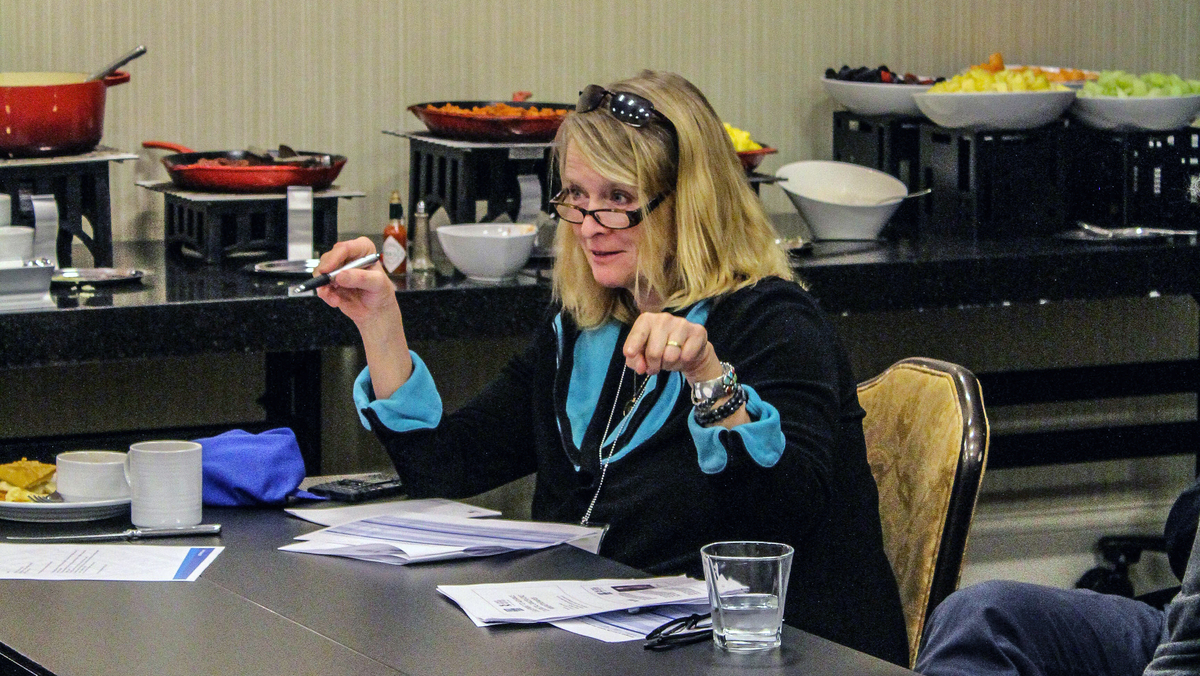
Nancy Roach at a conference in 2016. She’s long worked as a patient’s advocate and recently teamed up with scientists to help improve the design of studies, as well as to improve clinical care.

Andrew Wortmann/Courtesy of Fight Colorectal Cancer

hide caption

toggle caption

Andrew Wortmann/Courtesy of Fight Colorectal Cancer

Many studies designed to try out new drugs simply languish. They don’t attract enough patients, and they aren’t completed. That slows medical progress.

But here’s a story of one study that has bucked that trend — in fact, it is so popular, scientists had to put the brakes on it for a while.

The study is called the NCI-MATCH trial. It upends the normal way of classifying cancers for treatment: Instead of categorizing malignancies by the organ where they first appear, this method of sorting focuses on particular mutations in the genes of cancer cells.

“Instead of thinking of a breast cancer treatment or a lung cancer treatment or colon, it looks at the different mutations that occur in the tumors,” explains oncologist Robert Comis, who leads the study.

NCI-MATCH recruits people who have tried and failed the traditional cancer treatments. People like 74-year-old Nancy Nahmias.

“It all started when I was diagnosed with cancer of the liver,” Nahmias says. “I was put on chemo, which I reacted very poorly to.” In fact, she developed a severe reaction called sepsis, which put her in the hospital for six weeks.

Article continues after sponsorship

Standard chemotherapy was out of the question, her doctors told her.

Nahmias’ daughter, a physician, learned about the NCI-MATCH trial and encouraged her mother to give it a try. Scientists screened the genetic pattern of her tumor and found a mutation that might be amenable to a treatment not usually given to patients who have liver cancer. Nahmias signed up about two months ago, at Thomas Jefferson University, one of many sites running the study.

The study has been recruiting patients at a record pace. In its first three months it enrolled 800 patients, far more than the 150 the researchers expected, Comis says.

The organizers had to pause the study briefly, to reconfigure their labs to keep up with the flood of patients.

That rapid clip is no doubt because the study is aimed at patients who are running out of traditional treatment options.

But it’s also because the researchers who designed the study stopped to ask what would appeal to potential participants. Nancy Roach, a longtime patient’s advocate who lives in rural Oregon, got involved early on, and helped advise the scientists planning this study.

Know your audience

“This is going to sound goofy, but my dad was in advertising,” she tells Shots. “Remember the scrubbing bubbles — Dow scrubbing bubbles? That was my dad. So I grew up watching commercials and thinking about what consumers wanted.”

Roach brought that sensibility to the conferences where the NCI-MATCH trial was being designed. The original plan would have split the study participants who seem to be doing well on the test treatment into two groups. One group would continue the treatment; the other would take a break, called a drug holiday.

Roach remembers her immediate reaction to that design: “Taking a patient who’s responding to treatment and taking them off treatment? That is not going to fly.”

She correctly anticipated how patients like Nancy Nahmias would have reacted, as they deliberated whether to sign up for the trial.

“I would not have liked that,” Nahmias says. “If it seems to be working, let’s face it, I don’t want to do anything to sabotage myself.”

Dr. Peter O’Dwyer, a University of Pennsylvania oncologist who was involved in the study design, readily admits that “the design had certain attractions, but it clearly had certain flaws.”

On the one hand, incorporating a drug holiday would have helped doctors tell whether a tumor was just growing slowly, or actually responding to treatment, O’Dwyer says.

On the other hand, the researchers could see the point that Nancy Roach and others in the patient advisory group were making.

Want patients in your study? Listen to their concerns

“We all agreed, and changed the design of the study accordingly,” O’Dwyer says. That meant the scientists wouldn’t be able to distinguish as easily the slow-growing tumors from ones responding to treatment — that insight would have to come from a follow-up study.

Comis says researchers used to design studies without any patient input, back in the day when patients tended not to question their physicians. But just as patients have gotten more involved in their own care, their advocates have become more involved in the technical discussions of study design.

“That has increasingly become the norm in the development of clinical trials,” Comis says.

He and O’Dwyer work together in Philadelphia at the ECOG-ACRIN Cancer Research Group.

Years ago, Comis was involved in a landmark study that put cooperation with patients to the test.

Back in the 1990s, doctors were increasingly encouraging breast cancer patients to undergo very aggressive treatment that involved having a bone-marrow transplant. The treatment, which can have serious side effects, was based on poor evidence, Comis says, so he wanted to run a rigorous trial to see if it really worked for this group of patients.

Patients can have biases, too

“We struggled throughout the ’90s to put enough patients on clinical trials, which ultimately showed that it didn’t work,” Comis says.

Patients and their advocates, as well as doctors, really didn’t want to question the prevailing wisdom about bone marrow transplants, he says. “And I think one of the reasons some of those early trials took so long was that the whole external environment was against participation in these particular trials.”

That experience validated Comis’ view that patient advocates are central to doing good research.

From Nancy Roach’s perspective, it takes a bit of nerve to speak up in a room of doctors and scientists and ask, “Will the results of this study actually help anybody?”

But it’s Roach’s responsibility to ask those basic questions. “I’m not a scientist,” she says. “I’m not a clinician. I’m there on behalf of patients.”

Her own journey started when her mother-in-law developed colorectal cancer. Roach went from being an advocate for one patient to an advocate for many; she co-founded the Colon Cancer Alliance in 1999, advocating for those with cancer and their families. And while she’s gratified to see more and more people stepping in to become patient’s advocates in research design, she notes that most are white and economically advantaged.

“Honestly,” she says, “most of them look like me. And that’s a problem.”

African Americans are under-represented in clinical trials, she notes. That may be in part because their doctors aren’t recommending experimental treatments as often. But it may also be that the clinical trials haven’t made a big enough effort to listen to the needs of various communities of patients.

Roach hopes this will be the next frontier for patient involvement.

You can contact Richard Harris at rharris@npr.org.

Let’s block ads! (Why?)

Kevin Jones: Can Embracing Uncertainty Lead To Better Medicine?

[embedded content]

Part 3 of the TED Radio Hour episode The Spirit Of Inquiry.

About Kevin Jones’ TED Talk

Sometimes, doctors just don’t have the answers. Surgeon Kevin Jones says having the humility to acknowledge this leads to better medicine.

About Kevin Jones

Kevin Jones a professor at the University of Utah and surgeon at Primary Children’s Hospital and the Huntsman Cancer Institute, where he also directs the KB Jones Lab.

His studies focus on a group of cancers called sarcomas, which are cancers of the flesh and bones. Jones is the author of the book What Doctors Cannot Tell You: Clarity, Confidence and Uncertainty in Medicine.

Let’s block ads! (Why?)

Indiana's Claims About Its Medicaid Experiment Don't All Check Out

Then-Indiana Gov. Mike Pence announces that the Centers for Medicaid and Medicare Services has approved the state’s waiver request for its Medicaid plan in 2015.

Michael Conroy/AP

hide caption

toggle caption

Michael Conroy/AP

Indiana expanded Medicaid under the Affordable Care Act in 2015, with a few extra conditions that were designed to appeal to the conservative leadership in the state. The Federal government approved the experiment, called the Healthy Indiana Plan, or HIP 2.0, and it is now is up for another three-year renewal.

But a close reading of the state’s renewal application shows misleading and inaccurate information is being used to justify extending HIP 2.0.

This is important because the initial application and expansion happened on the watch of then-Governor, now-Vice President Mike Pence. And Seema Verma, who is now President Trump’s pick to lead the Centers for Medicare and Medicaid Services, helped design it. (Among other functions, CMS oversees all Medicaid programs.) So states are watching to see if the approval of Indiana’s application is a bellwether for Medicaid’s future.

To get the program extended again, the Indiana Family and Social Services Administration has to prove to CMS that the experiment is working and that low-income people in the state are indeed getting access to care and using health care efficiently.

The key part of Indiana’s experiment requires low-income participants to make monthly payments. Advocates say this promotes recipients’ taking personal responsibility for their health care. But some health policy experts say the information provided by the state shows that the provision isn’t working as well as it should. Here are some examples:

The Claim: Most Members Are Making Regular Payments To Maintain Coverage

The Fact: A Lot Of People Are Missing The First Payment

The state’s application says that “over 92 percent of members continue to contribute [to their POWER accounts] throughout their enrollment.”

Article continues after sponsorship

This claim is missing a lot of context. To understand why it’s important, here’s a primer on how HIP 2.0 works: Members can get HIP 2.0’s more complete coverage, the HIP Plus plan, by making monthly payments into a “Personal Wellness and Responsibility Account,” or POWER account.

If they don’t make the payments, there are penalties. If a recipient makes less than the federal poverty level — about $12,000 a year — they’re bumped to HIP Basic, a lower-value plan that requires copays and doesn’t include vision or dental insurance.

If a recipient is above the poverty line and misses a payment, they’re locked out of coverage completely for six months.

The state’s claim that 92 percent of members make consistent payments is based on data in a report by the Lewin Group, a health policy research firm in Virginia that evaluated HIP 2.0’s first year.

But the Lewin report also says that when people are signing up for HIP 2.0, they can be declared “conditionally enrolled,” which means they’re eligible but have not yet made their first payment.

According to the Lewin report, in HIP 2.0’s first year, about a third of people who were conditionally enrolled never fully joined.

“I don’t see those numbers being captured,” says Dr. David Machledt, senior policy analyst with the National Health Law Program, which advocates for low-income individuals. Machledt says the state should recalculate the figure to include those people, because it’s potentially an indicator that people are confused about how the program works, or that they can’t afford the payments.

He adds that the figure cited is also based on the first year of HIP 2.0, and that the rate of losing coverage for missing payments has increased substantially since then.

The Claim: HIP 2.0 Users Check Their POWER Account

The Fact: More Than Half of People Don’t Even Know They Have One

The state says the POWER account is promoting personal responsibility in health care; meaning, if someone is aware of how much they are spending, they’ll choose their medical care wisely. As evidence, the state writes in its application that 40 percent of HIP Plus members “check their [POWER Account] balance at least once a month.”

Again, the state leaves out important context. According to the Lewin report, most people in HIP Plus didn’t know they had a POWER account. Of those who did, 40 percent of them checked their account once a month, but that’s much smaller than 40 percent of all HIP Plus members. In fact, an analysis of the numbers shows only about 19 percent of HIP Plus members reported checking the balance of their POWER account monthly.

Rather than evidence of personal responsibility, Judy Solomon, Vice President for Health Policy at Center on Budget and Policy Priorities, sees evidence of confusion.

“I think that’s another really significant finding [in the Lewin report] that so far I have never seen the state come to terms with,” says Solomon.

A spokesperson for the state wrote in an e-mail that the phrase, “of the members surveyed” was unintentionally omitted from the application.

The message did not address the overall concern that the statement was misleading.

The Claim: People On HIP Plus Are More Responsible

The Fact: Experts Say HIP Plus Is Just Better Insurance

The application also says “HIP members who contribute [to their POWER accounts] are twice as likely to obtain primary care (31 percent to 16 percent), have better prescription drug adherence (84 percent to 67 percent), and rely less on the emergency room for routine treatment.”

Machledt says simply showing that HIP Plus members use the emergency room less frequently than HIP Basic members doesn’t tell the whole story.

“They don’t talk about the risk profile of those different groups,” Machledt says. He says people who are above the poverty line are generally less likely to frequent the ER in the first place. “There’s no evidence to me that they’ve risk adjusted… to show that they’re comparing apples to apples,” he says.

Indiana argues that the higher levels of primary care use and drug adherence for those making POWER account payments, “confirms the principle of personal responsibility.”

But Solomon says the differences in behaviors actually just confirm something else: Those who pay their POWER account have better insurance. HIP Plus makes it easier for people to access primary care and to adhere to their prescription drug regimens, Solomon says.

“The policy for people in HIP Plus is that they get a three-month supply of drugs, and can even use mail order, without any copays,” she says. Meanwhile, people in HIP Basic have to pay copays and are limited to a one-month supply of drugs.

Solomon says getting less primary care and relying on the ER for health crises is worse for patients and could also mean higher costs. “You have large numbers of people that are not getting care in the right place at the right time, and not maintaining adherence to prescription drug regimens.”

The Claim: HIP 2.0 Is Meeting Its Enrollment Projections

The Fact: No, It Isn’t

Enrollment projections for HIP 2.0 submitted to CMS in 2014.

CREDIT HEALTHY INDIANA PLAN EXPANSION PROPOSAL/FSSA

hide caption

toggle caption

CREDIT HEALTHY INDIANA PLAN EXPANSION PROPOSAL/FSSA

The state’s application reads “HIP has continued to meet its enrollment goals with over 394,000 individuals fully enrolled in HIP as of December 1, 2016.”

But the state isn’t meeting its enrollment goals.

But the state isn’t meeting its enrollment goals. According to a chart published in 2014 in Indiana’s original proposal for HIP 2.0, its enrollment goal for December of 2016 was higher — 424,339. (The chart to the right is off by a month, because the state started HIP 2.0 a month later than planned, so the actual projection for December 2016 appears on the line for November 2016.)

The most recent enrollment report shows 403,142 HIP members in January 2017, short of the state’s projection of 427,702.

The Claim: Surveys Show People Like HIP 2.0

The Fact: The Survey Data Is Not Reliable

There’s reason to doubt the survey results that underlie much of the Lewin report, according to Dr. Leighton Ku, director of the Center for Health Policy Research at the Milken Institute School of Public Health at George Washington University.

“They were not using what would generally be considered best practices in their survey methodology,” Ku says.

Ku says the methodology available to the public is vague. From the information provided, he says there are multiple ways that bias could have been introduced into the survey results used in the Lewin report. For one thing, the sample sizes of the survey were too small to draw accurate conclusions, Ku says, and the data was analyzed using “not an optimal method.”

Ku says the results are not displayed in a scientific manner, and that it appears the survey and analysis were done in a hurry. “You would not, as a survey researcher, have great confidence in the results that they show,” he says.

Conclusion

As Indiana looks to extend HIP 2.0, health policy experts say it’s important to get an accurate picture of how well the program is working. Requiring POWER account payments was key to making the program a reality in Indiana, but they say a more traditional Medicaid expansion — one that does not require monthly payments and 6-month lockouts — is a better option.

Dr. Jennifer Walthall heads the Indiana Family and Social Services Administration, the government agency that runs HIP 2.0. She said that in order to comment on discrepancies between the state’s extension application and the Lewin report, “I would have to go back and look at the way that these data were reported.” She continued, “I’m happy to look into that and get that for you.”

In a separate prepared statement, the agency noted that the state “has made significant achievements” on HIP 2.0’s stated goals and that it looks forward “to continuing to build on these successes with future versions of HIP … The analysis of this program is constant and ongoing and includes continuous conversation with our federal partners to discuss all aspects of the proposed waiver as well as program outcomes.”

If the application does not go forward, the state could choose to expand Medicaid under the Affordable Care Act without any special provisions, or not accept the expansion at all. The federal government is welcoming public comment on Indiana’s application until March 17.

This story is part of a reporting partnership with NPR, WFYI, Side Effects Public Media and Kaiser Health News.

Let’s block ads! (Why?)

What's Next For The Affordable Care Act? Your Questions Answered

The one thing that’s certain is that their will be changes in the Affordable Care Act.

Joe Raedle/Getty Images

hide caption

toggle caption

Joe Raedle/Getty Images

No matter where you stand on the political spectrum, health care under the Affordable Care Act is going to change in the next few years. The Republican-led Congress has vowed to “repeal and replace” the health law known as Obamacare.

That has left many people anxious and confused about what will happen and when. So NPR’s Morning Edition asked listeners to post questions on Twitter and Facebook, and we will be answering some of them here and on the radio in the weeks ahead.

Many of the questions so far have to do with timing.

For example, Steva Stowell-Hardcastle of Lewisburg, Penn., says: “I’m confused about what parts of the ACA have been repealed and when those changes take place.”

First, despite social media headlines, nothing substantive has been changed in 2017. That’s because making these changes is harder than it looks.

In January, Republicans in Congress passed a budget resolution that called for major changes to the law to be made in a subsequent bill.

Even though that process would allow them to pass a bill without Democratic votes, they haven’t been able to agree on what those reforms should look like.

Article continues after sponsorship

And there are several other obstacles.

First of all, they won’t be able to repeal everything in one go, which counters a lot of the rhetoric coming out of the election. And they would be limited in what parts of the law they can replace.

That said, the Trump Administration has taken some action, but no concrete changes – yet. In January, Trump signed an executive order calling for federal agencies to “waive, defer, grant exemptions from, or delay the implementation of any provision or requirement of the act” that would “impose a fiscal burden” on states, individuals, healthcare providers, and others in the health industry.

While that could be widely interpreted, so far the only federal action in response to that order has come from the IRS. The IRS says it will not strictly enforce the “individual mandate” that requires most Americans to have health insurance. The agency noted, however, the requirement is still law.

A related question comes from Kathryn Henry of Iowa City, Iowa. She asks “if it is repealed, what happens to people like me who currently have insurance through it and when?”

Both President Trump and GOP congressional leaders have insisted that they want a smooth transition from the current system to a new one, particularly for the 11 million or so people who purchased coverage on the federal or state health insurance exchanges since the law took effect.

“We don’t want to pull the rug out from under people while we’re replacing this law,” said House Speaker Paul Ryan, R-Wisc., in January. Trump has insisted that repealing the law and replacing it be done “essentially simultaneously,” so as not to leave people without insurance.

Unless something unexpected happens, people who purchased insurance for 2017 should be covered through the remainder of the year.

The bigger question is what happens in 2018. The uncertainty alone is prompting some insurers to pull out of the individual insurance market — the market in which people don’t get insurance through their employer. The individual market is the most affected by the health law.

For example, the insurance company Humana has already said it won’t participate in the health insurance exchanges next year, and the CEO of Aetna told reporters that his company might drop out, too. If Congress deadlocks over how to overhaul the health law, more insurance companies could follow suit.

Insurers were supposed to tell the federal government if they planned to participate in the insurance exchanges by May 3, but the Trump Administration has now given them until the end of June.

Got more questions about what’s happening to the ACA? I’ll be back next week with answers. Just tweet @MorningEdition using the hashtag #ACAchat.

Kaiser Health News (KHN) is a national health policy news service. It is an editorially independent program of the Henry J. Kaiser Family Foundation.

Let’s block ads! (Why?)

Nick Dupree Fought To Live 'Like Anyone Else'

Nick Dupree arrives at the Federal Courthouse in Montgomery, Ala. on Feb. 11, 2003. His success in getting the state to continue support past age 21 enabled him to attend college and live in his own home.

Jamie Martin/AP

hide caption

toggle caption

Jamie Martin/AP

Disability rights activist Nick Dupree died last weekend. Tomorrow would have been his 35th birthday.

Back in 2003, he told NPR: “I want a life. I just want a life. Like anyone else. Just like your life. Or anyone else’s life.”

He got that life.

Dupree had a severe neuromuscular disease and was living in Mobile, Ala. He was in a wheelchair and depended on a respirator to breathe. The state paid for nurses to come into his home — even take him to college classes. But that care was about to end the day he turned 21. He faced going to a nursing home, where he feared he would die.

Every state has a program that pays for care for severely disabled children to live at home, but not every state continues that care into adulthood. When Dupree was 19, he started Nick’s Crusade — an online campaign to change the rules in Alabama.

Just a few days before his 21st birthday, he won. In 2008, he decided to move to New York City.

“I assisted him moving to New York, which was very, very scary for me,” says Dupree’s mother, Ruth Belasco. “But, I figured that his joy would outweigh my fear.”

Article continues after sponsorship

In New York, Dupree made friends. He went to museums. He could move just the tip of his thumb and his index finger. And if someone placed his hand on a computer track ball, he could draw. That’s how he made online comic books that reflected his quirky humor.

Dupree created webcomics — occasionally featuring Theodore Roosevelt and zombies — that reflected his quirky humor.


Superdude Comics/Courtesy of Alejandra Ospina
hide caption

toggle caption


Superdude Comics/Courtesy of Alejandra Ospina

Like Theodore Roosevelt and the Rough Riders versus Zombies.

Something else happened in New York, too:

“It was just wonderful that he fell in love,” Belasco says. “And it was a wonderful story. And it was something that he always hoped for; [he was a] very romantic young guy and he actually found someone who loved him and he loved in return.”

He’d met the love of his life — Alejandra Ospina — online. Their wedding ceremony was in Central Park.

“We had vows. We had lots of people,” says Ospina, who has cerebral palsy and also uses a wheelchair. “There was food. And it was very windy that day, which didn’t play well with the ventilators. But it was all right.”

Still, like many other people with disabilities, they didn’t legally marry. If they had, their incomes would have been counted together, and Medicaid would have cut Nick’s benefits.

“He lived with me in an apartment in the community for seven years and 8 months,” Ospina says.

She knows exactly because that’s how Nick — who wasn’t supposed to live past his 21st birthday — counted time.

A chapter Dupree wrote about his life and struggles was included in a disability rights anthology.

Courtesy of Alejandra Ospina

hide caption

toggle caption

Courtesy of Alejandra Ospina

The ending to Nick’s story, though, isn’t a happy one.

The people who loved him ended up feeling helpless and guilty. Providing the round-the-clock care became difficult. When nurses didn’t show up for their shifts, Ospina and Dupree would fight over caregiving.

They separated last spring and Dupree decided to move to a hospital — the place he’d tried to avoid his whole life.

In the past 10 months, he moved between a hospital and nursing homes. He got pneumonia and bed sores.

“Each time he got sick again, it would be worse and worse and worse,” Belasco says. “And his ability to withstand that just ran out.”

Belasco says she wanted her son to come home to Alabama. But that wasn’t easy. She already cares for his younger brother who has the same disease. She takes the night shift seven nights a week, sleeping during the day.

And then last week, Nick fell ill with sepsis and heart problems. He died at a hospital in New York City.

Let’s block ads! (Why?)

Heart Screening For Teens May Cause More Problems Than It Solves

There's no evidence that heart screenings for teens prevent deaths.

Robert Hanson/Ikon Images/Getty Images

Dozens of not-for-profit organizations have formed in the past decade to promote free or low-cost heart screenings for teens. The groups often claim such tests save lives by finding abnormalities that might pose a risk of sudden cardiac death.

But the efforts are raising concerns. There’s no evidence that screening adolescents with electrocardiograms prevents deaths. Sudden cardiac death is rare in young people, and some physicians worry screening kids with no symptoms or family history of disease could do more harm than good. The tests can set off false alarms that can lead to follow-up tests and risky interventions or force some kids to quit sports unnecessarily.

“There are harms that I don’t think a lot of people realize,” said Dr. Kristin Burns, who oversees a two-year-old registry at the National Institute of Health of sudden deaths in people under 20. It’s one of several efforts aimed at gathering better data about cardiac abnormalities in kids.

Studies using limited data have found between one and four sudden cardiac deaths occur annually per 100,000 kids between ages 1 and 18. By comparison, 22 in 100,000 U.S. teens are killed each year in accidents, including those involving motor vehicles; 9 in 100,000 commit suicide, according to the Centers for Disease Control and Prevention.

Some screening advocates believe sudden cardiac deaths are underreported and that not enough is being done to spare families from the fate of losing a child. “We have to acknowledge that every kid who drops dead, they’ve been failed by the current system,” said Darren Sudman, who founded Simon’s Fund, a screening effort in greater Philadelphia in memory of his infant son, who died of an arrhythmia.

Article continues after sponsorship

Screening programs say they’re educating parents about the risks. “What we want to emphasize is, make sure your kid is heart-safe,” said Dr. Jonathan Drezner, a sports and family medicine specialist at UW Medicine and medical director of the Seattle-area Nick of Time Foundation.

Darren Sudman and his wife, Phyllis, founded a Philadelphia-area screening organization named Simon’s Fund after their infant son, who died of an arrhythmia.

Courtesy of Nilaya Sabanis

hide caption

toggle caption

Courtesy of Nilaya Sabanis

Enthusiasm for EKGs, which measure the electrical activity in the heart to detect abnormalities, grew after a 2006 study showed they lowered death rates among athletes in Italy. But research in other countries hasn’t yielded similar results, and the Italian researchers recently were accused of refusing to share their data so it could be evaluated independently.

Some 60,000 to 70,000 U.S. teens were screened with EKGs in 2016, most by foundations created by families who lost a child to sudden cardiac death, said Sudman, who runs the online directory Screen Across America. It’s unclear whether high school athletes face higher risk than nonathletes, so screening programs usually invite everybody.

Screenings typically are held in high schools and overseen by volunteer cardiologists, with funding from individuals and businesses including hospitals. A handful of hospitals and for-profit companies also run screenings.

It may be presumptuous to claim EKGs save lives, but parents often believe they do, said Sudman. “If I find a heart condition, I promise you there are parents who are thanking me for savings their kid’s life,” he said.

That perception is stoked by tragic stories in the media of children who died suddenly after never reporting a symptom.

Meanwhile, the drawbacks of EKGs are seldom depicted. As many as 1 in 10 EKGs detects a potential abnormality, and the emotional and financial toll of such a finding can be significant — especially when they turn out to be wrong.

Following a screening EKG and echocardiogram last fall, Daniel Garza, 16, a talented sophomore basketball player in San Antonio, was told he had hypertrophic cardiomyopathy, a thickening of the heart muscle and the most common cause of sudden cardiac death in young people. He was advised to quit all exercise, at least temporarily.

“We were shocked, just shocked,” said his mother, Denise. She said her son became depressed when he couldn’t play the sport he enjoyed and excelled at. “He came home and cried himself to sleep. He said, ‘Mom, why did God give me this gift to take it away?’ “

The Garzas traveled to the Mayo Clinic in Rochester, Minn., where further tests indicated his enlarged heart was a benign condition known as athletic heart, a result of intense training. His mother estimates that correcting the misdiagnosis cost more than $20,000, including medical costs, travel and lost work.

Daniel has returned to the basketball court. Still, Denise Garza said the emotional toll was rough: “It was one of the hardest things my family has ever endured.”

Several cardiologists said they often see cases like this — or worse. Even after follow-up testing, it can be unclear which cases are life-threatening, so kids with low risk could be restricted from exercise or given life-altering interventions such as implantable defibrillators, surgery or anti-arrhythmic medications.

Medical groups have wrestled with the issue. The American Heart Association and the American College of Cardiology recommended in 2014 against mass ECG screening, noting that sudden cardiac death is rare in teens and false positives generate “excessive and costly second-tier testing.” ECGs also miss at least 1 in 10 cases of hypertrophic cardiomyopathy and more than 9 in 10 cases of congenital anomalies, the second-most-common cause.

But the medical panel accepted voluntary screening “in relatively small cohorts,” if there’s physician involvement, quality control and a recognition of unreliable results and ancillary costs.

Efforts are underway to improve the accuracy of the screening programs. Some are adding echocardiograms, which use ultrasound to produce images of the heart, to assess potential abnormalities. Advocates say false positives have dropped as a result of better interpretation guidelines, known as the Seattle Criteria, which are expected to soon be endorsed by cardiology societies in revised form.

But the criteria aren’t perfect, and there’s a “giant gap” in training cardiologists to use them, said Drezner, one of the developers. He’s also a medical adviser for Parent Heart Watch, a consortium of foundations. “If I was a parent, I’d want to know about the experience of the (cardiologists) and what they’re going to do to help my kid if they have a positive screen.”

One problem with EKGs is a lack of good data.

“There’s no evidence we have that [EKG] screening saves lives,” said Dr. Jonathan Kaltman of the National Heart, Lung, and Blood Institute. “There’s never been a controlled clinical trial, which is the only way to answer that question.”

At the urging of screening advocates, the NIH partnered with the Centers for Disease Control and Prevention to rigorously track cardiac deaths as part of a Sudden Death in the Young Case Registry. So far a handful of states and counties have joined the effort, which helps local health departments collect better data. The goal is to standardize death investigations and get a firm handle on how often kids die from heart abnormalities as well as the role of factors such as genetics. Initial findings are expected to be available in about two years. The NIH is also funding three university-based research groups to answer key questions about sudden cardiac death in the young.

Some screening organizations are getting behind a nascent initiative with the Cardiac Safety Research Consortium to harness their own screening data for research. It would require standardizing their practices and tracking outcomes, which organizations aren’t now equipped to do.

“Screening is happening. We can’t avoid that,” said Dr. Salim Idriss, director of pediatric electrophysiology at Duke University and co-chair of the initiative. “We have a really good opportunity to get the data we need to make it better.”

Separately, the UT Southwestern Medical Center in Dallas recently began a four-year pilot study involving athletes and band members at eight high schools to determine the feasibility of a full-scale randomized controlled trial.

A valid finding on the overarching question of whether EKG screening saves lives could require at least 800,000 participants and a cost of $15 million, said Dr. Benjamin Levine, a cardiologist and the lead researcher.

The pilot is partly a response to legislation that would mandate EKGs for student athletes in Texas. A similar bill was also introduced in South Carolina. Both bills failed, but it’s expected there will be more attempts to mandate EKGs, leaving state legislators looking for better guidance.

“We’re not going to solve this by having more debates, but by having more data,” Levine said.

Kaiser Health News is an editorially independent news service that is part of the nonpartisan Henry J. Kaiser Family Foundation.Mary Chris Jaklevic is a freelance health and environment writer based in Chicago. She’s on Twitter: @mcjaklevic.

Let’s block ads! (Why?)