GOP Considers Trimming Health Law's 10 Essential Benefits

Seema Verma, who is President Trump’s nominee to head the Centers for Medicare & Medicaid Services, has said that maternity benefits should be optional.

Pete Marovich/Bloomberg via Getty Images

hide caption

toggle caption

Pete Marovich/Bloomberg via Getty Images

As Republicans look at ways to replace or repair the Affordable Care Act, many suggest that shrinking the list of services that insurers are required to offer in individual and small group plans would reduce costs and increase flexibility.

That option came to the forefront last week when Seema Verma, who is slated to run the Centers for Medicare & Medicaid Services in the Trump administration, noted at her confirmation hearing that coverage for maternity services should be optional in those health plans.

Maternity coverage is a popular target and one often mentioned by health law critics. But other items also might be watered down or eliminated in the GOP revision.

There are some big hurdles, however. The Affordable Care Act requires that insurers who sell policies for individuals and small businesses cover at a minimum 10 “essential health benefits,” including hospitalization, prescription drugs and emergency care, in addition to maternity services. The law also requires that the scope of the services offered be equal to those typically provided in the coverage that businesses offer their employees.

“It has to look like a typical employer plan, and those are still pretty generous,” says Timothy Jost, an emeritus professor at Washington and Lee University Law School in Virginia who has studied and written about the health law.

Since the 10 required benefits are spelled out in the Affordable Care Act, the law would have to be changed to eliminate entire categories or to make them less generous than typical employer coverage. And since Republicans likely cannot garner 60 votes in the Senate to do that, they will be limited in changes that they can make to the ACA. Still, there’s room to “skinny up” the requirements in some areas by changing the regulations that federal officials wrote to implement the law.

Article continues after sponsorship

Habilitative services

The law requires that plans cover “rehabilitative and habilitative services and devices.” Many employer plans don’t include habilitative services, which help people with developmental disabilities such as cerebral palsy or autism maintain, learn or improve their functional skills, via speech or occupational therapy or other support services. Federal officials issued a regulation that defined habilitative services and directed plans to set separate limits for the number of covered visits for rehabilitative and habilitative services. Those rules could be changed.

“There is real room for weakening the requirements” for habilitative services, says Dania Palanker, an attorney and assistant research professor at Georgetown University’s Center on Health Insurance Reforms, who has reviewed the essential health benefits coverage requirements.

Oral and vision care for kids

Pediatric oral and vision care requirements, another essential health benefit that’s not particularly common in employer plans, could also be weakened, says Caroline Pearson, a senior vice president at the consulting firm Avalere Health.

Mental health and substance use disorder services

The health law requires all individual and small group plans to cover mental health services and treatments for substance use disorders. In the regulations, the Obama administration said that means those services have to be provided at “parity” with medical and surgical services, meaning plans can’t be more restrictive with one type of coverage than the other regarding cost sharing, treatment and care management.

“They could back off of parity,” Palanker says.

Prescription drugs

Prescription drug coverage could be tinkered with as well. The rules currently require that plans cover at least one drug in every drug class, a standard that isn’t particularly robust to start with, says Katie Keith, a health policy consultant and adjunct professor at Georgetown Law School. That standard could be relaxed further, Keith says, and the list of required covered drugs could shrink.

Preventive and wellness services and chronic disease management

Republicans have discussed trimming or eliminating some of the preventive services that are required to be offered without cost sharing. Among those is covering birth control without charging women anything out of pocket. But, Palanker says, “if they just wanted to omit them, I expect that would end up in court.”

Pregnancy, maternity and newborn care

Before the health law passed, just 12 percent of health policies available to a 30-year-old woman on the individual market offered maternity benefits, according to research by the National Women’s Law Center. Those policies that did offer such benefits often charged extra for the coverage and required a waiting period of a year or more.

The essential health benefits package plugged that hole very cleanly, says Adam Sonfield, a senior policy manager at the Guttmacher Institute, a reproductive health research and advocacy organization.

“Having it in the law makes it more difficult to either exclude it entirely or charge an arm and a leg for it,” Sonfield says.

Maternity coverage is often offered as an example of a benefit that should be optional, and that’s what Verma has advocated. If you’re a man or too old to get pregnant, critics of the requirement say, why should you have to pay for that coverage to be included in your policy?

But that a la carte approach is not the way insurance is designed to work, says Linda Blumberg, a senior fellow at the Health Policy Center at the Urban Institute. Women don’t need prostate cancer screening, she points out, but they pay for the coverage anyway.

“We buy insurance for uncertainty and to spread the costs of care across a broad population so that when something comes up, that person has adequate coverage to meet their needs,” Blumberg says.

Kaiser Health News is an editorially independent news service that is part of the nonpartisan Henry J. Kaiser Family Foundation. Follow Michelle Andrews on Twitter: @mandrews110.

Let’s block ads! (Why?)

Threat Of Obamacare Repeal Leaves Community Health Centers In Limbo

The Federico F. Peña Southwest Family Health Center opened in 2016 to serve a low-income community in Denver, Colo. The clinic and its parent system, Denver Health, have benefited financially from the Affordable Care Act and its expansion of Medicaid.

John Daley / Colorado Public Radio

hide caption

toggle caption

John Daley / Colorado Public Radio

Treating people for free or for very little money has been the role of community health centers across the U.S. for decades. In 2015, 1 in 12 Americans sought care at one of these clinics; nearly 6 in 10 were women, and hundreds of thousands were veterans.

The community clinics – now roughly 1,300-strong — have also expanded in recent years to serve people who gained insurance under the Affordable Care Act. In 2015, community health centers served 24.3 million people — up from 19.5 million in 2010. Most of the centers are nonprofits with deep roots in their communities, and meet the criteria to be a federally qualified health center. That means they can qualify for federal grants and a higher payment rate from Medicaid and Medicare.

The ACA was a game changer for these clinics –- it has enabled them to get reimbursement for much more of the care they provided, because more of their patients now had private insurance or were on Medicaid. Revenue at many clinics went up overall, and many of the health centers used federal grants to expand their physical facilities and add more services, such as dentistry, urgent care or mental health care.

With repeal of the ACA looming, clinic directors tell Shots they stay up at night wondering what’s next. We spoke with four, who all say their clinics are in a holding pattern as Congress debates the health law’s future.

Saban Community Clinic, Los Angeles

Julie Hudman, the CEO of Saban Community Clinic in Los Angeles, Calif., says there’s a lot at stake for her patients.

Article continues after sponsorship

“A lot of the folks that we see are single adults,” she explains. “They’re maybe more transitional. They’re homeless patients. They have behavioral health challenges. They’re really, to be honest, some of the most vulnerable and poorest patients of all.”

Before the ACA went into effect, eligibility for Medi-Cal (Medicaid in California) depended on a variety of factors, including income, household size, family status, disability and more. Under Obamacare, according to the California Department of Health Care Services, people can now qualify for Medi-Cal on the basis of income alone if their household makes less than 138 percent of the federal poverty level — that’s $16,395 for an individual and $33,534 for a family of four.

About three-quarters of the clinic’s 18,000 patients were uninsured prior to the Affordable Care Act, says Hudman. They paid very little for treatment — maybe a copay of $5 or $10. About half of those patients qualified for Medicaid after the health law expanded eligibility, she says; Medicaid pays the clinic roughly $200 per patient visit.

Increased money from Medi-Cal and from private insurance plans purchased under the ACA have made a big difference for the clinic’s bottom line, Hudman says. Roughly half her revenue these days comes from insurance plans, and the possibility of losing some of that money, is forcing some hard decisions. She had been looking to lease or buy a fourth facility, she says, but now that plan is on hold; as are her hopes of expanding free help for the homeless.

“I’m not willing to move forward and take some of those risks,” she says. “I need to make sure that we’re able to pay our bills and pay our staff.”

Before the last election, Hudman says, “we had a lot of momentum moving forward. And now we’ve just sort of stalled.” — Rebecca Plevin, KPCC, Los Angeles

Jordan Health, Rochester, N.Y.

In the last few years, funding has been on the rise at Jordan Health, in Rochester, N.Y., and so has the extent of the clinic’s services.

The boost in funding has partly come from higher reimbursement rates the ACA authorizes, and from the increased number of patients at the clinic who have insurance. But Jordan Health, which has 10 locations throughout the region, has also benefited from the federal government’s pumping of more money into what are known as section 330 grants that enable expansion of services and facilities.

The 330 grant money gives qualified clinics the option of offering services that aren’t billable to insurance plans. At Jordan Health, the funds have enabled the hiring of some different types of health practitioners who were not previously part of the team — dietitians, behavioral health specialists and care coordinators. And that, in turn, says Janice Harbin, president and CEO of Jordan Health, means patients can increasingly get the different kinds of care they need in one place.

Almost 90 percent of Jordan’s patients are considered a racial or ethnic minority, and over 97 percent live at or below 200 percent of the federal poverty line, according to data gathered by the federal Health Resources & Services Administration.

“When you’re dealing with a situation of concentrated poverty,” Harbin says, “your patient needs more than just ‘OK, let me give you a checkup, and pat you on the back and say now go out and do all these things I told you to do.’ “

Jordan Health received an increase of about $1 million since 2013, through the 330 grant expansion, according to its grant coordinator, Deborah Tschappat.

Tschappat says she expects Jordan will get about the same annual award in 2017, assuming federal funding for the 330 program stays about the same. If federal funding is cut significantly, they would potentially lose some services.

For now, Jordan Health plans to “expand services judiciously, while increasing efficiency and productivity,” Tschappat says.

In the coming months Harbin and her colleagues will be lobbying lawmakers in Albany and Washington, D.C., to renew Jordan’s funding — including the 330 grant, which is set to end in September.

“We’re used to doing a lot with a little, but we increasingly know that we do need to have financial support,” Harban says. “And that’s keeping us up at night.” — Karen Shakerdge, WXXI, Rochester

Adelante Healthcare, Phoenix, Ariz.

Adelante Healthcare has been part of the health safety net in Phoenix for nearly four decades — when its doctors began helping farm workers in the city’s surrounding fields. But the Affordable Care Act enabled Adelante to expand like a brand new business.

“Adelante has grown by 35 percent in the last 12 months,” says Dr. Robert Babyar, Adelante’s assistant chief medical officer. “We’ve increased our provider staffing — almost doubled our providers. And the number of services we provide has doubled.”

Adelante operates nine clinics throughout the Phoenix metro area. The one where Babyar met with me includes play areas for children and a dental office.

Most of their 70,000 patients are low-income and about half are covered by either Medicaid or KidsCare — Arizona’s version of the Children Health Insurance Program (CHIP). In 2014, Arizona became one of the Republican-led states that expanded Medicaid under the ACA. That brought more than 400,000 people onto the state’s Medicaid rolls and created big demand for Adelante. Low-income patients who did not have insurance before the expansion had relied on Adelante’s sliding fee schedule. Much of that population now has health coverage, either through the marketplace or the state.

“That opened up more options for our patients, more specialists they could see, procedures they could have done,” Babyar says.

As Congress moves to repeal and replace the health care law, Adelante is in a holding pattern. It has delayed the groundbreaking of a new site until later this year because of the uncertainty. A full repeal of the ACA – without a replacement that keeps its patients covered – would limit any future growth, and strain the new staff and resources it has added. It wouldn’t be the first time Adelante had to scale back its services because of changes to Medicaid. In 2010 and 2011, Arizona lawmakers froze enrollment for childless adults for Medicaid and for its CHIP program. Then, in 2012, Adelante lost more than a million dollars.

Babyar says it has taken several years to get their new patients into the system and working with doctors consistently to manage their conditions.

“All the progress we made with those patients to stay and be healthy — that can fall apart really quick,” says Babyar. — Will Stone, KJZZ, Phoenix

Denver Health, Denver, Colo.

Denver’s Federico F. Peña Southwest Family Health Center is part of Denver Health — the safety net system that takes care of low-income people.

“Definitely this clinic has benefited from Obamacare,” says Dr. Michael Russum, who practices family medicine for Denver Health and helps lead the clinic. “And this population has benefited from Obamacare by the expansion of Medicaid.”

That’s what helped make the economics work as Denver Health put a new $26 million clinic in a high poverty neighborhood in 2016, says Dr. Simon Hambidge, Denver Health’s CEO of Community Health Services. With the ACA in place, he says, the health system was able to count on the new clinic having a population of paying patients with insurance that could help support it.

Hambidge predicts the hospital will weather the storm if Obamacare is repealed and there are serious cuts to safety net programs, like Medicaid and Medicare, as some Republicans have suggested. But it will probably be harder to open new clinics in other high-need neighborhoods, he concedes.

“We’ll survive,” Hambidge says. “We may not be able to be as expansive, because we would be back to less secure times.” — John Daley, Colorado Public Radio

This story is part of NPR’s reporting partnership with local member stations and Kaiser Health News.

Let’s block ads! (Why?)

Researchers Failed To Tell Testosterone Trial Patients They Were Anemic

Anemic patients did not know about their condition during a testosterone trial.

Renphoto/Getty Images

hide caption

toggle caption

Renphoto/Getty Images

There’s a lesson about one of the testosterone studies released this week that has nothing to do with testosterone: The study on how testosterone affects anemia was designed with an ethical lapse that nobody noticed until the study was complete.

That’s surprising because it was designed and carried out by a couple of dozen of well-regarded scientists. Their protocols were reviewed by 12 university institutional review boards, whose job is to evaluate the ethics of an experiment. It was funded by the National Institutes of Health, and the trial was overseen by a watchdog data safety and monitoring board.

But all of those safety features fell short this time.

A reviewer at JAMA, the journal of the American Medical Association, noticed that participants who were diagnosed with anemia (low iron in the blood) at the outset of the study were not told of that fact.

“Abnormal results on this simple blood test could have been an early warning sign of a serious illness which, if diagnosed and treated early could have greatly improved patient outcomes,” says Dr. Bernard Lo, a bioethicist who runs the Greenwall Foundation.

Article continues after sponsorship

Lo says low iron levels could be an early sign of colorectal cancer, which is quite treatable if it’s caught early. Lo noted that 126 of the 788 study participants had low iron in the blood, but nobody thought to inform them.

Scientists do not know whether this lack of information actually harmed any of the participants. “But my own feeling is if it happened once, despite all these safeguards, it could happen again” in another major study, Lo says. “It’s a warning sign that there’s a major problem in the system that needs to be addressed.”

Lo and Dr. Deborah Grady at the University of California-San Francisco wrote an editorial about the ethical lapse in JAMA Internal Medicine that accompanied articles about anemia and other studies that showed some benefits and some downsides to prescribing testosterone supplements to older men with low levels.

Testosterone supplements have been controversial for some time, and the Food and Drug Administration increased its warnings about the potential cardiac side effects of taking the hormone in 2015.

Dr. Peter Snyder, a professor of medicine at the University of Pennsylvania who organized the anemiastudy, readily admits this was an oversight. He says the scientists and review boards had focused their attention on potential harms from the testosterone treatment.

“We put an enormous amount of time and effort into attempting to protect the participants [from the side effects of testosterone], and that’s where our focus was,” he says.

Testosterone can affect the prostate and the heart, so the study was designed to watch for those health risks.

Men with severe anemia were excluded from the trial to begin with, Snyder says. “Men who had a mild degree of anemia weren’t informed because we just didn’t think of that,” he tells Shots. “It didn’t occur to anybody until this review pointed it out.”

Snyder says scientists followed up by sending a letter to all 788 participants, informing of them of their iron levels at the start of the trial as well as at the end.

He says since the trial has now ended, there is no plan to systematically study the men who had mild anemia. “At this point we have not been notified of any problem.”

Ethical lapses like this are not often recognized or highlighted. Lo says this occasion provides an opportunity to trouble-shoot a system that should not fail like this.

Lo says the ethical lapse was not enough to prevent publication of the study.

Let’s block ads! (Why?)

Health Insurance Woes Add To The Risky Business Of Farming

Taylor Hutchinson says having subsidized health care costs has been critical to being able to start a farm with her partner, Jake Mendell.

Kathleen Masterson/Vermont Public Radio

hide caption

toggle caption

Kathleen Masterson/Vermont Public Radio

There are many challenges to farming for a living: It’s often grueling work that relies on unpredictable factors such as weather and global market prices. But one aspect that’s often ignored is the cost of health care.

A University of Vermont researcher found that nationally, most farmers cited health care costs as a top concern.

Shoshanah Inwood is a rural sociologist at UVM. She has been studying the aging and shrinking farm population, and what components are needed to build a prosperous farm economy.

Inwood says she hadn’t thought about health care in particular as a factor until she conducted an unrelated survey in 2007 of farmers working the land in areas facing population growth and development pressures. The survey asked, “What are the issues affecting the future of your farm?”

“And we assumed when we got that survey back, we would get things like the cost of land, the cost of inputs, neighbors. The number one issue facing farmers was the cost of health insurance. They identified that as the biggest threat to their farm,” she said.

Article continues after sponsorship

Inwood says this held true for small and large farms: Two-thirds of commercial farmers cited the cost of health insurance as the biggest threat.

Typically, strategies to build a robust farming industry have focused on access to land, capital and changes to market infrastructure.

“But then you ask people, ‘Well, how many people know a farmer that has an injury? Or a farm family that has a chronic health issue? Or a mental health issue?’ And everybody’s hand goes up,” Inwood said. “And that’s the one issue we really never talk about, are some of those social needs that farm families have.”

How health care influences farm decisions

While it may be underrepresented in farm planning discussions, on the farm, families are talking about it.

Take Taylor Hutchinson and Jake Mendell. The two fell in love with farming — and each other — on a small educational farm in California. When the two decided to take the plunge and start their own farm, they decided to head back east to Jake’s hometown area.

Over the past three years they’ve transformed three acres of his family’s land in Starksboro, Vt., into a small farm business, selling vegetables, eggs and some meat through Community Supported Agriculture (CSA).

Access to free land puts them well ahead of many starting farmers, financially. But one thing they didn’t initially factor into their business budget was health insurance.

“We both came of age at the beginning of the Affordable Care Act. It’s not something that we’ve really had to think about, paying in full for a health insurance plan,” says Mendell.

By “coming of age,” he means he aged off his parents’ health insurance at 26. Mendell was able to stay on his parents’ plan beyond college under a provision in the Affordable Care Act. Then he switched onto a heavily subsidized plan through Vermont Health Connect.

Jake Mendell says he chose farming because he’s passionate about it, but it’s challenging to make a viable living.

Kathleen Masterson/VPR

hide caption

toggle caption

Kathleen Masterson/VPR

His partner, Taylor Hutchinson, is covered by Medicaid because her income falls just below the threshold.

“It’s a very fine line for me personally, that I’m skating under right now,” Hutchinson said.

An unpredictable risk

With government assistance, right now health insurance is not among their highest expenses. But that all could change. If their income grows, Hutchinson would no longer eligible for Medicaid. Or if health care policy changes, their subsidies could go away.

Both scenarios would have very real impacts on their farm business.

“It’s concerning now that, I mean, I just don’t know how we could manage $800 a month, when right now it ends up being combined $60 a month,” says Mendell.

The whole situation gets even trickier if or when the couple were to get married. That act alone would bring their shared income above the Medicaid line, meaning they’d have to pay a significantly higher price for health insurance. And then — someday — there are kids to consider.

“Something that I think about is when we have kids, in order to be able to afford the medical bills for that, as well as daycare, it is very likely that I will be stepping back from the farm,” says Hutchinson. “It’s something that I’m thinking about now. Would I get a part-time job? Or would I try for a full-time job that I could get benefits that would cover us all?”

That calculation is not unique. Nationally, slightly more than half of farmers also work off the farm. Historically it has been women who work two jobs, but that dynamic is changing as more women are getting into full-time farming.

Inwood says the need to work another job just to support the farm is a real roadblock to growing a “prosperous, bright farm population.” And it comes at a time when the overall farm population in the U.S. is aging and shrinking.

“We need folks who have strong backs, who are able to do work,” Inwood says. “And one of the things that happens is when you’re young, that tends to intersect with the age when you’re really ready to have children, that’s when health insurances concerns really start to enter into people’s minds.”

As recently as 2012, the number of new farmers was down about 20 percent from five years earlier. There are many factors — financial and otherwise — that make becoming a farmer incredibly challenging.

Teaching advisors to talk about health insurance

But Inwood says one key learning from her research is that advisers who work with farmers need to be better prepared to help them navigate the ever-changing world of health insurance.

“A lot of farm viability planning and farm business planning, they generally will tend to mention health insurance, but there’s no planning for it,” says Inwood. “None of the workbooks currently really talk about how are you going to do this … How does having health insurance fit into your overall farm plan?”

Back on the farm in Starksboro, Hutchinson says if it weren’t for the Affordable Care Act, she likely wouldn’t have health insurance.

“I think that the subsidies have been crucial for us to have been able to start our farm, and to be able to keep our personal costs ridiculously low for the first few years,” she says.

Hutchinson says she knows many who are in the same situation. She is on the leadership team of the National Young Farmers Coalition; she says she knows many farmers either on Medicaid or highly subsidized insurance.

And she says that in a recent meeting, many farmers mentioned that they’re considering getting an off-farm job or even liquidating the business because they’re worried that the health insurance situation could change.

This story comes from the New England News Collaborative: Eight public media companies coming together to tell the story of a changing region, with support from the Corporation for Public Broadcasting.

Let’s block ads! (Why?)

GOP Leaders Urge Return To 'High-Risk Insurance Pools' That Critics Call Costly

Craig Britton once paid $18,000 a year in premiums for health insurance he bought through Minnesota’s “high risk pool.” He calls the argument that these pools can bring down the cost of monthly premiums “a lot of baloney.”

Mark Zdehchlik / MPR News

hide caption

toggle caption

Mark Zdehchlik / MPR News

Some Republicans looking to scrap the Affordable Care Act say monthly health insurance premiums need to be lower for the individuals who have to buy insurance on their own. One way to do that, GOP leaders say, would be to return to the use of what are called high-risk insurance pools.

But critics say even some of the most successful high-risk pools that operated before the advent of Obamacare were very expensive for patients enrolled in the plans, and for the people who subsidized them — which included state taxpayers and people with employer-based health insurance.

The argument in favor of high-risk pools goes like this: Separate the healthy people, who don’t cost very much to insure, from people who have pre-existing medical conditions, such as a past serious illness or a chronic condition. Under GOP proposals, this second group, which insurers fear might be expected to use more medical care, would be encouraged to buy health insurance through high-risk insurance pools that are subsidized by states and the federal government.

Article continues after sponsorship

Republican Speaker of the House Paul Ryan made the case for high-risk pools on public television’s Charlie Rose show in January.

“By having taxpayers, I think, step up and focus on, through risk pools, subsidizing care for people with catastrophic illnesses, those losses don’t have to be covered by everybody else [buying insurance], and we stabilize their plans,” Ryan told the TV host.

Minnesota’s newest congressman Jason Lewis (R-Minnesota) recently endorsed high-risk pools on CNN.

“Minnesota had one of the best … high-risk insurance pools in the country,” Lewis said. “And it was undone by the ACA.”

It’s true that the Affordable Care Act banned states’ use of high-risk pools, including the Minnesota Comprehensive Health Association, or MCHA. But that’s because the MCHA was no longer needed, the association’s website explains; the federal health law requires insurers to sell health plans to everybody, regardless of their health status.

Supporters of the MCHA approach tout a return to it as a smart way to bring down the cost of monthly premiums. But MCHA had detractors, too.

Craig Britton of Plymouth, Minn., once had a plan through the state’s high-risk pool. It cost him $18,000 a year in premiums.

Britton was forced to buy the expensive MCHA coverage because of a pancreatitis diagnosis. He calls the idea that high-risk pools are good for consumers “a lot of baloney.”

“That is catastrophic cost,” Britton says. “You have to have a good living just to pay for insurance.”

And that’s the problem with high-risk pools, says Stefan Gildemeister, an economist with Minnesota’s health department.

“It’s not cheap coverage to the individual, and it’s not cheap coverage to the system,” Gildemeister says.

MCHA’s monthly premiums cost policy holders 25 percent more than conventional coverage, Gildemeister points out, and that left many people uninsured in Minnesota.

“There were people out there who had a chronic disease or had a pre-existing condition who couldn’t get a policy,” Gildemeister says.

And for the MCHA, even the higher premiums fell far short of covering the full cost of care for the roughly 25,000 people who were insured by the program. It needed more than $173 million in subsidies in its final year of normal operation.

That money came from fees collected from private insurance plans –- which essentially shifted a big chunk of the cost of insuring people in MCHA program to people who get their health insurance through work.

Gildemeister ran the numbers on what a return to MCHA would cost. Annual high-risk pool coverage for a 40-year-old would cost more than $15,000, he says. The policy holder would pay about $6,000 of that, and subsidies would cover the more than $9,000 remaining.

University of Minnesota health policy professor Lynn Blewett says there is a better alternative than a return to high-risk pools. It’s called “reinsurance.” In that approach, insurers pay into a pool that the federal government administers, using the funds to compensate health plans that incur unexpectedly high medical costs. It’s basically an insurance program for insurers.

The big question is whether lawmakers will balk at the cost of keeping premiums down for consumers — whatever the approach, Blewett says.

“The rub is, where that funding is going to come from?” she says. “And is the federal government or the state government willing to put up the funding needed to make some of these fixes?”

The national plan Ryan proposes would subsidizehigh-risk pools with $25 billion of federal money over 10 years. The nonpartisan Commonwealth Fund estimates the approach could cost U.S. taxpayersmuch more than that — almost $178 billion a year.

Researchers at the consulting firm McKinsey & Company say reinsurance would likely cost about a third of what the high-risk pool option would.

This story is part of NPR’s reporting partnership with Minnesota Public Radio andKaiser Health News.

Let’s block ads! (Why?)

Republican Health Care Proposal Would Cover Fewer Low-Income Families

Rep. William “Bill” Huizenga, R-Mich., says House Republicans “know the direction we want to go and sort of the destination” with replacing Obamacare.

Andrew Harrer/Bloomberg via Getty Images

hide caption

toggle caption

Andrew Harrer/Bloomberg via Getty Images

House Republicans are debating a plan to replace the Affordable Care Act that would give consumers tax credits to buy insurance, cut back on Medicaid and allow people to save their own money to pay for health care costs.

The outline plan is likely to take away some of the financial help low-income families get through Obamacare subsidies, and also result in fewer people being covered under the Medicaid health care program for the poor.

“In general this is going to result in fewer people covered nationwide,” says Caroline Pearson, a senior vice president at Avalere, a health care consulting group.

Republican leaders distributed the skeleton proposal at a meeting of the House Republican Conference in the Capitol on Thursday. Lawmakers now have an outline to bring with them to their districts for the President’s Day holiday weekend, where they may face constituents with questions about what is going to happen to their health care. The plan is based on a plan outlined last summer by House Speaker Paul Ryan, R-Wisc.

Article continues after sponsorship

Congressman Bill Huizenga, R. Mich., called the 18-page outline “guideposts and a road map.”

“We know the direction we want to go and sort of the destination,” Huizenga said outside the meeting.

Lawmakers who attended the meeting said the plan is to repeal the Affordable Care Act with a bill similar to one that passed in 2015 but was vetoed by President Obama. That proposal would have repealed all the taxes and subsidies associated with the health care law and would have killed the mandate for individuals to buy health insurance by getting rid of the tax penalty used to enforce it.

This Congress could either first pass a repeal bill and then a replacement bill, or include replacement elements in the repeal.

The meeting Thursday centered on “principles and goals on where we’re going in patient centered care,” said House Ways and Means Committee Chairman Kevin Brady, R.-La., after the meeting.

“We’re talking about repealing, replacing and starting to return control of health care and restoring the free market,” he said.

Most of the plan is silent on how much money lawmakers want to put behind their proposals, so it’s impossible to know exactly how generous the plan is and how many people it would cover.

The elements of the plan include replacing the subsidies that help people buy insurance through Obamacare exchanges with fixed tax credits to buy coverage on the open market.

The major difference between the two is that the Obamacare subsidies increase as premiums rise so that consumers are responsible for the same premium amount, which is tied to their income. The tax credits proposed by Ryan are not tied to income but rise as a person ages and insurance rates increase.

“The important thing on the tax credits is that they’re not income adjusted and we don’t know how big they are,” Pearson says.

She says it’s unlikely they’ll be as generous as the Obamacare subsidies.

“This likely means that low-income people will have difficulty affording individual insurance,” she says.

The outline distributed by Republicans repeatedly mentions that people will be able to buy so-called catastrophic coverage, which has limited day-to-day benefits but protects people when they have a serious illness or accident that requires a lot of health care.

The plan also calls for expanding health savings accounts, which allow people to save their own money tax-free to pay for health care costs. It calls for the limits on HSA savings to rise from $6,750 per family to $13,100.

HSAs are a favorite among conservatives because they encourage people to save and plan for their health spending and to shop around for price.

Democrats have criticized the focus on HSAs because they only help people who have extra money to put away, and give a bigger tax cut to people with higher incomes.

The Republicans’ plan also calls for a major restructuring of the Medicaid health care program for the poor. It would repeal the Medicaid expansion that most states adopted under the Affordable Care Act, which allowed able-bodied people with incomes just above the poverty line to become eligible for Medicaid coverage.

And it would cap how much the federal government spends per person per year. Right now, Medicaid pays all health care costs for those who are eligible.

“This is a potentially significant incentive for states to get serious about efficiency,” says Paul Howard, director of health policy at the Manhattan Institute, a conservative think tank.

Howard says states currently have an incentive to increase their spending on Medicaid, because it boosts the amount of federal money they get.

Ryan’s plan would make Medicaid either a block grant program, where states receive a fixed amount of money, or it would be a per-capita benefit, where the federal government would give the states a set amount for each beneficiary.

States could still offer Medicaid to those who became eligible under expansion, but the states’ share of the costs would be higher than it is under the Affordable Care Act, likely making it too expensive for many states to do so.

Finally, the Republican plan would offer states pools of cash to come up with ways to expand insurance access to more people.

Let’s block ads! (Why?)

Is That A Brown Recluse Spider Bite Or Skin Cancer?

Brown recluse spiders are indeed reclusive, so bites are more apt to happen in places like closets or attics.


Rosa Pineda/Smithsonian National Museum of Natural History/Flickr
hide caption

toggle caption


Rosa Pineda/Smithsonian National Museum of Natural History/Flickr

The best way to diagnose a strange skin bump is often to decide what it’s not. So say the researchers who have devised a mnemonic device useful for determining that the lesion or lump isn’t a bite from a brown recluse spider — a diagnosis that can be very common and very false, they say.

Around 40 conditions have been or could be misdiagnosed as a nibble from the brown recluse, including Lyme disease, herpes, antibiotic-resistant staph infection, diabetic ulcers and skin cancer. You wouldn’t want to miss out on treatment for any of those things because the doctor said you had a spider bite. And the brown recluse’s venom can cause serious wounds or kidney failure, so isn’t to be trifled with, either.

The aptly named mnemonic NOT RECLUSE could help limit misdiagnoses and make sure people get the right treatment. It stands for things that would not be a factor if a patient was bitten by a brown recluse, like numerous bites (N), the circumstances where the wound occurred (O), or the time of year it came about (T). Tally two or more NOT RECLUSE symptoms, and the brown recluse explanation should be thrown out, the researchers suggest in their JAMA Dermatology paper.

Brown recluse bites have a reputation for causing pus and rotting flesh, so many people assume they’ve been bitten if they have a nasty wound. But only 10 percent of the bites ever need medical attention. In the most serious cases, skin turns black and starts to die in what’s called skin necrosis. If you know you’ve been bitten for sure, the Centers for Disease Control and Prevention recommends seeking immediate medical attention and to bring the spider with you for identification.

Article continues after sponsorship

Most typically, though, a bite from the spider looks like a pimple or a small white blister and heals on its own over a month or two. And the spiders, just larger than a penny, won’t bite unless threatened. One woman even trapped over 2,000 of the arachnids in her own house over a six-month span, and no one in her family was ever known to have been bitten.

Many people self-diagnose another skin condition as a brown recluse bite because “it’s a sexy diagnosis,” says Rick Vetter, a retired entomologist of the University of California, Riverside, a brown recluse expert and co-author on the study. “It’s like saying you were bitten by a rattlesnake. It’s dramatic. Bacterial infections? Not so much.” These self-diagnoses even happen outside the brown recluse’s range of Southern and central Midwestern states in the U.S.

Physicians tend to falsely diagnose brown recluse bites, Vetter says, because “it’s a really comfortable scapegoat. People want a diagnosis. Doctors want to give them a diagnosis.” So if physicians can’t figure out the identity of an ambiguous bump, they jump to spider bite.

Vetter worked with two dermatologists on the paper; they hope that physicians will make use of NOT RECLUSE to ensure that patients get the right treatments.

“When we see people with cancer or MRSA who get this false diagnosis,” Vetter says, “it really drives home that you can’t just call everything a recluse bite.”

Eager for the whole mnemonic? Here you go. More than two of these would typically exclude a brown recluse spider bite:

Numerous: More than one injury

Occurrence: Not in a secluded area like a box, closet or attic

Timing: The wound arose sometime between November and March

Red Center: The center of the wound is red

Elevated: The middle of the wound is elevated, not sunken

Chronic: The wound has persisted for more than three months

Large: The injury is more than 10 centimeters wide

Ulcerates Too Early: The injury gets crusty within the first week

Swollen: The wound swells up if it’s below the neck

Exudative: The wound is “wet,” oozing pus or clear fluid

Let’s block ads! (Why?)

Shorter Enrollment Period For Obamacare Proposed By Administration

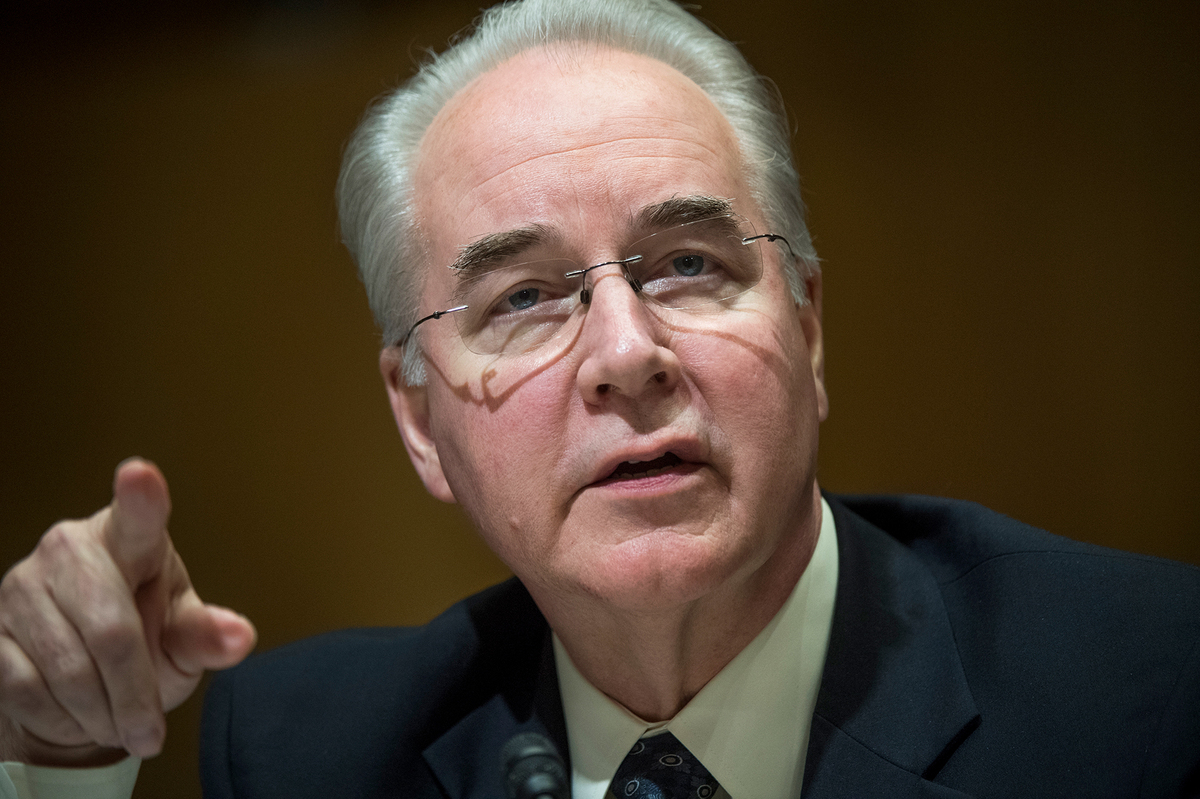
With Tom Price now at the helm of the Department of Health and Human Services, the administration has made its first regulatory proposal to change how people would sign up for Obamacare coverage.

Tom Williams/CQ-Roll Call Inc.

hide caption

toggle caption

Tom Williams/CQ-Roll Call Inc.

President Trump has promised to repeal and replace the Affordable Care Act without taking insurance away from the millions of people who gained coverage under the law.

On Wednesday his Department of Health and Human Services made its first substantive proposals to change the marketplaces for individual coverage, commonly known as Obamacare.

The proposed rules aim to keep insurers in the market during a transition to a new system. One way is to tighten up when people can sign up for coverage.

Insurers like Aetna. The company’s CEO, Mark Bertolini, said Wednesday that Obamacare is failing.

“It’s in a death spiral,” he said at a conference sponsored by The Wall Street Journal. “And in the first look at this quarter it’s not going to get any better. It’s getting worse.”

Bertolini hinted that Aetna may follow insurance giant Humana, which said Tuesday it was dropping out of the ACA exchanges altogether because not enough healthy people are buying insurance.

HHS’s proposed changes are designed to make the individual health care market less vulnerable to gaming by consumers. Insurance companies have complained that many people delay signing up until they’re sick and then drop coverage after getting care.

Article continues after sponsorship

The administration’s proposals include cutting the annual open enrollment period to about six weeks instead of three months — to reduce the number of people who buy a policy because they find out about a health issue during that time.

HHS will also require people who want to sign up for coverage during so-called special enrollment periods to first prove they qualify because of a life change like losing a job or getting divorced.

“The overall effect of many of the policies here would actually, over time, I think, actually shrink enrollment, not grow enrollment,” says Sabrina Corlette, a research professor at Georgetown University’s Center on Health Insurance Reforms.

The rules would make it harder to enroll, and adding more paperwork will just turn off more people, she says, citing research into Medicaid and other public benefit programs.

And the people who leave are likely to be the healthier ones, making the situation even worse for insurance companies. “Your healthy people are the ones who are going to be more likely to say, ‘Oh, this is too much of a pain in the neck. I’m not going to go through with this,’ ” Corlette says

Still, Caroline Pearson, senior vice president at consulting firm Avalere, says some change is needed. “The special enrollment periods are a real problem in the market,” she says.

Her research shows that people who buy insurance during special enrollment periods incur a disproportionate share of money spent on health care.

The HHS proposal also allows insurers to increase deductibles and copayments, by loosening the standards of coverage. Right now plans are rated in terms of what proportion of the costs a customer pays. The new rules would widen the band by 2 percentage points, so that a plan that’s marketed as covering 60 percent of health costs could actually pay for as little as 56 percent of those.

The proposal also says insurance companies can demand consumers pay off any missed premiums before they get a new policy.

Today, a consumer can enroll in a plan, pay for just one month and then continue coverage for 90 days before getting cut off. The following year, the insurance company has to write a new policy even if the person hasn’t paid for those three months.

“In total, I think that the rule is helpful for insurers but probably not enough to change plans’ minds in how to approach the exchange markets,” Pearson says. “Plans that were going to leave the market will probably still leave the market and plans that were inclined to stay in will probably stay in, albeit a little happier.”

Humana is, therefore, unlikely to rethink its decision because of these changes.

As HHS tried to stabilize Obamacare while Congress debates its ultimate fate, the IRS is relaxing its plans to enforce the ACA’s tax penalty.

The agency had planned to reject tax returns of people who didn’t say whether they had health insurance during the tax year. But the IRS changed that policy in response to Trump’s executive order directing all federal agencies to ease the burden of the health care law.

Taxpayers may still owe the penalty if they don’t have coverage, however.

“Legislative provisions of the ACA law are still in force until changed by Congress, and taxpayers remain required to follow the law and pay what they may owe,” the IRS said in an emailed statement.

Pearson at Avalere says the combined actions by HHS and the IRS could lead healthy people to drop their insurance coverage.

“In total, I actually think the exchange market is going to shrink in size, dramatically, as a result of both the rule and the IRS move.”

Let’s block ads! (Why?)

Another Big Health Insurer Loosens Rules For Covering Addiction Treatment

A doctor at a Boston Medical Center clinic counsels a patient who has become addicted to opioid painkillers, and wants help kicking the habit. Addiction specialists say drugs like suboxone, which mitigates withdrawal symptoms, can greatly improve his odds of success.

Suzanne Kreiter/Boston Globe via Getty Images

hide caption

toggle caption

Suzanne Kreiter/Boston Globe via Getty Images

Aetna, one of the nation’s largest insurance companies, says that starting in March it will remove what’s been a key barrier for patients seeking medication to treat their opioid addiction. The change will apply to all its private insurance plans, an Aetna spokeswoman confirmed. Aetna is the third major health insurer to announce such a switch in recent months.

Specifically, the company will stop requiring doctors to seek approval from the insurance company before they prescribe particular medications ? such as Suboxone ? that are used to ease withdrawal symptoms. The common insurance practice, called “prior authorization,” has frustrated doctors because it sometimes results in delays of hours to days before a patient can get the needed treatment.

That delay may sound like just a technicality ? a brief pause before treatment. But addiction specialists say this red tape has put people’s ability to get well at risk. It gives them a window of time when they may change their minds or relapse if they start experiencing symptoms of withdrawal.

Article continues after sponsorship

“If someone shows up in your office and says, ‘I’m ready,’ and you can make it happen right then and there ? that’s great,” said Dr. Josiah Rich, a professor of medicine and epidemiology at Brown University, who frequently treats patients who are addicted to opioids.

“If you say, ‘Come back tomorrow, or Thursday, or next week,’ there’s a good chance they’re not coming back,” he said. “Those windows of opportunity present themselves. But they open and close.”

Aetna’s policy change comes as addiction to heroin and opioid painkillers continues to sweep the country. More than 33,000 people died from overdosing on these drugs in 2015, the most recent year for which statistics are available. Easing the prescribing restriction puts Aetna in the company of Anthem and Cigna, which also recently dropped the prior authorization requirement for their privately insured patients throughout the country. Anthem made the switch in January and Cigna last fall.

Both those companies took the step after facing an investigation by New York’s attorney general, whose office was probing whether the firms’ coverage practices unfairly barred patients from needed treatment. The insurers adjusted their prescribing requirements as part of larger settlements.

Treatment specialists hope the changes in policy will start making addiction meds more easily available. In New York, for instance, the attorney general’s office plans to follow up with other insurance carriers.

“Just think of any big health insurance company that hasn’t recently announced they’re doing away with this, and it’s a pretty safe bet they’ve got prior authorization in place,” said Dr. Andrew Kolodny, a Brandeis University senior scientist and the executive director of the advocacy group Physicians for Responsible Opioid Prescribing.

The prior authorization requirements have caused intense problems for treatment centers, said Traci Green, an associate professor at Boston University’s School of Medicine and deputy director of the hospital’s injury prevention center. New England has been particularly hard hit by the opioid crisis, and Boston Medical Center has an urgent care center focused on this patient population.

Though less than a year old, the center has already treated thousands who have problems with the drugs, Green said. To help patients get needed care ? before it’s too late ? the center had to hire a staffer devoted specifically to filling out all the related insurance paperwork.

“It was like, ‘This is insanity,’ ” Green said, adding that “navigating the insurance was a huge problem” for almost every patient.

But defenders of the requirement maintain that such controls do have value, as a safeguard when prescribing any potentially dangerous drug. “[It’s] not a tool to limit access. It’s a tool to ensure patients get the right care,” said Susan Cantrell, CEO of the Academy of Managed Care Pharmacy, an industry trade group.

Some other large insurance carriers ? such as United Healthcare and Humana ? list on their drug formularies a prior authorization requirement for at least some if not all versions of anti-addiction medicine. A spokesperson from Humana said the practice is used “to ensure appropriate use.”

It’s generally agreed, though, that the practice is also used to put limits on the prescribing of expensive medications. The cost of these drugs that treat opioid addiction varies, based on brand and precise formulation, but can go as high as almost $500 for a 60-pack prescription. That may last a patient one month.

Regardless of the insurer’s intent, critics say, those extra forms and hoops do make it more difficult for patients in need to get their medicine ? and ultimately do more harm than good.

“If you would like a physician to not do a particular treatment, put a prior authorization in front of it,” Rich said. “That’s what they’re used for.”

Meanwhile, advocates for addiction treatment and health professionals are hoping to build on what they see as a new trend among insurers.

Earlier this month, the American Medical Association sent a letter to the National Association of Attorneys General, calling for increased attention to insurance plans that require prior authorization for Suboxone or other similar drugs.

Minnesota’s attorney general has written to health plans in the state, asking they end prior authorization for addiction treatment. And New York has heard from other states interested in tackling the issue, a representative of the attorney general’s office said.

Meanwhile, another project, called Parity Track, is soliciting complaints from consumers. “Parity laws,” require insurers to cover addiction treatments at the same level they do other kinds of health care, Parity Track argues.

The prior authorization requirement “doesn’t meet the sniff test for parity,” said Dr. Corey Waller, an emergency physician who chairs the American Society of Addiction Medicine’s legislative advocacy committee. “It’s a first-line, Food and Drug Administration-approved therapy for a disease with a known mortality. [For] every other disease with a known mortality, the first-line drugs are available right away.”

Kaiser Health News is a national health policy news service that is part of the nonpartisan Henry J. Kaiser Family Foundation.

Let’s block ads! (Why?)

The Perplexing Psychology Of Saving For Health Care

A Health Savings Account works much like a personal savings account — with a difference. Any money in it that we use to pay for certain medical expenses isn’t taxed.

Oivind Hovland/Ikon Images/Getty Images

hide caption

toggle caption

Oivind Hovland/Ikon Images/Getty Images

Spending your own money on health care might mean that you’ll be more frugal with it. That’s the theory behind health savings accounts, a decades-old GOP concept that’s sparking renewed interest on Capitol Hill as Republican lawmakers look for ways to replace the Affordable Care Act.

HSAs are like personal savings accounts — with a difference. As with a retirement account, money put into an HSA can be invested, and any growth in the fund accumulates tax-free. Withdrawals can be made at any time, and they are tax-free, too — but the money can only be used to pay for certain medical expenses, such as health insurance deductibles, or for copays for hospital care or a visit to the doctor.

Currently, HSAs are only available to people who have high-deductible health plans, meaning they usually pay a few thousand dollars for medical care each year before their insurance kicks in to pay its share. While HSA participation is growing, only about 20 million people out of the 176 million who have health insurance participate in these savings accounts, according to a 2015 report by the Association of Health Insurance Plans.

Article continues after sponsorship

Why don’t more people who are eligible for HSAs have them? For one thing, not everyone has money to contribute upfront. But psychologists and behavioral economists point out that even many people who have the extra cash on hand confront big psychological barriers to saving.

“How we think and feel is directly tied to our ability to make ‘good’ financial decisions,” says Alycia DeGraff, a board member and secretary of the Financial Therapy Association. DeGraff says when faced with financial decisions about the future, many people simply get stressed-out.

“These stressors can become so overwhelming that … we can become debilitated and ignore the situation all together,” she says. “Or we can practice any kind of defense mechanism — entitlement, suppression, overcompensation, isolation, etc. — to try and deal with [it].”

This may explain, at least in part, why middle-class Americans are pretty bad at saving money in general. Only about half of us have money in any sort of retirement account. And those of us who are parents have only saved, on average, enough to pay for about one year at an in-state college for our kids.

Saving money is hard. It means setting aside what we want now for something we think we’ll want or need later. And we live in a culture that offers a lot of pretty, shiny, things to buy RIGHT NOW.

Plus, we all pretend we won’t get old or sick.

“People are predictably irrational,” says Dr. Mitesh Patel, especially when it comes to money. He’s a behavioral economist, physician and assistant professor at the University of Pennsylvania’s Perelman School of Medicine.

But many of us really hate to lose money, Patel says, which is what makes the concept of HSAs is so appealing.

For example he and his colleagues published a study last year in the Annals of Internal Medicine on what motivates people to lose weight, and found that the way a financial incentive was framed made all the difference.

The researchers observed three groups of people for 13 weeks. They told one group to walk 7,000 steps a day. About 30 percent of the group did so.Meanwhile, people assigned to the second group were told they’d be paid $1.40 every day they walked 7,000 steps. About 35 percent of the second group did so.

Here’s the kicker: Each person in the third group was paid $42 upfront and was docked $1.40 each time they failed to meet their goal. Forty-five percent of that group met the assigned goal, Patel says. People hate to lose money.

Another way to encourage more saving might be to make HSAs operate more like the 401(k)s that required people who didn’t want to participate to actively opt out of the plan — rather than requiring people who want to contribute to opt in. “This creates a path of least resistance,” Patel says.

Of course, setting up and overseeing such a plan would likely cost the governmentsome money, he notes.

People with HSAs do use less health care than those without such plans, a recent study from the Employee Benefits Research Institute suggests. But it’s unclear whether they actually improve their health. Prescription drug costs went down for people enrolled in HSAs in the EBRI study, but emergency room visits went up — particularly for lower-income families.

Then there’s the issue of figuring out how much you, as an individual or a family, would need to save for health care — it’s not easy to find out the average price for a medical test or procedure in your town, let alone how much that price varies from doctor to doctor or hospital to hospital.

“If you want to save for a house, you can pretty much figure out the math,” Patel says. “But if you go to a doctor, they don’t give you a menu for prices.”

To really increase their health savings — or any savings — we’d all need to change our mindset, says Degraff, the financial therapist.

“People would have to first take a dose of reality and get real about their future selves,” she says. Naturally, we thing our future selves will be “better, healthier, more financially secure,” she adds. But, for many of us, health and income eventually decline with age. We need to save more now for later.

HSAs can be useful, Degraff notes, but only for those who have enough cash to pay their day-to-day expenses — plus a little left over.

“A lot of people don’t even have a regular emergency fund savings,” DeGraff says, “especially those that are already struggling to pay for health insurance.”

Let’s block ads! (Why?)