When Genetic Tests Disagree About Best Option For Cancer Treatment

Results from different genetic tests on samples from the same cancer patient can disagree about the best course of treatment. Clare McLean/University of Washington School of Medicine hide caption

toggle caption

Clare McLean/University of Washington School of Medicine

Two widely used tests to analyze the genetics of tumors often don’t come to the same conclusions, according to head-to-head analyses.

Authors of two recent studies comparing these tests say doctors need to be careful not to assume that these tests are providing a complete picture of a tumor’s genetic variants, when using them to select treatments for cancer patients.

Dr. C. Anthony “Tony” Blau and colleagues at the University of Washington School of Medicine in Seattle compared results from two commonly used tests that are used to identify mutations in tumors. The FoundationOne test is used on tissue samples extracted from tumors. Guardant360 gathers traces of tumor DNA from blood samples.

Blau started out with a small sample of just nine patients, as he reported Thursday in JAMA Oncology. One had no mutations at all recognized by either test. Of the remaining eight, the two tests provided remarkably different results. Only 22 percent of the time (in 10 out of 45 instances) did both tests identify the same mutation.

Article continues after sponsorship

That’s not to say the tests themselves are technically flawed, Blau told Shots. But each test has its limitations, and so the results vary.

Tests of tumor tissue don’t sample the entire tumor. And tumor cells aren’t all the same, so a sample doesn’t give a complete picture of tumor genetics.

Blood tests sample free-floating cells that break loose from tumors. That’s a useful technology if a tumor is hard to sample directly, but again it provides an incomplete snapshot of the cancer’s genetic mutations. “They’re looking for a needle in a haystack,” Blau says.

Blood samples drawn at different times can produce different results, because different cells may be in the blood. And tumors evolve over time, so some of the difference could reflect that as well.

“The mutations you are looking for that might guide you to a particular drug can present in most or only a tiny fraction of cells,” Blau said. So either test can fail to detect a clinically important mutation.

These blood tests often include a list of cancer drugs for doctors to consider, based on the mutations detected. The recommendations also varied, because the tests often found different mutations. Only 25 percent of the time (in 9 of 36 cases) did these two tests recommend the same drug among the eight patients in the study.

These observations build on similar results of a somewhat larger study, published in August in the journal Oncotarget. In a sample of 28 patients, researchers found consistent results only about 17 percent of the time.

“It all boils down to a question of tumor biology,” says lead author of that study, Young Kwang Chae, an oncologist and a co-director of the Developmental Therapeutics Program of the Division of Hematology and Oncology at Northwestern University’s Feinberg School of Medicine.

“You can never say one test is the gold standard, or that one is better than the other,” he said. Because they are looking at different samples, it’s not surprising their results vary.

Many of the results from these tests are hard to interpret in the first place. In many instances, the presence of a particular mutation doesn’t tell a doctor exactly what form of therapy would work best.

But Chae says when he finds an “actionable genetic alteration” from either test, he uses that that to guide a patient’s therapy.

“Both tests are right,” argues Dr. Rick Lanman, chief medical officer at Guardant Health, which produces the blood-based Guardant360 test. If either test detects a particular mutation, there is high confidence that the particular mutation exists. And doctors can confidently base therapy on that positive detection, he says.

Doctors could get more complete results if they ran both tests on everybody, “but that’s not cost effective,” Lanman says.

His counterpart at Foundation Medicine, which makes the FoundationOne test, isn’t convinced that both tests are equally reliable. Dr. Vincent Miller says the blood tests can miss a lot more than tests run on tumor tissue.

He points to a recent study of pancreatic cancer. Gene variants very frequently found in pancreatic cancer were detected in 87 percent of tumor samples. But blood tests only found the mutations about 25 percent of the time.

Miller says his company has a blood test as well as the test for solid tumors, and they’re in the process of running a direct comparison, using the same genetic information. That could help clarify how much trust to put in blood tests, he says. “The technology may have gotten a little ahead of the clinical practice and the science,” he says.

Doctors may be lulled into thinking that these tests are providing definitive results, but they’re not. And that’s the overarching message for Blau at the University of Washington.

“You really have to be thoughtful about how you apply these to clinical decision making,” he says. “If you don’t understand these limitations, if you just treat the reports at face value, that could be leading to instances where oncologists use drugs that are unlikely to be effective.”

Let’s block ads! (Why?)

Mylan To Sell Generic EpiPen At Half The Price Of Original

Mylan CEO Heather Bresch defended pricing for the company’s EpiPen on Capitol Hill in September. Pablo Martinez Monsivais/AP hide caption

toggle caption

Pablo Martinez Monsivais/AP

The pharmaceutical company Mylan says a generic version of its EpiPen anti-allergy device will be in pharmacies starting next week.

The company is introducing the generic at a price of $300 for a two-pack, half the cost of its brand-name cousin.

“This unprecedented action, along with the enhancements we made to our patient access programs, will help patients and provide substantial savings to payors,” the company said in a release Friday.

Mylan unveiled its plan to offer a generic EpiPen in August, when the company was embroiled in controversy over the rising price of its device, which has been available for decades.

The epinephrine in the pens can stop an allergic reaction in its tracks. But in less than 10 years, the price for a two-pack of auto-injectors has risen from about $100 to more than $600.

Mylan decided to offer the generic even though it doesn’t have a strong competitor to the EpiPen because it was facing enormous criticism from consumers and members of Congress to lower the drug’s price.

The company first tried to offer discount coupons for the brand-name drug, but that didn’t quiet the criticism so the company moved ahead with its own, lower-priced version.

In its announcement, Mylan continued to blame the EpiPen price increases on insurance companies and the complex drug pricing system in the U.S. CEO Heather Bresch has repeatedly argued that it is harder for consumers to afford expensive medications because of high-deductible health plans and high copayments.

“Families will continue to face sticker shock for medications and may be forced to make difficult choices until the pharmaceutical pricing system is reformed to address the increasing shift of costs directly to consumers,” Bresch said in the company’s statement.

Article continues after sponsorship

She made similar arguments when she testified to Congress in September.

The generic EpiPen hits the market just weeks after Kaleo Pharmaceuticals, a Mylan competitor, said it would bring the Auvi-Q epinephrine auto-injector back onto the market in 2017.

Like the EpiPen, Auvi-Q injects a dose of epinephrine into the thigh of a person experiencing a severe allergic reaction.

The device was pulled from the market by the pharmaceutical giant Sanofi last year after the company said it had received a handful of reports that the device didn’t reliably deliver the right dose of epinephrine.

Kaleo, which invented the Auvi-Q device, bought the rights back from Sanofi and will market the device as an EpiPen competitor.

Whether or not Mylan’s generic calms consumers and lawmakers, the company’s launch of it may be a shrewd business decision.

By bringing a generic to the market now, Mylan could preemptively steal some market share from Teva Pharmaceuticals, which is developing its own generic EpiPen. That device is expected to be approved in 2017.

Let’s block ads! (Why?)

Trump Promises To Repeal Obamacare, Meets With Architect Of The Law

Steve Inskeep talks to Zeke Emanuel, one of the architects of Obamacare, about the future of the Affordable Care Act under Donald Trump’s administration. Emanuel met this week with Trump.

STEVE INSKEEP, HOST:

Here’s the dilemma facing Republicans, who will soon control both Congress and the White House. They have unanimously said for years they want to repeal Obamacare. Yet, because the law provides benefits to many millions of people, Republicans also acknowledge they must replace it with something that does many of the same things. They haven’t agreed on what that should be.

It’s in this atmosphere that Zeke Emanuel visited President-elect Trump this week. Emanuel was one of the architects of the Affordable Care Act, and he’s in our studios. Good morning.

EZEKIEL EMANUEL: Nice to be here.

INSKEEP: So how’d the meeting go with President-elect Trump?

EMANUEL: It went very well.

INSKEEP: What’s he like to talk to about health care?

EMANUEL: I found him engaged, curious, and he asked a lot of thoughtful questions and had a lot of opinions, as you might expect.

INSKEEP: Did you have a sense that he knows what he wants to do and what he wishes Congress to do?

EMANUEL: Well, I’m not going to reveal what we talked about. That’s for the president-elect’s team to decide what they want to reveal. But I’ll say he was definitely engaged and definitely asked a lot of thoughtful questions.

INSKEEP: Well, let’s talk about this situation. Here is President Obama’s signature achievement – or one of them, anyway – which Republicans have vowed to repeal for years. But the president-elect has let it be known in public statements and elsewhere that he wants to keep some of the popular provisions, for example, making it so that you can’t lose your health coverage because of a pre-existing condition or making it possible to keep your health insurance if you’re a young adult and you’re still on your parents’ insurance. Republicans in Congress have put out their plans.

What is your sense of what’s going to happen here? Do you believe this law’s going to – going to survive in some form, just under a different name?

EMANUEL: Well, I think we’re going to have to provide coverage for all Americans. I believe, on the campaign trail, President-elect Trump was committed to providing health coverage to all Americans. I think he has – he’s said that publicly. And I think threading that needle is why health care is complicated.

It’s just as complicated for Democrats as Republicans, getting a way that’s fiscally responsible to cover all Americans and a structure that is as simple as possible, but it’s never going to be very simple. I mean, I think most people have to remember – it’s a $3 trillion industry in America, 18 percent of GDP. That makes any change a very complicated arrangement.

INSKEEP: Is that part of the – not just the practical problem, but the political problem here? Whatever you did in 2009, people barely understood it. People barely understand it now. And whatever changes are made, people are barely going to understand them.

EMANUEL: That is only partially the problem. Remember, as you pointed out, there are many, many popular provisions in the bill. People like the fact that they don’t have to pay deductibles or co-pays for preventative services – that was part of the legislation – that there are essential benefits which everyone can get, including mental health benefits and other benefits for drugs. So there are lots of popular provisions of the bill. The only unpopular provision, by polling, is really the individual mandate. But lots and lots of individual provisions get, like, 75 or 80 percent of the public supporting it. And I think that’s an important point.

INSKEEP: OK, let’s cut to the chase here. That is the thing that Republicans hate most, the mandate, forcing people to buy insurance or else pay a tax penalty. It’s been said, though, that it’s connected to this other thing, making sure you don’t lose your insurance for pre-existing conditions. It’s been said you can’t do one without the other.

However, Republicans say, yeah, we’ve got ways to do that, there’s some way to do that. Do you believe that this law can survive while getting rid of the mandate that many people hate?

EMANUEL: There are only four ways – you have to get everyone in the system if you’re actually going to get the pre-existing condition exclusion in there.

INSKEEP: Everybody’s got to be involved, you’re saying.

EMANUEL: Everyone’s got to be involved. There are only four ways of doing that – an individual mandate with some kind of penalty, continuous coverage with serious penalties, some way of you have to pay more if you delay getting the bill, or we actually pre-re-enroll you – automatic enrollment and you can opt out. The problem with the continuous coverage provision and the provision for a penalty if you delay is that they don’t work very well. So a mandate and automatic enrollment are ways that really work.

INSKEEP: Are you arguing, in just about five seconds, the bottom line here is that people are going to have to pay something? They’re going to have to be committed to something, whether they like it or not?

EMANUEL: It’s either through taxes or premiums or some way. People have to be involved in the system and engage if we want to actually cover everyone and make sure people who have cancer or other diseases get coverage.

INSKEEP: Zeke Emanuel, thanks for coming by.

EMANUEL: My pleasure. It was a pleasure to be with you.

INSKEEP: He’s at the University of Pennsylvania

Copyright © 2016 NPR. All rights reserved. Visit our website terms of use and permissions pages at www.npr.org for further information.

NPR transcripts are created on a rush deadline by Verb8tm, Inc., an NPR contractor, and produced using a proprietary transcription process developed with NPR. This text may not be in its final form and may be updated or revised in the future. Accuracy and availability may vary. The authoritative record of NPR’s programming is the audio record.

Let’s block ads! (Why?)

States Accuse Generic Drugmakers Of Price Fixing

In an emailed statement, Mylan told NPR, “To date, we know of no evidence that Mylan participated in price fixing.” Jeff Swensen/Getty Images hide caption

toggle caption

Jeff Swensen/Getty Images

Twenty states are accusing a group of generic drug makers of conspiring to keep the prices on an antibiotic and a diabetes medication artificially high. And the state attorneys general say the lawsuit filed in federal court in Connecticut Thursday may be just the beginning of a much larger legal action.

The lawsuit alleges that the companies, led by New Jersey-based drug maker Heritage Pharmaceuticals, identified competitors and tried to reach agreements on how they could avoid competing for customers on price.

“While the principal architect of the conspiracies addressed in this lawsuit was Heritage Pharmaceuticals, we have evidence of widespread participation in illegal conspiracies across the generic drug industry,” Connecticut Attorney General George Jepsen said in a written release. “We intend to pursue this and other enforcement actions aggressively.”

The other companies accused of price-fixing were Aurobindo Pharma USA, Inc., Citron Pharma, LLC, Mayne Pharma (USA), Inc., Mylan Pharmaceuticals, Inc. and Teva Pharmaceuticals USA, Inc.

The complaint describes Heritage and other drug-company executives meeting at industry conferences and company-sponsored dinners where they would share information about the pricing. It also alleges that, to avoid having to lower prices, the companies would divvy up customers — such as pharmaceutical wholesalers, for example — rather than compete for the business.

Article continues after sponsorship

The two drugs — a delayed release version of the antibiotic doxycycline hyclate and the diabetes drug glyburide — saw enormous price increases during the time of the alleged conspiracy, the legal complaint says.

A separate congressional investigation into generic drug prices shows that the price of doxycycline rose more than 8,000 percent from October 2013 to April 2014.

The Centers for Disease Control and Prevention, as well as several industry trackers also noted shortages of various types of doxycycline during 2013.

The states’ lawsuit comes a day after the U.S. Justice Department filed criminal charges against Jeffrey Glazer, Heritage’s former CEO and Jason Malek, the company’s former president. It accuses the two men of conspiring with companies to manipulate drug prices.

Heritage fired the two men in August after an internal investigation, the company said in an email to NPR Thursday. The company also sued the men last month, accusing them of embezzlement.

A Heritage spokeswoman says the company is cooperating with both the federal and state investigations.

Mylan reported, in an emailed statement, “To date, we know of no evidence that Mylan participated in price fixing.” A Teva spokeswoman told NPR, “We have not found evidence that would give rise to any civil or criminal liability.”

In a filing Nov. 4 at the Securities and Exchange Commission, Mayne said it had received subpoenas from the Justice Department regarding doxycycline and potassium chloride powders, and said the company is cooperating with the investigation and “continues to believe these investigations will not have a material impact on its future earnings.” Mayne did not immediately comment on the states’ lawsuit.

Aurobindo and Citron did not immediately respond to requests from NPR for comment.

Let’s block ads! (Why?)

U.K. Fertility Clinics Can Now Apply For Licenses To Create 3-Parent Babies

With Thursday's announcement, the Human Fertilisation and Embryology Authority is now accepting applications from British clinics that wish to perform techniques called mitochondrial donation. The procedure uses some DNA from a third person.

Sally Anscombe/Getty Images

The U.K.’s fertility regulator has put its seal of approval on the “cautious use” of techniques to create a baby from the DNA of three people. The Human Fertilisation and Embryology Authority, or HFEA, announced Thursday that it will now begin to accept applications from fertility clinics that wish to become licensed to perform the procedure.

The decision means the U.K. will sanction and regulate the techniques, known broadly as mitochondrial donation, “in certain, specific cases.”

“Today’s historic decision means that parents at very high risk of having a child with a life-threatening mitochondrial disease may soon have the chance of a healthy, genetically related child,” HFEA Chairwoman Sally Cheshire said in a statement released Thursday. “This is life-changing for those families.”

We have permitted the cautious use of mitochondrial donation in treatment, following advice from scientific experts https://t.co/2xKOcriIHO

— HFEA (@HFEA) December 15, 2016

While the decision is historic, it is by no means sudden. In February 2015, the British Parliament approved the practice of mitochondrial donation, and a regulatory framework has existed since October of last year — though the HFEA advised clinics to wait until it had completed a review and offered its own recommendations.

An independent panel of scientists completed that years-long review last month, recommending that the regulatory agency approve the use of mitochondrial donation “in certain cases where alternative treatments would be of little or no benefit to mothers at risk of passing mitochondrial disease onto their children.”

The HFEA adopted those recommendations on Thursday.

As NPR’s Rob Stein reported earlier this year, the goal of this technique is to help women who carry diseases known as “mitochondrial disorders, which are only passed down by women through defects in the genetic material in their eggs”:

“Specifically, the defects are in a type of genetic material known as mitochondrial DNA.

“Unlike the DNA that most people are familiar with — the 23 pairs of human chromosomes that program most of our body processes and traits — mitochondrial DNA consists of just 37 genes inside mitochondria, which are structures inside cells that provide their energy.

“Mitochondrial disorders range from mild to severe. In many cases there is no treatment, and the affected child dies early in life after suffering progressive, debilitating symptoms.

Article continues after sponsorship

Scientists want to create babies who will be born free of mitochondrial defects by allowing women who carry these diseases to use healthy mitochondrial DNA, from eggs donated by other women.

As Rob notes, the procedure is by no means universally embraced. Many critics are alarmed by the fact that changes to human DNA would be passed down from generation to generation, which could lead to unforeseen — and lasting — effects. Others fear an ethically slippery slope, which — critics contend — may eventually lead to DNA manipulation for the sake of “designer babies,” or offspring wrought by parents picking the genes they wish for their child.

Still, others such as Doug Turnbull are eager to pursue the treatment. The neurology professor at Newcastle University argues that it offers many desperate families a long-awaited solution.

“We are talking about conditions for which there is currently no cure,” Turnbull told Rob in 2014. “I see the anguish of the families in every clinic that I do.”

Scientists at Newcastle have been closely watching the announcement from the HFEA, ready to submit a license application as soon as one was available, The Guardian reports.

No matter how quickly they move, however, the team at Newcastle will not be the first to produce a baby with the DNA with three people. Earlier this year, a doctor from a Manhattan fertility clinic said he purposefully helped a Jordanian couple have a baby with DNA from three people. He performed the mitochondrial replacement procedure in Mexico because it is currently prohibited in the U.S.

What’s more, at least 17 other children were conceived through cytoplasmic transfer — another infertility treatment that used a bit of DNA from a third person, which was pioneered in New Jersey in the late 1990s and subsequently banned in the U.S.

Let’s block ads! (Why?)

Obama Administration Moves To Protect Planned Parenthood's Federal Funding

Planned Parenthood’s president, Cecile Richards, addresses the Democratic National Convention in July. Republicans in Congress have repeatedly threatened to cut off federal funding for Planned Parenthood because the family planning group performs abortions at some clinics. J. Scott Applewhite/AP hide caption

toggle caption

J. Scott Applewhite/AP

The Obama administration is trying to protect Planned Parenthood’s federal funding before the president turns over the reins of government to Republicans who have historically been hostile to the family planning group.

The Department of Health and Human Services finalized a regulation Wednesday that says states that award federally funded grants for women’s health programs can’t discriminate against Planned Parenthood. The regulation doesn’t name Planned Parenthood, but it was clear the rule was written with the organization in mind.

Republicans in Congress have repeatedly threatened to cut off federal funding for Planned Parenthood because the family planning group performs abortions at some clinics.

“President Obama has cemented his legacy as a champion for women’s health,” said Planned Parenthood President Cecile Richards in a written release. “This rule protects birth control, cancer screenings, [sexually transmitted infection] testing and treatment and other health care for millions of people.”

Planned Parenthood and other clinics that provide family planning services to women get federal funding through the Public Health Service Act.

The group says 1.5 million of its patients benefit from the money provided by the federal government.

Article continues after sponsorship

Planned Parenthood gets more than $500 million a year from the federal government. About 75 percent of that comes from Medicaid, for medical care provided to patients with low incomes.

The new HHS rule reinforces federal law that says the agency cannot discriminate against qualified organizations in granting federal funds.

Still, the rule could be overturned in 2017 when President-elect Donald Trump takes office. Federal lawmakers are allowed to roll back regulations under the Congressional Review Act. Or they could go through a formal rule-making process to reverse Wednesday’s action.

Let’s block ads! (Why?)

How Fast Could GOP Congress Get Obamacare Repeal To Trump's Desk?

House Majority Leader Rep. Kevin McCarthy, R-Calif., is part of the Republican leadership working to repeal the Affordable Care Act as quickly as possible in January. Alex Wong/Getty Images hide caption

toggle caption

Alex Wong/Getty Images

Republicans in Congress are so eager to repeal the Affordable Care Act that some have vowed to get a bill to President-elect Donald Trump’s desk on the day he takes the oath of office.

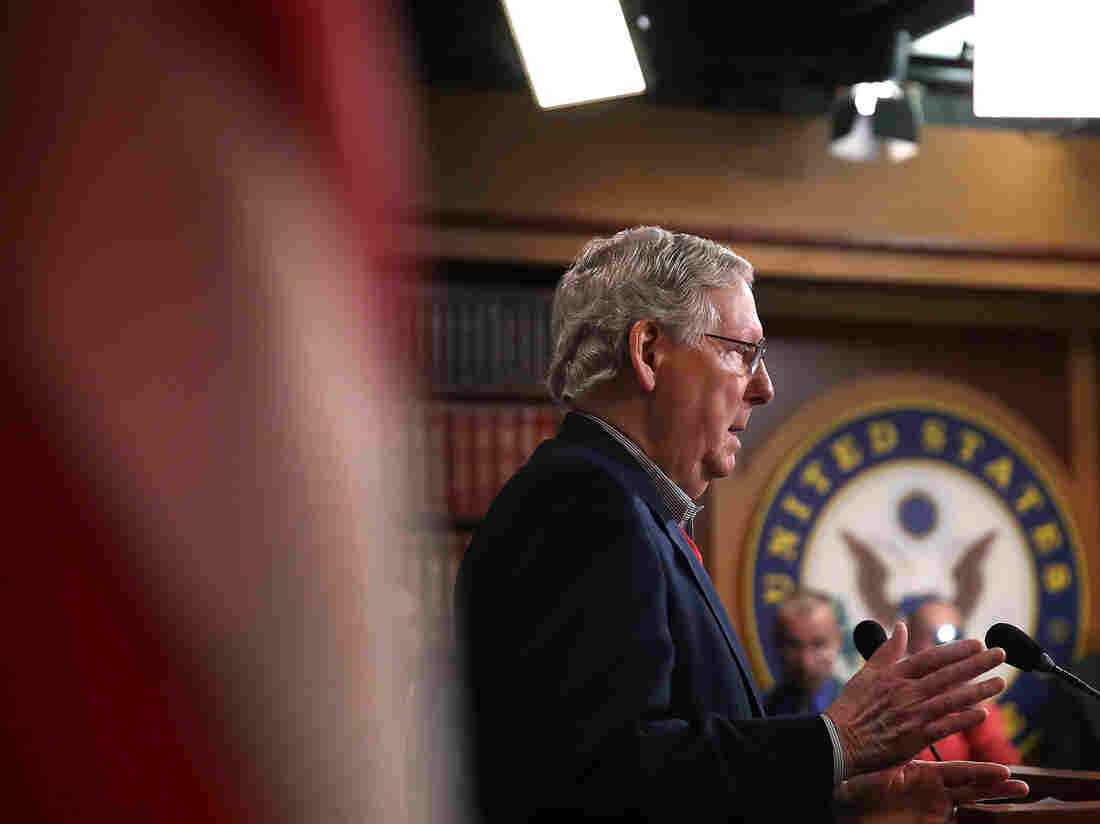
“We will move right after the first of the year on an Obamacare repeal resolution,” Senate Majority Leader Mitch McConnell, R-Ky., told reporters at a news conference Monday.

But could lawmakers introduce and pass a repeal measure in the 17 days between Jan. 3, when they convene, and Inauguration Day, Jan. 20?

Not likely, say budget specialists.

“No way. I just don’t think it’s possible,” says G. William Hoagland, senior vice president at the Bipartisan Policy Center, a Washington-based think tank and 20-year Republican staff veteran of the Senate Budget Committee.

Others think it could be done, but probably won’t be. “Mechanically they can get it done,” says Ed Lorenzen, senior adviser to the nonpartisan Committee for a Responsible Federal Budget. “The bigger question is, can they decide what should be in the package?”

Republicans and the incoming Trump administration have been careful not to talk about exactly what they plan to do to the Affordable Care Act beyond repealing virtually all of its coverage expansions and the taxes that help fund them. But they seem to be coalescing around a strategy of repeal and delay, in which they would pass a bill to kill many of the major provisions of law by a certain date, then set to work on crafting and passing a replacement before that date arrives.

Article continues after sponsorship

It would be quicker for Congress to simply repeal the health law outright. But Republicans can’t do that, because they would need 60 votes in the Senate to fend off Democrats’ delaying tactics, and they will have only 52 GOP members. So instead they will be limited to using a special budget strategy that will let them pass their bill with 51 votes.

That’s called budget reconciliation, and the strategy does not let lawmakers repeal the entire law — only the parts that directly impact federal spending. It’s been widely discussed as something the Republicans might attempt, but there has been less focus on how long the process takes.

No one in Congress can simply introduce a budget reconciliation bill. The word “reconciliation” refers to the process by which congressional committees that control permanent spending programs such as Medicare and Medicaid, as well as tax policy, take action to reconcile that spending with the terms of the annual budget resolution.

That means the first action must be to pass a budget resolution, which Congress failed to do last year. That is the resolution McConnell was referring to in his Monday remarks to reporters.

The budget resolution, which is essentially a planning document for spending and taxes for the coming fiscal year, does not go to the president for a signature. But like a regular bill, it does have to be passed by both the House and Senate in the same form. And while the budget resolution also may not be filibustered in the Senate, lawmakers have up to 50 hours to debate it and unlimited time to vote on proposed amendments, which in practice can take up to another full day.

Once that measure is agreed to by the full House and Senate, the action moves back to congressional committees. The budget resolution often includes reconciliation instructions to committees. Those instructions order proposed legislative changes to the programs the committees oversee, to meet the terms of the budget. That process triggers the reconciliation bill that goes to the president.

In the normal course of events, those changes take from several weeks to several months to accomplish. Legislative changes need to be written, voted on by the committee and reported back to the House or Senate budget committees, which then forward them to the House or Senate floor for votes. Again, Senate debate is limited to 20 hours, with unlimited additional voting on amendments. House and Senate negotiators then hammer out a compromise, pass it again in the full House and Senate and send it to the president.

The last budget reconciliation bill, considered a dry run by Republicans for the coming year, was launched by the budget resolution at the end of April 2015. The resulting reconciliation bill was sent to President Obama, who vetoed it, on Jan. 26, 2016.

Clearly, if Republicans were to simply recycle their 2015 bill, the process could be dramatically shortened. That bill called for repeal of funding for Medicaid expansion, as well as for jettisoning subsidies of health insurance premiums and other items that help individuals afford private coverage, along with the taxes to pay for those benefits, as of Dec. 31, 2017.

Predictions of getting the reconciliation bill to the president by Inauguration Day are ambitious, according to Stan Collender, executive vice president of Qorvis MSLGROUP, a Washington communications and consulting firm.

“It would be unprecedented to do it that quickly,” says Collender, who has worked for both the House and Senate budget committees. “But just because it hasn’t worked that expeditiously before doesn’t mean they can’t do it.”

While Jan. 20 might not be feasible, “I think they could do it by the end of January,” says Lorenzen. He notes that while some Republicans in the Senate have been expressing doubts about repealing the law without having a replacement in hand, and others in the House object to leaving current policies in place for as long as three years, “no one want to be the skunk that stops repeal.”

But others think that even with a model bill in hand, the process will be harder — and take longer — than many Republicans are saying.

With last year’s bill, “That repeal legislation, they knew they weren’t shooting with real bullets,” says Hoagland of the Bipartisan Policy Center. “They knew it was going to be vetoed.”

Already, health analysts and health provider groups are warning that repealing major pieces of the law without immediately replacing them could cause a collapse of the individual insurance market that currently covers around 20 million people.

The risk of that collapse could — and should — slow things down, says Chris Jennings, a health consultant who worked in both the Bill Clinton and Obama administrations.

“Few people have ever been wrong projecting that Congress takes a little bit longer” than some predictions, he says. “I think this health debate is of such consequence, that will likely be the case for this as well.”

Let’s block ads! (Why?)

Sign Up For Health Coverage If You Need It, Despite GOP Repeal Plans

If you need to buy health insurance, don’t procrastinate. Pablo Martinez Monsivais/AP hide caption

toggle caption

Pablo Martinez Monsivais/AP

Since Republicans have plans to repeal the federal health law, should consumers still sign up for next year’s coverage? And if the health law marketplaces disappear, might Medicare eligibility be expanded? Here are answers to some recent questions from readers.

It sounds like Republicans plan to repeal the health law in January once Donald Trump is sworn in. Since open enrollment goes until the end of January, should I just wait and see what happens before signing up?

No. Don’t wait. The future of the health law is murky, but some things are crystal clear. If you need marketplace coverage that starts Jan. 1, you have to pick a plan by Dec. 15, two days from now. So get cracking.

Republicans have pledged that if they repeal the law they’ll provide a transition period so that people won’t be stuck without coverage. But if you miss the enrollment period that ends on Jan. 31, you will be cutting yourself off from coverage for the year. After that date you can’t sign up for 2017 coverage on the exchange unless you qualify for a special enrollment period because you move to another state or lose your job-based coverage, for example.

Article continues after sponsorship

I’m 60 and I have coverage on the health insurance marketplace. If they do away with Obamacare, I’m not sure what I’ll do. I have diabetes and I had cancer when I was younger so I’m not an attractive insurance risk. Some people have proposed lowering the Medicare eligibility age so more people can qualify earlier. Is that really an option?

Beyond the political challenges there are also practical ones, said Dr. Ezekiel Emanuel, chair of the Department of Medical Ethics and Health Policy at the University of Pennsylvania and a former health policy adviser in the Obama administration. If policymakers simply reduced the eligibility age to 60, for example, “a lot of businesses would start sending their 60-year-old [employees] to Medicare and take the savings,” leading to a huge increase in costs for the program.

On the other hand, if individuals were able to buy into Medicare before age 65, even with subsidies it would probably be expensive to do so, Emanuel said. Those who would opt to buy in would likely be people with expensive health conditions like you who really need good coverage, a phenomenon called “adverse selection” that would make the program even more costly.

There is one possibility that could result in some sort of expanded Medicare in the longer term, Emanuel said. If the Republican Congress and Trump repeal Obamacare, millions of people may lose their health insurance. If that happens and current Republican proposals — state high-risk pools, for example, to provide coverage for people with expensive conditions — prove inadequate to the task, “there’s going to be a lot of pressure to do something,” he said.

I am 69 and have had Medicare Parts A and B since I turned 65. I also have a Medicare supplemental plan. I have recently been hired again and plan to take my employer’s insurance for 2017, and I will drop my supplemental plan and Medicare Part B because I won’t need them. When I start Medicare Part B again, will there be a penalty for stopping and then starting again?

In your case, you likely won’t be penalized, said David Lipschutz, senior policy attorney at the Center for Medicare Advocacy. As long as you’re actively employed and work for an employer with at least 20 employees, Medicare will consider your employer coverage your primary insurance and won’t penalize you for dropping and then re-enrolling in Part B, the medical insurance part of the program.

As you seem to be aware, the late-enrollment premium penalty for Medicare Part B can be hefty: 10 percent for every 12-month period when you could have signed up for Part B but didn’t.

Where people sometimes get tripped up is when they retire from a job and retain their employer coverage, Lipschutz said. Because they’re now retired and their coverage isn’t tied to their active employment, Medicare considers their employer insurance secondary to their Medicare coverage and will penalize people who don’t sign up for Part B when they become eligible.

Although you shouldn’t have any trouble re-enrolling in Part B when you leave your job, your Medicare supplemental plan, often called a Medigap plan, may be a different story. When you turn 65 and enroll in Part B, you are guaranteed the right to buy any Medigap plan in your state. But after that initial six-month enrollment window, insurers can evaluate your health and decide whether to offer you a plan.

That would apply to you when you return to the Medicare market. Some states provide additional rights to buy a Medigap plan; it’s worth checking to see if yours is one of them.

Kaiser Health News is an editorially independent news service that is part of the nonpartisan Henry J. Kaiser Family Foundation. Michelle Andrews is on Twitter: @mandrews110.

Let’s block ads! (Why?)

Obamacare's Demise Could Be Quicker Than Republicans Intend

Senate Republicans will move “right after the first of the year” on a resolution to replace the Affordable Care Act, Senate Majority Leader Mitch McConnell told reporters Monday. Mark Wilson/Getty Images hide caption

toggle caption

Mark Wilson/Getty Images

Republicans in Congress say they’ll vote to repeal much of the Affordable Care Act early next year — even though they don’t yet have a plan to replace it.

But they also insist that they don’t want to harm any of the millions of people who got their health insurance under the law.

The lawmakers’ strategy? Vote to repeal, and fulfill their top campaign pledge. But delay the changes, and keep running Obamacare for as long as two years while they figure out how to fill the hole they’ll create in the insurance market.

“We will move right after the first of the year on an Obamacare replacement resolution,” Senate Majority Leader Mitch McConnell told reporters Monday, using terminology that refers to the type of vote lawmakers will take to defund the health care law.

“Then we will work expeditiously to come up with a better proposal,” he added.

House Speaker Paul Ryan has said the plan will protect patients.

“There needs to be a reasonable transition period so that people don’t have the rug pulled out from under them,” he told reporters at a news briefing at the U.S. Capitol last week.

Article continues after sponsorship

But repealing the law that essentially created an entire market for health insurance that didn’t exist before — and then expecting that insurance market to remain healthy — may be fantasy, according to health insurance consultants.

“I don’t think the Republicans have come to grips yet that it’s going to be their responsibility to keep the wheels on Obamacare,” Robert Laszewski, president of Health Policy and Strategy Associates, told Shots.

Republicans keep saying the Obamacare exchanges are collapsing, Laszewski said. But by voting to kill the law, they may actually speed up that process.

“They’re arguing that the thing is in death throes; that the insurance companies are losing tons of money; and it’s not sustainable,” Laszewski said. “Why do they think the insurance companies are going to provide the insurance policies in that scenario?”

An estimated 20 million people have obtained health insurance over the last three years via provisions in the Affordable Care Act. Some get coverage through the insurance exchanges, but millions are covered because of the expansion of Medicaid in most states, and because the law allows young adults to stay on their parents’ insurance policies up to age 26.

Laszewski isn’t the only one who’s skeptical of the “repeal and delay” strategy.

Last week America’s Health Insurance Plans — the trade group that represents health insurance companies — circulated a memo on Capitol Hill warning that a sudden repeal of Obamacare could threaten the expanded health coverage for those millions.

“Making sudden, significant changes now, or mid-year, will jeopardize the coverage they depend on,” the letter said.

AHIP asked lawmakers to keep in place many of the financial incentives that are central to the law — including the provision of subsidies for people to buy insurance and cover copayments, and the elimination of some taxes on insurers.

The American Academy of Actuaries also weighed in, warning in its own letter that a repeal of the ACA without replacing it would be dangerous to the long-term health of the insurance market.

“Insurers are in a situation right now where they’re trying to determine whether or not they’re going to participate in 2018,” said Cori Uccello, a senior fellow at the American Academy of Actuaries. “And part of that depends on whether, in the long run, it makes sense for them to participate in the market. And that long run depends on what’s going to happen, not just in 2018, but in the years after 2018.”

The big problem is that through Obamacare, the government plays a huge role in helping people pay for insurance on the individual market. Many insurance companies are already losing money on those policies, so if they think the government won’t keep offering subsidies, insurers may just stop selling individual policies altogether.

They won’t necessarily wait to find out what Congress is hoping to do at some point in the future.

Insurers “will have to see more than the repeal element,” Shubham Singhal, head of the health care practice at McKinsey, who consults with health insurance companies, told Shots. “They’ll have to see, if it’s delayed, then what’s the transition plan? That’s going to be quite important for them, to understand whether it creates a stable marketplace or not.”

Another complication is that Republicans won’t be able to repeal the law outright because — in order to pass a regular piece of legislation in the Senate — they would need the support of Democrats to overcome a filibuster.

So they will have to use a special legislative maneuver that allows them to pass any bill related to taxes or the budget with a simple majority. That means lawmakers can defund Obamacare, but leave some provisions in place, including a requirement that insurers cover people who have pre-existing medical conditions.

Most experts believe having that requirement in place with no mandate for healthy people to buy insurance will lead companies to quit writing individual insurance policies altogether.

So, even people who had insurance before the Affordable Care Act became law, and who pay for it without subsidies, could lose their coverage.

“I don’t think the Republicans are taking this anywhere seriously enough,” Leszewski says. “They could get themselves into a real hole.”

Let’s block ads! (Why?)

Caring For A Loved One At Home Can Have A Steep Learning Curve

Angela Bobo holds the hand of her mother, Ruth Perez. Bobo is Perez’s at-home caregiver. Kimberly Paynter/WHYY hide caption

toggle caption

Kimberly Paynter/WHYY

Dementia has been slowly stealing Ruth Perez’s memory and thinking ability for 20 years. Her daughter, Angela Bobo, remembers when it was clear that her mother was never going to be the same.

“She would put food together that didn’t belong together — hamburger and fish in a pot. Mom never cooked like that,” she says.

The mother and daughter live together in Yeadon, Pa., just outside Philadelphia.

Perez is literally in the center of the family. She spends much of her day tucked under a fleece blanket on a recliner in the middle of the living room. The 87-year-old doesn’t seem to notice as her daughter and grown grandchildren come and go, but they keep up a steady one-sided conversation with her anyway.

“If I kiss her, she might lean towards me, and sometimes she’ll nod,” says Bobo. “What she can do at times is she can smile at you and say a word like, ‘uh huh.’ “

Bobo gives her mother a kiss. Her mother can’t talk or move her arms or legs. Kimberly Paynter/WHYY hide caption

toggle caption

Kimberly Paynter/WHYY

Perez can’t lift her arms or move her legs.

A rotating crew of family members takes turns caring for her. They are experienced and they have routines and schedules, but a few months ago, the pressure of lying in one place created a small blister on Perez’s hip. The blister burst and that became a bedsore and wouldn’t heal.

Article continues after sponsorship

“I couldn’t get it to go away,” Bobo says. “When I say we were at our wits’ end to fix this, we were beyond there.”

About 44 million Americans are unpaid family caregivers like Bobo — sometimes for a child with special needs, more often for a frail older adult, according to a 2015 estimate from the National Alliance for Caregiving. They are often women with a full-time job and kids, though now 40 percent of caregivers are men, and millennials are becoming more involved in caring for someone at home, says John Schall, CEO of the Caregiver Action Network.

“In too many cases, people just learn this stuff by themselves and that’s really kind of dangerous,” Schall says.

That’s because many people don’t have the necessary skills. Thirty-three states have adopted legislation requiring medical centers to give caregivers basic training or instructions when a patient heads home from the hospital, though how this is carried out is largely up to the hospital.

Ken Everhart, a retired tech guy from North Carolina, became a caregiver for his wife, Genie, for just a few months 10 years ago, when the two were in their mid-50s.

“What we needed was for someone to sit me down in a class and say, ‘Here’s how you change the sheets while she’s still in the bed. Here’s how you take her blood pressure. Here’s how you monitor her breathing,’ ” Everhart says.

He worried he’d drop her as they struggled to get to the bathroom. He wasn’t sure when to call 911. That uncertainty weighed on Ken — especially when Genie was rushed back to the hospital three times.

“I had given her a straw to drink out of, and a sippy cup, and I went to make a phone call. I wasn’t gone five minutes and I came back in and she was choking,” he says. “I should have sat her up, and I should not have allowed her to have anything to drink while I wasn’t in there to watch. But I didn’t know that.”

Many families can’t afford to use trained caregivers. Hiring help at home for just a few hours a week can cost $10,000 to $15,000 a year.

“When patients leave the hospital, they generally leave quick and sick,” says Susan McAllister, medical director of quality in the Division of Hospital Medicine at Cooper University Health Care in Camden, N.J. Her team includes the social workers, home health nurses and others who help plan a patient’s discharge from the hospital.

McAllister says these days it’s common to come in with a heart attack, get medicine to open a blocked artery, and leave just 48 hours later. The short hospital stay isn’t a problem, she says, but the transition home has to be done right.

In October, Minnesota became the latest state to pass laws to prepare potential caregivers to know what the sick person may need. California, New Jersey, Oklahoma and New York also have versions of a Caregiver Advise, Record, Enable (CARE) Act. Across the country, AARP has lobbied strongly for the proposals.

These laws generally require hospitals and rehabilitation facilities to record the name of the caregiver in the patient’s medical chart. Medical centers and rehab centers must offer caregivers basic training or instructions, and the caregiver is supposed to be notified if a patient is discharged to another family member or back home.

McAllister says years ago, Cooper realized it needed to do a lot more to make sure people were healing safely at home. From Day 1, caregivers are part of discharge planning, she says. On Day 2, a social worker might help the family shop for help at home.

“On Day 3, we may start teaching inside the hospital,” McAllister says.

Hospitals don’t get paid more for those extra steps. But now Medicare “dings” medical centers with a financial penalty if too many patients bounce back to the hospital and have to be readmitted. The federal government’s Hospital Readmissions Reduction Program was created under the Affordable Care Act.

Many at-home caregivers say the responsibility weighs heavily.

“It scares you,” says Angela Bobo. “When I’m in pain, I can tell you. She can’t tell me that’s she’s in pain.” So when her mother’s bedsore wouldn’t heal after so many days, Bobo says, “That’s when I said: ‘I’m going to take her to the doctor’s, because I don’t know what’s going on with this.’ “

Bobo took her mother to the doctor, and he basically wrote a prescription saying her mom needed more help. That way, Medicare paid for skilled nursing care at home and Angela Bobo got lessons in cleaning and dressing her mother’s wound. Now she knows what to expect.

“I told her it’s going to get worse before it gets better,” says David Wilson, a registered nurse from Crozer-Keystone Home Health Services who went to Bobo’s house. He’s a wound-care specialist whose job is house calls.

Bobo with her mother and home health nurse Dave Wilson; her son David’s fiancee, Angel; and David. Kimberly Paynter/WHYY hide caption

toggle caption

Kimberly Paynter/WHYY

“To get a wound better, you have to remove the dead tissue and start from the ground up,” Wilson says.

Some nurses come to the house, do their job and leave, but Wilson says teaching is part of his work. Lots of times he’s the one nudging reluctant family caregivers who worry they’re going to do the wrong thing.

“I will tell you in home care, the biggest thing is fear,” Wilson says.

Wilson made several visits. He recommended a new wound-care regimen for Ruth Perez’s bedsore, and Perez got an airflow mattress that relieved the pressure on her skin. Medicare paid for that, too. The nurse returned several times to check on the family, and Bobo says that gave her more confidence that she was doing the right things to care for her mother.

This story is part of a reporting partnership with NPR, WHYY’s health show The Pulse and Kaiser Health News.

Let’s block ads! (Why?)