Don't Skip Medicare Coverage For Doctor Visits, Even If You Have Other Insurance

When Cindy Hunter received her Medicare card in the mail last spring, she said she “didn’t know a lot about Medicare.” She and her husband, retired teachers who live in a Philadelphia suburb, decided she didn’t need it because she shared his retiree health insurance, which covered her treatment for ovarian cancer.

Cindy Hunter, who is battling ovarian cancer, says she mistakenly thought she didn’t need to enroll in Medicare because her husband’s retiree insurance would cover her. Steph Brecht/Courtesy of Cindy Hunter hide caption

toggle caption

Steph Brecht/Courtesy of Cindy Hunter

“We were so thankful we had good insurance,” she said. So she sent back the card, telling officials she would keep Medicare Part A, which is free for most older or disabled Americans and covers hospitalization, some nursing home stays and home health care. But she turned down Part B, which covers doctor visits and other outpatient care and comes with a monthly premium charge. A new Medicare card arrived that says she only has Part A.

Her story isn’t unique.

When Stan Withers left a job at a medical device company to become vice president of a small start-up near Sacramento, Calif., he took his health insurance with him. Under a federal law known as COBRA, he paid the full cost to continue his coverage from his previous employer. A few years earlier, when he turned 65, he signed up for Medicare’s Part A. With the addition of a COBRA plan, he thought he didn’t need Medicare Part B.

Hunter and Withers now know they were wrong and are stuck with medical bills their insurance won’t cover. Hunter called it “an honest mistake” and said there was nothing in the written materials she and her husband received indicating that if they had Medicare Part A, his retiree coverage could not replace Medicare Part B. Withers had no idea he made a bad choice

Thousands of seniors unwittingly make similar mistakes every year, believing that because they have some type of health insurance they don’t have to worry about signing up for Medicare Part B. Generally, insurance other than that provided by a current employer will not exempt them from Medicare’s strict enrollment requirements.

Article continues after sponsorship

Advocates for seniors and some members of Congress want to fix the problem, backed by a broad, unlikely group of unions, health insurers, patient organizations, health care providers and even eight former Medicare administrators.

Medicare’s Part B enrollment rules haven’t changed since the program was created in 1965. Seniors can enroll only when they first become eligible — usually three months before and after the month they turn 65 — or when their job-based insurance ends. If they miss this chance, they have to wait until the months of January through March to enroll and then coverage only begins July 1. Most won’t be allowed to buy any other health insurance policy during that time.

If people delay signing up for 12 or more months after becoming eligible, many will be hit with a permanent penalty added to their Part B monthly premium. In 2014, about 750,000 beneficiaries paid late penalties, raising their Part B premiums an average of 29 percent, according to the Congressional Research Service.

“The rules have not changed, but our lives have,” said Joe Baker, president of the Medicare Rights Center, an advocacy group that is leading the effort to update the enrollment process. When Medicare began, the government wanted seniors, especially younger and healthier people, to sign up quickly and so the deadlines and late penalties were incentives to get them in the program.

But these days more seniors work past the Medicare eligibility age, get health insurance through their employer or their spouse’s, or have coverage through the health insurance marketplaces, Baker said. The problem isn’t that people are going without insurance. “The confusion that we really see is with how Medicare interacts with other insurance coverage,” he said.

Hunter, 62, became eligible for Medicare earlier than 65 because she gets Social Security disability benefits. She’s receiving two chemotherapy drugs to control a second reoccurrence of ovarian cancer. This fall her oncologist’s office told her there’s “something going on with your insurance,” she recalled. After many calls to her husband’s retiree plan, Social Security, Medicare and even her congressman, she learned that her insurance would only pay a share of the bills for her cancer treatment after deducting the amount the insurer said was Medicare’s responsibility. “But Medicare isn’t paying because I don’t have Part B,” she said. So Hunter is probably responsible for that portion.

Withers thought the health plan he purchased through his old employer would count as job-based coverage, but COBRA is not a substitute for Medicare Part B, a point no one mentioned when he submitted his paperwork. He should have signed up for Part B when he left his previous job.

“How could there be a rule that no one knows about?” Withers asked.

In addition, the private plan has refused to pay thousands of dollars in medical bills because the company argued that he should have had Part B and those are Medicare’s responsibility.

Confusion over COBRA is just one of many reasons that people miss their opportunity to enroll in Part B. Others think, incorrectly, that getting Veterans Health Administration benefits, job-based-health insurance from a company with less than 20 workers, retiree coverage from a former employer, or coverage from the health law’s insurance marketplace exempts them from Part B’s lifetime late penalties and waiting periods with no insurance.

To help seniors avoid such mistakes, bipartisan legislation has been introduced in both the House and Senate that would allow people who miss their initial Part B enrollment deadline to sign up in the fall, when millions of seniors already in Medicare are choosing private drug or medical policies. Part B coverage would begin the month after they enroll, said Stacy Sanders, federal policy director at the Medicare Rights Center. It would also allow most people who enroll late to apply for retroactive coverage to their initial eligibility date and request a waiver of the late penalties if they can prove they were misled by an employer, health plan, insurance broker or state official (currently, an exemption may be based only on misinformation from a federal government representative).

“Because I didn’t ask Social Security and they didn’t give me the wrong information, there was nothing they could do,” Hunter said. “They said if they had given me the wrong information, they might be able to do something.”

Seniors “shouldn’t face penalties or gaps in their Part B coverage simply due to bureaucratic snafu,” said Rep. Patrick Meehan, R-Pa., who co-sponsored the House bill. “I’ve had seniors contact my office and say they simply had no idea of existing deadlines — or that they faced penalties down the road for missing them.”

The legislation also would require Medicare officials to notify all Americans prior to their 65th birthday about signing up for Medicare. Currently, the federal government and some states notify only those 64-year-olds who have health insurance though the Affordable Care Act’s marketplaces.

Although the bill appears unlikely to see action before the end of the current congressional session, Meehan said he will reintroduce it in 2017.

Getting an official government notice before turning 65 explaining when to sign up for Part B would “absolutely” help, said Withers. “There should be something that tells people what they need to do.”

Kaiser Health News is an editorially independent news service that is part of the nonpartisan Henry J. Kaiser Family Foundation. You can follow Susan Jaffe on Twitter: @susanjaffe.

Let’s block ads! (Why?)

Retired Coal Miners At Risk Of Losing Promised Health Coverage And Pensions

Retired coal miners could face the loss of health benefits if Congress doesn’t implement a fix by Friday. Steve Helber/AP hide caption

toggle caption

Steve Helber/AP

Without congressional intervention, about 16,000 retired miners in seven states will lose their health care coverage by the end of the year.

A proposal to temporarily extend the benefits is working its way through Congress. But two Senate Democrats, who are advocates for a more comprehensive plan, say the temporary provision isn’t enough.

They are threatening to hold up a spending bill that needs to pass by Friday night to keep the government running.

Coal mining is dangerous work. For many miners, a government-backed promise of lifelong health care for them and their dependents made the risk worth taking.

Roger Merriman, 65, worked in the coal industry for 28 years.

“When we all started in the mines, we were promised health care for life – cradle to grave,” he says. Merriman’s employer, Patriot Coal, filed for bankruptcy in 2012, then again in 2015. He is now slated to lose his pension and benefits. Merriman says that possibility of losing health benefits for his wife, who is younger than he is (at 65, he qualifies for Medicare), and their pension, is devastating.

Article continues after sponsorship

“We’ll have to make a choice of whether [we’re] going to the doctors and buying prescriptions or paying bills and eating. It’s a life and death situation realistically is what it is,” he says.

In 1946, the United Mine Workers of America and the U.S government agreed that union miners who put in 20 or more years would get lifelong pension and health benefits. Patriot is one of six major coal producers in the U.S. that has sought bankruptcy protection in the last few years, a process that often includes an attempt to drop retiree benefits.

After the Patriot bankruptcy in 2012, the UMWA negotiated a $400 million payment in bankruptcy court for retirees benefits. Existing companies pay into a UMWA fund for retirees, but as those mines close, there is less money going into the pot and the number of retired miners who are drawing from it is increasing. The fund is about to run out of money.

The UMWA’s hope was that the $400 million would give federal lawmakers the time they needed to pass legislation that would protect the miners.

Senate Democrats have been working for years to pass the Miners Protection Act — a bill that would move money from the Abandoned Mine Lands Reclamation Fund into a fund to pay for the pension and health care benefits of tens of thousands of coal miners and retirees.

West Virginia Sen. Joe Manchin, a Democrat, is frustrated by the benefits Band-Aid. “We’re asking for a permanent fix, we have a pay for for a permanent fix, it’s the excess that we have, the surplus in the AML money,” he said Tuesday on the Senate floor.

Manchin and colleague Sherrod Brown, D-Ohio, are trying to block a key government spending bill on the Senate floor until miners get their full health care and pension money.

“I haven’t ever used this tactic before, but I feel so compelled that I said we are going to do whatever we can to keep this promise,” he said Tuesday.

But the Miners Protection Act has met with resistance from Senate Republicans, who are wary of bailing out unionized workers.

Senate Majority Leader Mitch McConnell, R-Ky., proposed a temporary fix — tacking on $45 million taken from the existing UMWA fund to the continuing resolution that is needed to fund the federal government through April 2017.

The continuing resolution must be approved by Friday. Manchin and others are frustrated that it is only a solution for a few months and that it doesn’t include any money for pensions.

Critics of the Miners Protection Act say there are many struggling pension and benefits funds and that a government bailout sets a bad precedent.

This story is part of a reporting partnership with NPR, West Virginia Public Broadcasting and Kaiser Health News.

Let’s block ads! (Why?)

Mental Health Care Gets A Boost From 21st Century Cures Act

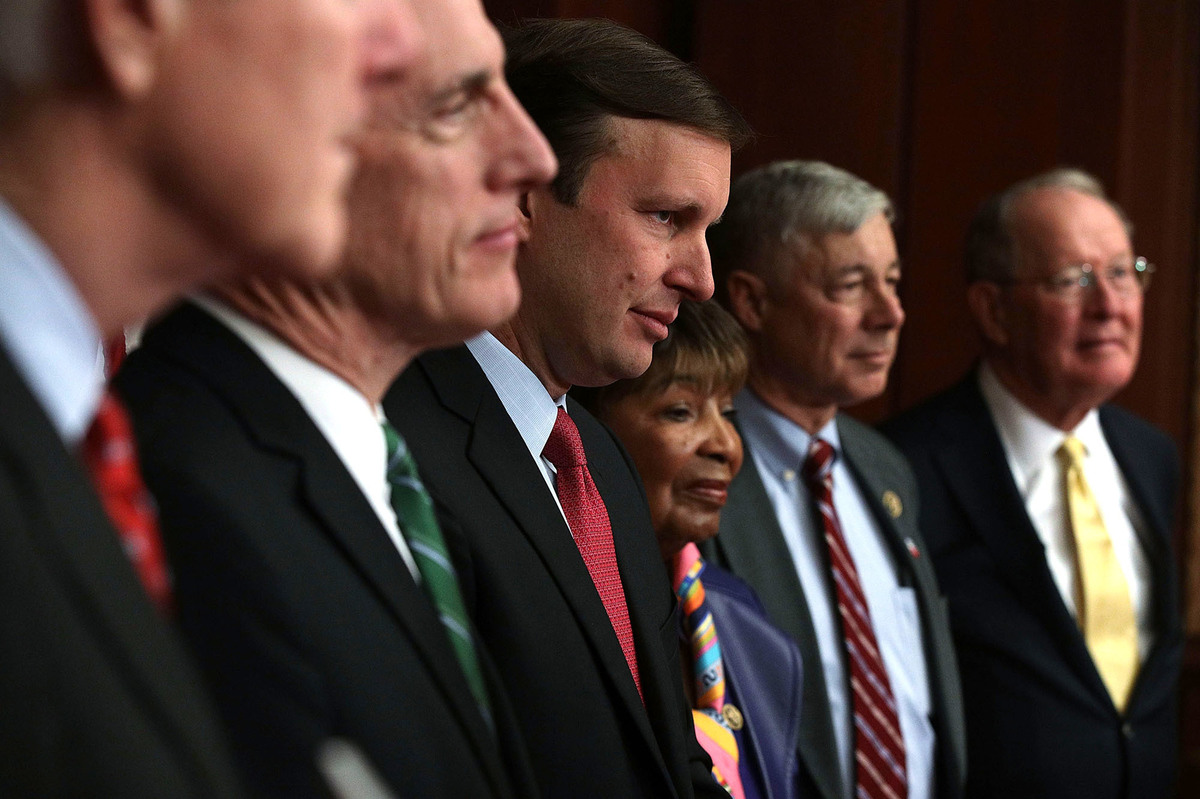
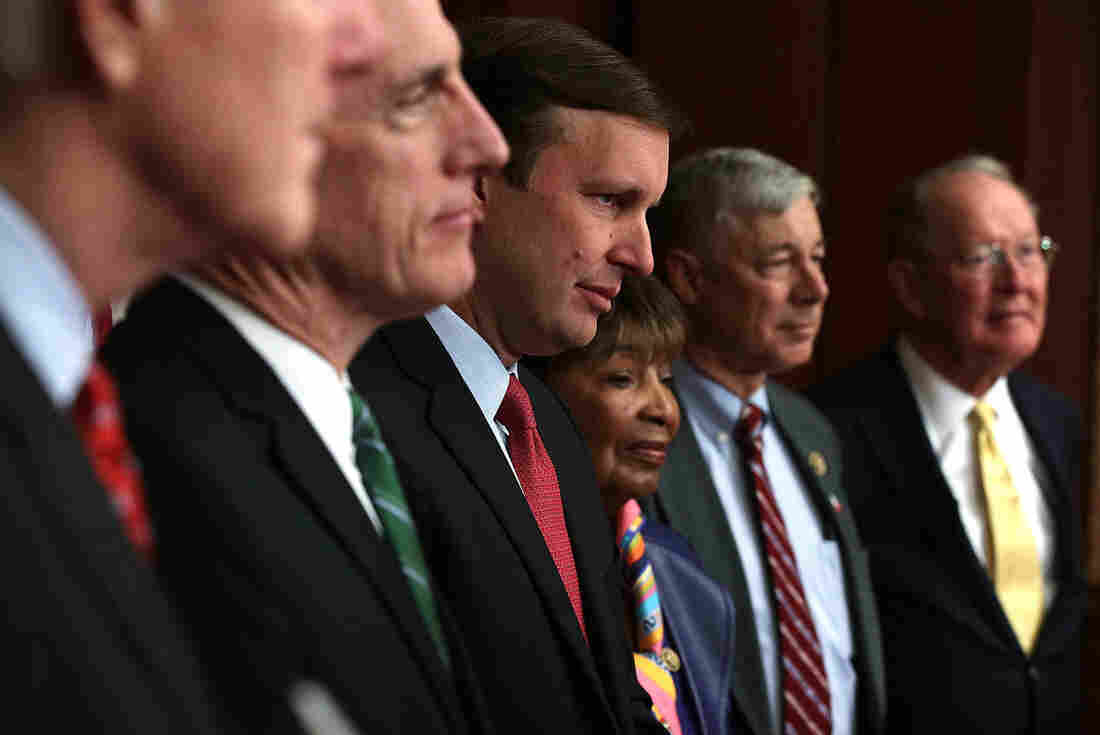
Rep. Tim Murphy, R-Penn., Sen. Chris Murphy D-Conn., Rep. Eddie Bernice Johnson, D-Texas, Rep. Fred Upton, R-Mich., and Sen. Lamar Alexander, R-Tenn., called for Senate passage of the 21st Century Cares bill on Monday. Alex Wong/Getty Images hide caption

toggle caption

Alex Wong/Getty Images

The 21st Century Cures Act that gained congressional approval on Wednesday has been championed as a way to speed up drug development, but it’s also the most significant piece of mental health legislation since the 2008 law requiring equal insurance coverage for mental and physical health.

The bill includes provisions aimed at fighting the opioid epidemic, strengthens laws mandating parity for mental and physical health care and includes grants to increase the number of psychologists and psychiatrists, who are in short supply across the country.

It also would push states to provide early intervention for psychosis, a treatment program that has been hailed as one of the most promising mental health developments in decades.

“It is time to fix our broken mental health care system,” says Sen. Bill Cassidy, R-La., a physician whose mental health bill was folded into the 21st Century Cures Act.

Sen. Chris Murphy, D-Conn., who worked with Cassidy on the bill, says he hopes to alleviate the suffering of people with serious mental illness.

“I’d heard too many devastating stories of people struggling with serious mental illness and addiction whose lives were forever changed because they couldn’t get the care they need,” Murphy says. “I’d seen up close the heartbreak and frustration that families suffered trying to find care for a loved one — care that seemed impossible to find and even harder to pay for.”

Article continues after sponsorship

But Rep. Frank Pallone, D-N.J., says he’s concerned that proposed Republican changes to the health care system could undercut any progress made by the bill. Millions of Americans with mental illness could lose coverage if Congress repeals the Affordable Care Act or cuts spending on Medicaid, which pays for about 25 percent of all mental health care, he says.

Many mental health advocates celebrated the bill’s passage.

Ronald Honberg, national director of policy and legal affairs at the National Alliance on Mental Illness, called the bill’s mental health provisions “necessary and promising.” He says he appreciates the bill’s focus on “preventing the most horrific consequences of untreated mental illness,” including homelessness, incarceration and suicide.

The bill generally requires states to use at least 10 percent of their mental health block grants on early intervention for psychosis, using a model called coordinated specialty care, which provides a team of specialists to provide psychotherapy, medication, education and support for patients’ families, as well as services to help young people stay in school or their jobs. Research from the National Institutes of Health shows that people who receive this kind of care stay in treatment longer; have greater improvement in their symptoms, personal relationships and quality of life; and are more involved in work or school compared to people who receive standard care.

The bill also sets up a $5 million grant program to provide assertive community treatment, one of the most successful strategies for helping people with serious mental illnesses such as schizophrenia. Like the early intervention program, assertive community treatment is designed to provide a team of professionals that is on call 24 hours a day. The bill also expands a grant program for assisted outpatient treatment, which provides court-ordered care for people with serious mental illness who might otherwise not seek help.

Although the bill authorizes these grants, a future Congress would have to approve funding for the programs. “The fact that a program has been authorized is no guarantee that it will be funded,” Honberg says. “It’s a necessary first step.”

Mental health advocates will lobby for Congress to approve funding for the most critical programs, Honberg says.

While funding treatments for mental illness is expensive, “it’s more expensive to ignore it,” says Rep. Eddie Bernice Johnson, D-Texas, who co-sponsored mental health legislation in the House that folded into the 21st Century Cures Act.

Other sections of the bill, based on legislation introduced by Sen. John Cornyn, R-Texas, give communities more flexibility in how they use federal grants. For example, communities could use community policing grants to train law enforcement officers to deal with patients in the midst of a psychiatric crisis. Another provision would require the U.S. attorney general to create at least one drug and mental health court pilot program, which would aim to help people with mental illness or drug addiction receive treatment, rather than jail time, after committing minor offenses.

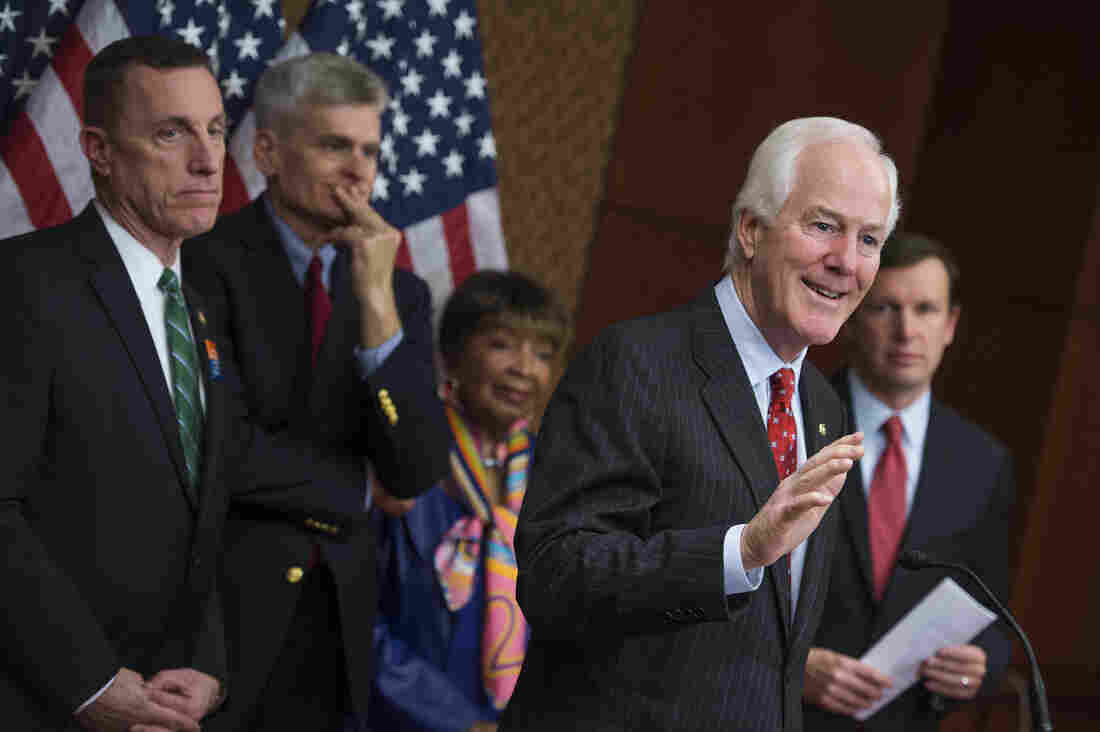
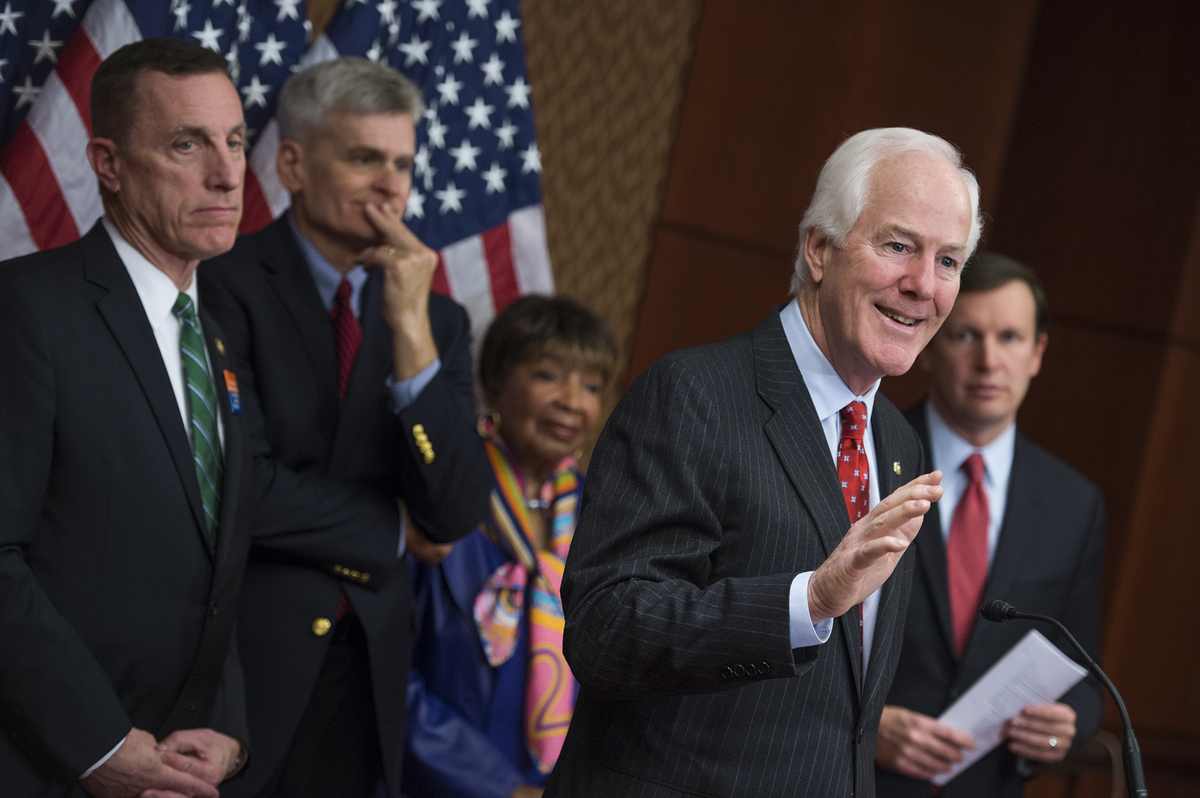
Senate Majority Whip John Cornyn, R-Texas, speaks in favor of mental health reform legislation on Monday. Also appearing are, from left, Rep. Tim Murphy, R-Pa., Sen. Bill Cassidy, R-La., Rep. Eddie Bernice Johnson, D-Texas, and Sen. Chris Murphy, D-Conn. Tom Williams/CQ-Roll Call, Inc. hide caption

toggle caption

Tom Williams/CQ-Roll Call, Inc.

The legislation will help “those suffering from mental illness in the criminal justice system can begin to recover and get the help they need instead of just getting sicker and sicker,” Cornyn says. “This bill also encourages the creation of crisis intervention teams, so that our law enforcement officers and first responders can know how to deescalate dangerous confrontations. This is about finding ways to help the mentally ill individual get help while keeping the community safe at the same time.”

The mental health provisions have been scaled back significantly since they were first introduced.

An earlier version of a bill introduced in the House of Representatives would have changed a federal privacy law to allow doctors, under certain circumstances, to share mentally ill adults’ medical information with their family caregivers. Doctors today often shut families out of their loved one’s care, refusing to share even basic information, such as appointment times, for fear of violating the Health Insurance Portability and Accountability Act, or HIPAA.

Many health professionals misunderstand HIPAA, refusing to listen to the families of patients who are too disabled by psychosis to provide key details of their medical history, says Rep. Tim Murphy, R-Pa., who first introduced the House bill in 2013 in response to the shootings at Sandy Hook Elementary School in Newtown, Conn.

Some advocates for the disabled objected to that change, however, arguing that patient privacy is essential, and that people might avoid care if they believe their doctors might disclose confidential information.

The legislation instructs the secretary of the Department of Health and Human Services to clarify when doctors can share patients’ medical information with family caregivers, as well as educate health care providers about what the law actually says.

“It’s a step in the right direction,” Honberg says. “There is so much misinformation about HIPAA. It’s one of the most mischaracterized laws out there.”

The bill also aims to better coordinate mental health care. Although eight federal agencies today fund 112 programs that provide mental health care, these agencies rarely coordinate their efforts to make sure patients get the help they need and to avoid duplicating services, says Tim Murphy.

The bill would make structural changes to the way federal agencies provide mental health services:

  • A new committee would link leaders of key agencies involved in mental health care, such as the Department of Veterans Affairs, the Department of Justice and the Substance Abuse and Mental Health Services Administration, or SAMHSA.
  • A new position — the assistant secretary for mental health and substance use — would oversee SAMHSA and promote the most successful approaches to treating mental illness.
  • An advisory board, the National Mental Health and Substance Use Policy Laboratory, would analyze treatments and services to help decide which ones should be expanded.

Chris Murphy said he wishes the final bill had included more resources for outpatient mental health care, as well as for inpatient hospital bills for people in psychiatric crisis. He also said the current bill provides a starting point but that he hopes Congress will continue working to improve mental health care in its next session.

“This doesn’t solve all the problems in the mental health system,” says Chris Murphy, noting that Congress may still need to change the HIPAA law to allow families to better care for people with mental illness. “We may still have to look at this down the line.”

Let’s block ads! (Why?)

Doctors And Hospitals Tell Patients: Show Us The Money Before Treatment

Doctors and hospitals are increasingly asking patients to pay up front for deductibles, which can cost thousands. PhotoAlto/Michele Constantini/Getty Images/PhotoAlto hide caption

toggle caption

PhotoAlto/Michele Constantini/Getty Images/PhotoAlto

Tai Boxley needs a hysterectomy. The 34-year-old single mother has uterine prolapse, a condition that occurs when the muscles and ligaments supporting the uterus weaken, causing severe pain, bleeding and urine leakage.

Boxley and her 13-year-old son have health insurance through her job as an administrative assistant in Tulsa, Okla. But the plan has a deductible of $5,000 apiece, and Boxley’s doctor said he won’t do the surgery until she prepays her share of the cost.

His office estimates that will be as much as $2,500. Boxley is worried that the hospital may demand its cut as well before the surgery can be performed.

“I’m so angry,” Boxley said. “If I need medical care, I should be able to get it without having to afford it up front.”

At many doctors offices and hospitals, a routine part of doing business these days is estimating patients’ out-of-pocket payments and trying to collect the money up front. Eyeing retailers’ practice of keeping credit card information on file, “there’s certainly been a movement by health care providers to store some of this information and be able to access it with patients’ permission,” said Mark Rukavina, a principal at Community Health Advisors in Chestnut Hill, Mass., who works with hospitals on addressing financial barriers to care.

Article continues after sponsorship

But there’s a big difference between handing over a credit card to cover a $20 copayment and suddenly being confronted with a $2,000 charge to cover a deductible, an amount that might take months to pay off or exceed a patient’s credit limit.

Doctors may refuse to provide needed care before the payment is made, even as patients’ health hangs in the balance.

The strategy leaves patients financially vulnerable, too. Once a charge is on a patient’s credit card, they may have trouble contesting a medical bill. Likewise, a service placed on a credit card represents a consumer’s commitment that the charge was justified, so nonpayment is more likely to harm a credit score.

Approximately three-quarters of health care and hospital systems ask for payment at the time services are provided, a practice known as “point-of-service collections,” estimated Richard Gundling, a senior vice president at the Healthcare Financial Management Association, an industry group. He couldn’t say how many were doing so for higher priced services or for patients with high-deductible plans, situations that would likely result in out-of-pocket outlays of hundreds or thousands of dollars.

“For providers, there’s more risk with these higher deductibles, because the chance of being able to collect it later diminishes,” Gundling said.

But the practice leaves many patients resentful.

After arriving by ambulance at the emergency department, Susan Bradshaw lay on a gurney in her hospital gown with a surgical bonnet on her head, waiting to be wheeled into surgery to remove her appendix at a hospital near her home in Maitland, Fla. A woman in street clothes approached her. Identifying herself as the surgeon’s office manager, she demanded that Bradshaw make her $1,400 insurance payment before the surgery could proceed.

“I said, ‘You have got to be kidding. I don’t even have a comb,’ ” Bradshaw, a 68-year-old exhibit designer, told the woman on that night eight years ago. “I don’t have a credit card on me.”

The woman crossed her arms and Bradshaw remembers her saying, “You have to figure it out.”

As providers aim to maximize their collections, many contract with companies that help doctors and hospitals secure payments up front, often providing scripts that prompt staff to talk with patients about their payment obligations and discuss payment scenarios as well as software that can estimate what a patient will owe.

But as hospitals and doctors push for point-of-service payments to reduce bad debt from patients with increasingly high deductibles, the risk is that patients will delay care and end up in the emergency room, Rukavina said. “Patients are essentially paying for their procedures up front,” he said. “It may not be a significant amount compared to their salary, but they don’t necessarily have it available at the time of service.”

The higher their deductible, the less likely patients are to pay what they owe, according to an analysis of 400,000 claims by the Advisory Board, a health care research and consulting firm. While more than two-thirds of patients with a deductible of less than $1,000 were likely to pay at least some portion of what they owe, just 36 percent of those with deductibles of more than $5,000 did so, the analysis found.

Fifty-one percent of workers with insurance through their employer had a deductible of at least $1,000 for single coverage this year, according to the Kaiser Family Foundation’s annual survey of employer health insurance. (KHN is an editorially independent program of the foundation.)

Boxley pays $110 a month for her family plan. She could not afford the premiums on plans with lower deductibles that her employer offered. She plans to talk with the doctor and hospital about setting up a payment plan so she can get the surgery in January.

“I’ll make payments,” Boxley said, although she acknowledged what she could pay monthly would be small. If that doesn’t pan out, she figures she’ll have to use student loan money she got for graduate school to cover what she owes.

Still, experts say that trying to pin patients down for payment in more acute settings, such as the emergency department, may cross a line.

Under the federal Emergency Medical Treatment and Labor Act, a patient who has a health emergency has to be stabilized and treated before any hospital personnel can discuss payment with them. If it’s not an emergency, however, those discussions can occur before treatment, said Dr. Vidor Friedman, an emergency physician who is the secretary-treasurer of American College of Emergency Physicians’ board of directors.

Bradshaw finally got her appendix removed by calling a friend, who read his MasterCard number over the phone. The surgery was uneventful and Bradshaw was home within 24 hours.

“It’s a very murky, unclear situation,” Friedman said of Bradshaw’s experience, noting that a case might be made that her condition wasn’t life threatening. “At the very least it’s poor form, and goes against the intent if not the actual wording of” federal law.

Michelle Andrews is on Twitter:@mandrews110.

Let’s block ads! (Why?)

Signed Out Of Prison But Not Signed Up For Health Insurance

Kara Salim, 26, got out of the Marion County, Indiana, jail in 2015 with a history of domestic-violence charges, bipolar disorder and alcoholism — and without Medicaid coverage. As a result, she couldn’t afford the fees for court-ordered therapy. Philip Scott Andrews for KHN hide caption

toggle caption

Philip Scott Andrews for KHN

Before he went to prison, Ernest killed his 2-year-old daughter in the grip of a psychotic delusion. When the Indiana Department of Correction released him in 2015, he was terrified something awful might happen again.

He had to see a doctor. He had only a month’s worth of pills to control his delusions and mania. He was desperate for insurance coverage.

But the state failed to enroll him in Medicaid, although under the Affordable Care Act Indiana had expanded the health insurance program to include most ex-inmates. Left to navigate an unwieldy bureaucracy on his own, he came within days of running out of the pills that ground him in reality.

This investigation comes from Beth Schwartzapfel at The Marshall Project, a nonprofit news organization covering the U.S. criminal justice system, and Jay Hancock, Kaiser Health News, a nonprofit news service covering health policy issues at the federal and state level.

Radio story for Morning Edition by Jake Harper, Side Effects Public Media, a news collaborative covering public health.

“I have a serious mental disorder, which is what caused me to commit my crime in the first place,” said Ernest, who asked reporters to use only his middle name to protect his privacy. “Somebody should have been pretty concerned.”

The health law was supposed to connect Ernest and almost all other ex-prisoners for the first time to Medicaid coverage for the poor, cutting expensive visits to the emergency room, improving their prospects of rejoining society and reducing the risk of spreading communicable diseases that flourish in prisons.

Article continues after sponsorship

But Ernest’s experience is repeated millions of times across the country, an examination by The Marshall Project and Kaiser Health News shows.

Most of the state prison systems in the 31 states that expanded Medicaid have either not created large-scale enrollment programs or operate spotty programs that leave large numbers of exiting inmates — many of whom are chronically ill — without insurance.

Local jails processing millions of prisoners a year, many severely mentally ill, are doing an even poorer job of getting health coverage for ex-inmates, by many accounts. Jail enrollment is especially challenging because the average stay is less than a month and prisoners are often released unexpectedly.

Ex-inmates with the worst chances of getting insurance and care are in 19 states that did not expand Medicaid. Only a few qualify for coverage. Enrollment efforts by prisons and jails for them are almost nonexistent.

Nationally, some 375,000 inmates leave state prisons every year with minimal or nonexistent Medicaid signup programs, according to a survey by The Marshall Project.

Failure to link people leaving jail or prison to health insurance is a missed opportunity to improve health and save money on care, advocates say. Better care also helps by reducing recidivism. Studies show Medicaid access in Florida and Washington cut return trips to jail among the mentally ill by 16 percent.

Advocates for improved sign-ups argue, What better place to enroll people eligible for Medicaid than a building where they’re already assembled?

“I hate to say it — it’s a captive audience,” said Monica McCurdy, who as head of a clinic for Project HOME in Philadelphia sees homeless, recently released prisoners without Medicaid coverage. “You have somebody there! You know they’re going to be released in a few weeks. Why not do the handoff that’s needed to prevent this person winding up in the ER? It defies common sense.”

Health Risks Soar After Release

Before the Affordable Care Act, Medicaid covered mainly children, pregnant women and disabled adults, which included only a small number of ex-offenders. That’s still generally the case in the 19 states that didn’t expand Medicaid.

President-elect Donald Trump has vowed to repeal the health act and replace it with something else, leaving the law’s Medicaid expansion and eligibility for ex-prisoners in doubt. Rep. Tom Price, Trump’s pick to head the health and human services department — which oversees Medicaid — has been one of Congress’s most vociferous critics of Obamacare.

But some analysts expect parts of the law to survive, perhaps including Medicaid expansion managed more directly by states than by Washington.

Even some Republicans have supported the expansion of Medicaid, suggesting that revoking its coverage from millions of new recipients would be difficult. Republican Gov. John Kasich expanded Medicaid in Ohio in part for ex-inmates, he has said, “to get them their medication so they could lead a decent life.”

Other parts of the health law received more attention, but advocates saw giving Medicaid coverage to ex-inmates as one of its most transformative aspects. Illness for illness, inmates are the sickest people in the country.

They have far higher rates of HIV, hepatitis and tuberculosis than the general population. They’re also more likely to have high blood pressure, diabetes, and asthma. More than half are mentally ill, according to the Bureau of Justice Statistics, with up to a quarter meeting criteria for psychosis. Between half and three-quarters have an addiction problem.

Prisons and jails have their own doctors, but their responsibility to provide care stops upon an inmate’s departure. Inmates generally aren’t eligible for Medicaid while imprisoned.

No time is more critical than the days immediately after release. One study showed that in the first two weeks, ex-prisoners die at a dozen times the rate of the general population. Heart disease, drug overdose, homicide and suicide are the main causes.

But even in states that expanded Medicaid, the most vulnerable and sometimes dangerous ex-inmates are often left on their own.

Ernest went to prison for shooting and killing his daughter amid a psychotic religious delusion. Re-enacting the biblical story of the sacrifice of Isaac, he thought God would intervene to save the girl. News reports from the time say police found him naked, carrying the child’s lifeless body through the streets of an Indianapolis suburb.

Indiana expanded Medicaid under the health law in February 2015 and set up a system to enroll all eligible prisoners upon release. Yet when Ernest got out in August 2015, he was not enrolled in Medicaid, let alone connected to doctors.

Prison officials say they applied for Medicaid on Ernest’s behalf, but Medicaid records show he applied when he got home. It’s not clear where the system failed.

“It is important that the offenders have some accountability in the process,” said Douglas Garrison, a spokesperson for the Indiana Department of Correction. “The IDOC has worked diligently to ensure released offenders are receiving coverage.”

Ernest’s letters to Medicaid and a clinic before he got out didn’t help. He had to start the application process from scratch after he got home, making increasingly frantic calls and scrambling to find his birth certificate and other paperwork as his supply of lithium and perphenazine, an antipsychotic, dwindled.

“Somebody who’s committed a violent felony because of a mental illness is getting out of prison, and we don’t have anything set up yet?” said Ernest, whose Medicaid coverage was authorized a little more than a month after his release. He’s now living with his brother and looking for work.

Failure to sign up ex-inmates for health care are repeated every day in states that expanded Medicaid under the health law, even in places such as Indiana where agencies have provided enrollment assistance.

No Enrollment For Thousands Of Chronically Ill People

Two-thirds of the 9,000 chronically ill prisoners released each year by Philadelphia’s jails aren’t getting enrolled as they leave, said Bruce Herdman, medical director for the jails. The city also lacks the $2 million necessary to supply a month’s worth of medication for released inmates with prescriptions, he said.

Calvin Henderson, 61, spent 60 days in an Indiana work-release center after serving 15 years for robbery and a parole violation. Because he could leave the work-release facility to go to the doctor, the state didn’t provide medical care. Federal rules say people in work release are still incarcerated, so they don’t qualify for Medicaid. Philip Scott Andrews for KHN hide caption

toggle caption

Philip Scott Andrews for KHN

“They give you like two weeks’ supply of medication,” said Ricky Platt, 49, who left the Philadelphia jail in 2015, quickly ran out of Zoloft, an antidepressant, and became homeless. “They don’t give you any resource of where to go or get a doctor and get your prescription filled or anything.”

Emergency doctors at Thomas Jefferson University Hospital in Philadelphia often see released inmates with kidney failure who are at risk of dying if they don’t receive dialysis almost immediately, said Dr. Priya Mammen, one of the hospital’s emergency physicians.

“We’re kind of the go-to spot for many people, but particularly for people who have been released from prison,” she said. “Either in the first week we see them or when their prescriptions run out.”

Kara Salim, 26, got out of the Marion County, Indiana, jail in 2015 with a history of domestic-violence charges, bipolar disorder and alcoholism — and without Medicaid coverage. As a result, she couldn’t afford the fees for court-ordered therapy.

Without therapy she wasn’t allowed to see a psychiatrist for her medications. Without medication she spiraled downward, eventually threatening suicide at a court hearing. When court officers tried to bring her to a psychiatric hospital, she erupted, kicking and scratching them and landing back in jail, with new felony charges: battery against a public safety officer.

“I wish I could tell you she’s the exception,” said Sarah Barham, an addiction counselor with Centerstone, a nonprofit that provides behavioral health services in Indiana.

Medicaid enrollment requires resources that many prison systems and local jails — often overcrowded and operating in crisis mode for years — lack or have been reluctant to commit.

“Most of the county sheriffs don’t have the proper staff they need to even run the jails,” said Bill Wilson of the Indiana Sheriffs’ Association. Many jails are making an effort, but in some places “pulling the resources out to enroll an inmate in Medicaid is not something the sheriff’s able to do.”

Seven states — Minnesota, Alaska, Hawaii, Arizona, Montana, Louisiana, and Illinois — expanded Medicaid but have not implemented a large-scale enrollment program.

In many states, even successful prerelease registration requires a follow-up visit to a local Medicaid or welfare office to activate the coverage on release. Obtaining a phone, paying for minutes and navigating bus lines to state offices can be daunting for newly released inmates, who often struggle with basic needs such as food and shelter.

Indiana officials applied for Medicaid on behalf of more than 7,000 state prisoners from March through September — nearly 90 percent of those released. (Many of the others were released to other states or deported, officials said.) Yet only a little more than half called to activate their coverage when they got home, according to state data. The state says in recent weeks it eliminated the requirement to activate coverage with a call.

William Santee, 46, released from Pennsylvania state prison this year, has diabetes, high cholesterol and high blood pressure. He learned about Medicaid enrollment requirements and the need to visit a welfare office from workers at a homeless shelter.

The prison “didn’t tell me about where to go or anything like that,” he said. “They don’t consider that their responsibility.” Waiting in line and completing the welfare-office paperwork took five hours.

Getting The Details Right

Almost as critical as successful enrollment is choosing a Medicaid plan that covers medicines and services ex-inmates need. Jail and prison workers are rarely equipped to wade through such details.

“That’s a huge issue for us,” said Susan Jo Thomas of Covering Kids and Families, a nonprofit that helps enroll people in Medicaid in Indiana. “You finally get a person to the place they are ready to make the decision to go into detox, but if they have aligned with an insurance company that doesn’t cover the medicine that program uses, then you have a problem.”

Marion County Jail, in Indianapolis, is working with inmates to enroll them in Medicaid. Philip Scott Andrews for KHN hide caption

toggle caption

Philip Scott Andrews for KHN

A few states and localities reap praise for innovative and comprehensive attempts to enroll emerging prisoners in Medicaid.

Ohio recently finished phasing in Medicaid registration at all state prisons and is one of the few states giving inmates a managed care insurance card as they leave, said John McCarthy, that state’s Medicaid director. Chicago’s huge Cook County jail puts prisoners on the Medicaid books as they enter, rather than before they leave, to sidestep the common problem in jails of unpredictable release dates.

More often the process looks like what was happening one recent Friday in Indiana’s Marion County jail, where Lt. Debbie Sullivan was trying to rouse sleepy women to sign up for health insurance.

The document she distributed was three pages long, authorizing a Medicaid application on inmates’ behalf. It asked for names, addresses, birth dates and Social Security numbers. The handwritten information would later be entered into computers — a recipe for transposed digits and misspelled names.

“The program remains a work in progress,” said Katie Carlson, a spokeswoman for the Marion County Sherriff’s Office, which runs the jail. “It has proven a daunting task to enroll, track and provide meaningful information on both Medicaid and health care.”

Such sessions require a half-hour or more, so inmates can get the details right, pick the right plan and learn how to follow up with doctors and insurance officials after release.

Sullivan’s knowledge of the women’s next steps was minimal. In response to questions, she simply told them to contact their local social service office when they get out. She walked out of the block with about 30 signed applications. It was over in 15 minutes.

“Thank you ladies!” she called on her way out, as the heavy steel door slammed behind her.

Marshall Project interns Deonna Anderson, Josiah Bates, Jonathan Gomez and Rachel Siegel contributed research to this article.

Let’s block ads! (Why?)

Scientists Battle In Court Over Lucrative Patents For Gene-Editing Tool

Emmanuelle Charpentier (left) and Jennifer Doudna have a case for being the inventors of CRISPR-cas9, a transformative tool for gene editing. Miguel Riopa/AFP/Getty Images hide caption

toggle caption

Miguel Riopa/AFP/Getty Images

The high-stakes fight over who invented a technology that could revolutionize medicine and agriculture heads to a courtroom Tuesday.

A gene-editing technology called CRISPR-cas9 could be worth billions of dollars. But it’s not clear who owns the idea.

U.S. patent judges will hear oral arguments to help untangle this issue – which has far more at stake than your garden-variety patent dispute.

“This is arguably the biggest biotechnology breakthrough in the past 30 or 40 years, and controlling who owns the foundational intellectual property behind that is consequentially pretty important,” says Jacob Sherkow, a professor at the New York Law College.

The CRISPR-cas9 technology allows scientists to make precise edits in DNA, and that ability could lead to whole new medical therapies, research tools, and even new crop varieties.

“Part of what makes it such a fun spectator sport is the amount of money that’s at stake,” says Robert Underwood, at the Boston law firm McDermott Will & Emery. “These could potentially be the most valuable biotech patents ever,”

And the dispute pits high-prestige universities and well-regarded scientists against one another.

On one side of the dispute are research collaborators Jennifer Doudna at the University of California, Berkeley and her European colleague Emmanuelle Charpentier (currently at the Max Planck Institute for Infection Biology in Berlin).

Article continues after sponsorship

Feng Zhang, of the Broad Institute, is one of the contenders vying for royalties from CRISPR patents. Anna Webber/Getty Images for The New Yorker hide caption

toggle caption

Anna Webber/Getty Images for The New Yorker

“When they filed their patent application [in 2012], they did a great job disclosing how to use CRISPR for bacteria, but were a little lighter on details about how to use CRISPR in the cells of higher organisms” such as human cells, Sherkow says.

“Later in 2012, Feng Zhang at the Broad Institute at MIT and Harvard files his patent application, that gives a pretty detailed description about how to use CRISPR in the cells of higher organisms,” Sherkow continues.

And since the most important use of the technology is its ability to edit DNA in higher organisms, the real battle is over who can claim that invention.

Zhang’s patent went through the process faster, so it was issued first. But when the Berkeley patent came up for a decision, that created what’s known in patent parlance as an “interference.” So now the patent office needs to sort out exactly what the invention is and who invented it first.

“The dispute largely does appear like a winner-take-all affair,” Sherkow says.

But the patent court could decide that there are distinct inventions, each meriting their own patents.

Or it could decide that it’s not patentable at all, for various reasons.

“The other thing that could happen is the patents could be made moot by other discoveries,” says Anette Breindl, senior science editor at the trade journal BioWorld. “I’m sure the existing patents are written to be broad, but there could be new discoveries that just get around those patents.”

The stakes are enormous. Breindl says three companies built around these patents already have a billion dollars of investment behind them, and a fourth company has a stake in the technology that could be worth $2 billion.

The scientists themselves stand to gain a great deal — and so do their universities, which are listed on the patents as well.

Robert Cook Deegan, at Arizona State University’s School for the Future of Innovation in Society, says regardless of how this legal battle comes out, academic researchers can still use the CRISPR technology without worrying about ownership rights, “but if you’re doing any research that might eventually be commercially valuable well, then you’ve got a problem.”

Those researchers would need to license the technology’s rightful owner, whoever that ends up being, “and the concern is how many licenses you’re going to have to pick up, and if there’s going to be one dominant patent that everybody has to license from a particular firm,” he says.

Some companies have already placed their bets, and they’ve licensed the right to use CRISPR from one or the other of the companies involved in the patent battle. If that patent evaporates, Underwood says, “I don’t think you’d get your money back.”

And any inventions based on the patent wouldn’t be protected, or possibly legal to sell. So companies in this field are anxiously awaiting the outcome of the patent dispute. Tuesday’s hearing is just one step in a process that’s likely to last through 2017.

In court, the two sides are expected to give brief answers to questions from the patent judges, and jockey for position, trying to get the case framed in the way most favorable to their interests.

“Whatever the resolution is, if there’s no settlement, we can expect appeals that will last for years,” he says.

And, on top of the patent dispute, scientists widely assume that CRISPR will earn Nobel Prizes for the scientists who are ultimately recognized as the inventors of this transformative technology.

You can email Richard Harris at rharris@npr.org.

Let’s block ads! (Why?)

When Doctors Talk To Parents About HPV Vaccine: Make It Brief

The HPV vaccine has reduced the prevalence of the cancer-causing human papillomavirus by as much as 65 percent among those who are vaccinated. Matthew Busch for The Washington Post/Getty Images hide caption

toggle caption

Matthew Busch for The Washington Post/Getty Images

A full decade after the Food and Drug Administration approved a vaccine to fight the sexually transmitted, cancer-causing human papillomavirus, almost half of all adolescents have still not received their first dose. This low vaccination rate is dramatic when compared to other routine childhood immunizations like polio and measles, mumps and rubella, where compliance is above 90 percent.

In order to boost HPV vaccination, doctors should be more assertive when bringing up the topic with parents, says Noel Brewer, a health and behavior scientist at the University of North Carolina. Brewer knew from earlier research that doctors contribute to that low vaccination rate because “most doctors and parents don’t want to talk about sex,” he says, especially when children are 11 or 12 — the age the Centers for Disease Control recommends the vaccine be given.

Brewer wanted to figure out a better way for physicians to communicate the value of the vaccine to parents. So he conducted a study involving 30 North Carolina pediatric and family medicine clinics. The clinics were each divided into three groups of doctors. One group was trained how to make brief statements that assumed parents were ready to have their child vaccinated. This involved saying short, direct sentences such as, “Now that Michael is 12 there are three vaccines we give to kids his age. Today he’ll get meningitis, HPV and Tdap [tetanus, diphtheria, pertussis].”

Another group of clinic doctors were trained to engage parents in somewhat lengthy discussions about the timing, safety and effectiveness of the vaccine. A control group of doctors received no training.

Article continues after sponsorship

It turns out that more talk is less effective: When doctors made brief statements that presumed parents intended to vaccinate their child, vaccine rates increased by 5 percent. There was no increase in vaccination rates following the lengthy discussions. There was also no increase in the control group.

The straightforward approach — when the message is short, direct and brief — makes the HPV vaccine just like any other vaccine recommendation, Brewer says.

“Having a long conversation seems to communicate that there’s a problem with the vaccine, and that worries parents,” he says.

The study findings are published online Monday in the journal Pediatrics.

Something else that may help boost HPV vaccination rates is a recent recommendation from the Centers for Disease Control to reduce the number of doses for younger children. Because the vaccine is more effective at ages 11 and 12, the CDC now recommends only two doses instead of three. However, if children don’t get vaccinated until age 15, they’ll still need the full three doses.

“The HPV vaccine is an amazing tool to protect our younger generation against many types of cancer,” says Dr. Margaret Stager, a pediatrician with Metro Health Medical Center in Cleveland and a spokesperson for the American Academy of Pediatrics. She says strains of HPV virus are responsible for the vast majority of HPV-related cancers, including cervical cancer and cancers of the anus, vagina and penis. It can also cause cancer in the back of the throat. So it’s an important vaccine for both girls and boys, she says.

Preventing cancer should be the critical take-home message for parents, according to Stager. After all she says, “HPV prevalence has already decreased as much as 65 percent among vaccinated youth, dramatically lowering the odds they will face a life-threatening form of cancer in adulthood.”

Let’s block ads! (Why?)

Helping Ex-Inmates Stay Out Of The ER Brings Multiple Benefits

While incarcerated, Mark Baskerville says he suffered five diabetic comas. He says he’s now doing a better job of managing his health. Rae Ellen Bichell/NPR hide caption

toggle caption

Rae Ellen Bichell/NPR

The Washington, D.C., jail has big metal doors that slam shut. It looks and feels like a jail. But down a hall in the medical wing, past an inmate muttering about suicide, there’s a room that looks like a normal doctor’s office.

“OK, deep breaths in and out for me,” says Dr. Reggie Egins to his patient, Sean Horn, an inmate in his 40s. They talk about how his weight has changed in his six weeks in jail, how his medications are working out and if he’s noticed anything different about his vision. Egins schedules an ophthalmology appointment for Horn.

Horn says before he arrived here, things were not looking good.

“I looked real bad. I was homeless, for one, and not taking my medicine,” says Horn, who has depression, high blood pressure and gout, among other things.

When he was out on the streets, Horn says, it was hard for him to get his medications or to see a doctor. So he just didn’t. He got sicker and sicker.

Article continues after sponsorship

“I had two heart attacks and my gout flared up a whole lot of times when I was out there,” he says.

Horn is no outlier. People with a history of incarceration are typically much sicker than the general population, especially returning inmates like Horn. Studies done primarily in Ohio and Texas have found that more than 8 in 10 returning prisoners have a chronic medical condition, from addiction to asthma. Egins says a lot of it has gone untreated, for a range of reasons — because the health care system is tough to navigate, because they’re homeless and don’t have insurance, or because they don’t trust doctors.

“The first thing is that they usually have no permanent address, which means that they cannot apply for health insurance and/or there’s nowhere to receive those documents if they do,” says Egins, a family doctor who does correctional health care, splitting each week between serving patients at the D.C. jail and at Unity Health Care, a network of community health centers.

Now, being in jail is not healthy. But for a lot of people, the best health care they’ll receive is what they get behind bars. About 40 percent of inmates are newly diagnosed with a chronic medical condition while incarcerated. Outside, many only interact with doctors when they’re in the emergency room.

And when they are released, as millions are each year, they enter a risky time, says Dr. Emily Wang, a primary care doctor with the Yale University School of Medicine.

“Man, if there is any one single thing in the literature that is compelling, it’s that there’s a significantly higher risk of dying in the first two weeks following release from a correctional facility,” she says.

Wang says the primary causes of death after incarceration include overdose, heart disease, suicide and cancer — often treatable things, if you catch them early enough.

It’s not just a matter of getting insurance. “Insurance is necessary, but it’s not sufficient,” says Wang. “Our patients will often come with insurance, but they don’t know the first thing about how to use the health care system to their benefit.”

Behind bars, patients get three meals a day and line up to get their daily medications handed to them by a nurse.

“When they come home from prison, they have to learn to use the pharmacy, learn to get a refill, learn to make their appointments … on top of trying to get housing, get employed, figure out where to get food for the day,” she says.

So many former inmates put off getting medical care until they wind up in the emergency room, with conditions that have become a lot worse than they could’ve been. That means they are also more expensive to treat, costs that are often picked up by hospitals and taxpayers.

Doctors Lisa Puglisi and Emily Wang talk with a community health worker about the patients they’re about to see at a clinic for ex-offenders in New Haven, Conn. Rae Ellen Bichell/NPR hide caption

toggle caption

Rae Ellen Bichell/NPR

Wang and her colleagues are trying to make it easier for ex-inmates to manage their health care so they don’t end up in the ER. They work at the Transitions Clinic Network, which now has 14 sites across the U.S. and in Puerto Rico. They’re funded by private donations and by grants like one from the Centers of Medicare & Medicaid Innovation.

Their patients qualify for Medicaid based on income, and the clinics are reimbursed by Medicaid. The difference is that they offer more services than Medicaid typically does — like helping patients find a halfway house they can afford.

Joe McFadden has experienced how much of a difference those extra services can make. McFadden spent 40 days in solitary confinement before being released two weeks later.

“You’re just locked up like an animal. That’s not good or healthy at all,” says McFadden, who is in his 40s and was homeless and living on the streets of New Haven, Conn., when I spoke with him. “It’s not easy, coming home from being incarcerated to a world where you’re being discriminated against,” he says.

Shortly after release, McFadden ended up in the emergency room with a ballooning leg. It was a blood clot. “I thought I had pulled a muscle. It took me like a week to go in because I didn’t know the symptoms of having blood clots,” he says. He’d rarely been to the doctor before that, but now he comes in for regular visits at the Transitions clinic in New Haven. The staff there helped him find a substance abuse program, and a place where he could visit his two kids.

“Our rationale for this program is by organizing primary care in this manner, we improve public health,” Wang says. “Our patients are sicker than the general population, so by caring for them, fewer communicable diseases are transmitted, substance use is treated, etc.” She adds: “Moreover, it makes good business sense for the health system.”

In a randomized control trial looking at 200 recently released prisoners in San Francisco, Wang and her colleagues showed that bringing that population to see doctors significantly reduced emergency room visits and hospitalizations. That lessens the strain on emergency departments, and the cost burden that emergency treatment puts on the health care system.

Wang works at the New Haven clinic, which gets additional funding from the Community Foundation for Greater New Haven, the Yale-New Haven Hospital and the Substance Abuse and Mental Health Administration.

The staff starts off the morning by running through a list of the patients coming in. One patient is worried about relapsing on a drug addiction and wants to talk about options for staying clean. Another patient with an infection in his leg has finally gone to see orthopedics.

“That was a huge accomplishment. Getting him to an appointment is a feat,” says Dr. Lisa Puglisi, one of the physicians at Transitions.

The patient came to his appointment because of Jerry Smart. As a community health worker with Transitions, Smart is the clinic’s secret weapon, because patients might not trust doctors, but they do trust him.

“This population, you know, they’ve been dealing with probation, parole, dealing with correctional officers. So they don’t trust people,” says Smart.

Like all Transition’s community health workers, Smart knows what it’s like to be an ex-inmate. It’s been 30 years since he did time, but he remembers feeling judged by doctors, and thinking they didn’t care about his well being.

“A lot of these guys feel the same way. But when they meet me, I just let them know we have a great team. The physicians care about you, they care about your needs,” says Smart. “So once they buy into me, then they buy into the whole thing.”

No one wants to be sick, he says, but sometimes the whole health care system can be intimidating. He’ll go with patients to their appointments, check in with some of them regularly on the phone, and he’ll even take frantic calls at 2 a.m. about whether they should go to the emergency room or not.

Mark Baskerville, who lives in New Haven, is one of the clinic’s success stories. He’s in his mid-50s, and he’s been in and out of prison four times.

On the bus coming home, he says, “First it’s anxieties that pick up: ‘Man, am I going to do all right?’ Things are in your hands and you’re in control of it now.”

Health problems are easy to push aside, he says.

Baskerville has been living with diabetes for about 20 years, about 12 of which he spent in the correctional system. He says he had five diabetic comas while he was an inmate. But since reentering the community, he’s come for regular visits at the clinic and says he’s doing better.

“It was easy. I know what I got to do to take care of my diabetes. You got to work with your doctor,” says Baskerville.

If you don’t, he says, you’ll never be able to enjoy your freedom.

Let’s block ads! (Why?)

Study: Older Smokers Can Still Significantly Lower Risk Of Death If They Quit

Researcher Sara Nash tells NPR’s Ailsa Chang why it’s never to late to quit smoking. She’s one of the authors of a new NIH-AARP study.

AILSA CHANG, HOST:

People who have smoked most of their lives may think it’s too late to quit, but a new NIH-AARP study finds that even smokers over 60 can lengthen their lives if they kick the habit. Dr. Sarah Nash, the main author of the study, joins us today from Alaska Public Media in Anchorage. Thank you so much for speaking with us.

SARAH NASH: Thank you for having me.

CHANG: So how old were the smokers you studied, and when did they quit?

NASH: We looked at people who are aged over 70 years, and we looked at current smokers and people who had quit throughout the life course. So we had never-smokers. We had people who had quit in their 30s, 40s, all the way up to the 60s.

CHANG: And for the people who quit smoking in their 60s, how did you measure the benefit to their health? Was it just in terms of extra years that they lived?

NASH: So what we did is we compared the risk of dying among people who had quit in each decade of life and people who had never smoked to the risk of death in people who are still smoking in the 70s. So we basically compared the mortality among those groups.

CHANG: Right.

NASH: And what we found was that people who quit during the 60s had a lower risk of death than people who continued to smoke into their 70s.

CHANG: What about benefits of quitting on things like preventing smoke-related diseases, like heart disease or lung cancer?

NASH: Well, we know that there’s definitely a benefit to those diseases from smoking, so what we were looking at was deaths from those diseases. So we actually looked at mortality from a whole bunch of different causes. We looked at death from lung cancer, death from other smoking-related cancers, death from respiratory infection, death from heart disease and death from stroke.

CHANG: And found that the mortality rates were lower for people who quit in their 60s compared to those who quit in their 70s or 80s.

NASH: Exactly.

CHANG: But I would assume the earlier you quit smoking, the better for your health, right? Like, what did you find on that point?

NASH: That’s exactly what we found. So we found that the risk of death, obviously, was lower in people who had quit earlier in life. But what was really surprising to us was that even the people, as you say, who had quit during the 60s – it was 23 percent less likely to die during the study than those who continued to smoke. So that’s a fairly substantial reduction in mortality risk.

CHANG: I feel like I meet a lot of smokers who – you know, who have counter examples to a study like this in their head. Like, well, I knew Joe so and so, and he never quit smoking, and he lived till he was 93 years old. How do you control for things like genetics?

NASH: So I think we all know some of those people are, right? But I think the important thing is that we’re looking at – rather than just taking an anecdote in one person, we’re looking at this – we looked at this in 160,000 people.

CHANG: Did you factor in how much, how often the subjects smoked?

NASH: Yes, we did. What we do is we calculate what we call pack years? It’s the cumulative exposure over the life course, and that was one of the factors that we adjusted for in our analysis.

CHANG: Did anything surprise you about these findings in the study?

NASH: So we know the risk of mortality is lower among those who quit smoking, so that in itself wasn’t surprising.

CHANG: Right.

NASH: But the magnitude of the observed benefit of quitting in one’s 60s – that that was remarkable, I think.

CHANG: Dr. Sarah Nash was co-author of a study published in the American Journal of Preventive Medicine. Thank you so much for joining us, Sarah.

NASH: Thank you for having me.

Copyright © 2016 NPR. All rights reserved. Visit our website terms of use and permissions pages at www.npr.org for further information.

NPR transcripts are created on a rush deadline by Verb8tm, Inc., an NPR contractor, and produced using a proprietary transcription process developed with NPR. This text may not be in its final form and may be updated or revised in the future. Accuracy and availability may vary. The authoritative record of NPR’s programming is the audio record.

Let’s block ads! (Why?)

In House Majority Leader's Home District, Many Depend On Health Law He Wants To Scrap

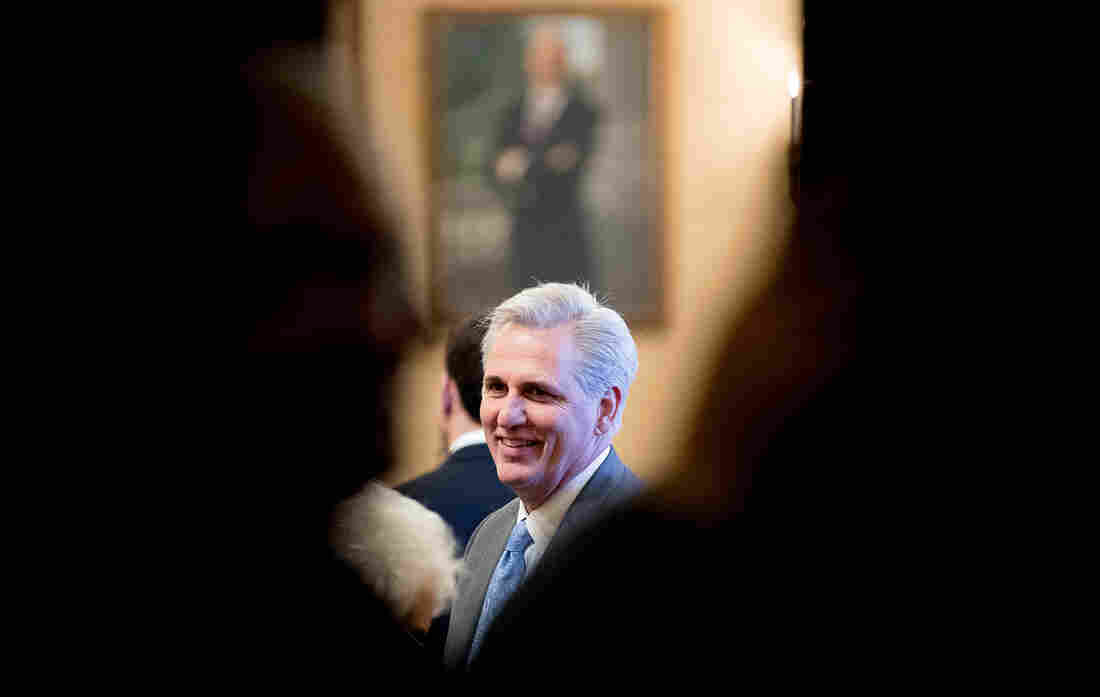
House Majority Leader Kevin McCarthy has supported the repeal of the Affordable Care Act, despite health coverage it has brought to many of his constituents. Andrew Harnik/AP hide caption

toggle caption

Andrew Harnik/AP

House Majority Leader Kevin McCarthy wants to repeal the Affordable Care Act first and replace it sometime later. That doesn’t sit well with Victoria Barton, who lives in McCarthy’s rural California district.

“It’s like they dangled the carrot and now they’re taking it away,” said Barton, 38, of Bakersfield, an unpaid photographer and stay-at-home mother of two.

Barton and her husband, a contract computer technician, had been uninsured for most of their adult lives. When Obamacare expanded Medicaid, they were finally able to qualify for the low-income health program. This year, California’s version of Medicaid, known as Medi-Cal, paid for surgery to remedy Barton’s long-standing carpal tunnel syndrome.

When McCarthy returns later this month to his congressional district, a mostly agricultural region in California’s Central Valley including the city of Bakersfield and Edwards Air Force Base, he is likely to face quite a few confused and frustrated constituents.

Two counties represented by the Republican leader are among the most heavily dependent on Medi-Cal in the state. Roughly half of the residents are covered by Medi-Cal, which added about 212,000 enrollees after Obamacare took effect.

Nearly 29,000 residents have purchased health plans through Covered California, the state’s insurance exchange, with coverage heavily subsidized by the federal government.

Some of those who favor the law, or rely on it, see a conflict between McCarthy’s stated goals as a national leader and the needs of so many of his constituents.

“Those comments he made [about repeal] just demonstrate how disconnected he is from the people he’s supposed to be representing,” said Edgar Aguilar, program manager for Community Health Initiative of Kern County, an organization that helps enroll residents in Medi-Cal and Covered California in Bakersfield.

Article continues after sponsorship

McCarthy’s staff in Washington, D.C., said there wasn’t anyone available to comment.

The complexities of repealing Obamacare are laid bare in the 23rd Congressional District that McCarthy represents, highlighting what other Republican politicians from less affluent areas may face.

On one hand, the district is considered a safe Republican haven. McCarthy easily defeated his Democratic challenger in November, winning about 70 percent of the vote. More than half of voters in Kern and Tulare counties chose President-elect Donald Trump. Some of McCarthy’s constituents vocally support his promise to get rid of Obamacare.

On the other hand, constituents like Barton worry about the consequences of repealing the health law without an immediate replacement. They fear losing all or part of their health coverage, or losing jobs in the health care industry.

Unemployment in Kern and Tulare counties runs between 9 percent and nearly 11 percent, twice as high as the state average. About a quarter of residents live in poverty, according to U.S. Census data.

With Obamacare, “we’ve made this gigantic step … and then suddenly to just take it away without any rational plan in place seems totally irresponsible,” says Bill Phelps, chief of program services at Clinica Sierra Vista, a network of health care clinics serving 200,000 patients. “They’re playing chess with the American population.”

Since the Affordable Care Act was signed into law in 2010, the health care network where Phelps works has hired more than 100 employees and opened at least four new health centers, although some clinics were planned beforehand.

A repeal of the Medi-Cal expansion may require the clinic system to shed some nursing and case management jobs, clinic officials said.

“Health care is such an integral part of the economy,” said Phelps, adding that he hopes McCarthy will look into the “details” before scrapping Obamacare. “You just can’t turn off the switch.”

But McCarthy seems to want a quick repeal. He told reporters that ending the Affordable Care Act is “easier and faster” than passing an alternative policy, which would require more votes.

“I want to make sure it gets done right,” he said of replacing Obamacare in an interview with The Washington Post.

Still, some in McCarthy’s district will be glad to see Obamacare go, and as soon as possible. “This whole system has been a disaster from Day 1,” said Rodger Harmel, an insurance agent in Bakersfield. “Rates have been at an all-time high.”

Harmel says most of his Covered California clients earn too much to qualify for the federal subsidies that reduce monthly premiums. He said most are paying more now than they did before the law and didn’t need the new rules to be able to buy insurance. “A forced coverage system is not the answer,” he said.

But health care advocates in Sacramento have sharply criticized McCarthy’s remarks, saying his plan could create “chaos” in California’s individual insurance market.

“The elimination of financial help in Covered California — even if delayed — would not just cause people to drop coverage and insurers to leave the market, but would force skyrocketing rates for those left in a smaller and sicker insurance pool,” said Anthony Wright of Health Access California, a statewide consumer advocacy coalition.

Meanwhile, Aguilar, the program manager for Community Health Initiative of Kern County, said roughly six people are referred to his organization each month by a local cancer center. They have been diagnosed with cancer or another serious illness but don’t have insurance, he said.

For people like this, a full repeal of Obamacare without a replacement would be devastating, Aguilar said.

“It’s just horrible thinking about those people who are having the worst experience in their life and now they’re not going to have anywhere to turn in order to get the coverage they need to get their medical care,” Aguilar said.

“I’m afraid people can lose their lives without the coverage they need,” he added.

The Tate family, David, Bradley, Lucas and Kristel, struggled when youngest son Lucas was diagnosed with acute lymphoblastic leukemia in 2009. David credits the Affordable Care Act for providing security and peace of mind in the years after his son’s diagnosis and treatment. Courtesy of the Tate family/KHN hide caption

toggle caption

Courtesy of the Tate family/KHN

Worry about Obamacare’s repeal is not confined to residents who depend on the government for coverage.

Bakersfield resident David Tate, a 34-year-old school nurse, has a son, Lucas, who was diagnosed with acute lymphoblastic leukemia in 2009, when he was 7 months old. The boy survived after intensive chemotherapy treatments.

Tate, who then had a private market plan to cover Lucas, credited two provisions of the Affordable Care Act for giving his family security and peace of mind after Lucas’ initial treatment was over. One was a requirement to cover people with pre-existing conditions. “If the ACA hadn’t been there and I needed another private plan, they would have denied him coverage,” Tate said.

The second provision prohibited insurance companies from placing lifetime limits on most benefits in most plans.

“Lucas had essentially used his lifetime maximum for treatments in that first year,” Tate said. “Could you imagine if Lucas had relapsed? We would have been completely out of benefits. We would have just been hosed.”

This story was produced by Kaiser Health News, which publishes California Healthline, an editorially independent service of the California Health Care Foundation.

Let’s block ads! (Why?)