Worries About Health Insurance Cross Political Boundaries

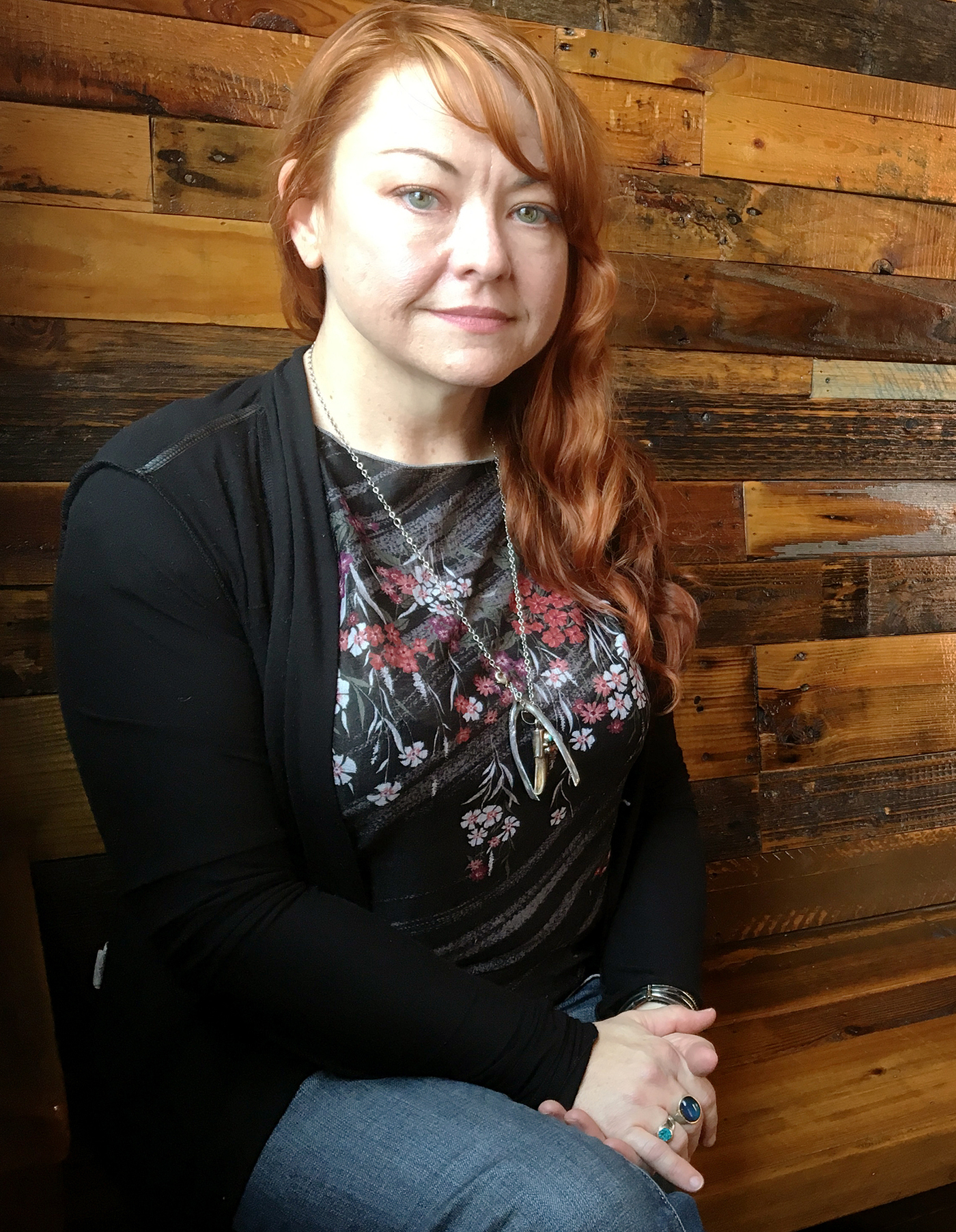
Keely Edgington and her daughter, Lula, pose inside their family-owned restaurant, Julep, in Kansas City, Mo. Lula was diagnosed with a neuroblastoma when she was 9 months old. She’s now 16 months old. Alex Smith / KCUR hide caption

toggle caption

Alex Smith / KCUR

This month’s election results could have big implications for those who now have insurance because of the Affordable Care Act — either through the exchanges or Medicaid expansion. President-elect Trump and Republicans in Congress have made it clear they want to scrap the law, but it’s unclear what may replace it. That gap between repeal and replacement has left many unsure of what will happen with their medical care. We have these reports from around the country from people who could be affected by changes.

Little Lula’s Preexisting Condition Is Cancer

If you stop by Julep, a Kansas City, Mo., bar and restaurant, you might catch a glimpse of Lula — the blond, blue-eyed toddler daughter of the owners, Keely Edgington and Beau Williams. They let her inspect the customers a bit before the place gets too busy.

“She likes to go out there and essentially just stare everybody down and smile at them,” Edgington says.

She’s so smiley you’d never guess how much she’s been through in her short life. “She happens to have 4S non-amplified neuroblastoma,” Edgington says. It’s a cancer in her adrenal gland that doctors discovered when Lula was 9 months old. She needed emergency surgery because of the size and location of the tumor.

Article continues after sponsorship

The cost was enormous. Edgington says she stopped looking at bills after they topped $350,000, and that was before the surgery. The vast majority of the cost was paid for through the insurance the family gets through HealthCare.gov, the federal health insurance marketplace created under the Affordable Care Act. They say, as small business owners, the exchange and subsidies they received because of the law were their only way they could get covered.

Even with coverage, the family was still on the hook for $10,000.

Lula has responded well to the treatment. She’s been in remission for a few months, but the family still faces high medical costs. At a minimum, Lula will need intensive, expensive screenings and scans for a few years, then she’ll have to be monitored for health conditions that might come up as a result of chemotherapy.

Since the election, the family says they’ve been on eggshells waiting to see what will happen with their insurance. They fear possibly losing subsidies. And, before the Affordable Care Act insurance companies could deny coverage to people with preexisting medical conditions like Lula’s, and the companies could set lifetime limits on the amount they’d pay for someone’s care. Insurers could also take into account an individual’s health history, so that someone with a chronic disease might pay many times more than a healthier person.

The family has been thinking about how they might cope with huge medical or insurance costs that might come if Obamacare is repealed. They’ve pondered a second mortgage, selling their business or even more desperate measures.

“Do we have to move to Canada and hope we get coverage there? That’s really extreme, but what wouldn’t you do for your child’s life?” says Edgington

Trump has said he’d make sure insurance companies couldn’t deny coverage to a person with a preexisting condition, but he has provided no formal plan, and much of what happens next is in Congress’s hands. Insurance and legal analysts are also unclear about what will happen, although most think the biggest changes probably wouldn’t go into effect until at least 2018. — Alex Smith, KCUR, Kansas City, Mo.

Obamacare Choices Are Dwindling For Some

Michael Cluck and his wife Nancy live in Edwardsville, Ill., just outside St. Louis. Cluck, 62, and his wife, Nancy, 58, bought insurance through HealthCare.gov in 2015, and it, “actually saved us $300 a month, and we were really happy with it,” he says.

But two providers, including his own insurer, Coventry, dropped out of the health insurance exchange in his county and two adjacent ones for 2017. There’s now just one choice there: Blue Cross Blue Shield of Illinois.

“Premiums were not that bad. Deductibles were not that bad,” Cluck says of Blue Cross. “But the problem was, they would not cover any doctors or hospital stays on the Missouri side of the river.”

Mike Cluck and his wife, Nancy, of Edwardsville, Ill., were happy with Obamacare until their insurer dropped out. Durrie Bouscaren / St. Louis Public Radio hide caption

toggle caption

Durrie Bouscaren / St. Louis Public Radio

Cluck had prostate cancer. He is now free of cancer, but he still needs regular checkups and he fears the cancer may return. It takes him about 30 minutes to drive to oncology appointments now, but the in-network providers Blue Cross Blue Shield of Illinois shows in its directory are farther away.

“That’s where the problem came in. Because all of my cancer doctors, and Siteman Cancer Center, are in St. Louis, Mo.,” Cluck says.

To Cluck, it’s a frustrating display of flaws in the Affordable Care Act.

“This was not supposed to happen,” he says. “When they put the Affordable Care Act in place, we were promised we could keep our doctors. We were promised it would cost $2,500 less than what we were currently paying. And nothing’s come true.”

On Nov. 8, when faced with a choice between Democratic presidential nominee Hillary Clinton and Donald Trump, he voted for the Republican.

“For a lot of reasons, not just Obamacare,” he says. But while he hopes that there’s a good replacement plan ready for any changes to Obamacare, he’s is frustrated by the insurance companies’ narrow networks.

“I don’t understand why, when the health care companies are recording record profits that they’re not staying in the Affordable Care Act. That’s the one thing that just boggles my mind.”

So, he hopes Trump follows through on his promise to repeal and replace.

“There’s a lot of things they need to fix, because there’s a lot of people who are reliant upon medical care and health care. I think this should really be fixing, dismantling—however you want to call it—the Affordable Care Act, I think that needs to really be a priority for the new administration.” — Durrie Bouscaren, St. Louis Public Radio.

Fears About Losing Insurance Limited Job Options
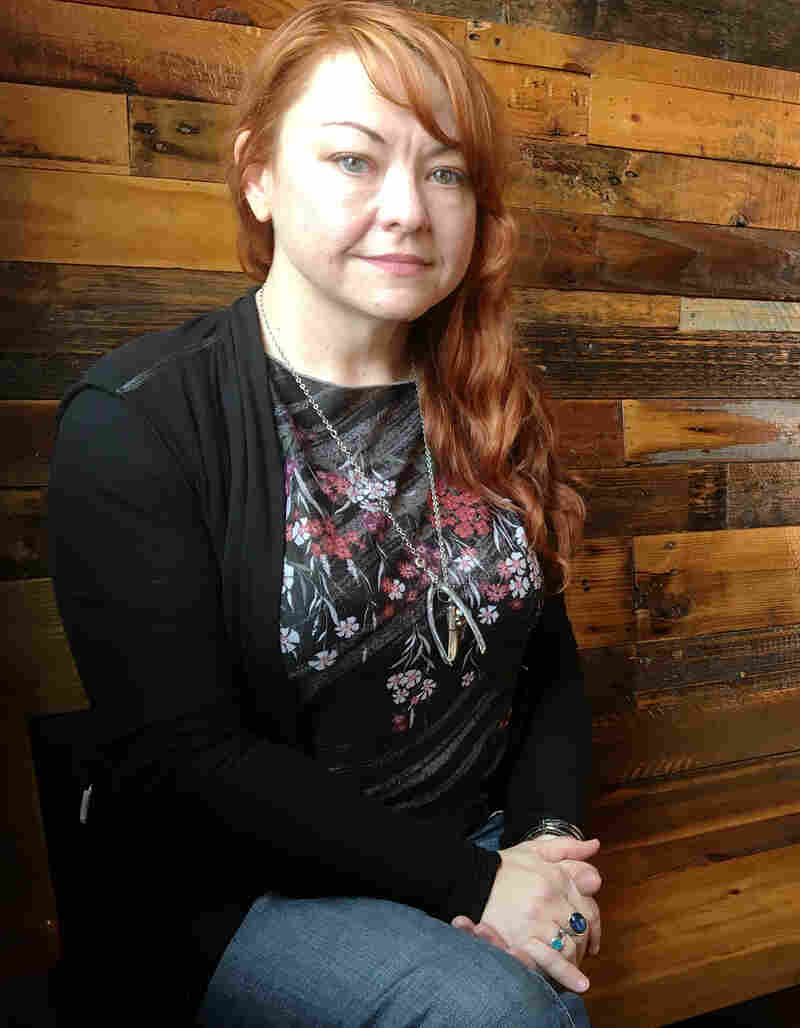
Leigh Kvetko relies on health insurance she bought through the federal marketplace to pay for the expensive medications that keep her alive after two organ transplantations. Lauren Silverman / KERA News hide caption

toggle caption

Lauren Silverman / KERA News

Leigh Kvetko, 46, of Dallas, has to take 10 medications twice a day because she’s had two organ transplants to replace her pancreas and kidney in 2003. Several of the pills she takes cost nearly $1,000 each per month. For years, Kvetko stuck with a job she hated in large part because it offered health insurance. When the Affordable Care Act passed, insurers could no longer discriminate against people like Kvetko, who have diagnosed health problems, and she and her husband finally felt free.

“It gave me hope and [my husband and I] decided to sell our house, to downsize, and to start our own businesses and start a new chapter of our lives.”

In this new chapter, Kvetko is retail manager at a busy Dallas coffee shop. She struts through the store in cowboy boots, her long red hair framing green-speckled eyes. She looks happy — and healthy. But her pancreas is failing, and she’s terrified about President-elect Trump’s promise to dismantle the Affordable Care Act. She fears it will put health care out of reach for her, and another 1.2 million Texans who rely on subsidized plans. — Lauren Silverman, KERA, Dallas.

These reports come to us as part of a partnership with NPR, local member stations and Kaiser Health News.


Let’s block ads! (Why?)

Legislation That Would Shape FDA And NIH Triggers Lobbying Frenzy

Lobbyists seeking to influence the 21st Century Cures Act descended on lawmakers. Susan Walsh/AP hide caption

toggle caption

Susan Walsh/AP

The 21st Century Cures Act now being refined by the lame duck Congress is one of the most-lobbied health care bills in recent history, with nearly three lobbyists working for its passage or defeat for every lawmaker on Capitol Hill.

More than 1,455 lobbyists representing 400 companies, universities and other organizations pushed for or against a House version of a Cures bill this congressional cycle, according to federal disclosure forms compiled by the Center for Responsive Politics.

The legislation would give the Food and Drug Administration new powers to more rapidly approve drugs and medical devices. The measure would also include additional funding for the agency as well as more money for the National Institutes of Health.

Work is now underway on a compromise expected to come up for a vote soon. While final details are still being negotiated, the House version that passed in June 2015 provided the NIH with $1.75 billion in additional annual funding over five years. The bill would keep generics off the market longer for drugs treating rare diseases and speed the drug and device approval process.

Article continues after sponsorship

The Cures Act garnered more lobbying activity than all but a few of the more than 11,000 bills proposed in the 114th Congress, an analysis of the CRP data shows. It’s also the second most-lobbied health care bill since 2011, surpassed only by the Medicare Access and CHIP Reauthorization Act of 2015, which, among other things, overhauled Medicare payments to health providers.

Putting a precise price tag on the lobbying is difficult because spending reports don’t break down spending by specific measures. The reports show that interested groups spent as much as half a billion dollars from 2015 through the second quarter of 2016 on all lobbying disclosures that included the 21st Century Cures Act.

“In a bill of this importance and consequence, a lot of groups have a lot of interest in every line in that bill, and they’re going to put as much pressure as they can on legislators — and maybe some executive branch people as well — to get favorable language in that bill to support their interests,” said former Rep. Lee Hamilton, who founded the Indiana University Center on Representative Government after spending more than three decades in the House of Representatives. “The more intense the lobbying, the more money is at stake.”

Senate Majority Leader Mitch McConnell identified the legislation as a priority after a 2016 election that has cast doubt on the future of the Affordable Care Act. President-elect Donald Trump has vowed to eliminate “red tape” at the FDA but hasn’t specifically commented on the Cures Act.

“Absolutely this has gained a lot of attention on K Street” said Tim LaPira, a political science professor at James Madison University. Every Congress, he said, a few dozen bills spark a “feeding frenzy.”

Even so, the bill hasn’t spurred as much lobbying as the Affordable Care Act in 2009, which brought out more than 1,200 organizations, according to CRP data.

The Pharmaceutical Researchers and Manufacturers of America, or PhRMA, the main trade group for brand-name drugmakers, applauded the House bill’s passage. The group’s lobbying reports naming the bill accounted for $24.7 million in spending by the group, which spent $30.3 million overall.

Its spokesperson Allyson Funk said in a statement the trade group “appreciate[s] Congress’ continued interest in improving biomedical innovation and accelerating new treatments for patients.”

Several nonprofit patient advocacy and research groups have opposed the bill, citing concerns about endangering patients with simplified drug and device approvals.

Beyond the pharmaceutical industry, the bill’s supporters include universities, medical schools and groups representing them, as well as patient groups funded by drug and device companies, said Diana Zuckerman of the nonprofit National Center for Health Research, which has not lobbied the bill, but has launched a campaign to convince congress to “fix” it.

“It really is a David and Goliath issue of where the money is,” Zuckerman said.

Rep. Fred Upton, a Michigan Republican, (left) and Rep. Diana DeGette, D-Colo., hold thank you signs made by Max Schill, 6, from Williamstown, N.J., after the House of Representatives voted in favor of the 21st Century Cures Act in 2015. Congressional Quarterly/CQ-Roll Call, Inc. hide caption

toggle caption

Congressional Quarterly/CQ-Roll Call, Inc.

AbbVie, the maker of Humira, a drug used to treat arthritis, ulcerative colitis and Crohn’s disease, reported $7.7 million in lobbying expenditures in disclosures listing the bill as an issue. The company’s total lobbying was $9.5 million this cycle.

Hospitals and medical schools, which oppose rising drug costs, supported the bill because the NIH funding could propel grants to medical and research institutions, Zuckerman said.

Johns Hopkins Medicine called enhanced biomedical research funding “long overdue.” Spokeswoman Jania Matthews said in an email that the bill would also “provide new tools at the FDA to accelerate the approval of new therapies and medical devices.”

The U.S. Chamber of Commerce generally supports the bill and reported $87.1 million in expenditures in disclosure reports that cited the Cures Act, with overall spending of $136.5 million through the second quarter of 2016.

The U.S Oil and Gas Association, with lobbying expenditures of $293,000, lists the Cures Act as a legislative issue. Funding for the bill would partly come from selling crude oil from the U.S. Government’s Strategic Petroleum Reserve.

According to the House Committee on Energy and Commerce, money from oil sales would go toward funding NIH “because just as energy reserves are a national resource designed to protect and serve our citizens, so too is an investment in health innovation and research.”

The U.S. Oil and Gas Association declined to comment.

Additional lobbyists may be working on the bill under the radar. LaPira said that lax lobbying disclosure requirements mean that some lobbyists may not disclose work on the bill, H.R. 6. That’s what he saw when the Affordable Care Act was passed, too.

“The clerk’s office is supposed to list the bill number if they know it, but nobody ever checks,” he said. “That’s another sort of trick of the trade: to hide in plain sight.”

The bill is considered a swan song for sponsor Rep. Fred Upton, Republican from Michigan, whose tenure as chair of the House Committee on Energy and Commerce is nearing an end, said Paul Heldman, an analyst at Heldman Simpson Partners, a research firm that provides health policy analysis to investors. Upton garnered broad support from device makers, drug manufacturers, researchers and patient advocacy groups. He’s received more than half a million dollars in campaign contributions from pharmaceutical and health product groups in the last two election cycles.

Kaiser Health News is an editorially independent news service that is part of the nonpartisan Henry J. Kaiser Family Foundation. Follow Sydney Lupkin on Twitter:@slupkin.

Let’s block ads! (Why?)

Pence Expanded Medicaid As Governor, Now He May Be Part Of Cutting It

In 2015, Indiana Gov. Mike Pence announced that the Centers for Medicaid and Medicare Services had approved the state’s waiver to try a different approach for Medicaid. Michael Conroy/AP hide caption

toggle caption

Michael Conroy/AP

Chris Cunningham was so thrilled with Indiana Gov. Mike Pence’s Medicaid expansion under the Affordable Care Act that she readily accepted his invitation to an event celebrating its first anniversary in January.

After eight years without health insurance, Medicaid coverage paid for treatment of her thyroid problem and lung disease and prescription drugs to help both. “It was a game changer for me,” the Indianapolis woman said.

Election Day’s results are on her mind now.

Indiana Gov. Mike Pence was one of 10 Republican governors to expand Medicaid under Obamacare, but as President-elect Donald Trump’s running mate, Pence is now calling for the health law’s repeal and replacement.

If that happens, millions of low-income people around the country added to the state-federal insurance program since 2014 under the health law are at risk of losing their health insurance. Thirty-one states and the District of Columbia have expanded Medicaid, extending coverage to at least 10 million Americans.

“I don’t see how a compassionate human being can rip health care away from millions of people,” Cunningham said.

Article continues after sponsorship

What Pence did with Indiana’s Medicaid program may place him in the middle ground of political battles to come over Obamacare’s future. He called for the law’s repeal even before joining Trump, but also pushed Medicaid’s expansion in a conservative direction by advocating for stricter eligibility requirements on low-income people receiving government-paid health care.

Neither Trump nor any other top Republican has spelled out what a replacement would look like. Trump has said he supports Medicaid block grants to states — a way of stabilizing federal funding that could ultimately raise states’ costs and force them to cut benefits or eligibility.

The health law allowed states to open Medicaid to all adults with incomes at or below 138 percent of the federal poverty level, with all the extra costs paid by the government for the first three years, 2014 through 2016.

Pence took the federal money but won the Obama administration’s approval to add features that set Indiana apart from other expansion states. For example, recipients are required to pay money — $1 a month for many — into special accounts that Pence contends will make them more conscious of the costs associated with health care.

Healthy Indiana Plan 2.0 pushed Medicaid’s traditional boundaries, which is why it has captured attention in conservative states. The plan demands something from all enrollees, even those below the poverty level. Individuals who fail to keep up their contributions lose dental and vision coverage and face copayments. Those above the poverty level can temporarily lose all coverage if they fall behind on contributions.

Proponents, including Pence, have said the strategy makes Medicaid recipients share financial responsibility for their care and that it will save Indiana money by reducing unnecessary services and inappropriate emergency room use.

Pence has said Indiana’s program has lowered ER use, led to recruitment of more physicians by paying them more and succeeded in getting most recipients to contribute monthly payments.

“This is an innovative, fiscally responsible program,” Pence said at the expansion’s first anniversary event that Cunningham attended in Indianapolis. “We are improving outcomes, improving lives and improving the fortunes of Hoosiers.”

Cunningham said last week she remembers that day well and the personal connection Pence made with her and other new enrollees.

“It does give me hope that Gov. Pence started Medicaid expansion here and talked highly of it,” she said. “When I met him that day, it gave me a sense that even though I didn’t agree with 75 percent of what he stood for, I found him to be a really good man [who] really wanted to improve the health situation for people of Indiana.”

Indiana hospitals are also hoping Pence will be an advocate for preserving the expansion.

The expanded Medicaid program pumped millions of dollars into the state’s hospital industry by providing them more paying patients and increasing their Medicaid reimbursements.

Brian Tabor, executive vice president of the Indiana Hospital Association, said the election results have him worried about the future of Medicaid and Obamacare. But knowing Pence will have Trump’s ear could make a difference.

Pence “understands that with some flexibility, states can be successful at expanding coverage and that bodes well for states like Indiana,” he said. “He is passionate about the health and security that Medicaid provides to Hoosiers. I am confident that he will have a significant policy role in the White House and will use that in a way to preserve what we have in Indiana.”

Tabor said that while block grants or a per capita limit for Medicaid would give states more autonomy in running the program, he worries it would mean cuts in federal funding that would hurt recipients and providers.

Medicaid’s expansion in Indiana has provided vital funding to hospitals, particularly those in rural areas that have struggled to stay open. “It’s been a lifeline to many rural providers,” he said.

Susan Jo Thomas, executive director of Covering Kids & Families of Indiana, an advocacy group, seems less hopeful for the future of Medicaid expansion and the program overall even with Pence as vice president.

“It’s scary to us,” she said of the prospect of losing Obamacare and Medicaid becoming a block grant program. While Republicans have proposed the block grant idea since the 1980s, she noted it could find stronger support because Congress has turned more conservative and most states have conservative governors.

For Cunningham, Medicaid expansion in 2015 came at the right time. She had been managing several group homes for the disabled in 2008 when she ended her career to care for her own disabled husband.

“I was in a desperate situation and I’ve been very grateful for the help,” she said.

For her at least, worries about not having insurance will fade next May.

That’s when she will turn 65 and enroll in Medicare.

This story was produced through a collaboration between NPR and Kaiser Health News, an editorially independent program of the Henry J. Kaiser Family Foundation, a nonpartisan health care policy research organization. You can follow Phil Galewitz on Twitter: @philgalewitz.

Let’s block ads! (Why?)

Spike In Demand For Long-Acting Birth Control Strains Clinic Budgets

Under the Affordable Care Act, insurers are required to cover birth control with no copay. It’s unclear what will happen to coverage if the act is repealed or amended. B. Boissonnet/BSIP/Getty Images hide caption

toggle caption

B. Boissonnet/BSIP/Getty Images

In the two weeks since the election, Planned Parenthood Federation of America has seen a huge increase in volunteers and donations – over 200,000 donations in a single week. But this surge in support hasn’t reached many other reproductive health organizations. And many of these centers are already struggling to meet a spike in demand for long-acting contraception after the election of Donald Trump.

Susie Markus, executive director of the Wyoming Health Council, says that she’s heard people in Wyoming say they’re going to donate to Planned Parenthood. “But there’s only one Planned Parenthood in Wyoming.” Her organization is the umbrella group for 15 publicly funded family planning centers in Wyoming. She’s been hoping for donations, but none have come in.

The nonprofit Wyoming Health Council is funded in part by Title X, a 46-year-old federal law that helps provide family planning services to the poor by distributing funds to regional grantees. They in turn support 3,951 facilities, including local health departments, federally qualified health centers, independent clinics and hospital outpatient units. About 13 percent of the facilities are run by Planned Parenthood. Title X doesn’t just cover birth control; it also covers breast and cervical cancer screenings, pregnancy counseling, and testing and treatment for sexually-transmitted diseases and other services, but not abortion. Centers funded by Title X are required to see all patients, regardless of insurance coverage, and charge them on a sliding scale based on income. Clinics cover the difference between the cost of the visit and what patients can pay.

Article continues after sponsorship

In states like Indiana, funding is already so tight that the post-election rush on IUDs and other long-lasting contraceptives like implants has left clinics scraping for money. IUDs come with a high up-front cost – up to $1,000 for the device and insertion. “At the end of the day, we’ve decided that if a woman wants an IUD, we will get it for her,” says Kristen Adams, president and CEO of the Indiana Family Health Council, a nonprofit that distributes funds to 26 clinics in the state. “That means a lot of budget shifting.”

Because the clinics provide same-day services, Adams says they typically have a few IUDs in stock. “But can we afford to keep 20 on our shelves? No.”

Family planning organizations in other states say they can handle a brief spike in patients, but if the rush of women seeking IUDs and other reproductive services continues, things might get difficult.

“Our demand for IUDs has about doubled, but we don’t know if that’s a short term spike or not. I think it would take a more consistent increase for it to begin to be an issue,” says Kate Brogan, Maine Family Planning’s vice president for public affairs. She says that Maine Family Planning has also seen a slight increase in donations.

This sentiment is echoed in California, which is served by Essential Access Health, the largest Title X-funded network in the country, with more than 340 clinics. According to Amy Moy, their vice president of public affairs, California’s network serves about 1 million people, or one quarter of the people eligible for Title X services nationwide. She says that the state has additional programs that fund family planning for people with low incomes.

One of those centers, the Women’s Community Clinic in San Francisco, has received some election-related donations, but “not like the increase Planned Parenthood has seen,” says Carlina Hansen, their executive director. If the demand for long-acting contraceptives continues, she says her clinic will need to open up more appointments and possibly increase staffing. “We already operate at a loss, and donations help us carry that loss. If we need to increase our staff, balancing our budget gets difficult.”

Even in states like California, Title X grantees are worried about the future. The Affordable Care Act and Medicaid expansion have increased the number of patients whose family planning visits are covered by insurance. If those expansions are rolled back, state programs and clinics will be pressed to take on the additional cost. And advocates are worried Title X will find itself on the chopping block.

It’s not an unfounded concern.

In the last several years, numerous bills have been introduced in Congress to block Title X funds from organizations that also provide abortions, like Planned Parenthood. In 2011, the House voted to defund Title X in its entirety, but the measure didn’t pass the Senate. Still, for the last several years Title X funding has decreased, from $317.5 million in 2010 to $286.5 million in 2016. Under a Trump administration and with a Republican Congress, those numbers could shrink even more.

“If we lost Title X funding — oh, gosh, given the history of Title X battles in Congress, I think that’s a real question,” says Brogan in Maine. “Right now we have over 50 clinics. There’s no way we’d be able to maintain that without Title X.”

Let’s block ads! (Why?)

Hospital Companions Ease Isolation For Older Patients

Volunteer Julia Torrano helps Estelle Day, 79, style her hair while she’s a patient at UCLA Medical Center. Ina Jaffe/NPR hide caption

toggle caption

Ina Jaffe/NPR

Loneliness can be a problem for older people, especially when they’re in the hospital. Their children may have moved away. Spouses and friends may themselves be too frail to visit. So a California hospital is providing volunteer companions in the geriatric unit.

One of the volunteers at the UCLA Medical Center in Santa Monica is 24-year-old Julia Torrano. She hopes to go to medical school. Meanwhile, her twice-weekly volunteer shifts give her a lot of practice working with patients.

One of them is Estelle Day. She’s 79 years old, a slender woman with a wild mane of hair that is still mostly red. Torrano peppers her with questions.

“Where were you originally from?” asks Torrano. Day replies that she grew up on Long Island in New York. Torrano also wants to know how Day met her husband, where she learned to play the harp, where her travels have taken her.

Day is happy to answer everything. She says she likes people and describes herself as “windbaggy.” That’s especially true if she’s talking about playing music. She is a lifelong musician and retired music teacher. She plays harp and guitar, but her favorite instrument is the pipe organ. “To be able to rock a building under your hands and your feet is exciting,” she says.

Article continues after sponsorship

This was Day’s fifth day as a patient in the geriatric unit. She says multiple chronic conditions brought her here, but she didn’t want to name them. Visible were a bulky back brace she wears for her osteoporosis, an IV drip and a heart monitor.

When that heart monitor suddenly began beeping, Torrano was out of the room like a shot. She returned seconds later with a nurse who solved the problem with the push of a button.

Torrano and the other volunteer companions aren’t just candy stripers, bringing snacks and magazines. She knew what to do when the heart monitor started beeping because, like all of the volunteers in this program, she’s been trained. As Dr. David Reuben, chief of geriatrics at the Geffen School of Medicine at UCLA explains: “Just because you’re willing to do something doesn’t mean you know how to do it.”

Volunteers learn about medical confidentiality, what to do in an emergency, and how to interact with patients, including patients with dementia. Reuben says they go through a “vigorous training process and vetting process before we allow them to be with patients.” There are nearly three dozen volunteers so far. The program started just a few months ago, and the hospital plans to expand it.

Loneliness is a legitimate medical issue. There are a number of studies linking loneliness and social isolation in old people to poorer health and earlier death, including one published earlier this month in JAMA Psychiatry associating loneliness, social isolation and brain changes typical in Alzheimer’s. But Reuben cautions that those studies weren’t done in a hospital setting. Nevertheless, he says, “you might suspect that being more engaged, more energized … might promote a speedier recovery.”

So now the hospital is designing studies to find out if the volunteer companionship improves medical outcomes, or at least improves the patient’s experience in the hospital.

Torrano says she’ll sometimes spend her entire four-hour shift with a single patient. Like Estelle Day, many are happy to share their life stories. She remembers one man in particular who had been a political prisoner in Iran. He’d run an underground newspaper. “He was in jail so much,” she recalls, yet he told her he also misses Iran. “Even though it was very traumatic, he still wishes he was there,” Torrano says.

Estelle Day says she’s not especially lonely, but she’s been alone much of the time since she was admitted to the geriatric unit. So it helps to have a companion who will not only listen to her life story, but can also troubleshoot the little problems that can make life in a hospital such a challenge. “Somebody who is sensitive and tuned-in and is very helpful,” explains Day, the way Torrano was when Day’s heart monitor started acting up.

And companionship can take many forms. On the day of Torrano’s visit, one of Day’s most pressing dilemmas was fixing her hair. It had been shoved up in a rubber band since she was admitted.

So with Day’s encouragement, Torrano picks up a comb and gently begins detangling. Whatever it takes to make the patient look good and feel better.

Let’s block ads! (Why?)

Older Patients Can Benefit From Lung Cancer Surgery

When Morton Pollner was diagnosed with lung cancer at age 76, he thought it was a death sentence. Michael Rubenstein for NPR hide caption

toggle caption

Michael Rubenstein for NPR

Every year when Morton Pollner had his checkup, he worried that doctors would find something on his lung. For years, they didn’t. Then his luck ran out.

“My reaction was, ‘Well, you smoked for 30 years. You got away with it for another 30 years and this is it.’ I thought it was a death sentence,” he says.

Pollner, who lives in Monroe, N.Y., was 76 when he was diagnosed with lung cancer. Like many patients his age, he didn’t expect there would be any effective treatment. Lung cancer is the second most common cancer in men and women. And it is mainly a disease of older people. Only about 2 percent of lung cancer patients are under 45 and the average age at diagnosis is about 70.

Older patients are frequently not offered curative treatment like surgery, because they and their families and even their doctors often think they won’t be able to tolerate it. So they are referred for supportive care to control symptoms, rather than surgery to remove the cancer.

It’s been seven years since Pollner had surgery for lung cancer. He’s now 82 and takes Tai Chi classes three times a week at the local Synagogue. Michael Rubenstein for NPR hide caption

toggle caption

Michael Rubenstein for NPR

But many patients can survive and even thrive after surgery, says Dr. Prasad Adusumilli, a thoracic surgeon at Memorial Sloan Kettering Cancer Center in New York. He was senior author of a study published in the Journal of Clinical Oncology in October. The study looked at more than 2,000 patients with Stage 1 non-small cell lung cancer who had surgery to remove their tumor. About 70 percent of the patients were 65 years old or older and about 30 percent were at least 75.

Article continues after sponsorship

And he found that a surprising number of these older patients did quite well. One year after surgery, more people had died from other causes than died from lung cancer. And, after five years, almost 9 out of 10 patients were alive and cancer free.

“They did well and beat their lung cancer,” Adusumilli says, proving that when it comes to surgery for early stage lung cancer, age should not be a limiting factor.

This was the case for Morton Pollner, who is one of Adusumilli’s patients. His cancer had not spread, and Adusumilli told him there was a good possibility the cancerous tissue could be completely removed and he could go back to leading a normal life. That was seven years ago. Today, Pollner is 82, cancer free and enjoying life.

Morton and his wife Joan Pollner are both enjoying life. Michael Rubenstein for NPR hide caption

toggle caption

Michael Rubenstein for NPR

“Whatever I get from here on, it’s like gravy,” he says.

Surgery isn’t the answer for all older lung cancer patients, according to Dr. Len Lichtenfeld, deputy chief medical officer of the American Cancer Society. Patients with heart or other health problems may not be candidates. At the same time, he says it’s important to recognize that patterns of aging have changed over the past two decades.

Seventy today is not the same as it was 20 years ago, Lichtenfeld says. Older adults are more functional, both physically and mentally, than ever before, and he says the medical community needs to adjust its thinking about what treatments older cancer patients can tolerate.

“We shouldn’t allow numerical age to be the deciding factor,” Lichtenfeld says.


Let’s block ads! (Why?)

Florida Keys Approves Trial Of Genetically Modified Mosquitoes To Fight Zika

Protest signs at the Florida Keys Mosquito Control District board’s meeting Saturday in Marathon, Fla. Greg Allen/Greg Allen hide caption

toggle caption

Greg Allen/Greg Allen

In the Florida Keys on Election Day, along with the presidential race, one of the most controversial items on the ballot dealt with Zika. In a nonbinding vote countywide, residents in the Florida Keys approved a measure allowing a British company to begin a trial release of genetically modified mosquitoes. Armed with that approval, local officials voted Saturday to try out what they hope will be a new tool in the fight against Zika.

For months now, state and local authorities in Florida have struggled to control the spread of Zika. But although there have been more than 200 cases of locally transmitted Zika statewide, none have been reported in the Keys. And that’s one reason why residents like Megan Hall oppose the new technology. At a meeting of the Florida Keys Mosquito Control District board in Marathon on Saturday, Hall made a personal appeal to the board. “I am going to ask you, beg you, plead with you,” she said, “not to go forward with this.”

Article continues after sponsorship

An Aedes aegypti mosquito feeds on the arm of Emilio Posada, the Upper Keys supervisor for the Florida Keys Mosquito Control District, in Key Largo, Fla. Wilfredo Lee/AP hide caption

toggle caption

Wilfredo Lee/AP

For five years now, the district has been working with the British company Oxitec to get federal approval for a trial release of the mosquitoes in the Keys. The company releases genetically modified male Aedes aegypti mosquitoes into the wild. When they mate with female Aedes aegypti, their offspring die.

In trials in Brazil, the Cayman Islands and other countries, Oxitec has shown its GM mosquitoes can reduce the population of Aedes Aegypti by 90 percent or more. But after five years, a small but vocal group of residents is not convinced the mosquitoes are safe. Opponent Dina Schoneck told the board, there are still too many unanswered questions about the new technology. She said, “I believe there are a lot of risks that are not being considered.”

Although it doesn’t have any cases of local Zika transmission yet, Monroe County, which includes the Keys, has had big problems in the past with dengue, another disease carried by the same mosquito. The head of the county’s health department, Bob Eadie, supports the trials. Just because the county hasn’t had any local Zika cases yet doesn’t mean the disease isn’t a threat, he said. Eadie went on, “There is a tool available for the people of Monroe County that can help control mosquitoes that carry a very, very, very serious disease.”

In August, the Food and Drug Administration gave its approval for the trial, saying it found no potential adverse impact on human health or the environment. Because of the vocal opposition, the Mosquito Control District’s Board of Commissioners decided to submit the trial to the voters in the form of two nonbinding resolutions. One was for the residents of Key Haven, the community where the trials were proposed. The other referendum went before voters in the rest of the county.

Because Key Haven voters rejected it, commissioners say trials won’t be conducted there. But in Saturday’s meeting, the board approved trials elsewhere in the Keys at a location still to be determined. Jill Cranney-Gage is a commissioner who represents Key West. “This is a tool mosquito control needs. When you’re sworn into office,” Cranney-Gage said,”your main goal is to kill mosquitoes and to protect the residents and the county.”

Containers hold genetically modified Aedes aegypti mosquitoes before being released in Panama City, Panama. Arnulfo Franco/AP hide caption

toggle caption

Arnulfo Franco/AP

Officials in the Keys say the announcement by the World Health Organization that Zika is no longer a “public health emergency” is in no way an indication the threat is lessening but that instead, it’s a disease that’s here to stay

Florida Keys Mosquito Control District staff and Oxitec are now working now to identify a new neighborhood to conduct trials. Derric Nimmo with Oxitec is hopeful that identifying a new location and receiving federal approval will be a matter of a few months, and releases could start next year. Nimmo says he’s encouraged that the GM mosquito technology gained the approval of a large majority — 58 percent of county residents. “So there is very strong support for use of this technology in Monroe County,” he says. “And hopefully, they’ll move forward with this trial.”

After months of struggling with Zika, health officials and mosquito control authorities elsewhere in Florida are eager to begin their own trials of the GM mosquitoes. Oxitec says if things go well in the Keys, it could begin trials next year in Miami.

Let’s block ads! (Why?)