Millions Of People Are Having An Easier Time Paying Medical Bills

Juana Rivera, left, speaks with agent Fabrizzio Russi about buying insurance through the Affordable Care Act in Miami on Dec. 15, 2014. Joe Raedle/Getty Images hide caption

toggle caption

Joe Raedle/Getty Images

The number of people who have trouble paying their medical bills has plummeted in the last five years as more people have gained health insurance through the Affordable Care Act and gotten jobs as the economy has improved.

A report from the National Center for Health Statistics released Wednesday shows that the number of people whose families are struggling to pay medical bills fell by 22 percent, or 13 million people, in the last five years.

And that’s good news, according to consumer and health policy advocates.

“The effect on families is profound,” says Lynn Quincy, director of the Healthcare Value Hub at the Consumers Union. “Health care costs are a top financial concern for families, far above other financial concerns.”

Quincy says the number one determinant of whether people can pay medical bills is whether they have insurance.

“The fact that this report shows it’s getting easier, it seems like we should lay a good part of this at the door of the ACA,” she says.

The decline in families worrying about medical bills corresponds with a huge increase in the number of people who have health insurance. In 2011, 46.3 million in the U.S. were uninsured. In June of this year, that figure had fallen to 28.4 million people.

Article continues after sponsorship

Much of that increase is due to the Affordable Care Act, whose insurance exchanges were launched in 2013 for coverage starting in 2014.

About 20 million people this year have health insurance because of the ACA, according to the Department of Health and Human Services. That includes about 10 million people who gained coverage through the expansion of Medicaid and another 10 million who buy insurance on the Obamacare exchanges or are young adults covered through their parents’ insurance.

Kevin Lucia, a research professor at Georgetown’s Health Policy Institute, says the insurance offered under Obamacare has more financial protections than pre-ACA policies.

“The coverage is more protective in many ways,” he says. “It doesn’t include annual limits [or] lifetime limits, and it includes a comprehensive benefit package. That may be contributing to the improved data.”

Some of the relief could also come because more people have jobs, so they can more easily pay their bills.

The unemployment rate has fallen from 9.1 percent in January 2011 to just 4.9 percent in June, according to the Bureau of Labor Statistics.

The finding that people are having an easier time paying medical bills may seem surprising because of reports that insurance premiums and cost-sharing have been rising in recent years.

A report in September by the Kaiser Family Foundation shows that more and more companies are offering their employees health insurance plans that carry higher deductibles.

But Quincy says simply having coverage is the key.

“People speak loudest when they are faced with increasing deductibles and increase cost sharing,” she says. “But nothing determines the affordability of care than that binary equation: Do you have coverage or do you not?”

The report comes just as President-elect Donald Trump is naming officials to his health policy team who are determined to dismantle the Affordable Care Act. Trump has pledged to repeal and replace the health law, and on Tuesday named Rep. Tom Price, R-Georgia, a vocal opponent of Obamacare, to lead the Department of Health and Human Services.

Repealing the law would hurt the people who are seeing relief from high medical bills as highlighted in this report, says Jay Angoff, a former Missouri insurance commissioner who helped implement the Affordable Care Act at HHS.

“There are millions of people who have coverage under Obamacare,” Angoff says. “What are they going to tell those guys?”

Let’s block ads! (Why?)

Trump Picks Seema Verma To Run Medicare And Medicaid

Seema Verma, now in line to head the Centers for Medicare & Medicaid Services, arrives at Trump Tower in New York City on Nov. 22. Drew Angerer/Getty Images hide caption

toggle caption

Drew Angerer/Getty Images

President-elect Donald Trump unveiled two big health care decisions Tuesday.

He picked Rep. Tom Price to head the Department of Health and Human Services and tapped Seema Verma, a health care consultant, to head the Centers for Medicare & Medicaid Services. That’s the part of HHS that oversees Medicare, Medicaid, and the Children’s Health Insurance Program and has a budget of just under a trillion dollars in 2016.

Verma comes to the job with extensive Medicaid experience. Her consulting firm, SVC, Inc., worked closely with Indiana Gov. Mike Pence to design Indiana’s Medicaid expansion under the Affordable Care Act. The expansion, known as the Healthy Indiana Plan 2.0, went into effect early last year, and Verma’s involvement in it may prove important as Congress and the Trump administration, including the Vice-president elect, make decisions on the future of Obamacare.

Indiana’s unique Medicaid expansion was designed to appeal to conservatives. HIP 2.0 asks covered people to make a small monthly payment to access health insurance. A missed payment can result in six-month lockout from insurance coverage. Those provisions aren’t allowed under traditional Medicaid, but Indiana got a federal waiver to implement them.

Article continues after sponsorship

Other Republican-led states, such as Iowa, Ohio and Kentucky, have contracted with Verma’s firm to help submit their own Medicaid expansion proposals to the federal government that also include conservative provisions such as asking recipients to pay for some of their care, requiring them to work or to be actively looking for work.

Susan Jo Thomas, who heads the Indiana insurance advocacy group Covering Kids and Families, says Verma’s contributions to HIP 2.0 made Medicaid expansion possible in a Republican state. “She understood that in order to get expansion in this state, it’s more about what is palatable, what can get approved,” she says.

Nearly 410,000 people are members of HIP 2.0, according to the latest data from the state.

But the Indiana approach has its critics. David Machledt, a policy analyst with the National Health Law Program, argues that provisions like denying coverage for a certain period of time or charging copays reduce participation. “Early evaluations show that a lot of people don’t understand this plan and don’t understand the incentives in it,” he says. That means people end up not getting the health care they need.

Nevertheless, Machledt says, if Medicaid expansion continues, Trump’s pick of Verma pick to head CMS could mean that proposals like Indiana’s may be more likely to be approved.

Policy analyst Joan Alker, with the Georgetown Center for Children and Families, finds it worrisome. “It is a good thing that she has experience with Medicaid and it is a positive that Gov. Pence worked with Ms. Verma to advance a version of Medicaid expansion,” she says. “But I think if you look at the totality of the Trump administration’s picks today — Congressman Price as well as Ms. Verma — this represents potentially a very damaging and chaotic restructuring of the Medicaid program.” Price has advocated severely cutting Medicaid funding, and Alker worries that cuts and more stringent requirements under Verma would mean people will lose the health insurance.

“The Healthy Indiana Plan has occurred in the context of generous federal funding,” she says. “And I think some of that is on deck to go away.”

But Verma may be a smart pick, says Indiana Rep. Charlie Brown, the ranking Democrat in the state’s public health committee. “She is a smooth operator, and very, very persuasive,” he says. Brown worked in opposition to Verma in crafting the Healthy Indiana Plan, but said she was effective across party lines at incorporating the Pence administration’s wishes.

“She’s very resourceful and intelligent,” says Brown. “But the question now becomes, ‘What will be her marching orders as they relate to Medicare and Medicaid?’ “

Verma’s role in shaping Indiana’s health care policy has had some controversy. According to a 2014 report from The Indianapolis Star, she has received millions of dollars from the state through her work with the Indiana government. She was also paid by Hewlett-Packard, a Medicaid vendor that received more than $500 million in state contracts. Government ethics experts told the Star the arrangement presented a conflict of interest.

Verma didn’t immediately respond to requests for comment, nor did Gov. Pence’s office.

This story is part of a reporting partnership with NPR, Side Effects Public Media and Kaiser Health News.

Let’s block ads! (Why?)

Congress Poised To Pass Sweeping Law Covering FDA And NIH

Rep. Diana DeGette, D-Colo., and Rep. Fred Upton (right), R-Mich., who have spearheaded the 21st Century Cures Act, speak after a 2015 House of Representatives vote in its favor. Congressional Quarterly/CQ-Roll Call, Inc./Getty Images hide caption

toggle caption

Congressional Quarterly/CQ-Roll Call, Inc./Getty Images

Legislation to bolster medical research and revamp the way new drugs and medical devices are approved is on the fast track through a Congress that has had little success to celebrate this year.

The House could vote Wednesday on a vast bill that stretches nearly a thousand pages and holds changes large and small for the National Institutes of Health and the Food and Drug Administration.

Analysts are still picking through the law, which has bipartisan support. They are raising both hope and concern about its sweeping provisions.

Advocates for biomedical research are happy to see billions of dollars in new funding for the NIH and associated projects. (The money will come, in part, from portions of the Affordable Care Act that are on the chopping block following the November election.)

The National Institutes of Health budget has slipped about 20 percent over the past decade in terms of buying power. The 21st Century Cures Act does little to offset that decline, but it does include billions of research dollars for some new high-profile projects, such as Vice President Biden’s push to accomplish 10 years of cancer research in half that time.

“The Cancer Moonshot is emblematic of the way our nation should feel about medical progress,” says Ellie Dehoney, vice president of policy and advocacy at Research!America. “It should be a top priority and we would be devoting more resources, more time and more of our intellectual capital to that goal.”

The bill also promises faster action on potential new drugs and devices. And this is where some of the concerns come in.

Article continues after sponsorship

“It is a massive bill that has scattered throughout a grab bag of goodies for the medical device and pharmaceutical industries,” says Dr. Michael Carome, director of Public Citizen Health Research Group.

More than 1,455 lobbyists had a hand in the bill, according to Kaiser Health News, which scoured records at the Center for Responsive Politics. So Carome says the legislation isn’t all about helping sick people get better.

He’s concerned that some parts of the bill would allow drugs to be approved on thinner evidence than they now require.

“There’s no doubt that patients would like to get treatments faster to the market, but they need to be assured those treatments are safe and effective for each of those marketed uses,” Carome says.

The new law would allow a drug approved for one purpose to be used for a related disease without going through the entire approval process, he said. Carome worries that measure could put patients at risk.

The Food and Drug Administration has been working faster on drug approvals, even without the new legislation. Drugs can be approved based on inferences that they work, but without proof of a long-term benefit. Researchers use a “surrogate endpoint,” such as tumor’s response to a drug, even though that response may not lead to a longer or healthier life.

The faster approach doesn’t always work out as planned. Diana Zuckerman, who heads the National Center for Health Research, points to a study that found 18 of the 36 cancer drugs recently approved on the basis of surrogate endpoints turned out not to help people live longer.

“What’s happening is we are flooding the market with medical products that don’t work very well, or we don’t know whether they work,” Zuckerman says.

She has a new study (slated for publication in JAMA Internal Medicine, but not yet in print) showing that often these new cancer drugs don’t even improve the quality of life for these cancer patients, despite the drugs’ soaring price tags.

Zuckerman say she’s concerned that the 21st Century Cures act will make it even easier for drug companies to use this express lane for approval.

Former FDA Commissioner Mark McClellan agrees that the agency doesn’t have a good track record following up on provisionally approved drugs. “A lot of follow-up studies have not been performed or have not been performed well because we don’t have good systems in place to learn about drugs once they are on the market,” he says.

But Dr. McClellan, who served in the George W. Bush administration and is now director of the Margolis Center for Health Policy at Duke University, expects the new legislation to improve that situation.

McClellan is also happy to see that the legislation gives the FDA more latitude to consider the needs and views of patients when weighing judgments.

Frank Sasinowski, at the law firm Hyman, Phelps & McNamara, notes that the laws governing the FDA didn’t even mention patients until 2008 — more than 100 years after the agency was founded. The entire system was geared toward pharmaceutical companies and makers of medical devices.

“This bill, if it were to become law, would even give more prominence to the role of the patient in this process,” he says.

Sasinowski, who has represented the pharmaceutical industry, also lauds the part of the 21st Century Cures Act that would help the FDA fill more than 600 vacant positions — jobs that have remained open because the pay hasn’t been competitive.

At the moment, Sasinowski says, “it’s impossible to find good people to come to the FDA even though it is maybe the most important public health function in our nation.” If the bill sails through the House and Senate, as some analysts expect, it could reach President Obama’s desk before the end of the year.

You can email Richard Harris at rharris@npr.org.

Let’s block ads! (Why?)

5 Things To Know About Rep. Tom Price's Health Care Ideas

Rep. Tom Price has introduced his own alternative to the Affordable Care Act four times. The legislation provides an idea of how he might lead the Department of Health And Human Services. Andrew Harrer/Bloomberg via Getty Images hide caption

toggle caption

Andrew Harrer/Bloomberg via Getty Images

Georgia Rep. Tom Price has been a fierce critic of the Affordable Care Act and a leading advocate of repealing and replacing the 2010 health care law.

Price, an orthopedic surgeon from the suburbs of Atlanta, introduced his own legislation to repeal and replace Obamacare in the current Congress and the three previous sessions. Price’s plan, known as the Empowering Patients First Act, was the basis for a subsequent health care proposal unveiled by House Speaker Paul Ryan, with Price’s endorsement, in June.

Price’s major complaint about the ACA is that it puts the government in the middle of the doctor-patient relationship.

“They believe the government ought to be in control of health care,” Price said in June at the American Enterprise Institute event where Ryan unveiled the Republican proposal to replace Obamacare. “We believe that patients and doctors should be in control of health care,” Price continued. “People have coverage, but they don’t have care.”

Now that President-elect Donald Trump has tapped Price to lead the Department of Health and Human Services, here are five key planks in his own health care proposal.

  1. Price’s plan offers fixed tax credits so people can buy their own insurance on the private market. The credit starts at $1,200 a year and rises with age, but isn’t adjusted for income. Everyone receives the same credit whether they are rich or poor. People on Medicaid, Medicare, the military health plan known as Tricare, or the Veterans Affairs’ health plan could opt instead for the tax credit to buy private insurance.
  2. Price advocates for expansion of health savings accounts, which allow people to save money before taxes to pay for health care. This includes allowing people who are covered by government health programs including Medicare and the VA to contribute to health savings accounts to pay for premiums and copayments. These proposals are included in Ryan’s plan.
  3. People with existing medical conditions couldn’t be denied coverage under Price’s plan as long as they had continuous insurance for 18 months prior to selecting a new policy. If they didn’t, then they could be denied coverage for that condition for up to 18 months after buying a new plan.
  4. The Price proposal limits the amount of money companies can deduct from their taxes for employee health insurance expenses. Companies can deduct up to $20,000 for a family health insurance plan and $8,000 for an individual. The goal is to discourage companies from offering overly generous insurance benefits to their workers. Ryan’s plan proposes a cap on the employer tax deduction but doesn’t specify the level of the cap.
  5. States would get federal money to create so-called high-risk pools under Price’s plan. These are government-run health plans for people with existing medical conditions who can’t get affordable health insurance on the private market. Critics say high-risk pools have been tried in as many as 34 states and largely failed because they were routinely underfunded.
Article continues after sponsorship

Price has said he’s not wedded to his own ideas and is open to compromise, so the final proposal to replace Obamacare is likely to be a hybrid of his ideas and those hammered out with other Republican House members and presented as Ryan’s plan.

Still, with Price on track to be at the helm of HHS, he would be the one writing the rules to implement whatever legislation is eventually passed.

Let’s block ads! (Why?)

Trump Chooses Rep. Tom Price, An Obamacare Foe, To Run HHS

Rep. Tom Price (center) appeared in early 2016 before the House Rules Committee, when he sponsored legislation that would repeal President Obama’s signature health care law. J. Scott Applewhite/AP hide caption

toggle caption

J. Scott Applewhite/AP

Rep. Tom Price, a Georgia Republican, is President-elect Donald Trump’s pick for Secretary of Health and Human Services. He is currently chairman of the powerful House Budget Committee.

Price, an orthopedic surgeon for nearly 20 years before coming to Congress, has represented the northern Atlanta suburbs in the House of Representatives since 2005.

If confirmed by the Senate, Price would likely have a central role in the Republicans’ stated plans to dismantle the Affordable Care Act and design a replacement. He has repeatedly introduced legislation to repeal and replace the ACA and is one of hundreds of Republicans who have voted dozens of times to repeal the federal health care law since it was enacted in 2010. Those efforts either didn’t make it to President Obama’s desk or were vetoed by him.

As HHS secretary, Price would not only oversee Obamacare as it currently exists, but also run the government’s largest social programs, including Medicare, Medicaid and the Children’s Health Insurance Program. He would also have authority over the Food and Drug Administration, the Centers for Disease Control and Prevention, the National Institutes of Health and other major health agencies.

HHS employs nearly 80,000 people and is the largest source of funding for medical research in the world.

Politically, Price is conservative. He opposes abortion rights, receiving a 2016 rating of 0 by Planned Parenthood and 100 percent by National Right to Life. He has voted against legislation aimed at prohibiting job discrimination based on sexual orientation; for a constitutional amendment to define marriage as between one man and one woman; and against the bill that would’ve ended the don’t-ask-don’t-tell policy regarding disclosure of sexual orientation in the military.

Article continues after sponsorship

He has also voted against:

  • federal funding for abortion;
  • funding for groups like Planned Parenthood;
  • a law that now requires the FDA to regulate tobacco as a drug; and
  • a bill that would have provided four weeks of parental leave for federal employees.

In 2007, Price voted in favor of a bill that would have granted the so-called pre-born equal protection under the 14th Amendment.

In 2015, Price wrote the language for a bill that is now seen as one of the main paths forward to repeal portions of the ACA. It would employ the same budget reconciliation rules Democrats used to originally pass the law in 2010, but instead the GOP plan would defund Obamacare.

This reconciliation option would leave in place the basic structure of the ACA, including the insurance exchanges and rules that require insurers to cover existing conditions and permit young adults to stay on their parents’ insurance policies until age 26.

But without funding, the exchanges are likely to see an exodus of insurance companies, particularly if expensive requirements are kept in place.

Price, 62, lives in Roswell, Ga., with his wife Betty. He received his medical degree from the University of Michigan.

Let’s block ads! (Why?)

Flu Vaccine During Pregnancy Not Linked To Autism

Flu shots are recommended for all pregnant women. PhotoAlto/Michele Constantini/Getty Images hide caption

toggle caption

PhotoAlto/Michele Constantini/Getty Images

Getting the flu while pregnant doesn’t appear to increase the child’s risk of being diagnosed with autism later on, a study finds, and neither does getting a flu shot while pregnant.

The study, published Tuesday in JAMA Pediatrics, tries to tease apart subtle questions of risk and risk avoidance. Some smaller, earlier studies have found an association between serious viral infections in pregnancy or maternal fever in pregnancy and increased autism risk. This much larger study finds no such ties, though the authors note that it shouldn’t be the last word on the topic.

This study examined the health records of 196,929 children who were born at Kaiser Permanente facilities in Northern California between 2000 and 2010. They found that 3,101 children, or 1.6 percent, had been diagnosed with autism through June 2015.

The researchers then looked at the mothers’ health records to see if they had been diagnosed with flu while pregnant and if they’d gotten a flu shot. Less than 1 percent of women had the flu; about 23 percent got a flu shot while pregnant, a number that rose from 6 percent in 2000 to 58 percent in 2010.

Article continues after sponsorship

They found no correlation overall between having the flu while pregnant and increased autism risk in children.

The study did find a slightly increased risk of autism when mothers had a flu shot in the first trimester of pregnancy. But that could be due to chance, the researchers say, given the small numbers of children in that group and the multiple hypotheses the study tested.

“We feel it should be reassuring for prospective mothers,” says Lisa Croen, a senior research scientist for Kaiser Permanente and senior author of the study. “The way we feel people should interpret this is that there is really not any increased risk for autism, and we’re recommending no changes in the vaccine policy.”

The Centers for Disease Control and Prevention and obstetric and pediatric medical societies currently recommend that all pregnant women get a flu shot. That’s because getting the flu is riskier while pregnant, and it increases the risk of premature birth and low birthweight for the baby. It also protects the baby against flu in the first few months of life.

“We know that pregnant women are particularly vulnerable,” Croen says, “There are lots of changes in their immune system and lungs and heart. It’s especially important to protect pregnant women against the flu.”

Still, Croen and her colleagues say that more study needs to be done on the question, especially since other studies have found that maternal immune responses during pregnancy may be associated with increased risk of autism.

This study also didn’t look at whether the flu vaccine that women got included the preservative thimerosal. Multiple studies have found no link between thimerosal, which contains small amounts of ethyl mercury, and autism or other developmental problems, but in 1999 the Food and Drug Administration recommended that the preservative be removed from vaccines given to infants because of concerns about vaccine safety. Multi-dose containers of flu vaccine are among the few vaccines that still contain thimerosal.

The idea that vaccines could cause autism was popularized by Andrew Wakefield, a British doctor who published a paper in 1988 saying that the MMR vaccine caused autism. The paper was later shown to have been faked, and in 2010 the paper was retracted. But the notion that vaccines cause autism continues to affect vaccination rates in Britain and the U.S.

Let’s block ads! (Why?)

Big Data Coming In Faster Than Biomedical Researchers Can Process It

Biomedical researchers are amassing huge amounts of patient data but are having trouble making sense of the information.

Katherine Streeter for NPR

Biomedical research is going big-time: Megaprojects that collect vast stores of data are proliferating rapidly. But scientists’ ability to make sense of all that information isn’t keeping up.

This conundrum took center stage at a meeting of patient advocates, called Partnering For Cures, in New York City on Nov. 15.

On the one hand, there’s an embarrassment of riches, as billions of dollars are spent on these megaprojects.

There’s the White House’s Cancer Moonshot (which seeks to make 10 years of progress in cancer research over the next five years), the Precision Medicine Initiative (which is trying to recruit a million Americans to glean hints about health and disease from their data), The BRAIN Initiative (to map the neural circuits and understand the mechanics of thought and memory) and the International Human Cell Atlas Initiative (to identify and describe all human cell types).

“It’s not just that any one data repository is growing exponentially, the number of data repositories is growing exponentially,” said Dr. Atul Butte, who leads the Institute for Computational Health Sciences at the University of California, San Francisco.

One of the most remarkable efforts is the federal government’s push to get doctors and hospitals to put medical records in digital form. That shift to electronic records is costing billions of dollars — including more than $28 billion alone in federal incentives to hospitals, doctors and others to adopt them. The investment is creating a vast data repository that could potentially be mined for clues about health and disease, the way websites and merchants gather data about you to personalize the online ads you see and for other commercial purposes.

Article continues after sponsorship

But, unlike the data scientists at Google and Facebook, medical researchers have done almost nothing as yet to systematically analyze the information in these records, Butte said. “As a country, I think we’re investing close to zero analyzing any of that data,” he said.

Prospecting for hints about health and disease isn’t going to be easy. The raw data aren’t very robust and reliable. Electronic medical records are often kept in databases that aren’t compatible with one another, at least without a struggle. Some of the potentially revealing details are also kept as free-form notes, which can be hard to extract and interpret. Errors commonly creep into these records.

And data culled from scientific studies aren’t entirely trustworthy, either.

“So many articles that are published today are going to be wrong in 10 years,” said Greg Simon, who leads the Cancer Moonshot. “That’s just the history of scientific research, and the question is you just don’t know which ones are going to be wrong.”

Scientists trying to figure out how to analyze that flood of big data are going to have to cut through the dissonance to find a melody. That takes skill.

“In a world when anything is possible because you have so much data, how do you figure out who has done the math right?” asked Food and Drug Administration Commissioner Robert Califf.

He said the only way to know for sure is to take ideas gleaned from the big datasets and then try them out in people. That means persuading patients to participate in studies.

Just a small percentage do today, “and what we’re seeing in our best academic centers, the clinicians say they don’t have time to talk to patients about participating in studies,” Califf said. “So, far and away this is our No. 1 issue that we’re focused on with big data.”

These problems aren’t just abstractions for Sonia Vallabh. Her mother died of a rare, fatal genetic disease in middle age, called prion disease. Vallabh carries the same mutation that afflicted her mother. Vallabh quit her job as a lawyer and is now seeking a doctorate in biological and biomedical sciences at the Broad Institute in Cambridge, Mass.

Vallabh turned to a huge data set of genetic information to see what she could learn about her condition. “It basically confirmed what we thought we knew about my genetic mutation, which is it makes me almost 100 percent likely to die this way by midlife,” she said.

But the data also yielded a surprise. Her disease is caused by having too much of a certain protein in her body. And some people with only half as much of this dangerous protein didn’t get sick and die.

“So, here’s an experiment of nature handed to us on a platter by big data, that says if we can find a way to turn down this disease protein, this protein that wants to kill me, that should be a safe way to delay or prevent disease.”

But that’s not a question to be answered through data-crunching. Vallabh needs the old-fashioned kind of medical research — laboratory and clinical science — to develop a drug that would reduce the protein safely and effectively.

You can email Richard Harris at rharris@npr.org.

Let’s block ads! (Why?)

Patients Increasingly Influence The Direction Of Medical Research

Medical researchers are including more patient voices to the discussion of how research is carried out.

Hanna Barczyk for NPR

Patients and their advocates are getting an ever-larger voice in how medical research is carried out. They participate in the design of experiments and have a greater say in what outcomes they care about most — and it’s not always simply living longer.

Sharon Terry has lived through a couple of decades during which patients went from being complete outsiders to participants. She worries now that they risk being co-opted by the medical research juggernaut.

Her story started in Boston in the mid-1990s, when she discovered that her two young children had been born with a rare genetic disease called pseudoxanthoma elasticum. It’s a progressive disorder that causes connective tissue to gradually get hard, and can impair, skin, eyes and blood vessels.

“Researchers came and took blood from us and our kids,” Terry says.

A few days later, another set of researchers wanted to take blood, too.

“We didn’t understand why they weren’t sharing. And we also didn’t understand why they weren’t working together,” she says.

Terry, who is now 60 and lives in Washington, D.C., was a college chaplain before stopping to raise her family. She and her husband, a construction manager, came to realize that the researchers weren’t so interested in treating their kids. Their first priority was to probe the biology underlying the rare disease. Academics are rewarded for advancing the frontiers of biology.

Article continues after sponsorship

“We [as parents] look at things differently,” Terry says. “We look at what matters to us, and not some biological pathway that absolutely is important but isn’t going to give us the answers we need right way.”

So Terry and her husband took matters into their own hands. They sweet-talked their way into borrowing a lab bench at Harvard University and set about to track down the gene responsible for their children’s connective-tissue disease.

Sharon Terry founded a patient advocacy group called Genetic Alliance after her children were diagnosed with a rare disorder. Courtesy of Sharon Terry hide caption

toggle caption

Courtesy of Sharon Terry

“My husband likes to say our neuroses took over and made us gutsy enough to go to Harvard and say, ‘Could we borrow some bench space at night, could we learn from some postdocs how to look for the gene?’ “

With no science background it took them a couple of years, but remarkably, they did find the gene.

“Then we put together a diagnostic test based on the gene. And now we’re actually looking at therapies that might involve different variations in the gene,” Terry says.

Of course this is not a typical story of how parents end up getting involved in medical research, but it isn’t unique, either.

“When we did it, it was paving a new way, but there have been hundreds of people after us do similar things,” Terry says.

Often these explorations start when a parent notices something that seems not quite right with a child. Doctors may be dismissive, so parents end up heading onto social media, where they can connect with other parents who share similar concerns.

There are now hundreds of patient groups, focusing on everything from arthritis to xeroderma pigmentosum. And patient participation in medical research is no longer an informal matter. The concept is written into federal laws, including one that funds the Food and Drug Administration. Since 2013, the FDA has held more than 20 meetings in which patients are invited to lay out what actually matters to them.

In September, the topic was organ transplant recipients. And among the people who spoke up was Lindsey Duquette, a 14-year-old with remarkable poise. She said she had been in and out of the hospital 172 times before she got a kidney transplant when she was 10.

“Here are some items on my post-transplant wish list,” she told the panel of FDA officials and the crowd of other transplant recipients.

“How about a transplanted kidney that will last the rest of my life? Fewer toxic medications, and it would be great if meds could be taken just once a day.”

She also wishes the immunosuppression drugs she must take twice daily didn’t pose a lifetime cancer risk.

“I think the fact that they’re holding the events — it’s well organized and well planned — indicates that they’re taking it very seriously,” says Kevin Longino, who heads the National Kidney Foundation. Companies seem to develop drugs without regard to what patients actually value most, Longino says, and “I think patients have very little influence with drug companies.”

The FDA historically hasn’t considered its work from the patient’s point of view. It generally starts with a company pitching a new drug and is supposed to answer the narrower question: Is the product safe and effective? Now that the FDA knows what patients care about, they can suggest that drug companies measure those outcomes in the course of testing new products.

The FDA has already demonstrated that it’s paying more attention to what patients want. Earlier this year, after hearing impassioned pleas from parents and their scientific allies, the agency temporarily approved a drug for Duchenne muscular dystrophy, even though the science in hand didn’t provide proof positive that the drug was effective.

Patients considered that a victory. And the company could start selling its drug for $300,000 per patient per year.

“The bad news about what’s happening is so much of patient input is involving patients who are working with or who are recruited by drug companies,” cautions Diana Zuckerman, who runs a consumer group called the National Center for Health Research.

These companies pour millions of dollars into disease advocacy organizations and provide information to patients. So the patient voices are sometimes inadvertently channeling commercial interests, Zuckerman says.

With that system, patients also hear more about potential benefits than risks, she says. Clearly patients should have a voice in how big a risk they are willing to take, she says, but within limits.

“I think it’s safe to say we need a sweet spot, and it hasn’t been found. And the FDA has not done a good job of finding that sweet spot,” Zuckerman says.

This is by no means a new tension. AIDS activists waged a similar fight decades ago with the FDA.

To get around this cozy relationship between drug companies and patient groups, Zuckerman runs training sessions to teach people to serve as the voice of the patient, independent of advocacy groups. The National Breast Cancer Coalition pioneered this approach years ago.

Sharon Terry also frets about the role of advocates. After her own experience in finding a gene for the rare disease that affects her children, she decided to start a group called the Genetic Alliance.

“I think advocacy still has a place, but I’m starting to be concerned myself — and again I run one of these groups — about how much that we’re becoming ‘the man,’ and we really need to break down our silos,” she says. “We start to be insular; we start to be competitive. And that’s not going to serve the people who suffer.”

Terry worries that advocates are losing their role as agents of change. The system has come a long way over the past 20 years, but still has plenty of room for improvement.


Let’s block ads! (Why?)

Rule Change Could Push Hospitals To Tell Patients About Nursing Home Quality

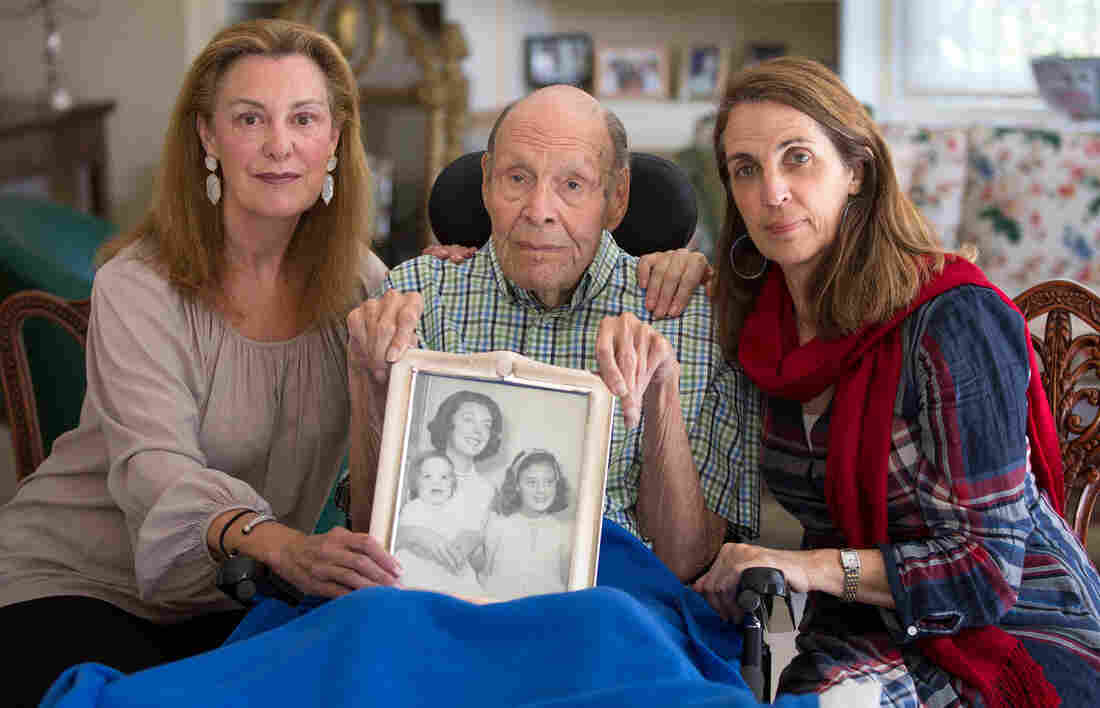
Laura Rees (left) and her sister Nancy Fee sit with their father, Joseph Fee, while holding a photo of his late wife, Elizabeth. Robert Durell for KHN hide caption

toggle caption

Robert Durell for KHN

Hospitals have long been reluctant to share with patients their assessments of which nursing homes are best because of a Medicare requirement that patients’ choices can’t be restricted.

For years, many hospitals simply have given patients a list of all the skilled nursing facilities near where they live and told them which ones have room for a new patient. Patients have rarely been told which homes have poor quality ratings from Medicare or a history of public health violations, according to researchers and patient advocates.

“Hospitals are not sure enough that it would be seen as appropriate and so they don’t want to take the chance that some surveyor will come around to cite them” for violating Medicare’s rules, said Nancy Foster, vice president for quality and patient safety at the American Hospital Association.

As a result, patients can unknowingly end up in a nursing home where they suffer bed sores, infections, insufficient staffing or other types of substandard care.

But hospitals’ tight-lipped approach to sharing quality information may soon be changed. The Obama administration is rewriting those rules, not just for patients going to nursing homes but also those headed home or to another type of health facility.

Article continues after sponsorship

Hospitals will still have to provide patients with all nearby options, but the new rule says hospitals “must assist the patients, their families, or the patient’s representative in selecting a post-acute care provider by using and sharing data” about quality that is relevant to a particular patient’s needs for recovery. The rule was drafted in October 2015.

The administration hasn’t said when it will be finalized. Should it not be enacted before the end of President Obama’s term, its fate becomes uncertain. President-elect Donald Trump has pledged not to approve new regulations unless two existing ones are eliminated.

The quality requirement might have made a difference for Elizabeth Fee, an 88-year-old San Francisco woman who had been hospitalized for a broken hip. Her hospital, California Pacific Medical Center, told her family about its own nursing home but did not tell them that Medicare had given it one star, its lowest quality rating, Fee’s family asserts in court papers.

“I feel we were misled because we believed that Mom was going to a facility that would have given her excellent care,” her daughter Laura Rees said. “And what she got was not even close to that, it was like night and day.”

A family photo of Elizabeth Fee shortly before her death. Robert Durell for KHN hide caption

toggle caption

Robert Durell for KHN

At the nursing home, Ms. Fee developed a bowel blockage that went undiagnosed until the morning of the day she died in January 2012. The nursing home and hospital have denied that they provided substandard care and declined to comment. The nursing home closed last year.

Some health systems haven’t waited for Medicare’s rule change to increase the information they provide patients about prospective nursing homes. In Massachusetts, Partners Healthcare, which runs Massachusetts General and Brigham and Women’s hospitals — two teaching hospitals for Harvard University Medical School — endorses 67 nursing homes around the state based on a host of criteria, including state inspections, readmission rates, location and how frequently a doctor or nurse practitioner is at the facility.

Partners believes it doesn’t violate Medicare’s rules because it gives departing patients a complete list of nursing homes while noting on the list which ones are part of Partner’s quality network, said Dr. Chuck Pu, a medical director at Partners. This fall, Partners dropped one of its own nursing homes from its preferred list after it got a poor inspection. “There’s no free pass,” Pu said.

More careful attention to nursing home quality has been encouraged by existing financial incentives created by the Affordable Care Act that cut payments to hospitals if too many patients are readmitted within a month. “The whole idea of preferred provider networks is really going to escalate in the future,” said Brian Fuller, an executive with NaviHealth, a consulting company for hospitals that focuses on patient care after discharge.

Foster, the hospital association executive, said the proposed Medicare rule should make hospitals less wary about giving more detailed guidance. “This signals that it’s okay for knowledgeable folks to really engage in that conversation with patients and their families,” Foster said.

Kaiser Health News is an editorially independent news service supported by the nonpartisan Kaiser Family Foundation. You can follow Jordan Rau on Twitter: @jordanrau.

Let’s block ads! (Why?)

Paul Ryan's Plan to Change Medicare Looks A Lot Like Obamacare

House Speaker Paul Ryan, R-Wisc., speaks to the media during a briefing on Capitol Hill in September. Mark Wilson/Getty Images hide caption

toggle caption

Mark Wilson/Getty Images

President-elect Donald Trump and House Speaker Paul Ryan agree that repealing the Affordable Care Act and replacing it with some other health insurance system is a top priority.

But they disagree on whether overhauling Medicare should be part of that plan. Medicare is the government-run health system for people aged 65 and older and the disabled.

Trump said little about Medicare during his campaign, other than to promise that he wouldn’t cut it.

Ryan, on the other hand, has Medicare in his sights.

“Because of Obamacare, Medicare is going broke,” Ryan said in an interview on Fox News on Nov. 10. “So you have to deal with those issues if you’re going to repeal and replace Obamacare.”

In fact, the opposite appears to be true — Obamacare may actually have extended the life of Medicare.

This year’s Medicare trustees report says the program would now be able to pay all its bills through 2028, a full 11 years longer than a 2009 forecast — an improvement Medicare’s trustees attribute, in part, to changes in Medicare called for in the Affordable Care Act and other economic factors.

Article continues after sponsorship

And the irony of the Ryan Medicare plan, say some health policy analysts, is that it would turn the government program into something that looks very much like the structure created for insurance plans sold under the ACA.

“The way it works is comparable to Obamacare,” says physician and conservative policy analyst Avik Roy, founder of the Foundation for Research on Equal Opportunity.

Ryan’s plan would set up “Medicare exchanges” where private insurance companies would compete with traditional government-run Medicare for customers. Obamacare exchanges sell only private insurance plans.

People would get “premium support” from the government to pay for their insurance under the Ryan Medicare plan.

The subsidy would be tied to the price of a specific plan offered by an insurer on the exchange, much like the Affordable Care Act subsidy is tied to the second-cheapest “silver” plans.

And the payment would be linked to a recipient’s income, so lower-income people would get a bigger subsidy. The subsidy would rise as beneficiaries get sicker, to ensure access to insurance. Like in Obamacare, people who choose plans that cost more than the government subsidy would have to pay the balance.

Insurers would have to agree to issue policies to any Medicare beneficiary, to “avoid cherry-picking,” and to ensure that “Medicare’s sickest and highest-cost beneficiaries receive coverage.”

The changes would start in 2024, when people who are now about 57 become Medicare eligible.

Roy agrees with Ryan that Medicare is going broke and that a program structured in this way would save money through “the magic of competition.”

“If you have 10 insurers competing for that business, you’re going to negotiate a better deal,” he said.

Medicare is already a dual public-private program. Most seniors today are enrolled in what’s known as traditional Medicare, where the government pays for medical appointments, tests and hospital stays on a fee-for-service basis.

Alongside that program is Medicare Advantage, an insurance plan provided by a private insurer which may offer seniors additional services like dental care at the same price.

The government pays a fixed monthly fee to the insurer for each Medicare Advantage patient, rather than paying for every service separately, as it does in traditional Medicare.

About half of Medicare’s new enrollees choose Medicare Advantage plans, says Henry Aaron, a health care economist at the Brookings Institution.

Aaron says Ryan’s proposal aims to move almost all seniors into Medicare Advantage-style insurance by making traditional Medicare too expensive for the consumer.

But, he says, there are risks to that approach.

“The real question here is whether the requisite safeguards are in place to ensure that the elderly and people with disabilities would be able to maneuver in such a system,” he says.

That’s because the health care and health insurance systems are very complex. Doctors move in and out of networks, copayments can vary and plans can change.

Millions of people on Medicare are also eligible for Medicaid, meaning they are poor and vulnerable, Aaron says. And at least 8 million Social Security beneficiaries have been declared financially incompetent and are assigned a representative to manage their money.

“What you’ve got here is a group of people who are very sick, poor, and often cognitively impaired one way or the other,” Aaron says. “Tossing people like that into a health care marketplace and saying, ‘Here, go buy some insurance,’ is a recipe for problems.”

Seniors may feel the same way. Researchers at Brown University last year found that as people get older and sicker, they tend to drop Medicare Advantage and opt for traditional Medicare.

Ryan has been working on his plan to change Medicare for many years. A version of his “premium support” plan was included in several budget proposals he put forth when he was chairman of the House Budget Committee.

The Congressional Budget Office says the proposals would reduce federal spending on Medicare.

At this point it’s unclear whether Trump shares Ryan’s ambitions to upend the current Medicare system. Trump didn’t include Medicare reform on his campaign web site. But since his election, “modernize Medicare” has been included on the list of health care priorities on his transition web site.

Let’s block ads! (Why?)