Would You Want To Know The Secrets Hidden In Your Baby's Genes?

Doctors are studying whether sequencing a newborn's genome has any impact on the child's future health.

Scott Bakal for NPR

Just about every day, genetic counselor Shawn Fayer heads to the maternity ward at Brigham and Women’s Hospital in Boston and tries to convince new parents to give him a blood sample.

Fayer is offering gene sequencing for newborns. It gives parents a tantalizing look at their baby’s genetic information.

New parents Lauren and Ian Patrick, from Marion, Mass., were excited when they were first approached earlier this month.

“My initial reaction — why wouldn’t someone do this? Why wouldn’t they want the information?” Ian Patrick says as he cradles his newborn son, Finn. “For me, more information is better, even if it’s not always good.”

If his parents sign him up, Finn would join the BabySeq project, an NIH-funded study led by Dr. Robert Green, a medical geneticist at Brigham and Women’s Hospital. With genetic testing getting cheaper and cheaper, Green wants to figure out what happens when parents know their child’s genetic blueprint from day one.

Half of the babies who join the study will have their protein-coding genes sequenced and screened for variants that are associated with diseases of childhood, with a method called whole-exome sequencing. The other half will get the regular heel-prick blood test offered to all newborns which screens for major genetic disorders like cystic fibrosis.

Article continues after sponsorship

Researchers will follow both sets of babies to figure out how genetic sequencing impacts them. They want to find out if knowing a child’s genetic makeup could actually make them healthier, or if it could increase their health care costs, or even change their relationship with their parents.

“We are looking for all sorts of unanticipated variations in DNA,” Green says. “And we say right up front we don’t know what they all mean. We don’t know what they’re all going to mean for your baby,”

Green is particularly interested in a list of 1,514 genes where there are good reasons to reveal a mutation because a disease might be treated or prevented. But there are so many changes in everyone’s DNA, he says he’s finding something to report in every baby he sequences.

Right now, that’s a pretty small number of babies. Green has sequenced the genes of 51 newborns so far, and he’s found five who have genetic mutations families wouldn’t have known about otherwise. Two babies have pharmacogenetic variants — mutations that mean certain drugs might not work as well on them. Three have heart conditions they inherited from a parent who appears to be totally healthy.

One of those babies is Kai Gracia. His parents, Alyssa and Jason Gracia, agreed to the test when Kai was just a few days old. They didn’t expect to find much. Alyssa had her own genome sequenced a few years before, and the information she got was mostly trivial — she learned she metabolized caffeine particularly quickly and she discovered she didn’t have the photic sneeze reflex, meaning she wasn’t likely to sneeze when suddenly exposed to bright light. So when the results on her baby came back, she was shocked. Right there in Kai’s genetic report was this: supravalvular aortic stenosis.

Alyssa and Jason Gracia agreed to have their son Kai’s genes sequenced when he was just a few days old. Mary Harris/WNYC hide caption

toggle caption

Mary Harris/WNYC

It turns out Kai has a mutation in a gene that codes for a protein called elastin. Elastin helps heart muscles bend and stretch. Not producing enough of it can cause the aorta to narrow. People can die from this, or need multiple surgeries as they grow.

Now that she knew her baby might get sick, Alyssa Gracia had lots of questions. Would Kai be able to play sports when he got older? Did he need surgery? Could crying too much be dangerous?

She made appointments with pediatric cardiologists and brought in Kai’s genetic report. One doctor said he looked fine, and only needed to be monitored every few years. Another said his parents should bring him back after just a few months. Usually, a condition like Kai’s isn’t diagnosed until a child is showing symptoms. That means doctors still aren’t quite sure how to treat Kai.

This is the kind of story that both thrills and terrifies the observers of this new technology, according to Green.

“There’s no consensus on how to manage these findings,” he says. And it’s unclear if the follow-up is worth it, or if it might actually do harm.

And gene sequencing reveals medical information not just about one person, but potentially a whole family. So all that follow-up is being done not just on Kai, but on his dad and his grandmother — all people who might be carrying this gene and might be at risk themselves.

So what can families do with all this information? Dr. Green says that for one family, this genetic report was potentially lifesaving.

It showed an inherited mutation in the baby’s BRCA2 gene, which increases the risk of breast, ovarian, prostate and pancreatic cancers. This means not only is the baby at risk, but the child’s mother or father could be, too.

Before they told the family, the researchers had to deal with “a really pernicious ethical problem,” says Green. He and his colleagues had agreed they would only tell parents about genetic variants that could impact babies in childhood, since the children weren’t able to decide for themselves whether they wanted to know their genetic risks. BRCA2 causes cancer in adults, not children.

But this information was so important, Green decided to break protocol.

“You know what the first four words were out of the mother’s mouth when she was told?” Green asks. ” ‘Oh, that explains it.’ “

It turns out the mother knew distant relatives who had died from cancer, but she hadn’t thought it meant anything for her. Without her baby’s test, she might never have learned about her own risk.

Not every mutation is actionable like this. Green is also finding a lot of single recessive mutations for conditions like cystic fibrosis, Tay-Sachs, and sickle cell. Since it takes two mutations, one each from mother and father, to cause the disease, it becomes an issue only when these babies grow up and decide to have children themselves.

One thing Green hadn’t anticipated is how hard it has been to convince new parents to do this screening in the first place. Early research showed the majority of parents were interested in the medical information. But 94 percent of parents Green and his team are approaching are saying no.

Lauren and Ian Patrick, the parents of baby Finn, are a good case study.

Initially, they were convinced they wanted the screening. But after an hour talking to a genetic counselor about all the ways this sequencing could go wrong, they decided against it.

They learned that any genetic sequencing would go in their son’s medical record, and it wouldn’t be able to be removed. And while federal law prohibits genetic discrimination by health care providers and in the workplace, life insurers can still use genetic information to pick and choose who they’ll sell policies to. By the time the meeting was over, the Patricks’ excitement had been replaced with concern.

“It really gave me pause that this would be part of the medical record that private companies would have access to,” Lauren Patrick says. “That was my full stop in the end.”

After all, for the first time she’s making a decision for someone who has no say, she says. “That’s the biggest thing on my mind, this new dynamic.”


Let’s block ads! (Why?)

Maine Insurance Co-Op Drops Coverage For Elective Abortion Services

Community Health Options founders COO Robert Hillman (left) and CEO Kevin Lewis seen in 2013 when the co-op began offering coverage. Gordon Chibroski/Portland Press Herald/Getty Images hide caption

toggle caption

Gordon Chibroski/Portland Press Herald/Getty Images

The largest provider of health coverage on the Affordable Care Act’s online marketplace in Maine has dropped coverage of elective abortion services.

Community Health Options, an insurance co-op, decided to eliminate the coverage as it tries to dig itself out of a $31 million financial hole that it accumulated in 2015. (It’s one of six co-ops remaining of the 23 initially created by the Affordable Care Act.)

“This decision was really driven by economic considerations,” says CEO Kevin Lewis, “as well as the construction of the Affordable Care Act and how it regards essential health benefits in the individual marketplace.”

Elective abortions aren’t considered an essential health benefit under the federal health care law. Neither is adult vision care, which Community Health Options also dropped. Both services were included in all of the 56,291 policies the co-op sold on the individual market in 2015.

Lewis says he can’t pinpoint exactly how much the co-op will save, but eliminating elective abortion coverage is one of several changes the co-op made to rein in an already steep premium hike of 25 percent. Without the changes, Lewis says, the average increase would have been 33 percent.

Article continues after sponsorship

While Community Health Options describes the change in abortion coverage as one piece of an overall strategy to contain costs, abortion services providers in Maine are calling it a major decision that erects barriers to women’s health care.

“It further stigmatizes a normal procedure that we’re trying to help people understand is part of the comprehensive experience of women’s health care,” says Andrea Irwin, executive director of the Mabel Wadsworth Health Center in Bangor, one of three main providers of abortion services in the state.

Though Community Health Options says it provides coverage for birth control above and beyond the requirements of the Affordable Care Act, Irwin says sometimes birth control doesn’t work and women need another option. Most people buying insurance in the online marketplace “are by definition working people with low to moderate income who need help buying health coverage,” she says.

A spokeswoman for Planned Parenthood of Northern New England, Nicole Clegg, says she appreciates the financial issues Community Health Options is facing but is skeptical that cutting coverage of abortion services will do much to help buoy the co-op. The cost for a first trimester abortion is about $550, she says. Community Health Options says 33 women in Maine used their elective abortion coverage in 2015.

Clegg says Community Health Option’s decision can’t be viewed in isolation. “You kind of need to look at the larger strategies that have been deployed by Congress, by legislators, to restrict access to safe and legal abortions,” she says. “And one of the tools that they use is to make it harder for insurance to cover it.”

Abortion is the only service under the Affordable Care Act that is explicitly allowed to be banned, says senior policy analyst Laurie Sobel of the Kaiser Family Foundation. Twenty-five states ban it, she says, and “six of the remaining states that have no ban on abortion coverage did not have any plans that offered coverage in 2016.”

For plans that do provide coverage, there is administrative complexity. Funds for abortion services must be segregated, and insurance companies are subject to extra reporting and audit requirements.

Even though the state of Maine doesn’t ban marketplace coverage, Sobel says Community Health Options’ decision is “a reflection of abortion coverage being extremely restricted in the country as a whole.”

This story is part of a reporting partnership with NPR, local member stations and Kaiser Health News.

Let’s block ads! (Why?)

FDA Faults Hospitals For Failing To Report Safety Problems With Medical Devices

After several prominent safety problems with medical devices in hospitals emerged, the Food and Drug Administration inspected 17 hospitals across the country in late 2015 to assess their compliance with reporting regulations. Congressional Quarterly/CQ-Roll Call, Inc./Getty Images hide caption

toggle caption

Congressional Quarterly/CQ-Roll Call, Inc./Getty Images

Federal regulators said 12 U.S. hospitals, including well-known medical centers in Los Angeles, Boston and New York, failed to promptly report patient deaths or injuries linked to medical devices.

The Food and Drug Administration publicly disclosed the violations in inspection reports this week amid growing scrutiny of its ability to identify device-related dangers and protect patients from harm.

Some of the reporting lapses were found at Massachusetts General Hospital in Boston, New York-Presbyterian Hospital and two hospitals in Los Angeles — Ronald Reagan UCLA Medical Center and Cedars-Sinai Medical Center.

Dr. Jeffrey Shuren, director of the FDA’s Center for Devices and Radiological Health, said the violations pointed to a larger problem among hospitals nationwide in reporting patient harm tied to medical devices.

“We believe that these hospitals are not unique in that there is limited to no reporting to FDA or to the manufacturers at some hospitals,” Shuren wrote Monday in an agency blog post. “Hospital staff often were not aware of, nor trained to comply with, all of the FDA’s medical device reporting requirements.”

Under federal rules, hospitals have 10 days to report serious injuries potentially caused by devices to the manufacturer and notify both the manufacturer and the FDA about any deaths that may have resulted. Manufacturers are required to file reports to the FDA within 30 days of learning about an injury or death that may have been caused by a device. For the most serious problems that would require immediate action to prevent major public health harm, companies have five days to report them to FDA.

Article continues after sponsorship

It’s hard to discern from the FDA inspections which devices were involved or other details in many cases because the reports released publicly are brief and partly redacted by the FDA. The reports indicate that in some cases hospitals reported events late and in others not at all.

At Massachusetts General, FDA investigators found reporting delays of 10 months and 18 months in two separate patient deaths related to devices.

In a statement, hospital spokeswoman Terri Ogan said the FDA’s findings all have been addressed. “Massachusetts General Hospital takes its reporting obligations very seriously and strives to comply with all requirements in a comprehensive and timely manner,” she said.

At Huntington Memorial Hospital in Pasadena, Calif., an FDA investigator found that a patient died from complications related to a multidrug-resistant infection and cardiac arrest following a procedure involving a duodenoscope, a long and flexible instrument put down a patient’s throat.

According to FDA records, the hospital learned through test results that the patient’s infection was likely related to 14 other confirmed infections caused by contaminated duodenoscopes. “However, this death was not reported to the FDA and the manufacturer by your facility,” the FDA inspector wrote in a December 2015 report.

A spokeswoman for Huntington Hospital, Eileen Neuwirth, said, “We have taken steps to ensure rigorous compliance going forward.”

Many of the hospitals involved — such as Cedars-Sinai — said they welcomed the agency’s feedback and supported efforts to improve device oversight, but some disputed them or offered explanations.

New York-Presbyterian said in a statement that it filed medical device reports “in accordance with FDA regulations” and none of the agency’s findings related to the quality or safety of patient care. Also in a statement, UCLA said it promptly reported scope-related cases to the FDA but that the agency asked for duplicate reports through a separate system.

The findings underscore concerns raised by a Senate report in January, which exposed reporting failures by hospitals as well as mistakes by device makers that contributed to multiple superbug outbreaks across the U.S. from contaminated duodenoscopes. The FDA’s oversight of medical devices was also faulted in the report.

As many as 350 patients at 41 medical centers worldwide have been infected or exposed to contaminated duodenoscopes from 2010 to 2015, according to the FDA.

The agency initiated its investigation of hospitals’ reporting in December 2015, a month before the Senate report was released. But the agency was already under fire by then for spotty oversight of duodenoscope manufacturers and other devices.

Shuren said in his blog post that the agency focused on 17 hospitals where safety issues had occurred involving either duodenoscopes or power morcellators, a surgical tool used in hysterectomies. Morcellators are used to cut up benign growths called fibroids, but the FDA has warned about the device spreading cancerous tissue in the abdomen and pelvis. The investigators examined incidents involving other devices as well.

Other than publicly announcing the violations, Shuren said the agency didn’t plan on taking further action against the hospitals. Instead, he said he wants to work with the hospital industry to improve monitoring of devices.

“We feel certain there is a better way to work with hospitals to get the real-world information we need, and we should work with the hospital community to find that right path,” Shuren wrote.

Lawmakers, health policy experts and the FDA have proposed various reforms aimed at strengthening device surveillance, including tracking insurance claims data to supplement the injury reports and automating so-called adverse event reports through electronic health records.

The issue may take on more urgency after federal authorities this month highlighted the infection risk from yet another commonly used device — heater cooler units used in open-heart surgeries. The FDA is holding a public meeting Dec. 5 on improving hospital-based surveillance of devices.

Kaiser Health News is a national health policy news service that is part of the nonpartisan Henry J. Kaiser Family Foundation. You can follow Chad Terhune on Twitter: @chadterhune.

Let’s block ads! (Why?)

Seniors' Teeth Need Dental Care, But Insurance Coverage Is Rare

Supplemental dental insurance may not be cost effective for seniors. Manfred Rutz/Getty Images hide caption

toggle caption

Manfred Rutz/Getty Images

Aging can take a toll on teeth, and for many older people paying for dental services is a serious concern because they can’t rely on their Medicare coverage.

Low-income seniors in particular are struggling. More than a third with incomes below 200 percent of the federal poverty level (about $23,000 annually) had untreated tooth decay between 2011 and 2014, according to an analysis of federal data by the American Dental Association.

“What ends up happening is that almost everybody, when they get to be 65, is sort of on their own and they have to pay for dental care out of pocket,” says Dr. Michael Helgeson, chief executive officer of Apple Tree Dental. Apple Tree is a Minneapolis-based nonprofit organization that operates eight clinics in Minnesota and California that target underserved seniors. It also has mobile units that provide on-site dental care at nursing homes and other facilities.

Traditional Medicare generally doesn’t cover dental care unless it’s related to services received in a hospital. Medicare Advantage managed care plans generally provide some dental care, but the coverage can vary, and often is minimal, dental care advocates say. The plans often are “a loss leader,” said Dr. Judith Jones, a professor of dentistry at Boston University. “It’s meant to attract people. It gets people in, but the coverage is really limited.”

In a way, older people are victims of dentistry’s success. Regular visits to the dentist, along with daily tooth brushing and water fluoridation, have all contributed to improvements in oral health. In the first half of the 20th century, by the time people reached their 30s or 40s many had already lost all their teeth, Helgeson said. Today, more than 60 percent of people in nursing homes still have at least one tooth.

But teeth need tending. Without regular dental care, tooth problems can cause pain and limit how much and what type of food people are able to eat. Similarly, gum disease can loosen teeth and allow bacteria to enter the body. A growing body of research has linked treating periodontal disease with lower medical costs for diabetes and heart disease, among other conditions.

People’s lives are affected in other ways by their oral health. “You use your mouth to eat and kiss and smile and interact socially,” said Jones. “It’s a source of great embarrassment and suffering for many adults without access to care.”

With limited income and no insurance, seniors may skip visiting the dentist regularly, even though many report that their mouths are dry and painful and they have difficulty biting and chewing, not to mention avoiding smiling and social interaction if they have missing or damaged teeth.

Medicaid, the state and federal insurer for lower income people, covers dental care for children in every state, but coverage for adults is much spottier. Most states cover emergency dental care for people covered by Medicaid, but eight states offer no adult dental benefits at all, according to a study by Oral Health America, an advocacy group.

Even trying to purchase private dental insurance, which typically covers a few thousand dollars’ worth of dental care, may not provide good value, said Marko Vujicic, vice president of the American Dental Association’s Health Policy Institute. “When you add up the premiums and copays, for the vast majority of adults it’s not worthwhile to have dental insurance,” he said.

Seniors with limited means have few options for help affording dental care. Federally qualified health centers may provide geriatric dental services on a sliding-fee scale based on income, and clinics like Apple Tree help a limited number of seniors who live in their service area. But they’re a Band-Aid, said Jones.

She and other advocates want Medicare to add a dental benefit to Medicare Part B. Their proposal would provide a basic bundle of diagnostic and preventive services through a premium increase, and seniors would only be responsible for copayments if they need pricey restorative work like crowns and bridges.

But a dental benefit has faced stiff competition from other priorities, including adding a prescription drug benefit in 2006 and preventive coverage under the health law in 2010.

Kaiser Health News is an editorially independent news service that is part of the nonpartisan Henry J. Kaiser Family Foundation. Michelle Andrews is on Twitter:@mandrews110.

Let’s block ads! (Why?)

California Rules About Violence Against Health Workers Could Become A Model

California rules would require site-specific assessments to identify violence risks for health care workers and plans to mitigate them. Dana Neely/Getty Images hide caption

toggle caption

Dana Neely/Getty Images

Workers in California’s hospitals and doctors’ offices may be less likely to get hit, kicked, bitten or grabbed under workplace standards adopted by a state workplace safety board.

Regulators within the California Division of Occupational Safety and Health approved a rule last Thursday that would require hospitals and other employers of health professionals to develop violence prevention protocols and involve workers in the process. The standard now will be reviewed by the Office of Administrative Law, which proponents expect will approve the new rules. The earliest they could take effect would be January 2017.

“This is a landmark day for the entire country,” said Bonnie Castillo, a registered nurse who is director of health and safety for the California Nurses Association/National Nurses United, which represents 185,000 registered nurses across the U.S.

There are no federal rules specifically protecting workers from violence, but some states, including California, New York, Illinois and New Jersey require public employers to take preventive measures, according to the American Nurses Association.

The Cal/OSHA rules apply to private health care facilities in the state and are more robust than existing workplace protection rules, union officials say. Site-specific assessments will be done to identify violence risks, and the resulting plans to prevent injuries will address concerns identified by workers.

“California has now set the bar with the strongest workplace violence regulation in the nation,” wrote Castillo in a statement.

Two unions, the California Nurses Association and the Service Employees International Union, have been pushing for more comprehensive protections because of what they see as an alarming rate of health care workplace assaults, such as the 2010 strangling death of a nurse at a state-run psychiatric hospital in Napa.

“Unfortunately, [violence] is sort of a daily occurrence,” said Kathy Hughes, a registered nurse and spokesperson for the SEIU Nurse Alliance of California. She said her union formed a campaign and talked to hundreds of health care professionals, many of whom had accepted the idea that assaults happen at work. But “violence shouldn’t be part of the job,” said Hughes.

The California Nurses Association sponsored the 2014 bill that required the board to adopt the violence prevention rules this year.

National research shows that health care workers are at a “substantially higher” risk of workplace violence than the average worker. In 2013, for example, private-sector hospital workers were five times more likely to take time off from work because of an injury caused by violence than a typical private sector worker.

Workplace safety standards already exist in California, but the Cal/OSHA rules are specifically designed to prevent violence.

“It can’t be a cookie-cutter approach,” said Hughes, adding that emergency departments and pediatric care units pose different dangers to workers, so safety protocols can’t simply be a canned plan found on the Internet.

Both the California Nurses Association and SEIU say they hope the new California standards will become a national model.

Testimony at hearings leading up to the approval of the rules to prevent violence suggest that worker assaults vary in severity.

As a student nurse at a San Francisco hospital, Amy Erb remembered being kicked in the head by an agitated, confused patient with a traumatic brain injury.

Other health care workers told stories about patients throwing lamps, lifting caregivers up by their necks or stuffing dirt into the mouths of their colleagues.

Under the new rules, California employers wouldn’t be liable for every act of violence against a worker, such as a mass shooting, but they could be cited by Cal/OSHA for not following protocols, Hughes said. The standard applies to hospital-affiliated facilities and clinics, including home health care settings and drug treatment programs.

Hospitals and physicians were at the table when regulators hammered out the workplace rules. The California Hospital Association didn’t provide comment for this story, but it had been opposed to creating new standards when lawmakers looked at the issue in 2014. Hospitals also wanted “workplace violence” to be better defined.

The hospital trade association said several recent trends may contribute to violence at health care facilities. Cuts to mental health care services lead to more psychiatric patients in hospitals. The aging patient population may include more Alzheimer’s patients, some with aggressive tendencies. And hospitals caring for current or recently released prisoners face a higher risk of violence.

This story was produced by Kaiser Health News, which publishes California Healthline, an editorially independent service of the California Health Care Foundation.

Let’s block ads! (Why?)

Poll: Cost Of Child Care Causes Financial Stress For Many Families

Maria Fabrizio for NPR

Maria Fabrizio for NPR

Most parents have experienced sticker shock when they find out just how much it will cost to care for their infant or toddler full- or even part-time. For parents who have little choice, this can be a big financial strain.

In fact, the most common challenge parents face when looking for child care is the high cost. That’s the finding of a recent poll from NPR, the Robert Wood Johnson Foundation and the Harvard T. H. Chan School of Public Health.

The poll surveyed a nationally representative sample of 1,120 parents or guardians of children 5 years old or younger and not yet in kindergarten, who receive regularly scheduled care at least once a week from someone other than a parent.

“Cost continues to be an issue once parents find care, with many saying the cost is a problem for their families,” says Gillian SteelFisher, research scientist and deputy director of the Harvard Opinion Research Program and the poll’s academic leader. “This is especially true for those who feel their financial situation is not strong.”

Patricia Bauer, who lives in San Diego with her husband and two little boys, says cost is a constant challenge. Darcy, 3, and Merrick, 15 months, are in day care. Merrick is in a home care setting and Darcy in a more structured preschool. Bauer works in educational training and her husband’s a journalist. They’ve always considered themselves middle class but today, barely.

“We are struggling,” says Bauer, whose entire take-home pay goes just to cover the costs of day care and preschool — a whopping $2,400 each month.

After paying for groceries, gas, utilities and other expenses, Bauer says that to call the family budget stretched is an big understatement.

“We feel like we’re working so hard, but any minute we could lose everything — you know, if we had some major emergency, we don’t have savings,” she says.

And planning for the future? Bauer would love to. But right now there’s just no way.

Before children, both she and her husband contributed to their retirement funds at work. Today, that’s just not possible.

Nor is it possible to contribute to college funds for the children, which is something Bauer and her husband really feel guilty about, she says.

And while she loves being Mom to two little ones, she says she and her husband are pretty much counting down the days till the boys are in public school.

“We joke that as soon as our boys are in public school, we’ll be rich!”

In our poll, the vast majority of parents say there is a fee for their child care. Nearly one-third of those parents, like Bauer, say that cost creates a financial problem. And for 71 percent of them, it’s a very or somewhat serious problem.

Bauer actually considered quitting her job in order to save on day care costs. But, after crunching the numbers, she decided she just couldn’t afford it because, without employer-provided health insurance, she would have to pay for health insurance herself. “That’s another huge bill we couldn’t afford,” she says.

Many families can’t even consider a high-quality preschool. The poll found that 79 percent who said their household finances are not strong said they had “just a few” or “only one” option for child care. And parents with limited options were less likely than their counterparts with more options to say the quality of their child’s care is “excellent” (56 percent vs. 66 percent).

The median income for families in this country is just over $55,000 a year, and the average cost of infant child care is all but out of reach for them at $10,000 a year, says Rachel Schumacher, who directs the Office of Child Care for the federal Department of Health and Human Services. “That’s a sizable chunk,” she says. It rivals — and even tops — the cost of one year’s college tuition at many state schools.

One of the driving the high cost of child care is that it’s so labor intensive, says Schumacher. While all states differ, most require a certain number of teachers or care givers to ensure the health and safety of children.

And even though child care teachers and caregivers are paid very low wages, often at the poverty level or below, the cost still adds up.

Now you might think if the demand for child care is high, theories of competition would prevail and the supply would grow, resulting greater competition. That, in turn should result in lower prices.

But this classic marketplace scenario just doesn’t work when it comes to child care, Schumacher says.

When parents don’t have the money in hand to pay for high quality care, they seek out lower quality, less expensive care options, she says, which may be unlicensed or ‘under the table.’ Therefore, she says, “it’s just not going to work as your typical marketplace.”

The discussion about cost and quality of childcare is critical these days, says Schumacher, especially since brain research shows how important the early years are.

Because the research has shown that 700 to 1,000 new neurological connections are forming every second in those first few years of life, she says, “the architecture built in the first few years is really rapid and very critical to everything that comes after.”

It’s a strong argument for greater government investment in child care and early education, she says — especially when you consider that in today’s world, so many parents, and even grandparents – work.

Let’s block ads! (Why?)

Simplified Study Aims To Quickly Test A Long-Shot ALS Treatment

Karen Lorne, diagnosed with Lou Gehrig’s disease in July, volunteers weekly with her certified therapy dog, Bailey, at the Ronald McDonald House in Chapel Hill, N.C. Courtesy of Karen Lorne hide caption

toggle caption

Courtesy of Karen Lorne

Researchers have launched an innovative medical experiment that’s designed to provide quick answers while meeting the needs of patients, rather than drug companies.

Traditional studies can cost hundreds of millions of dollars, and can take many years. But patients with amyotrophic lateral sclerosis, or Lou Gehrig’s disease don’t have the time to wait. This progressive muscle-wasting disease is usually fatal within a few years.

Scientists in an active online patient community identified a potential treatment and have started to gather data from the participants virtually rather than requiring many in-person doctor’s visits.

How is that possible?

In this case, doctors and patients alike got interested in an extraordinary ALS patient whose symptoms actually got better, which rarely occurs. He’d been taking a dietary supplement called lunasin, “and lo and behold six months later, [his] speech [was] back to normal, swallowing back to normal, doesn’t use his feeding tube, [and he was] significantly stronger as measured by his therapists,” said Richard Bedlack, a neurologist who runs the ALS clinic at Duke University.

Of course, it could just be a coincidence that the man who got better happened to be taking these supplements. To find out, Bedlack teamed up to run a study with Paul Wicks, a neuropsychologist and vice president for innovation at a web-based patient organization called PatientsLikeMe.

The study they came up with dispensed with many of the standard features of research that make it so expensive, time-consuming and often so hard to recruit patients:

  • There’s no comparison group taking a placebo; instead the researchers match each patient with three to five people whose disease was on a similar course.
  • The researchers could skip safety testing because the supplement is already on the market.
  • Most important, they aren’t looking for subtle effects, like slower disease progression. That may be vital for a pharmaceutical company seeking approval for a new drug, but isn’t necessarily what patients want.

“I think what people are really looking for is to regain some function,” Wicks says. “So with limited time resources, limited patients available to take part in studies, perhaps we want to swing for the fences every now and then.”

Chances are the dietary supplement won’t help, but at least people will learn the outcome quickly and won’t waste their time and money if lunasin fails.

“If we find just one patient that has a reversal the size of the initial patient, that in itself is incredible, because these reversals are once in a generation,” Wicks said. He and Bedlack have identified just 24 patients, over many years, whose disease actually reversed course, at least temporarily.

The study recruited 50 volunteers at a record pace for ALS research, Bedlack said. That’s partly because it only requires three doctor visits. Those appointments are frequently challenging for people with this debilitating disease.

Most of the data are gathered virtually — patients post their own weekly assessments in a secure area of the PatientsLikeMe website.

Karen Lorne, a 58-year-old nurse practitioner from Chapel Hill, N.C., had cared for patients with ALS, so she knew about the inexorable nature of the disease. This spring, she noticed she could no longer hold medical instruments securely in her left hand, and her speech started to slur. She was diagnosed with ALS in July.

“I was pretty shocked that we know so little and that we have no idea how to fix it — because that’s what we do in medicine,” she says.

After considering her options, Lorne decided to sign up for the low-hassle trial with the supplement. She reports her own symptoms once a week, by typing them in on the PatientsLikeMe website. She can track her own progress, as well as that of the other patients in the study.

And it also serves as a support group. “You can type in, ‘I’m having a bad day,’ and somebody will give you a list of pointers to help you keep in the center, which is where you really want to live,” she said.

And the study doesn’t consume her precious days. She still can focus on her family and life’s daily pleasures.

“We try to live in the present and enjoy every moment as thoroughly as possible,” she says. “And actually, some of my friends who do not have the disease, seeing me having it has helped them shore up their lives and recognize what’s important.”

She is also helping advance knowledge about ALS, even if this trial doesn’t end up helping her.

Patients are a valuable resource, yet only 10 percent ever end up in a study.

“If this infrastructure works, in two years could you imagine 20 trials like this run in parallel?” Wicks asks. “You know, I have a question for the field: Why isn’t every patient in a study?”

One reason that’s not the case is that very ill patients are not likely to recover under any circumstances, so they don’t usually provide a lot of value in scientific studies, says Jeffrey Rothstein, a neurologist who runs ALS studies at the Johns Hopkins University School of Medicine. “That’s why almost no trial is open to all-comers,” as this one was, he says.

He agreed, though, that the study would show whether the supplement has a truly dramatic effect, which is the main purpose of the experiment. “The value of getting patients involved is fantastic,” he says.

If a virtual study like this identifies a promising lead, scientists could quickly pursue that through laboratory studies and more traditional studies with volunteers. Clearly that approach, of starting with animal studies and building on that knowledge, has been a huge disappointment so far with ALS.

And if the approach is successful, it could apply to other diseases as well.

Let’s block ads! (Why?)

Applying A Silicon Valley Approach To Jumpstart Medical Research

Cori Bargmann is applying her training as a neuroscientist to shaping the Chan Zuckerberg Initiative’s ambitious agenda. Chan Zuckerberg Initiative hide caption

toggle caption

Chan Zuckerberg Initiative

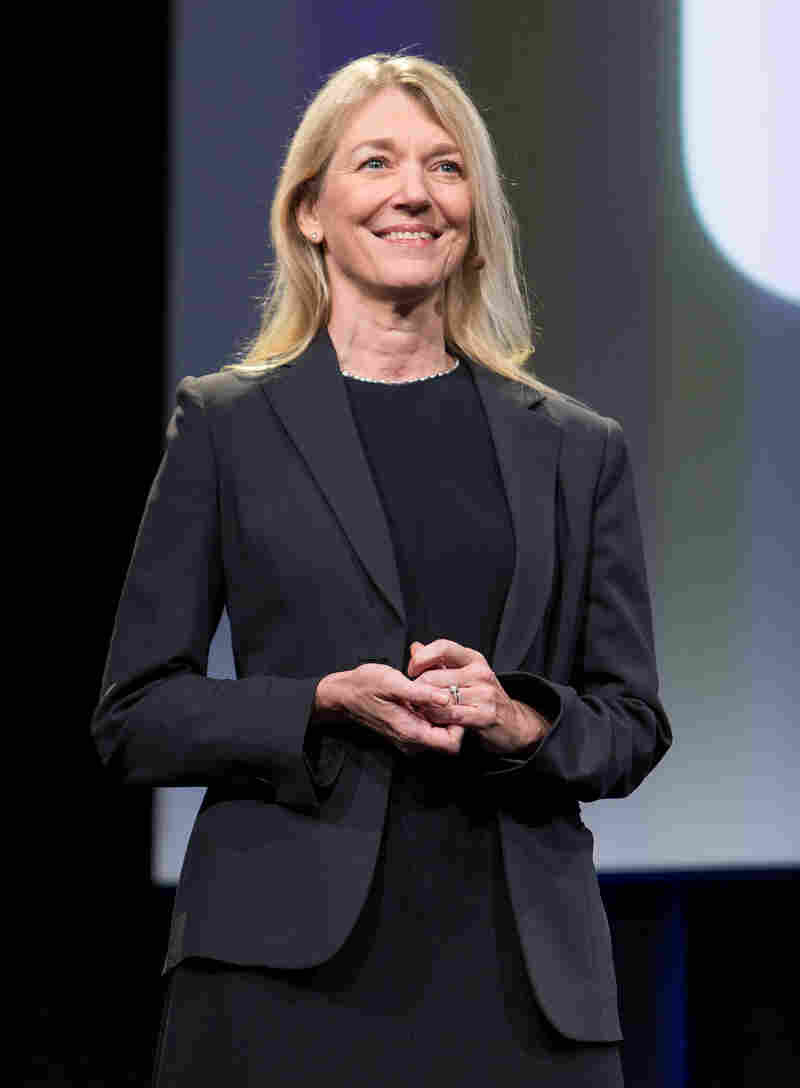
Cori Bargmann’s new job description includes “to help cure, prevent or manage all diseases by the end of the century.” That’s quite a lofty goal.

Bargmann is a neuroscientist and president of science for the Chan Zuckerberg Initiative, the joint venture of pediatrician Priscilla Chan and Facebook co-founder Mark Zuckerberg. The couple pledged $3 billion to solve major medical problems by helping scientists and engineers collaborate long term, over 25, 50, even 80 years.

All Things Considered host Robert Siegel spoke with Bargmann about what it’s like to start a project you might not live to see the end of, and why the complexity of science today demands collaboration. Here are some highlights of the interview, edited for length and clarity.

On why medical researchers need to collaborate with engineers

As a neuroscientist, I see tremendous unmet needs in neurodegenerative diseases like Alzheimer’s disease and Parkinson’s disease and ALS. [Also] diseases that affect young adults like schizophrenia, and learning disorders and autism that affect children. So I can look across the whole field and think of ways that we would like to be able to address these problems.

The problem with studying the brain is that it’s really complicated. There are 86 billion neurons in your brain, and all of these nerve cells are processing information and sending and receiving that information 10 times a second.

You really need a computer and the patience and boredom tolerance that a computer and an engineer can bring to the problem to try to map out the flow of information through such an incredibly complex structure.

On the foundation’s project to create an atlas of cells in the human body

We know that there are trillions of cells in the human body, but we don’t know what kinds they are, how many of each kind they are, exactly where they all are. We have a general view, sort of like an old Rand McNally Atlas. What we want is the kind of high-resolution house-to-house map you would get off of Google Maps these days.

If the Chan Zuckerberg Initiative were doing this alone, it might take a very long time to make a human cell atlas. But fortunately there’s momentum around this idea in the world. With that, I think we might realistically accomplish it within 10 years. We’ll then have that framework for everyone to build on, just like everyone now builds on the Human Genome Project.

On the pace of science and what can be accomplished in 80 years

Science is an enterprise where we build on the progress of the past, and hope that, in the future, people will build on our accomplishments. It’s like a great medieval cathedral that may have been started in 1,000 AD and not been finished for 500 years. The original architects and the people who built the foundations were dead by the time the last Gothic spire was up or the last gargoyle was carved.

The great thing about science is that there might be individual moments of fantastic discovery — the equivalent of some beautiful stained glass window. But every brick in the foundation is important, and we hope that as we learn things, we’re creating the foundation for future knowledge as well.

Eighty years ago, the first antibiotic was developed. Before then, the four major killers in the world were infectious disease. Today, none of them are even in the top 10 because of those antibiotics. 50 years ago, when Eisenhower had a heart attack he was put on bed rest. Today we know about controlling blood pressure, have statins to keep cholesterol down, have bypass surgery, and even heart transplants. We can keep people alive and healthy for a much longer time.

Let’s block ads! (Why?)