Health care providers have to have permission from the federal government to provide medication-assisted treatment for opioid addiction. The Washington Post/Getty Imageshide caption
toggle captionThe Washington Post/Getty Images
Many people struggling with opioid addiction can’t find a doctor to provide medication-assisted treatment, even though it’s highly effective. One reason could be that doctors who are qualified to prescribe the medication typically treat just a handful of patients.
Researchers at the RAND Corporation looked at pharmacy records from the seven states with the most doctors approved to prescribe buprenorphine, which helps people manage cravings and avoid withdrawal. They found 3,234 doctors who had prescribed the drug, also known as Suboxone, to new patients from 2010 to 2013. The median number of patients by a doctor treated each month was 13. About half of the doctors treated 4 to 30 patients; 22 percent treated less than 4; 20 percent treated 31 to 75.
“We were really surprised,” says Dr. Bradley Stein, a psychiatrist and lead author of the study, which was published Tuesday in JAMA, the journal of the American Medical Association. “We found that only about 10 percent of doctors were what we would call heavy prescribers, with more than 75 patients a month.”
There’s been a big push to make it easier for doctors to prescribe buprenorphine, including new rules announced by the Obama administration in July that raised the number of patients a doctor can treat from 100 to 275. But this data suggests that those limits aren’t the only barrier to getting treatment to more people.
The researchers also were surprised to find that most patients weren’t prescribed buprenorphine for very long, even though it can be used long term. The mean length of prescribing was 53 days per patient.
“This really brought home for us the need for multiple approaches, so doctors are willing and able to prescribe buprenorphine,” Stein says.
Urban areas have typically been better equipped to provide treatment for opioid addiction, whether with methadone clinics or with buprenorphine, which people can take at home and doesn’t require people a daily clinic visit. But many people struggling with opioid addiction live in smaller cities or rural areas where physicians have little experience with treating addiction to heroin and prescription opioids.
That includes towns like Bridgton, Maine, where family physicians shied away from treating addicts until they realized that their own patients were the ones overdosing and dying.
Just taking an online course on how to prescribe buprenorphine won’t be enough for many providers, Stein says, especially since many patients with opioid addiction also have other problems that need care. “We really need to think about providing mentorship, providing consultation, providing clinical support,” Stein says.
Medication-assisted treatment is supposed to include counseling, and that can be hard to find, especially in rural areas. “So we may need to think about telehealth or online counseling,” Stein says. “We may need to be creative to have people receive effective treatment, no matter where they live.”
Treatment can work, “People can recover. They go on to live incredibly productive lives. And we want to have the high-quality treatment to get them there.”
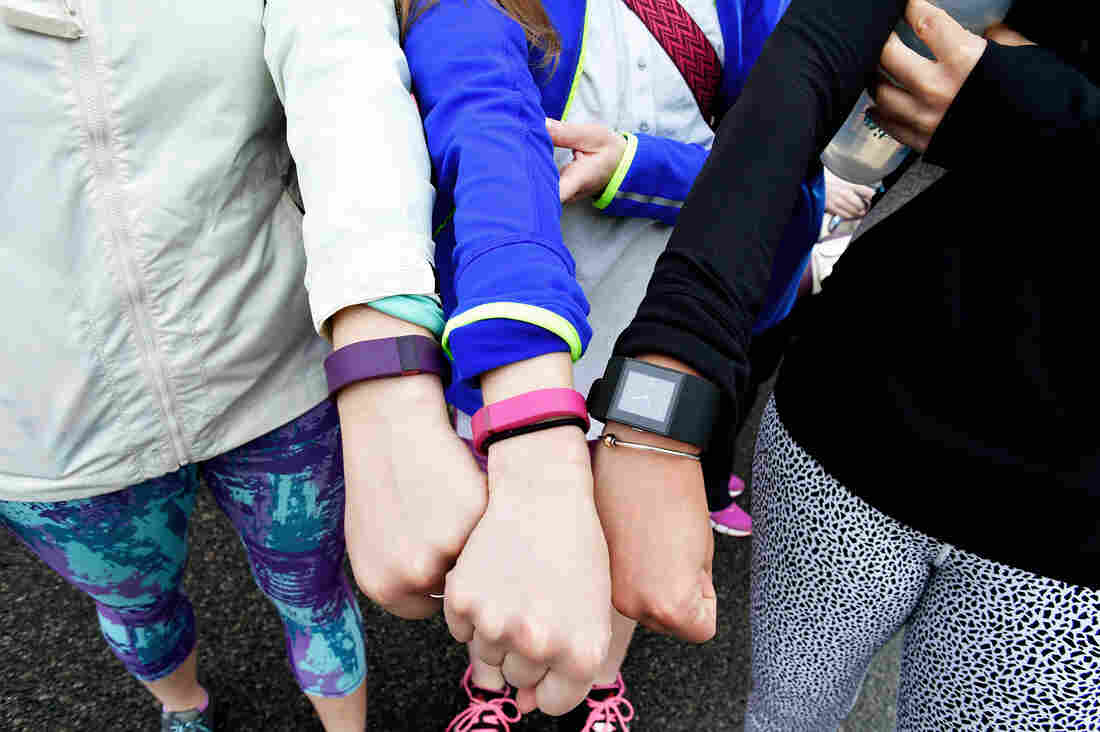
They’re so cute. So colorful. But are they really making you fitter? Paul Marotta/Getty Images for Fitbithide caption
toggle captionPaul Marotta/Getty Images for Fitbit
Fitness trackers remain wildly popular, but do they make us fit? Maybe not, according to a study that asked overweight or obese young adults to use the tiny tracking tools to lose weight.
The 470 people in the study were put on a low-calorie diet and asked to exercise more. They all started losing weight. Six months in, half the group members started self-reporting their diet and exercise. The other half were given fitness trackers to monitor their activity.
After two years, both groups were equally active. But the people with the fitness trackers lost less weight.
Wait. What? We asked John Jakicic, a researcher of health and physical activity at the University of Pittsburgh and the lead author on the study, why this could be.
“These technologies are focused on physical activity, like taking steps and getting your heart rate up,” says Jakicic. “People would say, ‘Oh, I exercised a lot today, now I can eat more.’ And they might eat more than they otherwise would have.”
It’s also possible, he says, that meeting daily fitness goals and step counts might motivate one person, but missing those same goals could discourage another.
The device in the study, which was published Tuesday in JAMA, the journal of the American Medical Association, wasn’t a wrist-tracker like the Fitbits, Jawbones, Apple watches and Nike bands many use now. This device was worn around the upper arm. Instead of using heart rate to estimate activity like some devices do, it measured the heat generated by exercise.
Still, he says, the results from this study are relevant to the devices of today.
Overall the participants without fitness trackers lost 13 pounds, while the tech-enhanced group lost 7.7 pounds. They ranged in age from 18 to 35 years and had BMIs from 25 to 39. The study hopes to see whether helping young adults lose weight early on can head off more weight gain in middle age.
We reached out to Fitbit to see what it thought of the study.
“We are confident in the positive results users have seen from the Fitbit platform, including our wearable devices,” the company said in a statement, adding that researchers use Fitbits and similar devices in clinical studies.
While those studies use wearable technology to investigate everything from heart disease to breast cancer, very few have looked at how good these trackers actually are at helping people achieve fitness goals.
“There aren’t many — if any — long-term studies of wearable tech,” says Dr. Mitesh Patel, an assistant professor of medicine at the University of Pennsylvania. Patel also studies fitness trackers but was not involved in this study. This study, Patel says, is the longest yet, “and that’s why this research is important. We need more studies like this to show what wearable tech can and can’t do.”
A handful of short-term studies have looked at fitness trackers, with mixed results. One study, also conducted by Jakicic, found that fitness trackers could replace counseling in a weight-loss program. But another found that users get bored and abandon their wristbands after just a few months.
Ultimately, Patel says, these devices are most effective when the people using them are already dedicated to tracking their fitness. People who are less motivated might not get the same results.
“Overall, it doesn’t look like assigning someone wearable technology will make that big of a difference,” says Jakicic.
So should you bin your Fitbit? Not yet. Jakicic thinks that combining this technology with behavioral research can help scientists figure out which groups of people benefit from fitness trackers and even design interfaces that will be more motivational.
“These devices have some really cool tech, but how do you use them in a way that helps people?” asks Jakicic. “That’s a science in and of itself.”
Under Internal Revenue Service rules, high-deductible insurance plans that can link to health savings accounts can only cover preventive services, such as vaccinations and mammograms, until patients pay down their deductible. Andrew Caballero-Reynolds/AFP/Getty Imageshide caption
As the number of people covered by high-deductible health plans soars, some insurers and employers are easing the strain on consumers’ wallets by covering certain benefits like doctor visits or generic drugs before people have reached their plan’s deductible.
But there’s a hitch: Under Internal Revenue Service rules, high-deductible plans that can link to health savings accounts can only cover preventive services, such as vaccinations and mammograms, until patients buy enough services on their own to pay down their deductible.
A bipartisan bill was introduced in Congress in July that would allow high-deductible plans that can link to health savings accounts to cover care for chronic conditions like diabetes and heart disease before plan members have met their deductibles.
HSAs were introduced in 2004, reflecting the popular belief that if consumers had more financial skin in the game they would make smarter, more cost-effective decisions. Individuals and their employers can deposit money into the accounts tax free, where it grows tax free and can be withdrawn tax free to use for medical expenses.
The accounts must be linked to health plans that meet certain federal standards, including minimum deductibles of $1,300 for individuals and $2,600 for families in 2016. The plans are required to cover preventive services without cost sharing, but consumers must pay for all other services until they meet their deductible.
Many high-deductible plans don’t meet those standards. The deductible coverage restrictions for HSA plans can be a sticking point when employers and insurers consider what plans to offer.
“I’ve worked with numerous clients that chose not to pursue an HSA strategy because they wanted their employees to be able to get coverage not subject to the deductible,” said Jay Savan, a partner at Mercer Health and Benefits, a consulting firm.
This legislation would lift those restrictions to some degree, but its passage is far from assured.
The law could make a big difference to Cheri Amos-Prater. Diagnosed with rheumatoid arthritis and psoriasis 10 years ago, the 54-year-old drug sales representative had been paying approximately $50 in monthly copayments to her health plan for Humira, a drug sold by AbbVie, the company she works for. This year, she switched to a high-deductible plan with a health savings account, not realizing that she would be responsible for paying the first $3,000 of her medical care to satisfy her deductible before her plan’s coverage kicked in. Her Humira alone would have cost $2,100 in January. Unable to afford it, she stopped taking the drug.
“I didn’t realize that in the fine print of the policy it said that if I made this choice I couldn’t get the drug at a discount” until meeting the deductible, said Amos-Prater of Birmingham, Ala. She plans to go back to a regular preferred provider organization plan next year.
The legislation has been endorsed by consumer groups and policymakers who are proponents of “value-based insurance design,” which encourages health-plan features that nudge consumers to get clinically effective care by reducing or eliminating out-of-pocket costs for such services.
“We need to spend money differently,” said Dr. A. Mark Fendrick, director of the University of Michigan Center for Value-Based Insurance Design. “We should put a very high deductible on those things we don’t need and incentivize consumers to get the care they need.”
For example, he said people with diabetes need to have annual eye exams to prevent adult-onset blindness, “yet the fastest growing type of health plan, HSA high-deductible plans, covers those exams not at all.”
Twenty-nine percent of workers with employer-sponsored coverage are enrolled in a high-deductible plan with a savings account of some sort, according to the Kaiser Family Foundation’s annual survey of employer-sponsored benefits, up from 17 percent in 2011. (KHN is an editorially independent program of the foundation.)
These enrollees also generally pay more out of pocket for care than people in traditional plans. People in high-deductible plans were responsible for 24 percent of their medical costs between 2010 and 2014, on average, compared to 14 percent for people in traditional plans, according to a recent study by the Health Care Cost Institute that examined claims data from three major insurers for 40 million Americans. Annual per capita spending out of pocket was $1,030 on average for those in high-deductible plans compared with $687 for people in traditional plans.
Both employer-sponsored and marketplace plans often cover services before the deductible in plans. Two-thirds of plans on the federal marketplace exclude primary care visits from the deductible, according to Avalere Health. Similarly, the deductible doesn’t apply to a majority of workers in employer-sponsored plans when they visit their primary care doctor.
Insurers that want to attract people, especially healthy people, realize that offering a plan with hardly any coverage before a huge deductible may not do the trick, said Caroline Pearson, senior vice president at Avalere Health, a research and consulting firm.
Still, it’s unclear that insurers would jump at the chance to offer plans that are particularly attractive to people with chronic illnesses, said Linda Blumberg, a senior fellow at the Urban Institute’s Health Policy Institute.
America’s Health Insurance Plans, a trade group, has endorsed the proposed legislation, because it would give insurers more flexibility to design plans that ensure that consumers get the right treatment at the right time, said AHIP spokesperson Clare Krusing.
Even if there is the political muscle to pass the bill, it could be difficult to design plans that provide predeductible coverage for chronic conditions without pushing premiums up, said Pearson.
Advocates of value-based design “would say that if you’re covering the right services, it shouldn’t increase costs,” she said. But how do you discourage coverage of the ineffective physician visits while encouraging coverage of the effective ones? “We are not yet particularly skilled about designing services that are nuanced,” Pearson said.
Kaiser Health News is an editorially independent news service that is part of the nonpartisan Henry J. Kaiser Family Foundation.Michelle Andrews is on Twitter:@mandrews110.
The U.N. General Assembly will devote an entire day to the issue of superbugs and antibiotic resistance. Dr. Keiji Fukuda leads the WHO’s work on the issue.
In India, poor women serve as surrogate mothers. They are lured by the financial reward of carrying babies for other parents, but must navigate the perils of an unregulated, lucrative industry.
RACHEL MARTIN, HOST:
Couples who can’t conceive a child look for all kinds of alternatives in order to become parents, including surrogacy, when you pay a woman to carry and give birth to your baby. India is preparing to ban this practice altogether. As NPR’s Julie McCarthy reports, that move could protect women who serve as surrogates from exploitation, but it could also take an economic toll.
JULIE MCCARTHY, BYLINE: Isha Devi hails from Agra, home of the Taj Mahal, built by a grieving king for a beloved queen. Isha now lives three hours and a world away from any such romantic ideals. Renting a small, dingy room, this mother of a 12- and 14-year-old has come to the outskirts of Delhi to live close to her fertility clinic. Isha is 30 and six months pregnant with someone else’s twins. She groans, shifts uncomfortably in her pink floral sari and says she became a surrogate to expunge a family debt.
ISHA DEVI: (Speaking Hindi).
MCCARTHY: “I would never have done this, but my husband had a terrible accident when his rickshaw slid under a bus. He fractured his hip and can’t work. That was our only income,” she says. Her husband earned $5 a day. His medical bills are $3,000. She is paid $160 a month during the pregnancy with a lump sum after the birth. But Isha says the stipend is too small to pay off the debt and buy the food her doctors recommend she eat. The petite woman with a basketball-size bulge in her stomach says she’s often hungry.
ANOOP GUPTA: Good morning. Yeah, you’re calling from which place? London.
MCCARTHY: That’s Isha’s doctor, Anoop Gupta. His clientele is international, mostly couples using IVF to conceive their own child. Gupta’s surrogacy practice inside his fertility clinic, one of Delhi’s largest, is small. And embryologist Gupta says he performed the first surrogacy in 1997.
So you’ve been doing this for 19 years.
GUPTA: But it has picked up. Like, last 10 years we are doing quite a bit. See, we have 650 surrogacies delivered by now. And we have a lot of gay couples coming. Then a lot of single females also we have done.
MCCARTHY: No law governs surrogacy in India, but the one the government proposes bars gays, singles, foreigners and Indian couples married under five years from commissioning a surrogate. The bill limits the practice to altruistic cases where a woman would provide the services of her womb for free. Gupta says the going rate today is 1 million rupees, or $14,000. Surrogates such as Isha receive less than half that – doctors, agents, lawyers, labs and technicians all get a cut. Still, Gupta considers such surrogates well-compensated and blanches at criticism that India’s poorest women are being taken advantage of.
GUPTA: Even if they don’t do surrogacy, they will get pregnant themself. So they get pregnant, pregnant, pregnant – that’s it. Now, if they get an opportunity to help somebody who is childless and they help themself with the money which they can never think of in lifetime, nobody has been exploited.
MCCARTHY: Manasi Mishra disagrees and says the industry is, quote, “run by haves to exploit the have-nots.”
MANASI MISHRA: And this pregnancy is precious – the mother is not.
MCCARTHY: Mishra is with the Center for Social Research and conducted studies on 200 surrogates in 2010 and 2012. She found many were cheated out of money and deceived about the procedures they must undergo. She also discovered some couples had commissioned more than one surrogate to boost their chances, with the less desirable fetuses eliminated through a pill-induced miscarriage. Mishra says the unwitting surrogate gets blamed.
MISHRA: She doesn’t know it is an induced abortion. She has been made to believe that it is because of her carelessness that she has aborted.
MCCARTHY: Mishra says Indian surrogates like Isha typically have no more than a fifth-grade education. They often cannot read contracts drafted in English. It makes a mockery of consent, she says.
KARUNA NUNDY: I think informed consent is something that’s absolutely essential.
MCCARTHY: Karuna Nundy is a Supreme Court advocate.
NUNDY: The information that’s lacking is that what does the contract really mean? What do I do if all of these promises aren’t panning out the way that you promise they are?
MCCARTHY: A decision on whether to ban or to regulate surrogacy can only be taken, Nundy says, after hearing from the women whose bodies are being rented in the first place.
NUNDY: So if you’ve got a bunch of, you know, commercial surrogates who are saying that we need a ban, you have a ban. If you have a bunch of commercial surrogates say, no, I want to do this, but it’s not fair, I need more money, then that points to a regulated industry.
MCCARTHY: Back in her room, Isha Devi says she would hope to meet the woman whose twins she is carrying. That’s not likely. Doctors discourage it. It’s one more uncertainty in a life bundled with them. But Isha has no doubt about one thing.
DEVI: (Speaking Hindi).
MCCARTHY: “Whatever I’m going through,” she says, “nobody should go through.” Julie McCarthy, NPR News, New Delhi.
NPR transcripts are created on a rush deadline by Verb8tm, Inc., an NPR contractor, and produced using a proprietary transcription process developed with NPR. This text may not be in its final form and may be updated or revised in the future. Accuracy and availability may vary. The authoritative record of NPR’s programming is the audio record.
Cuba has reported only three cases of Zika contracted in the country. The government credits its deployment of soldiers and civilians across the island to destroy mosquito breeding grounds.
SCOTT SIMON, HOST:
The number of confirmed cases of Zika continues to climb in Central America and the Caribbean, except for Cuba. Cuban officials say that only three people there have contracted the virus from local mosquitoes.
And they credit the communist island’s extensive health care system and intensive spraying against the insect. NPR’s Carrie Kahn reports on the successful Cuban effort and why it isn’t easy for other countries in the region to emulate.
CARRIE KAHN, BYLINE: Dionis Perez is one of hundreds of fumigators deployed around the island. He takes his job seriously. Check out his weapon of choice in the fight against Zika.
DIONIS PEREZ: (Speaking Spanish).
KAHN: Bazooka.
PEREZ: (Speaking Spanish).
KAHN: “It’s called a bazooka,” he says without cracking a smile. It’s quite the crude contraption – looks sort of like a leaf-blowing machine with two small tanks strapped to the sides wrapped in chicken wire.
(SOUNDBITE OF ENGINE PUMPING)
KAHN: Perez pumps the engine a bit. Then he’s off.
(SOUNDBITE OF FUMIGATOR)
KAHN: The grassy corner of this quiet Havana neighborhood is quickly engulfed in a white, thick cloud. Perez says he hits about a hundred houses on a good day. If someone refuses to let him fumigate, he writes them up. And they get a visit from a supervisor and a stiff fine. Anyone who reports to the local doctor with a fever also gets a visit from Perez.
PEREZ: (Speaking Spanish).
KAHN: “We’ll go to the house of the person with the fever and fumigate inside and out and then all the houses on that block,” he says. Cuba deployed thousands of military reservists across the island to fumigate homes and buildings since last February. It also sent workers door to door to seek out mosquito breeding grounds and educate citizens about prevention.
Three cases of Zika transmitted by local mosquitoes have been reported, as well as another 30 in people who contracted Zika in other countries before coming to Cuba. That’s a fraction compared to the thousands of cases in nearby Honduras and Puerto Rico.
Carlos Espinal, director of the Global Health Consortium at Florida International University in Miami, says Cuba’s approach is very different than that of other Latin American countries or even the United States.
CARLOS ESPINAL: We wait until we see the cases to start the intervention. And they do the opposite.
KAHN: Cuba’s one-party system and massive surveillance apparatus, including community watch captains and a doctor in every neighborhood, has helped the state control Zika outbreaks. But it isn’t one that can be easily replicated in neighboring democratic countries.
Zika outreach worker Josvani Burnett cuts a path through the tall grass surrounding an abandoned home in the southern city of Cienfuegos.
JOSVANI BURNETT: (Speaking Spanish).
KAHN: “The mosquitoes get in the grass. And who knows what’s under there?” says Burnett. “Now that it’s started raining, there could be standing water – perfect for the insects to breed,” he adds. He makes a notation on his clipboard. He’ll have workers come cut the grass and then fumigate.
World Health Organization director in Cuba Cristian Morales says Cuba’s fight against Zika is admirable. He says it’s unclear, though, how long they can keep it up.
CRISTIAN MORALES: We will see more cases coming. It’s impossible to avoid.
KAHN: The country is facing tough economic times, as Venezuela, its main benefactor, has cut generous subsidies to Cuba. Leader Raul Castro has warned citizens that more belt tightening is coming. Zika worker Burnett says, now is not the time to let our guard down.
BURNETT: (Speaking Spanish).
KAHN: “If we do,” he says, “then in one month, we’ll have Zika all over here.” Carrie Kahn, NPR News, Cienfuegos, Cuba.
NPR transcripts are created on a rush deadline by Verb8tm, Inc., an NPR contractor, and produced using a proprietary transcription process developed with NPR. This text may not be in its final form and may be updated or revised in the future. Accuracy and availability may vary. The authoritative record of NPR’s programming is the audio record.
Devendra Jhajharia of India competes in the javelin throw at the 2016 Paralympic Games. The gold medal winner lost his left arm in an accident when he was 8. Friedemann Vogel/Getty Imageshide caption
toggle captionFriedemann Vogel/Getty Images
Deepa Malik was about to make history. Seated in a custom-made chair on a hot day in Rio, Malik — paralyzed from the chest down — held a 6.5-pound shot put between her neck and right shoulder. She took a deep breath and hurled the shot 15 feet across the throwing circle. The throw got Malik a silver at the Paralympic Games in Brazil this past Monday — and made her the first Indian woman to win a Paralympics medal.
“My first thoughts were, ‘Oh my God, have I really won?’ ” says Malik, 45, via email. She developed a spinal tumor in her early 30s and has been paralyzed since. “To become the first Indian woman to win a Paralympic medal is an honor, and it is something I will cherish for the rest of my life.”
A few days later, Devendra Jhajharia also had a historic win at the Summer Games. When he was 8, Jhajharia touched a live wire in his small North Indian village; his left arm had to be amputated. Everywhere he went, people commented on his missing limb, telling his mother he would forever have to rely on her. Tired of being called weak, Jhajharia was determined to prove them wrong.
And boy, did he ever. The 36-year-old javelin thrower just beat his own 2004 Athens Paralympic record and won a Paralympic gold for a second time.
Malik and Jhajharia are part of a team of 19 athletes representing India at the 2016 Paralympic Games and proof of a change that’s taking over the country. In fact, this modestly sized group is India’s largest-ever Paralympic delegation. (China sent the largest delegation of 308 athletes; Brazil sent the second largest at 285; and at 279, the U.S. had the third largest.)
“It’s fabulous,” says Deepthi Bopaiah, executive director of GoSports Foundation, a nonprofit organization that funds professional athletes in India. “This is definitely a great start for India. I think more people will come forward to support these athletes.”
A year ago, the foundation launched an exclusive program for India’s para-athletes, and that program has funded most of the participants at this summer’s Paralympics.
So far, India has won two golds, one silver and one bronze medal. That’s double the success of its 2016 Olympic counterpart of more than 100 athletes.
Several factors have led the country to this summer of excellence. For starters, the Indian government recently passed a first-of-its-kind corporate social responsibility law requiring certain companies, based on their earnings and revenue, to contribute 2 percent of their profits to social development — including education, poverty and sport programs. “It’s really changed the game for us,” says Aparna Ravichandran, head of partnerships at GoSports Foundation.
Since its inception eight years ago, the foundation has relied on the support of individuals and small organizations, but this recent mandate has resulted in funding from multinational companies and other large partners. The government also launched a “Target Olympic Podium Scheme,” an initiative that has set aside a little over 300 million rupees, or more than $4 million, for the program.
These cash incentives have made a world of difference to athletes — several of whom are from extremely humble backgrounds. They also convey to a society that’s biased toward academics that sport can be a legitimate and lucrative career.
“They’re able to see money,” Bopaiah says, adding that athletes can win hundreds of thousands of dollars through sponsorships as well as rewards from the government. For instance, the government of Tamil Nadu in southern India has promised high jumper Mariyappan Thangavelu 20 million rupees, close to $300,000, for winning a gold in this year’s Paralympics.
Policy changes have also led to better media coverage and more awareness of the needs of athletes with disabilities. A few years ago, Mahantesh Kivadasannavar, a partially blind cricketer, helped form the Cricket Association for the Blind in India, or CABI, with “the prime objective to focus on promoting and fostering the game of cricket for the blind,” he says. This relatively new group — still in need of regular funding — is managed by visually impaired cricket enthusiasts.
Para-cricket involves slight modifications to the original sport. For instance, the cricket ball is made of plastic with steel ball bearings on the inside that rattle, letting the batter know of an approaching ball. Also, cricket wickets are made of steel instead of wood. In a country that worships cricket, CABI helps select 17 visually impaired cricketers from a group of roughly 10,000 hopefuls to represent India at international events — including the second annual T20 World Cup cricket tournament for the blind scheduled for early next year.
Kivadasannavar is also part of the Indian Association of Para Sport Organizations — a recently formed coalition of like-minded groups and agencies.
The group is the brainchild of Rajesh Tomar — former president of the Paralympic Committee of India, or PCI, which has often come under criticism. PCI’s parent body, the International Paralympic Committee, suspended the organization several times in the past few years over internal conflicts as well as mismanagement of athletes and events.
Only recently did the international arm lift its ban on PCI, allowing athletes to represent India at this summer’s Paralympics.
The poor planning manifests itself in other ways, too. “There’s not much help in terms of sending in their entries, paying their entry fee on time, getting their visa, getting their travel documents processed on time,” says Ravichandran of GoSports.
In addition, despite some improvements, athletes continue to struggle with a lack of handicap-accessible infrastructure and access to appropriate training facilities in India. “The deeper we got into that ecosystem, the clearer it became that there’s so much more support needed,” she says.
Some of that support comes from coaches and other role models, who have already walked this somewhat confusing and challenging path.
Niranjan Mukundan can vouch for the power of a good coach. Born with a spinal defect and a club foot, this 22-year-old swimmer was crowned junior world champion last year at the International Wheelchair and Amputee Sports event in the Netherlands. It was “one of the best moments of my life,” he says.
When Mukundan was 8, his coach, John Christopher, from Bangalore, introduced him to the world of para-swimming. Less than a year later, Mukundan participated in his first national event and won a silver medal.
When she isn’t out winning medals for her country, Malik serves as a motivational speaker and a role model, hoping to inspire people through her journey.
“I think it is important to lead as an example,” she says. “Now, with my latest achievement, I hope to strike a chord with people back home — particularly differently abled women in India — and inspire them to come out of their homes.”
Eliminating disparities in cancer care requires more than just expanding Medicaid coverage, say cancer epidemiologists who found that patients with private insurance seemed to have a survival advantage. Thomas Barwick/Getty Imageshide caption
toggle captionThomas Barwick/Getty Images
Privately insured people with cancer were diagnosed earlier and lived longer than those who were uninsured or were covered by Medicaid, according to two recent studies.
In one study, researchers examined data from more than 13,600 adult patients who had glioblastoma multiforme, the most common type of malignant brain tumor, between 2007 and 2012. The other study analyzed data from more than 10,200 adults who were diagnosed with testicular cancer between 2007 and 2011.
Both studies, published online in the journal Cancer last week, relied on data from the National Cancer Institute’s Surveillance, Epidemiology, and End Results program. SEER tracks cancer incidence and survival in the United States.
The two cancers generally progress very differently. Glioblastoma multiforme is very aggressive; patients generally don’t live much more than a year following diagnosis and the five-year survival rate is less than 5 percent. Conversely, testicular cancer responds well to chemotherapy even if it has spread to other parts of the body. The 5-year survival rate overall is 95 percent.
But regardless of cancer type, patients with private insurance had a survival advantage.
In the testicular cancer study, uninsured patients were 26 percent more likely to be diagnosed with metastatic disease (meaning their cancer had spread elsewhere) than privately insured patients. Medicaid patients were 62 percent more likely to have metastatic disease.
Though the Medicaid patients fared worse than the uninsured patients in this study, that might be because, until recently, some of them, too, had been uninsured, the researchers say, and only enrolled in Medicaid after their cancer was diagnosed.
Compared to privately insured men in the study, uninsured men were 88 percent more likely to die of the cancer, and Medicaid patients were 51 percent more likely to die of the disease.
A similar pattern emerged in the glioblastoma multiforme study. Patients who were either uninsured or on Medicaid were more likely to have a larger tumor at the time of diagnosis. An uninsured patient was 14 percent more likely to have a shorter survival time than someone who was privately insured, while a patient on Medicaid was 10 percent more likely to have a shorter survival time, the study found.
There were some treatment differences, as well, between the patients with private insurance, and those who either had Medicaid or were uninsured. And those treatment differences could affect survival.
“We were expecting that the uninsured would do worse than insured patients, but we didn’t expect that Medicaid patients would do significantly worse than [privately insured] patients,” said Dr. Wuyang Yang, a research fellow at Johns Hopkins University School of Medicine, who co-authored the study about patients with brain tumors.
Sarah C. Markt, the lead author on the testicular cancer study, says she found the Medicaid results in their study striking as well. The findings indicate that eliminating disparities in cancer care requires more than just expanding Medicaid coverage, said Chan, a research associate in cancer epidemiology at the Harvard T.H. Chan School of Public Health. Under the health law, roughly two-thirds of states and the District of Columbia have expanded Medicaid coverage to adults with incomes up to 138 percent of the federal poverty level (about $16,400).
“These are young men dying of a potentially curable disease,” Chan says. “There are many opportunities for improvement here.”
Kaiser Health News is an editorially independent news service that is part of the nonpartisan Henry J. Kaiser Family Foundation.Michelle Andrews is on Twitter:@mandrews110.
Many kids rely on school for food their families can’t afford. Two reports suggest one group is falling through the cracks: teens. Dogged by hunger, teens may try a wide range of strategies to get by. Meriel Jane Waissman/Getty Imageshide caption
toggle captionMeriel Jane Waissman/Getty Images
When Lanarion Norwood Jr. was 9 years old, he opened his family’s refrigerator to find it almost empty. His grandmother, unemployed because of disability, had run out of food for the month. So Norwood did what many young children adamantly resist: He went to bed early. Sleeping, he reasoned, would help him suppress hunger, and he knew the next day he could eat at his Atlanta school.
That memory is one of Norwood’s earliest recollections of being hungry, but not his last. As a teenager, his food concerns grew with his appetite. “I would plan out my meal[s],” Norwood says, now a freshman at Morehouse College in Atlanta. “I knew I could eat breakfast and lunch at school and I could eat again later at [an afterschool mentoring program].”
Lots of kids like Norwood rely on schools for food their families can’t afford. Federal programs like the National School Lunch Program offer free or discounted meals to children from low-income families. But two reports out this month from the Urban Institute and Feeding America suggest one group is falling through the cracks: teenagers. Roughly 7 million children in the U.S. aged 10-17 struggle with hunger, according to one report, which examines teenage access to food. Dogged by hunger, teenagers may try a wide range of solutions, from asking friends for meals to bartering sex for food.
To learn about teen hunger, the researchers partnered with food banks and, with funding from Conagra, conducted 20 focus groups across the country with adolescents from low-income families. The researchers found two challenges to feeding teens in need: First, some of the charitable programs that target young children — like backpack programs that allow kids to take food home over the weekend — aren’t always offered to teenagers. And second, even when programs are available, teenagers feel more self-conscious about accepting free food or may not realize that they are eligible for the assistance.
Lead researcher Susan Popkin of the Urban Institute explains why the challenges facing teenagers are unique: “It’s easier to get to little kids. They’re all in school. They’re certainly more cooperative. Teens are often seen as the problem. Not as part of the solution.”
Teens, Popkin explains, are more aware of the stigma associated with a free lunch than younger children. They’re also at an age where fitting in is paramount. So many teens will forego official programs and try to get meals from other places – by going to a friend’s house with a well-stocked pantry, for example.
Norwood says pride is a major hurdle. “Why should I have to go through a program just to eat when I’m almost grown?” he says, describing the attitude of some of his peers.
Even adolescents who do opt to take advantage of school programs may not get a good meal, according to Popkin, because they often receive the same portion sizes as elementary school children. What’s more, teens often squirrel the meal away for younger siblings.
“They feel the pressure that their parents are under,” she says. “They’re old enough to be aware of it and they want to help. They go hungry along with their parents.”
Teenagers cope with hunger in other ways too, the researchers found. Teenagers try to get jobs, but often struggle against the competition of adults with more experience and more flexible hours. The jobs they can get — like cutting hair or mowing grass — often don’t pay well enough to bridge the gap in the family’s food budget.
Sometimes teenagers turn to less benign methods to get money or food. Teenagers in the focus groups cited petty theft and even gang membership as methods adolescents used to put money and food on the table.
Most surprising to Popkin was that some teenagers, girls in particular, date older men with more disposable money in order to get food. Thirteen of the 20 focus groups talked about trading sex for a meal.
What can be done to improve the plight of food-insecure teenagers? Popkin says simply extending elementary meal programs to teenagers could be a start, as well as increasing portions with age.
Emily Engelhard, managing director of research and evaluation for Feeding America, says teens came up with other ideas as well, like tying free food to another less stigmatized activity – like movie night or a basketball game. She says an important takeaway from the research is “just how incredible and resilient these teens are.”
Better and more accessible grocery stores in low-income neighborhoods would also help, says Norwood. He says many people in Atlanta have to take a bus or train to reach a grocery store with fresh produce and can’t afford the time or fare, to say nothing of lugging the groceries home.
He sums up the importance of teen hunger simply: “It is real. It is serious. And it should be addressed. It affects the mind, it affects the body, and it affects the soul. Without that, what do you have?”
Republican presidential nominee Donald Trump released his medical records during a taping of The Dr. Oz Show with host Dr. Mehmet Oz, set to air Thursday. Sony Pictures Televisionhide caption
toggle captionSony Pictures Television
Donald Trump sat down with controversial TV host Dr. Mehmet Oz on his show, set to air Thursday, to discuss his personal health and medical history.
The Republican presidential nominee’s campaign had said earlier Wednesday he wouldn’t be releasing on The Dr. Oz Show the results of a physical the 70-year-old candidate underwent last week. But a press release from the show said the two did discuss the recent physical along with his personal health, his views on health care policy and his recent proposal for child care and maternity leave:
“Mr. Trump shared with Dr. Oz the results of his physical examination performed last week by Dr. Harold Bornstein, M.D. of Lenox Hill Hospital, whom has been Mr. Trump’s personal physician for many years,” the statement read, also noting that Dr. Oz “took Mr. Trump through a full review of systems” including his nervous system, bladder and prostate health, cardiovascular health, gastrointestinal health, family medical history and more.
Bornstein released a letter last December declaring that Trump would “be the healthiest individual ever elected to the presidency” and called his health “astonishingly excellent.” NBC News reported last month that Bornstein had written the letter in five minutes while a limo sent by Trump waited outside his office.
Wednesday’s taping was closed to the press, but NBC’s Katy Tur reported that a source inside the studio said Dr. Oz read the full report of his physical and “said he was very healthy and that he would be happy if any of his patients had similar results.” His blood pressure was reportedly good as was his cholesterol, though he is on cholesterol medication. He weighs 267 pounds (though other reports have said the number was 230 pounds) and Dr. Oz said Trump was “slightly overweight.” Trump also said “never has a need to go to a hospital because he’s too healthy.”
According to a CNN interview with an audience member, Trump also said he wants to lose about 15 pounds.
Trump also reportedly had some surprising comments about his exercise regimen and eating habits, per NBC’s Jesse Rodriguez.
From Dr. Oz taping: Trump said his campaigning was his exercise. That him “moving his hands around when he was speaking” was a work out.
Both candidates have been under pressure to release more of their medical history. Democratic nominee Hillary Clinton, 68, is set to return to the campaign trail on Thursday after falling ill with pneumonia.
The choice to reveal medical results on a TV talk show is an unusual one for a presidential candidate, but one that is certainly in line with the former reality TV star’s unconventional campaign. Oz, a cardiothoracic surgeon by training, developed a loyal following after appearing on The Oprah Winfrey Show through the years. But the celebrity doctor has also come under scrutiny for hawking products that have no scientific validity, particularly weight-loss supplements. Oz also said on Tuesday he wasn’t going to ask Trump “questions he doesn’t want to have answered.”