Chill Out: Stress Can Override Benefits Of Healthy Eating

A new study suggests stress can diminish the benefits of healthier food choices.

Hanna Barczyk for NPR

Eating well has many known benefits. But a good diet may not be able to counteract all the ill effects of stress on our bodies.

A new study, published in Molecular Psychiatry, suggests stress can override the benefits of making better food choices.

To evaluate the interactions between diet and stress, researchers recruited 58 women who completed surveys to assess the kinds of stress they were experiencing. The women also participated in what researchers call a “meal challenge,” where they were each given two different types of meals to eat, on different days.

One meal was high in saturated fat, the type of fat linked to cardiovascular disease. The other meal was high in a plant-based oil, which is considered more healthful.

“When women were not stressed and they got the healthier meal, their inflammatory responses were lower than when they had the high saturated fat meal,” explains study author Janice Kiecolt-Glaser, director of the Institute for Behavioral Medicine Research at the Ohio State University. She says this was not a big surprise.

But here’s the part that may seem counterintuitive: “If a woman was stressed on a day when she got the healthy meal, she looked like she was eating the saturated fat meal in terms of her [inflammation] responses,” Kiecolt-Glaser explained.

In other words, the healthier meal was no better in terms of its impact on inflammation. “The stress seemed to boost inflammation,” Kiecolt-Glaser explained.

The kinds of stressful events the women experienced weren’t life-threatening. Rather, they’re the sorts of events that make us feel overwhelmed or out-of-control, such as a child care scramble or caring for an elderly, sick parent.

The researchers measured several markers of inflammation in the body, including C-reactive protein, or CRP.

Over a lifetime, higher inflammation levels are linked to an increased risk of a range of diseases, including “cardiovascular disease, Type 2 diabetes, arthritis, some cancers,” Kiecolt-Glaser explains. “It’s an ugly list of possibilities.”

The findings add to the evidence that stress is a powerful player when it comes to influencing our health. Kiecolt-Glaser’s prior research has shown that people who are stressed heal wounds more slowly. She’s also demonstrated that stress can promote weight gain by altering metabolism and slowing down calorie-burning.

Kiecolt-Glaser says there’s still a lot that’s unknown. For instance, in this new study, she’s not sure how the inflammation levels of stressed-out women would have been influenced by an ultra-healthy meal — say, an avocado with greens on a piece of whole-grain toast. She points out that both of the meals the women ate for this study were very high in calories and had about 60 grams of fat.

Now, if you’re looking for the upside in this line of research, rest assured: There are a whole range of strategies that have been shown to help manage stress.

“Close, personal relationships are perhaps the world’s greatest stress-reducer,” Kiecolt-Glaser says. Studies of mindfulness meditation and yoga have also been shown to be effective.

And as we’ve reported, even doing nice things for others can help keep stress in check.

When I was reporting this story, I asked stressed-out Georgetown University law students what they do to manage stress. They pointed to a range of activities — from salsa dancing to listening to hip-hop to going to the gym. “I really enjoy exercising when I’m stressed. It gives you an outlet to distract you,” Marina Smith told me.

And it seems these students are onto some good strategies, says Aric Prather, an assistant professor at the University of California, San Francisco School of Medicine, who studies how lifestyle choices influence health. “Exercise and social connectedness,” he says, “are effective in improving people’s well-being and their ability to cope with stress.”

Let’s block ads! (Why?)

Would California's Proposed Tobacco Tax Hike Reduce Smoking?

Backers of California’s Proposition 56 hope to hit people hard enough in the wallet that they quit smoking. Paul Sancya/AP hide caption

toggle caption

Paul Sancya/AP

Each time New York state increased its tobacco tax — now at $4.35 per pack of cigarettes — calls to the state’s Quitline spiked.

In New York City, then-Mayor Michael Bloomberg hiked the tax even more.

“I was so angry with him, I could hardly afford it,” says Elizabeth Lane, a Harlem resident who paid $12 a pack. “I had to beg, borrow and steal to get money to buy cigarettes.”

At first, Lane cut down to four packs a week from seven. But even so, she sometimes didn’t have money to buy laundry detergent or toilet paper. Then in 2013, after smoking for 40 years, the price tag, her doctor’s warnings and her daughter’s guilt trips all came together.

She quit.

“I said, ‘Lord, I’ve been waiting a long time for this. When will you answer my prayer?’ ” she says. “And he answered this time.”

Four states will vote on whether to raise their tobacco tax in November: California (by $2), Colorado ($1.75), North Dakota ($1.76) and Missouri (15 cents). California currently has one of the lowest cigarette taxes in the country: 87 cents per pack. If voters pass Proposition 56 in November, the tax would go up to $2.87 a pack. Backers of the measure, including the American Cancer Society and the American Lung Association, hope to hit people hard enough in the wallet that they quit smoking, or never start.

Studies support the goal. For every 10 percent increase in the price of cigarettes, smoking goes down 4 percent, according to a 2014 report on smoking by the U.S. surgeon general.

“Part of that is people quitting. Part of that is people cutting down,” says Stanton Glantz, a professor of medicine at University of California, San Francisco and director of the Center for Tobacco Control Research and Education.

In New York City, smoking rates declined from 22 percent of adults to 13 percent in the 12 years after the tax, and a ban on smoking in restaurants and bars, was implemented.

California’s smoking rate is about 12 percent, the second lowest in the country after Utah. Most people in California who do smoke, Glantz says, don’t smoke that much.

“It may be that a price increase that will follow Prop. 56 will be enough to just get these light, intermittent smokers to just say, ‘Forget it,’ ” he says.

Behavioral economist Justin White, a colleague of Glantz’s, says the vast majority of smokers wish they could quit. They know it’s bad for them. But addiction is a powerful force.

“There’s this universal tendency toward immediate gratification,” White says.

The craving for a cigarette right now easily overwhelms fears of heart disease or lung cancer in the future. But, White says, a cigarette tax that is high enough can flip that. A tax evident at the time of purchase has the power to compete with the desire for a cigarette.

“Increasing taxes is a way to really bring that back to equilibrium, the cost in the future versus the benefits now,” White says.

The question is, how much. He says a $1 or $2 tax is enough to sway smokers with a mild self-control problem. But for smokers with a strong addiction, the tax needs to be between $5 and $10 to work.

Either way, White says, a tax is most effective when paired with support from a cessation program.

And this is where opponents have been digging into Proposition 56. The “No on 56” campaign, backed by tobacco companies R.J. Reynolds and Philip Morris, has raised $56 million to defeat the measure. Supporters have raised $17.5 million.

Opponents are investing in radio ads that say proponents “are telling us Proposition 56 is all about helping people stop smoking. But follow the money, and you’ll find out that only 13 percent of the new taxes would actually help people quit.”

This is true. Of the $1.4 billion that Proposition 56 is expected to raise from the tax, 13 percent would go to the state’s cessation programs. The rest of the tax money would go to Medi-Cal, the state’s low-income health care program, which covers care for one in three Californians.

But UCSF professor Glantz says that $100 million for smoking-cessation programs is enough money to fully serve all would-be quitters who need help.

Opponents ultimately reject the tax, no matter how the revenues would be spent.

“I’m opposed to every manner of taxing,” says Steven Greenhut, Western Region director for the R Street Institute, a free market think tank that promotes limited government. “Let people make their own choices.”

He doesn’t like that Proposition 56 would tax e-cigarettes, too.

“Vaping is not entirely safe,” he says. “But it’s pretty clear that vaping is far less harmful than smoking.”

Early studies suggest that e-cigarettes may have fewer health effects than cigarettes. Still, in a proposal to regulate e-cigarettes that became effective in August, the Food and Drug Administration said that some studies have found toxic material in e-cigarette liquid and the exhaled vapor. But, the agency said, “we do not have sufficient data to determine what effects e-cigarettes have on public health at the population level.”

In any event, Greenhut says it’s premature to tax e-cigarettes.

For Elizabeth Lane in New York, the nicotine patch was her ticket to quitting. Now, she no longer huffs and puffs when she walks.

“I can walk up stairs. I don’t cough,” she says. “And the circulation in my legs has improved.”

She says now she saves the money that she used to spend on cigarettes so she can buy birthday and Christmas presents for her daughter and granddaughter.

“Instead of being on the receiving end all the time, you know, give me, give me, give me,” she says, “I can give now.”

This story is part of a reporting partnership with NPR, KQED, WNYC and Kaiser Health News. WNYC’s Fred Mogul contributed to this report.

Let’s block ads! (Why?)

Expansion Proposed For Women's Health Services Without A Copay

The range of preventive health services covered without a copay could be extended to include condoms and vasectomies. Media for Medical/UIG via Getty Images hide caption

toggle caption Media for Medical/UIG via Getty Images

The list of preventive services that women can receive without paying anything out of pocket under the health law could grow if recommendations from a group of mostly medical providers are adopted by federal officials later this year.

The draft recommendations, which are open for public comment until Sept. 30, update the eight recommended preventive services for women. The list was developed by the Institute of Medicine (now called the National Academies of Sciences, Engineering, and Medicine) to build on existing recommendations and fill in gaps that weren’t addressed in the health law. Under the IOM list, which took effect in 2012, most health plans are required to cover well-woman visits, screening and/or counseling for sexually transmitted infections, domestic violence and gestational diabetes as well as breastfeeding support and supplies.

In addition, most health plans must cover, without cost sharing, all methods of contraception that have been approved by the Food and Drug Administration. That controversial requirement led to numerous lawsuits by religious institutions and employers that object to providing such coverage, including several cases that reached the Supreme Court.

When it developed the initial list, the IOM advised that the guidelines be reviewed and updated at least every five years in order to stay current with scientific evidence. This year, the review panel also weighed in on breast cancer screening, coverage of follow-up testing or procedures as part of the preventive services and male methods of birth control.

The proposed new recommendation would allow women at average risk for breast cancer to begin screening as early as age 40 and receive a mammogram every one or two years. That is a more liberal standard than the guidelines that insurers rely on for free screening from the U.S. Preventive Services Task Force, which recommends women generally be screened every other year starting at age 50.

“We have really confused the heck out of women,” said Dr. Hal Lawrence, executive vice president and chief executive officer of the American Congress of Obstetricians and Gynecologists. “Do I start at age 40, do I start at 50, do I do it every year or do I do it every other year? We wanted to get some uniformity.”

ACOG was awarded a five-year grant to manage the review process, working in conjunction with a steering committee of nearly two dozen provider groups from different women’s health disciplines.

In addition to the breast cancer screening itself, the ACOG working group proposes that if imaging tests, biopsies or other interventions are required to evaluate the mammogram findings that those be considered an integral part of the screening, which would mean they would be provided without charge to women.

Such follow-up care emerged as a theme from the panel: If additional testing or procedures are necessary following a preventive service, it should be covered as part of the service. The recommendations also clarify that some of the preventive services may require more than one visit and provide other specifics on coverage requirements.

“It’s critically important for plans and people to recognize that the well-woman visit [required under the current guidelines] could happen in multiple places and require multiple visits,” said Mara Gandal-Powers, senior counsel at the National Women’s Law Center, which participated in the ACOG working group. “If you’re a woman who needs a Pap test and a colonoscopy, you’re probably not getting them from the same providers and you’re hopefully not getting them at the same time.”

The recommendations’ specificity is important: The original IOM guidelines left implementation details vague, leading to scuffles between patient advocates and insurers over precisely what was covered, and that ambiguity required ongoing guidance from the federal government. For example, if a plan covers oral contraceptives without cost sharing, could it charge for other hormonal methods such as the contraceptive patch? Answer: No.

“It’s helpful to get the real-world piece,” said Dania Palanker, assistant research professor at Georgetown University’s Center on Health Insurance Reforms. “For insurers, what do we mean when we say you have to cover a service?”

A spokesperson for America’s Health Insurance Plans said that the trade group will likely submit comments on the proposed recommendations and declined to comment before then.

The working group recommended expanding the scope of what’s covered without cost sharing in some important ways. The contraceptive coverage requirement, for example, would cover over-the-counter methods of birth control without a prescription and allow women to receive a full-year supply of contraceptives all at once, which has been shown to improve adherence.

The ACOG group also proposes covering contraception methods used by men, including condoms and vasectomy.

“The best contraceptive method for a woman at a particular time may be her partner,” said Adam Sonfield, a senior policy manager at the Guttmacher Institute, a reproductive health research and policy organization.

The working group will submit its final recommendations to the Health Resources and Services Administration, part of the Department of Health and Human Services, by Dec. 1, and HRSA will make the final decision on adoption of the recommendations. If adopted before the end of the year, they would go into effect for most plans at the beginning of 2018.

Kaiser Health News is an editorially independent news service that is part of the nonpartisan Henry J. Kaiser Family Foundation. Michelle Andrews is on Twitter: @mandrews110.

Let’s block ads! (Why?)

Live Fact Check: Trump And Clinton Debate For The First Time

Donald Trump and Hillary Clinton debate Monday night.

Meg Kelly/NPR

Donald Trump and Hillary Clinton went head to head Monday night in the first presidential debate.

NPR’s politics team, with help from reporters and editors who cover national security, immigration, business, foreign policy and more, live annotated the debate. Portions of the debate with added analysis are underlined in yellow, followed by context and fact check.

You can follow more highlights of the debate at nprpolitics.org.

Note: The transcript on this page was updated live as the debate proceeded. We are working to correct the transcript as it comes in, but owing to the live nature of the event, there may be some discrepancies.

Let’s block ads! (Why?)

Medications Can Help People Stop Abusing Alcohol, But Many Don't Know That

Public health officials want doctors to consider treating alcohol abuse with medications that have a track record of success. Hero Images/Getty Images hide caption

toggle caption Hero Images/Getty Images

Two often-overlooked medications might help millions of Americans who abuse alcohol to quit drinking or cut back.

Public health officials, building on a push to treat people who abuse opioids with medications, want physicians to consider using medications to treat alcohol addiction. The drugs can be used in addition to or sometimes in place of peer-support programs, they say.

“We want people to understand we think AA is wonderful, but there are other options,” says George Koob, director of the National Institute of Alcohol Abuse and Alcoholism, a part of the federal National Institutes of Health.

It is still rare for a person struggling with alcohol to hear that medication therapy exists. This partly reflects the tradition of treating addiction through 12-step programs. It’s also a byproduct of limited promotion by the drugs’ manufacturers and confusion among doctors about how to use them.

A key study funded by the federal government reported last year that only 20 percent people who abuse alcohol will ever receive any form of treatment, which ranges from seeing a counselor or doctor to entering a specialized treatment program.

The same is true for opioid addiction — about 80 percent of people dependent on opioids will never receive treatment.

The NIAAA, in an effort to give patients and doctors more choices, has launched programs to develop medications and support drug trials. NIAAA and the Substance Abuse and Mental Health Services Administration also asked a panel of outside experts to report on drug options.

“Current evidence shows that medications are underused in the treatment of alcohol-use disorder, including alcohol abuse and dependence,” the panel reported last summer. It noted that although public health officials and the American Medical Association say alcohol dependence is a medical problem, there continues to be “considerable resistance” among doctors to this approach.

Naltrexone and acamprosate are the two drugs on the market for patients with alcohol cravings. “They’re very safe medications,” said Koob. “And they’ve shown efficacy.”

One of the drugs, naltrexone, is also used to treat opioid abuse.

For one North Carolina woman eager to get sober, naltrexone provided that help. Dede, who wishes to remain anonymous, says she went to hundreds of AA meetings. She spent time in two different rehabilitation facilities, one of which cost her $30,000 out of pocket. But she still struggled.

“The self-loathing was the worst thing about it,” she says. “I hated myself as an alcoholic, but I could not stop.”

Eight years ago, during a meeting for people who had drinking problems with counselors at the University of North Carolina, Chapel Hill, she first heard about Dr. James Garbutt, a psychiatrist who uses naltrexone to treat patients with alcohol-use disorders. She tried to get an appointment to see him, but was told it would take weeks to fit her in. She wouldn’t wait that long. Instead, she showed up in the doctor’s waiting room and stayed until he was able to see her.

“I begged. I really begged to get to see him,” she says.

With the help of naltrexone and one-on-one counseling, Dede says she has consumed no more than two sips of wine since that visit.

A third drug is also available, but it does not work against alcohol cravings. Disulfiram, also known by the brand name Antabuse, makes people violently ill when they consume alcohol. It has been found to be less effective in helping stem alcohol abuse than the other two drugs.

Naltrexone comes in both an oral and injectable form and has few side effects. It was approved for use in alcohol addiction in 1994. Acamprosate was approved in 2004 to treat only alcohol problems. It comes as a tablet.

When naltrexone came on the market, many misunderstood how and for whom the drug worked. Naltrexone’s makers stopped marketing the drug in 1997. Acamprosate was plagued by many of the same marketing problems. Misunderstanding still persists today.

Naltrexone’s history of opioid treatment also hurt its image. The drug blocks the effects of opioid receptors in the brain, so opioid users who take it without first having completely detoxed experience agonizing withdrawal.

But naltrexone doesn’t have the same effect on patients with alcohol-use disorders. A patient who drinks while taking the drug will still experience the effects of alcohol that impair coordination and judgment, but not get the opioid-induced reward to reinforce the behavior. That makes the idea of drinking less appealing.

Garbutt, who was on the expert panel last year, encourages complete abstinence for his patients, but also supports patients who would rather set a goal of harm reduction.

“If we can reduce your intake 80 percent and reduce your heavy drinking days a lot, that’s also very positive,” he says. “Some people just aren’t ready. The idea of sobriety is just too big of a concept for them to wrap their head around.”

In fact, explains Garbutt, while naltrexone does help patients remain abstinent, “the effect of reducing heavy drinking is the most prominent effect of naltrexone.”

Kaiser Health News is an editorially independent news service that is part of the nonpartisan Henry J. Kaiser Family Foundation. Emma Yasinski is on Twitter: @EmmaYas24

Let’s block ads! (Why?)

War Studies Suggest A Concussion Leaves The Brain Vulnerable To PTSD

Charles Mayer, 30, of San Diego, survived an IED attack while serving in Iraq in 2010, but has suffered from complications including PTSD. Stuart Palley for NPR hide caption

toggle caption Stuart Palley for NPR

There’s growing evidence that a physical injury to the brain can make people susceptible to post-traumatic stress disorder.

Studies of troops deployed to Iraq and Afghanistan have found that service members who suffer a concussion or mild traumatic brain injury are far more likely to develop PTSD, a condition that can cause flashbacks, nightmares and severe anxiety for years after a traumatic event.

And research on both people and animals suggest the reason is that a brain injury can disrupt circuits that normally dampen the response to a frightening event. The result is like “driving a car and the brake’s not fully functioning,” says Minxiong Huang, a biomedical physicist at the University of California, San Diego.

Scientists have suspected a link between traumatic brain injury (TBI) and PTSD for many years. But the evidence was murky until researchers began studying troops returning from Iraq and Afghanistan.

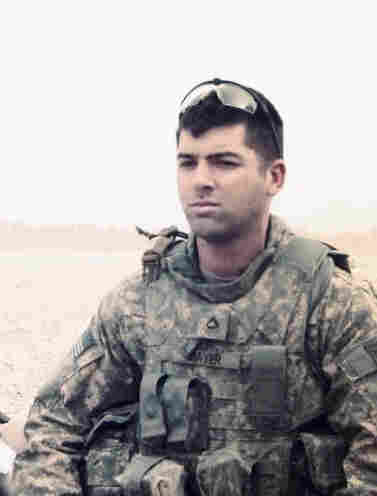
What they found was a lot of service members like Charles Mayer, an Army sniper from San Diego who developed PTSD after finishing a deployment in Iraq.

In 2010, Mayer was on patrol in an Army Humvee near Baghdad when a roadside bomb went off. “I was unconscious for several minutes,” he says. So he found out what happened from the people who dragged him out.

The blast fractured Mayer’s spine. It also affected his memory and thinking. That became painfully clear when Mayer got out of the Army in 2012.

Charles (right) gets tutoring from his brother, David, on the GRE test at their parents’ home. The couch in the living room bears a blanket with images of the three Mayer brothers. Stuart Palley for NPR hide caption

toggle caption Stuart Palley for NPR

“Two weeks later I started school,” he says. “And a simple math equation like 120 times 7, where I previously would do that in my head very easily, I all of a sudden couldn’t do that.”

And Mayer had a bigger problem. His time in Iraq had left him with an uncontrollable fear of improvised explosive devices, or IEDs.

“When I would walk down the street, I would walk away from trash piles because that’s often how they would hide IEDs,” he says. “I stayed away from large crowds.”

Mayer’s fear was not only disturbing, it was disabling. “I would get severe panic attacks to the point where I would have to go to the hospital,” he says. “I would feel like I’m actually having a heart attack.”

Eventually, Mayer went to a Veterans Affairs hospital for help. An exam confirmed that he had PTSD.

The wars in Iraq and Afghanistan have produced thousands of Charles Mayers. First they got a concussion from a bomb blast. Then they got PTSD.

“We had people who were looking very miserable when they came back,” says Dewleen Baker, a psychiatrist at UCSD and the VA San Diego Healthcare System.

Baker kept asking herself: Was the PTSD just from the emotional trauma of combat? Or did a concussion alter the brain in a way that amplified fear and anxiety?

“I could easily diagnose the PTSD,” she says. “But I found it very, very difficult to tease apart the contribution of traumatic brain injury.”

Mayer in Iraq in 2010, where he served as a sniper and was injured in a roadside explosion. Courtesy of Charles Mayer hide caption

toggle caption Courtesy of Charles Mayer

So Baker and a team of researchers began studying more than 1,600 Marine and Navy service members from Camp Pendleton, in San Diego County, Calif. The service members had been assessed before deploying to Iraq or Afghanistan, and then again three months after returning.

“At one point we got this battalion that went to Helmand Province in Afghanistan and literally 50 percent of them were complaining of blast exposures and symptoms,” Baker says. “I got concerned.”

Baker had reason to worry. The study found that troops who experienced a traumatic brain injury were twice as likely to develop post-traumatic stress disorder.

But why? There was no easy way to answer that question in people. But several years ago some answers began to emerge from animal studies.

In one experiment, a team of scientists at the University of California, Los Angeles compared healthy rats with rats that had experienced a traumatic brain injury. All of the rats received a type of behavioral conditioning known to induce fear.

They found that fear response learned by the animals that had experienced a TBI was much greater than it normally would be, says Fanselow Michael, a psychology professor at UCLA and an author of the study.

Next, the team looked at cells in the amygdala, a part of the brain that takes sensory information and decides whether to be afraid. They found changes that would amplify the animal’s response to a frightening experience.

“And we think that that’s the way TBI has of increasing your susceptibility to post-traumatic stress,” Fanselow says.

If brain injuries really do change the brain’s fear circuitry, there should be some way to detect that change in people, says Baker.

So Baker teamed up with her colleague Minxiong Huang, the biomedical physicist. Huang has been using a technology that measures electrical activity in the brain. It’s called magnetoencephalography,or MEG.

Huang and a team of researchers used MEG to scan the brains of 84 people who’d experienced a brain injury. Some of the participants were service members, some were civilians.

Those scans found abnormal signals coming from the brains of people who’d had a concussion. And the location of those abnormal signals suggested that there was too much activity going on in the amygdala and not enough in an area that normally tempers emotional reactions.

The result is a brain that is “like a car with no brake,” Huang says.

After leaving the Army and starting school, Charles discovered he could no longer do simple math equations in his head. Stuart Palley for NPR hide caption

toggle caption Stuart Palley for NPR

To learn more about the brain circuitry involved in both TBI and PTSD, Dewleen Baker is expanding her earlier study of Marines. She plans to scan the brains of about 200 combat veterans, including some with both TBI and PTSD.

And Baker will have help from a researcher with a personal stake in the project: Charles Mayer, the former soldier whose college career was interrupted by PTSD.

After getting treatment, Mayer was able to finish his undergraduate degree in December. Then Mayer, who is now 30, started looking for a job that would let him study the problems that had affected his own brain.

“I looked up the psychiatrists that were doing research that I really cared about, and Dr. Baker was definitely up there,” he says. And Baker hired him.

Their research will focus on veterans. But the findings could also help identify civilians who’ve suffered a brain injury that could make them vulnerable to PTSD.


Let’s block ads! (Why?)

Deadly Opioid Overwhelms First Responders And Crime Labs in Ohio

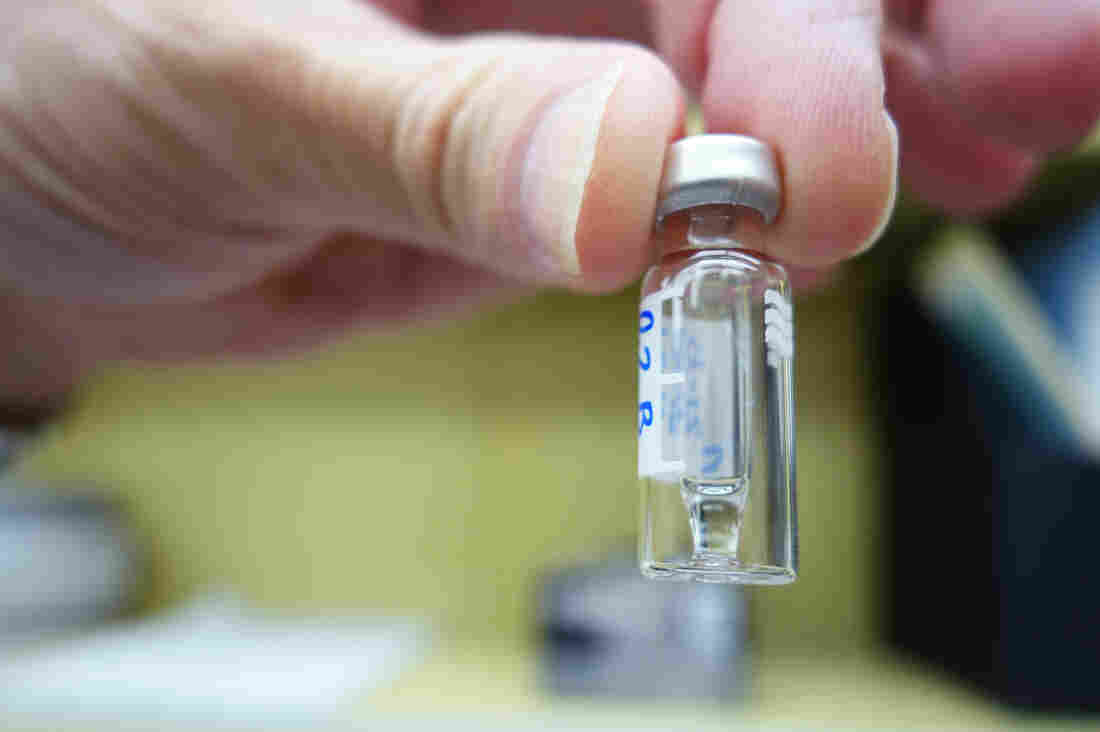
Bob Topmiller, chief of toxicology at the Hamilton County Coroner’s Office, holds a small vial containing carfentanil extracted from a sample of blood. Jake Harper/Side Effects Public Media hide caption

toggle caption Jake Harper/Side Effects Public Media

Jamie Landrum has been a police officer for two years in District 3 on the west side of the Cincinnati. In late August, the city was hit by 174 overdoses in six days. Landrum says officers were scarce.

“We were literally going from one heroin overdose, and then being on that one, and hearing someone come over [the radio] and say, ‘I have no more officers left,’ ” Landrum says. Three more people overdosed soon after that.

Heroin isn’t new in Cincinnati, but the recent surge in overdoses is being blamed on an even more potent drug called carfentanil. It’s 100 times stronger than fentanyl, a more common synthetic opioid that is itself much stronger than heroin. Carfentanil is used to sedate elephants. It can be dangerous to even touch it without gloves.

City and county agencies in the Cincinnati area — from law enforcement to the county coroner — are straining to respond to the carfentanil wave.

Carfentanil is part of a shift to synthetic opioids in Cincinnati and around the country. Last year in Hamilton County, Ohio, there were more deaths attributed to fentanyl than to heroin.

Suspected carfentanil cases were first reported in the U.S. in July in Ohio. The rate of overdoses has dropped since that shocking 174 in six days, but not by much. There are currently 20 to 25 overdoses a day, on average, reports Hamilton County’s heroin task force. Police are calling it the new normal.

About an hour into a recent shift, Officer Landrum gets a call. A man has overdosed at an apartment building on the outskirts of town. His girlfriend found him and called 911.

By the time we get there, there’s a crowd outside. The man is unconscious in the back of the ambulance, and EMTs have given him three doses of Narcan, an antidote for opioid overdose. For a heroin overdose, one round of Narcan is usually enough.

EMTs clap and shout his name, trying to wake him up, but something’s wrong. They turn off the music blaring in the ambulance and continue working. After a few minutes, Officer Landrum gives me an update.

“This is the most I’ve ever seen,” she says. “He’s gotten four Narcans so far, and he’s still not awake.”

The EMTs decide to take him to the hospital. We follow, not knowing if the man will make it. “Whatever he got ahold of, it’s really bad,” Landrum says.

For first responders, the arrival of carfentanil can be summed up with one word: More. More overdoses, more Narcan, more time spent on each call.

And when the efforts to save someone’s life fail, more work gets passed on to the Hamilton County Coroner’s Office.

“The caseload keeps getting larger and larger,” says Bob Topmiller, who heads the toxicology section at the coroner’s office, where they test blood and urine. “We may have had a 100- or 150-case backlog a year ago, and it’s almost doubled.” The time it takes to process a sample has also doubled, from one month to two.

Evidence of the deluge is all over the lab: Equipment spills into the hallways, envelopes cover the intake desk, and everyone seems to be busy.

And it’s more than the number of cases causing the flurry of activity. It’s the fact that the drug was never meant for people.

“It’s what we don’t know about this drug that scares us,” says Dr. Lakshmi Sammarco, the coroner for Hamilton County. “We don’t have any human testing data. We don’t know what the lethal level really is. There is no therapeutic level — it’s not meant for human use.”

Dr. Lakshmi Sammarco, the coroner for Hamilton County, Ohio, worries about the paucity of information about how carfentanil, an animal drug, affects humans. Jake Harper/Side Effects Public Media hide caption

toggle caption Jake Harper/Side Effects Public Media

That means Sammarco’s team is using the samples coming in to try to extrapolate some important information, like the lethal dose per kilogram of body weight, or how long carfentanil stays in someone’s system — things that could help the people treating the overdoses.

Sammarco says this process is part of a pattern they’ve dealt with before, playing catch up with the suppliers as new drugs appear.

“However, in the spectrum of opiates, this is about max,” she says. “Out of all of them, carfentanil really is the most potent.”

For now, Sammarco can only say that there have been eight deaths in which carfentanil might be the cause. Her office is working to test samples dating back to July, when the drug first showed up in Ohio.

At the hospital, Landrum follows the overdose victim into the emergency room. After about half an hour, doctors and nurses stabilize him.

We leave after that. The man didn’t have any drugs on him, so he wasn’t charged with any crime. His girlfriend wouldn’t say where the drugs came from, though she did mention that the two of them had overdosed the week before.

“Believe it or not, we’ll probably be responding out for her here shortly,” says Landrum. Even after close calls, people keep using. Addiction is too strong.

What’s worse, the danger of carfentanil seems to act as an advertisement: People seem to equate near death with a really good high, and the problems in Cincinnati are attracting customers. Landrum says recently she met a couple from Indianapolis in town to buy drugs. Another officer talked to people from central Kentucky.

So far, the DEA says carfentanil has only been confirmed in Ohio and Kentucky. Other states are starting to test for it, bracing for its arrival.

This story is part of a reporting partnership with NPR, Side Effects Public Media and Kaiser Health News.

Let’s block ads! (Why?)

King County In Seattle Wants To Open Legal Heroin Clinics To Combat Epidemic

A Washington state county is floating the idea of supervised clinics where people can inject heroin. King County’s health officer Jeff Duchin tells NPR’s Rachel Martin why he thinks it’s a good idea.

RACHEL MARTIN, HOST:

Officials in Seattle and the surrounding areas are considering a controversial proposal to tackle heroin addiction there. A task force has recommended opening clinics where people can take the drug legally and under medical supervision. Dr. Jeff Duchin is the health officer for King County in Washington state, and he joins us on the line.

Welcome to the program.

JEFF DUCHIN: Good morning.

MARTIN: How would this work?

DUCHIN: This particular feature, what we’re calling safe consumption sites or community health engagement locations, where users can come and use their heroin or their opioid drug under supervision of a medical professional – in a nutshell, the idea is not really to give people a place to inject drugs and then go about their lives but really a way that they can inject safely off the street, out of doorways, out of alleyways – hygienic conditions to minimize their risk of infection, such as HIV; to minimize their risk of overdose and to minimize the stigmatization and social rejection that keeps a lot of these people out of the health care system in the first place.

MARTIN: I understand a lot of the implementation of this will be worked out as you move forward with this proposal. But at this point, can you tell me if the clinics would provide the heroin or this is just a safe space for people to come in and use the drugs that they have on them?

DUCHIN: These locations would not provide any drugs. These locations would only provide health care providers that would give clean injection equipment so that people don’t pass infections from one person to the next. There is no provision of drugs at all. It’s just a safe space and a doorway to access other necessary health care.

MARTIN: So is the goal, then, to get these people off of heroin ultimately?

DUCHIN: Yeah, the goal is really access to treatment. So treatment is really the main bottom line that we’re trying to promote as the most effective, you know, population-wide intervention. We want people getting in long-term treatment. And this is just one doorway that we can use to get people into treatment.

MARTIN: How do you make this legal? I mean, you can’t, as it is now, just shoot up with heroin on the street. What makes it different being in your space?

DUCHIN: We are not making this legal. That is a misperception. We are going to give people with substance abuse disorders a safe, medically supervised place where they can use their drugs and not fear being arrested, beaten up or attacked…

MARTIN: That means you have to have support from law enforcement and the courts.

DUCHIN: Exactly. We have support from our local law enforcement community. And we’re optimistic that this is going to work here. But ultimately, we cannot make this legal.

MARTIN: Dr. Jeff Duchin is the health officer for King County in Washington state.

Thanks so much for talking with us.

DUCHIN: Thanks very much for doing the story.

Copyright © 2016 NPR. All rights reserved. Visit our website terms of use and permissions pages at www.npr.org for further information.

NPR transcripts are created on a rush deadline by Verb8tm, Inc., an NPR contractor, and produced using a proprietary transcription process developed with NPR. This text may not be in its final form and may be updated or revised in the future. Accuracy and availability may vary. The authoritative record of NPR’s programming is the audio record.

Let’s block ads! (Why?)

Doctor Confesses: I Lied To Protect Colleague In Malpractice Suit

Dr. Lars Aanning, seen at his home outside Yankton, S.D., said he lied to protect a colleague in a malpractice case. Now, Aanning is a patient safety advocate. Jay Pickthorn/AP for ProPublica hide caption

toggle caption Jay Pickthorn/AP for ProPublica

Almost two decades ago Dr. Lars Aanning sat on the witness stand in a medical malpractice trial and faced a dilemma.

The South Dakota surgeon had been called to vouch for the expertise of one of his partners whose patient had suffered a stroke and permanent disability after an operation. The problem was that Aanning had, in his own mind, questioned his colleague’s skill. His partner’s patients had suffered injuries related to his procedures. But Aanning understood why his partner’s attorney had called him as a witness: Doctors don’t squeal on doctors.

The attorney asked the key question: Did Aanning know of any time his partner’s work had been substandard?

“No, never,” Aanning said.

Now, Aanning, in a stunning admission for a medical professional, has a blunter answer: “I lied.”

While it’s impossible to know to what extent Aanning’s testimony influenced the outcome, the jury sided in favor of his colleague — and, ever since, Aanning said, he has felt haunted by his decision.

Now, 77 and retired, he decided to write about his choice and why he made it in a recent column for his local newspaper, The Yankton County Observer. He also posted the article in the ProPublica Patient Safety Facebook group. Aanning, who is a member, called it, “A Surgeon’s Belated Confession.”

“From that very moment I knew I had lied – lied under oath – and violated all my pledges of professionalism that came with the Doctor of Medicine degree and membership in the [American Medical Association],” Aanning wrote.

Aanning, who has become an outspoken patient advocate, now assists the medical malpractice attorney who represented the patient in the case in which he lied for his partner.

There’s no way to tell how often doctors to lie to protect their colleagues, but ProPublica has found that patients frequently aren’t told the truth when they are harmed. Studies also show that many physicians do not have a favorable view of informing patients about mistakes and that health care workers are afraid to speak up if things don’t seem right. Many doctors and nurses have told ProPublica that they fear retaliation if they speak out about patient safety problems.

ProPublica spoke to Aanning about his unusual column and why he decided to confess all these years later. The interview has been edited for clarity and length.

Why did you tell the lie?

I did it as a matter of course. And I did it because there was a cultural attitude I was immersed in: You viewed all attorneys as a threat and anything that you did was OK to thwart their efforts to sue your colleagues. I just accepted that as normal. It wasn’t like, “I’m going to lie.” It was, “I’m going to support my colleague.”

Did you feel pressure from your peers to never criticize a colleague?

Pressure is the prevailing attitude of the medical profession. The professional societies like the AMA and the American College of Surgeons say you should be a patient advocate at all times. But that goes out the window because here you are, banding together with your peers. Because if you don’t, you’ll be like a man without a country.

Why are you telling the truth now?

I’m retired now. The big benefit is they can’t hurt me, but I can’t go to the clinic for any help. All my doctors are out of town. I came to America from Norway in ’47 and grew up in New York. I’ve always been a rabble-rouser. This testifying falsely at this trial was not like me, so it stands out. It’s not how I do stuff.

I also told the truth about my lie because I have been helping some of these plaintiffs’ lawyers with their cases. It seems that the courtroom is not the arena for adjudication of medical right or wrong. I shared my story to give an explicit example of why you can’t always rely on physician testimony in court. I think that’s the big reason. There’s got to be a different way to help people who have been medically harmed. Looking to the legal system is like mixing oil and water.

Do you feel like it’s your fault the patient lost the case?

I haven’t touched on that question. It would make it painful for me. I would be moved to tears if that whole case revolved around just my testimony. I was on the stand so briefly. But cumulatively between what I said and the other testimony – it was never a level playing field for the plaintiff. People don’t recognize it. How the judges don’t recognize it and the system doesn’t recognize it is beyond me. It’s something I’m coming to grips with.

Have you thought about talking to the patient’s family?

The attorney said something about meeting the patient’s widow in his office, or something like that. I worry about whether my testimony weighed on the final verdict or not. It’s something that you just have to face up to. It’s too late to deflect it.

Do you feel any better or worse now that you’ve gone public with your moral failure?

I’m not altruistic. I’m not a crusader. I got into writing this column accidentally so I just kind of find myself in this position. I get a great satisfaction out of defining what I see and writing about it. I hope nobody’s going to come back at me and accuse me of bad conduct. Although that’s what it was. I felt bad about it.

ProPublica is interested in hearing from patients who have been harmed while undergoing medical care, through its Patient Harm Questionnaire and Patient Safety Facebook Group. You can follow Marshall Allen on Twitter: @marshall_allen.

Let’s block ads! (Why?)

Mylan CEO Claims EpiPens Aren't As Profitable As Everyone Thinks

Heather Bresch, CEO of Mylan Pharmacueticals, will face lawmakers’ questions Wednesday about the company’s steep price hikes for the company’s life-saving EpiPen auto-injector. Dale Sparks/AP hide caption

toggle caption Dale Sparks/AP

The drug company that makes the EpiPen says it isn’t nearly as profitable as many people assume it is.

At least that’s the message Mylan NV CEO Heather Bresch will try to deliver to members of Congress today.

Bresch, who is scheduled to testify before the House Oversight and Government Reform Committee, is expected to tell lawmakers that the company earns $100 profit on each two-pack of EpiPen auto-injectors, even though they carry a $600 price tag.

“The misconception about our profits is understandable, and at least partly due to the complex environment in which pharmaceutical prices are determined,” Bresch says in prepared testimony. “The pricing of a pharmaceutical product is opaque and frustrating, especially for patients.”

Bresch says it costs the company about $69 to make two EpiPens, and after rebates and fees, Mylan receives $274 per EpiPen pack. She says other, unnamed costs absorb an additional $105, leaving $100 in profit for the company.

While the company apparently is looking to use the analysis to downplay its profits, analysts say the margin is still quite high.

Ronny Gal, a pharmaceutical industry analyst at the investment firm Sanford Bernstein, says Bresch’s numbers mean Mylan makes a 40 percent profit margin on the device.

The EpiPen is a long, plastic tube that automatically injects a dose of epinephrine — or adrenaline — into a person’s thigh to stop an allergic reaction. It’s easy to use and portable.

Mylan bought rights to the EpiPen in 2008 and launched an aggressive marketing and awareness campaign. That effort has made the so-called auto-injector a must-have for anyone with a serious allergy — perhaps to bee stings or tree nuts — that may trigger anaphylaxis, a life-threatening reaction in which the airways swell and close.

The company has come under fire in recent months, however, because it raised the price of the device, which has been available for decades, more than 500 percent.

The wholesale price of a single pen was about $47 in 2007, and it rose to $284 this summer, according to Richard Evans, a health care analyst at SSR. But consumers can no longer buy a single pen, so the retail price to fill a prescription today at Walgreens is about $634, according to GoodRX.

Mylan has tried to quell the criticism first by offering customers a coupon worth up to $300 to offset the price of the device, and then announcing it would bring a generic version of the EpiPen to market for half the retail price.

In addition to the investigation by the House Oversight committee, at least three senators have also called for investigations into Mylan’s pricing practices. Sens. Charles Grassley, R-Iowa, and Richard Blumenthal, D-Conn., have sent letters to Mylan demanding an explanation for the increase.

Mylan responded with a letter that Grassley, in a press release, said was “incomplete.”

Sen. Amy Klobuchar, D-Minn., has asked the Federal Trade Commission to investigate whether Mylan has violated antitrust laws in its marketing of the EpiPen.

And the Senate Finance Committee is reviewing the rebates that Mylan offered to the Center for Medicare and Medicaid Services.

In her testimony, Bresch says the company did not intend for its price hikes to hurt patients.

“Looking back, I wish we had better anticipated the magnitude and acceleration of the rising financial issues for a growing minority of patients who may have ended up paying the full [Wholesale Acquisition Cost] price or more,” she says. “We never intended this.”

Let’s block ads! (Why?)