Feds Say More People Should Try Dialysis At Home

Nurses teach patients how to use equipment and do peritoneal dialysis at home. Life in View/Science Source hide caption

toggle caption

Life in View/Science Source

About half a million Americans need dialysis, which cleans toxins from the body when the kidneys can’t anymore. It can cost more than $50,000 a year, and takes hours each week at a dialysis center.

To meet the need, roughly 7,000 kidney dialysis centers have opened across the country. Patients go several times a week and spend half a day undergoing the life-sustaining procedure. Medicare is now taking steps to make it easier for people to do their own dialysis at home.

That sounds like great news to Dr. Robert LaClair, a nephrologist in Helena, Mont., who has an unusually high percentage of patients who do their dialysis at home: 40 percent versus the national rate of about 10 percent. That’s largely because LaClair is no fan of how dialysis has traditionally been done in America. He says his patients do better if they’re more active participants in their care, rather than passive receivers.

“The way we do dialysis in this country, no one would be saying, ‘This is the way we should be doing things,’ ” LaClair says.

The traditional dialysis routine in a clinic setting is tough on patients, he says. “Often our patients will feel poorly for four, five, six hours, sometimes the rest of the day after a dialysis treatment [in the center],” LaClair says. “They only start feeling better by the next day. And then of course by the time they feel really well, they’re back on dialysis again. So it’s very hard on people, especially as they get older, to have to go through that kind of treatment.”

Contrast that to LaClair’s patient, 84-year-old Ward Shanahan. He’s a retired attorney who was diagnosed with diabetes a year ago. LeClair prescribed a home dialysis machine that Shanahan uses every night at bedtime. More frequent dialysis means less recovery time, and patients can do it when it’s convenient for them, not when centers have appointments available.

“It gives me a life again,” Shanahan says.

He has a lakeside cabin he likes to visit in the summer. Being tied to a dialysis center’s daytime hours “busts up the week,” he says. “I like to be able to get up in the morning, take a shower and go around the world.”

Shanahan says his home routine, using something called a peritoneal dialysis machine, isn’t particularly difficult. “It’s got this sweet-voiced lady telling me what to do,” he says about the prerecorded voice from the machine on his nightstand that talks him through properly connecting several slender, clear plastic tubes to it. One plugs into a pre-mixed bag of sugar solution, another to a permanent catheter near his navel. The machine slowly pumps the fluid into his lower abdomen, where it circulates and absorbs bodily wastes through blood vessels in the abdominal lining called the peritoneum. The machine then draws it back out through the same catheter. Another tube snaking away from his machine carries the waste fluids into a toilet in the adjacent bathroom.

Ward Shanahan, 84, does dialysis at home every night while he sleeps. Eric Whitney/MTPR hide caption

toggle caption

Eric Whitney/MTPR

Peritoneal dialysis is less common than hemodialysis, in which a machine filters the blood itself. Most people who dialyze at home use the peritoneal technique, although it is possible for some patients to perform hemodialysis at home, too.

Shanahan says he often sleeps through most of the fluid cycling, getting about six hours of sleep a night. If there’s a problem, he says, his machine, which is about the size of a toaster oven, “has a squawker on it, so I could be sleeping and this thing wakes me up and tells me I’ve got to fix the line.”

But the routine he’s now familiar with requires a lot of up-front training. Medicare is proposing to more than double the payment it offers dialysis providers to teach patients how to do it—from the current $50.16 for 1.5 hours of a nurse’s time, to $95.57 for 2.66 hours.

Still, that may not be enough to cover actual training costs, says Dr. Frank Maddux, chief medical officer for Fresenius, a large dialysis company. He says the number of Fresenius’ patients who dialyze at home has increased from 7 to 11 percent over the last five years.

“I don’t know that [the increased payment] will create all the fundamental changes that need to occur, but I think it sets a good, clear direction,” Maddus says.

Neither Medicare nor Maddux will say how many more dialysis patients should do the procedure at home. They say that is both a personal and medical choice that isn’t right for everyone, and they don’t want patients who are happy using dialysis centers to feel pressure to change.

Medicare officials declined to be interviewed for this story, but Maddux says he sees the agency’s proposed bump in payment for in-home dialysis training as part of its bigger “triple aim” goal of improving patients’ experience while also improving their health and lowering medical costs.

“There are many patients I think that could be much more engaged in their therapy,” Maddux says, which he thinks would likely lead to them feeling better. At least one study found that patients who dialyze more frequently feel better and are hospitalized less than those who do it less frequently.

Nephrologist LaClair practices at St. Peter’s Hospital in Helena, Mont. He says his patients who switch from the largely passive experience of a center to taking responsibility for their own care at home never want to go back, “even when we’ve had people having significant problems and issues” doing it themselves.

At St. Pete’s, LaClair says, they have had the opportunity to “model dialysis the way think we would want dialysis if we were sick, and that’s what we do.”

Neither LaClair nor Maddux sees home dialysis as a threat to the viability of the thousands of dialysis centers nationwide. Providers get the same base-level payments for caring for patients whether they do their dialysis at home or in centers. LaClair says maintaining patients on in-home dialysis is cheaper long term, but requires a significant investment up front in training, and he says it’s crucial that there is always medical staff on call to help with challenges, including infection control.

Information technology is improving the viability of home dialysis, too. Patients used to have to keep pen-and-paper logs of important health data about their treatments, logs that nurses say were notoriously inaccurate and that they only saw once a month. New machines track patients vital signs in real time and send the data back to providers via the Internet, allowing them to track and even adjust treatments on their computers or smart phones on the fly.

Medicare hopes to implement the payment increase by January 1, 2017.

This story is part of a reporting partnership with NPR, Montana Public Radio and Kaiser Health News.

Let’s block ads! (Why?)

Doll Therapy May Help Calm People With Dementia, But It Has Critics

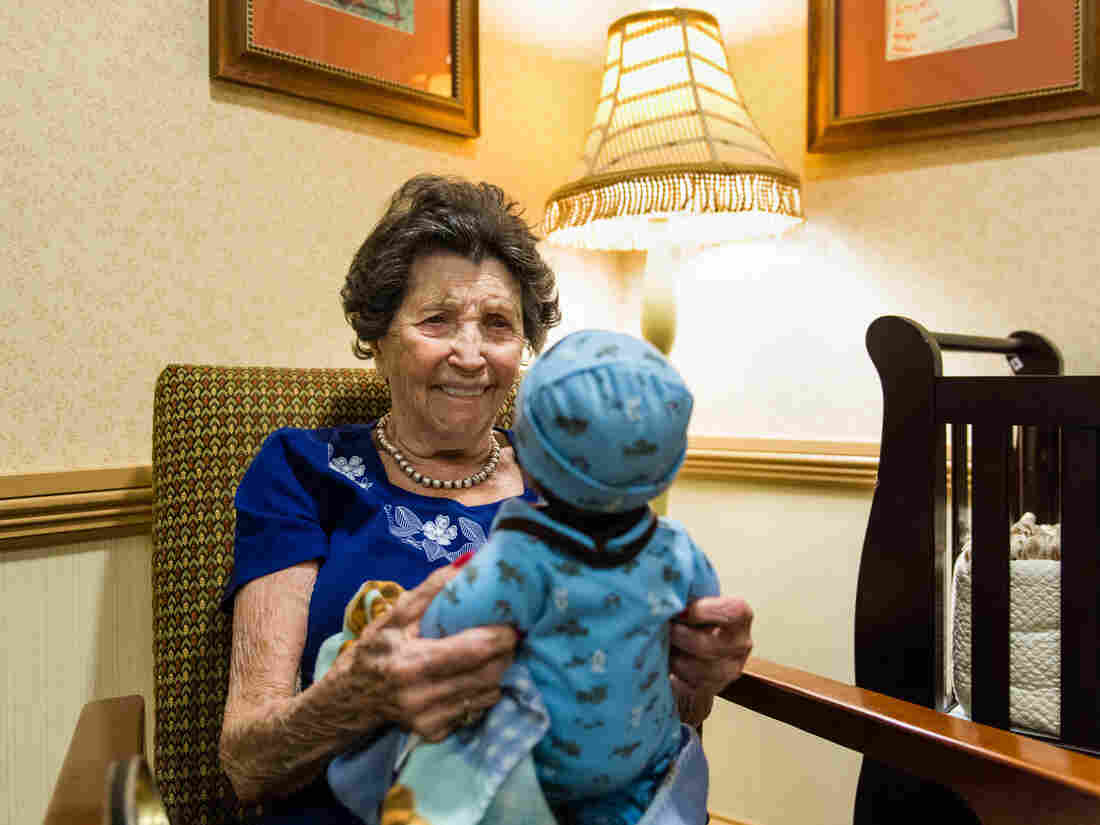
Vivian Guzofsky, 88, holds a baby doll at Sunrise Senior Living in Beverly Hills, Calif. Guzofsky, who has Alzheimer’s disease, is calm when taking care of the dolls. Heidi de Marco/Kaiser Health News hide caption

toggle caption

Heidi de Marco/Kaiser Health News

Sitting beside a neatly made crib, 88-year-old Vivian Guzofsky holds up a baby doll dressed in puppy dog pajamas.

“Hello gorgeous,” she says, laughing. “You’re so cute.”

Guzofsky, who has Alzheimer’s disease, lives on a secure memory floor at a home for seniors in Beverly Hills, Calif. She visits the dolls in the home’s pretend nursery nearly every day. Sometimes Guzofsky changes their clothes or lays them down for a nap. One morning in August, she sings to them: “You are my sunshine, my only sunshine. You make me happy when skies are gray.”

No one knows whether she believes she is holding a doll or a real baby. What the staff at Sunrise Senior Living do know is that Guzofsky, who can get agitated and aggressive, is always calm when caring for the dolls.

Doll therapy is catching on at nursing homes and other senior facilities across the country. It’s used to help ease anxiety among residents with dementia, who can experience personality changes, agitation and aggression. But the therapy is controversial.

Supporters say the dolls can lessen distress, improve communication and reduce the need for psychotropic medication. Critics say the dolls are demeaning and infantilize seniors.

Marilou Roos, 87, rarely speaks and sleeps much of the day. But caregiver Jessica Butler says Roos brightens up when caring for the dolls. Heidi de Marco/Kaiser Health News hide caption

toggle caption

Heidi de Marco/Kaiser Health News

Typically, caregivers will give residents the option of holding, changing or dressing the dolls, without saying whether the dolls are babies or toys. Caregivers may also use the dolls to start conversations about the residents’ own children or grandchildren.

Care providers who use the technique say the dolls help engage elderly people who are no longer able to participate in many activities.

“A lot of people with Alzheimer’s are bored and may become depressed or agitated or unhappy because they aren’t engaged,” says Ruth Drew, director of family & information services at the Alzheimer’s Association.

Caregivers aren’t trying to make their charges believe the dolls are real infants, Drew says. They are just “trying to meet them where they are and communicate with them in a way that makes sense to them,” she says.

But some care providers do not like the technique.

“They are adults and we want to treat them like adults,” says Stephanie Zeverino, who works in community relations at a Belmont Village center in Los Angeles. “These are very well-educated residents.”

Staff members there work with residents to play brain games that promote critical thinking, she says. And they use other types of therapy including art and music.

“We want to provide a sense of dignity,” Zeverino says.

Studies on doll therapy are limited, but some research has shown it can reduce the need for medications and lessen agitation, aggression and wandering.

“Having the doll … offers them an anchor or a sense of attachment in a time of uncertainty,” says Gary Mitchell, a nurse specialist at Four Seasons Health Care facilities in Northern Ireland, and author of a new book: Doll Therapy in Dementia Care: Evidence and Practice.

“A lot of people associate the doll with their younger days and having people to care for,” Mitchell says.

However, he acknowledges that doll therapy can perpetuate the stigma associated with dementia that care givers are trying to get away from.

Some families worry about their relatives being laughed at when they engage in doll therapy, Mitchell says. He had the same concerns when he worked at a senior residential center. But when one resident requested that he allow her to continue caring for a doll, he saw the positive impact of the therapy. Mitchell says doll therapy should be used cautiously and more studies are needed.

At Sunrise Beverly Hills, the nursery is set up like a baby’s room. A stuffed bear rests inside the wooden crib. On a shelf above are framed photos of Guzofsky and a few other women who regularly interact with the dolls. A few bottles, a Dr. Seuss book and diapers sit on a nearby changing table.

The nursery is just one of several areas designed to engage residents, says Rita Altman, senior vice president of memory care for Sunrise, which has facilities in the U.S., Canada and the United Kingdom. There are also art centers, offices, gardens and kitchens where residents may find familiar objects from their past.

Altman says the nurseries tend to attract residents who have an instinct to care for babies. Some people may not be able to talk anymore, but still find a sense of security with a doll, she says. “You can read it in their body language when they pick up the doll.”

When asked what she likes about the dolls, Guzofsky says, “I love babies.” Heidi de Marco/Kaiser Health News hide caption

toggle caption

Heidi de Marco/Kaiser Health News

Sunrise caregivers also use the dolls to spark conversations by asking questions: How many children do you have? Was your first baby a boy or a girl? What are the best things about being a mom?

The executive director of the Beverly Hills facility, Jason Malone, says he was skeptical about the use of dolls when he first heard about them.

“I almost felt like we were being deceitful,” he says. “It didn’t feel like it was real.”

But he quickly changed his mind when he realized that staff could use the dolls respectfully.

“We don’t want to confuse treating our seniors as children,” Malone says. “That’s not what this activity is truly about.”

Guzofsky began caring for the dolls soon after moving into the facility. When asked what she likes about them, she says, “I love babies. I have some very nice ones back where I live now.”

Guzofsky’s daughter, Carol Mizel, says her mom raised three children and volunteered extensively in Colorado and Mexico before being diagnosed with Alzheimer’s about five years ago. Mizel doesn’t see any downside to her mother caring for the dolls.

It is a “creative way of dealing with her where she is now,” she says.

For some residents, including 87-year-old Marilou Roos, holding the dolls is one of the only times they interact with the staff. Roos uses a wheelchair and rarely speaks. She sleeps much of the day.

“There is not much [Marilou] can participate in,” says Vladimir Kaplun, former coordinator of the secure memory floor. “When she spends some time with the babies, she wakes up and she brightens up.”

On a recent day, caregiver Jessica Butler sits next to Roos, who holds a doll against her chest and pats her on the back. She kisses the doll twice.

“The baby’s beautiful like you,” Butler says.

“It’s a boy,” Roos says. “Five months.”

Caring for the dolls is second nature to Roos, who made a career of being a mom to five children, according to her daughter, Ellen Swarts.

It’s been difficult for Swarts to watch the decline of her mother, who hasn’t called her by name in over a year. Watching her with the dolls helps, Swarts says.

“To see the light in her eyes when she has a baby in her arms, I don’t care if it’s real or if it’s pretending,” she said. “If that gives her comfort, I am a-OK with it.”


Let’s block ads! (Why?)

A Bygone Era: When Bipartisanship Led To Health Care Transformation

Construction of Moses H. Cone Memorial Hospital in Greensboro, N.C., was partially funded by the Hill-Burton Act. The hospital, seen circa 1973, was at the center of a court case, Simkins v. Moses H. Cone Memorial Hospital, that brought an end to racially segregated health care. Cone Health Medical Library hide caption

toggle caption

Cone Health Medical Library

People might be forgiven for thinking that the Affordable Care Act is the federal government’s boldest intrusion into the private business of health care.

But few know about a 70-year-old law that is responsible for the construction of much of our health system’s infrastructure. The law’s latest anniversary came and went without much notice in August.

The Hill-Burton Act was signed into law by President Harry S. Truman on August 13, 1946 — and its effect on health care in the U.S. was nothing short of monumental. Perhaps more importantly, it stands as an example, warts and all, of how a bipartisan Congress can forge compromises to bolster American infrastructure and boost the well-being of our people.

Known formally as the Hospital Survey and Construction Act, Hill-Burton started as a Truman initiative. In November 1945, only two months after the official end of World War II, he gave a speech to Congress outlining five goals to improve the nation’s health. The first and least controversial of these called for constructing hospitals and clinics to serve a growing and rapidly demilitarizing population.

Hill-Burton provided construction grants and loans to communities that could demonstrate viability — based on their population and per capita income — in the building of health care facilities. The idea was to build hospitals where they were needed and where they would be sustainable once their doors were open.

Over the subsequent decades, new facilities sprang up all around the country, including many in the 40 percent of U.S. counties that lacked hospitals in 1945.

By 1975, Hill-Burton had been responsible for construction of nearly one-third of U.S. hospitals. That year Hill-Burton was rolled into bigger legislation known as the Public Health Service Act. By the turn of the century, about 6,800 facilities in 4,000 communities had in some part been financed by the law. These included not only hospitals and clinics, but also rehabilitation centers and long-term care facilities.

In 1997, this type of direct, community-based federal health care construction financing came to an end. However, numerous Hill-Burton clinics and hospitals still exist around the country, specifically financed by a part of law to provide care to those unable to afford it.

“After the passage of Medicare and Medicaid, Hill-Burton ranks right up there among the most important pieces of health legislation in the 20th century,” physician and historian Howard Markel told Shots.

Hill-Burton introduced many ideas in health care financing that are still in use today. Chief among them is that hospitals receiving federal monies are obligated to provide free or subsidized care to a portion of their indigent patients. U.S. non-profit hospitals (still the vast majority) must demonstrate evidence of ‘community benefit’ to maintain tax-exempt status. Providing care to the uninsured is one of the most common ways to meet this obligation.

Grace Hospital in Morganton, N.C., was funded in part by the Hill-Burton Act. Construction began in 1969. Courtesy of Blue Ridge Healthcare Foundation hide caption

toggle caption

Courtesy of Blue Ridge Healthcare Foundation

Another idea rooted in Hill-Burton is federal-state matching, meaning that federal appropriations must be matched by dollars from states, which is how Medicaid is financed.

Hill-Burton also has a poorly remembered dark side: Because of its provenance as a bipartisan law named for a Northern Republican (Sen. Harold Burton of Ohio) and a Southern Democrat (Sen. Lister Hill of Alabama), the law codified the idea of “separate but equal” in hospitals and health care facilities.

In order to achieve compromise and the necessary Democratic votes for passage, Southern Democrat segregationists had to be appeased. When this aspect of the law was overturned in a federal court challenge in 1963, Hill-Burton went on to become a major driver of hospital desegregation.

It seems worth noting that Sen. Hill’s surgeon father named him after Dr. Joseph Lister, a pioneer of antiseptic surgery.

A month after enactment of the law, Truman, a Democrat, appointed Republican Sen. Burton to the Supreme Court in a bipartisan gesture that doesn’t seem imaginable in today’s polarized political landscape. And consider this: Burton was unanimously approved by the entire Senate the same day he was appointed. With no committee hearings! He joined the court the very next day.

“Hill-Burton speaks to an earlier time in our history when the American people and those who represented them had confidence that government could do good things,” Markel said. “And that makes it all the more phenomenal to me.”

John Henning Schumann is a writer and doctor in Tulsa, Okla. He serves as president of the University of Oklahoma-Tulsa. He also hosts StudioTulsa: Medical Monday for KWGS – Public Radio Tulsa. You can follow him on Twitter: @GlassHospital.

Let’s block ads! (Why?)

How We Got Here: Treating Addiction In 28 Days

After a string of inpatient rehabilitation stays, Louis Casanova, who lives near Philadelphia, says he is still trying to break his addiction. Ben Allen/WITF hide caption

toggle caption

Ben Allen/WITF

Louis Casanova is playing cards with a friend on the back deck of a recovery house in Philadelphia’s northern suburbs.

He’s warm and open as he talks about his past few years. The guy everyone calls Louie started using drugs like Xanax and Valium during his freshman year of high school. At age 18, Casanova turned to heroin. About two years later, the rehab shuffle began.

“I relapsed and then I was just getting high. And then I went to treatment again in February of 2015,” he says. “Then I relapsed again and went back to treatment.”

He’s 23 now. He’s hurt people close to him and his criminal record, fueled by his drug addiction, is long. By Louie’s count, he has been through eight inpatient rehabs. Louis says his stays have ranged from about 18 to 45 days.

“I did 30 days, and after that I came here,” he concludes, talking about his latest visit.

A month’s stay can be pretty typical among people who go to an inpatient facility.

But why?

“As far as I know, there’s nothing magical about 28 days,” says Kimberly Johnson, director of the Center for Substance Abuse Treatment at SAMHSA, the federal agency that studies treatment services.

Anne Fletcher, author of the book Inside Rehab, agrees.

“It certainly is not scientifically based,” she says. “I live in Minnesota where the model was developed and a lot of treatment across the country really stemmed from that.”

She says the late Daniel Anderson was one of the primary architects of the “Minnesota model,” which became the prevailing treatment protocol for addiction specialists. At a state hospital in Minnesota in the 1950s, Anderson saw alcoholics living in locked wards, leaving only to be put to work on a farm.

To find a path for them to get sober and leave the hospital, he came up with the 28-day model.

Marvin Ventrell, executive director of the National Association of Addiction Treatment Providers, has studied the model’s history. He says the month-long standard comes from the notion that when “someone is suffering from addiction — and in the days that this began, we’re pretty much talking about alcoholism — it made sense to people that it took about four weeks to stabilize somebody.”

And then, Ventrell says, “It became the norm because the insurance industry was willing to pay for that period of time.”

Now the model has spread to treatment for opioid addiction, even though recovering from addiction to those powerful drugs may require a different method.

Ventrell admits there isn’t enough research about the most effective length for an inpatient stay for opioid addiction.

“Treatment centers have to step up and say, ‘Just like cancer or heart disease, we’re going to measure our outcomes and show them to you,’ ” he says.

The federal government estimates spending on treatment for all substance abuse will hit a high of $42 billion by 2020. Some people pay tens of thousands of dollars, desperately hoping inpatient treatment will work.

But there’s increasing evidence that medication assisted treatment with the synthetic opioids methadone or suboxone can help those addicted by helping to relieve symptoms of withdrawal and reduce craving, especially when paired with strong outpatient counseling and other support.

Fletcher says it’s important for treatment to move away from the default month-long model.

That may be enough for some people, she says, but it “isn’t the case for most people. It’s like any other chronic disorder, it waxes and wanes.”

After his inpatient stays, Casanova is still trying to break his addiction. While he says recovery largely depends on the person, he preferred longer stays because it gave him more time to learn from other patients in a supportive environment. But Casanova is just one person; others prefer inpatient stays that are shorter than a month, followed by intensive outpatient programs.

Casanova relapsed in February, before I talked to him, and recently had to serve some jail time. But he’s back in the recovery house, and hoping to soon make the leap to the next stage — a house with even more independence.

This story is part of a reporting partnership with NPR, WITF’s Transforming Health and Kaiser Health News.

Let’s block ads! (Why?)

New Rule Preserves Patients' Rights To Sue Nursing Homes In Court

A new rule by an agency within the Department of Health and Human Services preserves the right of patients and families to sue nursing homes in court. Saul Loeb/AFP/Getty Images hide caption

toggle caption

Saul Loeb/AFP/Getty Images

The federal government has announced a new rule that guarantees the rights of patients and families to sue long-term care facilities.

The rule, released Wednesday by the Centers for Medicare & Medicaid Services, bans so-called pre-dispute binding arbitration clauses in nursing home contracts, which require patients and families to settle any dispute over care in arbitration, rather than through the court system.

The rule applies to facilities that receive money from Medicare or Medicaid — which is nearly all of them.

[embedded content]

“Today’s rules are a major step forward to improve the care and safety of the nearly 1.5 million residents in the more than 15,000 long-term care facilities that participate in the Medicare and Medicaid programs,” Andy Slavitt, the acting administrator for the agency, wrote in a blog post about the decision.

It is scheduled to go into effect in November.

The change was originally proposed in July 2015, and Slavitt writes that the agency has “received and reviewed almost 10,000 comments from the public.”

The rule would address cases like that of Dean Cole, who NPR reported on in 2015. Just two weeks after Cole’s wife arranged for him to move into a Minnesota nursing home, he was rushed to the hospital, severely dehydrated and in a coma, a lawyer for the family told NPR’s Ina Jaffe.

Cole died a short while later. His wife, Virginia, could not sue the facility because she had signed a binding agreement to pursue arbitration for any dispute. Although she won the arbitration hearing before three judges, the fees for the proceedings amounted to more than $60,000, leaving her with a final settlement amount of only $20,000, her lawyer said.

The new rule will allow people like Virginia Cole to sue a nursing home in court. It also leaves the door open to arbitration in individual cases if both sides agree to it.

A 2009 study commissioned by the American Health Care Association, which represents most nursing homes, found the average awards after arbitration were 35 percent lower than if the plaintiff had gone to court.

The American Health Care Association opposed the arbitration rule change when it was proposed in 2015. Clifton Porter II, the AHCA’s senior vice president for government relations, defended arbitration in a 2015 interview with NPR, saying “it actually allows consumers to get an expedited award.”

The association’s president and CEO, Mark Parkinson, said in a statement, “AHCA is extremely disappointed that CMS included in the final rule a provision banning all pre-dispute arbitration agreements. That provision clearly exceeds CMS’s statutory authority and is wholly unnecessary to protect residents’ health and safety. We are considering the appropriate steps to take in light of this unjustified action by CMS.”

In addition to the litigation changes, the new rule also includes expanded regulations regarding the food, medical treatment and personnel requirements for long-term care facilities. Nursing homes must provide “nourishing, palatable” food for residents and develop a care plan for each resident within 48 hours of their admission to the facility.

Amid increased fears of institutionally-spread infection and antibiotic resistance, the new rules also require nursing homes to develop an “infection prevention and control program,” and a plan for monitoring the use of antibiotics.

Let’s block ads! (Why?)

Are Golden Tickets That Speed Drugs Through FDA Worthwhile?

Sarepta Therapeutics was awarded a voucher for a fast-track drug review by the Food and Drug Administration when the company’s medicine for Duchenne muscular dystropy was approved Sept. 19. Now Sarepta is looking to sell the voucher to the highest bidder. Mick Wiggins/Ikon Images/Getty Images hide caption

toggle caption

Mick Wiggins/Ikon Images/Getty Images

Drugmaker Sarepta Therapeutics won a big victory when its $300,000 muscular dystrophy drug was approved Sept. 19, despite questions about its effectiveness.

But the company had other reasons to celebrate. It was also awarded the pharmaceutical industry’s version of a Willy Wonka golden ticket.

The ticket, known as a priority review voucher, was created by Congress in 2007 to encourage the development of drugs for neglected tropical diseases and was expanded in 2012 to rare pediatric disorders. A company that gets a qualifying drug approved can be awarded a voucher that can be redeemed for a fast-track government review of one of its future drugs. Or the voucher holder can sell the golden ticket to the highest bidder.

A voucher can help a drug company leapfrog a rival.

“The only people who would buy a priority review voucher would be someone who had something that wouldn’t merit its own priority review but they want the priority review,” says Dr. Tim Coté, a former FDA official who now runs a consulting firm for rare disease drugs.

A voucher guarantees a company that its drug will be reviewed within six months, as compared with the standard 10. But approval isn’t assured, just a speedier decision.

The sale of a voucher can earn a lot of money for a small company like Sarepta. Last year, a voucher sold for a record $350 million when AbbVie Inc. bought one from United Therapeutics. AbbVie hasn’t disclosed its plans for the voucher.

Members of Congress, the pharmaceutical industry and rare-disease advocates have passionately supported vouchers as a way to spur development of drugs for rare and neglected diseases. But skeptics, including FDA officials and some academics, have questioned whether the program is paying off.

Nancy Goodman, executive director of Kids v Cancer, is a champion of vouchers. She created her foundation after her son died seven years ago of medulloblastoma, a type of brain cancer that often affects children.

There were no drugs available for her 10-year-old son, she said. “I believe and hope we will see a whole crop of pediatric disease drugs because of the program,” Goodman said.

Legislation extending the pediatric voucher program through early December passed the House and Senate by unanimous consent and awaits action by President Obama, who is expected to sign it. The program was set to expire Oct. 1.

Advocates are fighting to keep the program authorized until Dec. 21, 2018, as part of the 21st Century Cures Act, which has passed the House and has stalled in the Senate, where backers hope it will be taken up after the elections.

But officials at the FDA, which must implement the vouchers, are at odds with industry and advocates.

Dr. John Jenkins, director of the office of new drugs in the Center for Drug Evaluation and Research at the FDA, has said he supports the overall goal of providing incentives to promote drug development but that the voucher program is wrong.

In December, Jenkins told the industry publication Pharmaceutical Executive that vouchers raise safety concerns because the program requires the FDA to give any drug accelerated review – even when reviewers have to address complex issues. “We’re not making pizza here,” he said.

Jenkins declined interview requests for this story. FDA spokeswoman Sandy Walsh said, the “FDA has not seen evidence that the program is effective.”

Walsh also said the agency is concerned that the voucher program “adversely affects the agency’s ability to set its public health priorities” and “the additional workload from the program strains the agency’s resources.”

The voucher program does require companies to pay an additional user fee of nearly $3 million on top of the standard fee to review a drug, in order to help the agency pay for the program.

But the additional money may not be sufficient.

In March, a Government Accountability Office report on pediatric vouchers said FDA officials complain there is too little time to use the money to hire and train additional employees to do accelerated reviews and that the one-time fee does not enable hiring of long-term staff.

The GAO’s report said it was too early to say whether the program is stimulating development of drugs for rare childhood disease. Of the seven pediatric review vouchers that have been awarded, four have been sold to other drug companies.

Drugmaker Sanofi has redeemed two pediatric vouchers. For the first, it paid $67.5 million to BioMarin, developer of a treatment for Morquio A syndrome, a rare, inherited disorder, and used it to expedite review of the cholesterol drug Praluent. Later, Sanofi spent $245 million for a pediatric voucher from Asklepion Pharmaceuticals, maker of treatment for a rare childhood metabolic disease. Sanofi said in February it would be used to speed up the FDA’s decision on a Type 2 diabetes treatment.

Vouchers don’t expire. If a voucher isn’t used, it can be sold an unlimited number of times.

Sarepta plans to sell its voucher. Chief Financial Officer Sandy Mahatme told Wall Street analysts the company has already reached out to “a bunch of potential buyers.” He said the proceeds would help finance other drugs in its pipeline, pay to scale up its manufacturing capacity and support the company’s entry into European markets.

Kaiser Health News is an editorially independent news service supported by the nonpartisan Kaiser Family Foundation. Follow Sarah Jane Tribble on Twitter: @sjtribble.

Let’s block ads! (Why?)

Congress Ends Spat, Agrees To Fund $1.1 Billion To Combat Zika

A health department microbiologist looks for mosquitoes carrying Zika virus in Hutchins, Texas. LM Otero/AP hide caption

toggle caption

LM Otero/AP

After nearly seven months of bickering and finger-pointing, Congress on Wednesday agreed to allocate $1.1 billion to help fight the spread and effects of the Zika virus.

The deal is part of a broader agreement to continue to fund the government after the fiscal year ends on Friday and the current budget expires.

It brings to an end a partisan fight that has had the unusual effect of delaying funding to deal with what all sides agree is a public health emergency. The delay came out because of disagreement over side issues like funding for Planned Parenthood and whether the money should be considered “emergency” spending.

Wednesday’s deal drops language barring the money from going to Planned Parenthood clinics. The Senate passed the measure Wednesday; it is pending in the House.

“Women’s health should never be treated like a political football,” said Sen. Patty Murray, D-Washington, who is the ranking member of the Senate’s Health Education Labor and Pensions Committee. “I am glad that Republicans finally agreed to set aside the extreme provisions that would have specifically blocked Planned Parenthood health care providers from accessing critical funding.”

More than 23,000 people in the mainland U.S. and Puerto Rico have contracted the Zika virus, according to the Centers for Disease Control and Prevention. That includes more than 2,000 pregnant women, which is especially troubling because the virus can cause birth defects.

The CDC estimates that 20 babies in the mainland U.S. and 1 baby in Puerto Rica have been born with birth defects related to Zika.

The Zika virus can cause microcephaly — a condition where a baby’s head and brain are undersized and underdeveloped — in as many as 13 percent of babies born to women who get infected while pregnant. It is also linked to several other types of birth defects, and to Guillain-Barre syndrome in adults.

The deal reached in Congress includes $394 million to help control Zika-carrying mosquitoes and another $397 million to help develop a vaccine against the virus and better tests to help diagnose cases of Zika.

There is also $66 million allocated to health care for people affected by Zika in Puerto Rico and other U.S. territories.

President Obama asked for $1.9 billion in emergency federal funding back in February to fight Zika. The administration has been using money shifted from other accounts, including money that had been specified for studying and fighting Ebola, and for state-level emergency preparedness, to address the Zika threat.

Earlier this month Dr. Tom Frieden, director of the Centers for Disease Control and Prevention, warned that his agency would run out of funds to fight Zika by Friday. Health and Human Services Secretary Sylvia Burwell issued a similar warning in August.

Let’s block ads! (Why?)

#DearWashington: Readers Share Personal Concerns This Election

NPR’s Wei Quan holds a sign prompting people to respond to the #DearWashington social media conversation about what issues the next president should know about this election season. Raquel Zaldivar/NPR hide caption

toggle caption

Raquel Zaldivar/NPR

Let’s face it, this election cycle has been a bit disheartening for many voters. The candidates are the two most unpopular major party presidential candidates on record and a massive number of people won’t commit to either one.

#DearWashington I served with a brave man who gave his life to save others. The GOP candidate savaged his family then hid behind generals. pic.twitter.com/1dwZhJTXAc

— (((Joshua Manning))) (@joshuamanning23) September 26, 2016

Our country is facing grave challenges and serious threats — from terrorism, climate change and a growing wage gap, to name just a few — yet the campaign is also full of noise — from the latest insult to spats on Twitter.

But beyond the noise, politics and — more broadly — government affect our lives, our communities and the direction of our nation.

To that end, NPR is passing the mic to you, our audience. We’re asking you to share something that you want your leaders in Washington to know about why this election matters to you, your families and your communities.

We kicked off the conversation on Monday, Sept. 26, and some common threads have already emerged. Many of you are overwhelmed by student debt. You’re worried about the well-being of your neighbors. You’re paying too much for health care and child care.

We’ve shared some of these and other stories below. Many of them have sparked their own online conversations.

What else? What are your concerns this election cycle? Tell us, using #DearWashington. Share your story on Facebook, Instagram, Twitter or Snapchat. We’ll be updating this page with selected stories as they keep rolling in.

I am a disabled veteran

On NPR’s Facebook post, Joseph W Borawski wrote:

#DearWashington I am a disabled veteran. I am 30 years old with a newborn daughter. I have been denied medical care because I am “too young” to receive a joint replacement. I would like to be able to play with my child next year.

“As a black woman, I want to feel safe”

#DearWashington: As a black woman, I want to feel safe again in the country I love so much. #NPR #MakeAmericaSafeAgain

— S. Nichole Davis (@sndavis1) September 26, 2016

“These are people I love”

On our Facebook post, Laura Cain wrote:

My family includes transgender and non-heterosexual people. They are people I love. They aren’t a “choice” or a “disease” or an “abomination” against Your Religion. They are people. Their right to live authentically does not harm you in any way. But your need to force Your Religion and erroneous, fear-and-ignorance based beliefs on our family hurts us.

“I would love to see a country which treasures its families”

On our Facebook post, Liz Nelson wrote:

Dear future President, I am a working mom with three young children (aged 6-1/2, 4, and 3 months). I would love to see a country which treasures its families enough to offer a paid leave program. I went back to work when my youngest was only 5 weeks old, and even though I’m fortunate enough that he can come with me, it is hard! It is not just about being generally healed from physical childbirth trauma, but emotionally we need to be able to spend time with our babies, making sure they are getting the quality of care they deserve. Most babies don’t sleep through the night until they are a year old, and sometimes longer than that! Parenting is hard enough…we don’t need the additional challenges such as choosing between a career and a family, or family size. We live in rural America, we don’t have our pick of daycares and even then some areas don’t provide for jobs outside of the typical 9-5.
At this point, anything is better than what we currently receive.
#DearWashington.

#DearWashington: Unpaid maternity leave has to stop. I’m still catching up and struggling to pay for our kids’ daycare.

— ginger beer (@gingerhwilliams) September 26, 2016

On our Instagram post, annalsloan wrote:

In the state of Ohio, I had no FMLA protection after the birth of my child because my company employs under 50 people. Not only was my maternity unpaid, I was told that I could be fired for taking a leave. That is unacceptable for 2016. The USA deserves a paid and protected maternity leave, dare I say paternity leave as well. Why do we come in behind most other countries in women’s rights?

On Morning Edition’s Facebook post, Shannon O’Leary Planck wrote:

#dearwashington I am terrified of how in debt I will be for taking 12 unpaid weeks of maternity leave. I am a school speech pathologist with a teacher’s contract who assumed some sort of paid leave was included…nope.

#DearWashington I worked all the way through college & have been employed ever since I graduated & student loan debt is still crushing me.

— Magen James (@magen_james) September 27, 2016

“Student loan debt is still crushing me”

On our Instagram post, trishsteding wrote:

My student loans total more than twice what I originally borrowed because of ecomonic hardship deferments. Why would the federal government want to capitalize on my hardships?

On our Instagram post, fromthepitt wrote:

Student Loan Debt continues to keep me from progressing in my life. Please offer more forgiveness programs.

#DearWashington I have a six figure job and still can’t afford 2 pay my medical bills and student loans. If I can’t who can??

— Day (@dayanhochman) September 26, 2016

On our Facebook post, Robert Nasuti Jr. wrote:

I am 32 years old and about $105,000 in debt for attending state college. I don’t even have my degree finished yet but compounding interest + skyrocketing tuition is insane.

On our Facebook post, Cathy Vasko wrote:

Student loans are the worst decision I ever made in my life. I’m a 57 year old female, married 34 years to a diabetic, supporting both sets of elderly parents. Students loans are financially crushing me. Given the power of the collection practices, it feels like indentured servitude. Please help me.

“I’m scared to death about climate change”

#DearWashington I’m scared to death about climate change. We need you to do your job & start working to fix the mess you’ve made. NOW.

— Schatzie’s Earth (@SchatziesEarth) September 26, 2016

#DearWashington I may not have children bc I worry about human impact on climate, what are big companies sacrificing to protect our planet?

— Sasha Bannister (@SashaFrisbee) September 26, 2016

“I want all Americans to have the same opportunities”

On our Instagram post, lorensiegel wrote:

My life is very fortunate and I want all Americans to have the same opportunities as I have.

“I can’t afford treatment”

@MorningEdition @NPR #DearWashington, I suffer from treatable mental health problems but can’t afford the treatment. Makes me unemployable.

— Colby Klaus (@_lifestyled) September 26, 2016

“I’ve had to choose between food and medicine”

On our Facebook post, Alexis Nicole Malec wrote:

#DearWashington: I’m trans in America. My medical procedures have been consistently denied by insurance. Every time I apply to a job, I’m outed in the background check and can be legally discriminated against.

I’m a former student. I’m up to my eyeballs in debt. I live with four roommates, all with good jobs, because we can’t make ends meet on our own.

I’ve had to choose between food and medicine, but the DoE still wants their cut. I’m one of many. We need help. Step up before #thestuggle becomes a national crisis.

On our Facebok post, Brian Stockwell wrote:

I work at Wal-Mart for 9 dollars an hour. I can’t afford healthcare, I dropped out of college because I became homeless and had to work to stay alive, and I’m turning 31 this year with no better chances of succeeding. I rent, paying for a car load, have 7000 dollars in medical debt (I’ve been to the hospital twice in 12 years) and everyday I think that suicide or murder and violence are valid ends to suffering as a poor member of the United States. Oh, I’m a veteran.#dearwashington

@MorningEdition @nprpolitics #Dearwashington Soc Sec static so many years seniors have to give up papers movies gifts 4 grandkids -4 meds

— Sharon Dennis (@sddphoto) September 26, 2016

“The quality of life in America is in decline”

On our Facebook post, ‘Kelly Parks wrote:

We want you to know that for the first time in generations the quality of life in America is on the decline. Our wages have stagnated to the point that even though we work hard, we see little if any return. We can’t afford healthcare, children, education, homes, or recreation. We can’t afford the American dream!

We have a system that rewards banks and corporations for stealing our future, all while it kills innocent civilians in the street. We see our friends and families sent to fight perpetual wars, all while corporations make record breaking profits selling weapons. Our elderly starve, our youth are uneducated, and our middle class is gone.

This is the America we know, but it shouldn’t be. It’s not a question of confronting hardship for some greater good, it’s a question of confronting inequality. Too few have too much, while too many have too little. We are the most productive and wealthy society in human history, yet somehow there is nothing left for those of us who make it so.

Future President, we want you to know all of these things. We want you to see the world that we live in. Most of all, we want you to know that we want justice! We want you to know that we want a future!

#DearWashington
I want to be a farmer but I can’t afford it. pic.twitter.com/QcK5R2GGnJ

— Betty Lou Who (@TurtleGirlsRule) September 26, 2016

“We need a better health care system”

On our Facebook post, Megan Nemier-Green wrote:

We need a better health care system. I have been denied spinal surgery that would significantly improve my life all because my health insurance doesn’t want to pay for it. It’s ridiculous. If a doctor recommends treatment, how can we be denied that treatment? It’s cruel.

On our Instagram post, rwueste wrote:

I work in a public high school in Texas and pay the equivalent of a third of my take home pay for monthly health insurance premiums and still pay thousands out of pocket at the doctor’s office and pharmacy every year.

#DearWashington Time for you to learn how hard it is for a cancer patient to pay rising Health Ins costs, when you can only work part time

— Ayn Owens (@AynOwens) September 27, 2016

“If you really think teachers are important …”

On our Facebook post, Joshua Hollingsworth wrote:

Dear Future President- I am a 36 year old public school teacher in Seattle. And I don’t see myself EVER being able to afford a house here. Not even in the outlier parts, where I live. If you really think teachers are important, then you shouldn’t be ok with the fact that they can’t even live in the community they teach.

#DearWashington I spent hundreds this summer buying school supplies for my low income students/school. What did you do you do for them?

— Kelly au Julii (@kemgooner) September 26, 2016

@NPR i am a public school music teacher, in Iowa with 2 children, a husband, has a home & worries about keeping career #DearWashington

— JenM (@jmjenmom) September 27, 2016

We “will likely have to work until we die”

On our Instagram post, loganlowrance wrote:

…8 years after the great recession I make almost 20k less a year. Granted I am blessed, but see no path to make up for all that was lost. That I, like many of my peers, will likely will have to work until we die. If not for the income, for the health insurance.

“If they close …”

On our Instagram post, ‘Cycling Girl’ wrote:

st325xi #dearwashington, the residential facilities for folks with severe disabilities are closing at a rapid pace. “They” cite the reason as institutionalization; I have a feeling it’s to do with money. But if they close, my son would end up in a psychiatric unit, which is a worse alternative. Where will these folks go?

“Many of my neighbors are undocumented”

@NPR #DearWashington, many of my neighbors are undocumented.We enjoy & contribute to our community together. Let’s have #immigrationreform

— Christine Nolf (@ChristineNolf) September 26, 2016

“We need more programs”

On our Facebook post, Kurtis Kuhlerverschlussdeckel wrote:

I was the only child of a sudden widow. My Dad’s social security benefits helped keep a roof over our head and food on the table. Got into college through a federal program for economically and academically disadvantaged youth. Earned a master’s degree. I’ve never been on unemployment or welfare. I am the poster child for the long-term benefits of progressive social programs. If anything, we need more programs like those from which I benefited, especially now.

Let’s block ads! (Why?)

A Look At How The Revolving Door Spins From FDA To Industry

A job reviewing drug applications at the Food and Drug Administration can be the springboard for a career in industry. Andrew Harnik/AP hide caption

toggle caption

Andrew Harnik/AP

More than a quarter of the Food and Drug Administration employees who approved cancer and hematology drugs from 2001 through 2010 left the agency and now work or consult for pharmaceutical companies, according to research published by a prominent medical journal Tuesday.

Dr. Vinay Prasad, a hematologist-oncologist and assistant professor at Oregon Health and Science University, sought to understand the so-called “revolving door” between the FDA and the pharmaceutical industry, which he said is often discussed but hadn’t been quantified.

“We all know about these anecdotal cases” of a person who was “often a major player at the FDA, someone in an important role — and then they leave the FDA and go and work for industry,” Prasad said, but he couldn’t find anyone who knew whether this happened “5 percent or 60 percent” of the time.

Prasad and his colleague Dr. Jeffrey Bien, an internal medicine resident also at OHSU, tracked 55 FDA reviewers in the hematology-oncology field from 2001 through 2010, using LinkedIn, PubMed and other publicly available job data. The researchers found that of the 26 reviewers who left the FDA during this period, 15 of them, or 57 percent, later worked or consulted for the biopharmaceutical industry. Put another way, about 27 percent of the total number of reviewers left their federal oversight posts to work for the industry they previously regulated.

Prasad and Bien published their findings as a research letter in The BMJ, formerly The British Medical Journal.

Going to work for industry after leaving the FDA isn’t inherently bad, but it does raise some questions.

“If you know in the back of your mind that your career goal may be to someday work on the other side of the table, I wonder whether that changes the way you regulate,” Prasad said. “Are you more likely to give [companies] the benefit of the doubt? Are you less likely to beat them up hard over [using bad comparisons in drug studies]?”

Prasad focused his research on his own field — hematology-oncology — because it spawns a large number of new drugs and reviewers have a lot of autonomy, he said.

“There’s a lot of room for interpretation in deciding whether or not a cancer drug should be approved,” he said, because so many studies of cancer drugs rely on what’s called a “surrogate endpoint,” meaning that something other than survival or quality of life was measured to determine whether a drug worked. For example, shrinking a tumor may be a stand-in for survival. But according to one of Prasad’s previous studies, there isn’t always evidence that surrogate endpoints are linked to better health outcomes for patients, suggesting that some approved drugs aren’t as beneficial as they appear.

“Sometimes, the public needs [the FDA reviewers] to be firm. If they’re not, no one else in the health care sector is going to be,” Prasad said, adding that once the agency approves a drug, the Centers for Medicare & Medicaid Services has to cover it and can’t negotiate prices under current laws. “The FDA is often the only real wall between ineffective, harmful drugs and patients.”

He and Brien tracked reviewers instead of higher ranking officials because reviewers provided a larger sample size, Prasad said. They would have liked to include reviewers named on denials as well, but the denial documents are secret, making it impossible to identify the reviewers.

Although Prasad said FDA reviewers have a lot of power over approvals, Dr. Joshua Sharfstein, the FDA’s principal deputy commissioner until 2011, disagreed.

“There are just so many checks and balances within the review process that it’s really not up to one person by and large,” said Sharfstein, now an associate dean at the Johns Hopkins Bloomberg School of Public Health in Baltimore. “Key regulatory decisions are looked at from many different angles. I think it would be very difficult for an individual to do something inappropriate and not have that caught.”

Sharfstein said he has met with companies to offer advice, but wasn’t compensated for it.

The revolving door is a fair topic to study, he said, but having former FDA officials on the pharmaceutical industry payroll can have a public health benefit. Former FDA employees with deep knowledge of the approval process can help make it go smoother by ensuring all the relevant research is complete and that the latest pathways to approval are understood.

FDA spokesman Jason Young said employees leave the government to work for industry at various agencies, not just the FDA.

“The FDA has a strong set of rules in place to ensure that our employees are working in the public interest, not to advantage any company, organization or individual,” he said, adding that these include protecting confidential information they learned at the FDA and a cooling-off requirement for senior officials before they can work for industry.

Kaiser Health News is an editorially independent news service that is part of the nonpartisan Henry J. Kaiser Family Foundation. Follow Sydney Lupkin on Twitter:@slupkin.

Let’s block ads! (Why?)