Rethinking Automatic Insurance Coverage For Preventive Health Care
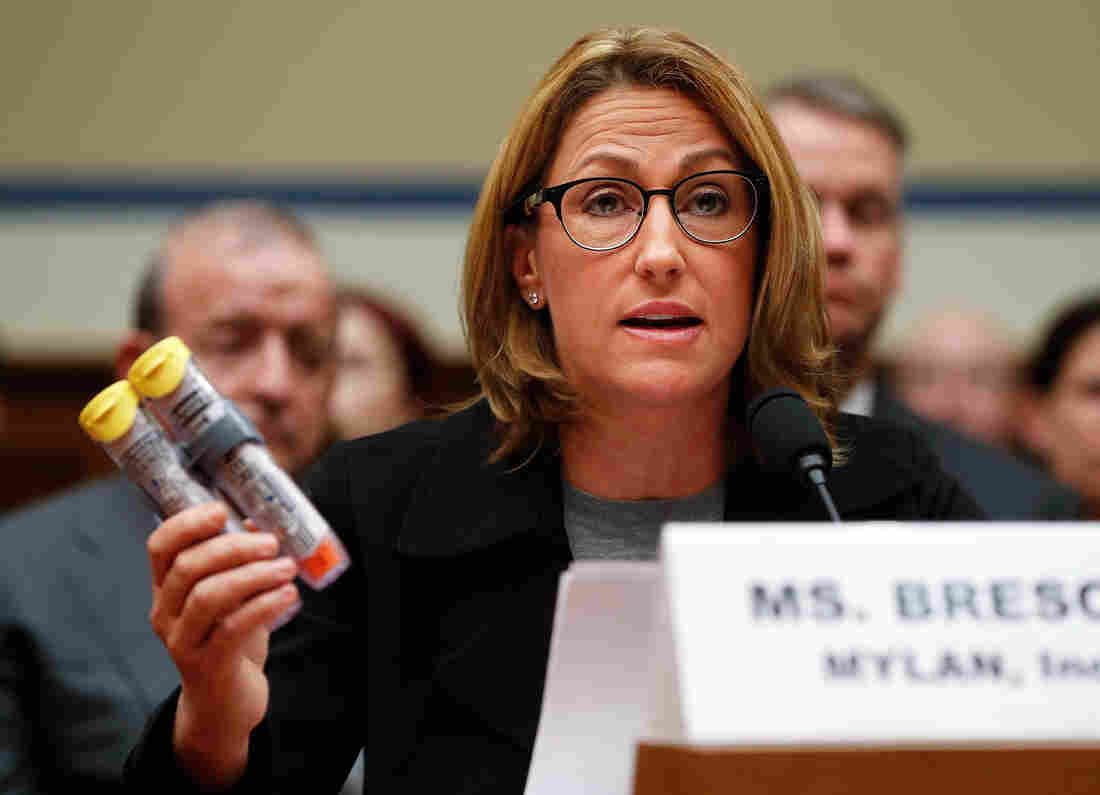
Mylan CEO Heather Bresch holds up an EpiPen two-pack while testifying about price increases to the House Oversight and Government Reform Committee on Sept. 21. Pablo Martinez Monsivais/AP hide caption

toggle caption

Pablo Martinez Monsivais/AP

Three doctors who have led a task force that evaluates preventive medical services say the group’s recommendations shouldn’t be tied by law to insurance coverage.

The former chairmen of the U.S. Preventive Services Task Force say the link between medical recommendations and insurance coverage leads to financial incentives that can corrupt the process and distort people’s health care decisions.

Under the Affordable Care Act, any preventive service that receives one of the USPSTF’s top two ratings must be covered by insurance without any out-of-pocket cost for the patient. The doctors advice to decouple the task force ratings from insurance coverage would require a change in the health law.

The authors of the commentary, which appears Monday in the Annals of Internal Medicine, point to heavy lobbying by the pharmaceutical company Mylan N.V. to get its anti-allergy device EpiPen deemed a preventive service. They say such lobbying can interfere with the task force’s mission to evaluate medical services to improve the health of the overall population.

“When people try to twist that mission for their own purposes, essentially what they’re doing is violating the integrity of the task force process, and it’s distracting from the mission,” says Dr. Virginia Moyer, the lead author of the commentary. Moyer, a former chairman of the task force, is now a vice president of the American Board of Pediatrics.

The USPSTF is an independent group of volunteer physicians who review the research on preventive medical services, such as vaccines and screenings tests, and recommend who should get them and how often.

Mylan has been lobbying the task force to have the EpiPen listed as a preventive device, even though it is used by people with diagnosed allergies. The EpiPen is an automatic injector that delivers a dose of epinephrine to stop dangerous allergic reactions. A two-pack costs more than $633, according to GoodRx.

The company has been under fire in recent months because it has raised the price of the device more than fivefold since 2007, even though the product has been on the market for decades. Mylan CEO Heather Bresch has blamed the uproar on trends in insurance coverage that leave patients responsible for a larger share of their medical costs.

If EpiPens were covered as preventive medications, patients could get them at no cost. The price increases Mylan has put in place would be invisible to consumers but would have to be borne by insurers.

“What Mylan has done, or what they’re attempting to do with this effort, is use a provision in law, which is intended to give people access to preventive services, and use it to their advantage for something that just plain is not a preventive service,” Moyer says.

That effort by Mylan, which was detailed in a story by The New York Times, spurred Moyer and her two colleagues, Dr. Michael LeFevre and Dr. Ned Calonge, who were also task force leaders, to write the opinion piece that questions the overall idea that insurance coverage should be tied by statute to the recommendations of the volunteer medical group.

The authors say the issues with the link go beyond the problem of lobbying. By putting prevention ahead of treatment of illness by making it free of cost, the system created by the ACA may be making treatment of illness more expensive and putting it out of reach of some patients.

“If such financial access comes at the cost of increased deductibles or copays for equally important services that are not preventive, then we must question whether the link inadvertently discourages other important care,” they write.

“Perhaps it is time for the USPSTF to inform, but not determine, coverage,” they conclude.

A recent survey by the Kaiser Family Foundation shows that more than half of people with insurance through their employer have policies with deductibles of more than $1,000.

Many advocates and economists agree that preventive services can cost more but also can improve the quality of health care. When the Affordable Care Act was being debated, advocates on both sides argued whether or not preventive services would save money in the long run.

“Preventive health services have become quite expensive over time,” says Joe Antos, a resident scholar at the American Enterprise Institute.

He says some preventive services such as vaccines are inexpensive and undoubtedly valuable. Others, such as mammograms, are also medically important but don’t necessarily save money.

When those services are provided free, the costs are spread across all policy holders through premiums and deductibles.

But Antos cautions against blaming rising deductibles and premiums only on preventive care.

“To what extent have preventive services been responsible for the big increase in deductibles and co-payments over the last decade or so?” he asks. “I would argue that they’ve contributed. But we’re really talking about rising health care costs, not just preventive services.”

Let’s block ads! (Why?)

With No Sense Of Smell, The World Can Be A Grayer, Scarier Place

Some people are born unable to smell anything, while others lose the sense of smell due to injury or increasing age.

Cornelia Li for NPR

Nisha Pradhan is worried. The recent college graduate just turned 21 and plans to live on her own. But she’s afraid she won’t be able to stay safe.

That’s because Pradhan is anosmic — she isn’t able to smell. She can’t tell if milk is sour, or if she’s burning something on the stove, or if there’s a gas leak, and that worries her.

“It actually didn’t even strike me as being a big deal until I got to college,” Pradhan says. Back home in Pennington, N.J., her family did her smelling for her, she says. She’s moved in with them for now, but she’s looking for a place of her own.

“Now that I’m searching for ways or places to live as an independent person, I find more and more that the sense of smell is crucial to how we live our lives,” Pradhan says.

There’s no good estimate for how many people live with smell loss. Congenital anosmia, being born without a sense of smell, is a rare condition. Acquired smell loss is more common. That loss can be total, or what’s known as hyposmia, a diminished sense of smell.

Pradhan doesn’t know how she lost her sense of smell. She thinks she was born with it because as a child, she says she liked to eat and ate a lot. But there came a point where she lost interest in food.

“That’s actually one of the first things that people notice whenever they have a smell problem, is food doesn’t taste right anymore,” says Beverly Cowart, a researcher at the Monell Chemical Senses Center in Philadelphia.

That’s because eating and smell go hand in hand. How food tastes often relies on what we smell.

“When you lose your sense of smell, your whole sense of food flavor is distorted and diminished,” Cowart says. “You can still taste the basic tastes which are sweet, salty, sour, bitter, and umami or savory. What you’re missing are the sort of subtle distinctions, the difference between strawberry and banana; between chocolate and vanilla.”

And that can make eating a dull experience for anosmics.

“When I go out to eat — it might be Mexican, Chinese, Italian — I have often found that that food is very bland to me. I never feel full. I never feel a sense of contentment,” Pradhan says.

When socializing centers around eating, Pradhan says she sometimes feels left out. “I think a lot of us today like to pretend or be foodies and we all like to talk about ‘Oh, I think this could use a little bit more lemongrass,’ or ‘I think this has a hint of cinnamon.’ I can’t really participate in those conversations,” she says.

People need olfactory receptor neurons to smell. These nerve cells come into direct contact with the air we breathe. They then pass from the upper part of the nose to the brain through a honeycomb-like structure called the cribriform plate.

“These neurons are going from the nose directly to the brain and connecting to the olfactory bulb. They’re really the only nerves in the body that interact directly with the environment that way,” Cowart says.

Because of that, the neurons are vulnerable. Damage to the cribriform plate, say from a head injury, can crush or sever them. Things we inhale can also harm them.

“Their function is to detect chemicals, and chemicals can sometimes be toxic,” Cowart says. “They can also be damaged by viruses. Simple cold viruses will sometimes seem to attack those receptor neurons and cause a longer-term loss of smell due to damage to those neurons.”

Aging also plays a role, as the neurons dwindle over time. The replacement process isn’t perfect, and it may also tend to slow down with age. “So a very large proportion of the population has some degree of smell loss in their 60s, 70s and 80s,” Cowart says.

Smell loss might cause some older people to over-season food or lose interest in eating. There’s also evidence that smell loss may be an early indicator of Alzheimer’s and other neurodegenerative diseases.

In spite of her smell loss, Pradhan still loves to cook. She even ran a food blog called “Anosmic Chef.” She favors foods that are spicy, a quality she can still detect. What we think of as food “flavor” is actually a combination of things: odor; taste (sweet, sour, salty, bitter, umami); and chemosensory irritation.

Chemosensory irritation includes sensations like warmth, cooling and pungency. Those signals are carried to the brain via the trigeminal nerve, which is separate from the olfactory system and unaffected by Pradhan’s anosmia.

“So the kinds of sensations you get from that are like the coolness of menthol, the spiciness of hot peppers or mustard,” Cowart says.

Pradhan wonders whether her anosmia has affected more than her appetite. She thinks it also may have affected her memory.

Remember the smell of your elementary school cafeteria or the perfume of your first crush? That feeling — where a certain smell instantly takes you back — doesn’t happen for Pradhan. And she’s afraid it means parts of the past are missing.

“When I ask my sister about this, and she and I are not very far apart in age, she remembers people and places and things we’ve done more vividly than I do,” Pradhan says.

Pradhan may be on to something, according to biologist Paul Moore, author of The Hidden Power of Smell: How Chemicals Influence Our Lives and Behavior.

That’s because smell memories are created in a different way than other memories. When you smell something, he says, it triggers a response in the limbic system – what he calls the emotional part of the brain.

“When olfactory signals come in, you feel about them first. And then you think about it and then the memory is laid down,” Moore says.

So without the feeling part, the thinking about it part doesn’t come. And that means no new smell memory gets created, according to Moore.

There’s no cure for congenital anosmia. Doctors can treat the inflammation or nasal blockage that may be causing acquired smell loss. If the damage isn’t too great, sometimes a sense of smell returns. But it could take years.

Some people have found hope in “smell training” — a sort of brain retraining program for anosmics who have regained at least a bit of their ability to smell.

Researchers are also studying stem cells, to see if they can coax them into becoming new olfactory neurons. But human trials are years away, Cowart says.

Smell has been shorted when it comes to research, says Moore. “We undervalue smell so much that there is very little research into curing anosmia,” he says.

Pradhan, who studied biology and hopes to go to medical school, thinks there probably won’t be a cure for her anosmia anytime soon.

“I know a little bit about how research works and how long trials take to get medications or therapies out,” Pradhan says.

Her biggest concern right now is: “Can I really trust myself to live on my own?” At home in New Jersey, she’s reinforcing her strategies for staying safe –double checking the stove and making sure the smoke alarms are working. And she hasn’t ruled out a roommate.

Annette Heist is a freelance writer and radio producer who’s also a registered nurse. You can find her on Twitter: @AnnetteHeist.

Let’s block ads! (Why?)

Does Some Birth Control Raise Depression Risk? That's Complicated

The study looked at the relationship between women who used hormonal birth control, and antidepressant use, and diagnoses of serious depression. AJPhoto/Science Source hide caption

toggle caption

AJPhoto/Science Source

When the birth control pill debuted more than 50 years ago, women wanted to know: Is it safe? There wasn’t much evidence to answer that question, but women embraced the Pill as a revolutionary improvement in contraception.

Today, millions of women around the world use hormonal contraceptives that have expanded beyond the Pill to patches, implants, injections and uterine devices. Decades of research support their safety, and serious but very rare side effects such as blood clots are finally much better understood. But other areas of research lag, and we still don’t know as much as we’d like about how these medications affect women’s mental health.

So when a study came out linking hormonal birth control and depression, the headlines went wild. The stories made for good clicks, but not so great science reporting. Insufficient skepticism about a single study makes it easy to imply birth control definitely causes depression when the study shows nothing of the sort.

The study, which was conducted in Denmark and published in JAMA Psychiatry, analyzed 14 years’ worth of health data for more than 1 million women from national healthcare systems and databases not available in most other countries. It also measured depression two ways: diagnosis at a psychiatric hospital, which would be quite severe depression, or filling a prescription for antidepressants. Across the whole study, 2 percent of all women ages 15 to 34, were diagnosed with depression at a hospital and 13 percent began taking antidepressants.

Several news stories reported an 80 percent increase in risk of depression in some groups of women, but few noted that was relative risk, which is an expression of proportional increase. An 80 percent relative risk does not mean that 80 percent of women taking hormonal birth control develop depression. It means that if 10 women not taking hormonal birth control develop depression, then 18 women on the birth control will develop depression.

In this study, that 80 percent increase in relative risk referred specifically to the likelihood that those ages 15 to 19 taking combined oral contraceptives — the pill containing both progestin and estrogen — would begin taking antidepressants after going on birth control.

However, looking at absolute risks conveys a less dire interpretation. Among women not taking hormonal birth control, 1.7 percent took antidepressants and 0.28 percent received a depression diagnosis at a psychiatric hospital. By comparison, 2.2 percent of women who started birth control began taking antidepressants afterward, and 0.3 percent were diagnosed with depression at a hospital. Basically, about 0.5 percent of women who began hormonal contraception developed depression who might not have otherwise.

“Therefore for an individual woman, even one using a method of hormonal contraception, the overall probability of experiencing one of these outcomes in this study was still fairly low, particularly for diagnosis of depression,” explains Chelsea Polis, a senior research scientist at the Guttmacher Institute.

Rates of those filling antidepressant prescriptions were higher for other forms of hormonal birth control: 4.1 percent for the patch and 3.2 percent for the vaginal ring in the first year, for example. Psychiatric depression diagnoses occurred in 0.7 percent of patch users and 0.6 percent of vaginal ring users.

Even in terms of relative risk, though, many of the risk increases were modest: Among all women taking the combined pill, the increased risk was 10 percent for depression diagnosis and 20 percent for using antidepressants after statistically adjusting for women’s age, educational level, weight and history of endometriosis or polycystic ovary syndrome, all factors that could influence depression risk.

Other increased risks ranged from 20 to 70 percent for all women, depending on contraception type. The largest increases — up to triple the likelihood of starting antidepressants — occurred among teens using the ring or patch.

Another thing to consider is that these numbers represent correlations — two things occurring at the same time that may or may not be linked.

“Depression is common. Contraception use is common. So both of those things are commonly going to occur together,” explains Jeffrey Jensen, a professor of reproductive & developmental sciences and director of the Women’s Health Research Unit at Oregon Health & Science University in Portland.

The study used several methods to reduce the possibility that other things could be causing depression. Jensen pointed out that women who are more likely to take hormones for contraception would probably also be more likely to take antidepressants for depression, but the authors did a separate analysis to compare women to themselves before and after beginning contraception and still found a depression risk.

None of this means that birth control does not cause depression, but it doesn’t mean it does, either. Since a half percent of millions of women taking birth control adds up, it’s important to know whether such a large number of women could be more susceptible to depression, which can be a very serious illness, after starting hormonal contraception.

But it’s complicated, and subtle.

For example, the study also found that depression risk peaked six months after women began using contraceptives, but then decreased to the point that women using hormonal contraception for four years actually had lower rates of depression than those not taking it. Though this likely resulted from many women with depression stopping their birth control, those findings match up with a previous large study finding a protective effect against depression with hormonal contraception. But the studies were done differently: The earlier study included only sexually active women, unlike the new study.

“Unfortunately, the analysis did not provide information on the frequency of depression diagnoses or antidepressant use among women using nonhormonal methods of contraception, such as copper IUDs,” says Polis. “Such a comparison would help to clarify whether the associations were related to other factors common to women choosing to use contraception, rather than being specifically related to the hormonal content of certain contraceptive methods.”

For example, those who become sexually active in adolescence have a higher risk for depression and anxiety, as previous research has shown. Even among women in their 20s and 30s, the decision to begin hormonal contraception may accompany various other circumstances in their lives that could potentially increase the risk of depression or anxiety — not a stretch when the study identifies just a half percent of women with the increased risk.

But the possibility that sexual initiation might come with mental health risks baffled study co-author Lidegaard. “Sexual relationships are a good experience for the majority of women, so I cannot see why women would get depressed by starting sexual relationships,” Lidegaard said in an interview. He pointed out that women not in relationships may experience loneliness, a risk factor for depression, but when asked about single women having sex, he said he believes “the majority feel more happy by realizing how wonderful sexual experiences can be. Why should women get depressed from that?”

What this study does do is suggest that women may respond differently to hormones and medical treatments.

“Doctors should perhaps be more careful when they prescribe hormonal contraception to young women and get a history of previous depression first,” Lidegaard says.

There’s no question that women are going to respond differently to hormonal contraception. But those differences are not well understood.

“We’re all very, very different, and we’re moving in the direction of precision medicine,” adds Catherine Monk, an associate professor of psychiatry and director of research at the Women’s Program at Columbia University Medical Center. “There are some women who are just much more sensitive to these hormone changes.”

The higher risk of depression found among teenage girls, both Monk and Lidegaard pointed out, might be biological, since teens may be more sensitive to the hormonal changes happening during puberty.

“You need to know yourself and be really informed,” Monk says. “If I were of an age and reading this article right now, I would want to be thinking, ‘Who am I? Am I sometimes who has moodiness around my periods?’ ” She notes the importance of each woman considering these findings in conjunction with what she knows about her own body and her own circumstances.

Philosophical differences about medicine may also influence how people interpret these findings in the absence of studies showing causation. Jensen, for example, pointed out that women in developed countries no longer see other women dying during childbirth, illegal, unsafe abortions or other devastating health effects of unplanned pregnancy, and have come to places less value the effectiveness of hormonal birth control.

“Women are more skeptical of using hormonal therapy than ever before,” Jensen says. “It’s a tragedy of the riches. If you really want to be depressed, have an unintended pregnancy.”

Toward the other end of the spectrum, Monk believes we may have gone too far in using hormones to control contraception. “Getting away from barrier methods of contraception is getting away from our bodies,” she says, and she would like to see a much larger range of options for contraception for men and women.

The fact that dissent rages over this issue points out a larger question about women’s health research.

“Understanding women’s health has been neglected, and there’s not enough research into understanding our hormones,” Monk says. “This is partially a story about women’s health research and how we need more of it.”

Tara Haelle is the co-author of The Informed Parent: A Science-Based Resource for Your Child’s First Four Years. She’s on Twitter: @tarahaelle

Let’s block ads! (Why?)

EpiPen Maker Mylan Settles For $485 Million In Medicaid Dispute

The federal Medicaid program had accused Mylan of underpaying required rebates for the EpiPen, which is used to reverse serious allergic reactions. Drew Angerer/Getty Images hide caption

toggle caption

Drew Angerer/Getty Images

Drug maker Mylan N.V. announced Friday that it had reached a $465 million settlement with the U.S. Justice Department and other government agencies to resolve questions over rebates required by the Medicaid program.

The deal settles allegations by the Centers for Medicare and Medicaid Services that Mylan had misclassified the EpiPen as a generic drug and had not paid the appropriate rebates that are required by law.

Andrew Slavitt, the acting head of CMS, detailed the allegations in a letter to Sen. Ron Wyden (D-Ore.) this week.

Slavitt told Wyden that Mylan had misclassified EpiPen as a “non-innovator” or generic drug, when it should have been classified as a brand-name product. Slavitt said the agency had informed Mylan multiple times of the misclassification.

Drugs companies pay rebates to the Medicaid program of 23.1 percent for brand-name drugs and 13 percent for generics. Mylan paid only the 13 percent for $1 billion worth of Epipens that Medicaid bought between 2011 and 2015. That cost state and federal taxpayers $163 million, he said.

Mylan was facing potentially large penalties. Companies are required to report a drug or device’s correct classification, or else they can be fined up to $100,000 per violation under the terms of the Medicaid Drug Rebate Program.

Mylan has come under increasing scrutiny by lawmakers on Capitol Hill, federal agencies and state attorneys general after the company raised the price for the EpiPen more than 500 percent since 2008. The device is an auto-injector used to reverse serious allergic reactions.

Mylan said the settlement “did not provide for any finding of wrongdoing.”

Let’s block ads! (Why?)

Countries Around The World Beat The U.S. On Paid Parental Leave

(Left) Edith Einarsson, Kristina Ingemarsdotter Persson, Samuel Einarsson and Per Einarsson. (Center) Yao Zhang, Shanshan Zhang and Rachel Meng. (Right) Lama Dossary and her daughter Leila. Linda Johansson/Courtesy of Kristina Ingemarsdotter Persson; Courtesy of Rachel Meng; Bushra Al-Hinai/Courtesy of Lama Dossary hide caption

toggle caption

Linda Johansson/Courtesy of Kristina Ingemarsdotter Persson; Courtesy of Rachel Meng; Bushra Al-Hinai/Courtesy of Lama Dossary

Out of 193 countries in the United Nations, only a small handful do not have a national paid parental leave law: New Guinea, Suriname, a few South Pacific island nations and the United States.

In the U.S., that means a lot moms and dads go back to work much sooner after the birth of a baby than they would like because they can’t afford unpaid time off.

Jody Heymann, founding director of the World Policy Analysis Center at UCLA, says the global landscape for paid parental leave looks bright, but the U.S. is far behind.

“The U.S. is absolutely the only high-income country that doesn’t, and as you can tell by the numbers, overwhelmingly the world provides it,” she says. “The world not only provides paid maternity leave, but they provide adequate paid paternity leave.”

Countries first began thinking about paid parental leave during the Industrial Revolution, Heymann says.

“In the 1800s — as soon as women started moving from working at home to working in factories — countries realized they needed to do something to ensure that women could work and care,” she says. “So they started to provide across Europe and across Latin America and elsewhere paid maternity leave — leave that would care for families, for kids and ensure that economies could succeed.”

Later on, representatives from around the world met through the United Nations and agreed to strive for a minimum of 14 weeks of leave, paid at two-thirds of a worker’s salary up to a cap. This was decades ago, and today, most countries meet or exceed that minimum. Heymann says at least 50 countries now provide six months or more of paid maternity leave.

The driving motivation behind setting a global standard for paid parental leave comes down to common sense and economic benefits, Heymann says.

“In most countries, families rely on income from both the mom and dad,” she says. “Families can’t afford to have a lengthy period without income for one of them. At the same time, newborns absolutely need parental care. So this being a fundamental piece of social insurance or what governments do as part of their social security really is common sense.

“The second piece that drives countries is I’ve spoken to finance ministers from around the world who say one of their greatest sources of success economically is getting women into the workforce in equal numbers,” Heymann continues.

Brigitte Beltre, a mother from France, explains a common way that countries pay for this leave.

“You have to know it’s not for free,” she says. “In France, you have to work a certain amount of time to have paid maternity leave. You have to give to the system. It’s like a savings account.”

Governments rely on a social insurance structure, where small contributions create a pool of money that workers can draw from when they need to take leave.

“Those contributions to the government may come from employers, employees and the government’s general revenue, but they pay it through a social insurance system, so that no business has a heavy burden — if they’re a small employer and one person’s out, or if they’re a larger employer, but disproportionately have young parents as employees,” Heymann says. “That’s how they spread the responsibility evenly.”

Canada has a similar set-up to France. Tatiana Mellema in Vancouver says being able to dip into that fund gave her enough time off to bounce back from the major medical event of giving birth.

“Physically the recovery of having a child is huge,” Mellema says. “It took, for me, months.”

She says it also gave her time to care for her new son at his most vulnerable stage.

Tatiana Mellema plays with her son, Luca Kirton. Travis Kirton/Courtesy of Tatiana Mellema hide caption

toggle caption

Travis Kirton/Courtesy of Tatiana Mellema

“The financial support was essential to getting us through that year and giving me that time with him,” Mellema says. “Had I not have had it, I probably would have had to go back to work fairly quickly after I had him, which I can’t even imagine doing, because my experience is just having that year with him was so important.”

Heymann says paid parental leave policies have a significant impact on infant and maternal health.

“So there are powerful, long-term studies showing that providing paid maternity leave, for example, lowers infant mortality,” she says. “Beyond this, we know that women who have sufficient paid maternity leave are much more likely to breastfeed, and breastfeeding lowers the risk of all sorts of infectious diseases, it increases and improves cognitive outcomes, and it benefits the woman’s health.”

In Sweden, the government provides almost 16 months of paid leave to be used between two parents.

Per Einarsson, a video game developer who lives in Stockholm, Sweden, says he and his partner, Kristina, split that paid time off evenly when each of their two kids were born. He says that time helped him to be a more engaged dad.

“It was nice to be educated, if you may, to learn how to take care of my children and to bond with them, and then of course it was nice to give Kristina the possibility to get back to her job and focus on her career as well,” he says.

Einarsson says that time set a tone in their home — one that’s felt years later. Their kids are now three and five years old.

“I think in their eyes we were always very equal to them and still are,” he says. “And I think that felt good to us and hopefully to our children as well.”

But Sweden is not the norm. Most countries don’t offer equal leave to men and women. Policies around the world tend to be more centered on moms than dads. But Heymann says the most competitive countries that do provide it show that paid paternity leave is economically possible.

“Overwhelmingly, the most competitive countries in the world — the ones with the strongest economies and the lowest unemployment — do provide paid leave for dads, showing this is feasible,” she says.

And when women do get or take more paid leave than men, there can be an unintended downside: It makes it harder for women of child-bearing age to get hired or promoted.

In China, many mothers experience workplace discrimination after taking maternity leave despite laws that prohibit it.

“Although the labor law forbids the employer to fire female employees in one year after giving birth, the bosses can find ways to let the employee feel uncomfortable,” says Meng Meng, a mother who lives in China.

Lama Dossary of Saudia Arabia says taking paid leave changed how she was treated at work. There, mothers receive 10 weeks of paid time off, and fathers get three days.

“When I went back I did feel like it did affect how I was looked at, how I was treated,” Dossary says. “My promotions got stopped for a while. I wasn’t given the same amount of work, I wasn’t given the same amount of responsibility.

“I don’t know how it would affect things, but I do think that maybe if other people were able to take such leave off — whether to take care of their older parents or a father maybe has to take some time off because he has a child that needs special care for a while — I think that would at least change the perception,” she says.

According to Heymann, the U.S. is an outlier in a few ways when it comes to global parental leave polices.

On one hand, the U.S. is the only developed country without a national paid parental leave policy.

“We urgently need to catch up in the United States,” Heymann says. “For a high-income country, we have some of the worst outcomes for our infants. We have some of the highest rates of infant mortality. We have huge health inequalities.”

But despite this, Heymann says the U.S. stands out in one pretty positive way.

The U.S. Family and Medical Leave Act guarantees 12 weeks of job-protected time off equally to many American moms and dads. People caring for a sick parent or even themselves during a long illness also qualify.

Heymann points to this law as a good starting point because it treats mothers and fathers equally. But this is unpaid leave, and it doesn’t apply to about half of the American work force.

“The problem is the fact that it’s unpaid means it’s unaffordable to many Americans,” Heymann says. “And all of the caveats that come with the Family [and] Medical Leave Act that have to do with how many hours you’ve worked, how big your employer is, etc., means that millions of Americans aren’t covered. So we need to take that basis, make it paid and ensure that all Americans are covered.”

Let’s block ads! (Why?)

Public Health Labs Hope Federal Funds Will Speed Zika Test Results

Florida Department of Health workers at a temporary clinic set up in Miami Beach in September package up a urine sample to be tested for the Zika virus. Pregnant women in Texas and Florida have complained it can take as long as a month or more to get their Zika test results. Joe Raedle/Getty Images hide caption

toggle caption

Joe Raedle/Getty Images

Houston-based Legacy Community Health Services, a federally qualified health center, is trying hard to fight the Zika virus. It’s screening pregnant women and following federal guidelines to test people at risk.

But despite best efforts, there’s a problem, says Legacy’s chief medical officer, Dr. Ann Barnes. Pregnant women (and, often, their sexual partners) who get tested for Zika frequently have to wait as long as a month to know if they are indeed infected, and the pregnancy is at risk. That’s the turnaround time from the state public health lab, where blood samples are sent for testing.

“In that situation, the anxiety a pregnant woman has to live with is great,” Barnes says. “Ideally, we’d be able to speed up the process.”

It’s not just an issue in Houston. Florida radio reporter Sammy Mack, of WLRN, got tested for the Zika virus in August after realizing she had been in the suspected transmission zone in Miami while pregnant. The testing was free, she explained, in a recent Shots post, but more than four weeks later, she was still waiting to learn the results.

In all areas where Zika poses a threat, public health departments are struggling to meet the need to test patients for the mosquito-borne virus — even if the government has classified the patient as being “at risk” of facing serious complications, particularly with regard to pregnancy.

Doctors and infectious disease specialists say last month’s approval by the U.S. Congress of $1.1 billion in emergency funding to fight the virus could help these women, by giving local labs the resources to efficiently determine if people have been infected.

Federal health officials this week gave a rough outline of how this funding will be distributed.

Specifically, Congress directed $394 million to the Centers for Disease Control and Prevention.The bulk of that funding will go to supporting state and local Zika response efforts — such as mosquito control and emergency response teams and public education campaigns — as well as to efforts to improve diagnostic tests, and research to track how the virus affects children long-term. The federal funds also include money for expanding lab capacity, though it is still unclear exactly how much.

The U.S. Department of Health and Human Services, which includes the CDC, has until the end of October to craft a spending plan.

“These funds will hopefully allow the infrastructure for testing to be expanded,” says Andrew Pekosz, a professor of microbiology at Johns Hopkins University’s Bloomberg School of Public Health.

Zika is already spreading in Florida. The CDC has recommended that pregnant women in particular get tested, since the virus can cause birth defects and other complications. About 80 percent of infected people don’t show symptoms, so a test is the only way to know if they have contracted Zika.

“Especially for a pregnant woman, getting an answer quickly is a big deal,” says Dr. Jesse Goodman, a professor of medicine and infectious diseases at Georgetown University Medical Center in Washington, D.C. “You’re going to be very concerned. If that concern can be reduced, that’s going to be good for you.”

But the additional federal funding will not be an immediate fix.

Given how long processing and budgeting can take, public health labs aren’t expecting the cash infusion until early 2017, said Peter Kyriacopoulos, senior director of public policy at the Association of Public Health Laboratories.

While the congressional funding is a promising start, more investment is necessary, said Chris Gould, senior director for federal government relations at the Association of State and Territorial Health Officials. Local health departments have been shrinking over the past six years, he says, and many don’t have staffs large enough to operate laboratories at the level needed, given the volume of samples coming in.

These local health departments need to expand manpower, Gould says, especially since testing for Zika isn’t their only responsibility.

Kyriacopoulos estimates that labs would need about $39 million to adequately meet the challenges. And public health officials expect the virus to return next summer, he points out, which could create a need for further funding down the line.

Meanwhile, the CDC has already tried to alleviate some of the strain on these laboratories. Last month, it purchased $2.5 million worth of diagnostic supplies for states that offer Zika testing. And laboratories have been working on their own to try to expand capacity — especially labs that serve regions such as Florida, Texas and California, where the warmer, mosquito-friendly climate heightens the risk that Zika could spread.

Still, local health departments offering Zika testing remain “understaffed and overwhelmed,” says Dr. Martha Rac, a maternal-fetal medicine specialist at Texas Children’s Pavilion for Women and at Baylor College of Medicine, in Houston.

The burden doesn’t fall evenly, Rac notes. In urban centers such as Houston, women who may have been infected are more likely to get a Zika test than are women from a poorer, rural town in south Texas. Public health clinics or lab systems in rural areas may not be as well-resourced, so women have fewer options.

Predicting future need is also tricky. States have been encouraging pregnant women to get tested, along with men who may have been exposed and are showing the virus’ flu-like symptoms. But that leaves out other groups — such as asymptomatic men who may have contracted Zika and could pass it on to female partners. If states start to push for that testing as well, it could exacerbate the strain on the labs.

Plus, it’s difficult to gauge whether demand will dip in the coming months. Technically, mosquito season peaks in the summer. But in high-risk states like Florida or Texas, the insects carrying Zika can persist into December and even January, says Dr. Umair Shah, executive director of the public health department in Texas’ Harris County, which encompasses Houston.

Beyond expanding the nation’s capacity to test for Zika, HHS is also planning to invest some of its new funding into developing better tests to detect the virus. Currently, labs use one test that can find the virus within two weeks of exposure, and another that can detect it for up to three months. But the second test — which is more commonly used — is less precise and can, for instance, turn up false positives if someone’s been exposed to other, similar diseases.

The investment in improving and then testing some better diagnostics is crucial, Rac says, especially given the magnitude of threat Zika still poses.

“There’s still a lot we need to know we need to figure out,” she says. “And who knows what’s going to happen? … This mosquito’s pretty resilient to destruction. This is something we’re going to see for some time.”

Kaiser Health News is a national health policy news service that is part of the nonpartisan Henry J. Kaiser Family Foundation.

Let’s block ads! (Why?)

Long-term, Reversible Contraception Gains Traction With Carolina Teens

A number of states recently have dedicated more money to educating women and health care providers about the 99 percent effectiveness of long-acting, reversible forms of contraception, like the intrauterine device, or IUD — shown here. Michael Tomsic/WFAE hide caption

toggle caption

Michael Tomsic/WFAE

Nurse practitioner Kim Hamm talks in soothing tones to her 14-year-old patient as she inserts a form of long-acting contraception beneath the skin of the girl’s upper arm.

“This is the numbing medicine, so you’re going to feel me touch you here,” she says, taking the teen’s arm. “Little stick, one, two three, ouch. And then a little bit of burn.”

Hamm works at the Gaston County Teen Wellness Center, in Gastonia, N. C., which provides counseling, education and medical care. The teenager has already talked through her birth control options with another health care provider and chosen the implant — a flexible rod, about the size of a matchstick, that slowly releases low levels of hormones to prevent pregnancy.

“You’re going to feel tons of pressure here,” Hamm says, using a small device to insert the implant. “That’s it!”

And, in terms of preventing pregnancy, that will be it for the teen for the next several years.

Long-acting reversible contraception methods — including implant rods and intrauterine devices, or IUDs — are safe forms of birth control, and 99 percent effective, say specialists in reproductive medicine.They are endorsed by the American Academy of Pediatrics and the American Congress of Obstetricians and Gynecologists as a good line of defense against teen pregnancy.

But in the U.S., these long-acting, reversible devices are still not as frequently used by young women as elsewhere. They can be expensive, and problems with older versions of the devices — issues that have since been resolved — hurt their reputation. Only about 10 percent of American women use the devices, says Megan Kavanaugh a senior research scientist at the Guttmacher Institute, which studies reproductive issues.

“Some of the other developed countries that we look at are in the high teens, maybe low 20s in terms of percentage of use,” she says.

Kavanaugh says better provider training and patient education should lead to higher usage of the long-term devices in the United States.

That’s exactly what is happening in Gaston County, N.C., where clinics have seen usage rates climb to nearly 30 percent among teens. Since 2009, all providers in Gaston County clinics have been trained to insert the devices. The county uses federal funding to help cover the cost for the uninsured, which can be roughly $1,000 for an IUD.

Colorado is also subsidizing the cost of long-acting, reversible contraceptive methods, says Jody Camp of Colorado’s public health department, and has seen higher usage and subsequent drops in teen pregnancy and abortion.

“While we are not claiming full responsibility for all the decreases in these public health indicators, we do believe that our LARC investment made a huge impact on those,” Camp says.

Recently, the federal Department of Health and Human Services has started encouraging all states to make the methods more accessible through Medicaid, government insurance that covers many low-income women. The government is asking doctors to talk to their patients about long-acting, reversible contraception and allowing higher reimbursement rates for the devices.

By using effective contraception to space out their children, teens and other young women can help reduce the risk of delivering a premature or low-birth-weight baby, research shows. And preventing unplanned pregnancies can be “essential to a woman’s long-term physical and emotional well-being,” according to HHS.

There are versions of the implants that can be left in place to prevent pregnancy for five or 10 years at a stretch. But women can also choose to get them removed whenever they want, and restore their fertility. Kie’Ja Phillips is from Gastonia and 19-years-old. She had the three-year implant in her arm before heading to college last year.

“I do not want to have children until I’m done getting my education,” she says. “I want to be able to provide for my children and give them a stable household — financially and emotionally and physically.”

Phillips also teaches her friends and other teens about their options. She says a lot of them know about the contraceptive pill, but very few about IUDs or implants.

“They have a lot of misconceptions and myths about it,” she says. “Like, ‘how am I supposed to get it out?’ You go to a doctor to get it out. You don’t take it out yourself. It’s just things like that — common misconceptions that people have.”

Last year, nearly 30 percent of teens who got contraception at the Gaston County clinics chose the long-acting kind.

Gaston County Medical Director Dr. Velma Taormina says the increased use of long-term contraception is a key reason the county’s teen pregnancy rate has been dropping faster than the state as a whole. Gaston County has also largely erased the disparity between African-Americans and whites in teen pregnancy rates.

“We feel very strongly that this is making a huge impact here,” Dr. Taormina says.

Medicaid in the state next-door — South Carolina — has also seen an increase in the use of these long-acting, reversible contraceptives. In 2012, the state implemented a new way of paying hospitals so medical providers could offer and insert long-acting, reversible contraception right after a woman gives birth, which the nation’s leading obstetrician’s group says can be a “particularly favorable time.”

The University of South Carolina School of Medicine takes this SimCOACH — outfitted with two simulated hospital delivery rooms — throughout the state to train health care providers in a variety of procedures. Among the topics: the insertion and removal of contraceptive implants and IUDs. Michael Tomsic/WFAE hide caption

toggle caption

Michael Tomsic/WFAE

Staff with the Palmetto Health-USC School of Medicine in Columbia demonstrated the procedure to health care providers recently in its SimCOACH, which is basically a truck outfitted, for training purposes, with two hospital rooms and high-tech mannequins that can simulate a variety of birth outcomes. Palmetto Health drives the coach around the state to teach hospital staff about a variety of procedures and topics, including contraception.

“The IUD is inserted 10 minutes after delivery of the placenta when a patient has had a vaginal delivery,” Dr. Judy Burgis says.

B.Z. Giese is director of the South Carolina Birth Outcomes Initiative, a project within the state’s department of health and human services. Giese says the choice to have an IUD or implant inserted is always completely up to the woman, and only after she’s consulted with a health care provider. But the reason obstetricians within her program started offering it immediately after birth is simple: About half of women on Medicaid who gave birth weren’t showing up to their postpartum visit.

“We were missing a lot of moms who did not come back,” Giese says. “And, actually, the next time the doctor saw them, they came back pregnant with another child.”

Ana Walker, an 18-year-old in Columbia, S.C., chose to have an implant that lasts three years inserted in her arm. Walker got the implant after giving birth to her daughter Bella. She says she likes that she won’t have to remember to take a pill every day.

“Right when I heard about it, I went for it,” she says.

Breanna Martin, who is 20 and also lives in Columbia, recently chose an IUD after she had her baby. Martin says the device puts her in control of her fertility.

“That’s the wonderful thing about it,” she says. “If I want to wait five years, I’m protected for five years. And if I want to have kids sooner, then I can get it taken out.”

Giese calls getting the device after childbirth a win-win for the baby and the mom. “It is a cost savings,” she says. “It is a convenience for the mom. The satisfaction rate of the moms that we know leaving the hospital is extremely high.”

Now, she says, at some hospitals in South Carolina, around a third of new mothers leave with an IUD or implant in place. That number, Giese says, was basically zero just a few years back.

This story is part of NPR’s reporting partnership with WFAE and Kaiser Health News.

Let’s block ads! (Why?)

Episode 521: The Town That Loves Death

La Crosse

Note: This episode originally aired in February 2014.

People in La Crosse, Wisconsin are used to talking about death. In fact, 96 percent of people who die in this small, Midwestern city have specific directions laid out for when they pass. That number is astounding. Nationwide, it’s more like 50 percent. La Crosse is such an exception thanks to one guy who decided that people in this town needed to make plans for their death.

In today’s episode, we’ll take you to a place where dying has become acceptable dinner conversation for teenagers and senior citizens alike. It’s a place that also happens to have the lowest Medicare spending of any region in the country.

Music: “See the Future” and “Mabel and Me.” Find us: Twitter/ Facebook.

Let’s block ads! (Why?)

Under Health Law, Many Preventive Services For Men Are Covered, Too

Many preventive services used by both men and woman are now available at no cost to insured consumers.

Alberto Ruggieri/Illustration Works/Getty Images

A federal health list specifically guarantees some women’s health coverage available without a copay or deductible, so what about men’s health? And what options are available for coverage for people who travel frequently? Here are the answers to some recent questions from readers.

Why aren’t there preventive health recommendations for men like there are for women under the health law? Women and breast cancer get so much attention by the health care community. Heart health, diabetes, prostate cancer and colon cancer are a few examples of opportunities for education and preventive screening for men.

There are many recommendations for men’s preventive care in the health law, although most of the examples you mention apply to women as well. Under the law, services recommended by the U.S. Preventive Services Task Force have to be provided without charging people anything out of pocket. The independent panel of medical experts currently recommends that women and men be screened for high blood pressure, elevated cholesterol and blood sugar levels, and for colorectal cancer.

It advises against routinely screening men for prostate cancer, however, noting that research hasn’t shown it reduces death from the disease. (Medicare covers an annual prostate cancer test, but you may owe a copayment.)

The drafters of the health law paid special attention to women’s preventive health needs, creating additional recommendations tailored specifically for them. This was done in part to address recognized gaps in women’s services, especially in the areas of sexual and reproductive health, said Adam Sonfield, senior policy manager at the Guttmacher Institute, a reproductive health research and policy organization.

The federal government is in the process of updating the women’s preventive health guidelines. If it adopts the working group recommendations this fall, insurers will begin to cover condoms and vasectomies for men without charge. Adding this no-cost benefit would address an inequity in current coverage rules and help both women and men avoid unwanted pregnancies.

I am 74 years old and on Medicare. My mother died of ovarian cancer and two maternal aunts and my paternal grandmother had breast cancer. Does Medicare cover BRCA testing?

Medicare generally only covers genetic testing for the two BRCA mutations that are associated with an increased risk of breast and ovarian cancer if you’ve already been diagnosed with cancer and have a family history that indicates testing is appropriate.

Throughout its history, the Medicare program, which provides health benefits for older and disabled Americans, has focused on treating injury and illness, not preventing them. Although the program now covers some cancer screening tests such as mammograms and colonoscopies, those changes were specifically authorized by Congress.

It’s a wrongheaded approach, said Dr. J. Leonard Lichtenfeld, deputy chief medical officer at the American Cancer Society. “I’m incensed that this is not covered.”

The BRCA test results could be important not only to the woman but also to her siblings and children, Lichtenfeld said.

The U.S. Preventive Services Task Force recommends that women who have a family history of breast or ovarian cancers be screened to determine if they’re at higher risk for potentially harmful genetic mutations and, if appropriate, referred for genetic counseling and BRCA testing. Under the health law, private insurers are required to cover such testing without charging women for it. But that provision does not apply to Medicare.

There are non-insurance options for testing, Lichtenfeld noted. Color Genomics, for example, offers a genetic test that analyzes 30 genes associated with hereditary cancers, including BRCA1 and BRCA2, for $249.

Are there any options available for people with marketplace plans who travel regularly? Emergency costs for an accident should be covered, but what about follow-up care after an accident or an illness while traveling? How does this work with increasingly narrow provider networks?

The situation you describe can be tough to manage. Under the health law, an insurer can’t require you to pay more for care in an emergency department that’s not in your provider network than it would have mandated for emergency care in network.

But once you leave the emergency department, you may get hit with out-of-network charges if you’re admitted to the hospital, for example, or need other follow-up care and are far from home.

You have a few options. Individual Blue Cross Blue Shield plans that are sold on many marketplaces may offer access to BCBS providers nationwide and overseas.

Be sure to check with individual Blues plans before signing up if that type of coverage is important to you, said Paul Rooney, vice president of carrier relations at eHealth.com, an online insurance broker.

“Some of the local Blues are pulling [that coverage] from their offerings,” he said.

You might consider buying an accident policy. These plans typically pay a fixed dollar amount to offset your costs if you’re injured in an accident. But they can be tricky, said Nate Purpura, vice president of consumer affairs at eHealth.com. The policies don’t cover preexisting medical conditions, and the insurer might deny a claim that it considers related to an earlier medical problem, he said.

Kaiser Health News is an editorially independent news service that is part of the nonpartisan Henry J. Kaiser Family Foundation. Michelle Andrews is on Twitter: @mandrews110.

Let’s block ads! (Why?)