EpiPen's Dominance Driven By Competitors' Stumbles And Tragic Deaths
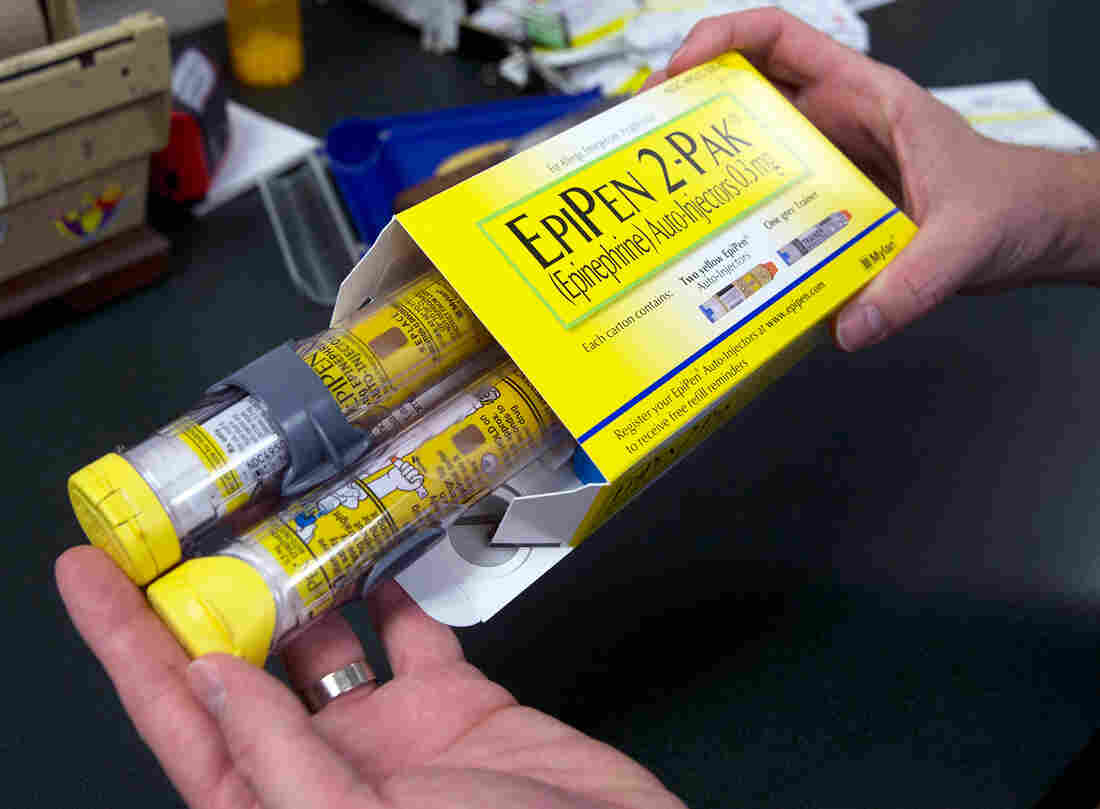
Mylan lobbied state legislatures for laws that require schools to stock EpiPens. Rich Pedroncelli/AP hide caption

toggle caption Rich Pedroncelli/AP

Thirteen year-old Natalie Giorgi probably didn’t know the name of the company that makes EpiPen. But the Sacramento, Calif., girl’s death from a peanut-induced allergy attack in 2013 inspired passage of the California law that made the Mylan product a staple at every school in the state.

It was Giorgi’s story, not industry lobbying, that state Senate Minority Leader Bob Huff says inspired him to usher through the requirement that public schools stock the injectors. He says he was also influenced by one of his staffers, who has a child with life-threatening allergies.

“It was just sort of organic,” Huff says about carrying the bill. “It seemed like we ought to do better to protect these kids.”

Mylan, the company that raked in $1 billion last year for the EpiPen, takes credit for passing legislation in 48 states to ensure schools have them. But its political maneuvering is only one reason the company has, in its own words, become “the number one dispensed epinephrine autoinjector.”

High-profile deaths in several states, particularly among school-age children, have helped fuel demand for consumer-dispensed epinephrine. At the same time, no other company has been able to effectively compete with Mylan’s drug-delivery device. Patent rules, and competitors’ manufacturing foibles, also have helped the company reign over the consumer epinephrine market.

When someone with a severe allergy goes into anaphylactic shock and can’t breathe, “seconds count,” Mylan CEO Heather Bresch said in a recent CNBC interview about the EpiPen, which now has a sticker price of $608 per two-pack. That’s why, she said, “they need to be everywhere.”

Bresch said lobbying is just one way the company has spent hundreds of millions “developing” the EpiPen since it acquired the patent in 2007.

Indeed, Mylan’s presence in statehouses across the country has grown exponentially. The company added lobbyists in 36 states between 2010 and 2014, according to the Center for Public Integrity, outpacing every other U.S. company. And it spent more than $1.3 million lobbying in 16 states since 2012, according to the National Institute on Money in State Politics (Those are not the exact states that passed the school requirements, however.)

Just in the past several years, 10 states have passed laws requiring epinephrine in schools. Another 38 states have passed laws permitting them, according to the Food Allergy Research and Education advocacy group (FARE).

Nebraska appears to have been the first state with a school epinephrine requirement. High asthma rates in the state, as well as a couple of school-based child fatalities due to the respiratory illness, created an emergency response protocol that became law in 2006.

In California’s case, Huff said he had never even heard of Mylan until the recent uproar over the EpiPen price increases. But the company is listed as a supporter of his bill, and FARE, which is partially funded by Mylan, was an official sponsor.
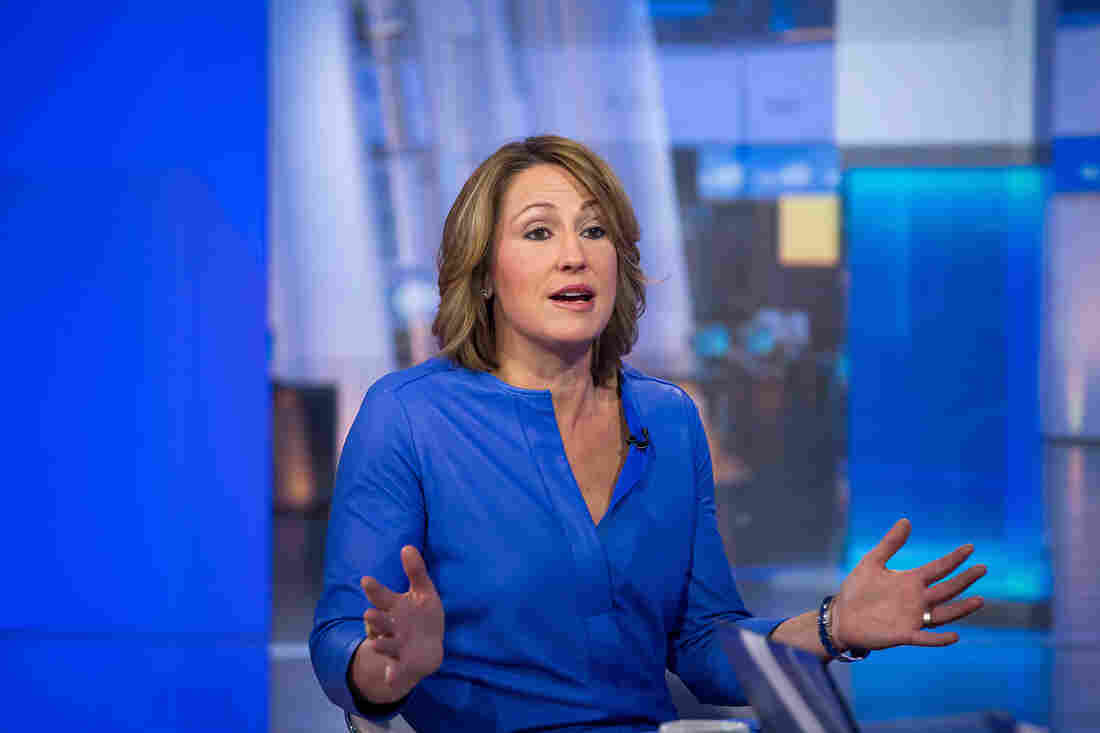
Heather Bresch, CEO of Mylan, says that EpiPens “need to be everywhere.” Michael Nagle/Bloomberg via Getty Images hide caption

toggle caption Michael Nagle/Bloomberg via Getty Images

FARE asserts that Mylan’s money goes toward its education work, not its advocacy. It didn’t disclose exactly how much of its funding comes from Mylan, but says funding from corporate partners amounts to less than 10 percent of its budget.

“In some states, momentum has been garnered by a fatality,” says Jennifer Jobrack, senior national director of Advocacy at FARE, who says local lawmakers and activists call them in for help to craft policy.

“Legislators are looking for something they know will have a positive impact,” Jobrack says.

Virginia’s law, passed in 2012, came after 7-year-old Amarria Johnson died at a Chesterfield County school from a reaction to peanuts. A Texas teenager’s death from fire ant bites led to that state’s law permitting epinephrine in schools.

The push to require EpiPens got a high-level boost in 2013, as President Obama disclosed his daughter Malia’s peanut allergy when he signed off on the federal law, which gives financial incentives to states that require the medication in schools. Co-author of the federal legislation, Rep. Steny Hoyer, D-Md., cited his 11-year-old granddaughter’s peanut allergy when the EpiPen law passed the House. FARE and Mylan supported that as well.

With the help of these laws, Mylan’s EpiPens are at 63,000 schools nationwide. The company also has distributed 500,000 of them for free through EpiPens4Schools.

The school giveaway program brings visibility and credibility to the EpiPen brand, building a consumer base beyond schools.

“It’s kind of like the first hit’s for free,” says Nicholson Price, an assistant professor at the University of Michigan Law School. “You want to start people off with your product, and getting these products in at schools is a great way.”

New York State’s attorney general announced Tuesday it will investigate Mylan to determine whether it introduced “anticompetitive terms” into school contracts. STAT recently reported that participants of Mylan’s EpiPen4schools program had to agree not to purchase EpiPen-like products for 12 months in order to get a discount.

Mylan also has a virtual monopoly on epinephrine autoinjectors simply because there are almost no other products like it, either branded or generic.

Mylan has a patent on the drug-device combo until 2025. If companies want to make a generic EpiPen, they have to sue Mylan in court to try to invalidate its exclusive rights on the injector, according to Jacob Sherkow, an associate professor at New York Law School.

Trying to create an EpiPen generic is an expensive and risky endeavor, says Sherkow. Even if a company is successful in court, manufacturing the device, which must be identical to the EpiPen, is also challenging.

Copying a chemical compound, like ibuprofen, is easier than reproducing a piece of hardware like the iPhone, says Sherkow. Patents are publicly available, and can act as an “instruction manual,” but a lot can go wrong in the actual production of EpiPen syringes.

“The drug inside can’t degrade or leak; they need to withstand shipping; they need to work at a wide range of temperatures; they need to be handled safely — to not accidentally inject the user with the needle,” says Sherkow.

Teva Pharmaceuticals took on these challenges. It was granted FDA approval to make a generic EpiPen, but was blocked earlier this year after Mylan successfully argued that Teva’s device was not identical, and was therefore unsafe.

Other companies have tried to make their own version of the epinephrine injector without attempting to copy the EpiPen. But their efforts haven’t been very successful either.

Amedra pharmaceuticals makes Adrenaclick, which has an injector with two caps (EpiPen has only one.) But Amedra has limited manufacturing capabilities for the device and a barely visible market share, according to Price.

Auvi-Q, made by Sanofi, was taken off the market in October 2015 after concerns the device wasn’t dispensing the proper dose of epinephrine.

More epinephrine products will be on the market in 2017. Teva’s generic version of the EpiPen is expected to be reintroduced then, and Mylan will put out its own generic in the coming weeks.

It’s too early to tell if more consumer choices will bring down EpiPen’s price.

This story is part of a collaboration between NPR and Kaiser Health News. Former Kaiser Health News intern Zhai Yun Tan contributed to this report.


Let’s block ads! (Why?)

Pediatricians Recommend Flu Vaccination, Just Not With The Spray

Fourth-grader Jasmine Johnson got a FluMist spray at her Annapolis, Md., elementary school in 2007. This year, the nasal spray vaccine isn’t recommended. Susan Biddle/Washington Post/Getty Images hide caption

toggle caption Susan Biddle/Washington Post/Getty Images

Sorry, kids. Your pediatrician will probably give you the flu vaccine in the form of a shot this year.

The American Academy of Pediatrics said Tuesday that it doesn’t recommend using the flu vaccine that comes as a nasal spray. That’s because the federal Centers for Disease Control and Prevention looked at its performance last year and concluded it wasn’t up to snuff.

The CDC’s Advisory Committee on Immunization Practices found that FluMist was only 3 percent effective in children aged 2 through 17 during the previous flu season. “This 3 percent estimate means no protective benefit could be measured,” the committee reported. In comparison, injected flu vaccines protected about two-thirds of the children in this age group.

The CDC officially accepted that committee’s recommendation on August 26, but didn’t go out of its way to announce the policy. It posted its recommendation on a website.

The American Academy of Pediatrics is now following suit, with recommendations that go out to doctors who tend to the nation’s youngsters. “The AAP recommends annual seasonal influenza immunization for everyone 6 months and older, including children and adolescents,” the statement reads.

The group notes that 85 children died from the flu in the United States during the recent season, based on CDC figures. Most had not been vaccinated.

The American Academy of Pediatrics says most children will need a single shot. But children new to flu vaccinations will need two doses, four weeks apart. So a double sorry to you.

The pediatricians also recommend flu vaccination for all health care workers and women who are pregnant, considering pregnancy or breastfeeding during the flu season.

The nasal spray vaccine has more fans than the inoculation that comes in a syringe, for obvious reasons. So this turn of events is not simply a disappointment to the manufacturer, AstraZeneca. In fact, the manufacturer took issue with the CDC committee’s recommendation, to no avail.

In a statement emailed to Shots, AstraZeneca said it expects limited demand for FluMist in the U.S. but will make sure the vaccine is available in case some doctors request it.

Let’s block ads! (Why?)

California Now Requires Timely Updates For Insurers' Doctor Directories

California State Sen. Ed Hernandez wrote a law to keep insurance directories up to date and to give consumers recourse when errors lead to surprise bills. Rich Pedroncelli/AP hide caption

toggle caption Rich Pedroncelli/AP

California State Sen. Ed Hernandez and his wife, Diane, are optometrists.

Diane handles some insurance matters for their practice, and she recently told him that a health plan had emailed to request more information: It wanted confirmation that they were both participating providers.

“I didn’t say anything because I was afraid she’d be mad at me,” says Hernandez, D-West Covina.

That’s because the additional paperwork was probably his doing.

Hernandez, who chairs the California Senate Health Committee, is author of a newly enacted state law that aims to improve provider directories, long riddled with out-of-date and inaccurate information.

Under the law, insurance companies — and health care providers like the Hernandezes — must comply with new requirements to keep directories of in-network providers of care updated at least every quarter.

The law, which took effect July 1, also provides patients with some firepower to fight surprise medical bills that result from directory errors.

The law’s reach is broad: It applies to Covered California and private market plans, as well as Medi-Cal managed care and most job-based insurance policies.

The inaccuracy of directories, Hernandez says, “has been and … seems to continue to be a problem that needs to be rectified.”

Several other states, from Georgia to Maryland, have passed similar legislation or are considering doing so, says Claire McAndrew, private insurance program director for Families USA, a national health care consumer advocacy group. In some states, insurance commissioners have adopted new rules through the regulatory process.

But California’s law “is the most comprehensive,” she says. “The level of detail in California goes beyond any other state.” Federal officials also instituted a rule this year requiring directories be updated monthly for all plans sold on the 37 state marketplaces run by the federal government.

And they set new federal rules for Medicare Advantage plans, requiring that the companies contact doctors every three months and update their online directories within 30 days. A recent study in the journal Health Affairs found that provider directories for some health plans sold through Covered California and in the private market are so inaccurate that they create a “disheartening” situation for consumers trying to find doctors.

That finding was confirmed this month when California’s Department of Managed Health Care announced that Anthem Blue Cross and Blue Shield of California — which were previously fined for inaccuracies in their Covered California provider directories — still had “disappointing” directory problems.

“We are optimistic and hopeful that the law … will help,” says DMHC director Shelley Rouillard.

Among the law’s new rules:

  • Health plans must update their printed directories at least every quarter and their online directories at least every week if providers report changes.
  • Provider directories must be posted online and be available to anyone, not just enrollees. Print directories must be available upon request.
  • The directories must “prominently” display directions for consumers who want to report inaccuracies. Upon receiving complaints, plans have 30 business days to makes changes, if necessary.
  • Providers must inform plans within five business days if they are no longer accepting new patients — or, alternately, if they will start accepting them.
  • Health plans can delay payments to providers who fail to respond to attempts to verify information.

The California law also gives consumers recourse. Let’s say you use a provider directory to find a doctor but you’re billed the out-of-network price because the directory was wrong. In that case, health plans must reimburse you the amount beyond what you would have paid to see an in-network doctor.

If you find yourself in this situation, first take your complaint to your plan, advises DMHC’s Rouillard. You will have at least 180 days from the date you received the bill to file a grievance.

“You’ll probably have to make a case” to the plan, Rouillard says. “You should explain what you did, when you looked at the directory, and that you relied on that information.”

Documentation could help your case.

That’s something to consider when you’re searching for a provider in the first place. It wouldn’t hurt to save a screen shot from the online directory showing the doctor is in-network, or take detailed notes if you call your plan’s customer service line.

“Keep copies of everything, and note the date, time and name of anyone you speak to,” says Nancy Kincaid, spokeswoman for the state Department of Insurance.

Plans have 30 days to investigate and respond to your complaint. If the situation isn’t resolved to your satisfaction, your next step is to take your grievance to your health plan’s regulator.

Since the law went into effect, the DMHC has helped one consumer get reimbursed as a result of this law. “I’m hoping consumers don’t have to go through process. I’m hoping the directories are accurate,” Hernandez says.

It might take time to get there, as health plans implement the new requirements — as well as others that will take effect in the coming months — and work with providers to update the information.

“This is so early and there are so many errors,” Rouillard says.

This story was produced by Kaiser Health News, which publishes California Healthline, a service of the California Health Care Foundation. Send questions for Emily Bazar to AskEmily@kff.org.

Let’s block ads! (Why?)

Researchers Question Safety, Value Of Untested Stem Cell Treatments

Maria Fabrizio for NPR

Maria Fabrizio for NPR

Hundreds of clinics around the country are offering to treat a long list of health problems with stem cells.

The clinics claim that stem cells found in fat tissue, blood, bone marrow and even placentas can help people suffering from arthritic joints and torn tendons to more serious medical problems, including spinal cord injuries, Parkinson’s disease and strokes. Some even claim the cells can help children with autism.

But leading stem cell researchers say there’s not enough evidence to support the clinics’ claims.

Doctors have long used stem cells from bone marrow and blood to treat some types of cancer, such as leukemia and lymphoma. And stem cells are being widely studied as potential treatments for other health problems. Researchers hope stem cells may someday make it possible to repair or replace damaged cells, tissues and even entire organs — but there are very few treatments currently available that have been proven safe and effective.

“There’s a lot of sketchy stuff going on,” says George Daley, a Harvard stem cell researcher.

“You’ve got clinics springing up, taking a patient’s own cells and then injecting these cells into arthritic joints, into spinal cords, into the brain. And there’s really no evidence this is going to work,” says Daley. “In fact, there are major concerns about safety.”

The treatments could cause life-threatening infections, create tumors or trigger dangerous reactions by a patient’s immune system, says Daley and other stem cell researchers.

So far the Food and Drug Administration has not aggressively regulated stem cell clinics. The reason is the stem cells being used typically come from the patient’s own body — an autologous transplant. And the clinics don’t process the cells much before injecting them.

But now that the treatments are being offered so much more widely, the FDA is considering more aggressive regulation. As part of that process, the agency will hold a workshop this Thursday, followed by a two-day hearing next week.

Another issue is cost. Patients are paying thousands of dollars for these treatments, which are not covered by insurance.

“We’re talking about really big bucks here,” says Paul Knoepfler, a stem cell scientist at the University of California, Davis, who monitors health and safety issues with stem cell clinics in his blog.

The treatments can cost from $5,000 to as much as $100,000, Knoepfler reports in an article recently published in the journal Cell Stem Cell. He estimates that there are more than 500 stem cell clinics treating as many as 100,000 patients a year in the United States.

Knoepfler hopes the FDA will crack down on the clinics.

“The FDA needs to step up its game on this, because otherwise this could continue to grow as an industry, and it’s just going to put more and more people at risk,” he says.

The clinics defend what they’re doing.

“Patients should have access to their own body tissue,” says Kristin Comella, chief scientific officer at the U.S. Stem Cell clinic, which is based in Sunrise, Fla. Comella also serves as president of the Academy of Regenerative Practices, which represents the clinics.

If patients “are able to provide and give informed consent to move forward with these treatments, that is their right,” Comella says. “In particular for diseases where they have not had much success with traditional medicine.”

Comella acknowledges that two of her clinic’s patients suffered detached retinas after getting stem cells injected into their eyes. As a result, the clinic has stopped treating eye conditions. But otherwise, Comella says, the clinic has had no serious problems. It offers stem cell treatments for a host of conditions including diabetes, spinal cord injuries and congestive heart failure.

“There are always risks no matter what you’re doing. That being said, our group has treated more than 6,000 cases and we’ve had very few safety events associated with these treatments,” she says.

The clinics point out that the cells they are using are not human embryonic stem cells, which are controversial because embryos are destroyed to get them. And they’re not induced pluripotent stem cells, which scientists create in the lab.

The FDA has no timetable for when it expects to make any decisions on regulation. In the meantime, the FDA website suggests patients carefully research any stem cell treatment before going ahead with it.

Let’s block ads! (Why?)

Colorado Gun Shops Work Together To Prevent Suicides

Jacquelyn Clark, co-owner of Bristlecone Shooting, Training and Retail Center in Lakewood, Colo., holds a list of gun safety rules. One recommendation: Consider “off-site storage if a family member may be suicidal.” John Daley/Colorado Public Radio hide caption

toggle caption John Daley/Colorado Public Radio

It’s ladies night at the Centennial Gun Club in a suburb of Denver. More than 80 women are here for safety instruction and target practice.

Tonight the club is offering more than shooting, though. The women rotate through the firing range, and in another large room, they hear a sobering presentation from emergency room doctor Emmy Betz. She’s part of a collaboration between gun shops and public health leaders in the state to help prevent suicide.

“If you’ve been touched by suicide somehow, if you could, raise your hand,” she asks. About half the hands go up.

Colorado has the nation’s seventh-highest suicide rate. In a typical year, more than half involve guns. Research suggests suicide is often an impulsive act, Betz says, and attempts are much more likely to be lethal when a firearm is used. If people survive a suicide attempt, they are far less likely to eventually die from suicide.

“Unfortunately, with firearms typically there’s not that second chance,” she says.

Dr. Emmy Betz works in the Emergency Department at the University of Colorado Hospital and also is part of the Colorado Gun Shop Project. John Daley/Colorado Public Radio hide caption

toggle caption John Daley/Colorado Public Radio

There’s a new push in the national conversation about gun violence that is attempting to sidestep the political rancor, to find common ground on one thing — guns and suicide. The campaign in Colorado is called the Colorado Gun Shop Project.

Centennial Gun Club is one of 46 on board. The project formally started in the summer of 2014, modeled after a similar one by the New Hampshire Firearm Safety Coalition.

During Betz’s talk, organizers hand out Life Savers candies to drive home the message. Gun owner Lily Richardson says she thinks the information could do just that: save lives. “I think those who are aware and taking the initiative to talk about it can help make the difference,” she says.

Nancy Dibiaggio, a new gun owner, agrees. “It’s a big issue, and I think it’s great Colorado is jumping on the wagon with this.”

Dick Abramson, Centennial’s owner, says he welcomes the opportunity to facilitate the discussion. “The difficulty is that it’s not a topic people want to just bring up and talk about over the cocktail table, right?”

He says workers at his store have refused to sell a gun to someone they’re concerned about or feel is having an especially bad day. “My honest feeling is this is a nonpartisan issue,” he says. “This is something that everybody can get behind. It should be a universal concern of everyone.”

Shooters take aim on Monday Night Bowling Pin Shoot at the firing range of the Bristlecone Shooting, Training and Retail Center in Lakewood, Colo. John Daley/Colorado Public Radio hide caption

toggle caption John Daley/Colorado Public Radio

In another Denver suburb, the Bristlecone Shooting, Training and Retail Center is also part of the project. At its range, shooters take target practice at bowling pins lined up on the far wall.

In the shop’s showroom, store owner Jacquelyn Clark shows off literature on display “that talks about suicide prevention and what to do if somebody you know or you yourself are in crisis,” she says.

A poster reads, Gun Owners Can Help! Under a photo of a lone elk in the mountains, it lists signs someone may be suicidal and a phone number for the National Suicide Prevention Lifeline.

Clark says there’s now an 11th commandment on gun safety rules: Consider off-site storage — family, friends, some shooting clubs, police departments or gun shops — if a family member may be suicidal. Clark says most people don’t realize that the majority of gun deaths are not homicides but suicide.

A survey of hospital emergency rooms by the Centers for Disease Control and Prevention in 2011 found an estimated 21,175 suicides involving firearms compared with 11,208 homicides involving guns.

“The gun community itself is more at risk than the regular community, not because gun owners tend to have more mental health issues but just because they have more access [to firearms],” Clark says.

Jarrod Hindman, director of the Suicide Prevention Resource Center in Colorado, says he appreciates that local gun advocates are taking the lead. “This is their project,” he says. “We’re just helping to facilitate the process.”

More than 500 Coloradans took their own lives with a firearm in 2014, says Hindman, but talking about the role of guns is hard.

“Obviously this is a very contentious topic, and we’ve found a way to find middle ground in a topic where we didn’t think there was a middle ground,” he says.

And now, a large trade association for the firearms industry, the National Shooting Sports Foundation, is teaming up with the American Foundation for Suicide Prevention to develop a suicide prevention campaign for the gun group’s 13,000 members. Their goal is to reduce the annual suicide rate by 20 percent in the next decade.

This story is part of a reporting partnership with NPR, Colorado Public Radio and Kaiser Health News.

Let’s block ads! (Why?)

FDA Fees On Industry Haven't Fixed Delays In Generic Drug Approvals

Where are the generic alternatives to EpiPen and other expensive drugs that have lost patent protection? Victor J. Blue/Bloomberg via Getty Images hide caption

toggle caption Victor J. Blue/Bloomberg via Getty Images

Consumers and lawmakers pushing for cheaper alternatives to the EpiPen, an antidote for life-threatening allergic reactions, and other high-priced drugs are seeking answers about a stubborn backlog of generic drug applications at the Food and Drug Administration.

Even after the agency started levying user fees on drugmakers in 2012 to pay for more people to review the medicines, the backlog of decisions still stretches almost four years.

As of July 1, the FDA had 4,036 generic drug applications awaiting approval, and the median time it takes for the FDA to approve a generic is now 47 months, according to the Generic Pharmaceutical Association, a trade group. The FDA has approved more generics in the past few years, but a flood of applications has added to the problem.

By comparison, the European Medicines Agency, Europe’s version of the FDA, has just 24 generics, including biologically based biosimilars awaiting approval. The FDA’s generic count doesn’t include biosimilars, which are more complicated medicines to review. The EMA along with the European Commission, which handles approval of marketing materials, are approving generics and brand-name drugs in about a year on average, according to the EMA.

Critics say getting generic alternatives to the U.S. market for products like EpiPen is still taking far too long. Other off-patent drugs with rising prices and no generic competition have also drawn scrutiny, including Turing Pharmaceuticals’ Daraprim, for toxoplasmosis, and Valeant’s cardiovascular drugs Isuprel and Nitropress.

Congress asks why generic version of EpiPens aren’t available

“We are concerned that Mylan (maker of the EpiPen) has not faced much competition for its product,” five U.S. senators wrote Aug. 24 to FDA Commissioner Dr. Robert Califf, adding that one of EpiPen’s nongeneric competitors, Auvi-Q, was recalled in October, granting Mylan a near monopoly. “News reports indicate that generic versions of the EpiPen have been subject to additional questioning by the FDA and have yet to be approved.”

On Monday, three members of the House Committee on Energy and Commerce wrote a similar letter to the FDA, seeking information about the EpiPen generic applications it has received and how they’ve been prioritized.

When asked whether the FDA bears any responsibility for the lack of EpiPen competition, FDA spokesman Kristofer Baumgartner said he couldn’t comment on pending applications or confirm their existence, citing confidentiality rules. But he stressed that the FDA pushes pending applications for drugs with no current generics to the front of the line and approved 580 generics in 2015, a record for the agency and 40 percent more than in 2014.

“The FDA is confident that the overall trend in actions on generic drug applications will be one of continuing improvement,” Baumgartner said.

In March, generics giant Teva Pharmaceuticals told investors that its generic version of EpiPen was rejected by the FDA, and that it wouldn’t be able to launch the generic until at least 2017. Adamis Pharmaceuticals reported a similar rejection from the FDA for its EpiPen generic in June.

Mylan has said it will offer a $300 generic in the coming weeks. Because Mylan also makes the brand-name product, it won’t have to wait in line behind other pending generics.

Dr. James Baker, the CEO and chief medical officer of the advocacy group Food Allergy and Research Education, said Mylan’s move may deter other generic manufacturers from seeking approval. Adrenaclick is the only other epinephrine auto-injector on the market, but it isn’t an exact generic of EpiPen and can’t be swapped automatically at the pharmacy if a doctor has written a prescription for EpiPen.

Adrenaclick also isn’t widely available. “You call up 100 pharmacies, and maybe 10 have the device, from what we gather,” Baker said of Adrenaclick.

He said several factors have allowed EpiPen’s price tag to swell over the years. Many patients were in the dark about EpiPen price increases until insurers started shifting more of the cost onto consumers a few years ago, and getting approval for a generic that’s both a drug and a device is more complicated than getting approval for a drug alone, he said.

Meanwhile, Mylan has aggressively marketed its product and raised doubts about alternatives.

And documents show that Mylan submitted a citizen petition to the FDA arguing that people trained to use EpiPens wouldn’t be able to use Teva’s pending generic epinephrine auto-injector because of design differences.

“Is Mylan doing anything illegal? No,” Baker said. “It’s taking advantage of all these things to take the market and basically push it to an extreme.”

User fees levied to speed up the approval process

The FDA’s generic backlog isn’t a new problem. In 2012, it was so large that it prompted the government to start charging user fees to generic manufacturers to provide the funds for the FDA to speed the process. The fees built on the 20-year-old Prescription Drug User Fee Act, which required brand-name drugmakers to pay fees to expand FDA’s capacity to review applications for those medicines. In the first three years, the FDA collected $1 billion from generic drug manufacturers.

The fees were used to hire an additional 1,000 employees, and put the Office of Generic Drugs on par with the Office of New Drugs by reorganizing it and moving it from four outlying buildings to the FDA’s main campus in Silver Spring, Md.

The funds were also used to upgrade the office’s information technology. The FDA says on its website: “Additional resources will enable the Agency to reduce a current backlog of pending applications, cut the average time required to review generic drug applications for safety, and increase risk-based inspections.”

In October 2012, there was a backlog of 2,868 generic drugs awaiting approval, and the FDA said it would take a “first action” on 90 percent of these drugs by 2017. This summer, the agency met its goal a year early, but a first action isn’t an approval. Instead, it stops the review clock and puts the applications back in industry’s court.

Only 1,551 generics have been approved since the fees on drugmakers were initiated, and that total includes some extra applications that weren’t considered part of the official backlog. So, all told, the agency has only approved about half of the backlogged generics that were awaiting approval in 2012.

“Most applications from the backlog will need to come back to FDA for additional review due to deficiencies in the submissions, before approval is possible,” the agency said in a statement in responses to questions.

David Gaugh, senior vice president for science and regulatory affairs at the Generic Pharmaceuticals Association, said standards used to compile generic applications when they were submitted three or four years ago have changed while the applications were sitting in the backlog. So when the FDA got back to those companies, it said the applications were of “poor quality.”

The applications for generic drugs have continued to pile up even as the FDA approved a record number of generics in 2015 and again in the first seven months of 2016. The number of generic drug applications tripled from 2002 to 2012, according to January congressional testimony from Janet Woodcock, who directs the FDA’s Center for Drug Evaluation and Research.

Still, some see signs the agency is on the right track.

“I think that it is an optimistic picture overall … at the FDA, there’s been a lot of progress, and I think there is more to be made,” said Dr. Aaron Kesselheim, an interdisciplinary drug researcher at Harvard Medical School and Brigham and Women’s Hospital. “This is not something that people should think has been solved at this point. It’s totally an ongoing process.”

Kaiser Health News is an editorially independent news service that is part of the nonpartisan Henry J. Kaiser Family Foundation. Follow Sydney Lupkin on Twitter: @slupkin.

Let’s block ads! (Why?)

POLL: Most Americans Want Congress To Make Zika Funding A High Priority

County mosquito control inspector Yasser “Jazz” Compagines sprays a storm drain in Miami Beach to thwart mosquitoes that spread Zika. Alan Diaz/AP hide caption

toggle caption Alan Diaz/AP

Summer is winding down, but when members of Congress return to Washington from their vacations next week, many of their constituents want them to do something about the mosquitoes — the ones carrying Zika virus, to be specific.

A new survey shows that three quarters of Americans say Congress should make the allocation of more money to deal with the Zika outbreaks in Florida and Puerto Rico an “important” or “top priority” when they return to Washington.

“People generally do value spending money when there is sort of a public health emergency,” says Mollyann Brodie, executive director of public opinion and survey research at the Kaiser Family Foundation, which conducted the survey.

About half those surveyed said they’d be uncomfortable traveling to the areas of Florida where people have been infected by Zika. And 77 percent said pregnant woman are not safe in those areas.

“It is something that the local officials have to take really seriously,” Brodie says, “because in many of those areas the tourism industry is a big part of those communities.”

President Obama asked for $1.9 billion in emergency federal funding back in February to fight Zika. So far, Congress hasn’t allocated anything.

So the administration has been using money shifted from other accounts — including money that had been specified for studying and fighting Ebola, and for state-level emergency preparedness — to address the Zika threat, instead.

Dr. Tom Frieden, director of the Centers for Disease Control and Prevention, says his agency will be out of funds to fight Zika by the end of the month. Health and Human Services Secretary Sylvia Burwell issued a similar warning in August.

But Mark Harkins, a senior fellow at Georgetown University’s Government Affairs Institute, says that — at least technically — the Obama administration could move even more money from other programs to fight Zika.

Even though lawmakers usually allocate money for specific purposes, the federal budget allows for some shifting of funds, Harkins says.

“As part of the appropriations bills themselves there’s always a provision that says you may transfer money or reprogram money, based on certain levels,” he says. “And then they put in a little out that says, you can move money at any point, at any amount, as long as you give 15 days notice.”

Some lawmakers seem to be daring the administration to do just that.

Senators Charles Grassley, R-Iowa, and James Lankford, R-Oklahoma, wrote a letter to Burwell, dated Aug. 26, that pointed to $20 billion that is sitting unspent in the HHS and State Department budgets. It could be spent on Zika, the senators say.

Lankford’s staff provided NPR with a list of the accounts the letter refers to. They included Food and Drug Administration salaries and expenses, the State Department’s diplomatic and consular programs and programs in nonproliferation and anti-terrorism.

The Senators simply added up all the money that remains unspent in the accounts Obama specified as needing additional funds, Harkins says.

Grassley “doesn’t care that that money is supposed to be used for multiple different things,” says Harkins. “He’s just saying, ‘If you think money should come out of that account, take any money that’s left in that account.'”

Meanwhile, as the White House and Congress debate the budget, state health officials are scrambling.

Frank Welch, the head of community preparedness at Louisiana’s health department, says his federal grant to prepare for all kinds of health emergencies was cut, and replaced with money that can only be used for Zika.

“But none of those other threats or emergencies that are very real possibilities have gone away,” he says, “and we took about a $700,000 dollar cut.”

Louisiana is using the Zika money for mosquito control, to do public outreach and education about how to recognize and prevent infection. The state is also updating its lab to be able to do Zika testing.

Welch says they’ve done a good job with prevention and preparedness, but there just isn’t enough money left to deal with a Zika response if there’s an outbreak in that state.

Let’s block ads! (Why?)

Drop In Teen Pregnancies Is Due To More Contraceptives, Not Less Sex

Contraceptive methods still life.

Teen pregnancy is way down. And a study suggests that the reason is increased, and increasingly effective, use of contraceptives.

From 2007 to 2013, births to teens ages of 15 and 19 dropped by 36 percent; pregnancies fell by 25 percent from 2007 to 2011, according to federal data.

But that wasn’t because teens were shunning sex. The amount of sex being had by teenagers during that time period was largely unchanged, says the study, which was published online in the Journal of Adolescent Health. And it wasn’t because they were having more abortions. Abortion has been declining among all age groups, and particularly among teenagers.

Rather, the researchers from the Guttmacher Institute and Columbia University found that “improvement in contraceptive use” accounted for the entire reduced risk of pregnancy over the five-year period.

“By definition, if teens are having the same amount of sex but getting pregnant less often, it’s because of contraception,” says Laura Lindberg, the study’s lead author and a Guttmacher researcher.

No single contraceptive method stood out as singularly effective, said the researchers. Instead, they found that teens were using contraceptives more often, combining methods more often, and using more effective methods, such as the birth control pill, IUDs and implants.

Also, the use of any contraceptive at all makes a big difference, said Lindberg. “If a teen uses no method they have an 85 percent chance of getting pregnant [within a year]. Using anything is way more effective than that 85 percent risk.”

The downturn in teen births actually dates back to the early 1990s, the authors say, with the rate dropping by 57 percent between 1991 and 2013. The increase in contraceptive use dates to the mid-1990s, with the use of any contraceptive at the most recent sexual encounter rising from 66 to 86 percent from 1995 to 2012.

Valerie Huber, who advocates for programs that urge teens to wait to have sex rather than provide information about contraception, says the study is biased toward birth control.

“As public health experts and policymakers, we must normalize sexual delay more than we normalize teen sex, even with contraception,” said a statement from Huber, president and CEO of Ascend, a group that promotes abstinence education. “We believe youth deserve the best opportunity for a healthy future.”

More recent policy changes could help drop the teen pregnancy rate even more. One is the Affordable Care Act requirement that boosted insurance coverage for contraception, starting in 2012. The other is the 2014 recommendation from the American Academy of Pediatrics that sexually active teenagers be offered “long-acting reversible contraception” methods such as implants and intrauterine devices, which are highly effective and do not require any additional action, such as remembering to take a daily pill.

But Lindberg noted that just as for older women, teens should be offered a full choice of contraceptives. “In the end, the best method for anyone is one that they are willing and able to use.”

Let’s block ads! (Why?)

In Philadelphia, Neighbors Learn How To Keep Shooting Victims Alive

Amanda McMacken, a registered nurse at Temple University Hospital, shows North Philadelphia residents how to slow bleeding in trauma victims. Kimberly Paynter/WHYY hide caption

toggle caption Kimberly Paynter/WHYY

When a young African-American man dies in the city of Philadelphia, more than half the time there’s one main reason why, says Scott Charles.

“It’s because somebody pointed a gun at him and pulled that trigger. It’s not because of cancer; it’s not because of car accidents; it’s not because of house fires. It’s because somebody pointed a trigger,” he says.

Charles is trauma outreach coordinator at Temple University Hospital. The medical center now offers bystander first-aid training, called Fighting Chance, to give friends and family something to do in the minutes before help arrives.

At 6 o’clock one evening, kids run around while their parents and neighbors gather in an elementary school cafeteria. There are training stations set up, and at the back a nurse is showing people how stop blood flow from a gunshot wound.

“The pressure point is located on the inside of the arm,” he explains. “And basically, you’re going to take your hand and get up underneath the inside of the arm and clamp it down.”

Each person takes a turn, taking an old towel or T-shirt and wrapping it around the fake bloody arm tight until help arrives.

Registered nurse Danielle Vetter demonstrates use of a tourniquet. Kimberly Paynter/WHYY hide caption

toggle caption Kimberly Paynter/WHYY

Everyone’s talking, but emergency medicine doctor Tim Bryan’s voice is the loudest. He’s a Navy veteran, a former combat medic, and he’s used to giving commands. A shooting scene is chaotic and frightening, but Bryan says in just two hours of training, people get enough of the basics so they will know how to respond.

“You have that ‘aha’ moment and people are like, ‘Wow, I can do this. I can control the scene. I can remember to call 911 and tell the person to put direct pressure on even if I don’t do anything else.’ And it does make a difference,” he says.

The topic is serious, but the mood isn’t. Alice Kellam, 63, wears a camouflage tracksuit and rhinestone hoop earrings. She’s chatty and laughs with friends all evening — except when she talks about her husband, who was murdered in 1990. She doesn’t have a lot to say about that, except that it was senseless.

“They took his sneaks and his hat. That was it,” she says.

Many people in this North Philadelphia neighborhood have a story about someone and remember a moment when they felt helpless.

Louise Smith (“Everybody calls me Miss Midge,” she says) is a perpetual volunteer, and at the big summer block party at 12th and Cambria, she’s the lady who hands out the flavored water ice.

“About a year ago, we seen a shooting around here,” she says. “It was a shame the two boys died right on the sidewalk, there wasn’t nobody there to help them.”

A severely injured person can bleed to death in less than 10 minutes. But it can take much longer for police to arrive and calm the situation, so the trainers teach the class how to move a victim away from danger and flying bullets.

Registered nurse Maureen Quigg explains how to do a two-person lift-and-carry.

“The knee closest to the victim is down and the other knee is up, and that’s what you stand up with, the power from your legs and not your back,” she says.

Quigg reassures the smaller women that they indeed can help a 200-pound person.

“If it’s someone you care about or in a situation where there’s a lot of activity your adrenaline is going — you have all this extra energy, you have all this extra power,” she says. “And if you focus on doing it and doing it the right way, you can lift someone you’d never think you could lift, and you can do it without hurting yourself.”

Advocates say learning first-aid skills to stop bleeding is the essential step in bystander education, not unlike learning CPR or making sure a defibrillator is nearby to jump-start someone’s heart. The federal Department of Homeland Security provides an introduction to these lifesaving techniques online in its Stop The Bleed program.

Neighbors learn how to move gunshot victims safely at the Fighting Chance emergency response training. Kimberly Paynter/WHYY hide caption

toggle caption Kimberly Paynter/WHYY

At the end of the evening, the trainers stage a minidrama to test the group.

Bryan sets the chaotic scene and calls out directions. One person is the victim. There’s a pretend shooter.

“Remember, you can ask somebody: ‘Help me control the scene.’ That’s good,” he calls out.

Charles helped develop the first-aid education program after a local resident came to him to complain that he was sick and tired of hearing about young men who died before getting to the ER.

“As we wait for laws to be changed, many people are going to find themselves on the wrong end of a gun,” Charles says. “While those things are certainly important, we have to we have to put the power in people’s hands to address this issue.”

The goal is to saturate one neighborhood with people who have basic lifesaving skills. About 250 people have been trained so far.

This story is part of a reporting partnership with NPR, WHYY’s health show The Pulse and Kaiser Health News.

Let’s block ads! (Why?)

When A Screening Test For Colon Cancer Leads To A Pricey Follow-Up

After a Cologuard screening test for colon cancer comes back positive, patients may have to pay for additional diagnostic tests. Exact Sciences hide caption

toggle caption Exact Sciences

When DNA colon cancer screening tests find abnormalities, are patients discouraged about getting more diagnostic testing because of costs they will incur? And why do hospitals sometimes send a second bill for treatments given in a doctor’s office? Here are the answers.

A stool-based DNA test to screen for colon cancer is available that is readily paid for by health plans, including Medicare. But if I have a positive Cologuard test result, I’d have to pay several hundred dollars for a regular diagnostic colonoscopy. Doesn’t this discourage people from getting screened for colon cancer, which is the goal, after all?

Patient advocates point to several reasons people may be discouraged from getting tested for colorectal cancer, including the “ick” factor and the time it takes to prepare for and get a colonoscopy, the most common screening test. “But the No. 1 factor is always cost,” said Caroline Powers, director of federal relations at the American Cancer Society Cancer Action Network.

Commercial insurers and the Medicare program cover cancer screenings that are recommended by the U.S. Preventive Services Task Force without requiring any payment by patients. The task force, an independent panel of medical experts, recommends colorectal cancer screening for people from age 50 to 75.

Several different types of tests get the thumbs up from the task force, including colonoscopy, in which a flexible tube with a camera is snaked through the colon from the rectum to look for polyps and other abnormalities, and stool-based tests, including the DNA test you mention, which looks for genetic mutations associated with cancer or polyps.

But, as you point out, there’s a potential hitch. If you get a positive test result from a DNA test or other screening method, you’ll need to get a follow-up colonoscopy to check whether the test result was correct.

Patient advocates have argued that the follow-up colonoscopy should be provided without cost-sharing by patients, and doctors tell them that some private insurers are beginning to handle the process that way, Powers said. But in Medicare that follow-up test is still considered diagnostic, and seniors are responsible for any deductible and coinsurance charges. Patient advocates continue to lobby for a change to that policy.

“From a public health perspective, it goes against everything we’re trying to do,” Powers said.

I have carpal tunnel syndrome in both wrists. I visited a hand surgeon at his office who gave me a cortisone shot in my right wrist. His bill was $450, of which my insurance covered $420. But I also received another bill from the hospital with which his practice is affiliated that included a $1,702 facility fee for which I have a $400 co-payment. This seems so unfair. What can I do to avoid owing that charge?

There may not be much you can do after the fact. As hospitals continue recent efforts to purchase physician practices, hospital facility fees are increasingly common. In 2014, a third of doctors were either employed by a hospital or worked in practices that were at least partly owned by a hospital, an increase from 29 percent in 2012, according to a study by the American Medical Association. Even if the doctor’s office is located across town, the physician practice essentially becomes part of the hospital, and patients are typically billed for both physician services and hospital facility charges.

Starting next year, some hospital facility charges will no longer be allowed. Under the Bipartisan Budget Act of 2015, Medicare will no longer pay hospital facility fees for outpatient services at physician offices that aren’t located on the hospital campus. However, the change will apply only to practices that hospitals acquire after Nov. 15, 2015, and doesn’t affect commercial insurers at all.

The best way to protect yourself from unexpected facility fees is to get details from the physician’s office before you visit, said Richard Gundling, senior vice president at the Healthcare Financial Management Association, a group for professionals in health care finance. That way, you can make an educated decision about whether to proceed before you get a surprise bill. “The patient should always ask, ‘What is my out-of-pocket cost for this visit?'”

My husband’s family physician is a member of MDVIP, one of many “concierge” practices in which a doctor or group of doctors generally charge an annual fee for faster appointments, more access to the doctor, more time with him during appointments, and preventive services during the annual wellness visit that aren’t included in a regular Medicare annual wellness visit. Is the annual fee of $1,650 tax deductible?

The annual fee is generally tax deductible, said Roy Harris, general counsel at MDVIP. That annual fee covers the cost of an executive physical every year for members, often a checkup with extra bells and whistles such as additional tests or screenings. If people itemize their medical expenses on their income taxes, they can generally deduct the expense as a physical exam.

Even if they don’t itemize, many people get reimbursed from their flexible spending accounts or health savings accounts for the annual fee after getting their physical, Harris said.

Mark Luscombe, principal federal tax analyst at Wolters Kluwer Tax and Accounting, a software and information services company, agreed, although he noted that the Internal Revenue Service hasn’t weighed in specifically on this issue.

Kaiser Health News is an editorially independent news service supported by the nonpartisan Kaiser Family Foundation. You can follow Michelle Andrews on Twitter: @mandrews110.

Let’s block ads! (Why?)