Depression Treatment Often Doesn't Go To Those Most In Need

Many people get antidepressants when they might not need them.

Gary Waters/Ikon Images/Getty Images

Most Americans who screen positive for depression don’t receive treatment, a study finds, while most who did receive treatment don’t appear to have the disorder.

“Over the last several years there has been an increase in prescription of antidepressants,” says Mark Olfson, professor of psychiatry at the Columbia University Medical Center and lead author of the study, which was published Monday in JAMA Internal Medicine. “In that context, many people assumed that undertreatment of depression is no longer a common problem.”

But Olfson found the opposite to be true after analyzing data from Medical Expenditure Panel Surveys in 2012 and 2013 that asked people if they had been screened for depression. Of the 46,417 adults surveyed, 8.4 percent answered in ways that suggested they had depression, but only 28.7 percent of the people who appeared depressed received any treatment for it.

“The findings highlight that there are continuing challenges in aligning depression care with patient needs,” Olfson says.

Those in the lowest-income group were five times more likely to appear to have depression compared with those in the highest income group, with 18.2 percent of lowest-income adults screening positive compared to 3.7 percent of the highest-income group. But higher-income people were more likely to get treatment.

People who were female, white, non-Hispanic, had at least a high school education or had health insurance were more likely to get treatment if they were depressed, the study found. People with low incomes, uninsured adults, racial and ethnic minorities and men were less likely to be treated.

Though 8 percent of people surveyed got some form of treatment, most of the people who got treatment probably didn’t need it. Only 29.9 percent of the people treated had screened positive for depression; 21.8 percent of them appeared to have serious psychological distress. People with public insurance such as Medicaid and people who were separated, widowed or divorced were most likely to be treated, while uninsured adults, racial and ethnic minorities, and men were least likely.

Antidepressants were far and away the most common treatment, and people with either less serious distress or no depression were more likely to receive them. That could be a problem, Olfson says, because studies have shown that antidepressants are not more effective for patients with mild depression than a placebo.

“Being a little less aggressive in medication in mild depression would be beneficial,” he says. “There are simpler forms of psychological interventions that can be adapted for primary care.”

Patients with mild depression could first be given nondrug treatments ranging from counseling and exercise to yoga, the researchers say.

And although the study found that those with serious psychological distress are more likely to be treated by psychiatrists instead of general medical professionals, that wasn’t the case for older patients, African-Americans, the uninsured or those with less education.

Most people with untreated depression make at least one visit to a primary care doctor annually, and Olfson says those visits could be used to screen people in disadvantaged populations, and ideally offer them mental health treatment at the primary care clinic.

“If you give them a referral to a mental health clinic, they simply won’t go if they don’t think they have a mental health disorder,” he says. “By embedding the services within primary care, it becomes more accessible and less stigmatized.”

It’s an idea Benjamin Cook, director of the Health Equity Research Lab and an assistant professor at Harvard Medical School, agrees on, but he says increasing access for minorities would require professionals who speak their languages and understand what type of treatment they are open to. Cook was not involved in the study.

“African-Americans and Latinos prefer antidepressants less than whites,” Cook says. That might be an underlying reason “not to go for mental health treatment, why they might not stay at treatment for as long.”

It can be hard for primary care doctors to find mental health professionals to refer patients to, particularly in rural areas, Olfson says; prescribing antidepressants might be their only option. “Depression really is a serious condition and we’re finding that so many Americans aren’t receiving care,” he adds. “I hope that [this study] brings attention to this situation.”

Kaiser Health News is an editorially independent news service supported by the nonpartisan Kaiser Family Foundation.

Let’s block ads! (Why?)

Audits Of Some Medicare Advantage Plans Reveal Pervasive Overcharging

Careful audits of a representative sampling of bills from 37 Medicare Advantage Programs in 2007 have revealed some consistent patterns in the way they overbill, a Center for Public Integrity investigation finds. Nick Shepherd/Ikon Images/Getty Images hide caption

toggle caption Nick Shepherd/Ikon Images/Getty Images

More than three dozen just-released audits reveal how some private Medicare plans overcharged the government for the majority of elderly patients they treated, often by overstating the severity of certain medical conditions, such as diabetes and depression.

The Center for Public Integrity recently obtained, through a Freedom of Information Act lawsuit, the federal audits of 37 Medicare Advantage programs. These audits have never before been made public, and though they reveal overpayments from 2007 — money that has since been paid back — many plans are still appealing the findings.

Medicare Advantage is a privately run alternative to standard Medicare; it has been growing in popularity and now enrolls more than 17 million seniors. In 2014, Medicare paid the health plans more than $160 billion.

But there’s growing controversy over the accuracy of billings, which are based on a formula called a risk score; it is designed to pay Medicare Advantage plans higher rates for sicker patients and less for people in good health. In a series of articles published in 2014, the Center for Public Integrity reported that overspending tied to inflated risk scores has cost taxpayers tens of billions of dollars in recent years.

In May, a Government Accountability Office report called for “fundamental improvements” to curb excess charges linked to faulty risk scores. In addition, at least half a dozen health-industry insiders have filed whistleblower lawsuits that accuse Medicare Advantage insurers of manipulating risk scores to boost profits.

The audits from the Centers for Medicare and Medicaid Services show that all but two of the 37 health plans audited for 2007 were overpaid — typically several hundred thousand dollars too much — for the sample of 201 patients examined at each plan.

Among the insurers charging the government too much: five Humana Inc. health plans, three UnitedHealth Care Group plans and four Wellpoint Inc. plans. CPI reporters approached the administrators of these plans for an interview, but all declined to comment.

The high rate of overcharging the federal government for many diseases could signal millions in losses to federal taxpayers, since many of the plans enroll thousands of people.

Among other findings:

  • Auditors, on average, were able to confirm only 60 percent of the more than 20,000 medical conditions plans were paid to treat. The confirmation rates were much lower for some conditions, such as diabetes with serious complications, depression and some forms of cancer.
  • Overpayments triggered by unsupported medical diagnoses at the 37 audited plans topped $10,000 per patient for more than 150 patients. And the health plans overcharged the government by $2,000 or more per patient for at least 3,500 people in the 2007 sample group.
  • Overall, the health plans were three times as likely to charge Medicare too much than too little for some of the 70 medical conditions examined as part of the audits. Two of the 37 health plans — Group Health Cooperative in Washington state and a Kaiser Foundation Health Plan in California — had no net overpayments.

Michael Geruso, an assistant professor in economics at the University of Texas, Austin, said aggressive coding practices have had a “huge impact on taxpayer spending” for the Medicare Advantage program.

Geruso, co-author of a study on Medicare Advantage billing, noted that error rates revealed in the audits suggest many overcharges have escaped scrutiny. “Clearly, there’s room for more auditing,” he said.

Diabetes “without [medical] complications” was the most common disease code reported by the health plans, and auditors typically validated the payments as warranted in three of four cases.

But extra payments made to health plans that claimed some diabetic patients also had complications of the disease — such as eye or kidney problems, for example — were reduced or invalidated in nearly half the cases, and sometimes more. In other words, the auditors found insufficient evidence that these complications actually existed. Some of these reductions in payment are still being disputed by the plans.

Several other disease categories triggering large payments — including “major depressive bipolar and paranoid disorders,” for example, and “drug/alcohol dependence” — also were rejected as unfounded by auditors nearly as often as they were confirmed.

Overpayments were not a problem in the case of every medical condition examined. In more than 200 cases, auditors said the higher fees that plans charged were justified because of the severity of the patient’s illness. But auditors were between three and four times more likely to slash payments than raise them for many medical conditions.

The audits provide new evidence of how federal officials have struggled to stamp out inflated coding, which is known in health policy circles as “upcoding.”

None of the plans faced closer government scrutiny after the audits, no matter the size of the overpayment. The 2007 audits, which collected a total of $12 million in overpayments, are the only ones CMS has completed since officials adopted risk scores in 2004 at the behest of Congress. In some cases, health plans are still appealing the results, nine years later.

The special Medicare Advantage audits, conducted at the behest of CMS, are called Risk Adjustment Data Validation. RADV audits involve a lengthy and secretive process in which medical records are selected from a sample of 201 patients enrolled in a health plan. Auditors review the medical files to confirm that the diseases billed for — and their severity — are properly documented.

When they are not, CMS cuts or reduces the payment. Some plans have disputed nearly every pay cut, while others have chosen not to contest most of the findings.

Yet the paucity of these audits, and their tendency to drag on for years unresolved, brought a stern rebuke from the GAO, the watchdog of Congress, in its May report.

The GAO criticized the Medicare agency for not expanding the scope of the audits as was required by a provision of the Affordable Care Act in 2010. It also said that CMS had failed to home in on health plans with histories of charging too much, or cases in which plans have persistently exaggerated the severity of certain illnesses to jack up their fees.

“We think that CMS has a lot of work to do,” James Cosgrove, who heads the GAO’s health care division, said in an interview shortly after the report’s release.

In response to written questions from the Center for Public Integrity, CMS officials agreed that some medical conditions are overbilled more often than others. But they said the results were “not conclusive, given that the audit samples were not designed to produce statistically valid results” of overcharges for each disease.

Asked why overcharges are so much more common than underpayments, CMS said health plans have an “incentive to submit diagnosis codes to CMS and, as a result, are less likely to under-report these diagnoses.”

CMS officials said unconfirmed diagnoses could be caused by “incorrect” coding by the health plan’s doctors, or by “incorrect diagnostic data” submitted to the government by the health plan.

Agency officials said they expect to complete 30 audits of 2011 billings by specific plans this year, but declined to say how much they expected to collect in overpayments. In the past, officials have put the figure at as much as $370 million.

That level of auditing would encompass about 5 percent of Medicare Advantage contracts for 2011. CMS has asserted that its goal is to audit every plan annually, but officials declined to say whether that’s likely to occur. However, they said they plan to expand the auditing program in 2017.

Medicare Advantage plans have challenged the validity of the audits from the start. Clare Krusing, a spokeswoman for America’s Health Insurance Plans, an industry trade group, said that CMS doesn’t allow health plans to submit “additional data” such as drug prescriptions, and such data could verify that patients have the diseases claimed. The group also has called the RADV audit process “not yet stable and reliable.”

Expanding Medicare Advantage audits also “could disrupt the care being provided by plans that are working hard to meet the needs of their enrollees,” the trade group says.

This piece comes from the Center for Public Integrity, a nonpartisan, nonprofit investigative news organization. To follow CPI’s investigations into Medicare and Medicare Advantage waste, fraud and abuse, go here. You can follow Fred Schulte on Twitter: @fredschulte

Let’s block ads! (Why?)

A Young Woman Dies, A Teen Is Saved After Amoebas Infect The Brain

The amoebas that can cause rare brain infections resemble white blood cells under the microscope. CDC hide caption

toggle caption CDC

Doctors describe 16-year-old Sebastian DeLeon as a walking miracle — he is only the fourth person in the U.S. to survive an infection from the so-called brain-eating amoeba.

Infection from Naegleria fowleri is extremely rare but almost always fatal. Between 1962 and 2015, there were only 138 known infections due to the organism, according to the Centers for Disease Control and Prevention. Just three people survived. This summer, two young people, one in Florida and one in North Carolina, became infected after water recreation. Only one had a happy ending.

DeLeon is a 16-year-old camp counselor. The Florida Department of Health thinks he got the infection while swimming in unsanitary water on private property in South Florida before his family came to visit Orlando’s theme parks.

So many things had to go right for DeLeon to survive. On a Friday, he had a bad headache. The next day, his parents decided this was way more than just a migraine and took him to the emergency room at Florida Hospital for Children.

Doctors persuaded the family to do a spinal tap to rule out meningitis, even though he didn’t have a stiff neck, the telltale symptom. Sheila Black, the lab coordinator, looked at the sample and assumed she saw white blood cells. But then she took a second, longer look.

“We are all detectives,” Black said. “We literally had to look at this and study it for a while and watch for the movement because the amoeba can look like a white cell. So unless you’re actually visually looking for this and looking for the movement, you’re going to miss it.”

That movement triggered the alarm: This was an amoeba case. And that’s when the pharmacy reached out to a small Orlando drug company called Profounda, which has a drug called Impavido that was originally developed as a cancer treatment and approved by the FDA in 2016 to treat the tropical parasitic disease leishmaniosis. It has been used in several cases to treat amoeba infections as well.

Profounda CEO Todd MacLaughlin got the call from the pharmacy, but he was out of town so his son drove the drug to Florida Hospital.

“Within 12 minutes he had picked up the product and was on the way to the hospital,” MacLaughlin said. “Everybody was in the right place at the right time.”

DeLeon was given the drug along with others. Doctors put him into a coma and lowered his body temperature to give the drugs time to work and slow the infection.

Dr. Humberto Liriano was emotional talking about the experience. They knew the odds were not in DeLeon’s favor when he was placed into a coma.

“The family when they came to me, immediately within four hours, I had to tell them to say their goodbyes,” Liriano says. “I had to tell them, ‘Tell him everything you want to tell your child, because I don’t know from the time I put him to sleep to the time I take the tube out, [if he will] wake up.’ “

DeLeon’s mother, Brunilda Gonzalez, thanked doctors at a press conference.

“We are so thankful that God has given us the miracle through this medical team and this hospital for having our son back and having him full of life,” Gonzalez said. “He’s a very energetic adventurous, wonderful teen. We’re so thankful for the gift of life.”

Central Florida has coped with amoeba infections before, including the death of Jordan Smelski, who died at the same hospital where DeLeon was saved. Smelski’s parents started a foundation to raise awareness of the disease in the medical community and to advocate for hospitals to stock the drug in case of an infection.

Profounda says seven hospitals have taken it up on stocking the drug at no cost, charging them only when the drug is used. The drug costs $48,000 for a full round of treatment. MacLaughlin said the company will provide the drug free if someone doesn’t have insurance.

Sebastian DeLeon, 16, is now the fourth known U.S. survivor of the so-called brain-eating amoeba. Abe Aboraya/WMFE hide caption

toggle caption Abe Aboraya/WMFE

DeLeon will soon head to South Florida for rehab, and doctors are optimistic he’ll make a full recovery.

But in North Carolina, an 18-year-old Ohio woman died from the amoeba in mid-June, stoking fear in the community. She had been rafting at the U.S. National Whitewater Center in Charlotte, which is among a handful of facilities in the country that have man-made rapids coursing through concrete channels. Its CEO, Jeff Wise, pointed out the lower part of the channel in mid-July.

“This is the bottom pond,” he says, “where all of the water in our essentially 12 million-gallon system rests while it’s ready to be pumped back up into the top pond, where it’ll float back down through the channels.”

But there was no whitewater between late June and Aug. 10, because CDC tests found the amoeba after the woman died.

Mecklenburg County Health Director Dr. Marcus Plescia encouraged people to keep perspective.

“This organism, Naegleria fowleri, is actually quite a prevalent or commonly occurring organism in open bodies of water,” he said. “We find it in lakes. We find it in ponds. It’s very common for people to come into contact with, but it’s very uncommon for people to develop this kind of infection with it.”

It’s harmless if swallowed, because stomach acid kills it. But if it’s in water forced up the nose, it can cause the brain infection, which is difficult to diagnose and treat.

The Whitewater Center uses city water that it treats with UV radiation, a filtration system and some chlorine. Still, it’s a large, open body of water, and exists in a regulatory no-man’s land because it’s neither swimming pool nor local river or lake.

North Carolina Gov. Pat McCrory said the state should re-examine whether the center should be treated like a swimming pool. But testing for the amoeba is not part of swimming pool regulations, because chlorine used in pools is effective at killing it. And the county and the state don’t have the ability to test for it. It’s usually up to the CDC.

As part of its lease agreement with the county, the center does weekly tests for common contaminants such as fecal coliform bacteria.

County health leaders point out that people are much more likely to die from drowning or boating accidents in area lakes and rivers than they are from Naegleria fowleri. In fact, there have already been at least eight of those deaths in the greater Charlotte area this summer.

But people just don’t get as worked up about those. David Ropeik, a risk management consultant in Concord, Mass., explains why.

“We worry about things not only based on the likelihood of them happening but the nature of the experience itself,” Ropeik says. “The odds may be low of brain-eating amoeba eating your brain, but the nature of a brain-eating amoeba eating your brain sounds pretty scary, doesn’t it?”

Ropeik is the author of How Risky Is It, Really? He says the media coverage of rare risks is part of the problem.

“Anything that makes a risk feel scarier like, ‘This is the zombie amoeba!’ is going to subconsciously interest journalists as something that will get people’s attention,” he says. “Because the viewer, reader, listener is likely to pay attention to a story that could portend their death.”

Dr. Jennifer Cope, an infectious disease epidemiologist at the CDC, said 11 out of 11 tests for the amoeba were positive at the rafting center, which does sound alarming. She called that significant but noted this is the first time the CDC has encountered the amoeba in this type of setting.

Whitewater Center CEO Wise says roughly 1.5 million people have rafted there over the past decade, and this is the first health issue it has had tied to what’s in the water.

The CDC says there are ways to make the water less conducive to the amoeba’s growth, including bulking up the amount of chlorine. The Whitewater Center worked with consultants to figure out a more effective way of doing that, and it reopened this month with a revamped chlorination system. So far, county health leaders say it is working the way it is supposed to.

This story is part of a reporting partnership with NPR, local member stations and Kaiser Health News.

Let’s block ads! (Why?)

Rising U.S. Mortality Rate For Mothers Is Highest In Texas

The maternal mortality rate in Texas doubled from 2010 to 2014. Dr. Lisa Hollier of Texas’ Maternal Mortality and Morbidity Task Force tells NPR’s Scott Simon it’s a complex problem.

Transcript

SCOTT SIMON, HOST:

Texas has some of the best medical care facilities in the world, but a study in the Obstetrics and Gynecology Medical Journal singles out Texas for concern because its maternal mortality rate has doubled. From 2010 to 2014, the mortality rate for mothers dying from complications of childbirth has risen in the U.S. generally over a decade, but that increase has been sharpest in Texas where more than 600 women died between 2010 and 2014 while they were pregnant or within six weeks of giving birth.

Dr. Lisa Hollier heads Texas’s Maternal Mortality and Morbidity Task Force. She joins us from the studios of KPFT in Houston. Thanks so much for being with us, Doctor.

LISA HOLLIER: It’s a pleasure. Thank you for having me.

SIMON: And why does Texas have such troubling numbers?

HOLLIER: We are very concerned about the numbers that we see here in Texas. In fact, Texas established the Maternal Mortality Review Task Force in 2013 to further investigate the potential causes for the rising maternal mortality rate, and we have recently published our report.

SIMON: And?

HOLLIER: We find that African-American women are bearing the greatest risk for maternal death. In fact, their rate of maternal death is about three times higher than it is for women of other races and ethnicities. In the years 2011 to 2012, African-American women accounted for 11 percent of the births but accounted for 28 percent of the maternal deaths.

SIMON: And why this circumstance, do you think, Dr. Hollier?

HOLLIER: We are studying this very closely. Some of the things that we found – that the most common cause of maternal mortality was cardiac events or heart problems. The second most common explanation was an overdose with prescription drugs. And the third was hypertensive disorders of pregnancy. Those are things like preeclampsia, eclampsia, you may have heard of it as toxemia of pregnancy.

SIMON: I’ve got to point out, as I’m sure some people have, that there are other states that have these same kind of afflictions and problems with opioid addiction that certain communities in Texas have had. Why do you think the maternal mortality rate, though, has been so much higher in Texas?

HOLLIER: We know that there are several things that were more commonly seen among women who died than in those who did not. And those complications include things like obesity, high blood pressure, diabetes, cesarean delivery and late prenatal care.

SIMON: Could this increase in maternal mortality have something to do with the cuts the Texas legislature made during this time, that, according to what we read, caused more than 80 family planning clinics, which provided many medical services to pregnant women, to shut down?

HOLLIER: Well, I don’t believe that there is any single cause that is contributing to this rise. Maternal mortality is a very, very complex problem, and there are many different things that are involved.

SIMON: So when medical clinics have to close – you know, to cite an example that I think of as apocryphal but maybe not just apocryphal – if a woman is pregnant in Nacogdoches used to be able to go to a clinic that was 20 miles from home and now she has to go to one that’s 180 miles from home, that could make a difference, right?

HOLLIER: Again, I think that access to health care across a woman’s lifespan is incredibly important, and things that we can do to permit that access are very important.

SIMON: Dr. Lisa Hollier is director of the Texas Maternal Mortality and Morbidity Task Force. Thanks so much for being with us.

HOLLIER: Thank you.

Copyright © 2016 NPR. All rights reserved. Visit our website terms of use and permissions pages at www.npr.org for further information.

NPR transcripts are created on a rush deadline by Verb8tm, Inc., an NPR contractor, and produced using a proprietary transcription process developed with NPR. This text may not be in its final form and may be updated or revised in the future. Accuracy and availability may vary. The authoritative record of NPR’s programming is the audio record.

Let’s block ads! (Why?)

A New Course At Arkansas Colleges: How To Not Get Pregnant

[embedded content]
Arkansas Campaign To Prevent Unplanned Pregnancy YouTube

Orientation at Arkansas Tech University this year included a surprising topic for a Bible Belt state that pushes abstinence-only in high school. Every freshman was shown a newly produced video in which real students talk about the struggle of an unplanned pregnancy, and the challenge of staying in school as a parent.

“I lost a lot of friends,” says one young woman in the video who had dreamed of becoming a surgeon. A young man says he “went from not having any responsibility to having a full-time responsibility,” while another laments that Friday nights are no longer spent with friends but at home “watching Dora. A lot of Dora.”

The message is clear, and it will come up again throughout the year: in a college success course, in group chats in dorms, at a slew of events during Sexual Health Week.

Why in college? Arkansas has the nation’s highest rate of teen births, but most of them — here and nationally — are actually to young adults, 18 and 19 years old. Last year, the Arkansas Legislature passed a law directing the state’s public colleges and universities to tackle unplanned pregnancy. Schools have each been crafting their own plans for how to do that, and they launched the effort during orientation this month.

After watching the video at one session at Arkansas Tech in Russellville, nearly every student said it hit home.

“I think there was anywhere between five to 10 girls in my grade that got pregnant,” says freshman Sydney Blackwell. “I remember in eighth grade there was a girl that never made it to ninth grade because she got pregnant.”

Only 4 of 20 students in this group say they had sex ed in high school. Brooklynn Evans says she didn’t get much guidance at home, either, not even the basic birds and bees. “My parents were too uncomfortable to talk about it,” she says.

Same with Carlos Morales. He thinks it’s great that his college is bringing this up, but “it would have been better to have a class earlier, during our middle school.”

‘The problem in the room that nobody wants to discuss’

Arkansas’ law is modeled on one that took effect last school year in Mississippi. Both had bipartisan support and were amazingly uncontroversial.

“It was surprisingly easy; it shocked me,” says Rep. Deborah Ferguson, the Democratic co-sponsor of the Arkansas law. Still, she says it would not be politically possible to mandate sex ed in earlier grades. The legislation’s Republican co-sponsor believes that’s best left to local districts.

But that co-sponsor, Rep. Robin Lundstrum, had an early job in family planning. She says she heard from high school students over and over that they had nowhere to turn for information on how to not get pregnant. “It’s the problem in the room that nobody wants to discuss,” she says.

At Arkansas Tech, student wellness dean Kristy Davis says it makes sense to target those in college, many of whom are away from home for the first time. She says faculty can help “make sure that they’re prepared and they have the information to make good decisions for themselves.”

The mandate is so far unfunded. Angela Lasiter, a program specialist with the Arkansas Department of Higher Education, is creating a nonprofit and hopes to attract money to keep the effort going. At community colleges, which usually lack a health center, she’s also making sure nearby clinics are stocked with the most effective contraceptives. A substantial share of students at some two-year colleges are already parents, and Lasiter says the state’s push can help prevent them from having a second child.

Some universities are even weaving the topic into their curriculum. Lasiter says it’s easy to drop into classes like statistics, English, “or, say, Speech 101. ‘We would like for you to write a 10-minute speech on how to prevent unplanned pregnancies.’ Boom.”

Incoming students at Arkansas Tech University in Russellville are now required to attend sessions on preventing pregnancy. Jennifer Ludden/NPR hide caption

toggle caption Jennifer Ludden/NPR

The goal, she says, is to get students talking. And if they also talk with their little sisters and brothers, all the better.

There’s also a broader benefit for the state, Lasiter says. When young parents drop out of college, or never get there in the first place, it costs Arkansas $129 million a year in “lower income, more people on welfare, a less higher quality of living.” That economic hit is compounded because the children of teen mothers are more likely to have an early, unplanned pregnancy themselves.

But is college too late to teach sex ed?

Magical thinking

“They don’t know as much as they think they do, and they don’t know as much as we wish they did,” says Andrea Kane, vice president for policy and strategic partnerships at the National Campaign to Prevent Teen and Unplanned Pregnancy. She says research shows young adults think they know how to not get pregnant, but when pressed for details they’re prone to myths and misinformation. For instance, she says, “4 in 10 young adults in this country believe it does not matter if you use birth control or not; when it is your time to get pregnant, you will.”

The National Campaign has been pushing for more prevention efforts at the college level, and Kane says other states are showing interest in the new laws in Arkansas and Mississippi. She says even students who had sex education in high school might have forgotten the information, or may find it more relevant now that they’re older.

Marie Sandusky has been counseling students at the University of Arkansas at Little Rock since well before the state’s law. She directs health services there, and says it’s a challenge to help students understand the risk of pregnancy.

“There’s this 18- and 19-year-old brain thing that’s kind of like magical thinking,” she says. “Sort of like, ‘It’s not going to happen to me.’ “

With the new law, the university is being more proactive. This year, incoming freshmen had to complete an online lesson on preventing unplanned pregnancy. In their dorm rooms, they found a postcard with the health services phone number and the tag line, “Plan to postpone parenting.”

Marie Sandusky directs student health services at the University of Arkansas at Little Rock. In an orientation session, rag dolls are handed out to symbolize the number of students who will become parents this year if they don’t practice safe sex or use birth control. Jennifer Ludden/NPR hide caption

toggle caption Jennifer Ludden/NPR

Sandusky also drove home the risk factor at a recent orientation event. In an auditorium of 300 students, 22 of them found a red star under their seat. They received a rag doll on a string that they had to wear around their neck the rest of the evening. “And then we say, ‘If you choose to become sexually active, and don’t choose to practice safe sex or get on birth control,” says Sandusky, “this many people will have a baby by the end of the year.’ “

Of course, the hope is that Arkansas’ push to prevent unplanned pregnancy will eventually bring down that number.

Let’s block ads! (Why?)

All U.S. Blood Donations Should Be Screened For Zika, FDA Says

The FDA says that facilities that collect blood donations throughout the United States should be testing donations for Zika within 12 weeks. Toby Talbot/AP hide caption

toggle caption Toby Talbot/AP

The Food and Drug Administration is recommending that blood banks screen all blood donations in the U.S. for the Zika virus.

It’s a major expansion from a Feb. 16 advisory that limited such screening to areas with active Zika virus transmission.

In a statement released Friday, the FDA says all those areas are currently in compliance with blood screening, but that expanded testing is now needed.

“As new scientific and epidemiological information regarding Zika virus has become available, it’s clear that additional precautionary measures are necessary,” the FDA’s acting chief scientist, Luciana Borio, said in the statement.

The expansion of testing won’t happen all at once. The FDA is advising blood establishments in 11 states to begin testing within the next four weeks. Those states include Alabama, Arizona, California, Georgia, Hawaii, Louisiana, Mississippi, New Mexico, New York, South Carolina and Texas.

These states are in proximity to areas where Zika is actively spreading via mosquitoes or where there are a significant number of cases related to other exposures, including sexual transmission.

Within 12 weeks, blood facilities in all states should be testing donations for Zika, the FDA says.

Currently, Zika is being spread by mosquitoes in South Florida, Puerto Rico and the U.S. Virgin Islands, as well as most countries in the Caribbean and Central and South America. There are a total of 2,517 cases of Zika in the U.S. states and D.C., according to the Centers for Disease Control and Prevention, with 9,011 more in U.S. territories.

Most of the cases within the U.S. are related to travel abroad or sexual transmission. The cases in Puerto Rico and the U.S. Virgin Islands are a mix of travel-related cases and locally acquired infections via mosquitoes or sex.

In issuing the new recommendations, the agency noted that 4 out of 5 people infected with Zika virus never develop symptoms. Thus, questions that blood banks routinely ask about the risks of disease might not catch people who have been exposed and who have been infected with the Zika virus.

Zika virus infection during pregnancy has caused serious birth defects in a few cases in the U.S. and hundreds of cases in Central and South America where infants have been born with microcephaly, a condition where the brain and skull are malformed.

There have been no cases of Zika related to blood transfusions in the U.S., according to the Centers for Disease Control and Prevention.

“There is still much uncertainty regarding the nature and extent of Zika virus transmission,” says Peter Marks, director of the FDA’s Center for Biologics Evaluation and Research. “At this time, the recommendation for testing the entire blood supply will help ensure that safe blood is available for all individuals who might need transfusion.”

In a news conference Friday, Marks said that there had been one case in Florida where a unit of donated blood was tested and taken out of the blood supply. Other units where Zika is suspected are currently under investigation, he said.

Let’s block ads! (Why?)

Teaching Medical Teamwork Right From The Start

A project now under construction in Cleveland will eventually house the Case Western Reserve University’s medical, dental and nursing schools, as well as the Cleveland Clinic’s in-house medical school. Courtesy of Cleveland Clinic hide caption

toggle caption Courtesy of Cleveland Clinic

There’s a new building going up on the campus of the Cleveland Clinic. A very big building.

“The skylight that we’re standing under will eventually cover the area of an entire football field,” says Russ Saghy, who oversees construction projects for the Cleveland Clinic.

The skylight is part of the new Case Western Reserve University Heath Education campus. The joint project with the Cleveland Clinic will eventually house the Case Western Reserve University’s medical, dental and nursing schools, as well as the Cleveland Clinic’s in-house medical school.

When it opens to the first classes of students in 2019 it will provide an estimated 8.5 football fields worth of space and enough concrete to build a sidewalk that’s 75 miles long. The cost: almost $500 million.

“The idea is to create a ‘mini campus’ that gives each school its own identity, but fosters collaboration,” says Chris Connell, one of the architects, who is with Foster & Partners.

Collaboration is the ultimate goal, those involved in the project say. Health care in the 21st century is increasingly being provided by teams, yet most health care professionals don’t encounter their “teammates” until they are well along in their training.

“Health care is no longer a gladiatorial sport, where you had the one health care provider — you know, mano a mano, one on one — battling a disease,” says Dr. James Young, a cardiologist who heads the Cleveland Clinic Lerner College of Medicine.

“I’m involved with heart transplantation and mechanical devices for the heart,” he says. “Boy, you can’t do it by yourself!”

The new building, however, is less the beginning and more the culmination of a long-running effort at Case to train different types of health professionals together.

As construction workers pour concrete and erected scaffolding, about a mile down the road at the Case main campus, a small group of students from the schools of medicine, dentistry, nursing and social work gather around a table in a conference room.

Their mission: to figure out how to best treat their pretend patient — a 35 year-old woman with hypertension, obesity, and diabetes. In the hypothetical scenario the students have been asked to work through in this training exercise, the patient has come to their clinic with a series of injuries she says she got falling down a flight of stairs. Meanwhile, according to the scenario, her boyfriend is in the lobby acting disruptively.

The students discuss and argue about which of the patient’s problems to address first, and what to do about the boyfriend.

They don’t end up reaching much of a consensus, but faculty members overseeing the group say that’s OK.

“I think that’s fabulous,” says Kristin Victoroff, an associate dean at the dental school. “It is actually an indicator of a functioning group, where’s there enough trust in the group where you can say what you really are thinking.”

The twice-a-year seminars aren’t the only collaborations that bring students from different health professions together. At a free oral health clinic in Cleveland, for example, nurses and dental students work together to treat real patients. Other activities bring students together to discuss interdisciplinary problems — like obesity or pain.

“We all have to deal with pain whether [we’re] dentists or social workers or nurses,” says Carol Savrin, a nurse practitioner and senior administrator at the Case nursing school. “So they’re taking a common thread and coming at it from a variety of different angles.”

This approach isn’t new. Efforts to train doctors, nurses, and other health professionals together have been tried for years. And they haven’t always been successful.

“I think they come in with some preconceived or stereotyped notions of what a doctor [or] a social worker is,” says Scott Wilkes, an assistant dean at Case Western’s school of social work. Breaking down those stereotypes by giving students from various disciplines a place to hear other perspectives and different types of knowledge, in their earliest training days, could make a difference, proponents of the new joint-campus say.

Getting everyone on the same page when that happens is critical to preventing medical mistakes, says Dr. Patricia Thomas, an internist and vice dean overseeing medical education at the Case Western Reserve medical school.

In studying the problem, she says, “the root of many of our errors had to do with the fact that our professions were not working effectively together for patient care.

Let’s block ads! (Why?)

Discounts Aren't Enough to Halt Outrage At High EpiPen Prices

The cost of an EpiPen two-pack has risen more than 400 percent in recent years. The drug is used to halt severe allergic reactions. Joe Raedle/Getty Images hide caption

toggle caption Joe Raedle/Getty Images

The EpiPen, an injectable drug that reverses severe allergic reactions, just got a little cheaper for some consumers.

The device’s manufacturer, Mylan NV, announced Thursday that it will offer coupons worth as much as $300 off a two-pack.

The move is a reaction to harsh criticism from consumers and several lawmakers over repeated price increases that have boosted the cost of the medication to more than $600 from less than $100 just a few years ago.

The company says it will offer the discounts to patients whose insurance doesn’t cover the costs because of high deductibles or limited pharmacy benefits.

But coupons may not be enough to tamp down anger over the price hikes.

“This step is much more a PR fix more than a real remedy,” Sen. Richard Blumenthal, D-Conn., said in an interview Thursday. “What’s needed is robust, real action to lower the price for everyone, not just a select few.”

He says the EpiPen has such enormous market share that the company may be violating antitrust laws by exploiting that. A report by the health care website Stat says some of Mylan’s contracts to give schools free or discounted EpiPens may have done just that, because they bar the schools from buying competitors’ products.

Mylan told Stat that the provision restricting school purchasing has since been discontinued, but did not say when it was halted.

Blumenthal is just one of several lawmakers who have called for investigations into Mylan’s business practices and have asked for justifications of its price increases in recent days. He and a few others say the discounts aren’t enough.

Blumenthal sent a letter to the company earlier this week demanding that it lower the price.

Sen. Charles Grassley, R-Iowa, sent a letter to Mylan demanding an explanation for the increase. And Sen. Amy Klobuchar, D-Minn., has asked the Federal Trade Commission to investigate whether Mylan has violated antitrust laws in its marketing of the EpiPen.

Rep. Elijah Cummings, D-Md., says his Oversight and Government Reform Committee would hold hearings. “Offering a meager discount only after widespread bipartisan criticism is exactly the same tactic used by drug companies across the industry to distract from their exorbitant price increases,” Cummings said in a statement.

And Democratic presidential hopeful Hillary Clinton weighed in on her Facebook page. “It’s wrong when drug companies put profits ahead of patients, raising prices without justifying the value behind them,” she wrote.

The wholesale price of a single pen was about $47 in 2007. It rose to $284 this summer, according to Richard Evans, a health care analyst at SSR. But consumers can no longer buy a single pen, so the retail price to fill a prescription today at Walgreens is about $633, according to GoodRX.

Blumenthal says a solution could require new laws.

“At the end of the day there may need to be stronger legal protections against these types of price gouging and profiteering at the expense of people who need a lifesaving drug where the company has a stranglehold on the market,” he says.

Let’s block ads! (Why?)

Illegally Made Fentanyl Seems To Be Fueling A Spike In Overdoses

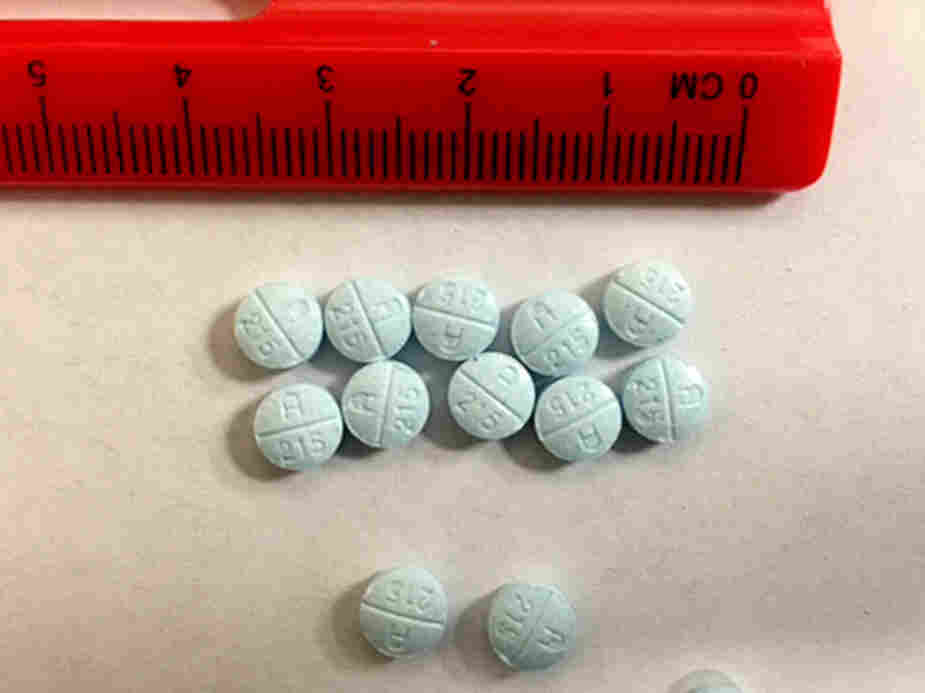
These pills were made to look like Oxycodone, but they’re actually an illicit form of the potent painkiller fentanyl. A surge in police seizures of illicit fentanyl parallels a rise in overdose deaths. Tommy Farmer/Tennessee Bureau of Investigation/AP hide caption

toggle caption Tommy Farmer/Tennessee Bureau of Investigation/AP

Federal data suggest illegally manufactured fentanyl, a drug that is 50 to 100 times stronger than morphine, is behind an increase in synthetic opioid deaths.

A report from the Centers for Disease Control and Prevention says that there was a 426 percent increase in seized drug products that tested positive for fentanyl from 2013 to 2014. And separate data show the number of deaths involving synthetic opioids, a class that includes fentanyl and tramadol but not hydrocodone, rose 79 percent during that same period.

Among 27 U.S. states analyzed, there was a strong correlation between increases in synthetic opioid deaths and in seized fentanyl products, but not with changes in fentanyl prescribing, according to data published Thursday in the Morbidity and Mortality Weekly Report.

That suggests, the authors say, that illegally manufactured fentanyl is driving the spike in overdoses. (Deaths attributed specifically to fentanyl aren’t reported in national data.)

“What concerns us here is the rapid increase, especially in a small number of states,” says Matthew Gladden, an author of the report and a researcher at the CDC. In eight “high-burden” states, the death rate from synthetic opioids rose 174 percent, to 3.6 per 100,000, from 2013-14.

Fentanyl is available by prescription to treat severe pain. But the fentanyl that’s currently on the streets — usually mixed into heroin and often without the user’s knowledge — isn’t from diverted pharmaceutical products. Instead it’s being illicitly manufactured, according to the government.

“Starting in 2013, the production of illegally manufactured fentanyl increased to unprecedented levels, fueled by increases in the global supply, processing and distribution of fentanyl and fentanyl-precursor chemicals by criminal organizations,” the report says. Between 2014 and 2015 alone, the number of seized fentanyl products rose from 5,343 to 13,882.

Fentanyl is cheaper to make than heroin and very potent, which means manufacturers can wring out more doses per batch. “There’s a huge profit margin,” says Gladden.

More recently, the U.S. Drug Enforcement Administration said in July that fentanyl was also showing up in counterfeit pain pills. Prince died of a self-administered dose of fentanyl, and the Minneapolis Star Tribune recently reported that pills identified as hydrocodone found at the musician’s Paisley Park studio actually contained fentanyl.

“It’s quite a game-changer,” says Carol Falkowski, CEO of Drug Abuse Dialogues, an education and training organization. “It’s imperative that the word gets out that prescription pills purchased on the black market can be deadly. It’s an extreme case of buyer beware.”

The report says an “urgent” response from law enforcement and public health is necessary to tackle the problem, including more testing for fentanyl in areas where it’s a big problem. The government has advocated the expanded use of naloxone, an antidote to opioid drugs, as well as expanding the use of addiction treatment that includes medications.

Katherine Hobson is a freelance health and science writer based in Brooklyn, N.Y. She’s on Twitter: @katherinehobson

Let’s block ads! (Why?)