Gas Relief Drops May Raise Risk Of Contaminated Medical Scopes
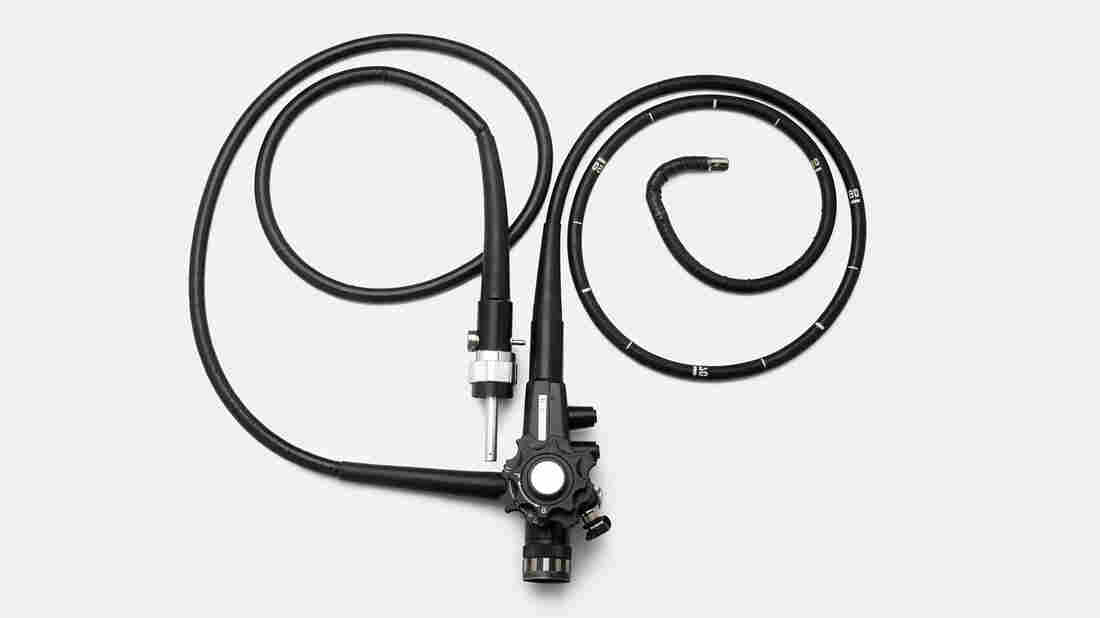
Scopes used to diagnose gastrointestinal problems are typically cleaned and reused. Dave King/Dorling Kindersley/Science Museum, London/Science Source hide caption

toggle caption Dave King/Dorling Kindersley/Science Museum, London/Science Source

A surprising ingredient — gas relief drops designed for infants — may be contributing to the contamination of medical scopes and putting more patients at risk of infection, according to a small but provocative study.

Researchers in Minnesota unexpectedly found cloudy white fluid inside several colonoscopes and gastroscopes after they had been disinfected and deemed ready for use on the next patient.

Further analysis revealed that the fluid contained simethicone, the main ingredient in over-the-counter anti-gas medications available at grocery stores and pharmacies. Doctors regularly inject the liquid drops into gastrointestinal scopes during colonoscopies and other procedures to reduce bubbles inside the body that can impede visibility.

However, that routine practice may be helping bacteria grow inside a wide variety of scopes and making the bacteria harder to remove. The authors of the study, published in August in the American Journal of Infection Control, recommend that hospitals and doctors minimize the use of these products pending further research into their effect on patient safety.

No infections have been linked to the drops thus far. The study only suggests that they could heighten the risk of contamination. “Finding residual fluid in scopes that should be dry would be troubling alone,” says Cori Ofstead, the study’s lead author. “The finding of fluid containing simethicone suggests we have more serious problems. It could explain why we are having more trouble getting these scopes clean.”

Infant gas relief drops, which are available over the counter, contain sugars and thickeners to make the liquid solutions more palatable for babies, the researchers say. Ofstead said those ingredients “could provide the perfect habitat for the growth of bacteria” inside scopes.

The liquid drops contain silicone, which doesn’t dissolve in water and can’t be removed using detergents or disinfectants. The researchers said that silicone could add an impenetrable coating to blood, tissue and other organic material trapped inside scopes. It can also foster the growth of biofilm, a slimy material that protects bacteria and other microbes from being removed during cleaning.

Ofstead, an epidemiologist and chief executive of the medical research firm Ofstead & Associates in St. Paul, Minn., said these findings were “absolutely surprising” and that her research team stumbled upon them during a broader look at scope cleaning techniques.

The seven-month study was conducted with physicians and a surgery center affiliated with the University of Minnesota Health system. There was also funding for the study from 3M Co.; Medivators Inc., which sells scope cleaning equipment; Healthmark Industries, which provides cleaning products and accessories; and Ofstead & Associates.

Dr. Michael Shaw, a gastroenterologist and a co-author of the study, says halting the use of simethicone products would hinder doctors’ ability to accurately treat patients with endoscopy. He’s pursuing funding for larger studies at other endoscopy centers to determine the extent of the problem and possible alternatives.

“I don’t want to see the public alarmed, but this study did raise a huge number of questions,” says Shaw, an associate professor at the University of Minnesota Medical School.

Federal prosecutors, lawmakers and government regulators have been investigating a series of outbreaks of antibiotic-resistant “superbugs” across the country tied to a device known as a duodenoscope, which is used in about 700,000 procedures annually. As many as 350 patients at 41 medical centers worldwide were infected by or exposed to contaminated duodenoscopes from 2010 to 2015, according to the Food and Drug Administration.

Regulators and medical experts have said the complex design of the tip of the duodenoscope can make it difficult to clean even when following the manufacturer’s instructions. The infant gas relief drops are used occasionally with duodenoscopes, doctors say, and it’s unclear what role, if any, those products might have had on patient infections.

This study focused on more widely used colonoscopes and gastroscopes, which have simpler designs and tend to be easier to disinfect. The researchers found bacteria in some of the scopes that were analyzed, but the bacteria weren’t the drug-resistant superbugs that can be deadly for patients.

At the Minnesota surgery center, researchers examined colonoscopes and gastroscopes three different times during the seven-month period. They confirmed that technicians were following the manufacturer’s cleaning instructions during nine unannounced audits.

In the final examinations, researchers observed multiple fluid droplets inside 19 of the 20 endoscopes that were cleaned and disinfected. In eight of those 19 scopes, the fluid appeared cloudy, white, opaque, shimmery or viscous.

The discovery was unexpected and puzzling, the researchers say, so they contacted other experts who suggested it might be simethicone. The study’s authors then examined the infant gas relief drops the surgery center was using and noted similarities to what they saw inside the scopes.

The researchers were able to obtain samples from just three of the scopes because the fluid was in narrow channels or other hard-to-reach areas. Simethicone was found in two of the three samples.

The findings raise questions for the three largest manufacturers of gastrointestinal endoscopes and the doctors who use the devices to treat millions of patients annually.

Scope manufacturers are well aware that anti-gas products are used to reduce bubbles during procedures. Two companies – Pentax Medical and Fujifilm – have told health-care providers that injecting these drops into endoscopes is not recommended because residue can build up and impede cleaning.

“Due to their nature, these silicone-based agents cling tenaciously to surfaces,” Pentax wrote in its scope cleaning instructions in 2014. “Unless they are rinsed very thoroughly, a barrier which could reduce the effectiveness of the disinfection/sterilization process could be created.”

The leading manufacturer of gastrointestinal scopes, Olympus Corp., told customers in a 2009 letter that because simethicone may be difficult to remove from endoscopy equipment, health care providers should use the “lowest concentration possible to achieve the desired effect.”

Representatives of Olympus and Fujifilm didn’t respond to requests for comment. Pentax Medical said in a statement via email that “maintaining patient safety and quality is our utmost priority.”

The American Society for Gastrointestinal Endoscopy, which represents physicians using these instruments, has acknowledged that anti-gas drops are not FDA approved for this use, but doctors are free to use medications and devices in off-label ways not specifically approved by the FDA.

Shaw, the gastroenterologist involved in the study, said the amount of liquid drops used by doctors to prevent bubbles varies widely. For now, he recommends the lowest concentration necessary. “There is really no guidance for physicians,” he says.

The Minnesota study also noted that some liquid simethicone products have been recalled in recent years due to contamination with molds, yeasts and bacteria, posing another potential threat to patients undergoing endoscopy.

These drops aren’t sterile, yet doctors conducting the procedures often mix them with sterile water that’s used for irrigation and other purposes. In other instances, doctors inject the drops directly into the scope.

Wava Truscott, a microbiologist and infection prevention consultant in Atlanta, said the study’s findings “definitely raise a yellow flag.”

Truscott says more studies are needed, but in the meantime scope manufacturers should issue stronger warnings to hospitals and doctors to limit the use of anti-gas drops.

“That would be the fastest way to decrease it, and it would have the most weight right now,” Truscott says.

Let’s block ads! (Why?)

Study Of Breast Cancer Treatment Reveals Paradox Of Precision Medicine

By testing tumors, researchers hoped to identify women who could avoid chemotherapy without increasing their risk of a cancer recurrence. Voisin/Phanie/Science Source hide caption

toggle caption Voisin/Phanie/Science Source

A major study about the best way to treat early-stage breast cancer reveals that “precision medicine” doesn’t provide unambiguous answers about how to choose the best therapy.

“Precision doesn’t mean certainty,” says David Hunter, a professor of cancer prevention at Harvard’s T.H. Chan School of Public Health.

That point is illustrated in a large study published Wednesday in the New England Journal of Medicine, involving decisions about chemotherapy.

As is true for many cancers, breast cancer responds best to treatment when it is caught early, before it has spread throughout the body. Dr. Fatima Cardoso, the study’s lead author and a breast cancer specialist at the Champalimaud Clinical Center in Lisbon, Portugal, says that creates a conundrum for doctors and patients alike.

Because it’s the only opportunity to cure the cancer, “when in doubt we tend to treat” women with early-stage breast cancer, she told Shots. “So we know that we overtreat the patients with early breast cancer.”

That means that women could end up undergoing chemotherapy even if it wouldn’t really improve their survival odds.

Hoping to refine those treatment decisions, Cardoso helped organize a huge study throughout Europe to see whether a commercially available genetic test called MammaPrint could help reduce that overtreatment. More than 6,600 women participated at 112 institutions in nine nations.

Scientists identified women with breast cancer whose physical exams suggested they were at relatively high risk for having the cancer return eventually after surgery, but who seemed to be at low risk of recurrence based on the genetic test results.

They were invited to participate in the study, which would randomly assign them to have chemotherapy or not. “You know that chemotherapy is a treatment that scares people, so overall and for the majority of patients, it was not difficult to convince them,” Cardoso says.

The genomic test, which studies 70 distinct features of a tumor, did a pretty good job of predicting who was at low risk for recurrence of breast cancer and could therefore avoid the pain, discomfort and risks of chemotherapy. (The test, priced at $4,200, is covered by some insurance in the United States.)

The scientists found that 46 percent of women who were deemed to be at high risk of recurrence based on physical symptoms could actually skip chemotherapy with little consequence to their long-term survival.

But the test results weren’t always definitive. About 95 percent of women who skipped chemotherapy as a result of the genetic test results were free of metastasis five years later, but those who had the additional treatment did about 1.5 percentage points better, give or take.

“It’s possible that the benefit is zero, and it’s possible that’s 2 percent or maybe even a little more, you can’t be sure,” says Dr. Clifford Hudis, chief executive officer of the American Society of Clinical Oncology. He was not involved in the European study but co-wrote an editorial accompanying it. It would take another huge clinical trial to figure out whether chemotherapy does in fact add a small survival advantage.

But the study raises a bigger point here: The genomic test, as precise as it is, offers only probabilities, not absolute guidance. And that’s a lesson that applies to the whole new realm of precision medicine, which is billed as potentially transformative for medical care.

“The new tools will definitely be helpful, but they often will pose challenges about what the right decision is,” says Hunter, who wrote a perspective piece noting that people will need to develop a tolerance for uncertainty when using precision medicine tests.

Is it worth all the trouble of chemotherapy for women who are found to be at low risk for recurrence in this genomic test? That’s a tough call, because it requires grasping the rather abstract idea of improving survival odds by maybe just 1 percentage point.

“As humans, we’re notoriously poor at assessing risk and making those calculations,” Hunter says.

He says doctors and patients need better tools to understand and communicate the subtleties that are inherent in precision medicine.

Cardoso is already seeing this play out in her clinic. Women shown to be at low genetic risk on the MammaPrint test are usually opting not to have chemotherapy after their surgery. “But there always [are] some patients for whom 1 percent benefit is enough — and you need to respect the wishes of each individual patient.”

She says the women clearly benefit from the new information, even though it doesn’t provide an absolute answer.

Let’s block ads! (Why?)

Latest Target In The Drug Price Wars? The Ubiquitous EpiPen

An aggressive marketing campaign has made the EpiPen the go-to drug for treating anaphylaxis. Mark Zaleski/AP hide caption

toggle caption Mark Zaleski/AP

EpiPens are in your friend’s purse and your kid’s backpack. The school nurse has a few, as does Grandma.

The medicine inside — epinephrine — has been around forever, and the handy gadget that injects it into your leg is not particularly new either.

So members of Congress, responding to their angry constituents, want to know why the price of the EpiPen, which can reverse a life-threatening allergic reaction, has risen about fivefold in the past decade.

The wholesale price of a single pen was about $47 in 2007, and it rose to $284 this summer, according to Richard Evans, a health care analyst at SSR. But consumers can no longer buy a single pen, so the retail price to fill a prescription today at Walgreens is about $633, according to GoodRX.

It’s the latest in a string of controversies over rising drug prices that have caught the attention of lawmakers on Capitol Hill. At least three senators have called for investigations into the price of the EpiPen, and Sens. Charles Grassley, R-Iowa, and Richard Blumenthal, D-Conn., have sent letters to Mylan, the drug’s manufacturer, demanding an explanation for the increase.

Blumenthal went a step further. “I demand that Mylan take immediate action to lower the price of EpiPens for all Americans that rely on this product for their health and safety,” he wrote in a letter to the company.

Sen. Amy Klobuchar, D-Minn., has asked the Federal Trade Commission to investigate whether Mylan has violated antitrust laws in its marketing of the EpiPen.

And Hillary Clinton weighed in, calling the price increases “outrageous.”

“It’s wrong when drug companies put profits ahead of patients, raising prices without justifying the value behind them,” the Democratic presidential nominee said in a statement on her Facebook page.

Mylan spokeswoman Nina Devlin said in an email, “We have reached out to every member of Congress who has sent us a letter, and we look forward to meeting with them and responding to their questions as soon as possible.”

She did not immediately comment on Clinton’s statement.

The EpiPen is a long, plastic tube that automatically injects a dose of epinephrine — or adrenaline — into a person’s thigh to stop an allergic reaction. It’s easy to use and portable.

Mylan bought rights to the EpiPen in 2008 and launched an aggressive marketing and awareness campaign. That effort has made the so-called auto-injector a must-have for anyone with an allergy — perhaps to bee stings or tree nuts — that may trigger anaphylaxis, a life-threatening reaction in which the airwaves swell and close.

According to an account by Bloomberg Businessweek, the company considered selling off rights to the drug, which is an old product, but instead launched a campaign to boost sales. Revenue rose from $200 million to more than $1 billion a year.

The company itself touts its campaign “for increased anaphylaxis awareness” as what has helped drive prescriptions and sales of the device.

“Ensuring access to epinephrine — the only first-line treatment for anaphylaxis — is a core part of our mission,” Mylan said in a press release this week.

And certainly people with life-threatening allergies are better off with easy access to the drug.

But Mylan is better off too.

That’s because each EpiPen prescription creates a win-win sales cycle for Mylan.

An EpiPen prescription actually includes two injectors. The FDA in 2010 recommended that patients have access to two, in case the first doesn’t work, and Mylan complied by taking its single EpiPens off the market and offering them in two-packs.

But often one prescription is not enough. People want the pens at home, in their offices or schools, perhaps in the car. So they might buy three or more two-pen packs. Schools and businesses also often keep them on hand in case a student or customer has an unexpected reaction.

That’s a lot of EpiPens.

Plus, epinephrine has a short shelf life, so people have to replace their EpiPens each year, even if they’ve never used them.

That’s how the drug has become a cash cow for Mylan, which last year moved its headquarters from the U.S. to the Netherlands.

But consumers are fed up. Almost 90,000 people signed a petition to Congress asking for an investigation. About 40,000 of those signatures came in on Wednesday.

Mylan says it is working to keep the medication cheap for consumers, by offering $100 coupons to offset high insurance copayments. In a statement released Monday, the company said about 80 percent of patients with insurance get the EpiPen free.

The statement didn’t mention the retail price or the price increases at all. Instead, the company focused on insurance policies with high deductibles that shift costs to patients.

“We encourage all patients and families to thoroughly review and understand their healthcare insurance coverage,” the statement said.

EpiPen’s name recognition means doctors who want to prescribe adrenaline to an allergy-prone patient usually just turn to it. There is no specific EpiPen generic, so pharmacists can’t substitute a cheaper alternative.

But that alternative does exist. Another auto-injector known as Adrenaclick is available in generic form at Wal-Mart for $141, according to GoodRX.

It’s unclear how far the threats of a congressional investigation into the EpiPen will go.

But the prospect does present one awkward situation. The CEO of Mylan, Heather Bresch, is the daughter of Sen. Joe Manchin, D-W.Va. In the time that the price of the EpiPen has been skyrocketing, so has Bresch’s compensation. Last year, she earned about $18.2 million, according to the New York Times. That’s up from about $2.5 million in 2007.

In earlier investigations into drug prices, the chiefs of many companies have been grilled and lectured harshly by lawmakers. It’s unclear whether the angry senators will be as inclined to be as aggressive with the daughter of one of their colleagues.

Let’s block ads! (Why?)

Health Officials Struggle To Fight Deadly Sepsis Infections

Four days after Rory Staunton cut himself in gym class, he died from septic shock. Courtesy of Rory Staunton Foundation hide caption

toggle caption Courtesy of Rory Staunton Foundation

After Rory Staunton fell at the gym and cut his arm in March of 2012, the 12-year-old became feverish. He vomited during the night and complained of a sharp pain in his leg. When his parents called his pediatrician the next day, she said there was a stomach virus going around New York City, and his leg pain was likely due to his fall.

But she did advise his parents, Orlaith and Ciaran Staunton, to take Rory to the emergency department because of possible dehydration. The hospital workers did some blood work, gave him fluids and sent him home.

The next day, Rory’s pain and fever were worse. His skin was mottled and the tip of his nose had turned blue. The Stauntons raced back to the hospital, where he was admitted to intensive care. The diagnosis: septic shock. Rory was fighting an infection that was turning his skin black and shutting down his organs.

On Sunday, four days after he dove for the ball in gym class, Rory died.

Sepsis, which is a body’s overwhelming response to infection, kills more than 250,000 people in the U.S. every year. People at highest risk are those with weakened immune systems, the very young and elderly, and patients with chronic conditions such as diabetes, cancer or kidney disease. It is also risky for people with pneumonia or those who use catheters that can cause infections. But it can strike anyone, even a healthy child like Rory.

Sepsis typically occurs when germs from an infection get into the bloodstream and spread throughout the body. To fight the infection, the body mounts an immune response that may trigger inflammation that damages tissues and interferes with blood flow. That can lead to a drop in blood pressure, potentially causing organ failure and death.

“It was frightening to think that something could kill my son so fast and it would be something that I had never heard of,” said Orlaith Staunton.

She’s not alone. Many people don’t know about sepsis. Health care providers struggle to identify it early, but there’s no simple diagnostic test. Many symptoms — elevated heart and respiratory rates, fever or chills, pain — are common ones that are present in many conditions.

A growing number of doctors, hospitals, patient advocates and policymakers are pushing to educate consumers and clinicians about sepsis. The goal is to ensure that procedures that focus on prevention and early detection are followed.

The Stauntons established a foundation to raise awareness about the deadly infection, and in 2013 New York became the first state to require all hospitals to implement procedures for early recognition and treatment. This month, Illinois Gov. Bruce Rauner signed a law requiring similar actions by hospitals in that state.

The Centers for Disease Control and Prevention released a study Tuesday about sepsis as part of an effort to draw attention to the importance of prevention and early detection.

“Early treatment is vital,” says Dr. Anthony Fiore, chief of the epidemiology research and innovations branch at the CDC’s Division of Healthcare Quality Promotion. “It’s an emergency that you need to deal with, like heart attack and stroke.”

When sepsis advances to septic shock, characterized by severely low blood pressure, each hour of delay in administering antibiotics decreases the odds of survival by an average 7.6 percent, one study found.

In 2013, sepsis (sometimes called septicemia) accounted for nearly $24 billion in hospital costs, the most expensive condition treated. Up to half of people who get it die. Many cases are related to health care, such as catheter use or an infection acquired in the hospital. But contrary to the common perception, approximately 80 percent of cases develop outside the hospital or at a nursing home, according to the CDC.

As the front line in identifying these cases, emergency departments typically have sepsis protocols in place to screen for it.

“The work you do in those first three to six hours in the emergency department makes more difference in cost than the whole next several weeks in the ICU,” said Dr. Todd L. Slesinger, who co-chairs a task force on sepsis at the American College of Emergency Physicians, which has developed a tool to help emergency department staff screen and treat the condition.

Last fall, the Centers for Medicare & Medicaid Services started requiring hospitals to measure and report on screening and treatment efforts. In addition, Medicare sets penalties for a variety of hospital-acquired conditions, including high rates of post-operative sepsis.

Patient advocates and policymakers agree that patients themselves are key to improving prevention and early detection. Good hygiene can help prevent sepsis, including cleaning wounds. If someone gets injured, look for signs of sepsis, including rapid breathing or heart rate, confusion, fever or chills and pale or discolored skin.

Don’t assume health care providers have it covered, experts advise. If you or someone you’re caring for has these symptoms, ask the health care provider directly: “Do you think it might be sepsis?”

Kaiser Health News is an editorially independent news service that is part of the nonpartisan Henry J. Kaiser Family Foundation. Michelle Andrews is on Twitter:@mandrews110.

Let’s block ads! (Why?)

Tighter Patent Rules Could Help Lower Drug Prices, Study Shows

Bull's Eye/Imagezoo/Getty Images

Bull’s Eye/Imagezoo/Getty Images

The U.S. could rein in rising drug prices by being more selective about giving patents to pharmaceutical companies for marginal developments, a study concludes.

That’s because brand-name drugs with patents that grant exclusivity account for about 72 percent of drug spending, even though they are only about 10 percent of all prescriptions dispensed, according to the study, published Tuesday in JAMA, the journal of the American Medical Association.

“You’ve got a bunch of different tactics that are being used that can extend that exclusivity,” says Aaron Kesselheim, a professor at Harvard Medical School and the study’s lead author.

He says the patent office is too permissive in granting patents for drug properties that have no bearing on its therapeutic value.

Under the current law, new chemically based medications approved by the Food and Drug Administration get the right to sell their drugs with no competition from generics for five to seven years. More complex biologic drugs get 12 years of protection.

But drugmakers can also use their patents to keep competitors out of the market.

The study found that new drugs have a median 12.5 years of exclusive market access, and it’s even longer for completely new medications.

Kesselheim says drugmakers often use “life-cycle management” tactics to extend their exclusive market access.

He pointed to a cholesterol drug named Tricor-1 as an example. The medication was made by Abbott Labs. When a company applied to make a generic version, Abbott sued, delaying the competitor’s entry to the market, according to an account excerpted in the blog The Incidental Economist.

As the lawsuit proceeded, Abbott changed the dosage of the drug, named it Tricor-2, and aggressively moved patients to the new version. When the generic version of Tricor-1 was finally approved, very few people were taking it anymore.

Kesselheim says the patent office is charged with protecting inventions that are “novel, useful and non-obvious,” but that it has been lax in interpreting those parameters. If patents were harder to get on nonessential properties of medications, there would likely be more competition sooner.

“We did a study a while back and found one HIV medication has over 100 different patents covering formulations and crystal structures and methods of use,” he says.

Drugmakers often argue that high prices help them recoup the costs of developing new drugs. But the JAMA study found no relationship between development costs and profits on medications.

Still, the patent system does give companies incentives to take risks on new medications, says Jacob Sherkow, a professor of law at New York Law School.

“Companies spend billions of dollars researching drugs and ushering them through FDA approval,” Sherkow says. “They wouldn’t do that unless they could charge supercompetitive prices to make up for those investments.”

Patents aren’t the only price reduction tool available to the government.

The JAMA study concludes that if Medicare and other government programs were allowed to refuse to cover some medications, that may also put downward pressure on prices.

The health care program for the elderly and disabled buys about one-third of the prescription drugs sold in the U.S. But the federal law that created the Medicare prescription drug program bars it from negotiating for lower prices, while requiring it to cover almost all drugs on the market. Medicaid is also required to pay for all FDA-approved drugs.

Ameet Sarpatwari, a study co-author, says the lack of information on drugs’ prices and effectiveness makes it hard for government programs and consumers to compare them.

“Those comparisons need to be done, and that information needs to be disseminated,” he says.

Let’s block ads! (Why?)

Doctors Get Disciplined For Misconduct; Drug Firms Keep Paying Them

Rob Weychert/ProPublica

Rob Weychert/ProPublica

Hundreds of pharmaceutical and medical device companies continue to pay doctors as promotional speakers and advisers after they’ve been disciplined for serious misconduct, according to an analysis by ProPublica.

One such company is medical device maker Stryker Corp.

In June 2015, New York’s Board for Professional Medical Conduct accused orthopedic surgeon Alexios Apazidis of improperly prescribing pain medications to 28 of his patients. The board fined him $50,000 and placed him on three years’ probation, requiring that a monitor keep an eye on his practice.

Despite this, Stryker paid Apazidis more than $14,000 in consulting fees, plus travel expenses, in the last half of 2015.

Stryker paid another orthopedic surgeon, Mohammad Diab of San Francisco, more than $16,000 for consulting and travel, even though California’s medical board had disciplined him for having a two-year-long inappropriate sexual relationship with a patient, whose two children he also treated. He was suspended from practice for 60 days, required to seek psychological treatment and given seven years’ probation. He is still required to have a third party present while seeing female patients.

Neither Apazidis nor Diab returned emails or calls seeking comment.

Stryker officials also would not answer questions. The company is one of more than at least 400 pharmaceutical and medical device makers that have made payments to doctors after they were disciplined by their state medical boards.

ProPublica reviewed disciplinary records for doctors in five states — California, Texas, New York, Florida and New Jersey — and checked them against data released by the Centers for Medicare and Medicaid Services on company payments to doctors. That included payments for things like speaking, consulting, education, travel and gifts, but not for meals, as these often don’t reflect a formal relationship between companies and doctors. (The database can be searched on ProPublica’s Dollars for Docs tool.)

All told, the analysis identified at least 2,300 doctors who received industry payments between August 2013 and December 2015 despite histories of misconduct.

While many doctors were sanctioned for minor offenses such as failing to attend required continuing medical education courses, hundreds were disciplined for more severe offenses, including providing poor care, inappropriately prescribing addictive medications, bilking public insurance programs and even sexual misconduct.

At least 40 physicians had their licenses revoked or surrendered them, in most cases permanently. More than 180 had their licenses temporarily suspended or restricted. Almost 250 were placed on probation.

The industry’s relationships with sanctioned physicians have come under scrutiny before. In 2010, ProPublica analyzed payments by seven drug companies that had been required to make them public, finding 250 recipients who had been disciplined, many for serious misconduct.

After that article, companies such as Johnson & Johnson, Pfizer and AstraZeneca promised to revise their screening processes for doctors they pay for services. Still, even drug and device makers that profess confidence in how they vet doctors today offer few details on what checks they run or whether they flagged the disciplinary cases ProPublica identified.

Device company Arthrex doesn’t hire doctors who “do not possess the proper credentials and licensure for the task assigned,” said spokeswoman Lisa Gardiner. She acknowledged, however, that the company checks the status of doctors only when their contracts begin, not annually as some companies do. A Florida doctor Arthrex hired in 2013 surrendered his license in 2014, but Arthrex paid him almost $7,500 in consulting fees after that, records show. While his contract obliged him to inform Arthrex if his licensure status changed, Gardiner said he never did.

The Pharmaceutical Research and Manufacturers of America, the industry trade group, wouldn’t comment on the vetting processes of specific companies or whether there should be an industrywide standard for such checks. Spokeswoman Holly Campbell said in an email that companies typically check lists of doctors barred from doing business with the government and confirm doctors’ “general medical expertise, reputation and knowledge regarding a particular disease.”

Industry payments to doctors are legal as long as they are not an inducement to use a particular product.

Campbell defends the benefits of such financial ties, saying they compensate doctors for providing crucial feedback on products and help doctors teach their colleagues about what’s out there.

Critics of industry payments to doctors say they can influence recipients to prescribe drugs that cost more, may not be necessary or are similar to cheaper generics.

Dr. Charles Rosen, the co-founder of the Association for Medical Ethics, which seeks to reduce manufacturers’ influence on doctors, says he was not surprised to hear that disciplined doctors are among the industry’s consultants and speakers.

“I think it’s crystal clear that their fiduciary duty is not to educate physicians and make public welfare better. It’s to sell a product,” Rosen says. “I think they’d pay the devil if no one knows and he sells a lot.”

Some companies that were making payments to disciplined doctors in 2010 appear to still do so, ProPublica found.

Johnson & Johnson paid Dr. Michael Reiss of New Jersey $85,000 for consulting through its pharmaceutical arm, Janssen, in December 2015. He’d just regained full use of his medical license that August; it had been suspended since 2012 because he’d pleaded guilty in federal court to hiding $2.5 million from the IRS in Swiss bank accounts.

When reached by phone, Reiss said that Janssen had performed a background check, but couldn’t recall whether his disciplinary history had come up as part of his interview process. “Apparently it wasn’t an issue; they hired me,” he said. Reiss said he’s retired from practice aside from his consulting work, but declined to say what this consists of or whether he does work for Janssen or any other company.

Janssen spokeswoman Meredith Sharp says the company’s contracts require doctors to have active medical licenses, and that it conducts “additional reviews to verify eligibility” and requires doctors to disclose changes in status. “We are committed to working with the most qualified individuals,” Sharp says. “We are looking at the information you provided to determine if there is opportunity to further improve our process.”

AstraZeneca paid Miltiadis Leon, a Texas physician, more than $26,000 in 2014 and 2015, mostly for speaking fees and travel expenses. In 2006, the doctor’s license was limited after he was found to have sexually harassed and inappropriately touched several female patients and staff members. He was not allowed to see female patients without a chaperone for two years. Leon referred ProPublica to his attorney, who said he would speak to his client, but then did not return a call for comment.

In a statement, AstraZeneca spokeswoman Abigail Bozarth said doctors with whom the company has financial relationships are reviewed both by an external organization and by the company’s own compliance department. Bozarth said the process includes checks of government databases, including discipline by state medical boards, but would not respond to inquiries specifically about Leon.

By contrast, drug company Eli Lilly, which was flagged by ProPublica in 2010 for paying disciplined doctors, has made only a few recent payments to doctors with disciplinary records and none to those with serious issues.

Spokesman Mark Taylor says the company began using a third-party vendor in 2013 to conduct background checks and screen out doctors who had faced sanctions. Doctors flagged during this process are referred to an internal committee at Eli Lilly for a final decision.

Prior to these changes, the company conducted its own checks and looked exclusively at federal databases, not state-level discipline. “So we could have been missing some actions or sanctions,” says Taylor. This realization, he adds, “was kind of a big ‘aha’ moment.”

Eli Lilly now checks the licenses of all doctors the company considers for hire against federal databases and in all 50 states.

Drug maker Boehringer Ingelheim, by contrast, checks only federal databases on an annual basis. Its contracts with physicians require doctors to attest that they are in good standing with their state boards, but the company does not independently check for state-level discipline unless it has “received information to suggest a speaker or consultant was not being truthful,” says spokeswoman Erin Crew.

Novo Nordisk spokeswoman Marisa Sharkey describes a similar process, adding that the company checks state disciplinary databases “as needed.” It requires doctors to inform the company if they have been disciplined or if they are placed on a list barring them from receiving government contracts.

Does your doctor accept payments from pharmaceutical and medical device companies? Find out using Dollars for Docs.

Let’s block ads! (Why?)

Beyond Slurpees: Many Japanese Mini-Marts Now Cater To Elders

This Lawson convenience store in Kowaguchi, Japan, sells a selection of prepared meals and fresh vegetables and meats, along with products aimed at the elderly. Many of the store's older customers find it hard to get to the supermarket, the store's manager says.

This Lawson convenience store in Kowaguchi, Japan, sells a selection of prepared meals and fresh vegetables and meats, along with products aimed at the elderly. Many of the store’s older customers find it hard to get to the supermarket, the store’s manager says. Ina Jaffe/NPR hide caption

toggle caption Ina Jaffe/NPR

In Japanese cities, space is at a premium. So convenience stores that cram everything from Kleenex to rice balls into a few square yards are everywhere. You can’t walk five minutes in most cities without running into one or two or even half a dozen.

But they’re not just a place for Slurpees and snacks. Nearly 27 percent of Japan’s population is now 65 or older, and convenience stores are changing to serve this growing market.

Case in point is a Lawson convenience store in the city of Kawaguchi, north of Tokyo. It sells products that an American consumer would never find tucked between the aspirin and the candy bars. For example, there’s a whole rack of ready-to-heat meals in colorful pouches. They’re rated at levels from 1 to 5, based on how hard it is to chew what’s inside.

Or, as the store’s manager, Masahiko Terada, puts it, “the higher the level, the less need for you to chew. In the end it’s porridge.”

The Kawaguchi mini-mart also sells some ready-to-eat meals in pouches that are ranked from 1 to 5 — based on how difficult it is to chew what's inside.

The Kawaguchi mini-mart also sells some ready-to-eat meals in pouches that are ranked from 1 to 5 — based on how difficult it is to chew what’s inside. Ina Jaffe/NPR hide caption

toggle caption Ina Jaffe/NPR

Of course, not all older people have trouble chewing, and many still cook for themselves. So Terada points out a fresh food section unlike anything you’d see in most U.S. mini-marts. There are packages of raw vegetables and meat, much of it already cut up and packaged in single-serving amounts for the increasing number of older people living alone these days in Japan.

There are also dozens of products intended not so much for older consumers as for their caregivers — items to deal with incontinence and its consequences, for example, like especially strong, deodorizing laundry detergent or devices that are useful for giving bed baths.

“So, basically, we have this lineup of products so that the elderly don’t need to go to the big supermarkets,” says Terada. “They can use this store as a substitute.”

Because older adults make up nearly 27 percent of Japan’s population, they are a market that can’t be ignored, says Ming Li, who works in communications for Lawson.

“We try to accommodate the changes in society,” he says.

The convenience store industry in Japan is dominated by three major chains. Lawson is second largest. The leader is 7-11, which is now owned by a Japanese company. Li says the industry is highly competitive.

“We’re like, OK, if one chain is doing something, then we’ll do it too,” says Li.

In fact, other chains are also experimenting with services that might appeal to older consumers, such as home delivery of meals or being located alongside pharmacies.

This Lawson store in Kawaguchi is one of six in a special line called Care Lawson. The company plans to expand to 30 by early next year. And these Care Lawson stores have another special feature: staff like Mika Kojima.

She’s a nursing care manager and she’s stationed at this Lawson store. In fact the franchise owner of this store is actually a nursing services company. Anyone who comes in can ask for Kojima’s help. For example, she’ll go to an older client’s home to make sure it’s set up so they can live there safely. And she’ll connect families with adult day care services.

Whatever the request, she says, “I make sure that I’m always prepared to listen with a smile on my face.”

Kojima’s tiny office is next to a cafe area meant to give older people a place to hang out and drink tea or watch television. This is where she sees most of her clients.

“People in the neighborhood come in for tea and they start talking to me,” Kojima says. “And they come in four or five times a week.”

So, most of the time, Kojima deals in tea and sympathy — one of the oldest therapies in the world. And it’s coming soon to a growing number of convenience stores in Japan.

Let’s block ads! (Why?)

Miami Schools Take Steps To Protect Returning Students From Zika

A Miami-Dade County mosquito control worker sprays around a school in the Wynwood area of Miami earlier this month.

A Miami-Dade County mosquito control worker sprays around a school in the Wynwood area of Miami earlier this month. Alan Diaz/AP hide caption

toggle caption Alan Diaz/AP

Students returned to school today in Miami amid a new concern: the threat of Zika. Nine schools in Miami-Dade County are in or near a zone where nearly a month ago health officials confirmed that mosquitoes are spreading the virus.

One of them, Jose de Diego Middle School, is in Miami’s Wynwood neighborhood, an area known for its restaurants, cafes and street art. It’s also home to middle-class and low-income families, many newly arrived from Venezuela, Cuba and Haiti.

Over the weekend, school officials distributed cans of mosquito repellent to parents and made long-sleeved shirts and pants available to students. For the past month, the county has conducted intensive spraying and outreach. While health officials are optimistic about their efforts to control mosquitoes in this neighborhood, on Friday they said that Zika has now spread to another neighborhood several miles away, on Miami Beach.

The start of the school year is always hectic. The principal of Jose de Diego Middle School, April Thompson-Williams, says Zika leaves parents with even more questions. “They just want to know how to protect their children and to ensure that they’re safe when they come to school,” she says.

Kenyanna Darden brought her daughter, Jaynela, to school today. She says the school district seems to have a good plan in place to protect students. “They sent text messages, emails, voicemail, all that, all day, every day,” she says. The message? “Protect yourself, wear ‘Off’ spray.”

Another parent, Nicole Pugh, still has some worries after dropping her daughter off at school. “Yeah, I worry about it,” she says. “But I made sure she was sprayed and everything. So hopefully, they’ll take care of the situation.”

Jose De Diego Middle School teacher Cyd Browne challenged her 7th-grade engineering class to design a plan to protect an area from the mosquitoes that carry Zika.

Jose De Diego Middle School teacher Cyd Browne challenged her 7th-grade engineering class to design a plan to protect an area from the mosquitoes that carry Zika. Greg Warner/NPR hide caption

toggle caption Greg Warner/NPR

Superintendent Alberto Carvalho was visiting schools in both of Miami’s Zika transmission zones today, spreading the message that students should wear repellent, long-sleeved shirts, long pants — and that they should be in school. “Every single school is air-conditioned. Every single bus is air-conditioned,” he says. “There is no contact with areas that have standing water. And kids are well-protected in air-conditioned areas. They’re going to be fine.” Carvalho says recess and sports will go on as usual.

Cyd Browne began her 7th-grade engineering class today with a challenge. She asked her students to design a plan to protect an area from mosquitoes that carry Zika. “We’re going to look to see the science behind this, do our research and then come up with a solution to make sure everyone knows to spill the water wherever there’s standing water and to drain and cover,” she says. Every teacher at Jose de Diego Middle school started today with a Zika information session.

For children and anyone who’s not pregnant, the symptoms associated with Zika are usually mild. Most people don’t even know they’ve had the disease. But the chief of Emergency Medicine at Miami’s Jackson Memorial Hospital, Bobby Kapur, says that from a public health standpoint it’s crucial that students be protected. “We have hundreds, maybe thousands of students clustered in one area,” he says, adding that any student infected through a mosquito bite could bring that infection back into their homes and communities.

Controlling the spread of Zika is a major challenge. Along with the two zones already identified, health officials say they’re investigating possible cases of Zika transmission in several other areas in South Florida.

Let’s block ads! (Why?)

A Small Town Struggles With A Boom In Sober Living Homes

Nicole Xu for NPR

Nicole Xu for NPR

When Phillip decided to stop using heroin, he knew sticking around home was a recipe for failure.

“It’s just, like, a heroin epidemic on Long Island where I’m from. So I had to get away from that and now I’m in Prescott, Arizona,” Phillip says. NPR agreed not to use his last name because he is struggling with addiction and fears it might hurt his chances of future employment.

Phillip and a handful of other young people are filtering through the line at a soup kitchen at the Prescott United Methodist Church just before noon. They are grabbing a bite to eat before their next meeting of recovering addicts nearby.

“Everybody here is basically, I feel like, in recovery and they’re more serious about it,” says Phillip.

Not like back home in New York, he says, where people shoot up in the parking lot before meetings.

You hear similar stories from others who come to this idyllic mountain community to shake their addiction. Outdoor recreation, a mild climate, scenic vistas and a welcoming attitude toward those in recovery is touted in a promotional video by a group called Drug Rehab Arizona.

[embedded content]
YouTube

And with its motto “Welcome to Everybody’s Hometown,” Prescott has become a hub for the multi-billion-dollar recovery industry. It’s even listed by the recovery website TheFix as one of the top 10 destinations in the country to get sober.

This has caused a boom in sober living houses — homes where six to eight recovering addicts live under the supervision of a house manager, who is usually also a recovering addict. During the day, they typically go to outpatient treatment centers, attend meetings and once further into recovery, look for work. At last count, Prescott, population 40,000, had more than 150 of these sober living homes, with new ones opening up frequently. And some Prescott residents are upset.

Group homes have inundated the community, says Connie Cantelme, who lives in one of Prescott’s historic neighborhoods where several sober houses have popped up.

“When you’ve got a hundred boys and men trying to kick a heroin problem, how do you feel safe living next door to them when they’re falling off the wagon all the time?” she asks.

Once she remembers coming outside for her morning coffee to find that a man had overdosed under her deck.

Cantelme worries this influx of recovering addicts and the proliferation of group homes is tarnishing Prescott’s wholesome image.

That’s certainly a concern, says Allison Zelms, Prescott’s deputy city manager, who says, “We are reaching a tipping point.” But Zelms says an even greater concern is the quality of care in some of these programs.

“Are people really being sold a bill of goods, or are they going to come to Prescott to really have a good chance of success in their treatment?” Zelms asks.

That’s a difficult question to answer. Group homes are generally easy to start, cheap to run and, in states like Arizona, largely unregulated, other than some city zoning and code enforcement.

As treatment programs have proliferated there, Prescott, Ariz., has become a destination for people trying to overcome addiction.

As treatment programs have proliferated there, Prescott, Ariz., has become a destination for people trying to overcome addiction. Jeff Turner/Flickr hide caption

toggle caption Jeff Turner/Flickr

In Prescott, the homes tend to be affiliated with outpatient medical treatment centers that are licensed by the state. This arrangement, known as the Florida Model, separates the residential setting from the medical components of treatment. Families looking for a safe place to send an addicted son or daughter are offered a package deal: They pay out of pocket for the living expenses and insurance generally covers the cost of treatment.

This was the case for Vincent Rienzie Jr. He flew across the country to attend the Promise Recovery Center in Prescott, and stayed in an affiliated group home. But after 60 days sober, Rienzie says he was kicked out of the group home for violating a rule against socializing with women. He ended up on the street.

“Our insurance wasn’t paying them and they were looking to make an excuse to throw us out,” Rienzie said, moments before his plane took off, bound for his home on Long Island, N.Y.

Promise Recovery did not respond to requests for comment. But Barry Hancock, who was working as a therapist in the program at the time and was later fired, says he was told by people running the program they might need to find ways to kick out clients whose insurance wasn’t paying.

“Insurance [payments] come into these programs and people make a lot of money,” says Hancock.

“What we do has gotten so big. We don’t necessarily have to worry about clients. We don’t have to worry about them dropping out,” Hancock adds. “There are plenty of them waiting in line.”

While it is difficult to nail down numbers, sources inside the insurance industry say out-of-network providers can typically bill from $500 to $800 a day for outpatient treatment.

“The drive to make money sometimes gets to be a greater motivator than the drive for patient safety and clinical care,” says Gerald Shulman, a clinical psychologist in Jacksonville, Fla., who studies cost and quality in addiction treatment.

A review of complaints made to the state about treatment programs in Prescott, obtained by NPR member station KJZZ through public records requests, speak to these systemic issues: Recovering addicts enter programs, often without discharge plans. Many will bounce around to three, six or more programs. Sometimes clients are kicked out, allegedly because insurance runs out. Extensive interviews with individuals echo those themes.

Kelly Dwyer has watched the proliferation of sober living homes in recent years. She came to Prescott in 2007 to give up drinking and get sober.

“My main goal was just to wake up every morning and not want to die,” Dwyer remembers as she sits in a park bench in the historic town square.

Dwyer entered treatment and was placed in a sober living house.

“It was just kind of like a regular house in a regular neighborhood,” says Dwyer. “We would walk to the facility every morning and do some morning groups. Then we would go to a meeting at noon.”

But Dwyer’s time in the group home didn’t go smoothly. Her roommate kept asking her to buy alcohol, she says. And after an argument with a staff member, she was kicked out of the program.

“At that point, I told them I don’t have any money. I don’t know anybody in Prescott,” she says.

Dwyer is now sober and works as a real estate agent in town. She wants to see more regulation and stricter guidelines for the homes. “It’s not quantity. It’s quality” that’s important, Dwyer says.

Take the case of Joey Martin. Like so many parents, Jill and Glenn Martin never imagined their teenage son might become a drug addict.

“He played baseball a lot, and he was into school and girls and just everything a regular teenager would be,” recalls Glenn Martin, as he sits with his wife Jill Martin at their home in Prescott.

Jill and Glenn Martin's son Joey died of an opioid overdose while living in a group home. He was 22.

Jill and Glenn Martin’s son Joey died of an opioid overdose while living in a group home. He was 22. Will Stone/KJZZ hide caption

toggle caption Will Stone/KJZZ

But about a year before graduating high school, Joey was in a head-on collision with a drunk driver. Soon he was using prescription pills and, eventually, abusing them.

“When your kid is addicted, you do whatever you can to help him, and that’s what we did,” says Glenn Martin.

For three years, they sent Joey to various programs. Eventually he ended up at a sober living home in Southern California. The Martins were hopeful. Joey did well and was talking about going to college. Then one evening they got a call: Joey, 22, was found dead in his room. He had overdosed.

Since their son’s death, Glenn and Jill Martin have advocated for more regulation of sober living homes — first in Southern California where Joey died and again when they moved to Prescott.

Just this spring, Arizona took a significant step toward allowing more government oversight of these homes. The Arizona legislature passed a law that allows a city, town or county to regulate health and safety standards for sober living homes — including supervision requirements and exit plans.

“If they’re giving good treatment they should be open to what we are proposing,” says Noel Campbell, the Arizona lawmaker who pushed through the legislation.

But some people who run group homes are pushing back.

“There’s a tremendous amount of fear associated with the alcoholic and the drug addict,” says Mark Temple, who operates Solutions House, which has more than a dozen homes in Prescott.

“Our focus is to help these kids. Our focus has never been on making money,” he says. “We are a program based on spiritual principles. We are not a business built on profit and loss.”

Temple’s homes serve mostly clients of the Bridges Network, a licensed outpatient treatment program. Bridges therapist Bonnie DenDooven says the combination of the treatment program and the sober living home helps integrate people recovering from addiction back into society.

“The challenges of living in a neighborhood, the challenges of working in a community, as much as you can replicate the real world, I think you stand a better chance of them making it,” she says.

Jill and Glenn Martin are adamant that more regulation is needed in Arizona and across the country.

“We are not trying to shut sober homes. We’re not trying to stop addicts from getting help,” says Glenn Martin. “But what we don’t want to happen is what happened to us.”

Let’s block ads! (Why?)