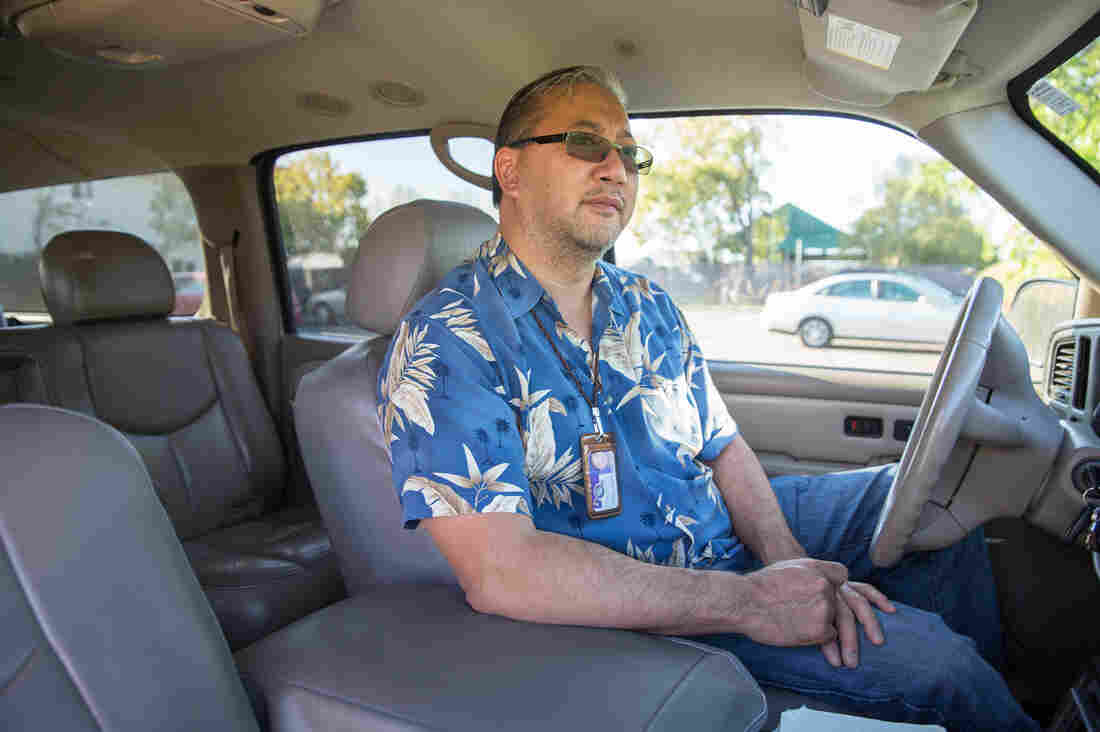
How Japan Is Dealing With Impacts Of Supporting The Oldest Population In The World

Nearly 27 percent of the people in the country are 65 or older. NPR’s Ina Jaffe visited Japan and tells Rachel Martin what she learned about why the population is aging.

Transcript

RACHEL MARTIN, HOST:

Japan has the oldest population in the world. Nearly 27 percent of the people there are 65 or older. NPR’s Ina Jaffe covers aging, so, of course, she wanted to go there and check it out. She did, and she’s now back sharing her reporting. This week on NPR, you’ll hear her stories on how Japan is changing as its population grows older. Ina joins us now from our studios at NPR West. Hi, Ina.

INA JAFFE, BYLINE: Hi, Rachel.

MARTIN: First off, why is Japan the oldest nation in the world?

JAFFE: Well, it’s not really because people live longer, although they do have a life expectancy about five years more than in this country. But really it’s because the population is shrinking. Women there just aren’t having as many babies. So if nothing changes by the year 2060, people aged 65-plus will make up at least 40 percent of the population there.

MARTIN: Wow. So I imagine that could, in turn, have an impact on the economy.

JAFFE: Yeah, that’s a real concern there because you have both this big decline in working-age population and then a strain on the social security system. So one of the government’s ideas for dealing with this is to get more older people into the workforce and keep them there longer.

MARTIN: How do they do that? I mean, you can’t force people to work longer – or can you?

JAFFE: Well, actually the bigger problem in Japan is that you can force people to retire. They have mandatory retirement there. And the age has been 60, though they’re gradually raising it to 65. And you can keep working past mandatory retirement age sometimes, but there’s not a lot of incentive because once you hit 60, your salary usually drops to a fraction of what you made before. So, you know, Americans would be on the phone to their lawyers, right?

MARTIN: Yeah.

JAFFE: But this is an accepted practice in Japan, and it’s one of the things that some people I talked to say will have to change.

MARTIN: Something else that goes along with an aging population, unfortunately, can be Alzheimer’s, other forms of dementia. Is that a concern there?

JAFFE: Oh, definitely. You know how one of the symptoms of Alzheimer’s, for example, is wandering, right? So in Japan last year, more than 12,000 people with dementia were missing long enough to be reported to the police. And while most were found alive within a week, nearly 500 were found dead and 150 were never found.

MARTIN: Oh my. So what is Japan doing about this? I mean, can the government do anything about that?

JAFFE: Well, I went to a city called Matsudo that’s taken a sort of community approach. For a few years now, they’ve been giving dementia awareness training to pharmacists and postal clerks and just people who volunteer to take it. And part of the thinking is that if you can’t keep people from wandering, maybe you have a whole community that can keep them safe when they do. And this approach is now part of Japan’s nationwide plan to deal with dementia, and millions of people there have already taken this training.

MARTIN: So what’s it like to just spend some time in that country? I mean, do you see evidence of that aging population?

JAFFE: Oh, you do. In the cities, for example, (laughter) one of the places you see it is convenience stores. And one of the things they’re doing to compete is finding ways to cater to their aging clientele. You’ll find products there you’d never see in your local mini mart like prepackaged meals for people who have trouble chewing. But really the place that you see aging of Japan most clearly is in the rural areas. There’s a term you hear in Japan, it’s village on the edge, as in village on the edge of extinction. I went to one a few hundred miles south of Tokyo where the population has gone from around 300 people to just 30.

MARTIN: Wow.

JAFFE: It’s now known as Scarecrow Village because a woman who lives there has repopulated the place by making scarecrows and putting them at the bus stop and in the school and in all the places people used to be.

MARTIN: That is a haunting image.

JAFFE: It is. It’s amazing to be there.

MARTIN: You can hear Ina’s stories on the aging of Japan this week on other NPR programs or find them online at npr.org. Ina, thanks so much.

JAFFE: Thank you.

Copyright © 2016 NPR. All rights reserved. Visit our website terms of use and permissions pages at www.npr.org for further information.

NPR transcripts are created on a rush deadline by Verb8tm, Inc., an NPR contractor, and produced using a proprietary transcription process developed with NPR. This text may not be in its final form and may be updated or revised in the future. Accuracy and availability may vary. The authoritative record of NPR’s programming is the audio record.

Let’s block ads! (Why?)

For Parents Who Have Lost A Baby, Some Aid In Their Grapple With Grief

Lydia Joy Ziel, whose crib is pictured here, was diagnosed a serious disease while still in the womb. Miscarriage and stillbirth are common, but often parents feel they're walking through the experience alone. A trained group called Baby Loss Family Advisors seeks to help.

Lydia Joy Ziel, whose crib is pictured here, was diagnosed a serious disease while still in the womb. Miscarriage and stillbirth are common, but often parents feel they’re walking through the experience alone. A trained group called Baby Loss Family Advisors seeks to help. Stina Sieg hide caption

toggle caption Stina Sieg

Stephen Ziel still carries around a recording of his daughter’s heartbeat on his phone. It sounded strong the whole time she was in the womb.

“And the heartbeat’s not supposed to be that strong,” he says.

Not for babies like her. Lydia Joy Ziel was diagnosed with a rare genetic disorder called Trisomy 18 — also known as Edwards syndrome — a few months after Stephen and his wife, Melissa, found out she was pregnant.

“That was probably the moment where it felt like the world kind of shattered on us,” Melissa says.

Most babies with the disorder are either miscarried or stillborn, or die shortly after birth. Melissa and Stephen didn’t know how long they would have with their baby, so they tried to make every moment of the pregnancy count. They picked out a name and started a little book documenting her first experiences.

They captured moments like “Lydia’s first snowfall, Lydia’s first Thanksgiving, Lydia’s first Christmas,” Melissa says. And every night, they read a picture book and a Bible story to Melissa’s growing belly.

The couple also read everything they could find on how to deal with their grief. That included a book by Sherokee Ilse, who personally knows the pain of losing a baby.

“It’s important to grieve and mourn these little ones, to recognize that our lives are different,” Ilse says.

That’s been Ilse’s mission ever since her son Brennan was stillborn decades ago. Ilse briefly held him, but other than that, she feels she and her husband did everything wrong.

“No pictures, no mementos of any kind,” she says. “We literally left with empty arms. I have nothing that he touched.”

Ilse says such deep regret is still the norm for grieving parents. And many feel as if they’re going through it alone, she says, even though this kind of loss is actually common. Roughly 1 in 5 pregnancies ends in miscarriage in the U.S., and every year thousands of babies are stillborn.

So, in the years since her son’s death, Ilse has tried to change our culture’s relationship to infant death. She’s written books, trained hospital staff and most recently co-founded Baby Loss Family Advisors. It’s a certification program that trains professional doulas and others to help people through the death of their babies.

That’s what Ilse did for Melissa and Stephen Ziel. Melissa says she helped them have those difficult conversations that needed to happen.

“Because I think it is hard to talk about what happens if your baby does die,” Melissa says. “It’s not something, I think, as you get married and talk about having kids and a family, that [you think] is going to happen or you’re going to have to think in this direction.”

As the due date got closer, the couple spoke with Ilse many times over the phone and in person, since they all live within miles of one another in Tucson, Ariz. She helped them plan for the birth, even embrace it.

As Melissa puts it: “Being able to say hello and goodbye at the same time.”

Melissa Ziel holds up Lydia's christening gown. Lydia's room is still completely in place, with stuffed animals and pink everywhere. Melissa and Stephen Ziel say they feel at peace when they walk in. They both say losing Lydia hasn't scared them away from having more children in the future.

Melissa Ziel holds up Lydia’s christening gown. Lydia’s room is still completely in place, with stuffed animals and pink everywhere. Melissa and Stephen Ziel say they feel at peace when they walk in. They both say losing Lydia hasn’t scared them away from having more children in the future. Stina Sieg hide caption

toggle caption Stina Sieg

When Melissa’s water broke, she and Stephen say they felt prepared. Almost a day later, Lydia was delivered. Melissa remembers listening for her baby’s cry — and hearing nothing.

“It almost felt you were holding your breath, waiting to figure out what was going on, what was happening,” she says.

Stephen remembers asking the nurse to check for a heartbeat “multiple times,” he says, “because I thought, ‘Well, maybe it just took a minute.’ “

Lydia was stillborn. But she was still their baby. So with Sherokee Ilse’s help, they started making all the memories they could, as quickly as they could. They got footprints and handprints, took professional photographs, introduced her to their families.

Melissa and Stephen spent hours and hours with Lydia, trying to memorize every little part of her, just as Ilse had suggested.

“You know, look at her eyes, see if she has any birthmarks, who does she look most like? And we all agreed she looked more like Steve,” Melissa says, smiling.

“She looked pretty good,” Stephen says, as he and Melissa laugh together.

They’re able to be happy now when they talk about Lydia, because they say they have no regrets.

“There can be blessings. There can be peace. There can be joy in the midst of difficult circumstances,” Melissa says, “and those are things to, no matter how hard they are, they’re also things to be able celebrate.”

Melissa and Stephen Ziel say having someone to help guide their grief made that celebration possible.

Let’s block ads! (Why?)

Insurance Alone Isn't Enough To Make Sure Kids Get Eye Exams

Timely eye exams for kids can help prevent lifelong vision problems.

Timely eye exams for kids can help prevent lifelong vision problems. Portra Images/Getty Images hide caption

toggle caption Portra Images/Getty Images

Kids from less affluent homes, even when they have health insurance, aren’t as likely as others to get vision screenings that can identify conditions like lazy eye before the damage becomes irreversible.

Researchers at the University of Michigan examined commercial health insurance claims data between 2001 and 2014 for nearly 900,000 children from birth to age 14. They tracked how often kids at different family income levels visited ophthalmologists and optometrists and the diagnosis rates for strabismus (crossed eyes) and amblyopia (lazy eye).

The two conditions are relatively common, serious eye disorders in children. Because the eyes are seeing different things, the brain suppresses the vision in one eye. If not corrected by age 10, either condition can result in permanent vision loss. Treatment generally involves glasses, surgery, eyedrops or patches, or some combination.

Children in families with the lowest net worth (less than $25,000 a year) had 16 percent fewer eye care visits than those in the middle-income category ($150,000 to $250,000 a year), the study found. Meanwhile, kids from families with the highest net worth ($500,000 or more annually) had 19 percent more visits to eye care professionals than those in the middle-income group.

Lower-income kids were also less likely to be diagnosed with strabismus or amblyopia than were children from higher-income families. By age 10, an estimated 3.6 percent of children in the lowest-income category were diagnosed with strabismus, and 2 percent were diagnosed with amblyopia, the study found. For kids in the highest-income bracket, the estimated diagnoses were 5.9 percent for strabismus and 3.1 percent for amblyopia.

“We think that affluence is driving the eye care visit and the visit is driving the diagnosis of eye disease,” said Dr. Joshua D. Stein, the study’s lead author and an associate professor of ophthalmology and visual sciences at the University of Michigan’s medical school. The findings were published in the August issue of the journal Health Affairs.

The researchers estimate that the lack of eye care visits by lower-income children resulted in 12,800 missed cases of strabismus and 5,400 missed cases of amblyopia.

Many children receive vision screening in schools, which wouldn’t appear in the claims data that were analyzed. Children who fail a school vision screening, however, should be referred to an optometrist or ophthalmologist for further testing, and that visit would show up in the claims data.

Less affluent parents may have more difficulty taking time off from work or face transportation challenges getting a child to an eye care provider, said Stein, and there may be fewer eye care providers available in less affluent areas.

Under the health law, services recommended by the U.S. Preventive Services Task Force, an independent panel of medical experts, are covered by insurance without requiring most people to pay anything out of pocket. The task force recommends that children between the ages of 3 and 5 receive at least one vision screening to check for amblyopia. That recommendation is being updated.

Please contact Kaiser Health News to send comments or ideas for future topics concerning health insurance.

Let’s block ads! (Why?)

Parents Feel Better About HPV Shots For Preteens If They Can Opt Out

Abraham Vidaurre, 12, checks his arm after receiving an HPV shot in Corpus Christi, Texas. The vaccine is recommended for 11- and 12-year-old boys and girls.

Abraham Vidaurre, 12, checks his arm after receiving an HPV shot in Corpus Christi, Texas. The vaccine is recommended for 11- and 12-year-old boys and girls. Matthew Busch/The Washington Post/Getty Images hide caption

toggle caption Matthew Busch/The Washington Post/Getty Images

The human papillomavirus vaccine is the only vaccine invented explicitly for the purpose of preventing cancer. Yet a decade after its approval, the vaccine continues to struggle from a PR problem, as shown in a study that finds just one in five parents would support making the HPV vaccine a requirement for school.

But this first national study of parents’ attitudes found that those attitudes shifted if the requirement allowed parents an opportunity to opt out.

“It’s interesting; if you had opt-out provisions, it tripled their support, but we know from previous research that if you add the opt-out provisions, you will make the law less effective,” says the study’s lead author, William Calo, a postdoctoral research associate at the University of North Carolina, Chapel Hill.

Such is the conundrum faced by public health officials and policymakers in attempting to improve the coverage of a vaccine that could save an estimated 30,000 lives a year, according to Calo.

The HPV vaccine, recommended by the Centers for Disease Control and Prevention for boys and girls ages 11 and 12, boasts one of the strongest safety records of any vaccine and is highly effective in preventing the infection that causes nearly all cervical cancer, 95 percent of anal cancer, 70 percent of throat and neck cancers and substantial proportions of vaginal, vulvar and penile cancers.

Yet despite the clear medical consensus supporting the CDC recommendation, hesitancy among parents and even providers has hindered its uptake over the past decade.

“Now we have the chance to prevent cancer. This is a disease people care a lot about,” says Anna Giuliano, director of the Center for Infection Research in Cancer at Moffitt Cancer Center in Tampa, and a researcher who led some of the HPV vaccine clinical trials. “We have a simple intervention to prevent cancer, but the message has gotten diluted and contorted by the general public that we don’t need prevention interventions, whether it’s to prevent measles or pertussis or HPV, so this is the struggle.”

Every state requires public school children to be up to date with some, if not most, of the vaccinations recommended by the CDC. But only two states, Rhode Island and Virginia, and the District of Columbia require students to receive the HPV vaccine.

Calo’s study, published Friday in the journal Cancer Epidemiology, Biomarkers & Prevention, sought to quantify national support for such requirements, which have already failed in several dozen states.

In an online survey, his team asked 1,501 parents of 11- to 17-year-old children whether they agreed that laws requiring HPV vaccination for sixth-grade school entry were “a good idea.” The parents came from all 50 states and represented a range of incomes and educational levels, though most were mothers and 70 percent of them were white. Their children were an average age of 14, and 46 percent of them had received at least one dose of the HPV vaccine.

The survey also assessed parents’ beliefs about the value of the HPV vaccine, the harms of it, challenges to getting it for their children and possible psychological reasons parents might oppose HPV requirements, such as whether they tend to resist things more when they’re forced to do them.

Even though half the parents believed the HPV vaccine was at least as important as the Tdap and meningococcal vaccines, the other two recommended for adolescents, only 40 percent believed the vaccine prevented cervical cancer. Nearly a quarter of parents inaccurately believed the vaccine might cause long-term health problems and one-third thought drug companies were pushing it to increase profits.

One-third felt they lacked enough information to decide whether to vaccinate their children, and just 21 percent of parents believed laws requiring the HPV vaccine were a good idea, though that figure jumped to 57 percent if parents could opt out of the requirement.

Calo cautions that the study did not describe specific types of opt-out provisions, so parental support may wax and wane according to what an exemption process might require.

Trying to impose mandates without broad public support can backfire, says Saad Omer, a professor of global health, epidemiology and pediatrics at Emory University Schools of Public Health & Medicine whose research focuses on state exemptions for vaccines required for school. “We’re living with the legacy of going for a mandate a little too early,” he says. Getting a particular vaccine needs to be a social norm before a law requires it, he adds.

Take the case of Texas, where Gov. Rick Perry issued an executive order in 2007 mandating that all girls entering sixth grade receive the HPV vaccination. That requirement included an opt-out provision that required a signed affidavit for religious or philosophical objections, but it still raised such ire from both sides of the aisle, and especially Perry’s own Republican allies, that it was reversed in veto-proof legislation.

But Perry also issued the order just one year after the vaccine had been approved by the FDA, before any baseline immunization coverage existed for that vaccine and with only the clinical trial data, rather than the additional years of safety and effectiveness data available today.

“It was a public health decision that was really sound, but it was a political decision that was disastrous,” Giuliano says.

Compare that to Rhode Island, where HPV immunization rates were already well above the national average when the Rhode Island Department of Health began requiring incoming seventh-graders to receive the vaccine in September 2015.

“They pounded the pavement and did due diligence, and then they said let’s just codify it,” says Giuliano.

Even in Rhode Island, however, the requirement is facing scrutiny and a legislative challenge. That’s something to be expected with any attempts to require vaccination, suggests Dorit Reiss, a professor of law at the University of California Hastings College of Law who specializes in vaccine policy.

Political battles about mandates usually arise from the mobilization of an extremely small but very active minority that oppose vaccines, says Reiss, who testified during the SB 277 hearings for California’s mandatory vaccination law. “And that minority of antivaccine activists does mobilize against lesser things than mandates.” That includes requiring parental education or adding vaccines to existing rosters, even with personal belief exemptions, she says. “So I’m not sure we can go from here to whether a political battle will be easier with opt-outs.”

Mandates are also best suited for vaccines whose coverage already exceeds 75 or 80 percent, Omer says. That makes for “an effective policy tool as opposed to a draconian tool.” For proponents of mandates, that means there are other goals to focus on first, such as closing the gap between those who start HPV vaccine series and those who complete the third dose, Omer says.

Other approaches include using effective reminders for parents about needed vaccines, making it easier for parents to get their children vaccinated and giving providers the tools to effectively talk about vaccines.

“We need to do a better job informing parents about the real benefits of these vaccines, not only for school requirements but for potentially saving the lives of their kids in the future,” Calo says. “I think as parents know and understand the benefits of HPV vaccination, they will support introducing laws requiring it for school entry.”

His research bears this out: Parents were more than twice as likely to believe mandates were a good idea if they believed the HPV vaccine was at least as important as other vaccines given to teens or if they believed it effectively prevented cervical cancer.

The trick is waiting for the right moment to propose such legislation and crafting exemptions so that opt-outs aren’t the path of least resistance.

“You’re using mandates for the last couple of miles of your journey,” Omer says. “They work best as nudges” making it more convenient to vaccinate than not to.

Omer’s research has revealed that the most effective exemptions — those least likely to be used widely or to erode the herd immunity that keeps young children and the immune-compromised protected — require counseling from a doctor or the health department and an annual renewal process. Most importantly, parents choosing to opt out should be required to receive information about the disease and about the vaccine’s safety and effectiveness, Omer says.

“That’s where you find the balance between individual freedoms and societal responsibility, and parents’ responsibility to their children,” Omer says.

In the meantime, it’s up to physicians and other health care providers to better educate parents about HPV vaccination, both Calo and Giuliano say.

“This vaccine is an unprecedented opportunity to prevent multiple male and female cancers, and it’s covered almost entirely through insurance,” Giuliano says. “If you could prevent breast cancer with a vaccine, wouldn’t you take the vaccine?”

Tara Haelle is the co-author of The Informed Parent: A Science-Based Resource for Your Child’s First Four Years. She’s on Twitter: @tarahaelle

Let’s block ads! (Why?)

Where Insurers' Exits Are Hurting Obamacare Exchanges — And Where They Aren't

Alina Nurieva (right) sat with Gabriela Cisneros, an insurance agent from Sunshine Life and Health Advisors, and picked an insurance plan at the Mall of the Americas in Miami last November.

Alina Nurieva (right) sat with Gabriela Cisneros, an insurance agent from Sunshine Life and Health Advisors, and picked an insurance plan at the Mall of the Americas in Miami last November. Joe Raedle/Getty Images hide caption

toggle caption Joe Raedle/Getty Images

Some of the Affordable Care Act’s insurance marketplaces are in turmoil as the fourth open enrollment season approaches this fall. What’s ahead for consumers depends very much on where they live.

Competition on some exchanges will be diminished next year when three of the nation’s largest health insurers — Aetna, UnitedHealthcare and Humana — will sell individual plans in many fewer markets. The departure of several Blue Cross and Blue Shield plans in various states will also hurt. These pullbacks also come on top of the closure of 16 nonprofit co-ops, another coverage option, since January 2015.

Aetna’s exit announcement Monday that blamed financial losses on its marketplace plans gave Obamacare opponents who have from the start predicted the health law’s failure a fresh chance to proclaim, “I told you so.”

That story line got more complicated Wednesday after the Huffington Post reported Aetna CEO Mark Bertolini sent a letter to the Justice Department on July 5 threatening to withdraw from the Obamacare marketplaces if the government sued to block his company’s planned merger with Humana. The Justice Department did just that a couple weeks later.

Still, most marketplace consumers won’t see any ill effects from insurers’ withdrawals, say the health law’s advocates and independent analysts.

“The effect on consumers is going to be mixed around the country,” said Katherine Hempstead, a senior adviser at the Robert Wood Johnson Foundation. “Most of these marketplaces are not dependent on” the large national carriers.

Also, the big insurers’ announcements apply generally only to the individual market. The much larger market of employer-sponsored insurance is not part of the health law exchanges.

Many major metropolitan areas, such as those in California, New York and Texas, will still have several insurers for individual health insurance consumers to choose from. In Texas, all major metro areas — including Austin, Dallas, Houston and San Antonio — will have at least three insurers after Aetna and UnitedHealthcare exit.

That’s true also for most urban exchange customers living in the Northwest, the Midwest and New England.

Most hurt will be marketplace consumers in Arizona, North and South Carolina, Georgia and parts of Florida, where only one or two insurers will be left when open enrollment season begins Nov. 1.

Remaining insurers might raise their monthly premiums as a result, but more than 8 in 10 consumers on the marketplaces who get government subsidies would be insulated. Subsidies increase as premiums rise.

One concern is that with less competition, insurers may tighten their provider networks and give these consumers fewer choices of hospitals and doctors. That trend started several years ago, and some states have responded with regulations requiring insurers to provide customers with reasonable access to doctors and hospitals in each county where they sell plans.

Nearly 13 million people signed up for Obamacare marketplace policies for 2016. Aetna, UnitedHealthcare and Humana have 2 million members in total, but their exit from certain states is predicted to affect between 1 million and 1.5 million people who will have to choose new carriers.

While changing plans can force people to find new doctors, it’s also the best way for consumers get the best deals on coverage.

Aetna will exit 11 of 15 states where it sells plans on the exchanges. UnitedHealthcare has said it will quit 22 of 34 states, and Humana will leave four of the 15 states where it operates.

In late May, the Kaiser Family Foundation estimated the number of rural counties at risk of having one insurer on the exchanges would triple in 2017. That was before Humana and Aetna detailed their plans. (Kaiser Health News is an editorially independent project of the foundation.)

“We could be looking at about 1 in 4 counties in the U.S. with just one exchange insurer next year, though this could change between now and open enrollment in November,” said Cynthia Cox, associate director for the Kaiser Family Foundation Program for the Study of Health Reform and Private Insurance.

Overshadowed by the big insurers’ withdrawals is the prospect that other carriers will enter markets the three giants are leaving. Smaller insurers Molina and Centene have said they’re doing fine on the exchanges. And Cigna, a larger insurer, has said it will move into some North Carolina counties for 2017.

North Carolina will be left with just one or two plans in most of the state after it loses UnitedHealthcare and Aetna plans. Health insurance analysts say three insurers are needed for a healthy competitive market.

“We’ve had a very robust enrollment under the ACA and hope consumers will still see benefits of having coverage even if they have fewer options,” said Ciara Zachary, health policy analyst for the North Carolina Justice Center’s Health Access Coalition.

Rural Americans had few health insurers to choose from even before Obamacare, but some suburban and urban parts of the Southeast will be in the same fix next year. In southeast Florida, consumers in counties near Naples and Fort Myers will have only one marketplace insurer — Florida Blue — next year, unless other insurers step in.

“There are some headwinds, but it’s not a question of whether the market will stabilize but how quickly and how well,” said Hempstead.

Strong winds are already blowing with hurricane force toward Arizona’s Pinal County, southeast of Phoenix, health care advocates say. Nearly 10,000 people enrolled in Obamacare marketplace policies this year and about 85 percent received a federal subsidy.

In 2017, Pinal stands to lose its only two insurers — UnitedHealthcare and Blue Cross and Blue Shield of Arizona. “Clearly this is a big concern for consumers,” said Allen Gjersvig, director of navigator and enrollment services for the Arizona Alliance for Community Health Centers. He said he is hopeful another insurer will step in, but not confident.

Neighboring Maricopa County, which includes Phoenix, is expected to have just two relatively small insurers in the area left on its marketplace next year. Gjersvig questions whether those two — Cigna and Phoenix Health Plan — will have enough doctors and hospitals under contract to handle their new members after larger rival Blue Cross and Blue Shield of Arizona gives up its 40,000 customers.

At least a dozen other counties in Arizona will be left with just one health insurer, he said.

Arizona had eight insurers operating in various parts of the state this year, but four are leaving entirely — Aetna, UnitedHealthcare, Humana and Health Choice. Two more, Blue Cross Blue Shield and Health Net, are scaling back their participation.

Despite the problems with the marketplaces, Gjersvig said thousands of people have gained coverage through them and he is confident they will survive. “We do not see this as a death knell for the marketplace,” he said.

Tammie King, an insurance agent in Columbia, S.C., is less sure how insurer departures will affect consumers in the Palmetto State. The pullouts by UnitedHealthcare and Aetna mean there will be only one carrier in the state in 2017 — Blue Cross and Blue Shield of South Carolina.

That’s a particular concern in Columbia, she said, because the Blue Cross plan does not include one of the biggest hospitals, Lexington Medical Center, and its affiliated physicians. “People will be left unable to see the doctors they are now using,” King said.

King said she worried the Blue Cross plan will use its monopoly power to further reduce the number of doctors and hospitals in its network and limit its choice of prescription drugs. “You can’t blame them because … they have to do something to control costs,” she said.

Kaiser Health News is an editorially independent news service supported by the nonpartisan Kaiser Family Foundation.You can follow Phil Galewitz on Twitter: @PhilGalewitz.

Let’s block ads! (Why?)

To Fight Off Diabetes, Latina Women Find Power In A Group

The goal is to intervene early so that fewer Latino women develop Type 2 diabetes.

The goal is to intervene early so that fewer Latino women develop Type 2 diabetes. Hero Images/Getty Images hide caption

toggle caption Hero Images/Getty Images

Beatrice Sanchez and Mariana Arias drive around their city, Winston-Salem, N.C., in search of a very specific population of residents: Latinos with prediabetes.

The two women, both bilingual and Hispanic, are recruiting participants for a Type 2 diabetes prevention study called “La Comunidad,” a lower-cost local version of the landmark Diabetes Prevention Program trial that staved off diabetes through changes in diet and physical activity in about 50 percent of study participants.

The results of that study suggested it was possible to fight a disease that affects about 29 million Americans without drugs and their side effects. It was more effective than using a common diabetes drug called metformin, which cut that number by just 30 percent.

The Diabetes Prevention Program is “still the gold standard,” says Mara Vitolins, an epidemiologist at Wake Forest University Medical Center in Winston-Salem who is leading La Comunidad.

When the results of the Diabetes Prevention Program were first published, Vitolins was eager to test this concept in her own city, but cost was a big challenge. The program required six months of one-on-one counseling with case managers trained in nutrition or fitness, followed by personal visits every month for another year and a half. The first two years of intervention amounted to more than $2,600 per person.

To reduce the cost, Vitolins decided to focus on a part of the earlier program that relied on group counseling for her two-year study, called Healthy Partnerships in Preventing Diabetes (HELP).

“The whole idea was to take something that was extremely expensive and find every way that we could to make it more community friendly and that it can be sustained,” she says.

HELP replaced case managers with community health workers and group meetings to help participants lose weight and bring their blood sugar levels down. It worked. The two-year study, which was completed in 2011, met goals close to or the same as those reached by the DPP for about a third of the cost—$850 per person. But the study was small, with only 301 participants, so it was impossible to tell if it lowered participants’ risk of developing diabetes.

And the HELP study had another shortcoming. Though it was designed to reach a high-risk, underserved population, it included very few Latinos, a group that makes up about 15 percent of Winston-Salem residents. Latinos are more susceptible to developing diabetes at a young age; according to CDC data from 2011, the average age for diabetes diagnosis among whites was 55, but 49 for Hispanics.

To reach the Latino population, Vitolins launched La Comunidad in 2014, translating the HELP program materials into Spanish.

But she knew she needed to do more than just change the language. So she hired Arias and Sanchez as recruiters and ambassadors to the city’s Latino population, which includes undocumented immigrants. “We’ve got to establish communication,” says Sanchez. “We’re targeting a group of people that are very cautious.”

The team determines whether the participants’ blood-glucose levels are high enough to be classified as prediabetic. Some are turned away because they are pregnant or unknowingly already have full-blown diabetes. Pregnancy was not an issue in Vitolins’ former study because the average HELP participant was 60 years old, says Vitolins. But most of the people joining La Comunidad are in their early 40s. “We’re finding that the Latino community, especially the women, are qualifying at a younger age.”

The project team is also finding that more Latino women than men qualify for the program. They speculate that Latino men may have more physically active lifestyles, keeping them from developing prediabetes.

After qualifying, La Comunidad participants meet with a registered dietician. They also visit an outpatient clinic for general health assessments and blood work every six months for two years. The first recruits finished in May.

But the bulk of the work happens during group meetings, which are held weekly for the first 24 weeks. After that, members gather once every other month for the rest of the study. Topics cover everything from basic nutrition to what kind of shoe is best for particular workouts.

Group members share their own advice and experiences. One woman could not afford to buy prepared food, says Carmen Vazquez, a health adviser who helps lead the group meetings. Despite limited resources, she still manages to eat healthy and exercise. So far, she’s lost 40 pounds. “She has been an example to the rest,” Vazquez says.

The meetings help participants become aware of how foods and activities affect their bodies. “One of the major emphases of the program is to be sure people take control of their own life,” says Vazquez. Information may have been missed because of health disparities, language barriers or just lack of education, and “We are trying to fill that gap.”

Vazquez is quick to point out that she and the other health advisers are laypeople — in fact, her background is in fashion. Vitolins says this is one of the keys to making the program affordable. “It didn’t matter that the person leading it didn’t have a high school degree. It’s the fact that that person can communicate a message.”

The ultimate goal of studies like La Comunidad, Vitolins says, is to determine whether group-based techniques are helpful from both a health and medical reimbursement perspective. In March, the Centers for Medicare and Medicaid Services (CMS) announced that Medicare would cover preventive programs that meet the Centers for Disease Control and Prevention’s (CDC) requirements, such as data reporting.

Vitolins agrees that community-level programs must have good data to support their use. “We’re testing before we say everyone who’s in the Latino population should use this approach,” she says. “We want it to be effective.”

Not everyone shares Vitolins’ enthusiasm. Richard Kahn, a professor of medicine at the University of North Carolina at Chapel Hill says it’s too early for Medicare and health insurance companies to be covering such programs, since they delay diabetes rather than prevent it totally.

“The question which is unanswered is whether that delay actually makes a difference,” Kahn says. Another question is whether weight loss in the first few years of a program makes a difference if participants just gain it back, which many do. “We need more studies about how the body regulates weight.”

In the meantime, Vitolins focuses on getting the message of diabetes prevention out to people who may not know their risk. Estimates vary depending on how blood glucose is measured, but the CDC reports that 86 million Americans are prediabetic, and many don’t know it.

“With the numbers that we think are out there, every single program that shows efficacy should be at the table,” Vitolins says.

Amanda B. Keener is a freelance science journalist who writes for Nature, The Scientist and PBS.org.

Let’s block ads! (Why?)

Aetna CEO To Justice Department: Block Our Deal And We'll Drop Out Of Obamacare

Mark Bertolini, CEO of Aetna, told the Justice Department in July that the insurer would walk away from many health exchanges if the government opposed the company's proposed deal for Humana. On Tuesday, Aetna followed through.

Mark Bertolini, CEO of Aetna, told the Justice Department in July that the insurer would walk away from many health exchanges if the government opposed the company’s proposed deal for Humana. On Tuesday, Aetna followed through. Andrew Harrer/Bloomberg via Getty Images hide caption

toggle caption Andrew Harrer/Bloomberg via Getty Images

It’s not often in the midst of an antitrust fight that the public gets a look at the gamesmanship that’s happening behind the scenes.

But thanks to the Huffington Post’s Jonathan Cohn and Jeff Young, we got a glimpse at how health insurer Aetna is making its case to acquire rival Humana — and new insight into Aetna’s decision announced Tuesday to pull out of Obamcare exchanges in 11 states.

The reporters obtained a copy of a letter from Aetna CEO Mark Bertolini to the Justice Department on July 5. The letter was written while the government was still deciding whether to oppose the insurance companies’ merger on the grounds that it (and another proposed deal between Anthem and Cigna) would hurt consumers and reduce competition.

The Bertolini letter was in answer to a Department of Justice request for information about how a decision on the Humana deal would affect Aetna’s participation in the health insurance exchanges created by the Affordable Care Act.

The letter is pretty direct: If the government moved to block the merger, then Aetna would begin to pull out of the health insurance exchanges.

Here’s the key paragraph (emphasis added):

“Our analysis to date makes clear that if the deal were challenged and/or blocked we would need to take immediate actions to mitigate public exchange and ACA small group losses. Specifically, if the DOJ sues to enjoin the transaction, we will immediately take action to reduce our 2017 exchange footprint. We currently plan, as part of our strategy following the acquisition, to expand from 15 states in 2016 to 20 states in 2017. However, if we are in the midst of litigation over the Humana transaction, given the risks described above, we will not be able to expand to the five additional states. In addition, we would also withdraw from at least five additional states where generating a market return would take too long for us to justify, given the costs associated with a potential breakup of the transaction. In other words, instead of expanding to 20 states next year, we would reduce our presence to no more than 10 states. We also would not be in a position to provide assistance to failing cooperative exchanges as we did in Iowa recently.”

The Huffington Post reporters calls the letter “a clear threat.”

A little more than two weeks later, on July 21, the Justice Department said it would sue to block the Aetna-Humana deal and the other proposed megamerger between Anthem and Cigna.

On Tuesday, Aetna said it would dramatically scale back its participation on the insurance exchanges in 2017. The company move would take it out of 546 counties in 11 states, leaving it active in 242 counties in four states: Delaware, Iowa, Nebraska and Virginia.

Aetna said the pullback was a business decision stemming from a loss in the second quarter on individual plans and uncertainty about the policy outlook for the exchanges.

In the company’s statement, Bertolini said, “As a strong supporter of public exchanges as a means to meet the needs of the uninsured, we regret having to make this decision.”

The statement made no mention of the company’s pending offer for Humana nor its recent correspondence with the government about how Aetna would likely respond if the feds moved to block the deal. Aetna didn’t immediately respond to a request for comment on how to reconcile Tuesday’s announcement with the July 5 letter made public by Huffington Post on Wednesday.

The change in tack for Aetna is also noteworthy because Bertolini was talking up the business potential of the exchanges as recently as April, when he said during a call with analysts and investors that the exchanges were “a good investment,” despite the losses incurred.

At the time, Bertolini said that Aetna was “committed to working constructively with the administration and lawmakers to find solutions that can improve this program, stabilize the risk pool, and expand product flexibility, all with the goal of creating a sustainable program that makes health care more affordable and accessible for all consumers.”

Now, the company appears to be taking its ball and going home.

Let’s block ads! (Why?)

California Court Helps Kids By Healing Parents' Addictions

Hearing Officer Jim Teal presides over a session of Early Intervention Family Drug Court in Sacramento, Calif., in March. The county program helps keep families together — and saves taxpayers $7 million annually, Sacramento County officials say.

Hearing Officer Jim Teal presides over a session of Early Intervention Family Drug Court in Sacramento, Calif., in March. The county program helps keep families together — and saves taxpayers $7 million annually, Sacramento County officials say. Robert Durell for Kaiser Health News hide caption

toggle caption Robert Durell for Kaiser Health News

At 10 a.m. on a recent Wednesday morning, a line of parents pushing strollers filed into a conference room at the Sacramento County Courthouse in California. They sat at rows of narrow plastic tables, shushing their babies and looking up at a man in a black robe.

Hearing Officer Jim Teal sounded his gavel. “This is the time and place set for Early Intervention Family Drug Court,” he began, gazing sternly at the parents who sat before him. “Graduation from this court is considered a critical factor in determination that the children of participants will be safe from any further exposure to the danger and destructive impact of parental substance abuse.”

There has been a surge recently, across the U.S., in the number of children entering the foster care system after years of decline. Nationally, roughly 265,000 kids entered foster care in 2015 — the highest number since 2008, according to a recent government report.

Substance abuse is a factor in up to 80 percent of cases where a child is removed from a home. And there are signs that the opioid epidemic may be to blame.

Parents who receive addiction treatment are much more likely to get their kids back, but 4 in 5 parents fail to complete their treatment regimen.

The Early Intervention Family Drug Court aims to change that by helping parents with substance abuse problems to complete treatment before their children enter the foster care system. If the parents fail, they’ll be sent to a formal family drug court, where their children are taken away and given attorneys of their own.

But before that, the parents get this opportunity to enter recovery, through a mix of support, medication-assisted treatment and tough love.

Many parents participating in the early intervention drug court entered the system after having babies born dependent on opioids or other drugs. Others were reported to Child Protective Services by friends or family. All are at risk of losing custody of their children because of their drug abuse.

Emma, 20, a striking woman with long blond hair, approached Teal’s podium holding a baby. NPR is withholding her last name because her case is active with Child Protective Services.

“Good morning,” Teal said. “Who do you have with you there?”

“My daughter, Cailynn,” Emma answered proudly, bouncing the cooing child on her hip.

Emma started using drugs when she was 16. At first it was methamphetamines, she said, but she quickly transitioned to heroin. Then she got pregnant.

Her daughter Cailynn tested positive for opioids at birth. Child Protective Services came to the hospital and took the baby into custody.

“I regret every moment of it,” Emma said. “It’s hard. But I’ve got to keep my head up and keep going.” From the start, she wanted her daughter back.

A court booklet give parents inspiration to stay off drugs. They paste a photo of their child on the front and then write about their experiences inside.

A court booklet give parents inspiration to stay off drugs. They paste a photo of their child on the front and then write about their experiences inside. Robert Durell for Kaiser Health News hide caption

toggle caption Robert Durell for Kaiser Health News

Usually, Sacramento County has a three-month wait for people who need substance abuse treatment. But by volunteering to participate in the drug court, Emma was able to get treatment right away and her baby back.

“So Emma, it says here you’re 63 days compliant,” Teal said that day in court. “And 63 days in the program, so you’ve been good. You’ve been doing what you’re told. Congratulations.”

The other parents in the room burst into applause — this is a major accomplishment. The six-month program is rigorous. In addition to monthly sessions at the court, the parents must attend almost daily group meetings, submit to random drug tests and take parenting classes. Many, like Emma, go to inpatient rehab. Medication-assisted therapy for opioids is also available. And once or twice a week, they get a home visit from their social worker.

Emma attributed much of her success in the program so far to social worker Matthew Takamoto, whom she called “amazing.”

Takamoto has been a social worker for 20 years and has been part of the EIFDC since the program began six years ago. The program, he said, is an important change in way the county handles addiction.

“In the olden days, we were quicker to send them to court,” he said. Their approach was “more ‘blaming the addict,’ versus giving them the tools they need.”

In the afternoon following the court meeting, Takamoto drove to the inpatient residential facility where Emma lives with her daughter. In the back is a grassy yard with a small jungle gym, where several mothers sat, watching their children play. Emma was there, too, holding Cailynn in her lap.

Matthew Takamoto has been been a social worker with the early intervention program in Sacramento County from its start, and is pleased with its success. The hardest part, he says, is realizing that not every parent will be be able to quit drugs for good.

Matthew Takamoto has been been a social worker with the early intervention program in Sacramento County from its start, and is pleased with its success. The hardest part, he says, is realizing that not every parent will be be able to quit drugs for good. Robert Durell for Kaiser Health News hide caption

toggle caption Robert Durell for Kaiser Health News

Takamoto seemed happy with Emma’s progress. “You take these clients from the very beginning, where they’re broken and it’s the worst day of their life,” he said. “And to see them slowly get back up as they have days of clean time — it’s been incredible.”

The hardest part of his job, he said, is realizing that not all the parents are going to make it. In fact, just a third end up graduating from the county’s program.

“If these parents aren’t successful, it’s the kids [who] pay the price,” Takamoto said. “The parents are doing what they want to do, but the kids don’t have a choice.”

Just 5 to 10 percent of families in the United States who could use family drug courts have access to them, according to Children and Family Futures, an organization that advises and evaluates family drug courts. Sacramento’s program is one of about 350 in the country; most of the rest work with families after their children have entered the foster system.

Sherri Z. Heller, director of Sacramento’s Health and Human Services Department, described family drug courts as a success story.

“People can overcome addiction if the motivation is strong enough, and this is the most effective motivation I have ever seen,” Heller said.

Just 10 percent of kids with families in the program end up being removed from their home, compared to 30 percent of children in families who do not participate. That represents a major savings to the county — about $21,000 dollars a year for every kid who doesn’t have go into the court and foster system, for an annual total savings of $7 million.

“The rush that comes with getting high is pretty spectacular,” Heller said. “And it’s very hard physically, once the addiction happens, to overcome. But if there is one thing that matters to people more than the thrill of getting high, it’s the thrill of doing the right thing for your children and keeping your family intact.”

Kaiser Health News is a national health policy news service. It is an editorially independent program of the Henry J. Kaiser Family Foundation. You can follow Jenny Gold on Twitter: @JennyAGold.

Let’s block ads! (Why?)

Aetna Joins Other Major Insurers In Pulling Back From Obamacare

Aetna is the latest big health insurer to retreat from the exchanges established under the Affordable Care Act.

Aetna is the latest big health insurer to retreat from the exchanges established under the Affordable Care Act. Jessica Hill/AP hide caption

toggle caption Jessica Hill/AP

Insurance giant Aetna will stop selling health insurance through most of the exchanges created by the Affordable Care Act in 2017 because the company said it is losing money in many of those markets.

On Monday, Aetna said it will sell individual insurance policies in only 242 counties in four states, down almost 70 percent from the 778 counties in 15 states where the company markets Obamacare plans this year.

The decision is a blow to President Obama’s signature health care law. Most insurers selling plans through the exchanges have been losing money because the people getting insurance under Obamacare have been sicker than forecast.

But Aetna, which lost $430 million on the Obamacare plans in the first half of the year, said it may re-enter the markets in the future.

“We will continue to evaluate our participation in individual public exchanges while gaining additional insight from the counties where we will maintain our presence, and may expand our footprint in the future should there be meaningful exchange-related policy improvements,” CEO Mark Bertolini said in a statement.

Aetna, which covers about 900,000 people through the exchanges, is the third major insurer to pull back from the Obamacare marketplaces. UnitedHealth Group said in April it planned to pull out of ACA marketplaces in most states, and just last month Humana, which covers about 800,000 people, said it will cut back its offerings to just a handful of counties.

All the companies said they are losing money on the plans. The Department of Health and Human Services has argued that companies have themselves to blame because they set premiums too low. The companies will be able to adjust the premiums in the future.

“Aetna’s decision to alter its Marketplace participation does not change the fundamental fact that the Health Insurance Marketplace will continue to bring quality coverage to millions of Americans next year and every year after that,” said Kevin Counihan, CEO of HealthCare.gov, the federal insurance exchange.

In all, about 11 million people have bought insurance through the exchanges.

A spokesman for HHS said Aetna’s decision was an about-face from its earlier statements about the Obamacare exchanges.

In April, Bertolini called the marketplace plans “a good investment” because it would have cost the company far more than $430 million to try to attract that many customers.

“If we were to build out 15 markets, it would cost us somewhere between $600 million to $750 million to enter those markets and build out the capabilities necessary to grow that membership,” he said on the company’s April earnings conference call with analysts.

Aetna’s announcement comes less than a month after the Justice Department sued to stop the company’s planned merger with Humana, arguing that the combination would hurt competition. At the same time, the government also sued to block Anthem from purchasing Cigna.

Sen. Elizabeth Warren, a Massachusetts Democrat, suggested Aetna’s change of heart was in response to the Justice Department’s action. In a post on her Facebook page last week, Warren questioned the company’s motives after it first hinted that it was considering cutting its participation in Obamacare.

“The health of the American people should not be used as a bargaining chip to force the government to bend to one giant company’s will,” she said.

Aetna spokesman T.J. Crawford didn’t immediately respond to a request for comment on Warren’s statement.

HHS said last week that the per-member health care costs for people covered through the exchanges remained stable from 2014-2015. If that trend continues, insurers should be able to set premiums that better reflect the actual costs of covering people under Obamacare.

“The next ACA open enrollment is key,” tweeted Larry Levitt, a senior vice president at the Kaiser Family Foundation. If insurance sign-ups increase, then deeper concerns about Obamacare will fade. “If not, expect a debate about fixes to the law,” he wrote.

Let’s block ads! (Why?)

Insurers' Fine Print May Exclude Health Care Important To Women

Health insurance plans may exclude coverage for many types of genetic testing that aren't required by law.

Health insurance plans may exclude coverage for many types of genetic testing that aren’t required by law. Andrew Brookes/Getty Images hide caption

toggle caption Andrew Brookes/Getty Images

Buried in the fine print of many marketplace health plan documents is language that allows them to refuse to cover a range of services that are used more often by women, a study finds.

It’s unclear if these exclusions have prevented patients from getting needed treatments. An insurance industry representative says patients are generally able to get care if it’s appropriate for them. Yet some women with a family history of hereditary breast and ovarian cancer, for instance, may have gaps in care because of the exclusions.

More broadly, advocates say, the report suggests coverage issues that may still need to be addressed, despite significant improvements in coverage of women’s health needs following passage of the Affordable Care Act.

The study by researchers at the National Women’s Law Center, an advocacy group based in Washington, D.C., examined exclusions in marketplace plans offered by 109 insurers in 16 states in 2014 and 2015.

The health law requires insurers to explain whether they cover 13 services, including acupuncture, bariatric surgery and infertility treatment, in a plan’s easy-to-read general summary of benefits. But other services that aren’t required to be listed there may also be excluded. And those exclusions may be hard for to find in the more detailed plan coverage materials, which can be quite technical and run dozens of pages.

The researchers reviewed plans’ detailed documents and identified six types of excluded services that could have a disproportionate impact on women’s health care, although many of them also are used by men. The excluded services included:

  • Treatment for conditions that result from non-covered services, such as an infection following cosmetic surgery. They were excluded by 42 percent of plans.
  • Maintenance therapy for a chronic disease or other care that prevents regression of a stable condition (27 percent of plans).
  • Genetic testing, except as required by law (15 percent).
  • Fetal reduction surgery, which is sometimes recommended when a woman is carrying multiple fetuses in order to protect the woman’s health or improve the odds of a successful pregnancy (14 percent).
  • Treatment for self-inflicted conditions, such as a suicide attempt, (11 percent).
  • Preventive services not required by law (10 percent).

“We wanted to highlight issues that would have a particular impact on women as well as show how broad some of the exclusions are,” says Dania Palanker, who co-authored the study and is now an assistant research professor at Georgetown University’s Center on Health Insurance Reforms.

It’s not uncommon for women who have a family history of breast or ovarian cancer to run into this type of roadblock when they need genetic testing or preventive services, says Lisa Schlager, vice president of community affairs and public policy at Force, an advocacy group for people affected by hereditary breast, ovarian and related cancers.

The Affordable Care Act requires insurers to cover services that are recommended by the U.S. Preventive Services Task Force, an independent panel of medical experts, without requiring consumers to pay anything out of pocket. The task force recommends that women with a family history of breast or ovarian cancers receive genetic counseling and, if necessary, testing for a mutation in the BRCA1 or BRCA2 genes that are known to increase the risk of developing those cancers.

However, insurers aren’t required to cover testing for the 40 or so other genetic mutations that are also recognized as increasing women’s risk of breast or ovarian cancer, Schlager says, and many don’t do so.

If a woman does test positive for a BRCA mutation, insurers may not cover earlier or more frequent screening or other preventive care she may need, Schlager says.

“We are in this strange scenario where insurers are paying for the testing and then not paying for the breast MRIs or prophylactic mastectomies,” she adds.

Clare Krusing, a spokeswoman for America’s Health Insurance Plans, a trade group, calls the report “overblown.” She says it fails to address whether treatments are safe and effective for all patients; whether other effective treatments are covered; and whether there are processes to help patients get access to excluded treatments.

“If a patient has a medically necessary reason for this care, it will likely be covered,” Krusing says.

Kirsten Sloan, senior policy director at the American Cancer Society Cancer Action Network, says people who use the society’s call center aren’t generally complaining about plan coverage exclusions. Still, coverage distinctions may be confusing for patients, Sloan says, and highlight the need for better transparency in communicating coverage information.

Let’s block ads! (Why?)