Can Doctors Learn To Perform Abortions Without Doing One?

Medical residents training to be OB-GYNs in Texas don't have many place where they can learn how to perform abortions.

Medical residents training to be OB-GYNs in Texas don’t have many place where they can learn how to perform abortions. Carrie Feibel/Houston Public Media hide caption

toggle caption Carrie Feibel/Houston Public Media

Abortion is one of the more common procedures performed in the U.S., more common even than appendectomy. But as clinics in Texas close, finding a place in the state where medical residents training to be OB-GYNs can learn to do abortions is getting harder.

“There are places in Texas where there are OB-GYN residents who can’t get anywhere to be trained,” said a senior doctor at one Texas clinic who is also a medical school professor. The physician asked not to be named to avoid backlash from anti-abortion groups and politicians.

Clinics that used to perform abortions have closed recently in Lubbock, Odessa, and other Texas cities. But the professor’s clinic, which still does abortions and trains some OB-GYN residents, can’t take up the slack.

“We’ve been approached by many different residency programs about the ability to train their residents,” she said. “Unfortunately, we just don’t have the capability to train everyone.”

The day we spoke, the doctor was spending the afternoon at the clinic, supervising a third-year resident. The resident agreed to be identified by her middle name, Jane.

During her four years of residency, Jane spent about a month doing rotations at this clinic. The experience improved her medical skills, she said, but also gave her a new political perspective on what it means to be a doctor.

“It makes it even more obvious how important it is for women to have access to abortions,” she said. The rotation made her more committed to providing abortions throughout her career, she added. “If I think a woman needs access and I have the skills to provide access, I should,” she said.

Jane listened as the senior doctor prepared her for the next patient: “She’s 21 years old, and this is her first pregnancy. She is at about eight weeks today. Do you have any questions about what we’re going to be doing or the procedure?”

Later, I asked the professor if it’s hard to teach abortion. She said it’s not difficult to teach the procedure.

“The technical procedure is the same, whether you are doing it for a miscarriage, or whether you’re doing it to terminate an ongoing pregnancy,” she said.

That procedure is known as a dilation and curettage, or “D and C.” The cervix is dilated, and then a suction instrument is inserted to remove tissue from the uterus.

D and Cs are also used to treat excessive bleeding, or to take a biopsy from inside the uterus.

“I like to say that a D and C, a suction D and C even, is bread and butter gynecology,” she explained.

OB-GYNs have always learned the D and C procedure. There’s nothing controversial about it, per se. But when it’s done because a woman chooses to end a pregnancy, it’s called an elective abortion, and to be able to perform the procedure in such a case, the doctor needs to have additional training.

Elective abortions are almost always done on an outpatient basis. To do them, doctors learn how to counsel the patients and manage their pain during the five-minute procedure. They also need to learn how to administer medical abortions — the ones that use pills.

In addition, many states like Texas require doctors to perform extra steps, such as reading out loud a state-mandated script to the woman, or having her listen to the fetal heartbeat.

OB-GYN residents can’t learn all that’s required without spending time at an outpatient clinic, which is where most abortions in Texas take place.

But in Texas, there are only 18 of those clinics still in operation.

[embedded content]

Use the “+” sign above to zoom in and see how residency programs responded to the question: “How are ob-gyn residents trained in abortion?”

  • Green dots indicate the residency is located in an area where clinics still offer elective abortion (12).
  • Yellow dots indicate that a nearby clinic still provides abortion, but the clinic could close soon depending on the U.S. Supreme Court’s interpretation of Texas law (2).
  • Red dots indicate that none of the clinics left in the area provide abortion (4).

That worries Lori Freedman, a medical sociologist at the University of California, San Francisco. “How can you have abortion provision if you don’t have trained doctors?” Freedman said. “Especially the ones likely to stay in your state.”

Abortion training has become more common in the U.S. but only in some areas in the country. “We’ve trained a lot of people, but they’re staying in relatively liberal, urban areas,” Freedman said.

Texas has 18 OB-GYN residency programs. All of them undergo periodic reviews by the Accreditation Council for Graduate Medical Education, or ACGME, in Chicago.

One of the things the reviewers look for is whether residents have opportunities to learn about induced abortion, called that to distinguish it from a miscarriage.

All 18 residency programs in Texas are currently accredited, even though some of them are located in cities where outpatient abortion providers have closed.

Programs without abortion providers nearby have other options for fulfilling the training obligation, said Dr. John Potts, ACGME’s senior vice president for surgical accreditation.

He explained the residents don’t have to perform elective abortions. They can practice terminating pregnancies in the hospital, for other reasons.

“As long as they’re getting sufficient experience in some form of abortion, you know, where the mother’s life is in danger, where there’s significant neonatal abnormalities,” Potts said.

In other words, to become an OB-GYN, the resident must know how to safely empty a woman’s uterus if her pregnancy is experiencing a medical complication. For situations when it’s the woman choice to end pregnancy, residents can hear lectures about it, perform simulations or practice counseling skills on each other.

Some Texas professors maintain that minimal standard of experience is good enough — or, at least, the best they can do under the circumstances.

But I asked Dr. Bernard Rosenfeld, who has been providing abortions in Houston for decades, if he thought it really was enough to learn how to perform elective abortions.

“No, absolutely not,” he said.

When residents are learning to do D and Cs, they usually do them in the hospital, and the patient is often asleep, Rosenfeld pointed out. But most abortions in this country take place in outpatient clinics.

At the clinics, patients get a local anesthetic or none at all. That makes the abortion safer for the patient, but it requires more skill on the part of the doctor, according to Rosenfeld and other experts.

“Time is a big factor, and causing as least pain as possible, and having a very gentle touch,” Rosenfeld said. “But all that is learned.”

Residents won’t have competence in performing abortions until they do dozens of outpatient abortions, Rosenfeld said.

“Nobody would ever say that about a cesarean delivery or a regular delivery: ‘Well, OK, you just saw one or two, so you can just do them,’ ” he said. “Lots of time you’ll have uterine abnormalities and you’re not going to know unless you’ve done many procedures what to do with a uterine abnormality.”

There’s one more intangible, but critical, experience residents get from abortion training, many doctors say.

Jane summed it up this way: “Every woman has a different story and a different reason why she chooses to end her pregnancy.”

Hearing those stories from patients is crucial to a an OB-GYN’s professional development, said Dr. Jody Steinauer, an OB-GYN professor and researcher at the Bixby Center for Global Reproductive Health at UCSF.

The experience teaches valuable bedside skills like compassion, empathy and political awareness.

“When they spend time in a setting that provides abortion care, they have real epiphanies,” Steinauer said. “They become more aware of their biases. They’re surprised that more than half of women having abortion are already mothers, for example.”

Steinauer’s research also shows that OB-GYNs who have access to training during their medical residencies are more likely to provide abortion later in their careers.

But some doctors question the need for more training, saying if residents really want abortion skills they can leave Texas to acquire them, and then come back to the state to practice.

Other OB-GYNs, like Dr. Donna Harrison, executive director of the American Association of Pro-Life Obstetricians & Gynecologists, condemn the entire concept. Harrison believes abortion is killing an unborn child.

“It should not be part of any kind of medical training to do elective, induced abortions,” she said.

Residents have always been able to “opt out” of abortion training if they have moral or religious objections, Harrison acknowledged. But some residents might feel pressured to do the rotation, she said, and they could end up indoctrinated with the view that elective abortion is OK.

“If you do a procedure that you have moral qualms with, there’s a kind of desensitization that goes on,” Harrison said. “The attempt to force residents to participate in abortion is an attempt to desensitize those residents, so they will have less ability to think clearly about what that procedure is actually about.”

But Freedman, the medical sociologist, disagreed that abortion training amounts to indoctrination.

“If you look at medicine in general, how many things do we do to teach people empathy, sensitivity, compassion about a lot of things?” she asked.

Doctors will always have patients whose life decisions they privately disagree with, Freedman said, but it doesn’t help the patient when doctors judge them or withhold a treatment or procedure.

“Things happen to people that they don’t want, health-wise, all the time,” she said. “We just need doctors to know how to do this.”

According to a national survey, 97 percent of OB-GYNs have had a patient who wanted an abortion. But only 14 percent of those doctors actually provide abortions.

This story is part of a reporting partnership with NPR, Houston Public Media and Kaiser Health News.

Let’s block ads! (Why?)

Even A Small Meal For A Doctor Can Tip The Balance For A Brand-Name Drug

A single modest meal for a doctor was associated with a higher likelihood he or she would prescribe Crestor, a cholesterol drug, instead of a generic.

A single modest meal for a doctor was associated with a higher likelihood he or she would prescribe Crestor, a cholesterol drug, instead of a generic. Daniel Acker/Bloomberg via Getty Images hide caption

toggle caption Daniel Acker/Bloomberg via Getty Images

Evidence is mounting that doctors who receive as little as one meal from a drug company tend to prescribe more expensive, brand-name medications for common ailments than those who don’t.

A study published online Monday by JAMA Internal Medicine found significant evidence that doctors who received meals tied to specific drugs prescribed a higher proportion of those products than their peers. And the more meals they received, the greater share of those drugs they tended to prescribe relative to other medications in the same category.

The researchers did not determine if there was a cause-and-effect relationship between payments and prescribing, a far more difficult proposition, but their study adds to a growing pile of research documenting a link between the two.

A ProPublica story published in March found that doctors who took payments from the pharmaceutical and medical device industries prescribed a higher proportion of brand-name medications than those who didn’t. It also found that the more money a doctor received, the higher the percentage of brand-name drugs he or she prescribed, on average.

Similarly, a Harvard Medical School study published in May found that Massachusetts physicians prescribed a larger proportion of brand-name statins — the category of drugs that treat high cholesterol — the more industry money they received. There was no significant increase in brand-name prescribing for those who received less than $2,000.

What makes the latest study different is that it looked at specific drugs.

In an editor’s note, Dr. Robert Steinbrook wrote that the recent analyses “raise a broader question. Is it necessary to prove a causal relationship between industry payments to physicians and the prescribing of brand-name medications?”

Other than for research and development, and related consulting, Steinbrook wrote, “it is already evident that there are few reasons for physicians to have financial associations with industry. Outright gifts, such as meals, may be legal, but why should physicians either expect or accept them?”

Holly Campbell, a spokeswoman for the Pharmaceutical Research and Manufacturers of America, an industry trade group, said the latest study creates more confusion than clarity. In part, that’s because the researchers acknowledge that they couldn’t determine whether the drugs were prescribed before or after doctors received meals paid for by companies.

Sift nearly 15 million records in ProPublica’s database to see if your doctor has received money from a drug or device company. Search for your physician.

“This study cherry-picks physician prescribing data for a subset of medicines to advance a false narrative,” Campbell wrote in an email. “Manufacturers routinely engage with physicians to share drug safety and efficacy information, new indications for approved medicines and potential side effects of medicines. As the study says, the exchange of this critical information could impact physicians’ prescribing decisions in an effort to improve patient care.”

Since 2013, the government has required all pharmaceutical and medical device makers to publicly report their payments to doctors. The government has released data on transactions from August 2013 to December 2014; data from 2015 are set to be made public next week. (The payments can be searched in ProPublica’s Dollars for Docs tool.)

In the study released Monday, a team led by Colette DeJong at the University of California, San Francisco examined four classes of medications, including those that treat high cholesterol, heart rhythm disorders, high blood pressure and depression. The researchers identified one heavily marketed brand-name drug in each class – Crestor, Bystolic, Benicar and Pristiq – for which there are cheaper, equally effective options.

DeJong and her colleagues then looked at physicians who received meals specifically tied to those drugs (companies have to list the products associated with each of their payments) and their 2013 prescriptions in Medicare’s drug program. The researchers excluded physicians who received other types of payments — such as for promotional speaking and consulting — in an effort to isolate any relationship to the meals alone.

Though only a relatively small percentage of physicians who prescribed the drugs examined in the study received payments from their makers, those doctors prescribed the drugs more often than other doctors.

Physicians who received meals related to Crestor on four or more days prescribed the cholesterol-fighting drug at almost twice the rate of doctors who received no meals. The difference was even more marked for the other drugs. Physicians who received meals prescribed Bystolic, a blood pressure pill, at more than five times the rate of their uncompensated peers, Benicar, for high blood pressure, at a rate 4.5 times higher, and Pristiq at a rate 3.4 times higher.

Higher rates of prescribing were also observed when doctors received just a single meal, even after taking into account a physician’s specialty and region of practice.

Dr. R. Adams Dudley, a professor of medicine and health policy at UCSF and one of the study’s authors, said he and his colleagues expected to see “some evidence that doctors were responsive to incentives, what with their being humans and all.”

Still, he said, “I think we were probably surprised that it took so little of a signal and such a low value meal. … It has changed our thinking.”

DeJong said the researchers don’t think the meals themselves cause doctors to prescribe more of a drug, but rather the time they spend interacting with drug reps when they drop off those meals.

“There’s really no way that a $10 bagel sandwich can influence a doctor in a gift way,” she said. “We think it represents more reciprocity, the time spent with the drug rep and the fact that the doctor is listening to this 10-minute pitch.”

Dudley suggested that patients talk to their doctors and ask, “Is there a generic that’s just as good?”

“Hopefully they can get the doctor off of the prescribing behaviors that we’re observing,” he said.

ProPublica’s deputy data editor, Olga Pierce, contributed to this report. Does your doctor accept payments from pharmaceutical and medical device companies? Find out using Dollars for Docs.

Let’s block ads! (Why?)

Politics Makes Abortion Training In Texas Difficult

Dr. Bernard Rosenfeld, 74, has not been able to find a successor to lead his abortion practice in Houston, Texas. He says younger doctors don't want to deal with the politics and protesters.

Dr. Bernard Rosenfeld, 74, has not been able to find a successor to lead his abortion practice in Houston, Texas. He says younger doctors don’t want to deal with the politics and protesters. Carrie Feibel/Houston Public Media hide caption

toggle caption Carrie Feibel/Houston Public Media

Every year, more than 100 new obstetrician-gynecologists graduate from a Texas residency program and enter the medical workforce. Theoretically, all have had the opportunity during their four years of residency to learn about what’s called “induced abortion” — named that to distinguish it from a miscarriage. But the closure of abortion clinics in Texas — more than 20 since 2013 — has made that training increasingly difficult.

Texas has 18 residency programs in the field of obstetrics and gynecology, but only one allowed me to observe how abortion is taught. Because of the political pressures facing abortion providers, NPR agreed not to reveal the doctors’ full names or the clinic’s location. The resident agreed to be identified by her middle name, Jane.

Medical residents can opt out of abortion training for religious or moral reasons, but Jane felt a professional obligation to learn the procedure.

“This is part of ob-gyn — it’s not an optional part, per se,” Jane said. “Women can choose if they want an abortion or not, but you as their doctor need to be able to provide them with all the choices available.”

Jane spent that morning performing ultrasounds on pregnant women, working alongside a senior doctor who supervised.

Together, the two women examined a printout from a fetal ultrasound, and the senior doctor offered some feedback.

“On this image here, you want it more of a plane, as if you were opening it like this, so that you have the hypothalamus in your picture,” the senior doctor advised Jane. “That’s going to give you a better measurement.”

Doctors do ultrasounds before abortions in order to date the pregnancy, which helps determine which technique will be used to terminate it. In some states — including Texas — an ultrasound is also mandated by state law.

Jane spent about a month at this family planning clinic during the third year of her residency. Being able to perform the abortion is just one set of skills she learned. She also learned to counsel patients about abortion, contraception and sexually transmitted diseases, and learned techniques for pain management and dilation of the cervix.

The rotation taught her things that will be useful in other practice areas, Jane said. For instance, OB-GYNs use ultrasounds for many different reasons.

“Before in residency, we were doing ultrasounds maybe once during a clinic afternoon, or a few ultrasounds in the OB triage area,” Jane said. “But here we do 30 ultrasounds in a morning, so it’s a lot of good learning about how to do ultrasounds.”

It may be good learning, but in Texas this training happens quietly, almost in secret.

“Doctors working in these institutions are walking a very delicate line,” said Carol Joffe, a medical sociologist at the University of California, San Francisco. Joffe studies doctors who do abortions.

“Some of them want very much to be able to train residents,” she said. “But they are fearful of the other sectors of the university coming down on them and saying, ‘You’re threatening our funding.’ “

Academic medical centers in Texas receive tens of millions of dollars a year in state funding. Many of those centers sponsor residencies, which are the training programs that come after medical school. They last four or more years and allow doctors to focus on a specialty.

It’s understandable why an OB-GYN resident in Texas might think twice about providing abortions. Doctors who provide the service must think about security issues for themselves and their staff. They also have to deal with the scrutiny of state inspectors as well as anti-abortion protesters.

Last summer, hundreds demonstrated outside the Planned Parenthood affiliate in Houston after an anti-abortion group released a series of undercover videos purporting to shed light on problems with fetal tissue research. (Planned Parenthood maintains the videos are deceptively edited and denies wrongdoing.)

“Aren’t you glad you’re from Texas, a pro-life state?” a man shouted into a microphone. “We’ve got great, pro-life leaders, like Sen. Ted Cruz,” he added, as the crowd burst into cheers. Later, they prayed and sang The Battle Hymn of the Republic.

Surveys and other research show that doctors who do abortions may have fewer job opportunities. That’s because many hospitals and group practices refuse to employ doctors who do abortions, even if they do so during evenings or weekends, on their own time.

A few years ago, 48 doctors in Texas did abortions, but a recent study shows it’s now down to 28. And some of the remaining doctors are nearing retirement.

Dr. Bernard Rosenfeld, 74, hasn’t been able to line up a successor to lead his medical practice. He says he understands — he’s been dogged by protesters for years.

“They’ve picketed my house where I live,” he said. “They put bullets in our parking lot.”

Rosenfeld has two medical offices, but provides abortions at only one, a modest brick building in Houston’s museum district. He bought the clinic from other doctors in 1982, but now he can’t find anyone to buy it from him.

“I’ve talked to some doctors, but none of them are interested in the political consequences of providing abortions,” he said.

As the number of doctors in Texas dwindles, medical educators have raised the alarm about the need to train the next generation.

To find out how much abortion training was going on, I contacted all 18 OB-GYN residency programs in Texas. Although abortion is legal, and these programs are expected to provide some access to abortion training, my queries were frequently met with fear, evasion, or even outright hostility.

One OB-GYN professor in Dallas hung up on me. Another agreed to an interview, then canceled.

Six of the programs, a third of the total, simply refused to answer questions about how the training takes place.

“UT Health does not want to participate in that story,” said a spokeswoman for the University of Texas Health Science Center in Houston. “It’s not a story that benefits us.”

UT Health sponsors two OB-GYN residency programs, both at Houston hospitals.

In the end, I could only confirm that three out of the 18 programs in Texas had made arrangements for residents to spend time learning at an outpatient family-planning clinic. Those types of clinics are where most abortions in Texas take place.

It’s unclear how some of the residency programs are handling the training requirement. Some directors point to the difficult fact that the nearest abortion clinic is now closed. Other directors may be providing some options for training, but wouldn’t talk about it publicly.

One doctor who would was Dr. Robert Casanova, who was recently the residency director at Texas Tech University Health Sciences Center in Lubbock. The last clinic that provided abortions in Lubbock closed in 2013.

“As of now, there’s really nothing in a close radius to us,” Casanova said. “Our patients will go to Albuquerque; they’ll go to Dallas; they’ll go to Denver.”

Casanova was left in a similar bind, with no local clinic where the OB-GYN residents could learn.

To compensate, Casanova created special seminars that cover elective abortion. He even arranged for guest speakers to fly down from Denver.

Since 1996, all OB-GYN programs in the U.S. must offer the residents at least the option to learn abortion techniques, even if the training happens elsewhere. If the residency programs don’t do so, it can affect their accreditation.

In Texas, all 18 programs are currently accredited — even in places like Lubbock, where there are no longer any clinics that perform the procedure.

Given the political climate in Texas, and the dwindling number of such clinics, residency directors have had to scramble to find other ways to fulfill the curricular requirement.

Dr. Tony Wen, the residency director at the University of Texas Medical Branch, in Galveston, said it’s one of the thorniest logistical problems he’s encountered. His OB-GYN residency program is a large one, with slots for 32 residents.

“We cannot teach them the procedure itself,” Wen said. “Can we teach them the concept, and describe the procedure and that sort of thing? Yes, we can do all that.”

Wen explained he is hampered by three factors:

  • Like most hospitals in Texas, UTMB does not allow elective abortions. Doctors must obtain special approval to do abortions for other reasons, such as severe abnormalities in the fetus, or a threat to the mother’s life.
  • Galveston does not have an outpatient abortion clinic. Wen has arranged for his residents to be able to travel for training to a clinic in Houston, an hour’s drive away, but almost none have gone.
  • The faculty physicians at UTMB accept reimbursement from the Texas Women’s Health Program, a state-funded program for the medical treatment of low-income patients. The doctors cannot be paid if they perform elective abortions or affiliate with an organization that does. The upshot is that Wen and his colleagues cannot teach the procedure, even at an off-site clinic.

Most of his residents don’t seem bothered by the situation, Wen said.

“If this part of the training is very important to them, more likely they will probably rank and choose another residency program to go to, instead of come to Texas,” he said.

That’s not to say the politics haven’t affected the curriculum in other ways, explained Wen.

Because getting an abortion has become more difficult in Texas, more patients may be purchasing abortion drugs in Mexico to try to induce a miscarriage, and those pills don’t always come with clear instructions.

“Here in Texas, they could easily cross the border and get that medication,” Wen says. “A lot of people’s thinking process is ‘If five tablets [are] good, ten must be better!’ “

Wen has started teaching the residents how to diagnose a woman who has overdosed on abortion drugs, and what to do to save her life.

This story is part of a reporting partnership with NPR, Houston Public Media and Kaiser Health News.

Let’s block ads! (Why?)

Baby Boomers With Hemophilia Didn't Expect To Grow Old

Randy Curtis has hemophilia. These days he regularly injects the clotting factor treatments he needs from home, as a relatively easy way of preventing the episodes of catastrophic bleeding that plagued him as a child.

Randy Curtis has hemophilia. These days he regularly injects the clotting factor treatments he needs from home, as a relatively easy way of preventing the episodes of catastrophic bleeding that plagued him as a child. Lesley McClurg/KQED hide caption

toggle caption Lesley McClurg/KQED

Randy Curtis was in second grade when he and his parents got devastating news from a specialist in blood disorders. Curtis had merely fallen and bumped his knee, but he remembers the doctor’s words: ” ‘You know, these kids don’t really live past 13.’ “

“So, I went back to school the next day,” Curtis remembers, “and told my math teacher, ‘I don’t have to learn this stuff. I’m going to be dead!’ “

But, he was wrong.

Curtis, now 61 years old, has hemophilia, a rare genetic disorder that makes his liver unable to produce a protein that helps blood clot. Only about one in 5,000 boys in the U.S., and significantly fewer girls, are born with the blood disorder. Today, Curtis is part of a cadre of men and women who faced and escaped death more than once because of twists and turns in the treatment of hemophilia — men and women now looking toward a retirement they never expected to see.

Like many kids born in the 1950s with the blood disorder, Curtis wore protective gear as he was growing up, to prevent injuries. He went to school in a wheelchair. He wore braces on his elbows and knees. He spent recess in the school office because even a hard bump or a fall could spark days of internal bleeding.

“For these children, the bleeding doesn’t stop,” explains Marion Koerper, a retired hematologist at the University of California, San Francisco. “After six or eight hours the ankle or the knee joint is swollen to the point where it’s extremely painful. They can’t straighten their leg, they can’t walk on their leg and they need to be brought in for treatment.”

In the 1950s scientists had discovered that donations of fresh frozen plasma, which contains clotting factors, could be transfused into patients in a hospital. But it took days to transfuse enough of the product to provide relief for a painful joint bleed, and many children died from bleeding inside the skull.

Sporting a shiner wasn't all that unusual for Randy Curtis at age 2. The bleeding disorder he inherited prompted frequent bruising.

Sporting a shiner wasn’t all that unusual for Randy Curtis at age 2. The bleeding disorder he inherited prompted frequent bruising. Courtesy of the Curtis family hide caption

toggle caption Courtesy of the Curtis family

Curtis’ childhood was peppered with week-long trips to the hospital for these transfusions. And he lived in fear of an intracranial bleed that would take his life. In 1960, the life expectancy for people with severe hemophilia was still less than 20 years.

Then, in the late 1960s, scientists discovered how to make freeze-dried concentrates of the clotting factors from blood. That transformed treatment; soon people with hemophilia could store the clotting factor they needed at home and infuse it on a regular basis, instead of waiting for emergency treatment in the hospital.

Randy Curtis has given himself an intravenous injection of clotting factor every few days since he was 14-years-old, and says the home regimen gave him his life back. No more bleeds. No more hospitals. As long as Curtis injected his medicine his blood would clot normally.

“About my second year in college I realized that with the new products that they had out, I was going to have to get a job!” Curtis says. “It was a shocking revelation. And I had a plan for employment.”

He graduated in 1977 with a degree in genetics. He went on to marry, have a son and enroll in an MBA program.

“Then it all came crashing down when we discovered how many were infected with HIV,” says Koerper.

She’s referring to the medical disaster that occurred in the early 1980s as part of the wider tragedy of the AIDS epidemic. In those years, before HIV was identified, and before sensitive blood screening tests for the virus were developed, some of the clotting factor concentrate was derived from blood inadvertently contaminated with HIV (and, as doctors would later realize, also sometimes contaminated with the hepatitis C virus).

According to the National Hemophilia Foundation, “From the late 1970s to the mid-1980s, about half of all people with hemophilia became infected with HIV after using contaminated blood products. An estimated 90 percent of those with severe hemophilia were infected with HIV. Many developed AIDS and thousands died.”

“Those were really dark days,” Koerper says. “I looked at my patients and said, ‘You’re going to die.’ ” An estimated 10,000 people in the U.S. with hemophilia became infected with HIV.

“A lot of my really good friends are gone,” says Curtis. “A lot of their wives are gone, because there was a lot of spread of HIV before we even knew it was HIV.”

Curtis was one of the lucky ones; he never contracted HIV.

But a few years ago, he was treated for hepatitis C — an infection that he likely picked up in the early 1980s, his doctors say.

Doctors put casts on Randy Curtis during summer months when he was a kid, to immobilize his ankles and prevent injuries.

Doctors put casts on Randy Curtis during summer months when he was a kid, to immobilize his ankles and prevent injuries. Courtesy of the Curtis family hide caption

toggle caption Courtesy of the Curtis family

“This was 48 weeks of hell,” Curtis says of the treatment. “This was interferon, ribavirin and all this stuff that gave you, basically, the flu everyday for 48 weeks.”

The drugs successfully knocked out the hepatitis C virus, but treatment took a toll. Curtis’ system is still recovering a year later from all the drugs.

Fortunately, viral contamination of clotting factors is no longer the threat that it used to be for people with hemophilia, because the majority of today’s medication is developed in a lab through the use of DNA technology, rather than sourced from human blood.

Pharmaceutical companies manufacture hemophilia treatments at plants like BayerHealthCare’s biotech plant in Berkeley, Calif. The company was one of the early players in helping to develop clotting factor as a treatment.

Now researchers are looking beyond treatment, toward the possibility of a cure — using some of the latest advances in genetics.

The company recently partnered with CRISPR Therapeutics — a gene-editing startup. Bayer is investing $300 million in the partnership in hopes of altering the genes involved in hemophilia.

“The hope could be that in about 10 years a gene therapy product could become available,” says Hansjoerg Duerr, head of global strategic marketing with Bayer’s hematology unit.

Meanwhile, Randy Curtis is enjoying retirement. He’s almost giddy when he looks back on his life.

“I’ve been really lucky,” says Curtis. “I mean I’m vertical! Right? I can’t complain.”

Still, hemophilia treatment is extremely expensive. Curtis’ annual treatment costs around $250,000. (The average costs, recent research shows, average around $300,000).

Insurance covers most of Curtis’ costs, he says; he pays about $1,000 a year for the treatment.

When he hears legislators balking at the high cost of of treatment, and suggesting that taxpayer-funded, emergency insurance programs should be cut, Curtis says he has a ready response: ” ‘It’s going to cost you more if we show up in the ER.’ “

Still, the high cost of treatment and a lack of access to the drugs leaves most people in developing countries who have hemophilia without good treatment, according to the World Federation of Hemophilia. The majority of patients globally who are born with the condition still don’t see puberty.

Curtis plans to spend a lot of his retirement volunteering with the world federation, and with the National Hemophilia Foundation as they work to improve international care.

“We’re building tools for developing countries,” Curtis says, “and showing them how to collect data and do their own advocacy.”

This story was produced by KQED’s health and technology blog, Future of You.

Let’s block ads! (Why?)

Canada Legalizes Physician-Assisted Dying

Canadian Prime Minister Justin Trudeau, shown here in Japan last month, has publicly backed legislation on physician-assisted suicide.

Canadian Prime Minister Justin Trudeau, shown here in Japan last month, has publicly backed legislation on physician-assisted suicide. Koji Ueda/AP hide caption

toggle caption Koji Ueda/AP

After weeks of debate, Canadian lawmakers have passed legislation to legalize physician-assisted death.

That makes Canada “one of the few nations where doctors can legally help sick people die,” as Reuters reports.

The new law “limits the option to the incurably ill, requires medical approval and mandates a 15-day waiting period,” as The Two-Way has reported.

The Canadian government introduced the bill in April and it passed a final Senate vote Friday. It includes strict criteria that patients must meet to obtain a doctor’s help in dying. As we have reported, a patient must:

  • “Be eligible for government-funded health care (a requirement limiting assisted suicides to Canadians and permanent residents, to prevent suicide tourism).”
  • “Be a mentally competent adult 18 or older.”
  • “Have a serious and incurable disease, illness or disability.”
  • “Be in an ‘advanced state of irreversible decline,’ with enduring and intolerable suffering.”

As a safeguard, the law also requires that two independent witnesses be present when the patient signs a request for a doctor-assisted death.

A headed debate emerged over whether to require patients to prove that their “natural death has become reasonably foreseeable,” as the law reads.

Some lawmakers wanted to broader eligibility criteria that would include degenerative diseases, Reuters reports. “The key amendment that senators had been pushing for was to broaden the criteria for who qualifies for assisted dying,” reporter Dan Karpenchuk tells our Newscast unit. “They had insisted that it includes suffering Canadians who are not close to death.”

Ultimately, the senators dropped the amendment and adopted the bill with the more restrictive language – but Dan says the law will likely be challenged in courts. He adds:

“Some senators say [the law] is immoral, adding that there could be people facing years of excruciating suffering, but not yet close to death. And in launching expensive legal challenges many who are desperately ill and their families could go broke from court cases to determine if they have the right to an assisted death.”

Justice Minister Jody Wilson-Raybould had opposed the broader criteria, arguing that it would mean that patients with “any serious medical condition, whether it be a soldier with PTSD, a young person with a spinal cord injury, or a survivor whose memory is haunted with memories of sexual abuse” could be eligible for a physician-assisted death, as CBC reports.

After the legislation was passed, Wilson-Raybould said in a statement with the Attorney General and Minister of Health that it “strikes the right balance between personal autonomy for those seeking access to medically assisted dying and protecting the vulnerable.”

Canada’s Prime Minister Justin Trudeau had backed the legislation, which was introduced after Canada’s Supreme Court struck down a ban on doctor-assisted suicide last year.

Let’s block ads! (Why?)

Vermont Insurers Must Now Cover Vasectomies

Though the federal Affordable Care Act requires health insurers to cover many types of contraception, a vasectomy is not one of them.

Though the federal Affordable Care Act requires health insurers to cover many types of contraception, a vasectomy is not one of them. Charles Thatcher/Getty Images hide caption

toggle caption Charles Thatcher/Getty Images

Vermont has become one of several states working to make sure vasectomies are among the birth control options couples can afford.

Gov. Peter Shumlin last month signed into law a bill that adds vasectomies to the list of procedures that most health insurance coverage in Vermont must pay for.

At the Gifford Medical Center in Randolph, Vt., nurse Ann Bridges recently pulled together “post-operation goody bags” for what the clinic calls “Vasectomy Friday” — the most popular day of the week to get the permanent birth control operation.

“Instructions, ice pack, condoms, Bacitracin, sample cups,” she said, listing items headed to each bag. “One for each vasectomy.”

Sterilization is the most common form of birth control relied on by women of reproductive age in the U.S., according to statistics gathered by the Centers for Disease Control and Prevention. Roughly 25 percent choose female sterilization, and roughly 5 percent rely on a male partner’s vasectomy.

“For women to be sterilized — it’s quite the procedure,” Bridges says. “It’s in-patient. You’re in the O.R., you have anesthesia onboard, you’re six weeks [recovering] — it’s actually a big deal.”

In contrast, she says, men who get a vasectomy “walk in and walk out. It’s easier.” Gifford Medical Center charges around $1,400 for the procedure, which is performed in what looks more like a gynecologist’s office than an operating theater.

The federal Affordable Care Act only addresses issues of health insurance and birth control as they relate to women.

Rep. Christopher Pearson, of Montpelier, who helped oversee the passage of the Vermont legislation, says he’s proud to broaden that discussion to include men.

The Vermont legislation was personal for Pearson. His decision to get a vasectomy was a choice he and his wife made together, he says — “in many cases, families make this decision together, and that’s appropriate.”

Including the procedure in health care coverage seems obvious to him.

“It was just sort of a no-brainer,” he says, “that when we’re talking about different birth control options, we ought to include vasectomies.”

He says federal legislation has addressed the need to cover birth control – for women.

“And what we’re saying here in Vermont, and I’m proud of this, is saying, ‘No, this is a family decision in many, many cases and we should not pretend that this burden only fall to women at all.’ “

Pearson thinks people living in Vermont, a generally liberal state, often forget that access to birth control is limited in many places.

“But we are also part of a national dialogue,” he says, “and it’s important for us to push in the right direction while we watch so many states try to undo these basic rights.”

Still, where there is birth control, there is controversy. In Vermont’s legislative debate, the Roman Catholic Diocese of Burlington argued before the House Health Care Committee for a religious exemption from having to include birth control coverage for its employees.

“How can you compel a religious organization to do something which it views as cooperation with evil?” asks Pete Gummere, a deacon with the diocese, who has long studied the intersection of morality and modern medicine.

The diocese will likely not be alone in objecting to the law, Gummere says, adding that many locally owned businesses in Vermont are run by families who have religious objections to providing birth control.

On the federal level, Gummere is right; the U.S. Supreme Court has ruled that certain rights of corporations with religious affiliations do trump federal mandates about contraceptives. But what has not been decided yet is how that will play out for states.

Vermont joins Maryland in adding some birth control benefits for women and men to health coverage. Similiar bills are under consideration in Alaska, Minnesota and a handful of other states.

This story is part of a reporting partnership with NPR, local member stations and Kaiser Health News.

Let’s block ads! (Why?)

A Surgeon's Bloodstained Shoes Have Become A Symbol Of Orlando's Defiance

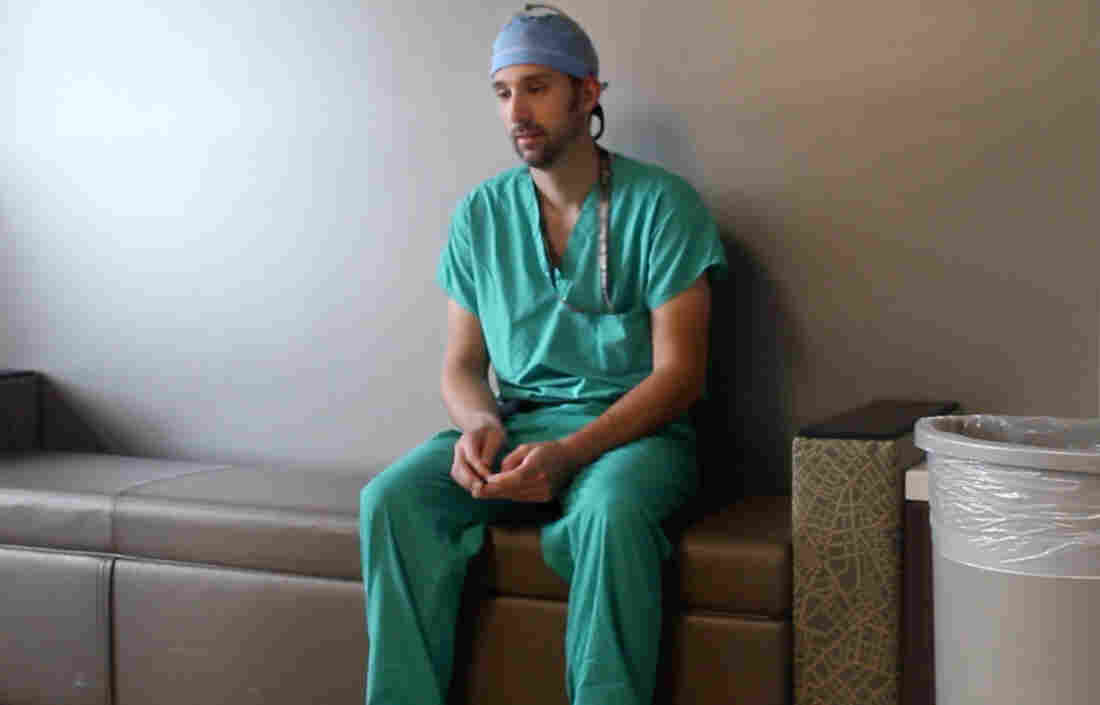
Dr. Joshua Corsa, a senior surgical resident at the Orlando Regional Medical Center, operated on victims of the Orlando gay nightclub shooting.

Dr. Joshua Corsa, a senior surgical resident at the Orlando Regional Medical Center, operated on victims of the Orlando gay nightclub shooting. Abe Aboraya/WMFE hide caption

toggle caption Abe Aboraya/WMFE

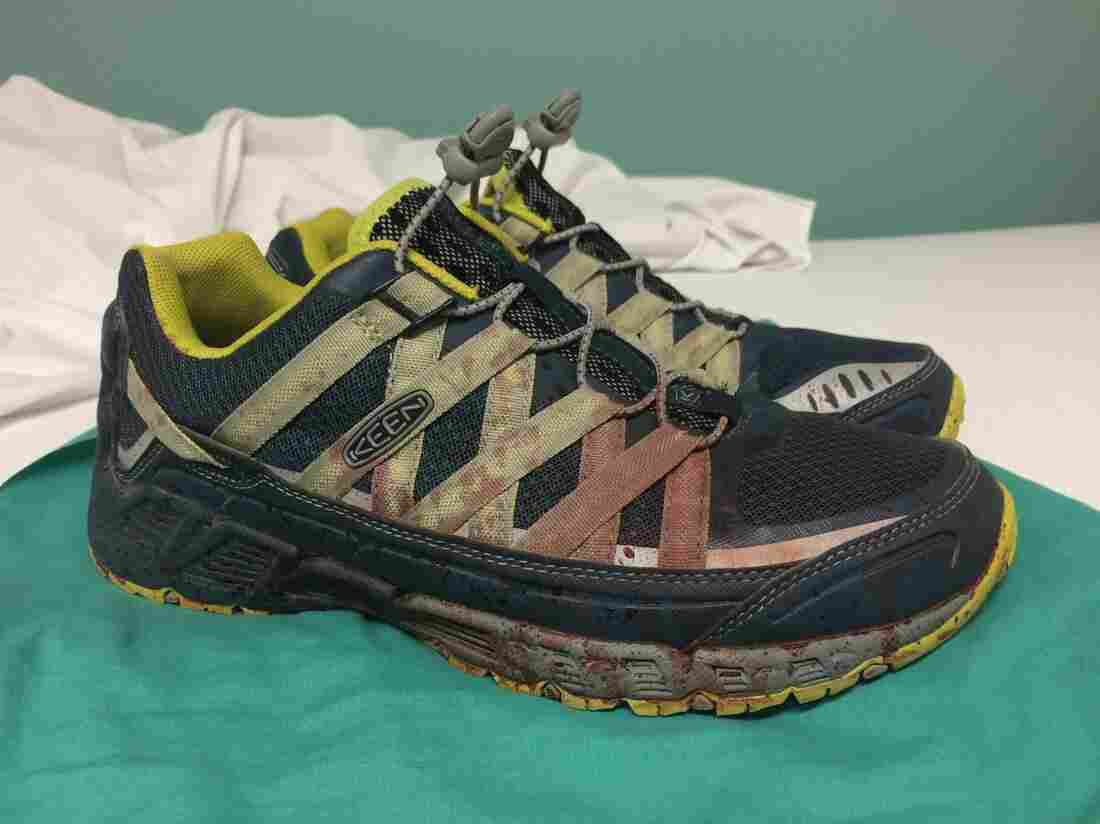
A pair of bloodstained shoes has become a symbol of Orlando’s defiance in the face of extraordinary trauma.

The shoes belong to Joshua Corsa, a senior surgical resident at the Orlando Regional Medical Center. They were almost brand new when the hospital received scores of victims of the mass shooting attack on a gay nightclub Sunday morning that left 49 people dead.

Corsa tells reporter Abe Aboraya of member station WMFE that he worked in packed operating rooms for some 30 hours. He finally got a chance to try to sleep — unsuccessfully, he says — and returned to work on Monday morning.

There to meet him were his bloodstained shoes from the previous day — and “that’s when a lot of the enormity of it kind of struck me … that tangible reminder,” he says.

Corsa posted this image of his bloodstained shoes on Facebook Monday morning after hours of caring for Orlando shooting victims.

Corsa posted this image of his bloodstained shoes on Facebook Monday morning after hours of caring for Orlando shooting victims. Courtesy of Joshua Corsa hide caption

toggle caption Courtesy of Joshua Corsa

Corsa then sat down and wrote a Facebook post reflecting on the events, which was shared hundreds of thousands of times:

“These are my work shoes from Saturday night. They are brand new, not even a week old. I came to work this morning and saw these in the corner [of] my call room, next to the pile of dirty scrubs.

“I had forgotten about them until now. On these shoes, soaked between its fibers, is the blood of 54 innocent human beings. I don’t know which were straight, which were gay, which were black, or which were Hispanic.

“What I do know is that they came to us in wave upon wave of suffering, screaming, and death. And somehow, in that chaos, doctors, nurses, technicians, police, paramedics, and others, performed super-human feats of compassion and care.

“This blood, which poured out of those patients and soaked through my scrubs and shoes, will stain me forever. In these Rorschach patterns of red I will forever see their faces and the faces of those that gave everything they had in those dark hours.

“There is still an enormous amount of work to be done. Some of that work will never end. And while I work I will continue to wear these shoes. And when the last patient leaves our hospital, I will take them off, and I will keep them in my office.

“I want to see them in front of me every time I go to work.

“For on June 12, after the worst of humanity reared its evil head, I saw the best of humanity … come fighting right back. I never want to forget that night.”

The powerful post has since been made private. You can listen to Corsa read it here:

He says he is still wearing the shoes — now wrapped in shoe covers, because of the blood.

To him, they serve as a reminder, “not of the terrible things that happened, but of the good that came from them … how the city came together, how the hospital came together.”

He adds: “These patients are some of the nicest people I’ve ever met and I think it’s good to have a tangible reminder to look at every day, remind yourself that there’s still good out there even in the face of this.”

Corsa started his medical training as an Army medic, an experience that he says “helped me to stay somewhat calm” as he treated the victims of the deadly attack.

He adds that he hasn’t had time to process the events. “You almost enjoy the work in that it keeps you from having to sit down and deal with it,” he says. “You’re able to focus on the patients, which is what’s truly important.”

Corsa says that the situation at the hospital is becoming calmer. “We finally started a turnaround where it’s less damage control and more starting to think long term, down the road,” he says.

And five days after he posted the viral photo, he is still vowing to continue wearing the shoes until the last victim of the Pulse nightclub shooting is discharged.

Let’s block ads! (Why?)

Will Genetic Advances Make Sex Obsolete?

The creation of eggs from skin cells and genetic screening of embryos could transform in vitro fertilization for the masses.

The creation of eggs from skin cells and genetic screening of embryos could transform in vitro fertilization for the masses. Ted Horowitz/Getty Images hide caption

toggle caption Ted Horowitz/Getty Images

Stanford law professor and bioethicist Hank Greely predicts that in the future most people in developed countries won’t have sex to make babies. Instead they’ll choose to control their child’s genetics by making embryos in a lab.

On KQED’s Forum program, Michael Krasny spoke with Greely about his new book, The End of Sex and the Future of Human Reproduction. Greely highlights the ethical and legal questions that might arise in the future’s reproductive paradigm.

This conversation has been edited for length and clarity.

Krasny: There are a lot of new advances, technology and so forth. We reached the point where you get some sperm donor and a little piece of skin and you’re in business because of stem cells.

Greely: My book argues that two different biomedical innovations coming from different directions and not really propelled by reproduction are going to combine here. One is whole-genome sequencing, and the other is what I call easy PGD, preimplantation genetic diagnosis, [that] is, getting rid of egg harvest … which is unpleasant, dangerous and really expensive.

This ties in with in vitro fertilization also being not as onerous as it has been in the past.

What I think is going to happen, we’ll be able to take some skin cells from anyone and turn them into any cell type. Make these into eggs or sperm and that is going to make IVF much easier, cheaper and less dangerous.

You [can] decide, “Well, I want these traits,” and it becomes a selective process.

Yes, I think we will see an increased and broad use of embryo selection. I would be careful to set the time frame at 20-40 years. I think we’ll actually see a world where most babies born to people with good health coverage will be conceived in the lab. People will make about a hundred embryos, each will have its whole genome tested, and the parents will be [asked … “Tell] us what you want to know and then tell us what embryo you want.”

This could bring down health care costs, and it is also good for same-sex couples, isn’t it?

Well, yes and maybe. I think it should bring down health care costs, and, in fact, one of the advantages to it is that it would be so beneficial for public health care costs that I think it would be provided for free. If it costs say, $10,000 to start a baby this way, 100 babies is a million dollars. If you avoid the birth of one baby with a serious genetic disease, you’ve saved $3 [million to] $5 million. The same-sex issue, I think that’s going to work, but that’s another jump. That would be taking a skin cell … from a woman and turning it into a sperm. I think [it’s] probable, but that hasn’t been done yet.

This is not the end of sex — because recreational sex will always be with us — it’s the end of sex as a way of procreating.

I think it will not be the complete end. I think people will still get pregnant the old-fashioned way, right, sometimes for religious reasons, sometimes for philosophical reasons, sometimes for romantic reasons, sometimes because they are teenagers and the back seat of the car is there.

A lot of people talk about playing God, but before we get into that, there’s the rubric of consumer eugenics. And there is a eugenics fear when we start talking about selection.

There certainly is. Eugenics is a slippery word; it means many things to different people. To some, it’s state-enforced reproductive control. To some … what we had was state-enforced sterilization. To some, it’s any kind of reproductive choices, but those are different things. For me, I think the coercion is much more important than the issues of selection. The concern about the state or the insurance company or someone else, forcing you to pick particular babies, worries me a lot more than having parents make choices, though that raises its own set of questions.

What do you see as the biggest question here?

I worry about the dilemma of Republican legislators in very conservative states. They want to spend as little money as possible on Medicaid. I could imagine a state saying, “We’re not going to pay for this via Medicaid,” which would mean that the roughly 40-50 percent of babies born in that state who are paid for by Medicaid wouldn’t get to go through this, and although they are not “superbabies,” adding another 10-20 percent health advantage to the babies of the rich over the babies of the poor is a bad thing.

Listen to the full interview here. Greely shares his thoughts on cost, socioeconomics, gene editing and the ethics of designer babies.

This story was produced by KQED’s daily health and technology blog, Future of You. The blog’s host and editor is Jon Brooks.

Let’s block ads! (Why?)