For The Insured But Cash-Strapped, Free Health Clinics Still Have A Place

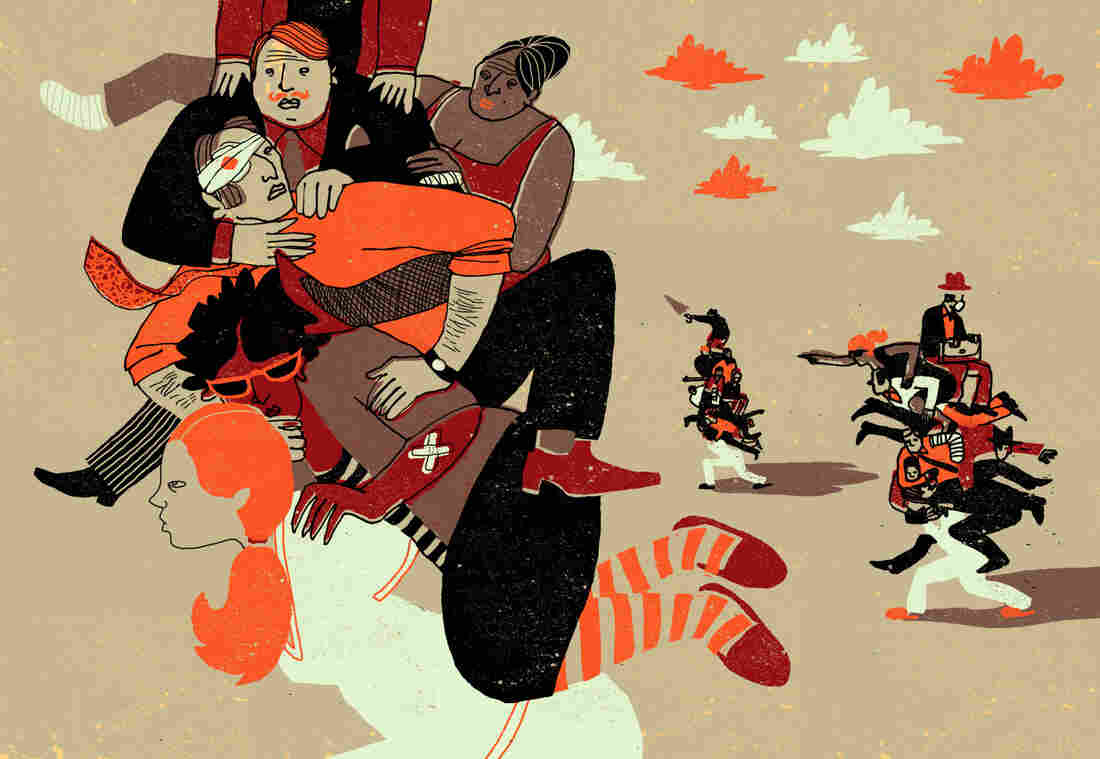
When deductibles and copays are high, quite a few people with insurance turn to free clinics for care.

When deductibles and copays are high, quite a few people with insurance turn to free clinics for care. Jens Magnusson/Ikon Images/Getty Images hide caption

toggle caption Jens Magnusson/Ikon Images/Getty Images

Denise Johnson works two jobs, but neither of them offers health insurance to part-timers like her. She signed up for a marketplace plan this year, but for routine medical care Johnson still goes to the free clinic near her home in Charlottesville, Va.

The problem is her plan’s deductible of at least $1,000. She can’t recall the precise figure, but it doesn’t really matter. “It’s absolutely high,” said Johnson, 58. “Who can afford that?” She struggles to pay her $28 monthly premium.

By continuing to visit the free clinic where she’s been a patient for a few years, Johnson said she saves hundreds of dollars a year on blood pressure and diuretic medications, her EpiPen and allergy pills. In addition to the drugs, she also sees a primary care doctor every six months at the clinic to keep tabs on her borderline diabetes. She also sees an allergist once a year.

“If you’re a working-class person and you’ve got a free clinic near you, buying a bronze plan and using the free clinic for primary care makes sense,” said Sara Rosenbaum, a professor of health law and policy at George Washington University.

Denise Johnson said she saves hundreds of dollars a year on prescription medicines by going to the Charlottesville Free Clinic.

Denise Johnson said she saves hundreds of dollars a year on prescription medicines by going to the Charlottesville Free Clinic. Courtesy of Charlottesville Free Clinic hide caption

toggle caption Courtesy of Charlottesville Free Clinic

Of the 1,300 people who visited the medical clinic at the Charlottesville Free Clinic in the past year, roughly 15 percent have enrolled in insurance through the marketplace, said Colleen Keller, executive director of the clinic. The clinic, which limits services to lower-income people, provides medical, pharmacy, mental health and dental services through a combination of staff and volunteer medical professionals.

In addition to serving the working uninsured, the clinic has expanded its target population to include the underinsured — people who have coverage but whose premium and deductible represents 10 percent or more of their income.

Nicole Lamoureux, CEO of the National Association of Free and Charitable Clinics, said in many states these organizations are expanding their mission to make sure they can serve the underinsured.

“I think there definitely is a shift,” she said. “Prior to the [federal Affordable Care Act], we were seeing primarily the uninsured, but since the passage of the ACA, we’re seeing more of the underinsured.” Clinics define underinsured differently to meet the needs of their local populations, she said.

A study by the Commonwealth Fund found that 23 percent of adults younger than 65 who had coverage all year in 2014 were underinsured. The study considered someone underinsured if their out-of-pocket health care costs, excluding premiums, were at least 10 percent of their income, or 5 percent if their income was less than 200 percent of poverty (which was $22,980 for an individual in a 2014 plan). People whose health insurance deductibles were at least 5 percent of their income were also included.

Some people expected that the need for clinics to provide free medical care would wind down as people got coverage under the health law, said Jack Hoadley, research professor at the Georgetown University Health Policy Institute. Undocumented immigrants and people who don’t qualify for Medicaid would continue to rely on them, but few others would need to. But that hasn’t happened. Hoadley co-authored a recent study on the effect of the health law on consumer coverage in Richmond, Va., Tampa, Fla., and Columbus, Ohio.

Free clinics in those cities are “very much needed by people who qualify for insurance subsidies, but still can’t afford the copays or deductibles to get care,” Hoadley said.

The health law also expanded eligibility for coverage under the Medicaid program to adults with incomes up to 138 percent of the federal poverty level (about $16,000), but the Supreme Court ruled that adoption of the provision was optional. So far, 31 states and the District of Columbia have expanded coverage. The Medicaid expansion has helped ease the burden on free clinics, but sometimes even Medicaid beneficiaries come back.

Cost isn’t the only factor that the newly insured are grappling with. Some people come to free clinics because they can’t get appointments with providers, especially in rural areas, said Deborah Miller, executive director of the Ohio Association of Free Clinics.

“Access is a problem across the board,” she said, referring to people in marketplace and Medicaid plans.

Many Ohio free clinics have expanded their missions to serve those who are uninsured, underinsured or without access to care, Miller said.

Then there are those who return to a free clinic after dropping their marketplace plan because of the cost.

“They may have a penalty for not having insurance, but it’s lower than their copays,” said Judith Robinson, a health insurance support specialist at the Charlottesville free clinic.

The health law requires most people to have insurance or pay a penalty. In 2015, the penalty was the greater of $325 or 2 percent of household income. There are exceptions to the requirement for financial and other hardships. If the least expensive coverage available would cost more than 8.05 percent of someone’s household income, for example, people aren’t required to have coverage.

Surprise expenses can undermine even the best intentions, Miller said. Someone’s car breaks down and then they get behind on their electric bill. Suddenly they’re two months behind on their health insurance premium and they can’t catch up.

“All it takes is one unexpected expense, it’s life, and they don’t have a cushion to help with those unexpected things. And then it’s a crisis,” she said.

And they’re back at the free clinic.

Kaiser Health News is an editorially independent news service that is part of the nonpartisan Henry J. Kaiser Family Foundation. Michelle Andrews is on Twitter: @mandrews110.
Let’s block ads! (Why?)

Analysis: Modest Effect If UnitedHealth Withdraws From Exchanges

If UnitedHealth Group. based in Minnetonka, Minn., pulls back from the Obamacare exchanges, premiums nationwide would go up around 1 percent, a Kaiser Family Foundation reports finds.

If UnitedHealth Group. based in Minnetonka, Minn., pulls back from the Obamacare exchanges, premiums nationwide would go up around 1 percent, a Kaiser Family Foundation reports finds. Mike Bradley/Bloomberg via Getty Images hide caption

toggle caption Mike Bradley/Bloomberg via Getty Images

Insurance giant United Healthcare Group has griped that the Obamacare insurance exchanges for health coverage are money-losers and has threatened to stop selling plans on them.

United Healthcare’s latest move is to drop out of the Obamacare insurance market in Oklahoma in 2017. It’s the fourth state that the company is abandoning because it says selling insurance plans on exchanges there is unprofitable.

United Healthcare has already said it’s pulling out of the exchanges in Michigan, Arkansas and parts of Georgia. The company may announce more changes when it reports first quarter financial results Tuesday.

If the company withdraws from markets across the country (and isn’t replaced by rivals), premiums for exchange plans could rise modestly — about 1 percent on average — according to a county-by-county analysis released Monday by the Kaiser Family Foundation Monday. The premium increase would amount to about $4 a month.

In some markets, the rates could go up much more. The study shows premiums rising more than $100 a month in 13 counties where there is little competition. And more than half of U.S. counties would have only two insurance companies offering plans on the exchanges, the analysis found.

“With millions of Americans insured through the marketplaces, it’s clear that this is a growing business for insurers, and it’s a product consumers want and need,” Department of Health and Human Services spokesman Ben Wakana said in a statement. “The marketplace should be judged by the choices it offers consumers, not the decisions of any one issuer. That data shows that the future of the marketplace remains strong.”

In January, UnitedHealth said it had recorded losses of $720 million on individual exchange policies, including $245 million put on the books in 2015 for losses the company expected to incur in 2016.

In February, Peter Lee, who runs Covered California, the state’s insurance exchange, said UnitedHealth has only itself to blame. The insurer, he said, blundered on setting its rates and in putting together networks of hospitals and doctors to provide care.

“Instead of saying, ‘We screwed up,’ they said, ‘Obamacare is the problem and we may not play anymore,’ ” Lee said in an interview with California Healthline. “It was giving an excuse to Wall Street and throwing the Affordable Care Act under the bus.”

Let’s block ads! (Why?)

More People Seek Genetic Testing, But There Aren't Enough Counselors

When Erika Stallings was 22, she found out that she might have a genetic mutation that greatly increased her risk of cancer.

When Erika Stallings was 22, she found out that she might have a genetic mutation that greatly increased her risk of cancer. Misha Friedman for NPR hide caption

toggle caption Misha Friedman for NPR

Erika Stallings’ mom was diagnosed with breast cancer at the age of 28. When it came back in her early 40s, her physicians started looking for clues.

“That’s when the doctors realized there may be something genetic going on, and that’s when she was tested, and found out she was a carrier for BRCA2,” says Stallings.

BRCA1 and BRCA2 are genes. Carrying a mutated BRCA gene increases a person’s risk for developing certain cancers, including breast and ovarian cancer.

Because Erika Stallings’ mom tested positive, Erika had a 50 percent chance of inheriting a mutated BRCA2 gene.

But Erika was only 22 years old when she learned of her mother’s diagnosis and not yet ready to put herself through the testing process.

“I had just gotten accepted into law school, I was going to be moving to D.C., my ultimate goal was to get a job and move to Manhattan,” she says. “I don’t want to say I pushed it to the back of my mind, but it didn’t seem super pressing.”

Fast forward a few years. Her law career and her New York life are settled, and she has a supportive boyfriend. She says she finally felt ready to take the BRCA test, and deal with the potential results. In December 2013, Stallings called to make an appointment and was told she first needed to meet with a genetic counselor. The first available appointment was the following May.

This five-month wait was unexpected and unwelcome.

“It just sort of adds a level of stress to something that is already stressful,” Stallings says.

Erika's mother found out that her breast cancer was caused by the BRCA2 mutation. That meant Erika had a 50 percent chance of having the mutation, too. Her mother is doing well.

Erika’s mother found out that her breast cancer was caused by the BRCA2 mutation. That meant Erika had a 50 percent chance of having the mutation, too. Her mother is doing well. Misha Friedman for NPR hide caption

toggle caption Misha Friedman for NPR

Genetic testing can help diagnose a disease and estimate your future risks, based on DNA. It can even help patients and doctors select the best medicines. In came on the scene in the late 1960s and was employed mainly to screen prospective parents and newborns for deadly inherited diseases like Tay-Sachs.

In the early 1970s, scientists identified the extra copy of a chromosome that causes Down syndrome, and also realized that a fetus’ genes were present in amniotic fluid that could be extracted through amniocentesis. By the 1980s, prenatal screening was common for conditions like Down syndrome and cystic fibrosis.

The sheer number of genetic tests has exploded in the past decade or so. There are now thousands of different testable genetic disorders. In fact, demand for genetic tests has been strong since 2013. And there are two main reasons for that.

“The first was the Supreme Court decision that patenting of genes was no longer an option,” says Joy Larsen Haidle, a genetic counselor and past president of the National Society of Genetic Counselors.

She’s referencing the Supreme Court’s ruling that Utah-based testing company Myriad Genetics, which developed the BRCA gene tests, couldn’t own naturally-occurring DNA. Almost immediately, other, cheaper tests for these mutations came to the market.

And that same year, Angelina Jolie captured the world’s attention with her op-ed in The New York Times disclosing her “faulty” BRCA1 gene, and her decision to have a double mastectomy to reduce her breast cancer risk.

“Her sharing that information was really important, because it allowed people to identify with her story. If it could happen to Angelina Jolie, it could happen to me,” says Haidle.

She says people became much more willing to talk about their genetic predispositions and seek out testing for conditions like Alzheimer’s disease and cystic fibrosis. The number of patients seeking genetic counseling and testing has increased dramatically, according to a 2014 study that looked at how Jolie’s announcement affected interest in testing.

But the number of genetic counselors, the people who help both doctors and patients make sense of these tests, hasn’t expanded enough to keep up with that demand. There are just 4,000 certified genetic counselors in the country today. That’s one for every 80,000 Americans.

“As genetic testing is growing and becoming more widely adopted by everyone for all sorts of different things, not just pregnancy, but cancer, heart disease, there is a disconnect,” says Neha Kumar, chief product officer at Recombine and a trained genetic counselor. “Who will actually interpret and provide those results to patients?”

Recombine offers a screening test for more than 250 genetic diseases parents may pass on to a child, including conditions such as cystic fibrosis and Tay-Sachs.

Clients typically are offered genetically counseling both before and after a test. They discuss the tests, what they may reveal and what the gray areas might mean. Each counseling session lasts between 30 minutes and an hour.

Genetic counselors also are well versed on genetic risk and family history, and can help people choose the most appropriate tests.

Haidle points out that for lots of patients, especially those not getting breast cancer screenings, the current genetic counseling workforce is meeting demand — appointment wait times are often just a week or two.

Still, the field is facing a bottleneck as it works to increase the number of certified counselors.

“It is going to take a while before we really have the workforce we need to provide the care that individuals out there need,” says Anne Greb, director of the Joan H. Marks Graduate Program in Human Genetics at Sarah Lawrence College.

Thirty-one universities offer the required two-year master’s program and fewer than 300 counselors will graduate this spring, far short of the estimated 650 current job openings around the country.

“They all get jobs,” says Greb of her graduates. “I get emails or phone calls daily from recruiters looking to hire.”

The average starting salary for a counselor is $65,000 to $75,000. Many insurers, including Medicare, typically don’t cover counseling sessions, meaning hospitals can be forced to cover a share of the costs of having counselors on staff.

One insurer is taking the opposite approach, though. After the Angelina Jolie spike, Cigna began mandating that anyone interested in getting a BRCA test had to first meet with a counselor, even if a doctor already approved the screening. The move was intended to limit unnecessary tests and save money.

Erika Stallings tested positive for the BRCA2 mutation. She says her genetic counselor helped her make sense of the results.

“I just always tell people, it’s not just enough to know you are positive. You have to see someone who can put those results in context with you,” she says.

Stallings decided to have a preventive double mastectomy in 2014 at the age of 29. She’s now volunteering with a breast cancer awareness group, helping to share her genetic story with more women.

This story is part of a reporting partnership with NPR, WHYY’s health show The Pulse and Kaiser Health News.

Let’s block ads! (Why?)

New Polio Vaccine Rolled Out In Massive Synchronized Worldwide Switch

A Pakistani health worker gives a polio vaccine to students in Peshawar, Pakistan, in March. Polio remains endemic in Pakistan after the Taliban banned vaccinations, attacks targeted medical staffers and suspicions lingered about the inoculations.

A Pakistani health worker gives a polio vaccine to students in Peshawar, Pakistan, in March. Polio remains endemic in Pakistan after the Taliban banned vaccinations, attacks targeted medical staffers and suspicions lingered about the inoculations. Mohammad Sajjad/AP hide caption

toggle caption Mohammad Sajjad/AP

Starting today, 155 countries and territories will start switching to a different polio vaccine.

The shift, which is expected to be completed by May 1, is the “largest and fastest globally coordinated rollout of a vaccine into routine immunization programs in history,” according to the Global Polio Eradication Initiative.

“We’re closer than ever to ending polio worldwide, which is why we are able to move forward with the largest and fastest globally synchronized switch ever,” Michel Zaffran, Director of Polio Eradication at the World Health Organization, said in a press release.

According to The New York Times, it’s the “first worldwide vaccine change ever attempted.”

The progress towards complete eradicating polio shows in the numbers. Last year, 74 cases of wild poliovirus were reported, exclusively in Pakistan and Afghanistan, according to the initiative. In 2016, 10 cases have been reported so far — also in those two countries. By comparison, when the initiative started its work in 1988, “more than 350,000 children were paralyzed every year.”

As health officials strategize about how to rid the world of the disease, which can cause paralysis, “one important step is to gradually withdraw the oral polio vaccine, starting with the type 2 component,” Jackie Fournier-Caruana from the initiative explains.

The old oral vaccine (tOPV) protected against three strains of poliovirus, while the new oral vaccine (bOPV) protects against two of the strains. According to the initiative, the transition is possible “because type 2 wild polio has been eradicated.”

It stresses the importance of closely synchronizing this transition globally: “if some countries continue to use tOPV it could increase the risk of the spread of type 2 poliovirus to those no longer using tOPV.”

This “massive undertaking” will involve deploying thousands of monitors to make sure tOPV is no longer in use.

The New York Times details the disposal methods during the switch:

“Approved disposal methods include incineration, boiling, autoclaving, bleaching or burying in concrete-sealed containers. Each has drawbacks, like the possibility that glass vials will explode.

“Adding to the possibility of confusion, the old and new vials and boxes are almost identical. Warehouse managers are supposed to mark the old vaccine with an “X” and bag it for disposal.”

Dr. Walter Orenstein, who is the associated director of the vaccine center at Emory University School of Medicine, tells the Times, “This is going to be hard. …For a long time, we’ve driven people to think of vaccine as valuable. Now we’re asking them to destroy it.”

The initiative says there’s a global stockpile of type 2 vaccines, ready to be used in the unlikely case of an outbreak. Type 2 was last detected in the wild in 1999, according to the initiative.

Let’s block ads! (Why?)

Doctors Unsure About How To Talk With Patients About End-Of-Life Care

Talking about end-of-life care may be difficult, but the stakes make the conversations worth the effort.

Talking about end-of-life care may be difficult, but the stakes make the conversations worth the effort. Sam Edwards/Getty Images/Caiaimage hide caption

toggle caption Sam Edwards/Getty Images/Caiaimage

Doctors know it’s important to talk with their patients about end-of-life care.

But they’re finding it tough to start those conversations. When they do, they’re not sure what to say, according to a national poll released Thursday.

Such discussions are becoming more important as baby boomers reach their golden years. By 2030, an estimated 72 million Americans will be 65 or over, nearly one-fifth of the U.S. population.

Medicare now reimburses doctors $86 to discuss end-of-life care in an office visit that covers topics such as hospice, living wills and do-not-resuscitate orders. Known as “advance care planning,” the conversations can also be held in a hospital.

Payment for such discussions was initially included in the Affordable Care Act, but removed because of the controversy over so-called death panels. Medicare ultimately changed its policy, independently of Obamacare, to allow reimbursement for the end-of-life planning sessions.

The poll of 736 primary care doctors and specialists, including 202 in California, examined their views on advance care planning and end-of-life conversations with patients. Among the findings:

  • While 75 percent of doctors said Medicare reimbursement makes it more likely they’d have advance care planning discussions, only about 14 percent said they had actually billed Medicare for those visits.
  • Three quarters also believe it’s their responsibility to initiate end-of-life conversations.
  • Fewer than one-third reported any formal training on end-of-life discussions with patients and their families.
  • More than half said they had not discussed end-of-life care with their own physicians.

The survey was commissioned by The John A. Hartford Foundation, the California Health Care Foundation and Cambia Health Foundation. (California Healthline is an editorially independent publication of the California Health Care Foundation.)

The general survey has a margin of sampling error of plus or minus 3.6 percentage points. For the internist/primary care provider sample, margin is plus or minus 4.5 percentage points. For specialists, plus or minus 6.0 points.

Patients and their families increasingly want to talk about end-of-life care with their physicians well before facing a terminal illness, studies have shown. Most also want to die at home rather than in a hospital, although cultural differences influence end-of-life preferences.

Policy analysts are urging more end-of-life conversations not just to accommodate patients’ desires, but to save money on aggressive medical interventions that patients and their families don’t want and that won’t prolong life.

A recent study found nearly 40 percent of American patients dying with cancer received at least one chemotherapy treatment in the six months before they died, more than in six other countries studied. An average of about $18,500 was spent on U.S. hospital costs for patients in their last six months.

Nearly a quarter of the physicians in the national poll said that the electronic health records they’re required to use don’t have a place to include patients’ end-of-life preferences. Even when electronic health records signaled that a patient had an advance care directive, nearly a third of doctors reported they couldn’t access its actual contents.

And doctors who received their medical training years ago say they rarely focused on how to talk to patients about end-of-life care, although medical education is improving in that regard.

Physicians in large medical systems may find more support than those in private practice. At Kaiser Permanente in Northern California, physicians receive training in end-of-life discussions and have time to carry them out, said Dr. Ruma Kumar, the HMO’s regional medical director of supportive care services.

Kaiser Permanente looks to nurse practitioners, registered nurses and social workers to work with patients on various stages of what the HMO calls “life care planning.” The HMO also offers a website to guide people through the process.

Kumar said Kaiser encourages both doctors and patients to think of end-of-life planning “as a routine part of care, just like you’d get a mammogram or colon cancer screening.”

This story was produced by Kaiser Health News, which publishes California Healthline, a service of the California Health Care Foundation. Follow Barbara Feder Ostrov on Twitter: @barbfederostrov.

Let’s block ads! (Why?)

Nurses Say Stress Interferes With Caring For Their Patients

Oivind Hovland/Getty Images/Ikon Images

Oivind Hovland/Getty Images/Ikon Images

Jordin Purcell-Riess has worked as a registered nurse at the emergency department at St. Francis Hospital in Hartford, Conn., for three years. She describes her workplace as phones going off, voices everywhere, every room full. “You look around and the hallways are full of patients on stretchers, you walk out to the waiting room and you can see on our board that there’s 15 people signing in,” she says. “The second you can get your ICU patient upstairs, there’s another one waiting for you.”

She typically doesn’t get a chance to eat or drink or go to the bathroom during her 12-hour shift, Purcell-Riess says. And she’s not alone. Her nursing manager points out that a 2007 study in the American Journal of Respiratory and Critical Care Medicine found that 24 percent of ICU nurses and 14 percent of general nurses tested positive for symptoms of post-traumatic stress disorder.

Nursing has long been considered one of the most stressful professions, according to a review of research by the National Institute for Occupational Safety and Health at the Centers for Disease Control and Prevention in 2012. Nurses and researchers say it comes down to organizational problems in hospitals worldwide. That includes cuts in staffing; some California nurses struck last month for a week over low staffing and wages.

But some researchers say that just hiring more people won’t fix things. Other proposed solutions include restructuring hospitals so that administrators pay more attention to what nurses have to say about patient care and work flow, and training programs to help nurses relieve their stress and deal with ethical dilemmas.

Theresa Brown is a clinical nurse in Pittsburgh who has written two books about what it’s like to be a nurse. She says nurses are often stretched to the limit.

“A friend said when she started working as a nurse, when she would drive, she would vomit on the way in to work just because of the incredible level of stress,” Brown says.

“One of the senior nurses said there is no place we can go to just be alone and be in a quiet room for five or 10 minutes, except for the bathroom … you could have a patient get really really sick, you could have a patient die, and there’s no break.”

She adds that whenever hospitals start adding new forms of documentation or electronic health records, that work is often given to the nurses so their workload just gets larger. “It shouldn’t be this way, but the patient demands are the ones that can get put off.”

It’s not just a problem in the U.S., either. A recent study in Hong Kong found nurses to be at much higher risk for stress, depression and anxiety compared to the general population. The Guardian reported last January that the number of nurses in the U.K. taking time off due to stress has soared – 1 in 29 are off because of stress. The problem is that most hospitals aren’t organized to support nurses, or even doctors, says Linda Aiken. She is a professor of nursing and sociology at the University of Pennsylvania. “They’re highly bureaucratic, they’re very top-down organizations, they don’t really seek out clinicians’ solutions for solving problems in patient care,” Aiken says. “Therefore the problems exist over decades, and they’re basically not solvable by any individual nurse.”

If the work environment at a particular hospital is bad, just adding more nurses won’t address the problem, Aiken says. As an example of what hospitals can do, she points to magnet hospitals, a form of voluntary accreditation from a subsidiary of the American Nurses Association that looks at nursing culture, training and work practices, including issues such as not having a nurse lift patients alone, a significant cause of disability for nurses. There are about 400 certified magnet hospitals in the U.S.

Aiken says to get magnet status, hospitals need to give the nurses and doctors who are treating the patients a greater say in what resources are used for those patients, make decisions based on evidence, be well-staffed, and invest in educating their doctors and nurses. “That’s not the conventional way that hospitals are managed now,” she says.

Magnet hospitals with at least one nurse per bed are less likely to send patients to the ICU or have patients die, according to a study that Aiken co-authored published in January in JAMA Surgery. The improved results didn’t cost the hospitals more; some actually saved money. St. Francis Hospital, where Jordin Purcell-Riess works, follows the magnet principles though it is not accredited.

Linda Aiken says she’s worried that hospitals think of nurses as a cost to be cut and not as a revenue stream. Cynda Rushton, a professor of nursing and bioethics at the Johns Hopkins Berman Institute of Bioethics and School of Nursing, agrees. “There is a mindset among some administrators that nurses are easily replaceable commodities — a nurse is a nurse is a nurse,” she says.

Almost 20 percent of newly registered nurses leave a hospital within the first year for the same job elsewhere, or a different job in a different organization, according to a 2014 study. Rushton says to her, that means health care organizations aren’t investing enough in their nursing staff.

Nurse burnout also is linked to moral distress, Rushton says, from situations where nurses know what they should do for their patients but can’t act on it. For example, nurses might have to give a patient at the end of life a treatment that causes suffering without any medical benefit. She just started a program called the Mindful Ethical Practice and Resilience Academy to try to help new nurses deal with moral distress.

It’s a series of in-person workshops, some of which involve nurses using simulations to practice how to make their ethical concerns heard at work. One scenario includes a patient with a complex medical condition and a nurse has been caring for him and talking to him for days following the recommended treatment.

If the nurse sees that the medicine isn’t working, she could say that she’s assessed the patient’s pain, it’s a 10 out of 10, Rushton says. She could say she’s concerned about the treatment because “in my role as a nurse, one of my primary goals is to relieve my patient’s suffering and I’m not able to do that, so I’d like to talk about how we can figure out a way to more fully address this patient’s pain and their suffering.”

The goal is to help nurses better communicate with other staff members, Rushton says, as well as take care of themselves through mindfulness, reflection and other practices.

Nurses around the world are struggling with how to fulfill their ethical obligations, Rushton says. “In one sense, it could be considered a public health crisis, because if we don’t have sufficient nurses to meet the needs of people in need of health care,” the entire health care system could crumble. “I think that it’s time that nurses are recognized as a scarce resource that needs to be invested in, supported and respected.”

Alan Yu is a freelance reporter in Hong Kong who contributes regularly to the South China Morning Post. You can follow him on Twitter @Alan_Yu039.

Let’s block ads! (Why?)

Injured Employee Featured In Workers' Comp Investigation Settles Her Case

Rachel Jenkins outside her home in Boley, Okla. Jenkins settled her case with ResCare, who denied her workers' compensation benefits after she injured her shoulder at work.

Rachel Jenkins outside her home in Boley, Okla. Jenkins settled her case with ResCare, who denied her workers’ compensation benefits after she injured her shoulder at work. Nick Oxford hide caption

toggle caption Nick Oxford

An injured worker featured in an NPR/ProPublica investigation of the opt-out alternative to workers’ compensation has settled with the company that denied her medical care and wage-replacement payments after an incident at work.

Rachel Jenkins, 33, was injured last March while protecting a mentally disabled man who was attacked by another client at an Oklahoma City shelter operated by ResCare, which claims to be the nation’s largest provider of services to people with disabilities.

ResCare had opted out of state-regulated workers’ compensation in Oklahoma by developing its own workplace injury plan. The company initially denied Jenkins any benefits for her painful and persistent shoulder injury because she had missed a 24-hour reporting deadline by just three hours. Jenkins said she reported late because she had been heavily medicated after emergency treatment.

The 24-hour reporting rule is one of the most contentious elements of opt-out plans in Oklahoma and Texas. Critics say the rule gives employers the ability to deny benefits for legitimate workplace injuries that they would otherwise have to provide if they hadn’t opted out of workers’ comp.

Jenkins and other workers in Oklahoma sued their employers and state regulators over that provision and others in the state’s opt-out law.

ResCare and Jenkins agreed not to disclose the details of this week’s settlement, but Bob Burke, Jenkins’ attorney, says the monetary settlement gives Jenkins enough money to get her shoulder treated, recover lost wages and provide the same type of disability payments Jenkins would have received if ResCare had remained in the workers’ comp system.

“ResCare was reasonable in providing monetary compensation for medical care and for permanent disability,” Burke says.

He adds that Jenkins is planning to get treatment and find another job.

Jenkins says the settlement negotiations “went great.” But she noted that she expects to be “dealing with my shoulder the rest of my life.”

A spokeswoman for ResCare says the company does not comment on pending or past litigation.

Burke says the settlement resolves the Jenkins lawsuit but other clients still have ongoing cases.

ResCare initially denied benefits for the injury despite the fact that her supervisor witnessed the incident. Jenkins endured 16 days of pain while unable to afford treatment and worried about getting back to work.

“I went through hell, a whole lot of pain where I was in tears,” Jenkins told NPR and ProPublica last year. “I was just thinking … ‘How am I going to take care of my kids?’ “

ResCare reversed the denial after pressure from Jenkins’ colleagues.

The settlement follows a recent ruling by the Oklahoma Workers’ Compensation Commission that declared the state’s opt-out system unconstitutional. The issue is now headed to the state Supreme Court.

U.S. Labor Secretary Thomas Perez told NPR last month that the agency is investigating opt-out plans. Agency investigators are trying to determine whether the plans violate workplace benefits provisions required by federal law. Perez said the opt-out alternative to workers’ comp creates “a pathway to poverty” for injured workers.

ProPublica’s Michael Grabell contributed to this report.

Let’s block ads! (Why?)

Canada's Government Introduces Bill To Legalize Physician-Assisted Suicide

Canadian Prime Minister Justin Trudeau told a CBC radio show that his father, former Prime Minister Pierre Trudeau, who died in 2000, had prostate cancer and Parkinson's disease. He said his father would have liked to end his life with dignity.

Canadian Prime Minister Justin Trudeau told a CBC radio show that his father, former Prime Minister Pierre Trudeau, who died in 2000, had prostate cancer and Parkinson’s disease. He said his father would have liked to end his life with dignity. Manuel Balce Ceneta/AP hide caption

toggle caption Manuel Balce Ceneta/AP

The Canadian government has introduced a long-awaited bill to legalize physician-assisted suicide.

The measure limits the option to the incurably ill, requires medical approval and mandates a 15-day waiting period.

More than a year ago, Canada’s Supreme Court struck down a ban on assisted suicide and instructed the legislature to write a new law. The newly unveiled legislation, which is being advocated by Prime Minister Justin Trudeau, needs to pass the House of Commons and the Senate to become law.

The bill introduced Thursday lays out the conditions under which some people would be able to obtain a doctor’s help in dying. A patient must:

  • Be eligible for government-funded health care (a requirement limiting assisted suicides to Canadians and permanent residents, to prevent suicide tourism).
  • Be a mentally competent adult 18 or older.
  • Have a serious and incurable disease, illness or disability.
  • Be in an “advanced state of irreversible decline,” with enduring and intolerable suffering.
  • Have a “reasonably foreseeable” natural death (though no specific timeline is required).

Then, reports NPR’s Dan Karpenchuk, “a written request would be needed, signed by two independent witnesses — and there would have to be more than one medical evaluation and a mandatory 15-day waiting period.”

Dan says it’s widely expected that the proposed bill will face opposition from two directions — from those who object to physician-assisted suicide at all, and those who think the law doesn’t go far enough in granting people the right to die.

The law was written after Trudeau assembled a special committee to examine the issue and write a report recommending how Canada could best legislate physician-assisted suicide.

The Supreme Court had originally given a one-year deadline for such a law, The New York Times reports, but the previous Conservative government didn’t make much progress. The court extended the deadline when Trudeau’s Liberal party took over, and legislators have until June to pass a law.

The issue is personal for Trudeau, as he told the CBC radio show “As It Happens” in February.

Trudeau’s father, former Prime Minister Pierre Trudeau, died in 2000; he had prostate cancer and Parkinson’s disease.

The prime minister says his father would have liked to end his life with dignity.

“Having suffered the death of my youngest brother Michel just two years before his own passing, he had sort of felt it was time for him to let go,” Trudeau told As It Happens.

Let’s block ads! (Why?)

Why It's Getting Harder To Decide When To Treat High Blood Pressure

The pressure is a little high. Now what?

The pressure is a little high. Now what? Disability Images/Science Source hide caption

toggle caption Disability Images/Science Source

Are you ready for some more uncertainty about blood pressure treatment?

Decisions about blood pressure have gotten more difficult over the past couple of years as experts in the U.S. have failed to reach consensus on recommendations about when drug therapy should be started. Now there’s new evidence that could make the decisions even more challenging.

Let’s review first where there is agreement. Around the world, high blood pressure causes a lot of harm. Your risk of health problems — such as heart disease, stroke and kidney disease — increases with higher blood pressure. Your lifestyle can influence your blood pressure. A healthful diet, at least moderate physical activity and weight control can bring down your blood pressure. Those are good habits for everyone, in fact.

Medicines can help reduce the risk for people with higher blood pressure, say 150 millimeters of mercury and above for systolic pressure, the top number. Too many people have untreated and uncontrolled marked elevations of blood pressure and many devastating health problems could be prevented if we could help people get proper treatment.

What about medicines for people whose blood pressure is high but less than 150? Most doctors agree that people younger than 60 would do well to keep their blood pressure less than 140. The consensus is that the benefit of drugs for those who didn’t respond to lifestyle changes exceeds the risks of treatment.

Some believe that for older patients, who may be more sensitive to medications, the recommendations should be more permissive and not push for treatment that brings blood pressure below 140. Then there’s the SPRINT trial, whose results were released last November and suggested that people without diabetes, even older people, would benefit by seeking to get their blood pressure down to around 120.

Another study, called HOPE-3 for short, added important evidence about the treatment of blood pressure that will further unsettle the field. The findings were published April 2 by in The New England Journal of Medicine.

The researchers in the study randomized 12,705 people with at least one cardiovascular risk factor (like high cholesterol) to get blood pressure medication or placebo. At the time of randomization, the average systolic blood pressure was 138. Some people’s pressures were higher and some were lower, or course. In fact, a third of the people had a beginning blood pressure less than 132.

So what did HOPE-3 find? The blood pressure medications worked. Study participants in the group that got blood pressure medicine had their systolic blood pressure lowered about 6 points more than those in the placebo group. However, after almost six years of follow-up, the investigators determined that lower blood pressure didn’t translate into lower risk. The risks of death from cardiovascular causes, heart attacks, strokes and other problems weren’t different between the groups.

The investigators explored the data further and found some evidence that the group in the highest third of blood pressure at the start (an average top number of 154) seemed to have a lower risk, while the group in the lowest third at the start (average of 122) seemed to do worse. These analyses were planned at the outset of the study, so we tend to give them a bit more weight.

So what happened?

HOPE-3 used common antihypertensive medications, an angiotensin receptor blocker called candesartan and a diuretic called hydrochlorothiazide. Could the results be explained by something about these medications?

Participants in the study had an average age of 65 years, about half were women, a quarter were smokers and almost all were overweight. Was there something special about them?

Or could it be that pushing blood pressure to ever-lower levels, even in a group at modest risk of heart disease and stroke, is just not producing benefit?

We don’t know for sure.

The field is waiting eagerly for the next version of national guidelines about blood pressure. A group of experts in the field will look at all the evidence and give its opinion about whom to treat and when.

But how useful will general guidelines be for individual patients, given the conflicting evidence? How confidently will the experts be able to recommend strategies for people in the middle range of blood pressure?

The ultimate decision about treatment for each person should be informed by the fact that a definitive benefit hasn’t been consistently shown for lowering blood pressure below 140 in people without known disease (we call this primary prevention). The results of the HOPE-3 indicate that the lower your blood pressure is, the less likely you are to benefit from starting drug therapy.

As always, if your blood pressure is in the range where there is controversy and you want to lower your blood pressure, your best first move is to adopt a healthful lifestyle and see what happens — and, of course, talk with your physician. Meanwhile, experts will be poring over the recent studies to try to reconcile the disparate results.

In medicine, we like it when the latest data bring clarity to personal decisions about treatments. But the reality is that studies often go in different directions and leave us even more uncertain about what to do next. That uncertainty, though, is still important information as you consider your options.

The disappointing conclusion about blood pressure is that we need more studies and more evidence. We also need better evidence — information that is more precise about what is likely to happen to us personally if we take medications for blood pressure.

We need to move faster to get the knowledge that is attuned to our personal characteristics and that can guide our decisions about the blood pressure number that’s best and also the drug that would work best for each of us, if we need one. This is the hope of President Obama’s Precision Medicine Initiative. Given the mixed evidence we have, this new era of knowledge cannot come fast enough.

Harlan Krumholz is a cardiologist and the Harold H. Hines Jr. Professor of Medicine at Yale School of Medicine. He directs the Yale-New Haven Hospital Center for Outcomes Research and Evaluation and is a co-director of the Robert Wood Johnson Foundation Clinical Scholars Program.

Let’s block ads! (Why?)