Bill Of The Month: Audience Reacts To Big Bill For Tiny Screws

An X-ray of Sherry Young’s foot shows the four implanted screws — each of which cost more than a high-end computer.

Courtesy of Sherry Young


hide caption

toggle caption

Courtesy of Sherry Young

It’s a club no one wants to join, but many Americans these days find themselves automatically eligible for the “Bill of the Month” club.

Kaiser Health News and NPR began collecting people’s health care bills for examination early this year. We have waded through roughly 500 submissions, choosing just one each month to decode and dissect. (If you’d like to submit your story or bill, you can do it here.)

But the crowdsourced investigation has given voice to numerous others on social media — health care consumers and industry players alike. With each installment, hundreds of people have weighed in.

The most recent feature about Sherry Young’s experience, “Sticker Shock Jolts Oklahoma Patient: $15,076 For Four Tiny Screws,” has so far has generated nearly 6,800 shares on Facebook, scores of tweets and lively discussions on both Reddit and LinkedIn.

Readers and listeners aren’t merely bellyaching. Discussions quickly veer toward solutions: demanding more transparency and exploring a single-payer health care system.

Among highlights from Twitter:

A reminder from Kansas City Direct Primary Care to ask for itemized receipts.

From @NPRHealth & @KHNews: it’s so important to ask healthcare entities for itemized receipts! They ask listeners to share itemized healthcare receipts — which DPC patient wants to step up to share a transparent, fairly priced healthcare invoice? https://t.co/sb911L1byI pic.twitter.com/bILc0X7MbB

— KC DirectPrimaryCare (@KansasCityDPC) May 15, 2018

Michael Yoder, Conway, Ark., tweets that the jacked-up bill for screws argues for universal Medicare coverage.

This is about as good an argument for #MedicareForAll that there is. Sticker Shock Jolts Oklahoma Patient: $15,076 For 4 Tiny Screws https://t.co/S7SuICSTzr

— Michael Yoder (@MichaelYoder1) May 14, 2018

Dr. Kevin Neal, of Jacksonville, Fla., tweeted that Sherry Young’s bill for the screws wasn’t unique.

This has little to do with the great care that @OUMedicine provides, and everything to do with a confusing, non-transparent payment system for US healthcare. Hate to say, it happens everywhere
Sticker Shock Jolts Oklahoma Patient: $15,076 For 4 Tiny Screws https://t.co/vezwJX2s5C

— Dr. Kevin Neal (@JaxScoliosisDoc) May 14, 2018

A medical device executive who was mentioned in the story about the $15,076 surgical screws, Steve Lichtenthal, vice president of business development at Orthopaedic Implant Co., based in Reno, Nev., shared the link and received at least 8,300 views. He invited commenters and colleagues on LinkedIn to join in an offline forum. As of Thursday, two had expressed interest.

Stephen Lichtenthal went on LinkedIn to ask for a debate on medical device prices.

LinkedIn

And Canadians continue to offer insider perspective from the outside. Plucked from one of many Facebook threads:

“When health is considered a for-profit commodity, this is exactly what will happen in an unregulated system.

“It’s sad, but not surprising.

“What many of us who live outside of the US wonder (I’m Canadian), is why you put up with a health-care system that treats you as a financial resource, rather than as a human being?”

— Richard Bott, Port Coquitlam, British Columbia

And on Twitter, @TrainerGloria pointed out how Sherry Young’s case illustrates the differences between health care in Canada and the U.S.

In Canada we get all medically necessary surgeries and overnight stays without being charged; poor & uninsured people don’t have to worry . We do pay to upgrade to semi or fully private room and of course we pay a fortune in income tax to support the system. That lady got screwed

— Trainer Gloria ?? (@TrainerGloria) May 16, 2018


Kaiser Health News is a nonprofit news service covering health issues. It is an editorially independent program of the Kaiser Family Foundation that is not affiliated with Kaiser Permanente.

Let’s block ads! (Why?)

What Does Trump's Proposal To Cut Planned Parenthood Funds Mean?

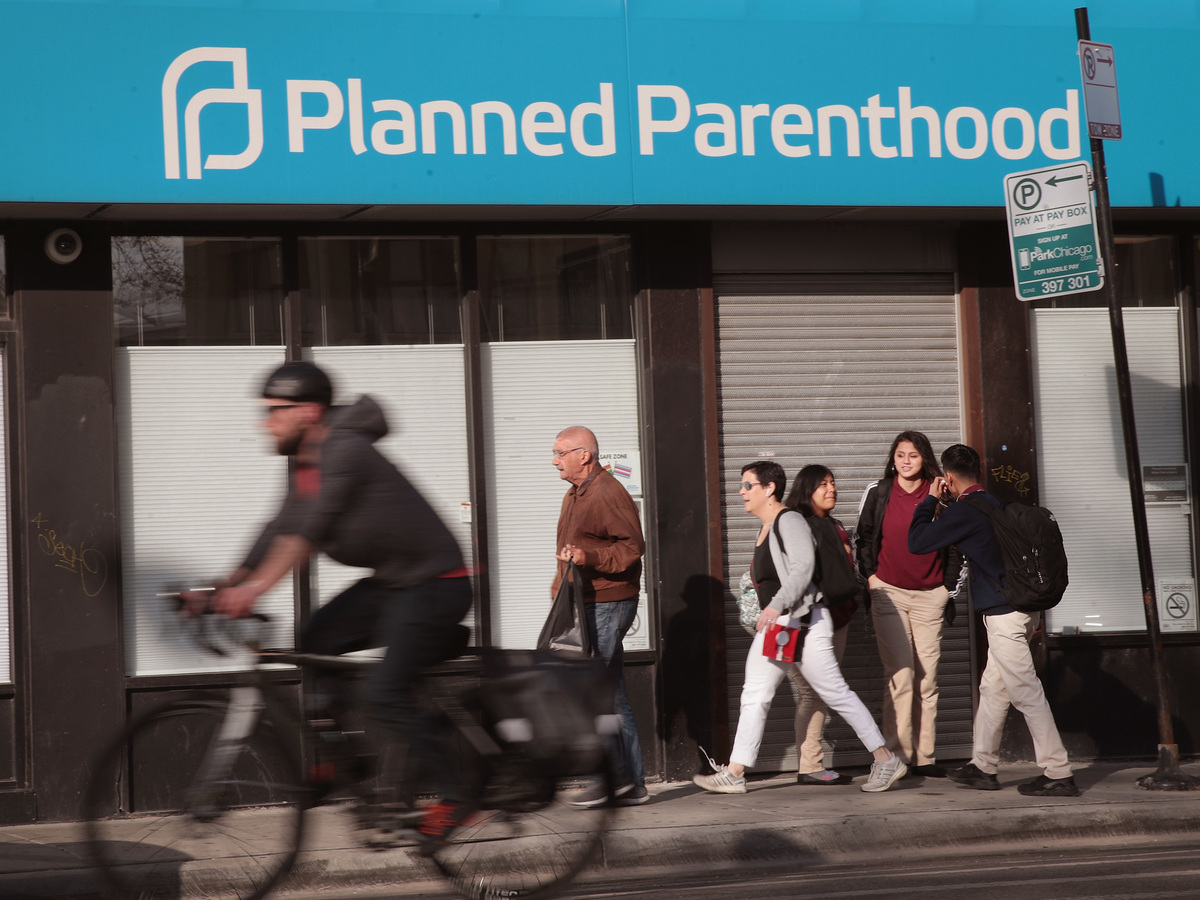
Planned Parenthood’s affiliated clinics, like this one in Chicago, provide wellness exams and comprehensive contraceptive services, as well as screenings for cancer and sexually transmitted diseases for both women and men.

Scott Olson/Getty Images


hide caption

toggle caption

Scott Olson/Getty Images

The planned revival of a policy dating to Ronald Reagan’s presidency that was slightly retooled and quietly submitted for federal budget review Friday may finally present a way for President Trump to fulfill his campaign promise to “defund” Planned Parenthood.

Or at least to evict it from the federal family planning program, where it provides care to more than 40 percent of that program’s 4 million patients.

Congress last year failed to wipe out funding for Planned Parenthood, because the bill faced overwhelming Democratic objections and would not have received the 60 votes needed to pass in the Senate. But Trump’s move Friday could potentially accomplish what Congress could not.

According to administration officials, the proposed rules they have submitted to the Office of Management and Budget would require facilities receiving federal family planning funds to be physically separate from those that perform abortion; would eliminate the requirement that women with unintended pregnancies be counseled on their full range of reproductive options; and would ban abortion referrals.

All those changes would particularly affect Planned Parenthood.

Planned Parenthood, which provides a broad array of reproductive health services to women and men, also provides abortion services using nonfederal funds. Cutting off funding has been the top priority for anti-abortion-rights groups, which supported candidate Trump.

“A win like this would immediately disentangle taxpayers from the abortion business and energize the grassroots as we head into the critical midterm elections,” Marjorie Dannenfelser, president of the Susan B. Anthony List, a group that opposes abortion, said in a written statement.

In a conference call with reporters, Planned Parenthood officials said they would fight the new rules.

“We’ve been very clear, Planned Parenthood has an unwavering commitment to ensuring everyone has access to the full range of reproductive health care, and that includes abortion,” said Dawn Laguens, executive vice president of the Planned Parenthood Federation of America.

Here is a guide to what the proposal could do and what it could mean for Planned Parenthood and the family planning program:

What is Title X?

The federal family planning program, known as “Title X,” is named for its section in the federal Public Health Service Act. It became law in 1970, three years before the Supreme Court legalized abortion in Roe v. Wade. The original bill was sponsored by then-Rep. George H.W. Bush, R-Texas, and signed into law by President Richard Nixon.

The program provides wellness exams and comprehensive contraceptive services, as well as screenings for cancer and sexually transmitted diseases for both women and men.

In 2016, the most recent year for which statistics have been published, Title X served 4 million patients at just under 4,000 sites.

Title X patients are overwhelmingly young, female and low-income. An estimated 11 percent of Title X patients in 2016 were male; two-thirds of patients were under age 30; and nearly two-thirds had income below the federal poverty line.

What is Planned Parenthood’s relationship to Title X and Medicaid?

Planned Parenthood’s affiliates account for about 13 percent of all Title X sites but serve an estimated 40 percent of its patients. Only about half of Planned Parenthood affiliates perform abortions, although the organization in its entirety is the nation’s leading abortion provider.

Planned Parenthood also gets much more federal funding for services provided to patients on the Medicaid program (although not for abortion) than it does through Title X. Eliminating Medicaid funding for Planned Parenthood has proved more difficult for lawmakers opposed to the organization because the federal Medicaid law includes the right for patients to select their providers. Changing that also would require a 60-vote majority in the Senate. So that particular line of funding likely is not at risk.

While opponents of federal funding for Planned Parenthood have said that other safety-net clinics could make up the difference if Planned Parenthood no longer participates in Title X, several studies have suggested that in many remote areas Planned Parenthood is the only provider of family planning services and the only provider that regularly stocks all methods of birth control.

Texas, Iowa and Missouri in recent years have stopped offering family planning services through a special Medicaid program to keep from funding Planned Parenthood. Texas is seeking a waiver from the Trump administration so that its program banning abortion providers could still receive federal funding. No decision has been made yet, federal officials say.

Why is Planned Parenthood’s involvement with Title X controversial?

Even though Planned Parenthood cannot use federal funding for abortions, opponents of abortion rights claim that federal funding is “fungible” and there is no way to ensure that some of the funding provided for other services does not cross-subsidize abortion services.

Planned Parenthood has also been a longtime public target for forces that oppose abortion rights because it is such a visible provider and vocal proponent of legal abortion services. In the early 1980s, the Reagan administration tried to separate the program from its federal funding by requiring parental permission for teens to obtain birth control.

That was followed by efforts to eliminate abortion counseling. Starting in 2011, in an effort to get the organization defunded, undercover groups accused the organization of ignoring sex traffickers and selling fetal body parts. Planned Parenthood denied the allegations, which were proved false in court.

What happened the last time an administration tried to move Planned Parenthood out of Title X?

In 1987, the Reagan administration proposed what came to be known as the “gag rule.” Though the Trump administration’s new proposal is not yet public, because the details are still under review by the federal Office of Management and Budget, the White House released a summary, saying the new rule will be similar although not identical to the Reagan-era proposal.

The original gag rule would have forbidden Title X providers to offer abortion counseling or refer patients for abortions. It would have required physical separation of Title X facilities from those that provide abortions and would have forbidden recipients to use nonfederal funds for lobbying, distributing information or in any way advocating or encouraging abortion. (The Planned Parenthood Federation of America, the umbrella group for local affiliates, has a separate political and advocacy arm, the Planned Parenthood Action Fund.)

Those rules were the subject of heated congressional debate through most of the George H.W. Bush administration and were upheld in a 5-4 Supreme Court ruling in 1991, Rust v. Sullivan. Even then, the gag rule did not go into effect because subsequent efforts to relax the rules somewhat to allow doctors (but not other health professionals) to counsel people about the availability of abortion created another round of legal fights.

Eventually the rule was in effect for only about a month before it was again blocked by a U.S. appeals court. President Bill Clinton canceled the rules by executive order on his second day in office, and no other president has tried to revive them until now.

How is the Trump administration’s proposal different from earlier rules?

According to the summary of the new proposal, released Friday, it will require physical separation of family planning facilities from those that provide abortions, will repeal current counseling requirements, and will ban abortion referrals.

One of the biggest differences, however, is that the new rules will not explicitly forbid abortion counseling by Title X providers.

But Planned Parenthood officials say that allowing counseling while banning referrals is a distinction without a difference.

“Blocking doctors from telling a patient where they can get safe and legal care in this country is the definition of a gag rule,” said Kashif Syed, a senior policy analyst for Planned Parenthood.

What happens next?

All proposed rules are reviewed by the OMB. Sometimes they emerge and are published in a few days; sometimes they are rewritten, and it takes months.

Meanwhile, Planned Parenthood officials say they will not know whether they will take legal action until they see the final language of the rule. But they say they do plan to use the regulatory process to fight the proposed changes that have been made public so far.


Kaiser Health News is a nonprofit news service and an editorially independent program of the Kaiser Family Foundation. It is not affiliated with Kaiser Permanente. KHN’s coverage of women’s health care issues is supported in part by The David and Lucile Packard Foundation.

Let’s block ads! (Why?)

White House To Ban Federal Funds For Clinics That Discuss Abortion With Patients

A sign at a Planned Parenthood Clinic is pictured in Oklahoma City, in 2015.

Sue Ogrocki/AP


hide caption

toggle caption

Sue Ogrocki/AP

Updated at 3:15 a.m. ET

The White House is expected to announce as early as Friday that it is reviving a rule first proposed during the Reagan administration that bars groups who provide abortions, discuss the procedure or refer patients for abortions from receiving federal family planning funds, a Trump administration official has confirmed.

The proposed regulation would apply to Title X, the federal program that provides $260 million annually for contraception, screenings for sexually transmitted diseases, and other reproductive health services to millions of low-income people, according to the official, who asked not to be named.

The rule change would put Planned Parenthood back in the cross-hairs after repeated attempts by congressional Republicans to de-fund the family planning group, which also provides abortions, but says the federal money it receives does not go toward paying for the procedures.

Under current law, federal funding for abortions is prohibited in most cases. However, anti-abortion rights advocates have long made cutting funds to any group providing abortions or referring patients for abortions a high priority.

The new rule, expected to be announced by the Department of Health and Human Services, would also bar federal funds for any group that refers patients from abortions.

Abortion-rights supporters have described the proposal as a “gag rule” and say it would undermine reproductive health care for low-income patients.

In a statement from Planned Parenthood Federation of America, the family planning group said it would not “stand by while our basic health rights are stripped away.”

“This is an attempt to take away women’s basic rights, period. Under this rule, people will not get the health care they need. They won’t get birth control, cancer screenings, STD testing and treatment, or even general women’s health exams,” Executive Vice President Dawn Laguens said.

“Everyone has the right to information about their health care – including information about safe, legal abortion, and every woman deserves the best medical care and information, no matter how much money she makes or where she lives. No matter what. They won’t get it under this rule,” she said.

However, anti-abortion rights groups praised the proposed change. Students for Life of America, which says it has members on more than 1,200 U.S. university and high school campuses, said in a statement:

“These changes are long overdue as abortion is not healthcare or birth control and many women want natural healthcare choices rather than hormone-induced changes,” the group’s president, Kristan Hawkins, said. “The Trump Administration has every right to require that Title X programs focus on healthcare, not abortion, and to keep such programs aimed at helping women make a plan for a family outside of the facilities designed to making sure women don’t have a family at all.”

The rule, first proposed during the Reagan era, was hit by legal challenges from Planned Parenthood and other groups and never fully implemented. It was later rescinded altogether by President Bill Clinton.

Abortion-rights groups are likely to take to the courts again in efforts to stop the proposal.

“This ‘gag rule’ is not only unconscionable, but it undermines medical ethics by forcing health care professionals to withhold accurate and timely medical information from patients,” Dr. Jenn Conti, a fellow with Physicians for Reproductive Health, said in a statement Thursday.

Let’s block ads! (Why?)

U.S. Births Dip To 30-Year Low; Fertility Rate Sinks Further Below Replacement Level

In 2017, birthrates fell by 4 percent both for women 20 to 24 years old and for women 25 to 29, according to the Centers for Disease Control and Prevention.

AGF/UIG via Getty Images


hide caption

toggle caption

AGF/UIG via Getty Images

The birthrate fell for nearly every group of women of reproductive age in the U.S. in 2017, reflecting a sharp drop that saw the fewest newborns since 1978, according to a new report by the Centers for Disease Control and Prevention.

There were 3,853,472 births in the U.S. in 2017 — “down 2 percent from 2016 and the lowest number in 30 years,” the CDC said.

The general fertility rate sank to a record low of 60.2 births per 1,000 women between the ages of 15 and 44 — a 3 percent drop from 2016, the CDC said in its tally of provisional data for the year.

The results put the U.S. further away from a viable replacement rate – the standard for a generation being able to replicate its numbers.

“The rate has generally been below replacement since 1971,” according to the report from CDC’s National Center for Health Statistics.

The CDC calculates a “total fertility rate” by estimating how many babies a hypothetical group of 1,000 women would likely have over their lifetime. That measure now stands at 1,764.5 births per 1,000 women — a 3 percent drop from 2016. The replacement rate is 2,100 births per 1,000 women.

“The decline in the rate from 2016 to 2017 was the largest single-year decline since 2010,” the CDC said.

The 2017 numbers also represent a 10-year fall from 2007, when the U.S. finally broke its post-World War baby boom record, with more than 4.3 million births.

Historically, the number of babies born in the U.S. has gradually risen since a sharp decline in the early 1970s. But that growth has been inconsistent, and over the same time frame, the birthrate has shown a general decline. The numbers are often subject to spikes and sudden dips, driven in large part by the country’s economy, generational size and other factors.

[embedded content]

The numbers seem to correspond with what the Census Bureau and others have been predicting for years: America’s population growth will increasingly depend on immigrants, after decades in which the U.S. enjoyed a relatively high fertility rate when compared with that of other developed countries.

As The Associated Press reports, the U.S. birthrate is “still above countries such as Spain, Greece, Japan and Italy, but the gap appears to be closing.”

Broken out by age, the 2017 birthrate fell for teenagers by 7 percent, to 18.8 births per 1,000, a record low. That figure is for women from 15 to 19 years old. For that same group, the birthrate has fallen by 55 percent since 2007 and by 70 percent since the most recent peak in 1991, the CDC said.

Women in their 40s were the only group to see a higher birthrate last year. Between the ages of 40 and 44, there were 11.6 births per 1,000 women, up 2 percent from 2016, according to the CDC’s provisional data.

Birthrates fell by 4 percent both for women from 20 to 24 years old and for women of ages 25 to 29.

For women in their 30s — a group that had recently seen years of rising birthrates — the rate fell slightly in 2017. The drop included a 2 percent fall among women in their early 30s, a group that still maintained the highest birthrate of any age group, at 100.3 births per 1,000 women.

For the third year in a row, both the preterm birthrate and the low birth weight rate rose. The CDC said that the 9.93 percent rise in preterm births was due to late preterm births and that the early preterm rate had not changed from 2016’s 2.75 percent.

Low birth weight — defined as newborns that weigh less than 5 pounds, 8 ounces — rose slightly above the highest level previously recorded, with 2017’s 8.27 percent topping 2006’s 8.26 percent.

The overall cesarean delivery rate nudged upward in 2017, rising to 32 percent from 31.9 percent – still below the all-time high of 32.9 percent in 2009.

The CDC also tallied births by race and cultural data (but it doesn’t yet have the data to compare those figures to the overall populations).

Here’s how some of the 2017 numbers were reported:

  • All Races and Origins: 3,853,472
  • White: 1,991,348
  • Hispanic: 897,518
  • Black: 560,560
  • Asian: 249,214
  • American Indian or Alaska Native: 29,878
  • Native Hawaiian or Other Pacific Islander: 9,418

Let’s block ads! (Why?)