How A Drugmaker Gamed The System To Keep Generic Competition Away

Celgene has managed to thwart several generic drugmakers who want to compete with cheaper versions of its medicines.

Katherine Streeter for NPR

When Celgene Corp. first started marketing the drug Revlimid to treat multiple myeloma in 2006, the price was $6,195 for 21 capsules, a month’s supply.

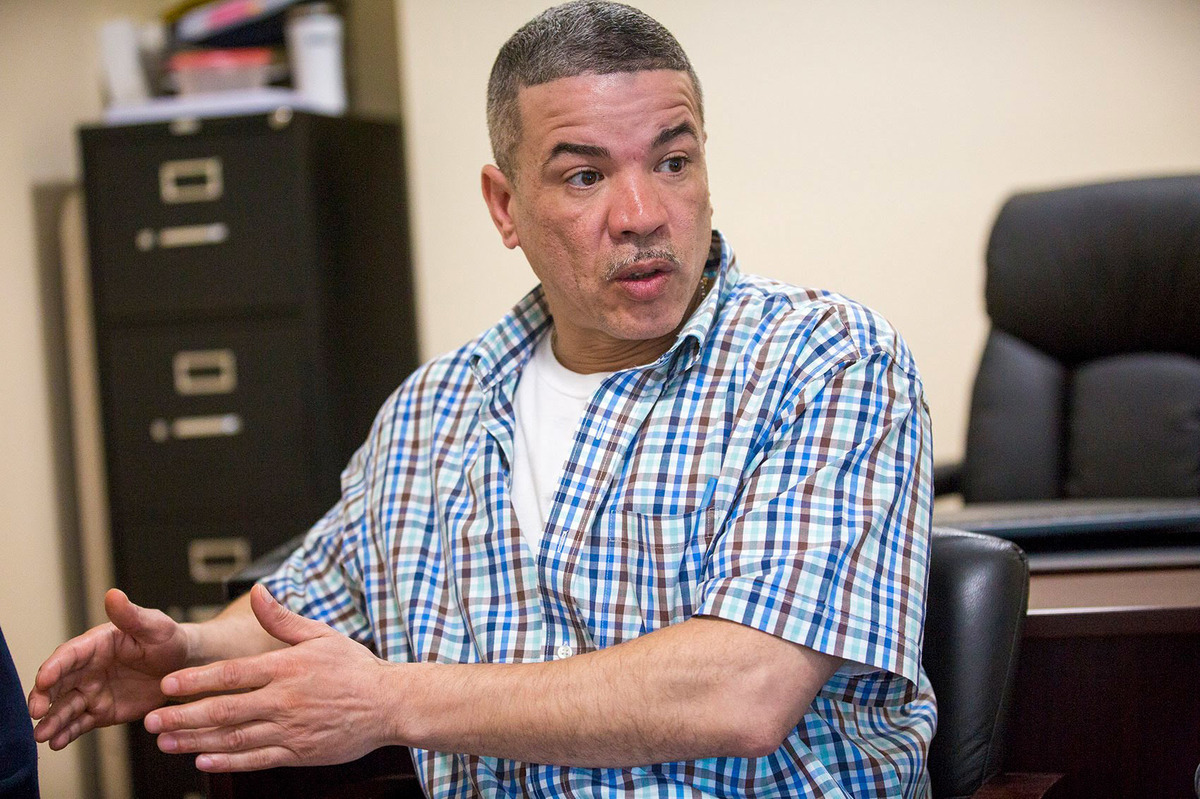
By the time David Mitchell started taking Revlimid in November 2010, Celgene had bumped the price up to about $8,000 a month. When he took his last month’s worth of pills in April 2016, the sticker price had reached $10,691. By last March, the list price had reached $16,691.

Revlimid appears to have caught the attention of Health and Human Services Secretary Alex Azar who used it as an example Wednesday — without naming it outright — of how some drug’s prices rise with impunity. He said the copay for the average senior taking the drug rose from $115 to about $690 per month in the last year.

Celgene can keep raising the price of Revlimid because the drug has no competition. It’s been around for more than a decade and its original patent expires next year. But today it looks like another four years could pass with no generic competitor to Revlimid.

“Prices like this are bad for patients,” said Mitchell, who last year founded the nonprofit advocacy group Patients for Affordable Drugs. “They hurt patients.”

Celgene has kept generic competition at bay by constructing an almost impenetrable fortress of patents and grants of market exclusivity around Revlimid, and its sister drug Thalomid, while also taking steps to ensure that generic competitors can’t get their hands on enough of the drugs to develop viable alternatives.

“By preventing generic entry, Celgene has been able to continue reaping as much as $170 to $310 per dose for Thalomid and $430 per dose for Revlimid, or more than $200 million annually for Thalomid and $4 billion annually for Revlimid,” said a 2014 lawsuit by the generic drugmaker Mylan.

Revlimid brought in $8.1 billion — or 63 percent — of Celgene’s revenue in 2017. Those numbers are remarkable because both Revlimid and Thalomid are derived from a decades-old drug, thalidomide, that was once sold over the counter in Europe before it was pulled from the market.

Celgene declined several requests for interviews for this story and instead shared some documents and public comments it had filed to the Food and Drug Administration.

Starting in the late 1950s, thalidomide was prescribed for morning sickness and as a sedative. The drug was banned in 1962 after causing birth defects. New Jersey-based Celgene Corp. won FDA approval to use the drug against a painful side-effect of leprosy and later to treat multiple myeloma.

Reuters


hide caption

toggle caption

Reuters

The company’s actions around these two related medications is a case study in how pharmaceutical companies use legal tactics to thwart competition in a way that adds to the problem of rising drug prices. Most big drug companies use the same strategy. It’s variously called “lifecycle management” and “evergreening.”

“One of the barriers to competition that concerns me the most is when companies game the system by taking advantage of certain rules and laws,” FDA Commissioner Scott Gottlieb said in early May. “They exploit loopholes in our system to delay generic entry. In these ways, they extend a drug’s monopoly beyond what Congress intended.”

Gottlieb has announced a series of initiatives the FDA is taking to try to limit what companies like Celgene can do to thwart competition for years., “The issue is how long does that monopoly last,” Gottlieb said in a briefing with reporters Tuesday. “It shouldn’t last five years. There should be product competition behind that.”

Revlimid’s legal monopoly is now in year 14.

Here’s how Celgene did it.

Failed wonder drug

Thalomid is Celgene’s brand name for thalidomide, which hit the market in Europe in the late 1950s as a sort of miracle drug. Revlimid is a close chemical relative.

Back then, thalidomide was prescribed as a sedative and as a treatment for asthma, hypertension and migraines, among other conditions.

It was also marketed to pregnant women to treat morning sickness. It was considered so safe that in Germany, it was available without a prescription.

But just a few years later it became clear this wonder drug was, in reality, wildly dangerous. It turned out to cause severe birth defects. Thousands of babies were born in Europe with flipper-like limbs.

Thalidomide was pulled off the market in Europe and elsewhere and was never approved for sale by the FDA in the United States. The drug was relegated for decades to textbooks as a cautionary tale about lax drug regulation and not much more.

Then, in the early 1990s, AIDS researchers found that it boosted a part of the immune system, based on earlier work that suggested a role for thalidomide in leprosy.

Seeing commercial potential, Celgene pulled thalidomide out of the pharmaceutical dustbin and dubbed it Thalomid. It got approval from the FDA in 1998 as a treatment for leprosy. (It’s never quite worked out for AIDS, but researchers continue to study possible uses in HIV and other diseases.)

A few years after Thalomid hit the market, Celgene altered it a bit by removing an oxygen atom and adding a nitrogen atom, creating a new amino group. The company called the new drug Revlimid.

In 2006, Celgene was able to expand the market for Thalomid — and later Revlimid — by winning “orphan drug” approval to sell it as one of the only drugs that could slow the progress of multiple myeloma, a blood cancer that strikes about 30,000 people a year in the U.S. The orphan drug designation gave the company special tax incentives and exclusive rights to the market Thalomid for seven years.

The system at work

In many respects, Thalomid and Revlimid can be considered perfect examples of the U.S. pharmaceutical research system at work: An old drug that was rotting on the shelf was revived for new, useful purposes.

In fact, the U.S. patent and drug-approval systems are set up specifically to encourage and reward this kind of innovation. Companies that develop new drugs are awarded a monopoly for a handful of years to profit from their invention.

“We were trying to achieve a balance between competition and incentives,” said former Rep. Henry Waxman, a Democrat, who wrote the law along with Republican Sen. Orrin Hatch of Utah. The law defines how brand-name and generic drugs get approved.

“We wanted to give incentives for new drug breakthroughs,” he told Shots, “and for the development of drugs for people with rare diseases.”

A patent typically protects new technology for as many as 20 years. But since it sometimes can take that long — or even longer — to bring a new medication to market, the FDA provides an additional incentive.

“We were trying to achieve a balance between competition and incentives” said former Rep. Henry Waxman, D-Calif., of the law that became known as Hatch-Waxman Act.

Tom Williams/CQ-Roll Call, Inc./Getty Images


hide caption

toggle caption

Tom Williams/CQ-Roll Call, Inc./Getty Images

Once a new drug is approved, or, as in the case of thalidomide an old drug is approved to treat a new malady, the government gives a drugmaker exclusive access to the market for up to seven years.

But the patent and exclusivity periods are supposed to expire. Then, the theory goes, competition takes over and prices fall.

That hasn’t happened in this case. Celgene has used multiple tactics — all legal — to make it nearly impossible for a generic drug to reach the market.

These techniques include obtaining multiple patents — which some critics call “frivolous” — on the drugs and their distribution systems. They also include layering orphan drug approvals in a way that extends exclusive market rights, limiting potential generic competitors’ access to samples of the drug, and making deals with generic companies for limited market access.

“They’re building these protections around the drugs so if a company comes in and tries to do a generic, even with an old drug, they’re going to have a very hard time,” said Kristi Martin, a vice president at Waxman Strategies, a consulting firm founded by Waxman.

Since thalidomide is such an old drug, Celgene didn’t own any patents on the medication itself. But it did gain exclusive access to sell the drug, first for leprosy and then for multiple myeloma.

On top of that, Celgene patented Thalomid’s distribution system — known in the industry as a Risk Evaluation and Mitigation System, or REMS. A REMS is required by the FDA for potentially dangerous drugs and Celgene’s system is specifically designed to prevent women who are pregnant, or might become pregnant, from taking Thalomid and repeating the tragedy of the 1960s.

Celgene has been granted 14 patents for its REMS plan.

Layers of protection

Under FDA rules, if a generic drugmaker wants to market thalidomide, it has to use the same REMS system as Celgene’s. That means it would have to negotiate a deal with Celgene, sue to invalidate those patents or wait for them to expire.

Several companies, including Mylan, have sued, claiming the distribution system shouldn’t have been granted patents in the first place because it’s not unique.

Gottlieb said Tuesday that the FDA is looking to relax the requirement that generic companies use the same REMS program to cut down on the delays.

Meanwhile, Celgene has gone even further to maximize the value of thalidomide.

Before its exclusive rights to market the drug for multiple myeloma expired — and before a generic drugmaker could put a competitor on the market — the company tweaked Thalomid to turn it into Revlimid, which also treats multiple myeloma, but with fewer side effects. It was first approved by the FDA in 2006, according to the company’s website.

With Revlimid, Celgene got more years of exclusive market access, and more more years of patent protection. The clock for generic competition started again. And most multiple myeloma patients were moved from Thalomid to Revlimid.

Celgene has 27 patents for Revlimid listed in the FDA’s Orange Book, which is an exhaustive database of approved drugs and their patent status. Only four are listed as patents on the drug’s substance, or its active ingredient. Five are “drug product” patents which means they pertain to things such as the drug’s coating, according to Dr. Aaron Kesselheim, a professor of medicine at Harvard University who has published many research papers on drug pricing and patents. Most of the remaining patents are on Revlimid’s distribution system.

On top of that, the drug has layers of market exclusivities granted by the FDA. The exclusivity for multiple myeloma expired in February. But the FDA granted years of additional exclusivity for three subtypes of blood cancer that stretch to 2022, thwarting competition. And the company is seeking approval for five additional indications that could extend market monopolies for those illnesses even further.

Mitchell, of Patients for Affordable Drugs, said that if not for Celgene’s blockade, a generic version of Revlimid should have hit the market in February when exclusivity for multiple myeloma expired.

Several companies have challenged the underlying Revlimid patents as “obvious,” he said. “In other words, the original drug-substance patent will not hold up.”

At least five companies are involved in litigation trying to break through the thicket of Celgene patents on Thalomid and Revlimid.

Can’t get the drug

On top of the piles of patents and grants of market exclusivity, Celgene is taking additional steps to block generic competition — even after the patents expire — by making it nearly impossible for competitors to get their hands on adequate supplies of the medications to do comparison tests, according to lawsuits filed by generic manufacturers who have tried to obtain the drugs.

It’s a tactic the FDA has seen many times.

“The gaming that I see is where people are blocking generic entry by restricting access to the doses,” Gottlieb said Tuesday. “It’s a pervasive problem.”

To bring a generic version of a brand-name drug to market, manufacturers must prove their medication is the same chemical compound and is absorbed in the same way, at the same rate.

So the company needs a supply of the brand-name drug — Gottlieb estimates between 2,000 and 5,000 doses — to do the study.

“They can’t even get the drugs in order to run the study that the government says they need to run. That’s a real problem,” Gottlieb told Shots.

The FDA reported last year that it had received 150 complaints from generic drugmakers that branded companies were using the REMS system to block them from getting the medication they need to perform bioequivalence studies.

Gottlieb, in a speech last fall, appeared to have had enough.

“My message is this: End the shenanigans,” he said.

On Thursday, the FDA is expected to launch a website naming the companies accused by generic drugmakers of blocking them from getting the drug samples they need to test their medications against their brand-name counterparts.

Anti-consumer tactic

Members of Congress are also frustrated.

“It’s a totally anti-consumer tactic,” said Sen. Patrick Leahy, D-Vt. “If we’re ever going to get medical costs under control in the U.S. we have got to stop this kind of anti-competitive practice.”

Leahy has introduced legislation to prevent companies from using REMS programs as an excuse to refuse to sell drug samples to generic manufacturers, but the bill has been pending in the Senate for more than a year.

Celgene denies withholding medications from competitors.

“Celgene is willing to make Revlimid … and Thalomid available to generic manufacturers for bioequivalence testing, and Celgene consistently offers and has sold samples for the purpose of such testing,” the company wrote in a document it shared with NPR. A spokesman declined to answer specific questions on the topic.

Mylan’s 2014 lawsuit accuses Celgene of using its REMS programs to restrain trade and maintain a monopoly by refusing to sell it samples of Thalomid and Revlimid. Lannett Company Inc., also sued with similar accusations, but eventually settled.

And Dr. Reddy’s Laboratories Ltd., another generic drugmaker, accused Celgene in a 2009 citizen petition to the FDA of preventing it from obtaining Revlimid samples as well. “Such efforts are nothing more than crude attempts to delay or block generic competition and clearly violate the REMS anti-gaming statutory provision,” the company wrote.

Celgene, in its response, argued that the FDA has no authority to force it to sell its drugs to competitors, and that its liability is too high if the other companies don’t take adequate safety measures.

The FDA has told Celgene that it can provide samples of Thalomid and Revlimid to generic manufacturers without violating the agency’s safety requirements. But the agency doesn’t have the power to force it to do so, and the companies said Celgene has continued to refuse.

Celgene used yet another tactic to block Barr Laboratories, Inc., from competing, Barr said in a lawsuit. Barr claims it set out in 2004 to develop a generic version of Thalomid, and contracted with the French company Seratec SARL to buy the medication’s active ingredient.

The following year, Barr said in the suit, it was ready to file a new drug application with the FDA when Celgene stepped in and contracted with Seratec to buy the active ingredient on condition it didn’t sell to any other supplier.

“Due to Celgene’s and Seratec’s actions, Barr Laboratories was forced to perform costly new biostudies and validation testing,” the lawsuit said. That meant at least an additional year delay before Barr was able to file for approval.

In what normally should be good news for patients, Celgene said generics are on the way for both drugs. Spokesman Brian Gill points to settlement agreements the company has struck with generic manufacturers to begin marketing Thalomid and Revlimid in coming years.

Lannett agreed to drop its patent infringement suit in exchange for a license to sell Thalomid starting in August 2019, “under certain circumstances” which aren’t detailed. And Natco Pharma, Ltd., struck a deal with Celgene to drop its patent litigation in exchange for Celgene allowing it to introduce a generic competitor to Revlimid in 2022 — five years before its last patent expires.

That agreement limits Natco’s sales to “a mid-single-digit percentage” of the drug’s U.S. sales in the first year, a share that will gradually increase through March 2025.

“The deal gives Natco no incentive to lower its price,” said Mitchell of Patients for Affordable Drugs. That’s because the company can’t gain additional market share by undercutting Celgene on price.

The agreements, Mitchell said, are similar to deals known as “pay-for-delay” agreements where a brand-name drugmaker pays a generic company to keep its drug off the market.

“They cut a deal that will keep the price high,” Mitchell said.

Let’s block ads! (Why?)

What Explains The Rising Overdose Rate Among Latinos?

From left to right: Felito Diaz, Julio Cesar Santiago, Richard Lopez and Irma Bermudez meet at Casa Esperanza, a treatment and transitional housing program in Roxbury, Mass.

Jesse Costa/WBUR


hide caption

toggle caption

Jesse Costa/WBUR

The tall, gangly man twists a cone of paper in his hands as stories from nearly 30 years of addiction pour out: the robbery that landed him in prison at 17; never getting his GED; going through the horrors of detox, maybe 40 times, including this latest, which he finished two weeks ago. He’s now in a residential unit for at least 30 days.

“I’m a serious addict,” says Julio Cesar Santiago, 44. “I still have dreams where I’m about to use drugs, and I have to wake up and get on my knees and pray, ‘let God take this away from me,’ because I don’t want to go back. I know that if I go back out there, I’m done.”

Santiago has some reason to worry. Data on opioid addiction in his home state of Massachusetts shows the overdose death rate for Latinos there has doubled in three years, growing at twice the rate of whites and blacks.

Opioid overdose deaths among Latinos are surging nationwide as well. While the overall death toll is still higher for whites, it’s increasing faster for Latinos and blacks, according to data from the Centers for Disease Control and Prevention. Latino fatalities increased 52.5 percent between 2014 and 2016 as compared to 45.8 percent for whites. (Statisticians say counts for Hispanics are typically underestimated by 3 to 5 percent.) The most substantial hike was among blacks — 83.9 percent.

The data portrays a changing face of the opioid epidemic.

Rates of fatal opioid overdoses per 100,000 across the U.S. from 2014-2016. Deaths rose 45.8% for Whites, 52.5% for Hispanics and 83.9% for Blacks, according to the CDC.

Source: CDC; Credit:NPR


hide caption

toggle caption

Source: CDC; Credit:NPR

“What we thought initially, that this was a problem among non-Hispanic whites, is not quite accurate,” says Robert Anderson, mortality statistics branch chief at the CDC’s National Center for Health Statistics. “If you go back into the data, you can see the increases over time in all of these groups, but we tended to focus on the non-Hispanic whites because the rates were so much higher.”

There’s little understanding about why overdose deaths are rising faster among blacks and Latinos than whites. Some physicians and outreach workers suspect the infiltration of fentanyl into cocaine is driving up fatalities among blacks.

A resident walks into the Casa Esperanza’s Men’s Program in Roxbury, Mass.

Jesse Costa/WBUR


hide caption

toggle caption

Jesse Costa/WBUR

The picture of what’s happening among Latinos has been murky, but interviews with nearly two dozen current and former drug users and their family members, addiction treatment providers and physicians reveal language and cultural barriers and even fear of deportation could be limiting the access of Latinos to life-saving treatment.

Few bilingual treatment options

Irma Bermudez, 43, describes herself as a “grateful recovering addict.” She’s living in the women’s residential unit at Casa Esperanza, a collection of day treatment, residential programs and transitional housing in Boston’s Roxbury neighborhood.

Bermudez says the language barrier keeps anyone who can’t read English out of treatment from the start, as they try to decipher websites or brochures that advertise options. If they call a number on the screen or walk into an office, “there’s no translation — we’re not going to get nothing out of it,” Bermudez says.

Rates of fatal opioid overdoses per 100,000 from 2014-2016 in Massachusetts.

Source: Massachusetts Dept. of Health; Credit:NPR


hide caption

toggle caption

Source: Massachusetts Dept. of Health; Credit:NPR

Some of the Latinos interviewed for this story describe sitting through group counseling sessions, part of virtually every treatment program, and not being able to follow much, if any, of the conversation. They recall waiting for a translator to arrive for their individual appointment with a doctor or counselor and missing the session when the translator is late or doesn’t show up at all.

SAMHSA, the federal Substance Abuse and Mental Health Services Administration, maintains a Find Treatment website which includes listings of treatment offered in Spanish. But several Massachusetts providers listed there could not say how many translators they have or when they are available. The SAMHSA site is only available in English, with Spanish-language translators only available by phone.

At Casa Esperanza, 100 men are waiting for a spot in the male residential program, so recovery coach Richard Lopez spends a lot time on the phone trying to get clients into a program he thinks has at least one translator.

After battling with voicemail, says Lopez, he’ll eventually get a call back; the agent typically offers to put Lopez’s client on another waiting list. It frustrates him.

Recovery Coach Richard Lopez helps Latinos find addiction treatment with Spanish translation.

Jesse Costa/WBUR


hide caption

toggle caption

Jesse Costa/WBUR

“You’re telling me that this person has to wait two to three months? I’m trying to save this person today,” he says. “What am I going to do, bring these individuals to my house and handcuff them so they don’t do nothing?”

Casa Esperanza Executive Director Emily Stewart says Massachusetts needs a public information campaign via Spanish-language media that explains treatment options. She’d like that to include medication-assisted treatment, which she says is not well understood.

Some research shows Latino drug users are less likely than others to have access to or use the addiction treatment medicines, methadone and buprenorphine. One study shows that may be shifting. But, Latinos with experience in the field say, access to buprenorphine (which is also known by the brand name Suboxone) is limited because there are few Spanish-speaking doctors who prescribe it.

Cultural barriers — ‘It’s not cool to call 911’

Lopez has close ties these days with health care providers, the police and EMTs. But that has changed dramatically from when he was using heroin. On the streets, he says,”It’s not cool to be calling 911,” when a person sees someone overdose. “I could get shot, and I won’t call 911.”

It’s a machismo thing, says Lopez.

“To the men in the house, the word ‘help,’ sounds like degrading, you know?” he says. Calling 911 “is like you’re getting exiled from your community.”

Santiago says not everyone feels that way. A few men called EMTs to help revive him. “I wouldn’t be here today if it wasn’t for them,” he says.

But Santiago and others say there’s growing fear among Latinos they know of asking anyone perceived as a government agent for help — especially if the person who needs the help is not a U.S. citizen.

“They fear if they get involved they’re going to get deported,” says Felito Diaz, 41.

Bermudez says Latino women have their own reasons to worry about calling 911 if a boyfriend or husband has stopped breathing.

Executive Director Emily Stewart, left, and Director of Programs Anna Rodriguez standing in the lobby of the Casa Esperanza Familias Unidas Outpatient Services.

Jesse Costa/WBUR


hide caption

toggle caption

Jesse Costa/WBUR

“If they are in a relationship and trying to protect someone, they might hesitate as well,” says Bermudez, if the man would face arrest and possible jail time.

Ties in the community

Another reason some Latino drug users say they’ve been hit especially hard by this epidemic: A 2017 DEA report on drug trafficking noted that Mexican cartels control much of the illegal drug distribution in the United States, selling the drugs through a network of local gangs and small-scale dealers.

In the Northeast, Dominican drug dealers tend to predominate.

“The Latinos are the ones bringing in the drugs here,” says Rafael, a man who uses heroin and lives on the street in Boston, close to Casa Esperanza. “The Latinos are getting their hands in it, and they’re liking it.”

NPR agreed not to use Rafael’s last name because he uses illegal drugs.

Some Spanish-speaking drug users in the Boston area say they get discounts on the first, most potent cut. Social connection matters, they say.

“Of course, I would feel more comfortable selling to a Latino if I was a drug dealer than a Caucasian or any other, because I know how to relate and get that money off them,” says Lopez.

The social networks of drug use create another layer of challenges for some Latinos, says Dr. Chinazo Cunningham, who treats many patients from Puerto Rico. She primarily works at a clinic affiliated with the Montefiore Medical Center in the Bronx, in New York City.

“The family is such an important unit — it’s difficult if there is substance use within the family for people to stop using opioids,” Cunningham says.

The burden of poverty

Though Latinos are hardly a uniform community, many face an additional risk factor for addiction: poverty. About 20 percent of the community lives in poverty, compared to 9 percent of whites according to the Kaiser Family Foundation. In Massachusetts, four times as many Latinos live below the poverty line as do whites. The majority of Casa Esperanza clients were recently homeless. The wait time for one of the agency’s 37 individual or family housing units ranges from a year to a decade.

“If you’ve done all the work of getting somebody stabilized and then they leave and don’t have a stable place to go, you’re right back where you started,” says Casa Esperanza’s Stewart.

Cunningham says the Latino community has been dealing with opioid addiction for decades and it is one reason for the group’s relatively high incarceration rate. In Massachusetts, Latinos are sentenced to prison at five times the rate of whites.

“It’s great that we’re now talking about it because the opioid epidemic is affecting other populations,” Cunningham says. “It’s a little bit bittersweet that this hasn’t been addressed years before. But it’s good that we’re talking about treatment rather than incarceration, and that this is a medical illness rather than a moral shortcoming.”

Nationally, says the CDC’s Anderson, there’s no sign that the surge of overdose deaths is abating in any population.

“We’ve already had two years of declining life expectancy in the U.S. and I think that when we see the 2017 data we’ll see a third year,” says Anderson. “That hasn’t happened since the great influenza pandemic in the early 1900s.”

The death numbers for 2017 are expected out by the end of this year.

This story is part of a reporting partnership with NPR, WBUR and Kaiser Health News.

Let’s block ads! (Why?)

Judge Overturns Assisted Suicide Law In California

Dan Diaz holds a photo of his late wife, Brittany Maynard, taken on their wedding day, during a rally calling for California Gov. Jerry Brown to sign right-to-die legislation at the Capitol in Sacramento, Calif, in 2015.

Rich Pedroncelli/AP


hide caption

toggle caption

Rich Pedroncelli/AP

A California law permitting physicians to prescribe life-ending drugs to terminally ill patients has been overturned by a judge who says it was passed unconstitutionally.

Judge Daniel Ottolia, of the Riverside County Superior Court, did not challenge the legality of the nearly three-year-old law, but said California lawmakers should not have passed it during a special session on health care funding.

However, the judge is holding his judgement for five days to give the state time to file an emergency appeal, something California Attorney General Xavier Becerra, who says he strongly disagrees with the ruling, says he plans to do.

California is one of seven states and the District of Columbia that currently has legal protections for assisted suicide. They account for about one-fifth of the U.S. population.

Stephen G. Larson, who was the lead counsel for a group of doctors who sued in 2016 to stop the law, tells The Sacramento Bee, “We’re very satisfied with the court’s decision today.”

“The act itself was rushed through the special session of the Legislature and it does not have any of the safeguards one would expect to see in a law like this,” Larson says.

Opponents have argued that the law could lead to coercion and abuse of terminally ill patients.

“You have people at likely the most vulnerable time of their lives,” says Alexander Snyder, director of the Life Legal Defense Foundations, one of the plaintiffs in the case.

Snyder says those people are “potentially facing large medical expenses and that puts them in a position of being vulnerable to pressure not just from families but their own pressure that maybe this is a cheaper, less burdensome way to go,” he says.

The Bee reports:

“Signed by Gov. Jerry Brown in 2015, the assisted death law allows doctors to prescribe lethal drugs to patients with six months or less to live. Hundreds of Californians have already taken advantage of that option, including 111 individuals who died from taking the drugs in the first seven months of their availability.

Proponents say it provides dignity to terminally ill patients by affording them more control over the end of their lives.”

Compassion & Choices, an advocacy group for assisted suicide, says in the first year of the law 504 terminally ill adults in California “received prescriptions for medical aid in dying.”

California Senate Majority Leader Bill Monning, a co-author of the law, says it empowers patients and includes a rigorous screening process to qualify.

Monning said the judge’s rationale for the decision “seems a very desperate move.”

“It was [Governor Jerry] Brown who signed the law. He could have vetoed the bill or refused to sign it,” Monning says, according to member station KQED.

Let’s block ads! (Why?)

Hospitals See Growing Numbers Of Kids And Teens At Risk For Suicide

Teens are visiting the hospital with thoughts of suicide more frequently.

arabianEye/Getty Images


hide caption

toggle caption

arabianEye/Getty Images

The number of kids who struggle with thoughts of suicide – or attempt to kill themselves – is rising. New research, published Wednesday in Pediatrics finds children ages 5-17 visited children’s hospitals for suicidal thoughts or attempts about twice as often in 2015 as in 2008.

The study found kids of all ages are affected though increases were greatest for older adolescents.

Lead author Gregory Plemmons, a pediatrician and researcher at Vanderbilt University in Nashville, Tenn., says the study results confirmed what he’d been seeing at the hospital.

He says he hopes clinicians and families take note. “The number one thing to take home is that it’s important to talk about this and important to ask about it,” he says.

The findings line up with past data showing a steady increase in teen suicide over the past decade. The Centers for Disease Control and Prevention reported last year that a drop in adolescent suicide in the 1990s and early 2000s reversed course in 2008, though it’s not yet reached peak levels seen in the 1980s. It’s not clear what has contributed to the increase, but the study noted the 2008 financial crisis may be one factor among others.

Plemmons and his co-researchers examined 2008-2015 billing data from a database of 49 children’s hospitals across the U.S. They included all emergency department encounters, stays for observation and inpatient hospitalizations at those hospitals, but did not include community hospitals.

The researchers turned up 115,856 visits for suicidal ideation or attempts, during the seven-year period. Such visits represented 0.7 percent of total children’s hospital visits in 2008 but by 2015 had increased to 1.8 percent of all visits. More than half the visits required at least one night of hospitalization, and nearly 1 in 7 required intensive care.

Older teens were more likely to end up in the hospital and had the greater increase in hospital visits. About half of suicide-related hospital visits for the time studied were from teens ages 15-17, but 12- to 14-year-olds closely trailed them, making up 37 percent of visits. Children ages 5-11 made up the remaining 13 percent.

One of the study’s most striking findings was a seasonal trend in hospital visits. Throughout the years, visits peaked in mid-fall and mid-spring and fell to the lowest point in the summer. “We knew there was an association with school seasons, but actually seeing that mapped out was surprising,” says Plemmons. It suggests a link with school pressures.

“It really speaks to the stress and the strain at school,” says Dr. Robert Dicker, associate director of Child & Adolescent Psychiatry at Zucker Hillside Hospital in Glen Oaks, New York. “Kids appear to be under much more academic success to achieve and their perception of falling short.”

Dicker, who was not involved in the study, also noted possible influences from the media, particularly social media.

Plemmons also drew attention to social media’s influence. “You’re becoming more disconnected and not having relationships with real people, and at the same time you’re being fed a false distortion of what reality is, where everything looks great on screen,” he says.

Cyberbullying and sexting he adds, could also be risk factors. “These kids have to deal with pressures that we didn’t deal with.”

Other possible contributors noted in the study included earlier puberty in girls, since reaching puberty is a risk factor for suicide. Girls made up two-thirds of the hospital visits in the study period.

But none of these possibilities is definitive.

“This type of study is very good at revealing trends but cannot address causality,” says Dr. Laurel Williams, chief of psychiatry at Texas Children’s Hospital in Houston, Texas. Despite being the third leading cause of death in adolescents, suicide is still relatively rare, making it harder to study causes, she says.

But it is important to screen for depression and anxiety, she says. Her institution also uses validated screening tools to screen adolescents and is exploring tele-consultation strategies to help pediatricians manage cases if they feel underprepared or uncomfortable.

“We know there are a lot of patients still out there who have clinical depression who are not accessing care,” Plemmons says, adding that it’s important for adults to identify resources in their area for struggling teens. Parents can start with their child’s primary care doctor.

But the most important first step is one anyone can take.

“The current best method for identifying risk is to ask,” Williams says. “Asking a young person how they are feeling, not just how they are doing, is essential. We need to give young people the time and space to talk about how they are feeling. This involves developing closer relationships over time, not something you can scramble at the last minute or only in moments of crisis.”

Plemmons also emphasized the importance of talking to adolescents about the issue.

“There’s still a huge stigma and anything you can do to destigmatize it helps,” he says, adding that a fear still exists among some pediatricians and parents that discussing suicide may suggest it to adolescents.

“We know from literature that that’s not the case,” Plemmons says. “Talking about it can sometimes help reduce the risk.”

If you or someone you know may be considering suicide, contact the National Suicide Prevention Lifeline at 1-800-273-8255 (En Español: 1-888-628-9454; Deaf and Hard of Hearing: 1-800-799-4889) or the Crisis Text Line by texting 741741.

Let’s block ads! (Why?)

Groups File Lawsuit To Block Iowa's New 'Heartbeat' Abortion Law

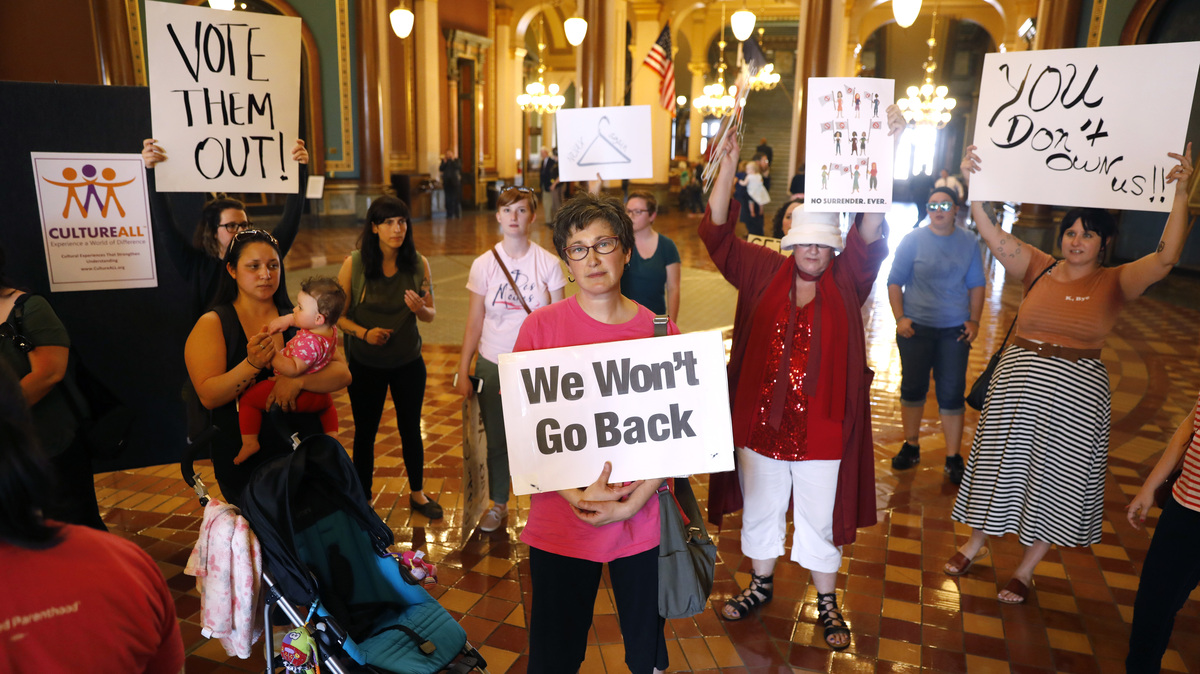
When Iowa Gov. Kim Reynolds signed Iowa’s new abortion bill into law, protesters gathered outside her office at the Statehouse in Des Moines. Two groups have now filed a lawsuit to block the bill.

Charlie Neibergall/AP


hide caption

toggle caption

Charlie Neibergall/AP

Less than two weeks after Iowa adopted a law banning most abortions after about six weeks of pregnancy, Planned Parenthood and the ACLU of Iowa have filed suit, seeking to prevent the law from taking effect.

Scheduled to take effect on July 1, Iowa’s law is one of the most restrictive abortion measures in the U.S. The measure was signed by Iowa Gov. Kim Reynolds on May 4, days after it was approved by the state legislature.

As member station Iowa Public Radio has reported, the legislation imposes a ban on “most abortions after about six weeks into a pregnancy, with some exceptions for rape, incest, fetal abnormalities, and to save the life of the mother.”

Critics say that the law would make abortions illegal in cases where women may not yet have realized that they’re pregnant. Iowa’s current law allows most abortions up to 20 weeks into a pregnancy. The lawsuit was filed in Iowa state court.

“Not only is this law blatantly unconstitutional — it’s extremely harmful to women,” Planned Parenthood said in a statement about the lawsuit. The group says that Iowa’s legislature ignored the legal rights guaranteed in the Supreme Court’s Roe v. Wade decision, as well as Iowa’s own constitution.

“Enough is enough,” said Dawn Laguens, executive vice president, Planned Parenthood Federation of America. “Gov. Kim Reynolds has no right to impose her beliefs on Iowa women. We will not back down until every person has the freedom and opportunity to make the health care decisions that are best for them and their families.”

When she signed the bill into law, Reynolds acknowledged that it would likely start a court battle.

“I understand and anticipate that this will likely be challenged in court, and that courts may even put a hold on the law until it reaches the Supreme Court,” the governor said “However, this is bigger than just a law. This is about life. I am not going to back down from who I am or what I believe in.”

Let’s block ads! (Why?)

Trump Administration's 3 Biggest Ideas For Lowering Drug Prices

Health and Human Services Secretary Alex Azar talked Friday about the administration’s plans to lower drug prices as President Trump looked on in the White House Rose Garden.

Chip Somodevilla/Getty Images


hide caption

toggle caption

Chip Somodevilla/Getty Images

Health and Human Services Secretary Alex Azar has this pen. It’s not all that remarkable looking, but he held it up multiple times Monday at a briefing with reporters.

“This pen,” he said, “has a lot of power.”

And he said he’s prepared to use it.

Azar was making the point that in the area of drug prices, the head of HHS – which runs the Medicare and Medicaid programs and buys about $130 billion in prescription drugs each year — can make a lot of changes in the pharmaceutical market. And he doesn’t need congressional approval to do it.

He’s got plans to use that pen to change how Medicare and Medicaid pay for medications and how the Food and Drug Administration goes about approving drugs for marketing.

Lots of the ideas are wonky and esoteric, but analysts say some could make a big difference over the long term.

So here are three of the big ideas Azar laid out Monday, three days after President Trump unveiled a blueprint to lower the cost of prescription drugs that was criticized for being light on substance.

Restructure How Pharmacy Benefit Managers Deal With Drugmakers

Azar’s most ambitious initiative would ban pharmacy benefit managers – the companies that administer prescription drug plans for insurance companies or employers – from negotiating discounts with drugmakers as a percentage of list prices.

Today PBMs, such as CVS Caremark or Express Scripts, make deals in the form of rebates. Pharmaceutical companies offer something like 30 percent off the list price of their drugs if the PBM places the medicines in a favorable spot on their preferred drug lists. When prices go up, PBMs often make more money as rebates grow.

“They’re taking money from both sides,” Azar said. “They’ve built into their system a regime where they get more money when the list price goes up.”

Azar said he intends to force PBMs to write contracts based on a set price for drugs, rather than a percentage-based rebate. And, he said, he’s looking to ban them from making any money at all from pharmaceutical companies. Instead, the companies would earn money only from the fees paid by the insurance companies or employers who hire them.

“This is nothing short of the complete and fundamental restructuring of over $400 billion of the U.S. economy,” he said.

David Mitchell, founder of the advocacy group Patients for Affordable Drugs, approves of the idea. “If they could do away with the rebates and have transparent net prices, I think that’s an enormous step forward,” he said.

But Express Scripts spokesman Brian Henry takes issue with targeting PBMs. “The root cause is the pharmaceutical companies who set these prices,” he said. “We are the ones who help drive down the costs. We drive competition.”

Change How Medicare Pays for Some Expensive Drugs

Azar says he wants to simplify how Medicare pays for many drugs by moving some expensive medications that are administered in doctors’ offices – like cancer drugs — into the standard Medicare prescription drug program.

Today many of those expensive drugs are paid for through Medicare Part B. It’s a system in which doctors buy the drugs and get paid a percentage of their cost to administer them to patients. Under this system, the government pays the full list price and doctors make more money when they prescribe more expensive drugs.

Azar said he wants to move some of the most expensive of those drugs to the Part D program, which is administered by private health insurance companies that negotiate discounts with drug companies.

“This move from B to D gives us the power to negotiate against drug companies,” he said.

But analysts caution it could lead to higher out-of-pocket costs and less choice for patients.

“Moving drugs from Part B to Part D could get the prices of some drugs down by allowing insurers to bargain with drug makers, but it would likely come with more restrictions on which drugs are covered,” said Larry Levitt, vice president of the Kaiser Family Foundation. “Some Part B drugs – many of which are infusions like chemotherapy — don’t have competitors, so negotiation may not help much.”

Make Prices More Transparent

The Centers for Medicare and Medicaid Services on Tuesday will release new versions of its Medicare and Medicaid drug price dashboards that HHS says will have more detail on what the programs are paying for the medications they buy.

And on top of that, Azar says he’s looking at whether he can require drug companies to include the price of their products in those television ads that already include seemingly endless lists of scary side effects.

Mitchell and Levitt both doubt that drug companies can be shamed into lowering prices and losing profit.

“It’s not going to lower drug prices,” Mitchell says. “But it would probably help for patients to know that the drug they’re getting costs $100,000.”

And finally, he wants to get rid of what he calls a “gag rule” in some PBM contracts that forbid pharmacists from telling patients if they can get their drug cheaper by going outside their insurance plan.

“Note that there are a number of proposals they are suggesting that are controversial and will result in pitched battles,” says Rodney Whitlock, vice president of health policy at ML Strategies, a lobbying firm. “That said, they sure are talking a good game and should be given deference that action will approach rhetoric.”

Azar, who came to HHS after a stint at president of the U.S. operations of the pharmaceutical giant Eli Lilly opened his talk by dispensing with the industry’s long-embraced argument that high prices are necessary to pay for research into future cures.

“I’ve been a drug company executive. I know the tired talking points: the idea that if one penny disappears from pharma profit margins, American innovation will grind to a halt,” Azar said. “I’m not interested in hearing those talking points anymore.”

Let’s block ads! (Why?)

Sticker Shock Jolts Oklahoma Patient: $15,076 For 4 Tiny Screws

Eleven days after surgery on her shoulder and foot, Sherry Young of Lawton, Okla., got a letter from her insurance plan saying that it hadn’t approved her hospital stay. The letter “put me in a panic,” says Young. The $115,000-plus bill for the hospital stay was about how much Young’s home is worth, and five times her annual income.

Nick Oxford for Kaiser Health News


hide caption

toggle caption

Nick Oxford for Kaiser Health News

Sherry Young just wanted to be able to walk without pain.

About three years ago, she began to experience sharp pain in her left foot. Her big toe had become crooked and constantly rubbed up against the adjacent toe, making it painful to run, walk or even stand. “I could not walk without intense pain unless I had a pad underneath my toes for cushioning,” Young said.

An orthopedic surgeon told her that he could fix her problem for good. “He thought my foot was hitting the ground too hard and causing pain,” said Young. “That’s what he was trying to correct.”

Though Young had had several orthopedic surgeries, she had always had good insurance and never scrutinized her bills.

At the time of her foot surgery, Young of course knew nothing about hospital charges for surgical screws, medical saws and other hardware used in the operating room.

Then the bill came.

Patient: Sherry Young, 57, a retired librarian on disability and a mother of two in Lawton, Okla.

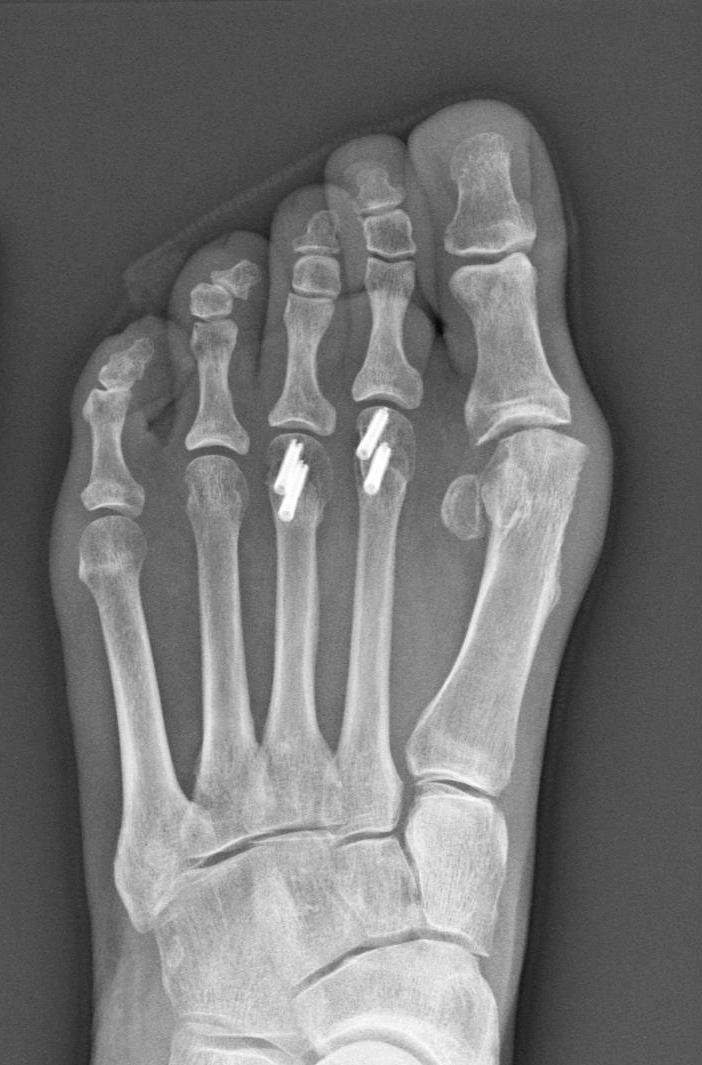
Total Bill: $115,527 for a three-day hospital stay, including $15,076 for four tiny screws — measuring 2.8 millimeters wide and no more than 14 millimeters long — placed in the two middle toes of her left foot.

Service Provider: OU Medical Center, located at the University of Oklahoma Health Science Center in Oklahoma City

Medical Treatment: Young underwent two operations on the same day in June 2017. One surgeon addressed an injury in Young’s shoulder, caused by arthritis and overuse. A second surgeon performed several procedures on her foot, including removing a bone spur. To better align Young’s middle toes, the doctor removed a slice of bone from the center of each toe, and then reconnected the two ends with surgical screws made by Arthrex, a medical device manufacturer based in Naples, Fla.

What Gives: Two weeks after surgery, Young received a letter from her insurance plan, BlueCross BlueShield of Oklahoma, stating that it had not approved her hospital stay. Staying overnight was not “medically necessary,” according to the letter, because foot and shoulder surgery are typically performed as outpatient procedures.

The letter “put me in a panic,” said Young, who was suddenly worried that she would have to pay the entire $115,000 bill herself. That’s about how much her home is worth, and five times her annual income.

Faced with the astronomical cost, Young asked for an itemized copy of her bill and began checking every charge.

She was floored by the price of the screws, each of which cost more than a high-end computer.

“Unless the metal [was] mined on an asteroid, I do not know why it should cost that amount,” Young said.

She repeatedly asked officials at OU Medical Center for part numbers for the screws, so she could find out how much they cost the hospital. Hospital officials never provided the information, Young said.

An X-ray of Sherry Young’s foot shows the four implanted screws — each of which cost more than a high-end computer.

Courtesy of Sherry Young


hide caption

toggle caption

Courtesy of Sherry Young

John Schmieding, senior vice president and general counsel for Arthrex, declined to tell Kaiser Health News exactly how much his company charges hospitals for the type of screws implanted in Young’s foot. But he did offer ballpark figures: “Our sale price for screws used in foot and ankle procedures would be below $300 per screw, with the most expensive around $1,000.”

As for what the hospital charges, Schmieding said, “We do not direct or control how a facility bills for their procedure.” Based on the numbers Schmieding provided, the hospital markup on Young’s screws could range from roughly 275 percent to upward of 1,150 percent.

“It’s mind-boggling,” said Dr. James Rickert, an orthopedic surgeon in Bedford, Ind., and president for the Society for Patient Centered Orthopedics, which advocates for affordable health care. “We are talking about little pieces of metal.”

Yet such steep markups are common at hospitals, said Rickert, who was not involved in Young’s care.

Clearly, the screws used in Young’s surgery are more sophisticated than those sold at the local hardware store. Many of the screws in Arthrex’s online catalog are made of titanium, which is popular for surgery because it’s strong and durable. The screws are also hollow, designed to fit over a guidewire so that doctors can place them in precisely the right place.

Surgical device manufacturers also must comply with strict regulations, said Steve Lichtenthal, vice president of business development at the Orthopaedic Implant Co., based in Reno, Nev., which makes surgical supplies.

But even the fanciest screw is still pretty simple, Lichtenthal said. Tiny screws cost only about $30 to manufacture, and the technology hasn’t changed much in decades, he said. About half the cost of a surgical implant goes toward paying sales and marketing staff, who develop close relationships with doctors and sometimes even attend surgery, Lichtenthal said.

Screws weren’t the only expensive devices figuring into Young’s bill. A drill bit, used for making holes in bone, carried a charge of $4,265; a tool for removing and cauterizing tissue was $5,047; a saw blade, $619.

While screws can be used only once, there’s no reason that other surgical equipment, such as saw blades, should be disposable, Rickert said. Hospitals routinely sterilize tools such as scalpels and scissors, then use them again.

A hospital spokesman declined to comment on the specifics of Young’s bill, as did the surgeon who operated on her foot.

OU Medical Center issued a statement that said: “OU Medical Center provides the highest-quality patient care. We are focused on acquiring the latest tools, treatments and technology, while diligently making sure we have the resources to maintain this commitment our patients deserve. We strive to keep costs down and focus investment on where it really matters — our patients.”

In the statement, OU Medical Center said few patients pay the full price. Instead, insurance companies typically negotiate discounts with hospitals, allowing them to pay less than the amount on the list of charges.

Yet, as Young learned, people who are uninsured — or whose insurance plan refuses to pay — get no discount.

Resolution: Young is now off the hook. In a statement in response to a reporter’s questions, BlueCross BlueShield of Oklahoma said it never actually denied Young’s insurance claim, but simply needed “additional information from the provider in order to process it correctly.”

According to Young’s most recent billing statement from OU Medical Center, she does not owe anything for her hospital stay. However, her latest statement from the hospital includes a $413 charge for an “appeal denied.”

Surgery relieved the chronic pain in her shoulder and alleviated some but not all of the pain in her foot, Young said.

The Takeaway: Companies can charge big prices for small surgical supplies and hospitals can mark them up at will.

If you want to know exactly why your bill is so high, ask for an itemized list of charges. Since patients have no ability to shop around for different screws before the surgery, it’s important to complain loudly to the hospital, your insurer and your employer if you see charges that seem outrageous.

Kaiser Health News is a nonprofit news service covering health issues. It is an editorially independent program of the Kaiser Family Foundation that is not affiliated with Kaiser Permanente. You can follow Liz Szabo on Twitter: @LizSzabo.

Jane Greenhalgh produced and edited the interview with Elisabeth Rosenthal for broadcast. Jackie Fortier from StateImpact Oklahoma reported from Lawton, Okla.

Let’s block ads! (Why?)

Taking The 'Journey' Through Alzheimer's Together

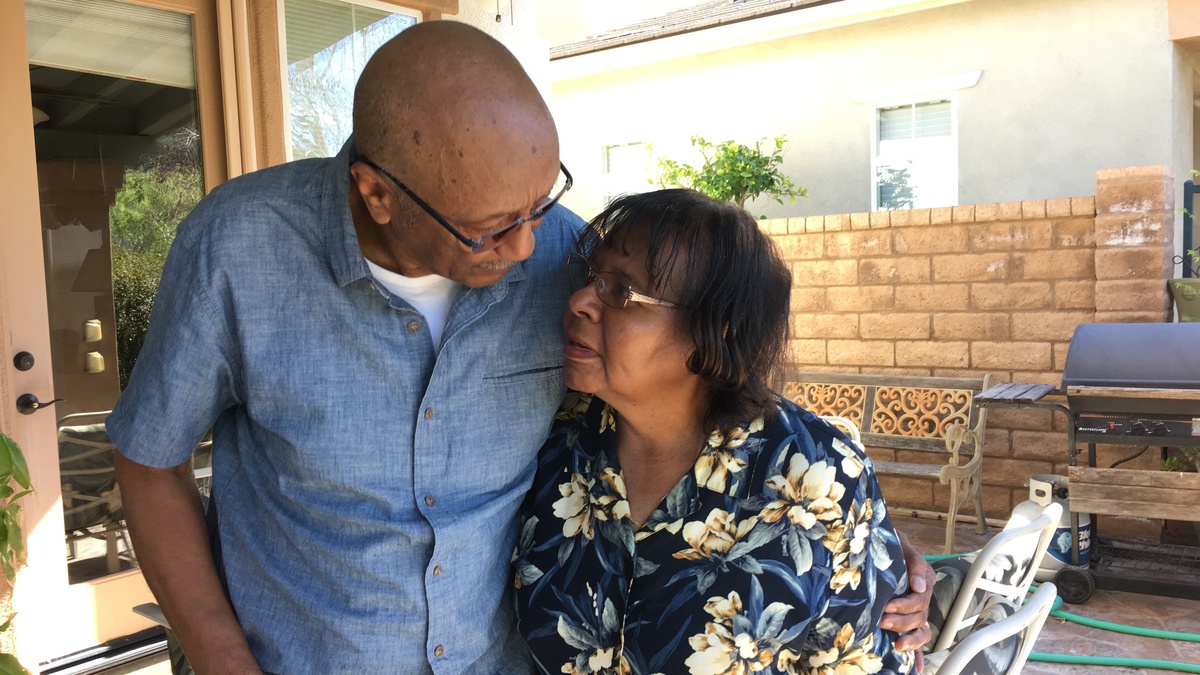
Winston and Pansy Greene at their home in Valencia. Calif.

Ina Jaffe/NPR


hide caption

toggle caption

Ina Jaffe/NPR

Pansy Greene is one of 5.7 million Americans who have Alzheimer’s disease. She and her husband Winston call her illness part of their “journey” together.

They’re doing their best to live a normal life, but they’ve had to adjust to losses day by day and year by year. For example, Pansy doesn’t cook any more. Winston points to the stove in the kitchen of their suburban home, north of Los Angeles. “No knobs,” he says. “We just take off all the knobs because with this disease, Pansy might come in and turn [it] on. Gas may be escaping. Anything could happen.”

Winston calls this one of the “little things” that have changed for the couple since Pansy’s diagnosis eight years ago. But the list of “little things” keeps getting longer. Pansy used to talk more. She’s pretty quiet now. Pansy used to pay the bills. Now Winston does. She used to do the laundry. That’s also Winston’s job now, though Pansy doesn’t want to hear it.

“Since when do you do that?” she asks with irritation in her voice. Winston soothes her: “Well, you do the folding up. You help out too. We do it together.”

The Greenes have been doing everything together for 61 years. I’ve stayed in touch with them for the past five. In our first interview in 2013, they told me that they met at a party when Pansy was just 16 and Winston was 18.

“And he didn’t let go of me the whole night. He wouldn’t let anybody else dance with me,” she laughed. Winston recalled, “I had just moved here from New York and I thought I was better than sliced bread.”

They married not long after they met, raised three daughters, and spent decades working in the aerospace industry. Pansy worked on the space shuttle, Winston on the B-1 bomber. Now, at the age of 80, his full time job is making sure that he and Pansy have days that are as full as he can make them.

So five days a week, they have lunch at the Santa Clarita Valley senior center.

It’s a lively place where a diverse crowd of older adults gather at long tables to dine and schmooze. There’s even live entertainment, as the musicians in the crowd take advantage of the piano in the corner.

Winston explains to his lunch companions why they’re letting me tag along. “It’s not for us,” he assures them. Talking to me is part of his and Pansy’s mission to raise awareness of Alzheimer’s disease, particularly for other African-Americans, who are especially at risk.

“Too many people have Alzheimer’s and it’s hush hush,” he says, adding that he and Pansy can help people just “by being advocates and talking about it.”

Winston could probably make sandwiches at home. But he knows that the social stimulation here is important for Pansy. And she does perk up. She smiles. She gets chatty. She gets curious.

She wants to know how I am. She wants to know what my recording equipment is for. She says she likes seeing the people here every day. It can be tiring, but she persists “to make myself more spiritual to God.”

Winston notices the difference in her. You’re doing a lot of talking, he tells her. “I’ve got to think of things to talk about so we can talk all day long.” Pansy laughs. “Not too much,” she teases. She still has the power to charm him. “Okay,” Winston says, “not too much. Just enough.”

Winston knows it’s important to keep Pansy physically and mentally active. So in the afternoons, they walk and listen to music. Sometimes they attend support groups. Then it’s time for dinner and another opportunity to bond over a meal.

This time it’s with the family. Five nights a week the Greenes have dinner at the home of their daughter and son-in-law, Antoinette and Shane Ferris. Antoinette explains that her husband is the cook in the family.

“He’s actually a chef,” she says. “Went to culinary school and all that good stuff.”

Winston says dinners here are the reason that he and Pansy moved close by. “Shane said, ‘you come out, you’ll never have to cook another meal.” Shane deadpans, “I still don’t’ remember saying that.”

There’s a full house. Shane and Antoinette’s 13-year-old son, Aiden, and 26-year-old daughter, Alexia are at the table. The two dogs and three cats just wish they were.

Pansy doesn’t join in the conversation much. So Winston checks in with her from time to time. “Nothing’s bothering you today? ” he asks. “No,” she says, “nothing’s bothering me today. ” But she adds, “Sometimes it’s difficult because I’m not sure what I’m doing.” Then she trails off in a few unintelligible syllables.

That’s been happening more frequently says Antoinette.

“Getting the words out and speaking in legible sentences is one thing that’s just come up in the last few months,” she says. It’s happening “so much more than before.”

Maybe that’s another one of what Winston calls “the little things.” He keeps his focus on what really matters to him.

“Even though [we’re] going through this, Pansy and I are still here. We’re together. We are a couple.”

And that’s what makes life normal for the Greenes, even though with Alzheimer’s, it’s a new kind of normal every day.

Let’s block ads! (Why?)

The $1 Fentanyl Drug Test

Public health experts are encouraging drug users to test their drugs for fentanyl with a $1 strip. NPR’s Scott Simon talks to Traci Green of Brown University about the technology.


SCOTT SIMON, HOST:

Fentanyl is a synthetic opioid that can be a hundred times more powerful than morphine. Dealers mix it with drugs like cocaine and heroin to boost its strength, and that has led to a sharp increase in overdose deaths. Users typically don’t know whether their drugs are laced with fentanyl until it’s too late. That’s why some public health experts want users to test their drugs with a $1 strip.

Traci Green of Brown University’s School of Medicine is one of the lead investigators of a study about drug testing technologies. She joins us now from Providence, R.I. Thanks so much for being with us.

TRACI GREEN: You’re very welcome. Thanks.

SIMON: How do these $1 test strips work?

GREEN: They function much like a pregnancy test, where you expose some small amount of drug, perhaps even something left over in a bag, with a little bit of water, and you find out pretty quickly whether that drug had fentanyl in it or not.

SIMON: And the outcome makes a difference to the people who test it?

GREEN: It does. Knowing that fentanyl is in the drug that someone’s about to use can help them decide when, where, how and even if they use that drug. So this is a way that people can start to prepare for that possible overdose that might happen.

SIMON: I’m sure you anticipate questions like this, are you just making it easier for people to use drugs which are harmful enough without fentanyl?

GREEN: There is always concern that use begets use. The challenge is that opioid addiction is an overwhelming disease and a condition that is totally treatable but can be really hard to find that connection to care. This doesn’t perpetuate use. It actually brings people in and closer, and that’s what we’ve seen with syringe exchange, condom distribution and other means of connecting with people who are at high risk.

SIMON: I’m afraid I have to ask, because I don’t have to tell you, there are so many ideas that have been proposed in recent years to try and affect the opioid epidemic. And, well, let’s put it this way. Far as I know, so many of them fall short. Can you think of an instance where someone who used a test strip is now in the process of getting off opioids successfully?

GREEN: We don’t have a lot of time with these trips just yet in the field, but we have enormous promise and a lot of parallels, for instance, with HIV testing and counseling – opportunities where people who are at high risk of having a disease, and when they learn even the process of going through the testing experience, whether that’s a positive or a negative result, talking with a counselor, talking with someone in a trusted environment has resulted in changes in risk behavior, and it may introduce opportunities for starting drug treatments.

I think some of the research that we’ve done has really shown that people see it as something that should be offered as part of a comprehensive array of services. And the way we convey it can allow us to bring people in further into treatment and further into the kind of services that can help change the tide in this epidemic.

SIMON: Traci Green of Brown University School of Medicine, thanks so much for being with us.

GREEN: You’re very welcome.

(SOUNDBITE OF MUSIC)

Copyright © 2018 NPR. All rights reserved. Visit our website terms of use and permissions pages at www.npr.org for further information.

NPR transcripts are created on a rush deadline by Verb8tm, Inc., an NPR contractor, and produced using a proprietary transcription process developed with NPR. This text may not be in its final form and may be updated or revised in the future. Accuracy and availability may vary. The authoritative record of NPR’s programming is the audio record.

Let’s block ads! (Why?)

Trump Drug Pricing 'Blueprint' Could Take Years To Build

In a speech Friday, President Trump announced a plan that lists dozens of “potential” steps his team may take to lower drug prices, along with many others that were included in his budget proposal and will require congressional action.

Chip Somodevilla/Getty Images


hide caption

toggle caption

Chip Somodevilla/Getty Images

President Trump presented a broad-brush outline of how his administration hopes to stem the decades-long increase in prescription drug prices and spending, in a speech Friday in the Rose Garden of the White House.

The administration also released a 39-page document describing a variety of proposals it is either considering or studying in an effort to lower costs to individuals, corporations, the government and the economy as a whole.

There were few concrete actions taken today. The plan mostly lists dozens of “potential” steps the administration may take, along with many others that were included in the president’s budget proposal and will require congressional action. Several options are “requests for information.”

Nevertheless, the president characterized the proposal as “the most sweeping action in history to lower the price of prescription drugs for the American people.”

“We will have tougher negotiations, more competition and much lower prices at the pharmacy counter and it will start to take effect very soon,” Trump said.

The president was accompanied by Health and Human Services Secretary Alex Azar, who played a major role in developing the plan.

Trump said he wants to eliminate “middlemen” in the drug industry — which includes pharmacy benefit managers and wholesalers — and he criticized industry lobbyists for making a fortune at the expense of taxpayers and patients.

U.S. patients spent nearly $329 billion on prescription drugs in 2016, according to the National Health Expenditures Survey. That’s an increase of about $100 billion in the past 10 years.

Many researchers say the biggest reason behind the rising spending is high prices for prescription drugs. Often, companies are rewarded for setting a high retail price because insurers negotiate discounts off that initial price.

The blueprint released Friday reiterates proposals that were included in the White House budget proposal. Those include allowing Medicare’s prescription drug plans to slim down the number of drugs they pay for to spark price competition among pharmaceutical companies, and capping how much money Medicare patients themselves can spend on drugs each year.

“On the positive side, I will say that HHS does seem to be paying close attention to this issue, given all the issues they bring up in the blueprint document,” says Walid Gellad, director of the Center for Pharmaceutical Policy and Prescribing at the University of Pittsburgh.

“On the negative side, it’s a bunch of questions, not a specific plan for how to proceed.”

Azar, in a briefing following the Rose Garden speech, acknowledged the plan is sweeping and would take years to implement. He said the administration will pursue those ideas it can get done.

“This is a major restructuring of a huge portion of the U.S. economy. One doesn’t do that lightly,” he said.

The plan, like the budget, also proposes limiting price increases Medicare would pay to the rate of inflation and changing some rules around generic drug approvals to prevent companies from blocking new generic competition.

Many of those ideas would require legislation and congressional approval.

Azar, in his briefing, emphasized his desire to change the way pharmacy benefit managers operate — specifically a system where they negotiate rebates off high drug prices.

“We are calling into question today the entire structure of using rebates in the pharmacy channel,” he said.

The president also wants to take steps to ensure foreign governments don’t get lower prices for drugs than do U.S. taxpayers – which he referred to as “global freeloading.”

“It’s unfair, it’s ridiculous, and it’s not going to happen any longer,” he said.

Critics say that proposal is unlikely to help lower prices here in the U.S.

“Lifesaving medicines aren’t more expensive here because they cost less elsewhere,” Jason Cone, executive director of Doctors Without Borders USA, wrote in an article published in The Hill. “They’re priced out of reach everywhere because pharmaceutical corporations are charging exorbitant prices simply because they can—and the U.S. government lets them.”

One thing Trump did not propose was allowing Medicare, the government health care program for the elderly, to directly negotiate lower drug prices for its beneficiaries. That’s a change from his rhetoric during his campaign and transition.

“We’re the largest buyer of drugs in the world and yet we don’t bid properly,” he said at a news conference in early January 2017. “We’re going to start bidding and we’re going to save billions of dollars over a period of time.”

But shortly after Trump moved into the Oval Office he wavered on that commitment, first saying that he didn’t want Medicare to engage in what he called “price fixing” and then, through his former spokesman Sean Spicer, saying once again he favored allowing the federal government program to deal with drugmakers to get lower prices.

Medicare accounts for about one-third of U.S. prescription drug spending. Current U.S. law prohibits Medicare officials from interfering in the negotiations between drugmakers and the insurance companies that administer Medicare’s prescription drug plans.

The only government report that looks at the issue is a 2007 Congressional Budget Office study that concluded it would have a “negligible effect” on prices.

But Gellad says that report was limited, because it looked only at the effect if Medicare were not allowed to exclude drugs from its coverage list.

“There is no evidence that allowing Medicare to negotiate doesn’t help,” says Gellad. “In fact, the CBO said that in certain circumstances, with the right formulary, this type of negotiation could help.”

Let’s block ads! (Why?)