Can A Cocktail Of Vitamins And Steroids Cure A Major Killer In Hospitals?

Dr. Paul Marik (left) discusses patient care with medical students and resident physicians during morning rounds at Sentara Norfolk General Hospital in 2014 in Norfolk, Va.
Jay Westcott for The Washington Post/Getty Images
hide caption
toggle caption
Jay Westcott for The Washington Post/Getty Images
Scientists have launched two large studies to test a medical treatment that, if proven effective, could have an enormous impact on the leading cause of death in American hospitals.
The treatment is aimed at sepsis, a condition in which the body’s inflammatory response rages out of control in reaction to an infection, often leading to organ damage or failure. There’s no proven cure for sepsis, which strikes well over 1 million Americans a year and kills more than 700 a day.
In early 2017, Dr. Paul Marik announced that he had started using a treatment that he says was saving the lives of most of his sepsis patients. The claims were so audacious, Marik says, some doctors called it snake oil.
“There obviously was enormous resistance at the beginning,” he says, “but it seems that with time, people started thinking about it and saying, ‘maybe this isn’t as outrageous as we first thought.’ “
The treatment is a cocktail of intravenous vitamin C, vitamin B1 (thiamine) and corticosteroids. The use of vitamin C in sepsis was pioneered by Dr. Alpha Fowler at Virginia Commonwealth University. Marik has been using the combination treatment since 2016 at his hospital in Norfolk, Va., where he also teaches at the Eastern Virginia Medical School.

Marik’s solution includes a steroid (left) combined with vitamin C (right) and a few other ingredients.
Courtesy of Eastern Virginia Medical School
hide caption
toggle caption
Courtesy of Eastern Virginia Medical School
“At last count, over 700 patients have received the cocktail and, you know, the response is reproducible,” Marik says. He says the treatment has had no consequential side effects.
Some other doctors around the nation have also been trying it on their patients, but most are waiting for hard science to decide whether Marik’s experience is just a fluke.
That evidence could come from two large studies now underway in the United States. Both are being conducted according to the gold standard of medical science: Some patients get the treatment, others get a placebo, and neither the patients nor doctors know who gets what.
The stakes are enormous, given the number of people who die of sepsis.
“This is something which, if proved to be true, would be a game-changer, almost a miracle cure, honestly,” says Dr. Craig Coopersmith, a critical care surgeon at Emory University and a member of the team running one of the two sepsis studies, the VICTAS Study.
Planning research like this takes significant effort and funding. The effort involved figuring out which patients would be included and orchestrating patient care and data collection from 24 to 40 different hospitals. Competitive grants through the National Institutes of Health often take years to land, so instead this trial reached out to the Marcus Foundation in Atlanta (funded by family members of the Home Depot fortune).
“We’ve all been pretty much working 24/7 on this for the past three to five months,” says Dr. Richard Rothman, a professor of emergency medicine at the Johns Hopkins hospital in Baltimore, who is a leader of the VICTAS study.
Marik has a biologically plausible explanation for how his protocol could work. He says the sepsis reaction generates large amounts of a damaging molecule called reactive oxygen, which vitamin C neutralizes.
When Marik published his protocol in early 2017, Coopersmith was in the wait-and-see camp. But as he became involved in planning the study, he decided to get some hands-on experience with the protocol, working with patients in his hospital.
Some patients he treated with it died. But he also tells the story of a man who was “so sick that we actually had to flip him upside down to get enough oxygen into his body,” Coopersmith says. “His kidneys had failed. His liver wasn’t working, his bone marrow wasn’t working and statistically his chance of dying was nearly 100 percent.”
Coopersmith gave the man the Marik cocktail and his condition quickly reversed. Six days later he was off of the ventilator that had been keeping him breathing, and on the seventh day he was well enough to leave the intensive care unit.
“We would call it a miracle cure,” Coopersmith says. “What we don’t know is [whether] he was going to get better independent of the vitamin C, steroids and thiamine — or did that make him better.”
The answer to that question will be informed by the VICTAS study. The study will soon be enrolling hundreds of patients in Atlanta, Baltimore, Marik’s hospital in Norfolk, and up to three dozen other hospitals. (The exact number of study sites will depend on how quickly the early ones are able to recruit patients.)
At the same time, doctors at the Harvard-affiliated Beth Israel Deaconess Medical Center are launching another large study, involving 13 hospitals. They got a $3 million grant from the Open Philanthropy Project to study the Marik protocol.
“Our goal is to complete this trial within a year from now,” says Dr. Michael Donnino, who is leading that study. As of the end of April, he had enrolled 11 patients at his hospital. Hospitals in New York state and Michigan launched the study at their institutions this week.
The parallel studies will help make whatever answer emerges all the more credible, Donnino says. Reproducibility is the keystone of science.
“Having another trial out there I think is great,” he says.
Both research trials have outside experts sitting on boards that will monitor data and safety; they will periodically take a peek at the accumulating data. If the results are as dramatic as Marik gets in his hospital — or on the other hand clearly futile — the studies could be called off early.
“And either way, it will change practice across the United States and across the world,” Coopersmith says. He guesses that around 10-20 percent of intensive-care specialists are currently using the Marik cocktail.
There’s reason for both optimism and for caution. There have been more than 100 studies of proposed treatments for sepsis over the years, and previous results that seemed promising at first flopped after further examination. But the potential upside is beguiling: a lifesaving treatment that’s affordable.
“It’s not going to be the equivalent of a new drug in cancer or hepatitis, which costs $50,000 to $100,000 and you have to make the decision if insurance doesn’t cover it, whether or not to mortgage the house and give away your inheritance,” Coopersmith says. “This is something that’s going to be very, very cheap and accessible throughout the world.”
That is, if it works.
You can contact Richard Harris at rharris@npr.org.
For Every Woman Who Dies In Childbirth In The U.S., 70 More Come Close

Alicia Nichols holds her daughter Diana in her home in February. After the birth of Diana, Nichols suffered unusual postpartum blood loss that she feels was not taken seriously by her doctor.
Kayana Szymczak for NPR
hide caption
toggle caption
Kayana Szymczak for NPR
Samantha Blackwell was working her way through a master’s degree at Cleveland State University when she found out she was pregnant.
“I was 25, in really good health. I had been an athlete all my life. I threw shot put for my college, so I was in my prime,” she says with a laugh.
Though it wasn’t planned, Blackwell’s pregnancy was embraced by her large and loving family and her boyfriend, who would soon become her husband. Her labor was quick, and she gave birth to a healthy baby boy.

Samantha Blackwell poses with her husband, DeVon, and their son, DeVon. Blackwell’s pregnancy went well, but just days after delivery, she was in a medically induced coma.
Courtesy of Samantha Blackwell
hide caption
toggle caption
Courtesy of Samantha Blackwell
Yet just days after she was discharged, Blackwell was back in the hospital, in a medically induced coma, fighting a runaway infection that left her hovering between life and death.
“It was like ‘I fell asleep at that hospital and woke up the next day’ kind of thing,” she says. She was in a coma for more than a month.
Blackwell’s story of reaching the brink of death is one that happens much too often, say researchers.
Over the past year, NPR and ProPublica have been investigating why American mothers die in childbirth at a far higher rate than in all other developed countries.
A mother giving birth in the U.S. is about three times as likely to die as a mother in Britain and Canada.
In the course of our reporting, another disturbing statistic emerged: For every American woman who dies from childbirth, 70 nearly die. That adds up to more than 50,000 women who suffer “severe maternal morbidity” from childbirth each year, according to the Centers for Disease Control and Prevention. A patient safety group, the Alliance for Innovation on Maternal Health, came up with an even higher figure. After conducting an in-depth study of devastating complications in hospitals in four states, it put the nationwide number at around 80,000.
“It’s referred to as the tip of the iceberg because for every woman we lose, there are lots of other women that we come very close to losing,” says obstetrician Peter Bernstein, the director of the Maternal-Fetal Medicine division at Montefiore Medical Center in New York.
But surviving can come with a cost.
“An experience that we would hope and expect would be natural, beautiful, uplifting, becomes one that’s terrifying,” Bernstein says. “Women can wind up losing their uterus and therefore becoming infertile. They can wind up with kidney problems. They can have heart attacks. They can have brain damage from all the blood that they’ve lost.”
Every year, more than 50,000 women in the United States nearly die in childbirth. Here are three of their stories.
NPR
YouTube
Watch the video here.
And that is just a partial list of what can go wrong. Also on that list: Women develop pregnancy-induced high blood pressure known as pre-eclampsia, which can lead to a stroke and organ failure; parts of the placenta can be left behind, which can lead to infection; and a woman giving birth is more prone to blood clots that can be life-threatening.
The cost, though, is not just medical. The treatment for these complications can become an ongoing financial burden, and the trauma suffered from physical complications can lead to persistent emotional and psychological pain.
It is still rare for childbirth to involve truly severe complications, but in the U.S., say researchers, many of these worst-case scenarios need not have happened at all.
Samantha Blackwell doesn’t remember much about her ordeal. It began 11 days after giving birth, when she sat up in bed with a terrible pain. By the time she got to the emergency room, her medical records show, she was in septic shock from a massive infection. For weeks, her doctors couldn’t promise her family that she would live.
“They just knew that it was bad,” she says, “to a point of ‘expect the worst. We don’t know if she’s going to come out of this.’ “
When Blackwell did emerge from her coma, she discovered she had undergone an emergency hysterectomy, a last-ditch effort to stop the infection that had originated in her uterus.

Samantha Blackwell was in a coma for more than a month. During that time, she underwent an emergency hysterectomy to stop an infection that had originated in her uterus.
Courtesy of Samantha Blackwell
hide caption
toggle caption
Courtesy of Samantha Blackwell
“I don’t think I’m the type to overreact”
In the U.S., the rate of severe complications from childbirth has been rising faster than the rate of women who died. The rate of women nearly dying almost tripled between 1993 and 2014, according to the CDC. To help explain those dire statistics, experts point to risk factors that have increased in recent years: American women are giving birth at older ages and are more likely to have problematic conditions like obesity, high blood pressure and diabetes.
Early in our reporting, NPR and ProPublica launched an online call-out asking for stories of deaths and near deaths due to childbirth, and the tales of catastrophic complications and deaths poured in, ultimately more than 5,000 in all.
Alicia Nichols was among the thousands who wrote about their own experience. At 39, she and her husband had been trying hard to have a baby. She finally succeeded in getting pregnant through in vitro fertilization and gave birth in March 2017, just after she turned 40.
At her home outside of Boston, in a spacious, airy room strewn with baby toys, Nichols spoke of an easy pregnancy. It was how many stories we heard began. The birth, though, was different: a painful 42 hours of labor, until the baby’s “failure to descend” led to an emergency cesarean section.
Then, after healing well for four weeks, she was surprised to feel a gush of blood.
“I was rocking Diana in my rocking chair here in the living room, and when I stood up, blood [had] soaked through me onto the chair,” she says.
Her first reaction was to call an ambulance. “I don’t think I’m the type to overreact. It was just so foreign to me,” she says.
In the emergency room, the obstetrics resident who came over quickly chalked it up to natural postpartum bleeding, something that didn’t merit the ultrasound Nichols was requesting.
“I felt that she was just dismissing me, annoyed, a new mother being paranoid of some blood. I felt like she was not listening at all,” Nichols says.
Throughout our NPR/ProPublica investigation, we heard many variations on the perception by postpartum mothers that their physical concerns were not taken seriously. In Nichols’ case, she was familiar with a medical environment. She worked as an aesthetician and office administrator for a plastic surgeon in the same building as her obstetrician.
In the weeks following her first scare, her obstetrician assured Nichols — in both an office visit and on phone calls — that the episodes of bleeding were most likely the beginning of her menstrual period.
For her part, Nichols pointed out to her doctor that she had never experienced a period like that.
“I had no cramping,” she says. “It was just bright red blood. And, we all know, we’re women. I don’t want to be graphic, but we know it’s different.”
“Denial and delay”

A few months after giving birth, Alicia Nichols hemorrhaged and ultimately lost nearly half the blood in her body.
Kayana Szymczak for NPR
hide caption
toggle caption
Kayana Szymczak for NPR
It was before dawn two months after giving birth, that Nichols — up with baby Diana — had another episode of sudden bleeding.
By chance, her own doctor was on call that early morning and picked up the phone. She remembers him saying, “You’re going to be fine. Check back later in the day if this continues.”
Instead, she went to his office right after it opened.
“I got on the elevator, and the minute the elevator door opened, that’s when I began to hemorrhage,” she says.
The obstetrician immediately called an ambulance, but Nichols was already in the midst of a life-threatening emergency.
“I remember putting my hand down, and when I lifted up my hand, it was just, my whole left hand. I remember seeing my wedding ring, just blood. My left hand was soaked with blood,” she says.
According to her medical records, Nichols lost nearly half the blood in her body.
As a last resort — as in the case of Samantha Blackwell in Cleveland — Nichols’ doctors in Boston performed an emergency hysterectomy.
In an addendum attached to Nichols’ records 24 hours later, her obstetrician stuck with his original theory about her bouts of bleeding. He wrote “patient came to office with onset of first period that seemed heavier than average,” and she “suddenly hemorrhaged.”
Though NPR received written permission for Nichols’ obstetrician to share details of her case, he declined to be interviewed for this story.
But a pathology report included in her records found an entirely different cause for Nichols’ on-and-off bleeding. The pathologist’s diagnosis was placental site vessel subinvolution, or VSI.
That essentially means that the enlarged blood vessels in the lining of the uterus, which had sent nutrition and oxygen to the developing fetus, had failed to return to their pre-pregnancy state. They stayed enlarged and intermittently bled into Nichols’ uterus.
Though rare, VSI can be detected early with a scan and treated before leading to a life-threatening hemorrhage.
Obstetrician Elliott Main, a national leader in the movement to reform maternal health care, says that because most mothers do well during and after pregnancy, obstetricians and nurses strongly tend to expect the best and often are not prepared for the worst.
“That sets up the opportunity for what we call the twin demons of denial and delay. Denial that it’s actually something serious,” says Main, “leading to delay before you get the care that’s going to make the difference.”
Indeed, NPR and ProPublica found a medical system that bases care on the idea that it’s rare for a woman to die in childbirth. It’s a system in which funding and resources are dedicated mostly at saving babies.
The price tag of life-threatening complications
Severe complications due to childbirth are not common in the U.S., where nearly 4 million babies are born each year.
Yet bringing down the rate of these complications would not only spare tens of thousands of mothers from nearly dying, but it would also bring down the cost of health care, points out obstetrician Barbara Levy. She oversees health policy at the American College of Obstetricians and Gynecologists.
“Severe morbidity is expensive. ICU care is expensive. Transfusions are expensive. Dialysis is expensive,” she says. “We can actually save money by putting processes in place that reduce risk.”
The cost of Samantha Blackwell’s long hospital stay, rehabilitation and home care soared to nearly $540,000.
Because she was younger than 26, she was covered by her mother’s insurance, which paid for most of that.

Cynthia Murphy (left) took a two-month leave from work to stay with her daughter, Samantha Blackwell. “Samantha was my No. 1 priority,” Murphy says.
Courtesy of Samantha Blackwell
hide caption
toggle caption
Courtesy of Samantha Blackwell
But the experience was still financially devastating.
Blackwell couldn’t return to her job at Men’s Wearhouse for months. Her husband, DeVon, spent so much time at the hospital that he lost his job at a car dealership. And Samantha Blackwell’s mother never left her bedside. Cynthia Murphy is still thankful that the K-Mart distribution center where she worked gave her a two-month leave, even though it was unpaid.
“I would have moved from my house, lived on the street. I really would not have cared at that time,” Murphy says. “Samantha was my No. 1 priority.”
Alicia Nichols, whose hemorrhage led to an emergency hysterectomy, measures her financial burden by what she estimates it would take to have another baby via surrogate: at least $80,000.
No single study has tallied the total cost of America’s high rate of severe complications. But there are clues that it runs into the billions. A report in the American Journal of Obstetrics and Gynecology found the cost of caring for mothers suffering from pre-eclampsia is more than a billion dollars each year.
And the federal Agency for Healthcare Research and Quality put a dollar figure on the average cost of a hysterectomy related to childbirth complications: In 2014, it was more than $95,000.
“I was just a wreck”
And then, of course, there is the human cost.
“I have a lot of anger. I do. I know that my obstetrician feels terrible that things went this way, but it just makes me so angry,” says Alicia Nichols, “because I know I’m not the only one. There are so many women out there.”
In Nichols’ case, her troubles did not end with the massive hemorrhage. Just days later, while she and her baby were resting at her parents’ home in Cape Cod, Nichols began feeling dizzy.
And this time, at a local hospital, the doctor paid close attention to her complaint.
“He knew my history, and he said something’s not adding up,” she recalls.
The results of a test that helps identify the presence of blot clots worried this new doctor enough to call for a CT scan, which proved his suspicion.

Alicia Nichols, with daughter Diana, said her pulmonologist told her she is lucky to be alive after she suffered severe complications after childbirth.
Kayana Szymczak for NPR
hide caption
toggle caption
Kayana Szymczak for NPR
“He came back, and he’s like, ‘I’m sorry, you’re not going home, you have multiple pulmonary emboli in both your right and left branches,’ ” she says.
Nichols remembers her shock at looking at the scan: “It was like someone splattered paint into my lungs.”
Six days later, Nichols left the hospital with an anti-clotting drug, and a new fear: anticoagulants come with a risk of bleeding, leading her to imagine a nightmare scenario in which she hemorrhaged again.
“So I was just a wreck at that point,” says Nichols, who is now being treated for post-traumatic stress disorder.
“It’s funny, I remember speaking with the critical care pulmonologist, and I was sort of having a pity party and was just devastated,” she says. “I said I’m so unlucky. And he said, ‘No, you should go buy a lottery ticket, because you shouldn’t be alive right now.’ “
It is a common theme among the thousands of women we’ve heard from: Their trauma, both physical and emotional, is hard to shake and impossible to forget.
And that anxiety radiates out to the families who also survived a terrible time.
Two full years after Samantha Blackwell’s son was born, she spoke of how she is continually reminded of the high fever from the raging infection that nearly killed her. That reminder comes from her mother, who nearly lost a daughter.
“My mom, I make fun of her, because she checks my temperature with her hand,” says Blackwell. “Every time she hugs me goodbye, her hand is on my forehead.”
ProPublica’s Nina Martin and NPR’s Meg Anderson contributed to this report.
Under A Trump Proposal, Lawful Immigrants Might Shun Medical Care

Marnobia Juarez came to the U.S. from Guatemala and lives in Maryland. She dreams of getting her green card, but increasingly worries that won’t happen under Trump’s policy. Juarez was diagnosed with breast cancer in 2014 and receives care through a state health program.
Paula Andalo/Kaiser Health News
hide caption
toggle caption
Paula Andalo/Kaiser Health News
The Trump administration is considering a policy change that might discourage immigrants who are seeking permanent residency from using government-supported health care, a scenario that is alarming some doctors, hospitals and patient advocates.
Under the proposed plan, a lawful immigrant holding a visa could be passed over for getting permanent residency — getting a green card — if they use Medicaid, a subsidized Obamacare plan, food stamps, tax credits or a list of other non-cash government benefits, according to a draft of the plan published by The Washington Post.
Even letting a child who is a U.S. citizen use such benefits could jeopardize a parent’s chances of attaining lawful residency, according to the measure.
Health advocates say such apolicy could frighten a far broader group of immigrants into avoiding government-supported health coverage, creating public health problems that could be dire in the long run — for those patients and for U.S. hospitals.
About 3 million people received green cards from 2014 through 2016,government records show. Immigrants in the U.S. on a visa or those who have no legal status but plan to seek citizenship based on a close family relationship would be affected.
“We are very concerned that this rule, if finalized, would have a significant impact on health in this country,” says Erin O’Malley, senior director of policy for America’s Essential Hospitals, who discussed the plan with Trump administration officials in mid-April.
O’Malley says she fears that some visa holders and their families would steer clear of getting routine treatment and resort to going to emergency rooms for medical care. Such a change would “undermine the stability of our hospitals by creating uncompensated care costs and creating sicker patients,” O’Malley says.
If enacted, the rule could force a mother to weigh the need for hospital inpatient care for an ailing newborn against losing her legal immigration status, says Wendy Parmet, director of the Center for Health Policy and Law at Northeastern University.
“The administration, in the draft, talks about self-sufficiency,” she says. “But we don’t expect that of [babies]” who are U.S. citizens because they were born in this country. “It’s extremely hardhearted.”
Pushback has already begun against the leaked draft proposal, even though it is in the earliest stages of the rulemaking process.
Washington state’s Gov. Jay Inslee, a Democrat, is sending staff in mid-May to meet with the White House Office of Management and Budget, which is vetting the proposed rule. Inslee sent a letter on April 24 urging OMB Director Mick Mulvaney to consider the impact on tax-paying, lawful immigrants.
“This will undoubtedly lead to people across the U.S. going hungry, not accessing needed medical care, losing economic self-sufficiency, and even becoming homeless,” Inslee’s letter says.
The leaked draft document said immigration officials would count the use of one or more non-cash benefits by the applicant within three years as a “heavily weighed negative factor” in deciding whether to grant permanent residency.
On March 29, the Department of Homeland Security sent a version of the proposal to OMB, which is reviewing it for conflicts with existing law. Next, it will be published as a proposed rule that the public can comment on before it’s finalized.
Marilu Cabrera, public affairs officer with the U.S. Citizenship and Immigration Services, declined to comment on whether the draft published by the Post mirrors what the OMB is reviewing.
Fear in immigrant communities already weighs on physicians. Dr. Julie Linton, a spokeswoman for the American Academy of Pediatrics, treats many Latino immigrant families at an outpatient clinic in Winston-Salem, N.C.
One woman from Mexico, who had a newborn baby and three other children, told Linton she was afraid to keep her family enrolled in the nutrition program for Women, Infants, and Children — commonly known as WIC.
“Is it safe to use WIC?” the woman asked Linton.
Linton said questions like that put pediatricians in a tough position. On the one hand, Linton says, evidence shows enrolling in WIC leads to better health outcomes for kids. But what if it also puts the family at risk of being split apart?
“It feels very frightening to have a family in front of me, and have a child with so much potential … and be uncertain how to advise them” on whether to accept public benefits, Linton says.
Maria Gomez, president of Mary’s Center, which runs health clinics in Washington, D.C., and Maryland, said she’s seeing three to four people a week who are not applying for WIC and are canceling their appointments to re-enroll in Medicaid.
The proposal homes in on who is considered a “public charge.” The concept emerged in immigration law in 1882, when Congress sought to bar immigrants deemed “idiots, lunatics” or otherwise likely to become a burden on the government.
The notion of a “public charge” last surfaced in 1999, when the immigration service clarified the concept. Then and now, an immigrant considered a “public charge” is inadmissible to the U.S. if the person is likely to rely on cash support from the government for income, or lives in a government-funded long-term institution.
Yet the guideline published in 1999 clarified that legal residents were free to access non-cash benefits like Medicaid, food stamps and assistance for heating bills.
“These benefits are often provided to low-income working families to sustain and improve their ability to remain self-sufficient,” the guideline says.
The leaked proposal draft would rewrite those rules.
If enacted, Trump’s proposal would label anyone who had recent or ongoing use of a non-cash government benefit in the previous 36 months a likely “public charge,” and therefore inadmissible to the U.S. The use of such benefits by a spouse, dependent parent or child would also be taken into account.
Applicants who have “expensive health conditions” such as cancer, heart disease or “mental disorders” and who have used a subsidized program would also get a heavily weighted negative mark on their application, the leaked proposal says.
Forty-eight-year-old Marnobia Juarez battled cancer successfully and is hoping her husband’s green card application is approved; she also dreams of one day getting her own.
Juarez says she never wanted to apply for public benefits until she was diagnosed with breast cancer in 2014. Since then, she has been treated at no cost under a program run by the state of Maryland.
“I’m alive thanks to this program,” says Juarez, who is a community leader at CASA de Maryland, an immigrant advocacy group. “You don’t play with life, and they are playing with life.”
The proposal says immigrants would have the option of posting a minimum $10,000 bond to help overcome a determination that they are likely to be a “public charge.”
The changes would affect people sponsored by a U.S. citizen family member, most employment-based immigrants, diversity visa immigrants and “certain non-immigrants,” the leaked proposal says. In 2016, roughly 1.2 million people got their lawful permanent residence status, or a green card in the U.S. Of the total, 566,000 were immediate relatives or spouses of U.S. citizens and 238,000 more were family-sponsored, according to data from the Department of Homeland Security.
The change would not affect some immigrants — such as refugees and people granted political asylum. Nor would it apply to undocumented immigrants.
“We’re talking about middle-class and working families,” says Madison Hardee, a senior policy analyst and attorney with the Center for Law and Social Policy, which has organized a coalition to fight the proposal.
“This could really put parents in an impossible situation — between seeking health assistance for their children and obtaining a permanent legal status in the U.S.,” Hardee says.
The list of benefits includes, among other programs, the Children’s Health Insurance Program; non-emergency Medicaid; the Supplemental Nutrition Assistance Program, or food stamps; WIC and short-term institutionalization at government expense. The leaked proposal notes that foreign-born and native-born Americans use such programs at similar rates.
The leaked proposal says it is meant to ensure that people seeking to “change their nonimmigrant status are self-sufficient.” It notes “relevant congressional policy statements,” including one that says “the availability of public benefits [should] not constitute an incentive for immigration to the United States.”
Kaiser Health News, a nonprofit news service, is an editorially independent program of the Kaiser Family Foundation, and not affiliated with Kaiser Permanente. KHN correspondent Emmarie Huetteman also contributed to this report.
Why Can't Medicare Patients Use Drugmakers' Discount Coupons?

Patients with private insurance like the drug coupons because they can help make specialty medicines more affordable. But health care analysts say the coupons may also discourage patients from considering appropriate lower-cost alternatives, including generic drugs.
DNY59/Getty Images
hide caption
toggle caption
DNY59/Getty Images
One reader suspects a double standard — how come people with private health insurance are allowed to use a manufacturer’s discount coupon for medicine, but Medicare patients can’t? Another consumer wonders what ever happened to cost-free primary care appointments. We have answers to these health care questions that may have been worrying or frustrating you, too:
My doctor wants me to take Repatha for my high cholesterol, but my Medicare drug plan copayment for it is $618 a month. Why can’t I use a $5 drug copay coupon from the manufacturer? If I had commercial insurance, I could. I’m on a fixed income. How is this fair?
The explanation may offer you little comfort. Under the federal anti-kickback law, it’s illegal for drug manufacturers to offer any type of payment that might persuade a patient to purchase something that federal health care programs like Medicare and Medicaid might pay for.
Here’s the scenario, and the federal government’s rationale: Makers of brand-name medicines use the coupons to help increase access to and demand for their products. Patients with commercial insurance like the coupons because they can help make expensive brand-name drugs more affordable. But the coupons may also discourage patients from considering appropriate lower-cost alternatives, including generics, says Leslie Fried, a senior director at the National Council on Aging.
According to a 2013 analysis coauthored by Dr. Joseph Ross, associate professor of medicine and public health at Yale University, and published in the New England Journal of Medicine, 62 percent of 374 drug coupons were for brand-name drugs for which there were lower-cost alternatives available.
If patients choose to use the coupons to buy a higher-cost drug over a generic or other cheaper alternative, the cost to Medicare and other federal health programs is likely to be more than what they would otherwise pay.
There’s also a hitch for any patient using the coupons, Ross points out: The discounts often have annual maximums that leave patients on the hook for the entire copayment after a certain number of months.
Last year, my marketplace plan covered five primary care visits at no charge before I paid down my $2,200 deductible. This year, it doesn’t cover any appointments before the deductible, and I had to pay $80 out-of-pocket when I went to the doctor. Is that typical now? It makes me think twice about going.
Under the Affordable Care Act, marketplace plans are required to cover many preventive services, including an annual checkup, without charging consumers anything out-of-pocket. Beyond that, many marketplace plans cover some services before you reach your deductible — such as some primary care visits or generic drugs.
But the likelihood of having a plan that offers to pay some portion of the cost of primary care before you reach your deductible (rather than requiring you to pay 100 percent of the cost until you hit that amount) varies significantly, depending on whether you’re in a bronze, silver or gold plan, according to a recent analysis by the Robert Wood Johnson Foundation.
In 2018, 77 percent of silver-level plans offer some cost sharing for primary care visits before enrollees have paid off their typical deductible of $3,800, the analysis finds. In most cases, that means people owe a copayment or coinsurance charge for each visit until they reach their deductible.
A small number of plans offer a limited number of no-cost or low-cost visits first, and then people using more services either have to pay the full charge for each visit or must share at least part of the cost until the deductible is met.
Bronze plans for 2018 are much stingier than silver plans in how much they’ll contribute to payments for primary care before people their deductible — the median deductible in 2018 plans is $6,400.
Only 38 percent of bronze plans offer any primary care coverage before the deductible, and generally patients still have to pay a copayment or coinsurance amount. A smaller percentage of bronze plans offer limited visits at no cost or low cost before the deductible is met.
The share of people who chose bronze plans grew from 23 percent in 2017 to 29 percent this year, says Katherine Hempstead, a senior policy adviser at the Robert Wood Johnson Foundation. While premiums are typically significantly lower in bronze plans than other “metal”-level plans, it can be worthwhile to check out how plans handle primary care services before the deductible, she says.
Kaiser Health News, a nonprofit news service, is an editorially independent program of the Kaiser Family Foundation, and is not affiliated with Kaiser Permanente.Follow Michelle Andrews on Twitter: @mandrews110.
Administration Rejects Proposal For Lifetime Medicaid Cap

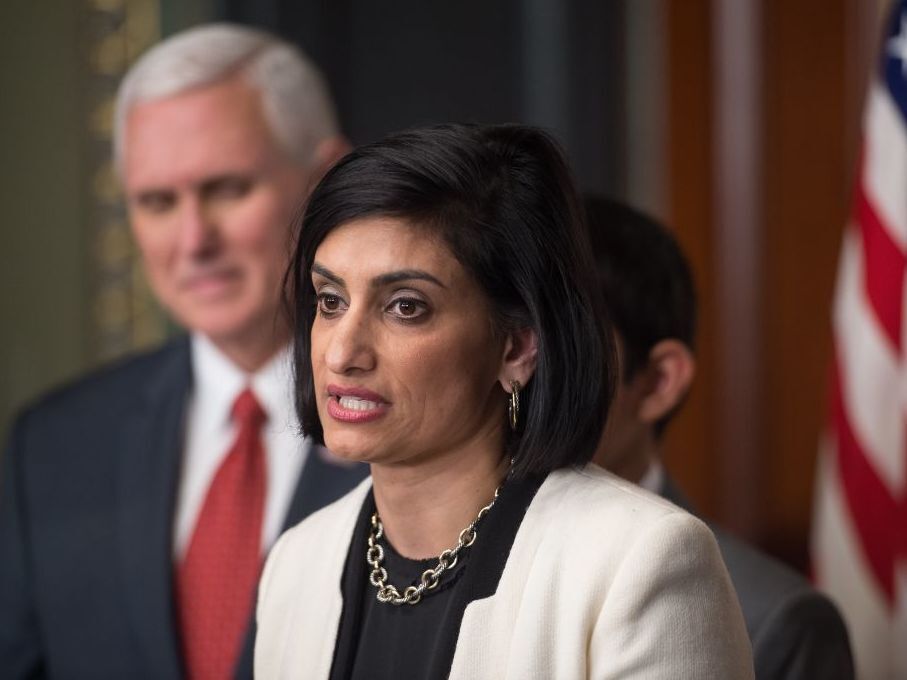
Seema Verma told hospital executives that she wants states to have flexibility in how they administer Medicaid, but there are limits.
Nicholas Kamm/AFP/Getty Images
hide caption
toggle caption
Nicholas Kamm/AFP/Getty Images
The Trump administration has made clear it would like to remake the American health care system. There’s been the protracted battle over the Affordable Care Act. Now, there are some new moves on the future of Medicaid.
On Monday, the federal government released decisions on requests from two states to change the way they administer the health care program for low-income people.
The first decision came on lifetime caps. Kansas wanted to cut off Medicaid benefits for some people after 36 months.
At a meeting of the American Hospital Association in Washington, D.C., Seema Verma, administrator of the Centers for Medicare and Medicaid Services, made clear that she wants states to have lots of flexibility. But she also drew a line on how far that flexibility can go.
“We’re also determined to make sure that the Medicaid program remains the safety net for those that need it most,” Verma said. “To this end, we have determined we will not approve Kansas’ recent request to place a lifetime limit on Medicaid benefits for some beneficiaries.”
In Kansas, the number of adults eligible for Medicaid is already pretty small, mostly the elderly and the disabled. “Non-disabled adults who don’t have minor children are not eligible for Medicaid at all in Kansas, no matter how low their income is,” says Louise Norris, who writes about health care policy for healthinsurance.org.
The cap would therefore have affected only parents of young kids with extremely low incomes — those who make 38 percent of the federal poverty limit. “So to put that in perspective, if you have a household of three people — like a single parent with two kids — you’re talking $8,000 a year in total income,” Norris said.
The rejection of lifetime caps in Kansas sends a signal to the handful of other states — Maine, Arizona, Utah and Wisconsin — that have similar proposals pending.
Later in the day, there was another decision on Medicaid, when New Hampshire became the fourth state to have its request approved to add work requirements.
Joan Alker of the Georgetown University Center for Children and Families said the timing of the decisions on Kansas and New Hampshire was probably planned. “The fact that they rushed them out together suggests that they wanted to quickly get back to their message that states know best,” she said.
What wasn’t determined Tuesday was the outcome of Kansas’ proposal to add its own work requirements. All of the states that have received approval so far — Indiana, Kentucky, Arkansas and now New Hampshire — expanded eligibility for Medicaid under the Affordable Care Act.
If Kansas’ request is approved, it would be a first for a nonexpansion state. And Alker says many adults in Kansas would lose their Medicaid coverage. “You have a parent who, if they met the work requirement their income would be too high and they’d lose Medicaid, and if they don’t meet the work requirement they’d get kicked off,” Alker says. She calls it a Catch-22.
Other states that didn’t expand Medicaid and also want a work requirement — like Mississippi and Alabama — are closely watching what happens with Kansas’ proposal.
For Babies Of The Opioid Crisis, Best Care May Be Mom's Recovery

Amanda Williammee and her daughter Taycee. Now a happy preschooler, the little girl was born with neonatal abstinence syndrome — a condition that includes opioid withdrawal symptoms like tremors, irritability, sleep problems and high-pitched crying.
Sarah Jane Tribble/KHN
hide caption
toggle caption
Sarah Jane Tribble/KHN
Amanda Williammee pauses at the window of the toddler classroom at Horizons day care in Carrboro, N.C., to quietly check on her 2-year-old daughter Taycee.
“I like to peek in on her and see what she’s doing before she sees me,” Williammee says. “I love watching her — it’s too funny.”
There’s a dance party in progress. Soon, Taycee spots her mom, screams and comes running to the door.
“Did you dance?” Williammee asks, leaning down to her daughter.
It seems to be a pretty typical preschool pickup, but it’s not. Tied to the University of North Carolina Medical Center, Horizons is a residential substance use disorder treatment program where mothers undergoing treatment can bring their children. The kids attend school or day care while mothers take classes and go to therapy sessions.
Williammee, now 25, has struggled with addiction since she was a 19-year-old college student. She injected opioids during both her pregnancies and both of her babies were born with neonatal abstinence syndrome — a condition that includes drug withdrawal symptoms like tremors, irritability, sleep problems and high-pitched crying. Williammee remembers that withdrawals were harder for Taycee than they’ve been for 6-month-old Jayde.
“It wasn’t just like we had this two-week period at the hospital of her being sick. It went on for months because she did not sleep,” Williammee remembers. In those days Taycee only slept for 20-minute stretches and needed constant swaddling.
On average, a baby is born in withdrawal from opioids every 15 minutes in the U.S., according to recent research. That staggering statistic raises concerns among doctors and social workers — and among mothers like Williammee.
Today, both Taycee and Jayde are developing normally. Still, Williammee wonders about the risk of lasting effects on each child’s body and brain.
Research is just beginning to point toward the answers. Recently, an international, multisite study tracked for 36 months nearly a hundred children whose mothers had been in medically-assisted treatment during their pregnancy. Hendrée Jones is executive director at Horizons and co-authored the study. She says the early results suggest there are reasons to be optimistic.
“The children through time tended to score within the normal range of the tests that we had,” Jones says.
Dr. Stephanie Merhar, a neonatologist at Cincinnati Children’s Hospital, released a separate study after growing increasingly worried the past few years as she treated children coming in for checkups. Her team reviewed the charts of 87 2-year-olds who had been diagnosed with neonatal abstinence syndrome at birth. Each child had been given a standard test for 2-year-olds that evaluated cognitive, language and motor skills — the same assessment used in Jones’ study.
Merhar says what her team found was a call to action.
“Most of these children do well, and they do within the normal range,” she says. There is still a risk these kids may experience some delays as they continue to grow, she adds, so they should be monitored closely.
The problems Merhar found among children exposed to opioids in utero include about 8 percent who need treatment for strabismus, or lazy eye, by age 3. A number of the children also scored at least one standard deviation below the mean in terms of cognitive, language and motor skills.
The underlying reason for those delays is unclear, she says, and the long-term outlook for the children is still unknown.
Still, exposure to opioids in utero does not appear to be as damaging as some other addictive substances.
“It’s not like the fetal alcohol syndrome problem, where it really affects the brain,” Merhar says. “[Children with fetal alcohol syndrome] are at high risk of mental retardation and there are significant developmental delays.”
Dr. Jonathan Davis, who chaired a Neonatal Advisory Committee for the U.S. Food and Drug Administration, is calling for more longitudinal research.
Davis, who is also chief of newborn medicine at Floating Hospital for Children at Tufts Medical Center, has passionately advocated for a national registry for babies exposed to drugs while in the womb.
While findings so far haven’t found major delays, he says, there’s a chance subtler effects might yet emerge. “How are these children going to function when they get to school?,” he wonders. “How are these children going to speak, socialize and interact?”
In the 1980s and early 90s, fears for children born into that era’s crack cocaine epidemic turned out to be largely unfounded, according to the National Institutes of Health.
Dr. Lauren Jansson, director of pediatrics center for addiction and pregnancy at Johns Hopkins Medicine, has treated mothers and babies since the early 1990s. When asked about how these opioid-affected babies are likely to develop, she says “the one solid thing we can say about children who are exposed to substances prenatally is that their mothers need treatment.”
Horizons opened its program in 1993 because of the cocaine epidemic. Since then, Jones says, it has become clear that the lives of people with substance use disorders — whether it be cocaine or opioids — can be very chaotic, and that chaos might be as damaging to their children as the direct effects of the drugs.
Treat the parents, and kids benefit, too.
Most of the mothers at Horizons took multiple substances when pregnant and also experienced trauma, abuse or neglect in their own childhoods. And that can be hard to overcome, Jones says
“There’s often times an unrealistic expectation by society, she says. “They’re supposed to automatically know how ‘be good mothers’ — how to be nurturing mothers. That’s like trying to teach somebody algebra when they’ve never even had addition.”
Horizons’ residential treatment program now pairs parenting classes with addiction treatment.
In an interview inside her homey, staff-monitored apartment, Willammee describes why this time will be different.


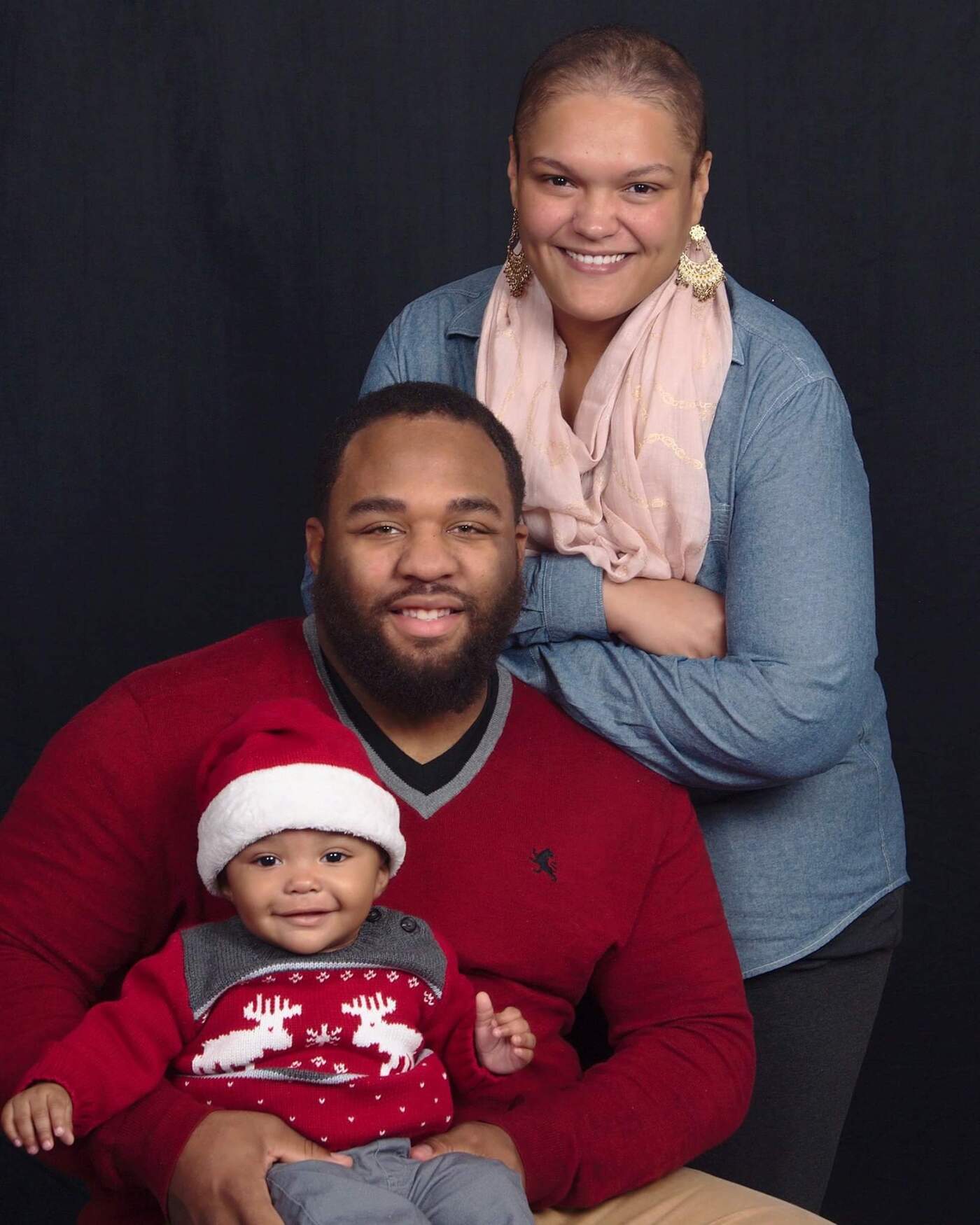


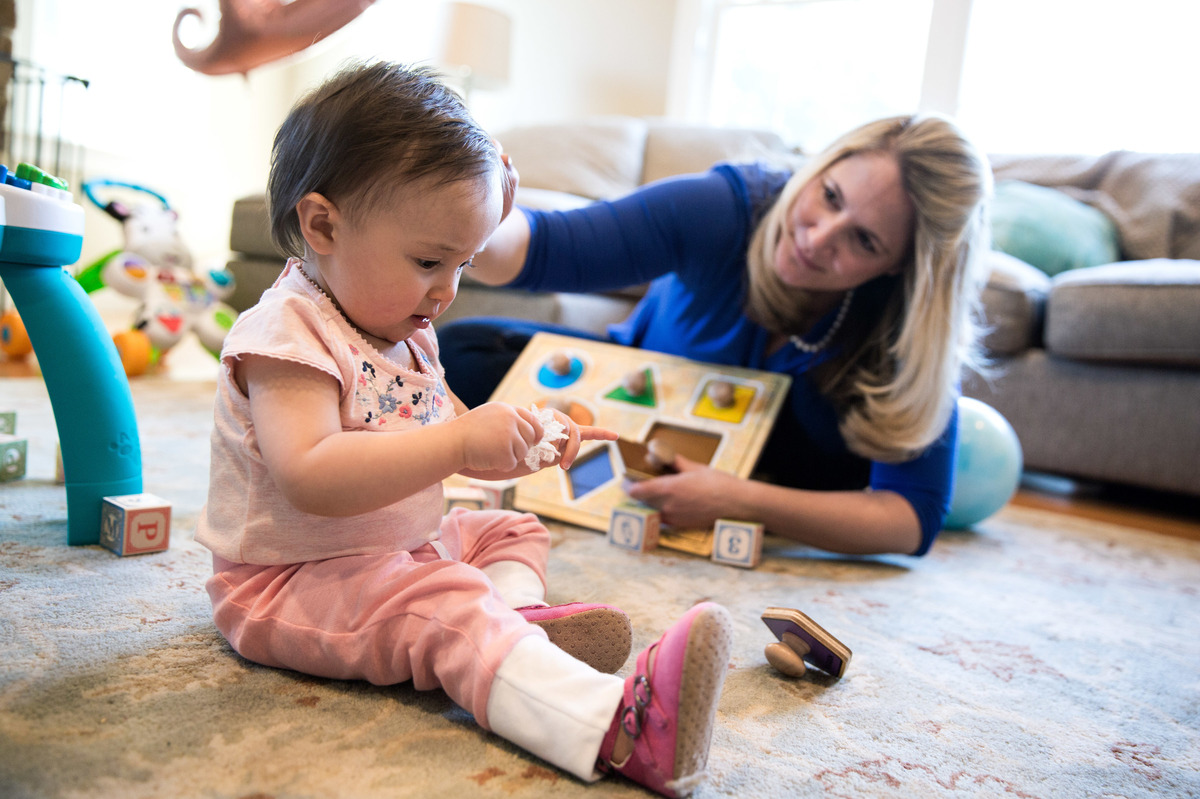
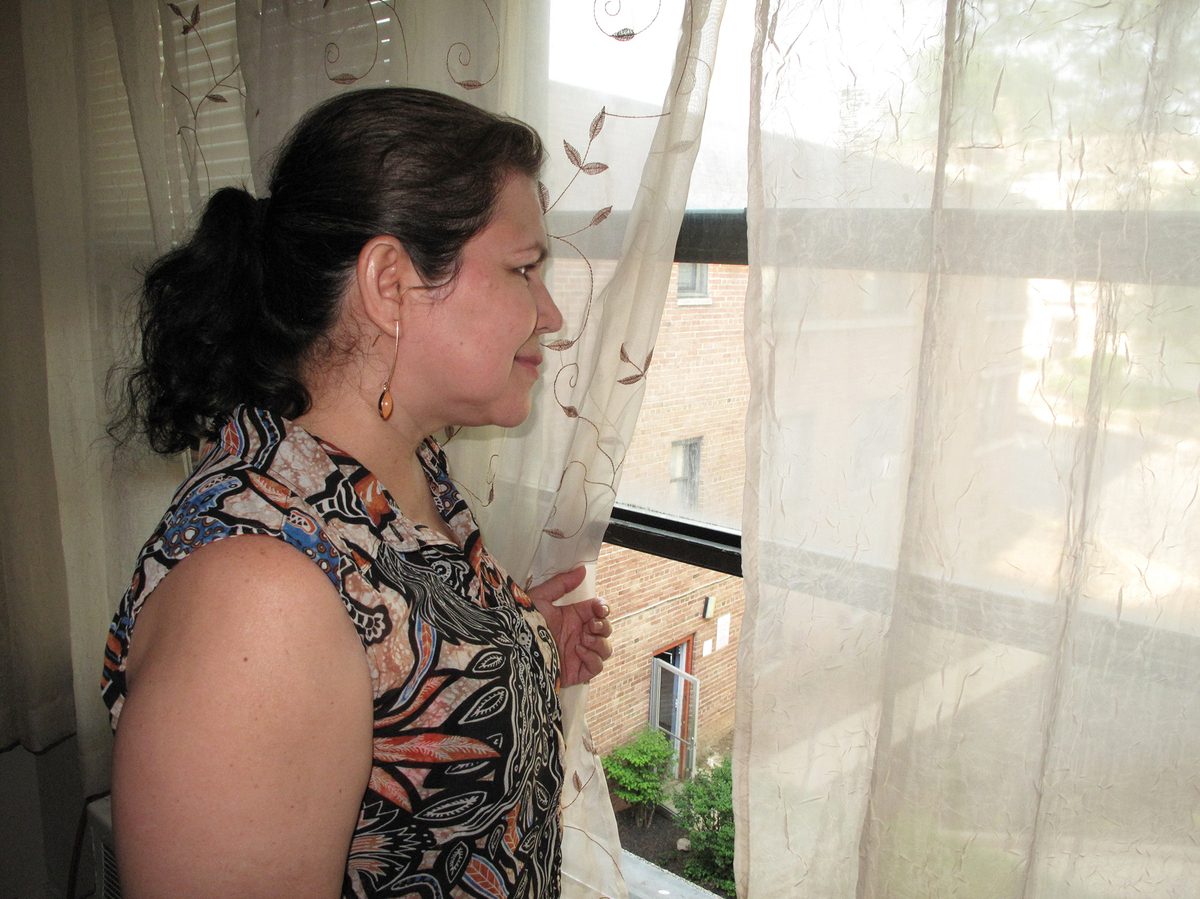



“I’m not just a drug addict,” says Amanda Williamee. Her desire to be a great mom to daughters Taycee (left) and Jayde (right) has motivated her to get into treatment, and pick up the psychological tools she’ll need to stay clean.
Sarah Jane Tribble/KHN
hide caption
toggle caption
Sarah Jane Tribble/KHN
“It’s going to work,” she says. “It is. I’ve got a lot of tools to take with me and use in my life to stay clean, instead of using drugs to cover up my feelings and take their place, when something’s hard.”
Another motivator: The local child protective services agency has threatened to take Taycee and Jayde away this time, if Williamee doesn’t stay clean. The little girls are napping in the next room as Willammee talks.
“I’m not just some drug addict,” she says. “I’m a mother of two kids. And I feel like I’m a great mother. I have educational goals I plan to accomplish, and I plan on being a productive human being in our society.”
Williammee is now working hard to finish up 18 months of college classes so she can graduate. She wants to become a teacher.
Kaiser Health News , a nonprofit news service covering health issues, is an editorially independent program of the Kaiser Family Foundation, and not affiliated with Kaiser Permanente.
Farm Bill Could Undo Part Of The Affordable Care Act


The House bill calls for $65 million in loans and grants, administered by the USDA, to establish “association-style” health plans that likely wouldn’t have to cover hospitalization, prescription drugs or emergency care.
Zach Gibson/Getty Images
hide caption
toggle caption
Zach Gibson/Getty Images
Although the GOP repeal-and-replace mantra seems to have quieted, some Republican lawmakers continue efforts to get around the sweeping federal health law’s requirements.
Sometimes that happens in surprising places. Like the farm bill.
Tucked deep inside the House version of the massive bill — amid crop subsidies and food assistance programs — is a provision that supporters say could help provide farmers with cheaper (and likely less comprehensive) health insurance than plans offered through the Affordable Care Act.
It calls for $65 million in loans and grants administered by the Department of Agriculture to help organizations establish agricultural-related policies modeled on “association health plans.”
But the idea is not without skeptics.
“I don’t know that anyone at the Department of Agriculture, with all due respect, knows a darn thing about starting and maintaining a successful insurance company,” said Sabrina Corlette, a professor and project director at the Georgetown University Health Policy Institute.
Association health plans are offered through organizations whose members usually share a professional, employment, trade or other relationship, although the Trump administration is soon to finalize new rules widely expected to broaden eligibility while loosening the rules on benefits these plans must include.
Under Trump’s proposal, association plans would not have to offer coverage across 10 broad “essential” categories of care, including hospitalization, prescription drugs and emergency care. They could also spend less of the revenue from premiums on medical care.
Under the farm bill, starting next year, the secretary of Agriculture could grant up to 10 loans of no more than $15 million each to existing associations whose members are ranchers, farmers or other agribusinesses.
The language is strikingly similar to a bill introduced April 12 by Rep. Jeff Fortenberry (R-Neb.), a supporter of association health plans. He did not respond to calls for comment.
Although the farm bill is usually considered “must-pass” legislation by many lawmakers, this year’s version is currently facing pushback because of controversy surrounding other parts of the measure — mainly language that would add additional work requirements to the food stamp program.
Still, no matter what happens there, the focus on association health plans won’t go away.
The plans — coupled with another Trump administration move to make short-term insurance more widely available — could draw healthier people out of the ACA markets, leaving the pool of beneficiaries with higher percentages of people who need medical care. And that, some say, could drive up premiums for those who remain in marketplace plans.
The National Association of Insurance Commissioners, for example, has warned that association plans “threaten the stability of the small group market” and “provide inadequate benefits and insufficient protection to consumers.”
Actuaries have made similar arguments.
Others are concerned about the idea of the government providing funding for such plans.
“We have reams of experience with AHPs that have gone belly up … and the notion that we should put taxpayer money into them is irresponsible,” says Georgetown University’s Corlette.
She’s referring to the industry’s mixed track record with plans. Some have served members well, but other plans have been marked by solvency problems that left consumers on the hook with unpaid medical bills, or were investigated for providing little or no coverage for such things as chemotherapy or doctor office visits.
It’s not fair to simply focus on the failures, counters attorney Christopher Condeluci, who in the past has served as tax and benefits counsel to the Senate Finance Committee and now advises private clients, some of whom are interested in association plans.
“Some AHPs were not successful,” he agrees. “But there are arguably more examples of AHPs that work. The trouble is, everyone focuses on the negative.”
Although the GOP generally supports association plans, using taxpayer funds to help start them could prove problematic for some conservatives in Congress.
Many Republican lawmakers have expressed concern about the use of tens of millions of taxpayer dollars to start insurance co-ops that were part of the ACA; most of them failed.
“The hard-earned tax dollars collected from working Americans, sitting at Treasury right now, are not venture capital, Rep. Kevin Brady (R-Texas) said at a subcommittee hearing in November 2015. Currently, Brady is chairman of the powerful House Ways and Means Committee.
But the provision could be popular in rural areas.
“We think it’s a good idea,” says Rob Robertson, chief administrator for the Nebraska Farm Bureau Federation, whose group is considering sponsoring an association plan.
About half of his members, Robertson says, have a spouse working a non-farm job, mainly to get the health insurance coverage the job entails. And of other members who buy their own health insurance, some are facing astronomical premiums and are looking for relief.
“I can’t think of any sector that is affected more by the huge premium increases under Obamacare than farmers and ranchers,” Robertson says.
The farm bill — including the AHP provision — was approved by the House Committee on Agriculture in mid-April, and is currently awaiting floor consideration. Meanwhile, a final rule on the Trump AHP rule, which has drawn more than 900 comments from supporters and opponents, could be issued as early as this summer.
Kaiser Health News, a nonprofit news service, is an editorially independent program of the Kaiser Family Foundation, and is not affiliated with Kaiser Permanente.
Reversing An Overdose Isn't Complicated, But Getting The Antidote Can Be

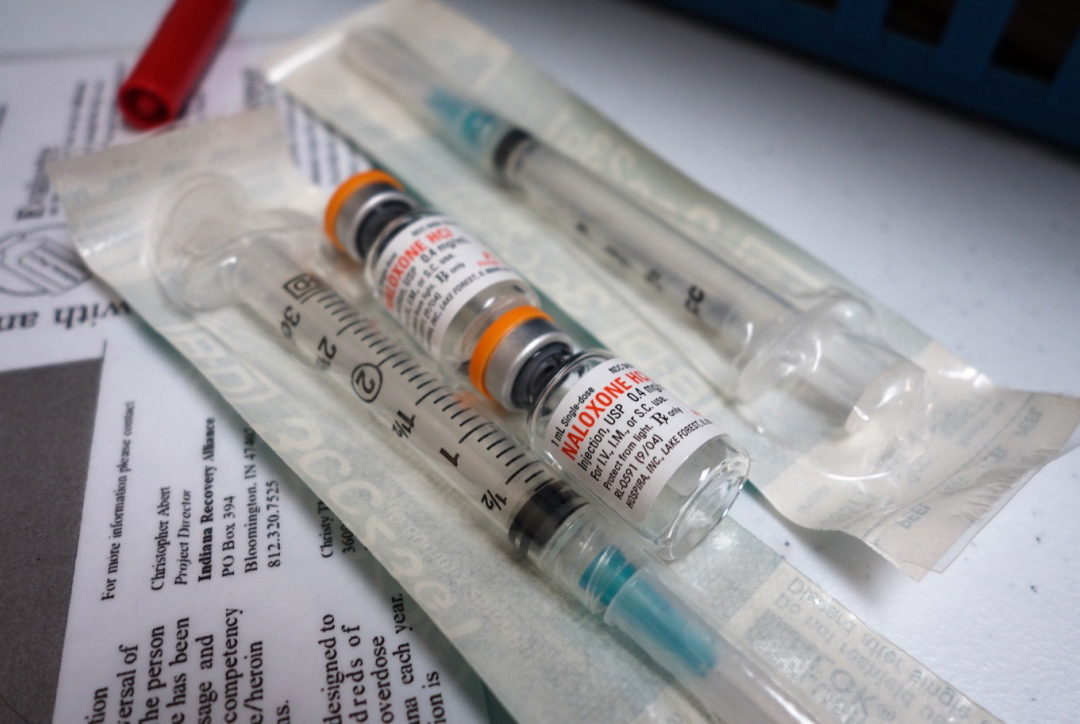
The Surgeon General recommends more Americans carry naloxone, the opioid overdose antidote.
Jake Harper/Side Effects Public Media
hide caption
toggle caption
Jake Harper/Side Effects Public Media
A few months ago, Kourtnaye Sturgeon helped save someone’s life. She was driving in downtown Indianapolis when she saw people gathered around a car on the side of the road. Sturgeon pulled over and a man told her there was nothing she could do: Two men had overdosed on opioids and appeared to be dead.
“I kind of recall saying, ‘No man, I’ve got Narcan,’ ” she says, referring to the brand- name version of the opioid overdose antidote, naloxone. “Which sounds so silly, but I’m pretty sure that’s what came out.”
Sturgeon sprayed a dose of the drug up the driver’s nose, and waited for it to take effect. About a minute later, she says, the paramedics showed up.
“As they were walking towards us, the driver started slowly moving,” she says. Both people survived.
Sturgeon had the drug with her because she works for Overdose Lifeline, a non-profit devoted to distributing naloxone, but many bystanders would be unprepared to help.
Last month, U.S. Surgeon General Jerome Adams issued an advisory urging more Americans to learn to use naloxone, and carry it with them in case they encounter someone who has overdosed.
With the increase in overdoses nationwide, the advisory suggests that lay responders — people who may witness an overdose before police or EMS arrive — can play a critical role in saving lives.
But if you’re not a medical professional, getting a dose of naloxone can be difficult. It is a prescription drug and normally a doctor or nurse would have to directly prescribe it for the person at risk of overdosing. Corey Davis, an attorney for the National Health Law Program, says that creates a barrier for people with addiction.
“A lot of people at risk of an overdose don’t have contact with a medical provider or they’re afraid because of stigma,” he says.
To broaden access, every state and Washington, D.C., have passed laws making it easier for friends and family members or bystanders to get and use naloxone. Just how easy it is still depends on your state, or even the pharmacy you go to.
Davis says most states allow something called third-party prescribing, which lets doctors prescribe naloxone to someone who knows the person at risk of an overdose. And most states have also passed some kind of Good Samaritan law providing legal immunity for people who administer the drug or call 911.
Davis says another type of law allows a kind of prescription called a standing order.
“But instead of having a person’s name on it, it has a group of people,” says Davis.
A standing order could apply, for example, to anyone who takes opioid painkillers, or suffers from addiction. Or, Davis says, “Anybody who might be in a position to assist someone, which unfortunately, today means essentially everybody.”
In his home state of Indiana, Jerome Adams signed a statewide standing order in 2016, while serving as the state’s health commissioner. It allows pharmacies, local health departments or nonprofits that register with the state and follow certain requirements to dispense the drug to anyone who requests it.
But two years later, only about half of Indiana pharmacies are registered, and local advocates say many people, even some pharmacists, are still unaware of the law.
Even if you understand the laws regulating naloxone in your state — and you feel comfortable asking for it at the pharmacy counter — there’s still the cost, which has gone up in recent years. Two pharmacies near WFYI in Indianapolis, stock naloxone. One charged $80 for two doses of the generic form of the drug. The other charged $95 for two doses of Narcan, the brand-name version.
“It’s expensive,” says Brad Ray, a researcher at Indiana University’s School of Public and Environmental Affairs. “People who are users are scraping money together to buy drugs. They’re not prepared to buy naloxone with that money.”
Several U.S. Senators have signed on to a letter urging Health and Human Services Secretary Alex Azar to negotiate with drug companies to lower the price of naloxone.
For people who can’t afford the drug, Ray says health departments and nonprofits can help. Laws in many states allow these organizations to dispense naloxone to lay responders.
Indiana’s health department used federal and state funds to purchase nearly 14,000 naloxone kits since 2016, the state reports. The state distributes those free doses through county health departments. But nearly half of Indiana counties didn’t request kits. And the majority of the kits went to first responders.
Local health departments, Ray says, need to work harder to get naloxone to people who might use it. People who use drugs, after all, may not feel comfortable going to the government for naloxone.
“Getting it in the hands of users — that’s the trick we need to figure out,” Ray says.
Corey Davis says there is one change that could really help. The Food and Drug Administration or Congress could make naloxone an over-the-counter medication to make it easier to access, and maybe cheaper. FDA Commissioner Scott Gottlieb has the authority to do so, Davis says, but so far he has not.
This story is part of a reporting partnership with NPR, WFYI, Side Effects Public Media and Kaiser Health News.
Telemedicine Takes Transgender Care Beyond The City


Janice Chang for NPR
At an outpatient lab in Tifton, Ga., where Karen Williams gets her blood drawn, a clerk looked from her computer screen to Williams’ printed lab order, then back again.
“This is not right,” the clerk said, squinting at the lab order. There, the birthdate and address matched the ones on the screen, but the name displayed was a male one.
A transgender woman, Williams lived as a man for nearly 50 years before beginning to make physical changes several years ago. She’s grown out her hair and has gotten most of an old goatee lasered off. One of the things that hasn’t changed, however, is her legal name – so in most health care situations, she usually uses her old name and driver’s license.
The clerk looked at the computer again. Williams took a deep breath.
“Does it say ‘Karen Williams?’ ” she asked the clerk.
The clerk nodded.
“That’s me,” Williams said.
For many transgender people, moments like this, when a health care worker first becomes aware of their gender identity, are often fraught with fear and anxiety.
Ten percent of transgender people said they had been personally discriminated against when going to a doctor or health clinic, according to a 2017 poll conducted by NPR, the Robert Wood Johnson Foundation and the Harvard T.H. Chan School of Public Health. And 22 percent of transgender people say they have avoided a doctor or seeking health care out of concern that they would be discriminated against.
Many fear discrimination will increase with strengthened protections for doctors and nurses refusing to provide certain care on religious grounds. The more care refusals transgender people experience, the less care they seek, and the higher their rates of preventable and treatable conditions, including cancers, mental health problems, and substance-use disorders.
In rural areas, doctors and nurses competent in transgender care are few and far between. It can also be a challenge to find providers who offer respectful care for medical issues unrelated to gender identity.
Remote medical consultation by videoconference is one possible solution.
Williams has a primary care doctor at a family practice in town, where framed Bible verses hang on the wall and Christian music plays in the waiting area. When she felt ready to begin taking hormones for gender transition, she didn’t bother asking her local doctor. Instead, she made an appointment with Dr. Izzy Lowell, a family practitioner who specializes in caring for transgender and gender non-conforming people. But Lowell is based in Atlanta, a three-hour drive away.
Getting to the appointment took some doing. Williams teaches fifth grade and is the primary caregiver for her disabled 32-year-old son. She scheduled the appointment over her school’s spring break and arranged for care for her son during her trip.
After all the effort to get to her first visit, she was initially taken aback when Lowell informed her she would soon be scaling back her brick-and-mortar practice to focus on telemedicine. Williamscamearound to the advantages fairly quickly. “I know lots of people in rural areas, like me, where they don’t have any doctor who remotely knows anything about transgender care,” she said.
It’s those patients Lowell had in mind when she opened QMed in the late summer of 2017. The practice offers care exclusively to transgender and gender nonconforming patients in the southeastern United States. Lowell’s intent was to lower the barrier to access for adults and adolescents living in rural parts of the region. In less than a year, she’s been able to do that, with only occasional hiccups.
Williams, for instance, no longer has to plan weeks in advance for her visits with Lowell. They are now as close as her nearest webcam – at least, in theory. During Williams’ last appointment, Lowell’s videoconferencing software was uncooperative, and they had to make do with a phone call. But that was the exception.
Typically, patients are able to use the software to choose their preferred name and pronouns before each visit. These often change during gender transition, Lowell says. Patients encounter no one other than Lowell as she assesses sensitive issues like changes in body hair and sexual function from her location in a hip Atlanta neighborhood. Although she could conduct most of her patient care online, about half of her patients still prefer to come to her office.
Because Lowell uses headphones during video visits, patients’ voices aren’t audible in the room. But for an extra layer of privacy, and for the patients who still choose to come in person, Lowell keeps white noise machines in the waiting room she shares with another small business.
Before first visiting Lowell in her old office, Williams mentally prepared herself to endure being called “mister” by clinic staff and being stared at by others in the waiting room. The one-on-one contact of the virtual office eliminates that familiar dread.
“That is one of the beauties of telehealth,” says Mei Kwong, executive director of the California-based Center for Connected Health Policy. In communities where everybody knows each other’s business, she says, telemedicine adds a level of confidentiality that is particularly beneficial to people with potentially stigmatizing conditions.
Telemedicine also reduces travel costs related to health care for people in rural areas.
In a study of rural sexual and gender minorities, 14 percent of transgender people reported traveling more than an hour to see their primary care provider – not necessarily the doctor who provided gender-related care. And in a 2017 survey by the Center for American Progress, 30 percent of transgender people living outside metro areas said it would be very difficult or impossible to find an alternative to their existing provider.
Rural transgender people aren’t alone in struggling to get health care. In the U.S., many rural households suffer from lower rates of health insurance coverage, shortages of doctors and nurses and low access to the private or public transportation necessary to get to a health care facility. But for transgender people, those challenges are exacerbated due to increased vulnerability to unemployment and poverty, says Laura Durso, who helped lead the Center for American Progress survey.
While telemedicine could give rural Americans a bridge to better health care, there’s a catch. Nearly 30 percent of rural dwellers in America don’t have access to broadband Internet service, a necessity for telemedicine to work well.
Underpowered Internet service can discourage health care providers from offering telemedicine services, says Kwong. Many state laws and insurance policies don’t regard audio-only interactions as telehealth, so if a video connection fails, as Williams’ did, the provider can’t bill for the visit.
As it is, insurance reimbursement for telemedicine services is often so low that many telemedicine providers struggle to break even, says Kwong. Analyses of 2013 data collected by the Health Care Cost Institute suggest that, on average, private insurers pay for telemedicine services at rates about 30 to 40 percent lower than for the same services provided face-to-face. Kwong says many providers are motivated more by altruism than profit: “They do it because this is the only way they can get those services to their community.”
Lowell is lucky to live in one of 32 states with a telemedicine parity law, which mandates that private insurance companies pay her as much for a telemedicine visit as they would for a face-to-face visit.
Less than a year into her practice, she is almost breaking even, and is near the point of covering her startup expenses from 2017.
While she bears the significant administrative burdens of an independent practice by herself, the occasional headache is worthwhile because providing access is so important. “The current system is not at all fair to transgender people,” she wrote in an email, “and I don’t like unfairness.”
Williams has been fortunate. Much of her care with Lowell is covered by insurance. And she has been pleasantly surprised by the reactions of health care workers to whom she’s disclosed her status. Back at the outpatient lab, when she explained to the confused clerk that she was in the process of transitioning, she got an unexpected response.
“That’s awesome,” said the clerk. “This is awesome. So, which name do you want to use?”
Keren Landman, a practicing physician and writer based in Atlanta, covers topics in medicine and public health.Reporting for this project was supported in part by a grant from the Solutions Journalism Network.
Why Few Of The Millions Of Elder Abuse Cases Get Reported Each Year

It’s hard to measure the total cost to society of scammers and family members who prey on the elderly. Journalist Nick Leiber reports that a conservative estimate is $37 billion every year. Leiber talks about his reporting for Bloomberg with NPR’s Audie Cornish.