New York City Mice Carry Bacteria That Can Make People Sick

Mice may be adorable, but the droppings and the bacteria they contain, not so much.
Mchugh Tom/Science Source/Getty Images
hide caption
toggle caption
Mchugh Tom/Science Source/Getty Images
In E.B. White’s classic children’s story Stuart Little, the eponymous mouse lives happily with a New York City family.
But Dr. Ian Lipkin wanted to know whether cohabiting with a mouse may be hazardous to one’s health.
So Lipkin and his colleagues at the Columbia University Mailman School of Public Health spent a year collecting mice from throughout New York City to see whether they carry any dangerous germs.
In two papers published in the journal mBio, the researchers report the results from testing of 416 mice from seven sites.
One analysis found that mice carry a variety of viruses, although none of the viruses are linked to human disease. But the other study found a wide range of bacteria that are known to cause sickness in humans. These included the culprits in sometime serious intestinal infections: E. coli, shigella, salmonella and Clostridium difficile.
“Some of these illnesses are life-threatening,” Lipkin says. “These are serious problems.”
And some of the bacteria showed signs they could be resistant to treatment by antibiotics.
“You not only have mice carrying bacteria that have the potential to cause human disease, but also carrying bacteria that have components that actually would thwart our ability to treat these infections with antibiotics,” Lipkin says.
Lipkin stresses that the researchers haven’t actually linked mice to any large outbreaks of human disease. So people shouldn’t overreact whenever they see a mouse in the house. But they should take steps to protect themselves.
“I wouldn’t think of mice in your house as Stuart Little,” says Lipkin, who served as chief scientific consultant on the movie Contagion. “These are serious challenges because they are reservoirs for important human pathogens.”
Common-sense steps could minimize the risk. For example, people should block holes that mice might use to get in their homes or apartments. And never eat any food that might possibly have come into contact with mouse droppings — no matter how brief such contact was.
“There is no five-second rule,” Lipkin says. “If your food is contaminated with mouse droppings, you shouldn’t eat it.”
Other researchers who study how animals spread disease agree.
“One doesn’t want to say the sky is falling,” says James Childs at the Yale School of Public Health. “But nonetheless, these are interesting and important studies.”
Medicare Advisers Recommend Payment Cuts To Many Free-Standing ERs

Free-standing ERs tend to have lower standby costs than hospital-based facilities that have to be ready to treat dire injuries. But the free-standing ERs typically receive the same Medicare rate for emergency services.
sshepard/Getty Images
hide caption
toggle caption
sshepard/Getty Images
The woman arrived at the emergency department gasping for air, her severe emphysema causing such shortness of breath that the physician who examined her immediately put her on a ventilator to help her breathe.
The patient lived across the street from that suburban Denver ER. The facility wasn’t physically located at a hospital, says Dr. David Friedenson, the physician who took care of her that day. But it was affiliated with a hospital several miles away — North Suburban Medical Center.
Free-standing emergency departments have been cropping up across the U.S. in recent years and now number more than 500, according to the Medicare Payment Advisory Commission, an agency thatreports to Congress.
Often touted as more convenient, less crowded alternatives to hospitals, these ERs often attract suburban walk-in patients with good insurance whose medical problems are less acute than those who visit an emergency room that’s inside a hospital.
If a recent MedPAC proposal is adopted, however, some providers predict that the free-standing facilities could become scarcer.
Propelling the effort are concerns that MedPAC’s payment for services at these places is higher than it should be, since the patients who visit them are sometimes not as severely injured or ill as those at hospital-based ERs.
The proposal would reduce Medicare payment rates by 30 percent for some services at hospital-affiliated, free-standing emergency departments that are located within 6 miles of an emergency room within a hospital.
“There has been a growth in free-standing emergency departments in urban areas that does not seem to be addressing any particular access need for emergency care,” says James Mathews, executive director of MedPAC. The convenience of a neighborhood ER may even induce demand, he says, calling it an “if you build it, they will come” effect.
Emergency care is more expensive than a visit to a primary care doctor or urgent care center, in part because ERs have to be on standby 24/7, with expensive equipment and personnel ready to handle serious car accidents, gunshot wounds and other trauma cases.
Even though free-standing ERs have lower standby costs than hospital-based facilities, they typically receive the same Medicare rate for emergency services.
The Medicare facility fee payments, which include some ancillary lab and imaging services, but not reimbursement to physicians, are designed to help defray hospitals’ overhead costs.
The proposal would affect only payments for Medicare beneficiaries. But private insurers often consider Medicare payment policies when setting their rules.
According to a MedPAC analysis of five markets — Charlotte, N.C., Cincinnati, Dallas, Denver and Jacksonville, Fla. — 75 percent of the free-standing facilities were located within 6 miles of a hospital that has an ER. The average drive time to the nearest hospital was 10 minutes.
Overall, the number of outpatient ER visits by Medicare beneficiaries increased 13.6 percent per capita from 2010 to 2015, compared with a 3.5 percent growth in physician visits, according to MedPAC. (The reported data doesn’t distinguish between conventional and free-standing emergency facility visits.)
“I think [the MedPAC proposal] is a move in the right direction,” says Dr. Renee Hsia, a professor of emergency medicine and health policy at the University of California, San Francisco, who has written about free-standing emergency departments.
“We have to understand there are limited resources, and the fixed costs for stand-alone EDs are lower,” Hsia says.
But hospital representatives say the proposal could cause some free-standing ERs to close their doors.
“We are deeply concerned that MedPAC’s recommendation has the potential to reduce patient access to care, particularly in vulnerable communities, following a year in which hospital EDs responded to record-setting natural disasters and flu infections,” says Joanna Hiatt Kim, vice president for payment policy at the American Hospital Association.
Independent free-standing emergency departments — those not affiliated with a hospital — would not be affected by the MedPAC proposal. Those facilities, which make up about a third of all free-standing emergency facilities, aren’t clinically integrated with a hospital and can’t participate in the Medicare program.
The MedPAC proposal will be included in the group’s report to Congress in June.
Proponents of stand-alone emergency facilities say they often provide lifesaving care, even without a clientele of acute trauma patients.
Friedenson says, for example, that being able to avoid the 15- to 20-minute drive to the main hospital made a critical difference for his emphysema patient.
“By stopping at our emergency department, I truly think her life was saved,” he says.
Kaiser Health News is an editorially independent news service that is part of the nonpartisan Henry J. Kaiser Family Foundation. Michelle Andrews is on Twitter @mandrews110.
Young People More Likely To Shift Toward Supporting Abortion Rights, Poll Finds

Activists both supporting and opposing abortion rights gathered in front of the the Supreme Court during the March for Life on Jan. 19.
Alex Wong/Getty Images
hide caption
toggle caption
Alex Wong/Getty Images
A new national poll finds a growing divide between younger and older Americans on abortion and reproductive health care — a shift that may be driven in large part by changing attitudes toward religion.
In the survey from the Public Religion Research Institute, or PRRI, respondents between the ages of 18 and 29 were more likely to report that their views on abortion had changedin recent years — and when they moved, they tended to move in favor of abortion rights. Of those young people whose opinions had changed, 25 percent said they became more supportive of legalized abortion compared to 9 percent who became less supportive.
Older respondents, meanwhile, were less likely to report they had changed their opinions; those who had changed their minds were more likely to have shifted towardopposing abortion rights.
“This moving in opposite directions has led us to a greater polarization between the generations on this issue,” said PRRI CEO Robert Jones.
The poll also looked at personal beliefs about abortion — in other words, opinions on the morality or ethics of abortion apart from the legal or political status of the procedure. More than half of Americans, 54 percent, said abortion “goes against my personal beliefs,” while 44 percent said it did not.
A substantial number of respondents appeared to separate their personal views from their public policy position; 34 percent said that while abortion violates their personal beliefs, they believe it should be legal in most or all cases.
Here, too, a generational divide was apparent: 60 percent of older respondents said abortion violates their personal beliefs, compared with 44 percent of younger people.
Jones said he believes the generational divide on abortion is explained at least in part by a larger shift among young people away from religion, particularly among white evangelical Protestants.
While some religious traditions support abortion rights, Jones notes that white evangelicals have consistently opposed abortion in larger numbers than other religious groups. In the PRRI poll, 78 percent of white evangelical Protestants said abortion goes against their personal religious beliefs compared with 59 percent of Catholics, 56 percent of black Protestants and 54 percent of white mainline Protestants.
But while white evangelicals remain a dominant religious group in America, the tradition is losing younger members.
Taken together, Jones said that may help to account for generational shifts in attitudes toward abortion.
Americans under 30 also were more likely than their elders to say that health insurance should cover abortion services and that the procedure should be available in their local communities.
“I think part of that is a clue to how younger people are seeing this, I think, less as a culture war, political issue, and more really as a health care issue,” Jones said. “And that I think puts it in different political terrain for younger people today.”
Overall, more than half of respondents, 54 percent, said abortion should be legal in “all or most cases,” while 43 percent said it should usually or always be illegal. A majority, 51 percent, said publicly funded health insurance programs, such as Medicaid, should not cover abortion.
The survey found one point of broad agreement: nearly two-thirds of Republicans and three-fourths of Democrats said elected officials are spending too much time talking about abortion rather than focusing on other issues.
The survey was conducted in March 2018 among 2,020 adults ages 18 and older living in the United States. Respondents were contacted by telephone, including cellphones, and the interviews took place in English and Spanish. The margin of error is 2.6 percentage points.
Merck Immunotherapy Drug Shines In Lung Cancer Study

A combination of an immunotherapy drug from Merck and standard chemotherapy led to improved survival for cancer patients.
Peter Dazeley/Getty Images
hide caption
toggle caption
Peter Dazeley/Getty Images
There’s encouraging news for cancer treatments that stimulate the immune system to attack cancer cells. A widely used immunotherapy drug appears to be useful in a greater number of patients with lung cancer.
The drug called Keytruda, or pembrolizumab, is already prescribed to a group of patients who have a type of malignancy called non-small cell lung cancer. It’s the principal form of lung cancer and found most commonly in people who have smoked.
Results of a study published online Monday by the New England Journal of Medicine show that the drug is useful in combination with standard chemotherapy in the majority of patients diagnosed with an advanced form of lung cancer.
Doctors already prescribe Keytruda to patients if a blood test shows that they are likely to respond to this drug. But Merck, the company that makes it, wanted to find out how the drug works in patients who aren’t obvious candidates as determined by that blood test.
Researchers led by Dr. Leena Gandhi at New York University Langone Health gathered data from more than 600 patients in 16 countries to test the drug more broadly. And it turns out that Keytruda, in combination with standard chemotherapy, also works in patients even if they have a low score on the blood test, which measures something called the tumor proportion score for PD-L1.
Side effects were almost universal — 99.8 percent of patients who received Keytruda and chemotherapy experienced them. And among those in the comparison group, who got a placebo and chemotherapy, 99 percent reported side effects. The most common issues in both groups were nausea, anemia and fatigue.
The study estimates that one year after treatment, 69 percent of patients who received the immunotherapy drug in addition to chemotherapy would still be alive, compared with 49 percent of people who received chemotherapy alone. While that’s a notable difference, the drug did not stop cancer entirely in most patients. A year and a half after treatment, the disease had returned in three-quarters of patients with the new treatment.
Even so, this success rate is better than doctors usually see in studies of this type. And it suggests that it’s fruitful to combine immunotherapy treatment with chemotherapy.
“It’s a big deal,” Dr. Roy Herbst, head of medical oncology at the Yale Cancer Center, told Shots. “It’s not a home run yet but it’s a pretty good double.” He was at the American Association for Cancer Research meeting in Chicago where the results were announced, and was asked to provide commentary afterwards.
Herbst said medical researchers didn’t immediately think of combining chemotherapy with immunotherapy because it seemed odd to try to use chemicals to kill the cancer cells that the immune system was also supposed to be hunting down. But it turns out to be a reasonable strategy. Herbst compares it with inflammation around a cut, which marshals the immune system into action, only in this case the wound being targeted is debris from dead cancer cells.
Dr. H. Jack West, an often skeptical cancer specialist at the Swedish Cancer Institute in Seattle, saw the data presented at the meeting in Chicago and called them “huge results.” He expects they will lead to broader use of immunotherapy combined with chemotherapy for this type of lung cancer.
A course of treatment with Keytruda can cost $150,000, so an expanded market could mean billions of dollars in additional revenue. Keytruda is also used to treat melanoma, Hodgkin lymphoma, and cancers of the stomach, head, neck and bladder.
Other companies have similar immunotherapy drugs, but Merck’s product has an advantage for treatment of lung cancer because it already has data in hand to show its drug is effective in this setting.
Immunotherapy has generated excitement in recent years because, in a minority of patients, it produces a long-lasting response even to cancers that have spread throughout the body. However, as in the latest study, the effects frequently don’t persist for most patients.
Some patients with non-small cell lung cancer respond to drugs that target specific mutations. Patients with those mutations (called EGFR and ALK) were not included in this study, and instead were referred to treatment with the drugs that target their mutation.
To contact Richard Harris, email rharris@npr.org.
Drug Test Spurs Frank Talk Between Hypertension Patients And Doctors

Research shows many patients skip the blood pressure medicine they’ve been prescribed, but don’t confess that to their doctors. Aegis Sciences now has equipment and a test that allows doctors to directly check via a patient’s urine sample.
Blake Farmer
hide caption
toggle caption
Blake Farmer
There’s an irony at the heart of the treatment of high blood pressure. The malady itself often has no symptoms, yet the medicines to treat it — and to prevent a stroke or heart attack later — can make people feel crummy.
“It’s not that you don’t want to take it, because you know it’s going to help you. But it’s the getting used to it,” says Sharon Fulson, a customer service representative from Nashville, Tenn., who is trying to monitor and control her hypertension.
The daily pills Fulson started taking last year make her feel groggy and nervous. Other people on the drugs report dizziness, nausea and diarrhea, and men, in particular, can have trouble with arousal.
“All of these side effects are worse than the high blood pressure,” Fulson says.
Research shows roughly half of patients don’t take their high blood pressure medicine as they should, even though heart disease is the leading cause of death in America. For many unfortunate people, their first symptom of high blood pressure is a catastrophic cardiac event. That’s why hypertension is called the “silent killer.”
A drug test is now available that can flag whether a patient is actually taking their prescribed medication. The screening, which requires a urine sample, is meant to spark a more truthful conversation between patient and doctor.
Fulson’s blood pressure is a moving target, and when she shows me the way she usually checks it at home, it’s a little high.
“Being on the radio might have an effect on me,” she jokes. Even being in a doctor’s office can add enough stress to elevate the results.
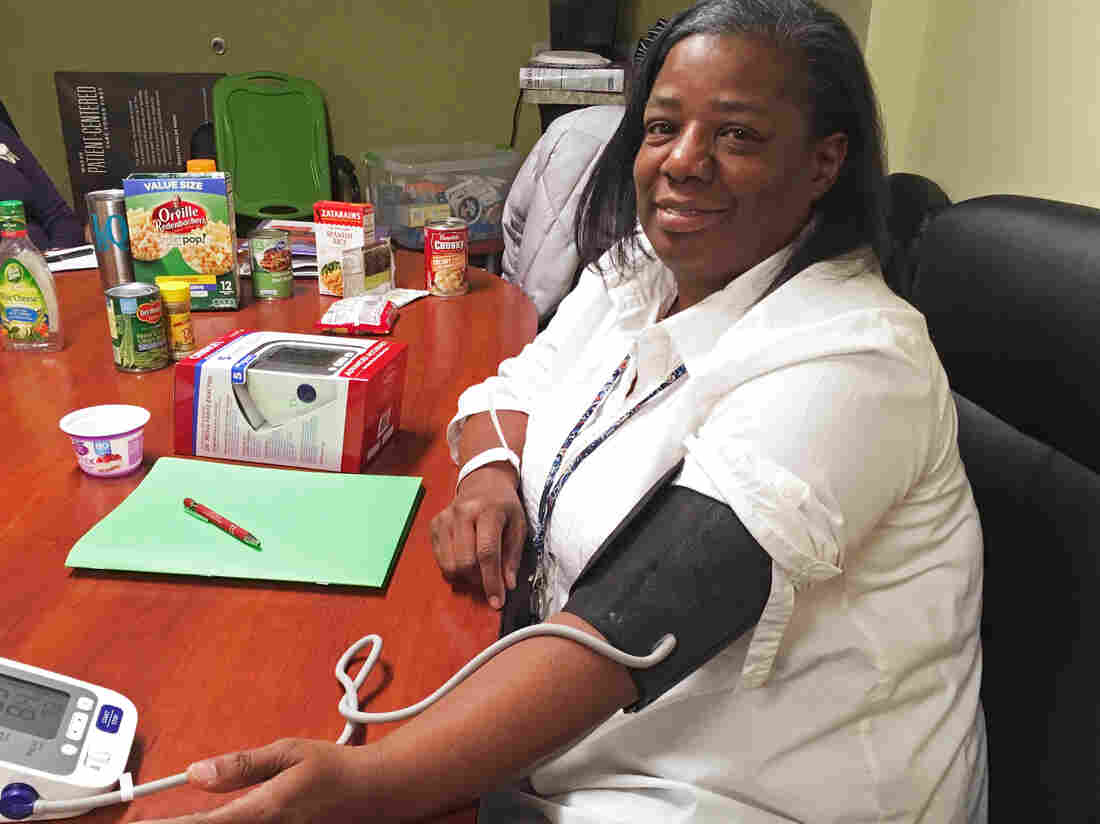
Sharon Fulson, of Nashville, Tenn., says she works hard to keep her hypertension under control. But the medication that’s supposed to help with that makes her nervous and groggy, and she’s skipped a dose more than once.
Blake Farmer
hide caption
toggle caption
Blake Farmer
This is why taking patients’ pressure — the familiar cuff test — doesn’t confirm for cardiologists whether patients are consistently taking their hypertension meds. The new drug test, dubbed KardiAssure, uses computers to analyze urine to search for 80 kinds of blood pressure and cholesterol medication, reporting the results in just three minutes.
The test only can determine whether a patient has taken pills in the last day or two. But Aegis Sciences Corporation‘s CEO Frank Basile says that’s a starting point.
“What we give doctors is a tool that enables them to have a very focused conversation with their patients,” he says. Only after the problem is out in the open, he says, can doctors get to the reasons behind it.
The conversation-starter has been effective for cardiologist Bryan Doherty in Dickson, Tenn., who has been working with Aegis to test the test. In one case, when the results showed a patient wasn’t regularly taking his medicine, though he’d claimed he was, he quickly confessed.
“He immediately turned around and told me that the cost was an issue,” Doherty says. “I think there was a degree of embarrassment there, potentially, or a feeling of letting me down in some way — something that had not come up in a 25-minute initial encounter when we had spoken before.”
Of course, the test has a cost, too — about $100 — though Doherty notes that insurance, including Medicare, has been covering it.
The conversation is important, Doherty says, because he can try less expensive prescriptions if cost is the issue, or experiment with different kinds of drugs if side effects are the problem. It’s worth the potentially uncomfortable encounter with the patient, he says, since the medication might make the difference between life and death.
The screening could also help a patient avoid other unnecessary tests or additional prescriptions, says Dr. Tom Johnston. He runs the hypertension clinic at Centennial Medical Center in Nashville, and is board president of the local chapter of the American Heart Association.
Other than calling the pharmacy to make sure people are refilling their prescription, he says he generally takes their word for it.
“I think there are a lot of times where you’re questioning in your mind whether someone has taken their medicine or not,” he says. “I think it would be good for the patient, too, for the doctor to know that they’re not taking their medicine so that we may not go down the wrong pathway.”
Johnston, who is not affiliated with Aegis, says his only concern about using a drug test would be running the risk of setting up an adversarial relationship with a patient. But there’s a way around that too, he says, by making them understand how vital it is to take the drug properly.
Sarah Avery, of Nashville, says she’s fully aware of the consequences.
“My daddy died because he didn’t take his medicine,” she says.
Hypertension runs in her family. Her mom and grandmother also battled high blood pressure. Still, the medication is such a drag, she’s decided at times to stop without consulting her doctor.
“I lied. Really, I lied,” she admits. “He said, ‘Are you taking your medicine?’ I said, ‘Mmhmmm. Yeah, my momma makes sure that I do.’ I was just lying,” she says.
That is, until she, too, had a stroke. Now, she has three blood pressure medications, and says she takes them without fail.
This story is part of NPR’s reporting partnership with WPLN and Kaiser Health News.
New Medicaid Requirements Signals Trump Crackdown On Public Assistance Programs

Michel Martin speaks to Diane Rowland from The Kaiser Family Foundation about a new order from President Trump to establish work requirements for recipients of Medicaid and other federal benefits.
Canada To Measure Marijuana Use By Testing Sewage

University of Puget Sound chemist Dan Burgard keeps a freezer full of archived samples from two wastewater treatment plants in western Washington in case he needs to rerun the samples or analyze a specific drug he didn’t test for the first time.
Dan Burgard
hide caption
toggle caption
Dan Burgard
As a bill that would legalize recreational marijuana works its way through the Canadian Parliament, the government is gearing up to track cannabis consumption more closely than it has before. Statistics Canada has begun to do city-scale drug screening by monitoring what Canadians flush down the toilet.
Six cities have agreed to contribute samples from the place where all drains congregate — their wastewater treatment plants. Toronto, Montreal, Edmonton, Alberta; Vancouver and Surrey in British Columbia; and Halifax, Nova Scotia, will participate. All told, the network would capture data on drug use from about a quarter of Canada’s total 36 million inhabitants.
Prime Minister Justin Trudeau had aimed to legalize marijuana by July, but the draft legislation still has a ways to go. After the Canadian Senate passed it on March 22, five committees are now considering changes.
Regardless of what happens with marijuana legislation in Ottawa, Statistics Canada has already begun testing sewage for signs of drugs. Canada joins several countries in Europe that sample wastewater for drugs annually. New Zealand has been collecting data from sewage since last year, and Australia tests nearly half of its population’s wastewater for substance use.
Statistics Canada’s main goal is to get an unbiased read of how legalization affects cannabis use. “There are things like surveys and whatnot where people report frequency of use, but the consumption numbers weren’t quite as reliable as we would like them to be,” says Anthony Peluso, an assistant director of Statistics Canada. Eventually the testing may be expanded to 25 cities, he says.
Ideally, Statistics Canada would like to estimate how much cannabis Canadians consume, in total, through the sewage measurements. It might be possible then to subtract legal sales and arrive at the amount of cannabis sold illegally, Peluso says.
But the route from a wastewater treatment plant to that kind of calculation gets really murky really fast. For starters, Peluso says, Statistics Canada has to consider some basic questions that get quite complex on a national scale: “The suburban users, are they peeing in the city but consuming in the suburbs?”
Researchers say it’s relatively straightforward to detect marijuana traces, such as tetrahydrocannabinol, the main psychoactive ingredient in marijuana. Tests pick it up even in dilute wastewater. But there’s something more difficult: using the THC concentration in sewage to extrapolate back to the amount of pot consumed.
Budding wastewater testing
According to Italian researchers who tested sewage for cocaine in 2004, to was the first time anyone had used wastewater to estimate illicit drug use. Toxicologist Ettore Zuccato, at the Mario Negri Institute in Milan, led the experiments; the results were published in the journal Environmental Health in 2005.
Zuccato had studied pharmaceuticals in wastewater previously, so recreational compounds were a logical next step.”Cocaine was just a starting point, because cocaine was widely used by the population,” Zuccato says.
Cocaine users only expel a tiny fraction of the drug in its original form, so Zuccato and his team also tested for chemicals produced when the body processes cocaine, or metabolites. That way, the experiments also separated cocaine that was snorted from cocaine dumped down the drain for disposal.
From the cocaine metabolites floating down the river Po, Zuccato’s initial study estimated that Italians in the area were using a total of about four kilograms of cocaine per day. Assuming that 15-34 year olds were responsible for the use, the researchers estimated around 30 doses (a dose being four “lines,” or 25 milligrams) per day for every 1,000 young adults. That figure was higher than national surveys had previously reported.
For Zuccato, the cocaine experiments were a gateway project. The next year, he and his colleagues published a study in Analytical Chemistry that detailed concentrations of opioid metabolites, amphetamines, and cannabinoids from marijuana.

A sample of wastewater collected over 24 hours from a Washington city’s wastewater after defrosting and just before chemical analysis. Solids in the sample can be seen settled at the bottom of the container.
Dan Burgard
hide caption
toggle caption
Dan Burgard
A Cannabinoid Comparison
Soon, scientists around the world were reporting results from testing a few water treatment plants at a time. Use of MDMA, or Ecstasy, peaked on weekends, people in larger cities excreted more evidence of cocaine and smaller cities’ sewage often reflected more opioid use.
But the sampling protocols were a bit of a patchwork, so it was difficult to compare drug use in Milan with that of Antwerp, Belgium. In 2010, Sewage Analysis Core Group Europe, or SCORE for short, started to standardize this testing.
Pretty quickly, SCORE agreed on how to measure evidence of cocaine, MDMA, methamphetamine and amphetamine. They also settled on standard estimates of total drug use from the wastewater concentration of these drugs and their metabolites.
By comparing results, scientists could see, for instance, that major cities in the Netherlands consistently top the list for MDMA use.
Other drugs gave researchers more trouble. Metabolites of heroin and marijuana would sometimes degrade in wastewater before tests could pick them up. So SCORE hasn’t always included data on opioids and cannabinoids in its yearly reports — mainly because there’s been some disagreement about how to analyze these compounds, Zuccato says.
Mysterious marijuana mathematics
Dan Burgard, a chemist at the University of Puget Sound in Tacoma, Wash., has thought a lot about how to wring marijuana data out of sewage.
When Washington state voted to legalize recreational marijuana in 2014, the National Institutes of Health funded Burgard to monitor cannabis use by analyzing wastewater from two treatment plants in a western Washington city (he hasn’t officially released results, or the name of the city yet).
Like Statistics Canada, Burgard wanted to measure marijuana use, and also compare legal cannabis sales with illicit use to get an idea of underground sales.
Sampling and testing cannabis metabolites went smoothly, thanks to sensitive lab equipment and consistent habits in Washington. “It turns out, in the Pacific Northwest, we don’t need to concentrate the wastewater for cannabis metabolites, we have enough of them in there,” Burgard says.






In Viviane Yargeau’s lab at McGill University in Montreal, wastewater samples pass through cartridges that retain drug traces for chemical analysis. Based on her previous work measuring drug use from sewage, Statistics Canada has tapped Yargeau’s group to run the country’s pilot testing.
Viviane Yargeau
hide caption
toggle caption
Viviane Yargeau
But estimating total marijuana use was harder. He struggled with a number he calls the excretion factor: the relationship between how much cannabis someone consumes and how much THC they excrete.
Researchers have studied this consumption-excretion relationship for marijuana, Burgard says, but, it’s not always clear how closely laboratory test results would correspond to real-life use. In some experiments, participants receive intravenous injections of THC, and that’s quite different from the smoking, eating or vaping that most people partake in. “I’m not sure the last time you hung out with stoners, but nobody seems to be injecting pot these days,” he says.
Forensic toxicologist Eugene Schwilke, who has studied cannabinoid excretion, agrees that pinning down this kind of relationship to one number is tough.
With all drugs, there are lots of variables that affect the consumption-excretion ratio — tolerance to the drug and how a substance is administered, for instance. “There’s also biological and metabolic differences between individuals within the population and so you can’t assume any one thing,” he says.
Marijuana is particularly tricky, he says, because the compound measured to detect cannabis use — THC-COOH— sticks around in fat, not water, and it leaves the body slowly, over days rather than hours. And while cocaine and MDMA have a couple of well-established modes of administration, there’s a bit more variance in how people use marijuana.
Also, given that wastewater testing primarily samples liquids, not solids, it only provides a small window into all the cannabinoids that exit when you use cannabis. The majority of the chemical evidence of marijuana consumption appears in poop, Schwilke says, especially if partaking involves edible, rather than inhaled, forms of cannabis.
But even if wastewater tests did include more solids, current protocols test specifically for the compounds that show up in pee, not the separate chemical that you’d find in poo.
Male OB-GYNs Are Rare, But Is That A Problem?

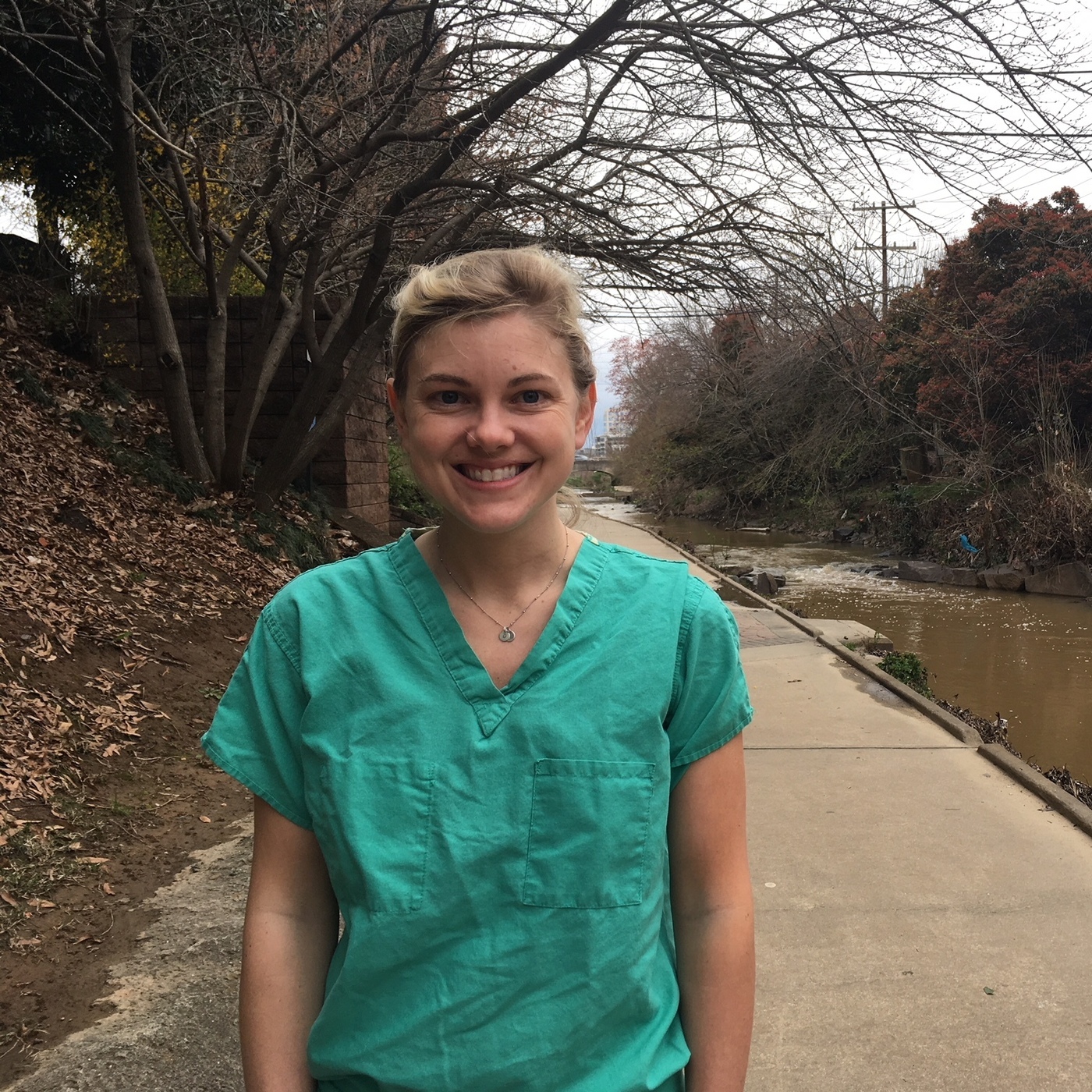
Dr. Katie Merriam, an OBGYN resident in Charlotte, N.C., says she loves her mostly female work environment, but also appreciates having male colleagues.
Alex Olgin/WFAE
hide caption
toggle caption
Alex Olgin/WFAE
As she leaves a 12-hour-day on the labor and delivery shift, Dr. Katie Merriam turns off her pager.
“I don’t know what I’d do without it, you know? It’s another limb. I always know where it is,” she says and laughs.
The third-year resident in obstetrics and gynecology at the Carolinas Medical Center hospital in Charlotte, N.C., works in a medical specialty dominated by women, treating women. Merriam says she feels a special connection to her patients.
“You just you can feel what they feel and understand why they feel certain ways. I do feel a special bond,” she says.
Nationally, 82 percent of doctors matching into OB-GYN residency programs are women. Many OB-GYN patients say they prefer female doctors. Merriam’s residency class is a bit of an anomaly — half of its members are men. Though it’s nice to work with so many women, Merriam says, she and some of her female colleagues also like the perspective that men bring to the work environment.
“No one could really pinpoint about what balance they bring, but there’s something nice about having them,” she says.
It’s important to have men in the field, she says, if only to continue to give patients options in their choice of providers. But most her friends and other women she talks to, she says, want female doctors.
Blake Butterworth, a fourth-year obstetrics and gynecology resident at the Medical University of South Carolina in Charleston, says he doesn’t take it personally when he hears that sort of thing from a patient.
“I don’t get discouraged; I don’t get offended,” Butterworth says. “I gladly hand that patient off.”
He’s one of only two male residents in the program of 24 at MUSC, and says he finds it rewarding when he can win a new patient’s confidence.
“I have patients that clearly express disdain to have to see a guy,” he says. “Then I develop rapport with her. And she says, ‘I expected you to be x-y-z, and you were better than that.’ “
Butterworth says he chose obstetrics and gynecology because it lets him develop long-term relationships with patients — providing routine OB-GYN care and more complicated surgeries if need be.
“Once you really get into it, and get involved in it, I don’t think that bias [that the field is best left to women] holds true,” he says.
Butterworth believes it incumbent on male OB-GYNs to talk to male medical students about the benefits of having men in the field. Students need to know it’s OK to have an interest in the field, he says, and that they will find work.
In fact, says Dr. Ashlyn Savage , an associate professor of obstetrics and gynecology at MUSC, it may be the opposite.
“In an effort to really diversify the applicant pool, we will apply in some cases different screening standards to decide who we are going to interview,” Savage says. “For example, we might consider an applicant with a slightly lower board score — just to enhance how many men we are interviewing and considering.”
It’s been a challenge to find male OB-GYNs for the program, she says. The gender that at one time dominated the field is now at some schools considered a diversity hire. But Savage questions whether balancing the number of men and women in the specialty is as important as racial or ethnic diversity.
“The interesting thing to me is the primary motivation to [seek a diverse candidate pool] is so that patients have the opportunity to seek out physicians who might … feel like themselves,” she says. “In this particular case … all of the patients for OB-GYNs are women.”
Among practicing OB-GYNs in the U.S., a little less than half are men, according to the American Congress of Obstetricians and Gynecologists. But ACOG predicts that 10 years from now, two-thirds of the doctors in that specialty will be female.
Still, male doctors hold a lot of the key positions in OB-GYN professional organizations.
“Leadership tends to be held by people who are older,” Savage says. “And we are still in a scenario where [more of] our older faculty tend to be men.”
A study published last fall found the women are underrepresented in leadership roles in medical school departments of obstetrics and gynecology all around the country. That ratio was most lopsided in men’s favor in the South.
It’s perhaps only a matter of time before that, too, changes. Savage says she just learned that her program’s incoming class of OB-GYN residents next year will be all-female.
This story is part of NPR’s reporting partnership with WFAE and Kaiser Health News.
Can You Hear Me Now? Senate Bill May Make The Answer 'Yes'


Under current law, Medicare generally reimburses audiologists for diagnosing hearing loss in older adults but not for providing assistance to fit, adjust and teach the best way to use them.
Leyla B / EyeEm/Getty Images
hide caption
toggle caption
Leyla B / EyeEm/Getty Images
Last December, Deb Wiese bought hearing aids for her parents, one for each of them. She ordered them online from a big-box retailer and paid $719 for the pair. But her parents, in their 80s and retired from farming in central Minnesota, couldn’t figure out how to adjust the volume or change the batteries. They soon set them aside.
“Technology is not only unfamiliar, but unwelcome” to her parents, Wiese says. “I don’t know what the answer is for people like that.”
A bill introduced by Sen. Elizabeth Warren (D-Mass.) and Sen. Rand Paul (R-Ky.) in March could make it easier for her parents and millions like them to get assistance. It would allow Medicare to pay audiologists to teach beneficiaries how to adjust to and use their hearing aids effectively in different settings such as a crowded room, for example.
Under current law, Medicare generally reimburses audiologists for diagnosing hearing loss in older adults but not for providing assistance to fit, adjust and learn to make the most of hearing aids.
Not being able to afford hearing aid services is one of many challenges older adults who are hard of hearing face. Even if they can afford hearing aids, Medicare doesn’t usually cover the services to fit and service them so many people go without.
The proposed bill comes on the heels of an effort to increase the chances that people who need hearing aids get them. A law signed last summer by President Donald Trump directs the Food and Drug Administration to establish and regulate a new category of hearing aid to be sold over the counter for people with mild to moderate hearing loss.People will be able to buy products off the shelf without consulting an audiologist or hearing aid dispenser, and standards for online sales will be tightened. The agency has three years to develop safety and other consumer protection standards.
The National Academies of Sciences, Engineering and Medicine recommended that the FDA take that step in a 2016 report.
Although it should improve access, the new law doesn’t address one of the biggest barriers faced by the nearly 50 million people with age-related hearing loss: insurance coverage.
Neither traditional Medicare nor most private insurers typically cover hearing aids. (Some Medicare Advantage plans provide some coverage, and some insurers may offer a discount if members use certain suppliers.)
“Cost has for many years been the Number 1 problem in the calls, emails and letters we get,” says Barbara Kelley, executive director and CEO of the Hearing Loss Association of America, a patient advocacy group. “People say, ‘I need hearing aids and I can’t afford them.’ It’s really heartbreaking.”
Only 10 to 20 percent of people with hearing loss have ever used hearing aids, according to studies. In addition to cost, lack of access to care and the stigma associated with wearing a hearing aid discourages people, Kelley says.
But losing the ability to hear well doesn’t just mean people have to turn the volume way up on their favorite TV shows. Hearing loss is associated with depression, social isolation and an increased risk for cognitive decline and dementia in older adults.
Hearing aid prices vary widely, ranging from an average $900 to $3,100 apiece, according to a survey of hearing care professionals by the Hearing Review, a trade magazine. On the high end, devices may be Bluetooth-enabled to stream wirelessly from people’s cellphones to their hearing aids, among other perks.
But not everyone needs or wants that much help. “Some people are very mildly impaired,” says Kim Cavitt, a billing and reimbursement consultant and former president of the Academy of Doctors of Audiology who supports over-the-counter sales. “They don’t have a $3,000 problem, they have a $300 problem.”
Experts say they hope the over-the-counter hearing aid law will spur competition and product innovation and bring down prices.
One of the reasons hearing aid prices are often high is because the devices are typically bundled with a service package to fit, troubleshoot and maintain them.
Disentangling the service from the devices would benefit consumers, says Nicholas Reed, a faculty member at the Cochlear Center for Hearing and Public Health at Johns Hopkins Bloomberg School of Public Health who has studied over-the-counter hearing devices that provide results comparable to hearing aids.
People may still need some help using their hearing aids. In addition to basic hearing-aid fitting and maintenance, hearing care professionals can help people learn strategies to hear better, Reed says. For example, people learn to sit with their back to a wall at a restaurant to eliminate the sound behind them so they can focus on listening to the person in front of them.
“The over-the-counter law will lower the cost and make hearing aids more accessible,” Reed says. “But if the services aren’t covered, people, especially older adults with health literacy issues, will stop using them.”
Kenyan Woman Abused By Nurses During Childbirth Wins Landmark Case


Extreme lack of attention is not unusual in hospitals in poor countries, says Martin Onyango, legal advisor for the Center for Reproductive Rights based in Nairobi.
Thomas Mukoya/Reuters
hide caption
toggle caption
Thomas Mukoya/Reuters
When Josephine Majani came to, she was on a hard hallway floor in the Bungoma District Hospital in Bungoma, Kenya.
Majani heard nurses yelling: “I saw them carry the baby away. They screamed at me, ‘Why have you delivered on the floor? Who is going to clean up all this blood? Get up. Get your things and go back to the delivery room.’ I was helpless.”
Majani has no memory of being slapped, she says, but when she regained consciousness her cheeks stung. She did as she was told. She struggled to her feet and followed nurses back to the room to deliver the placenta.
This was in August 2013. Eight years earlier, she had safely delivered a girl at home. Then four years before, she gave birth to a boy at a hospital.
“It was good, clean care. I had assistance. It was a good experience,” she says of that delivery.
Her third baby had been overdue — so three days before his birth, she went to the hospital. She was given medication to induce labor. As her labor progressed, she found herself on her own.
“There were no attendants, no one to assist me,” she says. “I called for help, and no one ever came. I got out of bed to find someone to help me. I was in the hall, and I fell on the floor. I was unconscious.”
That’s when the baby came.
This extreme lack of attention is not unusual in hospitals in poor countries, says Martin Onyango, the senior Africa legal advisor for the Center for Reproductive Rights based in Nairobi.
“This is a systemic problem in Kenya,” he says. Onyango is Majani’s attorney in a landmark case against the hospital.
What was unusual was that a hospital intern captured it all on video: the mother and newborn on the floor, the slaps, the verbal abuse, the public humiliation.
The video fell into the hands of a Kenyan journalist. It ran on television programming nationally in Kenya — and went viral not long after the incident.
“We got to know of Josephine’s case because we saw it on TV,” Onyango says. More than four years later, in February, the court issued a landmark ruling awarding Majani $25,000 (2.5 million Kenyan shillings) in damages, requiring that hospital staff formally apologize to her and setting a precedent that demands women be given quality care and treated with dignity during childbirth.
“The court ruled that nothing excuses behavior that is so degrading to a woman, a human being,” Onyango says.
Dr. Sanghvi Harshad is chief medical officer of Jhpiego, a group that works in 40 countries to improve health care for women and families.
“What happened to this lady is unfortunately all too common,” says Harshad, a Kenyan who formerly headed up the University of Nairobi Hospital. “I recently visited a hospital in western Kenya. They are equipped for 10 to 15 births a month. But they’re doing almost 300 births a month. You can imagine the overcrowding, the shortage of supplies.”
Such conditions can be fatal. A report released by the Kenya government in February found that of 484 maternal deaths in Kenyan hospitals studied in 2014, 90 percent were the result of substandard care.
According to statistics reported by the CIA, Kenya has the 19th highest rate of maternal mortality among 184 countries studied — with 510 deaths per 100,000 births. Finland, Poland, Iceland and Greece are the safest countries to give birth in, with 3 deaths per 100,000 births. The United States ranks 138th with 14 maternal deaths per 100,000 births.
But Peter Johnson, senior director for nursing and midwifery at Jhpiego, says most people go into health care, nursing or midwifery because they sincerely want to help people in need. He has seen people he calls heroes and saints delivering maternity care under the most difficult circumstances.
“Nobody wants to be mean. They want to make a difference,” Johnson says. “But these folks can work under horrendous conditions. I’ve been in labor wards in India where I’ve watched midwives kick rats out of the way to get to the woman.”
Midwives in poor countries are not always trained as thoroughly as they are in the developed world, Harshad says. And often, because they are usually women in places with great gender inequality, they are not respected. Add to that overcrowded conditions and lack of supplies and resources, and nurses and midwives can feel enormous pressure to move women along during labor.
“Providers can be in a state of panic,” Harshad says. “Under those conditions, mothers will get pushed, slapped, verbally abused, partly because of the provider’s panic.”
When nurses and midwives see the abuse in their training, they copy the behavior, and the cycle of abuse continues, he says. “We need to fix how people are being trained.”
Harshad looks to a program he worked on in Afghanistan as a model for how to develop a system of maternity care.
“Midwifery schools were wiped out. We needed to completely revamp them,” he says. “We wanted to empower midwives to be full professionals. We taught them computer skills. We taught them English so they could read the medical literature. It has paid off tremendously. They are extremely competent.”
Another program in Mozambique has encouraged mothers to ask for a companion— a husband, mother, sister or friend — to accompany them in the hospital through labor and delivery. Such so-called companionship programs have been shown to improve the quality of care in hospitals, according to a February World Health Organization report, Intrapartum Care for a Positive Childbirth Experience.
“Fifteen years ago, the level of companionship was essentially zero,” Harshad says. “As of a year ago, 58 percent of mothers in Mozambique now have a companion.”
And in Kenya, a program of anonymously surveying mothers about their hospital maternity care is beginning to pay off. Harshad explains:
“Everyone, even poor people, have cell phones in Kenya. We told mothers they would receive a text message survey when they got home. We asked: Was it clean? Were they treated with kindness? Were they scolded? We showed the results to the hospital. And they took action. If we told them that 26 percent of patients said they did not receive privacy, they took action. It’s hard, because of overcrowding, but they started putting up curtains.”
The Center for Reproductive Health, along with Jhpiego, are part of an international movement to improve the birth experience most recently exemplified by the WHO recommendations on childbirth, Harshad says.
“Those guidelines are unique,” he says. “They focused not just on hard science, but on what women themselves want in their childbirth experience.”
Women all over the world have struggled to have their voices heard regarding labor and delivery, and even wealthy countries can fall short, says Johnson:
“I’ve worked in the city of Baltimore as a midwife for many years. I’ve seen some of the same phenomena — people living under chronic stress; nurses, midwives and physicians working under difficult circumstances; a feeling of bad chemistry, bad communication; women being induced before they’re ready; withholding water if they’re thirsty, or food if they’re hungry; not letting them out of bed to walk around so they can be more comfortable. These are things that we’re promoting globally, but we don’t always promote it here in the U.S.”
Maternity care may be changing at a glacial pace, but Majani is proud that her horrendous experience has helped move the needle toward better care.
“I just know this is going to be a lesson to all the clinical attendants who perform their work in maternal health care,” she says. “They are going to serve the people equally. They are going to be loving and perform their work with kindness.”
Susan Brink is a freelance writer who covers health and medicine. She is the author of The Fourth Trimester, and co-author of A Change of Heart.