PrEP Campaign Aims To Block HIV Infection And Save Lives In D.C.

At a recent National LGBTQ Task Force conference in Washington D.C., Luis Felipe Cebas (right) from Whitman-Walker Health, talks with Sarah Fleming about PrEP, the pre-exposure drug that can help protect against HIV infection.
Tyrone Turner/ WAMU
hide caption
toggle caption
Tyrone Turner/ WAMU
A big part of Washington D.C.’s plan to get its HIV rate down is to get more uninfected people on PrEP, a two-medicine combination pill that’s also sold under the brand name Truvada.
When taken daily by people who are at high risk for contracting HIV via sex or shared needles with someone who is infected, this pre-exposure prophylaxis can cut the risk of HIV infection by 92 percent, studies show.
PrEP has been around for years now, but only a small portion of those at high risk for HIV infection use it, partly because many still don’t know it exists.
To cut new infections in half by 2020, D.C. health officials estimate it will need to more than quadruple the number of people in the District who are on PrEP. The department of health and community groups are pulling out all the stops to raise awareness.
“Thinking about sex? Then think about PrEP,” one public health commercial says, over video clips of a woman sensually licking an ice cream cone, or a man stroking a golf club. You get the gist.
There are also social media pushes, and an ad campaign called “PrEP for Her” targeting African American women, who, along with gay and bisexual African American men, are at high risk of infection in D.C.
At a recent conference in the city on LGBTQ issues, Sarah Fleming stopped by the PrEP information table put together by Luis Felipe Cebas of Whitman-Walker Health, a community health center that focuses on providing care to LGBTQ patients.
Fleming tells Cebas she’s surprised she’s never heard of PrEP. She even got tested for HIV recently.
“They told me nothing about this!” she says. “I was negative — but, I feel like, it’s a preventative, so you should tell people about it.”
Gregorio Millett, vice president and director of public policy at the Foundation for AIDS Research, says some health care providers don’t suggest PrEP because of their mistaken belief that it will increase risky sexual behavior; research hasn’t shown that to be the case.
Millett adds that there are other reasons why people — especially people of color — haven’t requested PrEP as much as he and other public health officials would like. Some African Americans distrust the medical community because of historical mistreatment, he says. And there’s still a stigma attached to HIV, especially in some minority communities.
“In order to be prescribed PrEP you need to be ‘out’ to your provider,” Millett says. “And we see that for African-American men, as well as for Latino gay men, they’re less likely to tell their providers that they are gay or bisexual.”
Several cities across the U.S. — including Seattle, Boston and San Francisco, as well as Washington — are making concerted efforts to overcome these challenges and promote PrEP as a tool for reducing HIV transmission, Millett says.

D.C. resident Ricardo Cooper is gay and HIV-negative. He says he’s been taking a daily blue PrEP pill for the last six months, with few side effects. The drug gives him peace of mind, he says.
Tyrone Turner/WAMU
hide caption
toggle caption
Tyrone Turner/WAMU
There are signs of progress in D.C. Whitman-Walker Health has seen a recent uptick in new PrEP patients, including 28-year-old Ricardo Cooper, who lives in the District.
Cooper is gay and HIV-negative. He’s been taking PrEP for a few months, and says he hasn’t experienced many side effects, which can commonly include headaches, nausea and cramping; according to the U.S. Centers for Disease Control and Prevention, these side effects tend to go away over time.
Cooper says taking the drug gives him peace of mind.
“It just makes me feel so much better about engaging in sexual activity,” he says, knowing that he won’t get or transmit HIV to a partner.

Cooper says he’s usually private, but doesn’t mind “stepping outside myself” to spread the word about PrEP’s benefits, and encourage friends to “at least try it.”
Tyrone Turner/WAMU
hide caption
toggle caption
Tyrone Turner/WAMU
He’s also found he now talks more openly about HIV, which still has a lot of stigma among his friends. He says he even walks up to people at bars and sells them on PrEP.
“The professionals can’t really force PrEP on people, but I can,” he chuckles. “And I’ve done that to my friends. It’s like, ‘You don’t have an option.’ “
Cooper says, turning serious, that he’s usually a private person, but to him this is important — he wants to do everything he can to spread the word.
“If I need to be the face of PrEP for this African American community or the communities that are under-represented — to let them know that, ‘It’s OK, it’s cool, I mean, you should at least try it,’ then I’m perfectly fine with stepping out of myself and doing that,” he says.
Health providers say this kind of community evangelism — along with the bus ads and sexy commercials —will be key to reaching the ultimate goal of ending the HIV epidemic in Washington, D.C.
This story is part of NPR’s reporting partnership with Kaiser Health News.
Bill Of The Month: A Tale Of 2 CT Scanners — One Richer, One Poorer

Maria Fabrizio for NPR
Benjamin Hynden, a financial adviser in Fort Myers, Fla., hadn’t been feeling well for a few weeks last fall. He’d had pain and discomfort in his abdomen.
In October, he finally made an appointment to see his doctor about it. “It wasn’t severe,” he says. “It was just kind of bothersome. It just kind of annoyed me during the day.”
The doctor, John Ardesia, checked him out and referred him to a nearby imaging center for a CT scan, or CAT scan as it used to be called. The radiologist didn’t see anything wrong on the images, and Ardesia didn’t recommend any treatment.
A few weeks later, Hynden, who has a high-deductible health insurance policy with Cigna, got a bill for $268. He paid it and moved on.
But three months later, in mid-January, Hynden was still feeling lousy. He called Ardesia’s office again. This time the doctor wasn’t available. A nurse practitioner, concerned that Hynden might be suffering from appendicitis, advised him to go to the hospital right away.
“I was a little worried,” Hynden recalls. “When he told me to go to the ER, I felt compelled to take his advice.”
Hynden arrived later that morning at Gulf Coast Medical Center, one of several hospitals owned by Lee Health in the Fort Myers, Fla., area. The triage nurse told him the problem wasn’t his appendix, but she suggested he stick around for some additional tests – including another CT scan — just to be safe.
It was the same kind of scanner, he said. “It was the exact same test.”
The results were also the same as the October scan: Hynden was sent home without a definitive diagnosis.
And then the bill came.
Patient: Benjamin Hynden, 29, a financial adviser in Fort Myers, Fla.
Total bill: $10,174.75, including $8,897 for a CT scan of the abdomen.
Service provider: Gulf Coast Medical Center, owned by Lee Health, the dominant health care system in southwest Florida.
Medical procedure: A CT scan, which uses X-rays to create cross-sectional images of the body. Hynden got his October scan at Summerlin Imaging Center, a standalone facility in Fort Myers that offers a range of diagnostic tests, including X-rays, MRI and CT scans.

Benjamin Hynden was surprised when he received a bill for a CT scan that was 33 times higher than a scan he received a few months before at an imaging center.
Alison Kodjak/NPR
hide caption
toggle caption
Alison Kodjak/NPR
Rick Davis, co-owner of Summerlin, says his center is small and independent, so he doesn’t have much bargaining power. That means insurance companies pretty much dictate what he can charge for a scan. In Hynden’s case that was $268, including the cost of a radiologist to read the images.
Ultimately, what Medicare decides to pay for a scan sets the standard. “The Medicare fee schedule is what all the other companies use as their guideline,” Davis tells me as he gives me a tour of Summerlin. “It’s basically the Bible. It’s what everyone goes by.”
Summerlin’s office manager, Kimberly Papiska, says the maximum the center ever bills for a CT scan is $1,200. But the rates insurance companies pay are usually less than $300.
Hynden was shocked when he got the second CT scan in January, and the listed price was $8,897 — 33 times what he paid for the first test.
Gulf Coast Medical Center is part of his Cigna insurance plan’s approved network of providers. But even with Cigna’s negotiated discount, Hynden was on the hook for $3,394.49 for the scan. The additional ER costs added another $261.76 to that bill.
What gives: We called Gulf Coast Medical Center and its parent company, Lee Health, to understand why they billed nearly $9,000 for a single test. No one at the health center or hospital would agree to an interview.
Lee Health spokeswoman Mary Briggs responded with an emailed statement:
“Generally that it is not unusual for the cost of providing a CT scan in an emergency department to be higher than in an imaging center,” the statement said. “Emergency department charges reflect the high cost of maintaining the staffing, medical expertise, equipment, and infrastructure, on a 24/7-basis, necessary for any possible health care need — from a minor injury to a gunshot wound or heart attack to a mass casualty event.”
Do the hospital’s costs and preparations justify a list price that’s so much higher than the nearby imaging center’s tab? We asked some experts in medical billing and management for their thoughts.
Emergency rooms often charge people with insurance a lot of money to make up for the free care they provide to uninsured patients, says Bunny Ellerin, director of the Health Care and Pharmaceutical Management program at Columbia Business School in New York. “Often those people are what they call in the lingo ‘frequent flyers,’ ” Ellerin says. “They come back over and over again.”
She says hospitals also try to get as much money as they can out of private insurance companies to offset lower reimbursements from Medicare and Medicaid.
Even in that context, the price of Hynden’s hospital CT scan was high.
Healthcare Bluebook, an online pricing tool, says the range for an abdominal CT scan with contrast, like Hynden had, in Fort Myers is between $474 and about $3,700. It pegs a fair price at $595.
The higher price from Gulf Coast and its parent company could be a result of their enormous pricing power in Fort Myers, says Gerard Anderson, a professor of health policy and management at Johns Hopkins University.
Lee Health owns the four major hospitals in the Fort Myers area, as well as a children’s hospital and a rehabilitation hospital, according to its website. It also owns several physician practices in the area. When you drive around Fort Myers, the blue-green Lee Health logo appears on buildings everywhere.
“Anybody who’s in Fort Myers is going to want to get care at these hospitals. So by having a dominant position, they have great bargaining power,” Anderson says. “So they can raise their rates, and they still do OK.”
Anderson says his research shows hospital consolidation has been driving prices higher and higher in recent years. And because more and more people, like Hynden, have high-deductible insurance plans, they’re more likely to be on the hook for huge bills.
So Lee Health and other dominant hospital systems mark up most of their services on their master price lists — the list that prices a CT scan at Lee Health at $8,897. Anderson calls those lists “fairy-tale prices” because almost no one actually pays them.
“Everybody who’s taken a look at it agrees — including the CFO of the organization — that it’s a fairy-tale thing, but it does have relevance,” Anderson says.
The relevance is that insurance companies usually negotiate what they’ll pay at discounted rates from list prices.
So from the master price of $8,897, Cigna negotiated Hynden’s bill down to $5,516.14 — a discount of almost 40 percent. Then Cigna paid $2,864.08, leaving Hynden to pay the rest.
“If it wasn’t for that CT scan, I don’t think this whole thing would have been so difficult and so blatantly obvious that they’re extremely overcharging for that service,” Hynden says.
Resolution: Hynden never got a definitive diagnosis from the CT scans. Several weeks after his second test, however, he went to a nearby urgent care center, also run by Lee Health, and they performed an ultrasound on his abdomen. That test, which cost about $175, revealed some benign cysts that his doctor says are likely to go away on their own.
The takeaway: Tests and services are almost always going to be more expensive in an emergency room or hospital setting. If your doctor suggests you go to an ER, it might be worth asking whether an imaging center, urgent care or walk-in clinic would suffice.
Sources: Explanations of benefits provided by Hynden and interviews.
Could You Fight Off Worms? Depends On Your Gut Microbes

A colored scanning electron micrograph of a parasitic tapeworm. The scolex (head) has suckers and a crown of hooklets that the worm uses to attach itself to the inside of the intestines of its host.
Power and Syred/Science Photo Library /Getty Images
hide caption
toggle caption
Power and Syred/Science Photo Library /Getty Images
Our tummies are teeming with trillions of bacteria — tiny microbes that help with little things, like digesting food, and big things, like warding off disease.
Those same microbes may have another purpose: waging war against worms.
Researchers at Washington University in St. Louis made the discovery after studying the microbiomes of individuals from Liberia and Indonesia. They found that the guts of individuals infected with parasites share common microbes — even if they live in completely different geographic locations. Similarly, healthy individuals whose bodies can clear out parasites without treatment seem to share a common gut bacteria.
This suggests the gut microbiome can be altered to protect people from becoming infected with parasitic worms, says Makedonka Mitreva, the lead researcher on the study and a specialist in infectious diseases and the microbiome.
“It may be wishful thinking, but maybe we could implement a control strategy after deworming where we strengthen or alter the microbiomes of individuals who are prone to infection,” Mitreva says.
Nearly 25 percent of the world’s population is currently infected with parasitic worms like hookworm, whipworm or roundworm, according to the World Health Organization. The worms are a disease of the developing world, for the most part. They spread when an infected individual defecates outside, leaving behind stool that’s contaminated with eggs. When the eggs hatch, wriggling microscopic worms can latch on to the ankles or bare feet of individuals who walk by.
Once on board, the worms burrow into skin and travel to the gut to feed on blood or other tissues. Symptoms can vary, depending on the number of worms inside a person. In cases of severe infection, people can experience anemia, nutritional deficiencies and impaired growth.
Despite decades of deworming efforts to rid the world of worms, people in developing countries get reinfected often, according to Mitreva.
“Even if the [drug] therapy works and the infection is cleared, the exposure to contaminated soil is so pervasive that new infections are extremely common,” she says.
Mitreva and her team recently analyzed hundreds of fecal samples from infected and uninfected people in Indonesia and Liberia. Samples were obtained once from some individuals, but other participants were followed long-term to see how their microbiome changed over time with or without drug treatment.
Participants’ fecal samples were first tested for the presence of parasites. Then they were studied for their microbes.
Twelve strains of bacteria were significantly associated with parasitic infection in both countries. These included Olsenella, a bacterium that has been shown to reduce gut inflammation when administered as a probiotic. It is also associated with lean versus obese individuals.
In worm-free individuals, the researchers identified a high presence of Lachnospiracae. The same genus was found in individuals that had parasites and were able to clear the infection naturally. Lachnospiracae has been associated with modulating gut inflammation during infections and has also been linked to obesity and protection from cancer.
What does it all mean?
“When the body is infected with worms, it tries to do worm expulsion with an inflammatory reaction,” Mitreva says. “Worms have to fight back to remain in the gut; that’s why worms are known to secrete anti-inflammatory molecules to reduce inflammation.”
Mitreva adds, “Our interpretation is that parasites need a healthy environment for long-term survival. Good bacteria may facilitate parasitic survival, so a bacterium like Olsenella that decreases gut inflammation is helpful.”
P’ng Loke, a parasitologist at New York University who was not involved in the study, says it’s especially interesting that the research found that Lachnospiracae is associated with individuals who can clear our worms naturally.
But that’s just it; it’s just an association, Loke says. The researchers now need to demonstrate that these bacteria actually hurt or help worms.
“Whether the bacterial associations that are identified really do directly affect worm colonization efficiency hasn’t been demonstrated yet,” he says.
Mitreva agrees that more work is needed, but she’s not giving up. In the future, she hopes to use fermented foods to plant worm-defending microbes inside of individuals to build their defense against worms.
That may be easier said than done.
“I don’t think anyone knows how to really alter the microbiome at the moment. That’s probably the ‘dream’ rather than a near-term possibility,” Loke says.
For Chronic Pain, A Change In Habits Can Beat Opioids For Relief

Physical therapist Ingrid Peele coaches Kim Brown through strengthening exercises to help her with her chronic pain, at the OSF Central Illinois Pain Center in Peoria.
Kyle Travers/WFYI
hide caption
toggle caption
Kyle Travers/WFYI
It took several months and a team of half a dozen doctors, nurses and therapists to help Kim Brown taper off the opioid painkillers she’d been on for two years.
Brown, 57, had been taking the pills since a back injury in 2010. It wasn’t until she met Dr. Dennis McManus, a neurologist who specializes in managing pain without drugs, that she learned she had some control over her pain.
“That’s when life changed,” she said.
During a 12-week series of appointments at McManus’ clinic in Peoria, Ill., Brown learned new ways to prevent and cope with pain, as she gradually reduced her opioid doses.
Roughly a third of Americans live with chronic pain, and many of them become dependent on opioids prescribed to treat it. But there’s a growing consensus among pain specialists that a low-tech approach focused on lifestyle changes can be more effective.
This kind of treatment can be more expensive — and less convenient — than a bottle of pills. But pain experts say it can save money over the long term by helping patients get off addictive medications and improving their quality of life.
“It’s important to remember that the main treatments that are recommended for these pain conditions are not medication treatments,” said Dr. Erin Krebs, a primary care physician and researcher at the Minneapolis VA Health Care System.
Recently, Krebs published the first long-term randomized trial of opioids for treating chronic back pain and arthritis, and found that opioids are no better than nonopioid medications. She said drugs of any kind are the lesser choice for the vast majority of patients.
The gold standard for treatment, she said, is a combination of things like exercise, rehabilitation therapies, yoga and cognitive behavioral therapies.
This approach is consistent with the most recent guidelines from the Centers for Disease Control and Prevention for prescribing opioids for chronic pain. But it’s still uncommon.
Brown’s painkiller use started after she blew out a disk in her back.
“It was the simplest thing,” Brown said. “I picked up a bag of garbage with my right hand, and I immediately knew something was wrong.”
She was put on opioids, like so many others who see the doctor about pain. In a single year, health care providers write enough opioid prescriptions for every adult in the U.S. to have a bottle of pills.
Each time Brown came back, still in pain, another opioid was added to the list. She was eventually taking four different drugs — Percocet, Vicodin, morphine and Dilaudid — popping pills every two hours.
“I was just drugged constantly,” Brown said. “And even with that, it didn’t take care of the pain.”
Not only did the drugs not help with the pain, the side effects made it worse. Brown had such severe abdominal pain from constipation she could hardly walk.
“It kills your life. It totally robs you of every aspect,” she said. “I couldn’t do anything because of the pain. But I couldn’t do anything because of the pain meds. And I couldn’t talk to anyone about it, because it was so embarrassing.”
Brown tried to quit on her own. But after nine days of nausea and fainting from withdrawal, she was back on the medications.
“I finally went to my family doctor and said, ‘I need help, I’ve got to get off this stuff. I can’t live like this anymore,’ ” she said.
That’s when she was referred to McManus, director of the OSF Central Illinois Pain Center in Peoria. He specializes in helping chronic pain sufferers like Brown get off opioids.
“From my perspective, if you stabilize the dose and slowly taper off, these patients do remarkably well,” he said.

At the OSF Central Illinois Pain Center in Peoria, Kim Brown participated in a multidisciplinary treatment program that included cognitive behavioral therapy with psychologist Lisa McClure, who helped Brown address the psychological issues that can accompany pain.
Kyle Travers/WFYI
hide caption
toggle caption
Kyle Travers/WFYI
At the center, a team of providers works together to help patients make lifestyle changes that reduce pain during everyday activities.
The approach includes a combination of physical and occupational therapy, massage and nutrition counseling. Patients also participate in cognitive behavioral therapy to address the psychological issues that often accompany pain — such as overcoming fears of letting go of medications they’ve become dependent on. A nurse coordinator oversees all the moving parts and does follow-up assessments after the program is completed.
At the clinic, Brown met occupational therapist Gabe Stickling, who taught her things like how to properly lift heavy objects and how to safely keep exercising even when she feels a twinge of pain.
Stickling said people with chronic pain often avoid physical activity “because they’re afraid they’re going to injure themselves or damage their bodies.” But inactivity can make the pain worse.
McManus said some of his chronic pain patients can taper off opioids with a less intensive treatment. But for some of his patients, the multidisciplinary program is most effective — if they’re willing to commit to making change.
“Most people just really want to have the magic wand that will get them all better,” he said. “And I’m just trying to say, I don’t have a magic wand but I might have a way out of this jungle that you’re in.”
And because pain treatments that don’t rely on drugs are hands-on and time-intensive, it can be hard to find a clinic that offers them — and to get insurance to cover them.
This wasn’t always the case. Until the 1980s, the multidisciplinary approach was the go-to treatment for chronic pain, according to a 2016 review on the history of chronic pain management. Its popularity declined as reimbursement rates went down and hospitals began to emphasize more lucrative procedures. Gradually, opioid treatment became the predominant strategy for pain treatment strategy.
Today, McManus said his practice spends a lot of time fighting to get the treatments covered. “The pain program is not considered to be worthy of the price,” McManus said.
Costs vary but run to several thousand dollars for a program like the one Kim Brown went through.
“If you compare a fairly intensive multidisciplinary program to surgery and to drugs, the cost is not high,” said Steven Kamper, a public health researcher at the University of Sydney in Australia. He’s co-author of a 2014 meta-analysis that found modest benefits for multidisciplinary treatment programs for chronic low back pain.
Kamper said, the costs are reasonable especially if you consider the long-term effects of living in pain. Many chronic pain sufferers are unable to work and become eligible for disability insurance.
“The big costs of chronic pain are in productivity losses,” Kamper said.
Krebs is hopeful non-drug therapies will regain popularity, as communities recognize the hidden costs of opioids.
“It’s not just the price of the pills,” she said. “It’s also the price of the consequences when you over-rely on something.”
Krebs and Kamper agree more research into pain treatment is needed. But when choosing between an addictive medication with no evidence of benefit, and low-tech therapies with some evidence of benefits, McManus said the choice is clear.
“I did take an oath: First do no harm,” McManus said. “As a pain physician, I have a responsibility to use evidence-based medicine to manage my patients that have chronic pain.”
Brown is thankful that the multidisciplinary approach helped her taper off opioids and get her life back, even though it’s a different life than before her injury.
“There’s no such thing as a pain-free day for me,” Brown said. “It never, never fully goes away.”
She has just learned how to manage life with it.
This story was produced by Side Effects Public Media, a news collaborative covering public health. You can follow Christine Herman on Twitter: @CTHerman.
In A Border Region Where Immigrants Are Wary, A Health Center Travels To Its Patients

Surgeon General Urges More Americans To Carry Opioid Antidote

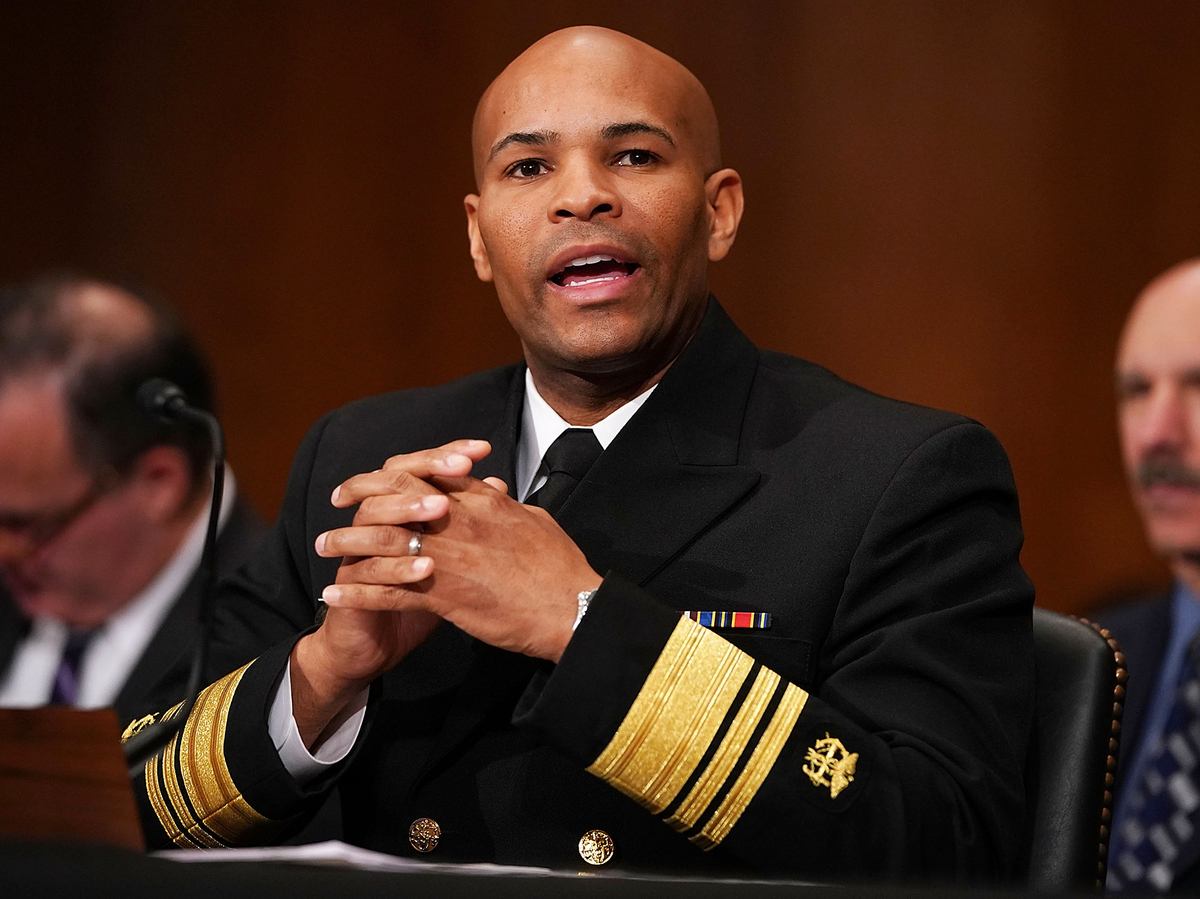
Surgeon General Jerome Adams is recommending that more Americans be prepared to save people from opioid overdoses.
Chip Somodevilla/Getty Images
hide caption
toggle caption
Chip Somodevilla/Getty Images
As opioid-related deaths have continued to climb, naloxone, a drug that can reverse overdoses, has become an important part of the public health response.
When people overdosing struggle to breathe, naloxone can restore normal breathing and save their lives. But the drug has to be given quickly.
On Thursday, U.S. Surgeon General Jerome Adams issued an advisory that encouraged more people to routinely carry naloxone.
“The call to action is to recognize if you’re at risk,” he tells Morning Edition‘s Rachel Martin. “And if you or a loved one are at risk, keep within reach, know how to use naloxone.”
Police officers and EMTs often have naloxone at the ready. Access to the drug for the general public has been eased in the past few years, too.
The medicine is now available at retail pharmacies in most states without a prescription. Between 2013 and 2015, researchers found a tenfold increase in naloxone sold by retail pharmacies in the U.S.
But prices have increased along with demand. Naloxone-filled syringes that used to cost $6 a piece now cost $30 and up. A two-pack of naloxone nasal spray can cost $135 or more. And a two-pack of automatic naloxone injectors runs more than $3,700.
And while it’s true that naloxone can prevent many opioid-related deaths, it doesn’t solve the root cause of the problem.
So where does this fit into an overall strategy for tackling the opioid crisis?
NPR’s Martin asked Surgeon General Adams about the advisory, and the administration’s broader plan for addressing the opioid epidemic.
Here are interview highlights that have been edited for length and clarity.
On keeping naloxone at home, and using it effectively
We should think of naloxone like an EpiPen or CPR. Unfortunately, over half of the overdoses that are occurring are occurring in homes, so we want everyone to be armed to respond.
We’re working with pharmacies, providers and medical associations to increase training on how to administer naloxone in homes. But overall — and I’m an anesthesiologist who’s administered naloxone many times myself — it’s very safe, easy to use, and 49 of 50 states have standing orders for people to be able to access and to use [naloxone] in the home setting.
On making sure someone treated with naloxone doesn’t overdose again in short order
When a person is having multiple overdoses, I see that as a system failure. We know addiction is a chronic disease, much like diabetes or hypertension, and we need to treat it the same way. We can’t have someone overdose and send them back out onto the streets at 2 a.m., because they’re going to run right back into the hands of the local drug dealer.
If you come in at 3 a.m., having been resuscitated from an overdose, we need to have either an immediate access to treatment available for you, or, what’s working well in many places is a peer recovery coach — someone who’s been through this before and who can speak to you in a language that will resonate, and basically can be with you until you’re in recovery. Those are the kind of systemic changes we need to make sure naloxone is a touch point that leads to recovery.
On pricing and availability of naloxone
President Trump has asked for, and Congress has approved, $6 billion in funding to respond to the opioid epidemic. There are different grants available for states to purchase naloxone, which they can give out for free.
We’re also working with insurers. Ninety-five percent of people with insurance coverage, including Medicare, Medicaid, Tricare and Veterans
Affairs are actually able to get naloxone with little or no copay, and we’re working with them to make that copay as small as possible.
We’re also working with Adapt Pharma and Kaleo [two makers of naloxone available in the U.S.] to try to keep costs low. From an economic point of view, unfortunately, there are so many people who need naloxone that drug companies are going to make their money one way or the other.
On the role of law enforcement in combating the opioid crisis
We are not going to solve this crisis without the involvement of law enforcement. I can also tell you, from visiting many communities, that folks are concerned about public safety aspects. One neighbor is concerned their son is overdosing while another other neighbor is worried their house is getting broken into.
I’m focused on meeting with the attorneys general and meeting with local law officials and making sure that if you’re dealing drugs, you’re going to go to jail. But if you have a substance use disorder, we’re going to give you an option to get treatment, and hopefully become a productive member of society again.
On where federal funding can help
This starts with naloxone — saving lives is one of the president’s key pillars — and then using it as a bridge for treatment. Fifty-million dollars in funding has been allocated specifically for naloxone, and states are eligible for $2 billion dollars in block grants that they can use however they like.
If we can spend money on prevention and more treatment options, making sure we’re providing wrap-around services, I think we’ll find ourselves in a good place. I continue to impress upon folks the importance of partnering, making sure that law enforcement is sitting down with health and education so they all put their money together on a local level. At the end of the day, unfortunately, there will never be enough money in the federal government to do everything that we want to do.
Atlanta Struggles To Fulfill MLK's Legacy In Health Care

There’s a 12-year or greater difference in life span among neighborhoods in Fulton County, Georgia, of which Atlanta is the county seat.
David Goldman/AP
hide caption
toggle caption
David Goldman/AP
While public safety commissioner Bull Connor’s police dogs in 1963 attacked civil rights protesters in Birmingham, Ala., leaders in Martin Luther King Jr.’s hometown of Atlanta were burnishing its reputation as “the city too busy to hate.”
Yet 50 years after the civil rights leader was killed, some public health leaders in Atlanta wonder whether the city is failing to live up to King’s call for justice in health care. They point to substantial disparities, particularly in preventive care.
“We have world-class health care facilities in Atlanta, but the challenge is that we’re still seeing worse outcomes” for African-Americans, says Kathryn Lawler, executive director of the Atlanta Regional Collaborative for Health Improvement. That group includes representatives of more than 100 nonprofit organizations, governments, hospital systems and other health care providers working to improve access and care for minority communities.
“We did certain things here, we went through the civil rights era, and we did things like desegregation, but we just over the years never kept the conversation going,” says Tom Andrews, president of Mercy Care, a health center that serves mainly homeless Atlantans, the vast majority of whom are African-American.
Among the problems:
— Atlanta has the widest gap in breast cancer mortality rates between African-American women and white women of any U.S. city, with 44 black patients per 100,000 residents dying compared with 20 per 100,000 white women, according to a study in the journal Cancer Epidemiology in 2016.
— It is the city with the nation’s highest death rate for black men with prostate cancer — 49.7 deaths per 100,000 residents. The mortality rate for white men in Atlanta is 19.3, the National Cancer Institute reports.
— There’s a 12-year or greater difference in life span among neighborhoods in Fulton County, of which Atlanta is the county seat. Those living in the city’s Bankhead or Northwest neighborhoods, which are predominantly black, fare worse when compared to those who live in affluent, mainly white Buckhead, researchers at Virginia Commonwealth University found.
— Large gaps in mortality exist between African-Americans and whites in such diseases as HIV, stroke and diabetes, according to the Georgia Department of Public Health.
African-Americans make up just over half of the city’s residents. But a recent study found that 80 percent of black children here live in neighborhoods with high concentrations of poverty, which often have poor access to quality medical care, while 6 percent of white children do. Several of the neighborhoods with predominately minority communities have poverty rates higher than 40 percent.
“I think we should be further along in Atlanta, but I think we should be further along in all cities in this country,” says Dr. David Satcher, a former U.S. surgeon general and now senior adviser at the Satcher Health Leadership Institute at Morehouse School of Medicine here.
The health gaps between African-Americans and whites in Atlanta and other cities aren’t because of shortcomings in the health care system alone, according to people who have studied the issue. They are also the result of decades of discrimination.
“It’s a constellation of things,” says Thomas LaVeist, chairman of the department of health policy and management at the George Washington University’s school of public health in Washington, D.C. “African-Americans couldn’t own land, wealth couldn’t transfer from one generation to the next. Those were advantages [for whites] that were formed decades ago.”
“The disparities are really national problems,” he adds, “and there really is not a city that’s spared.”
The result has been, public health officials say, lower incomes, lower levels of education, higher stress, unsafe neighborhoods, lack of insurance and a host of other social factors that combine, over the years, to create differences in quality of health.

Otis Brawley, chief medical officer of the American Cancer Society, says that even after receiving a diagnosis, getting treatment can be difficult for some in Atlanta.
Courtesy of American Cancer Society
hide caption
toggle caption
Courtesy of American Cancer Society
It starts with a lack of preventive care, says Dr. Otis Brawley, chief medical officer of the American Cancer Society and a longtime Atlanta resident. In addition to not having insurance or money for care, many African-Americans lack trust in the health care system and see it as another part of American life that has let them down.
Ricardo Farmer, 57, has not been to a doctor for a checkup in almost 30 years, he says. He is uninsured, and his funds are limited. More than anything, however, Farmer says he does not trust the health care system.
“If I don’t have any symptoms, I feel like I don’t need to go,” says the tile setter.
Yet he has a back problem that causes him to miss work occasionally. He also has high blood pressure, which he has self-treated by reducing his salt intake and giving up meat. Asthma attacks sometimes force him to the emergency room.
An Abundance Of Health Care, For Some
Atlanta is a major health care hub, home to the federal Centers for Disease Control and Prevention, American Cancer Society, Arthritis Foundation, two schools of medicine and several universities that offer degrees in public health.
Yet health care is still scarce in many poor neighborhoods.
“Atlanta spends $11 billion on health care in a given year, but much of that is misspent,” says Lawler with the Atlanta Regional Collaborative for Health Improvement. Too many patients end up in emergency rooms, for example, because they don’t have a primary care doctor or seek treatment after their illnesses are much more advanced, she added.
In addition, after being diagnosed, getting treatment can be difficult for some, says American Cancer Society’s Brawley. African-American women are nearly four times more likely than whites to forgo treatment for breast cancer, which can include a combination of surgery, chemotherapy and radiation, he says.
Those involved in seeking better care for Atlanta’s poor say the lack of insurance coverage also plays a huge role in the problem. Yet, that, too, is tied to race, since twice as many African-Americans than whites are uninsured in Georgia.
“One of the greatest barriers to care in all these states that didn’t expand Medicaid [under the Affordable Care Act] is lack of insurance,” says Brawley. “And it happened in all of the states of the ‘Old Confederacy.’ This is a huge racial insult.”
But State Rep. Jason Spencer says Republicans’ opposition to Medicaid expansion “had nothing to do with race.” He says whites living in parts of northern Georgia also have higher mortality rates. “The common denominator is education and finances. The race card is a worn-out, tiresome excuse.”

Austin Gilmore of Atlanta started drinking after losing his wife to cancer. He was uninsured and says he “didn’t even know I was depressed.” But at first, he didn’t know where to turn for help.
Mary Claire Stewart/Mercy Care
hide caption
toggle caption
Mary Claire Stewart/Mercy Care
“I Didn’t Want To Think About Bad Things”
Austin Gilmore, 60, is emblematic of the patients who don’t have a regular physician.
He had a roofing business and lived with his wife in a four-bedroom house with two bathrooms. But he lost his bearings when she died in 2011 from kidney disease.
“I didn’t even know I was depressed,” says Gilmore. He started drinking and eventually lost his house and his business.”I had no livelihood, no job, no place to live. I didn’t want to think about bad things, so I drank,” Gilmore says. He knew he was harming his health. But without insurance and with few economic resources, he didn’t know where to turn for help.
In September 2016, Gilmore decided he couldn’t ignore his health issues any longer. He went to an emergency room and after several days of treatment was referred to Mercy Care for longer-term care. He has been sober for 19 months.
“I thank God for Mercy Care,” Gilmore says. “I can’t think of where I’d be without them.”
Kaiser Health News is a nonprofit news service covering health issues. It is an editorially independent program of the Kaiser Family Foundation that isn’t affiliated with Kaiser Permanente.
Federal Efforts To Control Rare And Deadly Bacteria Working

The CDC is trying to stop E. coli and other bacteria that have become resistant to antibiotics because they can cause a deadly infection.
Science Photo Library/Getty Images/Science Photo Libra
hide caption
toggle caption
Science Photo Library/Getty Images/Science Photo Libra
Federal health officials say a network they set up last year to identify deadly “nightmare bacteria” is helping control these germs, but the system would be more effective if more hospitals and doctors participated.
A new study from the Centers for Disease Control and Prevention focuses on particularly odious germs that live primarily in the gut and cannot be killed with “antibiotics of last resort,” called carbapenems.
CDC Deputy Director Dr. Anne Schuchat calls them “nightmare bacteria” because “they are virtually untreatable.” As many as half of patients with these infections die, she says.
These bacteria are known as “enterobacteriaceae,” and can include E. coli, Klebsiella, and Enterobacter. They can cause urinary tract infections and sepsis. They normally respond to antibiotics unless they have taken up a trait that causes drug resistance.
The CDC identified more than 1,400 people who tested positive for these kinds of germs last year, including 221 who harbored newer, rare variants that have not yet spread across the country. They are most often found in people who have spent time in nursing homes and hospitals.
One form of resistance, known as KPC, has already spread widely throughout the U.S. since it was first isolated in North Carolina back in 2001. But the CDC is trying to prevent four other strains, which have cropped up in isolated pockets, from taking hold.
As part of that effort, in January 2017 the CDC established a nationwide network of labs to make it easier and faster to identify these killer bacteria. The CDC now reports that the first nine months of that effort were successful, though they turned up more of these rare germs than Schuchat expected.
“These rare resistance patterns were widespread,” she tells NPR. “Basically no age, race or gender was spared.”
But detecting these rare germs also presents an opportunity. Once a case is detected, the CDC, along with state and local health officials, can swoop in and reduce the chance that these germs will spread. Infection control measures in nursing homes and hospitals can be ramped up. Medical personnel and family members who have been in close contact with these patients can be tested rapidly to see if they are also carrying the dangerous bacteria.
“Because of the additional testing capacity that we have, we have found a lot of these scary bacteria around the country but we’ve found them in ones and twos and not everywhere,” Schuchat says. “So there’s a chance to keep them from becoming widespread.”
That effort appears to be working. The percentage of bacteria carrying these potentially deadly drug-resistance features is on the decline, according to the CDC’s new “Vital Signs” report in Morbidity and Mortality Weekly Report.
The CDC is publicizing these efforts in order to encourage more doctors and hospitals to send their samples along to state testing labs or one of the seven labs that the CDC has established to run these samples quickly.
And, despite gains in the United States, the problem is growing rapidly worse elsewhere in the world. The use – and misuse – of antibiotics is increasing quickly, especially in countries without the latest medical care.
“We have to be doing this not only in the U.S. but across the world because this problem is definitely worldwide,” says Dr. Jason Newland, a pediatrician at Washington University in St. Louis and a spokesman for the Infectious Diseases Society of America.
Indeed, at least some of the cases the CDC identified were among people who had surgery overseas and got ill once they returned home.
“So if you have had a healthcare procedure outside the country, you should tell your doctor that, if you’re sick,” Schuchat advises.
Health Savings Account Change In 2018 Could Trip Up Some Consumers

Money deposited in a health savings account is tax-deductible, grows tax-free and can be used to pay for medical expenses. The annual maximum allowable contribution to an HSA is slightly lower for some people this year.
Fanatic Studio/Getty Images/Collection Mix: Subjects RF
hide caption
toggle caption
Fanatic Studio/Getty Images/Collection Mix: Subjects RF
Members of Congress have said they want to loosen rules for health savings accounts. Did they do it in the latest spending bill? Do people who were uncovered for one month in 2017 owe a tax penalty? And how can immigrants who move to the U.S. to retire get insurance? These are the questions I’m tackling for readers this week:
I heard that health savings account rules would be loosened under the new spending bill passed by Congress last month. Did that happen?
No. In fact, the standards have become slightly tighter this year.
In recent years, members of Congress from both parties have supported expanding eligibility for health savings accounts and also expanding the list of ways that money can be spent. To date, though, those proposals, as well as other changes regarding the accounts, haven’t become law.
Health savings accounts, which are linked to high-deductible health plans, continue to multiply. In 2017, there were 22 million accounts totaling more than $45 billion in assets, an increase of 11 percent in the number of accounts over the previous year, according to Devenir, a firm that offers advice on HSA investments.
Money deposited in HSAs is tax-deductible, grows tax-free and can be used without owing tax to pay for medical expenses. Advocates promote the plans as a way to help consumers play a larger role in controlling their health spending, and say that the tax advantages help people afford care.
The Internal Revenue Service announced last month that the maximum amount individuals with family coverage could contribute to their health savings accounts would actually be reduced slightly from their previously announced limit for 2018. The maximum contribution for people with individual coverage in 2018 remains $3,450.
The family coverage contribution reduction of $50 — from $6,900 to $6,850 – isn’t much of a change. It happened because the federal government altered the way it calculates inflation adjustments to the contribution limits.
But ignoring the new limit could create headaches for people who have already made the maximum HSA contribution for the year based on the $6,900 figure, says Roy Ramthun, president of HSA Consulting Services. If you don’t ask the bank that handles your HSA to return the $50 plus any earnings that have accrued before the next tax season, your taxable income will be off by that amount, plus you’ll be on the hook for a 6 percent penalty for exceeding the maximum contribution allowed.
That’s not going to amount to a lot of money, but there’s more than financial pain to consider, Ramthun says. “Do you really want to give the IRS a reason to come find you?”
I didn’t have health insurance for one month last year, in January 2017. Do I owe a penalty for not having health insurance when I file my taxes this spring?
If you were uninsured for only one month in 2017, you won’t owe a penalty. People can be uninsured for up to three consecutive months during the year without triggering a tax penalty for not having coverage, says Tara Straw, a senior policy analyst at the Center on Budget and Policy Priorities.
This year, for the first time, the Internal Revenue Service won’t accept electronically filed tax returns unless filers report whether they had health insurance all year, were exempt from the requirement or will pay a penalty for not having had coverage. Any tax refund, too, may be delayed if it is tied to a paper return that doesn’t have this information, according to the IRS.
In your case, you’ll file federal form 8965 with your tax return to report a short-term insurance coverage gap and claim an exemption from the coverage requirement. Your employer — or your insurer, if you purchased coverage on your own — will send a form to the IRS stating that you were covered for the other 11 months, Straw says.
Those penalties — $695 or 2.5 percent of your household income, whichever is greater — are also in force for 2018 coverage. But starting next year, you won’t owe a penalty no matter how long you may be uninsured. The tax reform law eliminated the penalty for not having health insurance in 2019.
What health insurance options are available for my parents, who are seniors who worked in India and are now retired in the United States with green cards?
Depending on their situation, people like your parents who are legally entitled to reside permanently in the United States have a number of options.
From your description, it’s unclear whether they live on their own or with you. If you claim them as dependents on your taxes, you might consider adding them to your own health insurance plan, says Shelby Gonzales, a senior policy analyst at the Center on Budget and Policy Priorities.
Assuming your parents haven’t worked for at least 10 years in the United States, they’re probably not eligible for premium-free hospitalization coverage under Medicare, the federal health insurance program for people age 65 and older, Gonzales says. If they’ve lived in the States for at least five years and their income and other resources meet state eligibility guidelines, however, they could qualify for Medicaid, the federal-state program for low-income people.
If they don’t qualify for either government health program, they could consider buying a health insurance plan on the state marketplace or through a broker.
If they buy a marketplace plan, they could be eligible for premium subsidies if their income is less than 400 percent of the federal poverty level (about $66,000 for a couple in 2018), says Gabrielle Lessard, a senior policy attorney at the National Immigration Law Center.
Kaiser Health News is an editorially independent news service that is part of the nonpartisan Henry J. Kaiser Family Foundation. Michelle Andrews is on Twitter @mandrews110.
To Treat Pain, PTSD And Other Ills, Some Vets Try Tai Chi

Veterans in Murfreesboro, Tenn., enjoy a wheelchair tai chi class; other alternative health programs now commonly offered at VA hospitals in the U.S. include yoga, mindfulness training and art therapy.
Blake Farmer/Nashville Public Radio
hide caption
toggle caption
Blake Farmer/Nashville Public Radio
Every week in Murfreesboro, Tenn., Zibin Guo guides veterans in wheelchairs through slow-motion tai chi poses as a Bluetooth speaker plays soothing instrumental music.
“Cloudy hands to the right, cloudy hands to the left,” he tells them. “Now we’re going to open your arms, grab the wheels and 180-degree turn.”
The participants swivel about-face and continue to the next pose. Guo, a medical anthropologist at the University of Tennessee at Chattanooga, has modified his tai chi to work from a seated position. Even though many of the participants are not wheelchair-bound, using the mobile chairs makes it easier for them to get through a half-hour of movement.
The U.S. Department of Veterans Affairs has given $120,000 in grant money to Guo to spread his special wheelchair tai chi curriculum. He started in Chattanooga, and has expanded his class offerings to Murfreesboro.
This idea of going beyond prescriptions — and especially beyond opioids — in dealing with different sorts of pain and trauma has become a focus of the VA nationally.
In Tennessee, nearly a quarter of all VA patients with an active medical prescription were on opioids in 2012. That number is now down to 15 percent, but that’s still higher than in most other parts of the country.
According to a national survey from 2015, nearly every VA hospital now offers some kind of alternative health treatment — like yoga, mindfulness and art therapy.
Guo is teaching people in a half dozen VA hospitals in Florida, Texas, Utah and Arizona to use his version of tai chi. He believes the focus on breathing and mindfulness — paired with manageable physical activity — can help ease a variety of ailments.
“When you have a good amount of body harmony, people tend to engage in proactive life,” he says, “so that helps with all kinds of symptoms.”
In addition to making a vet feel better physically, the VA also hopes these alternative therapies might help ease symptoms of conditions like post-traumatic stress disorder.













Medical anthropologist Zibin Guo (center) adapted tai chi for people with limited mobility. Though there’s little research evidence confirming that tai chi eases drug cravings or symptoms of post-traumatic stress, the veterans in Guo’s class say the program helps them.
Blake Farmer/Nashville Public Radio
hide caption
toggle caption
Blake Farmer/Nashville Public Radio
Thomas Sales, of Nashville, Tenn., says his latest panic attack caught him by surprise. “Night before last, when we had the thunderstorm,” he says. “The thunder is a big trigger for some people.”
It’s been 25 years after Sales fought in the first Gulf War with the Navy Special Warfare Command, and he still has panic attacks regularly.
“You’ll find yourself flashing back to being out there with the fellas, and you’ll just kind of snap,” he says. “And I found myself, for some reason, thinking about doing the breathing techniques [from tai chi], and doing the ‘heaven and earth,’ and then breathing deep and slow.”
Sales says he knows it must look crazy to some people when he reaches to the sky and then sweeps his arms to the ground. There was a time when he would have agreed. Most of the patients in this class had some skepticism going into the tai chi program. But Vietnam veteran Jim Berry of Spring Hill, Tenn., says he’s now convinced of its value.
“My daughter sent me a t-shirt that sums it up,” he says. “Tai chi is more than old folks chasing trees.”
Berry credits meditation and tai chi with helping him quit smoking. “No cigarettes for three months now,” he says.
Zarita Croney, a veteran with the National Guard, says tai chi has helped her with chemical dependency. She now makes the nearly two-hour drive from Hopkinsville, Ky., to Murfreesboro each week, and has reduced her use of pills for pain.
“My whole life … revolved around, ‘Oh shoot, when can I take my next pill?’ ” Croney recalls. “I’ve gone from about 90 percent of my day being on my bed to being able to come out and be social.”
The VA has been aggressively trying to wean vets off high-powered opioids — using prescription data as a key measurement to judge how its hospitals across the country are doing with that goal.
The VA acknowledges that there’s little evidence at this point that tai chi or mindfulness therapy or acupuncture will ease PTSD or addiction, though recently there has been research into the quality of life benefits of tai chi among the elderly.
But physicians say they suspect many of the opioisa aren’t always helping veterans either, and the drugs carry more risks.
Aaron Grobengieser, who oversees alternative medicine at the VA hospital in Murfreesboro, says tai chi won’t replace medication. But it might help reduce prescriptions, and the agency plans to start measuring that.
“I believe this is going to be an avenue,” he says, “to really help address that group of folks [who are] looking for ways to manage those types of conditions without popping another pill.”
This story is part of NPR’s reporting partnership with Nashville Public Radio and Kaiser Health News.