Opioid Use Lower In States That Eased Marijuana Laws

Researchers looked at states with medical marijuana dispensaries and those that allow home cultivation.
Evelyn Hockstein/The Washington Post/Getty Images
hide caption
toggle caption
Evelyn Hockstein/The Washington Post/Getty Images
Medical marijuana appears to have put a dent in the opioid abuse epidemic, according to two studies published Monday.
The research suggests that some people turn to marijuana as a way to treat their pain, and by so doing, avoid more dangerous addictive drugs. The findings are the latest to lend support to the idea that some people are willing to substitute marijuana for opioids and other prescription drugs.
Many people end up abusing opioid drugs such as oxycodone and heroin after starting off with a legitimate prescription for pain. The authors argue that people who avoid that first prescription are less likely to end up as part of the opioid epidemic.
“We do know that cannabis is much less risky than opiates, as far as likelihood of dependency,” says W. David Bradford, a professor of public policy at the University of Georgia. “And certainly there’s no mortality risk” from the drug itself.
The National Academy of Sciences, Engineering and Medicine says there’s good evidence that cannabis is effective at treating pain for some conditions. So Bradford and three colleagues — including his scientist daughter — decided to see whether people who can get easy access to medical marijuana are less likely to get prescription opioids. The answer, they report inJAMA Internal Medicine, is yes.
“There are substantial reductions in opiate use” in states that have initiated dispensaries for medical marijuana, he says.
The researchers studied data from Medicare, which mostly covers people over the age of 65. (It was a convenient set of data and available to them at no cost.) They found a 14 percent reduction in opioid prescriptions in states that allow easy access to medical marijuana.
They estimate that these dispensary programs reduced the number of opioid prescriptions by 3.7 million daily doses. States that allowed homegrown marijuana for medical use saw an estimated 1.8 million fewer pills dispensed per day. To put that in perspective, from 2010 to 2015 Medicare recipients received an average of 23 million daily doses of opioids, the researchers say.
Because opioid use nationwide was rising during the study period, their estimate of reduced uses reflects a slowing of the increase, rather than an actual decline in opioid use in these states, Bradford says.
The analysis found a correlation and can’t prove that marijuana use led to a reduction in the growth of opioid use. There might be other factors at work.
Even so, the findings suggest that expanding access to medical marijuana could help ease the opioid epidemic.
Hefei Wen at the University of Kentucky College of Public Health was lead author on another study in the same journal that reached similar conclusions. Wen, with Jason Hockenberry at Emory University, used Medicaid data. Medicaid is primarily a health insurance program for low-income people.
The authors write that laws that permit both medical marijuana and recreational marijuana for adults “have the potential to reduce opioid prescribing for Medicaid enrollees, a segment of population with disproportionately high risk for chronic pain, opioid use disorder and opioid overdose. Nevertheless, marijuana liberalization alone cannot solve the opioid epidemic.”
Bradford agrees that medical marijuana laws could have a role to play. “But it is not without risks,” he says. “Like any drug in our FDA-approved pharmacopeia, it can be misused. There’s no question about it. So I hope nobody reading our study will say ‘Oh, great, the answer to the opiate problem is just put cannabis in everybody’s medicine chest and we are good to go.’ We are certainly not saying that.”
One concern is marijuana use might encourage people to experiment with more dangerous drugs. Dr. Mark Olfson, a professor of psychiatry and epidemiology at Columbia University, authored a study that found marijuana users were six times more likely than nonusers to abuse opioids.
“A young person starting marijuana is maybe putting him — or herself at increased risk,” Olfson says. “On the other hand there may be a role — and there likely is a role — for medical marijuana in reducing the use of prescribed opioids for the management of pain.”
This is a question of balancing risks and benefits. And that’s difficult to do with the current studies based on broad populations — and in this case, populations that are not representative of the at-risk population as a whole.
Olfson says what they really need is studies that follow individuals, to see whether marijuana use really does supplant opioids. It’s hard to do a study in this area because the federal government regards marijuana as a very dangerous drug and puts tight controls on research.
“That does make this a difficult area to study, and that’s unfortunate because we have a large problem with the opioid epidemic,” Olfson says. “And at the same time, with an aging population, we have lots of people who have pain conditions and who will benefit from appropriate management.”
You can contact Richard Harris at rharris@npr.org.
Kentucky Lawmakers Limit Black Lung Claims Reviews Despite Epidemic

Radiologist Dr. Brandon Crum reviews an X-ray of the lungs of Mackie Branham, who suffers from advanced black lung disease. Dr. Crum is among the Kentucky radiologists now barred from assessing X-rays in state workers’ compensation cases filed by coal miners seeking black lung benefits.
Howard Berkes/NPR
hide caption
toggle caption
Howard Berkes/NPR
A measure signed into law in Kentucky this past week would prevent federally-certified radiologists from judging X-rays in state black lung compensation claims, leaving diagnoses of the disease mostly to physicians who typically work for coal companies.
The new law requires that only pulmonologists — doctors who specialize in the lungs and respiratory system — assess diagnostic black lung X-rays when state black lung claims are filed.
Up until now, radiologists, who work in evaluating all types of X-rays and other diagnostic images, had been allowed to diagnose the disease as well.
Just six pulmonologists in Kentucky have the federal certification to read black lung X-rays and four of them routinely are hired by coal companies or their insurers, according to an NPR review of federal black lung cases.
The two remaining pulmonologists have generally assessed X-rays on behalf of coal miners but one is semi-retired and his federal certification expires June 1.
Among the radiologists excluded by the law is Dr. Brandon Crum, who helped expose the biggest clusters ever documented of complicated black lung, the advanced stage of the fatal disease that strikes coal miners.
“I do believe the coal industry is writing this bill to exclude certain doctors that they don’t like,” said Phillip Wheeler, an attorney in Pikeville, Ky., who represents coal miners seeking state black lung benefits.
Experts in reading X-rays
The changes are part of sweeping reforms to Kentucky workers’ compensation law, known as House Bill 2. Workers’ comp provides medical and wage replacement benefits for miners suffering from black lung.
Dr. Crum is the most visible of the excluded radiologists. His clinic in Coal Run Village, Ky., was the focus of a 2016 study by epidemiologists from the National Institute for Occupational Safety and Health (NIOSH). They verified 60 cases of complicated black lung that had been diagnosed in a period of about 20 months in 2015 and 2016.
NIOSH had previously reported 99 cases nationwide over a five-year period.
At the same time, NPR and Ohio Valley ReSource reported nearly 1,000 cases across central Appalachia, prompting NIOSH epidemiologists to declare it the worst epidemic of complicated black lung they’d ever seen. Our ongoing survey of black lung clinics and law offices has the current count of advanced black lung diagnoses at more than 2,200 since 2010.
“Throughout the United States, I know of nowhere where radiologists are taken completely out of the evaluation for potential black lung disease,” Dr. Crum said. “That’s what we’re primarily trained in.”
Physicians who read chest X-rays for work-related diseases like black lung are known as “B readers” and are certified by NIOSH for both federal and state compensation claims. B readers do not specifically have to be pulmonologists or radiologists, though they can be both.
Radiologists, on the other hand, focus entirely on reading multiple types of X-rays and other diagnostic images.
The law also bars out-of-state radiologists who are both NIOSH-certified B readers and medically-licensed in Kentucky. That includes Dr. Kathleen DePonte, a radiologist in Norton, Va., who has read more than 100,000 black lung X-rays in the past 30 years.
“It is curious to me that the legislators feel that the pulmonologist is more qualified to interpret a chest radiograph than a radiologist is,” Dr. DePonte said.
“This is primarily what radiologists do. It is radiologists who receive all the special training in reading X-rays and other imaging.”
Dr. Edward Petsonk, a pulmonologist at West Virginia University with decades of experience and research focused on black lung, points to a 1999 report of pass-fail statistics for physicians taking the NIOSH B reader examination. Two-thirds of the radiologists passed, while the success rate for pulmonologists was 54 percent.

A comparison of a healthy lung and a lung ravaged by severe black lung disease on display at the National Institute for Occupational Safety and Health in Morgantown, W. Va.
Howard Berkes/NPR
hide caption
toggle caption
Howard Berkes/NPR
Relying on the expertise of industry
Radiologists, pulmonologists and other physicians don’t necessarily read X-rays the same way. Those who work for coal companies tend to be conservative in assessing black lung because the coal companies or their insurers pay black lung benefits. Those reading X-rays on behalf of coal miners are often accused of being too liberal in their assessments.
Judges often decide which assessments count most.
This seemed to frustrate Rep. Adam Koenig, a Republican from Erlanger and the primary sponsor of the changes in the law.
During the House floor debate on the measure, Koenig said one B reader finds black lung 41 percent of the time while another’s rate is 91 percent.
“Obviously we do not have a standardized process so we are trying to standardize it,” Koenig said. “No one here is trying to deny anyone who does that work from getting their black lung claims.”
That’s precisely what the new law will do, argued Rep. Angie Hatton, a Democrat from Whitesburg.
“When we’re finding increased amounts of this illness it seems to me that this is when they need us the most,” Hatton said. “Why are we making it tougher for them to prove their illness?”
In an interview with NPR, Koenig said he “relied on the expertise of those who understand the issue — the industry, coal companies and attorneys.”
He’d heard “anecdotal stories,” he said, about lung cancer being misdiagnosed as black lung.
Early stages of lung cancer and black lung can leave similar masses on lungs, according to West Virginia University’s Dr. Petsonk.
But Dr. Petsonk also noted that coal miners exposed to silica dust “are at an increased risk of lung cancer. They do get lung cancer. Silica is a carcinogen.”

Severe black lung disease deeply scarred the lung of a 61-year-old West Virginia coal miner, which was removed as part of a lung transplant.
Courtesy of NIOSH
hide caption
toggle caption
Courtesy of NIOSH
A miner reacts
Former coal miner William McCool believes he would have been denied state black lung benefits if the new law had been in place when he applied for compensation.
“It’d be pretty much impossible,” McCool said. “I’ve had lung doctors tell me I don’t have black lung.”
McCool said it took two years to win his state claim because the doctors working on behalf of a coal company were conservative in assessing his disease. But the 64-year-old from Letcher County ultimately prevailed and has been diagnosed with advanced disease.
The federal black lung compensation program continues to rely on all NIOSH-certified B readers, whether they are pulmonologists, radiologists or other physicians. But seeking federal benefits instead of state workers’ compensation is not necessarily an easy option.
Dueling assessments in the federal system mean that some miners have waited more than a decade for decisions on federal benefits. Some die before receiving them. State benefits have traditionally been quicker and more generous to miners.
That seems to be changing, said Evan Smith, an attorney at the Appalachian Citizens’ Law Center in Whitesburg.
Smith said the new state law “keeps Kentucky coal miners from using highly qualified and reliable experts to prove their state black lung claims [and] looks like just another step in the race to the bottom to gut worker protections.”
Koenig insisted that’s not the case.
“All we’re doing is making sure that qualified doctors are making these determinations,” Koenig said. “And if this process doesn’t work, I’ll be the first in line to figure out how to do it better.”
Why Did Sterile Salt Water Become The IV Fluid Of Choice?

Should doctors choose lactated Ringer’s solution (right) or normal saline?
Brendan Smialowski/AFP/Getty Images
hide caption
toggle caption
Brendan Smialowski/AFP/Getty Images
During a recent walk around the emergency room where I work, I noted the number of patients with bags of intravenous fluids hanging above them. Almost everyone had one.
Our ER in Boston isn’t unique. IV fluids are among the most common medical interventions worldwide. Several kinds are available, but one called normal saline is by far the most popular. Over 200 million liters are used every year in the United States.
Primarily a treatment for dehydration, normal saline is given without a second thought for a variety of conditions, from vomiting to fast heart rates to lightheadedness.
For such a ubiquitous treatment, you’d probably expect that saline has been thoroughly studied and refined. As it turns out, that was never really the case at all. Now there’s a rethinking about whether saline is really the best way to go.
Intravenous fluids were invented in England in the first decades of the 19th century to treat cholera, which even then was recognized as a disease that killed by dehydration. Early physicians knew that human blood was salty, and a Scottish doctor named Latta developed a primitive salt water solution to replace through the veins what had been lost through the bowels. The effect was “remarkable,” according toThe Lancet in 1832.
By the 1880s, scientists knew more about the basic chemical elements in human blood. A physiologist named Sidney Ringer created a solution containing sodium, potassium, and chloride in concentrations similar to blood. It’s still in use today. We call it lactated Ringer’s solution.
Ringer’s solution was slow to catch on, though, and a simpler salt solution known as normal saline became the de facto IV fluid of the early 20th century. A descendent of Latta’s original fluid, normal saline contains only two ingredients — water and salt.
The origin of normal saline has been traced to an 1883 study by a Dutch scientist named Hamburger. His work suggested, mistakenly, that the concentration of salts in human blood was 0.9 percent. He argued that a solution of equal concentration would be a “normal” composition for intravenous fluids, hence the name.
Amazingly, the ascendance of normal saline as the default IV fluid seems to have been based solely on Hamburger’s early experiments. “It remains a mystery how it came into general use as an intravenous fluid,” a group of British physicians wrote in 2008, noting the absence of any other experimental data to support it. “Perhaps it was due to the ease, convenience, and low cost of mixing common salt with water.”
As it turns out, normal saline isn’t very normal at all. The average sodium level in a healthy patient is about 140 (as measured in something called milliequivalents per liter). For chloride, it’s about 100. But the concentration of both sodium and chloride in normal saline is 154. That’s pretty abnormal—especially the chloride.
It wasn’t until the 1980s that researchers began investigating whether the higher concentrations of chloride might have adverse effects. In 1983 a scientist showed that elevated levels of chloride could decrease blood flow in dog kidneys, causing damage or even renal failure. And in the 1990s, scientists showed the high level of chloride in normal saline could make blood acidic, a change than can disrupt all kinds of biochemical processes in the body.
But did changes like these affect how patients fared?
Serious efforts to answer that question only got underway within the last 10 years. The first attempt appeared in 2012. Researchers examined a database of patients who received saline or balanced solutions like lactated Ringer’s during surgery, and compared complications and mortality between the groups. The findings were striking — mortality was 2.7 percent higher in those that received normal saline, and complications were more common as well.
That same year, Australian physicians showed that ICU patients given chloride-rich fluids had nearly double the rate of kidney injury compared with those given balanced fluids. In 2013 a study showed increased mortality and longer hospital stays among surgical patients receiving normal saline. And the following year, researchers at Duke found that sepsis patients had a 3 percent increase in mortality when treated with saline rather than balanced fluids.
All of these studies had limitations, and none were the kind of randomized, controlled trials that represent that gold standard for uncovering scientific truth.
But a study published this month in the New England Journal of Medicine may have “moved the needle,” according to lead author Dr. Matthew Semler. With colleagues at Vanderbilt, Semler studied 15,000 ICU patients randomly assigned to receive normal saline or balanced fluids like lactated Ringer’s, and found that those in the latter group did a bit better.
The researchers measured a combined outcome of death, need for dialysis, or persistent kidney problems. About 14 percent of patients receiving balanced fluids experienced this outcome, compared with about 15 percent for those receiving saline.
How important is a difference of 1 percentage point?
“Given two solutions that are equally available, equal in cost and that millions of adults receive every year, 1 percent is pretty good,” Semler told me. “We’d be lucky to improve mortality by 1 percent with an expensive drug, much less a fluid that costs $2.”
He took another tack to illustrate the importance of the study’s findings. “There are 5 million patients admitted to an ICU in the United States every year,” he said. “For every 100 patients treated with balanced fluids instead of saline, 1 less patient would experience death, new dialysis, or persistent renal problems.”
That is pretty good, especially when you consider that 125 patients need to take blood pressure medications for 5 years to prevent one fatal stroke. Or that more than 1,600 healthy patients need to take an aspirin for a year to prevent a single heart attack.
“Because tens of millions of patients receive these fluids every year in the United States, just shifting the default from normal saline to balanced fluids has the potential to change outcomes for huge numbers of patients,” he said, “much more so than most new blockbuster drugs.”
I’m inclined to share his enthusiasm. Next time I give a patient IV fluids, I think I’ll reach for the Ringer’s.
Clayton Dalton is a resident physician at Massachusetts General Hospital in Boston.
Time's Running Out For Many Frail, Older People In Puerto Rico

After a lifetime of agricultural work on the U.S. mainland, Ausberto Maldonado retired home to a suburb of San Juan, Puerto Rico. But he has diabetes, and especially since Hurricane Maria, has been struggling to get by.
Sarah Varney/Kaiser Health News
hide caption
toggle caption
Sarah Varney/Kaiser Health News
Straddled across Ausberto Maldonado’s backyard in Bayamon, Puerto Rico, a suburb of San Juan, is a nagging reminder of Hurricane Maria’s destructive power.
“See, that tree broke off that branch, which is as thick as a tree — and now it’s in my yard,” says Maldonado, a 65-year old retiree.
Rats scurry from under the downed tree, preventing Maldonado from hanging his laundry. To get the tree removed, he must show up in person at a local government office. But the diabetic ulcers on his feet make it painful to walk.
After a lifetime of work on the U.S. mainland, picking corn and asparagus and processing chickens in poultry plants, Maldonado returned to Puerto Rico a decade ago to help care for his ailing mother, who has since died. Today the retiree finds himself living day-to-day on the island. He receives $280 a month in Social Security and $89 a month in food stamps — or about $3 a day for food.
Six months after Hurricane Maria devastated Puerto Rico and its economy, the daily indignities are piling up, especially for people who are frail or elderly. Many are finding their current economic straits nearly as threatening as the storm.
The emergency government support that helped pay for some health care and medically related transportation needs of Puerto Ricans after Hurricane Maria is running out. Private donations of water and food have slowed. And it’s not clear who, if anyone will carry on with that work.
Maldonado opens the cupboards in his tidy kitchen. There are a few cans of corned beef, SpaghettiOs and beans. When I ask him what he usually makes for himself, he sounds wistful.
“When I have enough food, when I do my groceries,” he says, “I have eggs and bread and coffee and juice for breakfast. I would make spaghettis or some sort of salad and maybe a little dessert.”

Though the light in Maldonado’s refrigerator still works, power outages during Hurricane Maria broke the mechanism that helps keep food — and the insulin he depends on — cold.
Sarah Varney/Kaiser Health News
hide caption
toggle caption
Sarah Varney/Kaiser Health News
But, in truth, the oven is unplugged, there is no juice or eggs or lettuce. It has been months since Maldonado has had fresh vegetables in the house.
“When there’s very little, then I kinda go on a diet,” he says.
It was hard enough for the retiree to fill his cupboards before the storm, but now, as many aid groups are winding down their donations, Maldonado needs to find money to buy clean, bottled water and to replace his refrigerator, which was ruined during the Hurricane.
To buy groceries, he must wait two weeks for his next Social Security check.
“I’m waiting until the 10th so I can go do my grocery shopping again — if I can find a way to get there,” Maldonado says. “That’s when I would have food again, enough to make three meals — lunch, breakfast and dinner.”
Maintaining a decent diet isn’t simply about staving off hunger; diabetes is consuming Maldonado’s foot, and unless he eats healthy food and takes his insulin, doctors have warned him, his foot will need to be amputated.
Maldonado opens the door to his broken refrigerator and points to a vial that holds a few drops of insulin — the last of his supplies until he can afford the $3 copay for his refills and find a ride to the pharmacy.
“The pharmacist said it could be stored in a dark place [without refrigeration] for a couple of weeks,” he says.
Ideally, insulin should be kept cool, but broken refrigerators and a lack of power in many homes in Puerto Rico pose grim hazards for the island’s expanding population of people with diabetes.
A visiting nurse, Leslie Robles, shows up for her monthly visit to Maldonado’s home. She examines the three-inch-long, gaping wound on his foot. They sit at the kitchen table under a painting of “The Last Supper” and sift through piles of paperwork for Maldonado’s upcoming cataract surgery.
Robles tells him that the free medical transportation service that the government made available to large numbers of people after the storm is expiring soon, and he’ll no longer qualify for free rides.
What Robles does not say is that the visiting nurse program she works for, operated by VarMed, a healthcare management company whose services had been paid for by the government, is shutting down too.
VarMed has been helping to coordinate medical care, social services and housing for thousands of Puerto Ricans for four years. But, already, in recent weeks, the company has laid off more than 100 nurses and social workers across the island, as the local government seeks to overhaul its Medicaid contract with insurance companies.
It is unclear how much longer Robles will be able help Maldonado, and other patients like him, who are on Medicaid and have complex medical needs — the so-called “high cost, high need” patients on the island.
The government wants Medicaid-contracted insurers to develop their own programs for these patients, but the earliest that would happen is this fall.
In the meantime, Maldonado says he has no one to help him grocery shop, fill prescriptions and get to doctor’s appointments; the volunteers who helped him survive Hurricane Maria are returning to their own lives. In many ways, he, too, is returning to the same spartan life he had before the storm. But with a weakened island safety net that continues to unravel, and with his own health increasingly tenuous, Maldonado feels alone.
Sarah Varney is a senior national correspondent at Kaiser Health News, a nonprofit health newsroom that is an editorially independent part of the Kaiser Family Foundation.
'Aggressive' Advance Directive Permits Halting Food And Water In Severe Dementia

A document developed by a New York end-of-life agency permits people who want to avoid the ravages of advanced dementia to make their final wishes known — while they still have the ability to do so. One version requests that all food and fluids be withheld under certain circumstances.
Skynesher/Getty Images
hide caption
toggle caption
Skynesher/Getty Images
Treading into ethically and legally uncertain territory, a New York end-of-life agency has approved a new document that lets people stipulate in advance that they don’t want food or water if they develop severe dementia.
The directive, finalized this month by the board for End Of Life Choices New York, aims to provide patients a way to hasten death in late-stage dementia, if they choose.
Dementia is a terminal illness, but even in the seven U.S. jurisdictions that allow medical aid-in-dying, it’s not a condition covered by the laws. Increasingly, patients are seeking other options, says Dr. Timothy Quill, a palliative care specialist at the University of Rochester School of Medicine and longtime advocate of medical aid-in-dying.
“Developing incapacitating dementia is certainly my and a lot of people’s worst nightmare,” he says. “This is an aggressive document. It’s a way of addressing a real problem — the prospect of advanced dementia.”
The document offers two options. One option is a request for “comfort feeding” — providing oral food and water if a patient appears to enjoy or allows it during the final stages of the disease. Another alternative would halt all assisted eating and drinking, even if a patient seems willing to accept it.
Supporters say it’s the strongest effort to date to allow people who want to avoid the ravages of advanced dementia to make their final wishes known — while they still have the ability to do so.
“They do not want their dying prolonged,” says Judith Schwarz, who drafted the document as clinical director for the advocacy group. “This is an informed and thoughtful choice that needs a great deal of reflection and discussion.”
But critics say it’s a disturbing effort to allow withdrawal of basic sustenance from the most vulnerable in society.
“I think oral feeding is basic care,” says Richard Doerflinger, an associate scholar with the Charlotte Lozier Institute, which opposes abortion and euthanasia. “It’s what they want here and now that matters. If they start taking food, you give them food.”
Advance directives are legally recognized documents that specify care if a person is incapacitated. They can confirm that a patient doesn’t want to be resuscitated or kept on mechanical life support, such as a ventilator or feeding tube, if they have a terminal condition from which they’re not likely to recover.
However, the documents typically say nothing about withdrawing hand-feeding of food or fluids.
The New York directive, in contrast, offers option A, which allows refusal of all oral assisted-feeding. Option B permits comfort-focused feeding.
The options would be invoked only when a patient is diagnosed with moderate or severe dementia, defined as Stages 6 or 7 of a widely used test known as the Functional Assessment Staging Tool (FAST). At those stages, patients would be unable to feed themselves or make health care decisions.
The new form goes further than a similar dementia directive introduced last year by another group that supports aid-in-dying, End of Life Washington. That document says that a person with dementia who accepts food or drink should receive oral nourishment until he or she is unwilling or unable to do so.
The New York document says, “My instructions are that I do NOT want to be fed by hand, even if I appear to cooperate in being fed by opening my mouth.”
Whether the new directive will be honored in New York — or anywhere else — is unclear. Legal scholars and ethicists say directives to withdraw oral assisted-feeding are prohibited in several states.
Many care facilities are unlikely to cooperate, says Thaddeus Pope, director of the Health Law Institute at Hamline University in St. Paul, Minn., and an expert on end-of-life law. Doctors have a duty to honor patient wishes, but they can refuse if they have medical or moral qualms.
“Even solidly legal advance directives do not and cannot ensure that wishes are respected,” Pope writes in an email. “They can only ‘help assure’ that.”
Directors at End of Life Choices New York consider the document “legally sturdy,” Schwarz writes, adding: “Of course it’s going to end up in court.”
Whether assisted feeding can be withdrawn was at the center of recent high-profile cases in which patients with dementia were spoon-fed against their documented wishes because they continued to open their mouths. In a case in Canada, a court ruled that such feeding is basic care that can’t be withdrawn.
People who fill out the directives may be more likely to have them honored if they remain at home, Schwarz says. She stresses that patients should make their wishes known far in advance and choose health care agents who will be strong advocates. Attorneys say the documents should be updated regularly.
Doerflinger, however, says creating the directive and making it available misses a crucial point: People who don’t have dementia now can’t know how they’ll feel later — yet, they’re deciding in advance to forgo nourishment.
“The question is: Do we, the able-bodied, have a right to discriminate against the disabled people we will later become?” Doerflinger says.
Already, though, Schwarz has heard from people determined to put the new directive in place.
Janet Dwyer, 59, of New York, says her family was horrified by her father’s lingering death after a heart attack four years ago; Her family has a strong history of dementia, so when Dwyer learned there was a directive to address terminal illness and dementia, she signed it. So did her husband, John Harney, who is also 59.
“Judith informed me of the Option A or Option B scenarios,” says Dwyer, who opted for the more aggressive option — refusal of all oral assisted-feeding. “I said, ‘Well, that is just perfect.”
Kaiser Health News (KHN) is a nonprofit news service covering health issues. It is an editorially independent program of the Kaiser Family Foundation that is not affiliated with Kaiser Permanente.
Opioid Treatment Program Helps Keep Families Together

Velva Poole works to reunite children with parents who have been grappling with substance use disorder. Mentoring the parents, she says, is a big part of the state-sponsored program’s success.
Lisa Gillespie/Louisville Public Media
hide caption
toggle caption
Lisa Gillespie/Louisville Public Media
Velva Poole has spent about 20 years as a social worker, mostly in Louisville, Ky. She’s seen people ravaged by methamphetamines and cocaine; now it’s mostly opioids. Most of her clients are parents who have lost custody of their children because of drug use. Poole remembers one mom in particular.
“She had her kids removed the first time for cocaine. And then she had actually gotten them back,” she says. But three months later, the mother relapsed and overdosed on heroin.
“She had to go through the whole thing all over again — having supervised visits with the kids, then having overnights,” Poole recalls. Starting again from the bottom, the mom took steps to reclaim her life.
And, eventually, she did regain custody of her children. Poole recently ran into the woman at the grocery store.
“She hugged me,” Poole says. “I don’t know how to describe it. It just makes you feel like, wow, what you did really did make a difference in someone’s life.”
Poole is now a supervisor in the Sobriety Treatment and Recovery Teams program, which is funded primarily by the state. It’s an intensive program for parents who have had their kids taken away because of substance abuse and the resulting neglect or mistreatment of the children. The goal is to create a faster process to reunite those families.
It works like this in Kentucky: Someone reports a parent to Child Protective Services if they suspect the adult has an addiction problem and children aren’t being taken care of. If there’s evidence to support the claim, the parent then has a choice — they can go through the standard CPS process, or enroll in START.
Both options have the parent meet with a social worker, and include weekly drug screenings and daily drug treatment, as well as regular attendance at meetings of Alcoholics Anonymous or Narcotics Anonymous. But START also assigns a mentor to families; the parent has to meet with the mentor once a week. The mentor also drives the parent to and from some appointments and helps them get other services they may need.
Rhonda Maddox is one the family mentors.
“I’m able to open that door, and say, ‘I’ve been where you are. We might not walk down the same road but I done some of the same things you have,’ ” Maddox says.
She stopped using drugs 14 years ago.
“I began using drugs at the age of 9,” Maddox recalls. “My mom was gone [and] my dad was gone, due to their addictions. So I started using. It stayed like that for a long time, going on into high school. I had a few kids then, and then I abandoned those two kids on my granny.”
Maddox eventually got sober and regained custody of her children. Hearing her story makes it easier for clients to open up and and accept help, Poole says.
“It’s very helpful for the client to be able to relate to someone that’s been in their shoes,” she says.
The START program began in Ohio and expanded into Kentucky in 2007. Since then, research has shown it has a higher success rate in reuniting families than the traditional child welfare process.
But the opioid crisis has posed new challenges, Maddox says.
“I had a few of my clients that passed away [after] an overdose — was kind of devastating,” she says. “Sometimes I wonder if there was something else I could have done.”
In each case, Maddox and Poole have a year to try to reunite START parents with their children.
Former START director Tina Willauer says, despite the benefits of enrolling in the START program, parents are still up against significant societal stigma because of their drug use.
“There’s this question, ‘should we even give them treatment?’ — almost as if they’re throwaway because they have an opioid use disorder,” Willauer says.
She believes there are important reasons to keep families together.
“If you’re pulling a child out of a home and putting them in a foster home, we’re removing them from the only people they know — their family. They might have to leave their church; they might have to leave their community,” Willauer says. “So, everything they know. It’s traumatic on many, many levels.”
Willauer and the staff at START wish every parent could go through their demanding program. But START costs more money than the standard, less-intensive process of child protective services. With the state of Kentucky facing a budget crunch, expansion of START is not likely to happen anytime soon.
This story is part of NPR’s reporting partnership with Louisville Public Media and Kaiser Health News.
Healing Drug Injection Wounds Can Help Get Care Closer To Patients

A spread of ointments, gauze, sterile water and other items stocked inside Prevention Point Philadelphia’s mobile wound care unit.
Elana Gordon / WHYY
hide caption
toggle caption
Elana Gordon / WHYY
Sheila Dhand treats a lot of people who might not step foot in a health clinic or hospital — until an emergency.
“People don’t want to show just anybody their wound,” Dhand says. “A lot of time when talking about wounds, we’re talking about drug use. And those things are so taboo.”
Dhand is a wound care nurse with Prevention Point, a nonprofit organization that provides addiction, health and harm reduction services in Philadelphia. Her job involves going out in a mobile-wound-care-van where she tends to skin and soft-tissue infections that often result from injecting drugs.
She, and others, worry such wounds are on the rise as the opioid epidemic escalates, so the mobile unit is in the process of expanding through a grant from Philadelphia’s Office of Addiction Services. This spring, it will travel to more places, more often, in hopes of reaching more people who might not otherwise get care.

Sheila Dhand, a wound care nurse, treats many people who use drugs via mobile unit.
Elana Gordon / WHYY
hide caption
toggle caption
Elana Gordon / WHYY
Wounds related to injection drug use are often hidden under long sleeves as users try to hide their addiction. Without preventive steps and this kind of treatment, wounds sometimes get worse because bacteria and fungi can get into the skin, tissue, bones and even the blood. The repeated tears from needles can damage veins, causing wounds and worsening already existing ones.
Some simple measures, such as using clean supplies when injecting drugs, may help reduce the infection risks — along with helping reduce the spread of HIV and hepatitis C. Untreated, such infections can become really serious.
“They can lead to amputations, they can lead to death,” Dhand says. “They can lead to long-term, really expensive hospitalizations. They can lead to a valve replacement in the heart. So these are serious complications that cause pain and suffering and are really expensive.”
A 2015 study of a public hospital in Miami found that infections related to injection drug use cost the county about $11 million in a year. That, in part, prompted Miami officials to authorize the opening of a needle exchange, with proponents stressing that the availability of clean needles and other supplies can help reduce the infection risks for those who continue to inject drugs.
Philadelphia, meanwhile, has been reviewing whether opening a safe injection site — a place where people could inject illicit drugs under the supervision of a health worker — might also help reduce hospitalizations for skin and soft tissue infections.
While the debate over that idea continues, Prevention Point’s wound care van makes its rounds, bringing its exam table and bins filled with bandages, ointments, sterile water and alcohol wipes where they’re needed.
And for Dhand, the act of treating urgent wounds goes beyond helping the literal infection heal. It represents a link to other services and addressing the deeper wounds of addiction. “That’s a really important part of it. It’s not like, wound care [and then] goodbye,” she says. “We’ll also talk about: Have you overdosed in the past? Do you have Narcan? Do you know how to use it? … I mean, you’re cleaning someone’s body, wrapping them up, and bandaging them up. It’s really caring.”
This story is part of a reporting partnership with NPR, WHYY’s health show The Pulse and Kaiser Health News.
How 'Bad Medicine' Dismisses And Misdiagnoses Women's Symptoms

The author of a new book, Doing Harm, argues that a pattern of gender bias in medicine means women’s pain may be going undiagnosed.
PhotoAlto/Michele Constantini/Getty Images
hide caption
toggle caption
PhotoAlto/Michele Constantini/Getty Images
When journalist Maya Dusenbery was in her 20s, she started experiencing progressive pain in her joints, which she learned was caused by rheumatoid arthritis.
As she began to research her own condition, Dusenbery realized how lucky she was to have been diagnosed relatively easily. Other women with similar symptoms, she says, “experienced very long diagnostic delays and felt … that their symptoms were not taken seriously.”
Dusenbery says these experiences fit into a larger pattern of gender bias in medicine. Her new book, Doing Harm, makes the case that women’s symptoms are often dismissed and misdiagnosed — in part because of what she calls the “systemic and unconscious bias that’s rooted … in what doctors, regardless of their own gender, are learning in medical schools.”
“I definitely believe that the fact that medicine has been historically and continues to be mainly run by men has been a source of these problems,” she says. “The medical knowledge that we have is just skewed towards knowing more about men’s bodies and the conditions that disproportionately affect them.”
Dusenbery is also the executive editor of Feministing, a website of writing by young feminists about social, cultural and political issues.
Interview Highlights
On how women have been left out of drug trials and medical observational studies
There was a lot of concern about including women in drug trials, specifically because of concerns about affecting their hypothetical fetuses. So in the ’70s the FDA had a policy of prohibiting any woman of childbearing age from participating in early-stage drug trials. …
But we also see that at that time, women were also excluded from studies that were just observational studies — not just drug trials. In the ’90s, when there were congressional hearings about this problem, the public learned that women had been left out of things like a big observational study looking at normal human aging that was ongoing for 20 years. It started in the ’50s, and for the first 20 years women had been left out of that.
On women’s recent inclusion in National Institutes of Health studies
[In] 1993, Congress passed a law saying that women need to be included in NIH-funded clinical research. And in the aggregate, women do make up a majority of subjects in NIH research. However, we still don’t know that women are necessarily adequately represented in all areas of research, because the NIH looks at the aggregate numbers, and the outside analyses that have been done show that women are still a little bit underrepresented.
More importantly, even though women are usually included in most studies today, it’s still not the norm to really analyze results by gender to actually see if there are differences between men and women. So experts have described this to me as an “add women and stir” approach. Women are included, but we’re still not getting the knowledge we need about ways that their symptoms or responses to treatment might differ from men.
On why some medicine affects men and women differently — and how that results in women receiving excessive doses of most drugs
There are a lot of factors that go into these recognized sex differences in drug metabolism and response. … Percentage of body fat affects it. Hormones, different levels of enzymes — all of these things go into it. But really, probably the most straightforward [factor] is that, on average, men have a higher body weight than women. And yet, even that difference is not usually accounted for. We prescribe drugs based on this one-size-fits-all dosage, but that ends up meaning that, on average, women are being overdosed on most drugs.
On the difference between how men and women experience heart disease
Over the last couple of decades, there’s been a recognition that for the first 35 years we were studying heart disease, we were really mostly studying it in men. And so there’s been a concerted effort to go back and compare women’s experiences to men’s, which has led to the knowledge that women are more likely to have what are considered to be atypical symptoms. [And] the only reason they’re considered “atypical” is because the norm has been this male model — so, atypical symptoms, like pain in the neck or shoulder, nausea, fatigue, lightheadedness. …
Partly as a result of those differences in symptoms — which are still not always recognized by health care providers — women (especially younger women) are more likely to be turned away when they’re having a heart attack, sent home. One study found it was younger women — so women under 55 — were seven times more likely than the average patient to be sent home mid-heart attack. … Even if they’re not sent home, you see longer delays [for women] to getting [electrocardiograms] and other diagnostic testing or interventions in the ER setting.
On how the subjective symptom of fatigue is dismissed in women
One of the most common [symptoms] that really is common across … [the autoimmune diseases] is fatigue — a really deep, deep fatigue that isn’t just being sleep-deprived from staying up too late. That fatigue, comparable to pain, is this very subjective symptom that’s hard to communicate to other people. And I think that women are up against this real distrust of their own reports of their symptoms.
So conditions like autoimmune diseases that really are marked by these subjective symptoms of pain and fatigue, I think, are very easy to dismiss in women. … Even though we do know about autoimmune diseases, during that diagnostic delay, women are often told, “You’re just stressed. You’re tired.” And [they] have a really hard time convincing doctors that this fatigue is abnormal.
On some female patients taking a male relative or spouse with them to doctors’ appointments to vouch for them
I found this to be one of the most disturbing things that I found in my research: how many women reported that as they were fighting to get their symptoms taken seriously, [they] just sort of sensed that what they really needed was somebody to testify to their symptoms, to testify to their sanity, and felt that bringing a partner or a father or even a son would be helpful. And then [they] found that it was [helpful], that they were treated differently when there was that man in the room who was corroborating their reports.
Heidi Saman and Seth Kelley produced and edited this interview for broadcast. Bridget Bentz, Molly Seavy-Nesper and Scott Hensley adapted it for the Web.
For Women With Low-Risk Pregnancies, Technology Can Reduce Doctor Visits

A telemedicine program in Rochester, Minn., allows low-risk expectant mothers to forgo some standard prenatal visits.
Mike Harrington/Getty Images
hide caption
toggle caption
Mike Harrington/Getty Images
When Allison Matthews was pregnant with her first child four years ago, her obstetrics clinic scheduled frequent appointments to make sure everything was proceeding normally.
“I was taking time off work and it wasn’t doing a lot for me,” says Matthews, who was considered at low risk for complications like pregnancy-related high blood pressure, also known as preeclampsia. “I kind of felt like I was almost doing it more for the clinic’s benefit than for myself.”
When she got pregnant again early last summer, the obstetrics practice at the Mayo Clinic in Rochester, Minn., where she is also employed as a clinical services designer, gave her the option of coming in for just eight clinic visits rather than the usual 12 to 14.
As part of its OB Nest program for low-risk expectant mothers, she would monitor her weight and track her blood pressure and fetal heart rate at home with equipment provided by the clinic. If she had abnormal results or any questions or concerns, she could contact her nurse online or by phone.
If she wished, she could join a social media group of other OB Nest patients monitored by clinic nurses.
Matthews loved the idea. The approach fit with her wish to treat pregnancy as a normal, healthy process rather than a medical illness that required frequent clinical interventions.
Doing the tests at home also made monitoring the baby’s progress a family event with her husband, Marc, and 4-year-old son, Gus, who could listen to his sister’s heartbeat.
“It was something we explored together rather than having it done for us,” says Matthews, who is 35. Their daughter, Lottie, was born about a month ago.







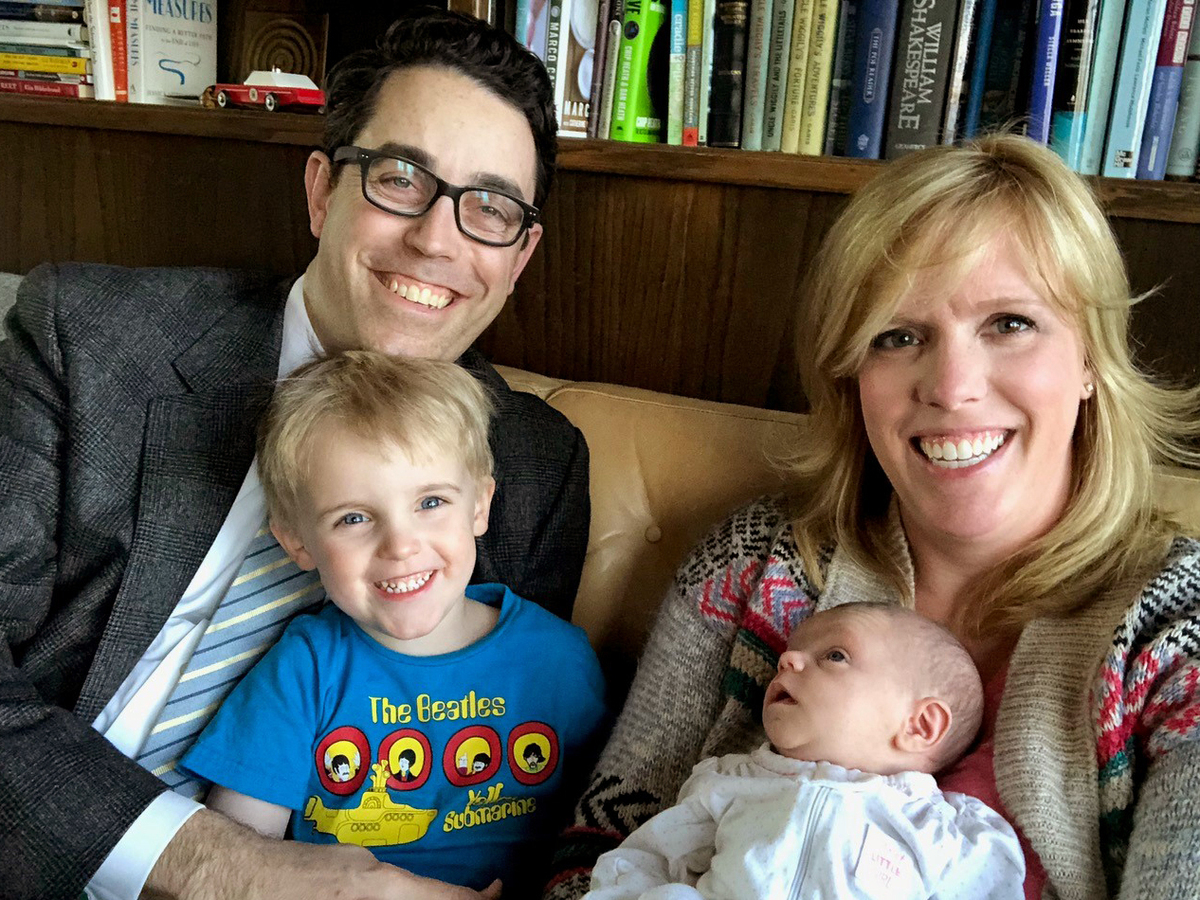
Allison Matthews, holding her infant daughter, Lottie, took part in the Mayo Clinic’s program to reduce prenatal visits for some women. During her pregnancy, Matthews monitored her weight and tracked her blood pressure and fetal heart rate at home. That allowed her husband, Marc, and son, Gus, to hear the heartbeat. (Courtesy of Allison Matthews)
Courtesy of Allison Matthews
hide caption
toggle caption
Courtesy of Allison Matthews
Most obstetrics practices continue to follow the traditional model that includes at least a dozen in-person office visits over the course of an average 40-week pregnancy, with lab work and ultrasounds at intervals along the way. That’s even though Technology increasingly allows clinicians and patients to connect online, via video or remote monitoring rather than face-to-face.
According to the American College of Obstetricians and Gynecologists, the standard pregnancy visit schedule is once every four weeks up to 28 weeks, every two weeks until 36 weeks and weekly after that.
Although prenatal care is important for healthy outcomes, how much low-risk pregnancies need is debatable, health researchers say.
A study published in the Journal of Perinatology in 2016 found that babies born to women with uncomplicated pregnancies, who had more than 10 prenatal, visits were no healthier than those born to women with fewer, based on outcomes such as admission to the neonatal intensive care unit, low scores on the Apgar test that evaluates a newborn’s wellbeing, and death. Women with more than 10 prenatal visits, were, however, more likely to be induced or have a cesarean section delivery, the study found.
Patients at the Mayo obstetrics clinic in Rochester, many of whom, like Matthews, are employees of the medical center — Mayo is the biggest employer in the city — can still go the traditional route. They can also opt for OB Nest or have joint appointments with other pregnant women in a group.
“Our goal is that OB Nest care becomes the model for low-risk women,” says Dr. Yvonne Butler Tobah, a Mayo obstetrician and health sciences researcher. Most pregnancies are low-risk, and if more patients choose OB Nest, which was added as a standard option for patients in 2016, it frees up time for doctors and midwives to focus on patients with high-risk pregnancies, she says.
But fewer visits may not translate into out-of-pocket savings on health care costs for women, since professional service fees for pregnancy, labor and delivery and postpartum care are typically bundled if the woman uses the same physician or physician group, says Katy Kozhimannil, an associate professor of public health at the University of Minnesota who studies women’s health care policy.
Women find savings in other ways, says Butler Tobah. Many patients say the convenience helps save time and money. “If it was their second or third child, patients [with an appointment at the clinic have] to pay for parking, get child care and wait in the doctor’s office, only to be told after a 15-minute visit that their pregnancy was fine,” she says.
The potential of programs like OB Nest to make care more convenient and easily accessible to women who don’t live in urban areas is very appealing, says Kozhimannil. Although Mayo offers the program only in Rochester, it is moving ahead with plans to offer OB Nest to patients outside the Rochester area, says Butler Tobah.
Other obstetrics practices are experimenting with remote-monitoring programs for low-risk expectant mothers, says Dr. Nathaniel DeNicola, co-chair of the telehealth task force for the American Congress of Obstetricians and Gynecologists.
At the George Washington University Medical Faculty Associates in Washington D.C., where he works, they’re one of several practices nationally using an app called Babyscripts to educate expectant moms, who can also transmit their weight and blood pressure data to the practice via a Wi-Fi connection.
Some expectant mothers who use the app have fewer clinical appointments compared with the standard, he says, adding, a crucial element of these emerging remote-monitoring programs is that they’re closely integrated with the work of clinical staff.
“All the remote monitoring is a way of augmenting traditional care, not replacing it,” DeNicola says.
Kaiser Health News (KHN) is a nonprofit news service covering health issues. It is an editorially independent program of the Kaiser Family Foundation that is not affiliated with Kaiser Permanente.
Idaho Joins Other States With Informed Consent For 'Abortion Reversal' Procedures

Dr. Daniel Grossman shares his concerns with NPR’s Sarah McCammon about so-called abortion reversal procedures and state laws mandating that doctors inform women about them.
SARAH MCCAMMON, HOST:
Idaho has become the latest of a handful of states to pass a law promoting a medically-controversial technique called abortion reversal. Idaho doctors who prescribe medication to end a pregnancy must now inform patients the procedure can be stopped if they change their mind. Here’s State Senator Lori Den Hartog, a sponsor.
(SOUNDBITE OF ARCHIVED RECORDING)
LORI DEN HARTOG: It simply enhances our informed consent language to allow pregnant mothers to be aware of and provided information about potential lifesaving opportunities for their unborn child if they have changed their mind after the initiation of a drug-induced abortion.
MCCAMMON: Many medical groups have come out against the procedure. One opponent is Dr. Daniel Grossman of the University of California, San Francisco. I asked him to explain how medication abortion works.
DANIEL GROSSMAN: A medication abortion involves the use of two drugs – first, Mifepristone, which blocks the progesterone receptor, and then a second medication, Misoprostol, which is given to open the cervix and cause uterine contractions. These medications are very effective. It’s used up to about 10 weeks of pregnancy. And a growing number of women are choosing this as an option. The latest data are about 45 percent of all eligible abortions end up with medication abortion.
MCCAMMON: And this is different – right? – from the morning after pill, for instance. This is actually ending a pregnancy once it’s begun?
GROSSMAN: Correct.
MCCAMMON: So granting that this is not a well-established procedure at this point, what is the typical protocol like for women who ask for an abortion reversal?
GROSSMAN: They all involve progesterone of some sort, either given by injection or vaginal administration or by pills. And the thought there is that because Misoprostol – the first pill of medication abortion – blocks the progesterone receptor, if you just then flood the body with progesterone, you could somehow limit the effect or reverse the effect of that first pill. And that kind of makes sense on some level. At the same time, it’s important to recognize that in a normal pregnancy, the body is already flooded with progesterone, and it’s unclear that adding more progesterone would actually make a difference. So if, you know, there’s a case where a woman – in a very rare case – that a woman decides to change her mind after taking the first medication, really, the standard of care now would be just to watch and wait and see what happens after taking the first medication.
MCCAMMON: And you’ve looked closely at this research that examines the effectiveness of abortion reversal. What stood out to you from that analysis?
GROSSMAN: There’s just very little data that’s been published in the literature. There is one case series of seven women who received this treatment, one of whom was lost to follow-up. And there’s just a lot of missing information from this report. The most concerning thing to me is that there’s no evidence that this research – which, it really was research – there’s no evidence that it was conducted under the supervision of an institutional review board or some sort of ethical review panel to make sure that patients received informed consent and that they were aware of the potential risks and that they were participating in research. And there’s really no evidence to indicate that some sort of treatment will increase the likelihood that the pregnancy will continue.
MCCAMMON: But there are doctors who will do this – right? – who will give women progesterone in an effort to stop medication abortion. What, if any, risks does that entail?
GROSSMAN: Well, because this hasn’t been studied, we don’t know what the risks are.
MCCAMMON: Do you suspect that there would be risks to the fetus, you know, trying to terminate a pregnancy and then reversing that?
GROSSMAN: The best evidence that we have indicates that Mifepristone by itself does not increase the risk of the baby having a birth defect if the pregnancy continues. So I don’t have a lot of concerns about the fetal risks, but I think it really needs to be studied. And I’m very concerned that this is now being advocated and, you know, really being put forward by state legislatures with so little evidence.
MCCAMMON: What are the ethical implications of requiring doctors to tell women that this abortion reversal procedure is available?
GROSSMAN: Well, I find this very concerning. I mean, for a long time, states have been forcing abortion providers to give women inaccurate information about the risks of abortion. Women have to be told in some states about potential association with breast cancer.
MCCAMMON: Which the American Cancer Society says is not an actual risk, correct?
GROSSMAN: Exactly. It’s not an actual risk. But I find this next level with these laws requiring providers to give information about this so-called abortion reversal even more concerning because now it’s state forcing doctors to tell their patients about a treatment that is completely unproven and experimental. I think this is particularly concerning because, you know, the majority of abortion patients are women of color and low-income women. And our country really has a very dark history of experimentation on people of color. And I’m concerned that these patients are not being adequately informed that this is really research.
MCCAMMON: Dr. Daniel Grossman is a professor of gynecology and reproductive sciences at the University of California, San Francisco. He joined us from our member station KQED in San Francisco. Dr. Grossman, thank you.
GROSSMAN: Thank you.
Copyright © 2018 NPR. All rights reserved. Visit our website terms of use and permissions pages at www.npr.org for further information.
NPR transcripts are created on a rush deadline by Verb8tm, Inc., an NPR contractor, and produced using a proprietary transcription process developed with NPR. This text may not be in its final form and may be updated or revised in the future. Accuracy and availability may vary. The authoritative record of NPR’s programming is the audio record.