Changes In Brain Scans Seen After A Single Season Of Football For Young Players

MRI scans before and after a season of football showed brain changes in a study of high school players.
groveb/Getty Images
hide caption
toggle caption
groveb/Getty Images
A single season playing football might be all it takes to change a young athlete’s brain.
Those are the preliminary findings of research presented this week in Chicago at the annual meeting of the Radiological Society of North America.
Researchers used special MRI methods to look at nerve bundles in the brain in a study of the brains of 26 young male football players, average age 12, before and after one season. Twenty-six more young males who didn’t play football also got MRI scans at the same time to be used as a control group.
In the youths who played football, the researchers found that nerve fibers in their corpus callosum — the band that connects the two halves of brain — changed over the season, says lead study author Jeongchul Kim, a research associate in the Radiology Informatics and Imaging Laboratory at Wake Forest School of Medicine in Winston-Salem, N.C.
“We applied here two different imaging approaches,” he says. One analyzed the shape of the nerve fibers and the other focused on the integrity of the nerves.
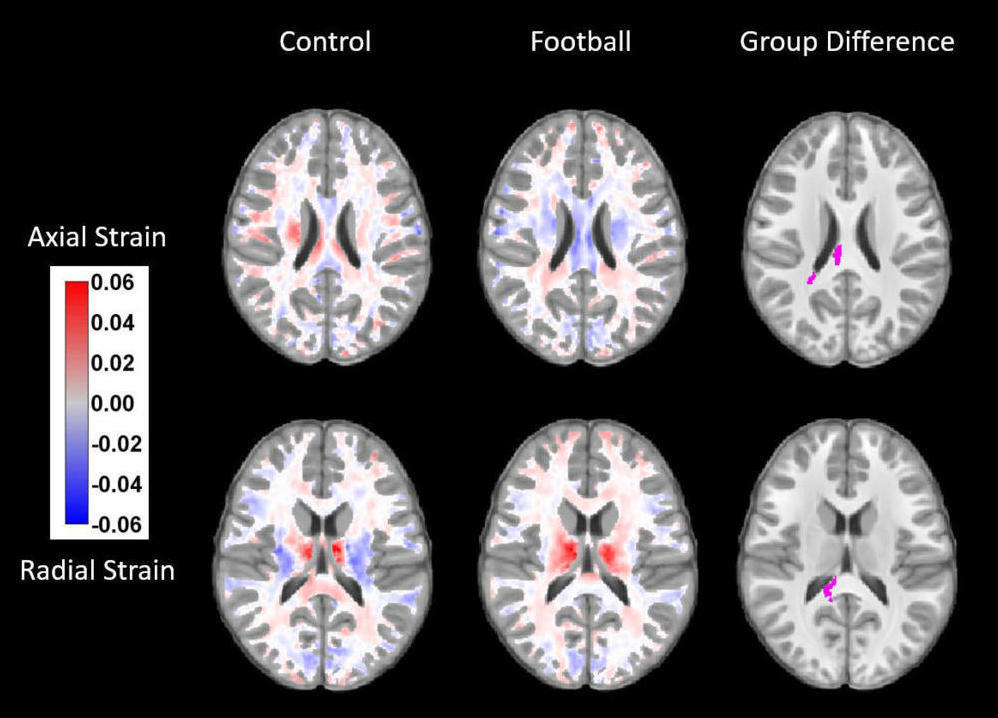
Kim says the researchers found some nerve bundles grew longer and other bundles became shorter, or contracted, after the players’ initial MRI scans at the beginning of the season. He says they saw no changes in the integrity of the bundles.
The team says these results suggest that repeated blows to the head could lead to changes in the shape of the corpus callosum, which is critical to integrating cognitive, motor and sensory functions between the two hemispheres of the brain, during a critical time for brain development in young people.
The researchers say their ultimate goal is to help inform guidelines for safer football play for youths.

A series of MRI images shows the signs of strain in nerve fibers following a season of football.
Courtesy of Wake Forest School of Medicine
hide caption
toggle caption
Courtesy of Wake Forest School of Medicine
Since the discovery of the degenerative brain disease chronic traumatic encephalopathy in the early 2000s, most of the research into the consequences of repeated head injuries during sports has been on adult athletes. This focus has occurred despite growing concerns that young athletes who experience the same kinds of collisions may also be vulnerable to their effects.
Radiologist Christopher Whitlow, a co-author of the new findings, says while the stories about NFL and collegiate players are very important, they have to be put into context.
“You have to understand that the NFL players were also most likely once collegiate players, they were also high school players and they were also probably youth players,” he says. “To us, it’s more than a question about concussions, it’s a question about long-term cumulative exposure.”
That being said, both Whitlow and Kim caution against making their findings out to be more than what they are: preliminary results from a single study with a relatively small number of participants.
“We don’t know what it means,” says Whitlow. “The natural next question is, do these changes persist over time? Do they accumulate with multiple seasons? And then No. 3, probably the most important: Do they have any relevance to long-term health?”
The results, presented at a medical meeting, haven’t been published in a peer-reviewed journal. Whitlow says that the team is working on a paper to be submitted to a journal.
These latest findings are actually part of a years-long research collaboration among University of Texas Southwestern Medical Center, Wake Forest University and Children’s National Health System in Washington, D.C.
Dr. Gerard Gioia is a pediatric neuropsychologist at Children’s National Health whose role in the larger study is to look at the functional outcomes of kids playing football. He says these latest findings are only a part of the piece of the puzzle they’re trying to solve.
“Everybody wants to know, ‘Should my kid play football? Should my kid play soccer? Should my kid play ice hockey?’ And we say, ‘Can we please study this and understand it?’ ” says Gioia, who has been pushing for funding for more long-term studies into youth and sports.
For now, he says, they still have a lot of unanswered questions.
Trump's Move To Give States More Flexibility Undercuts Obamacare, Critics Say

The Trump administration said Thursday it wants states to innovate in ways that could produce more lower-cost health insurance options — even if those alternatives do not provide the same level of financial or medical coverage as an ACA plan.
Getty Images
hide caption
toggle caption
Getty Images
On his first day in office, as part of his mission to dismantle the Affordable Care Act, President Trump signed an order promising to give states flexibility “to create a more free and open healthcare market.”
The administration on Thursday released an official set of examples to help states flex these powers.
It is intended to roll back key elements of Obama-era requirements, which were designed to promote enrollment in ACA plans that cover a broad range of medical needs and meet uniform national standards.
Seema Verma, the Centers for Medicare & Medicaid Services administrator, said those strict rules were seen by many as burdensome, and “virtually impossible” for states to meet.
Instead, the Trump administration wants states to innovate in ways that could produce more lower-cost options, even if those alternatives do not provide the same level of financial or medical coverage as an ACA plan.
“I’m confident states will come up with ideas that will work better,” said Verma.
Still, coupled with other ongoing efforts by the Trump administration to gut Obamacare, policy experts predict the ideas would further foster a parallel market of cheaper, less robust coverage that could draw younger or healthier consumers, but drive up premiums for those who remain in ACA market plans.
“Invariably, the coverage is going to be more expensive for people who really need comprehensive coverage,” said Timothy Jost, a retired Washington and Lee University law professor who follows the ACA closely.
States could change who gets subsidies
One of the biggest changes signaled by the administration involves allowing states to revamp how federal subsidies are used. Currently, these subsidies are strictly targeted to lower-income Americans and are seen as key to bolstering enrollment in marketplace plans.
The Trump guidance would give states wider latitude to expand or narrow the income range eligible for subsidies, target them toward younger people or allow them to be used for less costly but skimpier types of insurance.
This would “potentially upend the subsidy structure,” said Sabrina Corlette, a research professor at Georgetown University’s Health Policy Institute.
Another example would, for the first time, make federal subsidy money available to people who get job-based insurance, countering Obama-era rules that generally prohibited that. It would let states use federal dollars to fund accounts consumers could use to buy insurance or pay other health costs, such as deductibles or copayments. Employers or consumers could also add additional funds to these accounts.
Still, managing those accounts would be a large administrative expense for a state to oversee, said Corlette. “I don’t understand why a state would want to set it up,” she added.
Supporters of Trump’s plan say the examples unveiled Thursday would give consumers more control over how they choose to spend their health care dollars and the types of coverage they want to buy. They say it might also improve the markets, which are seeing declining enrollment as premiums rise.
“If states can provide larger subsidies to younger individuals to attract them to enroll, that will improve the market overall,” said Christopher Condeluci, a Washington, D.C., attorney who specializes in employee benefits and has served as the tax and benefits counsel to the U.S. Senate Finance Committee.
However, if many states follow the administration’s lead, critics say, it would bring back the days when insurance rules varied widely state by state. Consumers could end up buying skimpier plans that leave them vulnerable to high, unexpected medical bills.
While not prescriptive, the examples are designed to encourage states to innovate and apply for permission to offer more choices for consumers, so long as the proposals don’t cost taxpayers more and don’t reduce access to ACA plans, said Verma.
State proposals would still have to be affordable, comprehensive and not raise the federal deficit, she said. And CMS would pay particular attention to potential effects on low-income Americans, she added.
Reshaping the individual insurance market
The administration’s examples focus on states’ health marketplaces, where insurance plans are designed for small businesses and for individuals who don’t get job-based coverage. An estimated 14 million people buy their own coverage through those markets or through brokers.
Premiums in those markets have risen substantially since the law took effect in 2014, for a variety of reasons. Among those reasons are lower-than-expected enrollment by healthy people; actions taken by Congress and the Trump administration that removed the tax penalty for failing to have coverage; and other moves that eliminated some payments to insurers and loosened restrictions on alternative types of insurance plans.
The administration’s examples add a new twist to a provision of the ACA that gave states the option of seeking a federal waiver to develop alternative marketplace proposals.
To get a waiver under Obamacare rules, however, states have to meet four “guardrails” established in 2015. These require states to ensure their proposals would provide equally comprehensive and affordable coverage; would not result in fewer people enrolling; and wouldn’t increase costs for taxpayers.
The examples described Thursday — touted as “waiver concepts” by the Trump administration — build on the administration’s guidance issued in late October to loosen those guardrails.
That October guidance, to take effect in 2020, says states have to provide access to affordable and comprehensive coverage, but will not be held to a strict tally of how many people actually enroll. So long as a state could show that equal numbers of people were buying some kind of coverage — either comprehensive ACA plans or less expensive but skimpier plans — the state’s approach could pass the test.
That October announcement, and Thursday’s concepts, drew immediate criticism from ACA supporters, who said it encourages the use of subsidies to buy short-term plans, which aren’t as comprehensive as ACA coverage and can bar people who have preexisting conditions.
Congressional Democrats sent a letter to top administration officials this week, saying the process by which the changes are being made is illegal, because the administration is not following a formal rule-making process.
“We believe this sub-regulatory guidance exceeds the Secretaries’ statutory authority,” wrote Ways & Means ranking member Richard Neal, D-Mass., and Energy and Commerce ranking member Frank Pallone Jr., D-N.J. “It appears to be part of the administration’s ideologically motivated efforts to sabotage the ACA.”
The Brookings Institution and other experts have raised similar questions and predicted a legal challenge.
“As soon as any state proceeds to go somewhere with this, there will be legal challenges,” said Jost.
Verma pushed back against this warning, noting that the Obama administration also issued its “guardrails” as guidance, not a formal rule.
Verma said she anticipated that critics would say the ideas would adversely affect people with preexisting medical conditions.
Those critics argue that anything that draws younger and healthier people out of the market will drive up costs for those who remain in ACA plans — including those with medical conditions, who might be barred from buying an alternative policy, such as a short-term plan.
But Verma said that “nothing in this guidance would take away protections from people with preexisting conditions.”
Kaiser Health News, a nonprofit news service covering health issues, is an editorially independent program of the Kaiser Family Foundation that is not affiliated with Kaiser Permanente.
Loyola's Sister Jean Presented With Final Four Ring After March Madness Run

Loyola University Chicago surprised Sister Jean Dolores-Schmidt this week with an NCAA Final Four appearance ring. The 99-year-old chaplain became a national star after an improbable March Madness run.
'Seduced By The Game' – Hall Of Fame Coach Returns To The Court


Another Drug Crisis: Methamphetamine Use By Pregnant Women
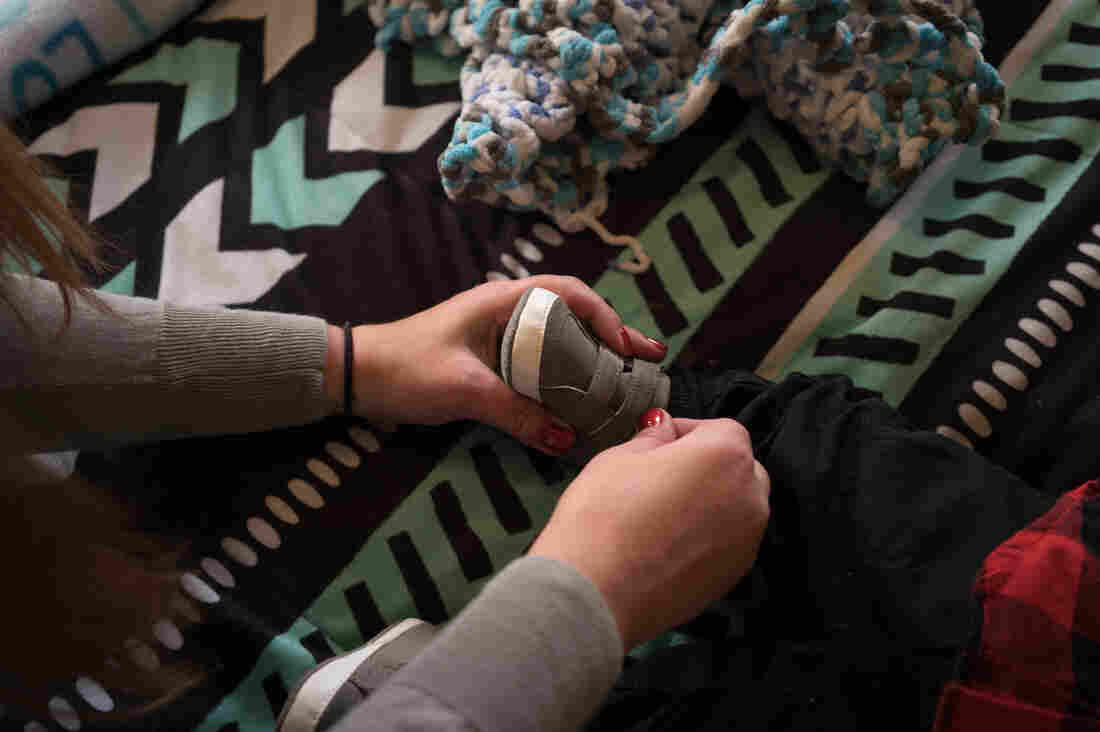
Kristen Philman first tried methamphetamine in her early 20s, as an alternative to heroin and other opioids. When she discovered she was pregnant, she says, it was a wake-up call, and she did what she needed to do to stop using all those drugs.
Theo Stroomer for NPR
hide caption
toggle caption
Theo Stroomer for NPR
Kristen Philman had already been using heroin and prescription painkillers for several years when, one day in 2014, a relative offered her some methamphetamine, a chemical cousin to the stimulant amphetamine.
“I didn’t have any heroin at the time,” says Philman, a resident of Littleton, Colo. “I thought, ‘Oh this might make me feel better.’ “
It did, she says. Soon, she was using both heroin and methamphetamine on a regular basis.
“With heroin I would get sleepy, and then I needed the meth to kind of give me the boost,” she says. “It was a daily thing. I would do heroin and do meth on top of that.”
Then, in December, 2017, after a few months of missed periods, Philman took a home pregnancy test and the result was positive. “I was really scared, because I’d used meth and heroin from the day [my son] was conceived till the day I took the [pregnancy] test,” she says.
Philman is among thousands of women around the United States who used the stimulants methamphetamine or prescription amphetamines during their pregnancy in recent years, researchers say. While the trend has garnered little media attention, physicians in some regions have been struggling to tackle the problem and the impact of the drug on the women and infants.
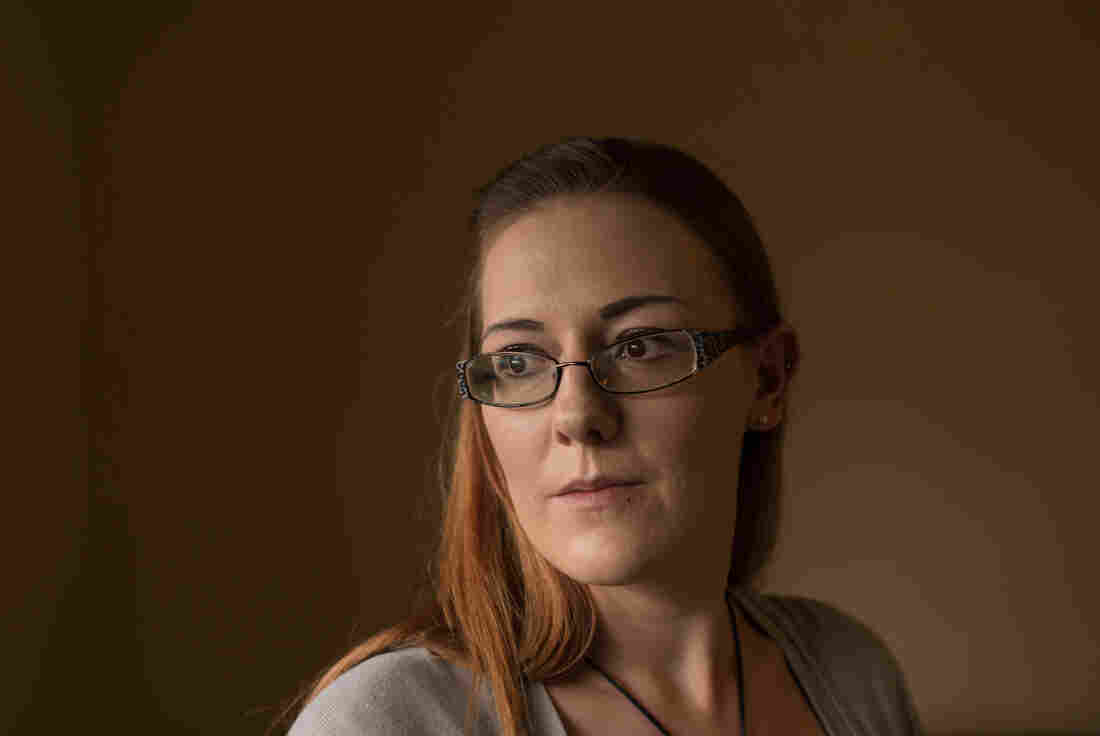
Philman entered recovery once she was pregnant, and was put on methadone for her opiate use. She says her OB-GYN was candid with her about the potential effects of her meth use on the fetus — including premature birth and death.
Theo Stroomer for NPR
hide caption
toggle caption
Theo Stroomer for NPR
Since there are no medications to treat methamphetamine use disorder, some providers have had to improvise their approaches to treating these women, while many others remain unaware of the problem and how to deal with it.
A study published Thursday in the American Journal of Public Health confirms the rise in meth use among pregnant women and provides new data illustrating the scope of the problem. The research, which analyzed hospital discharge records between 2004 and 2015, found that as opioid use among pregnant women has grown in recent years, so has their use of amphetamines, and particularly methamphetamine.
Though that class of drugs includes prescription medicines like Adderall and Dexedrine that are sometimes used to treat attention deficit hyperactivity disorder, “we think our findings nearly entirely represent illicit methamphetamine use,” says Dr. Lindsay Admon, an assistant professor of obstetrics and gynecology at the University of Michigan and the lead author of the study.
The rise in amphetamine use began after 2008-2009, the study found. By 2015, however, tens of thousands of pregnant women were on the drugs.
“In total, we identified 82,000 deliveries that were affected by amphetamine use disorders,” says Admon.
According to the study, the increased rates of amphetamine use grew disproportionately in three regions of the U.S. — the South, the Midwest and the West. Rural areas had higher rates than cities, with the rural West having the highest rate of all regions. Opioid use among pregnant women on the other hand, was highest — 3 percent of all delivery hospitalizations — in rural northeastern United States.
“By 2014-2015, amphetamine use disorder was identified among approximately one percent of all deliveries in rural western United States,” says Admon. And that’s higher than the prevalence of opioid use among pregnant women in most regions in the country.
Health effects on mom and baby
Long term methamphetamine use during pregnancy has serious health risks for the mother, Admon says. It increase a woman’s risk of dying during or after childbirth or of having lifelong health complications — “things like blood transfusion, heart failure, cardiac arrest,” she says. “And then eclampsia — which is the most severe form of preeclampsia — where a woman has a seizure.”
“That’s something we’re seeing here,” says Dr. Tricia E. Wright, an OB-GYN and associate professor at the University of Hawaii John A. Burns School of Medicine. Wright has been treating pregnant women with methamphetamine use for many years.
The increased risk for preeclampsia signals an increased risk of heart attacks and stroke for the mother later on in life, she adds.
If the mother keeps using the drug through the pregnancy and doesn’t get prenatal care early on, the consequences can sometimes be fatal.
“I had a recent maternal death from methamphetamine use,” says Wright.
The woman was 28 weeks pregnant, “had a very bad heart disease” and did not receive any prenatal care, Wright says.
“She had a heart attack at home while using drugs,” Wright says. The woman’s boyfriend gave her chest compressions and rushed her to the emergency room, where doctors did an emergency C-section and put her on life support. But neither the mother or the baby survived.
The new study found that methamphetamine and prescription amphetamines, pose some risks to the infant, too.
It increases the risk of premature birth. It also increases the chances of having a condition called placental abruption, which cuts off oxygen supply to the fetus and causes heavy bleeding in the mom.
The new study is an important one, says Wright. “It shows with all the focus on opioids in this country, we can’t forget the other drugs — especially methamphetamine.”
National attention tended to turn away from methamphetamine in the late 2000s, because meth use was thought to be on the decline, says Dr. Mishka Terplan, an OB-GYN and an addiction specialist at Virginia Commonwealth University. But healthcare providers working in rural areas in certain regions of the country never really saw the drugs go away, he says.
“And many have been noting an increase in amphetamine and methamphetamine use in general, as well as amongst pregnant women,” adds Terplan.
Challenges of treating amphetamine use in pregnancy
“Over half of our patients that are being treated for opioid use disorders also have stimulant use disorders — meaning that they’re taking methamphetamine regularly,” says Dr. Amanda Risser, a family medicine physician at the Oregon Health & Science University in Portland, who runs a program called Project Nurture for pregnant women with substance use disorders.

Amanda Risser runs a program at Oregon Health & Science University in Portland, Ore., for pregnant women with substance abuse problems. There are currently no medications to treat methamphetamine addiction, she says, and residential treatment is often the best option for patients.
Beth Nakamura for NPR
hide caption
toggle caption
Beth Nakamura for NPR
“Since we started doing this work in 2014, we’ve always cared for women who have a tendency to use meth along with the opiates that they’ve been using,” Risser says.
Her colleagues at clinics in rural Oregon have observed the same trend there, too, she says.
Most patients want to stop using drugs when pregnant, says Risser, but quitting amphetamines is difficult.
The lows experienced with withdrawal from methamphetamine is strong, she says. The women feel depressed, unhappy and ill at ease. That’s because long term use of meth “can cause significant decreases in neurotransmitters responsible for people’s wellbeing and happiness.”
And unlike with opioids, there is no medication to help patients with methamphetamine withdrawal. So, despite their best intentions, some of Risser’s patients continue using methamphetamines even as they start their methadone treatment for opioid use.
The best treatment option for such patients is “time and support,” says Risser. Her clinic also provides behavioral therapy to help patients stay off of methamphetamine.
The project also provides residential treatment, which allows the women, many of whom are homeless, to get off the streets and be somewhere safe during the pregnancy — as well as after the birth of their child.
“Access to high quality residential treatment is very important,” says Wright.
Having a supportive OB-GYN made all the difference to Philman’s pregnancy. When she learned she was pregnant, she rushed to the Denver Recovery Group, where she was put on methadone for her opiate use. She found an OB-GYN who was supportive and understanding about her drug use, Philman says, while being candid with her about the potential effects of methamphetamine use on the baby.
“I was scared that something would be physically wrong with my son,” Philman remembers.

Philman holds her six-month old son, who was born healthy.
Theo Stroomer for NPR
hide caption
toggle caption
Theo Stroomer for NPR
That fear and worry over her son’s health, and the support from her physician, her parents and her Denver Recovery Group counselor are what helped her get through methamphetamine withdrawal, she says. What also helped, she says, was that her partner had also stopped using drugs and was well on his way to recovery.
Still, the first month of treatment during her pregnancy was difficult, she says, and she briefly returned to using meth a couple of times. But after that, she stayed clean.
The monthly ultrasounds were a big motivator, she says. “Just seeing my son grow was kind of a reality check.”
The lingering stigma of addiction
Still, many pregnant women aren’t as lucky as Philman in finding supportive doctors or nurses.
When Andrea Rano, a resident of Portland, became pregnant in 2016, she was living in a friend’s garage with her then-boyfriend. Both of them were using opioids and methamphetamine. Over the next few months, Rano worried about her pregnancy and felt guilty and ashamed about her addiction. Those feelings just fueled her drug use, she says, and kept her from seeking care.
When she did go to a hospital for a dose of methadone, the nurse practitioner she met with was disparaging and insisted on doing a urine test for drugs, Rano says, and threatened to report her to the authorities.
“I ended up leaving that hospital and feeling really uncomfortable about doctors and healthcare after that,” she says,, starting to cry. “It was really hard to be in that situation — to want to get help and feel like it was impossible.”
She felt scared, ashamed and helpless. “All I could think about was, what am I going to do? How am I going to help? Is there any help out there for me? And even if I get help, will it matter? Because what if they take my child away anyway?”
That’s the situation many pregnant women like Rano find themselves in, says Dr. Curtis Lowery, the chairman of the OB-GYN department at the University of Arkansas for the Medical Sciences, in Little Rock, Ark. Most physicians share our society’s stigma around drug abuse, Lowery says, adding that medical education doesn’t teach physicians about substance use disorders or about how to treat these conditions.
“It’s not something that most OB-GYN residencies or family medicine training expose their residents to,” says Lowery.
But that stigma can end up endangering these women’s lives and their babies.
“The worst thing we can do to pregnant women is to vilify them as a result of any kind of drug use,” Lowery says. “All you’re going to do is drive them underground.”
What these women really need is good prenatal care and help staying away from drugs, he says. “One of the things you don’t want to do with meth addiction is delay treatment,” says Lowery. “The faster you can get the patient off the drug, the better it is for the fetus and the mother.”
And that’s the little piece of good news — that with the right kind of help, women can recover from their dependence on the drug and go on to have normal pregnancies.
“We know that getting them screened, getting them into treatment early, getting them to stop using it at any point during the pregnancy — they have better outcomes and actually, normal outcomes,” says Wright. And “the longer they can remain abstinent from the drug, the more chance they have at recovery.”
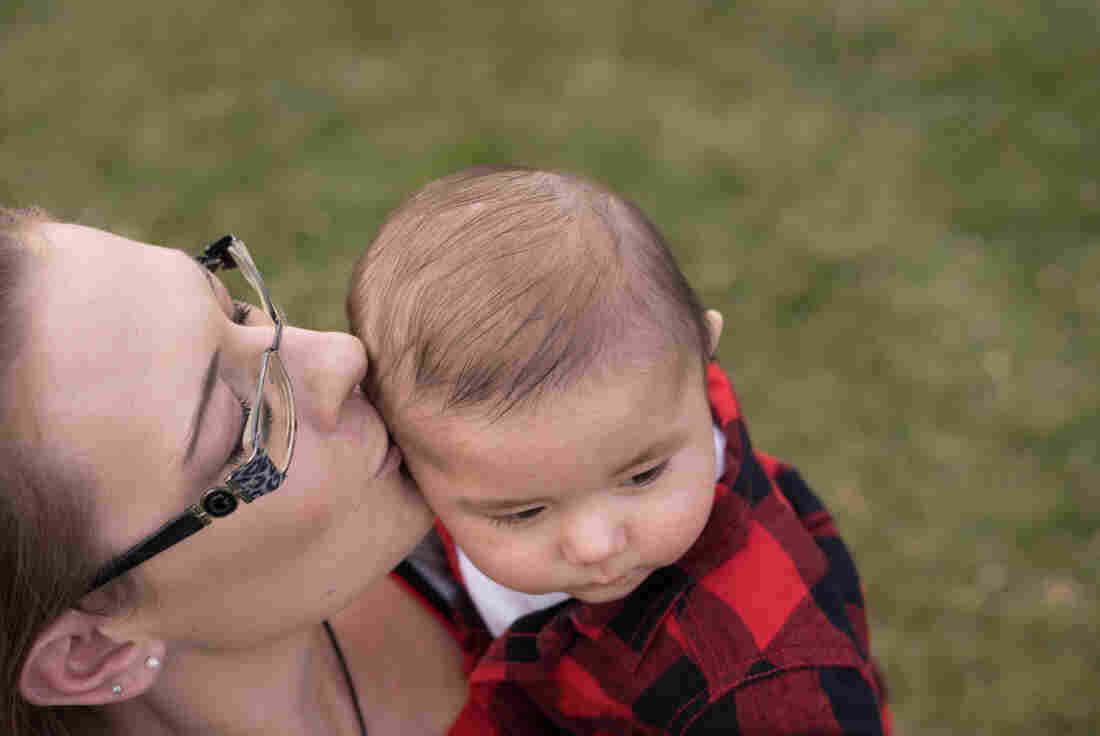







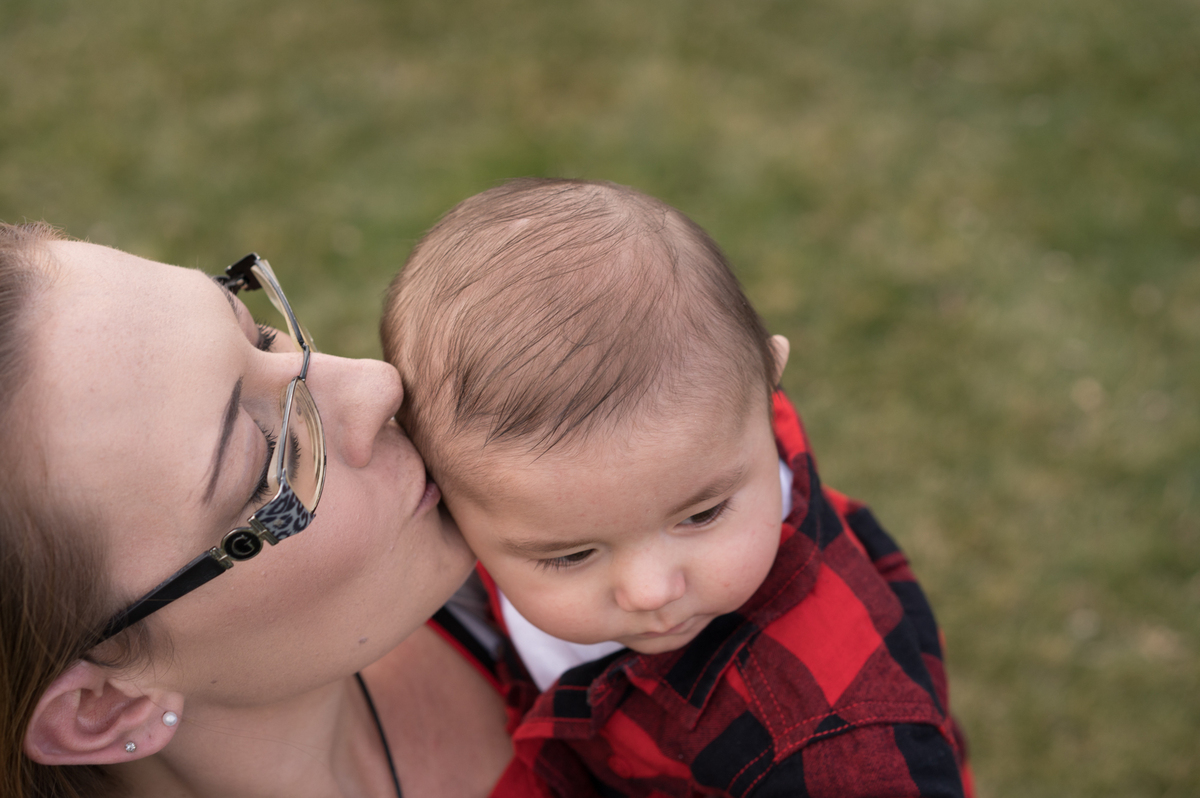
Philman hasn’t used methamphetamine or opioids for almost a year. She’s going back to finish her degree — enrolled in college classes that will start in January.
Theo Stroomer for NPR
hide caption
toggle caption
Theo Stroomer for NPR
That’s been the happy experience of Philman and her son, who was born full-term and is a healthy 6-month-old now. His mom has been off the drugs for almost a year now, and is already enrolled to return to college in January.
While Rano wasn’t as fortunate initially, someone finally told her about Project Nurture in the seventh month of her pregnancy.
She was living out of a car at the time, along with her boyfriend and their dog. He was still using drugs. Rano was getting methadone for her opioid use, but was having a hard time staying off of meth.
With the support she eventually got from Risser, along with residential treatment at Project Nurture, and support from her counselor, doula and other women getting treated at the program, Rano was able to turn a corner.
She was able to stay off methamphetamine through the remainder of her pregnancy. Her son was born three weeks early — but he was and is healthy.
“It was the most amazing thing ever,” says Rano. “He was just so beautiful.I was just so happy that I was able to be there and do that — and that he was there, and he was fine.”
She credits her recovery and her son’s health to Project Nurture. “I got a huge support network [there],” she says. “I got a doctor who was absolutely amazing. I got in-patient treatment, which was having somewhere to live, somewhere to take my child home after I gave birth. It totally turned my life around.”
Reggae, 'A Voice For All,' Added To Intangible Cultural Heritage List By UNESCO


A man pedals past a mural of late musician Bob Marley in Kingston, Jamaica in 2009.
Jewel Samad/AFP/Getty Images
hide caption
toggle caption
Jewel Samad/AFP/Getty Images
One of the best-loved musical styles in the world now bears a new distinction. Reggae — the uniquely Jamaican creation born in the late 1960s and made popular globally by artists like Bob Marley and Toots and the Maytals — has been added to a list of global cultural treasures by UNESCO, the cultural and scientific agency of the United Nations.
On Thursday, reggae was “inscripted,” as the UNESCO term goes, to the “Representative List of the Intangible Cultural Heritage of Humanity,” joining more than 300 other traditional practices worldwide on the U.N. agency’s list.
“Its contribution to international discourse on issues of injustice, resistance, love and humanity underscores the dynamics of the element as being at once cerebral, socio-political, sensual and spiritual,” UNESCO said in a statement. “The basic social functions of the music — as a vehicle for social commentary, a cathartic practice, and a means of praising God — have not changed, and the music continues to act as a voice for all.”
UNESCO enlarges its list annually; dozens of musical, dance and theater styles have already been included, though possibly none so well-known, or commercially popular worldwide, as reggae.
Among other traditions newly added to the UNESCO list this year are wrestling from the country of Georgia, hurling in Ireland, Japanese raiho-shin rituals, spring festival rites among the horse breeders of Kazakhstan and as-samer dancing in Jordan.
UNESCO
YouTube
Number Of U.S. Kids Who Don't Have Health Insurance Is On The Rise


The number of children in the United States without health insurance jumped to 3.9 million in 2017 from about 3.6 million the year before, according to census data.
Katrina Wittkamp/Getty Images
hide caption
toggle caption
Katrina Wittkamp/Getty Images
After years of steady decline, the number of U.S. children without health insurance rose by 276,000 in 2017, according to a Georgetown University report released Thursday.
While not a big jump statistically — the share of uninsured kids rose to 5 percent in 2017 from 4.7 percent a year earlier — it is still striking. The uninsured rate typically remains stable or drops during times of economic growth. In September, the U.S. unemployment rate hit its lowest level since 1969.
“The nation is going backwards on insuring kids and it is likely to get worse,” says Joan Alker, co-author of the study and executive director of Georgetown’s Center for Children and Families.
Alker and other advocates for children’s health place the blame for this change on the Trump administration and the Republican-controlled Congress, saying the Republican policies and actions have cast a pall on enrollment in health plans.
The number of children in the United States without coverage rose to 3.9 million in 2017 from about 3.6 million a year earlier, according to census data analyzed by Alker’s Georgetown team.
The overall uninsured rate for people of all ages — which plummeted from 2013 to 2016 following the health law’s implementation — remained unchanged at 8.8 percent last year.
The share of children with employer-sponsored health coverage rose modestly in 2017, Alker says, but not by enough to make up for the drop in children enrolling in Medicaid or getting coverage from Obamacare insurance exchanges.
While no states made significant strides in reducing the percentage of children who are uninsured, nine states saw their numbers go the wrong way. The largest negative changes occurred in South Dakota (where the rate of uninsured kids rose from 4.7 percent to 6.2 percent), Utah (up from 6 percent to 7.3 percent) and Texas (from 9.8 percent to 10.7 percent).
More than 1 in 5 uninsured children nationwide live in Texas — about 835,000 kids — by far the highest number of any state.
Florida had 325,000 uninsured kids last year, as its uninsured rate for that age group rose 0.7 percentage points to 7.3 percent. California had 301,000 children without insurance — its number remained virtually unchanged, relative to the previous year.
Other states with significant increases were Georgia, South Carolina, Ohio, Tennessee and Massachusetts.
The uninsured rates for children increased at nearly triple the rates in states that did not expand Medicaid under the Affordable Care Act, according to the report. Studies have shown that children whose parents are insured are more likely to have health coverage.
Georgetown has been tracking these figures since 2008, when 7.6 million children — or about 10 percent of kids — lacked health coverage.
Because nearly all low-income children are eligible for Medicaid or the federal Children’s Health Insurance Program, the challenge is making sure parents are aware of the programs, Alker says, and getting the kids enrolled and keeping them signed up as long as they are eligible.
Congress let the CHIP program funding lapse for several months in 2017, putting states in a position of having to warn families that enrollment would soon be frozen. Congress restored federal funding in early in 2018.
In addition, low-income families were bombarded by news reports last year that Congress was threatening to repeal the health law that expanded coverage to millions. And, in the past two years, the Trump administration has slashed funding for Obamacare navigators who help people sign up for coverage.
Alker points to the Trump administration’s September proposal, known as the “public charge” rule as another factor that may have led to fewer children getting health insurance. The rule could make it harder for legal immigrants to get green cards if they have received certain kinds of public assistance — including Medicaid, food stamps and housing subsidies. Green cards allow these legal migrants to live and work permanently in the United States.
OLE Health, a large health provider based in Napa Valley, Calif., that serves many immigrants, says it has seen patients leave the Medicaid rolls in the past year. CEO Alicia Hardy says many have dropped coverage over fears the help could jeopardize their immigration status.
“They are afraid of being deported,” she says.
All those events may have deterred families from getting their kids covered.
“The welcome mat has been pulled back,” Alker says, “and as a result we see more uninsured children.”
She says the easiest way to change the trend would be for more states to expand Medicaid under the health law. Fourteen states have yet to do so. Though the expansion largely affects adults, as parents enroll, their children are likely to follow.
Kaiser Health News, a nonprofit news service, is an editorially independent program of the Kaiser Family Foundation, and not affiliated with Kaiser Permanente. KHN’s coverage of children’s health care issues is supported in part by a grant from the Heising-Simons Foundation.
Magnus Carlsen Retains His Title As World Chess Champion
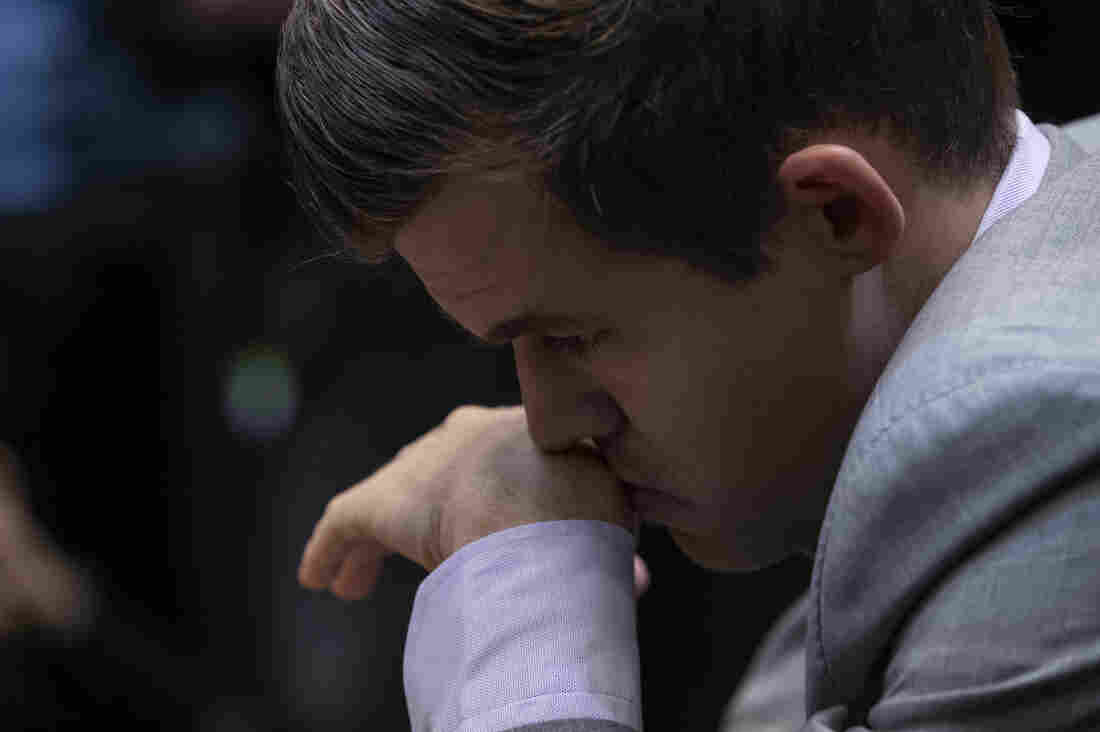

Defending world champion Magnus Carlsen, who is Norwegian, decisively beat his opponent, American Fabiano Caruana, at the World Chess Championship on Wednesday in London.
Dan Kitwood/Getty Images
hide caption
toggle caption
Dan Kitwood/Getty Images
It came down to a series of rapid tie-break games, but defending world chess champion Magnus Carlsen has emerged victorious once again.
Carlsen, a 27-year-old Norwegian, has held the title since 2013. He defeated Fabiano Caruana, who would have been the first U.S. citizen to win the world title since Bobby Fischer in 1972.
The two appeared evenly matched in the 12 games they played over three weeks before Wednesday’s climax. Each of those 12 games resulted in a draw, making it the first time in the tournament’s history that no player won a game during regular play.
But Carlsen dominated the board at Wednesday’s matches in London, decisively winning three games in a row to clinch the title.
“After a generally close-fought 12 games of classical, today just felt like slaughter,” commented grandmaster Peter Svidler in a chess24 livestream of the match.
“This was a hard fought match to the end, and I want to congratulate Magnus on defending his title,” said Caruana. “I was up against one of the most talented players in the history of chess, and I gave it everything I had.”
The previous 12 games had been much slower-paced – they could take more than five hours to complete. In the tie-break rounds, the pace sped up a lot.
Carlsen won the best of four tie-break series in three straight games. These started with 25 minutes on each player’s clock, and 10 additional seconds after each move.
If the pair had been tied after those four games, it would have proceeded to additional rounds of even faster games.
Here’s an animation of the final game from FiveThirtyEight’s Oliver Roeder (Carlsen played white):
here’s the final nail. #CarlsenCaruana pic.twitter.com/M10dhgMSQT
— Oliver Roeder (@ollie) November 28, 2018
Carlsen was seen to have an advantage in the tie-break games because he is higher ranked than Caruana at faster play.
But on Monday, he made a decision that caused some chess experts to question whether he was losing his fighting spirit. Even though he was in a more favorable position in game 12, he suddenly offered Caruana a draw, which he accepted.
“In light of this shocking draw offer from Magnus in a superior position with more time, I reconsider my evaluation of him being the favorite in rapids,” legendary chess grandmaster Garry Kasparov wrote on Twitter. “Tiebreaks require tremendous nerves and he seems to be losing his.”
It appears that Carlsen kept a grip on his nerves for Wednesday’s games.
The Guardian quotes grandmaster Judit Polgár from the commentary booth: “What a match. What a player. What a drama.”
A Trauma Surgeon Who Survived Gun Violence Is Taking On The NRA


Protesters gather beneath a banner featuring Wayne LaPierre, CEO of the National Rifle Association, during a rally outside the NRA’s annual meeting in Dallas in May. When the NRA told doctors to “stay in their lane” instead of weighing in on gun policies, Dr. Joseph Sakran sprang into action and created a Twitter account to encourage medical professionals to share their stories.
Daniel Acker/Getty Images
hide caption
toggle caption
Daniel Acker/Getty Images
For trauma surgeon Joseph Sakran, gun violence is a very personal issue. He has treated hundreds of gun wound victims, comforted anxious loved ones and told mothers and fathers that their children would not be coming home.
But Sakran’s empathy for his patients and their families extends beyond the hospital. Sakran knows the pain of gun violence because he is a survivor of it; when he was 17, he took a bullet to the throat after a high school football game.
Maybe that’s why he felt the need to do something when the NRA tweeted on Nov. 7, “Someone should tell self-important anti-gun doctors to stay in their lane,” in response to the American College of Physicians’ position paper on reducing firearm injuries and deaths.
“My first reaction was kind of incensed,” Sakran says of the NRA’s tweet. Then, he sprang into action, creating the Twitter account @ThisIsOurLane and encouraging other medical professionals to share their experiences treating victims of gun violence.
As a Trauma Surgeon and survivor of #GunViolence I cannot believe the audacity of the @NRA to make such a divisive statement.
We take care of these patients everyday. Where are you when I’m having to tell all those families their loved one has died. @DocsDemand #Docs4GunSense https://t.co/XrY1G3hIi2
— Joseph Sakran (@JosephSakran) November 7, 2018
Some of the responses have been graphic, but Sakran, who is director of emergency general surgery at Johns Hopkins Hospital in Baltimore, says that helps drive home the point: “By seeing a lot of these photos of bloodstained scrubs or by seeing an operating room floor full of blood or an empty waiting room, it’s made it real.”
When it comes to gun violence, Sakran says, “a lot of times people talk about statistics and numbers, but I think it’s so important to move beyond that, because these aren’t just numbers — these are people. These are fathers, mothers, members of the community that we interact with day in and day out.”
Interview Highlights
On being shot in the throat when he was 17
It was after a high school football game where we were just hanging out with some friends the way typical high school students do, and we were at a park at a nearby elementary school when a fight had broken out between two individuals, and a guy pulled out a gun and started firing into the crowd. At that point I got hit in the throat with a .38-caliber bullet.
And I remember that night actually pretty vividly for a variety of reasons, but one of which I was wearing white that night, and very quickly I noticed that I had blood all over my shirt and pants, and as I made my way to the curb my friends were frantically trying to figure out where I had been hit. And then they saw the spurting of blood from my windpipe. …
It might sound a little bit crazy, but it was almost as if I was watching myself and I was watching the pre-hospital workers put IVs in me, ask me different questions, almost like an out-of-body experience. … They were having to perform an emergency tracheostomy, which is providing a secure airway, because I had a ruptured windpipe.
On the stress his family went through when he was shot
I am the victim in this, but now looking back at it even as as the victim I still have a sense of guilt that [I] put [my] parents and family through something that has to be just so stressful. And I think about it often. I say I probably cut 10 years off of their life. I can’t imagine when they initially got the call that, “Your son has been injured please come to the hospital.” They didn’t tell them exactly what happened. And so you can imagine the surprise when they show up to the hospital and they say to them “Your son’s been shot.” …
I often think about this in regards to kind of what I do on a daily basis, and I always tell people the worst part of my job is going out to those waiting rooms and having to talk to families and tell them that their loved one is never coming home.
On deciding to become a trauma surgeon
There was a very profound moment that happened during my recovery period that changed how I thought about what had just happened. I was standing in the bathroom looking at the mirror and I was looking at the scars that I had. At that point I still had the tracheostomy tube, and my father happened to be walking by and kind of peeked in. I think he saw the distraught look on my face and … he said, “What happened was horrible, and either you can look at your scars and the tube that you have in your neck and feel sorry for yourself, or you can take this second opportunity and really make a difference for other people.” And it was that moment that really I think changed me for the rest of my life.
On how his experience helps him talk to families of the victims of gun violence
It’s never easy. It’s by far the worst part of my job, but it’s part of my job. I think having been a victim and now a provider I have a unique experience and I think one of the things I always try to do is to have empathy. I think that it’s very different than sympathy — really being able to kind of put yourself in their shoes and what they must be feeling and going through.
When I walk out there to talk to these families, I often will just kind of stand there for a little bit and just look through the waiting glass window, and it’s difficult. Sometimes I know that what I’m about to do is going to completely change your life. And I look at their faces and … these are all mothers, fathers, sisters, brothers that obviously care for this person who has just been injured. And so I try to be as empathetic as possible, and provide them with as comprehensive as possible a detail of what just took place.
On sharing his personal story with patients
I often do share this story with my patients and families later on if they’re lucky enough to have survived. I use that in a variety of different ways. But some patients will look at me and think, “OK, what does this person understand about gun violence?” When I tell them my story, it allows me to relate to what they’ve just been through, but also what they’ve seen from so many years in their own community.
On what he sees as the priorities for gun policy change
I think there would be really three things: The first is expanding universal background checks. The second is ensuring that we have federal funding to provide data-driven solutions. And the third is focus on safe storage and education.
Therese Madden and Seth Kelley produced and edited the audio of this interview. Bridget Bentz, Molly Seavy-Nesper and Scott Hensley adapted it for the Web.
'That's How I Found Out I Was Dead': Soccer Club Fakes Player's Demise (Poorly)


Fernando LaFuente did not learn of his death until this week, days after his former team falsely reported it to the Leinster Senior Football League
Nicolò Campo/LightRocket via Getty Images
hide caption
toggle caption
Nicolò Campo/LightRocket via Getty Images
The tragic phone call came in Friday morning.
That’s when Ballybrack FC, an amateur Dublin soccer team, told league officials that one of its players had been killed in a traffic accident on his way home from practice. Fernando LaFuente, sadly, had played his last game.
The reaction was swift. Ballybrack’s opponents that Saturday agreed to call off their scheduled game out of respect for LaFuente, and teams across the Leinster Senior Football League observed somber moments of silence before they resumed play.
Condolences to everyone involved at Ballybrack FC on the tragic passing of their player making his way home from training on Thursday night. All at Rush Athletic express our deepest sympathies.
— Rush Athletic Senior (@RushAthleticFc) November 24, 2018
There was just one minor issue: Fernando LaFuente is very much alive.
“After my work finished I was playing some video games, and suddenly I got a call from work,” LaFuente told RTÉ Radio One on Wednesday. His coworkers called Tuesday night to check in on him. They’d seen reports about his “accident.”
“They started sending me all these news articles and all these mass media,” he explained. “And that’s how I found out I was dead.”
As it turns out, Ballybrack officials had faked his death.
A Spanish national, LaFuente said he had played on the team since January. But he dropped out about two months ago, when he left Ireland’s capital for work in Galway, on the other side of the country. It appears at least one team manager used his move as a convenient opportunity to wriggle out of playing Saturday’s match.
Later asked why he thought the team did it, LaFuente said they were most likely just struggling with a thin bench as the game approached. “I think maybe they had a rough time getting players,” he told the Irish broadcaster. “They don’t play professionally. Most of them have regular jobs and some of them work in the UK or at university, people moving to other countries.”
League Chairman David Moran said the story began to come apart Monday, when he inquired about funeral arrangements. The team’s response — that LaFuente’s body had already been flown back to Spain — immediately “rang alarm bells for us,” Moran told RTÉ on Tuesday.
“We checked the hospitals, we checked everywhere,” Moran added. “Nobody could find anything about this young fella.”
The jig was up.
“This grave and unacceptable mistake was completely out of character and was made by a person who has been experiencing severe personal difficulties unbeknownst to any other members of the club,” Ballybrack FC said in a statement issued Tuesday, noting that “the person in question has been relieved of all footballing duties.”
Moran has promised a detailed investigation into what exactly happened.
Meanwhile, observers have wasted little time cracking wise about the incident — including some of club’s opponents: “Any of the alive players from Ballybrack are more than welcome to come up training,” Valeview Shankill FC quipped on Twitter. Another Irish club, which plays in another amateur league, was even moved to perform a tribute.
A tribute to Ballybrack and Fernando #LSL #Ballybrack #like #retweet #abba pic.twitter.com/bfADWXekPn
— Oldbury FC (@Oldbury_FC_) November 27, 2018
LaFuente himself said that as early as last weekend he was aware that something was up. His former teammates had warned him that he might see something online about his being in an accident but, he told RTE, “I thought it was going to be a broken leg-type accident.”
When he found out the true scale of the lie, he reached out right away to his mother in Spain to let her know that all the reports of his death — including an obituary in the Dublin Herald, LaFuente noted — were greatly exaggerated.
But all in all, this dead man walking is taking it in stride.
“It’s serious on their part, but I’m finding it a little bit funny,” he said. “Because basically, I’m not dead.”