Lawmakers Seek Protections For Workers Against Lung Damage Tied To Making Countertops

A colored X-ray of the lungs of a patient with silicosis, a type of pneumoconiosis. The yellow grainy masses in the lungs are areas of scarred tissue and inflammation.
CNRI/Science Photo Library/Getty Images
hide caption
toggle caption
CNRI/Science Photo Library/Getty Images
Lawmakers in Congress are calling on the Department of Labor to do more to protect workers who may be unsafely cutting “engineered stone” used for countertops.
The material contains high levels of the mineral silica, and breathing in silica dust is dangerous. While silica is found in natural stones, like granite, engineered stone made of quartz can be more than 90% silica.
This type of artificial stone has become increasingly popular among Americans for kitchen and bathroom countertops in recent years.
Even though adequate dust control can completely eliminate the risk of silica-related disease, at least 18 workers in California, Colorado, Texas and Washington who cut slabs of this material to order have recently suffered severe lung damage, according to physicians and public health officials.
Two of the workers died of their silicosis, a lung disease that can be progressive and has no treatment except for lung transplant. That has occupational safety experts worried about the nearly 100,000 people who work in this industry.
And it’s gotten the attention of the House Committee on Education and Labor. Its chairman, Bobby Scott, and Alma Adams, who chairs a subcommittee on workforce protections, have now written to Labor Department Secretary Eugene Scalia.
The lawmakers say the department’s Occupational Safety and Health Administration needs to create a new National Emphasis Program that will make it easier to for the agency to inspect workplaces that cut engineered stone, to make sure levels of silica dust are within allowable limits.
“We are calling on OSHA to issue, without delay, a new NEP that focuses on engineered stone fabrication establishments,” the lawmakers write. “Absent timely action, OSHA will be failing these stone finishing workers and failing in its mission.”
Without this new program, they say, “it is difficult for OSHA to enter a workplace without a worker complaint, injury, or referral.”
The two lawmakers also call on OSHA to work with the CDC and state health departments to improve surveillance for silica-related diseases. They say they want an update on the plans to protect workers in the engineered stone fabrication industry by Oct. 21.
A trade organization for makers of engineered stone, A.St.A. World-Wide, has told NPR that “these risks are not specific to engineered stone” and that dust related diseases “preceded the invention of engineered stone by many decades.”
The group said engineered stone surfaces “are totally safe in their fabrication and installation if it is performed according to the recommended practices,” and that manufacturers have been working to educate fabricators about these practices.
Houston Rockets GM Apologizes For Tweet Supporting Hong Kong Protesters

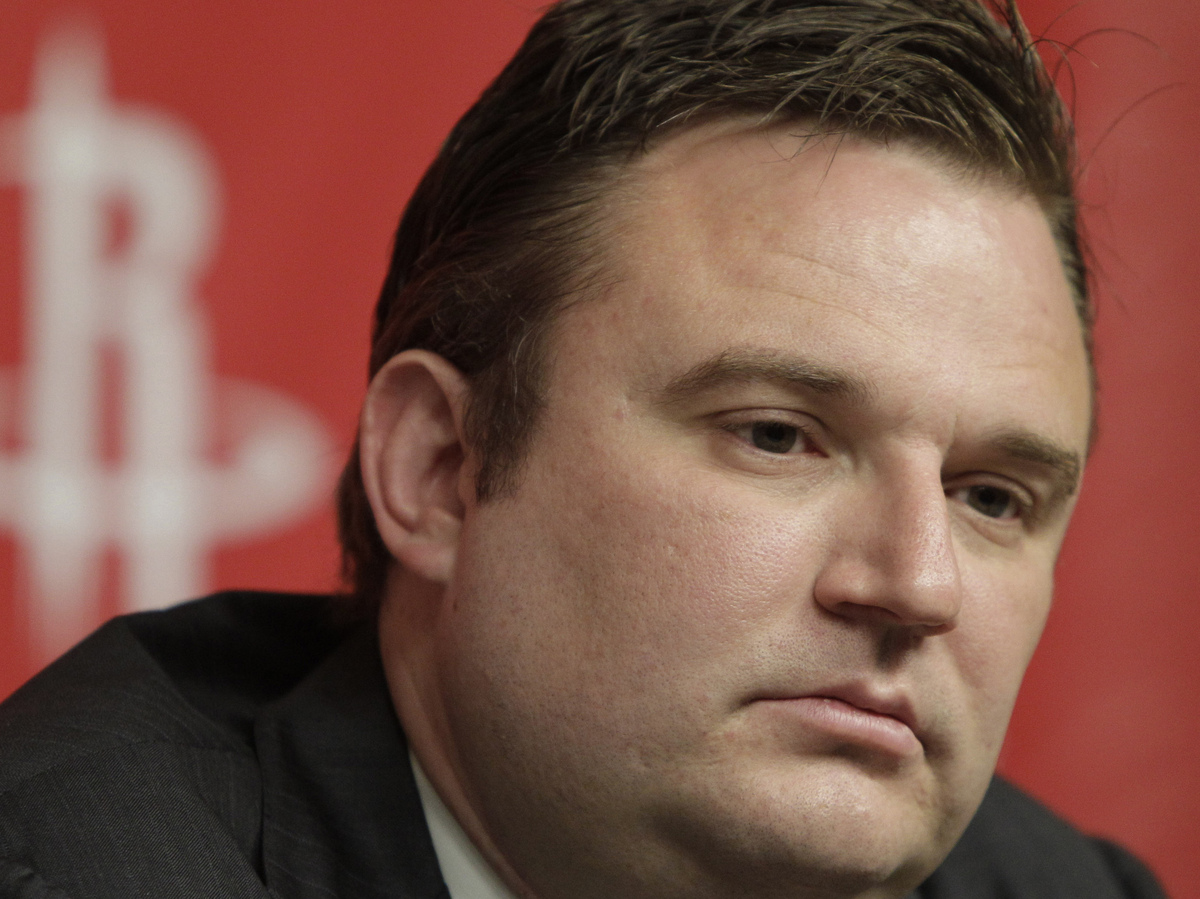
Houston Rockets general manager Daryl Morey discusses the direction of the team with the media during a basketball news conference in Houston in 2011.
Pat Sullivan/AP
hide caption
toggle caption
Pat Sullivan/AP
The Houston Rockets’ general manager apologized on Sunday for a tweet expressing support for Hong Kong protesters that has sparked a harsh backlash from China’s official basketball association.
“I did not intend my tweet to cause any offense to Rockets fans and friends of mine in China …,” Daryl Morey tweeted on Sunday. “I have had a lot of opportunity since that tweet to hear and consider other perspectives.”
1/ I did not intend my tweet to cause any offense to Rockets fans and friends of mine in China. I was merely voicing one thought, based on one interpretation, of one complicated event. I have had a lot of opportunity since that tweet to hear and consider other perspectives.
— Daryl Morey (@dmorey) October 7, 2019
On Friday, Morey took to Twitter to show solidarity with a months-long anti-government protest in the Chinese territory. He sent a tweet that read: “Fight for Freedom. Stand with Hong Kong.”
It was quickly deleted, but not before it attracted notice in both China and the U.S.
Soon after, the Rockets’ owner, Tilman Fertitta, sought to distance the team from the controversy, tweeting that Morley “does NOT speak for the @HoustonRockets” and that the team is “NOT a political organization.”
Listen….@dmorey does NOT speak for the @HoustonRockets. Our presence in Tokyo is all about the promotion of the @NBA internationally and we are NOT a political organization. @espn https://t.co/yNyQFtwTTi
— Tilman Fertitta (@TilmanJFertitta) October 5, 2019
And on Sunday, the Chinese Basketball Association — headed by former Rockets center and Hall of Famer Yao Ming, announced that it was suspending cooperation with the Houston team. Tencent, a media partner of the NBA in China with a five-year streaming deal worth $1.5 billion, and China’s state television also said they wouldn’t be airing Rockets games.
NBA spokesman Mike Bass said in a statement late Sunday that Morey’s original tweet was “regrettable.”
“We have great respect for the history and culture of China and hope that sports and the N.B.A. can be used as a unifying force to bridge cultural divides and bring people together,” he said.
Texas Republican Sen. Ted Cruz took exception to the apology, tweeting, “As a lifelong @HoustonRockets fan, I was proud to see @dmorey call out the Chinese Communist Party’s repressive treatment of protesters,” adding in a separate tweet, “We’re better than this; human rights shouldn’t be assisting Chinese communist censorship.”
Phone Scammers And ‘Teledoctors’ Charged With Preying On Seniors In Fraud Case
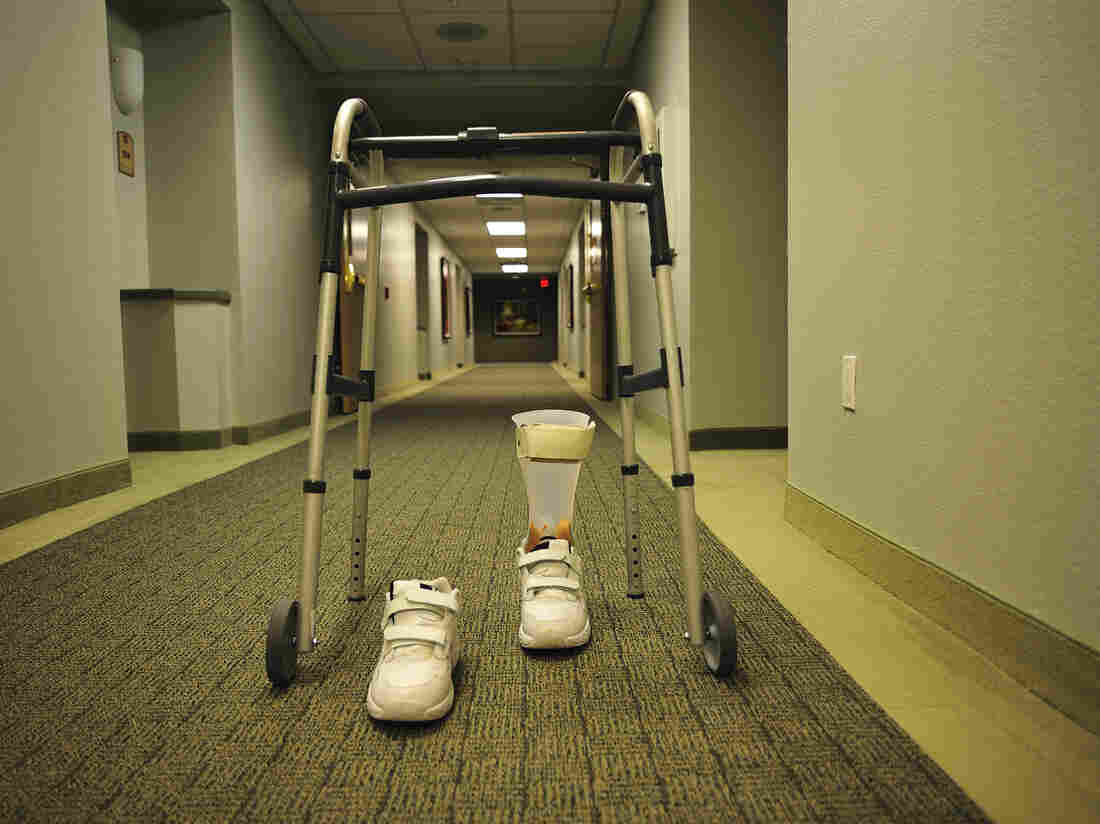
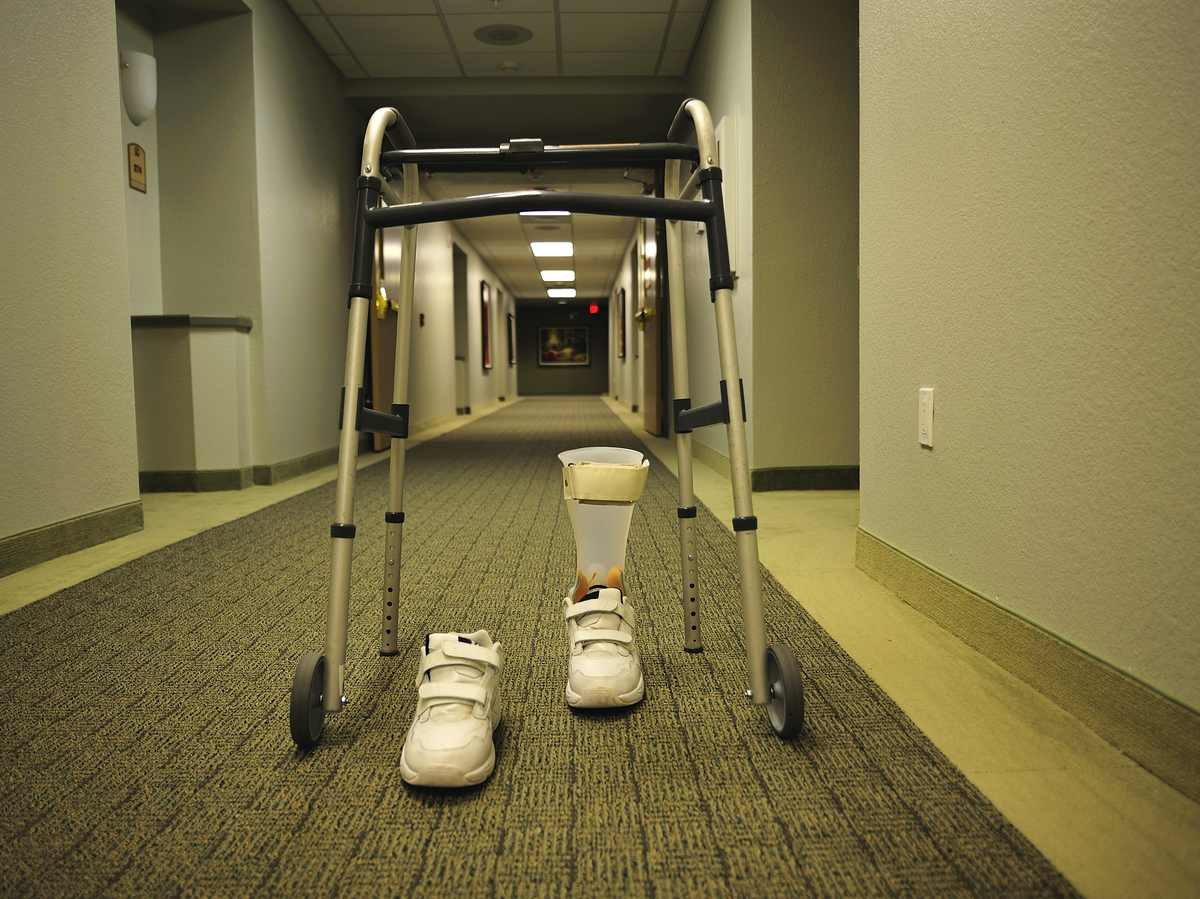
While prescriptions for durable medical equipment, such as orthotic braces or wheelchairs, have long been a staple of Medicare fraud schemes, some alleged scammers are now using telemedicine and unscrupulous health providers to prescribe unneeded equipment to distant patients.
Joelle Sedlmeyer/Getty Images
hide caption
toggle caption
Joelle Sedlmeyer/Getty Images
Dean Ernest had been living in a nursing home about a year when his son, John, got a call last winter asking if his father was experiencing back pain and would like a free orthotic brace.
The caller said he was with Medicare. John Ernest didn’t believe him, said “no” to the brace and hung up. He didn’t give out his father’s Medicare number.
And yet, not just one, but 13 braces addressed to Dean arrived soon afterward at the younger Ernest’s house in central Pennsylvania — none of which Dean Ernest wanted or needed.
Telemedicine scams on the rise
Medicare, the federal, taxpayer-supported health care insurance program for older Americans, had paid more than $4,000 for 10 of the braces: a back brace, two knee braces, two arm braces, two suspension sleeves, an ankle brace, a wrist brace and a heel stabilizer — none of which Dean Ernest wanted or needed..
The orders came from four different medical equipment companies and were prescribed by four health care professionals —a prescription is required to receive an orthotic brace. But John Ernest says he didn’t talk to any doctors during the phone call.
That’s how the latest Medicare frauds work, says Ariel Rabinovic, who works with Pennsylvania’s Center for Advocacy for the Rights & Interests of the Elderly. He helped report the Ernests’ fraud case to authorities at Medicare. Rabinovic said the fraudsters enlist unscrupulous health professionals ?doctors, physician assistants, nurse practitioners ? to contact people they’ve never met by telephone or video chat under the guise of a telemedicine consultation.
“Sometimes the teledoctors will come on the line and ask real Mickey Mouse questions, stuff like, “Do you have any pain?” explained Rabinovic. “But oftentimes, there is no contact between the doctor and the patient before they get the braces. And in almost all of the cases, the person prescribing the braces is somebody the Medicare beneficiaries don’t know.”
While prescriptions for durable medical equipment, such as orthotic braces or wheelchairs, have long been a staple of Medicare fraud schemes, the manipulation of telemedicine is relatively new. The practice appears to be increasing as the telemedicine industry grows.
“This has put telemedicine scams on Medicare’s radar with growing urgency,” says James Quiggle, director of communications for the Coalition Against Insurance Fraud.
In the past year, the Department of Health and Human Services Office of Inspector General, the Department of Justice and, in some cases, the FBI, have busted at least six health care fraud schemes that involved telemedicine. Typically, in these schemes, scammers use sham telemedicine companies to scale up their operations quickly and cheaply, because they can have a couple of doctors remotely writing a large number of prescriptions.
Often the doctors working for these outfits don’t perform medical consultations, but rather write prescriptions without talking to patients, as in Ernest’s case. Of course, that is not how telemedicine is designed to work.
International fraud
In April 2019, the DOJ announced investigators had disrupted what they called “one of the largest Medicare fraud schemes in U.S. history.” “Operation Brace Yourself” cracked an international scheme allegedly defrauding Medicare of more than $1.2 billion by using telemedicine doctors to prescribe unnecessary back, shoulder, wrist and knee braces to beneficiaries.
The DOJ charged 24 people, including three medical professionals and the corporate executives of five telemedicine companies.
According to federal court documents, Willie McNeal of Spring Hill, Fla., owned two of the “purported” telemedicine companies, WebDoctors Plus and Integrated Support Plus.
Federal investigators allege that through Integrated Support Plus, McNeal hired and paid a New Jersey doctor, Joseph DeCorso, to write prescriptions for braces. DeCorso recently pleaded guilty to one count of conspiracy to commit health care fraud.
DeCorso admitted to writing medically unnecessary brace orders for telemedicine companies without speaking to beneficiaries or doing physical exams. He also admitted that his conduct resulted in a $13 million loss to Medicare. He has agreed to pay more than $7 million in restitution to the federal government.
McNeal got the Medicare beneficiaries’ information for DeCorso to write the prescriptions from telemarketing companies, according to the indictment. Then, authorities allege, McNeal sent the prescriptions back to the same telemarketing companies in exchange for payments described as kickbacks and bribes.
Federal investigators allege these telemarketing companies sold the prescriptions to the durable medical equipment companies, who, as part of the scheme, fraudulently billed Medicare for the braces.
McNeal’s lawyer says he can’t discuss his client’s case for this story because of the pending lawsuit. DeCorso’s lawyer did not respond to multiple requests for comment.
The U.S. attorneys allege the money made from the scheme was hidden through international shell corporations and used to buy luxury real estate, exotic automobiles and yachts.
Taxpayers on the hook for millions
It’s clearly a profitable business. Taxpayers are the ones who ultimately pay for Medicare fraud, which often leads to higher health care premiums and higher out-of-pocket costs.
Medicare spending on the sorts of braces highlighted in the inspector general’s investigations increased by more than $200 million from 2013 to 2017, according to an analysis of Medicare data by Kaiser Health News. While the number of Medicare fee-for-service beneficiaries increased only slightly (by 5%) from 2013 to 2017, spending on the three types of braces increased by 51% during that same period.
In an April news release about Operation Brace Yourself, Assistant Attorney General Brian Benczkowski, of the DOJ’s Criminal Division, called the Medicare scheme “an expansive and sophisticated fraud to exploit telemedicine technology meant for patients otherwise unable to access health care.”
Nathaniel Lacktman, a lawyer who represents telemedicine companies and organizations, was quick to point out that the industry does not recognize the fraudsters involved in these schemes as legitimate businesses.
“These are actually really sketchy online marketing companies participating in these schemes, who are billing themselves as telemedicine,” says Lacktman, who works in the Tampa office of the law firm Foley & Lardner. “But in fact, they’re companies we’ve never heard of.”
All of this comes at a time when Medicare and Medicare Advantage are expanding their use of telemedicine, though the federal programs have been slower to adopt the practice than the private sector, says Laura Laemmle-Weidenfeld, a health care lawyer at the law firm Jones Day.
“I would hate for Medicare to fall even further behind with telehealth,” says Laemmle-Weidenfeld, who previously worked in the Fraud Section of the DOJ’s Civil Division. “The vast majority of telehealth providers are legitimate but, as with anything, there are a few bad apples.”
Even with the recent federal busts, the scams continue. And they’re not isolated to durable medical equipment. A $2.1 billion scheme was busted by the DOJ in September which involved telemedicine doctors authorizing unnecessary genetic tests.
Travis Trumitch, who works for the Illinois nonprofit AgeOptions, which helps report Medicare fraud in the state, says he received three voicemails over a recent weekend reporting suspected durable medical equipment scams.
John Ernest says he still receives calls every day with individuals on the line who say they work for Medicare and ask for Dean Ernest’s information ? though his father died in April.
But Ernest can’t change his phone number, because it’s the main line associated with his painting business.
“It really drives me crazy,” Ernest says. “How many people are they ripping off?”
Kaiser Health News data editor Elizabeth Lucas contributed to this report.
KHN is a nonprofit, editorially independent program of the Kaiser Family Foundation that is not affiliated with Kaiser Permanente.
Simone Biles Has 2 More Signature Moves Under Her Name After World Championships

Simone Biles has two more signature moves named for her after she nailed them during performances at the world championships.
Laurence Griffiths/Getty Images
hide caption
toggle caption
Laurence Griffiths/Getty Images
After yet another standout performance, star gymnast Simone Biles can now add two more signature moves that bear her name to her already lengthy list of accomplishments.
In order for a gymnast to have a move named after them, they must submit it for consideration and successfully land it at a major competition, such as the world championships or the Olympics.
On Saturday, Biles began her floor routine at the 2019 gymnastic world championships in Stuttgart, Germany by landing a triple-double, composed of a double backflip with three twists. That move will now be known as the “Biles II.”
The gymnast also nailed her double-double dismount from the balance beam. The move, which consists of a double-twisting double backflip, will now be named the “Biles.”
Team USA
YouTube
“I feel like I’m pretty pleased just because that’s how I train beam, and it finally felt good to go out there and hit a beam routine like I train because I feel like every time I go up to compete beam, I just bomb it,” Biles told the Olympic Channel. “So it felt really good to just nail it.”
Biles said she thinks that she can still do better, but was happy with what she accomplished at the tournament.
“My goal going into tonight was to not be great … it wasn’t to do great, but just to do well, and I feel like I accomplished that,” she said.
Biles has two other moves named after her, one on vault and the other on floor.
In addition to her individual success, Team USA came in first place in the qualifying standings with a total score of 174.205, followed by China and Russia.
Biles also came out on top in qualifying for all-around, beam and floor. She was second on vault and seventh on uneven bars.
At 22-years-old, Biles has 20 worlds medals, just three behind the record held by Belarusian Vitaly Scherbo. Her performance at this year’s world championships has the potential to make her the most decorated gymnast in the history of the competition.
More of Biles’ performance at the world competition can be seen here.
NBC Sports
YouTube
Illinois Lawmaker Discusses New Planned Parenthood Facility

NPR’s Michel Martin speaks with Illinois State Rep. Katie Stuart about a secret Planned Parenthood built in her district that will expand reproductive health services in the area.
Activist On California NCAA Law
A new California law allows college athletes to profit from their own name, image and likeness. NPR’s Lulu Garcia-Navarro talks about it with Harry Edwards, an activist and former NCAA athlete.
LULU GARCIA-NAVARRO, HOST:
College athletes in California can finally get in on the billion-dollar industry of college sports. A new bill allows them to profit from their own name, image and likeness, meaning they can sign endorsements, hire agents and sell their autographs. California Governor Gavin Newsom recently signed the bill, which is set to take effect in 2023. The move is part of a longstanding and highly contentious debate that, for some, centers around issues of race.
Harry Edwards is a professor emeritus at the University of California, Berkeley, and a former NCAA athlete himself. He’s been a longtime advocate for change because he says the system is fundamentally unjust.
HARRY EDWARDS: We have a set of circumstances where increasingly, in basketball, most certainly, and in football, it is the black athlete that is the backbone of the whole process of producing this tremendous wealth. You look at the NFL, you look at the quarterbacks in the top 25 collegiate programs, and increasingly, they are black. That means that what we’re looking at here is not just a situation of financial exploitation but of racial domination where you have white – overwhelmingly white coaches, athletic departments, college presidents and chancellors profiting off of the uncompensated labor of black players in football and basketball.
GARCIA-NAVARRO: The NCAA is saying this is an affront to amateurism. What’s your response to that?
EDWARDS: The only affront to amateurism involved in collegiate athletics is the NCAA itself. The whole notion of the student athlete was perpetrated by the NCAA and its attorneys in the 1950s to keep from paying workmen’s comp to injured athletes. They simply declared them not to be employees, but student athletes. Everybody is making money except the athletes who produce it.
GARCIA-NAVARRO: There is some concern that this kind of law could mean that it will exacerbate some of the inequalities within the college sports systems – that, you know, the money will go to the DI schools and that the athletes that are the most prominent will get a lot of the attention, a lot of the deals. And others may not.
EDWARDS: Well, the inequality is already there. You have coaches in the SCC who make more than the football budget for some other Division I institutions in the same state. The other point is that the money that the athletes would get through being able to capitalize on their own names, images and so forth comes from sponsors. It comes from people that they would represent in terms of a particular product. This is not money that’s coming out of the pocket of the school or out of the pockets of the NCAA.
GARCIA-NAVARRO: The NCAA is expected to release a report later this month with recommendations on how to manage these new privileges. What do you hope to see in that report?
EDWARDS: Well, I hope that the NCAA will try to get out in front of it, set up standards which accept the legislation that has occurred in California. It was written in such a way so that it takes effect in 2023. That’s plenty of time for the NCAA to make the necessary adjustments that it feels it has to make in order to make sure that athletes are not exploited. I think that those days have to come to an end.
GARCIA-NAVARRO: Dr. Harry Edwards is a professor emeritus at the University of California, Berkeley. Thank you very much.
EDWARDS: Thank you very much for having me.
(SOUNDBITE OF OATMELLO’S “SUNDAY AFTERNOON”)
Copyright © 2019 NPR. All rights reserved. Visit our website terms of use and permissions pages at www.npr.org for further information.
NPR transcripts are created on a rush deadline by Verb8tm, Inc., an NPR contractor, and produced using a proprietary transcription process developed with NPR. This text may not be in its final form and may be updated or revised in the future. Accuracy and availability may vary. The authoritative record of NPR’s programming is the audio record.
How Immigrants Use Health Care
NPR’s Lulu Garcia-Navarro talks with Anne Dunkelberg of the Center for Children and Families about the new rule denying visas to immigrants without health insurance or funds to pay for health care.
LULU GARCIA-NAVARRO, HOST:
President Trump has announced another new immigration rule set to take effect next month, though it’s likely headed to federal court. The rule would require foreign nationals to prove they have health insurance or the money to pay for their own health care costs before they can legally enter the United States. Simply put – no proof, no visa. The president said this action is necessary to, quote, “protect the availability of health care benefits for Americans.”
We wanted to get a better understanding of how immigrants use and pay for health care in the United States. Anne Dunkelberg is an associate director of the Center for Public Policy Priorities in Austin, Texas. She’s spent her career working on health care access issues, and she joins us now.
Welcome.
ANNE DUNKELBERG: Good morning.
GARCIA-NAVARRO: How would this work? I mean, if you’re a visitor and you’re traveling, you would obviously get travel insurance, which isn’t terribly expensive. If you are coming to immigrate, then what would you have to show?
DUNKELBERG: It’s a great question that we probably can’t answer. It sounds to me like, you know, it could conceivably require the creation of a whole new segment of the health insurance industry that’s just designed to answer this new requirement for even visiting the United States.
GARCIA-NAVARRO: The other thing that confuses me a little bit about this is this seems like an additional step that – already, when you apply for a visa outside of the United States, you do have to prove some sort of financial stability.
DUNKELBERG: You’re absolutely right. Even for these short-term visitor-type visas, there’s already screening to try to detect people who might be coming here without means and likely to, for example, overstay their visa.
GARCIA-NAVARRO: Getting insurance in this country is complicated for Americans. It is even more complicated if you’re coming into this country. And presumably, if you have a work visa and you’re being sponsored by someone, you would have insurance already. So it’s unclear, a little bit, who this is targeting exactly.
DUNKELBERG: It sounds, frankly, more like the intention is for the optics of the policy as much as it is, you know, having a practical system in place to do it. If you read the document that was announced, you find that it actually outlines many of the other things that the Trump administration has either proposed or is in the process of trying to pursue. So they’ve presented it in their own document as part of what advocates for immigrants refer to as the invisible wall.
GARCIA-NAVARRO: Your state, Texas, has one of the highest number of uninsured people in the U.S. So are the people who are uninsured Americans, or is the bigger portion people who are immigrants?
DUNKELBERG: Seventy-five percent, at least, of our uninsured are U.S. citizens. And then maybe another half a million are lawfully present immigrants. Some of the barriers to coverage that both U.S. citizens and lawfully present immigrants face, you know, are things that are well within the authority of our legislature and our governor to address. And obviously, some of the shortcomings of the Affordable Care Act that have left some Americans still unable to afford coverage are squarely in the lap of the U.S. Congress.
GARCIA-NAVARRO: So when the president says that uninsured individuals who are immigrants are a burden on the health care system, that is not the main cause of the burden of the uninsured. Most of that is citizens, so he is actually incorrect.
DUNKELBERG: Absolutely. The vast majority of uninsured Americans are U.S. citizens. That is the big challenge we have. We are obviously way more complicated here, and we’re looking to make it even more complicated for people to visit the United States, potentially more expensive, and thereby discourage particularly people who are not of means from visiting the United States.
GARCIA-NAVARRO: That was Anne Dunkelberg of the Center for Public Policy Priorities in Austin, Texas. Thank you so much.
DUNKELBERG: Thank you, Lulu.
Copyright © 2019 NPR. All rights reserved. Visit our website terms of use and permissions pages at www.npr.org for further information.
NPR transcripts are created on a rush deadline by Verb8tm, Inc., an NPR contractor, and produced using a proprietary transcription process developed with NPR. This text may not be in its final form and may be updated or revised in the future. Accuracy and availability may vary. The authoritative record of NPR’s programming is the audio record.
It’s Fat Bear Week In Alaska’s Katmai National Park — Time To Fill Out Your Bracket

Bear 747 is a favorite in the Fat Bear Week contest in Alaska’s Katmai National Park.
Naomi Boak/Courtesy of NPS Photos
hide caption
toggle caption
Naomi Boak/Courtesy of NPS Photos
Who doesn’t love big, fat bears? At least from a distance. And who doesn’t love filling out a bracket where winners move on and losers go home?
Combine the two and you’ve got Fat Bear Week — a kind of Ursine March Madness, in October.
There are an estimated 2,000 bears in Katmai National Park & Preserve, a glorious and massive 4 million-acre stretch of wilderness in Southwest Alaska. Each year, the bears spend the summer trying to get as fat as they can to prepare for hibernation.
And in October, bear fans get to vote on who is the fattest of them all.
This year, the bears were whittled down to a bracket of 12 contenders. Four heavyweights had first-round byes. Voters on the park’s Facebook page choose their favorite from each matchup. The winner moves on to the next round.

It’s an Ursine March Madness —fans get to pick their favorite fat bear. Katmai National Park says Fat Bear Week increases public awareness of bears and the need for conservation.
Courtesy of NPS Photos
hide caption
toggle caption
Courtesy of NPS Photos
As the competition began this week, Katmai Conservancy media ranger Naomi Boak had her eye on two of what she calls “favorites.” No. 435. … they assign a number after monitoring the bears for a while … and No. 747. He is “as big as a jumbo jet,” she says.
“He was so big he looked like he was ready to hibernate in July. He’s the size of two bears.”
This isn’t fat shaming, Boak says. It is fat glorifying as the biggest bear has done the best job getting ready.
“They lose a third of their body fat over the winter,” Boak says. “So they need all that fat to survive.”

Bear No. 68 has packed on the pounds needed for a long hibernation.
Courtesy of NPS Photos
hide caption
toggle caption
Courtesy of NPS Photos
Skinny To Fat
The Fat Bear Week competitors are coastal brown bears who forage along the Brooks River. They dine voraciously on one of the largest sockeye salmon runs in the world. There’s a fascinating science to this annual gorging, Boak says. A hormone that usually inhibits hunger switches off in the bears this time of year.
Boak and her fellow media ranger, Brooklyn White, chose the 2019 competitors— a variety of bears that includes males, females and so-called sub-adults. Those are emancipated cubs that have grown up and spent a year on their own.
Boak and White wanted good before and after photos of the 12, showing skinny shots from earlier in the year and recent fat ones after feasting. Kind of a reverse infomercial.

Bear No. 775 (Lefty) gains pounds to prepare for the long winter — and a possible Fat Bear Week victory.
Rylee Jensen & Jorel Cuomo/Courtesy of NPS Photos
hide caption
toggle caption
Rylee Jensen & Jorel Cuomo/Courtesy of NPS Photos
White says they also wanted bears that people outside the park had gotten to know after watching them on remote bear cams along the Brooks River.
“Many of those folks who, you know, [who had spent] time watching the cams, would already have a relationship with a bear they were seeing in the contest,” she says.
Don’t Cross A Line
The bear cams and the 5-year-old Fat Bear Week contest are helping people connect with what goes on inside the park and helping extend the park’s conservation mission. According to Boak, last year, there were nearly 56, 000 votes for Fat Bear Week. This year, the park hit that number in the first two days.
Obviously, people like fat bears.




Park staffers make sure to get good before and after photos of the 12 contestants, including Bear No. 32 (Chunk).
Barbara Lutes & Anna Marie Gantt/Courtesy of NPS Photos
hide caption
toggle caption
Barbara Lutes & Anna Marie Gantt/Courtesy of NPS Photos
But there’s a line, in the park, staffers don’t like to cross. They try not to anthropomorphize wild animals in a wild place. That’s why they give the bears numbers. Although bear cam followers like to add names. Like Lefty, Chunk and Grazer from this year’s contest. Or last year’s champ, Beadnose, No. 409. Boak says Beadnose is known worldwide, but this year, the bear is not defending her title.
“She was a no-show,” Boak says, but she doesn’t know why.
Beadnose could have been injured, died, or gone to another part of the park to fish.
Whatever happened, Boak acknowledges that Beadnose went out on top.
“She went out in a big way,” Boak says, unable to resist one more fat bear pun.
This week, on Fat Bear Tuesday, a new champion is crowned. The first prize, says Brooklyn White, is, she hopes, a successful hibernation.
And, a lot of new fans.
Saturday Sports: Baseball Playoffs
Major League Baseball playoffs are underway. Additionally, one-game wild card playoffs can rob the season of drama. Scott Simon talks with ESPN’s Howard Bryant.
SCOTT SIMON, HOST:
It’s time for sports.
(SOUNDBITE OF MUSIC)
SIMON: Baseball playoffs have begun. What else could be going on in the world? And four out of the eight teams have won more than 100 games this season. So we’re pleased to be joined – rejoined by our friend Howard Bryant of ESPN, who returns to us after a few weeks of recuperation from surgery. Howard, so good to have you back.
HOWARD BRYANT: Hey, Scott. As I said, there’s a lot of ways to emulate Peyton Manning, but a…
SIMON: (Laughter).
BRYANT: …Having a double neck fusion is not one I recommend. But it’s really good to be back. Thank you.
SIMON: So how’s your forward pass now? I mean…
BRYANT: I can’t do anything until Thanksgiving. We’ll see.
SIMON: All right. Let’s start with the National League. The Nats came back against the Dodgers last night to tie the series 1-1. Cards and Braves are tied too after the Braves won yesterday. Looking like it might be a couple of good series.
BRYANT: Yeah. This is great. This is great stuff. I think that you’re looking at in the National League, where the Dodgers have been the best team all year. But the Nationals have been really good. They started out this season 19 and 31. No one thought that they were even going to come close to the playoffs. And they were pretty much the hottest team in baseball. Huge win last night for Stephen Strasburg to come in and calm things down, had a no hitter through five innings. And for him to bring the series back 1-1, the Nationals have two home games. And who knows, we could get one of the big upsets.
I mean, let’s not forget what the Dodgers are trying to do. They’re trying to go to the World Series for the third straight year. And, you know, you got to go back…
SIMON: Yeah.
BRYANT: …You got to go back to 1942 to ’44, the St. Louis Cardinals, to be the – to see the – the last National League team to win three straight pennants. So they’re on the verge of making some history. But the Nationals, who have never been to the World Series, whether in Washington or as the Montreal Expos. So they’re trying to stand in the way and do something special themselves.
SIMON: In the American League, the Yankees thumped the Twins yesterday to take a 1-0 lead. Lots of homers in that game, no surprise. The Astros are a game up on the Rays. Houston has been compared to the 1927 Yankee lineup.
BRYANT: They’re amazing. And not just the ’27 lineup, but they’ve also got the pitching. They’ve got Zack Greinke. They’ve got him in the trade in midseason now. You know, they’ve got Gerrit Cole. They’ve got Justin Verlander, who was terrific last night. They’ve got everything. They won the World Series. They beat the Dodgers in 2017, stumbled a little bit against the Red Sox in the playoffs last year. But this is a fantastic baseball team that pretty much does everything right. It’s very funny. I feel old watching them because their manager, AJ Hinch, I covered him with the Oakland A’s when he was a rookie back in 1998. They are one terrific team. And then, of course, they’re going to go up against one – the Tampa Bay Rays, who nobody thinks this is ever going to be…
SIMON: Yeah.
BRYANT: …Any good. But they’ve got no payroll. And they won 96 games. So hopefully they can make a series out of this. But the matchup that I think everyone’s looking for is going to be Yankees and Houston. These two teams, they’ve been the two best teams in the league all season. And that would be a pretty epic clash.
SIMON: Howard, as you know in these parlous times of much public controversy, I try and keep my opinion on the urgent matters of state to myself.
BRYANT: (Laughter).
SIMON: But I think, speaking as a citizen – OK? – I think China, Russia and Ukraine, if they’re listening – and we know they are – ought to investigate the scandal of one-game playoffs in Major League Baseball, the wild-card playoff game. I don’t like them at all.
BRYANT: You know, Scott, I lose this battle all the time, every time, and I’m sure when I go down to the World Series again this year. I talked to Commissioner Bud Selig when he was the commissioner. I talked to Rob Manfred about it and a lot of the baseball players, too. They seem to like this integrity of the regular season by forcing the wild-card teams to play one game. To me, I hate it. I don’t think that if you’re a baseball team and you go the entire 162 games and you win a playoff spot, you should play a series. You should play…
SIMON: Yeah.
BRYANT: …Best two out of three. Or you should play a best three out of five. You shouldn’t be the Oakland A’s, and you win 97 games back-to-back years. And you get nine innings. And you lose, and then that’s it. I just don’t think it’s very fair. I don’t like – you don’t like baseball being turned into the NCAA tournament.
But on the other hand, you have the old-school traditionalists say, listen; if you want to series, then let’s keep the regular season intact. And you go out and you win your division. But I really have to say I don’t like baseball being the only sport where you’re essentially penalized for making the playoffs.
SIMON: Yeah. I agree. ESPN’s Howard Bryant, good to have you back, my friend.
BRYANT: Thank you.
Copyright © 2019 NPR. All rights reserved. Visit our website terms of use and permissions pages at www.npr.org for further information.
NPR transcripts are created on a rush deadline by Verb8tm, Inc., an NPR contractor, and produced using a proprietary transcription process developed with NPR. This text may not be in its final form and may be updated or revised in the future. Accuracy and availability may vary. The authoritative record of NPR’s programming is the audio record.
Hoop Dreams Come True For South Sudanese Wheelchair Player


Wheelchair basketball player, Malat Lueth Wei, 25, is featured in the short documentary No Limits about bringing the sport to South Sudan.
Shuran Huang for NPR
hide caption
toggle caption
Shuran Huang for NPR
“I was like, ‘Wow, I can actually do this!’ ” Malat Lueth Wei says, remembering his first time trying wheelchair basketball.
That was over 10 years ago. Since then, the sport has taken him all over the world. Wei has shot hoops at basketball arenas across the U.S., where he is one of the country’s best players, and in France, where he played professionally. This summer, he came to Washington, D.C., to speak at a screening of No Limits, a short documentary that featured him.
And in 2018, he returned to his homeland of South Sudan, where he helped introduce the game to its disabled population.
Wei was born in what is now South Sudan and diagnosed with polio at age 3. His father went missing during the civil wars leading to the country’s eventual independence in 2011. During those volatile times, their family ended up at a refugee camp in Ethiopia, where Wei remembers crawling around on his arms on dirt roads before getting a wheelchair. When he was 12, his family moved to Houston.
He had a tough time adjusting in the United States. It was quite late in his childhood to make such a huge move, and he was enrolled in sixth grade despite knowing very little English. Some kids made fun of him, but a more accepting group introduced him to the sport that would change the trajectory of his life.
“I used to go to the park with the with the community kids, with all the children in the neighborhood … to go play basketball with them,” Wei says. He was the only one shooting from a wheelchair. “The fact that they actually treated me as equal and not somebody less, you know, that’s where everything started.”
Eventually, a friend began looking into local wheelchair basketball facilities. Wei got in, trained hard and started traveling with a local team to competitions, and things took off from there.
Wei, 25, loves being in the gym, flying across the court in a specialized wheelchair designed to move fast and turn easily. The games are incredibly intense, with screeching tires, crashing metal and the impressive coordination and grit of the athletes on display. As someone who loved sports so much that he played soccer with his hands at the refugee camp, Wei treasures this opportunity to compete.
“It means the world to me just to share my message with the world, of what I have accomplished in life, from where I came from, with nothing, not knowing how to read or write English,” Wei says.
His return to South Sudan was inspired by the work of another wheelchair basketball star — Jess Markt, who leads international wheelchair basketball programs for the International Committee of the Red Cross.
Markt was a Division 1 track athlete at the University of Oregon before he was paralyzed from the chest down after a car accident over 20 years ago. He completed physical rehab, earned his degree and started working in communications but felt something was missing.
Before his injury, basketball was his favorite sport. It would be a few years before he gave the wheelchair version a shot.
“I heard about it,” Markt says, “but I didn’t know much, and I just kind of thought, ‘Is that really going to be as much fun as the basketball I grew up with?’ “
It turned out to be just as much fun — and far more meaningful than he could have imagined.
“I’ve always talked about it as kind of the culmination of my rehabilitation process,” Markt says.
After nine years playing in the National Wheelchair Basketball Association, he heard that a team in Afghanistan was reaching out to U.S.-based leagues looking for a coach. Markt answered the call, leaving his office job in 2009 to be the volunteer coach of a wheelchair basketball team thousands of miles away.
In 2012, the ICRC hired him to run wheelchair basketball camps in areas where either violence or lack of proper medical care means that a disproportionate number of people are living with a disability.
“War has has utterly crippled the medical system,” Markt says of the conditions in South Sudan and other conflict-stricken countries he has worked in. “So really, almost everyone that we work with is, in some way, either a direct or tangential result of conflict.”
“I think the initial powerful benefit of doing this is really getting people out of their homes, out of the situation of being truly marginalized,” he adds.
“What I have learned from adaptive sports is that it allows individuals to test their boundaries in ways that a lot of the world or society or community doesn’t allow us to explore,” says Mia Ives-Rublee, who consults businesses and nonprofits on disability issues and was herself a wheelchair athlete. She attended the State Department screening of the film about Wei and Markt.
Markt went to Juba, South Sudan, to run a camp in 2017, which caught the attention of Wei. He reached out to Markt, hoping to be involved.
“I saw him on a video,” Wei said. “I’m like, ‘Wow, this is this is actually cool … and there’s already somebody that is doing it in my country?’ “
He said he thought, “If I can connect with him, we can make a difference. We can change people’s lives by playing wheelchair basketball.”
One year later, the two were on a plane together as Wei returned to South Sudan for the first time since he was a kid. His ability to speak local languages was invaluable, says Markt. And the two of them set up games where groups from opposite sides of the civil conflict played together on the court — in their wheelchairs.
“It was amazing to have these groups playing alongside one another when such interaction is so rare these days,” Markt says.
Back in his American home, Wei is attending community college and hopes to play on the University of Arizona’s varsity wheelchair basketball team while completing his bachelor’s degree — the school is a leader in adaptive sports. After that, he plans on championing human rights and social stability in South Sudan, where he hopes to start a business and continue to work to help its people.
“I want peace in South Sudan,” he says, “for everybody to come together as one and treat each other equally, and build a nation.”
Reflecting on his visit to his homeland, he recalls, “They see me as somebody who went through what they went through,” Wei says. “Now that they have discovered something new, something that they can achieve. It was not just playing basketball all the time. It gave them confidence, to go out and reach for other things.”
And that’s what wheelchair basketball has done for him, he adds: “It just took off and took me to places I thought I was definitely not going to.”
Aman Kidwai (@AmanfromCT) is a freelance journalist based in Washington, D.C., who covers sports, business and community news for media outlets like Washington City Paper and SB Nation.