A-WA: Tiny Desk Concert

Credit: NPR

The last time we filmed these three Israeli sisters, they were sitting in my hotel room during South by Southwest, performing a heartbreaking lullaby, accompanied by just a guitarist. Now Liron, Tagel and Tair Haim are behind my desk with a full band of keyboards, bass, guitar and drums, singing more forlorn tunes in their unique three-part harmony.

Their songs mix Yemenite and Arabic traditions with splashes of reggae and hip-hop. Our Tiny Desk concert begins with “Habib Galbi” (“Love of My Heart”), a heartbreaking song that went viral for A-WA in 2016. A-WA have recently released a second album, Bayti Fi Rasi (My Home is in My Head). The record tells the story of their grandmother traveling from Yemen to Israel.

The final two songs come from that recent album. “Al Asad” is a metaphorical tale of facing down a lion in your path, while the last song “Hana Mash Hu Al Yaman,” (“Here is Not Yemen”), paints the struggles of coming to a new land, learning the language, finding work, a place to live and making it a home. This music is relatively upbeat with dark, thoughtful words. We’ve subtitled English translations as part of the video to help their message reach an even wider audience. This music is for our world at large.

SET LIST

  • ‘Habib Galbi”
  • “Al Asad”
  • “Hana Mash Hu Al Yaman”

MUSICIANS

Tair Haim: vocals; Liron Haim: vocals; Tagel Haim: vocals; Nitzan Eisenberg: bass; Noam Havkin: keys, synth; Tal Cohen: drums; Yiftach Shachaf: guitar

CREDITS

Producers: Bob Boilen, Morgan Noelle Smith; Creative Director: Bob Boilen; Audio Engineer: Josh Rogosin; Videographers: Morgan Noelle Smith, CJ Riculan, Jeremiah Rhodes, Maia Stern; Associate Producer: Bobby Carter; Production Assistant: Paul Georgoulis; Executive Producer: Lauren Onkey; VP, Programming: Anya Grundmann; Photo: Bob Boilen/NPR

Let’s block ads! (Why?)

Astros Ace Justin Verlander Throws 3rd No-Hitter Of His Career

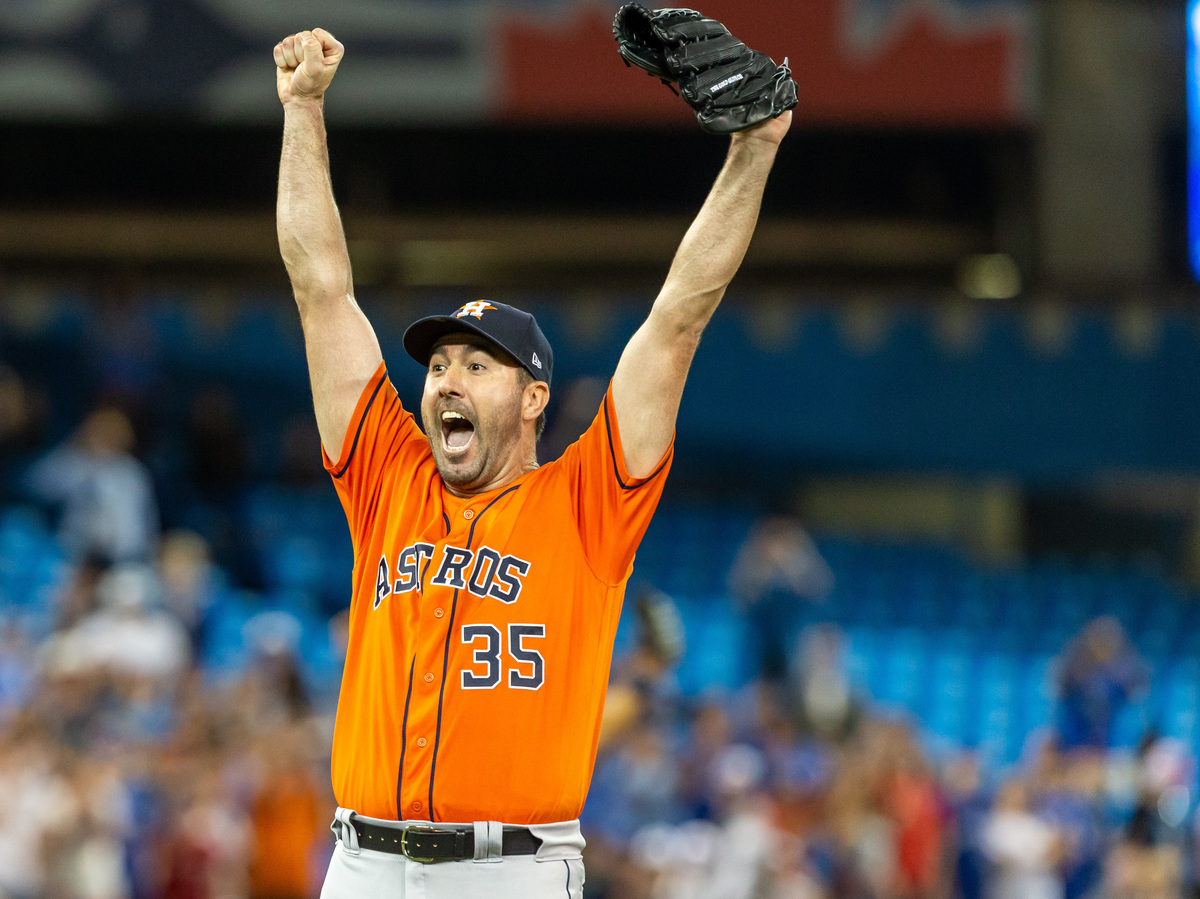
Houston Astros starting pitcher Justin Verlander celebrates after throwing a no hitter against the Toronto Blue Jays, marking his third career no-hitter.

USA Today Sports/USA TODAY Sports via Reuters


hide caption

toggle caption

USA Today Sports/USA TODAY Sports via Reuters

Houston Astros pitcher Justin Verlander lifted both his arms aloft then bent to his knees with the clenched fists of a victorious warrior before his teammates thronged him from all sides.

Verlander was not just not marking any old win. The right-hander tossed a no-hitter Sunday against the Toronto Blue Jays.

It is his third career no-hitter, putting Verlander among an elite group of just six other major league pitchers with three or more no-hitters under their belt. It’s a group that includes Cy Young, the namesake for the award that goes to the best pitcher each year in the American and National Leagues.

“I’d be lying if I said I didn’t know that the list of guys who have thrown three instead of two gets pretty small — some of the guys I’ve idolized,” Verlander said after the game. “It’s a special moment. I’m so happy to be able to celebrate this with my teammates.”

Verlander, 36, struck out 14 and allowed just one base runner after walking Cavan Biggio in the first inning.

Propelled by Verlander’s blazing fastball, the Astros topped the Blue Jays 2-0.

His last no-hitter was also against Toronto, in 2011, when he was throwing for the Detroit Tigers.

He now has the bragging rights to becoming the first pitcher to throw a no-hitter twice against a team in its own stadium.

While Verlander now joins a small cadre of pitchers who have hurled three or more no-hitters, the top record-holder belongs to Nolan Ryan, who completed seven career no-hitters.

Let’s block ads! (Why?)

Chronicling The Ouster Of Donald Sterling

In 2014, former L.A. Clippers owner Donald Sterling was banned from basketball after racist comments. NPR’s Leila Fadel talks with ESPN’s Ramona Shelburne about a new podcast about the event.


LEILA FADEL, HOST:

Five years ago, the young girlfriend of an old, wealthy, married man felt slighted, ignored, dismissed. She got mad, so mad that she released a recording of one of their arguments to TMZ.

(SOUNDBITE OF ARCHIVED RECORDING)

V STIVIANO: People call you and tell you that I have black people on my Instagram, and it bothers you.

DONALD STERLING: Yeah. It bothers me a lot that you want to broadcast that you’re associating with black people. Do you have to?

FADEL: You might remember this recording. The woman was V. Stiviano. The man was Donald Sterling, the longtime owner of the Los Angeles Clippers. The recording rocked the NBA.

(SOUNDBITE OF ARCHIVED RECORDING)

STIVIANO: Do you know that you have a whole team that’s black, that plays for you?

STERLING: You just – do I don’t? I support them and give them food and clothes and cars and houses. Who gives it to them? Does someone else give it to them?

FADEL: The fallout was quick and surprising. Sterling was ousted after decades of unchecked bad behavior, and the Clippers got a new owner. Now, the entire saga with its seedy, sordid details is being told by ESPN’s Ramona Shelburne in a new series from “30 For 30” podcasts and The Undefeated called “The Sterling Affairs.” Ramona Shelburne joins us now. Hi, Ramona.

RAMONA SHELBURNE: How’s it going?

FADEL: Good. So this was a really fascinating listen. But what was it that made you kind of want to take a step back, go back, unpack it in the way that you did today?

SHELBURNE: So I felt in 2014, when I was covering this, that it was so much bigger than what we were reporting on minute to minute, hour to hour. I – especially once I started making the connections between, you know, 30 years ago when the NBA tried to get Donald Sterling out of the league – they tried to kick him out.

FADEL: Yeah.

SHELBURNE: But they ended up in court for six years. And Donald eventually won. And I think maybe doing a deep dive on this helps you reckon with why, you know, us in the media didn’t do enough maybe to expose some of this. Like, you know, we wrote about him being, like, this weird, old owner…

FADEL: Right.

SHELBURNE: …With this weird, old uncle quality. But we didn’t expose the depth of it.

FADEL: Right. For people who are not from LA, who don’t follow the NBA or sports, can you describe Donald Sterling?

SHELBURNE: Donald Sterling was a poor kid from East LA whose father worked at the markets and was a junk peddler and ends up putting himself through Southwestern Law School. He built a great career as a personal injury attorney and then invest that money into LA real estate in the ’70s. Instead of taking his own background as Donald Tokowitz at the time, as a young Jewish boy who had sort of been discriminated against by law firms and understood the effects that redlining have on a community in his city, Donald Sterling basically does unto others, unto all of Los Angeles, where he became the largest residential landlord in LA – he basically does unto others what had been done to him.

FADEL: Yeah.

SHELBURNE: (Laughter) Like, he was so loud and inappropriate with his players all the time. And I would hear stories from players about the way he would treat them and the way they just all cringed when he was around. It was like they all ran the other way when he would come into the locker room or into any of their social settings.

FADEL: And there are some really cringe-worthy moments. One from the podcast that really stuck with me was from a player, Oden Polynice, describing an interaction with Sterling in the Clippers locker room with Sterling talking about his body.

(SOUNDBITE OF PODCAST, “THE STERLING AFFAIRS”)

OLDEN POLYNICE: He goes right back. Wow. Look at these muscles. Like, aw, hell (laughter). So I’m sitting there. Now, I’m starting to sweat a little bit because I’m like, nobody’s in here. There’s a reason why they left. And it’s, like, dang. He just kept looking and was like, wow. Look at this buck. I’m like, buck? I was like, what the [expletive]? Black slave on the trading block – yes.

FADEL: I mean, it leaves you kind of speechless.

SHELBURNE: Oh, yeah. And I think that when we talked about this story and the part of the reason why people reacted so viscerally to it, so emotionally to it, is he had what’s called – you know, what we refer to as a plantation mentality, right? Like, this idea that I am the owner. And Olden hints at it. You know, these are black slaves. OK? These are proud black men who have worked their entire lives to become fantastic basketball players. And they’re in the NBA, the best league in the world. Most of them have great careers off the court as well. For them to be treated like, as Olden Polynice says, black slaves and be seen that way and made to feel that way was absolutely disgusting. And, you know, they – even in the tape that Donald Sterling has where he talks to V. Stiviano where he says, who feeds them? Who gives them clothes? – like, as if they should be indebted to him…

FADEL: Right.

SHELBURNE: …As if they owed him something.

FADEL: And then he repeated that…

SHELBURNE: Yeah.

FADEL: …In defense of himself when people were accusing him of being a racist.

SHELBURNE: Yeah, like, as if somebody else can own the Clippers and give them this job. They don’t need you for a job. You just happen to have a franchise. The reason why that felt like such a dangerous thing in the league, if we want to extend this metaphor – and it’s – I’m always careful in how I talk about it. But I think owners are always terrified of the players rising up against them, the same way – if we go back to the plantation days. Plantation owners were afraid of slaves rising up against them. I mean, this is a terrifying existential question. And I think, at that moment, it finally was so egregious…

FADEL: Right.

SHELBURNE: …And it was so public that players like LeBron James felt comfortable the day after those tapes came out stepping in front of the cameras and saying, there is no place for Donald Sterling in this league. That right now seems so obvious, right?

FADEL: Right.

SHELBURNE: There is no place for Donald Sterling in the NBA. But when Lebron said it, it was revelatory. It was like, this is the rebellion.

FADEL: So this is also a story about how a new NBA commissioner actually does something about an owner. How much of this was about Adam Silver asserting his authority?

SHELBURNE: I think a lot of this story is about Adam Silver hearing the tape and knowing instantly that they needed to get rid of Donald Sterling. You know, I’ve talked to Adam at length about this over the years. Like, I think I like his comment. He says, you know, in some ways, my newness to the job – he’d only been on the job for less than 90 days…

FADEL: Right.

SHELBURNE: …When this happens. He said, in some ways, my newness to the job actually helped me because he didn’t have to think through or get bogged down by all of the other issues involved here and the slippery slope for other owners, the issue of being in court with him forever. Like, he just knew this was morally repugnant. And he issued what amounted to an executive order. I mean, he just did it and challenged anyone to say he was wrong later.

FADEL: And where is Donald Sterling today?

SHELBURNE: (Laughter) It’s like nothing ever happened. He’s living in Beverly Hills. He has…

FADEL: Really?

SHELBURNE: He’s $2 billion richer. He is still frequently spotted around town with much younger women.

FADEL: Wow.

SHELBURNE: I mean, I have people who always are texting me screenshots of Donald out with another mistress or young woman. The only difference is he doesn’t own the Clippers anymore. And, you know, I’ll never forget one of the longtime employees of the Clippers. He said, you know, without the Clippers, Donald is just another rich guy in LA.

FADEL: Ramona Shelburne – she’s the host of “The Sterling Affairs,” a “30 For 30” podcast from ESPN and The Undefeated. Thanks for joining us.

SHELBURNE: Appreciate you having me.

(SOUNDBITE OF MUSIC)

Copyright © 2019 NPR. All rights reserved. Visit our website terms of use and permissions pages at www.npr.org for further information.

NPR transcripts are created on a rush deadline by Verb8tm, Inc., an NPR contractor, and produced using a proprietary transcription process developed with NPR. This text may not be in its final form and may be updated or revised in the future. Accuracy and availability may vary. The authoritative record of NPR’s programming is the audio record.

Let’s block ads! (Why?)

In Venezuela, A Rum-Maker Gives Gang Members A Way Out — Via Rugby

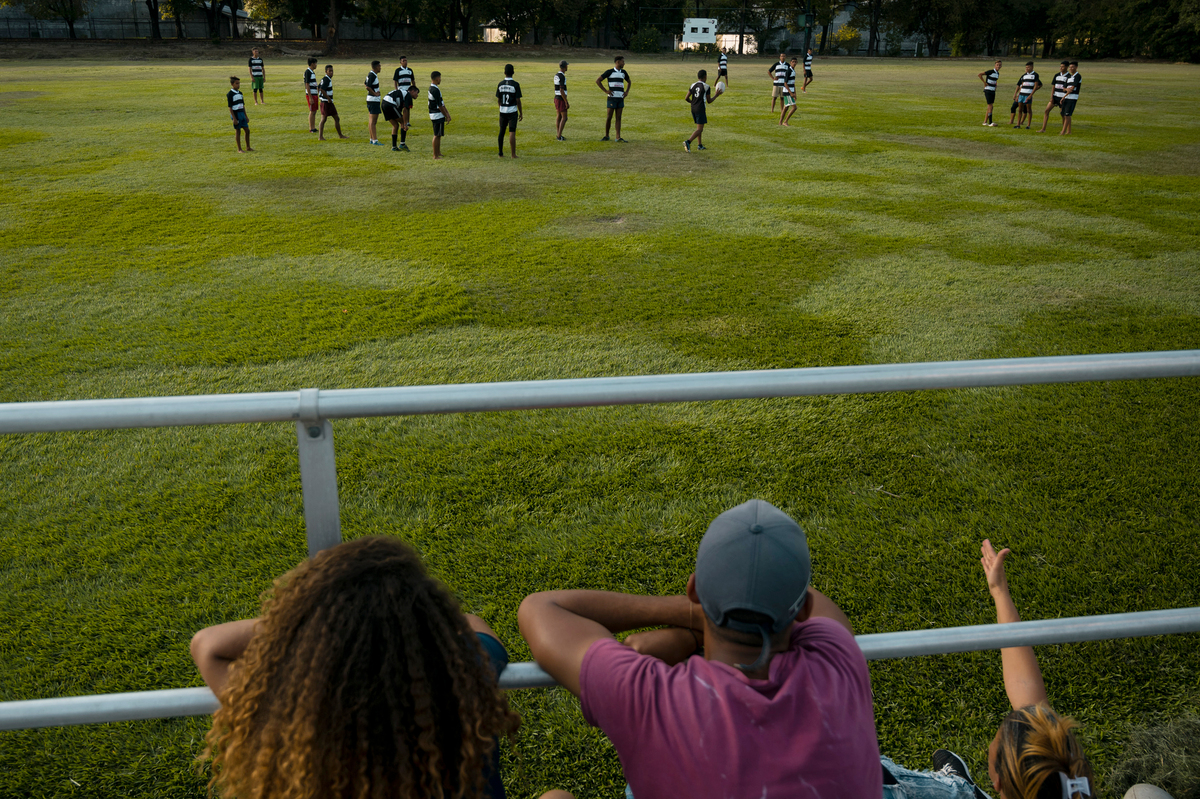
Young men practice rugby at Hacienda Santa Teresa, an estate belonging to a Venezuelan rum company. The estate serves as a practice field for neighboring communities of Aragua state, using rugby to help at-risk youths stay away from criminal life and violence.

Adriana Loureiro Fernández for NPR


hide caption

toggle caption

Adriana Loureiro Fernández for NPR

Amid the chaos and misery that have engulfed Venezuela lies a strange parcel of tranquility, tucked within a valley surrounded by poplar trees and mountains some 20 miles south of the Caribbean coast.

It is a field populated by dozens of lanky teenage boys who are spending this particular evening — as they often do — galloping around the grass in pursuit of an oval ball.

These impoverished Venezuelans are training in the skills of a sport not often seen in a South American nation that’s mad about soccer, baseball and horse racing: They are playing rugby.

Their game is taking place on the grounds of a hacienda, a picturesque country estate that includes a distillery and sugarcane plantation, in the Aragua Valley about 40 miles west of the capital Caracas.

The estate belongs to Santa Teresa, makers of Venezuela’s oldest brand of rum, which has — its website proudly proclaims — withstood “wars, revolutions, invasions, even dictators” since it first started distilling more than 200 years ago.

Left: A worker at Santa Teresa rum factory oversees the bottling process. Right: The estate belongs to one of the most popular rum brands in Venezuela.

Adriana Loureiro Fernández for NPR


hide caption

toggle caption

Adriana Loureiro Fernández for NPR

Rugby is one more albeit unusual play in the rum-maker’s history of negotiating the country’s turbulent times, this time by helping turn its neighborhood away from violent crime, especially by gangs.

Watching this evening’s training session is Guillermo Morales, 21, a keen rugby player who would normally be on the field but has been sidelined by an injury. “Here, you don’t see what you see at home, like guns and drugs,” says Morales, who lives nearby. “Here, we are away from all that.”

Surviving Venezuela’s mayhem these days is “really tough,” he says. “You just want to cry and cry.” For him, coming here to play rugby in the safe haven of a country estate provides a welcome escape from reality.

Rodney Ospino (center) listens to his coach during rugby practice at Hacienda Santa Teresa. Some 2,000 mostly poor youngsters from the surrounding neighborhoods play rugby at the estate as part of a program to deter them from joining gangs.

Adriana Loureiro Fernández for NPR


hide caption

toggle caption

Adriana Loureiro Fernández for NPR

The story of how rum and rugby came to be mixed in this part of Venezuela begins in 2003, and has since evolved into local legend. Criminal gangs, hungry for guns, were particularly active in the surrounding communities at that time. Rivalries abounded; homicides were common.

According to Bernardo López, manager of the Santa Teresa Foundation, three gang members broke into the hacienda, in the hope of stealing the security guards’ weapons.

The men were captured. Instead of handing them over to the police, for certain imprisonment, the rum-maker’s chief executive, Alberto Vollmer, offered them a chance to atone for their crime by working unpaid at the distillery for a few months instead.

López says the gang members agreed. Yet when they eventually reported for work, they showed up with their whole gang — some 20 other men — “saying that if [Vollmer] was offering jobs, they wanted jobs for everyone.”

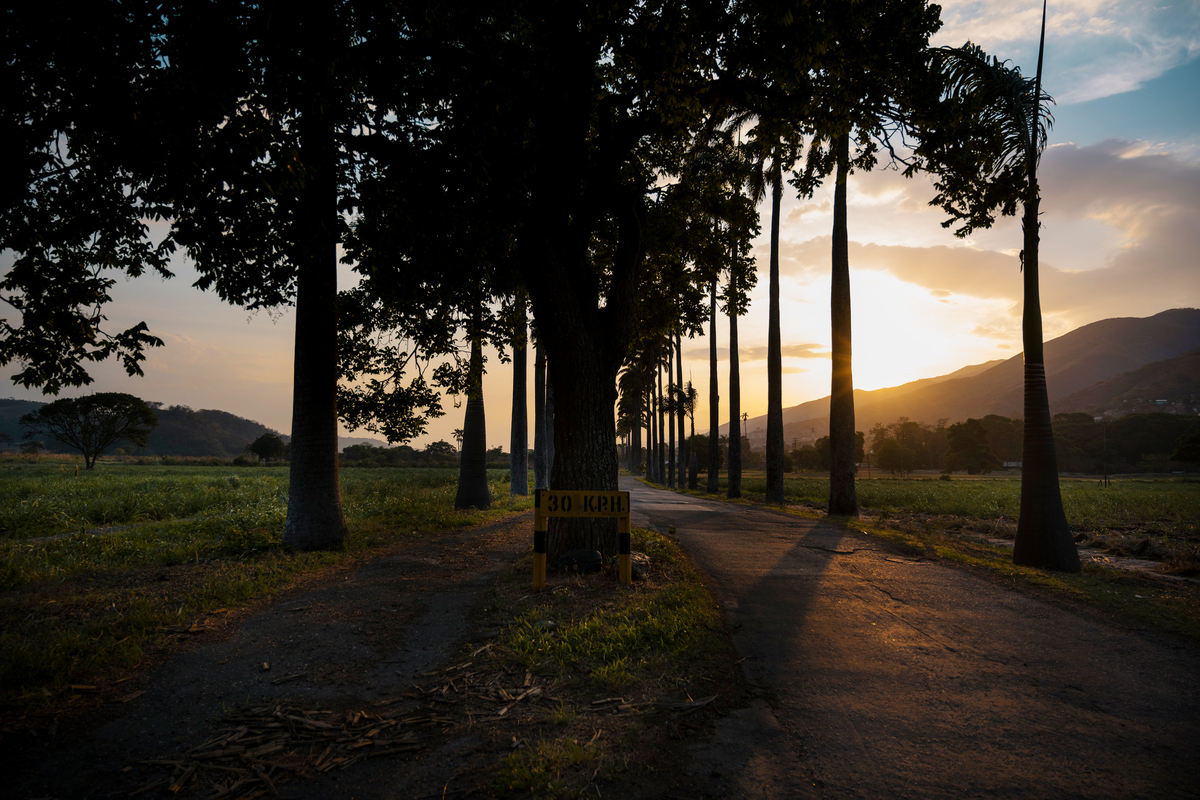
The sun sets on a road at Hacienda Santa Teresa. According to Bernardo López, manager of the Santa Teresa Foundation, three gang members broke into the hacienda in 2003, in the hope of stealing the security guards’ weapons. Instead of punishment, they were offered a chance to atone for their crime by working unpaid at the distillery for a few months.

Adriana Loureiro Fernández for NPR


hide caption

toggle caption

Adriana Loureiro Fernández for NPR

Eager to build bridges with a community with soaring unemployment, and to reduce the threat of gang crime, Vollmer took them in, says López.

Vollmer is a descendant of a German merchant who migrated to Venezuela in 1830. He is also a rugby enthusiast — having played as a schoolboy — who believes this rough and rugged sport is character-building because it helps nurture respect, sportsmanship, discipline and humility.

It would therefore be a good idea, Vollmer concluded, to introduce the gangs to the game.

This became the starting point of what became Project Alcatraz, a rehabilitation program that Santa Teresa has since expanded to include vocational training, psychological counseling and formal education. The name is both a nod to the notorious California prison and to the gannet bird, which is what alcatraz translates to in English.

Members of the youth division of Project Alcatraz’s rugby team practice.

Adriana Loureiro Fernández for NPR


hide caption

toggle caption

Adriana Loureiro Fernández for NPR

Some 2,000 mostly poor youngsters from the surrounding districts regularly play rugby at the hacienda as part of a preventive program to deter them from joining gangs.

“They fall in love with our rugby,” says Luis Daniel “Chino” López, coach of the youth team, as he gazes at his players out on the field wrestling over the ball.

The hacienda is a kind of refuge for them, he says — although the realities of life in Venezuela sometimes intrude. “They sometimes say ‘Oh, Chino, I’m hungry,’ but we help them with that. Sometimes we give them food.”

People watch and cheer during rugby practice at Hacienda Santa Teresa.

Adriana Loureiro Fernández for NPR


hide caption

toggle caption

Adriana Loureiro Fernández for NPR

According to the Santa Teresa Foundation, the Alcatraz project has sharply lowered the homicide rate in the locality in recent years. Crime, however, remains a problem.

Gertrudis, a middle-aged widow who lives nearby — and who wants her full name withheld for fear of reprisals — says no one in the neighborhood dares go outside after 7 p.m. for fear of being robbed or assaulted.

She concedes the rugby at the Santa Teresa hacienda might help lower crime, but appears far more concerned about her daily ordeal of lining up to get food from 4 a.m., regular power outages and Venezuela’s chronic shortage of medicines.

Project Alcatraz has expanded to include hundreds of prison inmates. Its representatives regularly visit Venezuelan penitentiaries to organize rugby games and recruit players.

Rugby team players race after each other on the field.

Adriana Loureiro Fernández for NPR


hide caption

toggle caption

Adriana Loureiro Fernández for NPR

Santa Teresa now hosts a one-day rugby 7-a-side tournament for inmates. At the most recent, in December, 13 prison teams took part, escorted to the estate by prison guards and surrounded by a security ring of National Guard soldiers.

“Imagine the atmosphere,” says Bernardo López of the Santa Teresa Foundation. “We have 300 inmates in the hacienda, and their handcuffs are taken off. They exchange their uniforms for rugby clothes, and start to play.

“You can see their families cheering from the bleachers. There are moms, who have come to meet their sons and children who’re able to see their fathers. Afterwards, they can hug, and talk.”

None of this work has been made easier as Venezuela grapples with economic collapse and a political crisis in which the U.S.-backed opposition leader Juan Guaidó has been leading a campaign to oust President Nicolás Maduro, arguing that he was illegally reelected.

Alcatraz team members take a rest in the stands after practice.

Adriana Loureiro Fernández for NPR


hide caption

toggle caption

Adriana Loureiro Fernández for NPR

As the country’s instability deepens, getting gangs to agree to participate in Project Alcatraz has become harder, says López.

“Gangs right now in Venezuela are not the gangs that we used to manage in 2003,” he says. “Gangs now are huge. We’re talking about hundreds of men.”

Yet he’s undeterred. Rehabilitation and rugby will continue, he says.

“We don’t do this to sell rum. We sell rum to do this. This is our purpose.”

The sun sets after rugby practice at Hacienda Santa Teresa in May.

Adriana Loureiro Fernández for NPR


hide caption

toggle caption

Adriana Loureiro Fernández for NPR

Let’s block ads! (Why?)

Saturday Sports: Andrew Luck, Tyler Skaggs

A tragic death and a surprise retirement are shaking faith in football while upstarts are playing legends in tennis. NPR’s Scott Simon speaks with ESPN’s Michele Steele.


SCOTT SIMON, HOST:

And now it’s time for sports.

(SOUNDBITE OF MUSIC)

SIMON: And not a happy week in sports. Andrew Luck retired from the NFL at the age of 29, saying he just can’t take the pain. And an autopsy revealed that the Angels pitcher Tyler Skaggs died of an overdose of dangerous drugs, including opioids and also alcohol. He was just 27.

We’re joined this week by Michele Steele of ESPN from Chicago. Thanks so much for being with us, Michele.

MICHELE STEELE: You bet, Scott.

SIMON: This is a heartbreaking story. The LA Times revealed the autopsy yesterday. The families hired an attorney to try and find out how he got those drugs. He did not seem to be dealing with any injuries that might drive him to legally prescribed painkillers – let me put it that way, though.

STEELE: Yeah, Scott. What a tragic story. You know, Angels pitcher Tyler Skaggs, you mentioned, just 27. He was on a road trip on – with the team. He was found in his hotel unconscious on July 1. And the coroner’s report that was just released says that they found alcohol, oxycodone and fentanyl in his system when he died. Those are some really powerful painkillers. You know, you mentioned injuries, he was healthy this season.

SIMON: Yeah.

STEELE: He had just pitched a couple days before, but he has had injuries throughout his career. And the Skaggs family released a statement just last night saying they were shocked to learn about the circumstances of his death and that it, quote, “may involve an employee of the Los Angeles Angels.” Now they’ve hired a pretty big attorney.

SIMON: Yeah.

STEELE: The police are investigating as well. Now the league is coming in. They’re planning their own investigation. And, Scott, the team, they’re not commenting.

SIMON: I want to ask you about what I’ll refer to as the aftershocks of Andrew Luck’s announcement he was retiring from pro football and the Indianapolis Colts. What do you make of yackers on sports radio or even some retired players who criticized him for making that decision?

STEELE: Oh, boy. You know, what a week for the hot take industry, so to speak. He was called soft, too much of a millennial primarily by what I’ll call opportunistic sports hosts. You know, Andrew Luck is a guy who reads books literally about concrete. He has a flip phone. There may be reasons to criticize him, but being a millennial certainly isn’t one of them. He’s got $100 million in career earnings. He just doesn’t want to be hit anymore. Let’s let him live his life.

SIMON: Yeah, I was very moved by what Rob Gronkowski said. Obviously – I think you covered him – right? – when you covered the New England Patriots.

STEELE: Yeah, yeah. You, know I was there for three years – 2013 to 2016 in New England. I covered him during that very eventful time. And if I could describe his persona, it would be really like a fun, slobbery golden retriever. And to see him this week, you know, talking about his football life and to be brought to tears talking about his career – he retired, by the way, this year at age 30 – not being able to sleep the night of the Super Bowl, it made me feel sad. So, you know, I’m happy that he’s working on being kind of a fun, happy guy again.

SIMON: You know, I’ve got to ask you – put you in a difficult position as a sports reporter – the more we learn more about disabling and even brain-obliterating injuries in football, is it going to be harder to get people to play, and for that matter, harder to get Americans to watch?

STEELE: Yeah, that is a great question and an existential one for the NFL. You would think it might be harder to watch. But last year was actually a great ratings year for the NFL. The league is talking about expanding the season maybe to 18 games. And even Gronk said this week he knew what he was signing up for. So I think players being self-aware certainly matters – matters to fans, matters to reporters. But we might see players go more the route of Andrew Luck and Rob Gronkowski and decide to sort of pack it in earlier than they would have maybe in prior eras.

SIMON: Fifteen seconds left, match of the day at U.S. Open?

STEELE: Oh, no question, 15-year-old Coco Gauff taking on U.S. Open defending champ Naomi Osaka. These are two women who came of age after Serena and Venus went pro. Serena called them the future of tennis. She’s going to be watching. I’m going to be watching, too. How about you, Scott?

SIMON: Oh, yeah, have to. Michele Steele of ESPN, thanks so much.

Copyright © 2019 NPR. All rights reserved. Visit our website terms of use and permissions pages at www.npr.org for further information.

NPR transcripts are created on a rush deadline by Verb8tm, Inc., an NPR contractor, and produced using a proprietary transcription process developed with NPR. This text may not be in its final form and may be updated or revised in the future. Accuracy and availability may vary. The authoritative record of NPR’s programming is the audio record.

Let’s block ads! (Why?)

Autopsy Of Los Angeles Angels Pitcher Tyler Skaggs Reveals Opioids And Alcohol

Los Angeles Angels pitcher Tyler Skaggs throws to the plate during a game against the Oakland Athletics in 2018.

Mark J. Terrill/AP


hide caption

toggle caption

Mark J. Terrill/AP

Updated at 6:37 p.m. ET

Autopsy results for Los Angeles Angels pitcher Tyler Skaggs revealed the presence of opioids and alcohol in his body after he was found dead in a Texas hotel room on July 1.

The toxicology report released Friday by the Tarrant County medical examiner says the cause of death was a mixture of “alcohol, fentanyl and oxycodone intoxication” and that Skaggs essentially choked on his vomit while under the influence.

Skaggs’ body was found in his room while the Angels were preparing to play the Texas Rangers. His death is still under investigation by local authorities. A statement released by Skaggs’ family includes mention that an Angels employee may have been involved, and according to The Los Angeles Times, the family says it won’t rest until it learns the truth about who supplied the drugs.

“We were unaware of the allegation and will investigate,” MLB spokesman Pat Courtney said.

The Angels tweeted, “Tyler was and always will be a beloved member of the Angels Family and we are deeply saddened to learn what caused this tragic death. Angels Baseball has provided our full cooperation and assistance to the Southlake Police as they conduct their investigation.”

Skaggs was drafted by the Angels in 2009 and traded to the Arizona Diamondbacks. The Angels reacquired him for the 2014 season and since then he had a record of 25-32.

Let’s block ads! (Why?)

Ex-MLB Players Octavio Dotel, Luis Castillo Cleared Of Drug Ring Allegations

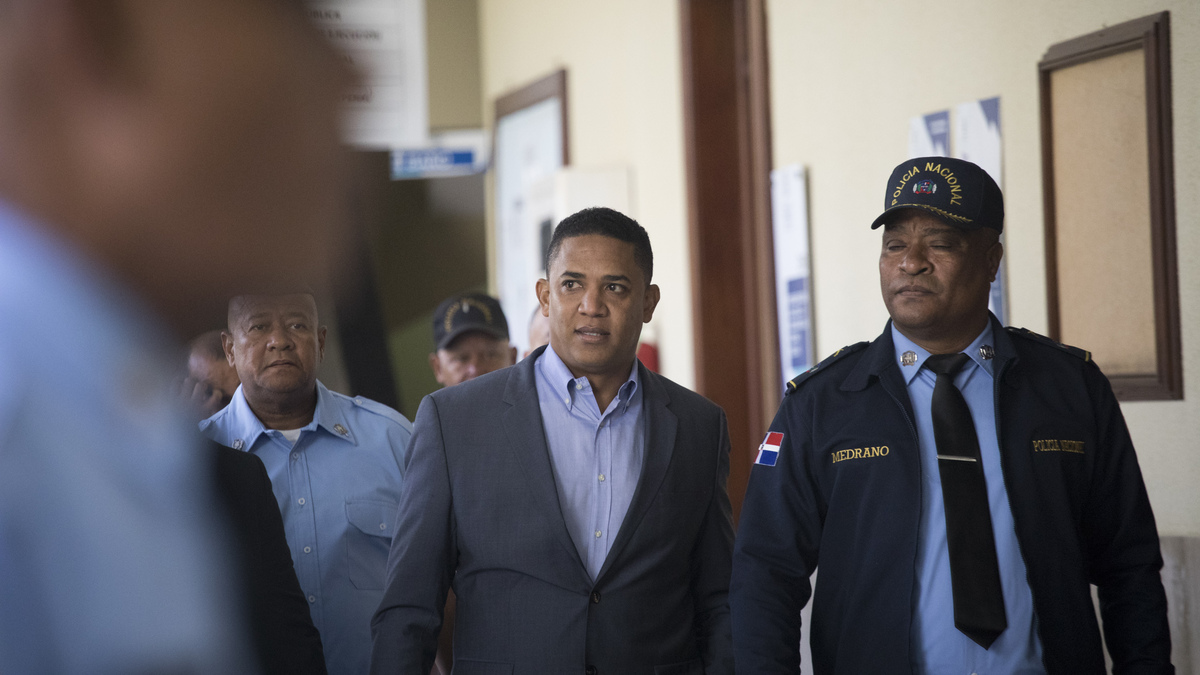
Octavio Dotel leaves a courtroom Wednesday in Santo Domingo, Dominican Republic, one day before the former major league pitcher was released on bail. On Thursday, a judge cleared him and former MLB player Luis Castillo of allegations that they had supported a drug trafficking ring.

Tatiana Fernandez/AP


hide caption

toggle caption

Tatiana Fernandez/AP

Just over a week after Luis Castillo and Octavio Dotel headlined a list of suspects named in the Dominican Republic’s recent drug trafficking bust, a local judge has cleared the retired MLB players of money laundering charges. Judge José Alejandro Vargas decided Thursday that the prosecution had failed to show enough evidence to implicate Castillo or Dotel.

Dotel was released on bail Thursday after nine days in detention. He still stands accused of possessing illegal weapons at the time he was arrested, a charge that was not directly connected to the drug bust. As he left the court hearing in Santo Domingo, the former pitcher flashed a quick smile for nearby members of the media.

Former MLB pitcher Octavio Dotel is free of charges. Judge couldn’t find any relationship with most wanted Dominican Kingpin Cesar El Abusador. pic.twitter.com/pBkL5cyZdD

— Antonio Puesán (@antoniopuesan) August 29, 2019

In announcing the bust last week, the country’s attorney general, Jean Alain Rodríguez, linked the two former major leaguers to an alleged drug kingpin named César Emilio Peralta, also known as “César the abuser.” Peralta and his alleged network of drug runners and money launderers were the focus of the Dominican investigation — one that was supported by the FBI and the Drug Enforcement Administration in the U.S.

The U.S. Treasury Department also moved to designate Peralta, his associates and several related entities, including several nightclubs, as “significant foreign narcotics traffickers.” Dotel and Castillo were not on Treasury’s list, however.

Dotel’s attorney, Manuel Sierra, told ESPN Deportes that authorities owe his client a public apology — and that he expects nothing to come of the weapons charge. “We have the documentation that proves that it is not illegal,” Sierra said, “and we will present it to the court in a timely manner.”

“Octavio will finally sleep in his own bed after the nightmare of the last few days,” he added.

Dotel played 14 years for 13 teams during his time in MLB. Castillo, an infielder, won three Gold Gloves, made three All-Star Games and took home the 2003 World Series with the then-Florida Marlins.

Let’s block ads! (Why?)

For 2 Nurses, Working In The ICU Is ‘A Gift Of A Job’

Kristin Sollars, left, and Marci Ebberts say nursing is more than just a job. “Sometimes I wonder why everyone in the world doesn’t want to be a nurse,” Sollars said.

Emilyn Sosa for StoryCorps


hide caption

toggle caption

Emilyn Sosa for StoryCorps

For nurses Kristin Sollars and Marci Ebberts, work is more than just a job.

“Don’t you feel like you’re a nurse everywhere you go?” Sollars, 41, asked Ebberts, 46, on a visit to StoryCorps in May.

“I mean, let’s be honest, every time we get on a plane you’re like, E6 didn’t look good to me. Keep an eye out there.”

Sollars and Ebberts have grown so close while working together that they’ve come to call themselves “work wives.” They first met in 2007, working side by side in the intensive care unit at Saint Luke’s Hospital in Kansas City, Mo.

Now they work closely as nurse educators at the hospital training other nurses in critical care.

“Between us, we’ve taken care of thousands of critically ill patients,” Ebberts said. “You carry a little bit of them with you. And they shape you.”

Sollars and Ebberts reflect on how their work influences their memories.

“When I think about that patient, that is the most seared in my brain, I know exactly what bed but I cannot tell you the patient’s name,” Sollars said. She goes on to remember a particularly unforgettable case: “I always think about CCU (Coronary Care Unit) Bed 2.”

The patient had a cardiac arrest. “We code him, and we get that heart rate back,” she said, describing their resuscitation efforts that stabilized the patient.

“And that was just the first of a dozen times that he coded,” Ebberts remembered.

All the while, his wife was by his side.

“We were giving her the bad prognosis. Things were looking really bad, and she said, ‘Can I be in bed with him?’ ” Sollars said.

But the nurses saw that as a risk. “This man’s got everything we’ve got in the hospital attached to him,” Sollars recalled.

“So many wires and tubes and monitors,” Ebberts added.

Still, they proceeded carefully, slowly lifting everything so she could wiggle in next to him.

“I can just remember her sobbing, saying, you know, I wasn’t a good enough wife. I should have loved you better,” Sollars said.

When the patient again suffered an irregular, life-threatening heart rhythm called ventricular fibrillation, Sollars and Ebberts started another round of chest compressions.

But this time, the patient’s wife asked the nurses to stop trying to resuscitate him. “We’re gonna let him go next time he does that,” Ebberts remembers his wife saying.

As difficult as they can be to witness, Sollars says the rewarding part as a nurse is caring for patients and their families during these crucial life moments.

“To be with people and to create those environments where they get to say their unfinished business to their husband — it’s such a gift of a job,” Sollars said. “Sometimes I wonder why everyone in the world doesn’t want to be a nurse.”

Sollars says nursing levels her sense of what’s important.

“It does impact the way we see the entire world. That person in front of us in the grocery store is all worked up about how that guy bagged their groceries,” she said.

“Nobody’s dying,” Ebberts said, “until someone is. And then we’re ready.”

Audio produced for Morning Edition by Aisha Turner and Camila Kerwin.

StoryCorps is a national nonprofit that gives people the chance to interview friends and loved ones about their lives. These conversations are archived at the American Folklife Center at the Library of Congress, allowing participants to leave a legacy for future generations. Learn more, including how to interview someone in your life, at StoryCorps.org.

Let’s block ads! (Why?)