At The U.S. Open, The Ball’s In Their Court — And It’s Their Job To Pick It Up


Bill Of The Month: Estimate For Cost Of Hernia Surgery Misses The Mark

Before scheduling his hernia surgery, Wolfgang Balzer called the hospital, the surgeon and the anesthesiologist to get estimates for how much the procedure would cost. But when his bill came, the estimates he had obtained were wildly off.
John Woike for Kaiser Health News
hide caption
toggle caption
John Woike for Kaiser Health News
From a planning perspective, Wolfgang Balzer is the perfect health care consumer.
Balzer, an engineer, knew for several years he had a hernia that would need to be repaired, but it wasn’t an emergency, so he waited until the time was right.
The opportunity came in 2018 after his wife, Farren, had given birth to their second child in February. The couple had met their deductible early in the year and figured that would minimize out-of-pocket payments for Wolfgang’s surgery.
Before scheduling it, he called the hospital, the surgeon and the anesthesiologist to get estimates for how much the procedure would cost.
“We tried our best to weigh out our plan and figure out what the numbers were,” Wolfgang said.
Share Your Story And Bill With Us
If you’ve had a medical-billing experience that you think we should investigate, you can share the bill and describe what happened here.
The hospital told him the normal billed rate was $10,333.16, but that Cigna, his insurer, had negotiated a discount to $6,995.56, meaning his 20% patient share would be $1,399.11. The surgeon’s office quoted a normal rate of $1,675, but the Cigna discounted rate was just $469, meaning his copayment would be about $94. (Although the Balzers made four calls to the anesthesiologist’s office to get a quote, leaving messages on the answering machine, no one returned their calls.)
Estimates in hand, they budgeted for the money they would have to pay. Wolfgang proceeded with the surgery in November, and, medically, it went according to plan.
Then the bill came.
The patient: Wolfgang Balzer, 40, an engineer in Wethersfield, Conn. Through his job, he is insured by Cigna.
Total bill: All the estimates the Balzers had painstakingly obtained were wildly off. The hospital’s bill was $16,314. After the insurer’s contracting discount was applied, the bill fell to $10,552, still 51% over the initial estimate. The contracted rate for the surgeon’s fee was $968, more than double the estimate. After Cigna’s payments, the Balzers were billed $2,304.51, much more than they’d budgeted for.
Service provider: Hartford Hospital, operated by Hartford HealthCare
Medical procedure: Bilateral inguinal hernia repair
What gives: “This is ending up costing us $800 more,” said Farren, 36. “For two working people with two children and full-time day care, that’s a huge hit.”
When the bill came on Christmas Eve 2018, the Balzers called around, trying to figure out what went wrong with the initial estimate, only to get bounced from the hospital’s billing office to patient accounts and finally ending up speaking with the hospital’s “Integrity Department.”
They were told “a quote is only a quote and doesn’t take into consideration complications.” The Balzers pointed out there had been no complications in the outpatient procedure; Wolfgang went home the same day, a few hours after he woke up.
The couple appealed the bill. They called their insurer. They waited for collection notices to roll in.
Hospitalestimates are often inaccurate and there is no legal obligation that they be correct, or even be issued in good faith. It’s not so in other industries. When you take out a mortgage, for instance, the lender’s estimate of origination charges has to be accurate by law; even closing fees — incurred months later — cannot exceed the initial estimate by more than 10%. In construction or home remodeling, while estimates are not legal contracts, failure to live up to them can be a basis for liability or a “claim for negligent misrepresentation.”
In this case, Hartford Hospital produced an estimate for Balzer’s laparoscopic hernia repair, CPT (current procedural terminology) code 49650.
The hospital ran the code through a computer program that produced an average of what others have paid in the past. Cynthia Pugliese, Hartford Health’s vice president of revenue cycle, said the hospital uses averages because more complicated cases may require additional supplies or services, which would add costs.
“Because it was new, perhaps the system doesn’t have enough cases to provide an accurate estimate,” Pugliese says. “We did not communicate effectively to him related to his estimate. It’s not our norm. We look at this experience and this event to learn from this.”
Efforts to make health care prices more transparent have not managed to bring down bills because the different charges and prices given are so often inscrutable or unreliable, says Dr. Ateev Mehrotra, an associate professor of health care policy and medicine at Harvard Medical School.
“The charges on there don’t make any sense. All it does is, people get pissed off,” Mehrotra said. “The charge has no link to reality, so it doesn’t matter.”
Resolution: “Because I roll over more easily than my wife does, I’m of the mindset to pay it and get done with it,” Wolfgang said. “My wife says absolutely not.”
Investigating prices, dealing with billing departments and following up with their insurer was draining for the Balzers.
“I’ve been tackling this since December,” Wolfgang says. “I’ve lost two or three days in terms of time.”
For the Balzers, there’s a happy ending. After a reporter made inquiries about the discrepancy between the estimate and the billed charges — six months after they got their first bill — Pugliese told them to forget it. Their bill would be an “administrative write-off,” they were told.
“They repeatedly apologized and ended up promising to adjust our bill to zero dollars,” Wolfgang wrote in an email.
The takeaway: It is a good idea to get an estimate in advance for health care, if your condition is not an emergency. But it is important to know that an estimate can be way off — and your provider probably is not legally required to honor it.
Try to request an estimate that is “all-in” — including the entire set of services associated with your procedure or admission. If it’s not all-inclusive, the hospital should make clear which services are not being counted.
Having an estimate means you can make an argument with your provider and insurer that you shouldn’t be charged more than you expected. It could work.
Laws requiring at least a level of accuracy in medical estimates would help. In a number of other countries, patients are entitled to accurate estimates if they are paying out-of-pocket.
Most patients aren’t as proactive as the Balzers, and most wouldn’t know that the hospital, surgeon and anesthesiologist would all bill separately. And most wouldn’t fight a bill that they could afford to pay.
The Balzers say they wouldn’t have changed their medical decision, even if they had been given the right estimate at the beginning. It’s the principle they fought for here: “There’s no other consumer industry where this would be tolerated,” Farren wrote in an email.
Bill of the Month is a crowdsourced investigation by Kaiser Health News and NPR that dissects and explains medical bills. Do you have an interesting medical bill you want to share with us? Tell us about it!
The Thistle & Shamrock: Mícheál Ó Domhnaill

Mícheál Ó Domhnaill
Greg Duffy/Courtesy of the Estate of Mícheál Ó Domhnaill
hide caption
toggle caption
Greg Duffy/Courtesy of the Estate of Mícheál Ó Domhnaill
We remember Mícheál Ó Domhnaill, one of Ireland’s most influential artists, with the music he recorded and produced over three decades.
Purdue Pharma Considers Converting To A Public Trust Amid Lawsuits Over Opioid Crisis

NPR’s Ailsa Chang talks with Charles Tatelbaum, director at Tripp Scott law firm, about what the Purdue Pharma settlement would mean for the company, the plaintiffs and the Sackler family.
USWNT Star Carli Lloyd Invited To Play In NFL Pre-Season Game
USWNT soccer star Carli Lloyd was invited to play in an NFL pre-season game after nailing a 55-yard field goal during a Philadelphia Eagles practice.
Ibibio Sound Machine Takes Us Around The World Without Leaving London

Ibibio Sound Machine performing in the Pool Recording Studio in London
Kimberly Junod/WXPN
hide caption
toggle caption
Kimberly Junod/WXPN
- “Wanna Come Down”
- “Tell Me (Doko Mien)”
- “I Need You To Be Sweet Like Sugar”
British-born singer Eno Williams grew up in Nigeria, where her family passed on storytelling traditions in the Ibibio language. Eno’s grandmother used to tease her, saying, “You always sing in English, when are you going to sing in Ibibio?” When Eno eventually came around to the idea, she noticed that the rhythms and melodies inherent in the language made it a perfect fit for songwriting. Now, in Ibibio Sound Machine, Eno fuses the language of her roots with the musical roots of her bandmates, who hail from Ghana, Trinidad, Australia and Brazil.
Ibibio Sound Machine’s music — and its very existence — is a unique testament to the global city where the members came together; London. We meet the band at the Pool Recording Studio in London to hear live performances of songs from its latest album, Doko Mien.
The Thistle & Shamrock: ThistleRadio Classics

Donal Lunny playing an Irish bouzouki on January 23, 2008.
Ross Gilmore/Redferns
hide caption
toggle caption
Ross Gilmore/Redferns
When the Celtic rhythms go quiet on your radio, you can always stream great songs and tunes on ThistleRadio’s 24-hour music channel. Span the decades with classic tracks that are the bedrock of the playlist, together with some of the newer artist who are helping redefine the sound of today’s music from Celtic roots. Artists include Dougie MacLean, Donal Lunny and Loreena McKennitt.
Whatever Happened To … The 101-Year-Old Champion Runner From India?

Man Kaur of India celebrates after competing in the 100-meter sprint in the 100+ age category at the World Masters Games in Auckland, New Zealand, in April 2017.
Michael Bradley/AFP/Getty Images
hide caption
toggle caption
Michael Bradley/AFP/Getty Images
Man Kaur started running in 2009, when she was in her 90s — it was her son’s idea — and began racking up medals. We first wrote about her when she was 101. Is she still a track and field star?
At 103, Man Kaur is not only going strong, she’s getting others to follow in her footsteps.
India’s oldest female athlete is spending her summer coaching 30 young athletes.
Kaur and her 81-year-old son and trainer, Gurdev Singh, were invited for two weeks to several universities in Baru Sahib in the mountains of India, but their methods made such an improvement in the students’ performance, they were asked to stay through September.
Goats are curious animals and “Goats and Soda” is a curious blog. Over the next week, we’ll be looking back at some of our favorite stories to see “whatever happened to …”
Kaur famously follows a strict diet regimen designed by Singh including homemade soy milk and kefir, wheatgrass juice, nuts, lentils and chapatis made from sprouted wheat. That’s the kind of nutritional advice they’re sharing with the students.
This invitation came on the heels of Kaur’s participation in the World Masters Athletics Championships in Poland earlier this year, where she won gold in all four events she competed in: shot put, javelin, 60-meter dash and 200-meter run.
Though she was the only competitor in her age category for all four events, for the 60-meter dash, she had company from other categories: two sprightly 85-year-olds and three 90-year-olds. Though they weren’t competing for the prize in her age bracket, they ran alongside her (and eventually ahead of her).
At last year’s World Masters event, the diminutive great-grandmother, who is just under 5 feet tall, clinched the gold in the javelin throw as well as the 200-meter race.
In 2017, while participating in World Masters Games held at Auckland, she finished the 100-meter run in 74 seconds. “But in Poland she improved her speed and finished the 60-meter dash in 36 seconds and felt great. She thanked the Almighty who gave her enough courage to do this,” says Singh, who acts as an interpreter for his mother, who mostly speaks Punjabi.
Ten years after she first started running, Kaur still loves it, according to her son. She isn’t thinking of retiring and Singh says she still thinks she can improve her performance.
“She enjoys the company of her admirers,” her son adds. “Every time she participates, she feels proud that people around the world feel inspired.”
The year has not been all fun and games, though. Kaur was in the hospital with gallstones this August and her osteoporosis has been causing her back pain, says her son. Still, she loves winning and is happiest on the track, where she says she forgets all her ailments.
Next stop: Malaysia, where both mother and son will compete in their age brackets at the Asian Masters Athletics Championships in December.
Editor’s note: Now you may be thinking … is Man Kaur really 103? She doesn’t have proof of her age but her oldest child does. When her firstborn’s birth certificate was issued 83 years ago, Kaur was 20, so you do the math.
Chhavi Sachdev is a journalist based in Mumbai. Contact her @chhavi.
Behold: The Blooper Burger. Your Arteries Will Clog Just Thinking About It
The Blooper Burger is a monstrous sandwich sold at Atlanta Braves games, and it has developed a cult following. The four cheeseburger patties are just the start of this $26 ballpark standout.
‘Vagina Bible’ Tackles Health And Politics In A Guide To Female Physiology
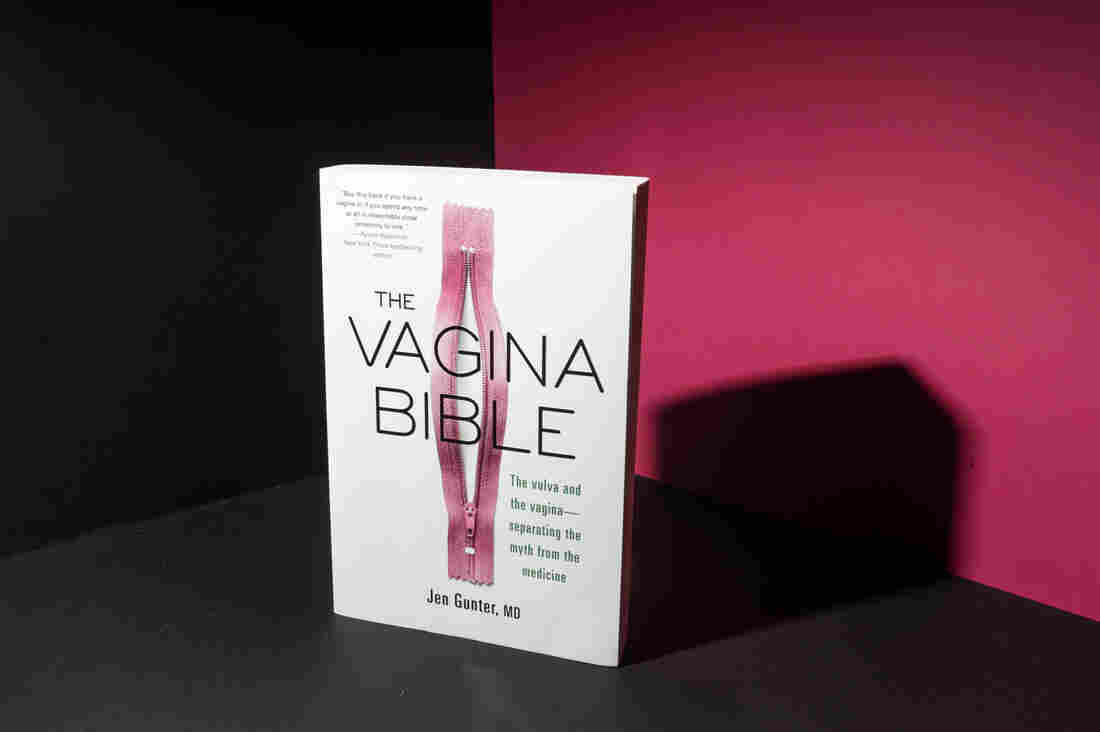
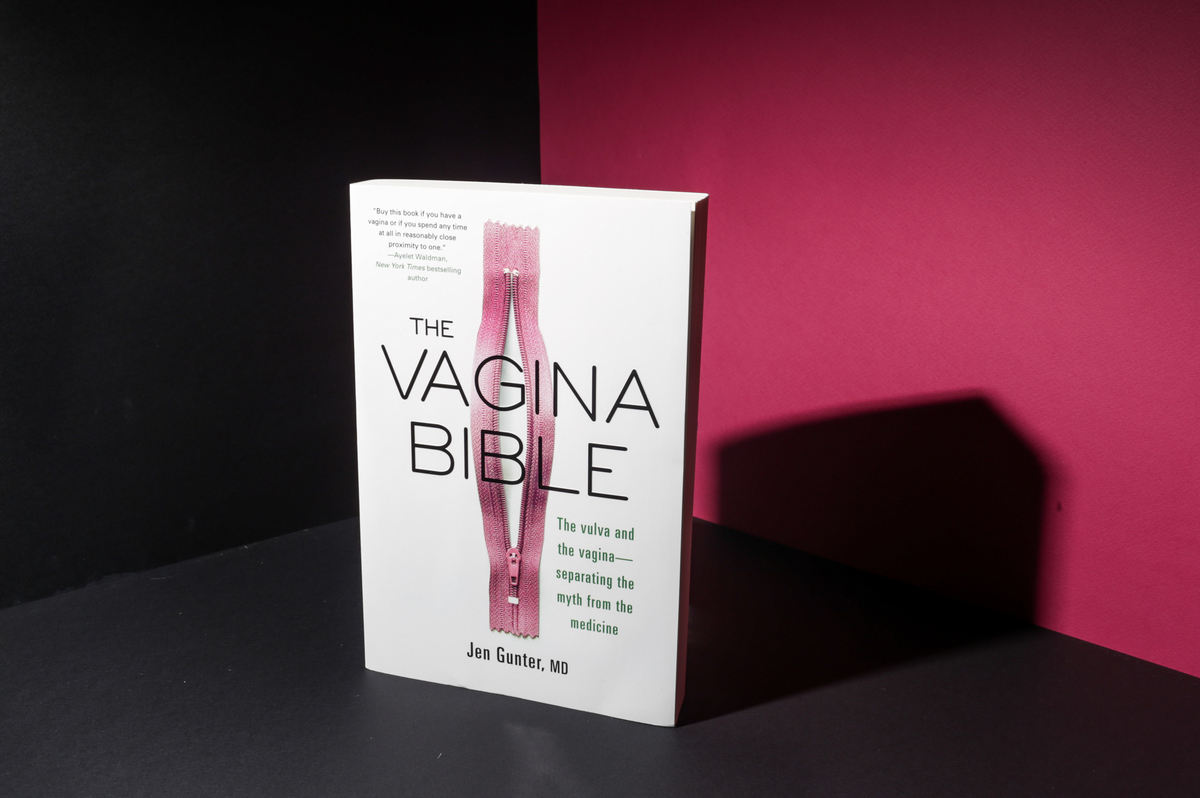
In The Vagina Bible, gynecologist Jen Gunter dispels myths about the female body.
Meredith Rizzo/NPR
hide caption
toggle caption
Meredith Rizzo/NPR
Hey, women: Dr. Jen Gunter wants you to understand your own vagina.
The California gynecologist is on a quest to help women get the facts about their own bodies. It isn’t always easy. In an era of political attacks on women’s reproductive choices and at a time when Internet wellness gurus are hawking dubious pelvic treatments, getting women evidence-based information about their health can be a challenge, she says.
But Gunter isn’t backing down.
“I’m really just trying to give women information so they can make informed choices,” Gunter tells NPR. “Misinformation is the opposite of feminism. Making an empowered decision requires accurate information.”
Gunter started her blog, Wielding the Lasso of Truth, almost 10 years ago, writing on topics that range from abortion politics to the risks to women who eat the placenta after childbirth (yes, really). She rose to Internet fame as she took on the very public task of debunking several treatments touted by Gwyneth Paltrow and her wellness empire, Goop — including $66 jade eggs designed to be inserted into the vagina and a treatment known as “vaginal steaming.” Gunter now writes a column about women’s health for the New York Times.
She spoke about her new book, The Vagina Bible, with NPR contributor and family physician Mara Gordon. The interview has been edited for clarity and length.








Gunter started a blog almost 10 years ago writing about women’s health topics. She now has a column on women’s health for The New York Times.
Jason LeCras
hide caption
toggle caption
Jason LeCras
The Vagina Bible is coming out at a moment where women’s reproductive health in the U.S. is a huge political issue. Yet this book is more clinical than political. What made you want to take this approach?
I found myself debunking the same myth over and over again: “No, you shouldn’t put yogurt in your vagina. No, you shouldn’t put garlic in your vagina.” I got really fixated on this idea that I wanted women to have a textbook so they could divorce themselves from the cacophony that’s online. … When I went through medical school, Harrison’s Principles of Internal Medicine was the internal medicine Bible. Williams Obstetrics was my obstetrics Bible. That’s how I referred to my resources that I went to over and over again.
You talk about how women are conditioned to think their vaginas are abnormal, saying, “There’s a lot of money in vaginal shame.” You argue that it’s related to marketing of procedures like vaginal rejuvenation, or expensive objects women are told to put in their vaginas, or cleansing gels and wipes they’re encouraged to use. What’s going on?
I have noticed a huge increase in what I can only describe as women being “vaginally hyperaware.” I did a fellowship in infectious diseases in 1995, and since then, I have specialized in vaginitis — irritation of the vagina. The number of patients, the percentage that I see, who have nothing physiologically wrong with them has increased dramatically.
What do they tend to be experiencing?
I would say odor, volume of discharge. … Then there’s also this group of patients who are convinced they have yeast infections. They definitely have something causing their symptoms that’s not yeast — usually chronic vulvar irritation. So what happens when someone comes in and the doctor can’t find anything wrong is that many doctors will just give antibiotics or give antifungals.
Do your patients ever feel like you’re dismissing or not believing their symptoms?
For so many years, women have had their symptoms dismissed. They’ve been told that their normal bodies are wrong. And so there are all these complex messages. I really try to pin down and ask them, “OK, so what’s your bother factor? And then let’s work it out from there.”
An interesting theme in the book is something I see in my own primary care practice: the “well, it can’t hurt” phenomenon. For example, a doctor might tell a woman to only wear white cotton underwear if she’s having recurrent yeast infections, because “Well, it can’t hurt, right?” Doctors suggest a lot of treatments that don’t have any evidence behind them. What’s going on?
I think that it’s really hard for doctors to say, “I don’t know.” That’s something that I learned being a parent of children who had unfixable medical conditions. [My] son has cerebral palsy, and [my] other son has a heart condition that can’t be fixed. … The most valuable thing, actually, a physician ever told me when I was struggling with my kids was, “You know, if we had better therapies to offer you, we’d be offering them to you.” And that was a really profound moment.
How do you approach this as a clinician, when you can’t offer your patients a quick-fix treatment with rigorous research behind it?
I actually have a lot of therapies for a lot of conditions that people think are impossible to treat. But I do get a lot of patients saying, “Is this the best you have?” And I say, “Yes. Yes, it is the best I have.” And I explain why.
Most people can understand the science behind what we’re offering. … The biggest issue is that we don’t have the time to explain it. If you’re only given seven minutes to explain to someone the complexities of chronic yeast infections — because actually, immunologically, it’s a little bit complex — the only way you can do it is in a horrible, patriarchal “Well, just do this” manner.
Let’s talk about your other specialty — women’s pelvic pain. Why is this so hard to treat?
Pain is so complex. When you explain it to patients, you have to be so careful, because it can sound like you are saying their pain is in their head, when that’s not what you mean. It’s in their nervous system. It’s physiologically very hard to explain.
Dealing with pain is very humbling as a physician. We’re really talking about improvement, not fixing. And that’s really very hard for people to accept. We have all of this cool medicine, all these advances, and we can’t fix pain. It’s frustrating.
Doctors don’t have a great track record of taking women’s pain seriously.
We know anxiety and depression amplify pain. It’s well-known. I work with a pain psychologist, and I’ll talk about mind-body medicine. When I say that, a patient often hears that I’m dismissing their pain. What I’m doing is actually taking it very seriously. … People come in and they want scalpels, right? They want a grand thing because when you have pain, it’s huge, it’s all-consuming. And you come in and you hear, “Wait, what? Physical therapy? And managing my anxiety? How can you fix my huge problem with these seemingly little things?” So when you have a huge problem, you think that you need a huge solution, like surgery, like an MRI, because those are big.
We doctors have had a strictly biomedical model for disease for a long time. It’s a pretty recent development that we consider sex, relationships, stress and even sexism within our purview. Do you feel like your patients are eager for you to address those things?
I think that women appreciate knowing the forces that led us here. … I want people to understand that the patriarchy has been everywhere. Medicine is part of everything. So of course medicine has patriarchy. … I personally don’t think that medicine is worse than anything else, but I do think that because medicine cares for people, we have the biggest duty to respond to it fast.
I think that a lot of women are really hungry for a woman physician to stand up and say, “Wait a minute. Wait, wait, wait. I know about women’s bodies. That’s not going to fly, because I know the physiology.”
What is the most absurd vaginal product that you’ve come across in your research?
Ozone getting blown into your vagina. It’s highly toxic for your lungs. … I can’t imagine what it does to your vagina.
Mara Gordon is a family physician in Camden, N.J., and a contributor to NPR. You can follow her on Twitter: @MaraGordonMD.